
The Department of Homeland Security is reassessing a controversial initiative to turn commercial warehouses nationwide into immigration detention facilities, following widespread community pushback and infrastructure challenges.
Secretary Markwayne Mullin has put new warehouse purchases on hold while reviewing contracts worth $1.074 billion for 11 facilities that were approved under his predecessor, Kristi Noem. The ambitious plan has encountered significant resistance from local officials and residents across multiple states.
In Arizona, federal agents purchased a massive 418,000-square-foot facility in Surprise for $70 million without informing local authorities, according to state prosecutor Kris Mayes in correspondence to former Secretary Noem. Initial plans called for housing 1,000 to 1,500 people daily with a renovation contract exceeding $313.4 million. Current proposals have been scaled back to accommodate 250 weekly arrivals with a maximum capacity of 542 beds, Mayor Kevin Sartor reported.
Florida officials discovered federal interest when a television crew observed contractors and government representatives touring a 439,945-square-foot industrial building in Orlando during January. ICE senior adviser David Venturella characterized the visit as “exploratory” when questioned by WFTV. City representatives confirmed they received no official communication about the facility through April.
Georgia has become a focal point for opposition after ICE acquired a warehouse in Social Circle for $128.6 million, intended to detain between 7,500 and 10,000 individuals. Water supply concerns prompted city officials to physically lock the facility’s water meter. Federal proposals to transport drinking water and waste by truck were criticized as impractical by Democratic Senators Raphael Warnock and Jon Ossoff. A second Georgia purchase in Oakwood cost $68.2 million for a 540,408-square-foot facility, with City Manager B.R. White learning of the federal acquisition only when a warehouse supervisor informed a city inspector about clearing the site for new government ownership.
Indiana warehouse owner Opus Holding LLC issued a statement denying negotiations with federal officials after Merrillville raised concerns about ICE representatives touring their 275,000-square-foot facility, citing legal restrictions on disclosure.
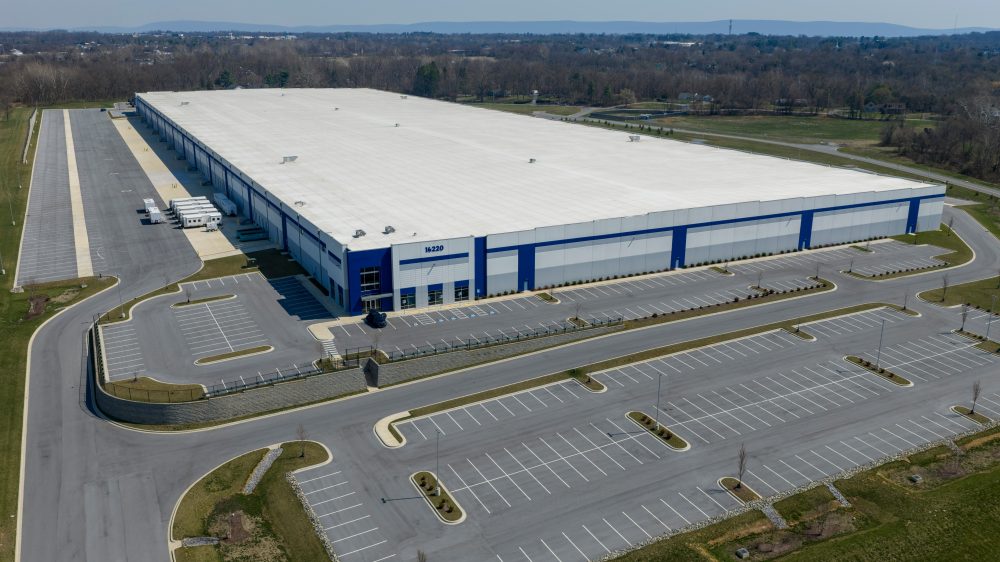
Maryland’s attorney general filed suit to halt work on a $102.4 million warehouse purchase in Washington County, approximately 60 miles northwest of Baltimore, despite a $113 million renovation contract. The facility has created community division, with county commissioners voting to support ICE operations during a heated public meeting.
Michigan officials in Romulus filed litigation after DHS spent $34.7 million on a 250,000-square-foot warehouse, arguing the location sits in a flood zone with inadequate sewage capacity for 500 detainees. The lawsuit also criticized federal officials for bypassing available state prison facilities and failing to consult local authorities.
Minnesota warehouse owners in Woodbury and Shakopee suburbs withdrew from potential ICE agreements following public opposition, according to local officials.
Mississippi plans were abandoned after Republican Senator Roger Wicker announced that Noem agreed to seek alternative locations following opposition from Byhalia elected officials and zoning authorities.
Missouri developers Platform Ventures canceled the sale of a Kansas City warehouse after sustained public pressure.
New Hampshire Governor Kelly Ayotte, a Republican, successfully opposed a proposed $158 million conversion of a Merrimack warehouse into a 500-bed processing center. Tensions escalated when an ICE official testified that DHS “has worked with Gov. Ayotte” and provided economic impact analysis, though Ayotte stated the document arrived hours after the testimony. The analysis contained errors referencing “ripple effects to the Oklahoma economy” and mentioned state sales and income taxes that don’t exist in New Hampshire.
New Jersey faced dual lawsuits after DHS purchased a 470,044-square-foot Roxbury warehouse for $129.3 million, with state and township officials alleging they were kept uninformed. “State and local officials might not have a veto over DHS’s decisions, but this utter lack of communication and consultation flies in the face of federal law,” the lawsuit stated. ICE acknowledged an error regarding a Chester warehouse announcement, with Assemblyman Brian Maher confirming the facility was no longer under consideration.
Oklahoma City Mayor David Holt announced in January that property owners informed him they ended discussions with DHS about potential warehouse acquisition or leasing.
Pennsylvania acquisitions include warehouses in Tremont Township for $119.5 million and Upper Bern Township for $87.4 million. Democratic Governor Josh Shapiro pledged to fight the federal plans, with the state’s Department of Environmental Protection temporarily blocking water and sewage services to both facilities.
Tennessee officials successfully opposed plans after ICE mistakenly announced completing a Lebanon warehouse purchase. Sheriff Robert Bryan warned that a facility housing 14,000 to 16,000 detainees would “significantly impact local law enforcement resources.” Mayor Rick Bell, identifying as a conservative Republican supporting border security, stated his town “is not the place” for such a facility. Republican Senator Marsha Blackburn later confirmed the deal was terminated.
Texas has seen mixed results, with ICE spending $122.8 million on three Socorro warehouses totaling 826,780 square feet and $66.1 million on a 639,595-square-foot San Antonio facility. Both mayors oppose the projects, with Socorro officials questioning water availability and San Antonio receiving no federal communication through April. However, community resistance killed a Dallas suburb deal when Hutchins-area property company Majestic Realty Co. confirmed contact about their buildings but refused to sell or lease to DHS for detention purposes, providing no explanation.
Utah officials were blindsided by a $145.4 million purchase of an 833,280-square-foot Salt Lake City warehouse, with no notification to Democratic city leaders or Republican state officials. Mayor Erin Mendenhall revealed that ICE later disclosed plans to house 7,500 to 10,000 people. The city responded by restricting water usage to a fraction of detention facility requirements. This purchase occurred two months after another Salt Lake City warehouse owner withdrew from federal negotiations amid protests.
Virginia saw Jim Pattison Developments cancel a planned Richmond suburb warehouse sale in January following boycott threats, stating they were unaware of the intended detention use until after agreeing to the transaction.