Category: Politics

  • Trump Announces Tech Giants Must Power Their Own Data Centers

    Trump Announces Tech Giants Must Power Their Own Data Centers

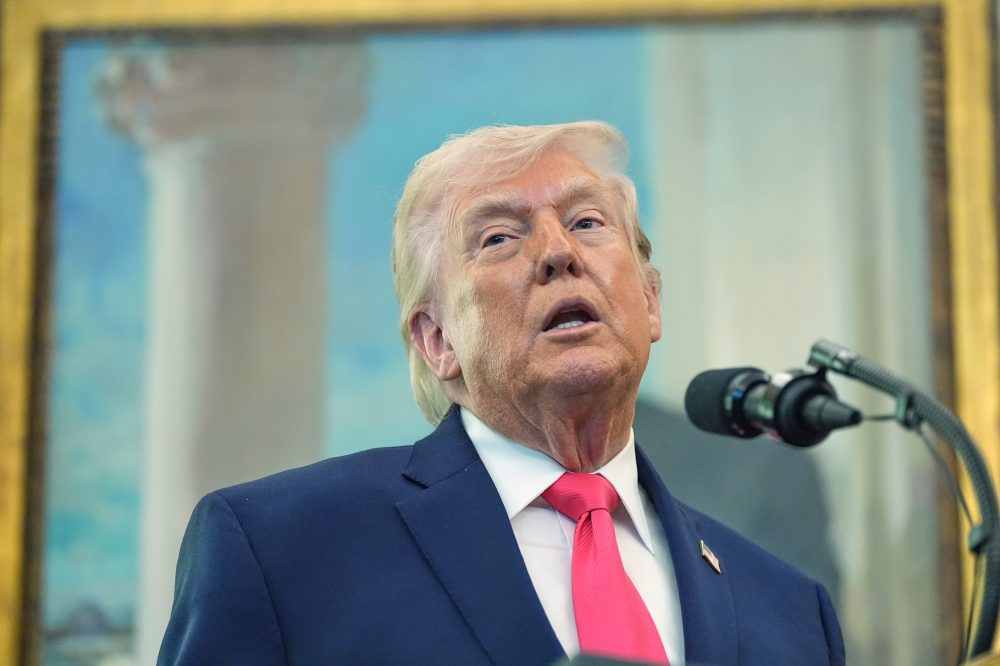
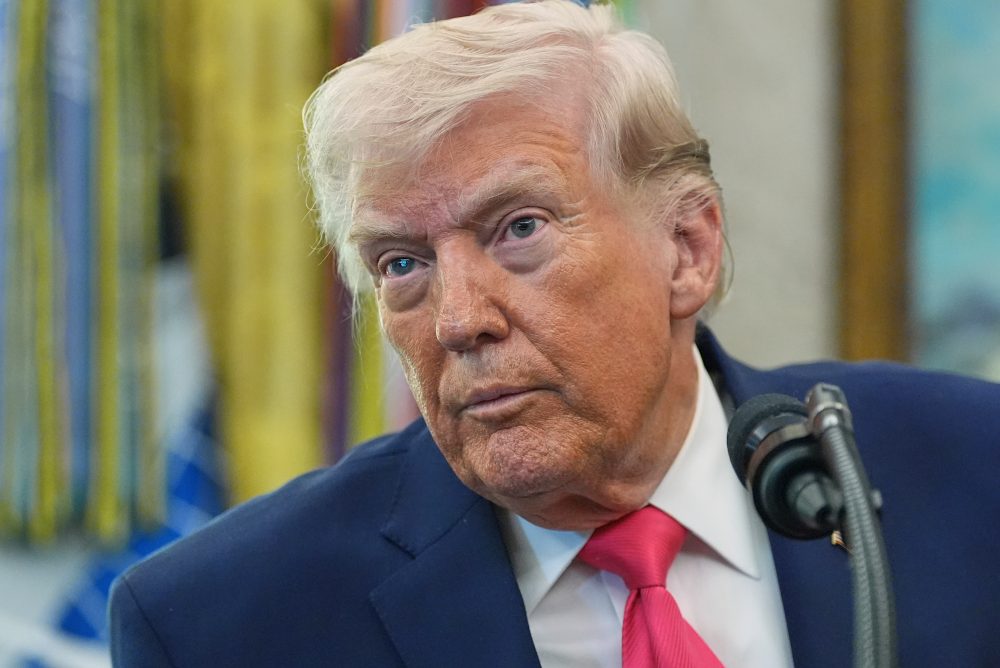
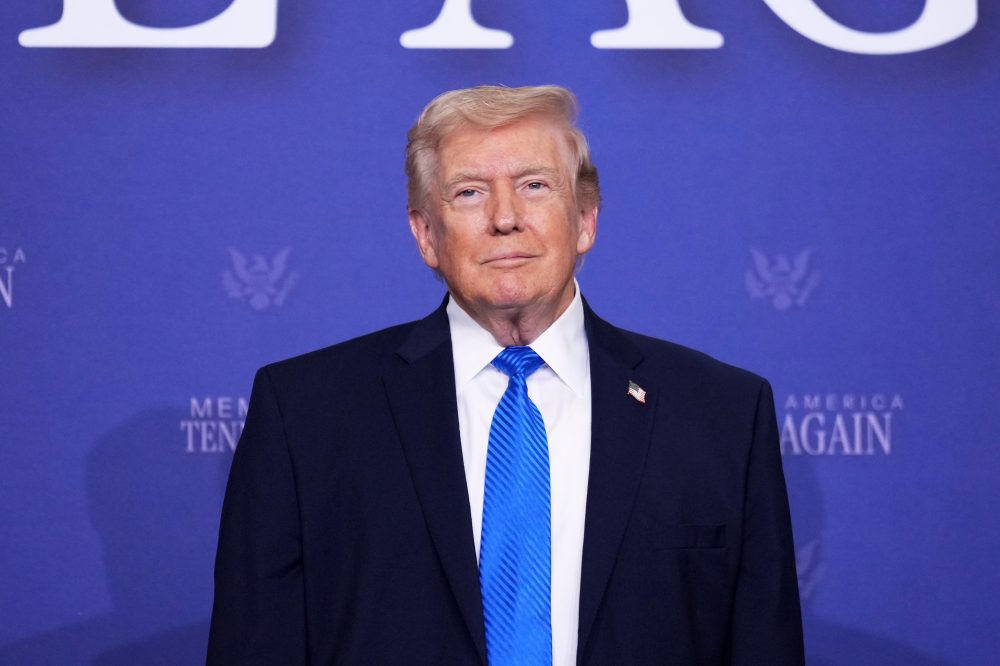
    During Tuesday evening’s State of the Union address, President Donald Trump revealed his administration has directed major technology corporations to generate their own electricity for data center operations, an initiative designed to shield consumers from escalating utility costs.

    The directive emerges as communities nationwide increasingly resist power-intensive data center developments that have contributed to surging electricity expenses.

    “Tonight, I’m pleased to announce that I have negotiated the new rate payer protection pledge. You know what that is? We’re telling the major tech companies that they have the obligation to provide for their own power needs,” Trump stated during his address.

    “We have an old grid. It could never handle the kind of numbers, the amount of electricity that’s needed. So I’m telling them, they can build their own plant. They’re going to produce their own electricity. It will ensure the company’s ability to get electricity, while at the same time, lowering prices of electricity for you,” the president explained.

    Trump did not identify specific corporations or elaborate on implementation and enforcement mechanisms. Sources familiar with the initiative indicate the White House plans to convene with companies in early March to formalize these efforts.

    While the Trump administration champions artificial intelligence advancement to compete with China, the rapid expansion of AI data centers and their effect on electricity costs has emerged as a potential political liability for Republicans before November’s midterm elections.

    Last month, PJM Interconnection, the nation’s largest power grid operator, introduced a strategy requiring new major electricity consumers to either contribute fresh generation capacity to the grid or reduce consumption during peak demand periods.

    Several corporations, including Anthropic and Microsoft, have independently launched programs to minimize data center impacts on consumer energy costs.

  • Trump Focuses on Economy in State of Union Despite Voter Concerns

    Trump Focuses on Economy in State of Union Despite Voter Concerns

    Former President Donald Trump addressed a joint session of Congress Tuesday evening in what could prove to be a crucial moment for the White House as it works to solidify Republican voter support before this November’s midterm elections.

    The speech occurred amid escalating tensions with Iran and widespread public concern over America’s high cost of living.

    ECONOMIC FOCUS CARRIES POLITICAL RISK

    Trump made economic issues the centerpiece of his address, though he maintained a potentially dangerous stance on financial matters that political analysts warn might cost the Republican Party control of Congress this fall. All House seats and roughly one-third of Senate positions will be contested in November, with Democrats aiming to wrest control from the current Republican majorities in both chambers.

    According to Trump’s presentation, inflation rates, home loan costs, and fuel prices are declining, while stock markets, domestic oil production, and international investment are thriving alongside growth in construction and manufacturing employment. However, he avoided recognizing the financial hardships Americans continue to experience due to elevated prices, consistent with his approach in recent economic speeches.

    Government statistics indicate inflation remained stagnant and actually increased last year, while manufacturing employment declined during the same period.

    Polling data reveals voters express concern about economic conditions and dissatisfaction with Trump’s management of financial issues. According to Reuters/Ipsos surveys, 56 percent of respondents disapprove of his economic performance, compared to 36 percent who approve.

    Political strategists emphasize this represents a challenge Trump must address if he intends to serve as the Republican Party’s primary economic spokesperson while they work to maintain congressional control in November’s elections.

  • Trump Declares ‘We’re Winning So Much’ in State of the Union Speech

    Trump Declares ‘We’re Winning So Much’ in State of the Union Speech

    WASHINGTON — During Tuesday evening’s State of the Union address, President Donald Trump declared to the nation that America is experiencing unprecedented success, proclaiming ‘we’re winning so much’ as he detailed what he described as significant economic and foreign policy achievements.

    The president’s primary goal appeared to be persuading skeptical Americans that economic conditions are stronger than many perceive, urging voters to support Republicans in the upcoming November midterm elections to continue current policies.

    Trump incorporated several bipartisan patriotic moments into his speech, most notably making a dramatic invitation for the Olympic gold medal-winning U.S. men’s hockey team to enter the House chamber, which resulted in thunderous applause. The team had visited the White House earlier that afternoon before appearing at the Capitol.

    ‘Our country is winning again. In fact, we’re winning so much that we really don’t know what to do about it. People are asking me, please, please, please, Mister President, we’re winning too much. We can’t take it anymore,’ Trump declared before presenting the team. ‘We’re not used to winning in our country until you came along.’

    The hockey players, displaying their medals and wearing jerseys emblazoned with ‘USA’ in bold letters, received a bipartisan standing ovation. Trump gestured toward the Democratic section of the chamber and remarked, ‘That’s the first time I ever I’ve ever seen them get up.’

    In another television-ready moment, Trump revealed he would present the Presidential Medal of Freedom, the nation’s highest civilian recognition, to the hockey team’s goaltender, Connor Hellebuyck. This mirrors a similar surprise announcement Trump made in 2020 when he awarded the honor to conservative radio personality Rush Limbaugh during his address.

    Trump described the nation’s current state by saying, ‘It is indeed a turnaround for the ages.’

    The president promoted his strict immigration enforcement policies and federal government reductions, along with his efforts to maintain extensive tariffs that the Supreme Court recently overturned and his capacity to execute rapid military operations globally, including actions in Iran and Venezuela.

    Trump also revealed that technology companies working with artificial intelligence have agreed to pay increased electricity costs in regions where their data centers operate, according to a White House official who requested anonymity when discussing the speech.

    These data centers typically consume substantial amounts of electricity, which can raise power costs for other local consumers.

    Trump criticized the Supreme Court’s rejection of his key tariff initiatives, describing it as ‘an unfortunate ruling.’ He discussed his efforts to work around that decision without relying on Congress or disturbing financial markets.

    ‘It’s saving our country,’ Trump stated regarding tariffs, describing them as ‘peace-protecting.’

    The Supreme Court justices present were identical to those who attended Trump’s joint congressional address last March: Chief Justice John Roberts, along with Justices Brett Kavanaugh, Amy Coney Barrett and Elena Kagan.

    Trump welcomed the justices and even exchanged handshakes with Coney Barrett before his speech commenced, despite previously criticizing her for joining the majority decision against Trump’s tariffs — even though he nominated her to the Supreme Court during his first presidency.

    Prior to Trump’s address, Senate Democrats prevented passage of legislation to reinstate Department of Homeland Security funding, demanding new restrictions on immigration enforcement that Republicans have rejected.

    ‘Tonight, I am demanding the full and immediate restoration of all funding for the Border Security and Homeland Security of the United States,’ Trump planned to state, according to speech excerpts.

    Cost of Living Concerns Remain Prominent

    Trump regularly claims to have controlled inflation and maintains the economy is thriving, pointing to the Dow Jones Industrial Average recently surpassing 50,000 points for the first time in history.

    Virginia Governor Abigail Spanberger delivered the Democratic response to Trump’s address. Multiple congressional Democrats chose to boycott Trump’s speech as a form of protest.

    International Affairs Take Center Stage

    Trump’s speech occurred while two U.S. aircraft carriers have been sent to the Middle East due to rising tensions with Iran.

    The president has frequently described how U.S. air attacks last summer targeted Tehran’s nuclear facilities, praised the operation that removed Venezuelan President Nicolás Maduro, and highlighted his administration’s role in negotiating a ceasefire in the conflict between Israel and Hamas in Gaza.

    However, he has also created tension within U.S. military partnerships with NATO due to his efforts to acquire Greenland from Denmark and his reluctance to take stronger action against Russian President Vladimir Putin regarding ending the war in Ukraine. Tuesday marked the fourth anniversary of the Russia-Ukraine conflict.

  • Attorneys Challenge Border Policy Pressuring Migrant Children to Leave US

    Attorneys Challenge Border Policy Pressuring Migrant Children to Leave US

    MCALLEN, Texas (AP) — Civil rights attorneys filed a court motion Tuesday demanding an end to a U.S. Customs and Border Protection practice that encourages immigrant children traveling alone to agree to voluntary deportation before they receive required legal protections.

    Under federal law established by the Trafficking Victims Protection Reauthorization Act of 2008, border officers who apprehend unaccompanied immigrant minors entering illegally must transfer them to federally-operated shelters managed by the Office of Refugee Resettlement. These facilities provide children with legal representation, access to immigration hearings, and phone contact with family members before they decide whether to pursue deportation or explore alternative options.

    However, a new approach now presents the voluntary departure choice while children remain in border custody, before they reach the shelter system. This practice commenced in September 2025, based on CBP official testimony included in the legal filing.

    According to the attorneys’ Tuesday motion, children who refuse voluntary return face threats of extended detention, potential arrest and prosecution of their U.S.-based adult sponsors, and permanent visa application bans.

    The legal team represents Guatemalan minors affected by the government’s failed attempt to remove dozens of them during a chaotic overnight flight last August. They argue this policy breaches an existing court order that prevents deportation of any unaccompanied Guatemalan children without proper immigration court proceedings.

    The lawyers also request the judge extend the protective order to include minors from additional nations, except Mexico and Canada.

    CBP has not yet provided a response to requests for comment.

    Multiple children reported to attorneys that agents used threatening behavior, shouting, and coercion to force them to sign documents they couldn’t comprehend, often due to language difficulties.

    One young girl described how an agent aggressively pressured her to sign paperwork after she injured her leg in a vehicle accident and was refused medical care.

    “I thought I had to sign, but I didn’t know why or what for,” she stated in a written court declaration.

    Mishan Wroe, representing the National Center for Youth Law, emphasized that these minors are being denied federally mandated protections.

    “It’s plainly coercive to threaten children with prolonged detention while they are scared and not given the opportunity to speak to counsel or their family before they make a decision that has grave implications for their future,” Wroe stated Tuesday.

    Michael Julien, a CBP representative, wrote in his Tuesday court filing that agents only offer the voluntary departure option to certain unaccompanied minors crossing illegally, and that this choice is communicated verbally rather than through written documentation.

    Legal advocates discovered 13 cases in South Texas where children experienced this new approach, though they suspect many more instances exist.

    “We believe that this is happening to many, many more children and that the 13 that are mentioned in our motion are just those that kind of slipped through the cracks,” stated Kate Talmor, senior counsel at the Institute for Constitutional Advocacy and Protection.

    Talmor explained that attorneys only learned about and could assist these 13 children because despite signing departure agreements while in CBP custody, transportation wasn’t arranged in time and they were eventually transferred to shelter facilities.

    Federal officials have two weeks to submit their response, after which the judge will decide whether to halt the policy’s enforcement on Guatemalan children and potentially extend protections to minors from other nations.

  • Trump Uses State of Union to Push Economic Message, Republican Support

    Trump Uses State of Union to Push Economic Message, Republican Support

    During Tuesday evening’s State of the Union speech, President Donald Trump focused his message on economic accomplishments while urging Americans to support Republican candidates in the approaching November midterm elections.

    The president used the annual address to highlight what he characterized as a robust economy and encouraged voters to continue backing similar policies by supporting GOP candidates this fall.

    The speech was documented through a collection of photographs selected by Associated Press photo editors, capturing key moments from the evening’s proceedings.

  • Texas Democrat Removed from House Chamber During Trump State of Union

    Texas Democrat Removed from House Chamber During Trump State of Union

    WASHINGTON – Security officials removed Texas Democratic Representative Al Green from the House chamber on Tuesday evening as President Trump prepared to deliver his State of the Union address, following Green’s decision to display a protest sign.

    When the President made his entrance into the chamber, Green raised a white placard bearing the message “Black people aren’t apes.” The demonstration referenced a controversial social media post that appeared on Trump’s account earlier this month, which contained footage showing former President Barack Obama and former First Lady Michelle Obama depicted as apes. The administration later removed the post, with Trump attributing its publication to a staff member.

    This marks the second consecutive year that Green has disrupted Trump’s congressional address, having previously called out during last year’s speech.

  • Defense Secretary Challenges Court Order Protecting Sen. Kelly’s Free Speech Rights

    Defense Secretary Challenges Court Order Protecting Sen. Kelly’s Free Speech Rights

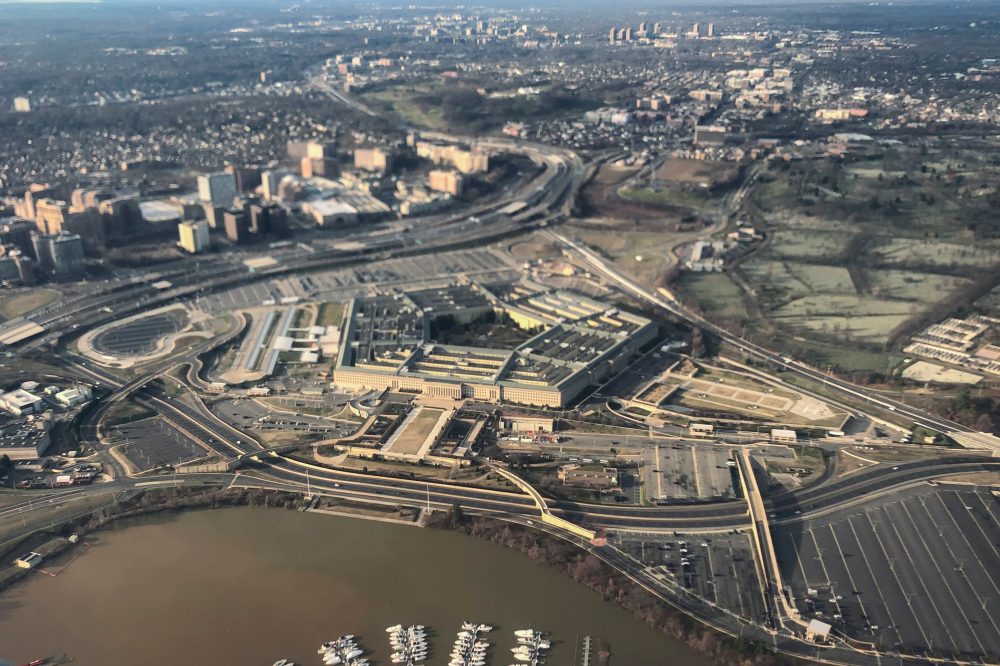
    WASHINGTON — The Pentagon is taking its legal battle with Arizona Senator Mark Kelly to a higher court after being blocked from disciplining the former Navy pilot over his participation in a controversial military video.

    Defense Secretary Pete Hegseth filed an appeal Tuesday asking the U.S. Court of Appeals for the District of Columbia Circuit to overturn a February 12th federal court decision that protected Kelly from punishment.

    The Arizona Democrat responded on social media, claiming Hegseth’s only motivation is to “keep trampling on the free speech rights of retired veterans and silence dissent.”

    “These guys don’t know when to quit,” Kelly posted on his X account.

    Hegseth had previously promised to challenge the court ruling, posting “Sedition is sedition, ‘Captain,’” using Kelly’s military retirement rank.

    The controversy stems from a November video where Kelly joined five other Democratic Congress members in encouraging military personnel to follow the Constitution and reject any illegal orders from the Trump administration. President Trump later accused the group of sedition that was “punishable by DEATH” in his own social media response.

    A Washington grand jury recently chose not to bring charges against the lawmakers involved in the video.

    Kelly filed his own federal lawsuit to prevent a January 5th censure from Hegseth. U.S. District Judge Richard Leon issued a temporary order stopping the Pentagon from carrying out Kelly’s punishment while the case continues.

    Judge Leon determined that Pentagon leadership violated Kelly’s constitutional free speech protections and also “threatened the constitutional liberties of millions of military retirees.” The judge used the colorful phrase “Horsefeathers!” to dismiss government arguments that Kelly was seeking special treatment under military justice rules.

    “To say the least, our retired veterans deserve more respect from their Government, and our Constitution demands they receive it!” Leon wrote in his decision. Leon was appointed by former Republican President George W. Bush.

    The 90-second video originally appeared on Representative Slotkin’s social media account. Other participants included Representatives Jason Crow from Colorado, Chris Deluzio from Pennsylvania, Maggie Goodlander from New Hampshire, and Chrissy Houlahan from Pennsylvania. Each person in the video served in either the military or intelligence services.

  • Federal Judge Halts Government Search of Washington Post Reporter’s Electronics

    Federal Judge Halts Government Search of Washington Post Reporter’s Electronics

    A federal magistrate judge in Virginia has prevented government prosecutors from examining electronic equipment confiscated from Washington Post journalist Hannah Natanson during a national security leak probe, ruling Tuesday that the court will oversee the review process instead.

    Federal agents conducted a search of Natanson’s residence in January as part of their investigation into leaked classified information. The journalist, who has reported extensively on former President Donald Trump’s efforts to dismiss large numbers of federal employees, has not been charged with any criminal activity.

    U.S. Magistrate Judge William Porter determined that court oversight of the device examination would properly protect journalists’ constitutional rights while allowing investigators to pursue evidence in matters involving national security.

    “Accordingly, the court rejects the government’s request to conduct an unsupervised, wholesale search of all … seized data,” Porter stated in his decision.

    Government attorneys had contended that accessing the materials was essential for their investigation into unauthorized release of classified government information. Department of Justice officials proposed using a separate team of FBI personnel, uninvolved in the main investigation, to examine the confiscated items and filter out irrelevant materials.

    Press freedom organizations have criticized the search as a threat to journalistic independence and the ability of reporters to protect their sources.

  • Supreme Court Justices Face Awkward Spotlight at Trump’s State of the Union

    Supreme Court Justices Face Awkward Spotlight at Trump’s State of the Union

    When President Donald Trump takes the podium for his State of the Union speech Tuesday evening, he may find himself sharing the same room with several Supreme Court justices who recently ruled against his controversial tariff policies.

    The traditional annual address has historically produced awkward situations for the nation’s highest court members, and this year’s event could underscore the strain between Trump and three conservative justices who sided with the court’s liberal wing in last Friday’s 6-3 decision: Chief Justice John Roberts, Neil Gorsuch, and Amy Coney Barrett.

    Notably, Trump personally selected Gorsuch for the court in 2017 and Barrett in 2020 during his previous presidency. Roberts has led the court for over twenty years after his appointment by former Republican President George W. Bush in 2005.

    Following Friday’s court decision, Trump harshly criticized the institution and the six justices who voted against his position. The ruling determined that Trump had overstepped his authority by circumventing Congress and implementing tariffs through legislation designed for national emergency situations.

    In his response to the ruling, Trump expressed being “ashamed” of the three conservative justices who opposed him, labeling them “fools and lapdogs for the RINOs and the radical-left Democrats.” The acronym RINO stands for “Republican in name only,” a phrase conservative Republicans sometimes use to criticize party members they consider disloyal.

    Trump specifically called Gorsuch and Barrett “an embarrassment to their families” for their tariff ruling stance. He also made unsubstantiated claims that the court has been “swayed by foreign interests.”

    However, Trump praised the three justices who supported his position, offering particular commendation for Brett Kavanaugh, whom he appointed in 2018.

    Several of the nine current justices typically attend State of the Union addresses, and some are anticipated to be present in the House of Representatives chamber for Trump’s joint congressional session speech. The court has not yet announced which justices plan to attend Tuesday’s event.

    According to tradition, attending justices don their judicial robes and maintain neutral facial expressions throughout the proceedings.

    Brown University political science professor Corey Brettschneider explained that justice attendance “sends a message of stability” and “conveys that these aren’t enemy institutions.”

    During last year’s congressional address, Trump physically greeted Roberts with a handshake and shoulder pat, saying “Thank you again. I won’t forget.”

    This interaction occurred following a 2024 Supreme Court ruling written by Roberts that provided Trump with extensive immunity from prosecution for presidential official acts, though Trump later claimed he was thanking Roberts for administering his inaugural oath.

    Four justices were present for Trump’s final formal State of the Union in 2020.

    Despite attending every State of the Union since joining the Supreme Court, Roberts has publicly expressed reservations about the practice.

    “The image of having the members of one branch of government standing up, literally surrounding the Supreme Court, cheering and hollering, while the court, according to the requirements of protocol, has to sit there expressionless, I think is very troubling,” Roberts stated during a 2010 University of Alabama speech, according to media coverage.

    Roberts further commented, “To the extent the State of the Union has degenerated into a political pep rally, I’m not sure why we’re there.”

    These comments came after Democratic President Barack Obama used his State of the Union platform to criticize a Supreme Court decision that removed certain campaign finance restrictions, warning it would “open the floodgates” to unlimited corporate and potentially foreign election funding.

    Conservative Justice Samuel Alito, who was present for Obama’s speech, visibly reacted by shaking his head and apparently mouthing “not true,” breaking from the justices’ typical stoic behavior.

    Since that incident, Alito has avoided State of the Union addresses, describing the tradition as “very awkward.”

    In a 2015 American Spectator interview, Alito described the challenging position justices face during these addresses.

    “Every once in a while the president will say something that is nonpartisan,” Alito explained. “We look foolish sitting there, so we stand up and start to applaud. And then we’ll get faked out. The president will get say, ‘This is a great country’ – and everyone will stand up and start to applaud – ‘because we’re gonna do this, we’re gonna enact this legislation.’ It’s a very odd experience.”

    The late conservative Justice Antonin Scalia also regularly avoided the speech, once describing it as a “childish spectacle.”

    During his 2024 State of the Union address, Democratic President Joe Biden directly addressed the present justices, criticizing them for the court’s 2022 decision that overturned abortion protections.

    “With all due respect, justices, women are not without … electoral or political power,” Biden declared.

    The most recent occasion when all nine court members skipped a State of the Union was in 2000, near the conclusion of Democratic President Bill Clinton’s second term. The court issued a public statement attributing the absences to “travel changes and minor illnesses.”

  • Court Blocks Feds from Searching Post Reporter’s Seized Electronics

    Court Blocks Feds from Searching Post Reporter’s Seized Electronics

    A federal magistrate judge has prohibited government investigators from performing unlimited searches of electronic equipment confiscated from Washington Post journalist Hannah Natanson’s Alexandria, Virginia residence during a probe into suspected classified document leaks.

    U.S. Magistrate Judge William Porter announced Tuesday he will personally examine the contents of Natanson’s confiscated devices rather than permit a Justice Department screening team to conduct the review. Porter explained his decision sought to balance protecting the reporter’s constitutional speech rights against the government’s responsibility to secure sensitive national security materials.

    “The Court finds that seizing the totality of a reporter’s electronic work product, including tools essential to ongoing newsgathering, constitutes a restraint on the exercise of First Amendment rights,” Porter stated in his ruling.

    The situation has attracted nationwide focus and criticism from media freedom organizations, who view it as evidence of heightened Justice Department enforcement in leak cases involving news professionals.

    During their January 14th search of Natanson’s Alexandria home, federal investigators confiscated multiple items including a smartphone, two laptop computers, recording equipment, a portable storage device, and a Garmin fitness watch. Porter had previously issued a temporary restriction preventing authorities from examining materials on Natanson’s devices, which Tuesday’s ruling now makes permanent.

    “The Court’s genuine hope is that this search was conducted — as the government contends — to gather evidence of a crime in a single case, not to collect information about confidential sources from a reporter who has published articles critical of the administration,” the judge noted.

    While The Post requested immediate return of all equipment to their reporter, Porter rejected that appeal. However, he determined the government may retain only minimal information directly related to their search authorization, requiring everything else be returned to Natanson.

    Permitting authorities to examine a journalist’s work materials, including unrelated confidential source information, “is the equivalent of leaving the government’s fox in charge of the Washington Post’s henhouse,” Porter observed.

    Defense contractor Aurelio Luis Perez-Lugones faces charges following his January 8th arrest for illegally removing and keeping classified materials. Prosecutors allege Perez-Lugones brought home printed classified documents from his job and subsequently provided them to Natanson.

    Legal representatives for the newspaper claim officials violated journalist protection protocols and infringed upon Natanson’s constitutional rights.

    Government prosecutors maintain they deserve to keep the confiscated materials because they contain evidence relevant to an active national security investigation.

    The FBI launched their inquiry after The Post published an October 31st story containing classified details from an intelligence document, according to federal authorities. Officials say the Post reporter authored or contributed to at least five articles featuring classified material supplied by Perez-Lugones.

    Natanson has focused her reporting on President Donald Trump’s federal government restructuring efforts. The Post featured an article where she detailed cultivating hundreds of federal employee sources, earning recognition from a colleague as “the federal government whisperer.”

    The Post reports the confiscated materials encompass years of Natanson’s journalism spanning hundreds of stories, including correspondence with anonymous sources.

    The Justice Department maintains internal protocols for addressing media leak situations. Last April, Attorney General Pam Bondi implemented revised guidelines restoring prosecutor authority to utilize subpoenas, court orders, and search warrants when pursuing government officials who make unauthorized information disclosures to journalists.

    These updated guidelines eliminated protections from President Joe Biden’s administration that shielded reporters from secret phone record seizures during leak investigations.

    Perez-Lugones, age 61 from Laurel, Maryland, remains in custody since his arrest. He possessed top-secret security clearance while employed as a systems engineer and IT specialist for a government contracting firm.

    Investigators discovered text communications between Perez-Lugones and the reporter discussing his provided information, authorities stated. “I’m going quiet for a bit … just to see if anyone starts asking questions,” Perez-Lugones messaged after transmitting one document, according to government evidence.

  • President Trump Schedules Wednesday Meeting on Dulles Airport Renovation Plans

    President Trump Schedules Wednesday Meeting on Dulles Airport Renovation Plans

    President Donald Trump has scheduled a Wednesday meeting to discuss his proposal for a complete renovation of Washington Dulles International Airport, the White House announced, following his sharp criticism of the facility’s current state last December.

    Transportation Secretary Sean Duffy will join the discussions about the future of the federally-owned airport that serves the Washington D.C. metropolitan area.

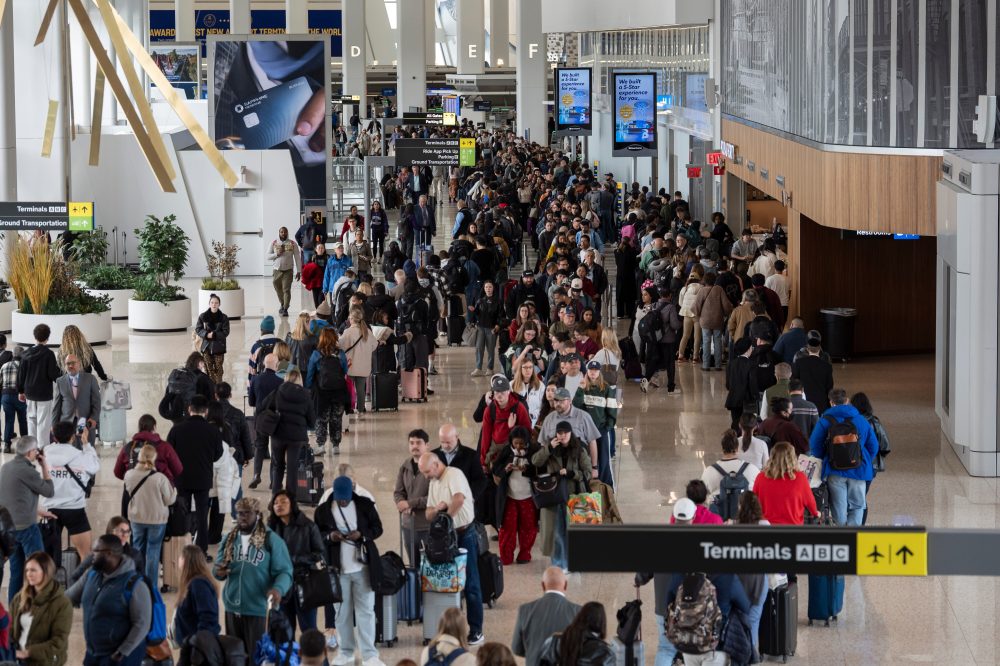
    Located approximately 25 miles from the nation’s capital, the airport first opened its doors in 1962 and is preparing to unveil a new 435,000-square-foot concourse with 14 gates dedicated to United Airlines passengers this fall.

    The facility experienced its busiest year on record in 2025, according to Tuesday’s report from the airport authority, processing 29 million passengers—a 6.4% increase. Meanwhile, nearby Reagan National Airport experienced a 5.4% decline in passenger traffic.

    During December remarks, Trump expressed his intention to reconstruct Dulles, stating “because it’s not a good airport. It should be a great airport… They have a great building and a bad airport.”

    The president indicated he has developed a new architectural vision for the airport’s redesign.

    The current terminal building was created by Finnish architect Eero Saarinen and features a distinctive sloping roof that curves skyward on both ends. Architecture experts recognize it as an outstanding representation of Mid-Century Modern design.

    In December, the Transportation Department issued requests for comprehensive renovation proposals, which could include demolishing the landmark main terminal building.

    Department officials complained about “jet fuel smell in the concourses” and the “paltry” gate count in the primary terminal, declaring that Dulles “is no longer an airport suitable and grand enough for the capital of the United States.”

    The Metropolitan Washington Airports Authority operates the facility through a 50-year congressional lease agreement.

    Recent media reports indicated Trump proposed releasing his hold on $16 billion in funding for a crucial New York Hudson River tunnel project in return for Democratic Senator Chuck Schumer’s support for renaming both Dulles Airport and New York Penn Station in Trump’s honor.

    Florida state legislators approved measures last week to rename Palm Beach International Airport after the president.

    The airport currently bears the name of John Foster Dulles, who held the position of secretary of state during President Dwight Eisenhower’s administration in the 1950s.

  • California Governor Newsom Faces Criticism During National Book Tour

    California Governor Newsom Faces Criticism During National Book Tour

    LOS ANGELES — California Governor Gavin Newsom’s national book tour is generating significant controversy as the Democrat faces criticism from multiple fronts while promoting his memoir across the country.

    The two-term governor, who many anticipate will run for president in 2028, has drawn fire from Republican politicians who claim recent statements were racially insensitive, as well as from LGBTQ+ advocates who object to his suggestion that Democrats should become more “culturally normal.”

    Newsom launched his promotional tour for “Young Man in a Hurry: A Memoir of Discovery” as part of his effort to establish himself as Trump’s primary Democratic opponent and demonstrate his capabilities on the national stage.

    The memoir, which hit shelves Tuesday, emphasizes personal biography rather than policy positions and aims to familiarize national audiences with the former San Francisco mayor and lieutenant governor. While some argue any media attention benefits politicians, the six-city promotional tour is challenging Newsom as he works to overcome perceptions of being an out-of-touch liberal elite.

    Central to Newsom’s personal story are his academic challenges and ongoing battle with dyslexia, which he uses to connect with voters. However, Republicans criticized remarks he made Sunday while speaking with Atlanta Mayor Andre Dickens, who is Black.

    “I’m just trying to impress upon you: I’m like you, I’m no better than you, I’m a 960 SAT guy,” Newsom stated, referencing his below-average college entrance exam score.

    GOP leaders accused Newsom of insulting Black Americans by implying they lack intelligence, charges that Newsom and his staff vehemently rejected.

    “Black Americans aren’t your low bar,” wrote South Carolina Republican Senator Tim Scott, who is Black, on social media. “We’ve built empires, created movements, outworked, outhustled and outsmarted people like you. Stop using your mediocre academics as a way to patronize communities. Its ridiculous!”

    Newsom’s team responded aggressively to criticism from Fox News host Sean Hannity, accusing him of manufactured outrage while ignoring Trump’s racist statements. “You’re going to call me racist for talking about my lifelong struggle with dyslexia?” Newsom posted on X.

    His staff noted the audience’s diverse racial composition and their positive reaction. Dickens defended Newsom, arguing critics misunderstood the context.

    “That wasn’t an attack on anyone. It was a moment of vulnerability about his own journey,” the mayor posted on Instagram. “We’ve gotten so used to loud, chest-pounding politics that when someone speaks about shortcomings, people try to twist it into something else.”

    Several prominent Black Democrats also supported Newsom against the criticism.

    The ongoing debate has kept Newsom’s book tour in national headlines for multiple days, valuable exposure in today’s fractured political media landscape.

    “At this early stage of the pre-presidential race, just about any publicity is good publicity,” explained Republican strategist Mike Murphy. To “have the spotlight is invaluable and Newsom has a real knack for attracting all the right enemies if you are running for the Democratic presidential nomination.”

    Newsom’s communications team later boasted on social media about dominating news coverage on the same day as Trump’s State of the Union address. “FOX NEWS IS WALL-TO-WALL COVERAGE OF ME,” the post declared.

    While most criticism of his Atlanta remarks came from conservatives, some exceptions included Nina Turner, who co-chaired Senator Bernie Sanders’ 2020 presidential campaign, and Cornel West, who attempted a third-party presidential run in 2024. Both are Black.

    Simultaneously, Newsom is facing criticism from California Democrats regarding separate comments made this week.

    During a CNN interview that aired Monday, he argued the Democratic Party should become “more culturally normal” and “less prone to spending a disproportionate amount of time on pronouns, identity” while focusing more on energy costs, childcare, and other practical concerns.

    “It’s deeply concerning for anyone, especially our elected leaders, to be defining who or what is ‘culturally normal.’ By definition, it implies someone else is ‘not normal,’” responded the California Legislative LGBTQ Caucus in an official statement.

    “We cannot adopt the language of MAGA extremists who in the last year are actively seeking to roll back the rights of women, LGBTQ+ individuals and marginalized communities,” the caucus added.

    Lindsey Cobia, a senior campaign adviser for Newsom, highlighted his extensive record supporting LGBTQ+ rights, including his decision as mayor to issue same-sex marriage licenses before it was legally permitted.

    “Nobody’s been a bigger supporter of LGBTQ+ rights than Governor Newsom,” she stated.

    This isn’t Newsom’s first conflict with LGBTQ+ allies. During his political podcast’s debut episode last year, he called transgender athletes competing in women’s sports “deeply unfair.” Many interpreted those remarks as Newsom’s attempt to appeal to moderate voters.

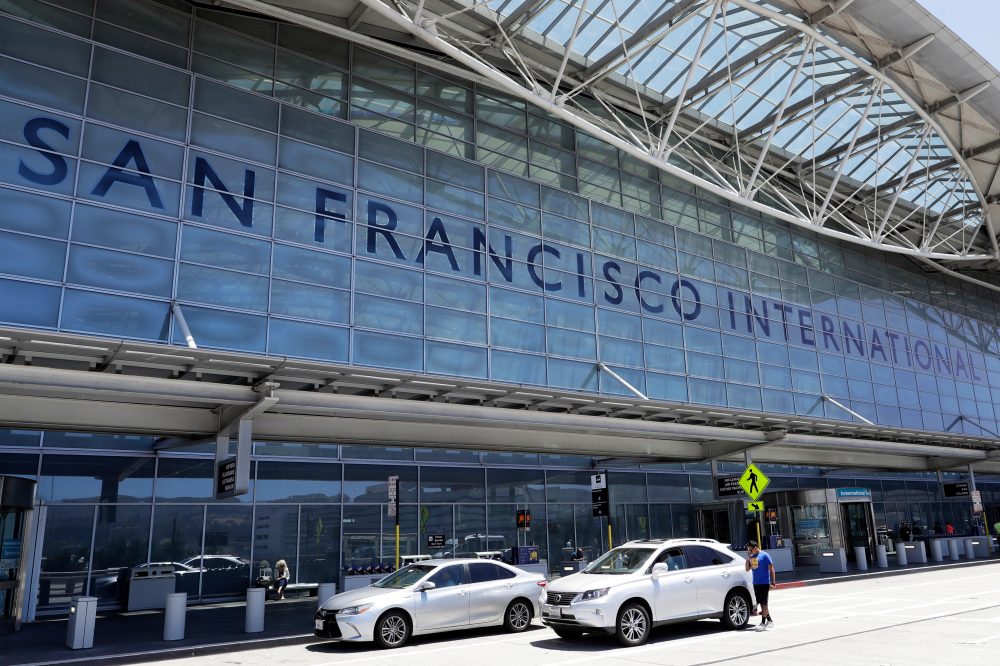
    The book tour concludes with stops in San Francisco and Los Angeles. With one year remaining in his gubernatorial term, some critics question whether he should concentrate on California issues instead.

    “To go on a book tour when our state is in desperate need of revamping and revisions … its almost comical,” said Hollywood crisis manager Holly Baird, who opposes the governor.

  • Senate Democrat Claims FBI Director’s Travel Hurt Major Investigations

    Senate Democrat Claims FBI Director’s Travel Hurt Major Investigations

    WASHINGTON – A leading Senate Democrat is raising concerns that FBI Director Kash Patel’s personal travel habits have interfered with major federal investigations, according to allegations from a government whistleblower.

    Senator Dick Durbin, who serves as the ranking Democrat on the Senate Judiciary Committee, sent a letter Tuesday to federal oversight agencies accusing Patel of “seemingly engaged in what amounts to irresponsible joyriding on DOJ and FBI-operated aircraft at the expense of the American taxpayer and to the detriment of ongoing Bureau operations.”

    According to Durbin’s letter, a whistleblower informed his staff that the FBI’s specialized shooting reconstruction unit faced delays reaching a Utah university following the September assassination of conservative activist Charlie Kirk. The delay allegedly occurred because pilots needed mandatory rest time after being used for Patel’s personal travel.

    The shooting reconstruction specialists, who analyze and rebuild crime scenes involving firearms, were reportedly held up due to the pilot availability issues, Durbin’s correspondence states. Reuters has not been able to confirm these whistleblower allegations independently.

    The FBI has not yet provided an official response to these accusations. However, FBI spokesperson Ben Williamson rejected Durbin’s criticism on social media platform X, stating the senator was “full of it.”

    These new allegations come amid ongoing questions about Patel’s use of taxpayer-funded government aircraft. His recent trip to the Milan Olympics in Italy generated significant attention after footage emerged showing him celebrating with beer alongside the U.S. men’s hockey team in their locker room after Sunday’s gold medal victory.

    Williamson previously defended that trip, explaining Patel was conducting official government business in Italy, including meetings with foreign officials and American security personnel overseeing Olympic operations. Patel has maintained that FBI directors are legally obligated to use government aircraft for travel.

    Durbin has requested that the Government Accountability Office, which serves as Congress’s research division, launch an investigation into these new allegations. He also wants the Justice Department’s inspector general to review Patel’s travel patterns.

    The whistleblower additionally claimed that Patel’s decision-making caused delays for investigators responding to a mass shooting incident at Brown University in December.

  • Trump Set to Deliver Extended State of Union Address Tonight

    Trump Set to Deliver Extended State of Union Address Tonight

    Tonight presents a pivotal opportunity for President Donald Trump to bolster Republican prospects as the midterm elections approach. The president will deliver his State of the Union address before a joint congressional session, with expectations that the speech will be extended in length.

    The timing of Trump’s address comes in the wake of his recent frustration with a Supreme Court ruling on tariffs, a topic that political observers expect will play a prominent role in tonight’s remarks to lawmakers.

  • Federal Court Allows IRS to Keep Sharing Immigrant Tax Data with ICE

    Federal Court Allows IRS to Keep Sharing Immigrant Tax Data with ICE

    WASHINGTON — A federal appeals court in Washington D.C. has ruled against immigrant advocacy organizations seeking to halt the Internal Revenue Service’s practice of sharing taxpayer information with immigration authorities.

    The three-judge panel from the U.S. Court of Appeals for the D.C. Circuit turned down the emergency request from Centro de Trabajadores Unidos and several other nonprofit organizations on Tuesday. These groups had filed a lawsuit challenging a data-sharing arrangement established last April between Treasury Secretary Scott Bessent and Homeland Security Secretary Kristi Noem.

    Under this arrangement, Immigration and Customs Enforcement officials can provide names and addresses of individuals believed to be in the country without legal status to the IRS, which then checks these details against their tax database records.

    Judge Harry T. Edwards explained the court’s decision to deny the emergency halt, writing that the advocacy groups “are unlikely to succeed on the merits of their claim” because the data being exchanged falls outside the protections of IRS privacy laws.

    Centro de Trabajadores Unidos has not yet responded to requests for comment regarding the ruling.

    Attorney General Pam Bondi celebrated the court’s decision on social media, calling it a “crucial victory” for the current administration. “Deporting illegal aliens makes the American people safer,” Bondi wrote in her social media statement.

    The current administration maintains that this data-sharing initiative supports President Donald Trump’s border security priorities and represents a key component of his comprehensive immigration enforcement strategy, which has included deportation operations and workplace enforcement actions.

    The data-sharing arrangement sparked significant internal controversy, leading to the resignation of the IRS acting commissioner last year in protest of the agreement.

    Recent court documents have disclosed that the IRS mistakenly shared taxpayer data for thousands of individuals with the Department of Homeland Security through this program.

    According to a sworn statement from IRS Chief Risk and Control Officer Dottie Romo, the tax agency was able to confirm information for approximately 47,000 individuals out of 1.28 million names submitted by ICE. The IRS provided additional address details for fewer than 5% of those confirmed cases, which may have violated taxpayer privacy protections.

  • NY Governor Demands $13.5B in Tariff Refunds After Supreme Court Ruling

    NY Governor Demands $13.5B in Tariff Refunds After Supreme Court Ruling

    Governor Kathy Hochul of New York is demanding the Trump administration return $13.5 billion in tariff collections following a U.S. Supreme Court decision that overturned President Donald Trump’s extensive tariff program.

    After Trump returned to office last year, he implemented widespread tariffs affecting most countries globally. Trump referred to this action as “Liberation Day,” though it sparked numerous legal challenges from business groups and several states.

    According to Hochul, these tariffs imposed an estimated $1,751 in additional expenses on typical New York families during the past year while damaging small businesses throughout the state.

    “These senseless and illegal tariffs were just a tax on New York consumers, small businesses and farmers, and that’s why I’m demanding a full refund,” the governor said.

    Hochul’s demand follows similar requests made last week by Illinois Governor JB Pritzker and California Governor Gavin Newsom, who also urged the Republican president to provide refunds after the Supreme Court decision.

    The three Democratic governors are all viewed as potential candidates for the 2028 presidential race.

    The White House rejected the governors’ requests, claiming they had spent years discussing problems that Trump was able to solve.

    “President Trump used tariffs to actually deliver where Democrats could only talk, so naturally Democrats are resorting to gathering more meaningless popcorn headlines – pathetic but unsurprising,” White House spokesman Kush Desai said in a statement.

    Last week, Reuters reported that economists from the Penn Wharton Budget Model calculated that over $175 billion in tariff collections across the United States could be eligible for refunds.

    Treasury Secretary Scott Bessent has indicated that lower courts will handle the matter of tariff refunds.

  • Aviation Safety Bill Dies in House After Pentagon Pulls Support

    A bipartisan aviation safety measure failed by a narrow margin in the U.S. House of Representatives on Tuesday, dealing a blow to efforts sparked by the recent fatal aircraft collision near the nation’s capital.

    The legislation, which had gained momentum following the deadly midair crash near Washington, D.C., lost crucial backing when the Pentagon suddenly reversed its position and withdrew support for the bill.

    Family members of those killed in the midair collision were present on Capitol Hill during the vote, having attended a news conference earlier in the day to advocate for the safety legislation.

    The close vote highlights the challenges facing aviation safety reform efforts, even in the wake of tragic incidents that expose potential gaps in current safety protocols.

  • Over a Dozen States File Lawsuit Against Trump Over Child Vaccine Policy Changes

    Over a Dozen States File Lawsuit Against Trump Over Child Vaccine Policy Changes

    More than a dozen states filed a federal lawsuit Tuesday challenging the Trump administration’s decision to scale back childhood vaccination guidelines, arguing the policy changes illegally endanger public health.

    The legal challenge targets the Centers for Disease Control and Prevention’s announcement last month ending universal vaccination recommendations for children against influenza, rotavirus, hepatitis A and B, certain meningitis strains, and RSV. The revised guidelines now suggest these immunizations only for high-risk groups or through individual doctor-patient consultations in what officials term “shared decision-making.” Medical professionals have widely criticized this approach.

    States participating in the lawsuit, which include Arizona and California, contend the modified vaccine guidance disregards established medical science and will force state governments to spend additional resources preventing disease outbreaks.

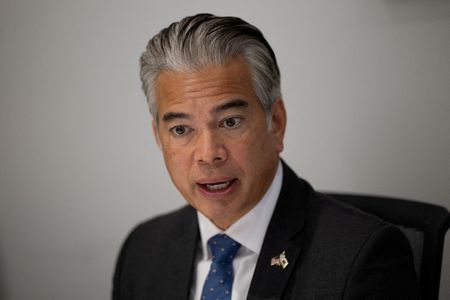
    “The health and safety of children across the country is not a political issue,” said Arizona Attorney General Kris Mayes, a Democrat, at a news conference. “It is not a culture war talking point.”

    Neither the CDC nor the Department of Health and Human Services provided immediate responses to requests for comment regarding the legal action.

    This lawsuit represents an intensification of ongoing conflicts between Democratic state leadership and Republican President Donald Trump’s administration concerning federal public health policy modifications under Health Secretary Robert F. Kennedy Jr. The current administration has terminated thousands of federal public health agency employees, reduced scientific research funding, and modified government guidance regarding fluoride and other health matters.

    Kennedy previously removed all members of a vaccine advisory committee last year, replacing them with his own appointees, which Tuesday’s legal complaint claims violated federal law.

    The legal action follows the formation of an alliance by Democratic governors from California, Washington, and Oregon several months ago to develop independent vaccine recommendations. These governors accused the Trump administration of endangering public health by introducing politics into CDC operations.

    While individual states maintain authority over school vaccination requirements rather than the federal government, CDC recommendations typically shape state-level regulations.

  • Federal Judges Challenge Trump EPA’s Cancellation of $20B Green Energy Program

    Federal Judges Challenge Trump EPA’s Cancellation of $20B Green Energy Program

    WASHINGTON — Federal judges delivered pointed criticism Tuesday during a heated three-hour hearing over the Trump administration’s cancellation of a massive $20 billion clean energy financing program, with the court challenging both government officials and nonprofit organizations involved in the dispute.

    The full U.S. Court of Appeals for the District of Columbia Circuit examined the controversial termination of the Greenhouse Gas Reduction Fund, a Biden-era initiative designed to boost clean energy investments that Trump officials have moved to eliminate since taking office.

    During the proceedings, judges pressed EPA representatives about what appeared to be constantly changing explanations for shutting down contracts with nonprofit groups selected to operate the so-called “green bank.” The court noted that federal officials initially froze funding in February 2025 without detailed justification while claiming waste and fraud, then later cited concerns about insufficient EPA supervision of the program.

    EPA attorney Yaakov Roth defended the government’s actions, stating: “The way these were structured was fundamentally inappropriate and unacceptable and required doing them over.”

    Roth maintained that federal agencies possess extensive authority over contracting decisions and argued that any legal challenges should be handled through a different court system that could only award monetary damages, not reinstate program access.

    The legal battle centers on whether the Trump administration acted lawfully when it targeted the program after President Trump returned to office in January 2025. EPA Administrator Lee Zeldin moved aggressively to recover the funds, making allegations of fraud and conflicts of interest that judges noted were not supported with evidence in court documents.

    The program had awarded $20 billion to organizations including Climate United Fund and other nonprofits, with former EPA Administrator Michael Regan selecting these groups to finance thousands of climate change and environmental justice projects. The money was officially distributed in August 2024 and placed in a Citibank account for program use.

    However, judges also questioned the nonprofit organizations about whether they truly controlled the frozen funds and whether they could legally access money after Congress repealed portions of the 2022 law that originally created the green bank program in July.

    Climate United Fund attorney Adam Unikowsky argued that the EPA had already violated the law before Congress made those changes. “Repealing a statute doesn’t retroactively render an illegal action legal,” he told the court.

    The case reached the full appeals court after a three-judge panel ruled in September that federal officials have broad power to cancel congressionally appropriated funds without facing lawsuits in federal district court. That 2-1 decision, written by Trump appointee Judge Neomi Rao, directed the dispute to federal claims court for contract issues.

    Judge Cornelia Pillard, an Obama appointee who dissented from that ruling, argued the outcome weakened not only the green bank groups but also Congress’s constitutional authority to set policy and control government spending.

    The September decision had overruled U.S. District Judge Tanya Chutkan, who previously found that the EPA could not justify Administrator Zeldin’s misconduct allegations and ordered that the nonprofit contracts should not be terminated. That ruling remains suspended while the EPA’s appeal continues.

    The full court’s decision to rehear this case signals its significant legal importance, as the complete appeals court rarely agrees to reconsider three-judge panel decisions.

  • Federal Government Sues UCLA Over Alleged Antisemitic Harassment of Jewish Staff

    Federal Government Sues UCLA Over Alleged Antisemitic Harassment of Jewish Staff

    Federal prosecutors have filed a lawsuit against the University of California, Los Angeles, claiming the institution failed to shield Jewish staff members from antisemitic harassment during campus demonstrations that disrupted the university in 2023 and 2024.

    The federal case, submitted Tuesday in a California court, represents another step in the Trump administration’s efforts to hold major universities accountable for what officials describe as inadequate responses to antisemitism. The legal action claims UCLA did not take disciplinary action against protest participants, including numerous individuals who were taken into custody in 2024 after refusing to vacate a campus demonstration site.

    University representatives have not yet provided a statement regarding the lawsuit.

    Federal authorities had previously concluded that UCLA inadequately protected Jewish students, leading to a $6 million agreement last year between the university and three Jewish students plus one Jewish faculty member who had filed their own legal action. The current federal lawsuit contends that the damage to Jewish and Israeli staff members extends far beyond what the previous settlement covered.

    The legal filing states: “The United States will now do what UC has thus far failed to do: protect Jewish and Israeli employees” from antisemitic harassment.

    A significant portion of the legal complaint centers on the 2024 demonstration encampment, which federal authorities claim prevented Jewish staff and students from accessing certain campus areas and featured antisemitic messaging and verbal expressions. The lawsuit contends UCLA broke its own regulations by permitting the encampment to continue and charges the institution with failing to impose consequences on any students, faculty, or staff for antisemitic conduct.

    Federal prosecutors are requesting that a judge compel UCLA to implement its existing anti-discrimination rules and provide financial compensation to Jewish employees who experienced a hostile workplace.

    The current administration has largely concentrated on prestigious private institutions in its effort to ensure compliance from universities it characterizes as having liberal and antisemitic tendencies. UCLA represents one of the rare public institutions being pursued in this initiative.

    During the summer, the Trump administration indicated it was pursuing $1 billion from UCLA as part of an agreement to conclude federal oversight. Administration officials had withdrawn hundreds of millions in federal support from the institution, although a federal judge mandated the funds be reinstated in September.

  • Fired LA Fire Chief Sues City, Claims Mayor Used Her as Scapegoat

    Fired LA Fire Chief Sues City, Claims Mayor Used Her as Scapegoat

    LOS ANGELES (AP) — A former fire chief in Los Angeles has taken legal action against the city, claiming her termination was part of a calculated campaign to damage her reputation so Mayor Karen Bass could dodge responsibility for the city’s most catastrophic wildfire.

    Kristin Crowley was terminated by Bass one month following the January 2025 Palisades Fire, with her removal sparking a blame game between the former chief and city officials regarding the fire’s destruction and department funding issues. Crowley’s attempt to regain her position through a City Council appeal failed in March of that year.

    The legal action filed by Crowley last week claims Bass deliberately spread false information to shield the mayor’s political standing after the disaster. Neither the mayor’s office nor the LA City Attorney’s office provided immediate responses to requests for comment regarding the lawsuit.

    According to Crowley, the first-term Democratic mayor attempted to deflect criticism over her absence in Africa on a presidential delegation when the fire erupted, despite weather forecasts predicting hazardous wildfire conditions before her departure.

    The lawsuit claims Bass made misleading public statements, “including falsely claiming that she was not aware of the nationally anticipated weather event, falsely claiming that the LAFD’s budget was not cut, and falsely claiming that LAFD’s resources would have supported an additional 1,000 firefighters to fight the blaze.”

    “These false statements were not mistakes but part of a deliberate strategy to divert scrutiny from Bass’ decisions and to avoid accountability,” the legal document states.

    The former chief is requesting unspecified financial and compensatory damages in her filing.

    Bass dismissed Crowley on February 21, 2025, six weeks following the start of the Los Angeles fire. While initially commending Crowley during early firefighting operations, Bass later stated she discovered that 1,000 additional firefighters could have been mobilized when the fire began. The mayor also claimed Crowley refused to compile a fire report essential for investigating the incident.

    Crowley’s legal document challenges both of these assertions.

    The Palisades Fire ignited on January 7 amid powerful winds, destroying or damaging close to 8,000 residential, commercial and other structures while claiming at least 12 lives in the upscale Pacific Palisades neighborhood. A separate fire that began the same day in Altadena, located east of Los Angeles, resulted in at least 17 fatalities and destroyed or damaged over 10,000 homes and buildings.

  • US Official: No Advanced Nvidia AI Chips Delivered to China Yet

    US Official: No Advanced Nvidia AI Chips Delivered to China Yet

    WASHINGTON – A senior Commerce Department official confirmed during congressional testimony Tuesday that Chinese companies have yet to receive any of Nvidia’s highly sophisticated H200 artificial intelligence processors.

    When questioned about these sought-after semiconductors during the hearing, Commerce Assistant Secretary for Export Enforcement David Peters responded, “My understanding is that none so far.”

    Neither Nvidia nor the Chinese Embassy in Washington provided immediate responses to inquiries about the chip deliveries.

    Last month, the Trump administration officially authorized conditional exports of Nvidia’s H200 processors to China, a decision that sparked criticism from lawmakers on both sides of the aisle as well as former government officials.

    The current administration’s approach, championed by White House AI czar David Sacks, argues that allowing these advanced chip sales to China will prevent Chinese rivals like the heavily sanctioned Huawei from intensifying their efforts to develop competing technology that could match Nvidia and AMD’s cutting-edge designs.

    However, national security advocates worry these sophisticated processors could be redirected from civilian applications to boost China’s military capabilities and potentially undermine America’s artificial intelligence leadership.

    Currently, actual deliveries of these processors remain on hold due to protective measures incorporated into the approval process.

  • Defense Secretary Hegseth May End $200M AI Contract Over Political Concerns

    Defense Secretary Pete Hegseth is considering terminating a lucrative $200 million federal contract with artificial intelligence company Anthropic, raising concerns about what he describes as “woke AI” policies within the organization.

    The potential cancellation would affect Anthropic’s Claude chatbot system, which currently holds one of the rare government approvals for handling classified information and sensitive operations. This specialized clearance makes Claude particularly valuable for defense and intelligence work.

    The brewing conflict between Anthropic and the Trump administration has created uncertainty around the company’s future involvement in government projects. The standoff highlights broader tensions over how AI companies should operate when working with federal agencies.

    If Hegseth follows through on his threat, it would remove one of the Pentagon’s few approved AI tools for classified environments, potentially impacting military and intelligence operations that rely on advanced artificial intelligence capabilities.

    The dispute represents a significant challenge for Anthropic, as government contracts provide substantial revenue and credibility for AI companies seeking to expand their federal business relationships.

  • Trump to Deliver State of Union Address Tuesday Evening

    Trump to Deliver State of Union Address Tuesday Evening

    President Trump is scheduled to deliver his State of the Union address to Congress and the American people on Tuesday evening, where he will present his administration’s objectives and policy priorities for the upcoming year.

    The presidential speech will be followed by the traditional response from the Democratic party, as is customary following State of the Union addresses.

    NPR will broadcast comprehensive live coverage of both the president’s remarks and the opposition party’s rebuttal throughout the evening.

  • Gov. Meyer Calls on Delawareans to Join Statewide 302 Day Volunteer Events

    Gov. Meyer Calls on Delawareans to Join Statewide 302 Day Volunteer Events

    Delaware residents will have the opportunity to give back to their communities through volunteer work as part of a statewide initiative announced by Governor Matt Meyer.

    The governor revealed plans for the 2026 edition of 302 Day, scheduled for Monday, March 2, 2026, which will bring together volunteers from across Delaware for coordinated community service activities.

    This year’s volunteer event holds special significance as it will run alongside Delaware 250, the celebration marking the state’s 250th anniversary as the first state to ratify the U.S. Constitution.

    The 2026 iteration of 302 Day will emphasize three key areas: volunteer work, caring for the environment, and supporting local communities throughout the state.

    Governor Meyer is urging Delaware residents to find and participate in service opportunities in their local areas as part of this coordinated effort to strengthen communities across the First State.

  • Bipartisan Senators Rally Behind Ukraine Before Trump’s State of Union

    Bipartisan Senators Rally Behind Ukraine Before Trump’s State of Union

    WASHINGTON – A bipartisan coalition of senators will unveil a resolution Tuesday expressing strong support for Ukraine in its fight against Russian forces, just hours before President Trump delivers his State of the Union address to the nation.

    The measure is being spearheaded by Democratic Senator Jeanne Shaheen and Republican Senator Thom Tillis, both leaders of the Senate NATO Observer Group. According to documents obtained by news outlets, the resolution has gained backing from at least 26 additional senators split roughly equally between both parties.

    The resolution expresses sympathy for Ukrainian casualties, praises the courage of Ukrainian citizens, promotes stronger collaboration among NATO member nations, and insists that any peace agreement must honor Ukraine’s independence and territorial boundaries while ensuring Ukraine remains “the central party to discussions regarding its future.”

    This legislative move arrives as Ukrainian President Volodymyr Zelenskyy’s administration encounters increasing pressure from the United States to negotiate a peace agreement. While the resolution carries no legal weight, it demonstrates significant congressional backing for the Kyiv government and signals lawmakers’ desire for increased Ukrainian support from the Trump administration.

    The timing of Trump’s evening address coincides with the fourth anniversary of Russia’s comprehensive assault on Ukraine, highlighting an ongoing war the Republican president has not yet resolved despite his earlier promise to end it “in 24 hours.”

    Congressional members from both sides of the aisle, including Trump’s Republican colleagues and Democratic opponents, have pressed him to increase assistance to Zelenskyy’s government, including delivering all previously approved financial and military support from recent years.

    Democratic supporters of Tuesday’s resolution include Shaheen, who serves as the leading Democrat on the Senate Foreign Relations Committee, along with Senators Michael Bennet, Richard Durbin, Richard Blumenthal, Sheldon Whitehouse, and Tim Kaine.

    The Republican backers feature former Senate Majority Leader Mitch McConnell, Tillis, John Curtis, Chuck Grassley, Roger Wicker, Jerry Moran, Dave McCormick, and Susan Collins.

  • 14 States Sue Trump Administration Over Changes to Childhood Vaccine Guidelines

    14 States Sue Trump Administration Over Changes to Childhood Vaccine Guidelines

    A coalition of 14 states led by California and Arizona attorneys general filed a federal lawsuit Tuesday challenging the Trump administration’s sweeping changes to childhood vaccination guidelines that health experts fear could reduce immunization rates nationwide.

    Health and Human Services Secretary Robert F. Kennedy Jr. has dramatically altered established vaccine policies since assuming his role in the new administration.

    The Centers for Disease Control and Prevention recently released updated immunization guidelines that eliminated blanket recommendations for vaccines protecting against COVID-19, rotavirus, flu, meningococcal disease, and both hepatitis A and B. Instead, the new policy directs parents to discuss vaccination decisions with their doctors through what officials term “shared clinical decision-making.”

    Pennsylvania Governor Josh Shapiro joined the Democratic attorneys general in filing the federal court challenge in Northern California, targeting both the policy changes and Kennedy’s decision to replace members of the CDC’s Advisory Committee on Immunization Practices.

    The advisory panel plans to convene in March after its February meeting was scrapped.

    This legal challenge follows similar litigation filed by the American Academy of Pediatrics and other prominent medical groups, who contend the policy revisions lack scientific backing and violate federal law.

    During a recent court hearing in Massachusetts, a Justice Department lawyer defended the health agency, stating it was not promoting an anti-vaccination stance. That separate case remains pending before a federal judge.

    The multistate coalition also includes Connecticut, Michigan, New Jersey, and Wisconsin, among other participating states.

  • Delaware AG Jennings to Join McBride, Blunt Rochester at State of the Union

    Delaware AG Jennings to Join McBride, Blunt Rochester at State of the Union

    Delaware Attorney General Kathy Jennings revealed today that she has been invited to attend the upcoming State of the Union Address as the guest of Congresswoman Sarah McBride. Additionally, Maria Mesias-Tatnall, who serves as Director of Outreach and Immigration Assistance for the Delaware Department of Justice, will join Senator Lisa Blunt Rochester at the presidential address.

    “It is an incredible honor to be invited by our Congresswoman to attend the State of the Union,” Jennings stated in her announcement.

    The invitation allows Delaware’s top law enforcement official to witness the president’s annual address to Congress alongside the state’s newest congressional representative. Meanwhile, Mesias-Tatnall’s attendance with Senator Blunt Rochester highlights the DOJ’s immigration assistance work.

  • Pentagon Chief Issues Friday Deadline to AI Company Over Military Restrictions

    Pentagon Chief Issues Friday Deadline to AI Company Over Military Restrictions

    Defense Secretary Pete Hegseth has reportedly issued an ultimatum to artificial intelligence firm Anthropic, demanding the company eliminate safety restrictions on its military applications by Friday, according to Axios.

    The Pentagon has been applying pressure to major AI companies, including OpenAI and Anthropic, seeking unrestricted access to their artificial intelligence systems on classified military networks, Reuters exclusively reported earlier this month. The military wants these companies to remove the typical usage limitations they normally impose on their technology.

    Earlier in February, Axios also reported that Pentagon officials were contemplating severing their relationship with Anthropic due to the company’s refusal to eliminate safeguards on military applications of its AI models, including its Claude AI system.

  • Wicomico County’s Emergency Declaration Ends This Evening

    Wicomico County’s Emergency Declaration Ends This Evening

    SALISBURY, MD – The emergency declaration currently in effect for Wicomico County will come to an end this evening, according to an announcement from County Executive Julie Giordano.

    Giordano revealed today that the emergency status will officially conclude at 5:00 PM, marking the end of the county’s heightened response measures.

    The Maryland Eastern Shore county had implemented the emergency declaration to address local conditions, though specific details about the circumstances that prompted the original declaration were not provided in today’s announcement.

  • Trump to Preview GOP Midterm Message in Tonight’s State of the Union Address

    Trump to Preview GOP Midterm Message in Tonight’s State of the Union Address

    Tonight at 9 p.m. ET, President Donald Trump will deliver his State of the Union address, which political observers expect will preview the messaging Republicans plan to use when appealing to voters in this November’s congressional elections.

    The commander-in-chief and his political party face challenges heading into the midterms, with polling data indicating significant portions of the American public have concerns about Trump’s governance during his initial year back in the White House. Adding to these difficulties, the Supreme Court recently eliminated a major component of his economic and international policy approach by determining he did not have authority to enact numerous broad tariff measures.

    While Trump is anticipated to concentrate on issues affecting Americans at home, his escalating warnings about potential military action against Iran regarding its nuclear activities loom over tonight’s remarks.

    Following Trump’s address, Virginia Governor Abigail Spanberger will present the Democratic Party’s official response. California Senator Alex Padilla, who gained national attention last year when federal officers forced him to the ground and placed him in handcuffs, will provide the party’s Spanish-language reply.

    Several Minnesota congressional representatives are using their guest invitation privileges for Trump’s State of the Union to demonstrate opposition to his administration’s immigration enforcement policies.

    Representative Ilhan Omar from Minneapolis has invited four individuals affected by Operation Metro Surge, including Aliya Rahman, a disabled American citizen who was recorded being removed from her vehicle by ICE agents while traveling to a medical appointment, and Mary Granlund, Columbia Heights School Board chair who advocated for 5-year-old Liam Conejo Ramos, an Ecuadorian child detained with his father and transported to a Texas detention facility.

    However, Republican Representative Pete Stauber from northeastern Minnesota invited two conservative YouTube content creators — Nick Shirley and David Hoch — whose investigation claiming fraud at Minnesota childcare facilities gained Trump’s notice and helped justify the enforcement surge.

    Those seeking insights into the current status of key administration officials should observe Attorney General Pam Bondi, Homeland Security Secretary Kristi Noem, and FBI Director Kash Patel during the address.

    While Trump has publicly supported all three officials, each faces public examination. Noem weathered changes within Trump’s immigration enforcement approach but did not appear before DHS congressional hearings following the deaths of two citizen protesters in Minneapolis. Bondi supported the president during congressional proceedings regarding the Jeffrey Epstein case files but has faced criticism from some Republicans about her management of the issue. Patel, who also received scrutiny over the Epstein files, is drawing renewed attention after his Milan Olympics trip while previously criticizing Democratic officials for using government resources for travel.

    Notably, Trump did not recognize either Noem or Bondi during his most recent Cabinet meeting where agency leaders praised the president.

    Press Secretary Leavitt announced on X that Charlie Kirk’s widow will attend as one of the president’s guests. “The president will call on Congress to ‘firmly reject political violence against our fellow citizens’ with Charlie Kirk’s widow in the chamber,” Leavitt posted.

    During Kirk’s Arizona memorial service where Trump spoke, Erika Kirk expressed forgiveness toward her husband’s assassin “because it was what Christ did. And is what Charlie would do.” The president shared a different perspective during the service: “That’s where I disagreed with Charlie. I hate my opponent, and I don’t want the best for them. I’m sorry. I am sorry, Erika.”

    According to the White House, guests joining the first lady in the House gallery will include ten-year-old Everest Nevraumont, a student at Austin, Texas’s Alpha School where artificial intelligence powers learning. Everest advocates for AI education and delivered a TEDx presentation about incorporating the technology into her studies. The first lady promotes AI use and created the Presidential AI Challenge, a White House-sponsored student competition.

    Also attending will be Sierra Burns, 24, from Greenville, South Carolina, a foster care advocate who experienced foster care herself and benefited from the first lady’s Foster Youth to Independence Program. Last year, Melania Trump secured $30 million in funding to assist young people transitioning from foster care.

    Virginia Governor Abigail Spanberger will present Tuesday evening’s Democratic response to President Trump’s State of the Union from Colonial Williamsburg, using the historic setting to frame her message. Colonial Williamsburg, a living history museum featuring restored 18th-century structures and interpreters, represents the center of Virginia’s early resistance to British authority. Spanberger’s team indicates she plans to connect that heritage to today’s political climate.

    In her response, Spanberger is also expected to highlight affordability concerns — the theme her team credits with helping secure her double-digit victory in winning a previously Republican-held position.

    Members of the House Democratic Women’s Caucus and their guests, including several survivors of Jeffrey Epstein’s sexual abuse, will wear all white during tonight’s address, modeling themselves after early 20th-century women who fought for voting rights and other freedoms.

    “Tonight, when Donald Trump looks out into the chamber, he will see a wall of white,” said Democratic Representative Jill Tokuda of Hawaii. Some lawmakers will also wear pins expressing support for Epstein survivors and demanding release of case files on Epstein without redacting information about his associates.

    “We are standing here in solidarity so that we are not forgotten,” said Sharlene Rochard, one of the survivors.

    House Speaker Johnson criticized Democrats for protesting everything from the president’s joint address to the administration’s immigration enforcement actions. “It’s shameful,” Johnson stated. He said Democrats offer nothing except their “TDS agenda” — what the president’s supporters term “Trump Derangement Syndrome” among those opposing presidential policies.

    Johnson revealed Trump contacted him Sunday night requesting changes. “‘We need some more guests,’” the speaker recalled Trump saying. The visitors’ gallery was already at capacity with waiting lists for tickets. “‘Mr. President, how many people are you talking about?’” the speaker asked. “The whole team,” he said Trump responded.

    Johnson explained they are working out logistics to “squeeze in” the gold-medal winning hockey players, calling it “a great moment.” The gold-medal winning women’s Olympic team declined Trump’s invitation to attend.

    Senator Alex Padilla will deliver the Democratic Party’s Spanish-language response to President Trump’s State of the Union Tuesday night, highlighting a California Democrat who gained national recognition last year after federal agents forced him to the ground and handcuffed him.

    Padilla had confronted Homeland Security Secretary Kristi Noem during a Los Angeles news conference, attempting to speak about immigration raids that triggered protests in California and nationwide. The son of Mexican immigrants, Padilla stated his response will focus on “a better path — one that lowers costs, safeguards our democracy, and reins in rogue federal agencies.”

    The Spanish-language response occurs as Democrats attempt to regain support among Latino voters before the midterms, following Trump’s increased Latino support in 2024 compared to 2020.

    Trump speaks following the Supreme Court’s invalidation of his tariffs imposed as national emergency measures, prompting him to reimpose levies under different statutes.

    Woodrow Wilson, who revived in-person congressional addresses, spoke to lawmakers about tariffs weeks after taking office in 1913. While not his official annual message, Wilson, like Trump, wanted to influence Congress and public opinion. Unlike Trump, Wilson sought income taxes on wealthy Americans to reduce tariffs imposed by Republican predecessors, including Trump favorite William McKinley.

    Wilson encouraged the U.S. to “build up trade” while trusting “the whetting of American wits by contest with the wits of the rest of the world.” In 1917, Wilson asked Congress in person to declare war on Germany. Trump is considering military action against Iran and has taken action in Venezuela without seeking congressional approval for either.

    From John Adams’ presidency ending in 1801 through Woodrow Wilson’s beginning in 1913, the State of the Union was simply a letter delivered down Pennsylvania Avenue. Adams’ successor, Thomas Jefferson, author of the Declaration of Independence, preferred writing to speaking and sought to avoid spectacles he associated with monarchy rather than democratic republic.

    To satisfy the Constitution’s requirement that the president “shall from time to time” inform Congress about “the State of the Union,” the third president wrote to lawmakers instead of addressing them personally. This began a century-plus tradition of written presidential messages read on Capitol Hill by congressional clerks.

    Wilson changed that tradition, viewing in-person congressional speeches as valuable presidential tools to shape public opinion and congressional action. Every president since has addressed joint congressional sessions.

    “He will call on Democrats in Congress to reopen the Department of Homeland Security,” Leavitt told reporters, blaming Democrats for the department’s shutdown and calling the situation “despicable.” She said Federal Emergency Management Agency personnel are working without pay in the Northeast following the shutdown to help authorities restore power to hundreds of thousands after the blizzard.

    DHS funding expired January 30 as Democrats demanded federal immigration enforcement changes. The shutdown affects several department agencies, including the Coast Guard, Secret Service, and Transportation Security Administration.

    The White House and Democrats have negotiated potential changes to ICE and other immigration enforcement agencies after federal agents fatally shot two protesters in Minnesota. However, the sides appear deadlocked after the White House rejected Democrats’ latest offer last week.

    Democrats are attempting to counter Trump’s anticipated celebration of lower crime rates during his State of the Union speech. Kansas City Mayor Quinton Lucas said the decrease results from local initiatives, not aggressive White House measures.

    “While mayors would welcome a federal partner who works with them, and not against them, the Trump Administration has done nothing to help,” Lucas stated. “In fact, it has actively made our cities less safe.” Lucas, who leads the Democratic Mayors Association, said the administration has “recklessly attacked our cities, undermining them at every turn.”

    The president criticized the three Republican-appointed Supreme Court justices who opposed his tariffs. He will almost certainly have them seated before him Tuesday night. Chief Justice John Roberts and Justices Neil Gorsuch and Amy Coney Barrett regularly attend the State of the Union.

    When reporters asked Trump about his appointees, Gorsuch and Barrett, he declared their tariff votes “an embarrassment to their families.” Trump has been similarly personal during campaign debates but historically avoids conflict with rivals when they are present. He was particularly friendly with New York Mayor Zohran Mamdani in the Oval Office after previously calling him a communist.

    President Barack Obama notably criticized the court during a joint address following its Citizens United decision expanding big money in politics. Roberts shook his head, visibly disturbed by Obama’s critique.

    Representative Hakeem Jeffries said House Democrats intend to continue the late Reverend Jesse Jackson’s legacy. The Brooklyn congressman also invited Vonetta Rougier, a bus operator and family caregiver from his district who is “picking up extra shifts just to keep up with the skyrocketing price of housing, food and healthcare.” He is also welcoming Marina Lacerda, among the Epstein survivors attending as Democratic Women’s Caucus guests.

    Reid Wiseman, Victor Glover, Christina Koch, and Jeremy Hansen are preparing for Artemis II, NASA’s first crewed mission in over half a century to travel around the moon. They will join the House speaker’s guests at the speech.

    Representative Mike Johnson is also hosting other guests, including Claire Lai, daughter of Jimmy Lai, the pro-democracy former Hong Kong media tycoon sentenced to 20 years in prison for criticizing Beijing. Johnson is co-hosting her visit with Representative Chris Smith, a longtime family champion.

    The president will have multiple House gallery guests, including some creating touching moments, according to White House Press Secretary Karoline Leavitt. “You’re going to hear the President share the stories of everyday Americans who have benefited from his policies,” Leavitt told reporters. “You’re gunna hear the president share tear-jerking stories of American heroes past and present who really exemplify what it means to be a patriotic American.”

    Trump’s guests will include a worker benefiting from new tax exemptions on tip and overtime income and a woman saving money on infertility treatments. “He’ll be sharing these stories again of every day Americans who are benefiting from his policies,” Leavitt said on Fox & Friends.

    As lawmakers listen to Trump’s yearly agenda in the House chamber, the moment represents an existential point for Congress, which has essentially been marginalized by his expansive reach, with the Republican president bypassing his narrow GOP majority to accumulate enormous personal power.

    The GOP-led Congress has largely remained silent as Trump dramatically consolidated power through hundreds of executive actions, many facing court challenges, and willingness to do whatever necessary to implement his agenda.

    “It’s crazy,” said Nancy Henderson Korpi, a northern Minnesota retiree who joined an Indivisible protest group and plans to watch the speech from home. “But what is disturbing more to me is that Congress has essentially just handed over their power.” She added, “We could make some sound decisions and changes if Congress would do their job.”

    The State of the Union address derives its name directly from the U.S. Constitution. Article II, establishing the presidency and its powers and duties, states partly: “He shall from time to time give to the Congress Information of the State of the Union, and recommend to their Consideration such Measures as he shall judge necessary and expedient.”

    However, until World War II years, presidents fulfilled that duty with an “Annual Message,” whether written (from Thomas Jefferson through William Howard Taft) or in person (George Washington, John Adams and every president from Woodrow Wilson to Trump).

    Franklin Roosevelt’s Annual Message began being called colloquially his “state of the Union” message in 1942. Harry Truman’s 1947 speech, according to the Congressional Research Service, was the first annual address officially recognized as a “State of the Union” message and the first televised.

    Leavitt said one mission Trump will discuss during the speech is last summer’s Operation Midnight Hammer, in which the U.S. bombed several Iranian nuclear sites. Trump, who says those sites were “obliterated,” is again threatening Iran with military action and flooding the region with U.S. military assets if Iran fails to reach a nuclear program agreement with the U.S. Another negotiation round is scheduled Thursday in Switzerland.

    “You’ll hear the president proudly and rightfully say that the United States military is the strongest and most lethal fighting force in the world,” Leavitt said at the White House. “And you will hear him talk about the threats that remain abroad” and “what the United States is doing to ensure that not only America is the safest country in the world, but remains the strongest country in the world.”

    “You’re going to hear a speech that’s a celebration of 250 years of our nation and our nation’s independence,” White House Press Secretary Karoline Leavitt told reporters. Trump will tell stories about “everyday Americans who have benefited from his policies” and share “tear-jerking stories of American heroes, past and present, who really exemplify what it means to be a patriotic American,” she said. The United States will celebrate the 250th anniversary of the Declaration of Independence on July 4.

  • Senior US Official: America Seeks Steady China Ties Despite Trust Issues

    Senior US Official: America Seeks Steady China Ties Despite Trust Issues

    WASHINGTON – A high-ranking State Department official testified before Congress on Tuesday that the United States seeks steady diplomatic ties with China while acknowledging serious trust concerns between the two superpowers.

    During the congressional hearing, Jacob Helberg, who serves as Under Secretary of State for Economic Affairs, delivered these comments as President Donald Trump prepares for an upcoming diplomatic visit to China. The president is scheduled to hold talks with Chinese President Xi Jinping in the coming weeks.

    Helberg’s testimony highlights the complex diplomatic balance the administration is attempting to strike with one of America’s most significant economic and strategic competitors on the world stage.

  • High Court: Americans Cannot Sue Postal Service for Deliberate Mail Withholding

    High Court: Americans Cannot Sue Postal Service for Deliberate Mail Withholding

    WASHINGTON — The nation’s highest court delivered a split decision Tuesday, determining that citizens have no legal recourse against the U.S. Postal Service when workers deliberately withhold their mail.

    The narrow 5-4 decision rejected the case brought by Lebene Konan, a Texas property owner who claimed postal employees intentionally blocked her mail delivery for a two-year period. Konan, who is African American, argued that racial discrimination motivated the postal workers’ conduct.

    Writing for the conservative majority, Justice Clarence Thomas stated that existing federal legislation protecting the Postal Service from litigation over missing or undelivered correspondence also covers “the intentional nondelivery of mail.”

    Justice Sonia Sotomayor penned the dissenting opinion, arguing that while lawsuit protections are extensive, they shouldn’t apply when mail delivery decisions stem from “malicious reasons.” Justice Neil Gorsuch sided with the three liberal justices in opposition.

    The Trump administration’s legal team had cautioned that siding with Konan could trigger an avalanche of similar legal challenges against the financially struggling postal system.

    Konan works as both a real estate professional and insurance representative. She accused two workers at the Euless, Texas post office in the Dallas-Fort Worth area of deliberately blocking mail delivery to her and her rental tenants due to what she claims was their disapproval of her race and property ownership.

    Court filings reveal the conflict started when Konan found that her rental property’s mailbox key had been replaced without notification, blocking her access to tenant correspondence. Post office staff demanded proof of ownership before providing a replacement key or resuming delivery service. Despite Konan’s compliance and direct orders from the USPS inspector general to restore service, the mail delivery issues persisted.

    According to Konan’s allegations, postal employees labeled mail as undeliverable or marked it for return to sender. She and her tenants missed critical correspondence including utility bills, prescription medications, and vehicle titles. Konan also reported losing rental revenue when tenants relocated due to the ongoing mail problems.

    Following numerous unsuccessful complaints to postal authorities, Konan pursued legal action through the 1946 Federal Tort Claims Act, which permits certain government lawsuits. The Supreme Court case centered on how far the postal service’s special legal protections extend.

  • Trump Administration Cancels Planned Immigration Detention Center in New Hampshire

    Trump Administration Cancels Planned Immigration Detention Center in New Hampshire

    Federal authorities have abandoned their proposal to construct an immigration detention center in New Hampshire, according to an announcement from the state’s Republican governor on Tuesday.

    Governor Kelly Ayotte revealed the decision on social media platform X after meeting with Department of Homeland Security Secretary Kristi Noem in Washington last week. “The Department of Homeland Security will not move forward with the proposed ICE facility in Merrimack,” Ayotte stated.

    The governor indicated she conveyed local opposition from the community located approximately 50 miles northeast of Boston during her discussions with federal officials. Ayotte emphasized that state law enforcement agencies would maintain their collaboration with DHS to protect New Hampshire’s northern border with Canada.

    Secretary Noem acknowledged the meeting in an official DHS statement and praised the partnership, describing New Hampshire as “a strong partner.”

    This reversal occurs as President Trump implements his comprehensive immigration enforcement agenda. The administration’s intensified deportation efforts have faced increasing public opposition as the November midterm elections approach, with control of Congress at stake.

    Immigration enforcement teams have deployed across major metropolitan areas including Los Angeles and Chicago, conducting neighborhood sweeps that have sparked confrontations with local residents. Fatal encounters have occurred, with federal agents shooting and killing two American citizens in Minneapolis during January, and another citizen fatally shot in Texas the previous year.

    The current administration is expanding detention capacity to accommodate increased arrests, allocating over $38 billion this year for facilities that have drawn criticism from both Democratic lawmakers and some Republicans like Ayotte.

    Opposition groups including Democrats, civil rights organizations, religious leaders, and other advocates have raised concerns about human rights violations, legal issues, and health problems at detention centers. They cite poor conditions, inadequate treatment, and disease outbreaks including measles at facilities operated by companies such as GEO Group and CoreCivic.

    Fatality records show at least eight deaths have occurred in ICE detention facilities since early 2026, adding to at least 31 deaths recorded the previous year.

    Maryland’s Democratic leadership filed a lawsuit Tuesday seeking to block a proposed detention facility in the state’s western Washington County.

    DHS leadership has dismissed characterizations of these facilities as “warehouses.”

    Congressional Democrats have obstructed DHS funding in efforts to limit ICE operations. White House spokesperson Karoline Leavitt announced Tuesday that President Trump would address the funding issue during his State of the Union address scheduled for that evening.

  • Former GOP Congresswoman Battles Trump-Backed Rival in Texas Primary Fight

    Former GOP Congresswoman Battles Trump-Backed Rival in Texas Primary Fight

    HARLINGEN, Texas — In a small side room at a Texas barbecue restaurant, former Republican Representative Mayra Flores addressed barely a dozen supporters in the Rio Grande Valley. Given only sixty seconds to make her case for returning to Washington, she stretched her remarks to three minutes while competing with the noise from a nearby ice machine.

    The modest gathering was a stark contrast to the excitement Flores generated for her party in 2022, when her special election triumph made her the first GOP representative from the Rio Grande Valley in more than a century and a half. Though she subsequently lost two elections, that initial win demonstrated Republicans could appeal to working-class Latino voters in areas previously considered Democratic strongholds, previewing Donald Trump’s own regional gains in 2024.

    “Don’t let anyone take that from us,” Flores told the small crowd.

    However, as the March 3 primary approaches, Flores finds herself facing significant challenges within her own party. Campaign fundraising has proven difficult, and Trump has thrown his support behind challenger Eric Flores, an attorney and first-time candidate who shares her surname but no family connection.

    This Flores versus Flores matchup has evolved into an intense and personal battle between two young Hispanic Republicans who represent their community’s conservative shift. The primary winner will become one of Texas’ most watched GOP candidates, tasked with unseating Democratic Representative Vicente Gonzalez, who has long been a Republican target. Recent redistricting efforts in Texas were partly aimed at making Gonzalez more vulnerable.

    A November Republican win would cement the party’s position in this competitive region and indicate successful adaptation to changing American demographics. A defeat might suggest the GOP’s recent Rio Grande Valley successes were merely temporary.

    Control of the House of Representatives may well be decided here at Texas’ southern edge, where the state meets Mexico at the Rio Grande River and Gulf of Mexico. Trump plans to visit the area Friday with a Corpus Christi appearance.

    The Rio Grande Valley stretches as an interconnected urban expanse along 100 miles of the U.S.-Mexico border. This rapidly expanding region houses 1.5 million residents, nearly 90% Hispanic and predominantly working-class.

    Historically Democratic, the area has experienced a notable political transformation. Trump narrowed his deficit by double digits between 2016 and 2020, despite losing both the region and presidency. Mayra Flores’ victory followed two years later, and Trump carried every regional county in 2024.

    Following her special election success, Flores twice fell to Gonzalez, who has consistently outperformed Democratic presidential candidates. She blames her defeats on 2022 redistricting that favored Democrats, an issue Republicans addressed through additional redistricting last year.

    Under Trump’s influence, Texas GOP legislators redrew district lines last fall to benefit Republicans, hoping to capture up to five Democratic House seats statewide and maintain House control. Three of these targeted districts are located in the Rio Grande Valley.

    These represent the first elections under the revised map.

    Texas Republicans are betting that the decade-long movement of working-class voters toward the GOP represents a lasting change, though that outcome remains uncertain.

    “This area has a lot of conservative and Republican values–family, church,” explained Jonathan Campos, a Republican rancher near Brownsville seeking county commission election. “They just don’t realize it.”

    Trump disrupted the race with his unexpected December endorsement of Eric Flores, a former federal prosecutor and Army officer who has attracted more financial support and momentum than Mayra Flores.

    “Eric knows the Wisdom and Courage it takes to Ensure LAW AND ORDER,” Trump posted on Truth Social.

    Following Trump’s endorsement, businessman Scott Mandel withdrew from the race and backed Eric Flores, despite having raised over $1 million for his own campaign.

    The 34-year-old Eric Flores emphasizes his background with a Texas National Guard border patrol unit and his federal prosecution work in McAllen.

    “I’m going to take that same tenacity that I served in uniform on the border, the same tenancy fighting the cartels and the human smugglers in the federal courtroom – that’s what I want to take to D.C.,” he stated.

    He characterized Mayra Flores as having had her opportunity, labeling her an “opportunist” who benefits financially from her repeated district losses.

    “Yeah, she had a short stint in Congress, but how about the remaining portion of her life?” he questioned. “Fact is, she’s been a career candidate for almost six years, paying herself with campaign funds.”

    This message appeals to many supporters, including Doug Wells, a 60-year-old grocery clerk who acknowledged her congressional experience but said, “But overall, I think he’s got more life experience.”

    The 40-year-old Mayra Flores dismissed Trump’s endorsement of her opponent as a decision made by his advisers.

    She highlighted that Eric Flores only recently joined the Republican Party, pointing to his father Kino Flores’ background as a Democratic state legislator convicted of ethics violations. She has also criticized his prosecutorial work as service with the same “Biden DOJ” that pursued Trump.

    While Joe Biden was president during Eric Flores’ tenure, he worked as a career attorney in Texas without involvement in Trump prosecutions or Washington policy decisions.

    Mayra Flores counts Margaret Cervantes of Harlingen among her supporters. The 69-year-old retiree praised her strength and noted she hasn’t heard Flores speak negatively about opponents.

    The following day, two hours away in Corpus Christi, Flores met privately at a coffee shop with Jack Cooper, a project manager and Army veteran who promised to encourage his contacts to support her.

    In these intimate settings, Mayra Flores works to counter perceptions that her political moment has passed.

    “I’ve been doing this since 2021” when Republican victory seemed impossible, she noted, arguing that her success created opportunities for her current challenger.

    “I did it when it was hard,” she declared. “I ran so men like him could walk.”

  • Key Questions Surround Trump’s State of the Union Address Tonight

    Key Questions Surround Trump’s State of the Union Address Tonight

    WASHINGTON — President Donald Trump indicates he has substantial material to cover during tonight’s address.

    The president returns to Capitol Hill to present his State of the Union speech during a pivotal period of his administration, facing approval numbers near historic lows while supporters await more concrete solutions to their economic hardships.

    Additionally, the Supreme Court recently ruled against the tariff measures that formed a cornerstone of his current term. Meanwhile, the international policy issues he pledged to resolve effortlessly now appear more complex, with another possible military action against Iran on the horizon.

    The slim Republican control in Congress that has offered minimal resistance to Trump’s broad interpretation of executive authority faces potential elimination following this year’s midterm contests, where competing interests may clash.

    Several key issues emerge as the speech approaches.

    Trump made no effort to conceal his anger following the Supreme Court’s rejection of his comprehensive tariff program last week. Beyond questioning the legal logic of the justices who opposed one of his primary initiatives — including two of his own appointees — he called them an “embarrassment to their families.”

    Tonight, many of these same justices will likely occupy front-row seats in the House chamber during Trump’s remarks.

    The question remains whether Trump will confront the justices directly or demonstrate restraint by limiting his criticism to the ruling itself.

    Presidential criticism of the court during State of the Union addresses has precedent. In 2010, President Barack Obama condemned the Court’s Citizens United ruling — which enabled millions in anonymous political contributions — saying it would “open the floodgates for special interests,” causing Justice Samuel Alito to visibly disagree by mouthing “not true.”

    Supreme Court justice attendance has become increasingly irregular since that incident. Alito stopped attending after 2010, joining conservative Justice Clarence Thomas, who has long viewed these speeches as overly political. Last year, during Trump’s special congressional address, only four justices attended — Chief Justice John Roberts and Justices Elena Kagan, Brett Kavanaugh, and Amy Coney Barrett.

    Trump welcomed the justices cordially then, even telling Roberts “thank you again, I won’t forget it.” Many interpreted this as gratitude for the Court’s presidential immunity decision, though Trump claimed on social media he was simply thanking the chief justice for administering his oath.

    Nevertheless, justices seeking to avoid televised presidential criticism may choose to stay away Tuesday.

    Democrats were still adapting to Trump’s return when he last spoke to Congress — and it was evident.

    During his 2025 joint session speech, Democrats brought signs with messages from “Save Medicaid” and “Musk Steals” to simply “False.” Rep. Al Green of Texas interrupted Trump, resulting in his removal from the chamber.

    The signage drew widespread criticism as artificial, while Green’s outburst proved distracting. For voters angered by Trump’s assertive power use in his early months, the display offered little assurance that Democrats could effectively counterbalance the White House.

    Democrats seek to prevent a repeat of last year’s chaos. Expect fewer signs and possibly reduced Democratic attendance overall. Numerous lawmakers have announced they will skip the speech, with some planning alternative Washington events.

    This approach may reduce theatrical moments but might not convince frustrated voters that Democrats possess a unified, effective message after a decade of Trump’s political presence.

    Following Democratic governors’ boycott of a weekend White House dinner with Trump, avoiding the State of the Union may further emphasize the fundamental divide between America’s major political parties.

    Virginia’s recently sworn-in Governor Abigail Spanberger will deliver the Democratic response to Trump.

    Trump speaks at the beginning of a difficult election year for fellow Republicans, who maintain a precarious congressional majority. Much of the GOP’s difficulty stems from voter perception that the party hasn’t adequately addressed rising costs.

    The White House acknowledges voter economic concerns and claims to be addressing them. However, Trump frequently struggles with message discipline. During a Georgia visit last week intended to emphasize economic issues, the president instead promoted disputed election fraud claims and voter identification proposals. When discussing affordability, he described it as a Democratic-created problem he has now “solved.”

    Trump’s immigration rhetoric may also draw attention. Republicans faced criticism after two American citizens died in Minneapolis last month during an aggressive federal immigration operation. While Trump maintains tough language regarding undocumented immigrants, his administration has reduced Minneapolis operations. The president told New York Governor Kathy Hochul last week he would direct future immigration enforcement to welcoming locations.

    Trump campaigned on quickly ending global conflicts. A year later, Russia’s Ukrainian war continues, Gaza maintains a fragile ceasefire, and Trump threatens major Iranian military action just eight months after claiming the U.S. had “obliterated” Iran’s nuclear capabilities.

    His military intervention in Venezuela less than two months ago, which captured leader Nicolas Maduro, demonstrates his continued international involvement despite America First messaging.

    Trump supporters may applaud his nationalist rhetoric, but the Republican president displays increasingly globalist actions in his second term’s first year.

    Iranian conflict remains a real possibility. Trump has established the largest Middle Eastern U.S. military presence in decades. Last week he warned Iran’s leadership that “bad things will happen” soon without a nuclear agreement.

    Trump rarely practices self-editing. Last year’s speech — technically a joint address rather than a State of the Union — lasted nearly one hour and 40 minutes, setting a congressional address record that Trump may seek to surpass.

    “It’s going to be a long speech because we have so much to talk about,” he stated Monday.

  • Trump’s Promise to Send Hospital Ship to Greenland Faces Reality Check

    Trump’s Promise to Send Hospital Ship to Greenland Faces Reality Check

    President Donald Trump announced Saturday on Truth Social his intention to send a hospital ship to Greenland, claiming residents there are ill and lacking proper medical attention. However, both of the U.S. Navy’s hospital vessels are currently being repaired at an Alabama shipyard.

    Trump’s statement has sparked a response from Greenland’s prime minister, who defended the territory’s healthcare infrastructure. This latest development adds to ongoing tensions as Trump continues discussing his desire to acquire Greenland, a semi-autonomous region under NATO partner Denmark.

    In his social media post, Trump referenced his Arctic special envoy, stating: “Working with the fantastic Governor of Louisiana, Jeff Landry, we are going to send a great hospital boat to Greenland to take care of the many people who are sick, and not being taken care of there.”

    However, no widespread illness outbreaks have been documented in Greenland recently, and Trump’s post didn’t specify what health crisis he was addressing.

    Greenland’s 57,000 residents receive medical services primarily through Queen Ingrid Hospital located in capital city Nuuk, supplemented by multiple regional healthcare facilities, according to the Danish Medical Journal. The territory provides comprehensive free healthcare to citizens and permanent residents, covering everything from general practice visits to specialist care, hospital treatment, medications, dental services, and home nursing assistance, as reported by the Nordic Council of Ministers.

    Greenlandic Prime Minister Jens-Frederik Nielsen responded by highlighting their universal healthcare approach while contrasting it with America’s system. “We have a public health care system where treatment is free for citizens. That is a deliberate choice — and a fundamental part of our society,” Nielsen stated. “That is not how it works in the USA, where it costs money to see a doctor.”

    While healthcare access is free, the Center for Public Health in Greenland acknowledges significant public health obstacles exist across the expansive island territory. These issues stem largely from the rapid transformation “from a hunting society to a modern industrial and knowledge society” occurring within a compressed timeframe. Contemporary health problems increasingly include obesity, diabetes, and heart disease.

    Healthcare staffing shortages persist in certain areas. Anna Wangenheim, Greenland’s health and disability minister, recently made an “urgent” Facebook appeal seeking dentists for three communities: Aasiaat, Paamiut, and Nanortalik.

    Despite accessibility challenges in isolated regions and personnel shortages, Greenland has made significant healthcare progress since taking control of its medical system in 1992, according to University of Greenland professor Lene Seibæk. “In 2020, life expectancy in Greenland was approximately 71 years for men and 77 years for women, representing an increase of approximately six years for men and five to six years for women since the 1990s and exceeding the global average,” Seibæk explained.

    Trump claimed in his post that a hospital ship was already “on the way” to Greenland. In reality, both the USNS Mercy and USNS Comfort remain at a Mobile, Alabama shipyard, as confirmed by recent facility social media posts and public vessel tracking information.

    The Comfort docked at the Alabama facility on January 23rd and is scheduled to remain there until April for contracted maintenance work. The Mercy has been there since August, with repairs extending beyond original timelines. Additional maintenance work for the Mercy is planned for March at an Oregon shipyard.

    Even if either vessel were expedited from repairs, significant preparation time would be required before deployment. Hospital ships operate with basic crews that must be supplemented with medical personnel from nearby hospitals at their Norfolk, Virginia, or San Diego home ports. Each ship contains 12 operating theaters and 1,000 hospital beds requiring full medical staffing.

    Louisiana Governor Landry, serving as Trump’s Arctic envoy, supported the president’s assertions Sunday on X, claiming “many villages and small towns lack basic services that Americans often take for granted.” Landry added that “small settlements are without permanent doctors, diagnostic tools, or specialist care — forcing residents to travel great distances for vital treatments that should be available at home.”

    While some remote settlements may lack on-site medical facilities, Greenland utilizes telemedicine extensively for distant communities. Patients requiring unavailable local care can be transported to the national hospital or regional centers. Complex medical cases warrant flights to Denmark, with government coverage for both transportation and treatment costs.

    Rural American communities face comparable healthcare access challenges, often more severe due to financial barriers and travel distances. These problems have intensified over the past decade with maternity ward closures, pharmacy struggles, and rural hospitals preparing for potential federal Medicaid reductions.

    Since 2010, 152 rural hospitals across America, particularly in southern states, have either eliminated inpatient services or closed completely, based on University of North Carolina at Chapel Hill data. While telehealth expansion helps address some disparities, it cannot solve universal access issues as many rural areas experience provider shortages and unreliable internet connectivity.

    Louisiana exemplifies these challenges, with most parishes being fully or partially rural. According to the state health department, 73% of Louisiana residents live in areas lacking adequate primary care providers, 86% without sufficient dental providers, and 93% without enough mental health professionals.

  • Canada Approves Gulfstream Jets Following Trump’s Tariff Threats

    Canada Approves Gulfstream Jets Following Trump’s Tariff Threats

    Canadian aviation regulators have given the green light to two General Dynamics Gulfstream business aircraft models following weeks of pressure from President Donald Trump, who had criticized the lengthy approval process.

    According to government documents, Transport Canada has now certified the Gulfstream G700 and G800 business jets. This development follows Trump’s public complaints about delays in the Canadian approval process for these American-manufactured aircraft.

    The Federal Aviation Administration’s top official indicated earlier this month that Canada would likely announce certification for several Gulfstream business aircraft that had been waiting for approval for multiple years. Earlier reports confirmed that Canada had already certified Gulfstream’s G500 and G600 models.

    Trump had previously posted on social media threatening significant trade action against Canada’s aviation sector. He warned of plans to remove certification for Bombardier Global Express business jets manufactured in Canada and proposed implementing 50% import duties on all Canadian aircraft until Transport Canada approved the American-made Gulfstream planes.

    Aviation industry professionals expressed concern about the situation, emphasizing that aircraft certification decisions should be based solely on safety considerations without political interference.

    International aviation regulations establish that the country where aircraft are designed and manufactured holds primary responsibility for initial safety certification through type certificates. In Gulfstream’s situation, the United States serves as the primary certifying authority since the aircraft are designed domestically.

    While other nations typically accept the primary regulator’s safety determinations, they maintain authority to request additional information or decline validation of those certifications.

  • House Set to Vote on Aircraft Safety Technology After Deadly DC Crash

    House Set to Vote on Aircraft Safety Technology After Deadly DC Crash

    Congressional representatives are preparing for a crucial Tuesday vote that could determine whether commercial airlines and other aircraft operating near major airports must install safety technology that officials say would have prevented the devastating midair crash near the nation’s capital that claimed 67 lives.

    The legislation, which received unanimous approval in the Senate, would mandate that all aircraft carry both a system to transmit their position and another to receive location data from nearby planes. Currently, only the transmission equipment is mandatory.

    Grieving relatives of those who perished when an American Airlines aircraft struck an Army Black Hawk helicopter are backing the proposal, which would enact a safety recommendation the NTSB has championed since 2008. Major unions representing pilots, cabin crew, and aviation industry workers have also thrown their weight behind the legislation, dubbed the ROTOR act. However, leadership from two influential House committees recently developed competing legislation aimed at addressing all 50 safety recommendations from the NTSB, not solely the tracking technology.

    The primary advocacy group Families of Flight 5342 stated that although the House version contains valuable reforms worthy of consideration, they cannot endorse it in its current form. All passengers and crew aboard both the helicopter and the American Airlines flight from Wichita, Kansas, perished in the collision, including the parents of Olympic figure skater Maxim Naumov and 26 additional members of the figure skating world, when both aircraft crashed into the frozen Potomac River.

    “The measure of legislation is not how many items it addresses but how well it addresses the most critical ones. On the central question of how quickly and effectively aircraft will be required to carry collision mitigation technology, the two bills are materially different,” the families group said Friday.

    The Airlines for American trade organization and major general aviation associations representing corporate jets and private aircraft operators — including the National Business Aviation Association and the Aircraft Owners and Pilots Association — have endorsed the House proposal. American Airlines, however, backs the Senate version.

    The Defense Department withdrew its December endorsement of the ROTOR act on Monday, stating it would “create significant unresolved budgetary burdens and operational security risks affecting national defense activities.” House Transportation and Armed Services committee chairs also encouraged colleagues during floor discussion to oppose the measure, arguing it lacks comprehensiveness and House input.

    The primary distinction between the proposals centers on the House version’s approach to proven Automatic Dependent Surveillance-Broadcast systems. Rather than mandating both types of equipment, the House bill would direct the Federal Aviation Administration to study optimal technology options through an extended regulatory process before implementing requirements. The House measure also addresses broader systemic problems the NTSB identified as crash contributors from the January 29 incident.

    The bipartisan Senate coalition supporting the ROTOR act — spearheaded by Republican Senator Ted Cruz and Democrat Maria Cantwell — describes their proposal as an important initial step before crafting additional measures.

    The ROTOR act requires more than two-thirds House support to advance Tuesday under the expedited procedure being utilized. The House alternative isn’t prepared for floor consideration.

    Rachel Feres, mourning her cousin, his spouse, and their two young children who died in the tragedy, emphasized both measures are necessary, but ROTOR should pass immediately to address critical collision prevention technology while legislators refine the broader proposal.

    “The same risk that took our families’ lives is still there today. And so it is so vital that we address that as soon as possible,” Feres said.

    Aircraft operating around major airports must already carry ADS-B Out equipment that continuously transmits location and velocity data. ADS-B In systems that receive these signals and create displays showing pilots surrounding air traffic aren’t standard on commercial aircraft, though many private pilots use portable receivers to view this information on tablets.

    NTSB findings revealed this technology would have provided substantially more advance warning to the pilots in the collision and enabled them to prevent the crash. Aircraft with ADS-B In can give pilots precise information about other aircraft locations, while existing technology only alerts that traffic exists in the vicinity.

    “The question is: How many more people need to die before we act?” NTSB Chairwoman Jennifer Homendy asked in a post on X not long before the House bill was released last week.

    “We have an obligation to fix what went wrong on January 29th. Not only must we do this for the 67 people who died, we must do this for all those who lost their lives in accidents we’ve investigated. We must do this for their families. We must do this for future generations… lives we can still save.”

  • Trump Administration Plans AI System to Set Critical Mineral Prices

    Trump Administration Plans AI System to Set Critical Mineral Prices

    The Trump administration is preparing to deploy a Pentagon-developed artificial intelligence system to establish pricing benchmarks for essential minerals as part of efforts to create an international metals trading alliance, according to three sources familiar with the initiative.

    Vice President JD Vance outlined plans earlier this month for the United States and over 50 partner nations to implement “standardized pricing for critical minerals throughout each production phase” supported by “flexible tariffs to maintain pricing stability.”

    These pricing benchmarks will be determined using the Department of Defense’s Open Price Exploration for National Security (OPEN) artificial intelligence metals program, the sources revealed, speaking on condition of anonymity.

    This development reveals the administration’s strategy for influencing market pricing mechanisms, despite ongoing questions about whether AI technology can successfully transform how essential minerals are purchased and sold.

    DARPA, the Pentagon’s Defense Advanced Research Projects Agency, initiated the OPEN program in 2023 with the objective of determining appropriate metal pricing by incorporating labor, processing, and additional costs while removing the effects of suspected Chinese market manipulation.

    Administration officials are initially applying OPEN’s AI pricing framework to a minimum of four essential minerals – germanium, gallium, antimony, and tungsten – before expanding to additional materials. S&P Global and Finnish data company Rovjok are providing data and technical support, sources indicated.

    The White House, Department of Defense, S&P Global, and Rovjok did not provide responses to comment requests.

    This minerals strategy emerges as the administration accelerates AI implementation across various sectors, including partnerships with OpenAI, Anthropic, and Google’s parent company Alphabet for military AI applications.

    China dominates global mining and processing operations for numerous minerals deemed critical by U.S. officials. Beijing has leveraged this position recently to manufacture minerals at a financial loss and suppress market prices, forcing Western competitors to shut down operations.

    Chinese representatives have consistently stated that Beijing manages mineral exports according to World Trade Organization guidelines.

    The OPEN program, scheduled for transfer to the nonprofit Critical Minerals Forum (CMF) next year, has concentrated on metals with limited trading activity or no established markets.

    The CMF stated its efforts focus on collaborating with “government-funded partners to conduct stress-testing with AI models” and “identifying and supporting commercially viable mining and processing projects, rather than on government policy.”

    The AI framework aims to facilitate supply agreements between Western mining companies and manufacturers by providing enhanced pricing predictability for both parties.

    Manufacturers utilizing germanium, antimony, gallium, and similar minerals often struggle to determine whether Chinese pricing reflects genuine supply-and-demand conditions.

    An antimony price established through the AI system and supported by the trading alliance could increase profitability for companies developing U.S. antimony operations. However, it might raise costs for automotive manufacturers who incorporate antimony in adhesives and other components.

    Details remain unclear regarding whether AI-generated prices would fluctuate or remain fixed, and whether pricing would be negotiated bilaterally between the U.S. and individual allies or applied uniformly across the trading bloc.

    Implementation timing is uncertain as the Trump administration must first persuade dozens of allied nations to join the alliance to ensure its effectiveness.

    Canada’s Ministry of Energy and Natural Resources told Reuters it is “working to comprehensively understand and analyze” the minerals trading bloc proposal.

    This initiative comes as the Trump administration moves away from providing individual company price guarantees due to insufficient congressional funding, despite widespread industry requests for such assistance.

    “The administration is still, in good faith, trying to respond to industry demand signals by creating an architecture of reliable investment, but it doesn’t have the one tool that everybody kind of wanted them to use,” explained Eric Robinson, special counsel at Baker Botts law firm and former managing director of the Pentagon’s Office of Strategic Capital.

    The proposal to establish mineral reference pricing supported by tariffs has raised questions about whether tariffs would apply to all products containing critical minerals.

    For instance, the U.S. maintains minimal cathode production capacity and currently has limited lithium requirements, yet laptops containing lithium-ion batteries are regularly imported from Taiwan and other locations. Manufacturers have traditionally preferred the most cost-effective mineral sources available.

    “You can try to set something approximating a price floor, but ultimately the trade barriers aren’t going to guarantee someone on the other side of that tariff wall an actual price floor because multiple producers are still going to compete on price,” said Nathaniel Horadam, former U.S. Department of Energy official who oversaw critical minerals lending programs during both the Biden and Trump administrations.

    The OPEN program coincides with private sector transparency initiatives. CME Group plans to introduce the world’s first rare earths futures contract, as Reuters reported earlier this month.

    U.S. mining companies express support for a reference price-and-tariff system that could help counter Chinese dumping practices, provided it enables profitable operations.

    “I have a good steer on what the price is to produce tungsten in the U.S.,” stated Oliver Friesen, CEO of Guardian Metal Resources, which is developing two Nevada mines for the steel-hardening metal. “I would want to make sure any reference price is above that.”

    Trump has directed the Department of Defense to rebrand itself as the Department of War, a modification requiring Congressional approval.

  • Virginia Governor Spanberger Chosen to Deliver Democratic Response to Trump Speech

    Virginia Governor Spanberger Chosen to Deliver Democratic Response to Trump Speech

    WASHINGTON — Democratic Party leadership has selected Virginia Governor Abigail Spanberger to deliver their official response to President Trump’s State of the Union address scheduled for Tuesday evening, banking on her kitchen-table economics message that secured victory in November.

    Party officials view Spanberger’s commanding win last fall as proof that focusing on everyday expenses resonates with voters, and they’re hoping to replicate that strategy across the nation leading up to midterm elections. Her upset victory over the incumbent Republican governor caught national attention for its emphasis on making life more affordable for working families.

    “Virginians and Americans across the country are contending with rising costs, chaos in their communities, and a real fear of what each day might bring,” Spanberger said in a statement. “I look forward to laying out what these Americans expect and deserve — leaders who are working hard to deliver for them.”

    The former three-term House representative will face significant time constraints compared to the president’s address. Last year’s State of the Union ran nearly two hours, while the Democratic counter-speech from Michigan Senator Elissa Slotkin lasted roughly 10 minutes. Trump indicated Monday his remarks will be lengthy, telling reporters his address will cover extensive ground.

    Television audiences typically decline as speeches extend longer, making the response one of the more challenging political assignments. Former Secretary of State Marco Rubio faced widespread ridicule for his awkward water bottle moment during the 2013 Republican response, while many other rebuttals have disappeared from public memory.

    Despite the time limitations, Democratic leaders believe momentum is building in their direction. Spanberger’s Virginia success was reinforced by additional victories, including a recent Texas special election where a Democratic candidate captured a traditionally safe Republican state Senate seat that Trump won by 17 points in 2024.

    California Senator Alex Padilla will provide the Spanish-language version of the Democratic response. Padilla, who was escorted out of a Homeland Security Secretary Kristi Noem press conference in Los Angeles last June while attempting to address immigration enforcement actions, stated there exists a superior alternative to Trump’s agenda: “one that lowers costs, safeguards our democracy, and reins in rogue federal agencies.”

    Several Democratic officials plan to boycott Trump’s congressional address entirely. Alternative events are being organized, including a “State of the Swamp” gathering featuring Democratic legislators, state and local officials, and entertainment figures.

  • Delaware Residents Weigh In Before Trump’s State of Union Speech

    Delaware Residents Weigh In Before Trump’s State of Union Speech

    As President Trump prepares to deliver his State of the Union address, citizens across Delaware and the region are offering their perspectives on major national concerns including economic conditions, border security, and where America is headed.

    Local residents are expressing varied opinions about the current state of affairs as the nation awaits the president’s annual speech to Congress. Topics weighing heavily on voters’ minds include the performance of the economy, policies surrounding immigration, and their overall assessment of the country’s trajectory.

    The upcoming address comes at a time when Americans hold diverse viewpoints about the administration’s handling of key issues that directly impact their daily lives and communities.

  • Justice Department Concealed Trump-Related Epstein Documents, Investigation Reveals

    Federal investigators have discovered that the Department of Justice deliberately concealed documents from the Epstein case files that contained allegations of abuse connected to Trump, according to a new investigation.

    The withheld materials were part of a broader collection of Epstein-related documents that have been under scrutiny since the convicted sex offender’s death. The investigation revealed these particular files contained specific abuse allegations that were kept from public release.

    This development emerges on the same day President Trump is scheduled to deliver his State of the Union address to Congress this evening, adding another layer of controversy to an already significant political moment.

    The Justice Department has not yet responded to requests for comment regarding why these particular documents were excluded from previous releases of Epstein-related materials.

  • Inside the Secret World of America’s ‘Doomsday President’ Backup Plan

    Inside the Secret World of America’s ‘Doomsday President’ Backup Plan

    WASHINGTON — Cabinet members usually begin their day in relative anonymity and, fortunately, conclude it the same way.

    However, during major government gatherings such as President Donald Trump’s State of the Union address Tuesday evening, one official is deliberately stationed elsewhere to guarantee someone in the presidential succession line remains safe.

    This backup plan for catastrophic scenarios that could eliminate other leaders originated during the Cold War era. The concept gained popular attention through books and the ABC television show featuring Kiefer Sutherland that ran from 2016 to 2019. During Trump’s congressional address last March, Veterans Affairs Secretary Doug Collins served in this capacity.

    The administration has not yet revealed who will assume this responsibility this time.

    Serving as the backup leader creates intense moments and sobering reflections about potentially being thrust into the presidency amid unimaginable tragedy — although the actual experience typically lacks the dramatic elements seen in fictional depictions, according to those who have fulfilled this duty.

    “It sharpens your focus. It also strengthens your hope that such circumstances never arise,” said James Nicholson, who served as President George W. Bush’s veterans affairs secretary and backup during the 2006 State of the Union, regarding the possibility of ascending to the presidency following a catastrophic incident.

    Author and historian Garrett M. Graff explained that this backup concept has long fascinated Americans because it merges public intrigue with danger and the appealing notion of an ordinary person suddenly becoming president.

    “The concept is, you’re simply a regular Cabinet member, and then disaster strikes and suddenly, you’re leading the United States,” explained Graff, who wrote “Raven Rock: The Story of the U.S. Government’s Secret Plan to Save Itself — While the Rest of Us Die.”

    Before the September 11, 2001, terrorist attacks, backup officials enjoyed greater flexibility in choosing their locations outside Washington. The late Bill Richardson, President Bill Clinton’s energy secretary, was selected in 2000 and simply rescheduled a planned weekend visit to Oxford, Maryland, a coastal community approximately 80 miles away, to coincide with the State of the Union.

    During Clinton’s 1997 State of the Union, Agriculture Secretary Dan Glickman was chosen but found his Wichita, Kansas, hometown too distant, so he opted for New York, where his daughter resided.

    “I found it somewhat thrilling. However, I wasn’t anxious about potential dangers,” Glickman recalled. “I don’t believe anyone even advised me to exercise caution.”

    Attorney General Alberto Gonzales served as Bush’s backup during the 2007 State of the Union. He remembered White House chief of staff Josh Bolten contacting him days earlier with location alternatives.

    Gonzales decided to remain airborne, arriving at what was then Andrews Air Force Base in Maryland to discover “representatives from every major department and agency” prepared to accompany him. They brought substantial binders filled with memoranda and procedural guidelines, prepared for any scenario.

    He remembered extensive briefings that possibly continued during Bush’s address, which he viewed from the aircraft.

    “During that period, the reality suddenly struck me that if something occurred at the Capitol and everyone perished, I would become president,” Gonzales reflected. “It’s quite sobering. And you question, ‘Could I successfully lead a traumatized nation?’”

    In “Raven Rock,” Graff describes how the Carter and Reagan administrations formalized this backup concept due to concerns that Soviet submarines positioned off the Atlantic coast could launch nuclear weapons and destroy Washington with merely 10 minutes’ advance warning.

    Starting in April 1980, the White House Military Office assigned the Federal Emergency Management Agency with ensuring succession. An assistant was instructed to advise the president on which official should miss events when all potential successors gathered outside the White House.

    Officials continue preparing for major attacks or disasters. The military helicopter that crashed with a regional aircraft near Reagan National Airport in January 2025 was conducting a continuity of government exercise — practicing to maintain federal operations during catastrophes.

    The initial public disclosure of a Cabinet member being kept away from a presidential congressional speech involved President Ronald Reagan’s Education Secretary Terrel Bell in 1981. However, Bell’s identity wasn’t revealed until later. Currently, television coverage from the House chamber enables political observers to identify the absent Cabinet member within minutes.

    Nicholson said Bush’s chief of staff Andy Card approached him weeks before the State of the Union to serve as the backup. He was well-suited given his agency’s crucial role in continuity exercises due to its extensive network of hospitals and medical facilities nationwide.

    Nicholson traveled by helicopter to an undisclosed location revealed only during flight and later sat in a command center, receiving briefings before viewing Bush’s address.

    He enjoyed an “excellent” meal, prepared on-site by White House mess personnel, though he couldn’t remember whether it was T-bone steak, prime rib, or something comparable. “It made you realize that, at least if this terrible event occurred, you’d be well nourished,” he remarked.

    “The magnitude of that responsibility. You consider, however unlikely it is, this is something you might need to undertake,” Nicholson said about potentially becoming president. Nicholson’s wife attended the State of the Union, meaning if disaster struck, she could be among the casualties, which intensified the burden.

    When finished, Nicholson wasn’t requested to brief future backup officials like Gonzales about what to anticipate.

    “We don’t maintain a club,” he chuckled. “We should.”

    Glickman remembers boarding an Air Force G-3 from Andrews with Secret Service personnel, a military officer and various advisers not typically on his staff. A three-vehicle convoy later transported him from LaGuardia Airport to his daughter’s residence near Union Square.

    She wanted to invite friends to watch the speech together, but Glickman refused. “This wasn’t a celebration,” he stated.

    However, it wasn’t entirely serious. Glickman said he was informed formal attire wasn’t necessary, so he skipped wearing a suit. Instructions against studying spared him from reviewing briefing materials or learning security procedures.

    Following the speech, the Secret Service offered Glickman airport transportation. He declined, explaining his dinner plans with his daughter. When the convoy departed without him during a sleet storm, taxis became scarce — making his return to ordinary life particularly jarring.

    “I was theoretically the most powerful person on Earth,” Glickman remembered joking afterward. “And then I couldn’t even hail a taxi.”

  • New Poll: 6 in 10 Americans Say Trump Becoming More Erratic as He Ages

    New Poll: 6 in 10 Americans Say Trump Becoming More Erratic as He Ages

    WASHINGTON – A new national survey shows that three out of five Americans believe President Donald Trump has developed increasingly unpredictable behavior as he gets older, according to polling data from Reuters and Ipsos.

    The survey, which wrapped up this past Monday just one day before the 79-year-old commander-in-chief delivers his yearly State of the Union speech to Congress, comes after weeks of harsh public criticism directed at both legislators and members of the judiciary.

    The polling results show 61% of those surveyed agreed that Trump could be characterized as having “become erratic with age.” Breaking down by party affiliation, 89% of Democratic voters, 30% of Republican voters, and 64% of independent voters shared this assessment. White House officials declined to provide a response when asked for comment.

    Despite these perceptions, Trump’s general approval ratings have remained relatively stable in recent months. The current survey found 40% of respondents approve of the president’s job performance, representing a two-point increase from earlier polling this month. Although his approval started significantly higher at 47% when he first took office, it has remained consistently close to current levels since last April.

    CONCERNS ABOUT AGING POLITICAL LEADERS

    The survey also revealed widespread concern about the advanced age of America’s political leadership overall.

    Nearly four out of five respondents – 79% – agreed that “elected officials in Washington, D.C., are too old to represent most Americans.” For context, senators average around 64 years old, while House members average 58 years of age.

    Democratic survey participants showed slightly stronger support for bringing in younger politicians, with 58% saying Senate Democratic leader Chuck Schumer, who is 75, has become too old for government service.

    When Trump took the oath of office again this past January at age 78, he set a new record as the oldest person ever sworn in as president. Since returning to power, he has announced new policies and initiatives at a rapid-fire pace, implementing broad tariffs on imports from numerous nations and sending masked federal officers nationwide to enforce immigration laws more strictly.

    His public statements have frequently carried an angry tone, including recent remarks where he expressed being “absolutely ashamed” after the conservative-majority Supreme Court ruled many of his tariffs violated the law. Trump subsequently imposed a new set of tariffs, claiming authority under different legal provisions. Last November, he attacked Democratic legislators who encouraged military personnel to disobey unlawful commands, labeling them as traitors deserving of capital punishment.

    BIDEN’S AGE FACTOR IN 2024 ELECTION

    Age-related concerns played a significant role in Trump’s 2024 election victory, as his predecessor Joe Biden faced widespread questions about declining mental sharpness during his time in office. Biden concluded his presidency at 82 years old – the most advanced age of any departing president in American history. Trump is positioned to surpass that milestone and will reach 80 this coming June.

    When asked about mental acuity, only 45% of survey participants described Trump as “mentally sharp and able to deal with challenges,” representing a decline from 54% in a September 2023 Reuters/Ipsos poll.

    Republican voters continue viewing their party’s president as mentally capable, with 81% describing him as sharp in the recent survey – virtually unchanged from the 2023 polling. Among Democratic respondents, those seeing the president as capable of handling challenges dropped to 19% from 29%. Independent voters showed the steepest decline, with 36% viewing Trump as maintaining his mental sharpness compared to 53% in 2023.

    The most recent Reuters/Ipsos survey was conducted through online methods, gathering responses from 4,638 American adults across the country with a two percentage point margin of error.

  • Trump May Use State of Union to Build Support for Iran Military Action

    Trump May Use State of Union to Build Support for Iran Military Action

    President Donald Trump’s State of the Union speech on Tuesday evening may represent his most significant opportunity to win over doubtful Americans regarding his potential military action against Iran concerning its nuclear activities.

    Political advisers have recommended that Trump concentrate on economic matters, border security, and other homeland policy topics during his 9 p.m. address to the House of Representatives.

    However, that approach has not been his primary emphasis recently.

    The lead-up to Tuesday’s speech has been dominated by a substantial deployment of American military assets to the Middle East and preparations for potential warfare with Iran that could extend for weeks unless Tehran agrees to resolve the ongoing nuclear disagreement.

    Trump rejected suggestions on Monday that certain administration officials harbor reservations about engaging in combat with Iran.

    “I am the one that makes the decision, I would rather have a Deal than not but, if we don’t make a Deal, it will be a very bad day for that Country and, very sadly, its people,” Trump wrote on social media.

    Trump achieved political prominence through strong backing from supporters who champion his “America First” agenda and his commitment to ending prolonged military engagements such as those in Iraq and Afghanistan.

    Republicans gained control of both congressional chambers alongside Trump’s victory, as his “Make America Great Again” platform connected with numerous voters, though polling suggests the party may face challenges maintaining legislative control.

    The potential consequences of Iranian military action extend beyond electoral considerations.

    While Trump and his team have highlighted his recent successful apprehension of Venezuelan leader Nicolas Maduro, Iran presents a far more challenging opponent with its 93 million citizens and extensive missile arsenal.

    Trump claimed in July that American attacks on Iran the month before had been so effective they “obliterated” the nation’s nuclear infrastructure, stating, “It would take years to bring them back into service.”

    Nevertheless, as American naval vessels and military hardware accumulated near Iran, Trump’s special representative Steve Witkoff, who oversees nuclear discussions for the United States, declared on Fox News Sunday that Iran was “probably a week away from having industrial-grade bomb-making material.”

    Congressional Democrats, who will be present for Tuesday’s address, have criticized Trump for abandoning the 2015 nuclear agreement that restricted Iran’s atomic program in exchange for lifting economic sanctions, only to later threaten force while pursuing a replacement deal.

    “Trump is bumbling his way toward war with Iran in a feeble attempt to accomplish what had already been done by a diplomatic deal that was effectively curbing Iran’s nuclear program — until Trump tore it up, over the objections of his then-Secretaries of Defense and State,” Virginia Senator Tim Kaine stated.

  • Federal Investigators Allegedly Withheld Trump-Related Epstein Documents

    Federal Investigators Allegedly Withheld Trump-Related Epstein Documents

    A new investigation by NPR has uncovered that the U.S. Justice Department appears to have kept certain Jeffrey Epstein case documents from public view, specifically those containing sexual abuse allegations against President Donald Trump.

    According to the NPR probe, the government’s publicly available collection of Epstein-related materials is missing numerous pages that detail accusations of sexual misconduct involving the current president.

    The investigation discovered that multiple documents connected to these particular allegations have either been taken out of the public database or never made available to begin with.

    This finding raises questions about transparency in the handling of sensitive legal documents related to the high-profile Epstein case, which has drawn significant public interest due to connections with prominent political and business figures.

  • Special Guests to Attend President’s State of the Union Address Tuesday Night

    Special Guests to Attend President’s State of the Union Address Tuesday Night

    WASHINGTON – Following a tradition spanning four decades, President Trump’s State of the Union address on Tuesday evening will feature an array of specially invited guests seated in galleries overlooking the House chamber during the 9 p.m. speech.

    Among those attending will be individuals connected to the Jeffrey Epstein case. California Democratic Rep. Ro Khanna has invited Haley Robson, who has made allegations of abuse against the deceased convicted sex offender. Additionally, Maryland Democratic Rep. Jamie Raskin and Virginia Democratic Rep. Suhas Subramanyam will host Sky and Amanda Roberts, the brother and sister-in-law of Epstein victim Virginia Giuffre, who took her own life in 2025.

    The White House is working to arrange attendance for the U.S. men’s Olympic hockey team, fresh off their gold medal victory over Canada in Italy on Sunday. House Speaker Mike Johnson indicated the women’s Olympic hockey team, which also captured gold against Canada, received invitations but reportedly declined due to scheduling conflicts. Johnson acknowledged logistical challenges in accommodating the large number of athletes, as chamber regulations prevent them from sitting on the House floor itself.

    Agricultural concerns will be represented by Doug Rebout, who leads the Wisconsin Soybean Association and serves as a guest of Democratic Rep. Mark Pocan from Wisconsin’s Madison area. Rebout represents farmers who fear Trump’s foreign trade tariffs have damaged American agriculture through Chinese retaliation that disrupted soybean exports and increased consumer prices.

    Senate Democratic Leader Chuck Schumer will host Raiza Contreras, whose son Dylan Lopez Contreras was taken into Immigration and Customs Enforcement custody. According to Schumer’s statement, Dylan had legally entered from Venezuela and was detained following a required court appearance, becoming reportedly the first New York City public school student arrested in Trump’s expanded immigration enforcement efforts.

    Speaker Johnson will welcome family members of Louisiana police officer Marc Tyler Brock, who was fatally shot while executing a search warrant. Johnson represents the Shreveport area where the incident occurred.

    The White House has not yet released its complete guest list for the address.

  • DOJ Allegedly Deleted Trump-Related Epstein Documents, NPR Reports

    DOJ Allegedly Deleted Trump-Related Epstein Documents, NPR Reports

    Federal investigators allegedly eliminated or concealed numerous documents from the Jeffrey Epstein case files that contained references to President Trump and sexual misconduct allegations, according to a new investigation by NPR.

    The probe discovered that the Department of Justice either erased or refused to release dozens of pages from Epstein-related materials that mentioned the president in connection with sexual abuse claims.

    This revelation raises questions about transparency in the handling of sensitive government documents related to the high-profile Epstein case, which has drawn national attention due to its connections to prominent political and business figures.

  • FBI Chief Kash Patel Faces Questions Over Olympic Hockey Team Celebration Visit

    FBI Director Kash Patel is facing renewed questions about his travel activities following his unexpected appearance at the U.S. men’s hockey team’s Olympic gold medal celebration.

    The federal law enforcement chief made a surprise visit to the team’s locker room after the American squad secured their Winter Olympics hockey championship, raising eyebrows about the appropriateness and circumstances of his attendance at the sporting event.

    This latest incident has sparked additional examination of Patel’s travel decisions during his tenure as head of the Federal Bureau of Investigation.

  • Trump Prepares State of Union After Turbulent 13 Months in Second Term

    Trump Prepares State of Union After Turbulent 13 Months in Second Term

    President Donald Trump prepares to deliver his State of the Union speech Tuesday evening following 13 months of controversial policy decisions and significant challenges during his second presidential term.

    The address comes as Trump faces mounting criticism over his economic policies, particularly after the Supreme Court recently struck down his emergency authority to impose tariffs on allied nations and other countries.

    ECONOMIC CHALLENGES

    Throughout his current term, Trump has made tariffs a cornerstone policy, using them against nations that resist his agenda and to address what he views as unfair trade relationships, especially with China. His administration now searches for alternative legal methods to maintain these trade barriers while implementing a temporary 15% levy on all U.S. imports.

    The president is expected to highlight his signature legislative achievement, the One Big Beautiful Bill Act, which reduced certain individual income taxes. Questions remain about how much recognition he’ll provide to former ally Elon Musk’s Department of Government Efficiency for reducing federal employee numbers.

    Despite Trump’s repeated claims of defeating inflation, Americans continue struggling with elevated living costs, and polling shows declining approval for his economic management. The job market has weakened under his watch, with rising unemployment rates, prompting Trump to pressure the Federal Reserve aggressively for interest rate cuts.

    FOREIGN POLICY TENSIONS

    The United States stands at the brink of potential military confrontation with Iran regarding its nuclear ambitions as Trump delivers his address.

    Trump has increased American military forces throughout the Middle East, warning that “really bad things will happen” without a diplomatic resolution to the nuclear standoff.

    His unconventional military deployments have included bombing Iranian nuclear sites last June, attacking suspected drug vessels in Caribbean international waters, arresting Venezuelan leader Nicolas Maduro last month, and threatening to take control of Greenland, creating concerns about NATO’s future.

    While positioning himself as a peace-focused leader through efforts like brokering a fragile Gaza ceasefire and establishing a Board of Peace for Palestinian reconstruction, Trump’s claims of resolving eight conflicts for Nobel Prize consideration are widely considered overstated. His attempts to end Russia’s invasion of Ukraine through alternating pressure on Kyiv and largely unenforced threats against Moscow have yet to produce results.

    IMMIGRATION CRACKDOWN

    Trump may attempt to restore public confidence in his strict immigration approach, as support has weakened following violent confrontations between masked federal agents and American protesters that resulted in two citizen deaths in Minneapolis.

    After campaigning on the largest deportation operation in American history, Trump immediately launched extensive immigration sweeps upon returning to office in January 2025. Some deportees have been sent to third-party nations with poor human rights records rather than their home countries. While these measures have significantly reduced border crossings from Mexico, public opinion has shifted negatively.

    EXPANDED EXECUTIVE AUTHORITY

    The current administration has pursued its objectives primarily through unilateral action, controlling federal agencies, abandoning international organizations, and disregarding traditional governmental norms.

    Trump’s team has targeted civil society organizations, activists, local leaders, judges, and media figures viewed as opposition. Most policy achievements have come through executive actions, representing a governing style that previous presidents typically avoided due to its circumvention of Congress.

    The president has issued hundreds of pardons, including clemency for everyone charged in connection with the January 6, 2021, Capitol attack.

    This year alone, Trump has used executive directives to establish tariffs, promote glyphosate-containing pesticides, increase coal production, discourage private equity purchases of single-family residences, and redirect Venezuelan oil revenues.

    Trump has signed 240 executive orders during his 13-month tenure, the highest number since Franklin D. Roosevelt’s wartime presidency.

    ENVIRONMENTAL POLICY REVERSALS

    The administration has systematically dismantled Biden-era environmental regulations along with clean energy and electric vehicle tax benefits. Officials have weakened the legal framework supporting these policies to complicate future administrations’ ability to implement new environmental rules without congressional approval.

    Trump withdrew America from the Paris Climate Agreement and the underlying U.N. Framework Convention on Climate Change last year, leaving the country alongside Iran, Libya, and Yemen as holdouts.

    The administration has actively blocked renewable energy projects, including nearly completed wind and solar installations, through stop-work directives and delayed permitting processes. Simultaneously, officials have relaxed clean air and water standards while exempting coal facilities and oil and gas infrastructure from regulatory compliance.

    HEALTHCARE DEVELOPMENTS

    Sixteen major international pharmaceutical companies have negotiated “most-favored nation” agreements with Trump’s administration, reducing drug costs for Americans in exchange for tariff exemptions. These deals will lower prices for the government’s Medicaid program and cash-paying customers through the government-operated TrumpRx website.

    However, millions of Americans face increased healthcare expenses in 2026 after Congress failed to agree on reinstating generous COVID-era tax credits, which Trump did not support extending.

  • Trump Set to Deliver State of Union Speech Amid Political Challenges

    Trump Set to Deliver State of Union Speech Amid Political Challenges

    President Donald Trump prepares to take the podium Tuesday evening for his State of the Union address to Congress during what many consider a challenging period for his administration, with polling numbers dropping and growing concerns about international tensions as the fall midterm elections approach.

    The nationally televised evening address marks Trump’s second such speech in the 13 months since he resumed office, providing the president an opportunity to make his case for maintaining Republican control of Congress. However, the speech occurs amid significant political obstacles both domestically and internationally.

    Recent days have brought additional complications for the Trump administration, including a Supreme Court ruling that struck down his worldwide tariff program and fresh economic indicators revealing slower-than-anticipated growth coupled with rising inflation.

    A congressional standoff between Republicans and Democrats over the administration’s hardline immigration policies has resulted in a partial shutdown of the Department of Homeland Security, which occurred after two U.S. citizens were fatally shot in Minneapolis. Additionally, Trump continues to deal with ongoing controversy regarding the government’s disclosure of documents connected to convicted sex offender Jeffrey Epstein.

    Despite Trump’s public desire for the Nobel Peace Prize and his establishment of a “Board of Peace,” tensions with Iran over its nuclear activities appear to be escalating, with the administration deploying naval vessels to the Middle East and developing strategies that could involve regime change, according to government sources.

    Tuesday’s address may provide Trump with his first major public platform to justify potential military action against Iran.

    Two administration officials, who requested anonymity, confirmed that Trump plans to discuss Iran policy but declined to provide specifics.

    The president will also highlight his diplomatic achievements, they indicated. The speech coincidentally falls on the fourth anniversary of Russia’s invasion of Ukraine, serving as a reminder that Trump has not yet fulfilled his campaign promise to end that conflict “in 24 hours.”

    Trump is anticipated to address the Supreme Court’s tariff decision, contending that the justices made an error and presenting alternative legal mechanisms he could employ to restore most of the trade penalties.

    The president responded angrily to last week’s court decision, launching personal criticisms against several justices. Should he repeat such attacks Tuesday, it could create uncomfortable moments, as several of the nine justices are expected to be in attendance.

    White House staff and Republican campaign strategists, concerned about the upcoming congressional elections, have encouraged Trump to concentrate on Americans’ financial concerns. While Trump’s 2024 electoral success was largely built on promises to reduce living costs, surveys indicate voters remain skeptical of his progress.

    Trump has had difficulty maintaining focus, often veering from economic topics to personal complaints during public appearances, while sometimes claiming he has already resolved economic issues.

    According to one White House official, Trump intends to “claim victory on the economy,” a message that may not resonate well with Republican legislators facing reelection. He plans to argue that he inherited economic problems from his Democratic predecessor Joe Biden and that Democrats have exaggerated affordability issues, both officials stated.

    The president will cite stock market increases, private sector investments, and his tax reduction legislation as proof of his economic success, the officials noted. Trump will also emphasize his strict border enforcement and deportation efforts, even though polling suggests most Americans believe his administration has been too aggressive in targeting undocumented immigrants.

    “This is the one opportunity the president has where the whole world is looking at what he has to say, and this is his opportunity to summarize everything that he’s done and not go off script,” said Amanda Makki, a Republican strategist and former Florida congressional candidate.

    Trump, known for improvising during speeches, indicated Monday that his remarks would be extensive. His 100-minute address last March — technically not a State of the Union but similar in format — set a record as the longest presidential speech to Congress in recent decades.

    The White House officials revealed that this year’s speech was deliberately structured to accommodate spontaneous moments.

    “We are planning around it,” one official explained.

    During last year’s address, several Democrats disrupted Trump’s speech with vocal objections before staging a walkout. This year, more than 20 House and Senate Democrats plan to boycott the speech entirely, instead attending an outdoor gathering on the National Mall.

    Senator Jeff Merkley of Oregon, among the boycotting Democrats, told reporters Monday that their alternative event would provide a more “honest description” of Trump’s presidency, contrasting it with what he called the “propaganda push” of the official speech.

    Virginia Governor Abby Spanberger, whose significant November victory served as an early warning signal for Republicans ahead of the midterms, will present the official Democratic response. Democratic Senator Alex Padilla of California, who was forcibly detained and handcuffed last year after trying to question Homeland Security Secretary Kristi Noem during a press conference, will deliver the Spanish-language response.

  • President Trump Warns Trade Partners After Supreme Court Blocks Emergency Tariffs

    President Trump Warns Trade Partners After Supreme Court Blocks Emergency Tariffs

    President Donald Trump is issuing stern warnings to international trading partners, telling them not to “play games” by withdrawing from recently finalized trade agreements after the Supreme Court overturned his emergency tariff policies.

    Several foreign nations are now questioning whether the trade terms they previously secured will remain valid under the new circumstances.

    Political observers anticipate Trump will “come out swinging” during Tuesday evening’s State of the Union speech following the tariff ruling, potentially directing criticism toward Supreme Court justices who will be present in the chamber.

    Asian governments are particularly seeking clarity on their trade status. Japan is inquiring whether it will continue receiving the same favorable treatment under any new U.S. tariff system that was established in last year’s bilateral agreement. Similarly, Taiwan’s leadership is requesting guarantees from Washington that the advantageous terms they previously secured won’t be altered.

    Adding to the international trade tensions, China announced Tuesday it would ban exports of dual-use materials to 20 Japanese companies it claims have military connections, as part of efforts to prevent Japan’s “remilitarisation.”

    Despite the diplomatic friction, Japanese and Chinese financial markets showed resilience, with both gaining over 1% as trading resumed following local holidays. The Nikkei 225 and CSI 300 indices both posted strong gains, benefiting from reduced U.S. tariff pressures.

    Across Asia, markets found stability after Monday’s Wall Street decline, which analysts linked to a pessimistic report from Citrini Research warning of potential economic disruption from artificial intelligence in coming years. U.S. S&P 500 e-mini futures rebounded with a 0.3% increase.

    Companies involved in AI manufacturing helped drive Taiwan and South Korean markets to record highs, pushing MSCI’s Asia-Pacific index excluding Japan to an all-time peak.

    European markets opened with modest gains, as pan-regional futures climbed 0.3%, German DAX futures rose 0.2%, while FTSE futures dipped 0.1%.

    Tuesday’s key market events include earnings reports from Home Depot, Workday, Telefonica, and Endesa, along with France’s February business confidence data and a UK 7-year government debt auction.

  • Fact-Checking Trump’s Claims Before State of the Union Address

    Fact-Checking Trump’s Claims Before State of the Union Address

    As President Donald Trump prepares to address the nation during Tuesday’s State of the Union speech, his second-term agenda continues to focus on economic growth, border security, criminal justice, energy policy, and national defense matters.

    Over the past year, Trump has regularly promoted his administration’s achievements while criticizing former President Joe Biden’s record. However, many of these public statements contain inaccuracies and distortions that may resurface during his national address.

    The following examines several misleading statements Trump has made during recent public events.

    Trump frequently describes America as “the hottest country anywhere in the world” following what he calls years as a “dead country.” However, the U.S. economy was far from dormant when Trump began his second presidency. While his current term has shown generally solid economic performance, it started with some challenges.

    During 2024, Biden’s final presidential year, America’s gross domestic product expanded by 2.8% when adjusted for inflation, outpacing every other developed nation except Spain. The economy also maintained steady growth throughout 2021-2023.

    Economic growth contracted during 2025’s first quarter for the first time in three years. While recovery occurred mid-year, momentum slowed again in the final quarter, resulting in 2.2% annual GDP growth for 2025.

    Inflation measurements reached nearly a five-year low in January using one key indicator. Nevertheless, the Federal Reserve’s preferred inflation gauge shows prices remain high for items including furniture, clothing, and food products.

    Employment growth has also declined significantly. Businesses created only 181,000 new positions in 2025, marking the smallest increase outside of a recession since 2002. Economic analysts point to several causes: Trade tariff uncertainty and artificial intelligence developments likely made companies hesitant to expand their workforce. Many businesses also hired extensively after the pandemic and have since stopped creating additional roles.

    While U.S. stock markets performed well last year, they lagged behind many international markets. The S&P 500 index rose 17%, a solid performance that still fell short of South Korea’s 71% jump, Hong Kong’s 29% increase, Japan’s 26% rise, Germany’s 22% gain, and the United Kingdom’s 21% growth.

    Trump has consistently stated that America has attracted up to $18 trillion in investments, yet he has provided no documentation supporting such an enormous figure. This number appears either greatly inflated, highly speculative, or both.

    The White House website lists a much smaller amount at $9.6 trillion, and this total seemingly includes investment pledges made during Biden’s presidency.

    Research published in January questioned whether more than $5 trillion in investment promises made last year by major U.S. trading partners will actually come to fruition and raised concerns about how such funds would be utilized if they do materialize.

    Immigration enforcement represents a central component of Trump’s administrative priorities, although the president frequently relies on incorrect information to justify his positions.

    Trump has consistently argued that immigrant arrivals have caused crime rates to skyrocket. However, FBI data doesn’t categorize crimes by perpetrator immigration status, and no evidence supports claims of migrant-related crime increases either at the U.S.-Mexico border or in cities receiving large numbers of migrants, such as New York. Research indicates that individuals residing illegally in America face arrest for violent, drug, and property offenses at lower rates than native-born citizens.

    The president also regularly mentions approximately 300,000 migrant children who are supposedly missing. This distorts findings from an August 2024 Department of Homeland Security Inspector General report, which criticized Immigration and Customs Enforcement for inconsistently “monitoring the location and status of unaccompanied migrant children” after their release from federal custody.

    Trump repeatedly praises coal as an optimal energy source, describing it as “beautiful, clean coal.” While coal production has become cleaner compared to historical standards, it cannot be considered truly clean.

    Carbon dioxide emissions from coal operations have declined over three decades, according to U.S. Energy Information Administration data. However, United Nations-supported research indicates that global coal production must decrease dramatically to combat climate change.

    Beyond carbon dioxide, coal combustion releases sulfur dioxide and nitrogen oxides that create acid rain, smog, and breathing problems, the EIA reports.

    The president also frequently criticizes wind energy, arguing it costs too much and that wind turbines kill birds.

    Onshore wind ranks among the most affordable electricity generation methods, with new wind installations expected to produce power at approximately $30 per megawatt hour, based on July Energy Information Administration projections.

    Wind turbines can threaten bird populations like all infrastructure projects. However, the National Audubon Society, devoted to bird protection, believes developers can address these dangers and considers climate change a more serious threat.

    As the 2026 midterm elections approach, Trump has resumed asserting that he won the 2020 presidential race.

    This represents a clear falsehood that has been repeatedly debunked — the 2020 election was not fraudulent.

    Biden’s victory has been confirmed through recounts, audits, and examinations in contested battleground states where Trump challenged his 2020 defeat. He and his supporters lost numerous court cases regarding the election, and his own attorney general stated that no widespread fraud occurred that would have changed the outcome.

    Biden secured 306 electoral votes compared to Trump’s 232. He also received more than 7 million additional popular votes.

    Furthermore, the president boasts that his 2024 victory constituted a “landslide.” However, Trump’s winning margin was smaller than he suggests.

    He captured the electoral vote 312 to 226, sweeping all seven swing states, according to Federal Election Commission records. The popular vote was much tighter, with Trump earning 49.8% with 77,302,580 votes compared to Democrat Kamala Harris’ 75,017,613 votes (48.32%).

    Trump claims responsibility for substantial violent crime reductions during 2025, stating that America’s murder rate fell to its lowest point in 125 years. This characterization is misleading since crime had already been declining in recent years.

    January research from the Independent Council on Criminal Justice, which gathered information from 35 American cities regarding homicides, documented a 21% homicide rate decrease from 2024 to 2025.

    The study noted that when the FBI releases comprehensive national data for all jurisdiction sizes later this year, homicides in 2025 will likely drop to approximately 4.0 per 100,000 residents. This would represent the lowest rate ever documented in law enforcement or public health records dating to 1900.

    FBI statistics for 2023 and 2024 demonstrate substantial violent crime reductions.

    Crime increased during the coronavirus pandemic, with homicides rising nearly 30% in 2020 compared to the previous year, representing the largest single-year increase since FBI record-keeping began. However, violent crime fell to near pre-pandemic levels around 2022 during Biden’s presidency.

    The pandemic-era violent crime surge defied simple explanations, and experts similarly note that last year’s historic violence decline resists easy analysis despite elected officials from both parties claiming credit.

    Among Trump’s most common talking points is his claim to have “solved” eight wars, a figure that is greatly exaggerated. While he has helped facilitate diplomatic relations between various nations, his influence isn’t as decisive as he portrays.

    The disputes Trump includes among those he has resolved involve Israel and Hamas, Israel and Iran, Egypt and Ethiopia, India and Pakistan, Serbia and Kosovo, Rwanda and Congo, Armenia and Azerbaijan, and Cambodia and Thailand.

  • Trump to Defend Foreign Policy Record in State of Union as Critics Question Priorities

    Trump to Defend Foreign Policy Record in State of Union as Critics Question Priorities

    WASHINGTON — Tuesday’s State of the Union speech will give President Donald Trump an opportunity to defend his international agenda before Americans who increasingly question his foreign policy direction, even as domestic concerns are expected to dominate the address.

    Trump points to several major international achievements, including negotiating a tenuous Gaza ceasefire, the successful capture of Venezuelan strongman Nicolás Maduro, and pushing NATO allies to boost their military spending commitments.

    However, with polling data revealing growing public focus on economic concerns, the Republican president faces the challenge of addressing mounting doubts about whether he’s remained faithful to his “America First” campaign promise after spending considerable attention on international matters. This skepticism extends even to former close supporters.

    Former Georgia Representative Marjorie Taylor Greene, who left Congress last month following a public break with Trump, criticized the president on social media as the White House prepared for the address: “If you had put America FIRST from the start, instead of your rich donor class and foreign policy, you wouldn’t have to strategize on how to gaslight Americans.”

    Recent polling from The Associated Press-NORC Center for Public Affairs Research reveals significant public concern, with 61% of American adults expressing disapproval of Trump’s foreign policy management. Additionally, 56% believe Trump has overreached in deploying U.S. military forces for international interventions.

    Several key international issues are likely to feature prominently in Trump’s remarks:

    Trump faces mounting pressure regarding potential military action against Iran as diplomatic tensions escalate. Last week, he issued a stark warning to Iranian leadership, stating that “bad things will happen” soon without progress on nuclear negotiations.

    U.S. envoys Steve Witkoff and Jared Kushner are set to resume discussions with Iranian representatives Thursday in Geneva, while American naval vessels and combat aircraft continue building up in Middle Eastern waters.

    The Trump administration appears puzzled by Iran’s resistance to increasing diplomatic and military pressure.

    “He’s curious as to why they haven’t — I don’t want to use the word capitulated — but why they haven’t capitulated,” Witkoff explained during a weekend Fox News interview when discussing Trump’s perspective.

    The president may use this platform to justify potential military intervention to the American people, coming just eight months after claiming U.S. airstrikes had “obliterated” three key Iranian nuclear installations and forced “the bully of the Middle East” into peace negotiations.

    Diplomatic progress remains uncertain as Iran’s religious leadership insists on limiting discussions solely to nuclear issues, while Washington and Jerusalem seek broader talks covering Tehran’s missile development and support for regional militant groups like Hezbollah, Hamas, and the Houthis.

    Tuesday’s address coincides with the fourth anniversary of Russia’s Ukrainian invasion.

    During his campaign, Trump promised to resolve the Russian-Ukrainian conflict within 24 hours, but that commitment has proven elusive.

    While Russian and Ukrainian representatives continue U.S.-facilitated negotiations, major disagreements persist over Moscow’s territorial demands and control of the Zaporizhzhia nuclear facility, Europe’s largest power plant.

    Russian forces have advanced approximately 30 miles into Ukraine’s eastern Donetsk region over the past two years.

    Despite limited territorial gains, Russian President Vladimir Putin maintains maximum demands, insisting Ukraine withdraw from four regions Moscow illegally claimed but never completely occupied.

    Trump contends Russian victory over disputed Ukrainian territory is unavoidable and has urged President Volodymyr Zelenskyy to negotiate a settlement to prevent further casualties.

    “Russia wants to make a deal, and Zelenskyy is going to have to get moving,” Trump stated last week.

    The president appears determined to secure a peace agreement before midterm elections despite ongoing obstacles. Zelenskyy indicates the White House has established a June deadline for ending the conflict and will likely pressure both nations to comply.

    Ukrainian, Russian, and European leaders will closely monitor Trump’s comments regarding war resolution.

    Trump is expected to again highlight last month’s dramatic military operation that resulted in Maduro’s capture.

    The Venezuelan leader and his spouse were transported to New York to face federal drug conspiracy charges.

    Following the operation, Trump has encouraged American oil companies to return to Venezuela while the administration seeks $100 billion in infrastructure investments to restore the country’s petroleum production capabilities.

    Trump’s Venezuelan intervention, combined with increased Western Hemisphere enforcement targeting drug trafficking and illegal immigration, has generated regional concern while earning support from some smaller nations.

    The president has compared this approach to the Monroe Doctrine, emphasizing American dominance throughout what his administration calls “America’s backyard” while rejecting foreign interference.

    Under Trump’s direction, U.S. forces have conducted numerous operations against suspected drug vessels in Caribbean waters, seized sanctioned oil tankers, and strengthened Cuba’s embargo as part of what the president terms the “Donroe Doctrine.”

    Brian Fonseca, an Americas specialist at Florida International University, described Venezuela as ongoing work for Trump while noting it may represent one area where he can clearly connect foreign policy actions to American benefits.

    “With Venezuela, he has the chance to say, ‘The U.S. military under my direction displaced a violent, narco-dictator that was repressing his own people and perpetuating the global drug trade,’” Fonseca explained. “‘And, by the way, there are now opportunities for America to make a lot of money in Venezuela.’”
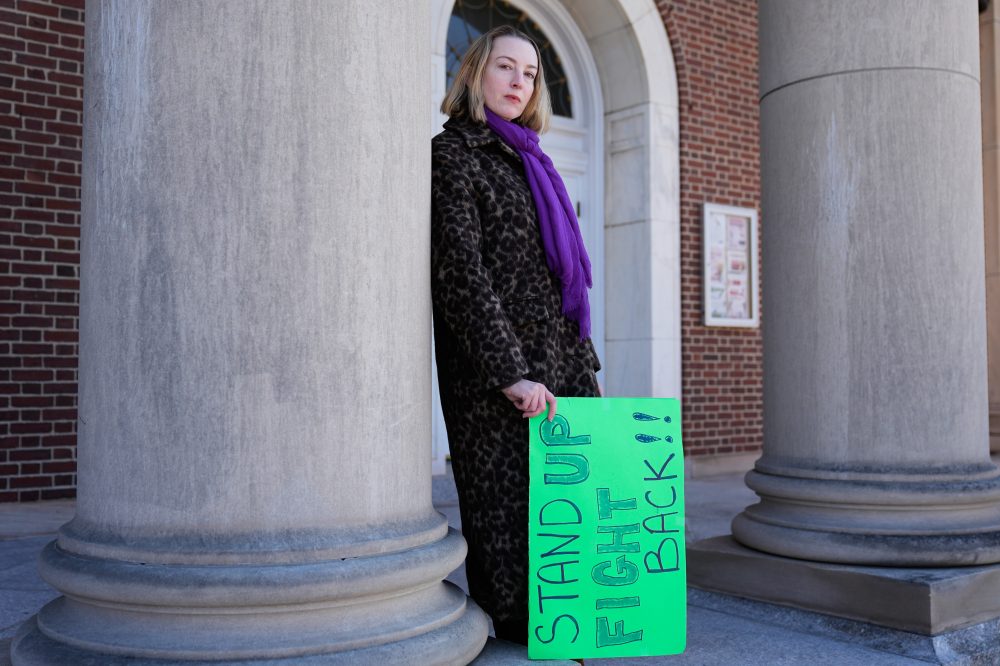
    Trump has criticized the six Supreme Court justices, including two he appointed during his first presidency, who struck down his use of 1977 legal provisions for implementing most tariff increases over the past year.

    On Monday, Trump warned international partners to honor existing tariff agreements.

    Any nation attempting to “play games” with the Supreme Court ruling, Trump posted on social media, will face “a much higher Tariff, and worse, than that which they just recently agreed to.”

    Over the weekend, Trump announced plans to raise a new global tariff to 15% to replace many import taxes the Supreme Court declared illegal.

    He has already authorized an executive order bypassing Congress to impose 10% worldwide import taxes beginning Tuesday. These tariffs remain active for 150 days unless Congress extends them.

    Bharat Ramamurti, former deputy director of the Biden administration’s National Economic Council, predicted Trump’s strategy will cause businesses and investors to remain cautious because “they’re just not sure what the tariff outlook is going to be.”

    “This decision and the follow-up to pursue other forms of tariffs under other legal authorities is only going to add to that confusion,” Ramamurti added.

  • Trump to Address Economic Anxieties in Tuesday State of the Union Speech

    Trump to Address Economic Anxieties in Tuesday State of the Union Speech

    WASHINGTON — During Tuesday evening’s State of the Union address, President Donald Trump plans to highlight his administration’s immigration enforcement efforts, federal government reductions, and recent military operations in Iran and Venezuela.
    The Republican president aims to persuade skeptical Americans that his administration’s policies have benefited their daily lives and strengthened the nation’s economy beyond what many citizens perceive — hoping to boost Republican candidates in November’s midterm contests.

    Balancing praise for his second-term accomplishments while building support for his party in races where his name won’t appear presents challenges for any commander-in-chief. This task may prove particularly difficult for Trump, given his tendency to abandon prepared remarks and stray from carefully planned messages.

    A central focus will emphasize national prosperity through increased domestic manufacturing and job creation, even as many citizens don’t experience such improvements. “It’s going to be a long speech because we have so much to talk about,” Trump stated, promising extensive economic discussion.

    The commander-in-chief will likely criticize the Supreme Court’s rejection of his key tariff initiatives and discuss efforts to circumvent that ruling without relying on Congressional approval or alarming financial markets. He’s expected to call for increased defense spending and stricter voter ID laws while defending immigration enforcement that has faced criticism from both parties following fatal shootings of two American citizens.

    Jeff Shesol, who wrote speeches for Democratic President Bill Clinton, noted Trump typically adopts more traditional tones during State of the Union speeches compared to his usual rhetoric — though he remains prone to frequent exaggerations.

    “His job, for the sake of his party, is to show the silver lining,” Shesol explained. “But if he’s going to insist that the silver lining is gold, no one’s buying it. And it will be a very difficult position on the campaign trail for Republicans to defend.”

    Michael Waldman, Clinton’s former head speechwriter, observed that second-term presidents “have a tough job because what they all want to say is, ‘Hey, look what a great job I’ve been doing — why don’t you love me?’”

    Regardless of his written speech, Trump enjoys departing into personal complaints, suggesting Tuesday will likely include topics such as disputing his 2020 presidential election defeat.

    His messaging inconsistency became apparent after concerns about living expenses contributed to Democratic victories nationwide last November. The administration subsequently pledged the president would tour the country weekly to demonstrate his commitment to addressing affordability concerns. Instead, Trump has focused more on criticizing Democrats and dismissing suggestions that everyday economic issues require attention.

    Trump frequently claims credit for controlling inflation and maintaining economic momentum, pointing to the Dow Jones Industrial Average recently surpassing 50,000 points for the first time.

    However, such market achievements feel meaningless to Americans without investment accounts. Ongoing concerns persist that tariffs have increased consumer prices, potentially damaging economic growth and employment opportunities. Economic expansion decelerated during the final quarter of last year.

    Waldman, currently leading the Brennan Center for Justice, which supports democratic principles, civil rights and election fairness, said previous presidents confronted similar periods of “economic disquiet.”

    This situation raised questions about “how much do you sell vs. feeling the pain of the electorate,” he explained.

    Shesol observed that Trump has “always believed — going back to his real estate days — that he can sell anyone on anything.”

    “He’s still doing that. But the problem is, you can’t tell somebody who has lost their job and can’t get a new one that things are going great,” Shesol said. “He can’t sell people on a reality that for them, and frankly for most Americans, does not exist.”

    This disconnect poses political risks before November elections that could grant Congressional victories to Democrats, similar to 2018’s “blue wave” that significantly constrained his first-term agenda.

    Multiple Congressional Democrats plan to boycott Tuesday’s address, instead participating in a demonstration called the “People’s State of the Union” at Washington’s National Mall.

    Trump’s speech occurs as two American aircraft carriers have been sent to the Middle East during heightened tensions with Iran.

    The president will describe how American air attacks last summer targeted Tehran’s nuclear facilities, praise the operation that removed Venezuelan President Nicolás Maduro, and highlight his administration’s role in negotiating a Gaza ceasefire between Israel and Hamas.

    However, he has also damaged American military partnerships within NATO through his efforts to acquire Greenland from Denmark and his reluctance to take stronger action against Russian President Vladimir Putin regarding the Ukraine conflict.

    Connecting foreign policy achievements to domestic concerns remains challenging for any president.

    Jennifer Anju Grossman, who wrote speeches for Republican President George H.W. Bush and currently heads the Atlas Society promoting Ayn Rand’s philosophy, suggested Trump could demonstrate how Maduro’s socialist agenda devastated Venezuela’s economy so severely that one of the world’s most oil-rich nations couldn’t satisfy its own energy requirements.

    Venezuelan oil will now contribute to reducing American gasoline costs.

    Nevertheless, regarding international developments, she noted, “I think it’s going to be a bit of a challenge to make clear why this is relevant to the domestic situation.”

  • Defense Chief to Meet AI Company CEO Over Military Tech Concerns

    Defense Chief to Meet AI Company CEO Over Military Tech Concerns

    WASHINGTON — A crucial meeting is scheduled for Tuesday between Defense Secretary Pete Hegseth and the head of artificial intelligence company Anthropic, as disagreements continue over how AI should be deployed in military operations.

    Anthropic, the company responsible for creating the Claude chatbot, stands alone among major AI firms in refusing to participate in the Pentagon’s new internal technology network. CEO Dario Amodei has expressed serious ethical reservations about unrestricted government AI applications, particularly regarding fully automated weaponized drones and AI-powered mass monitoring systems that could track political opposition.

    A defense department source, speaking anonymously due to lack of authorization for public statements, verified the upcoming discussion between Hegseth and Amodei.

    This scheduled conference highlights ongoing tensions surrounding artificial intelligence’s place in national defense and worries about the technology’s potential use in life-or-death scenarios, classified intelligence matters, or government monitoring programs. The meeting also occurs as Hegseth has promised to eliminate what he describes as “woke culture” within military ranks.

    “A powerful AI looking across billions of conversations from millions of people could gauge public sentiment, detect pockets of disloyalty forming, and stamp them out before they grow,” Amodei wrote in an essay last month.

    Last summer, the Pentagon revealed it was granting defense agreements to four artificial intelligence companies — Anthropic, Google, OpenAI, and Elon Musk’s xAI. Each agreement carries a potential value of $200 million.

    Anthropic became the initial AI firm to receive approval for classified military systems, where it collaborates with partners including Palantir. The remaining three companies currently function only within unclassified settings.

    By the start of this year, Hegseth was promoting just two companies: xAI and Google.

    During a January address at Musk’s SpaceX facility in South Texas, the defense secretary stated he was dismissing any AI systems “that won’t allow you to fight wars.”

    Hegseth outlined his military AI vision as systems functioning “without ideological constraints that limit lawful military applications,” then emphasized that Pentagon “AI will not be woke.”

    In January, Hegseth announced that Musk’s AI chatbot Grok would become part of the Pentagon system called GenAI.mil. This declaration followed shortly after Grok — integrated into Musk’s social platform X — faced worldwide criticism for creating explicit deepfake images without individuals’ permission.

    OpenAI revealed in early February that it would also participate in the military’s protected AI platform, allowing service personnel to access a specialized ChatGPT version for non-classified duties.

    Since its establishment in 2021 by former OpenAI executives, Anthropic has consistently marketed itself as the most responsible and safety-focused among leading AI companies.

    The Pentagon situation is testing those commitments, according to Owen Daniels, associate analysis director and fellow at Georgetown University’s Center for Security and Emerging Technology.

    “Anthropic’s peers, including Meta, Google and xAI, have been willing to comply with the department’s policy on using models for all lawful applications,” Owens said. “So the company’s bargaining power here is limited, and it risks losing influence in the department’s push to adopt AI.”

    Following ChatGPT’s launch and the resulting AI enthusiasm, Anthropic worked closely with President Joe Biden’s team by volunteering to allow independent evaluation of its AI systems to prevent national security threats.

    CEO Amodei has cautioned about AI’s potentially devastating risks while rejecting characterization as an AI “doomer.” In his January essay, he contended that “we are considerably closer to real danger in 2026 than we were in 2023” but argued those threats should be addressed in a “realistic, pragmatic manner.”

    This wouldn’t mark the first occasion Anthropic’s push for enhanced AI protections has created friction with the Trump administration. Anthropic publicly challenged chipmaker Nvidia, condemning Trump’s proposals to relax export restrictions that would permit certain AI computer chips to be sold to China. Despite this criticism, the AI company maintains a strong partnership with Nvidia.

    The Trump administration and Anthropic have also found themselves on opposing sides regarding AI regulation efforts in various states.

    David Sacks, Trump’s senior AI advisor, claimed in October that Anthropic was “running a sophisticated regulatory capture strategy based on fear-mongering.”

    Sacks posted these comments on X responding to Anthropic co-founder Jack Clark’s discussion about balancing technological optimism with “appropriate fear” regarding the continuous development of more advanced AI systems.

    Following Trump’s White House return, Anthropic recruited several former Biden administration officials while attempting to demonstrate bipartisan appeal. The company recently appointed Chris Liddell, a former White House official from Trump’s initial presidency, to its board.

    The Pentagon-Anthropic disagreement echoes a previous controversy when technology workers protested their companies’ involvement in Project Maven, a Pentagon drone monitoring program. Although some employees resigned over the initiative and Google withdrew, the Pentagon’s dependence on drone surveillance has continued expanding.

    Similarly, “the use of AI in military contexts is already a reality and it is not going away,” Owens said.

    “Some contexts are lower stakes, including for back-office work, but battlefield deployments of AI entail different, higher-stakes risks,” he explained, referencing lethal force applications or weapons systems like nuclear arsenals. “Military users are aware of these risks and have been thinking about mitigation for almost a decade.”

  • High Court Blocks Trump Tariffs, But Trade Uncertainty Continues

    High Court Blocks Trump Tariffs, But Trade Uncertainty Continues

    WASHINGTON — Friday’s Supreme Court decision blocking President Donald Trump’s extensive import taxes represents a major legal setback, stripping away his ability to impose new trade levies without proper authorization.

    However, the high court’s decision is expected to do little to reduce the trade policy confusion that has left businesses in limbo for months. Trade attorney Ryan Majerus, a partner at King & Spalding and former U.S. trade official, noted that “It’s only gotten more complicated for everybody.”

    Several critical issues remain unresolved: How will Trump utilize alternative legislation to rebuild the tariff structure the Court dismantled? Will these new attempts survive court challenges? What impact will this have on trade agreements Trump negotiated using his now-invalidated tariffs as bargaining chips? Can companies recoup the tariff payments they made, and through what process?

    Trump’s erratic response has added to the confusion. Despite having weeks to prepare for a potential adverse ruling, his reaction remained disorganized: Friday brought announcements of 10% import levies through different legal channels, which he increased to 15% by Saturday.

    While reduced tariffs from the Court’s ruling might typically boost economic activity, economist Mike Skordeles from Truist bank explained that “any benefit you would get from that is more than offset to a modest negative from the uncertainty front.”

    The comprehensive tariffs Trump implemented using the 1977 International Emergency Economic Powers Act (IEEPA) to address trade imbalances are permanently eliminated. Nevertheless, the president retains access to other statutes that could reconstruct much of his protective trade barrier.

    Treasury Secretary Scott Bessent stated during a Fox News appearance Sunday that “Tariff revenues will be unchanged this year and will be unchanged in the future.”

    Following Friday’s Supreme Court loss, Trump immediately turned to an emergency measure: Section 122 of the Trade Act of 1974 permits presidential tariff implementation up to 15% for 150 days maximum. However, any extension requires Congressional approval, which seems unlikely given the approaching November midterm elections and reluctance to approve tax increases.

    This provision has never been utilized previously, and legal experts question whether it can substitute for IEEPA tariffs in addressing trade deficits.

    National Taxpayers Union’s Bryan Riley contends that Section 122 was designed to address “fundamental international payments problems,” not trade imbalances.

    The law emerged from 1960s and 1970s financial crises when the dollar was gold-backed and other nations were exchanging dollars for gold at fixed rates, creating currency pressure. Since the U.S. abandoned the gold standard, Riley argues Section 122 has become “effectively rendered obsolete.”

    Trade lawyer Dave Townsend from Dorsey & Whitney warned that “Given the amount of money at issue for U.S. businesses, it is not hard to imagine a new wave of litigation attacking Section 122, and again seeking refunds of Section 122 duties collected.”

    A more robust option is Section 301 of the 1974 trade act, which provides tools to target nations accused of “unjustifiable,” “unreasonable” or “discriminatory” trade practices. U.S. Trade Representative Jamieson Greer announced Friday that the administration was initiating multiple 301 investigations following the Court defeat.

    Trump previously used Section 301 during his first presidency to impose broad Chinese import tariffs over Beijing’s aggressive technology competition tactics. These levies survived legal challenges and were maintained under the Biden administration.

    “We’re eight years in, and those China tariffs are still here,” Majerus observed. “They’re sticky tariffs.”

    The Court’s ruling also creates questions about the one-sided trade agreements Trump secured using IEEPA tariff threats to extract concessions from partners including the European Union and Japan.

    Will these nations attempt to withdraw from their commitments now that the IEEPA threat no longer exists?

    The EU’s trade agreement with Trump has been suspended amid confusion following the Supreme Court decision and Trump’s response with the 15% global Section 122 tariff.

    European legislators postponed their ratification vote Monday to seek clarification. They worry Trump’s new import tax will combine with existing “most favored nation” tariffs under World Trade Organization rules, pushing U.S. tariffs on EU goods beyond the 15% Europeans agreed to previously.

    Commission spokesman Olof Gill stated that “A deal is a deal. So now we are simply saying to the US, it is up to you to clearly show to us what path you are taking to honor the agreement.”

    The United Kingdom, which negotiated 10% tariffs on its U.S. exports last year, faces similar uncertainty about whether rates will actually reach 15%.

    Despite these concerns, trade experts generally anticipate that U.S. partners will honor their Trump-era agreements. The United States could impose substantial Section 301 tariffs, which have no limits, for agreement violations.

    “They’re going to pretty leery of rocking the boat on their deals,” Majerus explained. “Violations of trade agreements can be a basis for taking 301 action. So you could see Section 301 become an enforcement mechanism” for American interests.

    Trade Representative Greer affirmed in his statement that “We are confident that all trade agreements negotiated by President Trump will remain in effect.”

    The Supreme Court avoided addressing the fate of $133 billion collected through IEEPA tariffs as of mid-December. The complex refund process for importers — though likely not consumers — was left to lower courts and Customs and Border Protection. With hundreds of companies already seeking refunds, the overwhelmed system could require months or years to process payments.

    “The whole thing’s going to be a mess,” Majerus predicted.

    Investment bank Macquarie strategists Thierry Wizman and Gareth Berry suggested Congress might direct Customs toward an “easy ‘one-click’ approach to refunds.” Without such direction, they cautioned the Trump administration could “make the refund process as burdensome as possible, requiring every importer to file stacks of paperwork, if not file a lawsuit, to get its money back. That would be costly for businesses.”

  • President Trump Plans to Highlight Economic Achievements in Tuesday State of Union

    President Trump Plans to Highlight Economic Achievements in Tuesday State of Union

    President Donald Trump plans to emphasize the nation’s economic performance and introduce fresh initiatives aimed at reducing expenses for Americans during his upcoming State of the Union address, according to a Wall Street Journal report published Monday.

    White House officials familiar with the preparations told the Journal that the address will carry the official theme “America at 250: Strong, Prosperous and Respected,” highlighting the upcoming 250th milestone of the nation’s establishment.

    The president is scheduled to present his remarks before Congress on Tuesday evening at 9 p.m. Eastern Time.

  • Delaware Government Offices Delay Opening in Kent, Sussex Counties Tuesday

    Delaware Government Offices Delay Opening in Kent, Sussex Counties Tuesday

    Delaware government facilities in the state’s two southern counties will delay their Tuesday opening until 10 a.m., officials announced Monday.

    The delayed start applies to state offices located in Kent and Sussex counties, with workers classified as non-essential who either live or work in these areas instructed to wait until the later time before reporting to work.

    Meanwhile, government operations in New Castle County will proceed according to their normal Tuesday schedule without any delays or modifications.

    Officials continue to assess driving restrictions currently in place for Kent and Sussex counties, with authorities planning to provide an updated announcement Tuesday morning regarding road conditions and travel advisories.

  • Supreme Court Rejects NRA’s Second Appeal in New York Official Lawsuit

    Supreme Court Rejects NRA’s Second Appeal in New York Official Lawsuit

    The highest court in the nation has turned down the National Rifle Association’s second attempt to pursue legal action against a former New York financial regulator, according to a Monday decision.

    The gun rights organization had filed suit against Maria Vullo, who previously headed New York’s Department of Financial Services, claiming she violated their constitutional right to free speech by pressuring financial institutions to sever business relationships with the NRA.

    In May 2024, the Supreme Court had unanimously restored the organization’s legal challenge after lower courts initially threw out the case. However, the justices refused to intervene again after another court dismissed the lawsuit a second time.

    The NRA’s original 2018 legal filing claimed Vullo engaged in unlawful retaliation against the group for their Second Amendment advocacy through what they described as an “implicit censorship regime” in the aftermath of the deadly Parkland, Florida high school massacre that claimed 17 lives.

    When the Supreme Court restored the case last year, the justices ruled that the First Amendment “prohibits government officials from wielding their power selectively to punish or suppress speech, directly or, as alleged here, through private intermediaries.”

    However, that earlier Supreme Court decision did not resolve whether Vullo could claim qualified immunity, a legal protection that prevents government officials from facing civil lawsuits in specific situations.

    The case went back to the 2nd U.S. Circuit Court of Appeals in New York, which determined that Vullo deserved immunity protection because the relevant law was not clearly defined when she took her actions. This ruling led the NRA to make their unsuccessful second Supreme Court appeal.

    The influential lobbying organization, which maintains strong ties to Republican politicians and has challenged gun control measures supported by many Democrats, alleged that New York conducted a “blacklisting” effort designed to cut off the NRA’s access to essential financial services and undermine their advocacy efforts.

    Following the Parkland tragedy, Vullo, who received her appointment from a Democratic governor, urged financial institutions to weigh the “reputational risks” of maintaining business relationships with gun advocacy organizations.

    Vullo’s office subsequently imposed fines exceeding $13 million on Lloyd’s of London and two additional insurance companies for selling an NRA-backed product known as “Carry Guard.” Her department determined this product violated state insurance regulations by providing liability protection for policyholders who injured others with firearms, including cases involving improper gun use.

    The insurance companies agreed to discontinue sales of NRA-endorsed products that New York deemed illegal.

    In their ruling, the 2nd Circuit concluded that Vullo warranted qualified immunity protection because the legal standards were not “clearly established” when she applied pressure on banks and insurers to distance themselves from the NRA.

    “Reasonable officials in Vullo’s position would not have known for certain … that her conduct crossed the line from forceful but permissible persuasion to impermissible coercion and retaliation,” the appeals court stated in their decision.

  • Grassley Questions Supreme Court’s Silence on Trump Tariff Powers

    Grassley Questions Supreme Court’s Silence on Trump Tariff Powers

    Iowa Senator Chuck Grassley is raising concerns about what last week’s Supreme Court decision means for former President Trump’s tariff policies, saying key questions remain unanswered.

    According to Grassley, the nation’s highest court left significant issues unresolved in its recent ruling. “The Supreme Court was silent on whether refunds will need to be issued for the tariffs that President Trump has already levied. It also didn’t address whether the President has the authority under” existing trade laws, the senator stated.
    The Republican lawmaker believes the full impact of the court’s decision on Trump’s trade policy implementation is still unclear, leaving businesses and trade partners uncertain about future implications.

  • Hayes Family Resolves Legal Dispute Over Trump Campaign Song Usage

    Hayes Family Resolves Legal Dispute Over Trump Campaign Song Usage

    The family of legendary soul musician Isaac Hayes has reached a settlement agreement with Donald Trump’s presidential campaign regarding the unauthorized use of Hayes’ classic song “Hold On, I’m Coming,” the family announced this week.

    The legal battle began in August 2024 when Hayes’ estate filed a federal lawsuit claiming Trump’s campaign had used the iconic track without proper authorization on 133 separate occasions during his 2020 and 2024 presidential runs. The complaint sought financial compensation for alleged copyright violations involving the song’s use in campaign videos and at political rallies.

    Isaac Hayes III, the musician’s son, revealed on social media platform X that his family had reached an agreement with the campaign, stating they “are satisfied with the outcome.” However, the family did not disclose the specific terms of their settlement.

    The disputed song, which became a major hit for the soul duo Sam and Dave in 1966, was co-written by Hayes and David Porter. Hayes, who passed away in 2008 at 65 years old, was a celebrated figure in soul and R&B music.

    Federal Judge Thomas Thrash issued a court order in September 2024 requiring Trump’s campaign to cease all use of the song in future events and promotional materials. Trump’s legal team maintained they had already discontinued using the track prior to the judicial ruling.

    The case took an interesting turn when Sam Moore, one half of the original Sam and Dave duo, filed court documents opposing the Hayes estate’s legal action. Moore had previously performed “America the Beautiful” at a Trump pre-inauguration event.

    This settlement adds to a growing list of musical artists who have challenged Trump’s use of their work at campaign events, including pop star Sabrina Carpenter, Swedish group ABBA, and Canadian singer Celine Dion.

    When contacted for comment, the White House directed inquiries to Trump’s private attorney, Ronald Coleman, who did not respond to requests for information.

    In previous court filings, Trump’s legal representatives argued that the Hayes estate could not prove ownership of the disputed copyright or demonstrate any actual damages from the song’s use.

    During a 2024 court hearing, Coleman told media representatives that the campaign had voluntarily agreed to stop using the track, explaining: “The campaign has no interest in annoying or hurting anyone, and if the Hayes family feels that it hurts or annoys them, that’s fine, we’re not going to force the issue.”

  • High Court Decision on Trump Tariffs May Shake Up International Trade Agreements

    High Court Decision on Trump Tariffs May Shake Up International Trade Agreements

    A recent Supreme Court decision overturning former President Trump’s tariff policies is creating ripple effects in international trade relationships, according to agricultural economics experts.

    The high court’s ruling against the former president’s tariff strategy has prompted concerns about the stability of existing trade agreements, says Ian Sheldon, an agricultural economist at Ohio State University.

    “A lot of countries are now questioning the validity of the deals that they signed. The EU was already starting to back away a little bit. Countries,” Sheldon explained to Brownfield news.
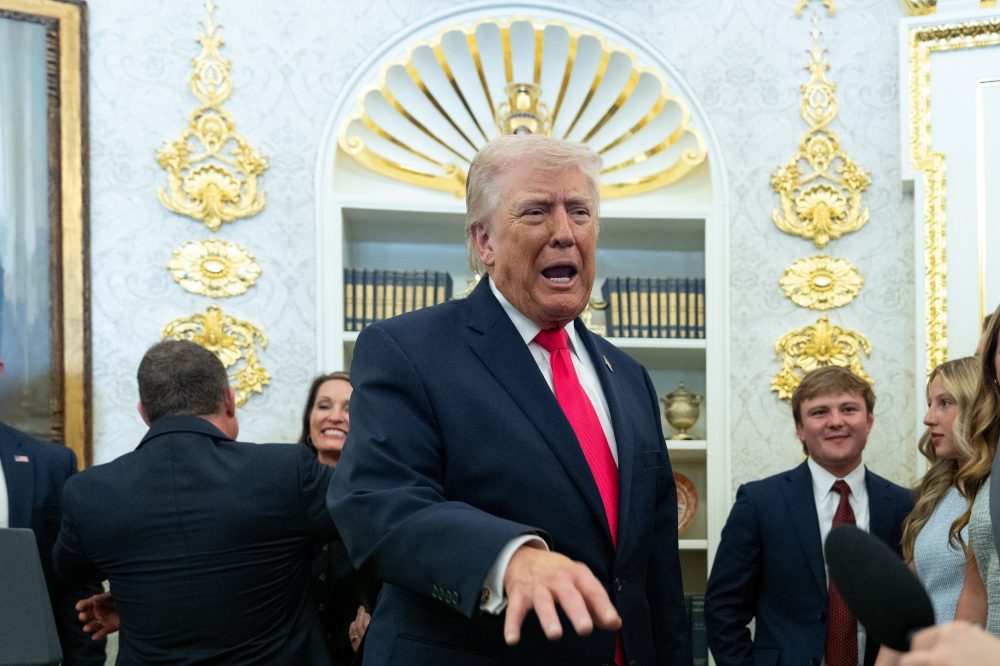
    The economist’s comments highlight growing uncertainty among international trading partners about the reliability of U.S. trade commitments following the Supreme Court’s intervention in tariff policy.

  • Trump Eyes New Industry-Specific Tariffs Following High Court Setback

    Trump Eyes New Industry-Specific Tariffs Following High Court Setback

    The Trump administration is exploring additional national security-based tariffs targeting approximately six specific industries following last week’s Supreme Court decision that struck down many of the president’s broader second-term trade levies, according to a Wall Street Journal report published Monday.

    These proposed tariffs would be implemented using Section 232 of the Trade Expansion Act of 1962 and would operate independently from the 15% worldwide tariff that Trump announced over the weekend, the newspaper reported, referencing sources with knowledge of the administration’s plans.

    Reuters was unable to independently verify the Wall Street Journal’s reporting. The White House has not yet responded to requests for comment from Reuters.

    Last week, the nation’s highest court overturned Trump’s comprehensive tariff program that had been implemented under legislation designed for national emergency situations. Following that ruling, Trump initially established a temporary 10% tariff on imports from all nations before increasing that rate to 15%.

    According to the Wall Street Journal report, the potential new tariffs could impact several key sectors including large-scale battery manufacturing, cast iron and iron fitting production, plastic piping systems, industrial chemical manufacturing, and equipment used in power grid and telecommunications infrastructure.

  • House Democrats Blast Trump’s Pause on China Tech Security Measures

    House Democrats Blast Trump’s Pause on China Tech Security Measures

    Congressional Democrats are condemning the Trump administration’s decision to halt several technology security initiatives targeting Chinese companies, arguing the move puts national security at risk to maintain diplomatic relations with Beijing.

    In correspondence delivered Monday to Commerce Secretary Howard Lutnick, Democratic representatives questioned the administration’s choice to suspend restrictions on China Telecom’s domestic operations and proposed prohibitions on TP-Link router sales within the United States. The letter also addressed halted bans concerning the American internet operations of China Unicom and China Mobile.

    “The Administration’s actions suggest a troubling pattern of sacrificing America’s national and economic security to stabilize relations with China and resolve the trade war the President himself started,” wrote Gregory Meeks, the leading Democrat on the House Foreign Affairs Committee, alongside Sydney Kamlager-Dove, who serves as the ranking Democrat on the committee’s South and Central Asia Subcommittee.

    The Democratic legislators requested that Lutnick provide committee briefings regarding any national security evaluations conducted by his department concerning these decisions. They also sought confirmation about reports suggesting the office responsible for examining foreign technology risks was directed to shift focus away from China-related threats.

    Neither the Commerce Department nor China’s Washington embassy provided immediate responses when contacted for comment.

    This correspondence represents part of mounting Democratic criticism suggesting the Trump administration is pulling back on actions that might provoke Beijing, following a trade agreement reached between Chinese leader Xi Jinping and President Trump last October.

    The concerns come as Trump prepares for a significant diplomatic visit to China scheduled from March 31 through April 2, marking a crucial meeting between the leaders of the world’s largest economies.

    Additional suspended measures reportedly included restrictions that would have prevented Chinese electric vehicle sales in America and banned Chinese equipment purchases for domestic data centers.

  • State Department Joins Education Oversight of Foreign University Funding

    State Department Joins Education Oversight of Foreign University Funding

    WASHINGTON – Federal officials announced Monday that the State Department will now collaborate with the Department of Education to investigate what they consider harmful foreign influence within American higher education institutions.

    The Trump administration has previously warned universities about potential cuts to federal funding over various campus issues, including protests supporting Palestinians during the Israel-Gaza conflict, policies regarding transgender students, climate-related programs, and diversity initiatives. These threats have sparked concerns about protecting free speech and academic independence on college campuses.

    An executive order signed by Trump in April 2025 demanded stronger enforcement of Section 117 of the Higher Education Act. This law mandates that colleges receiving government funding must disclose any foreign gifts or agreements valued at more than $250,000. The Education Department created a new online reporting system for these disclosures in December.

    Under Secretary for Public Diplomacy Sarah Rogers explained the State Department’s expanded involvement would “ensure an invigorated compliance assurance effort by the federal government.”

    “The Department of State will be applying our national security expertise and our expertise countering foreign malign influence to bolster oversight efforts by the Department of Education,” Rogers stated during a State Department press briefing.

    When pressed for concrete examples of problematic foreign influence in higher education, officials did not provide specific cases. They emphasized their primary goals are increasing university compliance with reporting requirements and enhancing transparency.

    Congressional interest in this issue intensified after a 2019 Senate subcommittee investigation documented China’s influence within the American education system, leading to stricter enforcement of existing disclosure regulations.

    According to Education Department data, American colleges and universities reported 8,300 foreign funding transactions worth $5.2 billion in 2025. This figure encompasses money from foreign governments, private corporations, and individual donors. Qatar provided the largest amount at $1.1 billion, with Britain contributing $633 million and China supplying $528 million.

  • Chicago Residents Vote to Name Snowplow ‘Abolish ICE’ in Annual Contest

    Chicago Residents Vote to Name Snowplow ‘Abolish ICE’ in Annual Contest

    Chicago residents have chosen politics alongside practicality in their city’s yearly snowplow naming competition, selecting ‘Abolish ICE’ as this year’s top choice.

    The winning entry in Chicago’s fourth annual ‘You Name a Snowplow’ contest cleverly combines winter weather terminology with a pointed political message aimed at President Donald Trump’s immigration policies. The selection comes after Immigration and Customs Enforcement conducted extensive operations in Chicago and surrounding areas last fall.

    Starting in September, the federal initiative called ‘Operation Midway Blitz’ led to over 4,000 detentions, included a deadly shooting incident, and created significant tension between federal authorities and Chicago’s Democratic leadership, especially within the city’s substantial immigrant communities. Even during harsh winter conditions, ‘ICE Out’ demonstrations have persisted in downtown Chicago, around federal facilities, and across suburban areas.

    Mayor Brandon Johnson expressed appreciation to Chicago residents in an official statement, praising their ‘unmatched creativity, sense of humor, and civic pride.’

    When questioned about potential controversy surrounding the chosen name, a city representative noted that ‘Abolish ICE’ won by a significant margin, stating, ‘The people of Chicago clearly have no issue with the name of this snowplow.’

    Officials from ICE and the Department of Homeland Security were contacted for their response to the naming decision.

    While numerous cities hold similar snowplow naming competitions, Chicago’s winning selection stands out for its political edge. Other municipalities have chosen less controversial options, such as Nashville’s ‘Dolly Plowton’ honoring country star Dolly Parton, and Minnesota’s ‘Taylor Drift’ celebrating pop icon Taylor Swift.

    Chicago voters also selected several lighter-hearted names during the competition. Winners included ‘Stephen Coldbert,’ referencing late-night television host Stephen Colbert, and ‘Pope Frio XIV,’ incorporating the Spanish term for cold while honoring Chicago-born Pope Leo.

    Additional winning names featured ‘Blizzard of Oz,’ ‘Svencoolie’ as a tribute to local television horror personality Svengoolie, and ‘Caleb Chilliams’ celebrating quarterback Williams, who recently guided the Bears to their first playoff appearance in fifteen years.

    Johnson noted that he and the Department of Streets and Sanitation were ‘grateful and inspired by the record-breaking participation in the contest this year.’ The competition attracted 13,300 name submissions and generated 39,000 votes during the final selection process. The department operates 300 vehicles to maintain 9,400 miles of city streets during winter weather.

    According to Ryan Gage, spokesperson for Streets and Sanitation, the competition followed the same format used in previous years. Citizens submit suggestions through the Chicago Shovels website using a survey application for both preliminary and final voting rounds.

    Department staff members evaluate all submissions and select finalists, which then go to the mayor’s office for ultimate approval, Gage explained.

  • Ex-ICE Attorney Claims Immigration Officer Training Program is ‘Broken’

    Ex-ICE Attorney Claims Immigration Officer Training Program is ‘Broken’

    WASHINGTON — A former attorney with U.S. Immigration and Customs Enforcement who oversaw the preparation of new deportation officers testified Monday that the agency’s educational program for recruits is “deficient, defective and broken.”

    Ryan Schwank made these statements at a congressional hearing organized by Democratic lawmakers during a period of heightened examination of officers implementing President Donald Trump’s large-scale deportation plans. Advocacy organizations and Democratic officials have criticized deportation officers for allegedly using unnecessary force during immigrant arrests, confronting people who film their actions, and disregarding constitutional rights protections.

    The Department of Homeland Security is quickly expanding its deportation officer workforce, sparking worries that proper vetting and preparation of candidates may be compromised to expedite their deployment. Department officials rejected claims of shortcuts, stating that new officers receive instruction in weapon handling, force protocols, and safe arrest procedures.

    Schwank appeared before a panel organized by Democratic Senator Richard Blumenthal from Connecticut and Representative Robert Garcia from California. According to Blumenthal’s office, Schwank left the agency on February 13.

    “I am here because I am duty-bound to report the legally required training program at the ICE academy is deficient, defective and broken,” Schwank said.

    He further alleged that the department has dismantled the preparation program for new deportation officers while being dishonest about their actions.

    “DHS told the public the new cadets receive all the training they need to perform their duties, that no critical material or standards have been cut,” he said. “This is a lie. ICE made the program shorter, and they removed so many essential parts that what remains is a dangerous husk.”

    This marked the third public hearing conducted by the two Democrats to investigate how ICE prepares thousands of new officers and evaluate their behavior in the field. Both lawmakers have consistently criticized ICE officer conduct. Opening the session, Blumenthal praised witnesses, including Schwank, for their “courage and strength.”

    According to Blumenthal’s office, Schwank was among two unnamed whistleblowers who previously revealed a new ICE directive allowing deportation officers to enter immigrants’ homes by force for removal purposes without court-approved warrants.

    His office also made public numerous documents concerning deportation officer preparation, noting the materials came from whistleblowers.

    Blumenthal’s office stated the documents revealed “drastic cuts” to training and evaluation procedures for new deportation officers. These modifications affect testing requirements, required coursework, and training duration for new officers.

    “The training has been truncated and reduced, both in numbers of courses and substantive policy,” the senator said at the start of the hearing.

    Homeland Security firmly rejected claims that training requirements have been eliminated or standards lowered for officers. ICE recruits complete 56 days of preparation plus an average of 28 days of field training, the department stated Monday responding to forum allegations.

    “Despite false claims from the media and sanctuary politicians, no training hours have been cut. Our officers receive extensive firearm training, are taught de-escalation tactics, and receive Fourth and Fifth Amendment comprehensive instruction,” department spokeswoman Lauren Bis said in an e-mailed statement.

    She added that ICE recruits are supervised during field work following academy completion.

    The department has “streamlined training to cut redundancy and incorporate technology advancements, without sacrificing basic subject matter content,” Bis said.

    According to Democratic Senate staff analysis, the documents reveal ICE is removing more than twelve “practical exams” previously required for deportation officer certification. ICE also appears to have eliminated several classes from preparation, including “Use of Force Simulation Training.”

    Based on the documents, deportation officers seem to be receiving reduced overall training hours.

  • Democratic House Candidates Raise Nearly Double What GOP Challengers Bring In

    Democratic House Candidates Raise Nearly Double What GOP Challengers Bring In

    WASHINGTON – With November’s midterm elections approaching, Democratic House candidates are collecting campaign contributions at nearly twice the rate of their Republican opponents in the nation’s most contested districts, new campaign finance data reveals.

    An analysis of federal campaign reports shows that while sitting lawmakers from both parties maintain substantial fundraising advantages over their challengers, there’s a stark difference between how well Democratic and Republican challengers are performing against each other.

    In 30 highly competitive districts where current representatives are running for reelection, the numbers tell a clear story. Republican candidates vying for 16 seats currently held by Democrats managed to raise approximately $20 million combined last year – averaging around $465,000 per candidate across 42 hopefuls.

    Meanwhile, Democratic challengers targeting 14 Republican-controlled seats brought in roughly $50 million total, with 54 candidates averaging nearly $918,000 each.

    The fundraising disparity comes as Republicans maintain a razor-thin 218-214 advantage in the House. Historical trends suggest the party controlling the White House typically loses ground during midterm cycles, meaning Democrats would need to capture just a small number of additional seats to seize control of the chamber during the final two years of Donald Trump’s presidency.

    In the three competitive districts where no current officeholder is seeking reelection, Democrats hold fundraising leads across the board.

    These financial snapshots provide insight into the battle for House control as primary season kicks off March 3 with contests in Texas, North Carolina and Arkansas.

    Democratic political operatives argue that House Republicans are concentrating more energy on defending their narrow majority rather than pursuing an aggressive expansion strategy, emphasizing incumbent protection over recruiting strong new candidates.

    “Given the fact that Republicans have claimed for the last year that they’re on offense, one could be shocked to learn how weak their recruitment has been this cycle,” said Katarina Flicker, a spokesperson for the Democratic super PAC House Majority PAC. “In competitive, Democratic-held seats across the country, Republicans are struggling to field credible candidates.”

    Republican officials push back against this characterization, arguing their incumbents maintain clear advantages in both fundraising and messaging on key voter concerns.

    Mike Marinella, a spokesperson for the National Republican Congressional Committee, said GOP incumbents as a whole “are absolutely dominating Democrats” in fundraising and on issues voters care about.

    “It says a lot about the national Democrats’ desperation when they have to cherry-pick scraps of data to convince themselves they’re competing,” Marinella said.

    The political landscape faces additional complications as at least 31 House Republicans plan to leave their positions early next year due to retirement or campaigns for higher office. House Democrats’ campaign organization has identified six of these seats as targets, though political experts expect only three to be genuinely competitive.

    The fight for congressional control will ultimately be decided in roughly three dozen House districts and eight pivotal states for Senate races. Republicans currently hold a 53-47 Senate majority.

    Additional variables could significantly influence November’s outcomes, including new congressional district boundaries drawn in several states and spending by political action committees, national party organizations and independent expenditure groups.

  • Health Chief Kennedy Supports Pesticide Production Despite Past Opposition

    Health Chief Kennedy Supports Pesticide Production Despite Past Opposition

    Robert F. Kennedy Jr. spent decades as an environmental attorney battling against glyphosate, a disputed herbicide component, and secured a major victory against chemical corporation Monsanto by demonstrating that its Roundup product played a role in causing his client’s cancer.

    However, in his current role as the country’s leading health official, Kennedy has aligned himself with President Donald Trump following the issuance of an executive directive designed to increase glyphosate manufacturing. The directive would additionally provide restricted legal protection to producers who comply with federal guidelines.

    On Sunday night, Kennedy published an extensive statement on social media describing pesticides as “toxic by design” while positioning Trump’s decision as essential for farming stability and national defense.

    “President Trump did not build our current system — he inherited it,” Kennedy wrote. “I support President Trump’s Executive Order to bring agricultural chemical production back to the United States and end our near-total reliance on adversarial nations.”

    This demonstration of allegiance to the president who facilitated Kennedy’s transformation of vaccination policies at federal levels has created a potentially damaging division within their political alliance before November’s midterm elections.

    Supporters of Kennedy’s Make America Healthy Again movement are growing frustrated with a Republican administration that has mostly ignored their demands for pesticide regulation, and they’re voicing concerns about what they consider a betrayal.

    “It’s been a year. Not a single thing has been done by the EPA to reduce our children’s and families exposure to pesticides,” Moms Across America founder Zen Honeycutt, a prominent MAHA activist, replied to Kennedy’s post. “We love you Bobby but this administration needs to keep their word.”

    Opponents of the executive directive claim it represents a broader trend that benefits pesticide producers, who maintain their products undergo thorough regulatory review to confirm they pose no health risks when used correctly.

    For instance, House Republicans have proposed legislation that would complicate lawsuits against pesticide corporations for inadequate danger warnings. The Justice Department also supported Monsanto parent company Bayer in a Supreme Court case last December that could reduce future Roundup liability.

    “That is America Last, Anti-MAHA, and unforgivable,” prominent activist Kelly Ryerson wrote on social media.

    Trump’s executive directive aims to safeguard domestic manufacturing of elemental phosphorus, utilized in military equipment and glyphosate-based herbicide production. It also seeks to protect glyphosate-based herbicide manufacturing, which officials consider vital to farming supply networks.

    Kennedy has consistently maintained his belief that glyphosate triggers cancer, including statements made as recently as January.

    Although multiple studies have supported Kennedy’s position, the Environmental Protection Agency has determined the chemical likely poses no cancer risk to humans when properly applied. Bayer stated in an email that it “stands behind the safety of our glyphosate-based products which have been tested extensively, approved by regulators and used around the globe for more than 50 years.”

    In his social media statement, Kennedy indicated he is collaborating with the U.S. Department of Agriculture and EPA to accelerate progress toward a food system independent of dangerous chemicals. Supporting this goal, the Trump administration introduced a $700 million regenerative pilot program in December to help farmers implement practices that improve soil health, water quality and productivity.

    Nevertheless, some experienced environmental advocates report seeing little evidence of meaningful transformation.

    “If there is a big plan, a big MAHA-style plan to move in the direction of detoxifying agriculture from these chemicals, where is it?” said Ken Cook, head of the nonprofit Environmental Working Group, which has fought for raising environmental standards since the 1990s. “What I’m seeing here is a very aggressive effort to try and hang onto MAHA principles even as, at every turn, you betray them.”

    Cook stated that many seasoned public health advocates never expected Kennedy would deliver the changes MAHA supporters anticipated. He noted that Kennedy’s statement language resembled arguments he has observed from pesticide manufacturers for years.

    “He’s jumped onto their message square and is dancing on it,” he said of Kennedy.

    The EPA has hinted at an upcoming MAHA agenda addressing issues including forever chemicals, plastic contamination, food quality, Superfund cleanups and lead pipes. On Friday, federal officials announced they would implement a strict 10-year timeline for lead pipe replacement to improve drinking water safety. EPA press secretary Brigit Hirsch stated the agenda is “in the final stages” and will reaffirm the agency’s dedication to science and transparency regarding pesticides.

    Kennedy’s MAHA coalition, an enthusiastic and politically diverse group including anti-vaccine activists, environmental advocates and healthy food supporters, represents a politically significant constituency that Republicans need to maintain their slim Congressional majorities.

    However, the movement doesn’t consistently support Republican policies, creating a “tough spot” for Kennedy, according to Matt Motta, a professor at Boston University School of Public Health.

    “He does need to try to please his base of supporters who care a lot about this issue and presumably think that it can cause cancer – while also pleasing the president if he wants to be able to keep this job,” Motta said.

    As Democrats observe the widening divide between MAHA supporters and the Trump administration, some recognize a political opportunity.

    Sen. Cory Booker of New Jersey, who faces reelection this fall, described the executive order as “a slap in the face to the thousands of Americans who have gotten cancer from glyphosate.” He argued on social media the administration’s message is that “chemical company profits are more important than your health.”

    Democratic strategist Anjan Mukherjee predicted more left-leaning midterm candidates will emphasize to MAHA supporters “how this administration has failed them.”

    “What this administration has shown to them over and over again is that they’re only interested in enriching themselves and putting more money into the pockets of the wealthy,” Mukherjee said.

    These efforts may not succeed in attracting MAHA supporters who have witnessed Kennedy advance many of their other objectives, including reforming childhood vaccination guidelines and changing the FDA’s stance on artificial food coloring.

    Giving Democrats Congressional control could introduce oversight and budget constraints that would hinder that progress, said David Mansdoerfer, a Department of Health and Human Services official during Trump’s first presidency who currently advises several MAHA organizations.

    “MAHA has a choice this election season,” he said. “Support the Trump administration and continue to have a voice in Washington or stay at home and watch their federal agenda come to a halt.”

  • Federal Education Department Transfers More Programs to Other Agencies

    Federal Education Department Transfers More Programs to Other Agencies

    WASHINGTON — Federal education officials announced Monday they are transferring additional programs to other government agencies, advancing the Trump administration’s plan to eliminate the Department of Education entirely.

    Two new agreements will relocate millions of dollars in grant programs currently managed by education officials. The Department of Health and Human Services will assume control of funding streams that support school safety initiatives and community outreach programs. Meanwhile, the State Department will manage a system that monitors foreign donations to American universities.

    Education Secretary Linda McMahon defended the transfers in a prepared statement, saying the moves represent progress toward dismantling federal education oversight.

    “As we continue to break up the federal education bureaucracy and return education to the states, our new partnerships with the State Department and HHS represent a practical step toward greater efficiency, stronger coordination, and meaningful improvement,” McMahon stated.

    President Trump and McMahon have both recognized that only Congress possesses the power to completely eliminate the Education Department, though they have indicated the agency’s primary responsibilities could be distributed among various federal departments.

    The HHS agreement affects a limited number of grant programs while leaving special education services untouched for now. McMahon has previously indicated her intention to eventually transfer special education programs to HHS as well, reiterating that goal to advocacy groups as recently as December.

    However, McMahon’s special education plans have created political challenges, drawing criticism even from members of her own party during congressional hearings. The current agreements avoid mentioning the Office of Special Education and Rehabilitative Services, which administers billions in grants and monitors state adherence to the Individuals with Disabilities Education Act.

    These latest transfers follow seven similar agreements signed last year that moved substantial responsibilities to the Departments of Labor, Interior, State, and HHS. Those previous deals involved billions in federal funding, including Title I programs that assist schools serving low-income students.

    The union representing Education Department employees criticized the new agreements, arguing they place educational programs under agencies lacking relevant expertise.

    “This isn’t efficiency — Secretary McMahon is creating confusion for schools and colleges, eroding public trust, and harming students and families,” stated Rachel Gittleman, president of AFGE Local 252.

    “This is an insult to the tens of millions of students who rely on the Department to safeguard access to quality education and to the taxpayers who depend on federal oversight to prevent waste.”

    Democratic Senator Patty Murray of Washington expressed concern that the transfers would negatively impact students and families.

    “These illegal agreements aren’t just creating pointless new bureaucracy that burdens our already-overworked teachers and schools; they are actively jeopardizing resources and support that students and families count on and are entitled to under the law,” Murray said.

    The State Department agreement expands that agency’s role in collecting data and enforcing Section 117, which mandates that colleges and universities report annual gifts exceeding $250,000.

    Under the HHS arrangement, six programs will move to the Administration for Children and Families, which will manage grant competitions and provide technical support for these initiatives.

    The future of these transferred programs remains questionable. The Trump administration’s 2026 budget proposal seeks to eliminate funding for five of the six programs being moved to HHS. Additionally, some organizations receiving Promise Neighborhoods and Full-Service Community Schools grants, which fund academic and after-school programs, learned in December that their 2026 funding would be discontinued, forcing them to halt operations abruptly.

  • Senate Democrats Push for Refunds of Overturned Trump Tariffs

    Senate Democrats Push for Refunds of Overturned Trump Tariffs

    Twenty-two Democratic senators filed legislation Monday demanding the Trump administration return all money collected from tariffs recently overturned by the Supreme Court, plus interest, within six months.

    The proposed bill would direct U.S. Customs and Border Protection, which handles tariff collection at ports nationwide, to give priority treatment to small businesses seeking refunds.

    Last Friday, the Supreme Court invalidated Trump’s sweeping tariffs that were imposed using the International Emergency Economic Powers Act, but the justices provided no guidance on refunds. Instead, they sent the matter back to a lower trade court for further proceedings.

    The Democratic proposal would mandate CBP return all unlawfully collected IEEPA tariffs with interest, including those already finalized through the agency’s liquidation process.

    Senate Minority Leader Chuck Schumer joined 21 other Democrats in sponsoring the measure, including key committee leaders Ron Wyden of Oregon, Edward Markey of Massachusetts, and Jeanne Shaheen of New Hampshire from the Finance, Small Business, and Foreign Relations committees.

    “Senate Democrats will continue fighting to rein in Donald Trump’s price-hiking trade and economic policies,” Wyden stated. “A crucial first step is helping people who need it most, by putting money back into the pockets of small businesses and manufacturers as soon as possible.”

    Republican Senate Majority Leader John Thune’s office from South Dakota refused to say whether the Democratic bill would receive floor consideration.

    Since the legislation was just filed and must undergo committee review, any decision on moving forward remains distant.

    House Speaker Mike Johnson indicated the Republican-controlled chamber would avoid the tariff refund issue entirely.

    “The White House is going to sort that out, and we have to give them the time and space to do it. This is an unprecedented event, of course, so there’s no playbook to follow,” the Louisiana Republican told reporters. “I think they’ve (the White House) got good arguments on their side, and we’ll see how it shakes out. That’s not something that really involves the House at this point.”

    The White House has not yet responded to requests for comment about the proposed legislation.

    Treasury Secretary Scott Bessent said Sunday the administration would await lower court decisions on refunds. “We will follow what they decide, but it can take weeks or months until we hear from them,” Bessent told CNN.

    CBP must stop collecting the IEEPA tariffs beginning Tuesday at 12:01 a.m. Eastern time.

    According to Penn-Wharton Budget Model economists, the Supreme Court ruling potentially affects more than $175 billion in IEEPA tariff collections. Their analysis showed these tariffs were bringing in over $500 million daily in gross revenue.

  • Federal Funding Delays Cost Hudson Tunnel Project Millions, Limited Work Resumes

    Federal Funding Delays Cost Hudson Tunnel Project Millions, Limited Work Resumes

    WASHINGTON – Project managers overseeing a massive $16 billion tunnel construction initiative connecting New York and New Jersey report that prolonged delays in federal funding approval have resulted in substantial financial setbacks totaling millions of dollars.

    According to the Gateway Development Corporation, the Trump administration held back crucial funding for the Hudson Tunnel Project beginning October 1st, creating a financial standstill that lasted several months. While federal officials recently approved the release of $235.7 million in previously frozen funds, project leaders indicate the damage has already been done.

    The corporation revealed in court documents filed Monday that an additional $19 million remains outstanding for the infrastructure project. Due to ongoing uncertainty about whether the U.S. Transportation Department will continue providing necessary payments, construction crews are only returning to limited operations this week rather than full-scale work resumption.

  • Ontario Leader: Trump Facing Growing Pressure After Court Blocks Tariffs

    Ontario Leader: Trump Facing Growing Pressure After Court Blocks Tariffs

    TORONTO (AP) — Canada’s most populous province leader declared Monday that mounting pressures are constraining President Donald Trump following a U.S. Supreme Court ruling that overturned numerous Trump tariffs, while expressing anticipation for November’s U.S. midterm elections that might further limit Trump’s authority.

    Doug Ford, Ontario’s Premier, characterized the current situation as an “economic war” and stated that no agreement would be preferable to a poor arrangement with Trump.

    “The situation is extremely difficult at this time. I often pause to reflect, and I’m not alone in this. People worldwide are questioning how a single individual can generate such widespread chaos globally, not just in Canada but everywhere. It’s quite remarkable. I’m eagerly awaiting the midterms,” Ford stated.

    Friday’s court ruling eliminated tariffs that Trump had placed on virtually all nations worldwide through emergency powers legislation. Trump has indicated he will now utilize different, though more restricted, legal mechanisms.

    “The Supreme Court delivered an encouraging signal,” Ford commented.

    While the United States-Mexico-Canada trade agreement, or USMCA, protects most Canadian exports to America, certain tariffs continue to impact specific areas of Canada’s economy, especially aluminum, steel, automotive, and lumber industries.

    Ford cautioned that Trump might eliminate the free trade agreement currently under evaluation this year.

    Ford mentioned that nations such as Japan and the United Kingdom “hurried to secure agreements and suddenly, he attacked them like a venomous snake. We will proceed carefully.”

    Ford highlighted that numerous Republican positions will be contested in November’s congressional elections, including several in neighboring Michigan.

    The premier also referenced the House’s recent vote to counter Trump’s Canadian tariffs, representing an unusual though largely ceremonial rejection of White House policies as Republicans joined Democrats despite GOP leadership opposition. The resolution aims to terminate Trump’s declared national emergency used to implement tariffs, though actually reversing the policy would need presidential support, which seems extremely doubtful. The measure now advances to the Senate.

    “President Trump is facing increasing constraints,” Ford declared. “You witnessed his defeat in the vote when six Republicans sided with Congress, and then there was the Supreme Court decision.”

    Ford indicated the tariffs are driving up prices.

    “Americans are experiencing financial strain. They’re not seeing reduced costs for food and other products. This all stems from the instability he’s created worldwide and with his primary global customer,” Ford explained.

    Trump has recently threatened to impose 100% tariffs on Canadian imports due to that nation’s proposed China trade agreement, escalating tensions with the longtime U.S. partner and Prime Minister Mark Carney.

  • Military Objects to House Aviation Safety Legislation Over Defense Concerns

    Military Objects to House Aviation Safety Legislation Over Defense Concerns

    WASHINGTON – Military officials are expressing strong opposition to aviation safety legislation scheduled for consideration by the House of Representatives today, warning the measure could impose “significant unresolved budgetary burdens and operational security risks affecting national defense activities.”

    The House is preparing to vote on the ROTOR Act, which received unanimous approval from the Senate in December. The legislation would mandate that aircraft operators install automatic-dependent-surveillance-broadcast systems, commonly known as ADS-B technology, across their fleets no later than the end of 2031.

    The proposed legislation comes in response to the tragic January 2025 crash between an American Airlines regional aircraft and an Army Black Hawk helicopter in the Washington area, which resulted in 67 fatalities.

  • Cambridge City Council Reschedules Upcoming Meeting

    Cambridge City Council Reschedules Upcoming Meeting

    The Cambridge City Council has announced a scheduling change for their upcoming meeting, requiring residents to adjust their calendars accordingly.

    Officials have moved the previously scheduled council session to accommodate necessary adjustments to the municipal agenda.

    Community members who planned to attend the original meeting date are encouraged to mark the new date and time on their calendars to ensure they don’t miss important city business discussions.

    The rescheduled meeting will maintain the same agenda items and public participation opportunities as originally planned.

  • Federal Lawsuit Claims DHS Wrongfully Monitored Immigration Observers

    A federal class action lawsuit filed recently accuses the Department of Homeland Security of unconstitutionally retaliating against individuals who legally observe and document immigration enforcement activities.

    The legal action stems from incidents in Maine where people monitoring federal immigration operations say they were labeled as ‘domestic terrorists’ by agents and threatened with placement on government databases and watchlists.

    According to the lawsuit, federal agents gathered personal information about these observers who were exercising their constitutional rights to watch and record law enforcement activities in public spaces.

    The case challenges what plaintiffs describe as intimidation tactics used against citizens lawfully monitoring immigration enforcement operations. The observers claim agents violated their constitutional protections by collecting their data and using threatening language to discourage their legal activities.

    This lawsuit represents a broader conflict over the rights of citizens to observe and document government law enforcement actions, particularly in immigration enforcement scenarios.

  • Utah Court Allows New Congressional Map That Boosts Democratic Chances

    Utah Court Allows New Congressional Map That Boosts Democratic Chances

    Utah’s newly drawn congressional districts that improve Democratic prospects for capturing a U.S. House seat will remain in place for this year’s elections, after a federal court on Monday rejected Republican efforts to halt their implementation.

    This decision represents the GOP’s second consecutive legal defeat in recent days, following an unsuccessful challenge before Utah’s highest state court.

    Last November, a Utah state judge implemented these revised districts after invalidating the congressional boundaries that Republican lawmakers had established following the 2020 census. The judge determined that state legislators had violated voter-approved measures designed to prevent gerrymandering.

    This development places Utah at the center of a nationwide redistricting conflict unfolding across multiple states before the midterm elections. Former President Donald Trump has encouraged Republican-controlled states including Texas, Missouri and North Carolina to redraw their boundaries to benefit GOP candidates in November’s contests, leading Democratic-controlled states like California and Virginia to pursue their own redistricting strategies.

    Currently, Republicans occupy all four of Utah’s House seats. The court-ordered map implemented by Judge Dianna Gibson last autumn maintains Salt Lake County largely within a single district, rather than splitting the Democratic stronghold across all four districts as occurred under the previous arrangement. This new configuration was proposed by the plaintiffs in the lawsuit, which included the League of Women Voters of Utah and Mormon Women for Ethical Government.

    GOP officials have contended that the judge lacked proper legal standing to implement district boundaries without legislative approval.

    However, a three-judge federal panel rejected the Republican petition for a preliminary injunction to prevent use of the new boundaries in upcoming elections. The federal judges concluded that Republicans were unlikely to succeed with their legal challenge and determined that judicial intervention would come too late in the election cycle.

    Utah’s congressional candidate filing period begins March 9, with party caucuses set for March 17 and state conventions planned for April 25. The court observed that some candidates have already begun their campaigns.

    “An active primary is ongoing, and the election has drawn too close for the court to get involved,” the judges wrote, adding: “The possibility of voter confusion is a considerable risk were the panel to enjoin the current election map.”

  • Attorney Demands Federal Refunds for Businesses Hit by Trump Tariffs

    A high-profile attorney who successfully represented American businesses before the Supreme Court in their fight against former President Trump’s trade tariffs is now calling for the federal government to issue refunds with interest to affected companies.

    Neal Katyal, who served as the legal advocate for U.S. firms during the high court proceedings challenging the Trump administration’s tariff policies, maintains that Washington owes these businesses financial compensation for the fees they were forced to pay.

    The Supreme Court case centered on whether the Trump-era tariffs imposed on various imported goods were legally justified, with Katyal’s clients arguing the trade measures caused significant financial harm to their operations.

    According to Katyal, now that the legal challenge has been resolved in favor of the business community, the federal government has an obligation to return the collected tariff payments along with accumulated interest to the companies that were required to pay them.

    The attorney’s push for reimbursement comes as businesses across the country continue to assess the long-term financial impact of the trade policies implemented during the previous administration.

  • Trump Calls on Mexico to Intensify Drug Cartel Fight After Violence Surge

    Trump Calls on Mexico to Intensify Drug Cartel Fight After Violence Surge

    WASHINGTON – Following a surge of violence in Mexico after military forces killed a prominent drug kingpin, President Donald Trump issued a public demand Monday for the country to intensify its battle against criminal organizations.

    The president took to social media to express his concerns about the ongoing drug crisis, stating: “Mexico must step up their effort on Cartels and Drugs!”

    Trump’s message came one day after Mexican military forces conducted a raid that resulted in the death of a well-known drug cartel leader, triggering widespread violent retaliation throughout America’s southern neighbor.

    The escalating situation highlights ongoing challenges both countries face in combating drug trafficking organizations that operate along the shared border.

  • Lewes Board of Public Works Keeps Current Restrictions Active

    Lewes Board of Public Works Keeps Current Restrictions Active

    The Lewes Board of Public Works has announced that current restrictions will stay active, according to a recent municipal alert.

    City officials released the notification to ensure residents are aware that the measures previously put in place have not been lifted.

    The board emphasized the importance of keeping the community updated on the status of these ongoing restrictions.

    Lewes residents can find additional information and updates through the city’s official civic alert system.

  • President Shifts Tariff Strategy After Supreme Court Blocks Emergency Powers

    President Shifts Tariff Strategy After Supreme Court Blocks Emergency Powers

    President Trump’s trade tariff strategy will undergo major changes following a Supreme Court ruling issued Friday, though the administration plans to continue imposing tariffs through alternative methods.

    The nation’s highest court determined that Trump cannot utilize the International Emergency Economic Powers Act (IEEPA) as a mechanism for implementing tariffs as part of his broader trade agenda. However, the President indicated to members of the press that his administration possesses additional legal avenues to maintain tariff policies.

    Speaking with reporters, Trump stated that while the Supreme Court’s decision affects one particular approach, his administration remains committed to using tariffs as a trade tool through other available legal frameworks.

    The ruling represents a significant shift in how the administration will need to structure future tariff implementations, potentially requiring different justifications and legal foundations for trade restrictions moving forward.

  • Trump’s State of the Union Comes After Court Setback, Senate Hearings Await

    Trump’s State of the Union Comes After Court Setback, Senate Hearings Await

    President Trump is set to present his State of the Union address in the coming days, following a significant Supreme Court ruling that dismantled a major component of his trade agenda. Additionally, his disputed nominee for U.S. surgeon general is finally scheduled to appear before senators for her postponed confirmation proceedings.

    Meanwhile, the House Agriculture Committee had planned to start deliberations on Monday regarding a Republican-backed farm bill, though inclement weather forced lawmakers to postpone the beginning of the markup process.

  • Family Shocked After NC Man’s Fatal Mar-a-Lago Security Breach

    Family Shocked After NC Man’s Fatal Mar-a-Lago Security Breach

    CAMERON, N.C. — Family members are struggling to understand why a 21-year-old North Carolina groundskeeper drove through security barriers at President Trump’s Mar-a-Lago resort with a shotgun, leading to his fatal shooting by law enforcement early Sunday morning.

    Austin Tucker Martin, who maintained golf course grounds and enjoyed creating artwork, had little to no interest in political discussions and appeared uncomfortable around firearms, according to his cousin Braeden Fields, who grew up alongside Martin.

    “I wouldn’t believe he would do something like this. It’s mind-blowing,” Fields stated. “He wouldn’t even hurt an ant. He doesn’t even know how to use a gun.”

    According to Sheriff Ric Bradshaw, Martin breached the secured area at Mar-a-Lago during the early morning hours on Sunday and pointed a shotgun toward two Secret Service personnel and a Palm Beach County deputy, prompting them to open fire “to neutralize the threat.”

    President Trump was not present at his Palm Beach, Florida, property during the incident, as he was located at the White House.

    Law enforcement officials have yet to determine what motivated Martin’s actions. This marks another security incident at the resort, following two separate assassination attempts against Trump during his 2024 campaign, including one that occurred just miles away from Mar-a-Lago when an individual was discovered with a rifle while Trump played golf.

    Secret Service representative Anthony Guglielmi revealed that investigators believe Martin purchased the shotgun during his journey to Florida. Officials confirmed that Martin’s family had filed a missing person report prior to the incident.

    Despite growing up in central North Carolina where firearms and hunting are common activities, Martin consistently avoided handling weapons during family outings, Fields explained to reporters on Sunday.

    Martin resided with his mother in a simple manufactured home accessible via an unpaved sandy road near Cameron. When reporters visited Monday, no one responded at the residence, and the heavy law enforcement presence from the previous day had departed.

    Fields shared that Martin’s sister died in an automobile crash several years ago, and he has an older sibling serving in the military.

    Martin had been employed for three years as grounds maintenance staff at Pine Needles Lodge & Golf Club.

    “It’s tragic. I feel for his family,” expressed Kelly Miller, who serves as president of the golf facility in nearby Southern Pines. “It’s just unfortunate what transpired. It was totally unexpected.”

    State documentation shows Martin established a business last year focused on selling his pen-and-ink drawings. An online portfolio associated with his company name displays illustrations featuring golf courses, architectural structures, and ancient Roman designs.

    Political matters appeared absent from Martin’s interests, his cousin noted.

    “We are big Trump supporters, all of us. Everybody,” Fields explained, but described his cousin as “real quiet, never really talked about anything.”

  • Senate Democrats Push for $175B Tariff Refunds After Court Ruling

    Senate Democrats Push for $175B Tariff Refunds After Court Ruling

    WASHINGTON — Three Democratic senators are introducing new legislation Monday demanding the federal government return approximately $175 billion in tariff money following a Supreme Court decision that declared President Donald Trump’s tariff orders unlawful.

    The proposed bill from Senators Ron Wyden of Oregon, Ed Markey of Massachusetts, and Jeanne Shaheen of New Hampshire would mandate that U.S. Customs and Border Protection distribute refunds within 180 days while paying interest on returned amounts.

    The legislation would give priority to small business refunds and urges importers, wholesalers, and larger corporations to share their refunds with consumers.

    “Trump’s illegal tax scheme has already done lasting damage to American families, small businesses and manufacturers who have been hammered by wave after wave of new Trump tariffs,” Wyden stated, emphasizing that the “crucial first step” toward addressing the issue involves “putting money back in the pockets of small businesses and manufacturers as soon as possible.”

    While the legislation faces slim chances of passage, it demonstrates how Democrats are beginning to pressure a Trump administration that has displayed minimal interest in returning tariff money after the Supreme Court’s 6-3 decision Friday.

    The ruling has given Democrats ammunition heading into November’s congressional midterm elections, allowing them to argue that Trump unlawfully increased taxes and now refuses to reimburse American citizens.

    According to Shaheen, addressing the damage from tariffs through higher consumer prices begins with “President Trump refunding the illegally collected tariff taxes that Americans were forced to pay.”

    The Trump administration maintains its options are limited, arguing that refund decisions should come through additional court proceedings.

    This stance could force Republicans into a defensive position as they attempt to justify why the government isn’t actively working to return the funds. GOP legislators had intended to campaign on Trump’s income tax reductions from last year, promoting this year’s tax refunds as beneficial for families.

    Treasury Secretary Scott Bessent told CNN Sunday that discussing refunds represents “bad framing” since the Supreme Court decision didn’t specifically address refund issues. The administration’s stance maintains that lawsuits moving through the court system, not presidential action, will determine any refunds.

    “It is not up to the administration — it is up to the lower court,” Bessent explained, stating he would “wait” for judicial guidance on refunds rather than provide administrative direction.

    Trump has defended his application of the 1977 International Emergency Economic Powers Act for imposing widespread tariffs on nearly all U.S. trade partners, claiming his import tax authority helped resolve military disputes, generate federal income, and create negotiating leverage for trade agreements.

    The University of Pennsylvania’s Penn Wharton Budget Model calculated refunds would reach $175 billion, equivalent to roughly $1,300 per American household. However, structuring reimbursements presents challenges since tariff costs affected the economy through direct customer payments and indirect costs passed along or absorbed by importers.

    The president has previously argued that refunds would increase government debt and harm economic performance. During Friday’s press briefing, he indicated the refund process might extend beyond his presidency.

    “I guess it has to get litigated for the next two years,” Trump told reporters, later extending his prediction: “We’ll end up being in court for the next five years.”

  • High Court to Review Energy Companies’ Fight Against Climate Lawsuits

    High Court to Review Energy Companies’ Fight Against Climate Lawsuits

    WASHINGTON — The nation’s highest court announced Monday it will review arguments from major energy corporations attempting to shut down legal actions that could hold them responsible for billions in climate-related damages.

    The court, which has a conservative majority, decided to examine a dispute originating in Boulder, Colorado, part of numerous legal challenges claiming these corporations misled Americans about fossil fuels’ role in climate change.

    Local and state governments nationwide are pursuing damage claims worth billions of dollars, contending the money is needed to fund recovery efforts following wildfires, coastal flooding, and extreme weather events made worse by changing climate conditions. These legal battles are part of a broader movement spanning states like California, Hawaii, and New Jersey, as well as international efforts to force climate action through judicial proceedings.

    After Colorado’s top court allowed the Boulder lawsuit to move forward, Suncor Energy and ExxonMobil petitioned the Supreme Court for review. These corporations maintain that emissions represent a nationwide concern that belongs in federal courts, where comparable cases have been dismissed.

    “The use of state law to address global climate change represents a serious threat to one of our Nation’s most critical sectors,” company lawyers stated.

    The Trump administration has backed the energy companies, urging the justices to overturn Colorado’s Supreme Court ruling. Officials warn this could result in “every locality in the country could sue essentially anyone in the world for contributing to global climate change.”

    Trump, a Republican president, has denounced these lawsuits through executive action, while the Justice Department has worked to prevent some cases from advancing in court.

    Boulder’s legal team argued the case remains in preliminary phases and belongs in state court. “There is no constitutional bar to states addressing in-state harms caused by out-of-state conduct, be it the negligent design of an automobile or sale of asbestos,” their attorneys stated.

  • Federal Judge Permanently Blocks Trump Classified Documents Report Release

    Federal Judge Permanently Blocks Trump Classified Documents Report Release

    WASHINGTON — A federal court has issued a permanent injunction preventing the public disclosure of special counsel Jack Smith’s investigative report concerning President Donald Trump’s handling of classified materials at his Mar-a-Lago property.

    U.S. District Judge Aileen Cannon, a Trump appointee, approved the Republican president’s petition to suppress the report from a criminal probe that previously threatened significant legal consequences for Trump.

    Smith’s office compiled a comprehensive two-part report examining Trump’s attempts to reverse the 2020 election results following his defeat by Joe Biden, as well as his possession of classified materials at his Florida Palm Beach residence after departing the White House at the end of his initial presidency.

    Criminal charges stemming from both probes were dropped by Smith’s prosecutors following Trump’s victory in the November 2024 election, adhering to established Justice Department policy prohibiting federal criminal cases against incumbent presidents.

    Judge Cannon, who previously threw out the case in 2024 by determining Smith lacked proper appointment authority, declared that making the report public would constitute a “manifest injustice” against Trump and his two fellow defendants.

    “Special Counsel Smith, acting without lawful authority, obtained an indictment in this action and initiated proceedings that resulted in a final order of dismissal of all charges,” she wrote. “As a result, the former defendants in this case, like any other defendant in this situation, still enjoy the presumption of innocence held sacrosanct in our constitutional order.”

    The judge acknowledged that special counsels traditionally publish reports when concluding their investigations, but noted this typically occurs either when no charges are filed or “after adjudications of guilt by plea or trial.”

    “The Court strains to find a situation in which a former special counsel has released a report after initiating criminal charges that did not result in a finding of guilt, at least not in a situation like this one, where the defendants contested the charges from the outset and still proclaim their innocence.”

  • Tennessee House Passes Bill Allowing Citizens to Refuse Recognizing Gay Marriages

    Tennessee House Passes Bill Allowing Citizens to Refuse Recognizing Gay Marriages

    Tennessee’s House of Representatives has approved controversial legislation that would allow private citizens and organizations to refuse recognition of same-sex marriages without facing legal consequences. The measure does not void existing homosexual unions but creates protections for those who choose not to acknowledge them.

    The proposed law comes nearly two decades after Tennessee residents voted in 2006 to approve a constitutional amendment prohibiting gay marriages, a decision made years before the U.S. Supreme Court ruled to legalize same-sex unions across the nation.

    The legislation now moves to the Tennessee Senate for further consideration.

  • Cattle Industry Warns Political Calendar Could Stall Legislative Agenda

    Cattle Industry Warns Political Calendar Could Stall Legislative Agenda

    A prominent agricultural advocacy group is raising concerns about how this year’s midterm elections could affect the legislative process in Washington. The National Cattlemen’s Beef Association’s chief lobbyist warns that political realities will significantly limit opportunities to advance policy initiatives.

    Ethan Lane, who serves as senior vice president of government affairs for the organization, believes lawmakers face a compressed timeline to accomplish their goals. “From now to May is the opportunity in a midterm election year to do that,” Lane explained, emphasizing the challenges ahead for agricultural priorities.

    According to Lane, this represents the most significant obstacle facing legislative efforts as politicians shift their focus toward upcoming elections.

  • Trump Boosts Import Tax Plan to 15% Following High Court Setback

    Trump Boosts Import Tax Plan to 15% Following High Court Setback

    Following a significant Supreme Court setback on Friday, President Donald Trump announced Saturday his intention to implement a worldwide import tax of 15%, increasing from the 10% rate he had previously outlined just one day prior.

    The nation’s highest court invalidated the extensive import taxes Trump had put in place throughout the past year, which affected nearly every nation and were implemented under emergency authority provisions. In response, Trump indicated he will utilize alternative legal mechanisms, though these carry more restrictions.

    Trump has already executed an executive directive that allows him to circumvent congressional approval and establish a 10% worldwide import tax beginning Tuesday, coinciding with his State of the Union presentation to lawmakers.

    However, these import taxes face a 150-day limitation and require legislative action for any extension beyond that timeframe.

    The president’s social media declaration demonstrates that despite the judicial system’s uncommon restraint on his authority, the Republican leader remains committed to his preferred method of reshaping international trade dynamics and exerting global influence.

    Market reactions showed concern Monday morning as trading futures declined broadly following the Supreme Court’s decision to eliminate most of Trump’s comprehensive tariff program from the previous week.

    S&P 500 futures decreased by 0.5%, the Dow Jones Industrial Average futures dropped 0.6%, and Nasdaq futures declined nearly 0.7%.

    Danish pharmaceutical company Novo Nordisk experienced significant losses after announcing that clinical trial outcomes for its advanced weight management medication CagriSema underperformed compared to competitor Eli Lilly’s similar product. Novo’s stock value plummeted over 13% in early trading, while Eli Lilly shares gained 3.5%.

    Pizza delivery company Domino’s saw nearly 5% growth after reporting expectations for continued market expansion in 2026, supported by robust same-location sales performance during the final quarter.

    Despite the court’s Friday ruling, import taxes will continue under Trump’s alternative approach, escalating from the initially proposed 10% to 15% global rate.

    Tuesday’s State of the Union address will present Trump before Congress after completing one year of his return to office, during which he has implemented sweeping changes to domestic priorities and international relationships.

    The speech occurs as Congress finds itself increasingly marginalized by Trump’s extensive use of executive authority, bypassing even his narrow Republican congressional majority to consolidate significant presidential power.

    Meanwhile, Secretary of State Marco Rubio plans to visit the Caribbean nation of St. Kitts and Nevis this week, reinforcing the administration’s Western Hemisphere focus following last month’s military intervention that removed former Venezuelan leader Nicolas Maduro.

    Rubio’s Wednesday visit to participate in a Caribbean Community leadership summit aims to address regional security, economic development, and trade opportunities while managing concerns about the administration’s aggressive anti-trafficking and immigration enforcement policies.

  • Kansas Legislature Overturns Governor’s Veto to Enact Restroom Restrictions

    Kansas Legislature Overturns Governor’s Veto to Enact Restroom Restrictions

    Kansas legislators have successfully overturned a gubernatorial veto to enact new restroom access restrictions in government facilities throughout the state. The measure became law after lawmakers voted to override Democratic Governor Laura Kelly’s rejection of the legislation.

    Under the newly enacted law, biological males will be prohibited from entering women’s restrooms and changing facilities located within government buildings across Kansas. The restrictions take immediate effect statewide.

    Republican Representative Carolyn Cayhar defended the legislation, stating: “Our young women deserve to have restrooms and locker rooms where they can undress without men in the room. This bill protects girls and women, the ones feminists used to claim to stand for.”

  • Secretary of State Rubio Visits Caribbean After Venezuela Military Action

    Secretary of State Rubio Visits Caribbean After Venezuela Military Action

    WASHINGTON – Secretary of State Marco Rubio is scheduled to visit St. Kitts and Nevis this week as the Trump administration works to maintain its focus on Western Hemisphere affairs following last month’s military action that ousted Venezuelan President Nicolas Maduro from office.

    While global attention centers on U.S. military preparations in the Middle East amid President Trump’s warnings against Iran, Rubio will spend Wednesday in St. Kitts participating in a Caribbean Community summit, according to State Department officials.

    The Secretary of State has consistently advocated for expanded American involvement throughout the Western Hemisphere and seeks to maintain regional attention despite the administration’s current foreign policy emphasis on Iran, where U.S. forces are gathering in greater numbers than those deployed during the January 3rd Venezuelan operation that led to Maduro’s capture and removal.

    Federal prosecutors have charged Maduro with collaborating with drug trafficking organizations to smuggle thousands of tons of cocaine into the United States, charges to which he has entered a not guilty plea.

    President Trump’s military intervention against Maduro, combined with intensified efforts to combat drug smuggling and unauthorized immigration, has created unease among several regional nations, though some smaller countries have expressed approval for these measures.

    The President, Secretary Rubio, and other officials have compared their Western Hemisphere approach to the Monroe Doctrine, emphasizing American dominance while rejecting foreign interference in what they describe as the United States’ sphere of influence.

    President Trump has characterized his removal of Maduro, along with military attacks on suspected drug-trafficking ships in Caribbean waters, confiscation of sanctioned oil vessels, and strengthened Cuban embargo measures, as essential components of his modern interpretation of the 19th-century policy, which he calls the “Donroe Doctrine.”

    Through various group discussions and one-on-one meetings during the CARICOM gathering, Rubio plans to explore opportunities for strengthening regional security, stability, commerce, and economic development, the State Department announced Monday.

    “During his visit, the Secretary will reaffirm the United States’ commitment to working with CARICOM member states to enhance stability and prosperity in our hemisphere,” the department stated.

  • Trump Criticizes Supreme Court Ruling, Plans New Tariff Strategy

    Trump Criticizes Supreme Court Ruling, Plans New Tariff Strategy

    WASHINGTON – Following last week’s Supreme Court decision that struck down his comprehensive tariff initiative, President Donald Trump expressed his frustration with the nation’s highest court on Monday while outlining plans for alternative trade enforcement measures, though he provided no specific details about his strategy.

    In a social media statement, Trump declared: “The court has also approved all other Tariffs, of which there are many, and they can all be used in a much more powerful and obnoxious way, with legal certainty, than the Tariffs as initially used.”

    Over the weekend, Trump announced his intention to increase temporary import duties from 10% to 15% on goods entering the United States from all nations – the highest rate permitted by existing legislation. This announcement came one day after the Supreme Court determined that Trump had overstepped his executive powers when he implemented various elevated tariff rates using emergency economic authority.

  • Trump Set to Address Congress as Power Balance Shifts in Washington

    Trump Set to Address Congress as Power Balance Shifts in Washington

    WASHINGTON — President Donald Trump takes the podium Tuesday evening for his annual State of the Union address, speaking to a nation that has undergone dramatic changes during his first year back in the White House.

    Twelve months into his return to office, Trump has defied traditional political norms while pursuing an aggressive policy agenda. His administration has reshuffled domestic priorities, strained international partnerships, and tested the nation’s system of governmental checks and balances. Two individuals lost their lives during confrontations with federal officers conducting immigration enforcement operations and deportation activities.

    While members of Congress gather in the House chamber to hear Trump outline his upcoming priorities, many observers view this as a critical moment for the legislative branch, which appears to have ceded significant influence to the executive branch as the Republican president has consolidated unprecedented authority despite holding only narrow GOP majorities.

    “It’s crazy,” said Nancy Henderson Korpi, a retiree in northern Minnesota who joined an Indivisible protest group and plans to watch the speech from home. “But what is disturbing more to me is that Congress has essentially just handed over their power.”

    She said, “We could make some sound decisions and changes if Congress would do their job.”

    The nation finds itself at a pivotal juncture, marking its 250th anniversary amid some of the most dramatic shifts in politics, policy, and national sentiment that many Americans have witnessed in their lifetimes.

    When legislative action was necessary, the president has forced his priorities through Congress — frequently applying pressure to lawmakers through personal phone calls during crucial votes — but has more commonly bypassed the complex legislative process to circumvent both his own party and unified Democratic resistance.

    Trump’s most notable legislative achievement remains the Republican tax reform package, featuring new baby savings accounts, tip tax exemptions, and various specialized deductions, alongside significant reductions to Medicaid and SNAP nutrition assistance. The legislation also allocated over $170 billion to Homeland Security for immigration enforcement operations.

    However, the Republican-controlled Congress has largely remained passive as Trump has dramatically expanded executive power through hundreds of administrative orders, many facing legal challenges, demonstrating his determination to implement his agenda by any means necessary.

    “Retrieving a lost power is no easy business in our constitutional order,” wrote Justice Neil Gorsuch in the Supreme Court’s landmark rebuke of Trump’s tariffs policy on Friday.

    Gorsuch said that without the court stepping in on major questions, “Our system of separated powers and checks-and-balances threatens to give way to the continual and permanent accretion of power in the hands of one man.”

    Trump’s influence has extended from reducing federal employment to modifying childhood vaccination protocols to military intervention in Venezuela and the capture of that nation’s leader, with his authority appearing virtually unlimited.

    His government has initiated investigations targeting potential political opponents, placed his name on historic landmarks including the renowned John F. Kennedy Center for the Performing Arts, and most prominently has been conducting widespread arrests while converting warehouse facilities into detention centers for deportation proceedings.

    Throughout these developments, numerous opportunities existed for Congressional intervention, yet lawmakers consistently chose not to act.

    Democrats, serving in the minority, have attempted resistance efforts, including blocking routine Homeland Security funding unless immigration enforcement receives additional oversight.

    However, Republicans maintain that voters elected the president and granted their party Congressional control specifically to support his agenda, according to a senior GOP leadership aide who requested anonymity to discuss internal dynamics.

    House Speaker Mike Johnson of Louisiana has declared Trump will be the “most consequential” president of the modern era.

    Democrats are planning to either skip the speech entirely or remain silent throughout the address.

    “The state of the union is falling apart,” said House Democratic Leader Hakeem Jeffries of New York.

    Instances of Congress asserting its authority against the White House have occurred but remain uncommon — such as the notable bipartisan effort from Reps. Thomas Massie, R-Ky., and Rep. Ro Khanna, D-Ca., to demand release of the Jeffrey Epstein documents, despite opposition from Johnson and GOP leadership.

    Congressional pushback has more frequently emerged when several Republican defectors join most Democrats to constrain the president, as occurred when the House voted to prevent Trump’s tariffs on Canada. The Senate moved forward with a war powers resolution to block military action in Venezuela without Congressional authorization, but retreated after Trump’s intervention.

    These votes have been largely symbolic, since Congress lacks sufficient numbers to override any anticipated Trump veto.

    More commonly, Congress has accommodated Trump by reversing previously approved bipartisan funding for USAID foreign assistance and public broadcasting, or failing to prevent U.S. military attacks on suspected drug-smuggling vessels that resulted in two Caribbean casualties. When Trump issued Day One pardons for approximately 1,500 individuals charged in the January 6, 2021 Capitol attack, Congressional Republicans offered no objections.

    As Trump’s Department of Government Efficiency with billionaire Elon Musk began terminating federal workers, GOP lawmakers demonstrated support by establishing their own DOGE caucus on Capitol Hill.

    “The central question for us is does the public understand what’s at stake” said Max Stier, CEO of the Partnership for Public Service, a nonprofit organization focused on government management and democracy. “We are in the midst of the most significant transformation of our government and our public servants in our history as a country.”

    He reported that approximately 300,000 federal employees were terminated or transferred, while 100,000 new appointments or rehires have primarily gone to Homeland Security.

    Across the country, legal challenges against the administration are being filed at unprecedented levels, as Congress was “asleep at the wheel,” said Skye Perryman, president of Democracy Forward, which has filed more than 150 cases against the administration, contributing to the largest legal campaign against an executive branch in U.S. history.

    The judicial system faces significant pressure, and the White House has not consistently complied with court decisions. GOP lawmakers have supported Trump’s judicial criticism, posting outside their offices images of judges they seek to impeach.

    An upcoming major test involves a citizenship verification voting bill that Trump wants before the midterm elections.

    The House has approved the SAVE America Act, requiring birth certificates or passports for federal election registration and photo identification at polling locations. Advocates claim it’s necessary to prevent fraud, while opponents contend it will exclude millions of Americans who lack readily accessible citizenship documentation.

    The Senate has majority support for the measure but lacks the required 60 votes to overcome an expected Democratic filibuster.

    Trump has promised executive action if Congress fails to pass the legislation.

  • Pentagon Chief Calls AI Company Boss to High-Stakes Military Meeting

    Pentagon Chief Calls AI Company Boss to High-Stakes Military Meeting

    Defense Secretary Pete Hegseth has called the head of artificial intelligence company Anthropic to meet at the Pentagon on Tuesday for what sources describe as potentially challenging discussions regarding military applications of the firm’s Claude AI system, according to a report from Axios on Monday.

    Earlier this month, Reuters exclusively revealed that Pentagon officials were pressuring major AI companies, including OpenAI and Anthropic, to allow their artificial intelligence systems to operate on classified military networks while removing many typical user limitations these companies normally enforce.

    Axios previously reported this month that Pentagon leaders were contemplating severing their relationship with Anthropic due to the company’s refusal to eliminate restrictions governing how U.S. military forces can utilize their AI models, including the Claude system.

    The Monday report indicates that Defense Department officials believe their negotiations with Anthropic are approaching a breakdown.

    A high-ranking Defense official informed the publication that Anthropic understands this meeting is not a “get-to-know-you meeting,” the report stated.

    An Anthropic representative responded by saying “we are having productive conversations, in good faith,” as quoted by Axios.

    Reuters has not been able to independently confirm these details. The Pentagon, White House, and Anthropic have not yet provided responses to Reuters’ requests for statements.

  • Gunman Fatally Shot at Trump’s Mar-a-Lago Resort on Sunday

    Gunman Fatally Shot at Trump’s Mar-a-Lago Resort on Sunday

    A deadly shooting occurred at former President Trump’s Mar-a-Lago resort in Florida on Sunday when an individual carrying a weapon was fatally shot at the property.

    The former president was not present during the incident, as he was located in Washington, D.C., when the shooting took place.

    Details about the circumstances surrounding the shooting and the identity of the individual have not been released at this time.

  • Pennsylvania Gov. Shapiro Discusses Faith, Threats, and Political Violence

    Pennsylvania Gov. Shapiro Discusses Faith, Threats, and Political Violence

    PHILADELPHIA (AP) — As Pennsylvania Governor Josh Shapiro builds momentum toward reelection in a crucial battleground state, he’s speaking candidly about how his Jewish identity shapes his political journey.

    The Democratic leader finds himself positioned for potential national prominence while simultaneously facing personal security challenges and party tensions over Middle East policy that have put both his family’s safety and political future at stake.

    During a recent interview, Shapiro reflected on several pressing issues:

    When asked about the April 13, 2025 attack on his residence while his family was sleeping, Shapiro shared his ongoing struggle with the incident.

    “I’m one of the fortunate ones in that I wasn’t killed the way Melissa Hortman was or Charlie Kirk was. I wasn’t injured the way Gabby Giffords or Steve Scalise were physically. But I think we also walk around with the emotional scars of it,” Shapiro explained. “To me, it’s less the dealing with the emotions as governor, to be honest with you, it’s far more dealing with it as a dad and a husband and this idea that I’m doing this work that I love, that I find great purpose in that I’ve dedicated my life to, and that thing I love to do brought my family close to death, and that’s a hard thing to work through as a dad, still working through it candidly.”

    Regarding antisemitism’s presence in American politics, Shapiro emphasized that the problem spans party lines.

    “I think antisemitism is a very real problem in both the Democratic Party and the Republican Party. Please don’t clip my words there. It is a problem on the political left and the political right, and there should be no place for it,” he stated. He criticized instances where leaders like JD Vance fail to condemn platforms given to figures like Nick Fuentes or Tucker Carlson, saying such inaction “just makes antisemitism fester on the right.”

    Addressing critics within his own party who have labeled him “Genocide Josh” over his Middle East positions, Shapiro sought to separate two distinct conversations.

    “I want to dialogue back with them, and what I say to them is, there’s really two conversations here. One on antisemitism and hatred and bigotry, and on that, that’s a black and white issue. There’s no nuance, and we should all be able to agree on that, that antisemitism is wrong, hatred and bigotry in any form is wrong,” he said.

    On policy matters, he advocated for nuanced discussion: “The second conversation is over what should the policy of the United States be in the Middle East. And on that, it’s full of nuance, and we can have honest disagreements.” He outlined his vision of “a safe and secure Israel side by side with a safe and secure Palestinian state, where Palestinian leadership recognizes Israel’s right to exist.”

    Concerning questions from Kamala Harris’s team about whether he was “a double agent for Israel,” Shapiro declined to characterize their motivations as antisemitic.

    “No, I didn’t label it that way. Look, I think the people in that process had a right to ask me whatever questions they wanted, and I was honored and humbled to go through that process,” he responded, adding that “they’re going to have to answer those questions” about their motivations.

    When discussing how his faith influences his view of President Trump, Shapiro drew connections to broader moral principles.

    “I don’t check with my faith as to where I’m going to be on an issue. But I think there’s something deeper there, right? I mean, my faith teaches me to love thy neighbor. My faith teaches me to have respect for others,” he said. “And this is a president who at every turn scapegoats others, disrespects others, attacks others, and I don’t think that he’s sort of violating the tenants of my faith as an American Jew, I think he’s frankly violating the tenants of our shared faith and our shared humanity.”

    He continued: “My faith teaches me to feed the hungry and motivates me to help those who are in need. And I frankly think the president could use a little bit more shared faith and shared humanity’s life, and maybe he wouldn’t be so cruel. This is a president who engages in cruelty and corruption, brings chaos every single day.”

    Shapiro confirmed he faces daily antisemitic threats, noting a recent arrest in Carlisle, Pennsylvania, where “a guy was arrested for terroristic threats and stalking me and my family.”

    Despite increasing threats, he remains resolute: “So I think it is true that there’s a rise in threats and a rise in hate directed our way, but it doesn’t deter me, and in part, it doesn’t deter me because I refuse to live in fear, refuse to back down.”

    He concluded on an optimistic note: “So in some ways, even though the threats are increasing, the light I see and the joy I find in others is also increasing, and that allows me to frankly ignore the noise and ignore the hate and focus on the goodness in people.”

  • FBI Chief Celebrates Olympic Gold With Team USA Hockey in Milan Locker Room

    FBI Chief Celebrates Olympic Gold With Team USA Hockey in Milan Locker Room

    FBI Director Kash Patel participated in an enthusiastic locker room celebration with Team USA’s men’s hockey squad on Sunday following their Olympic gold medal victory in Milan.

    The celebration took place as serious security matters were developing in the United States. During Patel’s time in Italy, the Secret Service fatally shot an armed individual who had driven onto the grounds of Mar-a-Lago, President Trump’s Florida property. As the hockey match against Canada entered overtime, Patel took to social media platform X to announce the FBI was “dedicating all necessary resources in the investigation.”

    Social media footage captured Patel enthusiastically consuming beer and spraying it throughout the locker room alongside the victorious athletes. The celebration intensified when a player placed his gold medal around Patel’s neck, prompting him to join the team in jumping celebrations.

    The festive display prompted sharp criticism from political figures. Xochitl Hinojosa, who served as spokesperson for former Attorney General Merrick Garland, questioned the timing on X, stating: “There was a threat at the president’s residence at MAL, Americans in Mexico are facing major threats by cartel members, Nancy Guthrie is still missing, and our FBI Director thinks he’s a frat bro?!”

    Addressing the backlash, Patel defended his actions by posting that he was “extremely humbled when my friends, the newly minted Gold Medal winners on Team USA, invited me into the locker room to celebrate this historic moment with the boys.”

    Patel had previously justified his official travel to Italy by explaining his mission to coordinate with Italian law enforcement and Americans providing Olympic security. Throughout the week, he shared photographs from his visit to Milan’s Joint Operations Center, which he described as responsible for safeguarding American athletes and visitors attending the Winter Games. He also documented his meeting with the U.S. ambassador to Italy.

  • Fatal Shooting at Trump’s Mar-a-Lago Resort After Armed Intruder Incident

    Federal authorities confirmed that Secret Service personnel shot and killed an armed individual at former President Donald Trump’s Mar-a-Lago resort in Palm Beach, Florida, during the early hours of Sunday morning.

    According to the Palm Beach County Sheriff’s Office, the incident involved a person who was carrying both a shotgun and a gas canister when confronted by agents on the property.

    The U.S. Secret Service reported that their agents opened fire on the individual, resulting in the person’s death at the scene.

    Details about what led to the confrontation or the identity of the deceased have not yet been released by authorities. The investigation into the circumstances surrounding the shooting remains ongoing.

    Mar-a-Lago, Trump’s private club and residence, has been the site of heightened security measures since Trump’s presidency and continues to maintain significant federal protection.