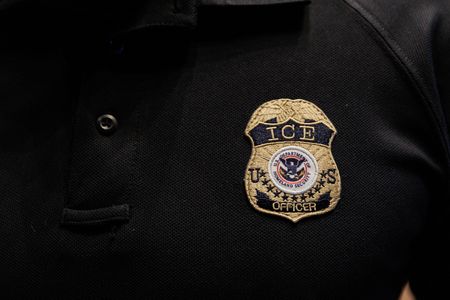

HAGERSTOWN, Md. — Car horns echoed and demonstrators chanted “Stop ICE!” outside a Washington County meeting where officials discussed routine matters including waste management budgets.
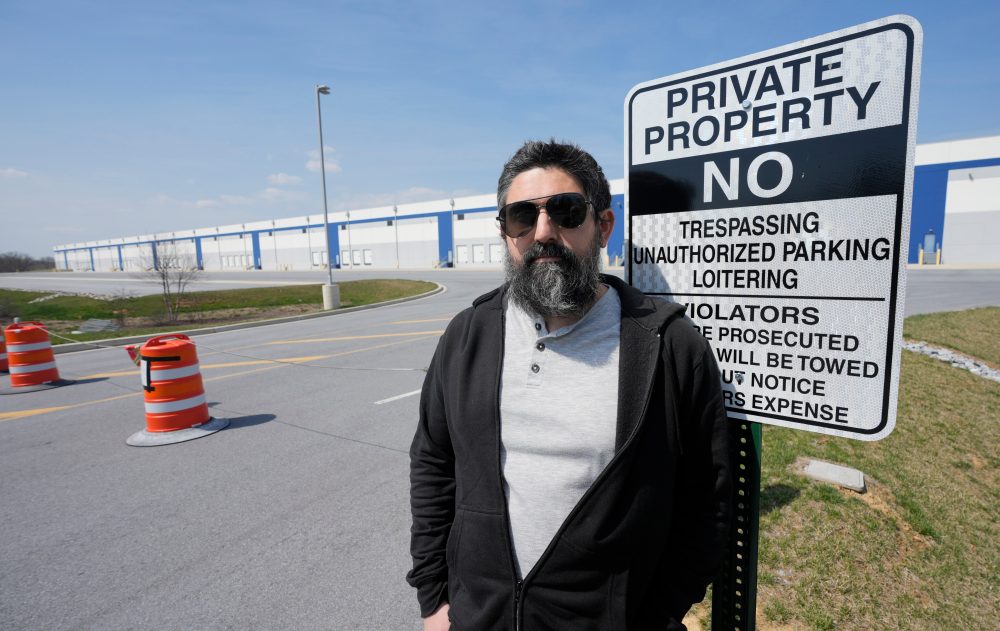
The protests have become a regular occurrence since the Department of Homeland Security acquired a massive 825,000-square-foot warehouse in Washington County as part of a nationwide initiative to convert commercial buildings into immigrant detention centers.
“This is a facility built for packages, not people,” said Patrick Dattilio, who leads Hagerstown Rapid Response, an organization opposing Immigration and Customs Enforcement, as he demonstrated outside the county commission session.
Federal authorities have encountered strong resistance in communities where they spent $1.074 billion purchasing 11 warehouses under a program now being evaluated by Homeland Security Secretary Markwayne Mullin. Washington County stands out as the most cooperative location — where local leaders expressed backing for ICE despite public outcry with whistles and shouting. The processing center was planned to be among the first operational facilities in a project initiated under Mullin’s predecessor, Kristi Noem.
However, DHS plans for the Washington County property are currently suspended — caught up in legal proceedings similar to other warehouse conversion projects nationwide. Uncertainty remains about whether Mullin will proceed with the facilities initiative or pursue alternative strategies as he implements President Donald Trump’s large-scale deportation program.
The massive blue-and-white warehouse in Washington County has generated significant controversy partly due to how commissioners expressed their ICE support.
While consistently stating their limited options since the federal government had already purchased the property, commissioners also passed a resolution during their February 10 session declaring their “unwavering support” for DHS and ICE.
The resolution, which didn’t directly reference the warehouse acquisition, prompted such intense booing and shouting that the commission president emptied the chamber.
The county also had its own interests. Officials sent the resolution to Noem the following day along with an email outlining hundreds of millions of dollars in sewer, airport and highway improvements they claimed were necessary, according to public records obtained by local resident Ethan Wechtaluk, who is seeking Congress in the district containing the warehouse.
ICE, backed by substantial congressional funding, has signed a $113 million contract to modify the building for 500 to 1,500 detainees, but a judge temporarily stopped construction after Maryland’s attorney general filed suit. A court hearing is set for April 15.
County commissioners ignored email and phone requests for comment. County administrator Michelle Gordon issued a statement saying commissioners were refusing all interview requests.
Numerous county residents — in an area Civil War enthusiasts visit to see the Antietam battlefield before traveling to nearby Gettysburg — are angry both due to ethical concerns about the facility and because they learned about the purchase after the fact.
“We have had no voice in this,” said Carroll Sager amid the noise of protesters and honking vehicles. Behind her, the sheriff’s department had blocked off part of the county building with crime scene tape to keep protesters away. Two deputies monitored the crowd.
Inside the meeting, Sager sat silently, displaying a sign reading: “Disenfranchised in Washington County.”
Resistance in other locations has included a New Jersey legal challenge alleging an “utter lack of communication” and a Michigan lawsuit questioning why DHS didn’t consider using vacant state prisons. Authorities in Salt Lake City and Pennsylvania have threatened to restrict or cut off water service. In Georgia, the town of Social Circle placed a lock on the water meter at a DHS-purchased warehouse.
Additionally, concerns have emerged about DHS payment amounts for some warehouses. The agency paid twice the tax-assessed value for the New Jersey warehouse and nearly five times the assessed value of the Social Circle warehouse.
During his confirmation hearing, Mullin faced questions about whether he would continue Noem’s warehouse-to-detention policy. Without making specific commitments, Mullin said the department wanted to “be good partners” with communities.
Shortly after taking office, DHS suspended new warehouse purchases intended for immigrant housing. The agency is reviewing all contracts executed under Noem.
Federal officials also stated in a recent Maryland lawsuit filing that “ICE is reconsidering the plans and scope of the warehouse.”
When asked about potential changes for the Maryland facility, DHS responded in a statement: “As with any transition, we are reviewing agency policies and proposals.”
The strategy involved converting the Maryland warehouse into an ICE processing center that would temporarily house recently detained immigrants before transferring them to other facilities for extended detention.
ICE representatives have indicated the Washington County warehouse would address detention space requirements for the Baltimore ICE office. State legislators have raised concerns about the George H. Fallon Federal Building housing ICE detainees in downtown Baltimore, partly because bacteria causing Legionnaires’ disease was discovered in the water system.
Activists and residents living near the Washington County warehouse continue monitoring developments.
For almost thirty years, Nica Sutch has owned a home in western Maryland’s rolling hills, where she raised children and hosted grandchildren.
When the warehouse was constructed several years ago to meet distribution center demand driven by online shopping growth, she convinced herself it could benefit the region economically.
Now that ICE has acquired the building, she’s considering relocating.
“I love the area,” she said during a backyard interview. “I love everything. This has been my home for 28 years.”