
CHICAGO (AP) — A complex political dispute over whether Chicago public schools should close on May 1 is reaching a critical point, leaving hundreds of thousands of students and families uncertain about their plans.
The powerful Chicago Teachers Union, which supports Mayor Brandon Johnson, is pushing for educators to join protest activities in America’s third-largest city on May Day, aligning with global workers’ rights demonstrations. However, the recently appointed head of Chicago Public Schools has turned down the request to close schools.
This disagreement has left families of more than 315,000 students in limbo.
Workers’ rights demonstrations on May Day have traditionally been strong in Chicago, a city known for supporting organized labor. International Workers Day traces its origins back more than 100 years to a significant period in labor movement history.
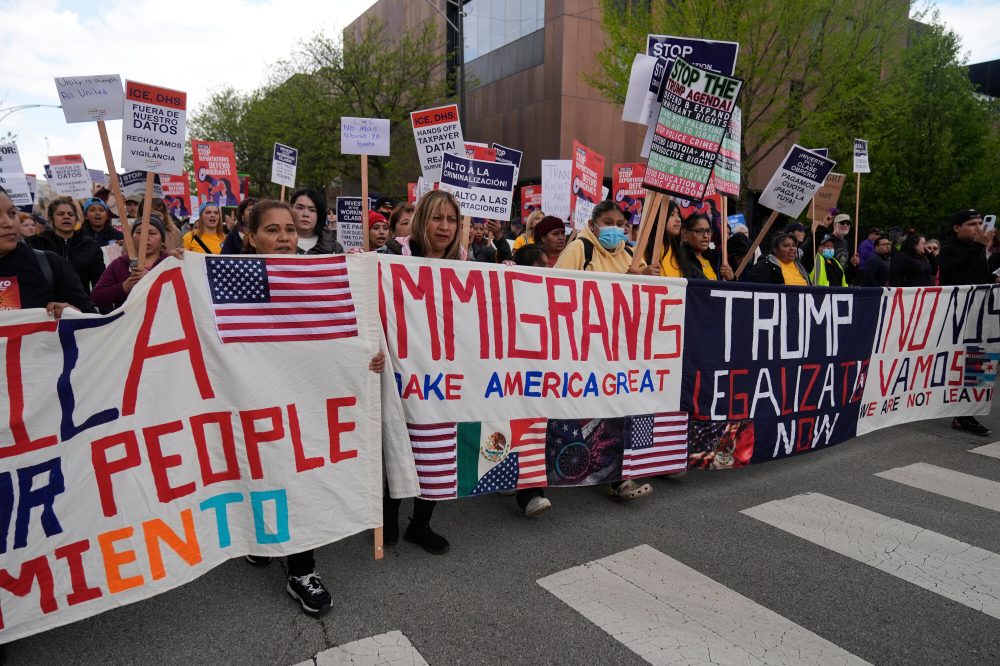
Labor organizations across the United States are organizing a comprehensive boycott of work, commerce, and education this year to oppose the Trump administration’s policies. In various locations, including North Carolina, union groups are urging teachers to skip work on May 1.
The Chicago Teachers Union is calling for the country’s fourth-largest school system to eliminate classes entirely, claiming this would enable both educators and students to demonstrate during a period when public education faces challenges. Labor groups are pushing for increased educational funding, higher taxes on wealthy individuals, and an end to immigration enforcement operations.
Over 70% of the district’s student population comes from low-income households, with most students being Black or Latino.
“What our students need, and what history teaches us is the only thing that works, is educators, labor unions, and community groups standing together to defend each other and our democracy and demand that the government put our families over their fortunes,” the CTU said in a statement.
Earlier this week, Macquline King, the recently appointed district CEO, announced she had no intention of canceling classes.
“As a career educator, I believe every minute in the classroom is vital for our students,” she said in a statement, adding that the district’s school board could override her with a vote. Their next regular meeting is April 23.
The union plans to designate May 1 as a professional development day for educators, switching it with one originally scheduled for June 5, which marks the beginning of students’ summer vacation. The union has submitted a formal complaint regarding this issue.
The potential closure of more than 500 schools is causing significant problems for parents who are worried about securing childcare or canceling test preparation activities.
District research revealed that 113 schools, roughly 20% of all schools, had scheduled events for May 1, including educational trips, athletic competitions, and makeup sessions for Advanced Placement exams. An additional 100 schools reported having other events such as proms and senior recognition nights planned for that date, according to a document from King to board members that The Associated Press obtained.
“Disruptions would directly affect academic testing and key student milestones, particularly for graduating seniors and 8th graders with limited ability to recover or reschedule these experiences,” King wrote in the memo.
Mariam Hafezi, whose child attends middle school in northwest Chicago, expressed support for civic education and wouldn’t oppose student-organized walkouts. However, she pointed out that these demonstrations were being organized by adults.
“It is a teachable moment without them being outside of school,” she said. “It would be wiser to spend time in class explaining about the strike in general.”
The conflict over a single school day highlights a challenging situation for first-term Mayor Johnson and his potential reelection campaign in 2027.
Johnson endorses the May 1 demonstrations but has been less definitive publicly about whether schools should be closed. His office did not respond to an email on Friday.
As a former CTU organizer, Johnson won the 2023 election with union backing. This relationship has created friction, especially during last year’s contract discussions and the removal of former CEO Pedro Martinez.
Following a difficult search process for a replacement, the board selected King, someone already working within the district who had been serving as interim CEO. The board approved her three-year contract last week.
This disagreement has also provided insight into the politics of the city’s newest Democratic governing body. Chicago is transitioning from a mayor-appointed school board to a completely elected one this November.
The current 21-member board includes both elected and appointed members who frequently disagree.
“Calls to keep students out of school are reckless,” elected board member Jennifer Custer wrote on Facebook. “They hurt parents who work, disrupt classrooms, and set our kids back — all for politics.”
However, Emma Lozano, a veteran immigrant rights advocate appointed by Johnson, expressed a different view.
She believes students should participate in May 1 demonstrations, which have attracted hundreds of thousands of participants in Chicago in previous years.
“We don’t just get educated in the classroom,” she said. “We get educated in the world and have to learn how to fight for our rights.”