
NASHVILLE, Tenn. — A federal court has dismissed human smuggling charges against Kilmar Abrego Garcia on Friday, after his wrongful deportation became a flashpoint in immigration policy debates during President Donald Trump’s administration.
Garcia’s removal to El Salvador last year created significant problems for Trump administration officials when courts ordered his return to the United States. Garcia argued that both when the criminal charges were filed and inflammatory public comments made by senior Trump officials proved the case against him was retaliatory.
From Nashville, U.S. District Judge Waverly Crenshaw approved Garcia’s request to dismiss the case due to “selective or vindictive prosecution.”
The decision represented a significant criticism of a Justice Department that faced repeated allegations under President Donald Trump of pursuing defendants for political reasons. The Trump administration highlighted the charges against Garcia during a news conference last year where then-Attorney General Pam Bondi stated, “This is what American justice looks like.”
“Kilmar Abrego Garcia is a victim of a politicized, vindictive White House and its lawyers at what used to be an independent Justice Department,” Garcia’s defense team said following Friday’s decision. “We are so pleased that he is a free man.”
The Justice Department promised to challenge the ruling, describing the judge’s decision as “wrong and dangerous.”
Crenshaw noted that without Garcia’s “successful lawsuit challenging his removal to El Salvador, the government would not have brought this prosecution,” while rejecting government claims of “new evidence” against him.
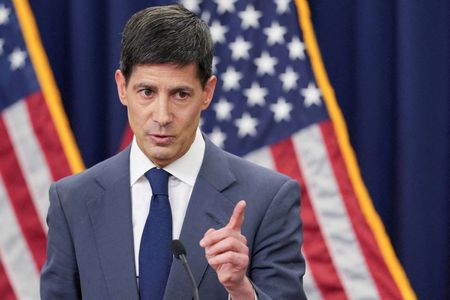
While Crenshaw didn’t conclude the government demonstrated “actual vindictiveness,” a difficult standard typically requiring evidence such as prosecutors admitting charges were filed for revenge, the judge determined sufficient evidence existed for “presumptive vindictiveness.” This included when the indictment was filed, public statements by then-U.S. Deputy Attorney General Todd Blanche, and continued oversight by other senior Justice Department officials that thoroughly compromised the case against Garcia.
Crenshaw found the government’s explanations unconvincing.
Garcia faced charges of human smuggling and conspiracy to commit human smuggling, with federal prosecutors alleging he received payment to transport individuals who were illegally present in the United States.
The accusations originated from a 2022 Tennessee traffic stop for speeding. Body camera video from a Tennessee Highway Patrol officer captured a peaceful interaction with Garcia. Nine passengers were in the vehicle, and officers privately discussed potential smuggling concerns. Ultimately, Garcia was permitted to leave with just a warning.
In Friday’s decision, Crenshaw emphasized that when the charges were filed was key to presuming vindictiveness. Homeland Security knew about the traffic incident for two years and had concluded the case against Garcia when they deported him. After the U.S. Supreme Court determined he should return to the U.S., they revived the case. Though the government needed to counter the vindictiveness presumption, prosecutors failed to call the person who reopened the case to testify about their reasoning, providing only “secondhand testimony” instead.
Garcia’s deportation violated a 2019 immigration court ruling that protected him from removal to his native country, after the judge determined he faced threats there from a gang targeting his family. Garcia is a Salvadoran national with an American spouse and child who resided in Maryland for years despite entering the U.S. illegally as a minor. The 2019 ruling permitted him to live and work in the U.S. under Immigration and Customs Enforcement monitoring, though he didn’t receive permanent residency.
Current Trump administration officials have stated Garcia cannot stay in the U.S. They have pledged to remove him to a third nation, most recently Liberia.