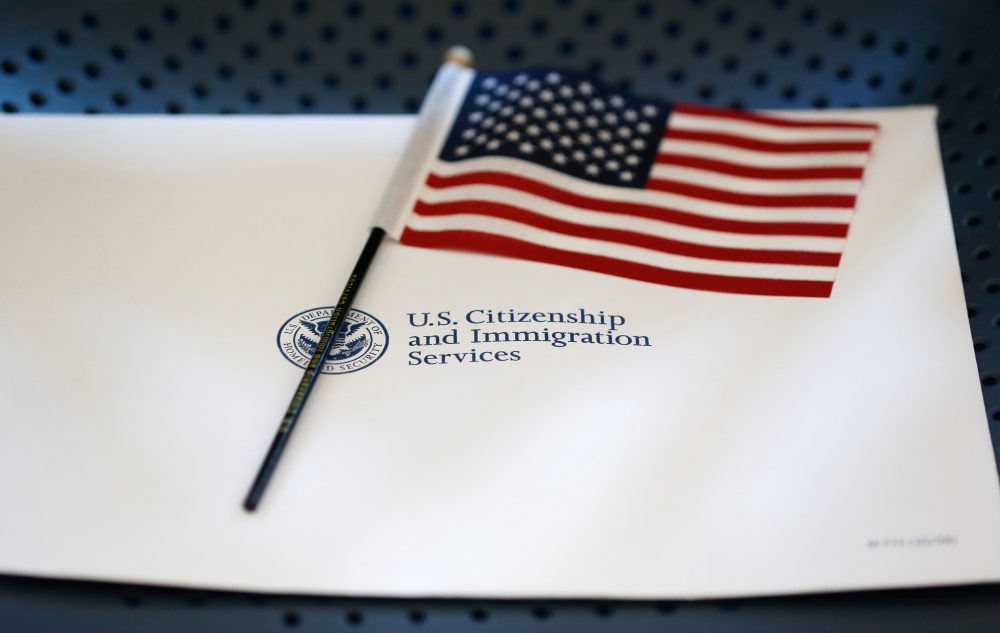

WASHINGTON — Foreign nationals currently in the United States seeking permanent residency will be required to return to their home countries to complete their green card applications, according to a Friday announcement from the Trump administration that caught immigration advocates and attorneys off guard.
The policy reverses more than 50 years of established practice that allowed foreign nationals with legal status to pursue and finalize their permanent residence applications while remaining in the United States. This included spouses of American citizens, work and student visa holders, refugees, and asylum seekers.
U.S. Citizenship and Immigration Services stated that temporary foreign nationals wanting to become lawful permanent residents must go back to their home countries to submit applications, unless “extraordinary circumstances” exist. USCIS officers will determine if applicants qualify for such exceptions.
“Nonimmigrants, like students, temporary workers, or people on tourist visas, come to the U.S. for a short time and for a specific purpose. Our system is designed for them to leave when their visit is over. Their visit should not function as the first step in the Green Card process,” the agency stated.
The move represents another effort by the Trump administration to make legal immigration more challenging for foreigners currently in America and those seeking to enter.
“The goal of this policy is very explicit. Senior officials in this administration have said over and over that they want fewer people to get permanent residency because permanent residency is a path to citizenship and they want to block that path for as many people as possible,” said Doug Rand, a former senior advisor at USCIS during the Biden administration, who added that about 600,000 people already in the U.S. apply each year for a green card.
The agency has not specified when the policy takes effect, whether applicants must stay abroad throughout the entire process, or how it affects pending green card applications.
USCIS told the Associated Press via email that individuals providing an “economic benefit” or serving the “national interest” might be permitted to remain in the U.S., while others would need to apply from overseas.
This policy addition follows other administration measures restricting entry from numerous countries. Some nations face complete travel prohibitions, while others experience visa processing delays. Legal experts warn that requiring people from restricted countries to return home for green card applications could permanently prevent their return.
“If families are told that the non-citizen family member must return to his or her country of origin to process their immigrant visa, but immigrant visas are not being processed there, it’s a Catch-22. These policies will effectively create an indefinite separation of families,” wrote World Relief, a humanitarian and refugee resettlement organization.
USCIS characterized the modification as restoring “the original intent of the law” and eliminating a “loophole.”
However, immigration attorneys and advocacy organizations objected, arguing that status adjustment within the U.S. has been standard procedure for many groups, and numerous individuals cannot safely return home or lack embassy access for applications. The U.S. Embassy in Afghanistan, for instance, has remained closed since the American withdrawal in August 2021.
“USCIS is trying to upend decades of processing of adjustment of status,” said Shev Dalal-Dheini, senior director of government relations at the American Immigration Lawyers Association. “This all applies very broadly to anyone seeking a green card”.
Those affected could include spouses of American citizens, immigrants with humanitarian protections seeking green cards, work visa holders including physicians and other professionals, plus student and religious visa recipients, the attorney explained.
Dalal-Dheini noted that visa appointment wait times at certain U.S. consulates overseas can exceed one year.
Immigration lawyers spent Friday afternoon analyzing the policy memorandum and announcement, attempting to understand its scope of application.
Organizations providing legal and support services to immigrants reported receiving calls from worried clients about how the new guidelines would affect them.
“It’s really hard to tell how this is going to be applied,” said Jessie De Haven, senior staff attorney with the California Immigration Project a non profit that provides legal services to low income immigrants. “I do think it might have a chilling effect on people applying.”