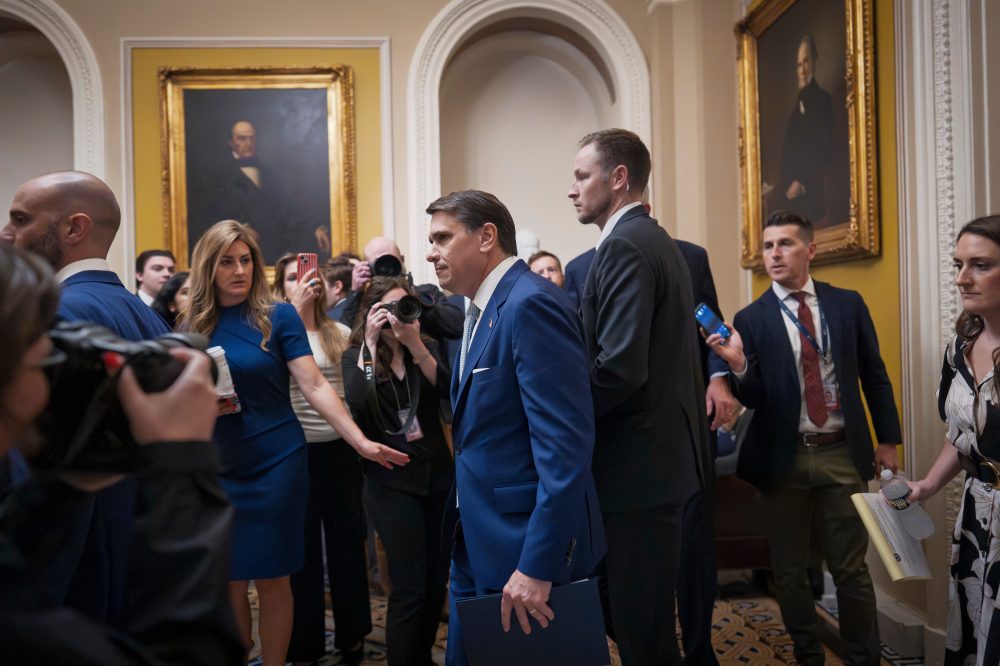

WASHINGTON — A historic moment of defiance unfolded in the Senate this week as Republican lawmakers reached their breaking point with President Donald Trump’s escalating demands.
Frustrated GOP senators took an unprecedented step when faced with Trump’s latest request — a $1.776 billion compensation fund for January 6 rioters and others he considers wrongfully prosecuted. Rather than comply, they shut down proceedings and departed the Capitol.
This unusual display of resistance from Congress represents a significant shift for the Republican majority, which has typically chosen accommodation over confrontation when dealing with their party’s president.
The standoff derailed the GOP’s primary legislative goal: approving approximately $70 billion in funding for Trump’s immigration enforcement and deportation initiatives through 2029. Voting has been delayed until Congress reconvenes next month, missing Trump’s June 1 target date.
When questioned at an Oval Office event about whether he was losing Senate control, Trump responded with uncertainty.
“I really don’t know,” the president said.
The confrontation follows a challenging week where Trump’s endorsed candidates swept midterm primaries, defeating Republican incumbents including Sen. Bill Cassidy in Louisiana and Rep. Thomas Massie in Kentucky. He also backed a challenger against Sen. John Cornyn in Texas, wielding his Make America Great Again movement against lawmakers who maintain independent positions.
House Republicans also showed signs of rebellion. For the first time this year, enough GOP members indicated support for a Democratic war powers resolution aimed at stopping Trump’s military actions in Iran. House Speaker Mike Johnson delayed the vote to avoid a direct challenge to the president.
These developments expose new vulnerabilities for Trump and the Republican Party. While his chosen candidates are winning primaries, many lack experience for general elections this fall. Trump’s approval ratings have declined, and he’s using political influence in ways that could alienate potential supporters and complicate GOP electoral prospects.
Trump’s surprise announcement of the nearly $1.8 billion “anti-weaponization” fund caught senators off guard, particularly those already frustrated by his request for $1 billion to secure a new White House ballroom.
The proposal’s structure — Trump negotiating a settlement in his own lawsuit against the Internal Revenue Service to create the compensation fund — proved too controversial for Senate approval.
“Under what circumstances would it ever makes sense to provide restitution for people who were either pled guilty or were found guilty in a court of law?” questioned Sen. Thom Tillis, R-N.C.
Tillis criticized the White House proposal as “stupid on stilts” and a “payout for punks.”
Former majority leader Sen. Mitch McConnell of Kentucky, who typically keeps his opinions private, issued a public statement following the events.
“So the nation’s top law enforcement official is asking for a slush fund to pay people who assault cops? Utterly stupid, morally wrong — Take your pick,” McConnell said.
Political dynamics are shifting as Trump’s pressure tactics lead lawmakers to question the benefits of appeasing him, especially those planning to leave office.
“I think it’s hard to divorce anything that happens here from what’s happening in the political atmosphere around us,” said Senate Majority Leader John Thune, R-S.D.
Acting Attorney General Todd Blanche spent hours in private meetings with senators discussing the compensation fund but failed to reach an agreement.
Following those discussions, Thune suggested the administration’s team gained “an appreciation for the depth of feeling on the issue.”
While Trump-endorsed candidates defeated Republican incumbents this week, demonstrating his influence over party voters, some Congress members interpreted these losses differently.
“You don’t want to have a totally loyal party that’s in the minority. And that’s maybe where we’re headed,” said Republican Rep. Don Bacon of Nebraska, who is retiring at his term’s end.
The tensions began Saturday when Cassidy, who voted to convict Trump during his post-January 6 impeachment trial, lost his Louisiana primary to a Trump-backed opponent. Upon returning to Washington, Cassidy became more vocal in his Trump criticism and opposition.
“Congress should hold the executive branch accountable,” Cassidy stated Monday. The following day, he joined Democrats in voting to limit the Iran conflict.
Trump’s endorsement of Ken Paxton over Cornyn in Texas struck many Republicans as both personal and politically dangerous. Trump explained that Cornyn “was not supportive of me when times were tough.”
“There’s a lot of folks in our conference that are disappointed because we appreciate working with John Cornyn,” said Sen. Mike Rounds, R-S.D.
Other senators worried the divisive Texas primary could endanger a seat Republicans must retain.
“He made the wrong pick,” Tillis said. “It’s going to be a lot more expensive to hold that seat.”
House Republicans also demonstrated growing dissatisfaction.
Rep. Brian Fitzpatrick, R-Pa., partnered with Democratic Rep. Tom Suozzi to introduce legislation preventing taxpayer funding for Trump’s proposed “anti-weaponization” compensation program.
Fitzpatrick drew Trump’s criticism after the president publicly complained that the congressman “likes voting against Trump” and warned, “You know what happens with that?”
However, Fitzpatrick maintained that internal party opposition stems from policy disagreements rather than political concerns.
“People have the right to free speech in this country,” Fitzpatrick said. “But what we do here is all about policy.”
Fitzpatrick and Republican Michigan Rep. Tom Barrett were anticipated to support Democrats on the war powers resolution targeting Trump’s Iran military campaign.
GOP leadership withdrew the measure when it became apparent Republicans lacked sufficient votes for defeat.
Bacon, who served 30 years of active Air Force duty, believes much Republican resistance to the war could be addressed through improved congressional consultation.
“You sit down with somebody, and work with them instead of threatening, bully and yelling,” said Bacon. “It don’t work.”