
Two federal judges delivered significant setbacks Thursday to the Justice Department’s nationwide campaign to obtain comprehensive voter registration records from states across the country.
In Wisconsin, U.S. District Judge James Pederson determined that voter registration databases don’t qualify as records subject to requests under the Civil Rights Act of 1960, contradicting arguments made by the current administration. Meanwhile in Maine, Chief U.S. District Judge Lance Walker characterized the federal government’s legal argument as “half-hearted” before approving the state’s request to throw out the case.
These decisions continue a pattern of courtroom losses for the current administration’s efforts to obtain state voter information. Beyond Maine and Wisconsin, similar federal demands have been struck down by judges in Arizona, California, Massachusetts, Michigan, Oregon and Rhode Island. In Georgia, a judge threw out a Justice Department case because it was filed in an incorrect jurisdiction, forcing federal attorneys to restart their legal action in a different location.
The Justice Department has initiated legal action against no fewer than 30 states plus the District of Columbia in pursuit of comprehensive voter databases. These records contain sensitive personal details including birth dates, home addresses, driver’s license numbers and partial Social Security numbers.
“This represents a massive victory for voter privacy and a rejection of federal overreach,” stated Bianca Shaw, who serves as state director of Common Cause Wisconsin.
“The decision ensures voters are protected from an unauthorized national database that would have been a goldmine for hackers and a tool for intimidation,” she said in a statement. “Our elections remain safe, secure, and in the hands of Wisconsinites where they belong.”
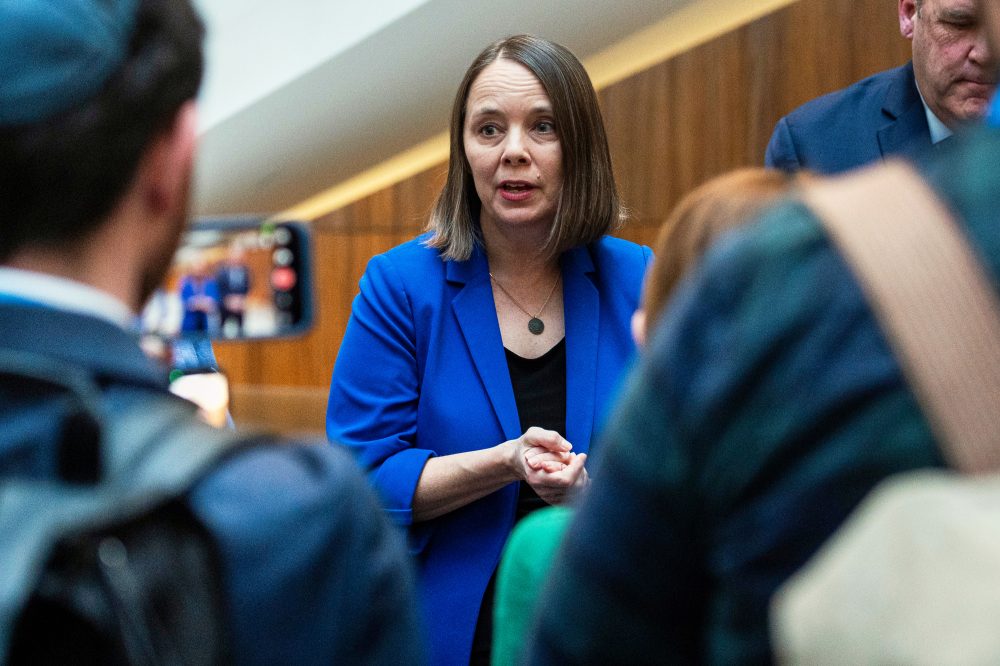
Maine Secretary of State Shenna Bellows, a Democrat and opponent who is running for governor, said the ruling affirms that states and not the federal government are in charge of elections and voting. The current administration has sought the voter data since last year in Maine and elsewhere.
“Let me be clear — the current administration and the DOJ may continue to try to interfere with free and fair elections run by the states. We will not let them,” Bellows said in a statement.
Justice Department representatives did not provide immediate responses to requests for comment regarding the court decisions or potential appeals.
In Wisconsin, Common Cause, the Wisconsin Alliance for Retired Americans, Forward Latino and three individual voters joined the case to oppose the federal government’s efforts to access state voter databases.
Doug Poland, who directs litigation for Law Forward, a Wisconsin-based liberal law firm, described the current administration’s actions as “thinly-masked efforts to manipulate and subvert future elections.”
“The court recognized this as an illegal attempt to gather and weaponize data on Americans, dressed up in the language of voting rights enforcement,” he said.
Judge Walker, who received his appointment from the current president, determined in Maine that election oversight remains a state responsibility.
“Under our Constitution, states are the primary regulators and administrators of elections for federal office, unless Congress passes legislation that preempts that framework,” Walker wrote.
Pederson, the Wisconsin judge, received his appointment from former President Barack Obama.