
WASHINGTON, May 23 – Following the Trump administration’s intensified pressure on Communist-controlled Cuba, which came after military forces removed Venezuelan President Nicolas Maduro in January, analysts are examining why the Cuban situation may unfold differently despite Caracas having been a major ally of the island nation’s government.
LEADERSHIP SUCCESSION QUESTIONS
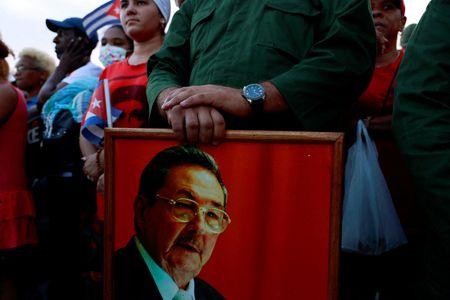
When U.S. forces captured Maduro during a swift operation on January 3, then-Vice President Delcy Rodriguez assumed control and has remained as acting president. However, Cuba presents a different scenario with no clear deputy to Cuban President Miguel Diaz-Canel or former President Raúl Castro, the 94-year-old ex-leader whom the U.S. indicted this week as part of efforts to intensify pressure on Havana.
Orlando Pérez, a specialist in U.S.-Latin America relations at the University of North Texas in Dallas, explained the challenge: “The security apparatus in Cuba has dismantled, systematically dismantled, every alternative or potentially alternative power source.”
While Venezuela has a prominent opposition figure in Nobel laureate María Corina Machado, who won 2024 elections but was prevented from assuming power and hopes to return for free elections this year, Cuba lacks a comparable leader.
Though Raúl Rodriguez Castro, the former president’s grandson, recently met with CIA Director John Ratcliffe during an unusual visit by a U.S. intelligence chief to Havana – sparking speculation about potential cooperation with Washington – the younger Castro holds no official government role and isn’t anticipated to turn against his family. He participated in a Friday rally in Havana protesting his grandfather’s indictment.
ANALYZING ADVANTAGES AND DANGERS
Cuba has remained a U.S. adversary since Fidel Castro’s 1959 revolution. Trump enjoys strong backing from hardline Cuban-Americans in Florida who have long advocated for U.S.-supported regime change, and the Republican president has expressed clear desires for transformation in their native country.
Historically viewed as a threatening Soviet ally just 90 miles from Florida, and more recently as a potential base for Chinese influence in the Western Hemisphere, Cuba’s position has shifted as Russia’s focus moved elsewhere after the Soviet bloc’s collapse, while economic difficulties have reduced its capacity to challenge the U.S.
Analysts warn that Cuban instability could trigger a migration emergency, as citizens already facing widespread power outages due to the U.S. blockade might choose to escape the island during conflict or disorder.
Cuba’s armed forces demonstrate greater ideological commitment and unity than Venezuela’s military and would likely mount stronger resistance. While dozens of Cuban agents died in Venezuela during January while protecting Maduro, survivors gained valuable intelligence about U.S. operational methods.
Cuba is also considered more sophisticated in surveillance and intelligence capabilities, particularly after years of collaboration with Russia and China.
POTENTIAL U.S. GAINS FROM CUBA
Venezuela possesses significant natural resources, with U.S. corporations already positioning themselves to extract oil from the South American nation, which has experienced increased exports.
Cuba offers no comparable resources. Its government-controlled tourism sector lagged behind other Caribbean locations in cost and service quality even before this year’s sharp decline, worsened by shortages connected to Trump’s “maximum pressure” strategy, the U.S. blockade, and tariff threats against nations supplying it with fuel.
U.S. Secretary of State Marco Rubio, a vocal Cuba critic who also serves as national security adviser, is viewed as the driving force behind the Trump administration’s Cuban strategy.
A Florida-born son of Cuban immigrants who has previously sought the presidency and is expected to run again, Rubio could benefit politically from major Cuban changes, but failure carries significant risks as the U.S. confronts massive budget shortfalls while conducting a costly Iran campaign estimated at billions daily.
LEGAL COMPLICATIONS
The 1996 Helms-Burton Act restricts Washington’s ability to alter Cuban relations, connecting embargo removal to specific political changes including establishing a democratically elected government.
Trump modified U.S.-Venezuela business relationships by ousting Maduro while maintaining the existing government structure without announcing plans for free elections.
Regarding Cuba, he cannot legally proceed without dramatic cooperation from Cuban officials, who have refused to collaborate thus far.
Cuba’s situation proves more complex due to its economy’s lack of private enterprise, dominated instead by Gaesa, a military conglomerate under U.S. sanctions controlling the island’s premier hotels, main port, leading commercial bank, and extensive networks of supermarkets, gas stations, and remittance operations.
Washington justified the Venezuela intervention by citing Maduro’s government involvement in “narcoterrorism.” Cuban officials haven’t faced similar accusations, with their government claiming cooperation with the U.S. in anti-drug efforts.