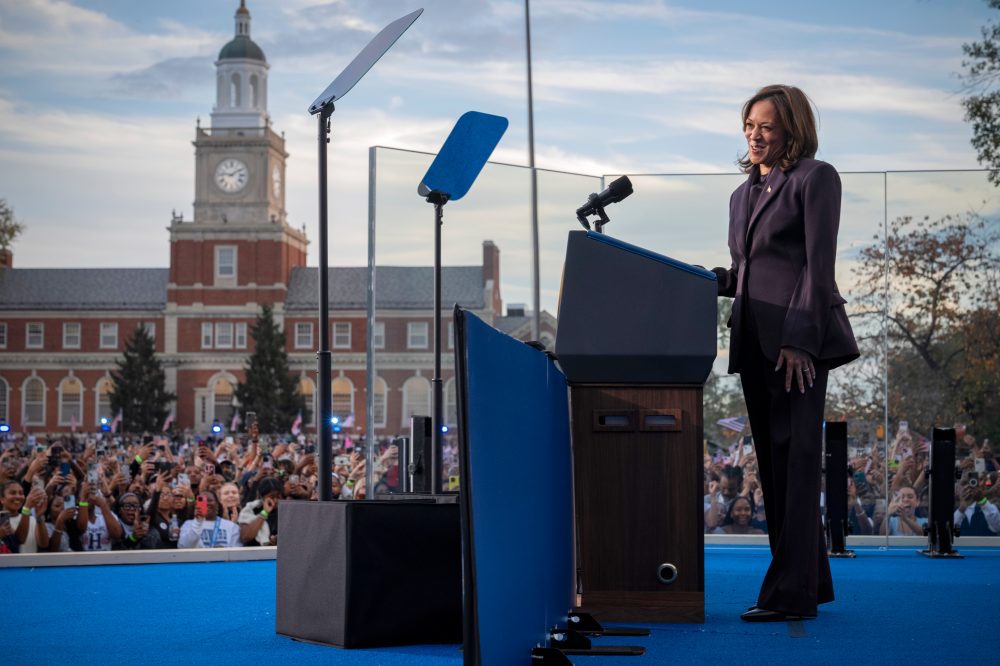

WASHINGTON — The Democratic National Committee finally published its delayed analysis of the 2024 election on Thursday, but the document arrived with prominent red warnings on every page questioning its credibility.
“This document reflects the views of the author, not the DNC,” stated the disclaimer. “The DNC was not provided with the underlying sourcing, interviews, or supporting data for many of the assertions contained herein and therefore cannot independently verify the claims presented.”
The unusual warning accompanies a document that has generated significant internal controversy. DNC chair Ken Martin initially pledged to make the analysis public, then reversed course, stating he wanted to avoid distracting from midterm elections.
Following months of internal debate, Martin made the report available Thursday, explaining the delay by characterizing the work as poorly executed.
The 192-page analysis contains several notable gaps, steering clear of some of the campaign’s most significant challenges.
The document fails to examine President Joe Biden’s choice to seek reelection at age 81, despite widespread questions about his age. Biden withdrew following a poor debate showing, with Harris quickly selected as his replacement.
While Harris emerged as the apparent successor after serving as Biden’s vice president, the analysis doesn’t tackle concerns that the nomination process moved too quickly or lacked proper deliberation.
Significantly, the Middle East conflict receives no attention — the words “Gaza” and “Israel” are absent from the entire text. Democratic divisions over the war diminished support for Harris among voters frustrated with the Biden administration’s backing of Israel.
The analysis determined that the Biden White House failed to “position or prepare the vice president” for mounting an effective campaign.
Only after Biden announced his July exit did campaign pollsters rush to gather fresh data on three crucial areas — “one on the Vice President’s biography and record, one on her vision and plan, and another on attacks and responses.”
Researchers also found Harris lacked responses to a critical vulnerability: The Trump campaign’s anti-transgender messaging. The analysis emphasized that pollsters believed the Democratic candidate was “boxed” in by Republicans’ “very effective” commercial featuring Harris’ past support for taxpayer-funded gender-affirming surgeries for prison inmates.
“Kamala is for they/them, President Trump is for you,” the advertisement stated.
The report concluded: “If the Vice President would not change her position — and she did not — then there was nothing which would have worked as a response.”
Harris’ campaign has faced extensive post-election criticism. Some Democrats believe she devoted excessive time to courting Republicans like Liz Cheney, while others argue she failed to develop compelling economic messaging.
The analysis offers different reasoning, arguing insufficient effort went toward portraying Trump as unfit for office.
“There was a decision in the 2024 Democratic leadership not to engage in negative advertising at the scale required,” the document states. “The Trump campaign and supportive Super PACs went full throttle against Vice President Harris, but there was not sufficient or similar negative firepower directed at Trump by Democrats.”
Later, the analysis states, “Democrats made a mistake by assuming voters were already aware of Trump’s various weaknesses.
“The idea Trump’s negatives were ‘baked in’ is a major failure of analysis and reality,” the report says.
DNC officials appeared to reject these findings, inserting comments such as “no evidence provided; contradicts claims elsewhere in report” and “no sourcing or evidence provided.”
The document faulted Harris’ appeals to important voter groups while making several critical references to “identity politics.” The analysis expresses particular alarm about Latino voters.
“Democrats can no longer assume Latino voters, especially younger Latino men, are a reliable part of their base,” the report says. “The party needs a complete rethink of its Latino outreach strategy, moving beyond traditional approaches like Spanish-language ads and late-cycle surrogates.”
The analysis cites successful Democratic statewide campaigns in Arizona, Nevada and North Carolina, demonstrating that “economic messaging, and addressing cost-of-living concerns resonate more than identity politics.”
The document also noted Democratic struggles with male voters.
“Male voters require direct engagement. The gender gap can be narrowed,” the report says. “Deploy male messengers, address economic concerns, and don’t assume identity politics will hold male voters of color.”
Harris also lacked solutions for the party’s rural voter problem.
“Harris wrote off rural America, assuming urban/suburban margins would compensate. The math doesn’t work,” the report says. “You can’t lose rural areas by overwhelming margins and make it up elsewhere when rural voters are a significant share of the electorate. If Democrats are to reclaim leadership in the Heartland or the South, candidates must perform well in rural turf. Show up, listen, and then do it again.”