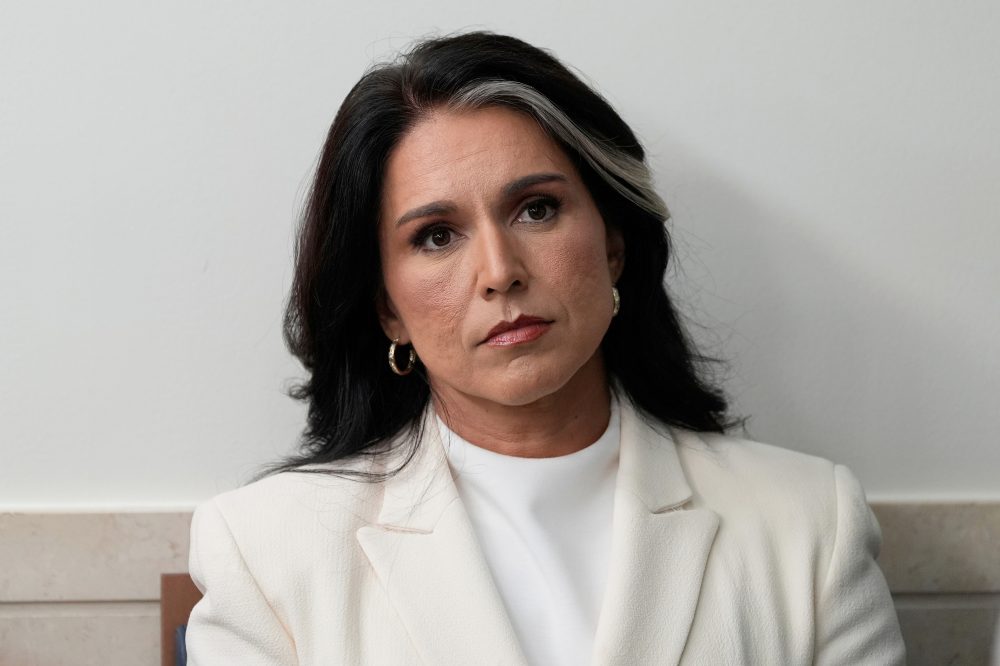

WASHINGTON — The nation’s intelligence chief announced her departure on Friday, with Tulsi Gabbard stepping down from her position as director of national intelligence to care for her husband who is fighting cancer. Her exit marks the fourth Cabinet departure since President Donald Trump began his second term.
Through a resignation letter shared on social media, Gabbard informed Trump of her intention to leave her post on June 30. She explained that her spouse had received a recent diagnosis of an uncommon bone cancer type and “faces major challenges in the coming weeks and months.”
“At this time, I must step away from public service to be by his side and fully support him through this battle,” she stated in the letter, which Fox News initially reported.
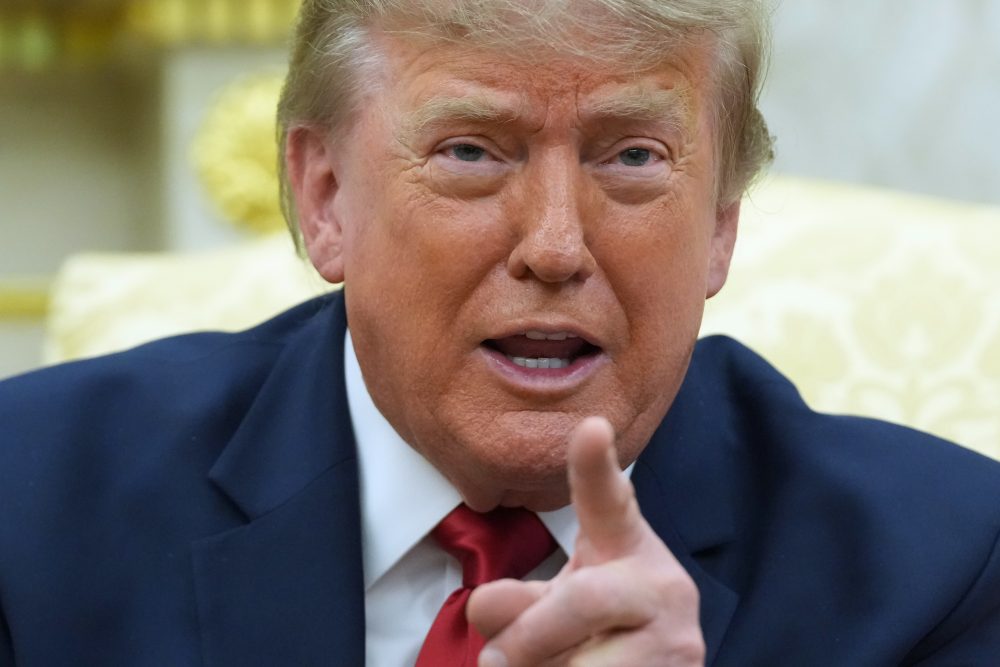
Trump acknowledged her departure through his own social media announcement, stating “Tulsi has done an incredible job, and we will miss her.” He named her principal deputy, Aaron Lukas, as the interim intelligence director.
Lukas previously worked as an intelligence assistant to the acting director of national intelligence, Ric Grenell, during Trump’s first presidency in 2020. The former policy researcher at the Cato Institute, a libertarian think tank, also held the position of deputy senior director for Europe and Russia at the National Security Council during Trump’s initial administration’s final year.
Speculation had emerged about potential tensions between Gabbard and Trump following the president’s choice to attack Iran, creating divisions within his administration. Joe Kent, who heads the National Counterterrorism Center, stepped down in March, stating he “cannot in good conscience” support the war.
The former Democratic representative from Hawaii and military veteran established her political reputation through her opposition to international military conflicts. This stance created complications when the United States partnered with Israel to launch strikes against Iran on Feb. 28.
Her cautious remarks during a March congressional hearing stood out for their deliberate avoidance of endorsing Trump’s Iran strike decision. She consistently avoided answering questions about whether the White House received warnings regarding potential consequences from the conflict, including Iran’s effective blockade of the Strait of Hormuz.
In written statements to the Senate Intelligence Committee, Gabbard reported that Iran had made no attempts to reconstruct its nuclear capabilities following U.S. attacks that “obliterated” its nuclear program the previous year. This assessment conflicted with Trump’s repeated claims that military action was essential to prevent an immediate threat from the Islamic Republic.
These differences led to uncomfortable moments with legislators who sought Gabbard’s assessment of Iran’s danger level in her role as the country’s chief intelligence officer. She consistently maintained that the strike decision belonged to Trump, not her.
“It is not the intelligence community’s responsibility to determine what is and is not an imminent threat,” she stated.
Her resignation comes after Trump removed Homeland Security Secretary Kristi Noem in late March amid growing criticism of her department leadership, particularly regarding immigration enforcement and disaster response management.
Attorney General Pam Bondi became the second Cabinet member to depart, responding to increasing frustration over the Justice Department’s management of Jeffrey Epstein-related documents. Labor Secretary Lori Chavez-DeRemer resigned in April following various misconduct investigations.
Despite her military background, Gabbard lacked intelligence experience, making her selection to lead the Office of the Director of National Intelligence unexpected. This office supervises the country’s 18 intelligence organizations. She pursued the presidency in 2020 with a progressive agenda centered on opposing U.S. participation in foreign military operations.
Drawing on her military service, she contended that American wars in the Middle East had created regional instability, reduced U.S. security, and resulted in thousands of American casualties. Gabbard eventually withdrew from the presidential race and supported the eventual victor, President Joe Biden.
She departed the Democratic Party two years later to become an independent, criticizing her former party as controlled by an “elitist cabal of warmongers” and “woke” ideologues. She subsequently supported several prominent Republicans and joined Fox News as a contributor.
Her endorsement went to Trump, who similarly criticized previous U.S. Middle Eastern wars and promised to prevent unnecessary conflicts and overseas nation-building efforts.
However, disagreements with the president emerged shortly after he started his second term and selected Gabbard to head ODNI, an agency established following the Sept. 11, 2001, attacks to enhance intelligence agency coordination.
Soon after assuming her role, Gabbard told lawmakers that no intelligence indicated Iran’s pursuit of nuclear weapons development. Following Trump’s June attacks on Iranian nuclear facilities, he declared Gabbard incorrect and dismissed her assessments.
She seemed to regain Trump’s favor when she took a prominent role in his efforts to challenge his 2020 election defeat to Biden, whom Gabbard had previously endorsed. She participated in an FBI search of election offices in Fulton County, Georgia, despite her agency’s focus on foreign espionage rather than state elections.
This week, she testified during an annual threats hearing that last year’s Iranian nuclear site strikes had “obliterated” their nuclear program without subsequent rebuilding efforts.
Her statement appeared to contradict Trump’s ongoing claims about Iran’s immediate threat level, leading to uncomfortable exchanges with legislators seeking her professional opinion on Iran’s danger as the nation’s top intelligence official. She maintained that strike decisions belonged to Trump.
“It is not the intelligence community’s responsibility to determine what is and is not an imminent threat,” she reiterated during this week’s hearings.
Gabbard promised to end what she characterized as intelligence politicization by government insiders. However, she quickly utilized her position to advance Trump’s partisan arguments, including his claims of winning the 2020 election.
She also worked to undermine previous investigations into Trump’s Russian connections.
During her tenure, Gabbard supervised significant intelligence workforce reductions and established a new task force to consider major intelligence service modifications.
An intelligence sector whistleblower filed a complaint earlier this year alleging that Gabbard withheld intelligence for political purposes, prompting Democratic calls for her resignation.
The 44-year-old was born in American Samoa, grew up in Hawaii, and spent part of her childhood in the Philippines. She won election to Hawaii’s House of Representatives at age 21 but had to leave after one term when her National Guard unit deployed to Iraq.
As the House’s first Hindu member, Gabbard took her oath with her hand on the Bhagavad Gita, the Hindu devotional text. She also became the first American Samoan elected to Congress.
Throughout her four House terms, she gained recognition for challenging her party’s leadership. Her early backing of Sen. Bernie Sanders’ 2016 Democratic presidential primary campaign elevated her profile in national progressive politics.