
WASHINGTON, May 30 – Republican senators return from recess next week confronting a difficult decision: support President Donald Trump’s disputed $1.8 billion fund designed to compensate victims of alleged political targeting, or oppose a leader who recently contributed to ending two GOP senators’ careers.
Approximately half of the 53 Republican senators in the majority expressed reservations during an intense two-hour session with Acting Attorney General Todd Blanche before the Memorial Day recess, compelling leadership to postpone voting on a $72 billion bill funding Trump’s immigration enforcement efforts through his term’s conclusion.
As GOP leaders prepare to vote on legislation supporting U.S. Immigration and Customs Enforcement and Border Patrol operations, the party is urging Trump’s Justice Department to establish protective measures that might neutralize Democratic strategies to force multiple amendment votes aimed at blocking the fund and embarrassing the administration.
“I would hope that Senate leadership is working with the administration and the Department of Justice to design something that’s going to work,” stated Senator Ron Johnson, a Wisconsin conservative who expresses full support for the fund. “My suggestion was, come up with an overriding amendment that will render all their amendments moot.”
The compensation program, designed to reimburse alleged political targeting victims using public funds, originated from a legal agreement between Trump’s Justice Department and the Internal Revenue Service to settle an extraordinary lawsuit where the president sought $10 billion regarding alleged mismanagement of his tax documents.
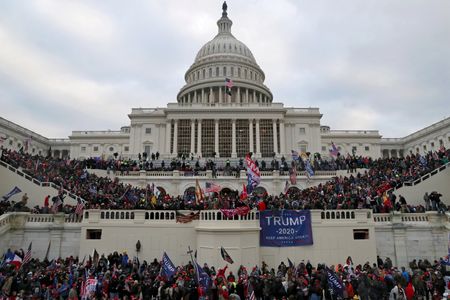
The proposal sparked intense backlash, with legislators expressing worries about possible conflicts of interest involving Trump and the potential for payments to violent supporters who attacked the U.S. Capitol and assaulted officers on January 6, 2021.
A federal judge issued a temporary restraining order Friday preventing the administration from proceeding with the fund.
Blanche assured lawmakers privately that the program would exclude Trump family members and anyone with violent crime convictions, according to meeting attendees. However, senators demand written guarantees, along with eligibility criteria, enhanced congressional authority in choosing fund administrators, and judicial supervision.
“What will dictate the next step is whether or not there are 51 Republican senators who believe that it is a satisfactory outcome,” explained a senior Republican aide. “I don’t think every member necessarily is going to find equal satisfaction.”
Senate Majority Leader John Thune has requested the Justice Department and White House clarify acceptable safeguards for members. Staff report receiving no response thus far.
“The administration appreciated last week’s conversation and feedback,” commented a White House official Friday. “We look forward to additional conversations as needed.” The Justice Department declined to respond to inquiries.
Republican political consultants warn the fund could become a liability approaching November midterm elections, where the party already confronts challenges from rising consumer costs, an unpopular conflict with Iran, and Trump’s diminishing approval numbers among Republicans.
“No one thinks this is a winning issue, even those in safe Republican House and Senate seats that don’t usually have to worry about an election. Even those folks want no part of this,” said a Republican strategist requesting anonymity due to involvement in important congressional campaigns.
Legislators have shown reluctance to challenge the matter following Trump’s involvement in primary losses for Republican Senators John Cornyn and Bill Cassidy.
Johnson criticized the Justice Department for publicly announcing the fund while the Senate prepared to review the ICE funding legislation.
“To me, this whole thing was completely blown by announcing it. These things are better just done using the authority that Congress has given,” Johnson commented. “The timing was atrocious.”
The dispute has reignited 2020 election grievances.
James Troupis, a former Trump campaign lawyer facing felony charges for his alleged involvement in a fraudulent 2020 elector scheme in Wisconsin, filed this week for $3.2 million compensation, claiming reputation damage and $1.7 million in expenses from representing Trump.
Vice President JD Vance indicated former Colorado elections clerk Tina Peters might qualify for compensation after her conviction for illegally accessing voting equipment while pursuing false 2020 election fraud claims.
Several Republicans in both chambers have demanded congressional supervision, reflecting remarks to media by Senate Judiciary Committee Chairman Chuck Grassley.
“Congress needs to have an oversight role in this before I can sign off or support this,” Republican Representative Mike Flood told constituents during a Norfolk, Nebraska town hall.
“I have concerns about the weaponization fund,” Representative Mariannette Miller-Meeks, among the most vulnerable House Republicans, told the Des Moines Register.
“We need to know more information. We need to have oversight. We need to know who determines it, where it goes,” the Iowa Republican explained. “Right now, I have more questions than I have answers.”