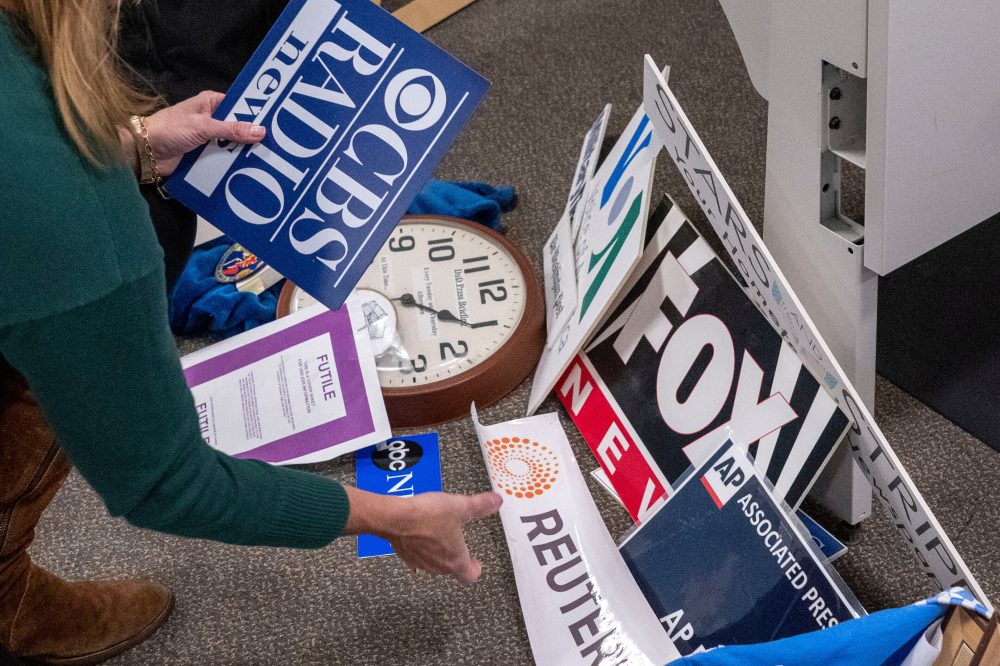

The Defense Department has banned reporters from accessing its press office, marking another step in a series of measures that limit media access to the Pentagon facility.
Acting Pentagon press secretary Joel Valdez announced the decision on X, explaining that the office space has been reclassified as restricted because speechwriters who work with sensitive materials now use the area.
“The Pentagon Press Office has been redesignated as a Sensitive Compartmented Information Facility due to speechwriters from the Office of the Secretary of War sharing the facility,” Valdez wrote.
“These speechwriters routinely handle classified material … as a result, journalists will no longer be permitted to enter the office space. There’s nothing controversial about that.”
The Washington Post was first to report this development, which occurs during heightened friction between news media and the second Trump administration that has extended into courtroom disputes.
Defense reporters previously held credentials allowing broad access throughout the Pentagon building for interactions with press staff. However, in October, most media organizations surrendered their access passes and departed the Pentagon rather than accept government-imposed limitations on their reporting activities.
The New York Times filed its second lawsuit against the Defense Department on May 18, following an earlier legal action in December. The newspaper contends that mandatory escort requirements for journalists on Pentagon property breach First Amendment protections and represent “an unconstitutional attempt by the Pentagon to prevent independent reporting on military affairs.”
The publication initiated the second legal challenge after suing over new regulations established by Defense Secretary Pete Hegseth, targeting an emergency policy “that the Pentagon hastily put into place after a federal judge ruled in The Times’s favor in its original lawsuit.” The updated rules mandate constant supervision of journalists while inside Pentagon facilities.
These restrictions took effect in March after U.S. District Court Judge Paul L. Friedman overturned previous limitations. The judge subsequently determined in April that the temporary policy violated his March decision. Despite this ruling, escort requirements continue under an appeals court order that suspended portions of Friedman’s directive pending the government’s appeal, which remains active.