
TAMPA, Fla. — The current administration is working to harness artificial intelligence capabilities for military use, even as some uniformed leaders express reservations about the rapidly advancing technology and certain companies raise safety concerns.
Speaking at a recent special forces conference in Tampa, Florida, Adm. Frank Bradley, who leads U.S. Special Operations Command, warned attendees that military personnel “have to be very careful about how we come to (AI’s) employment and its inspiration into the delivery of lethality.”
While Bradley acknowledged he envisions AI eventually determining target selection, he emphasized that “we, as humans, have to have the confidence that … it’s going to deliver violence only where we intend it to be delivered.”
These cautionary comments from Bradley, whose command handles the military’s most challenging missions, come as Defense Secretary Pete Hegseth drives rapid military transformation through AI implementation. This initiative has created tensions with technology firms concerned about safety protocols.
Hegseth has demanded Pentagon freedom to deploy the technology through any legal means available. Speaking to SpaceX workers in January, he declared he would turn down any AI systems “that won’t allow you to fight wars,” describing his goal as technology operating “without ideological constraints that limit lawful military applications.”
Military AI development represents part of the Republican administration’s broader effort to expand capabilities viewed as distinctly American strengths, while managing pressure for responsible oversight measures.
President Donald Trump suddenly canceled plans for signing a new AI executive order just hours before a scheduled White House event, citing worries the policy might weaken America’s technological advantage.
“We’re leading China, we’re leading everybody, and I don’t want to do anything that’s going to get in the way of that lead,” Trump told reporters.
Responding to questions about Bradley’s comments, a Pentagon representative said current work centers on developing AI-powered “functional battlefield tools” to help military personnel identify and develop targets more rapidly, thereby accelerating strike operations. The official requested anonymity for more open discussion.
Representatives from U.S. Special Operations Command described AI not as target elimination assistance but as technology giving troops additional time for mission focus.
Sgt. Maj. Andrew Krogman, the command’s senior enlisted leader, told conference participants he views AI managing administrative duties to support operators or helping update business operations.
Melissa Johnson, the command’s chief acquisition officer, said AI should be “reducing the cognitive workload on mundane tasks.”
“We’re leveraging AI more and more, but it’s not to replace operator judgment, it’s to enhance it,” she added.
Helen Toner, interim executive director at Georgetown University’s Center for Security and Emerging Technology, noted that both military AI descriptions are accurate.
“There are a huge number of potential uses for AI in these kinds of bureaucratic settings, which the U.S. military is actively exploring,” Toner said.
Lt. Gen. Michael Conley, who commands Air Force Special Operations Command, informed a congressional panel in May that his personnel employed AI “bots” to downgrade top secret intelligence to secret classification within seconds, facilitating easier information sharing with ground-based drone operators during the Iran war.
Nevertheless, AI is undeniably assisting military targeting and strike operations.
Toner’s center released a case study two years ago detailing how the Army’s 18th Airborne Corps employed AI for artillery targeting “just as efficiently as the best unit in recent American history” while using 2,000 fewer personnel.
“Human operators are still the ones making crucial decisions, but AI … is making it possible to operate with a new level of speed and scale,” she said.
Disputes over military AI integration, control authority, and ethical considerations have unfolded unusually publicly during the Trump administration.
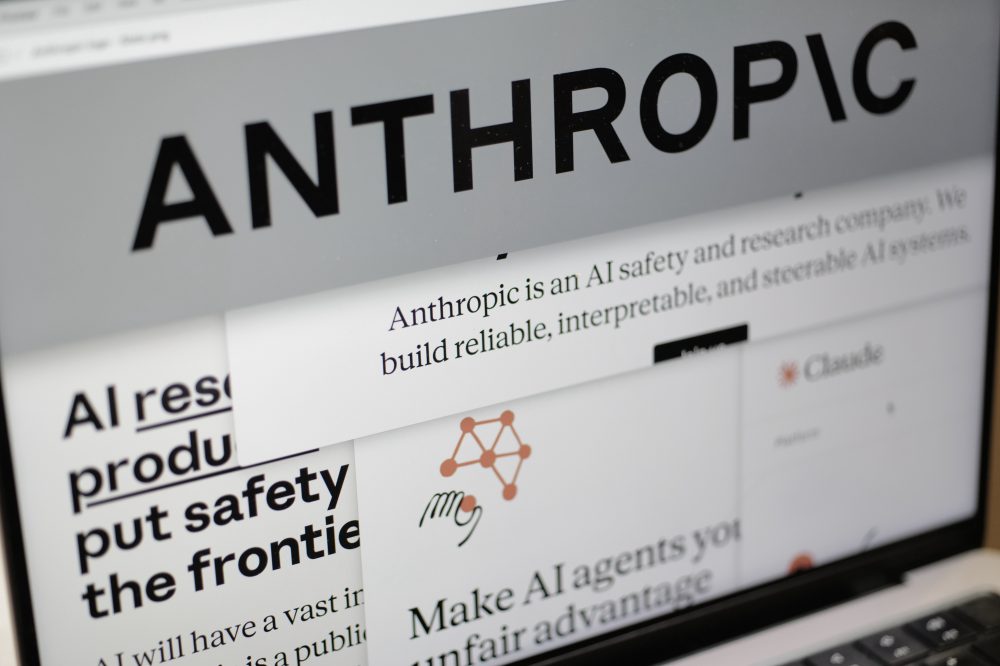
Hegseth and Anthropic are engaged in an intense contract disagreement stemming from the company’s worries about unrestricted government technology use, including risks from completely autonomous weaponized drones and AI-supported mass surveillance potentially monitoring dissent.
Following CEO Dario Amodei’s refusal to compromise on concerns regarding Pentagon use of the Claude chatbot in classified networks, both Trump and Hegseth accused Anthropic of threatening national security.
The Pentagon officially designated the San Francisco company a supply chain threat — terminating its $200 million defense agreement and barring other government contractors from partnering with the firm.
Anthropic filed suit, alleging illegal Pentagon retaliation through stigmatizing designation typically reserved for protecting against foreign adversary sabotage of national security systems. The Pentagon has subsequently highlighted its shift to Anthropic competitors — including Google, OpenAI and SpaceX — for securing AI technology capable of “augment warfighter decision-making in complex operational environments.”
Toner, a former OpenAI board member removed following disagreements with CEO Sam Altman, observed that “the general public often seems to underestimate the caution with which the U.S. military approaches new technologies.”
“Commanders want their missions to succeed, which means both being able to create lethal effects at scale, and avoiding unintended effects like friendly fire, civilian casualties, or simply identifying targets incorrectly,” she said.