
Louisiana’s Republican lawmakers have given final approval to a congressional redistricting plan that eliminates a Democratic-controlled district where Black voters make up the majority, potentially helping the GOP maintain control of the U.S. House in this year’s November elections.
The state has become part of a broader trend among Republican-controlled Southern states that have moved quickly to dismantle Democratic districts with substantial Black voter populations following an April U.S. Supreme Court ruling that significantly reduced legal safeguards for such constituencies.
After clearing the state House of Representatives on Thursday, the redistricting plan received Senate approval Friday by a 28-10 margin, with voting following party affiliations. The legislation will now head to Republican Governor Jeff Landry’s desk, where he is anticipated to sign it into law.
Currently, Republicans control four out of the state’s six congressional districts under a redistricting plan created in 2024 following a court mandate that required establishing a second district with either a Black majority or near-majority population, as required by federal Voting Rights Act provisions. Black Democratic representatives currently serve both districts that contain substantial Black voter populations.
However, the Supreme Court invalidated the 2024 redistricting plan, declaring it an unconstitutional racial gerrymander. This decision created opportunities for Louisiana and other states to challenge majority-minority districts that had previously been protected by stronger legal safeguards.
Governor Landry delayed the May 16 U.S. House primary elections to allow legislators sufficient time to create the new redistricting plan, which dismantles Democratic U.S. Representative Cleo Fields’ district centered in Baton Rouge. When Landry issued his postponement order, thousands of mail-in ballots had already been submitted, prompting voting rights advocates to express concerns about voter confusion and electoral disruption.
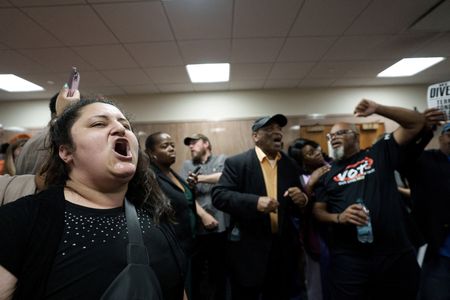
Democratic legislators have condemned the redistricting plan as an attempt to suppress Black voting power, while Republican supporters maintain they drew district boundaries based purely on partisan considerations rather than racial factors.
This surge of Southern redistricting initiatives represents the most recent battleground in a nationwide redistricting conflict that began last summer when President Donald Trump encouraged Texas Republicans to redraw their state’s congressional boundaries to challenge sitting Democratic representatives.
Republicans have gained the upper hand in redistricting battles, securing advantages in potentially 10 seats while legal challenges remain pending.
However, Democrats continue to be well-positioned to win a U.S. House majority this November given Trump’s declining approval numbers and voter dissatisfaction with increasing living costs.