
WASHINGTON (AP) — Congressional efforts to find accountability in the Jeffrey Epstein case have stretched nearly a year, with survivors of sexual abuse pushing lawmakers to put partisan differences aside in their pursuit of answers.
However, despite conducting interviews with some of the most senior officials ever questioned in a congressional probe, including a former president, legislators have achieved minimal results regarding criminal responsibility for Epstein’s offenses or clear recognition of governmental shortcomings.
California Democratic Rep. Ro Khanna, who authored legislation requiring the disclosure of Epstein case documents, expressed to The Associated Press his continued questioning: “Why there has not been a single investigation of people who have allegedly abused or committed financial crimes?”
Legislators anticipated obtaining answers during Friday’s transcribed session with Pam Bondi, President Donald Trump’s former attorney general who supervised the document release.
However, the session left Democrats frustrated with Bondi’s choice to support the Trump administration’s management of the materials and her unwillingness to address questions regarding the Republican president’s connection. Democratic representatives also criticized Republican Rep. James Comer, chair of the House Oversight Committee, claiming he has permitted administration officials to evade difficult congressional questioning.
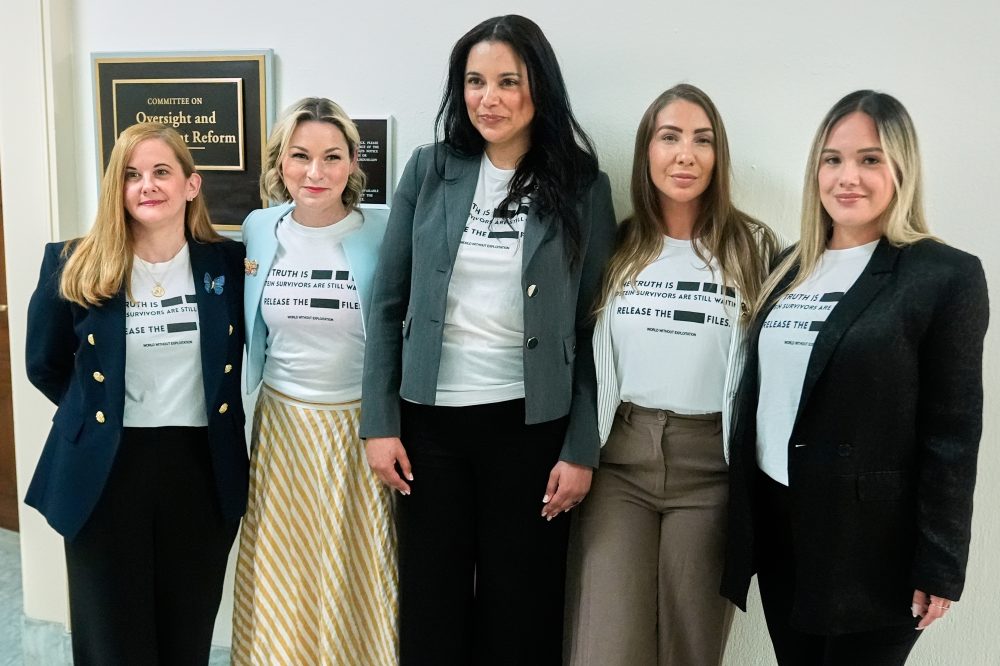
Survivors of Epstein’s abuse, including multiple individuals who journeyed to Washington to confront Bondi, found this development disheartening during a period when many are exhausted from advocating before government officials. They contend the Department of Justice’s disorganized document release, containing nude photographs and personal details of potential victims, has compounded broader criminal justice system failures to trust or safeguard them.
“The government’s refusal to acknowledge the failures that were there have led to so much harm,” said Annie Farmer. “And I think whenever you’re thinking about things from a perspective of justice or healing, without acknowledgment, it’s really hard to move forward.”
The committee’s probe has demonstrated notable bipartisan cooperation, with Democrats and Republicans collaborating to issue subpoenas and compel witness testimony. Beyond Bondi, legislators have questioned former Democratic President Bill Clinton, former Secretary of State Hillary Clinton and Trump’s commerce secretary, Howard Lutnick.
This collaboration demonstrates lawmakers’ readiness to transcend political boundaries when facing substantial public pressure. Numerous women have alleged sexual abuse and rape by Epstein, a wealthy and well-connected financier, including incidents occurring after his 2008 agreement with federal prosecutors to resolve a federal investigation by pleading guilty to state-level sex offense charges in Florida.
Epstein, discovered deceased in a New York detention facility in 2019 while facing sex trafficking allegations, was accused of compensating underage girls hundreds of dollars for massages before sexually assaulting them.
His situation has fascinated the public as an illustration of how wealthy and influential individuals avoid consequences for misconduct. Lawmakers addressed the matter last year following the administration’s failure to fulfill transparency commitments regarding the case.
Although the investigation began in the United States, the Epstein reckoning has been comparatively restrained domestically versus Europe. Overseas, senior government officials in the United Kingdom, Sweden, Norway and Slovakia have all resigned due to their Epstein connections.
During its investigation, the House committee interviewed some of Epstein’s closest associates, including his former financial client Les Wexner, his lawyer Darren Indyke and his accountant Richard Kahn. The Clintons, Lutnick and others were also summoned to testify.
All provided essentially identical responses: They claimed no knowledge of Epstein abusing underage girls.
Nevertheless, the Epstein file disclosure has produced consequences. At least eight American academic and business leaders have been removed from powerful positions, including former Treasury Secretary Larry Summers from Harvard University teaching and Kathy Ruemmler from her Goldman Sachs chief legal officer role.
Bank of America and Epstein’s estate have reached multimillion-dollar agreements with women who accused the institutions of enabling Epstein’s sex-trafficking activities.
Comer, R-Ky., announced last week that three individuals allegedly involved in abuse were identified during an interview with Epstein’s former personal assistant, Sarah Kellen. The congresswoman intends to question six additional people connected to Epstein in upcoming weeks, including billionaire Bill Gates, private equity investor Leon Black, former Barclays Bank CEO Jes Staley and Ruemmler.
“The government has failed the survivors. There’s no doubt about that,” Comer said, adding, “What we’re trying to do is connect all the dots and see if there is a way to hold people accountable.”
However, lawmakers have been troubled witnessing accountability for Epstein-connected figures like Britain’s former Prince Andrew while the administration has repeatedly attempted to move beyond the matter.
“A prince has been taken down and here in the United States, our Department of Justice, which is sitting on millions of files, is refusing to act,” said Rep. Melanie Stansbury, D-N.M., referencing unreleased case documents the Justice Department is withholding citing duplication or legal publication restrictions.
“That is not a failure, that is a choice,” Stansbury said.
Survivors and Democratic lawmakers have also objected to the administration’s decision to transfer Ghislaine Maxwell, Epstein’s longtime confidant and former girlfriend, to a minimum-security prison facility. She is serving a 20-year sentence for recruiting teenage girls for Epstein to abuse.
Distributed nationwide and occupied with their personal lives, Epstein abuse survivors have made multiple Washington trips to advocate for government action. Following years of court battles and privately sharing traumatic experiences, they have become increasingly vocal in seeking accountability.
“It is very taxing to be continually focused on this case,” Farmer said. She noted that despite the government’s response falling short of her expectations, she has observed a broader cultural movement addressing sexual predation.
For Marina Lacerda, another survivor, “Accountability is kind of hard right now. But we are looking for saving the next generation.”
However, they also seek the administration’s attention to their experiences. Seeking the president’s consideration, several victims testified this month at a hearing near Trump’s Mar-a-Lago resort in Florida organized by House committee Democrats.
For some survivors, returning to South Florida provided an opportunity to finally receive a hearing. Jena-Lisa Jones informed the panel she was 14 years old when Epstein abused her in Palm Beach.
She urged the lawmakers: “Find a way to bring closure to the story of Jeffrey Epstein to allow survivors and this country to finally begin to move forward so that one day, and I pray soon, Jeffrey Epstein’s name is no longer something we are forced to hear every single day.”