
A federal judge in Florida has announced plans to examine a controversial settlement deal between the Justice Department and President Donald Trump regarding his $10 billion legal action against the Internal Revenue Service, adding new scrutiny to the widely criticized arrangement.
The president had sued his own administration claiming improper handling of his tax documents led to media leaks. The proposed settlement would establish an approximately $1.8 billion compensation fund for those affected by alleged political weaponization.
On Friday, U.S. District Judge Kathleen Williams directed Trump’s legal team to provide a response by June 12 to allegations from 35 former federal judges who claim the settlement “is a product of collusion and is itself a fraud on the court.” The attorneys must also address whether the case should be reopened due to claims the lawsuit resulted from “deception” by Trump and the government.
After reaching the settlement, Trump attempted to have the lawsuit dismissed to avoid judicial review of the agreement.
Williams had initially approved that dismissal on May 18, but her latest ruling states the “court is empowered to investigate serious misconduct.”
It represents an uncommon situation for a judge to require government responses to motions following case dismissal. Should the judge decide to reopen proceedings, she might schedule hearings or pursue additional measures.
The former judges argued the settlement, which was never presented to the court, creates serious concerns about Trump and the government’s conduct “and manipulation of the judicial system, which threatens to undermine confidence in the administration of justice.”
In a separate development, U.S. District Judge Leonie Brinkema in Virginia issued a temporary prohibition Friday against the Trump administration establishing the “Anti-Weaponization Fund.” Brinkema’s directive remains effective through at least June 12.
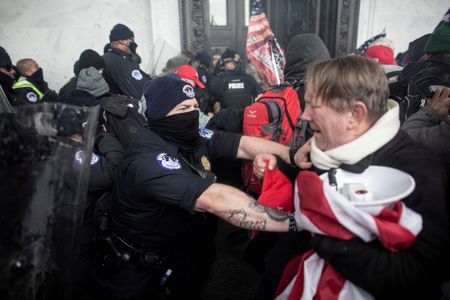
The compensation fund has generated opposition, including from some Republican Party legislators in Trump’s party, who voiced frustration that individuals involved in the January 6, 2021, U.S. Capitol attack might receive government-funded payments. Critics have labeled it a “slush fund.”
The settlement would also prevent the IRS from conducting future audits of past tax filings for Trump, his family members, and his businesses for returns submitted before May 18 or regarding any issues “that were raised or could have been raised.”
Legal professionals have characterized the arrangement as highly irregular due to both the unusual nature of Trump’s IRS lawsuit and because compensation funds of this magnitude are typically established through congressional legislation or court oversight.