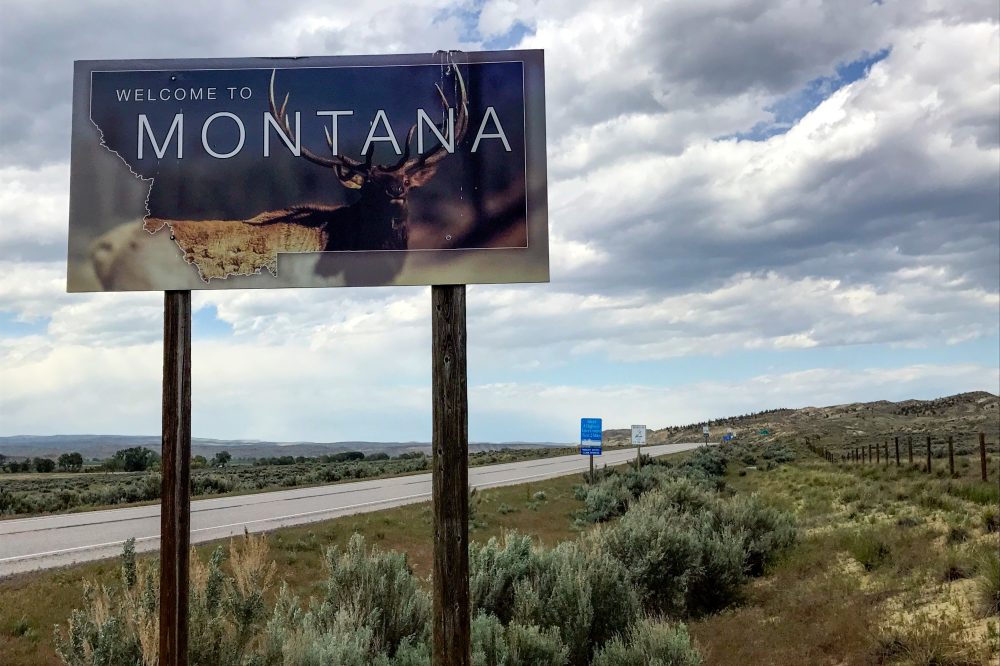

Montana residents will head to voting booths Tuesday to choose candidates in a state primary featuring contests to fill seats being vacated by departing Republican office holders in both the U.S. Senate and House of Representatives. However, a significant candidate will be absent from the ballot, while various legislative races showcase fractures within Montana’s controlling Republican Party.
The GOP maintains narrow control in both congressional chambers. While Montana hasn’t topped Democrats’ target list for potential pickups in their bid to reclaim either chamber, these retirements create possibilities for candidates who might capitalize on the state’s history of independent-minded voting.
Republican U.S. Sen. Steve Daines has decided against pursuing a third term. He has thrown his support behind former U.S. Attorney Kurt Alme as his replacement. The timing of Daines’ withdrawal in March and Alme’s campaign launch, both occurring shortly before filing deadlines, suggested strategic coordination. President Donald Trump appeared to validate this orchestrated approach when endorsing Alme.
“In fact, if Kurt didn’t have the highest level of aptitude and talent, Steve would have remained exactly where he is….,” Trump said in a social media post.
Alme has secured backing from the state’s leading Republicans, including U.S. Sen. Tim Sheehy and Gov. Greg Gianforte. His Republican primary opponents are Lee Calhoun and Charles Walking Child.
On the Democratic side, former state Rep. Reilly Neill leads the field, having raised five times more money than her four primary competitors combined.
Both party winners will compete against former University of Montana president Seth Bodnar, who is pursuing the seat as an independent candidate. Through mid-May, Bodnar had collected more campaign funds than any other candidate from either party. Bodnar represents one of several independent hopefuls who chose to skip party primaries and could potentially disrupt general election outcomes for some Republican incumbents.
For the 1st Congressional District, Republican U.S. Rep. Ryan Zinke has announced he won’t pursue a fourth complete term, pointing to health issues. He joins Trump, Sheehy and Gianforte in backing talk radio personality and former Zinke congressional aide Aaron Flint against Montana Secretary of State Christi Jacobsen, former state Sen. Al Olszewski and former high school government teacher Ray Curtis. Democratic contenders include former gubernatorial candidate Ryan Busse and union organizer Sam Forstag.
State legislative contests reveal continuing tensions among Montana Republicans.
When the 2025 legislative session began, nine Republican state senators broke ranks with their party on multiple important floor votes, effectively giving chamber control to Democrats.
State Sen. Shelley Vance of District 34 stands as the sole member of these rebel legislators, labeled the “Nasty Nine” by the Montana GOP, facing reelection in 2026. Two additional members, state Sens. Jason Ellsworth and Bruce Gillespie, chose to seek state House positions in Districts 34 and 18 instead. The remaining six face term limits, retirement or aren’t running this cycle.
Responding to this Republican caucus rebellion, the Montana Republican Party published a list of endorsed state legislative candidates, including some challenging sitting Republican House members. However, some party selections conflict with Gianforte, who has produced social media videos featuring four targeted state House incumbents.
The governor expressed support for state House Speaker Brandon Ler and state Reps. Valerie Moore and Ken Walsh, all seeking reelection, plus state Rep. Eric Albus, who is campaigning for state Senate District 14. While Gianforte stops short of formal endorsements in these videos, he described one as a “great partner” and said he was “proud of the work” accomplished with another.
Twenty-five of the state’s 50 state Senate positions and all 100 state House seats face voters in 2026.
Key election details and data points the AP Decision Team will track during vote counting:
Voting concludes at 8 p.m. MT, equivalent to 10 p.m. ET.
The AP will deliver vote tallies and announce winners in competitive primaries for U.S. Senate, U.S. House, Public Service Commission, state Senate and state House.
All qualified voters can participate in any party’s primary election.
Voter registration reached approximately 791,000 as of May 25. Montana doesn’t require party registration.
The 2024 U.S. Senate primaries drew roughly 190,000 Republican votes and about 108,000 Democratic votes.
Early voting accounted for approximately 68% of total 2024 primary turnout.
By Friday, around 166,000 ballots had been submitted for Tuesday’s election.
Vote reporting methods differ across counties. Historical patterns show absentee results typically released alongside Election Day in-person voting throughout the evening. Roughly two-thirds of Montana’s 56 counties usually report most or all mail and early in-person voting results in their initial update, often combined with Election Day in-person totals. About half the counties typically include most or all Election Day in-person results in their first report.
During the 2024 U.S. Senate primary, the AP began reporting results at 10:26 p.m. ET, 26 minutes after polls closed. The final overnight update came at 4:06 a.m. ET with approximately 84% of votes tallied.
The Associated Press avoids projections and only declares winners when no possible scenario exists for trailing candidates to overcome their deficit. For uncalled races, the AP continues covering significant developments like candidate concessions or victory claims while clarifying no winner has been declared and explaining the reasoning.
Montana mandates automatic recounts solely for tied votes. Candidates may request recounts when margins fall below 0.5% of total votes, though state funding applies only to margins of 0.25% or less. The AP may announce winners in recount-eligible races if the lead appears too substantial for recounts or legal challenges to alter outcomes.
Following Tuesday, 154 days remain until the 2026 midterm elections.