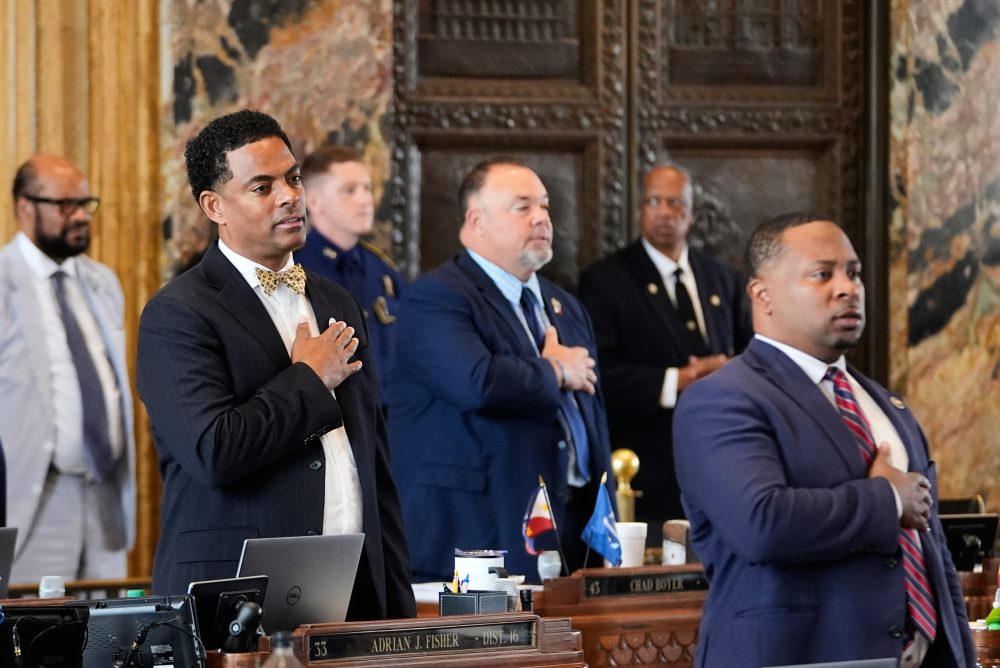

Louisiana’s Republican-led Senate is expected to approve new congressional district boundaries on Friday, part of a broader national effort by the GOP to secure control of the U.S. House in November’s elections. The move could make Louisiana another Southern state to dismantle a majority-Black congressional district that previously sent a Democrat to Washington.
Senators are scheduled to vote on redistricting legislation that would provide Republicans an opportunity to gain another seat following the U.S. Supreme Court’s late April ruling that declared Louisiana’s congressional map an illegal racial gerrymander.
The House overwhelmingly approved a modified version of the map on Thursday. After the legislature gives final approval to the boundaries, Republican Gov. Jeff Landry is anticipated to sign the measure into law.
Since the Supreme Court’s ruling, multiple Republican-led Southern states have taken advantage of a weakened federal Voting Rights Act to attempt redrawing their congressional boundaries. This represents another escalation in an intense nationwide redistricting battle approaching November’s elections, with encouragement from President Donald Trump.
Republicans are currently ahead in the redistricting competition. However, this advantage doesn’t guarantee they’ll control a closely divided U.S. House after November. Republicans believe their redistricting work could net them up to 14 additional seats, while Democrats estimate they might gain six seats through new boundaries in California and Utah.
Currently, Republicans control four out of six Louisiana congressional seats under a court-mandated map created in 2024 to satisfy Voting Rights Act requirements by establishing a second district with a majority-Black population.
Legal challenges targeted that map, leading the Supreme Court to invalidate it on April 30 as an illegal racial gerrymander.
Landry delayed the state’s U.S. House primary from its original May 16 date to later in the summer, providing Republican legislators time to craft and approve new district boundaries.
The new proposal reshapes Democratic U.S. Rep. Cleo Fields’ district, concentrating it around predominantly white areas in the Baton Rouge region and southern Louisiana. It also incorporates portions of Baton Rouge into a heavily Democratic, majority-Black district centered in New Orleans that Democratic U.S. Rep. Troy Carter currently represents.
Additional legal challenges to the new map are anticipated.
Democrats argue the proposed boundaries might still represent a racial gerrymander by concentrating Black voters into one congressional district. At the same time, those who brought the U.S. Supreme Court case have criticized the Legislature’s map for maintaining a majority-Black district.
Other Southern states have also pursued redistricting following the Supreme Court’s ruling.
Florida’s Legislature approved new congressional districts within hours of the decision, finalizing a redrawing process that had been prepared in advance of the ruling. This could provide Republicans with as many as four extra seats in the midterm elections.
Tennessee enacted new U.S. House districts one week after the ruling, dividing a majority-Black district centered in Memphis as Republicans seek to capture an additional seat.
In Alabama, Republicans are working to gain another seat by redrawing two districts where Black residents make up a majority or near-majority. Democrats currently hold both seats, and the proposal faces ongoing court challenges.
South Carolina’s Senate chose not to pursue redistricting, despite pressure from Trump.