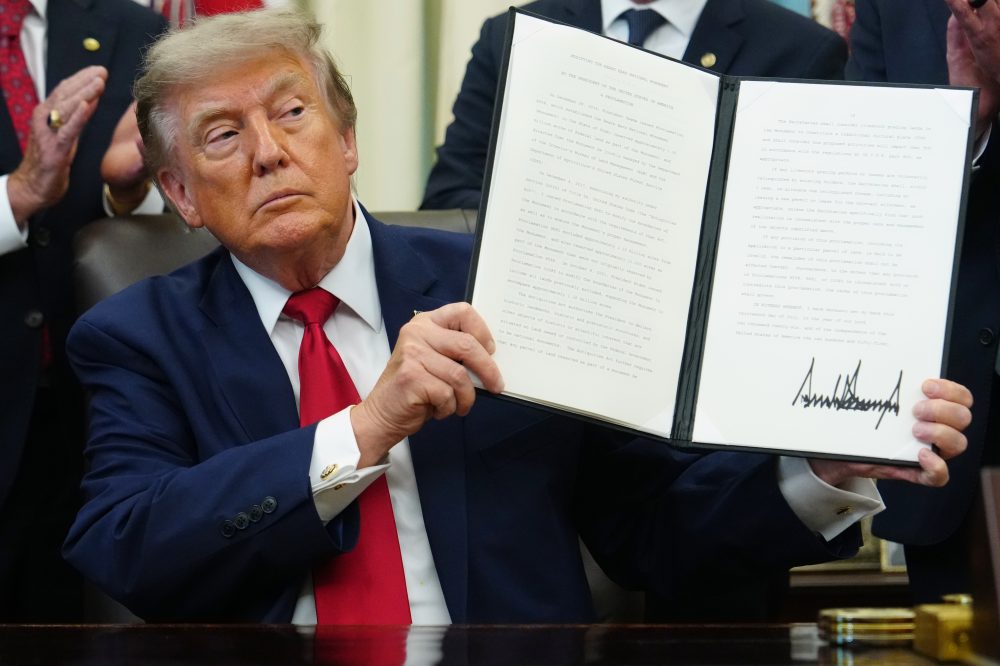

WASHINGTON — A political deadlock continues between congressional Republicans and the administration after GOP senators departed the capital ten days ago without approving funding for the president’s immigration enforcement operations.
Republican lawmakers returning to the nation’s capital on Monday indicate they lack sufficient support to advance the Homeland Security funding measure until the administration collaborates on establishing restrictions for a controversial $1.776 billion compensation fund intended for the president’s supporters. However, the president has demonstrated minimal willingness to negotiate, despite a court order temporarily blocking distributions from the fund.
The path to resolving this disagreement remains uncertain.
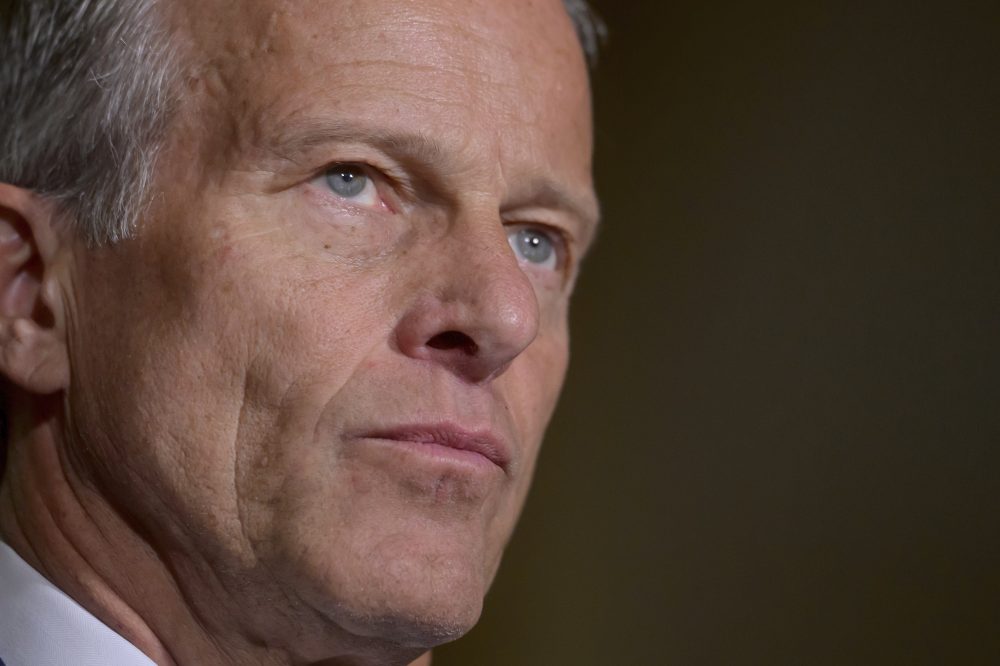
The administration must “come up with some suggestions and ideas,” stated Senate Majority Leader John Thune before lawmakers left Washington on May 21. The South Dakota senator expressed concern that the compensation money — which might potentially reach supporters who assaulted law enforcement and stormed the Capitol on January 6, 2021 — “just makes everything way harder than it should be.”
This deadlock surrounding the “anti-weaponization” fund represents a critical moment as Republicans work to maintain their congressional control in upcoming elections while pursuing their legislative priorities. The president’s campaign-season effort to challenge GOP members he considers disloyal, including some of Thune’s most dependable Republican supporters in the narrow 53-47 Senate, has intensified existing friction.
Senators Bill Cassidy of Louisiana and John Cornyn of Texas both suffered primary defeats in May after the president backed their challengers, leaving questions about their future support for the administration’s priorities. An increasing number of GOP senators have grown frustrated with the president’s dismissal of what they view as their political concerns.
“I think it’s hard to divorce anything that happens here from what’s happening in the political atmosphere around us,” Thune observed.
Democratic leaders have announced plans to propose multiple amendments to the immigration legislation aimed at reducing or eliminating the settlement fund. Senate Minority Leader Chuck Schumer of New York informed colleagues Monday morning that Democrats would mount “a coordinated effort to kill the slush fund before one cent goes out the door.”
“No matter what Republicans do, we will force them to vote on it,” he stated.
While frustration mounted among Senate Republicans, the president indicated he remained largely unconcerned.
“I don’t care about the midterms,” the president remarked last week during discussions about the Iran conflict.
During a private session with acting Attorney General Todd Blanche before their departure, Republican senators delivered what amounted to an ultimatum — establish boundaries for the settlement or face congressional action.
GOP lawmakers had explored various approaches to restrict the fund, including limiting eligible recipients, modifying the commission overseeing settlement decisions, implementing judicial review for applicants, or eliminating the fund entirely. Republicans have considered attaching settlement restrictions to the separate immigration enforcement bill but would prefer administrative changes from the White House.
Little advancement occurred during the Memorial Day break.
Senator Todd Young of Indiana informed The Associated Press last week that he had not observed any signs “that would suggest they sent us a plan that our leadership thought was acceptable.”
“It’s in their court,” Young said regarding the administration.
Senator Bill Hagerty of Tennessee told Fox News Channel’s “Fox News Sunday” that ongoing discussions aim “to get to something that’s going to work.”
“I think there were just more details and more questions last week that needed to be resolved,” Hagerty explained, adding that “I’m looking forward to seeing the details this coming week.”
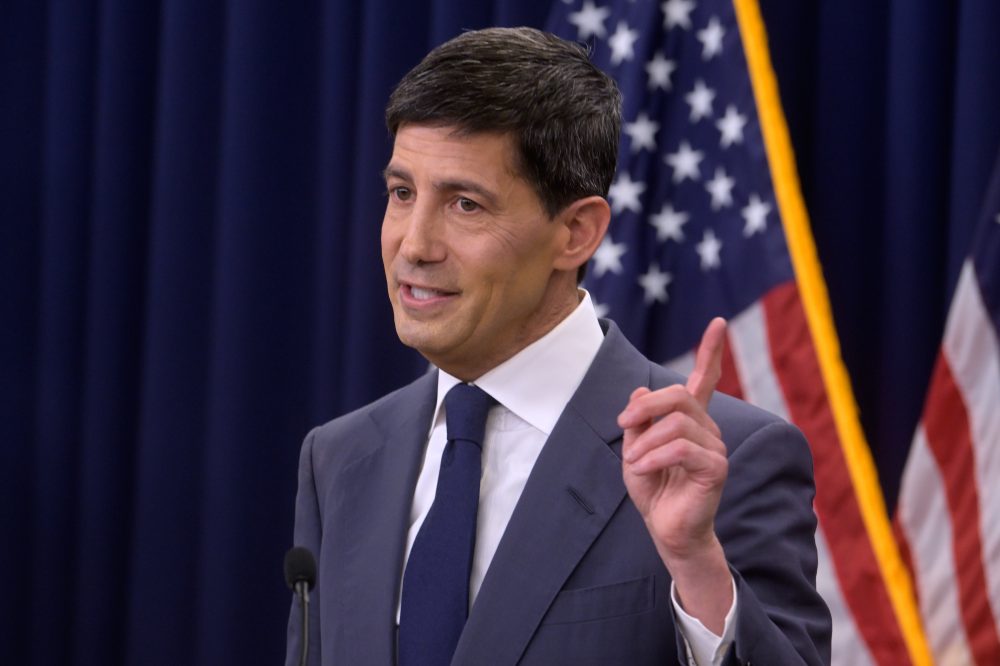
Blanche told the AP in a Thursday interview that “a lot of the questions will be answered in the short term.” However, he declined to provide specifics, stating that “talking in hypotheticals is something that I don’t think is fair to the process.”
The acting attorney general’s meeting with senators before their departure was “angry,” according to Senator Ted Cruz of Texas, who discussed it on his podcast. Cruz reported that among approximately 45 attending Senate Republicans, “at least half of them were blasting the attorney general.”
The Senate had originally planned to remain in session late that evening to vote on the immigration spending measure, but leadership cancelled the votes and dismissed members. Cruz said Republican senators were “yelling” and informed Blanche that the fund, established through a settlement resolving the president’s IRS lawsuit over leaked tax returns, “feels like self-dealing” and “feels like Trump cut a deal with himself.”
Cruz, who expressed support for the fund, noted that Democrats had threatened to propose amendments eliminating it. Republicans “would have lost every vote” had they remained in session, he said.
He predicted that “we will see the administration announcing at a minimum a modification of this, because if they don’t, they’ve got a full-on revolt in the Senate.”
Cruz reported extensive questioning from senators about January 6th defendants, with Blanche assuring them that individuals who committed violent acts or assaulted law enforcement would not receive payments. However, Blanche has consistently refused to make such statements publicly, telling the AP that “there is no limit to who can apply.”
When asked about individuals who engaged in violence on January 6th, Blanche suggested that creating such distinctions might prove too complex.
“Who is it? I mean, you tell me, right?” Blanche said. “You have to define something and then stick to it. So that’s something I’ve been hesitant to try to do because it’s very fact intensive.”
The president has issued pardons to more than 1,500 individuals charged and prosecuted for the 2021 Capitol attack, including hundreds convicted for violently assaulting and injuring police during the building breach.
This disagreement over the fund follows Republicans’ earlier decision to abandon $1 billion in White House security funding, including money for the president’s new ballroom, as Democrats and some Republicans questioned spending taxpayer money on the large-scale project during economic difficulties. Beyond the settlement issue, Democrats had planned to force Republican senators to vote on the ballroom funding.
The remaining legislation includes funding for Immigration and Customs Enforcement and Border Patrol, which Democrats have obstructed for months in opposition to the administration’s immigration enforcement policies.
Republicans are employing a complex budget procedure called reconciliation to fund these agencies through the president’s term without Democratic backing. Success still requires Republican unity and the president’s eventual approval.
Democrats express hope that their Republican counterparts will continue challenging the administration. Senator Gary Peters of Michigan said last week that he considers the settlement fund “probably one of the most corrupt things that we’ve ever seen an American president do.”
It represents “a bridge too far for some of my Republican Senate colleagues,” Peters stated. “I hope they realize that what was done is simply unacceptable and that they’ll stand firm.”