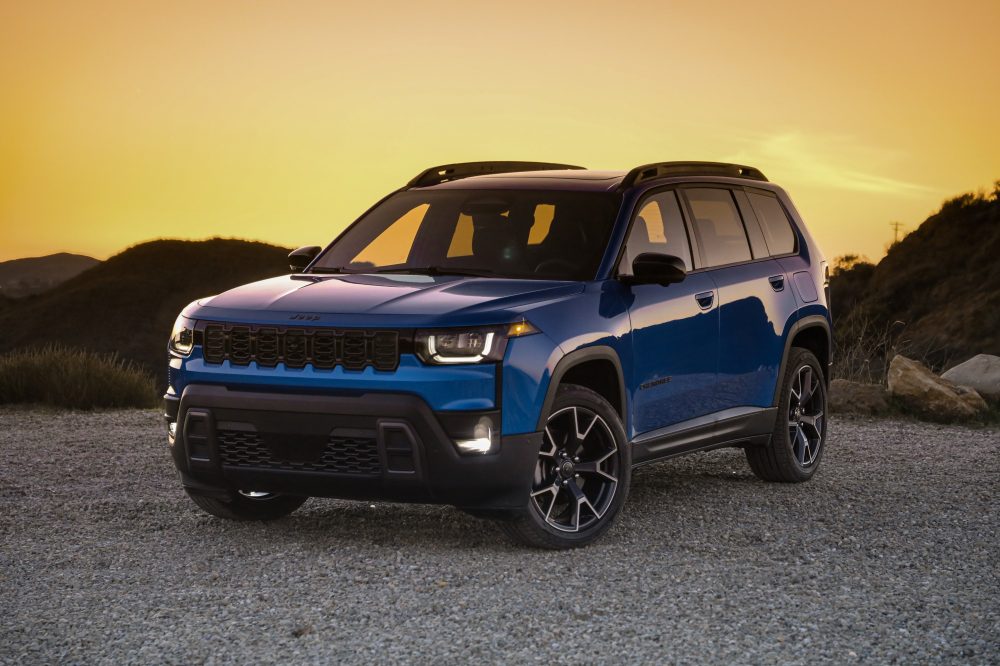

Two brands long associated with outdoor adventure have each introduced new hybrid SUVs in the past couple of years: the Jeep Cherokee and the Subaru Forester. The Cherokee has made a comeback for 2026 after sitting out of production for three years, and every version of the new model comes equipped with a hybrid drivetrain capable of exceeding 30 miles per gallon. The Forester, meanwhile, added its hybrid option for the 2025 model year — a change that boosted its fuel efficiency, performance, and overall refinement.
Auto experts at Edmunds tested both vehicles side by side to help shoppers figure out which one suits their needs better.
When it comes to fuel economy, the Cherokee edges ahead with an EPA-estimated 37 mpg in combined city and highway driving. The Forester Hybrid trails slightly at 35 mpg combined — still a meaningful improvement over the standard gas-only Forester, which tops out at 29 mpg. Some competing hybrid SUVs can squeeze out even better mileage, though those models typically come in front-wheel-drive configurations. Both the Cherokee and Forester Hybrid are all-wheel drive only, which means added traction on wet or icy roads but no front-wheel-drive option for those seeking maximum fuel savings.
Performance is nearly identical between the two. During Edmunds testing, the Cherokee went from zero to 60 mph in 8.7 seconds, while the Forester Hybrid clocked in at 8.8 seconds. However, testers noted that the Cherokee’s hybrid system does a better job of minimizing engine noise and vibration inside the cabin, giving it a quieter feel on the road. Winner: Jeep Cherokee
In terms of ride comfort, the Forester came out ahead. Edmunds editors found it handled bumps and rough pavement more smoothly than the Cherokee. The Forester also offers more comfortable front seats that are easier to enter and exit — a plus for long drives. Rear seat space is comparable in both vehicles, with enough room for adult passengers and easy installation of child safety seats. The Forester’s boxy cargo area also earned high marks for practicality, fitting luggage, groceries, and outdoor gear more efficiently than the Cherokee’s somewhat smaller storage space. Winner: Subaru Forester
On the technology front, both SUVs have their strengths and weaknesses. The Forester Hybrid features a large, portrait-style touchscreen, but testers found it frustratingly slow to start up and respond to touch inputs. Its wireless phone charging pad — made of smooth hard plastic — also struggled to keep phones in place during sharp turns. The Forester’s driver assistance features, while plentiful, also drew criticism. Its adaptive cruise control was slow to react to shifting traffic conditions, and frequent steering wheel reminder beeps became irritating over time.
The Cherokee’s 12.3-inch landscape-oriented touchscreen also had occasional lag, but its graphics appeared more up to date. Its available wireless charger held phones firmly in place and took up minimal space. The Cherokee’s driver assistance systems were also described as more polished and easier to use. Winner: Jeep Cherokee
Despite Jeep’s well-known off-road heritage, the Cherokee actually has less ground clearance than the Forester and lacks the heavy-duty all-wheel-drive systems and off-road drive modes found on other Jeep models. A more rugged version called the Trailhawk is expected to arrive for the 2027 model year, but for now, the Forester’s specialized Wilderness trim is the stronger choice for drivers who want to venture onto dirt roads or trails. On paved roads, the Cherokee’s handling and steering are described as average, and its unusual octagonal-shaped steering wheel was noted as awkward to grip. The Forester also provides significantly better outward visibility. Winner: Subaru Forester
Pricing is close between the two. The 2026 Jeep Cherokee starts at $36,995 including destination charges, while the Forester Hybrid begins at $36,180 for its base Premium trim. The Forester also tends to include more standard features at each price point. For instance, heated front seats and a power-adjustable driver’s seat come standard on the Forester but require an upgrade to the Cherokee’s next trim level. At the top of each lineup, a fully loaded Cherokee runs about $2,000 more than a comparably equipped Forester. Winner: Subaru Forester
In the end, Edmunds says it’s a close competition. Both SUVs offer solid fuel economy and work well as everyday vehicles. However, the experts give the overall nod to the Subaru Forester Hybrid, citing its edge in comfort, cargo practicality, and overall value as the deciding factors.
This comparison was produced by the automotive website Edmunds. James Riswick is a contributor at Edmunds.