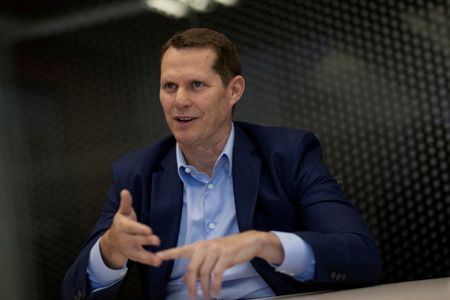

Brandon Craig is set to become the new chief executive of mining company BHP on July 1, and he is walking into a demanding situation from day one — dealing with the threat of iron ore strikes, escalating project costs, possible expansion into uranium, and a merger-and-acquisition landscape that could present new opportunities.
Craig, who is 53 years old, begins his tenure as inflation and geopolitical instability continue to weigh on global markets. BHP shares recently hit a record high, driven by investor expectations that growing demand for copper and other metals — fueled by data centers, energy, and defense industries — will benefit the company.
“Cost control is definitely a priority in this inflationary environment, especially after the Jansen blowout,” said Elan Miller, a deputy portfolio manager at Blackwattle Investment Partners, which holds BHP shares.
Those cost concerns sharpened last week when BHP disclosed a $2.3 billion charge tied to overruns and delays at its Jansen Stage 2 project — a development that had been under Craig’s oversight in his previous role heading the Americas division.
“Capex increases are on everyone’s mind, and BHP has other major projects underway,” said Glyn Lawcock, head of resources research at Barrenjoey in Sydney.
Among those ongoing projects are BHP’s Vicuna copper joint venture operating across Argentina and Chile, and the Copper South Australia initiative, where a decision on a multibillion-dollar smelter expansion is expected before the end of the year.
Miller also flagged labor relations and worker productivity in South America and Australia as significant concerns for the incoming CEO.
One of Craig’s most pressing immediate challenges is the rising threat of industrial action in Australia’s iron ore region. Unions have been escalating tensions at BHP’s Port Hedland operations, warning they could launch coordinated strikes — something that hasn’t happened in decades — if negotiations scheduled for July 7 break down.
On the mergers and acquisitions front, Craig is not expected to aggressively pursue major deals the way his predecessor did. Still, analysts say opportunities could emerge in the current environment. BHP had previously made moves toward acquiring Anglo American over the past two years, but that London-listed company chose instead to merge with Teck Resources. Once that deal is finalized, the combined company could once again become an attractive target for BHP, depending on valuations.
“BHP and diversified peer Rio are expected to continue to target growth inorganically and organically. BHP’s valuation premium positions them well to pursue M&A,” said Baden Moore, an analyst with CLSA in Sydney.
Separately, Glencore has openly signaled its desire to grow and provide an exit path for major investors, though its primary target, Rio Tinto, has rebuffed those advances — at least for now — with talks under a six-month pause. In March, sources indicated that Glencore’s CEO Gary Nagle was hoping a rise in coal prices might bring Rio Tinto back to the negotiating table. People familiar with Glencore’s strategy also said the company reaching out to BHP for a friendly conversation could not be ruled out. Both Glencore and BHP declined to comment on any merger discussions.
Another potential growth area for Craig is uranium. BHP has been speaking more openly about the commodity recently, though it views the small size of the uranium market as a significant obstacle to achieving meaningful returns. Craig reportedly told one investor — who asked not to be identified due to company policy — that he would take “a really good look at uranium, but scale is hard.”
Demand for uranium is projected to rise as energy-hungry data centers increase the need for new power generation, including nuclear plants, while governments also seek to diversify their energy supplies following the Iran war. Analysts note that BHP’s Australian copper expansion already produces roughly 5% of the world’s uranium supply as a byproduct from its Olympic Dam operation, though the company has ruled out any major increase in uranium output so far.
BHP has increasingly described uranium as a “future facing commodity” with an improving demand outlook. The company’s CFO Vandita Pant said in May that BHP routinely reviews its core commodities and that the company was “very comfortable” with its current uranium position at Olympic Dam.
At a Bank of America conference in May, Craig indicated he would consider smaller bolt-on acquisitions to drive growth where they added value.
Craig’s appointment in December caught some investors off guard, and his arrival could trigger departures among senior leadership — a common pattern during CEO transitions, where roughly a third of top executives tend to leave within a few years. BHP Chairman Ross McEwan described this in March as a natural result of competitive succession processes. Senior figures including CFO Vandita Pant and Australia President Geraldine Slattery had been viewed by some investors as front-runners for the top position.