
WASHINGTON — The inflation measure most closely watched by the Federal Reserve has hit a three-year peak, with May data showing a significant jump driven largely by surging gas prices — a development that could spell political trouble for President Donald Trump and his party as midterm elections approach.
The Commerce Department reported Thursday that consumer prices climbed 4.1% in May compared to the same month last year, marking the steepest annual rise since April 2023. On a month-to-month basis, prices increased 0.4% in May, matching April’s pace but slower than the 0.7% rise seen in March.
Much of the increase came from higher gas prices, along with more expensive semiconductors and computer equipment fueled by heavy demand tied to the artificial intelligence buildout. The persistent inflation has led the Federal Reserve to hold its key interest rate steady this year — a shift from earlier this year when policymakers had anticipated two rate cuts. Some economists now believe the central bank may actually raise rates before the year is out.
New Fed Chair Kevin Warsh reinforced last week that the central bank remains committed to bringing inflation back down to its 2% target, though he offered no specifics on what actions might be taken. Those expectations of a potential rate hike rattled U.S. markets this week, hitting fast-growing sectors like technology especially hard.
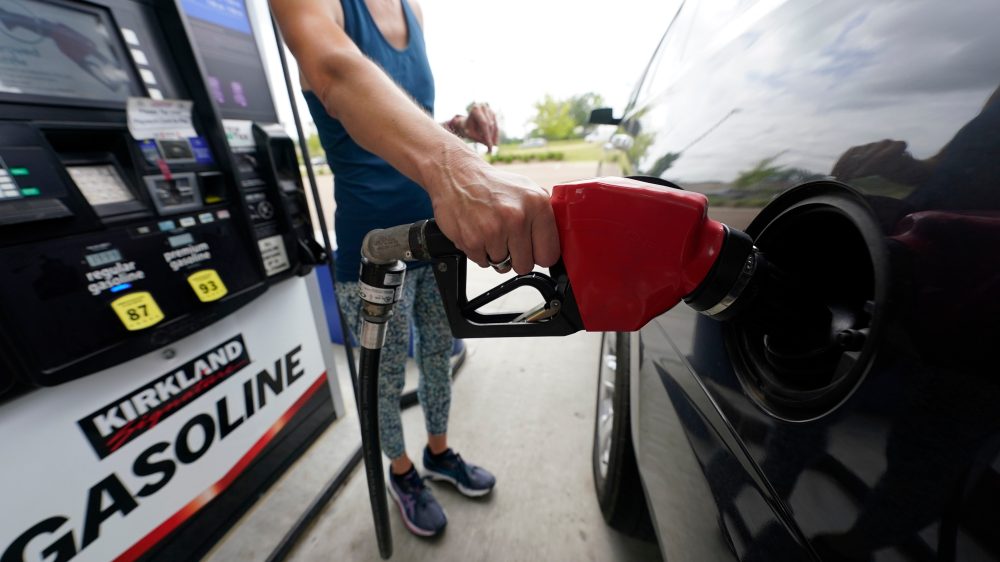
Gas prices had climbed to nearly $4.50 per gallon on average across the country last month, partly due to conflict with Iran before a peace deal was reached. Since then, prices have eased to $3.92 per gallon as of Thursday, according to AAA — but that still represents a more than 20% increase compared to prices at this point last year, right as the summer driving season begins.
Stripping out the more unpredictable energy and food categories, so-called core prices rose 3.4% in May from a year ago, edging up from 3.3% in April and reaching the highest level since October 2023. On a monthly basis, core prices increased 0.3% from April to May, the same rate as the prior month.
Thursday’s report also brought some encouraging economic news: consumer spending rose at a healthy clip. After adjusting for inflation, spending increased 0.3% from April to May. Inflation-adjusted incomes also rose 0.3%, the first such gain in four months — a development that could help sustain consumer spending in the months ahead.
Inflation has now remained above the Fed’s 2% target for more than five years. Mark Vitner, chief economist at Piedmont Crescent Capital, notes that inflation hadn’t exceeded 2.5% for nearly a decade before the pandemic, which likely makes the price spikes of recent years even more difficult for American households to absorb.
Thursday’s figures come from the personal consumption expenditures price index, a measure that gets less public attention than the consumer price index but is preferred by the Fed because it gives less weight to housing costs and accounts for shifts in consumer behavior — like when shoppers switch to cheaper store-brand products as prices rise. The CPI, released earlier this month, showed a similarly notable increase.
The new inflation report arrives just one day after President Trump declined to sign housing legislation passed by Congress that was designed to encourage more home construction and eventually bring down housing costs — a response to widespread public concern about rising prices.
When the CPI report came out earlier this month, Trump said he “loved the inflation.” He has also previously dismissed Democratic emphasis on “affordability” as a “hoax.”
Inflation surged to 9.1% during former President Joe Biden’s tenure. Even after it retreated toward 2% in 2024, voters remained frustrated over the cumulative increases in the cost of groceries, rent, and everyday necessities.
The PCE price index was last below 2.5% in April 2025, the same month Trump introduced his “Liberation Day” tariffs. Since then, inflation climbed steadily to 2.9% just before the conflict with Iran broke out.
While falling gas prices should help bring inflation down in the coming months, other factors continue to push costs higher — including computer equipment and services such as restaurant meals, child care, and video streaming.