
South Korean automaker Hyundai Motor announced Friday that ongoing conflicts in the Middle East are severely impacting its vehicle shipments to European and North African markets, highlighting the broader strain on international supply networks.
The shipping challenges demonstrate how regional conflicts are blocking crucial maritime corridors, increasing transportation expenses, causing delivery delays, and creating additional pressure on automotive manufacturers and their parts suppliers.
Hyundai Motor, which ranks as the globe’s third-largest automaker by sales volume alongside affiliate Kia Corp, cautioned that supply chain effects would persist long after any resolution to the Iranian conflict. Kim Dong-jo, a senior vice president within Hyundai Motor’s Global Policy Office, emphasized the lengthy recovery process ahead.
“Even if the conflict ends, it will take a considerable amount of time to rebuild and restore existing supply chains,” Kim stated during remarks at Pyeongtaek-Dangjin Port, located southwest of Seoul. The port hosted a meeting where government representatives, shipping companies, and automotive manufacturers gathered to evaluate the war’s economic impact.
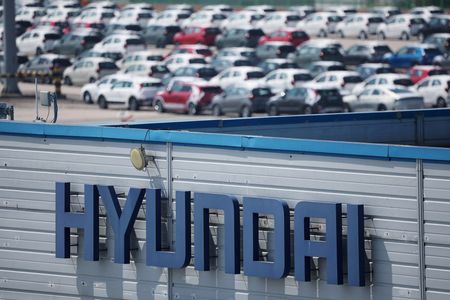
The discussion occurred at the facility where thousands of vehicles awaited loading onto a massive transport vessel capable of carrying approximately 4,900 cars destined for America’s western ports.
Kim explained that escalating transportation expenses and raw material shortages connected to the regional conflict were creating additional strain on component suppliers and manufacturing operations. He noted that Hyundai was collaborating with both suppliers and government agencies to reduce operational disruptions.
Hyundai Motor Group’s shipping division, Hyundai Glovis, reported current inability to utilize certain Middle Eastern transportation corridors, requiring temporary cargo storage at backup facilities until regional stability returns.
The logistics company indicated that while shipping lanes to North American eastern and western ports remain largely unaffected, limited Middle Eastern access and increased fuel expenses were reducing operational effectiveness.
South Korea’s Trade Minister Yeo Han-koo informed attendees that some cargo shipments were being redirected to temporary storage hubs including Sri Lanka, where companies are waiting to determine when normal transportation can resume.
Reuters previously reported last month that Japanese used vehicle exports faced entry difficulties into Sri Lanka as ports became overcrowded with cargo rerouted from Dubai due to Middle Eastern conflicts.
While South Korea’s March export figures showed the strongest growth in nearly four decades, Middle Eastern shipments dropped 49%. Automotive exports remained relatively flat as supply disruptions balanced out robust demand for eco-friendly vehicles.
Hyundai Motor reported Thursday that global vehicle sales reached 358,759 units in March, representing a 2.3% decrease compared to the previous year. Domestic sales fell 2.0% while international sales declined 2.4%.
Trading activity Friday saw Hyundai Motor and Hyundai Glovis stock prices close down 1.2% and 0.7% respectively, contrasting with the benchmark KOSPI index’s 2.7% gain.