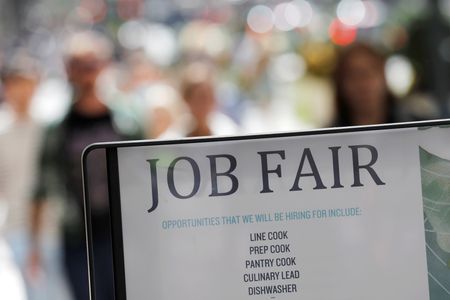

WASHINGTON – The number of Americans filing for unemployment benefits declined last week, reflecting continued stability in the job market despite growing concerns about economic uncertainty from overseas conflicts.
Weekly unemployment benefit applications decreased by 9,000 to reach a seasonally adjusted 202,000 for the week ending March 28, according to Thursday’s report from the Labor Department. This figure came in below the 212,000 applications that economists had predicted.
Throughout this year, unemployment claims have remained within a 201,000-230,000 range, reflecting what economic experts characterize as a “low hire, low fire” employment environment. Analysts attribute this market stagnation to ongoing uncertainty stemming from President Donald Trump’s aggressive trade tariff policies.
Job creation in the private sector has averaged just 18,000 new positions monthly over the three-month period ending in February.
Economic experts point to the Trump administration’s strict immigration policies as another factor limiting job growth by reducing available workers. Additionally, the month-long conflict between the U.S. and Israel against Iran has created further business uncertainty. President Trump announced Wednesday his intention to pursue more aggressive military action against Iran.
While economists surveyed by Reuters anticipate job growth may have recovered to 60,000 positions in March, some caution this improvement might be short-lived due to the ongoing conflict, which has driven global oil prices up more than 50%. National gasoline prices have exceeded $4 per gallon this week for the first time in over three years.
February saw a decrease of 92,000 jobs, attributed partially to healthcare worker strikes and severe weather conditions. The unemployment rate is expected to remain unchanged at 4.4%.
The Bureau of Labor Statistics plans to release March employment data on Friday, noting that Good Friday is not a federal holiday in the United States.
“We do expect it (war) to delay the modest improvement we expected in the labor market this year, as uncertainty, a slowdown in consumer spending and rising costs cause businesses to put hiring on hold,” said Nancy Vanden Houten, lead U.S. economist at Oxford Economics.
The count of individuals collecting unemployment benefits beyond their first week, which serves as an indicator of hiring activity, rose by 25,000 to a seasonally adjusted 1.841 million during the week ending March 21, according to the claims data.
These continuing claims numbers have dropped from the elevated levels seen last year. However, individuals who have used up their benefit eligibility, which is capped at 26 weeks in most states, may be keeping these numbers artificially low. Bureau of Labor Statistics information released this week revealed a larger-than-anticipated decline in available job positions during February, with hiring rates falling to their lowest point in nearly six years.