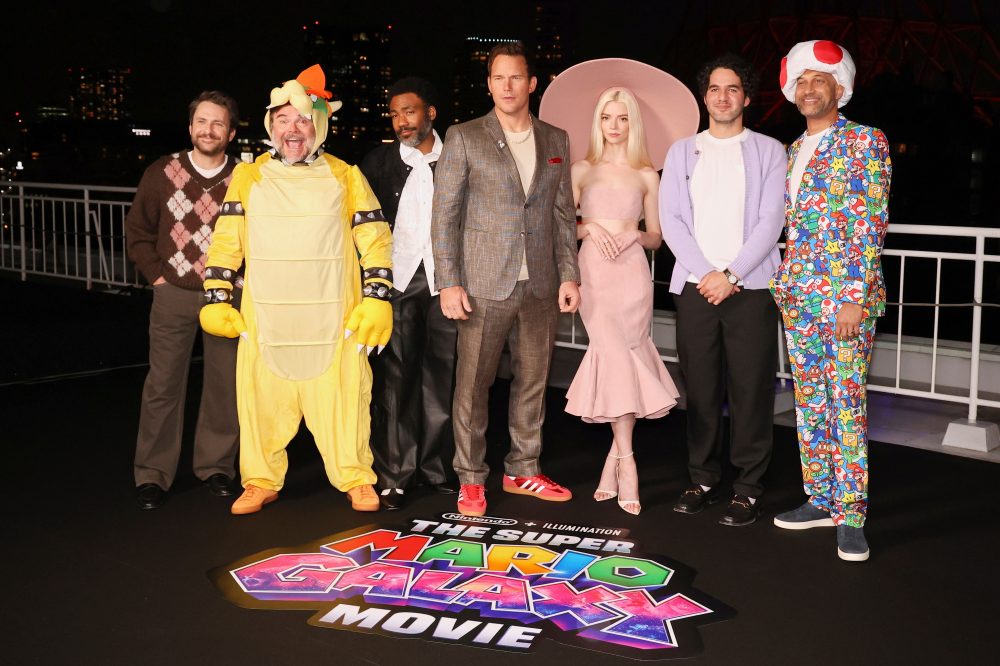

NEW YORK (AP) — With “The Super Mario Galaxy Movie” hitting cinema screens nationwide, theaters are rolling out themed activity areas, special merchandise containers, and character appearances to attract what Hollywood considers its most valuable audience segment: children and families.
Universal Pictures projects the animated sequel will earn $186 million in domestic revenue through its five-day opening weekend, with global earnings reaching approximately $350 million. These numbers would establish it as 2026’s top-performing film, exceeding other youth-targeted successes including Pixar’s “Hoppers” at $297 million globally and Amazon MGM’s “Project Hail Mary” at $300.8 million worldwide.
This phenomenon represents the peak of an ongoing shift rather than a new development. According to Comscore data, 2024 marked the first time in decades that PG-rated productions generated more domestic revenue than any other classification, totaling $3.18 billion in ticket sales. Five of the year’s six highest-earning films globally carried PG ratings: “Inside Out 2,” “Moana 2,” “Despicable Me 4,” “Wicked,” and “Mufasa: The Lion King.”
The previous year showed similar patterns, with PG-rated features collecting $2.96 billion, surpassing the traditionally dominant PG-13 category. Global box office leaders included “Ne Zha 2,” “Zootopia 2,” “Lilo & Stitch,” “A Minecraft Movie,” and the PG-13 but family-appealing “Avatar: Fire and Ash.”
The entertainment industry has faced significant challenges recently. Corporate consolidations, including Paramount Skydance’s proposed acquisition of Warner Bros. Discovery, have intensified concerns within an already uncertain business environment. Although 2026 ticket sales show improvement, they remain over 20% below pre-pandemic figures. AMC, the country’s largest theater chain, announced in February its continued closure of underperforming locations.
Despite widespread concerns about cinema’s future viability, tomorrow’s moviegoers — today’s children — are attending screenings in record numbers.
“There’s a recognition that this is an increasingly important group of movie fans and we’re doing everything we can to make sure their experience is wonderful,” says Michael O’Leary, president and chief executive of Cinema United, the trade group for theater owners.
Generation Alpha, comprising children aged 12 and under, could represent cinema’s greatest opportunity. Research conducted last year by the National Research Group revealed that no demographic expressed stronger preference for theatrical viewing over home entertainment than Gen Alpha.
“We’re emboldened by some of the research that indicates younger folks are the fastest growing demographic of people going to the movies,” O’Leary says. “We’re very much focused on the fact that we have to build the next generation of movie fans.”
The original “Super Mario Movie” from 2023, produced through Universal’s partnership with Nintendo and Illumination Entertainment, earned $1.36 billion worldwide. Industry analysts expect the sequel to approach similar figures, contributing to an expanding collection of billion-dollar family entertainment properties. Disney’s “Zootopia 2” recently achieved $1.87 billion globally, setting a new record for animated Hollywood productions.
A generation raised with mobile devices, tablets, and streaming platforms is now driving today’s most successful theatrical releases.
“What’s been true for a long time and is maybe even truer today: Families want to be out,” says Jim Orr, distribution chief for Universal, which recently extended its exclusive theatrical window from three weekends to five. “They want to do things. They want to make memories.”
“No one talks about: Remember that great time when we sat on the couch?”
The upcoming year promises even greater focus on young audiences, with 26 wide-release PG productions scheduled for 2026, compared to 24 in 2025 and 18 in 2024.
Summer schedules feature family-oriented releases almost weekly, including anticipated blockbusters “Toy Story 5” (June 19), “Minions & Monsters” (July 1), and live-action “Moana” (July 10). While ratings remain pending, “The Mandalorian and Grogu” (May 22), “Supergirl” (June 26), and “Spider-Man: Brand New Day” (July 31) will all court younger demographics.
This surge in PG content follows several years when family productions primarily debuted on streaming platforms during the pandemic, raising concerns about permanent industry changes.
“The family film has literally come back from near-extinction,” says Paul Dergarabedian, head of marketplace trends for Comscore. “The one genre that really took a major hit with the pandemic was the family film.”
Children increasingly represent a crucial theater demographic: frequent moviegoers who attend six or more films annually. This trend extends beyond elementary ages — 41% of Generation Z moviegoers attended at least six screenings last year according to NRG, rising from 31% two years prior.
Film enthusiasts concerned about theaters becoming entertainment complexes may find little comfort in franchise-driven, youth-oriented blockbusters’ dominance. Mid-budget adult productions appear less frequently, while dramas and comedies struggle to draw audiences. Family entertainment’s expanded cinema presence partly reflects declining adult attendance.
While older audiences prove harder to entice from home viewing, families demonstrate greater enthusiasm for theatrical experiences. Despite increased ticket prices and abundant streaming options, the appeal of leaving home remains strong for these demographics.
“In many instances, they’re going to the theater to get away from all of the other screens that inhabit their lives,” says O’Leary. “When I was a kid, you went to the movies, in part, to escape from something. So it’s a new variation on that old theme.”
Dergarabedian now refers to PG as “the new PG-13.” Where moderately adult-oriented films once anchored multiplexes, PG-rated productions now command that central position.
“The kids that are going to the movies today are going to take their kids tomorrow,” Dergarabedian says. “As long as people keep making kids, the future of the movie theater experience is assured.”