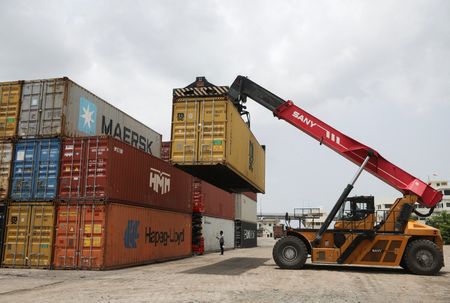

DONGGUAN, China – When President Donald Trump imposed sweeping tariffs designed to damage Chinese manufacturing, Agilian Technology faced a critical test of survival that would reshape how the electronics company approaches international business.
The Dongguan-based manufacturer, which produces electronics primarily for Western brands and generates over half its revenue from American orders, experienced months of frozen contracts as customers demanded production facilities outside China’s borders.
Chinese manufacturers faced widespread disruption from the trade policies, with the nation’s official purchasing managers’ index showing contraction through most of 2025. The April 2025 reading marked the lowest point since December 2023.
However, Beijing’s countermeasures – restricting exports of critical minerals and metals that American companies struggle to source elsewhere – eventually led to tariff reductions. By March, China’s official PMI registered its strongest growth in twelve months.
This turnaround enabled Agilian, which operates as a $30 million annual business, to rebuild while recognizing the strategic value of its Chinese operations, despite pursuing alternative manufacturing locations.
China’s manufacturing recovery may come as unexpected news to Trump, particularly following the first anniversary of what he termed his “Liberation Day” tariff implementation, designed to revitalize American industrial capacity and demonstrate U.S. economic strength.
“The data confirms that Trump’s tariffs indeed haven’t derailed the momentum that we’ve seen in China’s manufacturing sector,” said Nick Marro, principal economist for Asia and lead for global trade at the Economist Intelligence Unit. He added that levies “resulted in a restructuring of trade linkages and supply chains.”
Official statistics reveal China’s trade surplus climbed to $213.6 billion during the first two months of 2026, compared to $169.21 billion in the same period previously. Throughout 2025, China expanded its trade surplus by one-fifth to reach a record $1.2 trillion – matching the Netherlands’ entire gross domestic product.
Despite this overall growth, American-bound exports dropped 20% in 2025, creating significant challenges for manufacturers dependent on the U.S. market, according to Agilian CEO Fabien Gaussorgues.
Speaking from his factory in southern Dongguan, Gaussorgues expressed uncertainty about potential progress during Trump’s scheduled May visit to China.
“The best we can hope for is probably a pledge for both sides to keep talking and maybe some type of framework to keep trade tensions from boiling over like they did last year,” Marro said.
Economic analysts and industry leaders anticipate Trump’s upcoming visit will extend the current pause in hostilities between the economic superpowers.
He Yadong, representing China’s Ministry of Commerce, emphasized that both nations should honor commitments made during previous negotiations and ongoing discussions.
“China has shown the rare earths (are) a leverage of mass destruction,” said Denis Depoux, general manager of consultancy Roland Berger. “It’s a nuclear weapon of trade.”
CRISIS PREPARATION
Agilian leadership now treats Trump’s tariff strategy as a blueprint for managing future trade conflicts.
During 2024, as Trump gained momentum in polling, Agilian’s customers sought to avoid potential tariffs by requesting shipment to North American storage facilities. Similar strategies by other importers drove warehouse costs to extreme levels, according to company vice-president Renaud Anjoran.
Following Trump’s electoral victory, late-night calls from distressed clients became routine occurrences.
A customer with Malaysian family connections pressed Agilian to establish manufacturing operations in Penang.
While Agilian had created an Indian subsidiary, most clients resisted that option due to concerns about production delays and customs complications.
“India takes time,” Gaussorgues said. “It took us one year to have the official company.”
PRESIDENTIAL TRANSITION
Following Trump’s inauguration, initial tariff increases totaling 20% on Chinese goods concerned customers but didn’t drive them away.
However, April 2nd brought an additional 34 percentage point tariff escalation.
Agilian customers viewed this development as catastrophic, leading to widespread order cancellations. Product pallets soon accumulated throughout the company’s 12,000-square-meter Dongguan facility.
Chinese retaliation followed swiftly. Escalating measures pushed tariffs beyond 100% for both countries before month’s end. “Things were frozen,” said Anjoran.
The company committed to the Penang option, identifying a partner factory. This location offered the advantage of distance from South China Sea military tensions.
Agilian also explored industrial space in Dharwad, India, and even considered American production. However, incomplete supply chains would have maintained dependence on tariff-affected Chinese components while increasing labor expenses.
BACKUP STRATEGY CHALLENGES
By mid-2025, Agilian’s Indian team located a 4,000-square-meter industrial facility and began planning product allocation. Embargo-style conditions with China made the Indian alternative more acceptable to clients.
A May agreement between Washington and Beijing eliminated most China-specific tariffs. However, in August, while the Dharwad facility remained unfinished, Trump imposed 50% tariffs on India to pressure the country away from Russian oil purchases.
Anjoran remained committed: “We want to be a multi-country manufacturer. Focus on the long arc of time.”
Penang pre-production testing also commenced mid-year, revealing that “everything takes way, way, longer” compared to Chinese operations.
TARIFF REDUCTION
Throughout summer months, China’s export restrictions highlighted American reliance on materials processed almost exclusively within China, creating pressure across automotive, defense, and other sectors.
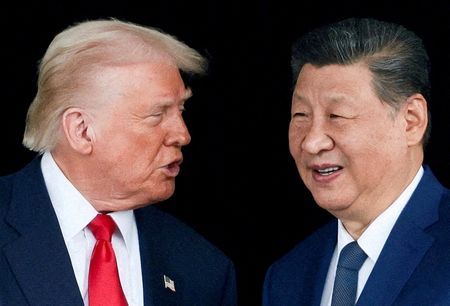
An October summit between Trump and Chinese President Xi Jinping reduced tariffs by 10 percentage points. By this time, Agilian’s clients had stopped inquiring about tariffs and relocation strategies.
The company reported its most productive period ever during 2025’s second half, with production hours increasing 29% compared to the first six months. With tariffs remaining elevated but manageable, clients resumed orders and placed additional contracts.
Anjoran warns that returning to 100% tariff levels would force American-focused customers to halt production and suspend shipments.
Agilian plans continued development of Indian and Malaysian facilities “as an insurance policy,” Gaussorgues explained. However, decreasing costs and improving quality of Chinese components make the Dongguan base essential.
He aims for 30% revenue growth over three years, though concerns remain about potential Trump interference.
“I started in January saying, okay, this might be a good year and then the Iran war started,” he said.