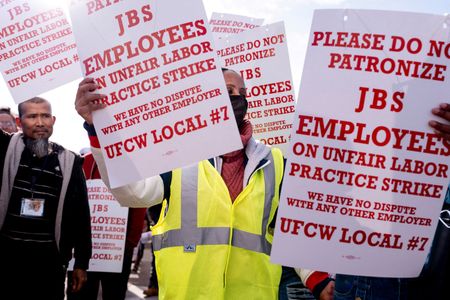

A three-week labor dispute at a major Colorado beef processing plant has come to an end after the company agreed to restart contract negotiations with its workforce.
Approximately 3,800 employees at the JBS facility in Greeley, Colorado will head back to work following the company’s commitment to resume talks on April 9th and 10th. The workers had walked off the job last month demanding wage increases that keep pace with inflation and an end to company fees for replacing safety gear.
The timing of this labor action coincides with unprecedented challenges in the beef industry, as cattle supplies have plummeted to their lowest levels in three-quarters of a century. This shortage has driven beef prices to historic highs, creating record costs for processing companies like JBS when purchasing livestock for slaughter, even as they benefit from elevated meat prices.
“Workers remain united and will continue to fight until JBS fully ends its unfair labor practices,” stated Kim Cordova, who leads the local union representing the Greeley employees.
Cordova emphasized that workers are seeking a contract agreement that provides proper protection, demonstrates appropriate respect, and ensures livable compensation.
A company representative confirmed to Reuters that no new agreement has been reached and the original contract proposal remains unchanged.
“We are pleased to welcome our team members back and are preparing to resume and ramp up operations at the Greeley plant next week,” the JBS spokesperson stated via email.
This work stoppage has reduced America’s meat processing capabilities at a time when the industry is already facing constraints. Tyson Foods shuttered a Nebraska beef facility earlier this year and scaled back operations at a Texas location.
The labor conflict involves workers represented by United Food and Commercial Workers Local 7 union and comes during a period when meat processing companies typically aim to maximize plant efficiency and capacity to help offset substantial operational expenses.