
Each evening before starting his Uber driving shift, 74-year-old Stu Goldberg opens a small notebook containing his personal safety reminders. The handwritten notes include “No tickets. Full stops” and “Careful backing up. Watch for pedestrians and bikes.”
The Plainview, New York resident holds a doctorate in neuropsychology and spent years operating his own business. When he first retired, driving strangers around the city wasn’t part of his plan. However, financial realities forced him back into the workforce, navigating New York’s streets during nighttime hours.
“I like the freedom. I like the flexibility. I like meeting people,” Goldberg said. “I like that most of the time I can get, once or twice a day, a good conversation with somebody.”
This scenario reflects a nationwide trend of Americans choosing to “unretire” in recent years. Following lengthy careers in healthcare, education, and corporate settings, many are re-entering employment due to inadequate retirement funds, increasing expenses, and the need to remain engaged.
Many are turning to gig economy opportunities through smartphone applications and online platforms. Tasks like transporting passengers and packages, pet sitting, or handling laundry services appeal to them because they offer schedule control and the option to work when convenient.
“We’re living longer, so people are working longer because they have to fund those extra years,” said Carly Roszkowski, vice president of financial resilience at the nonprofit organization AARP. “And this concept of retirement for most people as like a cliff or a day they’re working towards really isn’t a reality for most.”
Goldberg had hoped to pursue teaching after closing his software and telemarketing business. However, he discovered that occasional adjunct statistics instruction wouldn’t provide sufficient income.
“Uber came up, and it was not a bad choice for me because I was comfortable driving people,” he said. “I felt it could be a good way to make money and keep most of it.”
According to AARP’s January 2025 survey, approximately 20% of Americans over 50 who haven’t retired report having zero retirement savings.
Industry professionals and retirees note that gig work offers both benefits and drawbacks, including minimal employment protections and potentially inadequate pay that may not cover work-related costs ineligible for tax deductions.
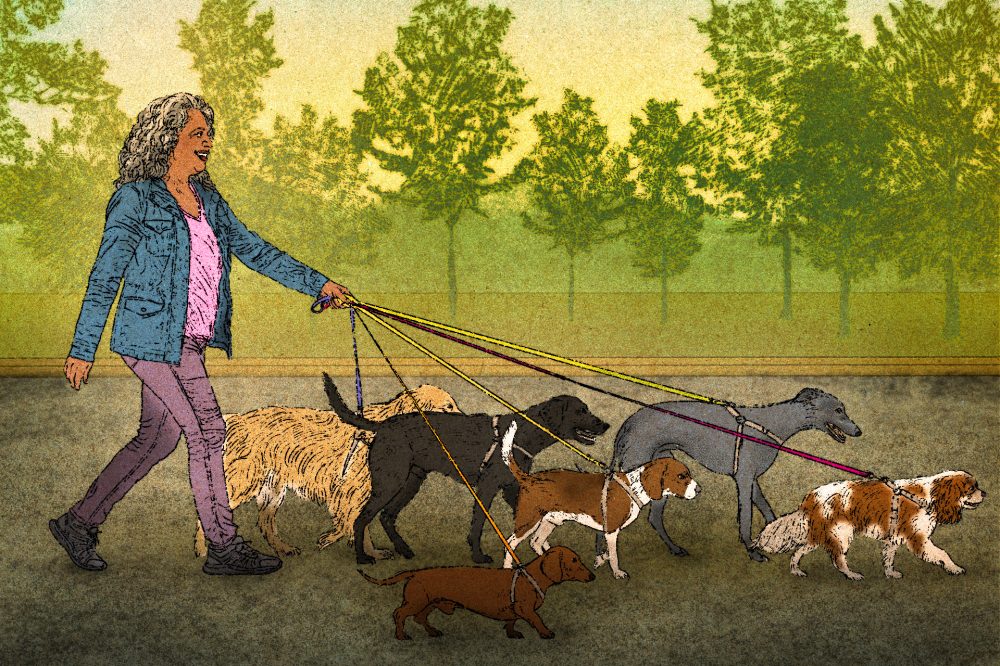
Barbara Baratta, age 72, concluded her pediatric nursing career in 2018. After becoming restless during her initial retirement years, she registered with Rover, a pet care application that connects her with dog walking opportunities and allows her to use her medical background administering pet medications.
The activity helps maintain her fitness level. “I get my steps in and do hill climbing,” she said.
On a cold afternoon in her New Jersey neighborhood, with wind chill dropping temperatures into the twenties, Baratta worked to encourage Barley, a mixed-breed dog combining pit bull, beagle, and shepherd characteristics, to venture outside.
“Barley, if you turn this way, the wind will be blowing behind you,” she said gently, leading the dog down a wide street.
Baratta enjoys the physical demands of dog walking. Despite completing two half-marathons recently, she acknowledges that “being older and not having knees that are totally great” creates challenges on steep or uneven surfaces. She recommends that people her age carefully consider which animals they agree to walk.
“Some dogs are big and strong, which can be an issue, a lesson I learned very early on,” Baratta said. “An 80-pound dog, … they’re going to pull, they’re going to run away.”
Goldberg warns that driving can strain the back and legs, while locating restrooms during shifts becomes increasingly problematic with age.
Retirement can bring feelings of isolation and lengthy days. Part-time employment offers opportunities for human connection.
Baruch Schwartz, 78, worked as a wedding photographer for many years until the physical demands became too challenging for full-time work. He began driving for Uber and Lyft and finds fulfillment in feeling useful. “I feel like I’m on a mission,” he said after transporting a passenger home from kidney dialysis treatment.
Operating as an Uber driver provides Goldberg opportunities to encounter diverse individuals. During one evening shift, he discussed the film “Braveheart” with a Scottish historian. Another passenger sought his advice about proposing to his girlfriend.
“I’m amazed at what people will tell me about their relationships,” Goldberg said.
The appeal of gig platform employment includes schedule autonomy. Baratta’s flexible hours enabled her to provide childcare for her grandchildren.
Goldberg valued the scheduling freedom during a recent family death. However, between that unexpected travel and dental surgery, with no paid time off or sick leave benefits, he lost several days of earnings.
“When that happens, even though you have the flexibility, which you like, and you don’t have to call anybody and say ‘I’m not driving today,’ you still don’t make the money that day. And you’re still paying insurance,” Goldberg said.
Before committing to gig work, individuals should investigate what portion of earnings the company retains.
“The house always wins, so the amount of money you are going to get as a driver or delivery worker is very much controlled by the platform,” said Alexandrea Ravenelle, a sociologist and gig economy researcher at The University of North Carolina at Chapel Hill. “There are no workplace protections, so if you get injured on the job, if you have any types of problems, if you have a car accident, for instance, you are entirely out of luck.”
Goldberg encountered three severe potholes within three weeks, spending $144 each time for tire replacements. Despite working, he lost money during those weeks.
“I’d say most drivers are not happy with the money that they’re making, unless they’re working more hours than I’m willing to do,” Goldberg said. “You have to put in the hours, and that is what a lot of people don’t anticipate.”
LisaKay “LK” Foyle, 64, from Orange, Texas, discovered methods to increase her earnings through Poplin, an application connecting her with clients requiring laundry assistance. Her seniority on the platform allows her to select high-paying express orders while declining lower-rate jobs.
Foyle is amazed by the condition of some families’ clothing: “all the socks are inside-out, all the underwear is in the pants, and you’ve got to check every single pocket, or you’re washing marbles or frogs or the snacks they had that day.”
Baratta’s dog walking earnings supplement multiple small pensions and Social Security payments. She charges $20 for thirty-minute walks, excluding travel time to locations. Rover retains approximately 20% of her fees. Her monthly income of $1,000 to $2,000 helps cover expenses.
“The dogs and cats are delights,” Baratta said. “I’m not becoming rich doing this, … but I’ve met a lot of great families doing it.”