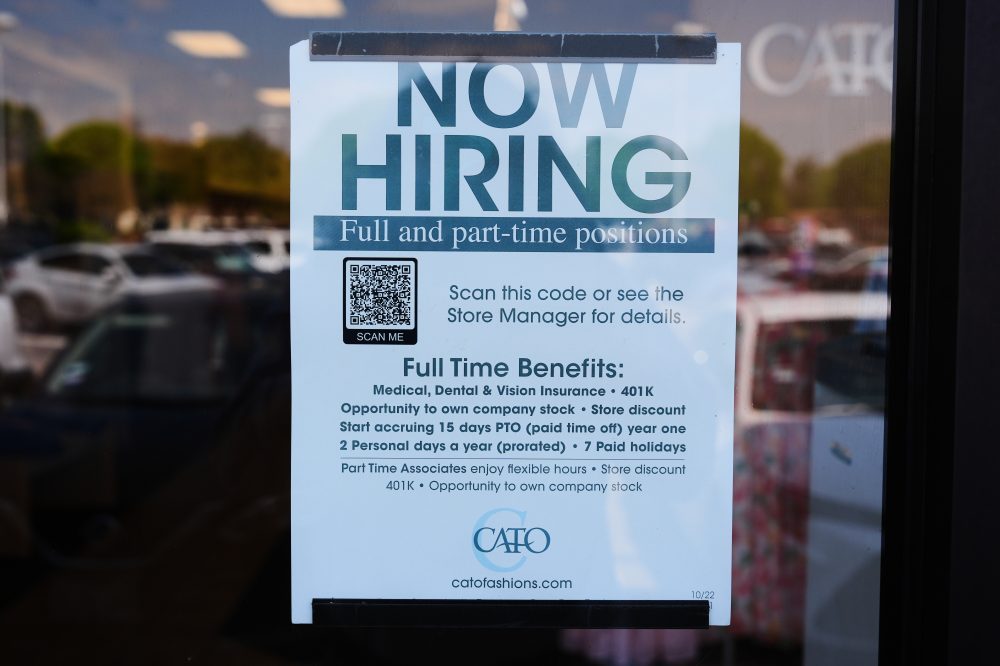

WASHINGTON — Weekly unemployment benefit applications declined last week, showing continued stability in the job market despite ongoing concerns about economic uncertainty stemming from the Iran conflict and rising energy prices.
New claims for unemployment assistance dropped by 9,000 to reach 202,000 for the week that concluded March 28, down from the prior week’s total of 211,000, according to Thursday’s Labor Department data. The figure came in lower than the 212,000 applications that economists polled by FactSet had predicted and falls within typical ranges seen over recent years.
These weekly unemployment claims serve as a key indicator of job market conditions and provide near real-time insight into the pace of layoffs across the country.
Several major corporations have announced workforce reductions recently, including software company Oracle, which media outlets report eliminated thousands of positions this week.
Additional companies implementing job cuts include Morgan Stanley, Block, UPS, and Amazon.
Since the economy recovered from the pandemic-related downturn, weekly unemployment applications have generally remained steady between 200,000 and 250,000. Employment growth, however, began decelerating approximately two years ago and slowed further in 2025 due to President Donald Trump’s unpredictable tariff policies, federal workforce reductions, and continued impact from elevated interest rates designed to combat inflation.
Job creation totaled less than 200,000 positions last year, a sharp contrast to roughly 1.5 million new jobs added in 2024, based on FactSet information.
The Labor Department’s February employment report revealed an unexpected loss of 92,000 jobs, indicating continued pressure on the labor market. Downward revisions also eliminated 69,000 positions from December and January totals, pushing the unemployment rate to 4.4%.
March employment data will be released Friday.
February’s disappointing job numbers contribute to economic uncertainty surrounding the Iran war, which has driven oil prices up more than 40% and increased costs for businesses and consumers alike.
These developments occur while inflation was already running above desired levels in the United States.
Recent Commerce Department data showed the Federal Reserve’s preferred inflation measure increased 2.8% in January compared to the same period last year. This exceeds the Fed’s 2% goal and demonstrates that prices remained stubbornly high even before the Middle East conflict triggered energy cost spikes.
The combination of persistent inflation and Middle East conflict uncertainties prompted the Fed to maintain its benchmark interest rate at the most recent meeting, casting doubt on potential rate reductions in the near term.
Federal Reserve officials implemented three rate increases to end 2025 amid concerns about labor market weakness.
Economic experts describe the current U.S. job market as trapped in a “low-hire, low-fire” environment that maintains historically low unemployment levels while making it difficult for jobless individuals to secure new employment.
Thursday’s Labor Department data indicated the four-week moving average for unemployment claims, which smooths out weekly fluctuations, decreased by 3,000 to 207,750.
The overall count of Americans receiving unemployment benefits for the week ending March 21 increased by 25,000 to 1.84 million, government figures showed.