
A high-profile gathering of America’s leading corporate executives in Beijing this week yielded limited tangible business results, despite efforts to restore commercial relationships between the two economic superpowers.
The business delegation, which accompanied U.S. President Donald Trump to China’s capital, included top leaders from major corporations such as Tesla, Nvidia, Apple, Meta, Boeing, Cargill and Goldman Sachs. The group participated in a leadership summit featuring elaborate hospitality, photo opportunities and diplomatic dining as they worked to rebuild ties with Chinese counterparts.
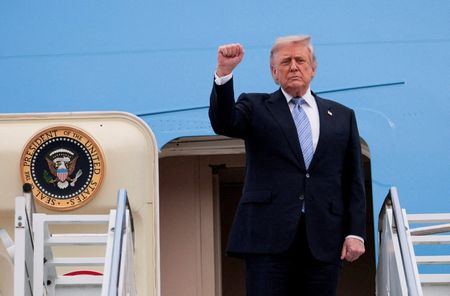
However, as Trump departed Beijing on Friday afternoon, concrete achievements for the accompanying business leaders remained unclear.
The participation of such influential American corporate figures highlights China’s continued significance as a market, despite ongoing political tensions surrounding trade disputes, artificial intelligence concerns and broader international relations challenges.
Direct discussions between American executives and Chinese government representatives and policy officials remain essential for understanding regulatory obstacles, securing business agreements and growing operations in the world’s second-largest economy.
This trip differed markedly from Trump’s previous presidential visit to Beijing in 2017, which brought a larger corporate delegation and resulted in agreements and memorandums worth $250 billion. Experts indicated this visit focused more on building political relationships than immediate transactions.
“Beijing never approaches a leadership summit of this sort from a purely transactional perspective,” said Feng Chucheng, founder and partner at Hutong Research, a Beijing-based strategic consultancy. “I wouldn’t use the size of deals to measure the outcome of the summit.”
“Its top priority is to find a mutually agreed ‘floor’ for the bilateral relationship and secure a set of guardrails to avoid uncontrolled, unexpected escalation,” Feng added.
Whether the positive atmosphere will translate into regulatory approvals, improved market access and investment opportunities remains uncertain, as companies confront broader operational difficulties in China beyond simple deal-making.
Several executives planned to stay in China for additional meetings with officials following Trump’s departure, and more business announcements could emerge in coming days.
One apparent agreement, based on Trump’s statements though not yet officially confirmed, involves China purchasing 200 Boeing aircraft. While this represents a concrete outcome, it falls short of the 500 planes originally anticipated and below the 300 aircraft purchased during the 2017 visit.
No progress was reported on China approving sales of Nvidia’s H200 AI chip, which ranks as the company’s second-most advanced artificial intelligence processor. The U.S. has already authorized sales of this chip to certain Chinese companies.
When Reuters repeatedly questioned him about signed deals and the H200 chip situation, Nvidia’s CEO Jensen Huang responded only: “I love China, had a great time.”
Huang was not originally listed on the White House delegation but joined the trip after Trump invited him aboard in Alaska during the journey to Beijing. His addition raised expectations that the visit might advance Nvidia’s stalled efforts to sell AI chips in China.
On Friday, Huang toured picturesque Beijing locations with his team, pausing to observe street performers and visiting a ground-floor establishment he had patronized during an earlier trip to the capital.
“The summit has much more on positive atmospherics than deliverables, or at least on what China will officially acknowledge,” said Han Shen Lin, the Shanghai-based China country director at U.S. consultancy firm The Asia Group.
“Nonetheless, if Beijing doesn’t give Trump enough ‘wins’ to take home, the risk is that in his disappointment, Trump steps back and lets his more hawkish administration drive the bilateral relationship. This will undoubtedly take us on the road to escalation,” Han added.