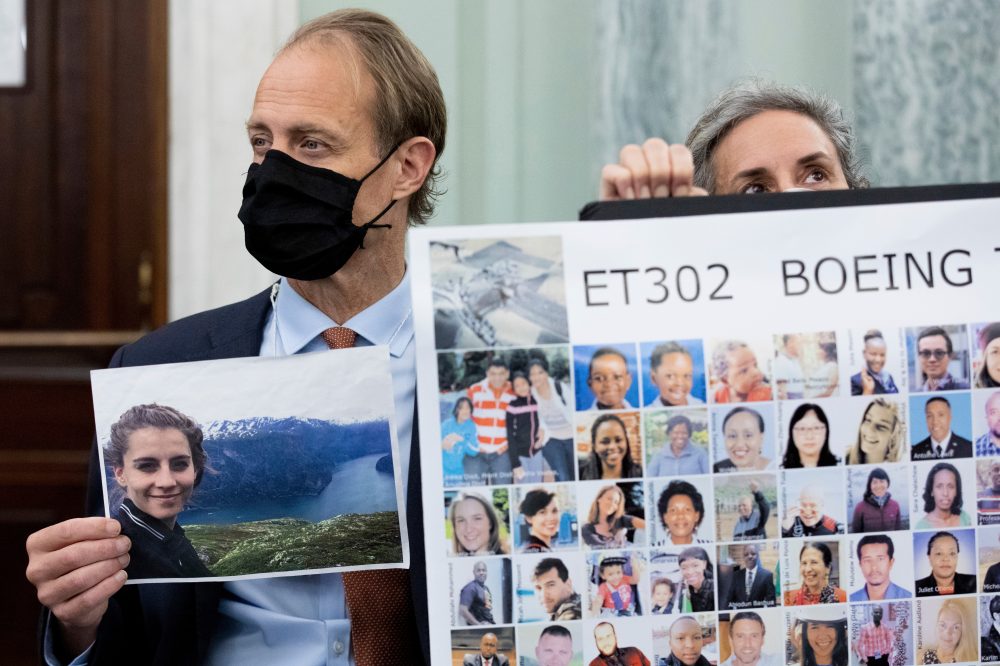

A Chicago federal jury has decided to award $49.5 million to relatives of a 24-year-old humanitarian worker who perished in the Ethiopian Airlines Boeing 737 Max disaster in 2019 during her journey to her inaugural major work assignment.
Wednesday’s decision in federal court concludes one of the final wrongful death cases stemming from the catastrophe that claimed the lives of all 157 passengers and crew on Ethiopian Airlines Flight 302.
Samya Stumo, a Sheffield, Massachusetts native, had recently begun working with a humanitarian organization dedicated to improving healthcare infrastructure in developing nations. The 2015 University of Massachusetts Amherst alumna was en route to Uganda for her first significant project when the aircraft went down shortly after departing Addis Ababa on March 10, 2019.
Following the tragedy, a UMass spokesperson characterized her as an individual recognized “for engaging others by earning their respect, friendship and trust.”
The jury determined compensation of $21 million for Stumo’s pain, suffering and emotional trauma during the fatal flight, $16.5 million for her family’s loss of companionship, and $12 million for their grief, her estate’s legal representatives stated.
“We are gratified for the opportunity to try the compensatory damages case,” lawyers Shanin Specter and Elizabeth Crawford declared in a Wednesday evening statement announcing the decision.
This marks the second jury verdict connected to the Ethiopian Airlines tragedy. Boeing has negotiated confidential settlements before trial in the majority of numerous wrongful death claims filed regarding both the Ethiopian Airlines disaster and a comparable 737 Max accident five months prior near Indonesia’s coastline that collectively resulted in 346 fatalities.
The deadly accidents became a pivotal crisis for Boeing and its 737 Max aircraft program. Investigators determined that a flight-control mechanism continuously pushed the nose of the then-newly designed aircraft downward due to incorrect data from a single sensor, leaving pilots in both incidents unable to restore control.
This verdict comes after a November 2025 jury decision awarding $28.45 million to relatives of Shikha Garg, a United Nations environmental consultant who also perished in the 2019 accident. That proceeding represented the first civil jury trial arising from the disaster, with jurors likewise responsible solely for determining compensation since Boeing had acknowledged responsibility.
“We are deeply sorry to all who lost loved ones on Lion Air Flight 610 and Ethiopian Airlines Flight 302. While we have resolved nearly all of these claims through settlements, families are entitled to pursue their claims through the court process, and we respect their right to do so,” a Boeing spokesperson stated Thursday.
The Ethiopian Airlines accident led to a global suspension of 737 Max operations lasting over a year and sparked numerous investigations into Boeing’s safety practices and regulatory supervision.
Federal prosecutors subsequently accused Boeing of deceiving regulators regarding the Max’s flight-control technology, though in November, the federal judge in Texas handling the ongoing criminal matter approved a Justice Department motion to drop the charges. Prosecutors negotiated a deal with Boeing, mandating the corporation invest an additional $1 billion in penalties, family compensation and safety enhancements.
Stumo’s relatives have been among the most vocal family members demanding Boeing accountability and reforms to federal aviation supervision. Her father, Michael Stumo, has publicly challenged Boeing, regulators and Congress regarding what families considered failures that permitted the 737 Max to continue operating following the initial crash near Indonesia.