
WASHINGTON — Jerome Powell’s eight-year tenure as Federal Reserve chair began with concerns about sluggish inflation and high unemployment, but ends with the American economy fundamentally changed by pandemic-era price surges and political turbulence.
When Powell assumed leadership of the nation’s central bank eight years ago, economists fretted over persistently low inflation and interest rates, alongside insufficient job creation. Today, as he concludes his chairmanship, the economic landscape bears little resemblance to those earlier concerns.
Following the pandemic, consumer prices skyrocketed and have stayed above the Federal Reserve’s 2% goal for more than five years, frustrating voters and making housing, vehicles, and food increasingly expensive. The central bank’s primary short-term interest rate climbed to its highest point in twenty years during 2023, while joblessness dropped to levels not seen in fifty years.
Throughout this period, Powell weathered continuous personal criticism from President Donald Trump that started just months into his appointment. However, in January, he resisted an unusual legal probe by the Justice Department, establishing himself as among the few senior Washington officials willing to confront the Trump administration.
Powell indicated he plans to remain on the governing board until he feels confident the Fed’s autonomy is fully secured. His effectiveness in shielding the central bank from daily political pressures will define much of his institutional impact.
“It is not an unblemished record, but in an extremely challenging context, he’s performed exceedingly well,” said David Wilcox, a senior fellow at the Peterson Institute for International Economics and director of research at Bloomberg Economics. “And my overall assessment is that the country has been lucky indeed to have him as chair.”
Unlike numerous previous Fed leaders, Powell, 73, lacks formal economics training, having worked as an attorney and in financial services before joining the Fed’s board of governors in 2012. Known for his modest demeanor both publicly and privately, Powell typically introduces himself as “Jay” and would showcase his guitar abilities, developed while busking across Europe as a student, during the Fed’s holiday celebrations.
The post-pandemic inflation explosion will inevitably form a central component of Powell’s historical record, with consumer prices reaching a four-decade peak of 9.1% in June 2022.
Current price levels stand 27% above pre-pandemic figures from six years ago, representing a dramatic shift for a nation accustomed to minimal inflation for decades. Prices increased only 10% during the six years preceding the pandemic. Food costs have risen 30% compared to six years ago, after climbing just 3.6% in the six years before COVID arrived.
Powell and fellow Fed officials — along with most economic experts — initially characterized the inflation spike as “transitory,” attributing it to supply chain disruptions caused by the pandemic, as COVID shuttered manufacturing facilities and delayed port operations worldwide.
Their immediate focus centered on economic crisis support.
Through two March 2020 actions, they reduced their benchmark interest rate by 1.5 percentage points to nearly zero. The Fed additionally purchased substantial quantities of Treasury bonds and government-backed mortgage securities to lower long-term interest rates and implemented other measures to inject money into the financial system, maintaining credit market operations during pandemic upheaval.
In April 2020, Powell stated that the Fed would “continue to use these powers forcefully, proactively, and aggressively until we are confident that we are solidly on the road to recovery.”
Despite inflation surpassing the Fed’s 2% target throughout 2021, the central bank maintained its key interest rate near zero until March 2022, when inflation reached 6.9% according to the Fed’s preferred measurement.
The Fed’s hesitation in raising rates reflected traditional economic thinking that inflation from supply disruptions would prove temporary, and if a central bank increased borrowing costs to combat it, higher rates would simply damage the economy and increase unemployment as supply problems resolved.
Meanwhile, the Trump and Biden administrations injected approximately $5 trillion in government spending into the economy through multiple stimulus payments, small business support, and additional aid. This monetary flow sparked a spending surge precisely when supply chains couldn’t meet demand.
By maintaining its key rate near zero for an extended period, Powell’s detractors argue, the Fed amplified excessive spending and intensified inflation.
“Even though there was all the evidence there in the data that aggregate demand was going through the roof, they still said it was a transitory supply shock,” said Mickey Levy, a former top economist at Bank of America and a visiting fellow at the Hoover Institution. “The Fed contributed to that inflation and completely misread the tea leaves.”
As inflation spread to areas like apartment rentals and surveys revealed growing American concerns about its persistence, Powell changed course and supervised the most aggressive interest rate increases since the early 1980s to counter the price surge.
Nevertheless, many prominent economists, including former Treasury Secretary Larry Summers, feared that conquering inflation would necessitate a recession and sharp unemployment increases. Instead, inflation fell to 2.3% by September 2024, according to the Fed’s preferred measure, nearly achieving its 2% target.
By reducing inflation without severe economic disruption, Powell largely accomplished an elusive “soft landing.” Inflation subsequently rose after Trump implemented comprehensive tariffs last April.
Combating inflation represented a dramatic departure for a Fed chair who began his term emphasizing the Fed’s employment maximization mandate. Before the pandemic, Powell frequently praised the advantages of robust job markets for disadvantaged workers, earning recognition from many progressive economists.
However, some economists contend the Fed’s employment focus contributed to its delayed inflation response. In an August 2021 speech, Powell cited the then-elevated unemployment rate of 5.4% as justification for avoiding premature rate increases.
Many analysts still defend Powell’s employment mandate support. Julia Coronado, president of MacroPolicy Perspectives and a former Fed economist, argued Powell was correct to maintain low rates before the pandemic, even as unemployment steadily decreased, because inflation showed no signs of worsening.
“If you can actually push a little harder for a little longer with no consequences for inflation, then you should damn well do it,” she said. “He was absolutely right about that. He’s still right about that.”
Powell stated in late April that “overweighting the employment market” bore no responsibility for the inflation spike.
“It was a global shock that happened essentially very, very similarly all over the world,” he said.
Last July, in what may prove the most memorable image of his Fed leadership, Powell and Trump appeared before cameras wearing hard hats at the Fed’s extensive $2.5 billion building renovation site, which Trump had criticized as wasteful.
Trump alleged the project would cost even more — $3.1 billion — and presented Powell with a paper detailing the expenses. Powell retrieved his reading glasses and publicly corrected the president by pointing out that he had included a third building already renovated.
This moment exemplified Powell’s readiness to challenge Trump’s unprecedented attacks. Economists have historically supported Fed independence because it enables the central bank to implement difficult measures — such as aggressive interest rate increases to fight inflation — that politicians often resist due to their potential pain.
Powell benefited from extensive congressional relationship-building. Research by University of Maryland economist Thomas Drechsel found that Powell met with senators more than twice as frequently as his two predecessors, with meetings equally distributed between both parties.
During one visit, Powell even charmed North Carolina Republican Sen. Thom Tillis’ dog, a gesture that proved highly beneficial. Tillis essentially prevented Senate confirmation of Kevin Warsh, Trump’s choice to replace Powell, until the building project investigation was abandoned. The Justice Department ultimately discontinued its probe.
Even those who criticize Powell’s policy decisions acknowledge his Fed defense efforts.
“The big plus is the way he has protected central bank independence,” said Don Kohn, a former vice chair of the Fed. “That is the most important thing for the future of the Federal Reserve and for protecting the public interest in having an independent central bank.”
Powell hasn’t announced when he might leave the Fed, though he could continue on the governing board until January 2028.
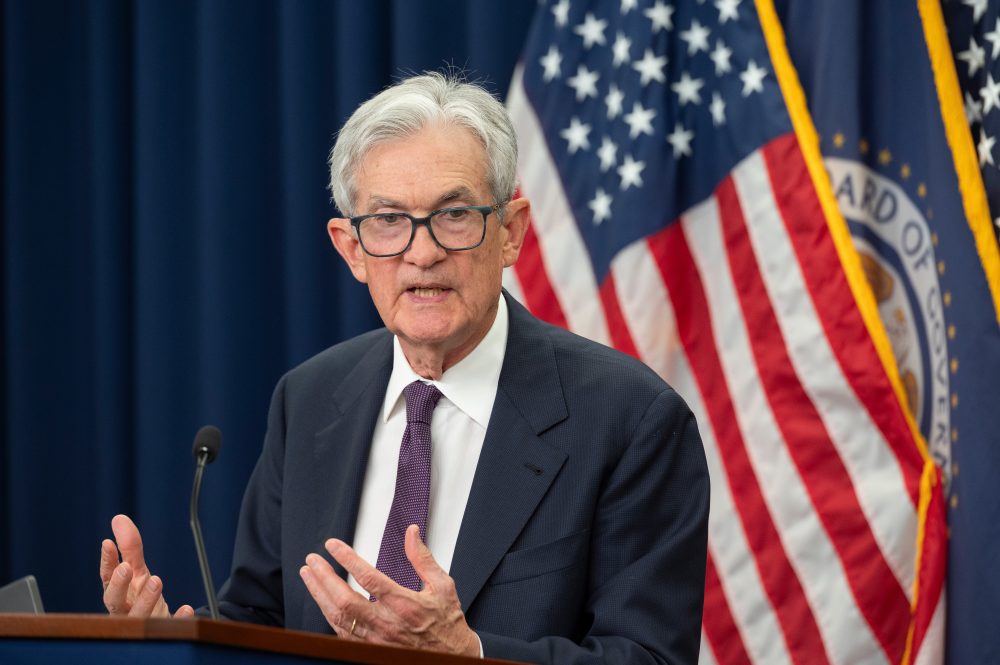
“You want people to … set interest rates to benefit the general public,” Powell said at his final news conference, “and focus only on that and ignore political considerations. This isn’t bipartisan, this is nonpartisan.”