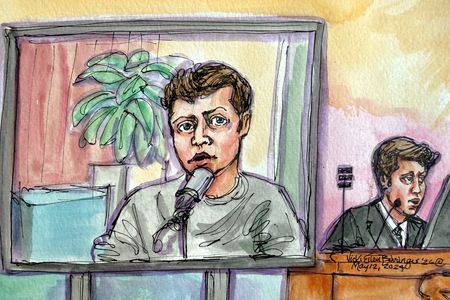

A federal court case that could determine OpenAI’s future reaches its conclusion Thursday as attorneys for Elon Musk prepare final arguments to persuade jurors that the artificial intelligence company’s executives violated their duty by converting the organization into a profit-making enterprise.
Final statements are set to begin in Oakland, California federal court for Musk’s legal action against OpenAI and CEO Sam Altman.
The billionaire entrepreneur has filed suit against OpenAI and Altman on grounds of charitable trust violations and unjust enrichment, claiming they engaged in “stealing a charity” by abandoning OpenAI’s original purpose of developing secure AI technology for humanity’s benefit.
The world’s wealthiest individual alleges that OpenAI’s leadership deceived him into contributing $38 million, then secretly established a commercial division alongside the original nonprofit structure while securing tens of billions in funding from Microsoft and other backers for expansion.
OpenAI maintains that operating as a for-profit company makes the organization more effective, with the nonprofit maintaining ownership shares in the corporation, and contends that Musk’s real desire was organizational control.
Musk demands approximately $150 billion in compensation from OpenAI and Microsoft, with funds directed to OpenAI’s nonprofit arm to advance charitable objectives. He additionally seeks removal of Altman and OpenAI President Greg Brockman from leadership positions. Microsoft has invested over $100 billion in its OpenAI partnership, according to company executive testimony.
OpenAI faces competition from AI firms including Anthropic and Musk’s smaller xAI venture, while considering a potential public stock offering that could reach $1 trillion in valuation.
Musk’s xAI operation now operates under his aerospace company SpaceX, which is also exploring a major public offering.
U.S. District Judge Yvonne Gonzalez Rogers presides over the proceedings.
The timing for the nine-member jury’s deliberation remains uncertain.
Should no decision emerge before Monday, the judge and legal teams will reconvene to address potential OpenAI restructuring and damage awards if Musk prevails.
Gonzalez Rogers will decide on remedies and will grant nothing if Musk’s case fails.
The proceedings occur during widespread public anxiety about AI integration into daily life.
Individuals employ AI for numerous applications including facial recognition, financial guidance, news reporting, medical assessment, and dangerous deepfake creation. Many express skepticism about the technology and fear potential job displacement.
The authenticity of both Altman’s and Musk’s stated positions regarding OpenAI and AI industry objectives has been a key trial focus, with both figures facing scrutiny.
Altman, Musk and others established OpenAI in 2015, though Musk departed the board in 2018.
OpenAI has attempted to demonstrate that Musk himself endorsed creating a for-profit division to secure funding for computational resources and compete with rivals like Google.
The company also claims Musk demanded exclusive control as a condition for continued backing. Musk’s 2023 attempt to acquire OpenAI through an xAI-led group has become another disputed issue, with OpenAI arguing it contradicts Musk’s lawsuit claims.
Musk’s legal team has worked to characterize Altman and Brockman as motivated by personal financial gain.
They presented evidence showing Altman held over $2 billion in stakes within companies conducting OpenAI business, while Brockman stated his OpenAI holdings were valued near $30 billion.
Musk’s attorneys have also depicted Altman as untrustworthy, referencing his 2023 removal by OpenAI’s board over candor concerns. Altman returned to his position within a week.
Former OpenAI Chief Scientist Ilya Sutskever provided testimony about collecting proof of Altman’s “consistent pattern of lying.”
Musk’s attorney also raised questions about potential conflicts of interest through Altman’s connections to OpenAI business partners.
Altman stated he holds no direct ownership in OpenAI, though he maintains investment in a fund with company stakes.