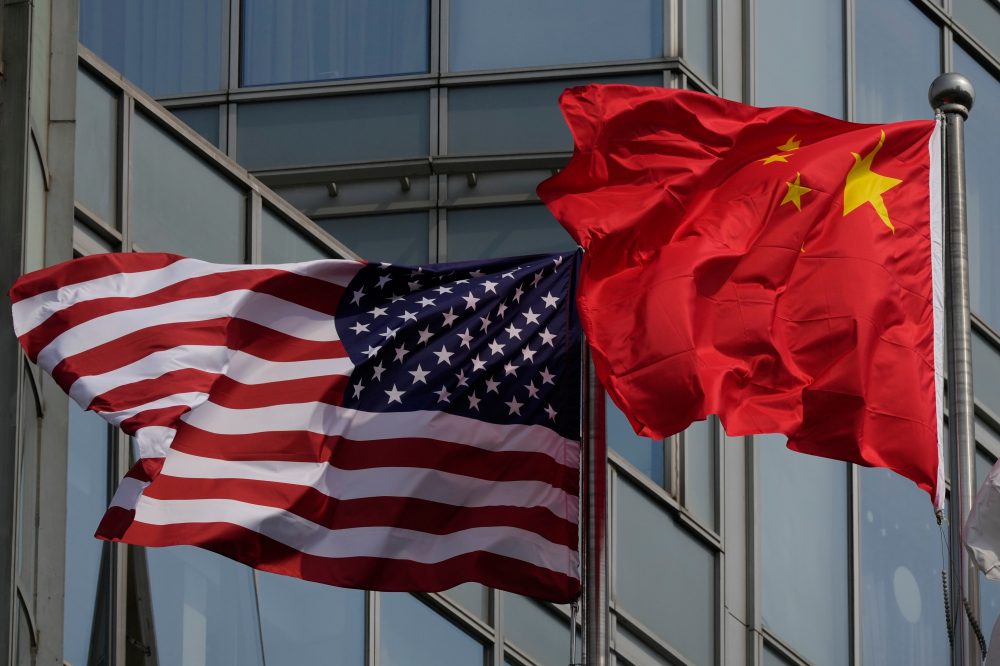

WASHINGTON — Following a turbulent 2025 that demonstrated the economic damage both nations could inflict through trade warfare, President Donald Trump and Chinese leader Xi Jinping are convening in Beijing to mend their fractured commercial relationship.
Ten years of economic conflict between these global superpowers has dramatically diminished bilateral trade from its peak during the 2000s and 2010s, compelling businesses to restructure their operations. Numerous American companies have relocated manufacturing from China to nations such as Vietnam and India, while Chinese businesses have pursued new markets across Europe and Southeast Asia.
However, both nations are discovering their continued interdependence. Wilbur Ross, who previously served as Commerce Secretary during Trump’s initial presidency, observed: “The idea of somehow China being totally independent of us and us being totally independent of China, I think, is a fiction.”
This week’s diplomatic meeting focuses primarily on maintaining economic stability, with only minor policy changes anticipated. Officials expect to extend a trade agreement reached last October, while China may reveal intentions to purchase American soybeans, beef, and Boeing aircraft. U.S. representatives have also suggested establishing a Board of Trade.
American agricultural producers, who lost access to Chinese soybean markets throughout most of 2025, are monitoring developments closely, alongside U.S. manufacturers who were denied access to China’s rare earth minerals essential for producing items ranging from smartphones to military aircraft.
In China, manufacturer Michael Lu anticipates the Xi-Trump meeting will generate encouraging developments. While returning to the robust trade levels of 15 years ago appears unlikely, Chinese factory operators expect at least modest progress. Lu, who founded and leads gift box manufacturer Brothersbox in Dongguan, stated: “The U.S. used to be a more stable market.”
Prior to Trump implementing levies on Chinese goods in 2018, average U.S. tariffs on China measured 3.1%. Currently, despite declining from triple-digit peaks reached last year, they remain at approximately 48%, according to Chad Bown from the Peterson Institute for International Economics.
In 2016, China ranked as America’s largest trading partner. Combined imports and exports between the countries represented over 13% of America’s global trade. By last year, China’s portion had dropped to 6.4%, with Mexico and Canada surpassing China as America’s primary trading partners.
The challenge with pre-Trump U.S.-China commerce was its severe imbalance, with China selling significantly more than it purchased. America’s trade deficit with China in goods and services reached $377 billion in 2018 before falling to $168 billion last year, the smallest since 2004.
Nevertheless, China achieved a record global trade surplus of $1.2 trillion last year by dramatically increasing exports to other regions, particularly Southeast Asia and Europe.
U.S. government data likely exaggerates the decline in bilateral trade. Many Chinese manufacturers have established operations in Southeast Asian nations like Vietnam and Thailand, shipping products to America while avoiding tariffs. The Trump administration seeks to address these “transshipments.”
As Chinese exports to America decreased last year, Southeast Asian imports surged dramatically — Vietnam increased 42%, Thailand rose 44%, and Indonesia climbed 24%.
Zongyuan Zoe Liu, senior fellow for China studies at the Council on Foreign Relations, explained: “It would be wrong to think that China is no longer relevant for the U.S. market. Chinese goods are still coming into the U.S.”
Velong Enterprises, established in China’s Guangdong province in 2002 and manufacturing kitchen gadgets and grilling equipment for Walmart and other American retailers, has diversified its supply chain since Trump’s first presidency by adding production facilities in Cambodia and India.
CEO and founder Jacob Rothman noted: “Most serious manufacturers did not simply ‘leave China.’ Instead, they built multi-country supply chains around China.”
The trade conflict has significantly impacted Appu Jacob Varghese, owner of Zion Foodtrucks near Colorado Springs, who imports Chinese equipment for his vehicles. “Last year,” Varghese said, “a lot of my hair turned white.”
Varghese struggled with Trump’s unpredictable tariff implementation, which fluctuated weekly and briefly reached 145%. Zion Foodtrucks depended on Chinese suppliers for cooking and fire-suppression systems in its $50,000 to $60,000 vehicles.
With customers signing fixed-price contracts for delivery within six weeks, Trump’s volatile tariffs created wildly fluctuating costs while preventing price increases. Though he survived the year, Varghese recognized the need for alternative suppliers. He now sources approximately half his cooking equipment from Vietnam and Thailand, obtaining fire-safety gear from American and Israeli companies.
While praising his Chinese suppliers, he doesn’t anticipate relying heavily on them again. Given tense Washington-Beijing relations, he said, “it’s too risky.”
Many American corporations are reducing Chinese dependence. Apple has transferred some iPhone production to India, while Nike has expanded Vietnamese manufacturing.
Sarah Tan, a Singapore-based Moody’s Analytics economist specializing in China, explained: “Trade tensions can flare up quite quickly, and that makes the U.S. firms hesitant to rely too heavily on Chinese supply.”
InStyler, a Los Angeles-area hair appliance company previously dependent entirely on Chinese suppliers, is moving some production to South Korea and France while considering Italy, Vietnam, and Mexico. CEO Dan Fugardi attributed these changes to developing luxury hotel products, noting “there’s a little bit of panache that goes with manufacturing in France.”
However, reducing Chinese reliance, he added, “doubles as an insurance plan so that we’re not caught with our pants down.”
The economic dispute has expanded beyond conventional tariffs and retaliatory measures.
America has prohibited advanced computer chip shipments to China, while China has periodically restricted rare earth mineral supplies crucial for electronics production.
Last year, China limited tungsten exports — a durable metal used in defense, aerospace, and medical devices that serves both military and civilian purposes. China controls approximately 80% of global tungsten production.
China also halted American soybean purchases, targeting Trump’s rural supporters. Though purchases resumed following October discussions, U.S. soybean exports to China still declined 75% in 2025.
These reciprocal actions demonstrated the mutual damage both countries could inflict. Current hopes center on Trump and Xi reducing tensions during this week’s Beijing meetings.
Former Commerce Secretary Ross concluded: “We are the No. 1 trading player. They are next in line. We have to coexist in some way. The question is, what will be the rules of the road, and who will benefit the most from those rules.”