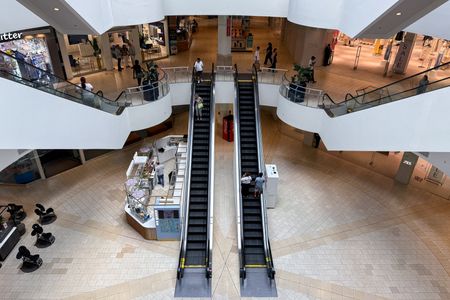

WASHINGTON, May 14 – American consumers continued spending more at retail stores during April, though much of the increase stemmed from elevated prices rather than increased purchasing power, according to new federal data.
The Commerce Department’s Census Bureau reported Thursday that retail sales climbed 0.5% last month, following a revised 1.6% surge in March. The April figure matched predictions from economists surveyed by Reuters, who had anticipated a 0.5% gain after the previously announced 1.7% March increase.
The ongoing U.S.-Israeli conflict with Iran continues to fuel price increases across the economy. Federal officials announced earlier this week that consumer prices posted strong gains for the second consecutive month in April, with yearly inflation reaching its highest level in three years.
Energy costs particularly affected consumers, with gasoline prices jumping 12.3% during April, according to U.S. Energy Information Administration figures.
Despite surging fuel costs, Americans haven’t yet reduced spending in other categories, helped by more generous tax refunds this season. Internal Revenue Service records show the average refund increased by $323 through April 25 when compared to the same timeframe in 2025.
However, that financial buffer appears to be shrinking.
PNC Financial economists analyzed their internal records and found that “consumers are drawing down tax refunds more rapidly than last year, particularly among lower-income households,” while noting they observed “less of those refunds being used towards paying down credit card and other debt.”
Families with lower incomes typically allocate a larger portion of their budgets to gasoline compared to wealthier households. With consumer confidence hitting record lows in early May and inflation exceeding wage increases for the first time in three years, analysts worry spending could decline significantly this year.
When excluding automobiles, gasoline, building materials and food services, retail sales gained 0.5% in April after a revised 0.8% March increase. These core retail sales figures most closely mirror the consumer spending portion of gross domestic product calculations, and March had previously been reported as a 0.7% advance.
Consumer spending represents more than two-thirds of economic activity and grew at a 1.6% annualized pace during the first quarter, slower than the 1.9% rate recorded in the October-December period. This marks a continued deceleration from the 3.5% growth achieved in the third quarter of 2025.