NEW YORK — American companies are grappling with mounting expenses as the ongoing conflict involving the U.S. and Israel against Iran continues, with economic experts warning of potential challenges ahead including reduced hiring and business investment.
A survey conducted by the National Association for Business Economics reveals that approximately half of business economists report the conflict has harmed their company operations, according to findings released Monday. Additionally, 54% cite energy price increases as a major concern, while over two-thirds have experienced higher material costs during the past three months — marking the steepest increase NABE has recorded since July 2022.
The conflict, which started with U.S. and Israeli military actions on February 28, has triggered a global energy emergency. Oil prices continue climbing as Washington and Tehran remain locked in a standoff over the Strait of Hormuz, creating price pressures for companies and families worldwide. As fuel expenses mount, transportation costs are cutting deeper into business operations. Supply chain interruptions affecting essential items like fertilizer are adding additional pressure.
Companies are transferring these increased expenses to consumers through higher prices, extending beyond the immediate impact seen at gas stations.
According to NABE’s survey of economists from corporations, trade groups and universities, 48% indicated their companies are shifting at least some cost increases to customers — a decrease from 60% recorded in January. However, NABE discovered that more respondents (16%) anticipate raising prices within six months, while no companies plan price reductions.
Most survey participants report strong current sales and stable profit projections. This aligns with broader Wall Street sentiment, where impressive earnings across sectors from technology to oil have pushed markets near record levels recently.
However, only 13% of NABE survey participants anticipate profit growth in the near term — the smallest percentage since 2023, according to the organization.
Employment and spending may face additional impacts soon, with nearly 25% of survey respondents planning to reduce investment and hiring over the next six months.
“Sales over the past three months were steady, but materials costs increased and profit margins declined,” stated Martha Moore, chair of NABE’s survey, in a prepared statement. She noted that expectations had “softened” across multiple indicators while price outlook continues rising.
Moore, who serves as chief economist and managing director at the American Chemistry Council, highlighted growing recession worries. Half of survey participants see greater than a 25% probability that the U.S. enters recession within the coming year, up from 44% who projected such likelihood in January, NABE reported.
The nation’s housing market showed minimal improvement in April, delivering another disappointing performance during the season that typically sees the year’s strongest activity.
According to Monday’s report from the National Association of Realtors, sales of existing homes climbed just 0.2% from March, reaching a seasonally adjusted annual rate of 4.02 million units. This figure matched last April’s sales volume exactly.
The April results disappointed analysts who had projected sales would reach approximately 4.12 million units, based on FactSet data.
For more than a year now, sales activity has remained stuck near the 4-million mark annually, well below the typical historical average of around 5.2 million.
Meanwhile, housing costs continued their upward trajectory last month, though the pace of increases has moderated. The national median home price climbed 0.9% year-over-year to reach $417,700, setting a new record for any April since data collection began in 1999. This marks the 34th consecutive month of annual price growth.
America’s housing sector has struggled since 2022, coinciding with rising mortgage rates from their pandemic lows. Last year saw existing home sales remain essentially stagnant at three-decade lows, and this year’s first quarter continued showing year-over-year declines.
“This spring homebuying season, so far all the way through April, we can say we are not predicting any increase compared to one year ago,” said Lawrence Yun, NAR’s chief economist.
April purchases likely originated from contracts signed during February and March, when 30-year mortgage rates fluctuated between 5.98% — the lowest point in three and a half years — and 6.38%, according to Freddie Mac data. Last week’s average rate stood at 6.37%.
Though current rates remain lower than last year’s levels, they’ve been volatile since conflicts with Iran escalated, as rising energy costs spark inflation concerns.
Buyers who can afford current prices are finding more options available, though inventory remains significantly below normal levels.
Unsold properties totaled 1.47 million at April’s end, representing a 5.8% increase from March and 1.4% growth from the previous April. This inventory level marks the highest April total since 2019, when 1.83 million homes were available.
However, this still falls short of the roughly 2 million homes typically available before the COVID-19 pandemic began.
April’s inventory represents a 4.4-month supply based on current sales activity. Market balance traditionally requires a 5- to 6-month supply.
“We really need to see 30% growth in inventory, but we’re not really seeing that,” Yun said.
Recent rainfall across Germany has brought relief to shipping companies operating on the Rhine River, allowing cargo vessels to increase their loads significantly after drought conditions severely limited operations last week, according to industry traders who spoke Monday.
Throughout April, lack of precipitation caused the vital waterway to drop to dangerously shallow depths, forcing commercial ships to operate at just half their normal capacity. When water levels drop too low, shipping companies must add extra fees to freight costs to make up for the reduced cargo space, driving up expenses for businesses that rely on river transport. Companies also face additional costs when they must divide shipments across multiple partially-loaded vessels.
The recent precipitation has allowed water levels to recover substantially, with traders reporting that ships can now operate at between 70% and 90% capacity, a significant improvement from the 50% capacity limit imposed during the worst of the shallow water conditions.
Shipping has returned to nearly standard operations along northern stretches of the river, particularly near the major ports of Duisburg and Cologne. However, the critical bottleneck area at Kaub continues to restrict vessels to approximately 70% of their full cargo capacity.
Industry experts expect water levels at Kaub to improve enough to allow completely full loads by the end of this week as rainwater continues to flow into the river system.
The Rhine serves as a crucial transportation corridor for essential commodities including agricultural products, minerals, raw materials, industrial chemicals, coal, and petroleum products such as heating fuel.
German businesses experienced significant supply chain disruptions and manufacturing difficulties during the summer of 2022 when severe drought conditions caused the river to reach historically low levels.
Home sales across the nation posted a modest gain in April, though the increase fell below what economists had anticipated, according to new data released Monday by the National Association of Realtors.
Sales of previously owned homes climbed 0.2% during the month, reaching a seasonally adjusted annual pace of 4.02 million units. Economic forecasters had predicted sales would reach 4.05 million units.
Lawrence Yun, chief economist for the National Association of Realtors, noted the complex economic environment affecting the market. “Despite mixed macroeconomic signals, including a record-high stock market and historically low consumer confidence, home sales were modestly boosted by the continued improvement in housing affordability,” Yun explained.
The sales figures represent completed transactions from contracts that were typically signed during February and March.
Mortgage rates have been volatile, with the 30-year fixed rate falling to 5.98% in late February before surging to 6.38% by March’s end, according to Freddie Mac data. These rate increases came as inflation pressures mounted, partly due to geopolitical tensions involving the U.S.-Israel conflict with Iran. Rates peaked at 6.46% in early April and averaged 6.37% last week.
Consumer prices jumped significantly in March, marking the steepest annual increase in nearly two years. Economists expect Tuesday’s Consumer Price Index report to show a 3.7% year-over-year increase for April, which would represent the largest gain since September 2023.
The housing affordability index improved to 110.6 in April, up from 101.4 the previous year. The typical home price reached $417,700 last month, representing a 0.9% increase from April 2023.
Regional variations showed sales growing in Southern and Midwestern markets, while Western sales declined and Northeastern sales remained flat. Nationally, sales matched last year’s April levels.
Available inventory grew 5.8% to 1.47 million homes, though supply remains significantly below pre-pandemic levels. Year-over-year inventory increased 1.4%.
Based on current sales activity, the existing inventory would be depleted in 4.4 months, slightly longer than the 4.3 months recorded a year earlier. Properties stayed on the market for a median of 32 days, up from 29 days in April 2023.
Yun observed continuing market tightness. “Inventory still remains tight,” he said. “Multiple offers, though not as intense as a few years ago, are still occurring. At the same time, days on market are lengthening on average, implying that consumers are taking their time before making decisions.”
First-time purchasers represented 33% of all sales, down from 34% the previous year. Industry experts say a healthy market requires first-time buyers to comprise 40% of transactions. Cash purchases accounted for 25% of sales, unchanged from last year, while distressed sales including foreclosures remained steady at 2% of all transactions.
Telecommunications company EchoStar announced steeper subscriber losses than Wall Street anticipated for the first three months of the year, reflecting the ongoing shift away from traditional television services.
The company’s first-quarter results underscore how consumers are abandoning conventional cable and satellite TV packages in favor of more affordable streaming options that offer greater flexibility.
EchoStar shed approximately 366,000 pay-television customers during the quarter, surpassing analyst projections of 336,433 lost subscribers based on Visible Alpha data.
Despite the customer exodus, the pay-TV division’s revenue reached $2.29 billion, slightly exceeding Wall Street expectations of $2.28 billion, according to LSEG research.
The telecommunications firm completed a debt restructuring agreement in March with bondholders from Dish DBS, marking another step in the company’s ongoing efforts to address significant financial obligations.
Overall company revenue totaled $3.67 billion, marginally beating forecasts of $3.66 billion. The firm’s quarterly losses decreased to $146.9 million compared to $202.7 million during the same three-month period last year.
These financial results follow EchoStar’s inclusion in the S&P 500 index during March.
Fox Corporation announced Monday that it surpassed financial analysts’ revenue projections for the third quarter, driven by solid performance across its sports and news programming segments along with continued expansion of its Tubi streaming platform.
The media company posted quarterly revenue of $3.99 billion, outpacing the average analyst forecast of $3.82 billion based on data gathered by LSEG. The stronger-than-expected results were attributed to robust advertising income from Fox’s sports and news content, as well as positive momentum from the company’s streaming service operations.
Google’s parent company, Alphabet Inc., revealed plans Monday to issue bonds denominated in Japanese yen for the first time as major technology corporations increasingly turn to borrowing to finance their artificial intelligence expansion efforts.
While Alphabet did not reveal the exact amount it plans to raise, an insider familiar with the transaction indicated the bond offering could reach several hundred billion yen, with final terms anticipated to be set within the month. The source requested anonymity as they were not permitted to discuss the matter publicly.
Alphabet has selected Mizuho, Bank of America, and Morgan Stanley to manage the bond transaction. When contacted for comment, Morgan Stanley did not respond immediately, while both Bank of America and Mizuho declined to provide statements.
This move reflects a broader trend among the world’s biggest tech companies, which are increasingly relying on debt financing rather than cash reserves to support their expensive AI ambitions – marking a departure from Silicon Valley’s traditional approach to funding major investments.
Industry analysts project that major technology firms will invest more than $700 billion in AI infrastructure during the current year, representing a substantial jump from the $410 billion spent in 2025.
Amazon is also exploring new debt markets, preparing its first-ever bond sale in Swiss francs, according to another person with knowledge of the situation who spoke on condition of anonymity. The e-commerce company has appointed BNP Paribas, Deutsche Bank, and JPMorgan Chase to handle a six-part debt offering with terms ranging from three to 25 years.
Representatives from Amazon, BNP Paribas, and JPMorgan Chase did not immediately respond when asked for comment about the Swiss franc bond plans.
Data from LSEG confirms this would mark Alphabet’s first bond issuance in Japanese currency. The company recently completed two major bond sales totaling nearly $17 billion – including a 9 billion euro offering worth $10.6 billion and a Canadian dollar sale of C$8.5 billion, valued at $6.2 billion.
In late April, Alphabet increased its annual capital expenditure projection by $5 billion, setting a new range of $180 billion to $190 billion, while indicating plans for another substantial increase in 2027.
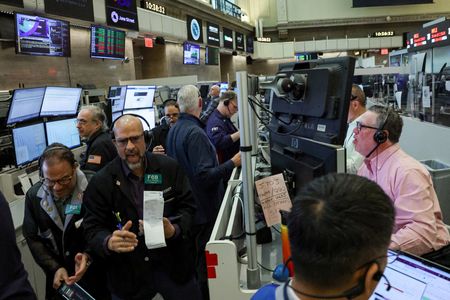
Stock market futures displayed restrained movement Monday morning as investors took a step back following last week’s historic gains, with concerns mounting over diplomatic gridlock between Washington and Tehran that drove energy costs upward.
President Donald Trump’s quick dismissal of Iran’s counter-proposal to a U.S. peace initiative heightened anxiety that the ongoing 10-week dispute might continue indefinitely, potentially maintaining disruptions to maritime traffic through the strategically important Strait of Hormuz. This development pushed crude oil values up nearly 3%.
“Although the oil price is higher, there is no sign of panic in the market,” said Kathleen Brooks, research director at XTB.
“Wrangling over the details of a path to a peaceful resolution is to be expected. This is all part of a negotiation.”
American equities reached unprecedented levels during the previous week, with both the S&P 500 and Nasdaq indexes achieving all-time closing records on Friday. This surge was driven by encouraging corporate profit reports, robust employment data, and optimism about a quick end to Middle Eastern tensions.
Early Monday morning at 7:18 a.m. ET, Dow E-minis dropped 56 points or 0.11%, while S&P 500 E-minis declined 4 points or 0.05%. The Nasdaq 100 E-minis bucked the trend, gaining 13.25 points or 0.05%.
Market participants will focus attention on Tuesday’s consumer price index release, anticipated to reveal rising inflation during April as Middle Eastern hostilities continue pressuring energy costs higher.
Despite America’s status as a net petroleum exporter, anxiety persists regarding the conflict’s potential effects on consumer spending patterns and business operations. Additional economic indicators including producer pricing and monthly retail sales data are scheduled for release later this week.
Investors are also monitoring an upcoming meeting between Trump and Chinese President Xi Jinping, where the leaders plan to address Iran, Taiwan, artificial intelligence, and nuclear weapons issues, while potentially extending an important minerals agreement.
The first-quarter earnings reporting period is approaching its conclusion after companies delivered significantly better-than-anticipated results, especially within the technology sector, helping propel stocks to new peaks.
Notable companies reporting this week include networking technology leader Cisco and semiconductor equipment manufacturer Applied Materials, while industry heavyweights Nvidia and Walmart are scheduled to announce results later in the month.
Intel shares climbed 5.6% in pre-market activity following Friday’s 14% surge based on reports of a preliminary chip manufacturing deal with Apple.
Among other notable movements, several airline stocks declined as rising fuel costs threatened profit margins. Southwest Airlines, Delta Air Lines, and United Airlines dropped between 0.9% and 1.6%.
U.S.-traded shares of gold mining companies fell as precious metal prices decreased 1%. Newmont, Sibanye Stillwater, and Harmony Gold lost between 1.6% to 1.7%.
Chinese automakers are increasingly turning to international markets as overseas shipments of passenger vehicles climbed dramatically in April while home country sales continued their downward slide, according to industry data released Monday.
The China Association of Automobile Manufacturers reported that passenger vehicle exports reached approximately 796,000 units last month, representing an 85% jump compared to the same period last year and exceeding March’s total of 748,000 vehicles.
Electric and hybrid vehicles drove much of this growth, with new energy passenger car exports soaring more than 120% year-over-year to roughly 420,000 units in April.
Meanwhile, China’s domestic passenger vehicle market tells a different story, with sales dropping 25.5% from the previous year to 1.3 million vehicles. This marks the sixth consecutive month of declining year-over-year sales in what remains the world’s largest automotive market.
Industry experts point to reduced government incentives for electric vehicle purchases and broader economic uncertainty stemming from the country’s ongoing real estate sector troubles as factors dampening consumer appetite for new vehicles at home.
The competitive landscape among Chinese manufacturers has intensified significantly. Last month’s Beijing auto show featured over 1,450 vehicles as companies unveiled cutting-edge technologies ranging from AI-powered systems to revolutionary fast-charging battery solutions.
Some industry observers anticipate domestic sales could rebound later this year as manufacturers launch new models and consumers adapt to modified government subsidy programs. Yichao Zhang, an automotive practice partner at consultancy AlixPartners, suggested that buyers will likely return as they become more comfortable with the changed incentive structure.
Major Chinese brands including BYD and Geely Auto are establishing stronger footholds in foreign markets. Beyond simply increasing exports, manufacturers like BYD are building production facilities in Europe and Latin America to expand their global manufacturing footprint.
Rising fuel costs linked to Middle Eastern conflicts are creating additional opportunities for Chinese electric vehicle manufacturers worldwide. Australian market data shows one in six new vehicles sold there in April were electric, with BYD ranking as the second-best-selling brand after Toyota.
“With oil and fuel prices likely to stay elevated for a longer period,” said Claire Yuan, an auto analyst at S&P Global Ratings, “it would likely incentivize consumers to buy EVs and this will benefit Chinese EV exports.”
AlixPartners projects Chinese passenger vehicle exports could grow approximately 20% by 2026, driven by expansion into key regions like Southeast Asia.
Trade relationships remain a crucial factor in this growth. While Beijing has made progress with the European Union and Canada regarding Chinese electric vehicle imports, significant barriers persist in the American market. Chinese EVs face substantial obstacles entering the United States due to 100% tariffs implemented by the previous Biden administration in 2024.
Investment giant Blackstone announced Monday it will purchase the Greek online shopping platform Skroutz from private equity firm CVC Capital Partners Fund VII.
According to a source with knowledge of the transaction, the deal places a total value of roughly 635 million euros, equivalent to $747 million, on the Greek company when including its debt.
The sale represents a significant win for CVC, with the source indicating the firm will double what it originally invested in the e-commerce business.
While Skroutz’s founding team plans to sell off part of their ownership, they will keep a meaningful stake in the company and remain in leadership roles. George Chatzigeorgiou will stay on as chief executive officer.
This marks another chapter in CVC’s investment activity in Greece. The asset management firm previously divested its majority ownership in Greek insurance company Ethniki Insurance to Piraeus Financial Holdings, one of Greece’s top banks, in a transaction valued at 600 million euros last year.
Banking institution HSBC announced Monday it has increased its year-end projection for the S&P 500 stock market index to 7,650 points, up from its earlier forecast of 7,500, as corporate earnings continue showing strength.
American stock markets have reached new record levels in recent weeks, powered by enthusiasm surrounding artificial intelligence investments and expectations for continued strong corporate profit growth. This momentum has overshadowed worries that elevated oil costs stemming from Middle Eastern tensions could drive up inflation.
The S&P 500 finished April with its strongest monthly percentage increase since November 2020.
HSBC’s revised projection suggests the index could climb approximately 3.4% above its Friday closing value of 7,398.93 points.
The financial firm anticipates earnings per share for the index will grow roughly 20% by 2026, reaching $325, with the so-called “Magnificent Seven” large technology companies expected to continue generating significant gains.
First-quarter earnings for S&P 500 companies are projected to increase nearly 29% compared to the same period last year, largely driven by major technology firms focused on artificial intelligence, according to data from LSEG I/B/E/S.
“While earnings remain supportive, sentiment is on shakier ground,” HSBC strategists noted, pointing out that the recent market surge has been concentrated among relatively few stocks.
The majority of individual stocks continue trading below their highest levels over the past 52 weeks, indicating potential for additional growth if more companies participate in the rally, the strategists explained.
HSBC analysts suggested the index could potentially exceed 8,000 points if technology company valuations strengthen further – possibly boosted by high-value initial public offerings – while coinciding with improvement in underperforming market sectors, broader artificial intelligence-driven earnings growth across various industries, and supportive economic conditions.
European nations and Switzerland have pledged approximately $235 billion toward developing their electric vehicle industry, according to research data released Monday by New Automotive.
The bulk of these investments – roughly $72 billion – has targeted battery supply chain development as European countries work to break China’s stronghold on battery manufacturing.
According to the International Energy Agency, China produced more than 80% of all batteries manufactured in 2025, including those used beyond the electric vehicle industry.
“Europe now produces batteries for roughly one in three EVs sold domestically, and announced capacity could meet future demand if fully utilised,” New Automotive reported.
An additional $72 billion has gone toward electric vehicle manufacturing, primarily through converting traditional automotive facilities and building select new electric-only production plants, according to the research organization that aims to accelerate the transition to electric vehicles.
Charging infrastructure development has received between $28 billion and $55 billion in public funding, resulting in more than 1 million public charging stations across Europe. Manufacturing of this charging equipment has attracted over $4.2 billion in additional investment.
“These investments support more than 150,000 jobs, with a further 300,000 jobs expected if all announced projects are fully realised,” Chris Heron, secretary general of campaign group E-Mobility Europe, stated regarding the findings.
New Automotive’s analysis revealed significant differences between countries, with Germany – a major automotive producer – representing nearly 25% of the region’s total investment.
“The country anchors both domestic production and wider European value chains, with leading OEMs transitioning at scale alongside major international battery manufacturers,” the research group noted.
In December, the European Commission announced plans to eliminate the European Union’s ban on new combustion-engine vehicles scheduled for 2035, following pressure from the automotive industry. This represents the bloc’s most significant step back from environmental policies in recent years.
Heron noted that Germany, Italy and Central and Eastern European nations have formally challenged the EU’s 2035 vehicle framework, while more than half of tracked investments are located in these areas.
“France and Spain stand out as other major beneficiaries (of the investments),” he stated.
The shutdown of Spirit Airlines, a major discount carrier known for rock-bottom fares, has created opportunities for remaining budget airlines to raise ticket prices, but industry analysts warn this development won’t resolve the deeper financial troubles facing the low-cost aviation sector.
Spirit, headquartered in Florida, stopped flying on May 2nd when creditors couldn’t reach agreement on a $500 million government rescue package. Competing budget airlines like JetBlue Airways and Frontier Airlines are now moving into Spirit’s former markets while grappling with the same escalating fuel expenses that brought down their former rival.
Aviation industry specialists point out that the fundamental problems confronting discount airlines existed long before Spirit’s demise and won’t vanish with its departure. Post-COVID increases in employee salaries, climbing aircraft rental fees, and higher maintenance costs have undermined the core advantages that previously made budget carriers successful.
Since discount airlines primarily serve cost-conscious passengers, they face significant constraints when trying to raise prices to offset increased expenses without damaging customer demand.
Joe Rohlena, a senior director at Fitch Ratings, explained his outlook on the situation. “I expect Spirit’s liquidation to be a modest benefit to its low-cost competitors,” Rohlena stated. “But I don’t expect it to be sufficient on its own to overcome other hurdles that the discounters are facing.”
Financial performance data illustrates the struggles facing budget carriers. Frontier has recorded adjusted per-share losses in eight out of the last 13 quarters, while JetBlue hasn’t achieved annual profitability since 2019. Both companies have seen their stock values drop approximately 75% over the past five years.
Meanwhile, major U.S. carriers including Delta Air Lines and United Airlines maintained profitability in 2025, benefiting from passengers with higher disposable incomes.
According to research from TD Cowen, Frontier’s adjusted earnings before interest and taxes margin dropped dramatically from 9.3% in 2019 to negative 12.1% in 2025. JetBlue experienced a similar decline from roughly 10.0% to negative 3.7% during the same period. By comparison, Delta’s EBIT margin decreased from 19% to 10%.
Industry executives indicate that Spirit’s departure won’t lead to a complete restoration of flight capacity, as discount carriers have been reducing their route networks. Instead, airlines are selectively choosing Spirit’s most profitable routes to replace available seats.
Frontier reported that the aviation industry has restored approximately half of Spirit’s capacity reductions from earlier in May, with Frontier responsible for about 40% of that replacement capacity. The company anticipates Spirit’s exit will increase revenue per seat by 3% to 5%.
In a company statement, CEO Jimmy Dempsey highlighted the airline’s record adjusted revenue in its latest quarter, expressing confidence that the company is well-positioned to fill the capacity gap and emerge “structurally stronger.”
JetBlue is increasing its presence in Fort Lauderdale, previously Spirit’s primary hub, and attracting former Spirit customers through loyalty program matching offers. The airline plans to operate 130 daily departures by summer, representing more than a 75% increase from its 2025 flight levels.
JetBlue did not provide a response when contacted for comment.
However, not every low-cost carrier is experiencing difficulties. Allegiant Air, based in Las Vegas, achieved a 14.9% adjusted operating margin in the recent quarter compared to negative margins posted by JetBlue and Frontier. Allegiant’s success stems from its strategy of serving leisure destinations with limited service and minimal competition.
Budget airlines face particularly challenging conditions when fuel costs remain elevated, with limited ability to adjust pricing. Andrew Levy, CEO of Houston-based budget carrier Avelo Airlines, noted that pricing flexibility is restricted, making operations “a little harder for companies like mine.”
Levy described how his airline’s fuel expenses jumped from approximately $2.56 per gallon in February to around $4.71 in April, forcing the company to increase base ticket prices by about $20, raise additional fees, and implement promotional campaigns to maintain passenger demand.
The impact of higher fuel costs could reach tens of millions of dollars for Frontier and exceed $100 million for JetBlue this quarter. JetBlue projects it can only recover 30% to 40% of increased fuel expenses, while Frontier expects to recoup roughly 35% to 45%.
Frontier spent $268 million on fuel at $2.88 per gallon during the first quarter and has projected $4.25 per gallon for the current quarter. Based on similar fuel consumption patterns, the unrecovered fuel cost increase could result in approximately $70 million to $83 million in lost earnings.
JetBlue faced similar challenges, paying $2.96 per gallon in the first quarter while forecasting a range of $4.13 to $4.28 for the current quarter. With comparable consumption levels, fuel expenses would increase from $573 million in the first quarter to between $797 million and $826 million.
Jarrett Bilous, an analyst at S&P Global, emphasized the critical nature of fuel cost management. “The ability to recoup sharply higher fuel prices is the primary consideration at the moment,” Bilous said.
Across Delaware and the region, families feeling the pinch of rising costs are changing where they shop for groceries, abandoning traditional supermarkets for discount chains and warehouse stores.
The shift reflects growing economic pressures as households search for ways to reduce their grocery bills without sacrificing quality. Stores like Aldi are seeing increased foot traffic as customers prioritize savings over convenience.
Rich Henderson and his wife Rachel Negro-Henderson represent this trend, regularly shopping at the Aldi location in Bellmawr, New Jersey, as they seek the best deals for their family’s needs.
The movement toward budget-friendly grocery options highlights how inflation and economic uncertainty continue to influence consumer behavior, with families willing to adjust their shopping habits to make ends meet.
As grocery store prices continue to climb, National Public Radio is reaching out to the public for money-saving strategies and practical advice on reducing food expenses.
The network is collecting tips and creative solutions from listeners who have found ways to lower their grocery bills despite ongoing food cost increases affecting households nationwide.
NPR is seeking both simple tricks and innovative approaches that people use to stretch their food budgets further in today’s challenging economic climate.
British pharmaceutical company GSK announced Monday it has formed a strategic partnership with Hong Kong-based Sino Biopharmaceutical to fast-track the introduction of its experimental hepatitis B medication bepirovirsen to mainland China’s market.
The collaboration represents GSK’s second major partnership with a Chinese drug company, following a previous $500 million agreement with Jiangsu Hengrui to develop as many as twelve new medications. Through this new arrangement, Sino’s subsidiary Chia Tai Tianqing Pharmaceutical (CTTQ) will buy bepirovirsen from GSK under an initial contract spanning five and a half years, with the possibility of extension if both companies agree.
The experimental medication bepirovirsen represents GSK’s innovative approach to fighting hepatitis B through a triple-action strategy: preventing viral DNA from replicating, reducing hepatitis B surface antigen concentrations in patients’ bloodstreams, and strengthening immune system responses to achieve more durable disease management.
HONG KONG (AP) — Stock markets across Asia displayed varied performance Monday following fresh record highs on Wall Street, while crude oil prices soared over 4% after President Donald Trump dismissed Iran’s latest response to U.S. peace negotiations.
Futures markets in the United States showed slight declines.
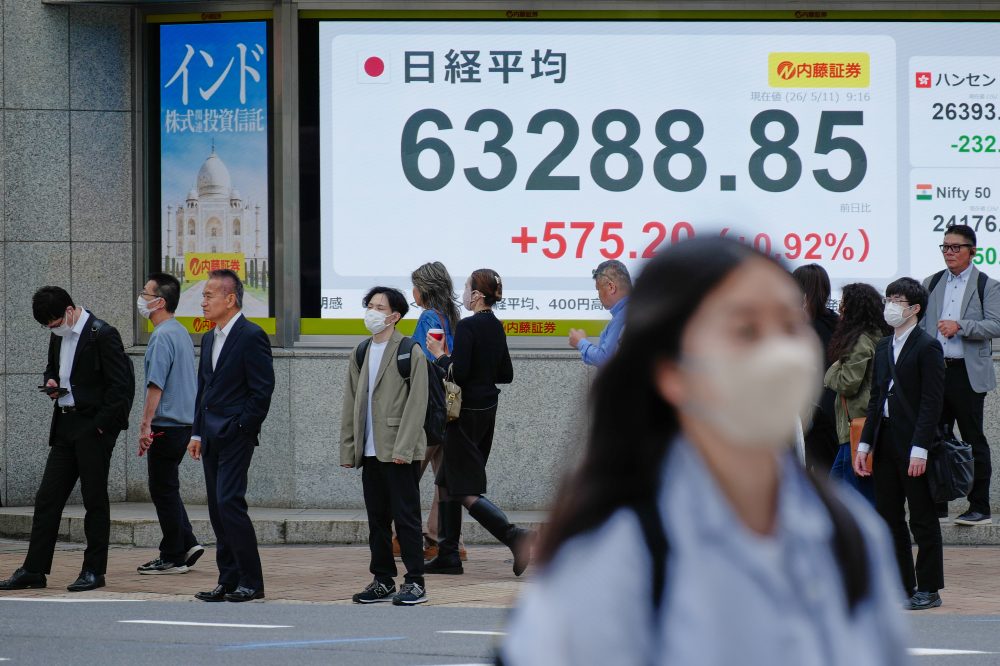
Japan’s Nikkei 225 index dropped 0.4% to close at 62,486.84, despite briefly touching a new record above 63,300 during trading hours. SoftBank Group, the technology investment giant and major Japanese stock, declined more than 5%.
Meanwhile, South Korea’s Kospi index surged 4.1% to 7,804.71, also achieving an all-time intraday peak driven by technology companies such as Samsung Electronics and memory chip manufacturer SK Hynix.
Despite the ongoing Iranian conflict, tech-focused equities and rising enthusiasm for artificial intelligence have bolstered Japanese and South Korean markets, with the Nikkei 225 and Kospi climbing over 10% and 30% respectively during the past month.
Hong Kong’s Hang Seng index declined 0.3% to 26,319.93, while Shanghai’s Composite index advanced 0.9% to 4,219.13. The Shanghai gains followed Monday’s official data revealing China’s factory gate prices increased 2.8% in April compared to the previous year — the strongest rise since 2022 — alongside weekend export figures that exceeded expectations.
Crude oil values spiked early Monday amid Iranian conflict concerns after Trump posted on social media that Iran’s Sunday response to America’s most recent proposal was “TOTALLY UNACCEPTABLE!”
Brent crude, the global benchmark, rose 4.2% to $105.57 per barrel — a significant increase from approximately $70 per barrel before hostilities began in late February. U.S. benchmark crude climbed 4.7% to $99.89 per barrel.
Given that the Strait of Hormuz — a vital passage for worldwide oil and gas shipments — remains largely blocked, and with America’s ongoing naval blockade of Iranian ports, market experts anticipate elevated oil prices will persist.
The Iranian situation is expected to feature prominently when Trump conducts talks with Chinese President Xi Jinping later this week. Beijing maintains significant economic ties with Iran, and Washington has urged China to use its leverage in helping reopen the Strait of Hormuz.
“There remains a glimmer of hope that talks between Trump and Chinese President Xi later this week could yield positive results on Iran,” ING commodities analysts Warren Patterson and Ewa Manthey wrote in a note on Monday.
“The hope is that China can use its influence over Iran to push it closer towards a peace deal,” they said. “Clearly, this is easier said than done.” The oil market continues to be “heavily headline-driven,” the analysts noted.
Friday saw Wall Street achieve new milestones, with the S&P 500 benchmark gaining 0.8% to 7,398.93 for another all-time high, powered by investor confidence following stronger-than-anticipated employment data that exceeded analyst projections despite Iranian conflict disruptions.
The Dow Jones Industrial Average inched up less than 0.1% to 49,609.16, while the tech-heavy Nasdaq composite jumped 1.7% to its own record of 26,247.08.
In currency trading, the U.S. dollar strengthened to 157.14 Japanese yen from 156.61 yen. The euro traded at $1.1756, declining from $1.1780.
Investment banking firm Goldman Sachs has significantly revised its predictions for when the Federal Reserve will lower interest rates, now projecting the first cuts won’t occur until December 2026 and March 2027. The firm previously anticipated reductions would begin in September and December of this year.
The dramatic shift in timeline reflects concerns that elevated energy costs will continue driving inflation higher than desired levels. Multiple international financial institutions have similarly scaled back their expectations for U.S. rate reductions in 2026, with forecasts ranging from modest decreases to no changes whatsoever.
The ongoing Middle East conflict, now in its tenth week, has contributed to rising energy prices and made Federal Reserve officials more cautious about inflation risks, according to industry analysts.
“With energy cost passthrough likely to keep year-over-year core PCE inflation closer to 3% than 2% all year, we think that a combination of lower monthly inflation prints after the oil shock fades and further labor market softening will likely be needed for the FOMC to cut this year,” Goldman Sachs stated in research notes dated May 8.
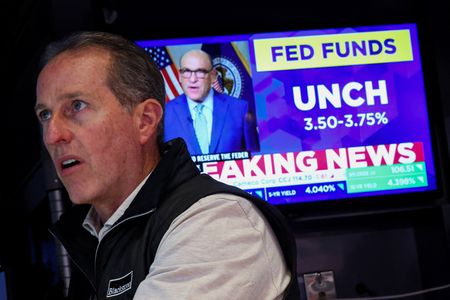
The Federal Reserve maintained current interest rates at its April 29 meeting following an unusually contentious 8-4 vote, marking the closest margin since 1992. Current inflation levels remain substantially higher than the Fed’s 2% goal.
Market analysts anticipate the central bank will maintain interest rates in the 3.50% to 3.75% range through year’s end, based on CME Fedwatch tool data.
“If the labor market does not weaken sufficiently this year, we would instead expect the FOMC to deliver two final cuts in 2027, when we expect core inflation to return to the 2% target,” Goldman Sachs added in their analysis.
Tom Quinn, the chief executive and co-founder of Neon, has maintained the same ritual for the past six Palme d’Or award ceremonies: watching the event with his team around a laptop positioned on the breakfast tables at their Cannes hotel.
“I think we upgraded a couple years ago and connected the computer to a TV,” Quinn says. “I wouldn’t want to do it any different.”
Quinn has every reason to maintain this tradition. During each of those six ceremonies, Neon has claimed the Palme d’Or, the festival’s most coveted award. This remarkable winning streak for one of cinema’s most prestigious honors is unmatched, ranking second only to the Academy Award for Best Picture in terms of industry significance. No other film studio has achieved anything comparable to this record.
“No one ever believes it, but we’ve never gone to Cannes thinking we were going to win the Palme d’Or,” Quinn says. “It’s been a surprise every single year.”
As the 79th edition of the Cannes Film Festival begins Tuesday, Neon — a company with just 60 employees that started operations in 2017 — enters as an unexpected industry giant. The studio is supporting more than 25% of the 22 movies competing for the top prize. Their chances of extending their streak to seven consecutive wins appear promising. Several highly anticipated entries — including Ryusuke Hamaguchi’s “All of a Sudden” from Japan, Na Hong-jin’s “Hope” from Korea, and James Gray’s “Paper Tiger” — are part of Neon’s portfolio.
In total, the independent distribution company has nine movies at Cannes. Quinn emphasizes that all these projects were acquired before receiving their festival invitations.
“I hate to break it to everyone but don’t hate us for our good taste,” says Quinn. “Who’s chasing who here? Thierry (Frémaux, Cannes artistic director) is going to make up his own mind and we’re going to make up our own mind. It just so happens that we agree.”
During his announcement of this year’s festival selections, Frémaux expressed disappointment about the minimal participation from Hollywood’s major studios. “When the studios are less present in Cannes, they are less present full stop,” he said.
Although major studio productions like Warner Bros.’ “One Battle After Another” and Universal’s forthcoming “The Odyssey” may become significant Oscar contenders, many of the most innovative films from the last ten years have been distributed by specialized companies such as Neon and A24.
These companies have gained recognition at international festivals like Cannes and during awards season by prioritizing creative filmmakers over established intellectual properties.
“It’s not rocket science and there’s nothing secret about it,” says Quinn. “It’s pursuing the directors and films we want to be a part of.”
Before establishing Neon, Quinn had experience at Samuel Goldwyn Films and Magnolia Pictures, and in 2011 he created Radius, a specialized division with Harvey Weinstein. While Quinn anticipated A24 would be Neon’s primary rival, he frequently found himself competing against Netflix for projects like Neon’s inaugural purchase, the Margot Robbie vehicle “I, Tonya,” and Céline Sciamma’s “Portrait of a Lady on Fire.”
“We did not outbid them but we out-passioned them,” says Quinn.
While Neon does create original content (such as the upcoming “I Love Boosters”), it primarily focuses on North American distribution of films, typically accompanied by awards season campaigns. The company has acquired its Palme d’Or winners — “It Was Just an Accident,” “Anora,” “Anatomy of a Fall,” “Triangle of Sadness,” “Titane” and “Parasite” — through various methods.
Several were purchased during Cannes, while others, including “Parasite,” were acquired at the screenplay phase. Quinn committed to the body horror film “Titane” despite finding the script incomprehensible, trusting solely in writer-director Julia Ducournau’s vision. This approach makes Neon the complete opposite of algorithm-driven studios.
Nevertheless, this commitment to filmmakers and artistic judgment has propelled Neon to Hollywood’s pinnacle. Both “Parasite” and “Anora” captured Academy Awards for Best Picture after their Palme d’Or victories. Neon dominated the international feature Oscar category last March, earning four of the five nominations: the victorious “Sentimental Value,” “Sirāt,” “The Secret Agent” and “It Was Just an Accident.”
“Parasite” made history as the first non-English film to win Best Picture — breaking what Bong Joon Ho called the “1-inch-tall barrier of subtitles” in his acceptance speech.
Neon, which is majority-owned by Dan Friedkin’s 30West, cannot match studio blockbusters in box office revenue. (Their highest-grossing release remains Osgood Perkins’ “Longlegs” at $75 million.) However, Neon has demonstrated that audiences for bold, often international films are larger than industry expectations.
The company remains, Quinn explains, “agnostic” about their films’ origins, and their compact size allows for customized marketing strategies for each release. By year’s end, Neon compiles their releases into a DVD collection, despite many industry voters no longer owning DVD players.
“Audiences are desperate, desperate for creativity,” Quinn says. “Films are not packaged goods. The idea that this art form that is so subjective is treated as a P & L (profit and loss statement), I don’t know how you can make good creative decisions when you’re dealing with billions of debt looming at your door.”
Neon’s Cannes selection demonstrates their characteristic diversity. Additional Palme d’Or contenders include Romanian director Cristian Mungiu’s “Fjord,” featuring Sebastian Stan and Renate Reinsve; Japanese filmmaker Hirokazu Kore-eda’s “Sheep in the Box”; and “The Unknown,” created by “Anatomy of a Fall” co-writer Arthur Harari. Their lineup also features Nicolas Winding Refn’s “Her Private Hell”; Arie Esiri and Chuko Esiri’s “Clarissa” and William and David Greaves’ acclaimed documentary, “Once Upon a Time in Harlem.”
Certain missed opportunities continue to frustrate Quinn. He failed to secure Kore-eda’s “Shoplifters,” which won the Palme in 2018.
“The idea that we would have won seven Palmes in a row is completely outlandish,” Quinn says. “But that’s a huge regret.”
A striking reversal in employment confidence has emerged across Delaware and the nation, with young workers experiencing a dramatic drop in job market optimism while their older counterparts maintain positive outlooks, according to new research released Monday by Gallup.
The polling data reveals an unprecedented generational split in workplace confidence. Among Americans between 15 and 34 years old, just 43% view current conditions as favorable for job hunting in their communities. This contrasts sharply with workers 55 and older, where 64% express confidence in employment opportunities.
This represents a complete reversal from historical patterns, where younger workers traditionally showed greater optimism about career prospects even during economic downturns like the Great Recession.
“It’s an incredibly new phenomenon,” said Benedict Vigers from Gallup, noting that young Americans were more pessimistic about employment than their international peers for the first time in decades of polling. “Has this happened in most other advanced economies? The answer is a resounding no.”
The United States now ranks among just five nations globally where younger demographics show significantly more pessimism about work availability than older generations, alongside China, Hong Kong, Norway, Serbia and the United Arab Emirates. Among 141 countries surveyed, younger Americans placed 87th in job market expectations.
This dramatic shift occurred rapidly between 2023 and 2025, when confidence among workers under 35 plummeted by 27 percentage points. The decline matches the severity seen during the 2008 financial crisis, though older workers maintained their positive outlook this time around.
The generational divide extends beyond employment to broader economic perspectives. Recent Associated Press-NORC polling shows approximately 80% of adults under 35 characterize the national economy as poor, while only 60% of those 55 and older share that assessment.
John Della Volpe, who conducts youth polling for Harvard Kennedy School’s Institute of Politics, explained that young people frequently feel misunderstood by previous generations regarding current economic challenges.
“It’s just another thing that drains their mental health — ‘my parents don’t understand that their pathway at this stage in life that I’m in was so much easier,’” Della Volpe said.
Current pessimism levels among younger Americans nearly match those recorded in 2010 during the depths of the Great Recession. The timing coincides with concerns about artificial intelligence potentially eliminating entry-level positions and ongoing affordability challenges.
The survey identifies college graduates, those seeking first jobs, and young women as experiencing the highest levels of frustration, though pessimism spans across all younger demographic groups including men and those without college education.
“Whoever they are, they are more pessimistic than they were three years ago,” Vigers observed about young Americans.
Older workers maintaining positive outlooks are more likely to be retired and homeowners, representing traditional markers of American economic success that younger generations find increasingly difficult to achieve.
Economic concerns played a significant role in the 2024 presidential election, particularly among younger voters who supported Donald Trump’s promises of prosperity and inflation relief. However, recent polling indicates approximately 80% of adults under 35 currently disapprove of Trump’s handling of economic issues and cost-of-living concerns, compared to 60% of older adults.
The Gallup World Poll conducted telephone interviews with approximately 1,000 American adults between June 14 and July 16, 2025, with a margin of error of ±4.4 percentage points.
BEIJING – Chinese automobile manufacturers faced another challenging month in April as domestic vehicle sales continued their steep decline, according to new industry data released Monday.
The China Passenger Car Association reported that vehicle sales tumbled 21.6% compared to April of last year, totaling 1.4 million units and extending a concerning pattern of declining sales that has now persisted for seven consecutive months.
Cui Dongshu, who serves as secretary-general for the China Passenger Car Association, explained that traditional gasoline-powered vehicle sales fell short of projections due to elevated oil costs, while demand for plug-in hybrid models also remained weak.
Even the electric vehicle sector, which has been a bright spot for Chinese manufacturers, showed signs of struggle. Combined sales of electric vehicles and plug-in hybrids, representing 60.6% of total sales, declined 6.8% and have now dropped for four straight months.
However, Chinese automakers found success in international markets, where export numbers told a dramatically different story. Electric vehicle and plug-in hybrid exports surged 111.8% compared to the previous year, outpacing the already impressive 80.2% growth in total automotive exports. Industry analysts attribute this overseas demand to rising global fuel costs linked to the U.S.-Israeli conflict with Iran, which has made electric vehicles more attractive to international buyers.
The contrast between struggling domestic sales and booming exports is particularly visible at BYD, the world’s leading electric vehicle manufacturer. Despite maintaining strong international shipment numbers, the company’s global sales have now declined for eight consecutive months through April.
Financial analysts at Morgan Stanley recently updated their projections for the Chinese automotive market, maintaining their forecast of a 2% decline in overall domestic car sales for the year. However, they significantly raised their export growth prediction to 33% from their previous estimate of 15%, while also revising their domestic sales decline forecast to a steeper 11% drop from their earlier 6% projection.
TOKYO, May 11 – Government spending programs should remain focused and short-term rather than widespread, as extensive stimulus measures could fuel inflation and force central banks to hike interest rates, according to the leader of the Bank for International Settlements in a recent interview with Japan’s Nikkei newspaper.
Pablo Hernandez de Cos, who serves as general manager of the BIS, also cautioned that continued unrest in the Middle East could threaten worldwide financial stability, particularly as public debt over the past 15 years has increasingly moved through nonbank financial institutions, including highly leveraged hedge funds.
“In recent weeks, market sentiment has been buoyant, driven by optimism regarding artificial intelligence (AI) developments and the expectations of a rapid resolution to the conflict in the Middle East. If these expectations prove wrong, I can easily see the potential for abrupt market corrections,” he stated in the Monday interview.
The ongoing Middle East conflict has increased market volatility worldwide and prompted several nations, including Japan, to boost spending in order to offset economic damage from rising oil costs.
However, the energy crisis has also intensified pressure on central banks to increase interest rates as a way to fight excessive inflation, even though such moves could slow economic expansion.
According to de Cos, central banks should “look through” temporary supply disruptions provided they don’t destabilize inflation expectations or create damaging secondary effects.
However, he noted that if such disruptions continue, this “look-through” strategy would become harder to maintain, particularly since memories of post-pandemic inflation surges may heighten the likelihood of secondary effects.
“Central banks must carefully monitor these developments and be ready to act if needed,” de Cos was quoted as saying.
“Fiscal support should be targeted and temporary. If it becomes broader and more persistent, inflationary risks increase considerably, possibly compelling central banks to raise interest rates, which would, in turn, dampen economic growth,” he added, according to the Nikkei.
When questioned about media speculation regarding his potential candidacy to replace European Central Bank President Christine Lagarde, de Cos chose not to respond, the report indicated.
TOKYO, May 11 – Gaming company Nintendo saw its stock value drop 8% during Monday trading in Tokyo following announcements of higher Switch 2 console prices and investor concerns about weak upcoming game releases.
The Japanese gaming giant reported strong hardware sales during the fiscal year that concluded in March, but the company’s conservative projections for the current year failed to meet market expectations.
The Kyoto-headquartered company has kept its original Switch console relevant through popular franchise releases including “The Legend of Zelda” series, and despite recent successes like “Pokemon Pokopia,” analysts believe the company is missing potential major hits.
Morningstar analyst Kazunori Ito expressed concerns in a research note, stating “The year-on-year decline in game shipment guidance risks signaling that Nintendo lacks confidence in its pipeline.”
However, Ito added optimism about future prospects, writing “However, as user engagement typically accelerates in the second year of a console cycle, we view this as too pessimistic.”
The company also announced Switch 2 price increases, with the Japanese-language Switch 2 Japan model rising by 10,000 yen ($63.73) to 59,980 yen starting May 25, while U.S. market prices will increase beginning September 1.
Nintendo’s customer base includes many casual players who tend to be especially affected by price increases, which arrive as technology manufacturers face rising memory chip costs.
Jefferies analyst Atul Goyal noted the importance of the second year in a console’s lifecycle, writing “is crucial and our non-consensus view is that it will release a Mario AAA game this year.”
Investment giant Apollo Global Management is reportedly exploring the sale of its publicly traded business development company that specializes in private credit investments, according to a Wall Street Journal report published Sunday.
Sources with knowledge of the discussions told the newspaper that Apollo is considering divesting MidCap Financial Investment, commonly referred to as MFIC. The investment firm places a valuation of roughly $3 billion on the fund and its investment portfolio, the report indicated.
The potential sale represents a significant financial transaction in the private credit investment sector, as Apollo weighs its strategic options for the publicly listed entity.
SINGAPORE – The American dollar climbed against major global currencies during early Monday trading in Asia, buoyed by robust U.S. employment figures from late last week and escalating tensions as the U.S.-Iran ceasefire remained precarious, increasing appetite for the safe-haven currency.
The European currency declined 0.2% to $1.1767, while the Japanese yen fell 0.1% to 156.905 yen per dollar and the British pound dropped 0.3% to $1.3597. The risk-sensitive Australian dollar decreased 0.2% to $0.7234, with New Zealand’s currency weakening 0.3% to $0.5948.
“We start the new trading week, as has so often been the case of late, reacting to geopolitical headlines,” said Chris Weston, head of research at Pepperstone Group Ltd in Melbourne.
Crude oil prices surged when markets reopened Monday, with Brent crude climbing 3.3% to $104.65 per barrel, following President Donald Trump’s Sunday dismissal of Iran’s response to an American proposal for peace negotiations, crushing expectations for a quick resolution to the 10-week-old conflict.
“I don’t like it — TOTALLY UNACCEPTABLE,” Trump wrote on Truth Social, without giving further detail.
The U.S. dollar remained steady against China’s yuan at 6.7951 yuan in offshore trading following weekend data showing China’s export growth picked up pace in April. Chinese exports rose 14.1% compared to the previous year in dollar terms, surpassing March’s 2.5% increase and beating economists’ predictions of a 7.9% rise as manufacturing facilities rushed to fulfill AI-related orders.
The dollar index, tracking the greenback’s performance against six major currencies, traded at 98.001 during early Asian sessions. The American currency gained momentum from Friday’s U.S. employment report showing non-farm payrolls grew by 115,000 in April, nearly double expectations. These numbers strengthened beliefs that the Federal Reserve would maintain current interest rates for an extended period.
“The dollar remained on the back foot last week, with the market laser-focused on prospects for a gradual reopening of the Strait of Hormuz, with the breakthrough potentially coinciding with the Trump-Xi meeting,” strategists from Barclays wrote in a research report.
“That said, U.S. data remains resilient and the labour market appears to have stabilised across a number of data sets,” they added.
President Trump and Chinese leader Xi Jinping are scheduled to address Iran, Taiwan, artificial intelligence, nuclear weapons and critical minerals during their upcoming meeting later this week, according to U.S. officials.
Financial markets in Asia experienced volatility Monday morning as diplomatic negotiations between the United States and Iran appeared to reach an impasse, keeping a critical shipping route largely blocked and driving energy costs upward.
On Sunday, President Donald Trump dismissed Iran’s counter-proposal for peace negotiations aimed at ending the ongoing conflict, declaring Tehran’s conditions “totally unacceptable.”
According to Iranian media outlets, the proposal delivered to Washington emphasized several key demands: cessation of hostilities across all battlefronts, removal of economic sanctions against Iran, payment of war reparations, and acknowledgment of Iranian authority over the Strait of Hormuz.
“The conflict in the Middle East is now entering its 11th week,” observed Bruce Kasman, who serves as JPMorgan’s global head of economics. “Energy prices have surged but remain at levels that are headwinds rather than expansion-ending obstacles.”
“The risk of a sharper move rises with each week the Strait of Hormuz stays closed, and our commodities team sees operational stress levels starting sometime in June,” Kasman added.
Energy markets responded immediately to the diplomatic breakdown. Brent crude contracts jumped 2.8% during morning trading, reaching $104.06 per barrel, while domestic U.S. oil prices climbed 2.7% to $97.97 per barrel.
Currency markets saw the dollar strengthen as investors sought stability during the uncertain period. The greenback advanced 0.2% against the Japanese yen, trading at 156.88 yen, while the euro weakened 0.2% to $1.1760.
Japan is betting that a more aggressive stance from the Bank of Japan combined with support from U.S. Treasury Secretary Scott Bessent will strengthen yen-purchasing interventions and help halt the currency’s recent decline.
The energy price increases particularly impact Europe and Japan, both major oil importing regions, while the United States maintains its position as a net oil exporter.
U.S. stock index futures reflected investor caution, with S&P 500 contracts declining 0.3% and Nasdaq futures dropping 0.2%. Last week had seen markets reach new peaks following strong corporate earnings reports and positive employment data.
This week’s earnings calendar includes technology networking company Cisco and semiconductor equipment manufacturer Applied Materials. Major corporations Nvidia and Walmart are scheduled to report results later this month.
Japanese equity markets were still adjusting to Friday’s Wall Street gains, with futures contracts trading at 63,475 compared to the previous cash market close of 62,713.
The Middle East situation will likely be discussed when Trump travels to China beginning Wednesday for his first direct meeting with Chinese President Xi Jinping in over six months.
The leaders are expected to address multiple topics including trade relations, Taiwan, artificial intelligence development, and nuclear weapons policy while considering renewal of an important critical minerals agreement.
In precious metals trading, gold declined 0.5% to $4,690 per ounce, failing to attract investors seeking either safe-haven assets or inflation protection.
SINGAPORE – Crude oil markets experienced a sharp rally on Monday, with prices surging approximately $3 per barrel after diplomatic efforts between Washington and Tehran collapsed over a U.S.-drafted peace agreement.
The breakdown in negotiations, coupled with continued restrictions through the critical Strait of Hormuz shipping channel, has created significant constraints on worldwide energy supplies.
Brent crude futures rose $3.21, representing a 3.17% increase to reach $104.50 per barrel as of 2203 GMT. Meanwhile, U.S. West Texas Intermediate crude gained $3.06, climbing 3.21% to $98.48 per barrel.
The Strait of Hormuz remains substantially blocked, further contributing to the tight supply conditions that are driving energy costs higher across global markets.
Artificial intelligence chipmaker Cerebras Systems plans to boost both the price and size of its upcoming stock market debut as investor appetite for the company’s shares continues to intensify, according to two sources with knowledge of the situation who spoke to Reuters on Sunday.
The California-based company is now eyeing a share price between $150 and $160, a significant jump from its previous target of $115 to $125 per share. Additionally, Cerebras intends to offer 30 million shares instead of the originally planned 28 million, the sources revealed on condition of anonymity since the details haven’t been made public.
Should the company price at the upper end of this revised range, Cerebras could generate approximately $4.8 billion in funding, compared to the $3.5 billion it would have raised under the initial terms. However, these figures could still shift before the final pricing occurs.
This adjustment reflects the broader explosion in artificial intelligence technology adoption, which has created intense demand for high-performance semiconductor products and established chips as a critical constraint in the tech supply chain. The sources indicated that investor orders for Cerebras stock have exceeded the available shares by more than 20 times as the company prepares for its May 13 pricing date.
Cerebras has not yet provided a response to requests for comment.
Bloomberg News had previously reported the company’s intention to adjust its IPO pricing to a range of $125 to $135 per share.
Based in Sunnyvale, California, Cerebras develops specialized processors designed to run sophisticated AI systems, competing in a market where Nvidia currently holds the dominant position. The company is experiencing increased demand for its chips as artificial intelligence laboratories transition from developing models to actually implementing them. Cerebras’ processors excel at inference operations—the calculations that enable AI systems to answer user questions—compared to the GPU chips traditionally used for model development.
This upcoming public offering represents Cerebras’ second effort to enter the stock market. The company initially filed to go public in 2024 but withdrew those plans last year. A business relationship with G42, an AI firm based in the United Arab Emirates that accounted for over 80% of Cerebras’ revenue during the first half of 2024, had triggered a national security examination by the Committee on Foreign Investment in the United States. The committee ultimately approved the partnership.
Following that clearance, Cerebras has successfully added Amazon and OpenAI—two of the world’s largest AI infrastructure companies—to its customer base.
According to Dealogic data, this public offering would represent the largest IPO worldwide for 2024.
Morgan Stanley, Citigroup, Barclays, and UBS Group AG are managing the stock offering. Cerebras has announced plans to list its shares on the Nasdaq Global Select Market using the ticker symbol CBRS.
The Saudi Arabian Oil Company announced Sunday that its first-quarter earnings surged 25% compared to the same period last year, reaching $32.5 billion through March 31. The state-controlled energy giant achieved this growth by maximizing use of its cross-country pipeline system to bypass troubled shipping lanes in the Strait of Hormuz amid ongoing conflict with Iran.
The company, commonly called Aramco, had previously seen its annual earnings drop 12% in 2025, making this quarterly rebound particularly significant for the world’s biggest oil producer.
“Aramco’s first-quarter performance reflects strong resilience and operational flexibility in a complex geopolitical environment,” stated company President and CEO Amin H. Nasser. He noted that their East-West Pipeline, which carries crude oil from Saudi Arabia’s eastern production areas to Red Sea ports, is now functioning at its full 7 million barrel-per-day capacity. Nasser described the pipeline as “helping to mitigate the impact of a global energy shock and providing relief to customers.”
Despite this operational success, the pipeline cannot fully compensate for the lost shipping capacity through the Strait of Hormuz. Under normal circumstances, approximately 20% of globally traded oil passes through this strategic waterway daily, along with substantial volumes of natural gas, fertilizers, and other petroleum-based products.
Iran gained effective control over this crucial shipping route following U.S. and Israeli military actions on February 28, while a subsequent U.S. naval blockade has further complicated maritime traffic in the area.
“Recent events have clearly demonstrated the vital contribution of oil and gas to energy security and the global economy, and are a stark reminder that reliable energy supply is critical,” Nasser explained. “Despite these headwinds, Aramco remains focused on its strategic priorities and is leveraging both its domestic infrastructure and its global network to navigate disruption.”
A major technology infrastructure project in Kenya has encountered significant setbacks following failed negotiations between Microsoft and the East African nation’s government, according to a Bloomberg News report published Sunday.
The tech giant had announced plans in 2024 to collaborate with United Arab Emirates-based artificial intelligence company G42 on a $1 billion data center facility in Kenya, designed to enhance cloud computing capabilities throughout the East African region.
However, the project has stalled after Microsoft and its UAE partner requested that Kenya’s government guarantee annual purchases of a specified amount of data center capacity, Bloomberg reported, citing sources with knowledge of the negotiations.
The discussions ultimately collapsed when Kenyan officials were unable to provide the financial commitments at the scale that Microsoft had demanded, according to the report.
The renowned Italian fashion empire founded by Giorgio Armani is moving ahead with plans to distribute a 15% ownership portion among three major companies, according to reports from Italian media outlets.
The legendary designer, who passed away at age 91 last September, had previously identified three specific companies as his preferred purchasers: French luxury conglomerate LVMH, cosmetics giant L’Oreal, and EssilorLuxottica, both of which had existing business relationships with the fashion house.
According to the founder’s final wishes, the company must complete the sale of this initial 15% ownership share between 12 and 18 months following Armani’s passing.
Italian publication la Repubblica reported that current Armani CEO Giuseppe Marsocci is developing a comprehensive business strategy while working to select two financial advisers who will manage the sale process.
These chosen advisers will then present Marsocci’s five-year strategic plan to the prospective investors.
Before officially beginning the sale proceedings, the fashion house is reportedly considering dividing the 15% stake into three equal portions, according to the newspaper. This approach would ensure all three potential buyers remain actively involved from the start of the process.
When contacted for comment about these reports, an Armani company spokesperson declined to provide any statement.
Saudi Arabia’s national oil company Aramco announced a significant 25% increase in first-quarter earnings on Sunday, demonstrating strong performance despite ongoing tensions between the U.S. and Iran that have disrupted shipping through the strategically important Strait of Hormuz.
The world’s largest oil exporter generated $32.5 billion in net income during the first three months of the year, surpassing analyst predictions of $30.95 billion according to LSEG estimates.
Company revenues climbed nearly 7% compared to the same period last year, reaching $115.49 billion thanks to increased oil prices and higher sales volumes of both crude oil and processed petroleum products.
Iran’s interference with shipping traffic through the vital Hormuz strait during the ongoing U.S.-Israeli conflict has disrupted energy deliveries and driven up global oil prices, leading Aramco to maximize crude oil transport from its eastern facilities to the Red Sea terminal at Yanbu.
Company CEO Amin Nasser emphasized the importance of maintaining steady energy flows during the crisis. “Our East-West Pipeline, which reached its maximum capacity of 7.0 million barrels of oil per day, has proven itself to be a critical supply artery, helping to mitigate the impact of a global energy shock,” Nasser stated, adding that “reliable energy supply is critical.”
The cross-country pipeline delivers approximately 2 million barrels daily to domestic refineries on Saudi Arabia’s western coast, while the remaining 5 million barrels are available for international export.
Following Iran’s blockade of the Hormuz waterway, which previously handled one-fifth of global oil shipments, Saudi Arabia reduced production by 2 million barrels per day. The pipeline primarily transports Arab Light crude and some Arab Extra Light varieties, while heavier oil grades have been reduced.
Aramco’s adjusted quarterly earnings reached $33.6 billion, exceeding the company’s median analyst forecast of $31.16 billion. This adjusted figure excludes $1.06 billion in non-operational accounting adjustments.
Investment spending decreased modestly to $12.1 billion during the quarter from $12.5 billion in the previous year, representing a substantial drop from the $13.4 billion spent in the fourth quarter. The company has projected capital expenditures of $50-55 billion for the full year.
Aramco announced a first-quarter base dividend payment of $21.9 billion, representing a 3.5% increase from the previous year and scheduled for distribution in the second quarter, aligning with projected total dividend payments of $87.6 billion for 2026. The company also implemented a performance-based dividend program in 2023 tied to free cash flow generation.
The Saudi government depends significantly on Aramco’s dividend distributions to finance public expenditures and address budget shortfalls. The state maintains direct ownership of nearly 81.5% of the company, while the Public Investment Fund controls 16%.
Free cash flow declined to $18.6 billion from $19.2 billion in the prior year, affected by a $15.8 billion increase in working capital requirements. The company’s debt-to-equity ratio increased to 4.8% as of March 31, up from 3.8% at the end of 2025.
Chinese e-commerce giant Alibaba is getting ready to announce a groundbreaking merger between its Qwen artificial intelligence system and its popular Taobao shopping platform, according to an insider with knowledge of the plans. The ambitious project aims to revolutionize how people shop online by replacing traditional keyword searches with natural conversation.
This technological advancement will allow shoppers to discover, evaluate, and buy products through the Qwen application simply by talking with an AI assistant, eliminating the need to manually scroll through countless product pages.
The Qwen application will gain access to Taobao and Tmall’s massive inventory of more than 4 billion items, supported by a comprehensive “skills library” that can handle shipping arrangements and customer service tasks. Additionally, the system will provide personalized product suggestions using customers’ previous purchases and shopping habits.
Within the Taobao platform itself, Alibaba plans to introduce an AI shopping helper powered by Qwen technology, featuring capabilities like digital fitting rooms and month-long price monitoring tools.
This AI-focused shopping initiative demonstrates the differences between Chinese and Western online retail approaches. China’s system enables artificial intelligence to be woven directly into real-time purchases. Meanwhile, American platforms operate differently: Amazon has implemented AI to enhance shopping experiences within its platform but maintains careful limits on complete automation. Canada’s Shopify permits the integration of outside AI tools instead of operating its own unified consumer AI system.
Economic concerns remain at the forefront for many Americans this week as rising costs at grocery stores and gas stations continue affecting household budgets and business decisions nationwide.
The latest economic developments show a mixed picture of the nation’s financial health, with some encouraging signs amid ongoing challenges.
U.S. employers exceeded expectations by creating 115,000 new positions last month, even as the ongoing conflict with Iran created economic uncertainty. This job growth nearly doubled the 65,000 new positions that economic forecasters had predicted, though it represented a slowdown from March’s stronger performance of 185,000 jobs added.
The nation’s unemployment rate held steady at a relatively low 4.3%, according to Friday’s report from the Labor Department.
The healthcare sector led job creation with 37,000 new positions, while retail businesses contributed 22,000 jobs. Manufacturing, however, continued struggling with 2,000 job cuts in April alone. The manufacturing sector has eliminated 66,000 positions over the past twelve months, despite President Donald Trump’s trade protection policies designed to boost factory employment.
Home financing costs climbed higher this week as mortgage rates responded to bond market instability caused by rising oil prices linked to the Iran conflict and growing inflation concerns.
Freddie Mac reported Thursday that the standard 30-year fixed mortgage rate increased to 6.37% from the previous week’s 6.3%. While still below last year’s average of 6.76%, this marks the second consecutive weekly rise, returning rates to levels seen a month ago.
Applications for unemployment benefits increased last week but continue reflecting a historically strong job market despite inflationary pressures and other economic challenges.
New unemployment claims for the week ending May 2 rose by 10,000 to reach 200,000, the Labor Department announced Thursday. This figure came in below the 205,000 applications that FactSet-surveyed analysts had anticipated.
The prior week’s claims total, originally reported as the lowest since 1969, was adjusted upward by 1,000 to 190,000.
These weekly unemployment filings serve as an immediate gauge of layoff activity and provide real-time insight into job market conditions.
Job availability remained relatively stable in March while hiring activity strengthened before the Iran war’s full economic effects took hold.
Companies advertised 6.87 million open positions in March, slightly down from February’s 6.92 million openings, according to Tuesday’s Labor Department data.
Employment trends have fluctuated throughout the year following a challenging 2025, with the Iran conflict that began February 28 adding uncertainty to economic and hiring forecasts.
The Job Openings and Labor Turnover Survey revealed increased layoffs in March, but hiring activity improved significantly. Employers filled 5.55 million positions, representing the strongest hiring month since February 2024. Additionally, more Americans voluntarily left their jobs, typically indicating worker confidence in finding better opportunities.
Stock markets advanced toward record levels to close the week, buoyed by encouraging employment data and strong corporate earnings reports from major American companies.
The S&P 500 gained 0.5% and moved closer to an all-time high following news that employers added 115,000 more jobs than they eliminated last month, despite rising fuel costs and economic uncertainty from the Iran war.
Although hiring slowed compared to March, the results nearly doubled economist expectations. The positive news kept the S&P 500 positioned for its sixth consecutive weekly gain, which would mark its longest winning streak since 2024. U.S. markets have surged since late March, partly due to optimism that the war won’t create worst-case economic scenarios and hopes that the Strait of Hormuz will reopen for Persian Gulf oil shipments.
Delaware residents and millions of Americans across the country are unknowingly funding electrical infrastructure projects through their monthly bills before these facilities are even constructed.
Regulatory officials, responding to urgent needs to modernize the country’s deteriorating electrical infrastructure, are permitting utility companies to bill customers for power facilities and transmission systems well before construction is complete. This practice increases current monthly bills while promising cost reductions that may not appear for decades, according to a comprehensive analysis of regulatory documents.
These financial arrangements are designed to accelerate electrical grid improvements during a period of increasing power demand driven by data centers supporting artificial intelligence technology. However, they’re also driving up electricity costs for families and businesses already struggling with escalating energy expenses.
Historically, utility companies planning costly infrastructure developments had to obtain financing from financial institutions and investors, with customer charges only beginning after project completion.
However, these developments can now receive advance funding through Construction Work In Progress (CWIP) programs, which enhance utility companies’ cash flow while reducing their borrowing expenses. These charges generally add several dollars monthly to typical household electricity bills, affecting millions of customers nationwide.
Currently, at least 40 states nationwide implement some version of CWIP programs, according to analysis of thousands of pages of utility rate documentation. This represents double the number from ten years ago, when research by economic consulting firm The Brattle Group identified fewer than 20 states with such provisions.
Recent reporting reveals how extensively CWIP policies have expanded over the past five years alongside the growth in data center construction. Interviews with two dozen industry representatives, analysts, and consumer advocates highlight these policies’ effects on grid development and American household electricity expenses.
Research shows CWIP policies have funded various major energy and infrastructure developments, including Georgia’s Vogtle nuclear facilities, which faced substantial cost increases and construction delays; a Nevada transmission system currently raising bills for financial benefits expected decades ahead; and a Virginia offshore wind installation that has already collected approximately $2 billion from customers before starting operations.
Following decades of relatively stable power consumption, the nation’s electrical grid reserves have become critically low in multiple regions, raising the possibility of rolling blackouts, according to federal energy officials. Grid managers forecast electricity demand will grow more than 2% annually through at least 2045, compared to average yearly growth of approximately 0.5% from 2009 to 2024.
Many new state CWIP policies have been implemented recently as grid capacity issues have intensified. Missouri Governor Mike Kehoe reversed his state’s 50-year prohibition on CWIP programs last year to address increasing power demands from data centers. Arkansas, Kansas, Oklahoma, and North Carolina have also established CWIP provisions since 2024.
“Governor Kehoe believes CWIP incentivizes new power generation while reducing long-term financing costs passed on to ratepayers,” the governor’s office said in a statement. “Without CWIP, customers see dramatic increases in their monthly utility bills when a new facility comes online. CWIP allows these costs to be recouped over a longer period, reducing price shocks to customers.”
The National Governors Association, representing state governors, stated it doesn’t take positions on whether CWIP is suitable for individual states or specific developments.
However, business and consumer organizations criticize CWIP for increasing power costs for projects that may never provide benefits.
“All this does is shift the financial risk to the ratepayer,” said Paul Cicio, president of the Industrial Energy Consumers of America, a trade group representing large manufacturers. “The average ratepayer has no idea this is happening.”
American electricity prices have already increased approximately 40% over the past five years to fund massive investment in aging electrical infrastructure, according to the U.S. Energy Information Administration, with double-digit increases over the past year in data center regions including Virginia, Maryland, and Pennsylvania.
“Huge rate increases have caused a monumental affordability crisis for electricity,” said Ben Inskeep, program director for Citizens Action Coalition of Indiana, an Indianapolis-based consumer watchdog group. “CWIP incentives are adding insult to injury for these customers.”
Utilities and states argue CWIP programs are essential for initiating projects needed to strengthen the grid to meet growing demand after decades of insufficient investment, and that these provisions can reduce long-term costs by lowering financing expenses.
In Nevada, Berkshire Hathaway-owned NV Energy charges average customers approximately $4 monthly to cover financing costs for long-distance, high-voltage transmission lines scheduled for 2028 operation, according to regulatory submissions.
The utility claims using CWIP for project financing costs less than obtaining Wall Street funding, ultimately saving customers money.
However, the calculated advantage in reduced rates could be as small as 0.1% and require half a century to realize, according to Mark Garrett, a consultant for Nevada’s Bureau of Consumer Protection.
“A ratepayer would need to stay on the system for 52 years before receiving any net benefit from the CWIP model,” Garrett said. “This means that an average 40-year-old ratepayer would be 92 before seeing any benefit from the CWIP approach.”
NV Energy didn’t respond to requests for comment regarding Garrett’s assessment.
In Virginia, hosting the world’s largest data center concentration, electricity customers have already paid Dominion Energy approximately $2 billion for an $11.5 billion offshore wind facility still under construction, currently adding up to $11.23 to average monthly bills, according to regulatory documents.
Dominion leadership states the CWIP structure will save customers $2 billion over the project’s complete 30-year operational period.
Overall, Wall Street experts characterize current capital spending by American electric utilities as an investment surge exceeding $1 trillion over the next five years. This spending significantly benefits utility company profits because they receive regulated returns on capital investments ranging from 9% to 12%, according to financial data analysis.
CWIP programs often include provisions protecting utilities from delays, cancellations, and cost increases, leaving customers responsible for additional expenses, said Jason Walter, a University of Tulsa economics professor.
This creates concern because the American power industry has experienced failed, delayed, and over-budget projects.
“If a project, particularly a nuclear one, cannot attract private capital without a public backstop, it is a clear signal that it may not be a financially responsible investment,” Walter said. “Forcing captive ratepayers to act as the bank for speculative projects serves no clear public purpose.”
This structure has already generated public opposition in some instances.
In November, Georgia voters removed two Republican public service commissioners, driven by anti-CWIP sentiment over massive cost overruns from constructing the state’s two Vogtle nuclear reactors.
That development ran seven years behind schedule and cost approximately $35 billion, more than double the original $14 billion estimate, according to Georgia regulators. Meanwhile, state households each paid around $1,000 in CWIP expenses since 2009 as electricity rates increased sharply, Georgia regulatory records show.
“What’s important is that Georgia’s nuclear pursuit is seen as a cautionary tale across the country for the nuclear hype that is underway,” said Patty Durand, director of Georgians for Affordable Energy. “Georgia ratepayers were severely harmed, and any electeds that support these high-risk, expensive projects may suffer the same fate from consumer outrage as the two commissioners who lost their seats did.”
Europe’s biggest budget airline announced Friday it will close its operational hub at Thessaloniki airport in Greece during the upcoming winter season, citing excessive fee increases by the airport management company.
Jason McGuinness, Ryanair’s Chief Commercial Officer, told media in Athens that negotiations with Fraport, the German company operating several Greek airports, have reached a dead end over cost disputes.
“Fraport Greece continued to increase charges, which are now 66% above pre-Covid level,” McGuinness stated during the press conference.
However, Fraport Greece strongly disputed these claims in a statement released later Friday, calling any connection between their pricing and Ryanair’s departure “entirely unfounded.”
“The decision to reduce winter operations at Thessaloniki Airport Makedonia is exclusively related to Ryanair’s commercial strategy, business model, and profitability considerations,” the airport operator responded.
The Irish airline plans to withdraw three jets currently stationed in Thessaloniki, eliminating half a million passenger seats and discontinuing 10 flight paths during the winter months.
Ryanair operates 95 bases across Europe where it stations aircraft and crew. The company recently made a similar decision to abandon its Berlin operations last month, also citing increased taxes and fees.
McGuinness declined to specify whether the closure would result in layoffs among the 100 employees currently working at the Thessaloniki facility.
The airline is also reducing service at Athens airport this winter, creating a total loss of 700,000 seats and 12 routes throughout Greece. Additionally, operations at Chania and Heraklion airports will be suspended during slower travel periods.
The displaced aircraft will be moved to Albania, Italy and Sweden, “where airports have passed on their government’s aviation tax savings, resulting in more connectivity, tourism and jobs this winter,” McGuinness explained.
The executive warned that Ryanair’s departure could be “devastating for the city” of Thessaloniki, noting the airline supplied 90% of the city’s international flight capacity in the previous year.
Greece relies heavily on tourism as a cornerstone of its economy, particularly as one of the Mediterranean’s premier summer vacation destinations. Local Greek news outlets had predicted this closure, prompting worry from city officials about potential damage to tourism employment in the region.
A Thailand-based artificial intelligence company has issued a strong denial following accusations that it illegally transferred advanced computer technology to China in violation of U.S. trade restrictions.
SiamAI, headquartered in Bangkok, released a public statement Saturday addressing allegations that the firm helped circumvent export controls on sophisticated computer chips manufactured by American companies Super Micro Computer and Nvidia.
“SiamAI has not engaged in the export of AI servers to China,” the company declared in its official response.
The firm also emphasized its commitment to following international trade laws, stating: “SiamAI is committed to full adherence to all applicable U.S. export and re-export control laws and regulations.”
Federal prosecutors have made serious allegations regarding the scope of potentially illegal technology transfers, claiming that at least $2.5 billion worth of American artificial intelligence technology made its way to China. According to the prosecution, more than $500 million of this equipment was allegedly shipped during a brief period from April through mid-May 2025.
The controversy comes as Thailand has emerged as a major destination for technology investment in Southeast Asia. Over recent years, the country has successfully attracted substantial funding for data center construction from major tech giants including TikTok’s parent company ByteDance, Microsoft, and Google’s parent company Alphabet Inc.
Boeing officials announced Friday they are still examining a fatal workplace incident that claimed the life of one of their employees last month, following demands from union representatives for complete transparency in the investigation.
Daniel Lussier, age 53, worked as an aircraft mechanic for Boeing and held membership in the International Association of Machinists and Aerospace Workers (IAM). He passed away in April after sustaining injuries in an accident at the company’s Wichita facility.
A Boeing company representative stated, “We continue to investigate last month’s workplace accident…”
Boeing officials emphasized their ongoing commitment to employee safety measures, which includes conducting “dedicated safety stand downs” designed to examine current procedures and enhance working conditions throughout their facilities.
Union officials from the IAM have demanded a comprehensive investigation into the fatal incident, noting that autopsy results confirmed that injuries sustained during the workplace accident were a contributing factor in Lussier’s death.
A Tampa-based insurance company announced Friday its plans to go public on the New York Stock Exchange, revealing financial results that show revenues nearly doubled in the past year.
Safepoint Insurance submitted its initial public offering documents, showing the company earned $516.3 million in revenue for the year ending December 31, marking a dramatic 96.9% increase from the previous year’s $262.2 million. Net profits also jumped substantially, climbing from $24.3 million in 2024 to $165.6 million last year.
The strong performance comes as Florida’s property insurance sector has benefited from legislative changes implemented in 2022 that have transformed the marketplace. These reforms have made the state more attractive to insurers after years of challenges from frequent natural disasters that drove some major national companies to reduce their Florida operations.
One key improvement has been a substantial reduction in the number of litigation claims, which has encouraged new companies to enter the Florida market.
Safepoint joins several other Florida-based insurers that have recently gone public, including American Integrity Insurance, Slide Insurance, and Exzeo Group, all of which launched public offerings in New York during 2025’s strong year for insurance company debuts.
Established in 2013, Safepoint specializes in property and casualty coverage for coastal areas including Florida and Louisiana, along with other regions across the United States. The company focuses primarily on specialty homeowners insurance and commercial coverage.
The founder-controlled business remains majority-owned by its management team. Both the company and some current shareholders plan to offer shares in the upcoming public sale.
Deutsche Bank Securities and Morgan Stanley will serve as the lead underwriters for the stock offering. When trading begins, Safepoint shares will be listed under the ticker symbol “SFPT.”
General Motors has reached a $12.75 million settlement agreement with California officials to resolve accusations that the automotive giant unlawfully shared personal driving information from hundreds of thousands of state residents with third-party data companies, California Attorney General Rob Bonta announced Friday.
The proposed settlement, which requires judicial approval, encompasses $12.75 million in financial penalties along with new limitations on how GM can utilize customer driving information and a complete prohibition on selling such data to data brokerage firms.
The investigation centered on claims that the Detroit-based automaker improperly transferred location tracking and driving behavior information from California vehicle owners to data broker companies without proper authorization.
Bank of America has recruited a seasoned technology investment banker from UBS to fill a senior mergers and acquisitions role, according to an internal company memo obtained by Reuters on Friday.
Richard Hardegree will assume the position of vice chair of mergers and acquisitions at the nation’s second-largest bank starting in August. The veteran banker brings over three decades of M&A investment banking expertise, with particular focus on semiconductor industry transactions, and will work from the bank’s Palo Alto, California office.
In his new role, Hardegree will answer to Eamon Brabazon and Ivan Farman, who jointly lead Bank of America’s global M&A investment banking division.
Major financial institutions on Wall Street are aggressively recruiting talent from competitors as dealmaking activity shows signs of recovery. Bank of America has already brought aboard four experienced bankers from rival firms this year as part of its strategy to capture a larger portion of the technology dealmaking market.
Hardegree holds a law degree from Columbia Law School and previously held the position of vice chair of technology investment banking at UBS.
His track record includes providing advisory services on several high-profile technology sector transactions, such as guiding Broadcom through its VMware purchase, assisting Veeco with its Axcelis merger, and advising SAP on the Qualtrics sale to Silver Lake.
Industry professionals specializing in dealmaking express confidence that merger and acquisition activity will gain momentum through 2026, driven by expectations of more moderate regulatory oversight in the United States and continued investment in artificial intelligence technologies.
Deal announcements have totaled approximately $2 trillion so far this year, representing a 32% increase compared to the corresponding timeframe last year, based on Dealogic’s compiled data.
A Bank of America representative verified the accuracy of the internal memo’s contents.
WASHINGTON — The nation’s job market demonstrated unexpected resilience in April, generating 115,000 new positions even as economic turbulence from the Iran conflict continues to impact global markets.
The monthly employment gains surpassed economist predictions of 65,000 new positions, although growth slowed compared to March’s robust 185,000 job additions. Unemployment held steady at 4.3%, according to Friday’s Labor Department data.
The ongoing Iran conflict has triggered unprecedented disruptions to worldwide oil distribution, pushing U.S. gas prices beyond $4.50 per gallon this week. However, America’s employment sector has largely withstood these pressures, while President Trump’s tariff policies from the previous year have proven less economically damaging than initially projected.
“The labor market is not booming, but it is proving harder to break than many feared,” economist Olu Sonola of Fitch Ratings observed.
Healthcare sectors led job creation with 37,000 new positions, while transportation and warehousing industries contributed 30,000 roles. Manufacturing bucked the trend, eliminating 2,000 positions in April and shedding 66,000 jobs annually despite Trump’s protectionist measures designed to boost factory employment.
“Businesses to some extent are viewing the conflict in Iran as temporary,” explained Gus Faucher, chief economist at PNC Financial. “We’re seeing strong business investment, particularly around tech and AI. The economy continues to expand. We’ve weathered some shocks. The worst of the tariff impact is likely over.”
However, Faucher warned that “the longer conflict in Iran lasts, the higher energy prices go, the longer they stay elevated the greater the drag on the economy.”
Department revisions reduced February and March employment figures by 16,000 positions.
Worker wages increased 0.2% monthly and 3.6% annually compared to April 2025, aligning with Federal Reserve inflation objectives of 2%.
The nation’s workforce contracted last month, with labor force participation declining to 61.8% — the lowest level recorded since October 2021.
Nevertheless, employment growth has maintained momentum throughout the year.
Economic activity has received support from substantial tax refund distributions this spring, stemming from Trump’s tax reduction legislation. These refunds enable increased consumer spending, encouraging businesses to expand their workforce in response to growing demand.
The employment landscape shows gradual improvement following a challenging 2025. Last year’s job creation averaged just 9,700 monthly positions — the weakest performance outside recession years since 2002. Elevated interest rates and uncertainty surrounding Trump’s economic agenda constrained hiring decisions.
March and April represented the first consecutive months exceeding 100,000 job gains since late 2024.
The Colombian government has called upon mining giant Glencore to engage in discussions with regional officials and community leaders about shutting down the Cerrejon coal mine, according to a Friday announcement from the nation’s Ministry of Mines and Energy.
The massive mining operation, recognized as among the globe’s largest open-pit coal facilities, is situated in Colombia’s northern La Guajira province. Glencore currently runs the facility through a concession agreement scheduled to terminate in 2034.
Ministry officials emphasized the importance of including both provincial authorities from La Guajira and local community representatives in any closure planning discussions.
The parent company behind beloved restaurant chains including Dunkin’, Arby’s, and Jimmy John’s announced Friday that it has quietly submitted paperwork to become a publicly traded company on U.S. stock exchanges.
Inspire Brands, headquartered in Atlanta, made the confidential filing as the market for consumer company stock debuts shows renewed strength following a sluggish 2025.
The restaurant conglomerate was established in 2018 under the ownership of private equity giant Roark Capital, serving as an umbrella organization for a vast dining empire. Today, Inspire’s portfolio encompasses over 33,000 restaurant locations across multiple popular brands, including Buffalo Wild Wings, Sonic Drive-In, and Baskin-Robbins ice cream shops.
In 2020, the company made headlines with its massive $11.3 billion acquisition of Dunkin’ Brands, marking one of the restaurant industry’s most significant transactions in recent history.
According to a March report from Bloomberg News, Inspire Brands’ stock market launch could potentially generate approximately $2 billion in funding as soon as this year.
The timing of this confidential filing coincides with mounting challenges facing major restaurant operators like McDonald’s and Domino’s, which have reported consumer spending pressures linked to rising fuel costs amid the ongoing U.S.-Israeli conflict with Iran.
This year has witnessed a notable resurgence in public offerings for retail and consumer product companies, following a period of uncertainty driven by tariff concerns that dampened market activity in the previous year. Investors appear increasingly willing to overlook previous obstacles that had previously reduced their enthusiasm.
Several consumer-focused businesses have successfully launched public offerings in New York markets this year, including Once Upon a Farm, an organic children’s food company backed by actress Jennifer Garner, furniture retailer Bob’s Discount Furniture, convenience store operator Yesway, and organic beverage producer Suja Life.
Additional companies, including clothing retailer Tailored Brands and sandwich franchise Jersey Mike’s, have also submitted confidential paperwork for New York stock exchange debuts.
Inspire Brands indicated it intends to allocate the funds raised through its public offering toward debt reduction and other corporate purposes.
The company has not yet disclosed specifics regarding the number of shares it plans to offer or established a pricing range for the proposed stock sale.
Confidential submissions to federal securities regulators allow companies to develop their public offering plans without immediate public market oversight or scrutiny.
A defense contractor that supplies equipment to the government announced Friday it wants to become a publicly traded company.
Applied Aerospace & Defense, headquartered in Huntsville, Alabama, submitted paperwork for an initial public offering that would allow investors to buy shares of the space and defense equipment manufacturer.
The company was created in 2023 when Greenbriar Equity Group, a private investment firm that focuses on mid-sized businesses, merged two companies – Applied Aerospace and PCX Aerosystems – into one entity.
When the stock offering moves forward, Applied Aerospace & Defense shares will trade on the New York Stock Exchange using the ticker symbol “AADX.”
Investment banks Morgan Stanley and Jefferies are serving as lead underwriters for the public offering.
A former attorney who worked at a prestigious Wall Street law firm before moving to an investment bank has been linked to one of the largest insider trading conspiracies prosecuted in recent years, according to sources close to the investigation.
Avi Sutton, who joined boutique investment firm LionTree in 2022, has been identified by two knowledgeable sources as the unnamed former Wachtell, Lipton, Rosen & Katz lawyer mentioned in federal charges unveiled Wednesday. The massive case involves 30 defendants in a scheme that allegedly ran for ten years and produced tens of millions in illicit gains.
While Sutton has not been formally charged and remains an unindicted co-conspirator, sources say he is the individual prosecutors refer to as “CC-2” in court documents – someone they describe as actively participating in the conspiracy. The sources requested anonymity because they were discussing non-public information.
Sutton worked as an associate at Wachtell from 2013 through 2022 before taking on roles as general counsel and chief operating officer at New York-based LionTree. He has not responded to multiple email requests seeking comment on the allegations.
LionTree, which specializes in technology, media and telecommunications transactions, had featured Sutton’s photograph and biography on its website as recently as Thursday morning. By Thursday afternoon, however, his information had been removed from the site. The company has not returned calls or emails requesting a statement.
Federal investigators did not name the firms directly in charging documents, instead referring to them as “Investment Bank A” and “Law Firm F.” Reuters identified the companies through merger transaction details described in the indictment, Sutton’s professional profile, and information provided by the two sources. Wachtell has acknowledged it was among the law firms prosecutors identified as victims of the scheme.
The renowned New York law firm, which handles hundreds of billions of dollars worth of merger transactions annually, released a statement Wednesday without naming Sutton specifically. The firm noted that the individual in question departed more than four years ago.
“There are no allegations of wrongdoing against the firm,” Wachtell stated. “Wachtell Lipton has cooperated fully with the U.S. Attorney’s office and will continue to do so.”
A representative for U.S. Attorney Leah Foley, whose office is handling the prosecution, declined to provide additional comment.
According to federal prosecutors, the elaborate conspiracy operated from 2014 through 2024, with lawyers at major firms systematically stealing and sharing confidential information about nearly 30 pending merger deals to fuel the trading scheme.
Authorities say the operation was led by Nicolo Nourafchan, a corporate attorney who held positions at Sidley Austin, Latham & Watkins and Goodwin Procter, working alongside personal injury lawyer Robert Yadgarov. Both men were among 19 individuals arrested Wednesday in connection with the case.
Eric Rosen, representing Nourafchan through the Dynamis law firm, declined to comment on the charges. Yadgarov has not responded to requests for comment. The Securities and Exchange Commission has also filed related civil charges against several defendants.
Multiple law firms implicated in the case, including Goodwin and Latham, have confirmed their involvement and characterized the alleged activities as serious breaches of their trust and internal policies.
Court documents allege that Nourafchan and Yadgarov spent years building a network to access confidential merger and acquisition information from Nourafchan’s employers and other firms where they recruited participating attorneys.
The indictment indicates that the lawyer identified as CC-2 – whom sources say is Sutton – began providing insider information about upcoming deals involving Wachtell clients in 2014, receiving payment in return for the tips.
The earliest instance cited occurred in August 2014, when he allegedly leaked details about the potential acquisition of Canadian coffee and restaurant company Tim Hortons, which Burger King publicly announced days later. Over the following years, prosecutors say he provided advance notice of deals involving companies including Actelion, C.R. Bard, Qualcomm, and Express Scripts.
Even after moving to LionTree, the indictment alleges he continued the illegal activity, providing information in August 2023 about a potential transaction involving Adevinta, an online classifieds company backed by eBay.
Electric vehicle manufacturer Tesla has announced two major safety recalls affecting hundreds of thousands of vehicles nationwide.
The first recall involves 173 Cybertruck vehicles due to potential wheel stud failures that could lead to dangerous driving conditions. The affected models include 2024-2026 Cybertrucks equipped with 18-inch steel wheels.
According to the National Highway Traffic Safety Administration’s findings, driving on rough terrain and taking sharp turns can put excessive stress on the wheel rotor’s stud holes, leading to crack formation. Continued operation of the vehicle could eventually result in complete wheel stud failure.
When wheel studs fail, drivers may lose control of their vehicle, significantly raising the chances of a serious accident.
Tesla will provide free replacement of front and rear brake rotors, hubs, and lug nuts with improved, more robust components for all affected Cybertruck owners.
Vehicle owners can reach Tesla’s customer service department at 1-877-798-3752 regarding recall number SB-26-33-003.
In a separate recall, Tesla is addressing software problems affecting more than 200,000 vehicles across its Model Y, Model S, Model X, and Model 3 lines. The issue causes the backup camera system to temporarily stop functioning.
When the rearview camera fails, drivers lose crucial visibility while reversing, which could result in collisions.
This camera-related recall carries the identification number SB-26-00-016.
Tesla reports that neither recall issue has been linked to any crashes, deaths, or injuries to date.
The technology company Google has agreed to pay $50 million to settle claims brought by Black workers who accused the firm of engaging in discriminatory employment practices regarding compensation, hiring decisions, and career advancement opportunities.
The class-action case originated in 2022 when former Google worker April Curley filed suit against the tech company, alleging it maintained systematic unfair treatment of Black staff members. According to the legal filing, the company directed these employees toward positions with lower compensation and fewer opportunities for growth, while creating hostile conditions for those who raised concerns about such treatment.
Civil rights lawyer Ben Crump, who served as legal counsel for the workers bringing the case, issued a statement saying: “This case is about accountability, plain and simple. For far too long, Black employees in the tech industry have faced barriers that limit opportunity. This settlement is a significant step toward holding one of the world’s most powerful companies accountable and making clear that discriminatory practices cannot and will not be tolerated.”
The company has not yet provided a response to requests for comment regarding the settlement agreement.
These allegations mirror previous concerns raised by Black workers at the California-based company, including well-known artificial intelligence researcher Timnit Gebru, who stated she was forced out of her position in 2020 following disagreements over her research examining potential societal risks associated with emerging AI technology.
The legal complaint filed two years ago accused the Mountain View-based corporation of evaluating Black job applicants using negative racial assumptions and claimed hiring personnel rejected Black applicants for not being sufficiently ‘Googly,’ which the lawsuit characterized as coded language for racial bias.
The court filing also alleged that during the interview process, Black candidates faced intimidation tactics and were deliberately placed in subordinate roles with reduced compensation and limited career prospects due to their race and associated stereotypes.
While the financial agreement does not require Google to acknowledge wrongdoing, the settlement terms mandate the company conduct regular pay equity reviews, increase salary transparency, and restrict the use of forced arbitration for workplace disputes until at least August 2026, according to attorney Crump.
April’s employment statistics surpassed predictions for the second month running by a significant amount, with unemployment rates remaining stable despite ongoing geopolitical tensions and inflationary concerns from the U.S.-Israeli conflict with Iran.
However, beneath these positive headlines lies a more complex picture of the nation’s job market. Though businesses report unprecedented employment numbers, household surveys indicate declining employment levels. Additionally, America’s workforce is contracting rapidly, with participation rates hitting nearly five-year lows and hiring concentrated in fewer industries than typical.
CONFLICTING EMPLOYMENT MEASURES
The Department of Labor’s monthly jobs data combines two separate surveys: one tracking business and government payrolls, and another surveying American households about employment status. These surveys are painting vastly different pictures this year.
According to payroll data, which serves as the standard for monthly job creation figures, total employment reached an all-time high of 158.7 million workers, growing by 304,000 positions year-to-date. Conversely, household survey data, which determines the national unemployment rate, shows employment dropping by 1.37 million in 2026.
WORKFORCE CONTRACTION
America’s labor force – encompassing both employed individuals and those actively seeking work – has contracted since President Donald Trump began his second term. Approximately 700,000 fewer people participated in the workforce in April compared to January 2025, with declines occurring in four of the last five months.
UNPRECEDENTED WORKFORCE EXODUS
The workforce has been contracting at an extraordinary pace since late 2025. Roughly 1.55 million people have exited the labor force since reaching peak levels last November, representing the largest departure wave outside of the 2020 COVID-19 pandemic shutdowns. The substantial drop in labor force participation has prevented unemployment rates from rising despite household reports of significant employment losses.
PARTICIPATION RATES DECLINING RAPIDLY
Although unemployment rates remain steady, the participation rate – representing the percentage of the total population either working or seeking employment – continues falling. This key labor market indicator has declined for five consecutive months, reaching its lowest point since the mid-1970s, excluding the pandemic period.
IMMIGRATION POLICY EFFECTS
Trump’s return to office with promises of stricter immigration enforcement has significantly impacted labor market dynamics. Under his predecessor Joe Biden, immigrant workers drove most workforce and employment growth. Trump’s policies initially reversed this trend during early 2025, with all job gains and workforce expansion coming from native-born workers while immigrant participation declined. Since the fourth quarter, these patterns have largely shifted back, with native-born worker employment and participation returning to January levels. Immigrant levels remain down but less dramatically than mid-year.
LIMITED HIRING SCOPE
Beyond total job creation numbers, the breadth of hiring across different sectors remains important. Current hiring has concentrated heavily in select service industries, particularly healthcare. The Labor Department’s diffusion index, which measures hiring breadth, shows slightly more industries expanding than contracting recently, though the 12-month average still indicates narrowing employment patterns. Manufacturing, a key focus of Trump’s revival efforts through import tariffs, continues showing poor hiring breadth. April data revealed 2,000 manufacturing job losses, ending three months of factory employment gains, with 77,000 fewer factory positions than when Trump resumed office.
An artificial intelligence company has struck a massive cloud computing partnership worth $1.8 billion with technology firm Akamai Technologies, according to a Bloomberg News report released Friday that cited sources with knowledge of the agreement.
The deal between AI startup Anthropic and Akamai is designed to handle the rapidly increasing demand for Anthropic’s artificial intelligence software services.
Wall Street responded enthusiastically to news of the partnership. Akamai’s stock price jumped 25% on Thursday following the company’s earnings announcement, which revealed a major long-term cloud services contract with an unnamed AI provider. By Friday’s trading session, shares had climbed approximately 28% to reach $149.05.
Representatives from both Akamai and Anthropic refused to provide comments when contacted about the reported deal.
The cloud computing and cybersecurity company projected its second-quarter revenue will fall between $1.08 billion and $1.10 billion, which aligns closely with Wall Street analysts’ expectations of $1.10 billion, based on data from LSEG.
Akamai CEO Tom Leighton explained to Reuters that his company is well-positioned to obtain necessary computing components, including CPUs and GPUs, despite rising costs for these essential parts.
This partnership announcement comes just days after Anthropic revealed another significant computing agreement. On Wednesday, the AI company announced it would utilize computing infrastructure from Elon Musk’s SpaceX operation, representing a notable reconciliation with Musk, who had previously criticized the company. This SpaceX deal provides advantages for both organizations as they compete in the intensely competitive artificial intelligence marketplace.
The shutdown of budget airline Spirit Airlines last week may offer unexpected relief for a critical aircraft engine shortage that has plagued the aviation industry, according to industry professionals and market analysts.
Spirit Airlines stopped all operations on May 1 after struggling with elevated fuel costs. The carrier’s bankruptcy has resulted in nearly-new Airbus A320neo aircraft being taken apart for components — continuing an industry pattern driven by a serious lack of available RTX Pratt & Whitney Geared Turbofan engines.
Following Spirit’s collapse, more A320neo aircraft have become accessible in the U.S. market, with their fuel-efficient GTF engines often proving more valuable than the planes themselves.
“We are seeing some of the GTF engines from the Spirit A320s being removed from the airframes and leased out to customers to support (aircraft on the ground),” explained Austin Willis, CEO of Willis Lease Finance Corp. He noted that rental costs for GTF engines remain unchanged.
“This is providing some limited temporary relief from the supply/demand imbalance,” Willis added.
The engine shortage has forced hundreds of A320neo aircraft to remain on the ground, partly because of extended wait periods for engine maintenance and repairs, combined with production issues at Pratt & Whitney that have limited GTF engine availability.
GTF engines are installed in no less than 40% of operating A320neos and face competition from CFM International’s LEAP engine for airline contracts.
Airbus has expressed frustration about GTF shortages affecting new aircraft production amid ongoing disputes over engine allocation priorities between new plane assembly lines and airlines awaiting repairs.
Lars Wagner, who leads Airbus’ Commercial Aircraft division, chose not to discuss the GTF situation during a Wednesday interview.
Dick Allewelt, who founded and operates Allewelt Aviation Consulting GmbH in Germany, stated that dismantling some Spirit aircraft “could have an easing effect on the spare engine market going forward.”
Sumisho Air Lease, which provided recent aircraft to Spirit, refused to provide comments. Aircraft lessor AerCap could not be reached for statement.
RTX, which also declined commentary, announced in April that fewer A320neo aircraft are remaining grounded thanks to expanded repair facility capabilities.
Arizona-based parts supplier KP Aviation reports that multiple former Spirit Airlines aircraft are currently being offered for dismantling and breakdown.
“There’s a lot of money in the engines,” stated KP Aviation Chief Commercial Officer Scott Butler. “The airframes, there may not be as much appetite” as additional Spirit aircraft enter the market, he explained.
In February, Dublin-based aviation asset manager EirTrade Aviation and Chicago-based aviation and rail lessor RESIDCO announced plans to break down two nearly-new Spirit A320neos for components.
KP Aviation intends to disassemble five-to-six-year-old aircraft from an earlier group of distinctive yellow Spirit planes that returned to the marketplace in late 2025.
Beyond engines, Butler mentioned strong demand exists for auxiliary power units, landing gear systems and flight control equipment.
Earlier this week, Spirit Airlines obtained approval from a U.S. bankruptcy court to speed up its liquidation process, including faster aircraft sales.
Spirit’s May fleet consisted of 114 Airbus A320-family aircraft, with 66 under lease agreements.
Court documents show the airline possesses 17 GTF engines owned by leasing companies. Lessors also control approximately 30 aircraft equipped with GTF engines, according to bankruptcy filings.
These aircraft won’t reach the market for several months, Butler indicated, as leasing companies gather technical documentation about the assets.
WASHINGTON – American consumers are feeling more pessimistic about the economy than ever before, with confidence levels dropping to an unprecedented low point in early May, according to new research released Friday.
Data from the University of Michigan’s consumer survey revealed that their Consumer Sentiment Index plummeted to 48.2 this month, down from April’s final measurement of 49.8. This marks the lowest reading since the survey began tracking consumer attitudes. Financial experts had predicted the index would decline to 49.5.
Rising fuel costs are putting serious pressure on family budgets and reducing what Americans can afford to buy, the research indicates.
“Consumers continue to feel buffeted by cost pressures, led by soaring prices at the pump,” explained Joanne Hsu, who oversees the consumer survey program. “Middle East developments are unlikely to meaningfully boost sentiment until supply disruptions have been fully resolved and energy prices fall.”
The study also tracked what Americans expect inflation to look like going forward. Survey participants predicted prices will rise 4.5% over the coming year, which represents a decrease from April’s projection of 4.7%. Looking further ahead, consumers anticipate inflation will reach 3.4% over the next five years, slightly lower than last month’s forecast of 3.5%.
WASHINGTON — Federal officials have announced a proposed agreement with a meat industry data firm that authorities claim contributed to rising grocery costs across the country.
The Justice Department celebrated the settlement with Agri Stats as a win in their campaign to restore fair pricing in the meat sector and reduce food expenses for American families. However, officials acknowledge that addressing high food costs remains complex with no easy fixes.
“A stable and affordable food supply is critical to our country’s well-being,” acting Attorney General Todd Blanche said in a statement. “This Department of Justice is laser-focused on making everyday life affordable for all Americans.”
Federal prosecutors targeted Agri Stats, a company based in Indiana that gathers confidential data from meat processing companies and distributes detailed industry reports. Authorities claimed these operations enabled poultry, pork and turkey producers to raise prices charged to restaurants, supermarkets and other purchasers who couldn’t access Agri Stats’ information.
The proposed agreement would force Agri Stats to provide U.S. buyers with most of the data it gathers from processing companies, according to the Justice Department.
Company leadership expressed satisfaction with resolving the legal dispute. “Agri Stats has been instrumental in the efficiency improvements in the chicken industry that have made such wonderful results possible, and we look forward to continue helping our subscribers improve their businesses, which will make chicken more affordable for all Americans,” Eric Scholer said in a statement.
Meanwhile, the Justice Department continues investigating possible antitrust violations within the beef processing sector. This probe stems from President Donald Trump’s directive to examine whether foreign-owned meat companies were inflating beef prices domestically.
Beef costs have risen consistently since 2020 and remain near historic peaks. Government data shows ground beef averaged $6.70 per pound in March, representing a 16% increase from the previous year.
Multiple factors contribute to these price increases, including severe drought conditions and declining cattle populations. A three-year dry spell starting in 2020 reduced grazing land nationwide and caused feed expenses to skyrocket. Weather challenges continue, with approximately 63% of U.S. cattle currently located in drought-affected regions, USDA reports indicate.
America’s cattle population has decreased for decades and now sits at its lowest level since 1951, according to federal agriculture data. While improved genetics and feeding methods allow ranchers to produce more meat per animal, they remain hesitant to expand herds due to expensive feed, labor costs and persistent dry conditions.
Border restrictions have also impacted pricing. Officials closed the U.S.-Mexico border to livestock shipments in late 2024 to prevent spread of the New World screwworm, a dangerous parasite. These closures have blocked approximately one million cattle from entering the United States from Mexico.
Residents living in the hills north of Santiago, Chile have suffered a legal defeat in their fight against Amazon’s planned data center facility that they believe will destroy their neighborhood’s natural landscape.
Patricio Hernandez, who calls the mountainous area near the Andes home, expressed deep concern about the project’s impact on his community. “This hill is very important to the community; it is a green space, a place for recreation and for community,” Hernandez explained during a walk along local trails beside a nearby creek.
Local opponents challenged the project’s approval, claiming officials failed to properly evaluate a high-voltage electrical transmission line that would likely be required to power the massive facility. However, their legal challenge was unsuccessful.
Chilean environmental regulators decided in early April that Amazon’s data center project could proceed, determining that any future power line proposals should undergo separate review processes.
Amazon Web Services defended their development plans, stating the facility would use limited energy and water resources while meeting all environmental standards.
The global expansion of data centers has accelerated as companies require more infrastructure to support data storage, computing power, and artificial intelligence capabilities. This growth has sparked resistance from communities worried about excessive energy and water usage, heat generation, noise issues, and dependence on fossil fuel energy sources.
“Our approach has been to design this infrastructure with a strong emphasis on resource efficiency, incorporating technologies that minimize both energy and water consumption,” explained Rafael Mattje, AWS Southern Cone technology chief, speaking from New Zealand.
Jeff Bezos’ technology company announced major expansion plans for Santiago last year through its data center division.
Amazon Web Services plans to spend over $4 billion across Chile during the next 15 years for building, operating and maintaining data infrastructure, creating the company’s third major Latin American center alongside existing hubs in Sao Paulo, Brazil and central Mexico.
Chile’s new President Jose Antonio Kast has supported reducing regulatory barriers, and the country’s extensive fiber optic network connectivity could attract additional data center developers to Santiago.
“Chile is a magnet for this industry,” noted Sebastian Diaz, who specializes in sustainable urban development and previously advised on Chile’s national data center strategy. However, he cautioned that Chile and neighboring countries must find ways to welcome investment while safeguarding communities and the environment from harmful effects.
The Santiago facility, located approximately 8 kilometers (5 miles) north of downtown, is designed to operate for roughly 30 years according to AWS. Once completed, it will join dozens of other AWS data centers throughout the Americas and more than 900 facilities globally.
Hernandez worries that building the data center and associated infrastructure will fundamentally alter residents’ quality of life.
“We wake up every day to a green hill that brings us a little joy amid the gray of the city,” he said.
International stock funds maintained their momentum with a seventh consecutive week of new investments, as positive corporate earnings reports and diplomatic developments continued to fuel investor confidence through May 6.
Investment firms recorded $4.35 billion in net new money flowing into worldwide equity funds during the week, according to LSEG Lipper tracking data. However, this represented the smallest weekly gain since mid-March.
The MSCI World Index reached an all-time peak of 1,108.94 on Thursday, driven by a surge in technology shares and impressive financial results from semiconductor company Advanced Micro Devices.
Financial analysis of 1,060 companies within the MSCI World Index revealed first-quarter profits jumped 22% compared to the same period last year, surpassing expert predictions by approximately 6.3%.
Asian stock funds dominated regional investment flows, capturing $3.35 billion in new money, while European funds secured $1.56 billion. American funds bucked the trend, experiencing $2.26 billion in withdrawals.
Within specific industry categories, technology funds attracted $2.83 billion in new investments, while healthcare funds lost $2.05 billion as investors pulled money out.
International bond funds experienced their strongest week since mid-February, gaining $17.04 billion in fresh investments.
Medium-term bonds denominated in U.S. dollars performed exceptionally well, drawing $4.58 billion in their best showing since early February. Euro-based bond funds and short-term bond investments attracted $1.6 billion and $1.5 billion respectively.
Money market funds saw their highest demand since early January, with investors adding $148.18 billion in new funds.
Gold and precious metals investments faced continued pressure, losing $1.08 billion for the second straight week.
Emerging market activity showed mixed results, with bond funds losing $63 million after four weeks of gains, while stock funds saw $1.46 billion in withdrawals across 28,871 tracked funds.
WASHINGTON — While the ongoing Iran conflict has triggered the most significant global oil supply disruption on record and pushed average gasoline prices in the United States beyond $4.50 per gallon this week, American employment appears largely unaffected so far.
Friday’s release of the Labor Department’s employment and jobless figures for April is anticipated to reveal that American businesses, nonprofit organizations, and government entities collectively created 65,000 new positions last month, based on FactSet’s polling data. This figure represents a decline from March’s unexpectedly robust addition of 178,000 jobs.
Under normal circumstances, creating 65,000 new positions monthly would seem modest. However, current conditions are far from typical. The retirement wave of Baby Boomers combined with President Donald Trump’s stricter immigration policies has reduced workforce competition and lowered the economy’s job creation requirements.
Oxford Economics’ Matthew Martin explains that the break-even threshold — representing monthly job creation needed to prevent unemployment rate increases — has dropped to approximately zero. FactSet projections suggest the unemployment rate likely held steady at 4.3% during April.
Following the February 28 military strikes by the United States and Israel, Iran responded by blocking the Strait of Hormuz, a critical passage for roughly 20% of global oil and liquefied natural gas shipments. This blockade has created severe energy price spikes and prompted economists worldwide to lower their growth projections for both global and domestic economies.
However, these economic repercussions have not yet materialized in American employment statistics.
ADP’s Wednesday report indicated private sector employers created a healthy 109,000 positions in April. While ADP’s numbers don’t reliably predict Friday’s official Labor Department announcement, the hiring pace represents the strongest performance since January 2025. Additionally, Tuesday’s Labor Department data showed gross hiring activity in March exceeded levels seen in over two years.
Economic momentum is receiving support from substantial tax refund distributions this spring, stemming from Trump’s previous year’s tax reform package. These refunds enable increased consumer spending, encouraging businesses to expand their workforce in response to growing demand.
Employment markets are displaying sporadic recovery signals following a disappointing 2025. Last year’s job creation averaged just 9,700 positions monthly, marking the weakest performance outside recession periods since 2002. Elevated interest rates and uncertainty surrounding Trump’s economic agenda constrained hiring decisions.
This year has shown improvement, though inconsistently — featuring two months of strong growth (160,000 new positions in January and 178,000 in March) alongside one decline (133,000 job losses in February).
American employment growth has been heavily concentrated in healthcare, as companies respond to the nation’s aging demographics by adding 360,000 healthcare positions over the past year. Meanwhile, all other sectors combined have eliminated 120,000 positions during the twelve months ending in March.
KPMG’s chief economist Diane Swonk cautions that the healthcare sector’s hiring surge may not continue indefinitely.
Last year, the Republican-controlled Congress permitted Affordable Care Act insurance subsidies to lapse. Trump’s tax legislation reduced Medicaid funding for low-income populations, while his administration implemented a $100,000 fee for H-1B visa applications. “Rural and poor urban hospitals rely most on H-1B doctors and nurses to fill open positions,” Swonk noted in Monday’s analysis. “They cannot afford the new $100,000 fee for visas. Many rural hospitals have already closed.”
Looking ahead, Oxford’s Martin observed in Wednesday’s commentary, “the question is whether the war will reverse (hiring) momentum. Heightened uncertainty impacts the labor market with a lag, and the fiscal stimulus from higher refunds will eventually wane, particularly as gas prices remain elevated.”
Mining giant Rio Tinto is studying whether to expand its ownership in a massive copper development in Argentina, according to two industry insiders familiar with the situation.
The company currently holds a 17.2% interest in the Los Azules copper project through its technology division Nuton LLC, and is now examining the financial prospects of potentially acquiring a larger portion of the venture owned by McEwen Copper.
Los Azules ranks among the globe’s ten biggest undeveloped copper deposits, making it an attractive target as mining companies race to secure copper resources needed for expanding data centers and the worldwide shift toward renewable energy.
Following failed merger discussions with Glencore, Rio Tinto has shifted its strategy toward expanding through investments in promising undeveloped mineral sites. The company’s technical experts are currently assessing Los Azules’ economic viability while simultaneously testing Nuton’s specialized extraction technology at the location, the knowledgeable sources revealed.
When contacted for comment, Rio Tinto representatives chose not to respond.
Michael Meding, who serves as managing director for Canadian mining company McEwen Copper, confirmed ongoing discussions during a Thursday interview. “We are obviously discussing with our existing partner Nuton because their technology makes so much sense,” Meding stated.
“Now that Rio Tinto is building their copper pipeline, they basically have a mandate to add copper for their production profile. So we are having fruitful conversations,” he added.
Obtaining a greater ownership position in Los Azules would strengthen Rio Tinto’s copper development portfolio during a period when new mineral discoveries remain limited and competition for high-quality mining assets has intensified.
According to McEwen’s February investor materials, Nuton invested approximately $100 million to acquire its current stake in McEwen Copper, which operates as a subsidiary of McEwen Mining.
A comprehensive feasibility analysis published in October 2025 projects an after-tax net present value of $2.9 billion for the project, with mining operations expected to begin by 2030. The study forecasts average annual production of roughly 204,800 metric tons of copper cathode during the initial five-year period.
Beyond Nuton’s involvement, automotive manufacturer Stellantis maintains an 18.3% ownership stake in McEwen Copper, having contributed around $275 million as part of its global strategy to secure essential materials for electric vehicle battery production.
McEwen Copper is currently pursuing approximately $4 billion in startup funding to construct the mining facility. Company officials previously announced plans for a public stock offering worth about $300 million scheduled for later this year.
A Federal Reserve board member is calling for outgoing Chair Jerome Powell to limit his continued service on the central bank’s governing board once his leadership role concludes.
Speaking during an appearance on Fox Business Network’s ‘Mornings with Maria’ program Friday, Fed Governor Stephen Miran acknowledged that leadership changes require careful handling. However, he stressed his desire to ensure Powell’s remaining time as a board member serves only as a brief transition period rather than something “more nefarious.”
Powell’s tenure as Federal Reserve Chair is set to conclude on May 15, with Kevin Warsh awaiting Senate confirmation to take over the position.
Following last week’s Federal Open Market Committee session, Powell announced his intention to remain in his board governor position, which runs through 2028, while monitoring whether the Trump administration will cease what many view as politically motivated legal challenges against the Fed.
Though Powell’s continued presence could serve as a stabilizing force against potential changes Warsh may implement, the departing chair indicated he has no plans to create conflict. “I’m not looking to be … a high-profile dissident or anything like that,” Powell stated last week.
Miran emphasized the need for organizational clarity during the leadership change. “It’s important to make sure it’s a transition period, and not that there’s a division of loyalty within the Fed” and “that people are unsure who’s in charge,” he explained. “That’s why I think it’s important, even though it could be helpful for a transition, that we make sure it’s a transition period.”
BRUSSELS, May 8 – European Union officials announced Friday they will allow Google’s parent company Alphabet additional time to resolve competition law violations after determining the tech giant’s initial response was insufficient.
Thomas Regnier, a spokesperson for the European Commission, explained during a press briefing that Google is actively working with regulators to mount a defense while proposing remedies that would satisfy the concerns outlined in preliminary investigation findings.
“The reality for now is that solution is simply not strong enough. So we’re giving Google a bit more time to keep engaging with the Commission to offer a solution that really addresses the concerns in the interest of European businesses and European citizens,” Regnier stated.
The European Commission, serving as the EU’s competition enforcement agency, has formally accused Google of violating the Digital Markets Act, legislation designed to limit Big Tech companies’ market control. Officials are currently finalizing their ruling, which may result in substantial financial penalties for the search engine giant.
Regnier noted that Google is working with the Commission both to present its defense and to develop remedies that would genuinely resolve the issues identified in the investigation’s initial conclusions.
Computer accessories manufacturer Logitech International announced plans to significantly increase its investment in research and development along with marketing efforts this year, according to CEO Hanneke Faber speaking from Zurich on May 8th.
The announcement comes even as global economic uncertainty looms due to ongoing Middle East conflicts that could potentially trigger a worldwide economic downturn.
The Swiss-American company, known for computer peripherals, is targeting three key areas for continued expansion: gaming products, business clientele, and devices powered by artificial intelligence technology. This strategic push follows a period last year when the company reduced expenditures to navigate the financial impact of tariffs implemented during the Trump administration.
Speaking with Reuters, Faber expressed confidence in the investment strategy. “We can and we should invest,” she stated. “The world is changing so fast with AI, which offers so many opportunities.”
Global financial markets experienced a week of dramatic highs and volatile swings, with artificial intelligence chip demand driving stocks to record levels while Middle East conflicts sent oil prices on a roller coaster ride.
Stock indices worldwide surged to new peaks throughout most of the week before experiencing modest declines Thursday. The primary catalyst remained the artificial intelligence semiconductor surge, which continues gaining momentum without signs of slowing.
The week began with significant drama when President Trump’s “Project Freedom” initiative temporarily launched, designed to guide stranded vessels through the Strait of Hormuz. Iran responded forcefully, attacking ships in the Gulf and igniting a UAE oil facility, pushing crude prices up 6% by Tuesday.
However, oil markets reversed course Wednesday following reports of a new U.S. peace proposal and optimistic remarks from President Trump about reaching a quick resolution.
Both Brent and WTI crude fell under $100 per barrel for the first time since late April, though Brent quickly rebounded above that level as fresh combat erupted between U.S. and Iranian forces Thursday.
Even if the latest U.S. peace initiative ultimately achieves lasting peace and strait reopening – a significant uncertainty given that current plans reportedly leave major disputes unaddressed – the energy crisis may persist due to widespread disruption, particularly across Asia.
Domestically, U.S. energy exports continue climbing, providing global market relief during the crisis, but this trend is depleting domestic fuel reserves, potentially harming American consumers already facing higher gas station prices.
Despite Middle Eastern turbulence, investors focused primarily on the AI chip explosion, including upgraded AI investment forecasts. Morgan Stanley projects the top five hyperscalers’ capital expenditure growth will exceed $800 billion this year and $1.1 trillion next year, while Goldman Sachs anticipates cumulative spending could reach $7.6 trillion by 2031.
These projections propelled global semiconductor companies to extraordinary heights. U.S. giant AMD shares jumped 15% Wednesday to an all-time peak after forecasting above-expected revenue driven by strong AI chip demand. Asian markets showed equally impressive movement, with South Korea’s SK Hynix beginning the week with a 13% Monday surge.
This technology rally guided indices to fresh records throughout the week, particularly in Asia. South Korea’s KOSPI crossed 7,000 for the first time Wednesday as Samsung’s market capitalization reached $1 trillion. Despite late-week stock declines following renewed U.S.-Iran military confrontations, Asian markets remained positioned for substantial weekly gains.
The enthusiasm will likely reignite discussions about whether markets are entering an AI-powered super bull market or witnessing dangerous overvaluation leading to inevitable correction. Questions also arise about emerging market stocks’ surprising strength.
Government bonds faced pressure this week, with U.S. long bond yields touching 5% before retreating, attracting buyers despite investor concerns about multiple risk factors.
UK gilt yields remained elevated throughout the week. Their future direction may depend on how Thursday’s UK local elections impact Prime Minister Keir Starmer’s leadership position within the governing Labour Party. Early results confirmed widely anticipated Labour losses across many councils, but Starmer declared Friday he would not resign. Sterling strengthened while gilt yields declined.
Regardless of Labour Party leadership outcomes, there may be lessons from Trump’s approach worth considering to avoid disrupting bond markets.
Currency markets saw the yen experience another turbulent week, repeatedly spiking against the dollar and briefly reaching 155 per dollar Wednesday. These movements could indicate government intervention, with central bank data suggesting Japan may have spent up to $32 billion supporting the currency this week, adding to an estimated $35 billion spent previously.
The dollar remained weak, surrendering nearly all post-Iran war gains. Could it fall further if the U.S. and Iran reach peace? Evidence suggests this possibility, though losses may be limited by the broader AI boom. China’s yuan strengthened to three-year highs before next week’s Beijing summit between President Trump and Chinese President Xi Jinping.
Friday’s U.S. employment report is expected to show 62,000 April job gains, down from March’s 178,000. The unemployment rate should remain steady at 4.3%, while other weekly indicators – JOLTS data, ADP private payrolls, and weekly unemployment claims – suggested labor market stability.
Wall Street’s impressive rally will face several crucial tests in the coming week as investors monitor new economic reports, Middle East conflict developments, and a pivotal summit between American and Chinese leaders.
American stocks have experienced remarkable gains, with the S&P 500 climbing over 15% since hitting its yearly bottom in late March. The most robust corporate earnings performance in four years has boosted investor confidence, while concerns about severe economic damage from the Iran conflict have diminished as traders rush to avoid missing potential profits.
“We have seen this tremendous rebound as markets have willed themselves to focus on only the positive,” explained Kristina Hooper, chief market strategist at Man Group.
Market participants remain focused on prospects for ending the Middle East hostilities that started in late February with American-Israeli military actions against Iran. Traders are particularly watching for the reopening of the Strait of Hormuz, a vital passage for worldwide oil transportation.
The Iranian conflict has driven energy costs sharply higher, with American crude oil prices climbing more than 60% this year.
“The continued progress towards a resolution for the U.S.-Iran war will be top of mind for investors,” noted Michael Arone, chief investment strategist at State Street Investment Management. “You need to begin to see ship movements in the Strait of Hormuz.”
The conflict will likely feature prominently when President Donald Trump meets Chinese President Xi Jinping in Beijing next week. Market watchers will track any progress between the nations regarding rare earth materials access, technology issues, and other bilateral concerns.
The current market surge has lifted the S&P 500 by 7% in 2026 through Thursday, extending three straight years of double-digit gains. The tech-focused Nasdaq Composite has advanced 11% year-to-date, with both indices reaching new record highs.
Although first-quarter earnings reporting is nearly complete, corporate results will continue driving stock movements. Upcoming reports include technology networking company Cisco and semiconductor equipment manufacturer Applied Materials, while major players Nvidia and Walmart will report later this month.
First-quarter S&P 500 earnings are projected to surge 28%, based on LSEG IBES information. Substantial corporate investment in artificial intelligence technology is benefiting multiple sectors as companies expand data centers and supporting infrastructure.
These results show that “all the fears that tariffs or this oil price shock would eat into margins have not materialized so far,” Arone observed. “Earnings are the lifeblood of this rally.”
Next week’s economic data, particularly inflation measurements covering April, may reveal the Iranian conflict’s economic effects.
Tuesday’s consumer price index report – a key inflation indicator – is projected to increase 0.6% according to Reuters polling. March CPI jumped 0.9%, marking the largest gain in nearly four years due to gasoline price spikes.
With markets anticipating a quick war resolution, investors may concentrate on core CPI figures that exclude energy costs and provide clearer guidance for interest rate predictions. Following the conflict-driven energy price increases, markets have eliminated expectations for equity-friendly rate reductions this year, while recent Federal Reserve communications suggested more aggressive stances from multiple policymakers.
“If core CPI is significantly higher, I think that’s going to be very problematic,” Hooper warned.
Additional weekly data includes Wednesday’s producer price report, offering another inflation perspective, and Thursday’s retail sales figures, where investors will examine how elevated gasoline and energy expenses are affecting other consumer purchases. This week, the national gasoline average exceeded $4.50 per gallon for the first time since July 2022.
“Even with oil bouncing around a bit and coming down from the highs, gasoline prices across the U.S. have just continued to move higher,” said James Ragan, co-CIO and director of investment management research at D.A. Davidson. “We haven’t had any relief there. I don’t think there is a lot of evidence yet that it’s hurting the consumer spending, but it’s definitely a larger budget item.”
Major solar companies, financial institutions, and insurance providers have ceased operations with approximately six recently constructed American solar panel manufacturing facilities due to concerns about their Chinese connections potentially making them ineligible for federal clean energy incentives, according to industry leaders and documentation examined by news outlets.
This development, sparked by recent Trump administration regulations, puts at risk over one-third of America’s solar manufacturing capacity housed in facilities originally established by Chinese corporations. The policy uncertainty is causing installers and insurers to distance themselves from American solar factories with Chinese ties.
These consequences align with President Donald Trump’s broader strategy to exclude Chinese businesses from American markets and reduce federal backing for renewable energy initiatives. However, industry analysts warn this approach could backfire by threatening expansion of American manufacturing employment and electricity production during a period of increasing utility costs and growing power demands from artificial intelligence data centers.
Among the companies now steering clear of Chinese suppliers is Sunrun, America’s top residential solar installation company.
“It’s holding up financings of desperately needed solar and storage projects,” said Keith Martin, an attorney at Norton Rose Fulbright who advises on renewable energy tax deals.
The potentially widespread impacts on American manufacturing highlight the challenges of separating from China’s worldwide control of renewable energy and green technology sectors, largely fueled by Beijing’s substantial subsidies for Chinese businesses.
China’s expansive industrial strategy creates a challenge for American regulators seeking to exclude Chinese companies while protecting U.S. solar manufacturers who rely on Chinese equipment and technology to create competitive and cost-effective products.
Without strong expansion in domestic solar manufacturing, America has limited alternatives for growing renewable power beyond purchasing panels manufactured by Chinese companies, which will result in increased costs, according to U.S. industry leaders.
“This is undoubtedly going to continue to increase the cost of power in the United States,” said Aaron Halimi, chief executive of Renewable Properties, a San Francisco developer of small-scale utility projects that has shifted most of its sourcing to Tempe, Arizona-based First Solar to avoid suppliers with China links.
The new uncertainty surrounding American solar investments originates from sections within the Trump-supported “One Big Beautiful Bill” that the Republican-led Congress approved in 2025.
This legislation reduced Biden-era clean energy subsidies and limited certain foreign nations, including China, from obtaining remaining incentives. The U.S. Treasury Department has not yet issued complete guidance on implementation, and a department representative declined to provide a timeline for when such guidance would be released.
Trump aims to rapidly expand America’s electrical grid to power domestic data centers. However, power industry specialists say solar installations, paired with battery storage that activates when sunlight is unavailable, represent the fastest method to increase electricity generation because they’re simpler to construct than gas, coal, or nuclear facilities.
Trump has described renewable energy as unreliable and costly while implementing policies encouraging expansion of fossil fuel power sources.
The White House did not respond to requests for comment.
A representative for China’s embassy in Washington criticized the American restrictions as discriminatory and stated Beijing would protect its companies’ interests.
China maintains approximately 80% control of global solar equipment manufacturing, according to Wood Mackenzie. Chinese companies, including LONGi, Trina, and others, were among the fastest to construct and operate American factories when former President Joe Biden’s 2022 climate legislation established tax credits for clean energy manufacturing facilities.
Since that time, solar equipment manufacturers have announced nearly $43 billion in investments supporting a projected 48,000 jobs, according to the Solar Energy Industries Association.
Domestic manufacturing now matches American demand for solar panels, eliminating requirements for panel imports. However, this could shift if a substantial portion of U.S. factories caught in regulatory uncertainty cannot compete effectively.
The Trump-backed legislation limits Chinese companies to 25% ownership stakes in facilities seeking federal subsidies, establishes sourcing requirements, and prohibits “effective control” by Chinese firms. Companies indicate these subsidies, including tax credits for solar manufacturing and installation, are essential for maintaining competitiveness.
Chinese companies have attempted compliance by selling factory stakes or restructuring operations. However, most have maintained financial connections to their American facilities, sometimes through profit-sharing or supply agreements, according to corporate disclosure reviews.
Industry officials question whether these remaining connections disqualify factories from American clean energy manufacturing credits. Without Treasury Department guidance, installers including industry giant Sunrun are avoiding these factories, while banks and insurers withhold financing and coverage.
Sunrun distributed a reduced list of approved solar panel suppliers to installation partners in January, according to documentation reviewed. The list included only non-Chinese manufacturers such as Qcells, REC, Silfab and Elin. Previously, it had included Canadian Solar, JA Solar, Jinko, LONGi and Trina – all with Chinese connections.
“We have taken a conservative stance and do not procure equipment from manufacturers that would raise compliance concerns,” Sunrun Deputy Chief Financial Officer Patrick Jobin said in a statement.
Palmetto, a North Carolina-based rooftop solar panel company, is also avoiding China-linked producers despite their compliance efforts, according to general manager Sean Hayes.
Meanwhile, banks including Morgan Stanley, JPMorgan and Goldman Sachs have reduced tax-equity financing for certain solar projects due to concerns that future Treasury interpretations could retroactively invalidate tax credits, according to three people familiar with the deals who requested anonymity.
The banks declined to provide comments.
Insurance companies have adopted stricter positions, refusing to insure companies against risks of being barred from clean energy tax credits, according to Antony Joyce, a tax insurance specialist at broker Marsh.
“The companies that are best positioned right now are certainly the ones that didn’t have clear ownership ties to a country of concern,” said Peter Henderson, a principal at accounting firm Baker Tilly, who emphasized Treasury’s expected guidance will be crucial.
The Solar Energy Manufacturers for America Coalition, a trade group representing non-Chinese companies with American factories, including First Solar and Hanwha’s Qcells, has encouraged the Treasury Department to adopt a strict position.
The central issue driving companies away is that Chinese businesses are maintaining connections with their factories rather than making complete separations. Facilities originally constructed and operated by China-linked producers represent at least 25 gigawatts of the nation’s approximately 66 GW of operating solar module manufacturing capacity.
“Very few Chinese manufacturers are actually decoupling themselves from their U.S. factories entirely,” said Elissa Pierce, an analyst at Wood Mackenzie.
China’s JinkoSolar, which operates a Florida facility, and the Chinese parent company of Boviet Solar, which produces panels in North Carolina, have indicated they are seeking outside investors.
Illuminate USA, a joint venture between China’s LONGi and Chicago-based Invenergy, reduced the Chinese company’s ownership stake in an Ohio plant built in 2024 to below 25% and renegotiated its intellectual property agreement with LONGi, according to an Invenergy source.
However, Invenergy remains uncertain if the plant, which employs approximately 1,700 workers, will survive. Illuminate and LONGi did not provide comments.
In March comments to the Internal Revenue Service requesting clear guidance, the company stated: “The continued operation of Illuminate USA and other U.S. manufacturers remains at risk.”
Delaware drivers feeling the pinch at the pump are turning to hybrid vehicles as fuel costs continue climbing following the outbreak of conflict in Iran, new automotive industry data reveals.
According to Motor Intelligence research, hybrid vehicle purchases across the United States jumped 37% during the two-month period following the start of the Middle East conflict in late February. This surge far exceeded the 15% growth seen in overall automotive sales during the same timeframe.
However, fully electric vehicles haven’t captured the same consumer enthusiasm, despite gasoline prices climbing above $4 per gallon in late April – marking a four-year peak according to American Automobile Association data.
Electric vehicle sales increased by only 11% in the two months after the conflict began, trailing behind the broader automotive market’s performance, Motor Intelligence statistics indicate. EV purchases continue lagging behind last year’s figures, still struggling from the impact of a $7,500 federal tax incentive that ended last fall.
This American consumer preference contrasts sharply with European trends, where electric vehicle demand is surging alongside higher fuel costs. European markets offer more budget-friendly electric options and operate under much stricter emissions regulations than the United States.
British electric vehicle sales skyrocketed 79% in the two months after the Iran situation developed, outperforming their general automotive market. German fully-electric car purchases similarly exceeded industry-wide performance, climbing 39% during this period.
Industry experts and dealership representatives identify several factors driving Americans toward hybrid technology – which combines lithium-ion batteries and electric motors with traditional gasoline engines for improved fuel efficiency.
Hybrid models typically cost less than electric vehicles and offer consumers more variety in selection. Additionally, buyers don’t need to adapt to new charging routines or modify their daily habits, such as plugging in vehicles overnight.
“People were already interested in hybrids before gas prices started to go up,” explained Kevin Roberts, who serves as director of economic and market intelligence at CarGurus online marketplace. “Higher gas prices just kind of increased that interest even further.”
Online shopping patterns reflect this growing interest in fuel-efficient options. CarGurus website searches for hybrid vehicles represented 14% of all April vehicle inquiries, rising from 12% the previous month. Electric vehicle searches comprised 5%, up from 3.4%.
“Customers are really looking at every penny,” noted Brad Sowers, who operates Kia, Stellantis and General Motors dealerships in the St. Louis region. His Kia location saw hybrid sales reach 35% of total April purchases, increasing from approximately 30% in March.
Toyota Motor has capitalized on hybrid technology’s rising popularity, having pioneered this approach in the late 1990s with the Prius launch. Recently, the automaker transitioned two bestselling models – the RAV4 SUV and Camry sedan – to hybrid-only configurations.
Toyota’s electrified vehicle sales in America grew 34% during the two months since Middle East tensions began, primarily reflecting hybrid business growth along with limited full-electric offerings. The company’s total U.S. sales increased 23% over this period.
Despite elevated fuel costs, some vehicle categories remain unaffected. Large pickup truck purchases in March and April rose 20% compared to pre-war February levels, according to Catalyst IQ dealership data services.
Todd Szott, operating Toyota, Ford Motor and Stellantis locations in Michigan, observes that while customers notice gas prices, manufacturer incentives carry more influence. Often, the largest discounts apply to gasoline-powered vehicles.
“We’re still selling lots of pickup trucks,” he stated.
The sudden halt of Spirit Airlines operations over the weekend has resulted in approximately 90 aircraft being stranded at airports throughout the United States. The budget airline now faces the complex task of managing its fleet during the liquidation process.
According to reports, a significant portion of these grounded jets will be returned to leasing companies that hold ownership rights. Meanwhile, Spirit Airlines is exploring ways to generate cash from the remaining aircraft that the company owns outright.
The airline’s abrupt shutdown has created logistical challenges as the carrier works to coordinate the return of leased aircraft to their respective owners while simultaneously trying to extract value from its owned fleet during the bankruptcy proceedings.
American container imports experienced a significant decline in April, falling 5.5% as businesses grapple with uncertain trade policies and international shipping challenges, according to a report released Friday by supply chain technology company Descartes Systems Group.
The decrease in containerized cargo volumes stems from shifting trade policies under President Donald Trump’s administration and disruptions caused by Iran’s blockade of the Strait of Hormuz, a critical shipping route for energy transportation, following military strikes by the United States and Israel against Iran.
Economists often view import patterns as an indicator of America’s economic strength, with volumes typically increasing during periods of growth and declining when the economy weakens.
According to Descartes data, American seaports processed 2,277,965 twenty-foot equivalent units during April, representing a 3.2% decrease from March figures. This represents the first month-to-month decline for April since 2022.
Despite the recent downturn, April’s container import numbers remained approximately 19% above pre-pandemic levels recorded in April 2019, which the company characterized as evidence of “continued resilience in underlying demand.”
Year-to-date containerized imports have fallen 5% through 2026, while shipments originating from China specifically dropped 15.3% compared to the previous year, totaling 680,778 TEUs in April 2026.
Descartes noted that importers may experience “a short-term cash flow boost” when the U.S. Customs and Border Protection agency begins issuing initial tariff refunds starting May 12, though the company cautioned that ongoing policy uncertainty and financial pressures will continue since “replacement tariffs remain in effect.”
TOKYO — Gaming powerhouse Nintendo reported a remarkable 52% jump in annual profits during its most recent fiscal year, driven by strong performance of Switch 2 console sales and game titles.
The Kyoto-based entertainment company, known for creating beloved franchises like Super Mario and Pokemon, revealed plans to increase console pricing due to difficult market circumstances.
Nintendo’s net earnings reached 424 billion yen ($2.7 billion) for the fiscal period ending in March, representing a substantial increase from the previous year’s 279 billion yen.
The company saw annual revenue double, climbing 99% to reach 2.3 trillion yen ($15 billion) compared to 1.2 trillion yen in the prior year. This growth occurred as Switch 2 demand remained strong, even while original Switch sales showed signs of weakening.
Starting May 25, Nintendo will implement a Switch 2 price increase in Japan, raising the cost to 59,980 yen ($382) from the current 49,980 yen ($318). The company stated this decision came “in light of changes in market conditions, and after considering the global business outlook.”
American consumers will face a September price adjustment, with the Switch 2 cost rising to $499.99 from $449.99.
While Nintendo didn’t elaborate on specific reasons, Japanese exporters across industries are grappling with President Trump’s tariff policies and additional expenses amplified by ongoing conflict in Iran.
Looking ahead, Nintendo Co. anticipates an 11% drop in profits for the fiscal year ending March 2027, projecting 2.1 trillion yen ($13 billion). This forecast incorporates the upcoming price adjustments.
Bright spots include Nintendo’s cinematic venture “The Super Mario Galaxy Movie,” which has earned over $800 million in box office revenue since debuting one month ago.
Recent gaming successes include popular software releases “Mario Kart World” and “Donkey Kong Bananza.”
The title “Tomodachi Life: Living the Dream” has achieved sales exceeding 3.8 million copies in just two weeks since launch.
For the upcoming fiscal year through March 2027, Nintendo projects Switch 2 hardware sales of 16.5 million units, representing a nearly 17% decrease from the previous year’s 19.86 million. However, the company expects Switch 2 software sales to continue expanding, targeting 60 million units — a 23% increase from 48.7 million.
Industry patterns typically show gaming consoles experiencing initial strong sales followed by gradual decline, while software sales tend to maintain growth momentum. The Switch operates as a versatile gaming system, serving both as a traditional home console and portable handheld device.
Nintendo has committed to expanding Switch 2 software offerings this year, including partnerships with external developers for titles such as the newest “Final Fantasy” installment.
Following the earnings announcement, Nintendo’s stock value increased by 3.6%.
Spanish clothing giant Zara is pushing back against allegations that it violated Estée Lauder’s trademark rights by using Jo Malone’s name on fragrance products, according to court documents filed in London’s High Court.
The retail company argues it followed specific guidelines that Estée Lauder’s own legal team established in 2020 regarding how the famous perfumer’s name could be used in marketing materials.
The dispute stems from Estée Lauder’s 1999 acquisition of Malone’s original fragrance company, which included purchasing the commercial rights to her name. After departing the cosmetics conglomerate in 2006, Malone created her new brand “Jo Loves” in 2011 and began working with Zara on fragrance collaborations in 2019.
Estée Lauder filed suit in March against Malone, her “Jo Loves” company, and Zara’s British operations. The lawsuit focuses on Zara’s website product descriptions mentioning “Jo Malone” and packaging text reading “Created by Jo Malone CBE, founder of Jo Loves.”
In its defense, Zara’s UK subsidiary ITX points to correspondence from 2020 when Estée Lauder initially objected to Malone’s name appearing on Zara’s Chinese social media. The cosmetics company’s attorneys later indicated this usage was acceptable and provided specific naming conventions for future reference.
Those guidelines recommended using variations like “Jo Malone CBE,” “Ms Jo Malone,” “Ms Malone” or simply “Jo” to distinguish between the individual and the brand name, while avoiding references to her as the original Jo Malone brand founder.
ITX maintains its current product descriptions comply with these recommendations. Zara’s website now describes the fragrances as collaborations “with perfumer Ms. Jo Malone CBE, founder of Jo Loves.”
The case raises fundamental questions about how Malone can legitimately reference herself given Estée Lauder’s trademark ownership, according to Zara’s legal filing.
Malone addressed the controversy in an Instagram video last month, explaining her perspective on the partnership. “Seven years ago, I started to work with Zara, they approached me, they didn’t approach a company, they didn’t approach a brand, they didn’t approach a logo, they approached me, Jo Malone, the person … we have gone above and beyond to make sure everyone understands this has nothing to do with Jo Malone London the company,” she stated.
Zara also disputes Estée Lauder’s “passing off” allegations, which claim the retailer misleads customers into believing its products come from another company. The fashion chain additionally objects to characterizing its fragrances as “budget” options.
The pricing difference between the competing products is substantial. Zara’s collaborative scents, including “Energetically New York,” “Elegantly Tokyo,” and “Fashionably London,” retail for approximately $49 per 100ml bottle on the UK website. Comparable Jo Malone brand perfumes start at $165 for the same quantity.
Estée Lauder representatives declined to provide additional comments beyond their original March statement, which noted that Malone agreed in 1999 to restrictions on using the Jo Malone name for commercial fragrance marketing purposes.
Two major technology companies announced Friday their intention to establish a collaborative partnership in Japan dedicated to creating advanced camera sensor technology.
Sony Semiconductor Solutions and Taiwan Semiconductor Manufacturing Co revealed their plans to merge Sony’s specialized sensor design knowledge with TSMC’s advanced manufacturing capabilities, building upon their existing business relationship.
Under the proposed arrangement, Sony will hold majority control of the partnership, which will establish research and manufacturing operations at Sony’s upcoming fabrication facility in Koshi City, located in Japan’s Kumamoto region.
According to company announcements, the firms have executed a preliminary memorandum of understanding and are currently evaluating potential financial commitments for the collaboration, pending final agreements and standard regulatory approvals.
The financial investments, combined with additional capital expenditures by Sony at its current Nagasaki facility, will be implemented gradually based on market conditions and anticipated support from Japanese government officials, the companies stated.
The alliance will also investigate potential applications in physical artificial intelligence sectors, including automotive technology and robotics systems.
Sony has previously indicated its willingness to consider external investment partnerships for its semiconductor operations, emphasizing the critical importance of manufacturing investment.
The two companies currently operate another separate collaborative venture called Japan Advanced Semiconductor Manufacturing (JASM), established in 2021 with TSMC holding majority ownership. JASM’s initial manufacturing facility in Japan began full-scale production in late 2024.
Federal authorities are investigating allegations that a company connected to Thailand’s artificial intelligence program facilitated the illegal transfer of billions of dollars in advanced computer technology to China, according to a Bloomberg News report published Friday.
Sources familiar with the investigation told Bloomberg that Bangkok-based OBON Corp is believed to be the Southeast Asian intermediary that prosecutors have labeled “Company-1” in court documents related to the smuggling operation.
Chinese e-commerce giant Alibaba Group was reportedly among the final recipients of the illegally exported technology, according to the report.
When contacted by Bloomberg, an Alibaba representative denied any connection to the alleged scheme, stating: “The company has no business relationship with Super Micro, OBON or any third-party brokers mentioned in the indictment.”
The Justice Department filed criminal charges in March against three individuals connected to Super Micro Computer: company co-founder Yih-Shyan Liaw, sales manager Ruei-Tsang Chang, and contractor Ting-Wei Sun. Federal prosecutors accuse them of orchestrating a complex operation to send American-manufactured servers through Taiwan to Southeast Asia, where the equipment was repackaged in unmarked containers before being shipped to China.
According to the indictment, the defendants facilitated the transfer of at least $2.5 billion worth of American artificial intelligence technology, with more than $500 million in shipments occurring between April and mid-May of this year alone.
The Bloomberg report indicates that some of the $2.5 billion in servers sold to OBON ultimately reached Alibaba.
Washington implemented restrictions on exporting advanced Nvidia semiconductors to China in 2022, citing national security concerns about potential military applications. However, the administration did authorize limited sales of Nvidia’s H200 chips to China under specific conditions beginning in January.
In a related development, Super Micro Computer faces a separate lawsuit filed by shareholders in March. The investors accuse the Silicon Valley-based company of securities fraud, claiming executives deliberately hid the company’s dependence on Chinese sales that allegedly violated federal export regulations.
Representatives from Nvidia, Super Micro Computer, Alibaba Group, and OBON Corp were not immediately available to provide statements regarding the investigation.
Japanese investment giant SoftBank Group has scaled back its ambitious borrowing plans, reducing the target for a loan secured by its artificial intelligence investment from $10 billion to $6 billion, Bloomberg News reported Friday.
The tech conglomerate made the decision after encountering reluctance from potential lenders who were hesitant to participate in the margin loan backed by SoftBank’s stake in OpenAI, according to sources familiar with the negotiations cited by Bloomberg.
During recent discussions between SoftBank executives and banking partners, the conversation has shifted toward securing a significantly smaller amount, with figures as low as $6 billion being mentioned, the report indicated.
Reuters noted it was unable to independently confirm the Bloomberg report at the time of publication.
Japan’s leading automaker Toyota experienced a significant earnings decline in its most recent fiscal year, with former President Donald Trump’s trade policies taking a substantial bite out of the company’s bottom line.
The automotive giant posted annual earnings of 3.85 trillion yen (equivalent to $25 billion) for the fiscal period ending in March, representing a 19% decrease from the previous year’s nearly 4.8 trillion yen.
Toyota Motor Corp., known for manufacturing the Camry, Prius hybrid vehicles, and Lexus luxury cars, announced Friday that Trump’s trade tariff strategy reduced its yearly operating earnings by approximately 1.4 trillion yen ($9 billion).
Currency exchange fluctuations also negatively impacted profit margins for the company, which operates from its headquarters in Toyota city in central Japan.
Despite these financial challenges, Toyota demonstrated resilience by achieving strong sales performance, delivering almost 9.6 million vehicles worldwide compared to roughly 9.4 million in the prior year.
Revenue from these sales increased 5.5% to reach 50.7 trillion yen ($323 billion), up from the previous year’s 48 trillion yen.
Looking at quarterly performance, Toyota’s earnings surged 23% to 817 billion yen ($5.2 billion) compared to 664 billion yen. Sales for the January through March period climbed nearly 2% to 12.6 trillion yen ($80 billion).
For the upcoming fiscal year ending March 2027, Toyota anticipates selling 9.6 million vehicles while maintaining conservative profit projections of 3 trillion yen ($19 billion), pointing to potential complications from Middle Eastern conflicts.
The automaker expressed concerns about supply chain interruptions resulting from the Strait of Hormuz closure, which has been effectively shut down due to the Iran conflict. Additionally, Toyota’s vehicle sales in Middle Eastern markets have experienced declines.
Japan relies on imports for nearly all its petroleum needs, with much coming from Middle Eastern sources. The ongoing war has driven up oil prices and costs for numerous materials. Companies are facing increased expenses as they use longer shipping routes to avoid the strait passage.
Toyota restated its commitment to evolving into “a mobility company,” indicating plans to expand beyond automobiles into boats and aircraft. The company also pledged continued innovation as it ventures into other technology sectors, including robotic arms for retail shelf restocking and medical equipment transportation devices.
The corporation outlined plans to become more efficient through model reorganization and increased local sourcing while reducing operational costs.
Following the earnings announcement, Toyota’s stock price dropped 2.2%.
Germany’s second-largest bank, Commerzbank, announced Friday it will eliminate 3,000 positions while boosting its financial projections in an effort to resist an acquisition attempt by Italian banking giant UniCredit.
The Frankfurt-based financial institution revealed its enhanced strategy following UniCredit’s formal takeover bid earlier this week, valued at 37 billion euros ($43.43 billion) — a price below current market rates.
This ongoing corporate battle has created a months-long stalemate between UniCredit CEO Andrea Orcel’s expansion ambitions and the German bank that serves as a crucial financing source for Europe’s biggest economy and its financial center in Frankfurt.
Commerzbank criticized its Italian suitor’s approach on Friday, stating: “UniCredit’s communicated plan remains vague and bears considerable execution risks, while using misleading narratives that discredit Commerzbank.”
The upcoming workforce reduction represents the bank’s third wave of layoffs in recent years. The institution previously eliminated 10,000 positions — roughly one-third of its German staff — earlier this decade, and revealed plans last year to cut an additional 3,900 jobs. Orcel has indicated he would significantly reduce the Frankfurt headquarters if successful.
The German bank expects approximately 450 million euros in restructuring expenses related to the job cuts.
This corporate struggle has evolved into a significant test of Germany’s capacity to resist foreign acquisition attempts and protect its financial sector from losing another major commercial banking institution.
Germany’s number two bank hopes its Friday announcement will demonstrate to investors that it can prosper without foreign ownership.
The institution raised its revenue projection for 2028 to 15 billion euros, up from its previous 14.2 billion euro target. It also increased its 2028 profit forecast to 4.6 billion euros, surpassing the earlier goal of 4.2 billion euros.
Financial analysts had already anticipated Commerzbank would exceed the 2028 objectives established last year.
Orcel surprised Germany’s business and political leaders in 2024 when his Italian bank — also that country’s second-largest — acquired a substantial Commerzbank stake and began advocating for a merger in the most aggressive pan-European banking consolidation attempt to date.
Last month, Orcel unveiled his own restructuring proposal for Commerzbank, projecting cost savings of 1.3 billion euros and workforce reductions of 7,000 employees.
UniCredit, now Commerzbank’s biggest shareholder with nearly 30% ownership, contends that its German rival isn’t reaching its full potential and argues that Europe needs larger banks in today’s unstable geopolitical environment.
Meanwhile, Commerzbank has pledged to maintain its independence. Leadership from both institutions held discussions earlier this year, but negotiations collapsed after Easter.
UniCredit’s acquisition attempt has encountered strong resistance in Germany. On Thursday, German Chancellor Friedrich Merz declared that Germany opposes hostile and aggressive banking sector takeovers.
“This is not how one treats institutions such as a bank in Germany, namely Commerzbank. This is how trust is destroyed, not how new trust is fostered,” Merz stated.
The German government retains a 12% stake in Commerzbank from a bailout during the financial crisis two decades ago. Some politicians and banking officials are urging Berlin to expand its ownership to block UniCredit, though such action would face considerable obstacles.
These developments coincided with Commerzbank’s quarterly earnings report, showing first-quarter net profit increased 9.4% to 913 million euros, exceeding the 868 million euro analyst consensus.
The entertainment and electronics powerhouse Sony Group Corp. experienced a modest decline in annual earnings but announced Friday its projection for unprecedented profits in the current fiscal year.
The Tokyo-headquartered company posted net earnings of 1.03 trillion yen ($6.6 billion) for the fiscal year ending in March, representing a 3.4% decrease from the prior year’s 1.07 trillion yen.
The company’s financial performance took a hit from the termination of its electric vehicle collaboration with Japanese automaker Honda Motor Co. Additionally, escalating semiconductor costs negatively impacted earnings and continue to pose challenges for the diversified corporation, which operates across film, music, and gaming sectors.
Looking ahead, Sony anticipates achieving record-setting profits of 1.16 trillion yen ($7.4 billion) for the current fiscal year, marking a substantial 13% increase over the recently concluded period.
Revenue for the completed fiscal year climbed 3.7% compared to the previous period, reaching nearly 12.5 trillion yen ($8 billion). This growth was driven by successful theatrical releases including the newest “Demon Slayer” installment and “Kokuho,” along with robust performance in gaming and digital services.
Examining quarterly performance, the company behind PlayStation consoles, Bravia televisions, and “Spider-Man” films saw profits plummet 63% to 83 billion yen ($529 million), down from 224 billion yen during the corresponding quarter last year.
However, quarterly revenue showed positive momentum, increasing 8% to reach 3 trillion yen ($19 billion), according to the entertainment giant whose roster of musical talent includes Bad Bunny and Sza.
The company is banking on strong box office performance from forthcoming releases like “Spider-Man: Brand New Day” and “Jumanji: Open World” to strengthen financial results throughout the current fiscal period.
In additional corporate news announced Friday, Sony revealed plans to repurchase up to 230 million shares through a buyback program valued at 500 billion yen ($3.2 billion).
Sony’s stock price, which has been hovering around 3,000 yen ($19) in recent trading, rose 1% on Friday.
Markets across Asia tumbled Friday while crude oil costs surged following missile and drone strikes that threatened to undermine the delicate ceasefire between the United States and Iran, triggering American military responses against Iranian installations.
Despite escalating tensions in the Middle East conflict, futures for U.S. markets showed gains.
Market watchers continue monitoring the military situation as diplomatic talks between Washington and Tehran to resolve the conflict show minimal advancement. Iranian officials announced Thursday they were still reviewing the most recent American proposals aimed at ending hostilities.
Japan’s Nikkei 225 declined 1.1% to finish at 62,174.12, falling from Thursday’s record close of 62,833.84. During Thursday’s session, the index had momentarily surpassed 63,000 for the first time ever. SoftBank Group, among Japan’s major corporations, dropped more than 5%.
Other Asian markets also posted losses: South Korea’s Kospi decreased 1.1% to 7,409.63, while Hong Kong’s Hang Seng fell 1.3% to 26,289.50. China’s Shanghai Composite declined 0.3% to 4,167.56, and Australia’s S&P/ASX 200 lost 1.7% to 8,729.40.
Taiwan’s Taiex dropped 0.5%, and India’s Sensex fell 0.6%.
Energy prices moved higher Friday morning after declining the previous day. Brent crude, the global benchmark, increased 1.1% to $101.13 per barrel. Before the Iran conflict started in late February, Brent crude traded around $70 per barrel.
U.S. benchmark crude gained 0.7% to $95.47 per barrel.
U.S. Central Command reported Thursday that it stopped “unprovoked” Iranian strikes targeting Navy vessels in the Strait of Hormuz, though no ships sustained damage. However, President Donald Trump informed reporters the ceasefire with Iran remained in effect.
The United Arab Emirates, an American ally, announced early Friday that its air defense systems were “actively engaging” with incoming missiles and drones.
Energy costs are anticipated to stay high while the Strait of Hormuz, a crucial passage for petroleum and natural gas shipments, remains mostly blocked and American naval restrictions on Iranian ports continue.
Thursday saw U.S. markets retreat from record levels. The S&P 500 benchmark dropped 0.4% to 7,337.11. The Dow Jones Industrial Average slipped 0.6% to 49,596.97, and the tech-focused Nasdaq composite fell 0.1% to 25,806.20.
Whirlpool shares plummeted 11.9% following disappointing earnings results, while Shake Shack crashed 28.3% for similar reasons. McDonald’s edged down 0.1% despite reporting quarterly revenues that exceeded analyst predictions.
Currency markets saw the U.S. dollar weaken to 156.87 Japanese yen from 156.93 yen. The euro strengthened to $1.1729 from $1.1726.
Major shareholders are calling for environmental commitments as Unilever moves forward with spinning off its food operations to merge with American spice giant McCormick in a massive $65 billion transaction announced this past March.
The merger will create a food industry powerhouse combining McCormick with Unilever’s food division, bringing together well-known products such as Hellmann’s mayonnaise and Cholula hot sauce under one corporate umbrella. McCormick will oversee operations nearly double its current scale, managing a more intricate worldwide supply network that introduces new sustainability challenges related to farming, raw materials, and small agricultural producers.
Because Unilever has established itself as a sustainability leader, various investors want clarity on the merged company’s future sourcing policies.
Vemund Olsen, a senior analyst with Norwegian investment firm Storebrand, which holds significant stakes in both companies, stated: “We will be seeking assurances about the intention of the combined company to uphold and build upon best practice with regard to deforestation-free sourcing of commodities.”
Olsen explained that such practices involve avoiding suppliers who source from cleared or converted forestland throughout the supply network, maintaining public complaint mechanisms, and ensuring complete tracking of raw materials back to their plantation origins.
A representative from Union Investment, a Frankfurt-based firm ranking among the top 40 investors in both corporations, indicated they would pursue transparency “about how it integrates sustainable practices moving forward.”
The regulatory landscape presents complications, as McCormick, headquartered in Hunt Valley, Maryland, operates under U.S. disclosure requirements that are less demanding than the detailed sustainability reporting standards Unilever must meet as a UK-based company in Europe.
European companies face EU-mandated sustainability reporting obligations, though full compliance may require several years, creating an interim period where disclosure levels depend primarily on voluntary corporate commitments.
Cailin Dendas, environmental health program senior coordinator at shareholder advocacy organization As You Sow, warned: “If Unilever-McCormick decide to turn their backs (on sustainability), this could create significant risk for shareholders and the new entity.”
“We saw this happen when Kellanova separated from Kellogg in 2023 and dropped its pesticide commitments, among other sustainability goals,” Dendas added.
Mars purchased Kellanova the following year but did not provide comment when contacted.
Under the merger agreement, Unilever will become the largest shareholder in the new entity with approximately 10% ownership and four board positions. However, smaller investors will have restricted influence over board decisions.
When questioned about whether Unilever would use its ownership position to encourage McCormick to adopt Unilever’s environmental standards, a company representative responded: “We are working closely with McCormick ahead of the completion of the transaction to support the transition of our Foods-related sustainability programmes and commitments.”
Hannah Schalk, an analyst with ESG evaluation firm Sustainalytics, categorizes McCormick as presenting “medium-risk” from a sustainability perspective. She noted that McCormick’s sustainability documentation lacks a clear company-wide anti-deforestation pledge and offers fewer specifics regarding supply chain tracking, auditing, and certification processes.
Schalk also highlighted that McCormick will need to expand its sustainability infrastructure as its supply chain grows significantly.
McCormick has recognized in its reports that achieving its indirect emissions reduction and responsible sourcing objectives partly relies on enhanced data collection and stronger supplier relationships.
“While we cannot comment on future targets at this time, we are already well underway on a comprehensive strategic update process for our sustainability program, and we’ll share more details on our approach as the process unfolds,” McCormick stated in written responses.
WASHINGTON – Employment specialists are forecasting that April’s job creation numbers will demonstrate a cooling in hiring activity across the United States, as temporary elements that previously elevated employment figures start to diminish, according to predictions ahead of Friday’s Labor Department report.
The anticipated employment data is expected to reveal that joblessness remained stable at 4.3% while showing an uptick in salary growth during the previous month. This combination would likely strengthen financial market predictions that the Federal Reserve will maintain current interest rates through 2027.
Employment conditions have remained in what experts and officials describe as a “slow hire, slow fire” pattern. This stagnation has been attributed to President Donald Trump’s trade and immigration strategies, along with recent conflict impacts that have driven up fuel costs and commodity prices for goods transported through the Strait of Hormuz.
“The status quo holds, we haven’t had sufficient time for the war to dislodge demand for labor, which is typically determined months in advance of actual hiring,” said Joe Brusuelas, chief economist at RSM. “The Fed will take a look at the earnings … and most importantly the unemployment rate, and it will confirm the new consensus, which is we are not going to get rate cuts based on weakness in the labor market this year.”
Economic forecasters predict nonfarm employment rolls expanded by approximately 62,000 positions in April, following a recovery of 178,000 jobs in March, based on a Reuters economist survey. Projections varied widely, from a 15,000 job decline to gains of 150,000 positions. Employment figures have shown irregular patterns since mid-2025, swinging between increases and decreases.
Analysts have linked some of this inconsistency to modifications in the birth-and-death model used by government agencies to calculate employment changes from business openings and closures. Some experts noted that significant business turnover has complicated the Bureau of Labor Statistics’ ability to accurately estimate job creation from new enterprises.
Climate conditions, labor disputes, public sector workforce reductions, and substantial labor force changes due to the Trump administration’s immigration enforcement have contributed to the fluctuating numbers. Economic analysts suggest examining three-month employment averages for a clearer labor market picture.
“Averaging through recent months would still imply modestly positive job growth,” said Veronica Clark, an economist at Citigroup. “This alone would not be concerning given substantial change in immigration flows that have led to a much lower average pace of job growth this year.”
Employment expansion averaged 68,000 monthly during the first quarter. Economists calculated that the economy requires between zero and 50,000 new positions monthly to match working-age population growth. With this breakeven threshold significantly lower than previous years, analysts don’t anticipate unemployment rate spikes even if job gains slow substantially.
RURAL HOSPITALS ARE CLOSING DOWN
Healthcare and social assistance industries likely maintained their leadership in employment growth last month, driven by demographic aging, though expansion rates have moderated.
“A lapse in subsidies for the Affordable Care Act, curbs on Medicaid in many states, tariffs and a jump in the cost of H-1B visas for immigrant doctors and nurses are headwinds,” said Diane Swonk, chief economist at KPMG. “Rural and poor urban hospitals rely most on H-1B doctors and nurses to fill open positions. They cannot afford the new $100,000 fee for visas. Many rural hospitals have already closed.”
Manufacturing employment likely continued growing amid increased business activity as companies accelerate orders anticipating higher costs and supply shortages from Middle Eastern conflicts. Government payrolls are expected to decline further, having dropped in nine of the past twelve months as the White House works to reduce federal employment levels, though some agencies are pushing to rebuild staffing.
Salary growth likely accelerated, with average hourly pay projected to increase 0.3% after March’s 0.2% gain. This would push annual wage increases back to 3.8% from March’s 3.5%. While stronger nominal wages suggest labor market stability, some economists noted this partly reflects reduced working hours.
The average work week decreased to 34.2 hours in March from February’s 34.3 hours, likely remaining unchanged at 34.2 hours in April.
“This is one piece of evidence suggesting strong job growth is more reflective of technical factors than a true pick-up in activity and demand for workers,” said Citigroup’s Clark.
Rising wages are being offset by elevated inflation, with gasoline prices exceeding $4.50 per gallon.
Consequently, some economists suggest labor market stability is concealing economic weaknesses, as lower-income families struggle financially. The economy receives primary support from higher-income households whose wealth has grown through stock market gains.
“People in the low end of the income spectrum have been suffering and cutting back,” said Sung Won Sohn, a finance and economics professor at Loyola Marymount University. “If people at the upper end of the income spectrum were to feel a similar way, the economy would be in trouble.”
Australia’s financial oversight agency has issued an emergency call for banks and investment companies to immediately bolster their cybersecurity measures against emerging artificial intelligence threats.
On Friday, the Australian Securities and Investments Commission distributed a formal notice to financial services companies, emphasizing the need for enhanced security protocols to defend against advanced AI systems like Mythos.
ASIC Commissioner Simone Constant warned that the financial industry has entered uncharted territory regarding cyber threats. “Cyber risk has entered a new era, the advent of frontier AI models creates opportunity but also materially increases risk, with the ability to expose vulnerabilities faster than many realise,” Constant stated.
The commissioner stressed that companies cannot afford to delay action while waiting for more information. “Do not wait for perfect clarity to address the threat posed by new AI models. Instead, act now, and act with discipline, to strengthen the cyber resilience fundamentals that underpin your business,” she said.
Security specialists have raised alarms about Mythos due to its advanced programming capabilities, which could give it extraordinary power to discover cybersecurity weaknesses in financial systems.
Anthropic, the company behind Mythos, has not yet provided a response to ASIC’s warning letter.
This latest alert comes after Australia’s banking oversight authority warned last month that the domestic financial sector’s information security measures were falling behind the rapid advancement of artificial intelligence technology.
Constant emphasized the critical timing of the situation, stating: “The clock is at a minute to midnight – if you aren’t on top of your cyber resilience already, the time to act and prepare is right now.”
Anthropic has made Claude Mythos Preview available through Project Glasswing, a highly restricted testing program that includes major technology companies like Amazon, Microsoft, Nvidia and Apple.
Recent research has highlighted concerns about financial regulators’ ability to keep pace with AI-related risks. A survey revealed that regulatory agencies are significantly behind financial companies in adopting AI technologies and lack sufficient information about emerging threats.
According to April research from the Cambridge Centre for Alternative Finance, financial institutions are implementing AI systems more than twice as quickly as their regulatory supervisors, with only 20% of regulators reporting advanced AI implementation.
Two major travel booking platforms reported Thursday that continuing tensions in the Middle East are creating significant challenges for their businesses, as the regional conflict extends into its third month.
Airbnb and Expedia both delivered first-quarter revenues that surpassed analyst predictions, yet their outlook for upcoming months reveals how geopolitical instability is causing widespread travel disruptions and booking cancellations.
Stock prices reflected investor concerns, with Expedia shares dropping 8% in after-hours trading following the company’s projection of second-quarter gross bookings falling short of Wall Street expectations. Airbnb shares declined approximately 1.5% as the company anticipated slower booking growth ahead.
The travel industry has faced mounting pressure since late February attacks involving the United States and Israel against Iran intensified regional hostilities. The escalating situation has forced airspace restrictions around key tourist destinations like Dubai and caused multiple airlines to halt service to affected areas.
While some airline operations have resumed and diplomatic efforts continue, international travelers remain hesitant due to ongoing concerns about potential conflict escalation.
Airbnb reported higher-than-normal cancellation rates spanning Europe, the Middle East, Africa, and Asia-Pacific regions. This places the company alongside industry competitors including Booking Holdings and Marriott, all citing war-related business disruptions.
The vacation rental platform noted that the conflict affected first-quarter booking nights in the Europe, Middle East and Africa region and anticipates continued challenges through the year’s second half.
Expedia experienced similar cancellation patterns across Europe and Asia, with Middle Eastern operations representing roughly 2% of total company revenue.
“The cancellations have subsided as we go into April, but certainly that was an impact,” CEO Ariane Gorin told Reuters in an interview.
Looking at specific projections, Airbnb estimates the ongoing conflict will reduce its second-quarter growth in nights and seats booked by about 1 percentage point. This metric tracks both accommodation bookings and additional services purchased through the platform.
Despite near-term headwinds, Airbnb increased its 2026 revenue growth projection to “low- to mid-teens” from the previous forecast of “at least low double-digits.” This optimism stems from robust travel demand and higher vacation rental pricing in North America and Latin America. Industry analysts predict average revenue growth of 12% for the period.
Domestic U.S. travel, comprising approximately 30% of Airbnb’s total room nights, shows early recovery signs. The market had experienced uneven performance, with budget and mid-range accommodations struggling while premium and luxury options maintained strength.
Seattle-headquartered Expedia projects second-quarter gross bookings between $32.5 billion and $33.1 billion. The forecast’s midpoint falls slightly below the $33 billion average analyst estimate compiled by LSEG.
However, Expedia’s first-quarter performance showed strength with gross bookings climbing nearly 13% year-over-year, powered by solid international travel demand. CEO Gorin noted that revenue growth outside the United States outpaced domestic performance during the quarter.
Gaming giant Wynn Resorts exceeded Wall Street profit forecasts for the first quarter on Thursday, fueled by robust performance at its casino operations in Macau.
The Las Vegas-based company reported that adjusted earnings from its Macau properties climbed more than 10% during the quarter. Wynn operates two major casino resorts in the Chinese territory – Wynn Palace and Wynn Macau – alongside its Las Vegas properties.
Wynn’s adjusted earnings reached $1.25 per share, surpassing analyst projections of $1.18 per share based on LSEG data. The company also recorded a 9.2% increase in total operating revenues for the quarter.
Chief Executive Officer Craig Billings noted the company is “closely monitoring the broader situation in the Gulf region” due to ongoing Middle East conflicts. This comes as Wynn recently restarted construction on its integrated resort project in the United Arab Emirates last month after a brief suspension.
Following the earnings announcement, Wynn’s stock price showed modest gains in after-hours trading sessions.
Escalating fuel costs are creating financial pressure for the overwhelming majority of American families, according to recent findings. The burden of higher prices at the pump is stretching household budgets across the nation.
The economic strain is reaching even those whose careers involve supporting families in need. One social services worker shared how the mounting costs are now impacting her own financial situation, despite her role in helping others navigate similar challenges.
President Donald Trump has issued an ultimatum to the European Union, demanding the 27-nation alliance finalize last year’s trade agreement by July 4 or face increased tariff rates on their goods entering the United States.
The president’s Thursday social media declaration appears to extend a previous deadline after Trump announced last Friday that European automobiles would be subject to a 25% tariff beginning this week. The president has expressed frustration that the European Parliament has not yet completed the trade framework negotiated in the previous year. The situation became more complex in February when the Supreme Court determined Trump did not have legal authority to declare an economic emergency for imposing the original tariffs that pressured the EU into negotiations.
In related economic news, Americans with lower incomes are bearing the brunt of rising fuel costs following the Iran conflict, according to new research from the Federal Reserve Bank of New York released Wednesday. Despite significantly cutting back on gas purchases, these households still face higher expenses at gas stations, exacerbating economic disparities.
Wealthy Americans, conversely, increased their fuel spending while making minimal reductions to consumption patterns. Middle-class families experienced impacts somewhere between these extremes. Economists describe this phenomenon as contributing to the “K-shaped economy.”
AAA data shows regular gasoline prices have increased 31 cents over the past week, reaching an average of $4.54 per gallon Wednesday. This represents a 52% increase from pre-war levels. The primary driver of higher prices is oil tankers stranded near the Strait of Hormuz due to the conflict.
Oil prices dropped below $100 per barrel Wednesday amid renewed optimism for a peace agreement. While this could eventually reduce gas prices, energy analysts predict it will take several months for costs to return to pre-conflict levels.
The economic pressures are affecting major corporations as well. McDonald’s reported stronger-than-anticipated first-quarter sales but warned that elevated fuel costs and consumer concerns could impact spring sales. Chairman and CEO Chris Kempczinski noted progress in attracting lower-income customers through value meals and promotional pricing, while acknowledging gas prices will disproportionately affect this demographic.
The fast-food giant’s global same-store sales increased 3.8% during January through March, exceeding Wall Street projections. However, April saw declining same-store sales. Revenue climbed 9% to $6.52 billion in the first quarter, also surpassing analyst expectations.
Appliance manufacturer Whirlpool is also feeling economic strain, with the Iran conflict creating what the company calls a “recession-level industry decline” in America as consumer confidence plummeted in late February and March. The maker of KitchenAid, Maytag and Whirlpool brands has raised prices to stabilize its North American operations as Americans postpone major purchases. Revenue fell nearly 10% as major appliance sales in North America dropped more than 7%.
Despite broader economic challenges, the U.S. job market remains relatively stable. Weekly unemployment claims rose by 10,000 to 200,000 for the week ending May 2, according to Thursday’s Labor Department report. This figure came in below the 205,000 new applications economists had predicted and remains at historically low levels despite inflation and other economic pressures.
The previous week’s claims, representing the lowest figure since 1969, were adjusted upward by 1,000 to 190,000. Total Americans receiving unemployment benefits for the week ending April 25 decreased by 10,000 to 1.77 million.
Technology company Akamai Technologies announced Thursday that its upcoming second-quarter financial results will likely miss analyst projections, citing difficulties from rising memory infrastructure expenses and reduced corporate investment.
The surge in memory infrastructure pricing has created widespread challenges throughout the tech sector, forcing companies like Akamai to allocate additional resources to obtain essential hardware components.
Market analysts have also expressed concerns about how emerging artificial intelligence security solutions from firms like Anthropic might affect established security technology providers.
For the second quarter, Akamai projected revenue ranging from $1.08 billion to $1.10 billion, falling short of the $1.10 billion target set by Wall Street analysts, based on LSEG data.
The company anticipates adjusted earnings between $1.45 and $1.65 per share for the quarter, while financial experts predicted $1.68 per share.
First-quarter revenue reached $1.07 billion, meeting Wall Street projections.
The company reported earnings of 71 cents per share, down from 82 cents per share during the same period last year.
Federal officials announced Thursday they have reached a settlement agreement with an Indiana-based data company that was accused of facilitating anti-competitive behavior in the meat industry, a move that could lead to lower prices at grocery stores.
Acting U.S. Attorney General Todd Blanche revealed that the Department of Justice, along with six states, has concluded their civil case against Agri Stats without going to trial. The lawsuit, originally filed in September 2023, claimed the company’s weekly industry reports on pricing and sales data helped create unfair advantages in the chicken, pork, and turkey markets.
According to Blanche, Agri Stats had been operating a system that allowed meat producers exclusive access to sensitive market information, which he said “putting buyers of meat – like grocery stores and restaurants – at a competitive disadvantage.”
The resolution comes as the Trump administration faces mounting pressure over rising living costs, with many Americans expressing dissatisfaction with how inflation has affected their household budgets.
Under the settlement terms, Blanche explained on social media that the agreement “forces Agri Stats to make its reports available to all buyers and sellers to ensure every level of the food supply chain operates on an even playing field. This settlement means that meat prices will go down for consumers.”
Agri Stats had previously denied the allegations, calling them unfounded and arguing that their services actually helped reduce prices. The company has not yet issued a statement regarding Thursday’s settlement announcement, and specific details of the agreement have not been made public.
This resolution represents the latest in a series of legal challenges for Agri Stats. Earlier this year, the company agreed to resolve a separate federal class action lawsuit that accused it of working with major red meat processing companies to artificially suppress wages for plant workers across the United States.
The company also settled another wage-related antitrust case in October, this time involving allegations that it collaborated with poultry processors in Maryland federal court to keep worker compensation below market rates.
As part of these previous settlements, Agri Stats committed to modifying how it handles and reports labor-related information going forward.
A top federal antitrust official delivered a stern message to corporate America on Thursday, cautioning businesses against making false claims about artificial intelligence when seeking government approval for mergers.
Acting Assistant Attorney General Omeed Assefi, who leads the Justice Department’s merger review operations, spoke at a New York University event where he addressed what he sees as a growing trend of companies misrepresenting AI’s impact on their industries.
While Assefi emphasized that his department welcomes communication from companies throughout the merger approval process, he made clear that deceptive tactics won’t be tolerated.
“We know when you are trying to mislead us,” Assefi stated during his remarks.
The federal official specifically addressed companies’ tendency to exaggerate AI’s disruptive effects as justification for proposed business combinations.
“We know you will be tempted to tell us that AI is replacing your industries. We get it. We hear that a lot. For us to take it seriously, we expect it to be backed up with actual evidence,” he explained, according to his prepared statement.
The warning comes as artificial intelligence continues to reshape various business sectors, with companies increasingly citing technological disruption as grounds for merger approvals.
The major appliance manufacturer Whirlpool Corporation finds itself in an unexpected downturn despite manufacturing roughly 80% of its products in U.S. facilities during an era when domestic production has been prioritized.
The company reported this week that quarterly revenues fell almost 10%, with North American major appliance sales declining 7% compared to the previous period.
Whirlpool, which also manufactures KitchenAid and Maytag brand products, attributed the downturn to ongoing international conflicts that have created what they termed a “recession-level industry decline” affecting consumer purchasing confidence.
The appliance giant implemented a 10% price increase in April – marking its steepest hike in ten years – and plans an additional 4% increase for July to combat what the company describes as “multiyear inflationary cost pressures.”
Previously, Whirlpool had been absorbing increased operational costs without transferring them to consumers, but this strategy became unsustainable following a first-quarter loss of $82 million, contrasting sharply with the previous year’s profits.
During a Thursday conference call, CEO Marc Bitzer drew historical comparisons to the current market conditions.
“This level of industry decline is similar to what we have observed during the global financial crisis and even higher than during other recessionary periods,” Bitzer explained.
The company also cited challenges from the Supreme Court’s decision to overturn emergency tariffs previously imposed, noting that competing appliance manufacturers are pursuing refunds that further destabilize industry pricing structures.
According to Whirlpool’s earnings presentation, the tariff impact affected competitors by approximately 10% to 15%, while the company’s own operations saw roughly 5% impact.
Economic pressures from elevated food costs and increasing fuel prices are causing consumers to postpone major purchases, opting instead to extend the life of existing appliances.
“People are looking at the price of replacing appliances and realizing it’s not something they want to deal with right now,” stated Mark Stevenson, managing director and product designer at Stove Shield. “Instead, they’re asking how to avoid the damage in the first place.”
The Michigan-based company has dramatically reduced its annual earnings projection to $3-$3.50 per share, down from the previous forecast of $6 per share. Additionally, Whirlpool has suspended dividend payments as part of debt reduction efforts.
Company stock prices dropped more than 12% on Thursday following the announcement.
Japanese telecommunications giant SoftBank Corp is exploring partnerships with American semiconductor leader Nvidia and Taiwan-based manufacturing company Foxconn to develop domestic artificial intelligence server technology, according to a Friday report from the Nikkei newspaper.
The telecommunications conglomerate is reportedly examining the possibility of launching design work and component assembly operations before 2030, the Japanese business publication stated.
The potential collaboration would bring together SoftBank’s telecommunications expertise, Nvidia’s cutting-edge AI chip technology, and Foxconn’s manufacturing capabilities to create Japan-based AI server infrastructure.
Federal regulators are investigating suspicious oil market activity totaling $7 billion that occurred just before President Trump made critical announcements regarding Iran policy, according to market data analysis and industry sources.
The sophisticated trading strategy involved wagering that oil prices would drop, with positions placed across major exchanges including the Intercontinental Exchange and Chicago Mercantile Exchange during March and April. These bets proved remarkably profitable as oil prices tumbled following Trump’s policy statements.
The investigation has expanded beyond initial reports that focused on $2.6 billion in questionable trades. Market experts and exchange data now show the suspicious activity was far more extensive, involving crude oil, diesel, and gasoline derivatives across multiple trading platforms.
Unusual market activity first caught traders’ attention on March 23, when large short positions were established just minutes before Trump announced he would delay planned military strikes against Iranian infrastructure. Oil prices immediately fell following the announcement.
This pattern repeated itself on April 7, when similar trades preceded Trump’s ceasefire announcement with Iran, causing benchmark Brent crude futures to plummet as much as 15 percent. Additional suspicious trading occurred on April 17 ahead of discussions about reopening the Strait of Hormuz, and again on April 21 before Trump extended the ceasefire agreement.
The U.S. Commodity Futures Trading Commission is conducting an investigation into the trades, though the agency has not officially confirmed the probe. The administration has already issued warnings to staff about using confidential government information for personal financial gain.
Market investigators have not yet determined who executed the trades or whether they originated domestically or internationally. Both the Intercontinental Exchange and Chicago Mercantile Exchange declined to provide comments about the ongoing investigation.
The Justice Department, CFTC, and White House have not responded to requests for comment regarding the federal probe into the suspicious oil market activity.
Home loan rates climbed higher for the second week in a row, driven by unstable bond markets as escalating oil costs from the Iranian conflict spark concerns about rising inflation.
According to mortgage giant Freddie Mac’s Thursday report, the standard 30-year fixed mortgage rate increased to 6.37% from the previous week’s 6.3%. Despite this uptick, rates remain lower than the 6.76% average recorded twelve months ago.
These consecutive weekly jumps have pushed the typical rate back to its position from a month earlier.
Homeowners looking to refinance also face higher costs, as 15-year fixed mortgage rates climbed to 5.72% from 5.64% the week before. Freddie Mac noted this rate stood at 5.89% one year ago.
Multiple elements shape mortgage pricing, including Federal Reserve policy choices and bond market investors’ outlook on economic growth and inflation trends.
Home loan rates typically follow the movement of 10-year Treasury bond yields, which serve as a benchmark for lenders when setting mortgage prices.
Thursday’s midday bond trading showed the 10-year Treasury yield at 4.37%. This represents a significant jump from late February’s 3.97% level, before the Iranian conflict began.
Rising mortgage costs can burden prospective homebuyers with additional monthly payments of hundreds of dollars, reducing their purchasing power.
Just weeks ago in late February, 30-year mortgage rates had dropped below 6% for the first time since late 2022, but haven’t returned to that level since.
Although current rates remain below last year’s levels, the unpredictable rate swings and broader economic impacts from Middle Eastern tensions have dampened what should be the housing market’s busiest season.
Home sales data shows existing home purchases declined year-over-year during the first quarter, continuing a nationwide housing downturn that began in 2022 when mortgage rates started climbing from their pandemic-era lows.
Investment management giant BlackRock announced Thursday it has reduced the valuation of its private credit fund, BlackRock TCP Capital Corp, during the first quarter of the year.
The fund’s net asset value per share declined approximately 5% to reach $6.72 during the quarter, based on fair value calculations disclosed in earnings reports.
The development comes as investors scrutinize private credit fund portfolios more closely, particularly business development companies, amid concerns that artificial intelligence advances could disrupt software sector business models.
However, the fund showed improvement in one key metric – its non-accrual rate, representing the portion of its portfolio significantly behind on interest payments, improved to 2.8% at fair value from the previous quarter’s 4%.
Financial filings reveal the fund experienced $32.7 million in net realized losses during the first quarter. Additionally, it reported $2 million in net unrealized losses, which the company linked to loan losses involving struggling software company Pluralsight and other firms.
According to the fund, six portfolio companies were responsible for approximately two-thirds of the net asset value decline, with roughly 91% of the reduction stemming from investments made in 2021 or before.
“Certain of these businesses benefited from high levels of pandemic-era demand but have since seen results soften,” the fund stated.
“In addition, because these investments were originated in a low base-rate environment, several have struggled to adapt to a period of sustained higher interest rate.”
As part of its previously approved Company Repurchase Plan, BlackRock TCP has purchased more than 156,000 shares since April 1, spending a total of $600,000.
The first quarter performance follows a challenging fourth quarter, when company-specific issues led to a 19% net asset value drop, with six portfolio companies again accounting for two-thirds of that decline.
Despite mounting price pressures linked to Middle East conflicts, Americans maintained a calm outlook on long-term inflation trends in April, according to new survey data from the Federal Reserve Bank of New York released Thursday.
The bank’s consumer survey revealed that participants anticipate inflation will reach 3.6% one year from now, representing a small uptick from March’s 3.4% projection. However, inflation expectations for three and five years ahead remained unchanged at 3.1% and 3.0% respectively.
Survey participants also scaled back their predictions for gasoline price increases, with April’s one-year forecast dropping significantly to 5.1% from March’s 9.4% estimate. Food price inflation expectations similarly cooled during the same period.
This measured public response stands in stark contrast to current economic data showing accelerating inflation driven by President Donald Trump’s substantial import tariff increases and rising fuel costs from Middle East supply chain disruptions.
Inflation concerns have grown serious enough that multiple Federal Reserve officials have publicly opposed the central bank’s recent decision to maintain its inclination toward future interest rate cuts.
March data from the personal consumption expenditures price index showed inflation climbing 3.5% year-over-year, a significant jump from February’s 2.8% annual increase. The Federal Reserve targets 2% inflation.
Given the unresolved Middle East situation and mounting global economic pressures, many market observers anticipate further inflation increases. Some Fed officials have even suggested the central bank might need to consider raising interest rates to control price pressures.
The relatively stable inflation outlook in the New York Fed’s findings differs notably from University of Michigan consumer sentiment data, which showed marked deterioration in both three and five-year inflation expectations during April. Market-based inflation forecasts have also increased.
Meanwhile, gasoline prices continue climbing steadily, with potential for larger increases if war-related disruptions worsen. Wednesday’s New York Fed data revealed significant supply chain disruptions comparable to those experienced during the COVID-19 pandemic, suggesting another source of price pressure.
New York Fed President John Williams addressed these concerns Monday before the survey’s publication, stating: “inflation expectations have remained well-anchored despite the deluge of shocks,” and noting that market estimates support this assessment.
“This is critically important, because well-anchored expectations have proven to be invaluable to ensuring price stability during unexpected shocks and extreme uncertainty,” Williams explained.
The survey also found households expressing divided opinions about their current and future financial situations in April, with respondents viewing credit access as more difficult both now and going forward compared to March.
Additionally, the data showed mixed expectations regarding employment and earnings, with survey participants forecasting higher unemployment rates one year ahead.
Major financial institutions across the country are preparing one final attempt to convince federal regulators to reduce banking capital requirements before the November election, according to four industry sources with knowledge of the discussions.
In March, the Federal Reserve released revised versions of comprehensive capital regulations that officials estimate would decrease the money large banks must set aside for potential losses by approximately 4.8%. Regulators defended the changes by stating current requirements are damaging the economy.
Although the banking sector views this as a win compared to the Fed’s initial 2023 proposal that would have increased capital requirements by 20%, the advantages won’t be distributed equally. Several major banks believe they’re being disadvantaged relative to their competitors, sources indicated.
JPMorgan Chase, America’s biggest bank, announced last month that it anticipates its capital requirements will actually rise, while rival institutions will see theirs decrease.
Before next month’s comment deadline, JPMorgan along with other major institutions including Wells Fargo, Citigroup, and Bank of America, plus their industry associations, are preparing a final list of requested modifications.
A primary concern, according to sources, involves a requirement in the “Basel” proposal to maintain capital against 10% of unused credit lines called “unconditionally cancelable commitments,” most commonly unused credit card limits. These credit lines currently require no capital reserves since banks can withdraw them anytime, but regulators contend that realistically, lenders might avoid doing so during economic downturns due to customer relationships or risk management considerations.
Banks would receive some capital relief on utilized credit lines also proposed in March. However, major banks plan to argue the new requirement could compel them to lower credit card limits and eliminate unused lines, sources said. Regional and smaller banks won’t be impacted since they’ll operate under a proposed simplified capital system, two sources noted.
“The rational thing to do is cut credit limits closer to approximate usage,” said Matthew Bisanz, a partner at Mayer Brown who is monitoring the proposal closely. He described the amount of affected unused credit as “enormous.”
Representatives for the Fed, JPMorgan, Wells Fargo, Citi and Bank of America either declined comment or didn’t respond to inquiries. Sources requested anonymity because regulatory discussions are confidential.
Federal Deposit Insurance Corporation data shows nearly $5 trillion in unused credit card lines existed at the end of 2025, though Reuters couldn’t immediately determine how much might be affected by the proposal.
The Basel Committee, the international organization that establishes capital standards, initially proposed the new requirement, which was later incorporated into the 2023 plan created by Democratic officials at the Fed and other bank regulators under former President Biden.
After successfully lobbying to postpone and weaken that draft, banks anticipated President Trump’s Republican regulators would reduce or eliminate the requirement and were dismayed to discover it remained when they examined the details, three sources said.
Another significant dispute involves a capital penalty the Fed placed on globally systemically important or “GSIB” U.S. banks after the 2008 financial crisis. These institutions have long contended the Fed should update the data it uses to calculate the “GSIB surcharge,” established in 2015, to account for economic growth and more accurately represent banks’ size relative to the global economy.
The Fed proposed last month a one-time adjustment for recent economic growth and automatic updates for future growth, but banks will again advocate for returning to 2015 calculations, a change that could substantially reduce their surcharges, two sources said. JPMorgan Chase CEO Jamie Dimon described parts of the surcharge as “nonsensical” last month, claiming it penalized the bank for its achievements.
Additional bank requests will likely address trading book asset treatment and how the rules interact with annual bank stress tests, analysts predicted.
“A lot of banks have said, look, we think that this is a very good starting point… but there are things in the proposal that they would like to see changed,” said Richard Ramsden, who oversees financial research coverage at Goldman Sachs.
“At this stage, given just how long this debate has gone on for, it makes sense to just focus on getting this done.”
Banks are eager to complete the rules before November’s mid-term elections potentially give more influence to Democrats who are skeptical of what some have characterized as a Wall Street handout, three sources said, leaving lenders only months to secure favorable modifications.
Fed Vice Chair for Supervision Michelle Bowman, who is spearheading the initiative, has stated she wants to complete the proposal by year’s end. She has also informed banks she doesn’t expect them to repeat the aggressive strategies they employed against the 2023 plan, and to focus their responses, Reuters reported.
Recognizing they may not have such sympathetic regulators for a decade or longer, the industry still plans to seek maximum relief possible, two sources said.
“It’s an unbelievably complicated proposal,” Greg Baer, CEO of the Bank Policy Institute, which spearheaded the industry opposition initially, told Congress last month. “I don’t even want to know how long our comment letter is going to be.”
WASHINGTON — American worker productivity experienced another slowdown during the opening months of 2024, though economists anticipate a turnaround as companies pour resources into artificial intelligence technology.
The Bureau of Labor Statistics reported Thursday that nonfarm productivity — which tracks output per worker each hour — rose at an annualized 0.8% during the first quarter. This figure fell short of the 1.0% growth rate that economists surveyed by Reuters had predicted.
The federal agency also adjusted its fourth-quarter figures downward, showing productivity had grown at 1.6% rather than the initially reported 1.8%. This represents a significant decline from the robust 5.2% jump recorded in the third quarter of last year.
When compared to the same period in 2023, productivity still managed a healthy 2.9% increase. Economic analysts believe widespread adoption of artificial intelligence will eventually drive productivity higher while helping control labor expenses.
Meanwhile, unit labor costs — representing what employers pay for each unit of production — climbed 2.3% during the quarter. This increase came in below economists’ expectations of 2.6% growth. These costs rose just 1.2% compared to the previous year.
Worker compensation per hour advanced 3.1% during the first quarter and showed a 4.2% gain when measured against the same timeframe last year. The Labor Department revised fourth-quarter unit labor cost growth upward to 4.6% from the previously calculated 4.4%.
Wall Street celebrated new milestones Thursday morning as both the S&P 500 and Nasdaq Composite climbed to unprecedented levels, driven by continued declines in crude oil prices amid growing optimism about diplomatic efforts between the United States and Iran.
The positive momentum reflected investor confidence that a potential peace deal could help stabilize oil flow through the strategically important Strait of Hormuz shipping corridor.
By 9:30 a.m. Eastern Time, major market indicators showed strong gains across the board. The Dow Jones Industrial Average climbed 192.59 points to reach 50,091.92, marking a 0.39% increase. The S&P 500 advanced 6.38 points to 7,374.11, representing a 0.09% rise, while the Nasdaq Composite gained 40.33 points to hit 25,879.28, up 0.16% for the session.
Shares of British semiconductor designer Arm plummeted Thursday following the company’s warning about declining smartphone demand and potential supply shortages for its latest artificial intelligence processor.
The stock price dropped 5% to $225.43 on Thursday, eliminating over $12 billion from Arm’s total market worth of $252 billion.
Despite the decline, the chip design company’s stock value has more than doubled since the beginning of the year, surpassing performance of other major semiconductor firms.
This year, Arm has intensified its focus on artificial intelligence technology, developing a new data center processor designed for autonomous AI systems that can operate independently. This represents a shift from the company’s traditional role of providing chip blueprints to manufacturers like Qualcomm.
Chief Executive Rene Haas explained during an investor call that while Arm can meet initial demand worth $1 billion, the company has not yet arranged sufficient manufacturing capacity to handle orders beyond that amount.
The company requires access to production facilities, silicon wafers, and testing infrastructure to manufacture its AI processor effectively.
Arm projects the new AI chip will bring in over $2 billion in revenue during fiscal years 2027 and 2028 combined.
Taiwan Semiconductor Manufacturing Company, the world’s largest contract chip manufacturer, is handling production of Arm’s AI processor using advanced 3-nanometer technology that combines two separate silicon components into one functioning chip.
During the investor call, Arm executives described smartphone market conditions as “slightly negative.” The company’s technology powers most smartphones globally, but memory chip shortages have hurt the industry by increasing electronic device costs and reducing consumer purchases.
Following Arm’s announcement of record fourth-quarter revenue totaling $1.49 billion and first-quarter projections that exceeded analyst expectations, at least 14 investment firms increased their stock price targets for the company.
A significant portion of Arm’s income comes from licensing its chip designs to major technology companies including Nvidia and Apple, then collecting ongoing royalty fees when those designs are used in products.
WASHINGTON — Weekly applications for unemployment benefits climbed higher but continue to reflect a resilient job market amid persistent inflation and broader economic challenges, federal data revealed Thursday.
Initial unemployment benefit filings for the week concluded May 2 increased by 10,000 to reach 200,000, according to Labor Department statistics. This figure came in below the 205,000 applications that economists polled by FactSet had anticipated.
The prior week’s initial claims total, representing the lowest count recorded since 1969, received an upward adjustment of 1,000 to 190,000.
These weekly unemployment benefit applications serve as a reliable measure of U.S. layoff activity and provide nearly immediate insight into employment market conditions.
While government statistics show declining dismissals, the ongoing Iran conflict, now entering its fourth month, has created substantial uncertainty regarding potential impacts on both domestic and international economic conditions. This uncertainty persists even as Iran and the United States maintain their ceasefire arrangement, with growing hopes for a war resolution.
American financial markets have recovered to approach record territory, while U.S. crude oil prices stay elevated near $90 per barrel. Though down from last month’s peak of $112, current prices remain 36% above pre-war levels. Gasoline costs have similarly surged since hostilities began, with AAA reporting Thursday’s national average at $4.56 per gallon, creating additional expense burdens for both businesses and consumers.
Recent government data showed a critical inflation indicator surged during March as fuel prices climbed, providing fresh evidence that the Iran conflict continues pushing living costs significantly higher.
The Federal Reserve’s preferred inflation measurement increased 0.7% from February to March, representing a sharp acceleration from the preceding month, Commerce Department figures indicated. Year-over-year, prices advanced 3.5%, marking the largest annual gain in nearly three years.
When removing volatile food and energy components, core inflation also posted March increases.
These developments occur while U.S. inflation already exceeds the Federal Reserve’s 2% objective. The Fed chose to maintain its benchmark interest rate unchanged last week, pointing to economic uncertainty stemming from Middle Eastern instability and continuing elevated inflation.
Reduced interest rates can stimulate economic activity and employment growth, though they typically contribute to inflationary pressures. Federal Reserve officials implemented three rate reductions to conclude 2025 due to concerns about weakening employment conditions.
Last month’s Labor Department report showed U.S. companies added a surprisingly robust 178,000 positions during March, pushing the unemployment rate back down to 4.3%. This followed February’s unexpected decline of 92,000 jobs. Revisions have also reduced December and January payroll figures by 69,000 positions, suggesting continued labor market pressures.
Friday will bring the government’s April employment report.
Several prominent corporations have recently announced workforce reductions, including Morgan Stanley, Block, UPS, Amazon and Disney.
Weekly unemployment assistance applications have remained relatively stable within a 200,000 to 250,000 range since the U.S. economy recovered from the pandemic downturn. Nevertheless, hiring activity began decelerating approximately two years ago and slowed further in 2025 due to President Donald Trump’s unpredictable tariff implementations, federal workforce reductions, and continuing effects from elevated interest rates designed to combat inflation.
Companies added under 200,000 positions last year, compared to roughly 1.5 million in 2024, FactSet data indicates.
Economic analysts describe the American employment landscape as trapped in a “low-hire, low-fire” condition that maintains historically low unemployment rates while making job searches difficult for those seeking work. The current artificial intelligence expansion and associated investment requirements are also making employers hesitant to add staff.
Thursday’s Labor Department data revealed the four-week moving average of jobless claims, which smooths weekly fluctuations, dropped to 203,250, declining 4,500 from the previous week.
Total Americans collecting unemployment benefits for the week ending April 25 decreased by 10,000 to 1.77 million.
FRANKFURT, Germany — The CEO of Emirates airline announced Thursday that his company has successfully protected itself against rising aviation fuel costs through the end of the decade, revealing this strategy as the Dubai-based carrier posted its highest-ever annual earnings.
Speaking alongside the release of financial results, Chairman and Chief Executive Sheikh Ahmed bin Saeed Al Maktoum explained that the airline has locked in both pricing and supply arrangements with fuel providers. “From a fuel perspective, Emirates is well-hedged until 2028-29; and we have worked with our suppliers to secure the volumes required to support our current operations and our scaling up to predisruption levels,” Al Maktoum stated.
The aviation industry has been grappling with elevated fuel expenses and potential supply disruptions stemming from Iran’s interference with shipping through the Strait of Hormuz, a critical waterway that typically handles one-fifth of global oil transport. These pressures have forced several European carriers, including Air France KLM, SAS and Lufthansa, to eliminate routes from their summer flight schedules.
The protective strategy involves using financial tools like forward contracts to guarantee future fuel prices and delivery amounts.
Emirates Group’s financial performance for the year ending March 31 showed pre-tax earnings of 24.4 billion dirham ($6.6 billion), representing a 7% increase over the prior year. Total revenue climbed 3% to reach 150.5 billion dirham ($41.0 billion) compared to the previous fiscal period.
A major American natural gas producer is cautioning that ongoing Middle East conflicts could continue disrupting global energy markets after reporting significant financial losses in the first quarter.
Cheniere Energy announced a massive $3.5 billion net loss for the three-month period ending in March, a dramatic reversal from the $353 million profit the company earned during the same timeframe last year. The Houston-based firm’s stock price dropped more than 5% in early Thursday trading following the announcement.
The substantial losses stemmed primarily from a $4.8 billion negative impact related to derivative contracts tied to the company’s long-term natural gas agreements. These financial instruments, designed to protect against price fluctuations in energy markets, can create significant exposure when global gas markets experience extreme volatility.
According to company officials, the widening gap between international and domestic natural gas pricing benchmarks, combined with increased global price instability, drove the financial setbacks.
Chief Executive Jack Fusco previously commented in March that disruptions to the liquefied natural gas market harm demand growth by pushing certain countries out of the market due to elevated prices. He emphasized that recent Middle Eastern conflicts have highlighted the importance of diversified energy supply sources.
Despite the quarterly losses, Cheniere reported positive developments in its operational expansion. The company’s Corpus Christi Stage 3 export facility in Texas reached 96.5% completion by the end of March, with initial production from Train 6 expected to begin shortly.
Additionally, the company’s Train 5 facility, which is part of a seven-unit development designed to increase annual export capacity by 10 million metric tons at the Corpus Christi plant, reached full operational capacity in late March.
The company did see revenue growth in its core business, with liquefied natural gas sales climbing nearly 8% to reach $5.72 billion for the quarter.
Looking ahead, Cheniere increased its projected adjusted earnings forecast for 2026, raising the range to between $7.25 billion and $7.75 billion from the previous estimate of $6.75 billion to $7.25 billion. The upward revision reflects anticipated higher production volumes and improved market profit margins.
Weekly unemployment benefit filings across the nation saw a modest uptick last week, though the increase fell short of what economic experts had anticipated, according to federal labor data released Thursday.
The Labor Department reported that first-time unemployment claims climbed by 10,000 to reach a seasonally adjusted 200,000 for the week ending May 2. Economic analysts surveyed by Reuters had predicted claims would hit 205,000. This uptick partially reversed the previous week’s drop in applications.
Recent government statistics from Tuesday revealed nearly one job opening exists for each unemployed American – specifically 0.95 openings per jobless person in March compared to 0.91 in February – indicating a steady employment landscape.
While major technology corporations have announced significant workforce reductions tied to artificial intelligence implementation in various roles, weekly claims have stayed under 230,000 throughout this year. Economic specialists suggest displaced tech employees likely received substantial severance compensation packages.
Challenger, Gray and Christmas, an international outplacement company, reported Thursday that American employers disclosed 83,387 position eliminations in April – a 38% jump from March but 21% lower than the same month last year.
So far in 2024, companies have revealed 300,749 job reductions, representing a 50% decrease from the corresponding timeframe in 2023. Tech firms have dominated these layoffs, frequently citing AI as the driving factor.
Currently, no evidence suggests that oil price volatility from Middle East conflicts involving the U.S. and Israel versus Iran is impacting employment conditions. However, economists caution about potential negative effects as shipping disruptions in the Strait of Hormuz drive up costs for commodities like fertilizers, petrochemicals, and aluminum.
Continuing unemployment claims – representing those collecting benefits beyond their first week and serving as a hiring indicator – dropped by 10,000 to a seasonally adjusted 1.766 million for the week ending April 25.
These unemployment figures will not influence Friday’s highly anticipated April employment report.
Economic forecasters expect nonfarm payrolls likely added 62,000 positions last month following March’s rebound of 178,000 jobs, according to a Reuters economist survey. The projected slowdown reflects diminishing benefits from mild weather conditions and healthcare workers returning from strikes.
This anticipated job growth rate would exceed what economists believe is currently necessary to match working-age population expansion. Estimates for this break-even threshold range from zero to 50,000 monthly positions.
The unemployment rate is expected to hold steady at 4.3% in April, with potential for rounding down to 4.2%. The Chicago Federal Reserve projects the jobless rate at 4.23%, which would round to 4.2%.
A Conference Board consumer survey released Tuesday found fewer Americans view employment as “hard to get” in April, while the percentage describing jobs as “plentiful” remained largely unchanged.
Swedish electric vehicle manufacturer Polestar announced on Thursday that its financial losses more than doubled during the first three months of 2024, even as the company sold more vehicles than the previous year.
The automaker, which is primarily controlled by Chinese company Geely Holding, has been offering price cuts across Europe to entice hesitant consumers while dealing with U.S. trade restrictions that have squeezed profit margins and driven up production expenses.
Although Polestar’s European market focus helped boost vehicle sales by 7% between January and March, the company’s financial losses ballooned to $383 million during the quarter, compared to $166 million in losses during the same period last year.
Total revenue remained essentially unchanged at $633 million. The company’s earnings were hurt by selling fewer of its expensive Polestar 3 vehicles while moving more of the less costly Polestar 4 models.
“With implemented steps to improve our cost base being offset by more challenging market conditions, we are accelerating efforts to adjust our business model, become leaner and improve manufacturing efficiencies,” CEO Michael Lohscheller stated, though he declined to provide financial projections for the remainder of the year.
Looking ahead, Polestar plans to launch a new version of its Polestar 4 model later in 2024, with an updated Polestar 2 scheduled for 2027 and a compact SUV called the Polestar 7 coming after that.
Similar to other emerging electric vehicle companies, Polestar is spending heavily to develop new models and has recently obtained financing through loans and investments from Geely and banking institutions. Volvo Cars is also converting some of Polestar’s debt into company ownership. Additionally, the automaker received approval for a 50 million euro increase to its environmental financing arrangement.
The company’s available cash dropped to $676 million by the end of March, down from $1.16 billion three months earlier.
Operating costs during the first quarter increased due to higher sales commissions, temporary staffing expenses, and advertising spending.
Polestar announced it will release its second-quarter sales figures on July 9.