Motorists traveling along Cannon Road, also known as Route 18, between Sussex Highway (Route 13) and Elks Road should be aware of a traffic control operation currently underway in the area.
An intermittent flagging operation is in effect, meaning drivers may experience periodic stops as workers direct traffic through the zone.
The flagging operation is expected to continue until 5 p.m. Drivers are encouraged to allow extra travel time or consider an alternate route if possible.
The Delaware State Police is conducting an investigation into a fatal officer-involved shooting that took place Monday evening in the Magnolia area.
At around 9:15 p.m. on June 29, 2026, troopers were dispatched to the 100 block of East Cherry Drive in Magnolia following a report of a domestic incident. As they made their way to the scene, officers learned that 37-year-old Kristopher Glanden of Frederica was reportedly suicidal, armed with a handgun, and attempting to force his way into a home where his ex-partner and other family members had taken shelter.
Upon arriving, troopers found Glanden standing in the front yard of the property. He repeatedly refused to follow the officers’ commands, and at one point during the confrontation, he raised the handgun and pointed it directly at the troopers. Two officers then discharged their service weapons, striking Glanden. The troopers immediately rendered first aid while awaiting emergency medical services, but Glanden was pronounced dead at the scene.
Following standard Delaware State Police procedures for officer-involved shootings, the department’s Homicide Unit took over the investigation. Detectives recovered a loaded 9mm handgun from the scene.
Neither of the two troopers involved sustained injuries. Both have been placed on administrative leave as a use-of-force investigation proceeds in coordination with the Delaware Department of Justice’s Division of Civil Rights and Public Trust.
Investigators are asking anyone with information related to this case to reach out to Sergeant K. Gause at (302) 741-2703. Tips can also be submitted through a private Facebook message to the Delaware State Police or by contacting Delaware Crime Stoppers at (800) 847-3333.
Anyone who has been a victim or witness of a crime, or who has lost someone to a sudden death and needs support, can contact the Delaware State Police Victim Services Unit / Delaware Victim Center around the clock via their toll-free hotline at 1-800-VICTIM-1 (1-800-842-8461). The unit can also be reached by email at [email protected].
NEWARK, Del. — The University of Delaware women’s lacrosse team is making moves this offseason, welcoming goalkeeper Emmalynn Francis to the program through the transfer portal.
Head coach Amy Altig made the announcement Wednesday, confirming that Francis is the third transfer addition to the roster this offseason.
Francis hails from Irondequoit, New York, and arrives in Newark after completing her freshman season with Ohio State. The Blue Hens are continuing to build depth between the pipes as they look ahead to the upcoming season.
As temperatures rise to potentially dangerous levels, officials are calling on residents to take steps to protect themselves and those around them.
Authorities are reminding the public that extreme heat can be life-threatening, particularly for older adults, young children, and individuals with certain medical conditions. Taking simple precautions can make a significant difference in staying safe during a heat event.
Residents are encouraged to drink plenty of water throughout the day, even if they do not feel thirsty, and to avoid spending extended periods outdoors during the hottest parts of the day. Those who must be outside are advised to wear lightweight, light-colored clothing and take frequent breaks in shaded or air-conditioned areas.
Officials also stress the importance of checking on elderly relatives, neighbors, and others who may be more vulnerable to heat-related illness. If you know someone who does not have access to air conditioning, consider reaching out to see if they need assistance finding a cool place to stay.
Never leave children or pets unattended in parked vehicles, as temperatures inside a car can rise to deadly levels within minutes, even on a moderately warm day.
Anyone experiencing symptoms of heat exhaustion or heat stroke — such as heavy sweating, dizziness, confusion, or loss of consciousness — should seek medical attention immediately.
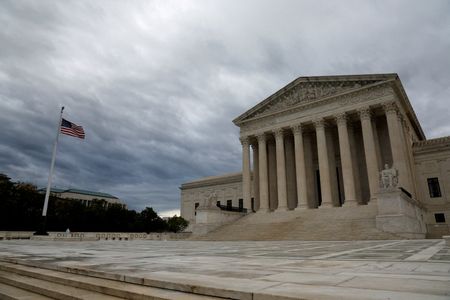
On the final day of the Supreme Court’s current term, National Public Radio issued a swift retraction Tuesday after one of its articles falsely claimed that Justice Samuel Alito was leaving the court. The news organization attributed the mistake to “a misunderstanding.”
The erroneous story was written by NPR’s longtime Supreme Court and legal affairs correspondent, Nina Totenberg. NPR said she planned to speak about the situation on air later that same day.
An editor’s note distributed through some NPR affiliate stations read: “Earlier today, we erroneously published a story saying that Supreme Court Justice Samuel Alito was retiring. Neither Alito nor the court’s public information office has announced his retirement, and we have retracted the story.”
NPR Editor-in-Chief Tommy Evans later released a statement acknowledging the mistake and expressing regret for any confusion it may have created.
“Due to a misunderstanding, NPR’s Supreme Court and Legal Affairs Correspondent Nina Totenberg incorrectly reported that Justice Samuel Alito had retired. Neither Justice Alito nor the Supreme Court Public Information Office has announced his retirement,” Evans stated.
He continued: “As soon as the error was realized, the story was retracted and removed from NPR’s website and an on-air correction was broadcast. We regret the error and any confusion this may have caused.”
Evans also noted that Totenberg would appear on Tuesday’s broadcast of “All Things Considered” to address the matter, and that she had personally reached out to Justice Alito to apologize.
NPR had already pulled the story before Evans’ statement, after the Supreme Court’s public information office disputed the report earlier in the day.
The confusion appears to have stemmed from a busy day at the court. Chief Justice John Roberts had announced the retirement of several court staff members, as he typically does once the court’s final opinions of the term are released. However, Justice Alito’s name was not included in those announcements.
Earlier this year, speculation had circulated about what Alito’s future plans might be. However, both Fox News and CBS reported this past spring that he intended to stay on the court.
Alito has served on the Supreme Court since 2006, when he filled the seat vacated by Justice Sandra Day O’Connor. He was nominated to the position by President George W. Bush, a Republican.
The deaths of three federal firefighters in a Colorado wildfire are shining a harsh light on the Trump administration’s newly created federal fire agency and its decision to revive a long-abandoned policy requiring all wildfires to be put out as fast as possible.
One of the three firefighters who died was employed by the newly formed U.S. Wildland Fire Service — an agency established this year without the typical congressional approval process by pulling personnel from four Interior Department agencies. The fallen firefighters were part of an elite, helicopter-based crew that became trapped on Saturday in a rapidly spreading wildfire near the Utah border while fighting the blaze on the ground.
Authorities report that the group was among five firefighters who attempted to protect themselves by deploying emergency shelters — tent-like devices designed to shield against flames — as the fire overtook their position. Two firefighters survived but were hospitalized with burn injuries.
The merging of thousands of firefighters into a single agency has created confusion among some personnel about their chain of command and job responsibilities, according to former government officials familiar with the situation.
The administration’s push for “full suppression” of all new fires represents a dramatic departure from a trend that had been building over decades — one that recognized fire as a useful land management tool capable of clearing out old vegetation that acts as fuel and reducing the risk of catastrophic blazes fueled by a warming climate.
The policy shift has also proven financially beneficial to private aerial firefighting companies that profit from the faster, more aggressive response to new fires.
Federal officials have not yet disclosed the specific circumstances that led to the firefighters being overrun, including what their mission objective was at the time.
“The question is, why were they attacking that fire in the first place?” said Timothy Ingalsbee, a former federal firefighter and cofounder of the advocacy organization Firefighters United For Safety, Ethics and Ecology. “What was actually at risk? If it was a bunch of shrubs on remote mountaintops, what was the real risk that justified putting those firefighters at risk?”
The fires broke out across the western United States over the past week following months of dry conditions and historically low snowpack in some regions.
Operating under a directive from Interior Secretary Doug Burgum, the Wildland Fire Service is required to pursue full suppression “for every wildfire under its management,” federal officials confirmed in a statement to the Associated Press.
“Any wildfire that represents a threat to life, property, infrastructure or the environment should be extinguished as quickly as possible,” the statement read. “Our experienced fire managers retain the authority to select the safest and most effective tactics based on conditions on the ground.”
Critics, however, argue the administration is attempting to fix a system that was already working. The four agencies from which the new fire service drew its personnel — the Bureau of Land Management, Fish and Wildlife Service, Bureau of Indian Affairs, and National Park Service — had a track record of successfully extinguishing 98% of the fires they managed.
Steve Ellis, who retired as a deputy director of the Bureau of Land Management and now chairs the National Association of Forest Service Retirees, said the new agency and its policy will not solve the problem of catastrophic wildfires driven by dense forests, growing populations in fire-prone areas, and extreme weather tied to climate change.
“Severing forest management and forest managers from fire suppression will make firefighting less safe and put communities at greater risk,” Ellis said.
The other two firefighters killed in Colorado were employed by the Department of Agriculture’s Forest Service, which manages the majority of wildfires across the country and is also operating under a full suppression directive. The Trump administration had originally sought to bring Forest Service firefighters into the new consolidated agency, but Congress blocked that portion of the plan.
Under the current administration, federal officials have been deploying aircraft to fire scenes more rapidly after ignition, according to Austin Moeller, a senior aerospace analyst with Canaccord Genuity Group, an investment firm.
“Anyone that has an air tanker benefits from this more aggressive contracting activity,” Moeller said.
One company that stands to gain significantly is Bridger Aerospace, a Montana-based aerial firefighting firm founded by U.S. Sen. Tim Sheehy. Before winning his Senate seat in 2024, Sheehy had hired lobbyists in an unsuccessful effort to get the Montana Legislature to establish a statewide fire service similar to the one now created at the federal level. Within a month of taking office, he introduced legislation to formally codify the consolidation of federal firefighters into a single agency.
Sheehy’s spokesman, Tate Mitchell, said the senator stepped away from his company during the 2024 campaign and placed his Bridger assets into a blind trust. Mitchell also said that while the idea for the new fire agency originated with President Trump, Sheehy supports it.
“One of Senator Sheehy’s top priorities in the Senate is using his experience to stop the catastrophic fires destroying American communities and he won’t apologize for it,” Mitchell said.
Bridger describes itself as one of the country’s leading aerial firefighting companies. Its CEO, Sam Davis, has said the company’s fleet of Super Scooper aircraft, surveillance planes, and fire observation technology make it “uniquely positioned” to benefit from the renewed emphasis on aggressive fire suppression.
The new full suppression policy is reminiscent of a 1935 rule known as the “10 a.m. rule,” which required fire agencies to extinguish all new fires by 10 a.m. the following day. Michael Dudley, a retired director of fire, aviation and air management at the Forest Service, said that old approach is largely responsible for the overgrown forests seen today.
Wildfires naturally clear out dead and small vegetation, Dudley explained. But as agencies became increasingly effective at putting fires out, forests continued to grow denser with accumulated fuel — meaning that when fires do break out now, they have far more material to burn and are much harder to control.
Scientists who study wildfire behavior say the goal of stopping every fire is simply unrealistic. Some of the most destructive recent blazes spread too quickly, burned in too-remote locations, or started from multiple ignition points simultaneously — making full suppression impossible.
“The narrative that if we just try harder, we’re gonna make these fires go away isn’t true,” said David Calkin, a former Forest Service wildfire researcher. “The fire paradox is not beatable: The more you make fire go away, the more fuel accumulates. The more fuel accumulates, the harder it is to make fires go away.”
Firefighters within the consolidated agency are now working under Wildland Fire Service Chief Brian Fennessy, who previously served as chief of California’s Orange County Fire Authority since 2018. Dudley noted that the reorganization has left many personnel uncertain about their roles.
“There’s a level of confusion as everyone’s trying to sort out responsibilities and who’s in charge and who do you report to,” Dudley said.
An Interior Department spokesperson described Fennessy as highly respected, with decades of experience managing some of the nation’s most complex fire situations in densely populated southern California.
Luke Mayfield, a founder of the group Grassroots Wildland Firefighters, said he believes the consolidation will ultimately benefit firefighters, but acknowledged that significant work remains before the new agency is fully operational.
“Everyone was aware of the potential fuel and fire conditions we face this fire season,” Mayfield said. “Those conditions are surfacing and have resulted in firefighter fatalities with weather conditions that won’t let up in the near future.”
Americans are still hungry for behind-the-scenes details about President Donald Trump, and a newly released book is proving it.
“Regime Change: Inside the Imperial Presidency of Donald Trump,” co-written by political journalists Maggie Haberman and Jonathan Swan, has moved more than 300,000 copies in its first week on shelves, according to publisher Simon & Schuster. The pair are both reporters for the New York Times.
Those kinds of opening-week numbers were common for Trump-related titles during his first term in office, but had become increasingly rare during his second. Many in the publishing industry had assumed readers had grown tired of books about Trump and felt there wasn’t much new ground to cover.
The 300,000-copy figure includes preorders, print sales, ebooks, e-audiobooks, and orders that haven’t yet been fulfilled due to high demand, the publisher noted. Simon & Schuster said the book has already gone into its third print run, with 200,000 additional copies on order after it sold out rapidly in bookstores and on Amazon. It currently holds the record for the best first-week performance of any hardcover nonfiction book in 2026.
The book spans the first 14 months of Trump’s second presidency, taking readers inside the West Wing, the White House residence, Trump’s Mar-a-Lago estate, and aboard Air Force One during foreign travel.
Trump, who has a long history with Haberman dating back to her coverage of him as a New York City business and society figure, has dismissed the book as “mostly made up.”
The manuscript digs into specifics of Trump’s military decisions, how he has used the Justice Department against political rivals, his private conversations with other influential figures, and the considerable effort he has put into reshaping the look and structure of the White House.
One of the book’s central arguments is one Trump himself apparently believes: that losing the 2020 election ultimately made him more powerful in his second term — giving him the confidence to push past traditional norms, dismantle long-standing institutions, and test the outer limits of presidential authority.
Haberman and Swan have made the rounds on news talk programs promoting the book and sharing reporting highlights, including a conversation with Trump in which he reportedly boasted about being compared to some of history’s most notorious villains.
Sean Manning, vice president and publisher at Simon & Schuster, said the book “has entered the national conversation” and predicted it will stand as “a work of historic importance.”
When it comes to soccer, San Francisco Mayor Daniel Lurie says he is not just jumping on the World Cup bandwagon — he has been a true believer his entire life.
Lurie wakes up early on weekends to catch live English Premier League matches and has now attended five World Cups throughout his life. Earlier this year, he even got to lift the iconic trophy alongside former Brazil midfielder Gilberto Silva during a promotional event.
Since the tournament kicked off, the 49-year-old mayor has been making the rounds at packed fan zones and bars across San Francisco, rolling up his sleeves and mixing with enthusiastic crowds in pubs draped in flags from around the world.
“I’ve been a huge soccer fan my whole life,” Lurie told Reuters during an interview at a San Francisco park, with the city’s famous Golden Gate Bridge visible in the background.
“A lot of people are excited about the World Cup. I kind of live and die soccer,” he said, pausing briefly to get an update on the Brazil versus Japan match. “So, for me, this isn’t just for this month. I get into soccer all year round.”
A devoted supporter of Premier League club Leeds United, Lurie was present at the World Cups held in 1994, 2010, 2014, and 2022 — attending five matches over just three days at the most recent tournament.
Now the world’s biggest soccer event has come to his home turf, with six games scheduled in the San Francisco Bay Area. The marquee moment arrives Wednesday when the United States face Bosnia in a last-32 showdown.
Lurie’s connection to soccer runs deeper than simply being a fan. He is also an investor in 49ers Enterprises, the business arm of the San Francisco 49ers NFL franchise, which became majority owners of Scottish club Rangers last year after acquiring Leeds United back in 2023.
“We are now staying up again,” Lurie said of Leeds United’s league standing. “We’ve got a long way to go to get to that top six, to get into European competition, but I believe we can.”
Lurie, a Democratic moderate, was elected San Francisco’s mayor in 2024 after running on a platform of revitalizing the city’s struggling downtown area while tackling its fentanyl crisis and widespread homelessness. A philanthropist and heir to the Levi Strauss fortune, Lurie spent $10.5 million of his own money on his campaign, according to public disclosures. His mother, Mimi Haas — a major Levi shareholder who had a reported net worth of $1.4 billion in 2021 according to Forbes — was the next largest contributor.
Beyond the soccer stadiums, Lurie has cultivated a relatable, everyman image on social media, sharing videos of himself at farmers markets, officiating same-sex weddings, eating Mexican chilaquiles, and handing out ice cream from a van.
During the World Cup, his Instagram account has gone into high gear, featuring posts of him sitting on the floor at watch parties and bar-hopping to catch Lionel Messi’s double for Argentina against Austria, the U.S. victory over Australia, France versus Senegal, and Ghana taking on Panama.
“We’re hitting every spot around the city,” he said. “It’s been electric. Our neighbourhoods have been teeming with fans from around the world.”
Lurie also made national news last year when, with backing from Silicon Valley, he persuaded U.S. President Donald Trump to cancel a planned federal deployment of National Guard troops and Immigration and Customs Enforcement agents to San Francisco. Lurie argued the city was “on the rise” and that such a surge would derail its recovery efforts.
“We’re really proud of where we’ve come,” Lurie said, pointing to a 30% drop in crime last year and the city’s lowest homicide rate since 1954. “We still have work to do. And that’s where events like the World Cup help us continue that momentum.”
Once the tournament wraps up, the stadium will revert to its regular use by the 49ers, and a large tarpaulin covering the venue’s commercial name — Levi’s Stadium — will be removed.
Lurie says he hopes the World Cup leaves behind something lasting for the region and the country.
“We need things to unify us,” he said. “The World Cup here in North America and here in the San Francisco Bay Area is doing just that, bringing people together, uniting people. We need more of that.”
A newly released federal agricultural report indicates that the volume of shell eggs being broken for processing has increased by 3 percent compared to the same time last year.
The figures were published in the latest egg products summary from the U.S. Department of Agriculture’s National Agricultural Statistics Service.
The report tracks how shell eggs are being broken down and processed into egg products, which are used in a wide range of food manufacturing and commercial applications across the country.
The 3 percent year-over-year increase suggests a modest but notable uptick in demand for processed egg products relative to the prior year’s figures.
NASA Administrator Jared Isaacman announced Tuesday that three private aerospace companies have been chosen to deliver additional uncrewed landers to the lunar surface as part of the agency’s ongoing Artemis moonbase program.
Firefly Aerospace and Intuitive Machines each received contracts valued at $144 million, with each company tasked with sending one lander to the moon. Astrobotic was awarded a larger deal worth $280 million, covering two separate lander missions to the moon’s surface.
A legal expert weighed in on the Supreme Court’s most recent round of decisions as the current term came to a close.
Kim Wehle, a professor of law at the University of Baltimore School of Law, sat down with NPR host Michel Martin to walk through the high court’s final rulings of the term.
The discussion offered a closer look at the significance of the decisions handed down by the nation’s highest court as justices wrapped up their work for the season.
The New York Yankees shook up their bullpen on Tuesday, calling up right-handed pitcher Yovanny Cruz from their Triple-A affiliate in Scranton/Wilkes-Barre while sending fellow right-hander Yerry De los Santos down to the same level.
Cruz, 26, broke into the big leagues on May 20 and turned in a clean performance across two relief appearances, tossing 2 1/3 innings without surrendering a single run before being returned to the minors. His path to the majors was a long one — he spent eight seasons in the minor league system with four different organizations before finally earning his first big league call-up this year.
De los Santos, 28, has been sharp when given the opportunity this season, posting a 1.04 ERA across five relief outings during three separate stints with the Yankees. Over his career, the right-hander carries a 1-5 record with a 3.53 ERA in 78 relief appearances split between the Pittsburgh Pirates from 2022 to 2023 and the Yankees in 2025 and 2026.
The Florida Panthers made a second major goaltender move in back-to-back days, landing Jacob Markstrom from the New Jersey Devils in a Tuesday trade that strongly suggests two-time Stanley Cup champion Sergei Bobrovsky’s days in South Florida are numbered.
To complete the deal, Florida sent forward Evan Rodrigues, Jesper Boqvist, and the rights to pending restricted free agent Ben Steeves to New Jersey in exchange for Markstrom and winger Angus Crookshank. Just one day earlier on Monday, the Panthers had picked up goalie Akira Schmid from Vegas in exchange for a 2028 third-round draft pick.
Panthers general manager Bill Zito expressed enthusiasm about the acquisition. “Jacob is an established veteran leader in this league who possesses size and a relentless drive to win,” Zito said. “We are excited for him to compete alongside our established group and return to South Florida.”
Bobrovsky, 37, was instrumental in guiding Florida to consecutive Stanley Cup titles in 2024 and 2025, as well as a Finals appearance in 2023.
Markstrom, 36, is entering a two-year deal carrying an annual salary cap hit of $6 million — a contract originally signed under former Devils general manager Tom Fitzgerald, who departed the organization in April.
The trade represents the first significant roster move by Fitzgerald’s replacement, Sunny Mehta. New Jersey will now rely on Jake Allen in goal and is expected to search for a backup partner during free agency.
Rodrigues, who will turn 33 on July 28, adds another option at forward for the Devils. The Panthers were able to free up his salary of just over $3 million following their acquisition of Brady Tkachuk from Ottawa to skate alongside his brother Matthew.
Elsewhere around the NHL, the St. Louis Blues placed winger Jonathan Drouin on unconditional waivers in order to buy out the remaining season of his contract. The Blues originally obtained Drouin at the trade deadline from the New York Islanders as part of the package received for Brayden Schenn.
Sussex County officials are urging residents and visitors to take the upcoming heat wave seriously, as forecasters warn of a dangerous stretch of hot weather set to arrive just in time for the Fourth of July holiday.
Beginning Wednesday, July 1, a punishing heat wave is expected to settle over Sussex County and much of the eastern United States, with temperatures projected to climb above 100 degrees. When humidity is factored in, the heat index could soar as high as 115 degrees — making this the hottest holiday weekend of the summer so far. The National Weather Service has placed the area under an extreme heat watch through Independence Day. While scattered showers and thunderstorms may offer brief moments of relief, the oppressive heat and humidity could stick around into early next week.
To help people cope with the extreme conditions, Sussex County announced Tuesday that a number of air-conditioned facilities will serve as cooling stations from July 1 through July 5. Normally, county buildings including libraries are available during regular business hours throughout the summer as cooling spots, but the long holiday weekend means most public offices will be closed. To fill that gap, the County Administrative Offices building on The Circle in Georgetown will remain open from 8:30 a.m. to 4:30 p.m. Wednesday through Sunday.
Several library branches will also be open on a limited basis during the heat emergency. The Greenwood Library at 100 Mill St. in Greenwood and the Milton Library at 121 Union St. in Milton will both be open from 10 a.m. to 6 p.m. on Wednesday and Thursday, then closed Friday through Sunday. The South Coastal Library at 43 Kent Ave. in Bethany Beach will be open from 10 a.m. to 7 p.m. on Wednesday and Thursday, then closed the rest of the weekend.
The State of Delaware has also announced cooling stations at select state facilities. For more details, call 2-1-1 or check the state’s website.
Sussex County EMS will nearly double its staffing levels during the holiday period. Paramedics will make routine stops at county cooling facilities, as schedules allow, to field any heat-related questions or concerns. Free individual bottles of water will also be available at these locations. Anyone visiting a cooling station is encouraged to bring any needed medications or specialty items.
County officials are advising everyone to limit time outdoors, especially between roughly 1 p.m. and 6 p.m., when temperatures will be at their peak. County Emergency Managers are also strongly encouraging organizers of Fourth of July events to keep a close eye on the forecast and consider rescheduling activities to cooler parts of the day. Anyone who must be outside during the hottest hours should take frequent breaks and drink plenty of water.
Hot Weather Safety Tips:
Wear lightweight, light-colored clothing, since lighter fabrics reflect sunlight rather than absorbing heat. Stay in well-ventilated areas and avoid physically demanding activity during the hottest hours of the day. Drink plenty of water and steer clear of alcoholic beverages.
Know the warning signs of heat-related illness. Heat cramps can cause muscle pain and spasms during heavy exertion — resting somewhere cooler, sipping water, and gently stretching the affected muscle can help. Heat exhaustion and heat stroke are far more serious. Heat exhaustion may cause a pale or flushed face, headache, and nausea. Heat stroke symptoms include a rapidly rising body temperature, loss of consciousness, a rapid or weak pulse, and quick, shallow breathing. Seek medical attention immediately if heat stroke is suspected.
Check in on friends, family, and neighbors — especially the elderly and young children — who may be more vulnerable to extreme heat. Don’t forget pets: give them extra water, provide shade, or bring them inside where it’s cooler.
Conserving Electricity During the Heat Wave:
With temperatures expected to spike, electricity demand will rise sharply. Sussex County Emergency Management is asking all residents and businesses to help prevent power outages by conserving energy wherever possible.
At home, set air conditioners to 80 degrees or use fans as an alternative, and try to limit how often you open the refrigerator or freezer. Turn off water heaters and non-essential appliances and lights. Hold off on running high-energy appliances like washing machines and dryers until after 8 p.m. Opt for light meals that require little cooking — an outdoor grill or microwave uses far less energy than an electric range. Keep blinds, shades, and drapes closed during the hottest part of the day to block out sunlight. Move lamps, televisions, and other heat-generating items away from air conditioner thermostats, since the heat they emit can cause the AC to run longer than needed. Also make sure furniture and other objects aren’t blocking central air conditioning vents, so cool air can flow freely through your home.
Businesses can do their part by raising thermostats slightly and switching off any lighting or equipment that isn’t necessary.
Sussex County is also reminding residents to take advantage of the county’s free Smart911 service by creating a safety profile for their household. These profiles give first responders potentially life-saving details in an emergency, including property information, special medical needs, and family contacts. Visit www.smart911.com to sign up.
Sussex County Emergency Management will continue tracking the situation and will release updates as conditions develop. For the latest information, follow the county’s emergency management pages on Facebook at www.facebook.com/SussexCountyPublicSafety and on X at www.x.com/SussexCtyDE_EM.
JERUSALEM (AP) — A prominent Israeli military leader who walked away from Prime Minister Benjamin Netanyahu’s war Cabinet — publicly blaming the prime minister for having no clear plan in Gaza — has now positioned himself as one of Netanyahu’s most serious political threats heading into elections scheduled for this fall.
The challenger’s name is Gadi Eisenkot. His centrist political party, called “Yashar!” — which translates to “Straight!” — formally kicked off its election campaign on Tuesday in Israel.
Eisenkot’s background as one of Israel’s most decorated military figures could intensify public examination of Netanyahu and how he has led the country through a series of conflicts. Like most of Netanyahu’s political opponents, Eisenkot has broadly backed Israeli military campaigns in Gaza, Lebanon, and against Iran. However, he has also charged Netanyahu with strategic failure in the aftermath of the Hamas-led attacks on October 7, 2023, and warned that Netanyahu’s vision of an increasingly isolated Israel poses a danger to the country’s long-term future.
In recent days, Netanyahu — who leads Israel’s right-wing Likud Party — has pushed back sharply, claiming that had he followed Eisenkot’s advice and held back on certain operations in Gaza, “all of Hamas” would still be in power there.
As someone new to the political arena, Eisenkot “looks like a front-runner because he’s everything Netanyahu is not,” according to Gideon Rahat, a senior fellow at the Israel Democracy Institute think tank in Jerusalem. “He’s not polarizing, he’s not a populist like Netanyahu, and he will try to unify the country,” Rahat added.
At 66, Eisenkot is the son of Jewish Moroccan immigrants and presents a sharp contrast to Netanyahu, a U.S.-educated figure currently facing corruption charges in court. Eisenkot grew up in a working-class household, speaks unpolished English, and devoted four decades of his life to Israel’s military.
He has never built his political identity around connections to U.S. President Donald Trump. And in a deeply personal distinction from Netanyahu, Eisenkot lost his 25-year-old son, Gal Meir Eisenkot, in combat in Gaza. Netanyahu’s son, a podcaster, has lived part-time in Florida. Eisenkot also lost two nephews in the war.
Those losses have elevated Eisenkot’s standing among Israelis and lent him a kind of moral authority — a sense that someone who has paid such a devastating personal price will not send soldiers into harm’s way without good reason.
“People trust him to be a real person and a patriot. They expect him to take care of the country and not himself,” said Rahat, who also serves as a professor at Hebrew University.
Eisenkot’s platform centers on strengthening Israel’s national security, including through regional cooperation. He has said he supports Jewish settlements in the occupied West Bank that are “in line with Israel’s interests.” He has also adopted the campaign slogan “Service for All,” which signals his push to require military service from Israel’s ultra-Orthodox communities — a politically charged issue. For Israelis exhausted by years of conflict and the burden of sending family members to fight, these positions could carry significant appeal.
“He presents as an everyman, a reflection of the ordinary Israeli,” Joshua Leifer, a columnist for Israel’s Haaretz newspaper, wrote, describing Eisenkot as “a kind of antipolitician.”
In 2024, Eisenkot resigned from Netanyahu’s war Cabinet, saying the prime minister lacked any real strategy for the war in Gaza. He sent a pointed letter to fellow Cabinet members warning them that they were confusing small battlefield advances with the kind of decisions that could actually neutralize Hamas and make Israel safer.
His objections, however, were not focused on the scale of destruction in Gaza or the high number of civilian casualties — both of which have drawn widespread international condemnation. And while he has at times pointed to diplomacy as a tool for addressing Israel’s security needs, Eisenkot is also credited with developing Israel’s so-called “Dahiyeh Doctrine,” named for the area in southern Beirut where the Hezbollah militant group maintains a stronghold.
He explained the doctrine in a 2008 interview with the Israeli daily Yedioth Ahronoth, following his role as a senior military official during Israel’s 2006 war with Lebanon. “What happened in the Dahiyeh quarter of Beirut in 2006 will happen in every village from which shots will be fired in the direction of Israel,” he said. “We will wield disproportionate power against every village from which shots are fired on Israel, and cause immense damage and destruction. From our perspective, these are military bases.”
Israel’s fragmented multi-party political system rarely allows prime ministers to complete full four-year terms — coalitions fall apart and new alliances take shape. Because of this, and despite Netanyahu’s unpopularity, it would still be a significant challenge for any rival to assemble a coalition broad enough to remove him from power.
Even if Eisenkot’s party wins more seats than Netanyahu’s Likud, he would still need to build alliances with enough other parties to reach a governing majority. Eisenkot has stated he will not back down on legislation requiring ultra-Orthodox Israelis to serve in the military — a community that also holds considerable political influence. He will also face a decision about whether to bring Arab-led parties into a potential coalition to reach the necessary threshold, a move that Netanyahu and his far-right allies have already begun using as an attack line against him.
ANKARA, Turkey — Turkish President Recep Tayyip Erdogan on Tuesday brushed aside a move by Israel’s Cabinet to label the Ottoman Empire’s mass killing of Armenians during World War I as genocide, instead directing accusations back at Israel over Palestinian deaths in Gaza.
Erdogan’s remarks came in response to a measure the Israeli Cabinet approved on Sunday. The proposal has not yet received a full parliamentary vote and arrives at a time when relations between Israel and Turkey have been steadily deteriorating.
Turkey has long and aggressively worked to stop other nations from officially classifying the large-scale deaths of Armenians around 1915 as genocide, even as Armenians have continued to push for that recognition.
Historians put the death toll at up to 1.5 million Armenians killed by Ottoman Turks around the time of World War I — an event that many scholars consider the first genocide of the 20th century. Turkey disputes that characterization, arguing the death toll has been exaggerated and that those who died were casualties of civil war and widespread unrest.
Speaking during a televised address following a Turkish Cabinet meeting, Erdogan said: “We pay absolutely no attention to the slanders against our country by this criminal network, which has the blood of 73,000 innocent people of Gaza, mostly children and women, on its hands.”
“Our history is free from genocide, massacres, oppression, and colonialism,” Erdogan added.
For years, Israel held back from officially recognizing the violence as genocide partly to avoid straining its relationship with Turkey. However, that relationship has grown increasingly tense over the past two decades, particularly as conflicts in Gaza, Lebanon, and Iran have continued.
Israeli Foreign Minister Gideon Saar, who put forward the proposal, stated on Sunday that the “Armenian Genocide remains to this day the subject of an institutionalized campaign of denial and minimization” by the Turkish government, despite what he described as overwhelming historical evidence.
Saar also noted that Israeli leaders — including Prime Minister Benjamin Netanyahu — have previously referred to the violence against Armenians as a genocide, though Israel’s Knesset has never formally voted to recognize it as such.
He pointed out that 32 countries, among them the United States, Syria, and Lebanon, have already classified the killings as genocide.
On Sunday, Turkey’s Foreign Ministry characterized Israel’s move as “politically motivated,” accusing Israel of using it to draw attention away from its own conduct toward Palestinians and from proceedings at the International Court of Justice over alleged genocide in Gaza.
Once considered close allies, Israel and Turkey saw their relationship begin to unravel after Erdogan — whose political party has roots in Turkey’s Islamic movement — rose to power. His vocal criticism of Israeli policies toward Palestinians contributed to the ongoing rift between the two nations.
Israel has faced repeated accusations from multiple parties, including the United Nations and Turkey, that its military campaign in Gaza constitutes genocide. Israel, a nation founded in the aftermath of the Holocaust, has denied those accusations.
SAN JUAN, Puerto Rico — A federal oversight board responsible for managing Puerto Rico’s finances announced Tuesday that it is offering bondholders a $3 billion settlement in a renewed effort to restructure more than $10 billion in debt carried by the territory’s electric utility.
The proposal would provide bondholders — who have not yet reached a deal and are seeking roughly $8.5 billion in claims — with a combination of cash payments and newly issued bonds. The offer is $1.4 billion higher than what had previously been put on the table.
Puerto Rico’s Electric Power Authority has been working to resolve its debt situation for close to ten years. The crisis began in 2015 when the U.S. territory declared it could not repay a debt load exceeding $70 billion. In response, the U.S. Congress established the federal oversight board in 2016. The following year, Puerto Rico’s government filed for what became the largest municipal bankruptcy in American history.
In the years since, the board and the power company’s bondholders have repeatedly clashed over compensation, with several rounds of mediation failing to produce a resolution.
The board’s executive director, Robert F. Mujica Jr., said the time has come to move on. “Puerto Rico must be able to close this last chapter of its fiscal crisis and move forward,” he said.
Mujica also emphasized that resolving the utility’s debt “is essential to Puerto Rico’s recovery — to the reliable, affordable electricity and the new investment its residents and businesses deserve.”
One significant unknown remains: the board has not yet determined where the money to fund the proposed settlement would come from. That uncertainty has raised concerns among some observers, who fear that residents could end up footing the bill through higher electricity rates. Power costs in Puerto Rico are already among the steepest of any U.S. jurisdiction, even as the island continues to experience frequent and prolonged outages.
The board noted that prior agreements reached with certain creditors and bondholders in the power company’s case are still in effect. It also highlighted that, across Puerto Rico’s broader fiscal restructuring, it has completed 12 separate debt deals, eliminating more than $55 billion in debt payments over a 40-year period.
Millions of people across the Midwest and Great Lakes states are enduring brutal heat and humidity Tuesday, with no quick end in sight before the oppressive conditions push eastward toward the Atlantic coast.
The National Weather Service pulled no punches in its assessment, describing the situation as “dangerous.” Heat index readings — which factor in both air temperature and moisture in the air — topped 100 degrees Fahrenheit (37.8 degrees Celsius) in several locations. Officials warned that the conditions pose a serious risk for heat-related illness, particularly for those without access to air conditioning.
In Detroit, air temperatures climbed into the high 90s and could potentially hit 100 degrees at some point through Thursday. City officials responded by opening a dozen recreation centers to the public as cooling refuges, with some staying open as late as 11 p.m. Large portions of Michigan, along with Illinois, Ohio, Indiana, Kentucky, and much of Iowa, are under an extreme heat warning.
The heat wave is expected to move into the Northeast next, with cities like New York and Boston set to experience the worst of it around the Fourth of July holiday. In Norristown, Pennsylvania — about 20 miles (32 kilometers) outside Philadelphia — officials have already canceled a Saturday parade due to the anticipated weather.
In Chicago, the History Museum opened its doors free of charge to Illinois residents Tuesday, offering a cool escape from the heat. The extreme temperatures also caused roads in parts of Illinois to buckle and crack, a phenomenon that occurs when pavement has no room to expand in the heat and forces itself upward.
Detroit window washer Stephen Mason, 72, was already on the job at 9:15 a.m., cleaning mayflies off the glass of a local convenience store. He started early to get ahead of the worst of the day’s heat — but even then, temperatures had already reached 85 degrees (29.4 C).
“It’s the only way to beat it. But it’s already starting to cook out here,” Mason said.
Nearby in Detroit’s Indian Village neighborhood, 36-year-old runner Adam Schubatis was pushing through a shortened route of just 6 miles (9.6 kilometers), going shirtless to cope with the heat.
“I know where all the drinking fountains are,” he said. “My wife thought I was crazy. She offered to pick me up if I got tired or if there was anything I was doing that wasn’t safe.”
In Milwaukee, more than 100 firefighters battled a school fire for hours in the sweltering heat. Fire Chief Aaron Lipski said crews were rotating shifts and removing their heavy protective coats to rehydrate throughout the effort.
In Grosse Pointe Park, a suburb of Detroit, 64-year-old George Liller stepped up to help his neighbors. After installing air conditioning in his own home, he posted a spare window unit on Facebook — free to whoever needed it, extension cord and remote control included.
“It was probably on my porch maybe 15 minutes,” Liller said. “That air conditioner was given to me. I thought, ‘Somebody needs it.’ I know how it feels to be in an old house when it’s this hot.”
LAS VEGAS — It was a landmark evening in a small desert city with big ambitions. Shortly after the close of World War II, Las Vegas unveiled what a local newspaper described as America’s very first all-you-can-eat buffet, drawing out local dignitaries and the social elite for the occasion. Glazed ham and prime rib were on the menu at the El Rancho Vegas, and American dining would never quite be the same.
While the space race and arms race dominated Cold War-era news coverage, a quieter revolution was happening on American farms. Through advances in genetics, chemical treatments, and motorized machinery, U.S. agricultural output nearly tripled between 1948 and 2017 — and someone had to eat all that food.
The buffet concept offered one answer. At least three Las Vegas legends claimed credit for inventing it. The most widely told version centers on a promoter named Herb McDonald, who one night reportedly set out cheese and cold cuts along a bar. According to his 2002 obituary, “Gamblers walking by said they were hungry, and the buffet was born.”
Michael Green, a history professor at the University of Nevada, Las Vegas, explains that other casinos soon followed suit, offering buffets as a way to keep gamblers fed and on the floor. For a single flat price, diners could pile their plates with salads, meats, pasta, and seafood — and, crucially, go back for seconds.
But the origin story has long been contested. Las Vegas historian Jeffrey Carlson dismisses the El Rancho tale outright. “It couldn’t have been that simple,” he says, pointing to a rival account that ties the buffet’s creation to organized crime figures who helped shape early Las Vegas.
In his book “Neon Metropolis: How Las Vegas Started the Twenty-First Century,” author Hal K. Rothman credits mobster Davie Berman with the invention. Berman relocated from Iowa in 1944 as Jewish gangsters were acquiring local hotels and casinos. He reportedly hired a chef who laid out lox, whitefish, herring, and other traditional Jewish brunch items on a long table. “A Las Vegas tradition, the buffet, was born,” Rothman wrote.
Regardless of its true origins, the all-you-can-eat buffet eventually spread far beyond Nevada, taking root in restaurant chains like Golden Corral and Ponderosa across the country. Over time, however, food industry expert Darren Tristano notes that the format began losing customers to casual dining establishments like Olive Garden and Chili’s.
Then came 2020. The COVID-19 pandemic struck a serious blow to the buffet business — one that has yet to fully heal. The idea of communal food stations where everyone reaches for the same serving spoons suddenly lost much of its appeal.
Still, longtime Las Vegas food journalist Al Mancini believes the buffet will always hold a special place in that city’s culture. “There’s a visceral reaction to just loading up that tray,” he says. “People still love that, and I think they always will.”
This story is part of a recurring series called “American Objects,” produced in recognition of the 250th anniversary of the United States.
NEW YORK (AP) — The Trump administration announced Tuesday that it is halting federal dollars flowing to New York’s Medicaid Fraud Control Unit, a state agency tasked with rooting out and prosecuting wrongdoing in the government’s safety-net healthcare program.
U.S. Department of Health and Human Services Inspector General Thomas March Bell sent a letter to New York officials accusing the state of failing to obtain enough criminal indictments. As a result, millions of dollars in funding will be frozen through at least September 30.
This marks the second time this year the Republican Trump administration has cut off funding to a state Medicaid fraud unit. The move is part of a broader push the administration has aggressively championed in the healthcare sector, which has included launching a new anti-fraud task force, conducting targeted investigations, withholding funding, and requiring healthcare providers to revalidate their credentials — actions that have touched all states but have been concentrated largely on those led by Democrats.
The funding suspension also follows an embarrassing admission by the administration that it had made a significant error in data it used to justify an earlier fraud investigation into New York’s Medicaid program — a mistake that critics said illustrated a pattern of acting before verifying the facts.
New York Attorney General Letitia James, a Democrat, quickly pledged to challenge Tuesday’s funding freeze.
“During my time as Attorney General, my office has recovered over $627 million for Medicaid and was recognized by this very administration for leading the nation in anti-fraud efforts,” she wrote. “We are considering all legal options to stop this outrageous action.”
Bell’s letter, addressed to James and New York Medicaid Fraud Control Unit Director Amy Held, argues that the unit is handling cases too slowly and producing too few indictments and convictions. The letter points out that compared to four other similarly sized units in different states, New York recorded the fewest criminal fraud convictions between 2023 and 2025.
The letter does acknowledge that New York deliberately chose to pursue “high impact, complex fraud cases” rather than smaller individual ones — but Bell argued that approach has not produced adequate results.
“Enough is enough,” Bell wrote. “The New York MFCU has failed to comply with the terms and conditions of its MFCU grant award.”
Bell indicated the freeze could be lifted before September 30 if New York demonstrates it has addressed the concerns that led to the suspension. If the state fails to do so, the funding cutoff will remain in place.
The attorney general’s office pushed back, saying in a statement that it has “long been recognized as a national leader in effectively investigating and prosecuting Medicaid fraud schemes” — including by the HHS inspector general’s own office. A 2025 report from that office noted New York was among four states accounting for half of all civil recoveries that year.
A spokesperson for the attorney general’s office noted that most of the unit’s criminal convictions involve company owners, executives, and corporations whose cases result in large recoveries for Medicaid.
“This administration’s unprecedented attack on New York is another political distraction,” James said.
The New York freeze follows a similar action taken against Hawaii. In early June, Bell informed Hawaii officials that Medicaid fraud funding would be cut off there as well, citing a three-year period without a single Medicaid fraud indictment or conviction in that state.
Joan Alker, executive director and co-founder of Georgetown University’s Center for Children and Families, said there is a deep irony in the federal government stripping money meant to fight fraud when fighting fraud is supposedly the administration’s goal.
“If you want to fight fraud, don’t take away money from states’ fraud control units,” she said. “I chalk this up to more political theater to distract voters from historic Medicaid cuts before the midterms.”
For months, the Trump administration has argued that states — particularly those led by Democrats — have been too slow to address fraud in social safety-net programs like Medicaid. It has demanded at least five states, four of them with Democratic governors, provide information on how they detect, prevent, and respond to Medicaid fraud.
The federal government has also withheld some Medicaid funding from Minnesota and California over fraud concerns. Minnesota Gov. Tim Walz, a Democrat and Kamala Harris’ 2024 running mate, accused the Trump administration of making cuts as political retribution.
The administration’s anti-fraud efforts have also extended to Medicare. Dr. Mehmet Oz, who heads the federal Centers for Medicare and Medicaid Services, announced a six-month pause on new enrollments for hospice and home care providers nationwide.
WASHINGTON — The U.S. Treasury Department has launched a sweeping crackdown on the Jalisco New Generation Cartel, widely regarded as Mexico’s most powerful criminal organization, through a new round of sanctions and a financial warning system for banks.
Treasury’s Office of Foreign Assets Control moved to sanction two Mexican men along with nine companies operating in transportation, financial services, and real estate. All are accused of ties to a cartel-linked fuel theft operation designed to dodge Mexican taxes while funneling tens of millions of dollars each year back to the cartel.
At the same time, Treasury’s Financial Crimes Enforcement Network issued a formal alert to banks and financial institutions, outlining warning signs of fuel being smuggled from the United States into Mexico as part of tax evasion schemes.
Treasury Secretary Scott Bessent addressed the broader significance of the action in a statement: “Today’s action highlights the extent to which Mexico’s cartels are expanding beyond traditional drug trafficking to generate revenue for their criminal organizations, which continue to traffic deadly drugs that kill Americans.”
The U.S. Drug Enforcement Agency has documented the Jalisco New Generation Cartel’s reach across 21 of Mexico’s 32 states, making it even more widespread than the Sinaloa Cartel, which is believed to operate in 19 states. President Donald Trump designated the Jalisco New Generation Cartel and five other Mexican cartels as foreign terrorist organizations last year.
In recent years, Mexican authorities have seized millions of gallons of stolen diesel, gasoline, and petroleum distillates in states along the Texas border. Criminal organizations tap directly into pipelines and redirect fuel either to service stations that are forced to purchase from the cartels or sell it openly on the streets.
U.S. authorities have gone so far as to accuse the Jalisco New Generation Cartel of running its own network of service stations as part of the operation.
The Cincinnati Reds made a series of roster moves Tuesday, reinstating closer Emilio Pagan from the 15-day injured list while sending outfielder Dane Myers to the 10-day injured list.
In addition to those moves, the club optioned right-handed pitcher Zach McCambley down to Triple-A Louisville and recalled infielder/outfielder Ivan Johnson from that same affiliate.
Pagan, who is 35 years old, has been out of action since May 5 after straining his left hamstring during a game against the Chicago Cubs. On the season, he holds a 2-1 record with a 6.43 ERA and six saves across 15 appearances.
Myers, 30, suffered a left shoulder contusion after crashing into the outfield wall while making an acrobatic catch in the fourth inning of Monday’s 5-3 defeat in Milwaukee. Through 63 games this season, he is hitting .256 with three home runs and 14 RBIs.
McCambley, 27, made his major league debut on June 3 and has appeared in four games out of the bullpen, posting a 6.23 ERA with no decisions to his name.
Johnson, also 27, was selected by Cincinnati in the fourth round of the 2019 draft and has yet to appear in a major league game. This season at Louisville, he has batted .290 with nine home runs and 28 RBIs in 55 games.
Goaltender Jacob Markstrom is heading back to Florida after the Panthers completed a five-player trade with the New Jersey Devils on Tuesday.
Florida brought in Markstrom along with forward Angus Crookshank, while shipping forwards Evan Rodrigues and Jesper Boqvist, plus prospect Ben Steeves, off to New Jersey in the deal.
Markstrom, 36, has a long history with the Panthers organization. Florida selected him in the second round of the 2008 draft, and he played 43 games for the club before being dealt to the Vancouver Canucks back in March 2014.
The towering 6-foot-6 netminder posted a record of 23-19-1 with one shutout across 44 appearances for the Devils during the 2025-26 season, finishing with a 3.07 goals-against average and an .883 save percentage.
Panthers president of hockey operations and general manager Bill Zito expressed enthusiasm about the reunion. “Jacob is an established veteran leader in this league who possesses size and a relentless drive to win,” Zito said. “We are excited for him to compete alongside our established group and return to South Florida.”
Markstrom’s resume includes an All-Star selection in 2019-20 and a Vezina Trophy finalist nod in 2021-22. Across his career with the Panthers, Canucks, Calgary Flames, and Devils, he has compiled a 264-231-64 record with 25 shutouts, a 2.73 goals-against average, and a .907 save percentage in 264 games.
This trade is part of a broader overhaul in goal for Florida. The Panthers also picked up goaltender Akira Schmid from the Vegas Golden Knights on Monday and appear to be moving away from longtime starter Sergei Bobrovsky, who is set to become an unrestricted free agent on Wednesday.
Crookshank, 26, managed one goal in eight games during his only season with New Jersey in 2025-26. Prior to that, he recorded two goals and two assists in 21 games with the Ottawa Senators between 2023 and 2025.
Zito also acknowledged the players heading to New Jersey. “We also want to extend our sincere gratitude to Evan and Jesper for their contributions to our organization,” he said.
Rodrigues, 32, was part of back-to-back Stanley Cup championship teams with Florida in 2023-24 and 2024-25. He put up 31 points — 11 goals and 20 assists — in 69 games during the 2025-26 campaign. Over his career spanning 616 games with the Buffalo Sabres, Pittsburgh Penguins, Colorado Avalanche, and Panthers, he has tallied 270 points.
Boqvist, 27, also won a Cup in his first year with Florida in 2024-25 and contributed 13 points — four goals and nine assists — in 73 games in 2025-26. He began his NHL career with New Jersey from 2019 to 2023, where the Devils drafted him in the second round in 2017. Across 387 career games with the Devils, Boston Bruins, and Panthers, he has recorded 105 points.
Steeves, 24, just wrapped up his third season with the AHL’s Charlotte Checkers, setting career bests in 2025-26 with 23 goals and 22 assists in 72 games.
Toronto FC is putting the finishing touches on an agreement to bring midfielder Nelson Palacio over from Real Salt Lake, according to reports from several outlets published Tuesday.
The 25-year-old Colombian player will head to Toronto in exchange for $1.2 million in cash, and he will take up a U22 initiative slot on the team’s roster, according to The Athletic.
Palacio has spent the current season on loan with Zurich in Switzerland’s top professional league, the Swiss Super League, where he recorded one assist across 32 appearances. Prior to that loan, he appeared in 44 MLS matches for Real Salt Lake between 2023 and 2025, contributing one goal and one assist.
Toronto FC headed into the FIFA World Cup break sitting in 13th place in the Eastern Conference, leaving the club four points shy of a playoff position. The team is scheduled to resume play on July 16 when they travel to face CF Montreal.
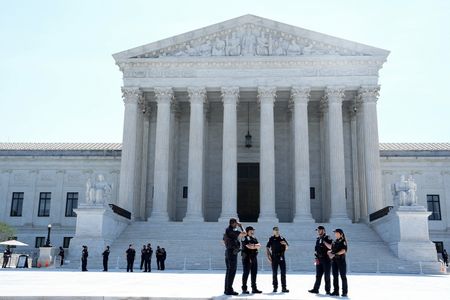
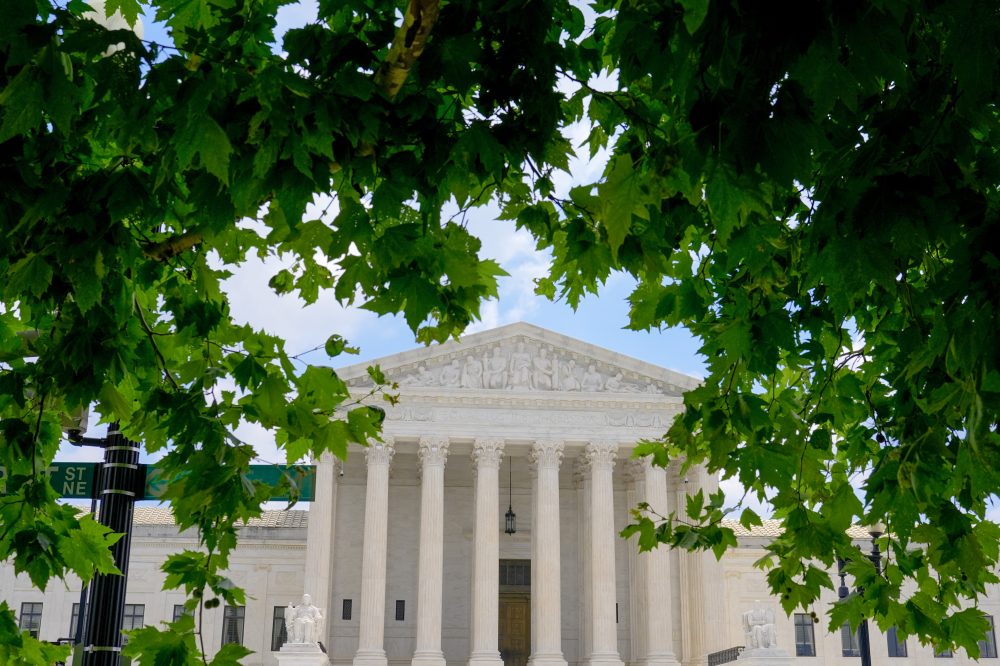
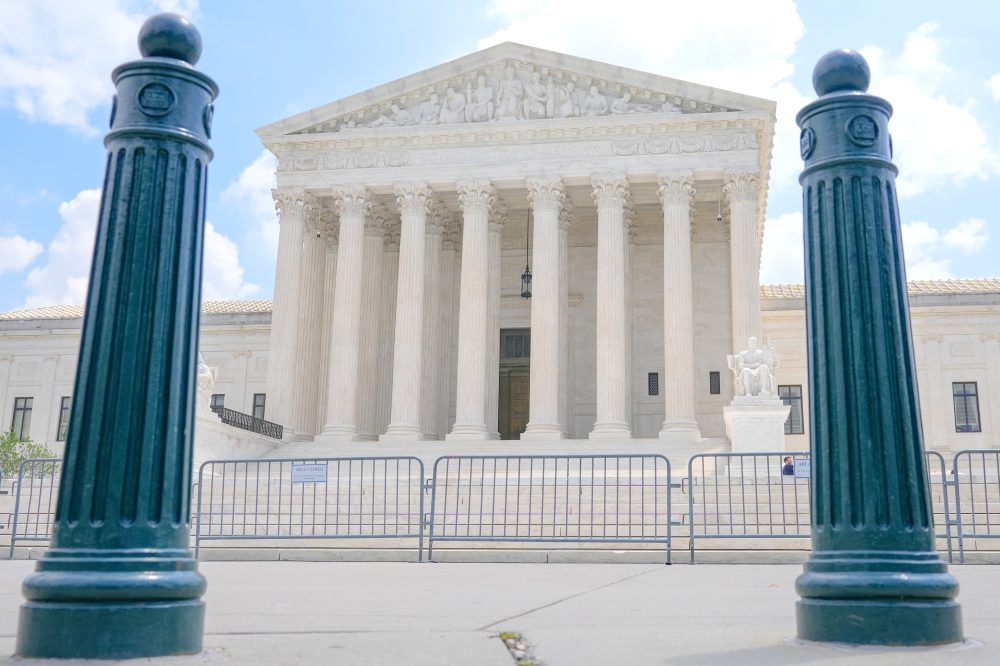
The U.S. Supreme Court closed out its nine-month term delivering substantial wins for conservatives across several major areas of law, while also drawing firm lines against some of President Donald Trump’s most ambitious policy goals.
The court, which holds a 6-3 conservative majority, took steps to strengthen executive authority over federal regulatory agencies — a long-sought Republican objective — but also moved to restrict presidential influence over monetary policy and trade.
Presidential Power
Trump brought three major cases before the court seeking to dramatically expand the reach of the presidency. He prevailed in one and lost two.
In one defeat, the court rejected Trump’s use of the International Emergency Economic Powers Act to establish a sweeping global tariff system. The justices ruled in February that the law — which does not use the word “tariff” — did not grant the president broad authority to impose import taxes, though they left open other possible legal avenues for tariffs.
The second loss came this week in a dispute involving the Federal Reserve. Trump had sought to remove Fed Governor Lisa Cook from her position after the board declined to lower interest rates at the pace he wanted. Administration officials accused Cook of mortgage fraud, though they offered little supporting evidence, in an attempt to justify firing her under the “for-cause” legal standard. The justices ruled that Cook could keep her job.
On the same day, however, the court handed conservatives a major victory by expanding presidential removal power over other regulatory agencies. The ruling overturned a 1935 precedent that had allowed Congress to shield certain agency leaders from being fired by the president at will. The case centered on Trump’s dismissal of Federal Trade Commissioner Rebecca Slaughter, a Democrat. The court ruled against her, invalidating tenure protections for agency heads and allowing the president to remove such appointees without cause.
Immigration
In three separate rulings decided along ideological lines, the court cleared a path for Trump to fulfill his campaign promise of stricter immigration enforcement and large-scale deportations.
The conservative majority allowed the administration to strip hundreds of thousands of Haitian and Syrian immigrants of a protected status that had shielded them from deportation while conditions in their home countries remained dangerous. The court also backed the government’s authority to physically block asylum seekers at the U.S.-Mexico border and made it easier to bar lawful immigrants accused of crimes from re-entering the country after traveling abroad.
However, the court dealt Trump a significant blow by rejecting his effort to end birthright citizenship — the longstanding principle that anyone born on U.S. soil is automatically a citizen. Trump had signed an executive order on his first day back in office that would have denied citizenship to hundreds of thousands of babies born each year to non-citizen parents on American soil.
In a 6-3 decision, Chief Justice John Roberts, appointed by Republican President George W. Bush, wrote that there was “scant evidence” supporting the Trump administration’s “dramatically revisionist view” of this foundational legal principle.
Voting and Elections
With Republicans fighting to hold onto control of Congress in November’s midterm elections, the court delivered major wins for the party on voting rights, along with mixed outcomes on election administration matters.
In April, the court rolled back large portions of the landmark 1965 Voting Rights Act, allowing states to redraw congressional district boundaries. Many Southern and Republican-controlled states have since moved to eliminate majority-minority districts — changes that election experts say could cost several Black members of Congress their seats.
The court also struck down limits on how much money political party committees can spend in coordination with individual candidates, overturning a 25-year-old precedent. Vice President JD Vance had challenged those restrictions during his 2022 Senate campaign, arguing they violated parties’ free speech rights. The justices agreed, handing Republicans another campaign finance victory.
On mail-in voting, Trump and Republicans came up short. The court ruled that states may count mailed ballots that were postmarked before Election Day even if they arrive after polls close. Trump has repeatedly and without evidence questioned the integrity of mail-in voting and has attempted to prevent mostly Democratic-controlled states from sending out mail ballots.
Social Issues
The court sided with conservative positions on LGBTQ rights and gun ownership in nearly every major case this term, occasionally drawing support from the court’s liberal justices.
On Tuesday, the conservative majority upheld laws in Idaho and West Virginia that prohibit transgender athletes from competing on girls’ sports teams at public schools. All three liberal justices joined the conservatives in finding that the state laws did not violate a civil rights statute prohibiting sex-based discrimination in education. The three liberals did, however, dissent from the majority’s conclusion that the laws also pass muster under the Constitution’s 14th Amendment equal protection guarantee.
In an 8-1 ruling in March, two of the court’s liberals joined conservatives in striking down a Colorado law that had barred psychotherapists from using conversion therapy intended to alter an LGBTQ minor’s sexual orientation or gender identity. The justices found the law violated free speech protections under the First Amendment.
Last week, the court struck down a Hawaii law that restricted carrying handguns in private businesses, ruling along ideological lines. Earlier in June, the court unanimously ruled that a ban on gun ownership by Americans who use marijuana went too far — a decision that brought together gun rights advocates on the right and civil libertarians on the left.
Austin FC announced Tuesday the signing of Polish winger Przemyslaw Placheta, locking him in through the 2028-29 season with an option to extend through 2029-30.
The 28-year-old arrives as a free agent and could step onto the field as early as July 22, when Austin FC return from the World Cup break to host the Seattle Sounders in what would be his MLS debut.
Placheta spoke eagerly about the move, saying, “I’m really excited to begin a new chapter of my career in Austin. I can’t wait to make my debut and do everything I can to help the team make a push in the second half of the season. I also hope to use everything I learned during my six years in English football to help the team and make a positive impact in MLS.”
Before joining Austin FC, Placheta spent six seasons playing in England, suiting up for Norwich City, Birmingham City, Swansea City, and most recently Oxford United. During his time at Oxford from 2024 to 2026, he recorded six goals and four assists.
If you’re planning to celebrate the Fourth of July outdoors this year, be prepared for some dangerously hot conditions. The National Weather Service has put heat warnings and watches in place across large portions of the Midwest and East Coast as the holiday weekend approaches.
Meteorologists warn that temperatures in many of these areas could climb high enough to break existing records. Residents are being urged to take precautions, stay hydrated, and limit time spent outside during peak heat hours.
A photo from Chicago captured residents seeking relief at the fountain in Millennium Park as temperatures climbed above 90 degrees earlier this week, offering a preview of what much of the country may experience heading into the holiday.
The National Weather Service office in Mount Holly, New Jersey has issued an Extreme Heat Watch, effective starting June 30th at 1:31 PM Eastern Time and continuing through July 4th at 8:00 PM Eastern Time.
The watch signals the potential for dangerously high temperatures over the multi-day period, which coincides with the Fourth of July holiday weekend when many people are expected to be outdoors.
Residents are encouraged to stay hydrated, limit time spent outside during the hottest parts of the day, and check on elderly neighbors, young children, and pets who may be especially vulnerable to extreme heat conditions.
Additional details and any updates to this watch can be found through the National Weather Service.
WASHINGTON, D.C. — The National Pork Producers Council, which represents more than 60,000 pork producers across the country, is expressing strong support for new legislation introduced by House Agriculture Committee Chairman GT Thompson (R-PA). The bill, called the Securing Agriculture’s Workforce Act, incorporates recommendations from the council that would allow pork producers to take advantage of the H-2A visa program.
NPPC President Rob Brenneman, a pork producer from Washington County, Iowa, offered his praise for the measure. “Agriculture needs a strong — and reliable — workforce. For pork producers, one giant step in the right direction means expanding the H-2A visa program to include year-round agricultural industries like ours,” Brenneman said. “Thank you, Chairman Thompson, for listening to our ideas and solutions for rectifying our severe workforce shortage.”
Under current federal law, the H-2A program is limited to temporary and seasonal agricultural work. That restriction has effectively shut out pork producers and other year-round farming industries from using the program to bring in immigrant farm workers.
Beyond expanding access to the H-2A program, the legislation would also make several other changes. It would broaden the definition of “agriculture labor or services” to better reflect the needs of the industry, including certain meat processing activities, and would transfer authority to further define that term to the Secretary of Agriculture. The bill would also lock in standards for calculating Adverse Effect Wage Rates, which are designed to keep costs manageable and bring more predictability to farmworker pay. Additionally, the legislation would allow multi-year housing certifications and set maximum daily housing charges that employers can deduct from worker wages — both measures aimed at cutting costs. It would also create a single, internet-based electronic portal to streamline the H-2A application process.
The council notes that despite offering higher wages and competitive benefits, employment in pork production has dropped over the past five years — a challenge that adds to the difficulties producers already face in supplying food domestically and internationally.
Chairman Thompson’s bill drew from recommendations made by the bipartisan Agricultural Labor Working Group, an effort in which the National Pork Producers Council has been actively involved. The council says it will continue pushing for solutions to the workforce challenges confronting pork producers.
An Extreme Heat Warning has been issued by the National Weather Service office in Mount Holly, New Jersey, covering a multi-day stretch of dangerous heat conditions.
The warning went into effect on June 30th at 1:31 PM Eastern Time and is set to remain in place through July 4th at 8:00 PM Eastern Time — spanning the entire Independence Day holiday weekend.
Health officials and emergency management agencies typically urge residents to drink plenty of water, avoid prolonged time outdoors during peak afternoon hours, and check on elderly neighbors, young children, and pets during extreme heat events.
Cooling centers may be available in your area. Residents are encouraged to contact local officials for information on nearby locations where relief from the heat can be found.
Virginia wildlife officials have released their 2026 deer population report, offering an in-depth look at the 2025-26 hunting season — and the findings carry significance for the entire region, including the Delmarva Peninsula.
From a population management standpoint, deer numbers in Virginia are trending higher than desired. Officials use a deer population index — measuring the number of antlered bucks harvested per square mile of deer habitat in each county — to gauge where populations stand relative to management goals. Based on that index, deer numbers need to come down in 56 out of 97 Virginia counties. Management objectives are currently being met in just 37 of those 97 counties.
On public lands, particularly within the roughly 1.7 million acres of National Forest land in Virginia, deer populations tell a different story than on private land. Data from National Forest areas — especially those west of the Blue Ridge — form the backbone of public land population assessments, as Wildlife Management Areas and other public lands east of the Blue Ridge are generally too small to yield reliable population data.
Looking at the big picture, statewide deer population estimates going back to 2004 show a steady upward climb. Before the 2014 hunting season, the population was estimated at around 1.1 million deer. By 2023 and 2024, that figure had grown to an estimated 1.3 million. Officials use the Downing population reconstruction method — which incorporates harvest data, biological information, and observation surveys — to arrive at these estimates.
At the same time deer numbers are climbing, the number of hunters is heading in the opposite direction. Virginia sold more than 343,000 deer licenses at its peak in 1986. For the 2025-26 season, that number had dropped to just 177,541. License sales have fallen 19 percent over the last decade and 34 percent over the past 25 years. Hunters are aging out of the sport faster than younger generations are picking it up, and youth license numbers are also declining. Licensed deer hunters now make up only about 2 percent of Virginia’s total population. The number of hunters exempt from licensing requirements — once estimated near 39,000 in 2015 — is now thought to be somewhere between 17,000 and 20,000.
Disease Updates
Hemorrhagic Disease (HD) — which includes Epizootic Hemorrhagic Disease and bluetongue virus — was relatively quiet in Virginia last year. Officials confirmed one small outbreak in northern Virginia and received scattered reports of suspected deaths elsewhere that were never confirmed. However, neighboring states weren’t as fortunate. Southeastern Ohio and just across the state line in West Virginia experienced significant HD activity, fueled by severe drought conditions that created ideal breeding grounds for the biting midges that spread the disease. In areas where HD occurs less frequently, the virus tends to be more lethal to infected deer. The good news is that deer populations typically recover within a few years following an outbreak.
On the Chronic Wasting Disease front, officials broke their own record for the most positive detections in a single season, confirming 126 cases despite testing fewer deer than the year before. Sixty of those positives came from Frederick County alone. Officials say none of last year’s detections will trigger the creation of new Disease Management Areas or expand existing ones.
Of particular note for Delmarva residents: CWD has now been confirmed on the Delmarva Peninsula for the first time. Delaware recorded its first and second CWD-positive white-tailed deer in Sussex County, the state’s southernmost county. With Delaware’s detection, South Carolina is now the only remaining southeastern state that has yet to identify a CWD-positive animal.
Wildlife officials say more information on how hunters can help manage Virginia’s deer population will be available next month.
Justin Folks serves as the Deer Project Leader for the Department of Wildlife Resources.
LeBron James is moving on from the Los Angeles Lakers, with reports confirming he intends to suit up for a different NBA franchise during what will be a record-breaking 24th season in the league.
The news from James comes at the same time as another major offseason shakeup — Giannis Antetokounmpo being dealt from Milwaukee to Miami, a city where James previously played and won championships.
On Tuesday, the Lakers issued a formal statement expressing gratitude for James’ time with the organization. Jeanie Buss, a member of the Lakers’ ownership group, offered warm words about the departing star.
“LeBron James is one of the greatest athletes in history,” Buss said. “We will always be thankful for his eight years with the Lakers, including the title he led us to in 2020 under the toughest imaginable circumstances, and the countless records he broke in purple and gold. We wish him all the best in the future, both on the court and off. He will always be a cherished part of the Lakers family.”
ESPN was first to report James’ intentions, citing his longtime agent and Klutch Sports CEO Rich Paul as the source.
As of 6 p.m. EDT Tuesday, the NBA’s free agency window officially opened, allowing James to have preliminary conversations with interested teams. However, he cannot formally sign with any new club until the league lifts its offseason moratorium on July 6.
Multiple teams are expected to pursue James, with Golden State among those being mentioned. Warriors veteran Draymond Green opted out of his $27.6 million player option for the upcoming season earlier this week, a move seen largely as an effort to give the franchise more financial flexibility.
“Personally, I’m always willing to work with the team on whatever is best, especially at this point in my career,” Green said on his podcast, released Tuesday. “So my decision to opt out was for a few reasons. As you all know, I’ve always taken the approach of working with the organization. I’ve been in one place for 14 years. It’s more of a family to me than anything.”
Green’s decision could play a significant role in luring James to Golden State — a team he faced four times in the NBA Finals during his years with Cleveland. James also shares close personal relationships with Green, Stephen Curry, and Warriors head coach Steve Kerr.
James spent eight seasons with Los Angeles — the longest single stint of his career with one team — and delivered the franchise a championship in 2020. He also broke the NBA’s all-time scoring record while wearing a Lakers uniform.
Looking back at his career path, James launched his professional journey with seven seasons in Cleveland before heading to Miami for four years, where he captured the first two of his four NBA titles. He returned to Cleveland for another four seasons before joining the Lakers in 2018.
At 41 years old — he turns 42 in December — James holds the distinction of being the oldest active player in the NBA. He made history as the first player ever to complete 23 seasons in the league, and this coming year will mark his 24th. He also became the first NBA player to share a court with his own son as a teammate, with Bronny James suiting up alongside him in Los Angeles.
The list of honors James has accumulated throughout his career is unmatched. He is a 22-time All-Star, a 21-time All-NBA selection, a four-time league MVP, a four-time NBA Finals MVP, and a three-time All-Star Game MVP. He was also named to the NBA’s 75th anniversary team. This past season, he averaged 20.9 points, 6.1 rebounds, and 7.2 assists per game. For his career, he has averaged 26.8 points, 7.5 rebounds, and 7.4 assists across more than 1,600 games.
ACCRA, Ghana — A coalition of international human rights lawyers and advocates filed a lawsuit Tuesday against Ghana, alleging the country has been forcibly sending deportees from the United States back to the very countries they had escaped — in direct violation of their rights.
The case is the latest in a series of legal challenges targeting African nations that have entered into agreements with the Trump administration to accept deportees who are not their own citizens.
The lawsuit was brought before the Community Court of Justice of the Economic Community of West African States, a regional judicial body. Among the groups involved in the coalition is the Global Strategic Litigation Council, an international network of lawyers and advocates. Notably, this is the first legal case ever filed under a 1979 regional treaty that guarantees freedom of movement throughout West Africa.
The case covers 27 individuals among the more than 60 people the U.S. has deported to Ghana since September 2025 under an agreement between the two governments. According to a statement from the coalition, Ghana accepted these deportees, held them, and arranged for their further removal — even though most of them had received formal orders of protection from U.S. judges preventing their deportation to their home countries.
The coalition’s statement says most of the 27 individuals were flown from Ghana to their home countries within hours or days of landing there, even after informing Ghanaian authorities about their U.S.-issued legal protections. Some reported being shackled during the flight from the United States. Upon arrival in Ghana, they described being held under armed guard in military camps, hotels, and airport detention areas, often under poor conditions.
At the heart of the lawsuit is the legal principle of non-refoulement — an international standard that prohibits countries from transferring individuals to places where they face persecution or torture. The coalition argues Ghana has violated this principle.
A spokesperson for Ghana’s government had not responded to requests for comment as of Tuesday.
Ghana is one of at least nine African countries that have signed third-country deportation arrangements with the U.S. Under these agreements, which are often kept secret, the Trump administration has deported thousands of people to nearly two dozen countries that are not their countries of origin, according to advocates. Immigration attorneys argue the administration uses these third-country deportations as a legal workaround to send asylum-seekers back to their home countries indirectly.
Medical assessments cited in the lawsuit found evidence of post-traumatic stress disorder and severe depression among several of the 27 individuals involved in the case.
The lawsuit is asking the regional court to halt any further transfers, compel Ghana to make public the terms of its deportation agreement, award financial damages to those affected, and prohibit Ghana from entering into similar deals going forward.
Earlier this month, a separate group of rights lawyers filed a comparable case against Equatorial Guinea — another African nation that signed a deal with the U.S. — before Africa’s top human rights body, raising similar allegations of forced deportations in violation of individuals’ rights.
A federal judge has dismissed a Justice Department lawsuit that sought to force New Hampshire to hand over its detailed voter registration records, delivering yet another courtroom setback to the Trump administration’s push to collect comprehensive voter data from states across the country.
U.S. District Judge Joseph LaPlante issued the ruling Monday, finding that the Justice Department’s request failed to satisfy a provision of the Civil Rights Act of 1960 that governs federal election records. The judge also determined that the department did not adequately allege any violation of the Help America Vote Act of 2002, the law that sets standards for state voting systems and voter registration databases.
The ruling blocked what LaPlante described as “allowing the Attorney General unrestricted access to New Hampshire’s (voter list) to conduct a line-by-line audit to assess a ‘possible’ violation of a federal statute.” LaPlante was appointed to the bench by former President George W. Bush.
New Hampshire Secretary of State David Scanlan, a Republican, praised the decision. “I am committed to protecting the private information of New Hampshire voters to the fullest extent required by law,” Scanlan said in a written statement.
With this dismissal, New Hampshire becomes the tenth state in which the Justice Department has failed in court on similar efforts. The department has pursued lawsuits to obtain detailed voter data — which includes birth dates, home addresses, driver’s license numbers, and partial Social Security numbers — from 30 states and the District of Columbia.
Beyond New Hampshire, courts have also rejected the department’s attempts in Arizona, California, Maine, Massachusetts, Maryland, Michigan, Oregon, Rhode Island, and Wisconsin. In Georgia, a judge dismissed a Justice Department lawsuit on the grounds that it was filed in the wrong city, leading the government to refile the case in a different location.
Federal officials have argued that access to the voter records is necessary to verify that states are following federal laws regarding the upkeep of voter registration lists — even though states already maintain their own detailed procedures for doing so. In the Rhode Island case, a Justice Department attorney acknowledged that the department wanted unredacted voter roll data so it could be shared with the Department of Homeland Security to verify citizenship status.
Officials from both the Democratic and Republican parties have raised objections to the Justice Department’s demands, arguing that the requests violate both state and federal privacy protections.
According to the Brennan Center for Justice and Associated Press reporting, at least 13 states have already provided or agreed to provide their voter registration lists to the department: Alaska, Arkansas, Indiana, Louisiana, Mississippi, Nebraska, Ohio, Oklahoma, South Carolina, South Dakota, Tennessee, Texas, and Wyoming.
Authorities in rural Michigan are asking for the public’s help after the body of a newborn infant was discovered inside a portable toilet at a major music festival over the weekend.
The baby, who was less than one month old, was found by a sanitation company worker during a routine maintenance check Sunday morning — the final day of the Electric Forest festival in Rothbury, Michigan, according to Michigan State Police.
Police have not released information about the baby’s sex, the cause of death, or whether anyone connected to the child has been identified.
An autopsy was completed Monday, and Michigan State Police Lt. Pat Agema said investigators would share updates once those results have been reviewed. As of Tuesday, Agema confirmed the death has not been classified as a homicide.
The Electric Forest festival kicked off Thursday and typically brings tens of thousands of people together to enjoy electronic dance music and jam bands. The majority of attendees camp at the 2,000-acre Double JJ Resort, located near the shores of Lake Michigan. Police indicated the infant’s body was found within the festival’s camping area, and they are actively seeking witnesses or anyone with information that could assist the investigation.
Festival organizers shared the state police announcement on Monday, writing that “it causes us so much pain to have to share this difficult news with you.” They echoed law enforcement’s call for help, urging anyone who attended the event to “assist in any way.”
Organizers had not responded to a request for comment as of Tuesday.
TLAXCALA, Mexico — A pair of significant cocaine busts in Mexico this month, including an unusual seizure in a state bordering Mexico City, are raising questions about whether drug cartels are ramping up supply to capitalize on demand generated by the World Cup, according to security analysts.
On June 22, Mexican security forces announced they had confiscated just over three metric tons of cocaine in a single day, with the drugs found in two separate locations — the western state of Guerrero and the central state of Tlaxcala.
Six security analysts who spoke with Reuters identified the World Cup as the most probable explanation for why such a large cocaine shipment would surface in Tlaxcala, a landlocked state that is not typically associated with drug trafficking activity.
Andrés Sumano, a security expert at El Colegio de la Frontera Norte in Tijuana, said criminal organizations appear to be preparing for a surge in business. “The increase in demand expected for the World Cup in Mexico City may have led criminal groups to increase their supply in warehouses near Mexico City, which facilitated such a large seizure,” he said.
Sumano drew a comparison to how legitimate businesses operate during large-scale events. “Just like any company does at massive events… large groups that are dedicated to drug trafficking have more drugs in warehouses to be able to meet the demand,” he added.
Three drug dealers operating in Mexico City who agreed to speak with Reuters confirmed they had already noticed an uptick in business tied to the World Cup. Mexico was anticipating roughly 5.5 million visitors for the tournament.
One dealer, who asked to remain anonymous, described the situation in blunt business terms. “This is a business, and if the client wants something, then we have to see how we’re going to give them what they’re looking for,” the dealer said, acknowledging that major international events like the World Cup are always a “good opportunity” to increase sales.
The Mexico City government and the country’s presidency did not respond to requests for comment. In their public announcements about the seizures, authorities made no mention of any connection to the World Cup.
Antonio Martínez, a spokesperson for the Tlaxcala state government, pushed back on any suggestion that the bust reflects a broader criminal presence in the region. He said the seizure “does not constitute evidence that Tlaxcala is a center of operation or distribution for organized crime, nor is there any information that allows linking this fact to international events.”
Still, Vicente Sánchez, a researcher with Mexico’s National System of Researchers, said the World Cup connection remains the most logical explanation. “The hypothesis is that this unusual seizure in Tlaxcala could be linked to drug use, such as cocaine, around the time of the World Cup, especially given its proximity to Mexico City,” he said.
The chairman of the House Agriculture Committee has introduced new legislation aimed at expanding and modernizing the federal H-2A agricultural guest worker program.
House Agriculture Committee Chairman Glenn “GT” Thompson, R-Pa., unveiled the Securing Agriculture’s Workforce Act, known as SAWA, which would make significant changes to how farms can access foreign guest workers.
Under current law, the H-2A program is limited to seasonal agricultural work. SAWA would remove that restriction, opening the program to employers who need agricultural workers on a year-round basis.
The proposed legislation would also revise the way wages are calculated under the program and would work to streamline the overall process for agricultural employers seeking to participate.
Artificial intelligence company Anthropic officially rolled out a new platform on Tuesday called Claude Science, aimed at giving scientists a more streamlined way to conduct research, process data, and handle complex computing tasks.
The new tool is part of Anthropic’s broader life sciences and healthcare initiative — an effort the company, which is preparing for an initial public offering, has been working on since October 2025.
Here is a closer look at what the platform offers:
Claude Science brings together databases, coding tools, computing power, and research workflows all under one roof. Scientists can use it to review published literature, run data analyses, generate figures and manuscripts, and trace their results back to the original source code and environment where they were produced.
The platform comes pre-loaded with connections to more than 60 scientific databases and is capable of displaying specialized scientific visuals, including three-dimensional protein structures, genome browser tracks, and chemistry drawings, according to Anthropic.
Claude Science is built on top of Anthropic’s existing Claude AI models, which have already gone through the company’s responsible scaling and biosecurity review processes.
Anthropic noted that a number of research organizations and companies that participated in the beta testing phase reported meaningful gains in how efficiently they were able to work.
Portland Trail Blazers center Robert Williams III is staying put, agreeing to a three-year contract extension worth $44 million that will keep him with the team through the 2028-29 season.
LIFT Sports Management confirmed the deal to ESPN.
The 28-year-old big man had a productive 2024-25 campaign coming off the bench, appearing in 59 games and averaging 6.7 points, 7.0 rebounds, and 1.5 blocks per contest. He also posted an impressive 70.8% shooting percentage from the field while serving as a backup to Donovan Clingan.
Williams originally came to Portland as part of the Jrue Holiday trade on October 1, 2023, when he was acquired from the Boston Celtics along with Malcolm Brogdon.
A decorated defender, Williams earned a second-team All-NBA Defensive Team nod following the 2021-22 season. Over the course of his career — split between Boston and Portland — he has appeared in 294 games, averaging 7.1 points and 6.9 rebounds per game. The Celtics selected him with the 27th overall pick in the 2018 NBA Draft.
Cryptocurrency companies have poured $189 million into influencing the 2026 U.S. midterm elections so far, already exceeding what the industry spent during the last election cycle, according to a newly released report from Public Citizen, a consumer advocacy group.
The crypto sector now accounts for more than one-third of all corporate money donated to this year’s November elections and the primary contests leading up to them — making it the single largest corporate political spender in the country, the group found.
The industry was also the top corporate donor during the 2024 election cycle, when it contributed $170 million and helped elect numerous congressional candidates who backed crypto-friendly positions.
Artificial intelligence companies, major tech firms, and online betting businesses have also opened their wallets in a big way. Together with crypto, those industries have collectively spent $294 million on the 2026 elections to date. This November, every seat in the House of Representatives will be on the ballot, along with roughly one-third of Senate seats.
“The big takeaway is that corporate money is playing a bigger role than ever in our elections, and it’s only expanding,” said Rick Claypool, a research director at Public Citizen who authored the report.
Public Citizen tracked contributions made through political action committees, known as PACs, which collect donations from multiple sources and funnel them toward candidates or political causes.
According to the report, venture capital firm Andreessen Horowitz, Ripple Labs, Foris DAX — which is affiliated with Crypto.com — and Coinbase ranked as the four largest contributors to PACs focused on advancing business-friendly policies.
The crypto industry’s heavy investment in the 2024 elections paid significant dividends, helping bring in a Congress more willing to champion legislation favorable to digital assets. Much of that spending flowed through super PACs, which face no limits on how much money they can raise or spend — a pattern that appears to be continuing in 2026.
Fairshake, a major super PAC dedicated to backing pro-crypto candidates, has already pulled in $82 million in donations during this election cycle, according to Public Citizen.
The industry’s 2024 spending helped produce a concrete policy win last year when Congress approved a law establishing a federal framework for stablecoins — dollar-backed digital tokens — which supporters say will encourage wider adoption of cryptocurrency. That legislation passed with backing from both parties in both chambers.
Now the industry is pushing for additional measures, including a bill called the Clarity Act, which would create a broader regulatory structure for cryptocurrencies. Crypto companies argue the legislation is essential to the future of U.S. digital assets and would resolve fundamental legal problems facing the sector.
That bill has hit a wall in the Senate, and it remains uncertain whether it will clear that chamber before the November elections, when Democrats are projected to retake control of the House. If the Senate does not act this year, analysts say the bill is unlikely to become law anytime soon. Many Democrats have opposed it, arguing it does not do enough to stop politicians — including President Donald Trump — from personally profiting off crypto ventures.
Trump actively courted crypto industry support during his campaign, and his family has benefited financially from its own digital token. During his second term, crypto policy reform has been a stated priority, and the White House has been actively lobbying for the bill’s passage, according to Reuters.
Hot weather can be deadly, but health professionals say there are practical steps you can take to protect yourself and your family.
Extreme temperatures — especially when paired with high humidity — create serious risks, particularly for children, older adults, and people with underlying health conditions. That said, anyone can fall victim to heat-related illness. And with climate change making heat waves more frequent and severe, knowing how to respond has never been more important.
Here’s what you need to know:
The danger from heat isn’t just about the temperature on the thermometer. The most comprehensive measurement is called the wet bulb globe temperature, or WBGT, which factors in temperature, humidity, cloud cover, and wind speed. A simpler but still useful tool is the heat index, which combines temperature and humidity and is available on most weather apps. These measurements explain why a shaded soccer field in arid Phoenix on a 90-degree F (32 degrees C) day might actually be safer than an open park in humid Little Rock on an 80-degree F (27 degrees C) day.
Using the heat index, NOAA provides a chart showing how dangerous extended exposure can become. As an example, a day reaching 96 degrees F (36 degrees C) with 45% humidity would be classified in the “danger” zone for prolonged outdoor activity or strenuous exercise.
Research also shows that even young, healthy individuals can struggle to handle extended exposure to high heat and humidity — making the risk more widespread than many people realize.
Nighttime temperatures during a heat wave can be especially treacherous, according to Ashley Ward, director of the Heat Policy Innovation Hub at Duke University.
“Your body needs a reprieve,” Ward said. “You don’t get that overnight, we start the next day at a deficit.” She added that heat can reduce productivity at work and drive up emergency room visits.
Ward also warned that when nighttime temperatures remain above 75 degrees F (24 degrees C), the consequences become severe. “You start to see some pretty extraordinary outcomes with respect to heat illness and heat stroke, and even mortality,” she said.
While air conditioning is one of the best defenses, Ward acknowledged that not everyone can afford it or has access to it. For those who can’t cool an entire home, she recommends creating a “cool corner” — a single cooler area where you can sleep — so your body can recover overnight and be ready for the next day.
Evaporative or “swamp” coolers can offer relief in dry climates, but they add humidity and may actually make things worse in already-humid conditions. In those cases, a simple fan is a better option.
If you don’t have any home cooling, seek out public spaces with air conditioning — movie theaters, shopping malls, and libraries are all good options. Many communities also set up designated cooling centers during heat emergencies.
Depending on where you live, the Low-Income Home Energy Assistance Program may be able to help you purchase a window air conditioning unit, according to the National Council on Aging. Local nonprofits and civic organizations may offer similar assistance.
Workers should also be aware of what heat protections their state provides. According to the Natural Resources Defense Council, states including Washington, Oregon, California, Nevada, Colorado, Minnesota, and Maryland have workplace heat rules in place — but many states have no protections at all.
Even where rules exist, enforcement can be inconsistent, said Bharat Venkat, director of the Heat Lab at the University of California, Los Angeles. He pointed out that shaded rest areas are sometimes too far away for workers to use without losing pay, and that some management environments make it difficult for workers to speak up. “Most workers don’t actually have control over their time or control over where they work,” Venkat said.
Within those limitations, staying hydrated and keeping your body temperature down are critical. Drink plenty of fluids, wet your clothing, or apply cold water or a cool cloth to your hands, feet, armpits, and neck. A handheld portable fan or a cooling vest can also make a real difference.
If you exercise outdoors, avoid the hottest parts of the day and always bring more water than you think you’ll need.
Heat illness symptoms can look different from person to person, Venkat noted. Medications and pre-existing conditions can also interfere with the body’s ability to regulate temperature or recognize when it’s overheating.
Early warning signs include heavy sweating, muscle cramps, and headache. If these appear, stop what you’re doing immediately and take steps to cool down — splash yourself with cold water or move to an air-conditioned space.
As the condition worsens into heat exhaustion, symptoms such as a rapid heartbeat and dizziness may develop. Heat stroke — the most dangerous stage — can cause confusion, slurred speech, and loss of consciousness. Ward said that’s when you should call 911 without hesitation.
“Don’t be embarrassed to call 911 or go to urgent care when you think you might have overdone it in the heat,” Venkat said.
The nation’s grain supply is looking stronger compared to this time last year, according to a new report from the U.S. Department of Agriculture.
Corn stocks have climbed 14 percent compared to June 2025 levels, representing the largest percentage gain among the major crops tracked in the report.
Soybean stocks also moved higher, posting a 5 percent increase over the same period a year ago.
All wheat stocks rounded out the report with an 8 percent rise compared to June 2025 figures.
The data comes from the USDA’s National Agricultural Statistics Service, which regularly tracks grain inventory levels across the country as a key indicator of supply and demand conditions in agricultural markets.
The nation’s rough rice supply has grown compared to where it stood a year ago, according to a new report from the U.S. Department of Agriculture’s National Agricultural Statistics Service.
The agency’s latest rice stocks report shows that rough rice inventory is up 7 percent from June 2025 levels.
The report is part of the USDA’s ongoing effort to track commodity supplies and provide farmers, buyers, and policymakers with up-to-date data on agricultural stockpiles.
New Castle County Division of Police detectives have arrested two juveniles following an investigation into an attempted robbery that also involved an assault on a victim in Newark, Delaware.
The incident was first reported on Friday, May 22, 2026, at around 6:27 p.m., when officers were dispatched to the Iron Hill Apartments, situated in the unit block of Brookedge Court, in the 19702 zip code area of Newark.
Upon arrival, officers learned that a victim had been assaulted during what appeared to be an attempted robbery. Given the nature of the circumstances involved, detectives took over the investigation, which ultimately led to the identification and arrest of two juvenile suspects.
At least 14 children lost their lives and several more were seriously hurt after the roof of a private tutoring center came crashing down in the Kahna area of Lahore, Pakistan, on Tuesday afternoon. Rescue officials, hospital staff, and local police all confirmed the tragedy.
The collapse happened at a tutoring facility located in the Kahna Nau/Eidgah settlement, where approximately 30 students were in the middle of class when the roof suddenly failed. At least one teacher was also trapped beneath the fallen structure along with the children.
Emergency responders from Rescue 1122 arrived quickly alongside police officers and community volunteers to begin digging through the wreckage. Early estimates suggested eight to ten children were trapped, but as the operation unfolded, it became clear that nearly 30 students had been inside the building when it collapsed.
Rescue teams were able to pull more than 20 children from the debris. Those who were injured were transported to nearby medical facilities, including THQ Hospital Kahna, where they received emergency care.
Hospital officials confirmed that 19 children were brought in for treatment. Of those, 14 did not survive their injuries, while five others remained hospitalized. Rescue officials noted that several of the injured children were in critical condition.
According to Rescue 1122, the roof — which was held up by T-R girders — suddenly gave way, bringing down the structure. Early findings point to possible structural weakness, substandard construction, or excessive load as contributing factors. An official investigation has been opened to determine the precise cause and whether any negligence was involved.
Search-and-rescue efforts continued for several hours as emergency crews combed through the rubble to confirm no one remained trapped.
The collapse sent shockwaves through the local community. Many parents rushed to the scene after word spread about the disaster. Residents began raising serious questions about safety standards at educational facilities operating within residential neighborhoods.
Officials from the Punjab government and rescue authorities expressed deep sorrow over the deaths. The incident has reignited broader concerns about building safety regulations for schools and private tutoring centers in heavily populated parts of Lahore.
New figures from the federal government show notable changes in how American farmers are planting their fields in 2025, with some major crops losing ground while others are expanding.
According to the latest report, corn planted acreage is down 3 percent compared to 2025 figures. All wheat acreage also saw a decline, falling 6 percent from the previous year.
Meanwhile, farmers appear to be shifting toward other crops. Soybean acreage increased by 5 percent, and all cotton acreage rose by 6 percent compared to prior plantings.
The data was released by the federal agricultural statistics agency and reflects planting decisions made by farmers across the country heading into the current growing season.
At least 14 schoolchildren lost their lives Tuesday when the roof of a tutoring center in Lahore, Pakistan gave way, according to police and rescue officials on the scene.
Eight more children sustained injuries and were taken to a hospital for treatment, senior police official Faisal Kamran confirmed. Kamran also announced that the owner of the tutoring center and one other individual had been taken into custody following the disaster.
According to Kamran, rescue teams were still sifting through the wreckage after reports emerged that additional children may have been trapped under the debris. He noted that the tutoring center was operating inside an older building, and that the roof of an unfinished upper floor gave way due to what appeared to be inferior construction work.
Pakistan’s President Asif Ali Zardari publicly expressed sorrow over the collapse, which occurred at an evening school facility in Lahore. In an official statement, he extended his condolences to the families of those who died, wished a swift recovery for the injured, and called for stronger safety measures to prevent similar disasters from happening in the future.
Deadly building collapses are not uncommon in Pakistan, where enforcement of construction codes is frequently lax. Substandard building materials are widely used, and safety rules are often bypassed in an effort to cut costs.
WASHINGTON (AP) — The U.S. Supreme Court, which has been steadily expanding gun rights in recent years, has agreed to examine whether bans on semiautomatic rifles — commonly referred to as assault weapons — are in conflict with the Second Amendment.
The justices announced Tuesday that they will hear appeals seeking to overturn restrictions on the AR-15 and comparable semiautomatic firearms that are currently in effect in the Chicago area and the state of Connecticut.
Roughly a dozen states across the country have enacted similar restrictions, including major metropolitan areas such as New York, Los Angeles, and Washington, D.C. A federal assault weapons ban that had been in place nationally was allowed to expire in 2004 by Congress. Since then, Democratic lawmakers have pushed to reinstate it following a string of mass shootings, while individual states have continued to enact their own versions of the law.
These cases represent the latest in a series of high-stakes gun rights battles to reach the nation’s highest court, following a major 2022 ruling in which the court’s conservative majority significantly broadened Second Amendment protections — a decision that has since triggered legal challenges to firearm regulations across the country.
Arguments in the case are anticipated to take place this fall.
Blake Lively is asking for $8 million in legal costs from actor and director Justin Baldoni, following the resolution of their highly publicized conflict surrounding the 2024 film “It Ends With Us.”
Court documents filed Tuesday by Lively’s legal team revealed the breakdown: close to $7.5 million in attorney fees split between two law firms that represented her, along with approximately $500,000 in additional costs.
The two sides reached a settlement last month, just as a trial was about to begin in federal court in Manhattan. The case centered on Lively’s allegations that Baldoni had orchestrated a campaign to harm her public image and reputation after she privately accused him of sexually harassing her during filming. Baldoni, who both directed the film and starred alongside Lively, denied her accusations.
Although Lively received no money from the settlement itself, a judge later ruled she has the right to recover certain legal costs she was forced to incur after Baldoni filed a countersuit against her. The judge has yet to sign off on the specific dollar amount she is now requesting.
One of Lively’s attorneys, Michael Gottlieb, stated in a court declaration that he billed her at an average rate of $2,187 per hour — reduced from his standard rate of $2,795 per hour. He logged 224 hours working on her defense against Baldoni’s countersuit, amounting to $457,000 in fees.
In their court filing, Lively’s lawyers accused Baldoni and his production company, Wayfarer Studios LLC, of using aggressive legal tactics intended to exhaust her financially. “They could have ended it (and offered to reimburse Lively) at any time. Having refused to do so, they should be ordered to reimburse Lively for all of the costs, attorney’s fees, and expenses they improperly forced her to incur,” the filing stated. Attempts to reach Baldoni’s attorney for comment were unsuccessful.
Lively, 38, originally filed suit against Baldoni, 42, and Wayfarer Studios in December 2024. She alleged they worked with publicists to preemptively tarnish her reputation after she raised sexual harassment concerns privately about the “It Ends With Us” set.
Baldoni responded weeks later with his own lawsuit, targeting Lively, her husband — “Deadpool” actor Ryan Reynolds — and their publicist, alleging defamation and extortion. He denied harassing Lively or running any smear campaign, and claimed her complaints about his conduct were fabricated as part of an attempt to take creative control of the movie.
Judge Lewis J. Liman dismissed Baldoni’s countersuit last year and later threw out Lively’s sexual harassment claims as well, ruling she could not pursue them because she was working as an independent contractor rather than a direct employee on the film set.
In permitting Lively to seek legal cost reimbursement, the judge pointed to a California law designed to shield survivors of sexual harassment and discrimination from retaliatory lawsuits intended to intimidate or silence them. Judge Liman explained that under this law, if a defamation claim filed in response to a lawsuit is dismissed — even before evidence has been fully gathered — the plaintiff must cover the defendant’s legal fees and costs.
The judge noted that an exception would apply if Baldoni and Wayfarer Studios could demonstrate that Lively’s claims were driven by malice, but found they had presented no such evidence.
Lively’s attorneys said in their filing that $4.5 million of the total should go to Gottlieb’s firm, Willkie Farr & Gallagher, with approximately $3 million directed to the firm Manatt, Phelps & Phillips, LLP. The judge declined Lively’s request to triple any damages or pursue punitive damages under California law, saying those remedies conflicted with federal procedural rules designed to protect the rights of all parties involved.
“It Ends With Us,” based on Colleen Hoover’s bestselling 2016 novel about a romance that descends into domestic violence, hit theaters in August 2024 and performed better than expected at the box office.
Lively is known for her early role in the 2005 film “The Sisterhood of the Traveling Pants” and her years on the TV series “Gossip Girl” from 2007 to 2012, as well as later film roles in “The Town” and “The Shallows.” Baldoni gained recognition starring in the TV comedy “Jane the Virgin,” directed the 2019 film “Five Feet Apart,” and authored “Man Enough,” a book that challenges traditional ideas about masculinity.
A Mississippi district attorney has stepped down from his position after changing his plea to guilty in a federal bribery conspiracy case — a scandal that has swept up several officials in the state’s capital city, including Jackson’s former mayor.
Hinds County District Attorney Jody Owens was indicted back in November 2024 after two undercover FBI agents, pretending to be real estate developers, offered bribes to him and other city officials in exchange for approving a development project.
According to the indictment, Owens solicited and accepted no less than $115,000 in cash and helped funnel more than $80,000 in payments to others allegedly involved in the scheme. That included $50,000 directed toward the reelection campaign of Jackson Mayor Chokwe Antar Lumumba. Lumumba, who characterized the charges against him as a politically motivated prosecution, went on to lose his reelection bid last year.
Owens now faces a potential prison sentence of up to five years.
In a social media post announcing his departure, Owens reflected on the weight of his decision. “This was one of the most difficult decisions I have ever made,” he wrote. “While it hurts beyond measure to step away from a position I love, I believe this decision is what is best for me, my family, and the District Attorney’s Office.”
Meanwhile, Lumumba and former Jackson City Council member Aaron B. Banks have each pleaded not guilty and are set to face trial beginning in mid-July.
Two others connected to the case — Jackson City Council member Angelique Lee and Sherik Marve Smith, a relative of Owens — both entered guilty pleas to federal bribery charges in 2024.
HOUSTON — Gabriel Martinelli earned the spotlight after netting a last-second goal to send Brazil past Japan on Monday, but it was midfielder Bruno Guimaraes who made it all happen, cementing his status as the team’s top playmaker at this World Cup.
The assist was Guimaraes’ fourth of the tournament, placing him at the very top of the goal-creation charts. Since the year 2000, only three other players have reached that mark at a World Cup — Michael Ballack for Germany in 2002, Francesco Totti for Italy in 2006, and Juan Cuadrado for Colombia in 2014. Nobody has surpassed it.
The Newcastle United star has drawn significant transfer speculation in recent months, with media outlets linking him to Real Madrid, Manchester United, and Arsenal. His performances in this tournament are only adding fuel to that fire, the kind of showing that can command a massive transfer fee.
While Vinicius Junior, Matheus Cunha, and now Martinelli have grabbed attention for their scoring, Guimaraes has been the engine room behind Brazil’s attack, doing the hard work that doesn’t always make the highlight reel.
Coach Carlo Ancelotti had high praise for his midfielder after the match. “Bruno is a very important player, very consistent in the game, always making a very good contribution defensively and offensively. He provided a fantastic assist, and I’m very happy because Bruno has a very big heart,” Ancelotti said.
Brazil had found it difficult to break down a well-organized Japanese defense throughout the match. Their opening goal, scored by Casemiro, came from a header at the back post.
Then, in the 95th minute, Japan’s Ao Tanaka gave the ball away on the edge of the penalty area. Guimaraes collected it and immediately spotted Martinelli making a run, threading a perfect pass that Martinelli converted — the latest goal ever scored in a 90-minute World Cup knockout game.
Guimaraes deflected praise toward his teammate when speaking after the match. “They were very compact, it was very difficult to get through. The coach asked us to put pressure on the edge of the area,” he said. “It’s the team spirit, the group spirit. Martinelli is sensational, I’m very happy.”
Brazil will return to action on Sunday in New Jersey, taking on whichever team advances from Tuesday’s round-of-32 clash between Ivory Coast and Norway.
According to multiple media reports released Tuesday, the New York Mets have agreed to bring on outfielder and third baseman Christopher Morel through a minor league deal.
Morel, 27 years old, was cut by the Miami Marlins this past Friday after struggling to find his footing with the club. He had inked a one-year contract worth $2 million heading into the season, but his performance fell well short of expectations.
In 22 games with Miami, Morel batted just .162 with no home runs and struck out 28 times across 68 at-bats — numbers that ultimately led to his release.
Over the course of his major league career, Morel has appeared in 499 games, posting a .220/.296/.407 slash line with 74 home runs and 211 RBIs. He has previously suited up for the Chicago Cubs from 2022 through 2024, the Tampa Bay Rays spanning 2024 and 2025, and most recently the Marlins in 2026.
WASHINGTON — The final day of the U.S. Supreme Court’s term delivered a significant blow to President Donald Trump on Tuesday, as the nation’s highest court struck down his attempt to limit birthright citizenship — while also handing him and other conservatives several wins on transgender sports and campaign finance rules.
The court’s nine-month term was filled with landmark decisions touching on presidential authority, immigration, voting rights, and gun rights. Tuesday’s rulings capped what has been one of the most consequential Supreme Court terms in recent memory.
The Supreme Court currently holds a 6-3 conservative majority, which includes three justices appointed by Trump.
Restricting birthright citizenship had been among the highest priorities of Trump’s immigration agenda. He signed an executive order on the issue on his very first day back in the White House. That order directed federal agencies to stop recognizing the citizenship of children born on U.S. soil if neither of their parents is an American citizen or a legal permanent resident — commonly known as a green card holder.
But on Tuesday, the court rejected that directive in a 6-3 decision authored by Chief Justice John Roberts, a conservative. Roberts wrote that the order ran afoul of the 14th Amendment to the U.S. Constitution, which guarantees citizenship to virtually all people born on American soil, with only a narrow set of exceptions.
“Citizenship, then and now, was the right to have rights — to freely participate in our political community,” Roberts wrote, noting that the framers of the 14th Amendment extended that guarantee to every free-born person in the country.
“We keep that promise today,” Roberts added.
The 14th Amendment was ratified in 1868 following the Civil War, which ended slavery in the United States. It grants citizenship to those born in the U.S. who are “subject to the jurisdiction thereof.” Limited exceptions exist, such as for children of foreign diplomats or members of an enemy occupying force. Critics had accused Trump of racial and religious discrimination in his overall approach to immigration policy.
Prior to the ruling, some legal experts had estimated that Trump’s directive could have affected the citizenship status of as many as 250,000 babies born in the United States each year, and could have forced the families of millions more newborns to prove their citizenship standing.
TRANSGENDER ATHLETES IN SPORTS
The court also handed down a ruling Tuesday on the heated issue of transgender athletes competing in school sports — a topic that has become deeply intertwined in the nation’s ongoing culture wars.
Laws in West Virginia and Idaho require that sports teams at public schools, including universities, be organized according to “biological sex,” and prohibit “students of the male sex” from participating on female teams. Supporters of those laws argue they protect fair and safe competition for women and girls. Another 25 states have enacted similar legislation.
Opponents have characterized these measures as part of a wider effort by Trump and various state governments to roll back the rights of transgender Americans.
The Supreme Court reversed lower court rulings that had sided with transgender students challenging the bans in both states. Those students had argued the laws violated the Constitution and a federal anti-discrimination statute.
The court ruled unanimously, 9-0, that the state laws do not violate Title IX — the federal civil rights law that prohibits discrimination in education based on sex. On the question of whether the laws also violate the 14th Amendment’s equal protection guarantee, the justices split along ideological lines, with the six conservative justices in the majority ruling that they do not.
“Consistent with Title IX and the Equal Protection Clause, we hold that the states may maintain women’s and girls’ sports for biological females. They may determine eligibility for women’s and girls’ sports based on biological sex. The Constitution and Title IX do not require an overhaul of women’s and girls’ sports throughout America,” wrote conservative Justice Brett Kavanaugh in the majority opinion.
This marks the court’s second major ruling against transgender plaintiffs within a year. In a separate case from Tennessee decided in June 2025, the court allowed states to prohibit gender-affirming medical treatments for transgender minors.
CAMPAIGN SPENDING LIMITS STRUCK DOWN
In a third major ruling Tuesday, the court continued its trend of dismantling campaign finance restrictions — a direction it has been moving in since 2010. The justices sided with Republican challengers, including Vice President JD Vance, who had contested federal limits on coordinated spending between political parties and their candidates.
The 6-3 decision, again driven by the court’s conservative bloc, came as major Republican party committees hold a significant financial edge over their Democratic counterparts heading into the November midterm elections. The court determined that the existing cap on how much parties can spend on campaigns in coordination with candidates amounted to an unconstitutional restriction on free speech under the First Amendment.
A TERM FULL OF LANDMARK RULINGS
Tuesday’s decisions were just the latest in a string of major rulings from the court this term.
Back in February, the court blocked Trump’s sweeping global tariffs, which had been pursued under a law intended for national emergencies.
On Monday, the court backed Trump’s firing of a Federal Trade Commission member, a decision that expanded presidential authority over the executive branch and overturned a 1935 legal precedent limiting a president’s ability to dismiss officials at independent agencies. However, in a separate case, the court refused to allow Trump to immediately remove Lisa Cook, a member of the Federal Reserve Board of Governors.
In April, the court significantly weakened a key provision of the Voting Rights Act, a victory for Republicans. Earlier this month, it allowed the Trump administration to end a humanitarian protection that had shielded hundreds of thousands of Haitian and Syrian immigrants from deportation, and ruled in the administration’s favor on asylum seeker cases.
In March, the court struck down a Colorado law that had barred psychotherapists from practicing “conversion” therapy — talk therapy aimed at changing the sexual orientation or gender identity of LGBT minors.
The court also expanded gun rights this month, striking down a Hawaii law that restricted the carrying of handguns on private property open to the public — such as most businesses — without the property owner’s permission. It additionally narrowed the reach of a federal law that prohibits certain drug users from possessing firearms.
A flagging operation is currently underway on Stockton Drive between South Stockton Drive and East Basin Road, and drivers in the area should be prepared for possible slowdowns.
The operation is described as intermittent, meaning traffic control personnel may be directing vehicles through the area at various intervals rather than continuously. The flagging activity is expected to remain in place until 1 p.m.
Drivers are encouraged to allow extra travel time or consider alternate routes if possible until the work is completed.
Delaware students are being set up for success in some of today’s most in-demand careers, thanks to a program that bridges traditional classroom instruction with practical, hands-on experience.
Through Career and Technical Education, students across the state are tackling real problems, developing solutions, and putting technical knowledge to work in real-world situations — skills that employers and Delaware’s broader economy will increasingly rely on in the coming years.
That dedication to preparing the next generation of workers recently paid off in a big way, as Delaware’s Career and Technical Education efforts earned national recognition — a milestone that underscores the impact these programs are having on students and the state alike.
Delaware is making strides in preparing young people for careers in the healthcare field, and the results are now drawing attention on a national stage.
Students from across the state earned national recognition at the 2026 HOSA competition, a milestone that underscores the value of connecting what students learn in the classroom to real-world healthcare settings.
State officials and educators have emphasized that when students are given the chance to put their knowledge into practice, develop hands-on technical skills, and explore potential career paths, they are far better equipped for life after graduation.
The national recognition received at the 2026 HOSA event is being seen as a reflection of that preparation paying off, with Delaware’s student competitors standing out among peers from across the country.
Delaware is working to secure the future of its teaching workforce by encouraging students to explore education careers before they even graduate.
Through programs such as Teacher Academy and Educators Rising, students are getting real classroom experience and building the leadership skills they will need if they choose to pursue careers in education.
State officials say the strategy is designed to help meet Delaware’s growing demand for qualified educators in the years ahead.
The programs give young people a head start by immersing them in the teaching profession early, allowing them to make informed decisions about whether education is the right career path for them.
Delaware officials recently highlighted the initiative as a key part of the state’s broader workforce development efforts, showcasing how early exposure to the classroom can help pipeline future teachers into the profession.
The United States Supreme Court has issued a ruling upholding birthright citizenship, one of the final major decisions handed down as the court’s current term came to a close.
NPR hosts Steve Inskeep and Michel Martin sat down with justice correspondents Carrie Johnson and Nina Totenberg to break down the ruling and other significant decisions the court issued at the end of its term.
Delaware Attorney General Kathy Jennings is declaring a major legal win after the United States Supreme Court ruled in favor of her and a group of fellow attorneys general in a battle against the Trump Administration over birthright citizenship.
Jennings released a statement responding to the high court’s decision, describing the fight as one that began almost immediately after President Trump returned to the White House.
“When President Trump took office in 2025, he immediately issued a flood of flagrantly unconstitutional and illegal executive orders,” Jennings said. “In a matter of days, I and my fellow Attorneys General began filing lawsuits to stop him. We have [continued that fight.]”
The attorney general framed the Supreme Court’s ruling as a vindication of those early legal efforts, which she said were aimed at blocking executive actions she believed crossed constitutional boundaries.
A prominent constitutional law scholar from the University of Virginia is offering her analysis of a major Supreme Court ruling on birthright citizenship.
Amanda Frost, a professor of constitutional law at the University of Virginia, sat down with NPR’s Steve Inskeep to discuss the high court’s decision and what it could mean going forward.
The conversation focused on the legal significance of the Supreme Court’s ruling on birthright citizenship, a topic that has drawn widespread attention across the country.
The most powerful digital camera ever assembled has begun its mission to photograph the farthest reaches of the cosmos.
The Vera C. Rubin Observatory has officially launched its sweeping cosmic survey, setting its sights on vast stretches of the southern sky from its perch high on a Chilean mountaintop. Over the next 10 years, the telescope will photograph the sky hundreds of times each night, capturing images of celestial objects with extraordinary depth and detail.
Scientists behind the project hope the observatory’s observations will produce a far more complete picture of the universe — charting billions of stars within our own Milky Way galaxy and billions of additional galaxies stretching far beyond it. Because the telescope repeatedly photographs the same areas of sky, it can detect faint objects that were simply too dim to spot with previous equipment.
Phil Marshall, the observatory’s deputy director of operations, described the historic opportunity the project presents. “We’re going to see large numbers of scientists across the world working with this data set, studying the universe in a way that they haven’t been able to before,” he said.
The observatory offered a preview of its capabilities last year, releasing its first images — including vivid photographs of the Trifid and Lagoon nebulas, both located thousands of light-years from Earth. For reference, a single light-year equals nearly 6 trillion miles, or about 9.7 trillion kilometers.
In the time since those early images, researchers have fine-tuned the telescope’s equipment to ensure it meets the precision standards required for the full survey. The resulting data could help scientists better understand how galaxies form and cluster over billions of years, and ultimately how the universe itself came to exist.
The observatory receives funding from the U.S. National Science Foundation and the U.S. Department of Energy. It is named in honor of astronomer Vera Rubin, whose groundbreaking research provided the first compelling hints that an invisible substance known as dark matter exists throughout the universe. Researchers are hopeful the survey will yield new clues about both dark matter and a related cosmic mystery called dark energy.
English rugby’s Exeter Chiefs have a new owner — and it’s an American one. A U.S. investment company has completed the full purchase of the storied rugby club, adding it to a growing international sports portfolio that already includes a Premier League soccer team.
Black Knight Rugby, a newly formed subsidiary of Cannae Holdings, finalized the 100% buyout of the Chiefs, the club confirmed on Tuesday.
Exeter has a decorated history, having won the European rugby championship in 2020 and the English championship in both 2017 and 2020.
Cannae Holdings, led by American businessman Bill Foley, has been building an extensive sports empire. In addition to Premier League club Bournemouth, the company also holds ownership stakes in French soccer club Lorient, Portugal’s Moreirense FC, New Zealand’s Auckland FC, and the Vegas Golden Knights of the NHL.
Bournemouth had a strong showing last season, finishing sixth in the Premier League and earning a spot in European competition for the very first time.
Foley expressed confidence that his company’s experience would translate well to rugby. “We have a proven track record of building successful sports and entertainment brands, like Black Knight Football’s network of clubs, and we intend to bring that same approach to Exeter,” he said.
The path to the sale began in May, when Exeter’s members voted by majority to allow the club to be sold. Just days before that vote, Cornish Pirates — a club competing in English rugby’s second tier — announced its own deal with Pittsburgh-based firm Stonewood Capital Management. Both deals are considered among the first known U.S. investments in professional English rugby.
American money has already made a significant mark on English soccer, with clubs like Manchester United, Chelsea, Arsenal, and Liverpool all having U.S. ownership. Hollywood figures Rob Mac and Canadian-born Ryan Reynolds also co-own Wrexham.
Over the past year, U.S. investors have also purchased stakes in The Hundred, England’s newest cricket competition.
English rugby may be drawing more investment interest following a February announcement that the automatic promotion and relegation system between the top two tiers would be eliminated, replaced by a criteria-based model for expansion and demotion. Rugby leaders had said the old system “was not delivering financial sustainability (and) discouraging long-term investment.”
As for Exeter’s on-field performance, the club fell to Northampton Saints in the playoff final of the Prem — the newly rebranded top league — earlier this month.
Nine children were killed and two others hurt Tuesday after a motorized tricycle tumbled into a canal in southern Egypt, according to local officials.
The vehicle went into the water in the Abu Tig area, located within the southern province of Assiut, as confirmed by a statement released on Facebook by the governor’s office. Assiut sits roughly 320 kilometers — about 199 miles — south of Cairo, the nation’s capital, and is a province in Upper Egypt recognized for its historic sites.
Reports from local media indicated that a malfunction in the tricycle’s steering caused it to flip over. At the time of the accident, the vehicle was carrying children who were on their way home after working at nearby farms. The status of the two injured individuals remained uncertain. According to the governor’s office, the victims’ bodies were transported to Abu Tig Hospital.
Cairo 24, a local Egyptian news outlet, reported that the children who died ranged in age from 10 to 17 years old.
Images shared by the governor’s office captured a large crowd gathered along the canal’s edge while rescue workers wearing diving equipment searched the water below.
Assiut Gov. Mohamed Elwan directed authorities to take action on safety improvements, including placing concrete barriers along the canal’s banks to help prevent future tragedies.
Traffic fatalities are a persistent problem in Egypt, where thousands of people die each year in road-related incidents. The country has a well-documented record of poor transportation safety, with speeding, deteriorating road conditions, and lax enforcement of traffic regulations cited as leading causes of crashes. Earlier this year, a collision between a truck and a pickup truck on a highway claimed 18 lives, officials said.
LA GUAIRA, Venezuela — Relief organizations sounded the alarm Tuesday that Venezuela’s already weakened healthcare system is being pushed beyond its breaking point, nearly one week after two major earthquakes struck the country. Damaged hospitals are flooded with injured patients, staff shortages are worsening, and conditions in the disaster zone are fueling the spread of infectious diseases.
Dozens of international and local rescue teams continue working across the country in search of survivors, as the government’s confirmed death toll has climbed past 1,700, with bodies still being recovered from the wreckage.
Even as the search continues, a humanitarian emergency is rapidly developing among those who survived. United Nations agencies have raised serious concerns about the health risks facing thousands of people who have been displaced and are sleeping outdoors or in overcrowded, unsanitary shelters for days on end.
Venezuelan authorities report that more than 15,800 people have been affected by the earthquakes — a figure representing the official count of displaced individuals, according to U.N. refugee agency spokesperson Carlotta Wolf, who spoke Tuesday. Many newly homeless Venezuelans have been sleeping in cars, parks, and other makeshift locations due to a lack of adequate emergency shelter.
Wolf noted that the number of displaced people will likely keep climbing. She added that many of those hit hardest in the state of La Guaira are also facing serious food shortages.
At a Tuesday press briefing held in Geneva, World Health Organization spokesperson Christian Lindmeier warned that displaced Venezuelans are increasingly at risk of preventable diseases like measles, due to low vaccination rates in the population. Waterborne and mosquito-borne illnesses including dengue, yellow fever, and malaria are also flaring up in the aftermath of the disaster.
Venezuela’s healthcare system, already weakened by decades of underinvestment and years of economic hardship, is now “under extreme pressure, with facilities operating beyond the capacity of the surge of the trauma cases,” Lindmeier said.
Government figures show that last week’s earthquakes damaged or compromised 38 hospitals across the country. WHO has so far assessed 21 of those facilities and found that three are no longer functioning at all. Six others have sustained structural damage, and the remaining hospitals are struggling under the weight of a massive surge in trauma patients.
WHO also noted that many specialist physicians are unaccounted for in the disaster zone, including medical officials responsible for maternity care in La Guaira — adding further stress to an already strained system.
Lindmeier described the situation inside hospitals as deeply troubling, saying findings show “chaotic service delivery and patient flow, marked by overcrowding, growing surgical backlogs … and a breakdown in biosafety measures.” He added that the disorder has led to “the collapse of forensic and morgue services and inadequate casualty registration.”
As of Monday, the government reported 1,719 deaths and approximately 5,000 people injured. However, experts believe the true toll is likely far higher, as many people remain unaccounted for and the chances of finding survivors alive grow slimmer each day.
Officials have not released any formal count of missing persons. Earthquake damage to phone networks and other communication infrastructure has made it difficult even for informal efforts to track how many people remain buried under the rubble.
One non-governmental digital database listed more than 50,000 people as missing, though it remains unclear how many of those individuals may have since been located.
WASHINGTON — In a closely divided ruling, the U.S. Supreme Court on Tuesday preserved the long-standing principle of birthright citizenship, striking down President Donald Trump’s executive order that aimed to deny citizenship to children born in the United States to parents who are here illegally or on temporary visas.
The majority grounded its decision in the 14th Amendment — ratified following the Civil War — and more recent federal statutes, reaffirming that virtually anyone born on American soil is a citizen.
“Citizenship, then and now, was the right to have rights — to freely participate in our political community. The Framers of the Fourteenth Amendment extended that promise to ‘every free-born person in this land,’” Chief Justice John Roberts wrote on behalf of the court, drawing from congressional debate surrounding the amendment. “We keep that promise today.”
Three conservative justices disagreed and said the restrictions should have been permitted to take effect. Justice Clarence Thomas authored a 91-page dissent — more than three times the length of Roberts’ majority opinion — arguing the court was overstepping.
“The Court today takes the extraordinary step of holding facially unconstitutional the President’s Order excluding from citizenship the children of foreign temporary visitors and illegal aliens,” Thomas wrote. “In doing so, the Court adds to the sad history of the Fourteenth Amendment, which was designed and understood to secure equal rights for the freed blacks but has instead been repurposed for political projects that the Reconstruction Congress did not support.”
Trump’s order had already been blocked by multiple lower courts and had never gone into effect anywhere in the country. The Supreme Court’s ruling came as an appeal of a lower court decision out of New Hampshire that had struck down the citizenship restrictions.
During oral arguments held in April, justices from both ends of the ideological spectrum raised doubts about the order’s legality. The case drew additional attention when Trump made an unprecedented personal appearance in the courtroom during arguments.
The birthright citizenship order was the first immigration-related policy from the Trump administration to receive a final ruling from the high court. Earlier, the justices had also struck down sweeping global tariffs Trump had imposed using an emergency powers law that had never previously been applied in that manner. Trump reacted with sharp anger to that February tariffs decision, publicly saying he was ashamed of the justices who ruled against him and labeling them unpatriotic.
Ahead of Tuesday’s ruling, Trump appeared to anticipate an unfavorable outcome, taking to his Truth Social platform to criticize what he called “dumb judges and justices” and pointing to wealthy pregnant women from China and other countries who travel to the U.S. specifically to give birth so their newborns will obtain American citizenship.
Trump signed the birthright citizenship order on the first day of his second term as part of a sweeping immigration enforcement agenda. His administration contended that children born to noncitizens are not “subject to the jurisdiction” of the United States and therefore fall outside the citizenship guarantee of the 14th Amendment.
The 14th Amendment’s Citizenship Clause states: “All persons born or naturalized in the United States, and subject to the jurisdiction thereof, are citizens of the United States and of the State wherein they reside.” The amendment was originally crafted to guarantee citizenship to Black Americans, including formerly enslaved people, though its language extends more broadly.
Lower courts that struck down the executive order repeatedly pointed to the Supreme Court’s 1898 decision in Wong Kim Ark, which established that a child born in the U.S. to Chinese nationals was entitled to citizenship.
Researchers at the Migration Policy Institute and Pennsylvania State University’s Population Research Institute estimated that more than 250,000 babies born in the U.S. each year would have been affected had Trump’s order taken effect. Notably, the restrictions would have applied not only to children of undocumented immigrants but also to those born to people legally present in the country, such as international students and those in the process of applying for permanent residency.
WASHINGTON — The U.S. Supreme Court has eliminated long-standing federal restrictions on how much money political parties can spend in coordination with their candidates for Congress and the White House, overturning a campaign finance law that dates back more than half a century.
The ruling came as a result of a lawsuit led by Republicans, including Vice President JD Vance, and once again saw the court’s conservative justices form the deciding majority in a case involving campaign money rules. The court’s landmark 2010 Citizens United ruling had previously opened the door to unlimited independent spending in federal elections.
The now-struck-down spending limits were originally put in place to stop large donors from bypassing caps on individual campaign contributions. The concern was that wealthy donors could funnel unlimited money through political parties with the expectation it would be used to benefit a specific candidate.
Notably, the Supreme Court had previously ruled in favor of keeping these same limits back in 2001.
The Republican campaign committees for both House and Senate candidates launched the legal challenge in Ohio in 2022. At the time, Vance was serving as an Ohio senator, and then-Representative Steve Chabot also joined the lawsuit.
Once President Donald Trump began his second term in office, the Federal Election Commission reversed course, dropping its defense of the law and siding with Republicans in calling for it to be overturned.
Democrats had urged the court to preserve the spending caps, even as many observers across the political spectrum acknowledge that the limits had weakened political parties at a time when outside organizations face no such restrictions on their spending.
To put the old limits in perspective, coordinated party spending for Senate races last year ranged from $127,200 in smaller states to nearly $4 million in California. For House races, the cap stood at $127,200 in states with a single congressional district and $63,600 in all other districts.
The deep ideological divide among the justices over campaign finance rules was evident when the court heard oral arguments in December. Justice Sonia Sotomayor, who dissented in Citizens United and similar rulings, warned: “Every time we interfere with the congressional design, we make matters worse.”
Justice Samuel Alito, who was part of the Citizens United majority, pushed back on criticism of that earlier ruling, calling it “much maligned, I think unfairly maligned.” He argued the decision served to “level the playing field” by extending to all citizens the same freedom to spend that had previously been reserved for media companies.
WASHINGTON — Americans are feeling a little better about the economy this month, thanks in part to declining gas prices, but their overall mood remains historically low, according to a new report released Tuesday.
The Conference Board announced that its consumer confidence index climbed 0.6 point in June to reach 91.2 — an improvement, but still below the 95.2 reading recorded at the same time last year. The index took a hit after the Iran war sent oil and gas prices sharply higher, fueling inflation and cutting into Americans’ purchasing power when adjusted for rising prices. Prior to the COVID-19 pandemic, the index routinely came in above 120.
The data points to a slow and uneven recovery in consumer confidence following the economic disruption triggered by the Iran conflict. Despite their pessimistic outlook, Americans have kept opening their wallets, which has helped sustain economic growth even as inflation picked up speed. Analysts note that since the pandemic, measures of consumer sentiment have become less reliable predictors of actual spending behavior.
Dana Peterson, the Conference Board’s chief economist, offered this assessment: “Consumer confidence inched up in June as falling oil prices in recent weeks provided some relief to consumer inflation fears. Consumer appraisals of current business conditions were slightly more positive compared to last month. However, perceptions of the current labor market softened measurably.”
A government report released earlier this month showed that consumers actually increased their spending in May, even with gas prices elevated at the time. Analysts believe that consistent consumer spending likely kept the economy growing at roughly a 2.5% annual rate during the April through June quarter.
Continued declines at the gas pump could further lift Americans’ spirits in the months ahead. After the U.S.-Iran conflict broke out on February 28, the national average for a gallon of gas shot above $4.50. Since then, prices have retreated to $3.85 per gallon, according to AAA.
The Conference Board survey also revealed that Americans have grown more concerned about the job market. The share of respondents who described jobs as “hard to get” jumped from 19.8% last month to 22.5% in June — a significant shift in perception.
However, a separate government report released Wednesday offered a more encouraging picture, showing that the total number of available job openings held steady at a healthy 7.6 million in May, suggesting employers are still actively looking to hire.
The Labor Department is set to release its monthly jobs report for June on Thursday. Economists are forecasting that employers added 100,000 jobs during the month, which would be considered a solid result. The unemployment rate is projected to remain at 4.3%, according to data provider FactSet.
Despite the heat, the New Castle County Division of Police is heading to the LaGrange Neighborhood with a Pop-Up Play Zone event designed to bring the community together.
Families and children are encouraged to come out and enjoy an afternoon packed with games, snacks, and the chance to meet and connect with local neighbors and officers.
The event is seen as a great way for kids to get outside and for residents to build relationships within their community.
LONDON — Wednesday marks the start of the second round at Wimbledon, and the schedule is packed with compelling matchups, including a rematch between Novak Djokovic and Stefanos Tsitsipas, as well as a women’s clash between French Open champion Mirra Andreeva and two-time Grand Slam title holder Barbora Krejcikova.
TOP MEN’S MATCH: DJOKOVIC VS. TSITSIPAS
Djokovic and Tsitsipas are no strangers to each other, having met 14 times on tour. Their most recent Grand Slam encounter came in the 2023 Australian Open final — a match that was framed as a showdown between a seasoned champion chasing history and a rising star on the verge of a breakthrough. Neither player’s path since then has gone quite as expected.
Djokovic is now in his third year of pursuing a record-breaking 25th Grand Slam title, while Tsitsipas has seen his ranking slide significantly due to injuries and inconsistent results. The Greek player made headlines right before Wimbledon by parting ways with his father and coach Apostolos. After cruising past Hugo Gaston 6-1, 6-4, 6-2 in the opening round, Tsitsipas expressed a desire to rediscover his best tennis.
“Today while I was on the court, I was thinking of the great fights that I have had previously at Wimbledon, playing some years back,” he said to reporters.
A win over Djokovic would certainly fuel any comeback narrative, but the odds are stacked against Tsitsipas — he has dropped his last 11 consecutive matches against the Serbian star.
TOP WOMEN’S MATCH: ANDREEVA VS. KREJCIKOVA
In the women’s draw, world number five Andreeva — who captured her first-ever Grand Slam crown at Roland Garros earlier this month — will face off against 2024 Wimbledon champion Krejcikova. The Russian teenager holds a 3-1 edge over Krejcikova in head-to-head play, including a win during her breakout Wimbledon run back in 2023. Still, Andreeva is not underestimating her Czech opponent.
“She’s a two-time Grand Slam champion. She’s very experienced. She’s playing well on grass,” Andreeva told reporters following her first-round victory over Magda Linette.
“So for sure it’s not going to be an easy match for me. We’ll see how it’s going to go. I’ll ask (coach) Conchita (Martinez) to prepare for the match. We’re just going to talk and come up with a good game plan.”
AUGER-ALIASSIME KEEPING AN EYE ON CANADA’S WORLD CUP RUN
While the tennis action at the All England Club is keeping players busy, Canadian third seed Felix Auger-Aliassime admitted he has been closely tracking Canada’s historic World Cup campaign. The tournament co-hosts secured a spot in the round of 16 with a win over South Africa — a milestone moment for Canadian soccer.
“It’s crazy. I have been following it a lot. I love football,” said Auger-Aliassime, who faces Croatian Dino Prizmic in the second round. “Obviously watching these big competitions, so much on the line, so much excitement. For us, in Canada, it’s really historic. It’s a beautiful thing, because growing up, I had to find a team to support, it was a shame that you didn’t have your home country to support.”
WIMBLEDON WEDNESDAY ORDER OF PLAY
CENTRE COURT (Play begins at 12:30 PM GMT): 1-Jannik Sinner (Italy) vs. Nuno Borges (Portugal); Barbora Krejcikova (Czech Republic) vs. 5-Mirra Andreeva (Russia); Stefanos Tsitsipas (Greece) vs. 7-Novak Djokovic (Serbia).
COURT NUMBER ONE (Play begins at 12:00 PM GMT): 1-Aryna Sabalenka (Belarus) vs. McCartney Kessler (U.S.); Solana Sierra (Argentina) vs. 7-Coco Gauff (U.S.); 3-Felix Auger-Aliassime (Canada) vs. Dino Prizmic (Croatia).
COURT NUMBER TWO (Play begins at 10:00 AM GMT): Anastasia Gasanova (Russia) vs. 14-Naomi Osaka (Japan); Daniel Merida (Spain) vs. 8-Daniil Medvedev (Russia); 4-Jessica Pegula vs. Sara Sorribes Tormo (Spain); 23-Rafael Jodar (Spain) vs. Pablo Carreno Busta (Spain).
Amazon announced Tuesday it is launching a new division within its Amazon Web Services cloud computing unit, one that will station so-called forward-deployed engineers directly at customer sites to help businesses integrate artificial intelligence tools more quickly and effectively.
The tech giant is putting up an initial $1 billion to get the initiative off the ground. According to Francessca Vasquez, AWS vice president of frontier AI engineering and services, the plan calls for sending groups of five to six engineers — referred to as pods — to work alongside customers for 45-day stretches at a time.
“We have a ton of demand for customers who are asking for our help to really drive agentic AI patterns in their workflows,” Vasquez said in an interview ahead of the official announcement. Forward-deployed engineers are described as adaptable professionals who work side-by-side with clients, handle internal organizational dynamics, and write production-level code to help AI systems deliver real-world results.
Amazon is entering a space where competitors have already established a foothold. Palantir Technologies has operated a similar forward-deployed engineering unit for more than ten years, and companies like Salesforce, Anthropic, and Google Cloud have their own comparable offerings.
Despite widespread job cuts across the technology sector driven by AI expansion, forward-deployed engineering has emerged as a growth area. Box CEO Aaron Levie wrote in a LinkedIn post this past May that forward-deployed engineers are “about to become one of the most in-demand jobs in tech.” A LinkedIn report released earlier this year found that demand for these roles grew 42 times over between 2023 and 2025.
AWS indicated the new division would eventually employ “thousands” of workers, though the company did not provide exact figures. Amazon plans to bring in outside hires as well as reassign existing employees to fill positions. The company has eliminated more than 30,000 corporate jobs since October.
The announcement came during a two-day customer conference in Washington, where Amazon is also expected to unveil additional products and services related to government cloud computing.
Vasquez said the division’s performance will be judged by how fast customers can build new products or develop new capabilities with the assistance of Amazon’s engineers. “We want to make sure that these customers get value in faster durations than what they’ve traditionally seen in project-based activity,” she said.
Amazon confirmed that the National Basketball Association and Ricoh, an electronics company, are among the first businesses participating in the new program.
LONDON — Iga Swiatek, the reigning Wimbledon champion, had to fight through a rocky second set before pulling out a first-round victory Tuesday, defeating American Taylor Townsend by a score of 6-1, 2-6, 6-3.
The third-seeded Swiatek, who holds six Grand Slam titles and is a former world number one, appeared to be in complete control early on. She broke the 30-year-old Townsend’s serve twice in the opening set and closed it out with a sharp forehand winner.
However, the second set told a very different story. Swiatek’s forehand reliability fell apart, with groundstrokes repeatedly sailing out of bounds. Townsend, ranked 79th in the world, took full advantage — breaking Swiatek’s serve twice and sealing the set with a stunning backhand drop volley followed by an ace.
The third set opened with a grueling first game that stretched to 10 deuces, during which Swiatek committed three double faults. Yet that difficult game seemed to refocus the champion. Her unforced errors dropped off, and after both players exchanged breaks of serve, it was Swiatek who ultimately came out on top, finishing the match with an ace.
Global investors have needed a strong stomach to weather the financial storms of 2025’s first half, as the chaos of the Iran war collided head-on with a seemingly unstoppable artificial intelligence investment frenzy.
When all was said and done, global stocks finished the first six months of the year up $7 trillion compared to the end of 2025 — a remarkable result given that the war sent markets plunging by $9 trillion back in March, when crude oil spiked to $120 per barrel and hopes for interest rate cuts quickly evaporated.
Among the standout stories: South Korea’s stock market doubled in value, and Elon Musk’s SpaceX — now valued at $2 trillion — made its debut on the Nasdaq. Meanwhile, the group of tech heavyweights known as the “Magnificent Seven” have collectively underperformed, and gold, once a go-to safe haven, has lost much of its luster.
Charlie Robertson, chief economic adviser at Equity Bank, called the period remarkable — not for what went wrong, but for what didn’t. “We have had one of the greatest geopolitical shocks that it has been possible to imagine and it has still not undermined global markets,” he said.
The MSCI All-Country World index climbed nearly 10%, adding roughly $7 trillion in market value during the first half of the year. The second quarter was the strongest since 2020, though it still fell short of South Korea’s record-breaking performance.
In currency markets, Japan’s yen has been the center of attention for all the wrong reasons. The currency has sunk to a 40-year low, even after Tokyo spent 11.7 trillion yen — about $72.25 billion — in an effort to stabilize it.
Japan’s Nikkei stock index surged nearly 40%, but Michael Metcalfe, head of global macro strategy at State Street, flagged the yen’s weakness as a growing danger for global markets. “It is all about what happens to Japanese fixed-income demand if you have a crisis in the yen,” he said, pointing to the risk that rising Japanese interest rates could pull money back into Japan and trigger selloffs in other markets.
Metcalfe also noted that the U.S. dollar’s 3% gain suggests recent predictions of its decline may have been premature, though analysts at BofA describe the dollar as a “rent, not an own” for now.
The year’s turbulence began almost immediately. The United States captured Venezuela’s president, and President Donald Trump pushed to take control of Greenland while threatening tariffs against countries across the globe.
Gold had a dramatic January, posting its biggest monthly gain since the later stages of the global financial crisis. But the metal has since reversed course sharply — falling more than 12% in June alone, putting it on pace for its worst monthly performance since October 2008 and its steepest quarterly decline since 2013. That said, gold had already doubled in value since the beginning of last year.
Venezuelan bonds, on which the country has made no payments in nine years, skyrocketed 55% following the U.S. capture of President Nicolas Maduro, making them the top-performing bonds in the world.
Major bond markets wrapped up the first half with more measured moves. U.S. and UK 10-year yields rose about 24 basis points each, Germany’s held roughly flat, and Japan’s climbed around 50 basis points. Still, there were dramatic moments along the way: British borrowing costs hit multi-decade highs, U.S. 30-year yields reached their loftiest levels since 2007, and Japan’s 10-year yields set new records.
The lion’s share of second-quarter stock gains came from a blazing rally in AI-related investments, especially across Asian markets. The S&P 500 gained 14% for the half, while the Nasdaq — which added SpaceX to its listings just weeks ago — rose 20%.
Still, not everything is rosy. Each of the “Magnificent Seven” tech companies has trailed the broader MSCI world index, and the Bank for International Settlements recently cautioned that disappointing returns from AI investments could spark serious turbulence in global markets.
Looking ahead, the second half of the year appears equally eventful. British markets are anxiously watching for a new prime minister, the yen remains vulnerable, newly installed Federal Reserve chief Kevin Warsh has been striking a hawkish tone, and Trump is gearing up for November’s U.S. midterm elections.
Robertson at Equity Bank expressed concern that a wave of upcoming initial public offerings could signal “peak AI” before year’s end. Patrick Dupont-Liot, managing director of debt capital markets at Standard Chartered, said he senses an “undertone of risk” heading into the second half.
“None of us has a crystal ball, we don’t know what’s going to really happen, but we do know that Trump has not ceased to surprise us since he has come into office,” Dupont-Liot said.
U.S. stocks inched upward Tuesday but are still on pace to close out their first losing month after back-to-back strong performances. The S&P 500 gained 0.3%, the Dow Jones Industrial Average climbed 49 points, and the Nasdaq composite added 0.1%. Shares tied to the artificial intelligence sector steadied after a turbulent stretch earlier this month, driven by concerns those stocks had become overvalued. Treasury yields were largely unchanged, oil prices crept higher, and stock markets across much of Europe and Asia finished in positive territory. Meanwhile, the Japanese yen dropped to near a 40-year low against the U.S. dollar.
Supreme Court blocks Trump’s bid to oust Federal Reserve governor
The U.S. Supreme Court ruled that Federal Reserve Governor Lisa Cook may remain in her position for the time being, dealing a setback to President Donald Trump’s effort to gain control over the nation’s central bank. However, in the same decision, the justices significantly broadened presidential authority by upholding Trump’s removal of leaders at other independent federal agencies. Trump described it as a “Historic and Unprecedented Ruling.” The court rejected Trump’s request to immediately remove Cook from the Fed amid allegations she committed mortgage fraud — allegations she denies. Cook stated the case was really about her refusal to let political pressure influence interest rate decisions. She was originally nominated by then-President Joe Biden, a Democrat.
Job openings remain strong at 7.6 million in May
The U.S. labor market showed continued resilience in May, with job openings holding steady at 7.6 million — well above the 7 million economists had predicted. The figures come as the economy absorbs the impact of the Iran war. Layoffs increased slightly during the month, and the number of workers voluntarily leaving their jobs — often seen as a signal of worker confidence — rose only marginally.
Consumer confidence edges up, but pessimism lingers
Americans’ feelings about the economy improved slightly in June as gas prices declined, though the overall mood remains downbeat by historical standards. The Conference Board reported Tuesday that its consumer confidence index rose 0.6 point to 91.2 in June — still below last year’s reading of 95.2. Attitudes had soured after the Iran war sent oil and gas prices surging, fueling inflation and eroding inflation-adjusted incomes. Prior to the pandemic, that same index routinely exceeded 120.
What the ruling means for Fed independence
In a 5-4 decision Monday, the Supreme Court declared that the Federal Reserve holds a unique level of independence from the executive branch and day-to-day political influence — unlike any other federal agency. The ruling means the president cannot remove the seven members of the Fed’s board of governors without demonstrating clear cause. However, the court stopped short of spelling out the full extent of that independence. The decision comes amid an unprecedented standoff between the Fed and President Donald Trump, with experts warning that increased political interference at the central bank could rattle financial markets worldwide.
Talking to your kids about money
Having money conversations with children can feel uncomfortable, particularly for parents who aren’t fully confident in their own financial knowledge — but that’s beginning to change. Jennifer Seitz, director of education at Greenlight, a personal finance app designed for families, says a growing number of banking tools are making it easier for parents to guide their kids financially. These include debit cards for children used under parental oversight and apps that turn money management into a game. Financial experts recommend making these conversations frequent, open, and fun.
Global scammers exploit U.S. technology to defraud victims
A joint investigation by AP and FRONTLINE has revealed that technology developed by American companies is playing a central role in powering a sophisticated, industrialized global scam operation. The investigation found that these tools have enabled fraud to grow in scale and reach in ways that were not previously well understood. Watchdog groups say the companies involved have the technical ability to do more to stop misuse but face limited legal, regulatory, and financial motivation to act. The Federal Trade Commission estimates that scams cost Americans nearly $200 billion in losses in 2024.
Carnegie Foundation honors immigrants’ contributions to America
The Andrew Carnegie Foundation has revealed its 2026 “Great Immigrants, Great Americans” honorees. The list includes Citi CEO Jane Fraser, Pulitzer Prize-winning authors Hernan Diaz and Cristina Rivera Garza, Dr. Iman Abuzeid, and conductor Cristian Măcelaru. The awards program, which launched in 2005, recognizes the contributions immigrants have made to the United States. Carnegie Foundation President Dame Louise Richardson said that celebrating those contributions carries special significance given the ongoing national debate over immigration policy. Harvard’s Gregory Nagy highlighted the cultural richness immigrants bring to the American “melting pot.”
Comcast to spin off NBCUniversal and Sky into separate company
Comcast has announced plans to divide itself into two independently traded public companies by spinning off NBCUniversal and Sky. Company leadership said its board and management believe each entity will be better equipped to pursue its own growth strategy and deliver long-term value to shareholders as standalone businesses. The media and entertainment side — NBCUniversal — encompasses Universal film and television studios, NBC and Telemundo networks, the Peacock streaming service, Bravo, a theme parks division, and European media outlet Sky.
Supreme Court Justice Samuel Alito has retired, stepping down from the nation’s highest court on Friday.
While Alito may not have been a household name to many Americans outside of legal and political circles, his influence on the direction of the Supreme Court was substantial. He was a driving force behind the court’s conservative majority on numerous high-profile issues.
Alito is perhaps best known for writing the majority opinion that overturned Roe v. Wade, the long-standing precedent that had established a constitutional right to abortion. That decision sent shockwaves across the country and reignited intense national debate over reproductive rights.
Beyond abortion, Alito consistently led the charge on a broad spectrum of conservative legal positions throughout his tenure on the bench.
The United States Supreme Court has issued a ruling upholding birthright citizenship, dealing a significant blow to an executive order President Trump signed when he returned to the White House.
The high court’s decision was grounded in constitutional principles and firmly rejected the executive order that Trump had put in place on the very first day of his second term in office.
The ruling settles a major legal question surrounding whether the president had the authority to limit birthright citizenship through executive action — a practice that has long been understood as a constitutional right for those born on U.S. soil.
ANNAPOLIS, Maryland — The Maryland Department of Agriculture (MDA) is calling on those involved in the state’s seafood industry to make their voices heard at a series of upcoming public meetings.
Harvesters, processors, restaurant owners, distributors, and other stakeholders connected to Maryland’s seafood trade are all encouraged to attend and share their thoughts on what’s working — and what isn’t — when it comes to promoting and marketing the state’s seafood products.
The MDA is organizing these sessions in collaboration with the Maryland Department of Natural Resources. Officials say the meetings are designed to capture a wide range of perspectives from across the industry on both the hurdles and the possibilities tied to seafood marketing in Maryland.
Further details on meeting dates, times, and locations were expected to be released through official MDA channels.
The United States Supreme Court has ruled against limits on the amount of money individuals are allowed to contribute to political parties, overturning a law that has been on the books since the post-Watergate era.
At the heart of the case was a law Congress enacted in the aftermath of the Watergate scandal, which was designed to cap how much money a single person could give to a political party.
The high court’s decision marks a major development in the ongoing legal debate over campaign finance regulations in the United States.
Seventeen downtown organizations across the First State are now holding national designations after the Delaware on Main Street Program presented them with certificates of recognition.
The Delaware on Main Street Program, which operates within the Delaware Division of Small Business, awarded the certificates of accreditation or affiliation to the 17 community organizations on behalf of Main Street America.
WASHINGTON — Despite the economic turbulence triggered by the ongoing Iran war, the U.S. job market is holding its ground. New federal data shows that job openings across the country remained at a robust 7.6 million in May, far exceeding analyst expectations of just 7 million openings.
The Bureau of Labor Statistics released the figures Tuesday, which also showed that layoffs increased somewhat during the month. Meanwhile, the number of workers voluntarily leaving their jobs — typically viewed as a signal that employees feel confident about finding new work — edged up only slightly.
The economic backdrop has been challenging. After the United States and Israel launched an attack on February 28th, Iran struck back by shutting down the Strait of Hormuz — a critical global shipping passage through which roughly one-fifth of the world’s oil and natural gas flows. That closure sent energy prices surging, adding more financial pressure on American families already struggling with the high cost of living.
Even so, the labor market has continued to recover from a difficult 2025. Over the first five months of this year, U.S. employers have been adding an average of nearly 114,000 jobs per month — a dramatic turnaround from 2025, when monthly job gains averaged just 9,700, the weakest hiring pace outside of a recession since 2002.
Analysts point to several factors that weighed on hiring last year, including high interest rates and uncertainty surrounding President Donald Trump’s economic policies. This year, Trump’s tax cuts and the country’s status as an energy producer have helped cushion the blow from the conflict abroad.
All eyes now turn to Thursday, when the Labor Department is set to release its June jobs report. Economists anticipate it will show that employers across the public and private sectors added roughly 100,000 positions, with the unemployment rate holding steady at 4.3%.
Experts note that the number of jobs needed each month to keep unemployment stable has dropped significantly. With baby boomers retiring in large numbers and fewer immigrants entering the workforce due to federal crackdown policies, there is less competition for available jobs. Economists suggest the so-called “break-even” hiring rate — the number of jobs needed just to keep unemployment from rising — could now be as low as zero per month, compared to roughly 150,000 a year ago.
KINSHASA, Congo — Opposition groups and civil society organizations in Congo are speaking out against a newly imposed government ban on public demonstrations and mass gatherings in the capital and other regions far from the country’s growing Ebola crisis, claiming the move is designed to silence political opposition.
The ban was announced over the weekend as a deadly Ebola outbreak — caused by a strain with no approved treatment or vaccine — continues to worsen. So far, 1,307 people have been infected and 377 have died across three provinces in eastern Congo. Health officials fear this could become the deadliest Ebola outbreak in history.
On Saturday, Congo’s ministry of interior declared that gatherings and demonstrations were prohibited in the provinces of Kinshasa, Tshopo, Haut-Uele and Bas-Uele, citing concerns about the outbreak potentially spreading to new areas. None of those provinces currently have any confirmed Ebola cases.
In a separate development, the mayor of Goma — eastern Congo’s largest city, now under the control of the Rwanda-backed M23 rebel group — also issued a ban on public gatherings and demonstrations on Monday, including celebrations tied to sporting events. Congo is currently participating in its first World Cup in more than half a century.
Congo’s political opposition has called the ban unconstitutional. Prince Epenge, the spokesperson for the Lamuka coalition, stated that the ban appears aimed at stopping a planned demonstration in the capital, Kinshasa, scheduled for early next month. That protest was set to oppose proposed constitutional changes that would allow President Felix Tshisekedi to seek a third term in office.
Civil society organizations also issued a statement Monday condemning the ban, invoking the rights to free speech and freedom of assembly.
During a televised address Monday evening, Tshisekedi unveiled a $319 million plan to combat the Ebola outbreak. He urged citizens to follow health guidelines, report suspected cases, and reject misinformation — but made no direct mention of the gathering bans.
“Ebola is neither a rumor nor a source of shame,” Tshisekedi said. “It is a health emergency that demands responsibility, solidarity, and truth.”
Health workers operating in the affected areas of Ituri, North Kivu and South Kivu provinces have encountered skepticism from some residents, and there have been reports of attacks on medical personnel.
The virus has also crossed Congo’s borders, with cases confirmed in neighboring Uganda and one case reported in France involving a doctor who had recently returned from Congo.
On Tuesday, the United Nations released a report warning that if Ebola spreads to additional neighboring countries — including Rwanda and Angola — the economic toll on Africa could reach $3.6 billion, with as many as 328,000 jobs lost.
More than a month since the outbreak began, officials acknowledge that the response has not kept pace with the virus. Authorities have yet to identify the original patient and continue to struggle with contact tracing.
The World Health Organization has also raised alarms that ongoing rebel violence in eastern Congo is hampering efforts to contain the outbreak. In Ituri province, attacks by the Allied Democratic Force — a group with ties to the Islamic State — have cut off access to numerous villages and driven residents from their homes, adding pressure to already overcrowded displacement camps.
NAIROBI, Kenya — Inside Kenya’s largest mental health referral hospital, male patients are receiving an unexpected but powerful form of care: a free grooming session from two visiting barbers.
The moment the barbers begin setting up their equipment, a wave of excitement moves through the ward. Patients line up eagerly, each one looking forward to their turn in the chair.
Healthcare professionals say that personal grooming is a meaningful part of the healing process. One of the signs that someone may be struggling with mental illness is a loss of interest in their own hygiene and self-care.
Reliable data on mental illness in Kenya remains scarce, but the country’s 2015 Mental Health Policy estimated that roughly 25% of outpatients and 40% of inpatients across all health facilities experience some form of mental health condition.
Experts in the field say depression and anxiety are among the most frequently seen conditions, while substance use disorders — especially among men — continue to pose a significant challenge.
June is recognized as Men’s Mental Health Awareness Month. Francis Kabugua, a nursing officer at Mathari National Teaching and Referral Hospital in Nairobi, is urging men to talk openly about what they are going through rather than turning to alcohol or other substances as a way to cope.
“Among the things that you may see a person with depressive disorders is segregating themselves or separating themselves from the members of the family. They start also not providing for the family,” Kabugua said.
The free grooming program was created by Sheila Lugaliki, who founded a community-based organization called Uniquely Gifted. Lugaliki said her own experience as a patient in a psychiatric ward motivated her to launch the monthly service.
Her goal, she explained, is for each haircut to restore a sense of dignity, build confidence, and remind patients that they matter — rather than leaving them feeling forgotten.
“You find someone has been admitted for six months and yet no one has groomed their hair. How they look really does not reflect how they are feeling,” she said.
Psychiatric nurse Titus Enko echoed that sentiment, saying grooming directly supports patients’ self-esteem and plays a role in their broader recovery.
“More often we only think about medication, psychotherapy, and we tend to overlook the other part, which is the personal grooming. Many times, someone neglects themselves and they start not taking a shower or they don’t dress well. And personal grooming is an indication that someone is either doing good or they’re not doing okay,” Enko said.
As barbers worked their way through the ward, trimming beards and cutting hair, one patient captured the mood in a single word — he said the experience made him feel “alive.”
WASHINGTON — The U.S. Supreme Court ruled Tuesday that states have the right to prohibit transgender girls and women from participating on school athletic teams, marking yet another legal defeat for transgender Americans.
The court’s conservative majority determined that athletic bans enacted in Idaho and West Virginia do not conflict with the Constitution or Title IX — the federal law that forbids sex-based discrimination in educational settings.
More than two dozen other Republican-led states have passed similar bans, and legal experts expect Tuesday’s decision will apply to those laws as well.
Still unresolved are separate legal challenges to laws and regulations in Connecticut, California, and other states that allow transgender athletes to compete in accordance with their gender identity.
At the center of the West Virginia case is Becky Pepper-Jackson, a 16-year-old high school sophomore from Bridgeport, West Virginia. She has been on puberty-blocking medication, has publicly identified as a girl since the age of 8, and holds a West Virginia birth certificate that recognizes her as female. She is the only transgender person known to have sought to compete in girls’ sports in the state.
Pepper-Jackson’s athletic career has seen notable growth — she went from running near the back of the pack in middle school cross-country to winning a statewide shot put championship, finishing two feet ahead of the second-place competitor at last month’s West Virginia championship meet.
The Idaho case centers on Lindsay Hecox, who filed suit over that state’s first-in-the-nation ban after seeking to try out for the women’s track and cross-country teams at Boise State University. Her attorney, Kathleen Hartnett, told the court during January arguments that Hecox did not make either team because “she was too slow,” though she did compete in club-level soccer and running.
Well-known figures in women’s sports have taken opposing sides on the issue. Tennis legend Martina Navratilova, swimmers Summer Sanders and Donna de Varona, and beach volleyball player Kerri Walsh Jennings have voiced support for the state bans. Meanwhile, soccer stars Megan Rapinoe and Becky Sauerbrunn, along with basketball players Sue Bird and Breanna Stewart, have stood behind transgender athletes.
The court’s conservative wing has been steadily narrowing protections for transgender Americans. While the Supreme Court ruled in 2020 that LGBTQ employees are shielded from sex discrimination under federal civil rights law — finding that “sex plays an unmistakable role” when employers penalize transgender workers — the six conservative justices declined last year to extend that same reasoning when they upheld state bans on gender-affirming medical care for transgender minors.
States backing the athletic bans argued there is no basis for applying the workplace discrimination ruling to Title IX. Idaho’s state Solicitor General Alan Hurst argued that the law is “necessary for fair competition because, where sports are concerned, men and women are obviously not the same.”
Attorneys representing Pepper-Jackson acknowledged that such distinctions can be reasonable in general but contended that their client holds none of those physical advantages due to the particular circumstances of her early transition. In the Idaho case, Hecox’s legal team had asked the court to dismiss the matter entirely, since she had already pledged not to seek a spot on women’s teams.
NCAA president Charlie Baker told Congress in 2024 that he was aware of only 10 transgender athletes among more than half a million students competing on college sports teams. Despite those small numbers, the topic has taken on enormous political and cultural weight.
Following an executive order signed by President Donald Trump aimed at blocking transgender women from women’s sports, both the NCAA and the U.S. Olympic and Paralympic Committees moved to ban transgender women from competing in women’s athletic events.
Public opinion surveys show broad support for the restrictions. An Associated Press-NORC Center for Public Affairs Research poll from October 2025 found roughly 6 in 10 American adults either “strongly” or “somewhat” favored requiring transgender children and teenagers to compete only on teams matching the sex assigned at birth. About 2 in 10 were opposed, and approximately one-quarter had no opinion.
According to the Williams Institute at the UCLA School of Law, approximately 2.1 million adults — about 0.8% of the U.S. population — and 724,000 people between the ages of 13 and 17, or 3.3% of that age group, identify as transgender in the United States.
It has now been 123 days since the United States and Israel launched the Iran war, and the world is once again watching as another round of diplomatic talks takes shape. President Donald Trump and Iranian officials remain at odds over the terms and even the format of any communication going forward.
Trump’s special Mideast envoy Steve Witkoff and son-in-law Jared Kushner are scheduled to meet with Qatari mediators to discuss putting an initial deal into effect to end the war in Iran — this following additional military exchanges in the Persian Gulf. Rather than sitting down directly with Iranian diplomats, the American side will rely on go-betweens. Majed al-Ansari, a spokesman for Qatar’s Foreign Ministry, confirmed that arrangement.
Iran is also sending a delegation to Qatar but has made clear it has no intention of meeting with the American side at any level. Iran’s Foreign Ministry spokesman Esmail Baghaei made that statement, though it left open the possibility that messages could be relayed through Qatari channels.
Meanwhile, a new survey from The Associated Press-NORC Center for Public Affairs Research — conducted ahead of the nation’s 250th birthday — paints a divided picture of how Americans feel about the flag. About 7 in 10 Republicans and roughly 6 in 10 Americans aged 60 and older say they fly the flag at least during holidays. In contrast, about 6 in 10 Democrats and independents say they never display it — a figure that climbs to 75% among Democrats under the age of 45.
Racial differences are also stark. Only about 3 in 10 Black adults say they ever display the American flag, compared to approximately half of white and Hispanic adults. Whether people view the flag as a unifying or divisive symbol appears to reflect broader differences in how Americans view their country’s history and achievements. The survey included 2,596 adults and was conducted April 16 through 20.
On the legal front, the Supreme Court ruled Monday that the Federal Reserve holds a unique level of independence from the presidency — unlike other federal agencies. In a 5-4 decision, the court determined that the president cannot remove members of the Fed’s board of governors without sufficient cause. The ruling came amid an ongoing clash between the Fed and President Trump, who has repeatedly called on the central bank to cut its key interest rate to reduce borrowing costs for homeowners, businesses, and the government. Trump had sought to remove Fed governor Lisa Cook last August, accusing her of mortgage fraud — a charge she denies. While the court preserved the Fed’s independent structure, it has allowed the president to fire leaders of other agencies, such as the Federal Trade Commission, at will.
Also Monday, Trump announced he will nominate Keith Sonderling to serve as secretary of labor. Sonderling has been serving as the agency’s acting director for two months, following the resignation of Lori Chavez-DeRemer amid abuse-of-power allegations. Sonderling previously served as deputy labor secretary and as a Republican member of the Equal Employment Opportunity Commission. In a Truth Social post, Trump wrote: “Throughout his career, Keith has proven his dedication to delivering strong results for the Hardworking People of our Country, and I know he will do an incredible job in his new role.” The nomination still requires Senate confirmation. During Trump’s second term, Sonderling has also served as acting director of the U.S. Office of Government Ethics and the Institute of Museum and Library Services, one of several agencies Trump targeted for closure through an executive order.
The Supreme Court is also expected to rule this week on several other major cases, including the constitutionality of Trump’s executive order restricting birthright citizenship for children born to parents who are in the country illegally or on a temporary basis. Also pending are cases involving transgender girls and women playing on public school and college sports teams in West Virginia and Idaho, two election-related cases involving mailed ballot deadlines and limits on political party spending, and a dispute over so-called geofence warrants that use cellphone location data to identify individuals near crime scenes.
The United States Supreme Court has issued a ruling upholding bans that bar transgender athletes from taking part in women’s and girls’ sports competitions.
Justice Brett Kavanaugh, who has a longstanding personal involvement in coaching girls’ basketball teams — including teams on which his own daughters have played — authored the majority opinion for the court.
The Trump administration announced Tuesday that it is cutting off federal funding to New York’s Medicaid fraud unit, claiming the unit has fallen short on performance — a decision that could threaten the state’s ability to receive federal healthcare funding for low-income residents.
In a letter sent to Attorney General Letitia James, the U.S. Department of Health and Human Services stated that New York has trailed behind other large states in the number of criminal cases pursued in recent years.
James is responsible for overseeing the Medicaid Fraud Control Unit, which investigates and prosecutes fraud committed by healthcare providers.
While HHS acknowledged that the unit has performed well in civil cases and shown some recent improvement in criminal cases, the department concluded that the progress was insufficient and denied the unit its federal certification.
Vice President JD Vance is leading the interagency effort to crack down on fraud that resulted in this decision. The former Ohio senator is considered a potential contender for the Republican presidential nomination in 2028.
New York is not the only state facing this situation. Earlier this month, HHS also pulled funding from Hawaii’s Medicaid fraud unit. Hawaii has since requested that the decision be reconsidered.
States that lose their federally certified Medicaid fraud units risk losing access to their broader Medicaid funding altogether.
Approximately 6.4 million New Yorkers are currently enrolled in Medicaid, the federal-state health insurance program designed to assist low-income Americans.
Just last week, James announced the arrest of a man accused of carrying out a $9 million Medicaid fraud scheme. Her office also reported that the state recovered $627.8 million through Medicaid fraud cases between 2019 and 2025.
Ocean City, Maryland is welcoming summer with an action-packed July schedule, centered around the nation’s 250th birthday and a spirit of community celebration.
The coastal resort town announced its July calendar on June 30, 2026, highlighting a landmark Independence Day event on July 4th as the centerpiece of the month’s festivities.
The celebration is designed to honor the United States’ 250th anniversary while also spotlighting the best that Ocean City has to offer — bringing together locals and visitors in a star-spangled tribute to the country’s milestone birthday.
Organizers are encouraging everyone to come out, enjoy the summer sunshine, and be part of what promises to be a memorable month along the Maryland shore.
The Worcester County Board of Electrical Examiners has announced that its upcoming meeting, originally scheduled for July 14, 2026, will not take place.
The session had been planned for 3:00 p.m. at the Worcester County Government Center, Meeting Room 1102, located at 1 West Market Street in Snow Hill, Maryland.
An agenda for the July 14 date had been made available through the county. Residents seeking additional information can visit the Worcester County events calendar online.
A horse named C Millertimeagain picked up his sixth career win Monday evening at Harrington Raceway, taking the top spot in one of three Delaware Standardbred Breeders’ Fund (DSBF) divisions for 3-year-old male pacers.
The race, worth $20,000, was completed in a time of 1:51.4, with driver Corey Callahan guiding the gelding to victory. C Millertimeagain returned $2.10 to win bettors.
The horse is owned by Ervin Miller, James Frawley, and James Knowlton. C Millertimeagain is a gelding by Roddy’s Bags Again.
The race took place on Monday, June 29, as part of the ongoing DSBF stakes series at Harrington Raceway in Delaware.
Ja Morant is on his way to Portland after the Trail Blazers and Memphis Grizzlies finalized a trade on Monday. The deal gives the two-time All-Star a fresh start and allows Memphis to begin rebuilding. Portland is sending Jerami Grant and Kris Murray to the Grizzlies as part of the agreement. The move is considered a bold gamble by Portland and could signal more roster changes ahead. Morant joins a crowded point guard situation that already includes Jrue Holiday, Damian Lillard, and Scoot Henderson.
Paraguay Stuns Germany at 2026 World Cup
FOXBOROUGH, Mass. — In one of the biggest surprises of the 2026 World Cup, Paraguay defeated Germany 4-3 in a penalty shootout after the two teams played to a 1-1 draw through extra time. José Canale converted the decisive sudden-death penalty, while goalkeeper Orlando Gill came up with two crucial saves during the shootout. Paraguay grabbed the lead when Julio Enciso headed in a goal late in the first half, but Kai Havertz equalized in the 52nd minute for four-time champion Germany. Paraguay will now face the winner of Tuesday’s contest between France and Sweden in the round of 16 on Saturday in Philadelphia.
Morocco Eliminates Netherlands in Shootout
GUADALUPE, Mexico — Morocco advanced past the Netherlands with a 3-2 penalty shootout victory following a 1-1 draw, sending the Dutch to their earliest World Cup exit ever. Ismael Saibari scored the winning penalty, while goalkeeper Yassine Bounou made a critical save — batting away Crysencio Summerville’s attempt with his left hand — when the shootout was knotted at 2-2. The Netherlands had reached at least the round of 16 in each of their previous 11 World Cup appearances, including a semifinal run four years ago when Morocco also made a deep run. Morocco will take on Canada in the round of 16 on Saturday in Houston.
U.S. Team Riding High Heading Into Knockout Rounds
IRVINE, Calif. — The United States men’s national team is brimming with confidence as it heads into the World Cup knockout stage. U.S. captain Tim Ream acknowledged that his teammates are well aware of the historic opportunity before them on home soil. Rather than feeling weighed down by the heightened expectations, the Americans appear to be drawing energy from the moment. The U.S. enters as a heavy favorite against Bosnia-Herzegovina in the round of 32 — notable in itself, given that the team has won just one knockout-round match in its entire World Cup history.
Dangerous Heat Dome to Impact World Cup Host Cities
LOS ANGELES — As the World Cup moves into its knockout rounds, a hazardous heat dome is expected to blanket much of the central and eastern United States this week. Temperatures could feel as hot as 110 degrees Fahrenheit in some locations. Host cities including Boston, Philadelphia, and Kansas City, Missouri are all expected to see well above-average heat. Concerns are growing about the safety of both players and fans. Players will have access to medical personnel, three-minute cooling breaks during each half, and other protective measures. Fans are urged to stay hydrated, seek shade or air conditioning, and limit time in direct sunlight.
LeBron James Steals Spotlight as NBA Free Agency Opens
LeBron James is once again dominating the conversation as NBA free agency gets underway Tuesday evening. Sixteen years after his high-profile move to Miami, James’ next decision is drawing enormous attention. Retirement appears unlikely, meaning he could return for a record 24th NBA season. Possible destinations include staying with the Lakers, returning to Miami or Cleveland, or potentially joining Golden State. Draymond Green has already declined his player option with the Warriors, a move that some believe could be aimed at attracting James. Meanwhile, trades and signings are already reshaping rosters around the league with more moves expected in the days ahead.
Detroit Lions Release Cornerback Terrion Arnold After Arrest
The Detroit Lions announced Monday that they have cut cornerback Terrion Arnold from the roster. The move came just days after Arnold was arrested on allegations that he arranged the abduction and beating of three men whom prosecutors believe he suspected of stealing luxury items and $100,000 in cash from him. The team made the announcement via the X social media platform without providing a specific reason. The release came on the same day a Florida judge set Arnold’s bail at $1 million. Prosecutors allege the three victims were held at gunpoint and robbed inside a Tampa apartment back in February.
Former NBA Players Beasley and Davis Indicted in Gambling Probe
Former NBA players Malik Beasley and Ed Davis have been formally charged as part of the federal government’s ongoing gambling investigation. Authorities allege that Beasley deliberately altered his performance while playing for the Milwaukee Bucks in 2024 in order to benefit bets placed on his statistics, with Davis among those who profited. A total of six individuals were named in the indictment, which was filed in Brooklyn. Prosecutors say the scheme involved hundreds of thousands of dollars. Attorneys for Beasley and Davis had not yet issued any public response.
Serena Williams Returns to Wimbledon Centre Court
LONDON — Excitement is building at Wimbledon ahead of Serena Williams’ first singles appearance in nearly four years. The 44-year-old Williams is scheduled to face 20-year-old Australian Maya Joint on Tuesday in the third match on Centre Court. All England Club chief executive Sally Bolton expressed the widespread enthusiasm, saying, “I think everyone’s feeling the same way: Cannot wait to be watching Serena back on Centre Court again.” Bolton added, “She is such an icon of the sport and particularly here at the championship she’s one of our most special champions. So it really will be the ticket to have tomorrow when she walks back on Centre Court.”
Deion Sanders Says He Considers Himself Cancer-Free
BOULDER, Colo. — University of Colorado football coach Deion Sanders says he feels like a younger version of himself following surgery last year to remove his cancerous bladder. He credits robotic surgery — a less invasive procedure that rebuilt his bladder using a portion of his intestine — with his recovery. Sanders recently opened up about the experience, emphasizing the advantages of the surgical approach and how it accelerated his healing. He had missed football camps the previous year while undergoing cancer treatment. Now back on the field overseeing offseason workouts, Sanders says, “I consider myself cancer-free.”
Saudi Foreign Minister Prince Faisal bin Farhan touched down in Beijing on June 30 for a two-day official visit aimed at strengthening ties between the two nations, boosting economic cooperation, and addressing growing security concerns in the Middle East.
The visit was arranged at the invitation of Chinese Foreign Minister Wang Yi. Among the top priorities are advancing Saudi Arabia’s Vision 2030 development program and expanding the already substantial trade and investment relationship between the two countries.
Security in the region is expected to be a central topic of conversation. Ongoing tensions between the United States and Iran, along with recent disruptions in the Strait of Hormuz — a critical passageway for global energy supplies — have raised concerns about stability in the area. As one of the world’s top consumers of Middle Eastern energy, China has a strong interest in keeping that shipping route open and functioning.
On the economic front, officials from both sides are set to review a bilateral trade relationship valued at approximately $106.1 billion. Discussions will also touch on energy investments, industrial partnerships, and plans to better connect Saudi Vision 2030 with China’s Belt and Road Initiative — a sweeping global infrastructure and development strategy.
The talks are scheduled to wrap up on July 1.
This visit comes as the relationship between Riyadh and Beijing continues to deepen. China stands as Saudi Arabia’s largest trading partner, with total bilateral trade surpassing $107 billion. Joint efforts between the two nations have expanded across sectors including green energy, infrastructure development, and technology, all under the umbrella of their shared strategic frameworks.
American and Iranian officials are giving sharply different accounts of whether a high-stakes diplomatic meeting was scheduled to take place in Doha on Tuesday to work out the details of a recently signed memorandum of understanding aimed at ending the ongoing regional conflict.
President Donald Trump broke the news of the proposed talks in a Monday post on Truth Social, writing, “Iran has requested a meeting. It will take place tomorrow in Doha!” White House spokeswoman Karoline Leavitt later confirmed to Fox News that the administration intended to send senior envoys Steve Witkoff and Jared Kushner to attend what she called “high-level” meetings in the Qatari capital.
Tehran pushed back sharply, publicly disputing the American version of events and insisting no such meeting had been arranged. “No technical meetings of the working groups are planned for this week,” Deputy Foreign Minister Kazem Gharibabadi stated, according to Iranian state television. His reference to “this week” reflected the Iranian calendar, which runs through Friday.
Qatar has been playing a key mediating role in the ongoing diplomatic effort between Washington and Tehran, alongside Pakistan, as both nations work toward ending the Middle East conflict. The most recent round of formal negotiations took place in Switzerland on June 21 and brought together delegations from the United States, Iran, Qatar, and Pakistan.
The confusion over the Doha meeting emerged in the aftermath of renewed hostilities over the weekend in the Strait of Hormuz. Iran launched attacks against commercial ships, drawing retaliatory US military strikes, which were then followed by further Iranian military action. The back-and-forth fighting disrupted shipping traffic through the critical waterway, causing shipping companies to slow operations and reassess the risks. Both sides eventually agreed to stand down and return to the negotiating table.
Israeli officials are speaking out strongly against a rabbi who publicly cursed the country’s top military commander during an anti-conscription demonstration held Monday in Bnei Brak.
Rabbi Aryeh Yazdi drew immediate backlash after calling for IDF Chief of Staff Eyal Zamir’s memory to be “erased” and accusing the Israeli military of promoting behavior that violates Jewish religious law. His remarks came as hundreds of haredi, or ultra-Orthodox, men gathered to oppose mandatory military conscription.
Standing before the crowd, Yazdi declared, “The cursed chief of staff, may his name and memory be erased, sent a soldier to prison…” He went further, labeling Israel an “impure country” for maintaining an army that, in his words, “educates for the most severe offenses in the Torah.”
The phrase “may his name and memory be erased” holds deep and grave meaning in Jewish tradition — it is typically reserved for the worst enemies of the Jewish people and those considered to have committed the most serious offenses imaginable.
Gadi Eisenkot, head of Yashar!, wasted no time in denouncing the speech, describing it as “wild incitement” and “a reckless crossing of a red line that effectively endangers the lives of IDF commanders and soldiers.”
President Isaac Herzog also weighed in with a firm rebuke, stating, “Even in times of deep division, there is no place for curses, insults or degrading language, especially when it concerns the supreme commander of the IDF and our soldiers, our sons and daughters.”
Yazdi’s speech focused primarily on his opposition to requiring ultra-Orthodox men to serve in the Israeli military. Beyond criticizing Zamir for jailing a soldier, he argued that an army he believes promotes violations of Torah law makes Israel unworthy of being called a pure nation.
NICOSIA, Cyprus — Natural gas from two underwater deposits found by ExxonMobil in waters off Cyprus could be flowing to market as early as 2033, a top company official announced Tuesday. The development could help transform the eastern Mediterranean island into a key energy supplier for Europe.
ExxonMobil’s Vice President of Global Exploration John Ardill said the company and its consortium partner, QatarEnergy, believe the most practical route to market would be sending the gas through a pipeline to existing processing facilities in Egypt, where it could be liquefied and then exported. Other possibilities — such as building onshore infrastructure in Cyprus or a floating facility above the deposits — have been ruled out for now due to high costs.
“Everything you’ve seen between the government of Cyprus and the government of Egypt gives us a lot of confidence that there’s good government to government coordination, the agreements in place to leverage that eastern Mediterranean energy hub concept,” Ardill said.
His remarks came after ExxonMobil and QatarEnergy signed an agreement with Cyprus formally declaring the two deposits commercially viable. The fields — named Glaucus and Pegasus — sit within Block 10 of Cyprus’s exclusive economic zone and are estimated to contain a combined 7 trillion cubic feet of natural gas.
Ardill said the consortium is also looking to expand its footprint in the region, expressing interest in exploring a block on the southwestern edge of the exclusive economic zone that sits next to an area where the consortium already holds drilling licenses. He added that additional drilling at the Pegasus deposit is planned for around the end of this year to gather more critical data needed for the field’s development.
“So what we should tell ordinary people is we have been working very diligently together between government and investor to make these discoveries and we’re working very diligently to get the gas flowing for the people of Cyprus,” Ardill said.
Cyprus has been working to establish itself as a new energy source for Europe and beyond since natural gas was first discovered off its southern coast in 2011. Beyond ExxonMobil and QatarEnergy, two other consortiums hold exploration licenses in Cypriot waters.
A group made up of Italy’s Eni and French company TOTAL holds licenses for four blocks, with two deposits there estimated to hold a combined 5.6 trillion cubic feet of gas. Meanwhile, a partnership between Chevron, Dutch Shell, and Israeli NewMed holds a license for one block containing the Aphrodite deposit, the oldest discovery in the area, which also holds approximately 5.6 trillion cubic feet of gas.
Earlier this year, Eni’s Chief Operating Officer Guido Brusco said his company was close to making a final decision on developing the Cronos gas field, which could potentially deliver gas to European markets by late 2027 or early 2028.
As Delaware gets ready to mark a truly historic occasion — the 250th anniversary of American independence — the Delaware State Fire Marshal’s Office is sending a clear message to both residents and visitors: when it comes to fireworks, leave it to the experts.
The upcoming Semiquincentennial celebration is expected to bring record-breaking crowds to community events throughout the state. With that in mind, fire officials say they are closely monitoring what they describe as an elevated risk of preventable fire-related injuries and incidents tied to the holiday festivities.
The Delaware State Fire Marshal’s Office is encouraging everyone taking part in the Fourth of July celebrations to attend professionally organized fireworks displays rather than attempting to handle fireworks on their own.
The Andrew Carnegie Foundation on Tuesday unveiled its annual “Great Immigrants, Great Americans” roster for 2026, celebrating 25 individuals who made their way to the United States from nations across the globe.
This year’s honorees represent a broad spectrum of achievement, from corporate boardrooms and university lecture halls to concert stages and athletic competitions. Here is the complete 2026 class:
Iman Abuzeid, co-founder and CEO of Incredible Health, originally from Sudan
Sunil Amrith, the Renu and Anand Dhawan Professor of History at Yale University, originally from Kenya
Nikesh Arora, Chair and CEO of Palo Alto Networks, originally from India
Mahzarin Banaji, the Richard Clarke Cabot Professor of Social Ethics at Harvard University, originally from India
Sanjiv Chopra, professor of medicine at Harvard Medical School, originally from India
Ingrid Daubechies, James B. Duke Distinguished Professor Emeritus of Mathematics at Duke University, originally from Belgium
Hernan Diaz, Pulitzer Prize-winning author, originally from Argentina
Jane Fraser, Chair and CEO of Citi, originally from Scotland
Johannes Fruehauf, president and CEO of Biolabs and founder and chairman of LabCentral, originally from Germany
Gabriela Hearst, co-founder and creative director of fashion brand Gabriela Hearst, originally from Uruguay
Abbas Karimi, Paralympic swimmer, originally from Afghanistan
Reshma Kewalramani, President and CEO of Vertex, originally from India
Jeong Kim, Chair and Founder of Kiswe, originally from South Korea
Ling Ma, novelist and associate professor at the University of Chicago, originally from China
Cristian Măcelaru, conductor of the Cincinnati Symphony Orchestra, originally from Romania
Guadalupe Maravilla, visual artist, originally from El Salvador
Joel Mokyr, Robert H. Strotz Professor of Arts & Sciences at Northwestern University, originally from the Netherlands
Hiroshi Motomura, Susan Westerberg Prager Professor of Law and Faculty Co-Director of the Center for Immigration Law and Policy at UCLA School of Law, originally from Japan
Gregory Nagy, Francis Jones Professor of Classical Greek Literature and Professor of Comparative Literature at Harvard University, originally from Hungary
Antonio Neri, President and CEO of Hewlett Packard Enterprise, originally from Argentina
Cristina Rivera Garza, Pulitzer Prize-winning author, M.D. Anderson Professor in Hispanic Studies, and Director of the Creative Writing Program in Hispanic Studies at the University of Houston, originally from Mexico
James Robinson, professor in the Harris School of Public Policy and Department of Political Science at the University of Chicago, originally from England
Hock E. Tan, President and CEO of Broadcom Inc., originally from Malaysia
Omar Yaghi, Nobel Prize winner and James and Neeltje Tretter Chair Professor of Chemistry at the University of California, Berkeley, originally from Jordan
Michelle Zatlyn, co-founder, President and CEO of Cloudflare, originally from Canada
The Andrew Carnegie Foundation has revealed its 2026 class of “Great Immigrants, Great Americans” honorees, a group that includes Citi CEO Jane Fraser, Pulitzer Prize-winning authors Hernan Diaz and Cristina Rivera Garza, and fashion designer Gabriela Hearst. The foundation — which recently changed its name from the Carnegie Corporation of New York to better reflect its nonprofit identity and its ties to famed Scottish immigrant and industrialist Andrew Carnegie — made the announcement Tuesday, as immigration advocates voiced concerns about the direction of U.S. immigration policy following last week’s Supreme Court decisions.
Foundation President Dame Louise Richardson said the awards program, which launched in 2005, has never been intended as a political statement. Still, she acknowledged the timing carries weight.
“We’re not articulating it in response to this moment,” Richardson told The Associated Press. “But it seems especially important at this moment that we celebrate immigrants and their contributions and also that we present a view of immigrants different from the ones so often portrayed in the media.”
The broader immigration debate continues to play out at the highest levels of government. President Donald Trump’s administration is actively working to expand immigration enforcement while reducing the number of legal immigrants and asylum seekers allowed into the country. Meanwhile, Pope Leo XIV offered a contrasting perspective earlier this month during a visit to a site in Spain once at the center of the European migration crisis, declaring, “Human dignity has no passport and does not lose its value when crossing a border.”
Richardson — a naturalized U.S. citizen originally from Ireland — said the conversation around immigration has grown increasingly tense, particularly regarding legal immigration and skilled worker visas.
“That just strikes me as an act of self-harm on a national level,” she said, “because so many of these people are the engines of the economy.”
Among the honorees is Dr. Iman Abuzeid, co-founder and CEO of Incredible Health, an artificial intelligence-powered platform focused on healthcare careers. Originally from Sudan and now based in San Francisco, Abuzeid said the recognition feels like a tribute not just to her own journey, but to all those who supported her along the way.
“And if my story makes it feel like it’s more possible for someone else, then that’s probably the part that I care about the most,” she said.
Abuzeid said she deliberately chose the United States as her destination after living in Saudi Arabia, the United Arab Emirates, and completing medical school in England.
“It is the best country for what I’m trying to do,” she said. “I think if you’re ambitious and you’re willing to work hard and you’ve got some skills, it is probably the best country in the world for you.”
She said her experience as an immigrant gave her the courage to take risks and trust in her own abilities. That perspective has also shaped how she built Incredible Health, which serves both employers seeking healthcare workers and the workers themselves — roughly 20% of whom are immigrants. Her background, she said, has made her more sensitive to issues of bias in the workplace.
“I think being from Sudan does make me a little bit more attuned to topics like bias and diversity,” Abuzeid said. “Because we’re operating a marketplace at scale, we can see these patterns in our data where workers of certain last names were seeing bias against them. … So when we removed that, we were able to improve that part of the marketplace.”
Another honoree, Cristian Măcelaru, conductor of the Cincinnati Symphony Orchestra and a native of Romania, described immigration as a mutual opportunity — one that benefits both the immigrant and the country welcoming them.
“This is an opportunity we should hold dear,” he said. “It really makes for a unique kind of country.”
Măcelaru moved to Michigan at age 16 to study music at Interlochen Arts Academy. He said the immigrant experience never fully fades, even as one builds a new life.
“I’ve met so many incredible people that were supportive of my arrival to the United States and embracing of who I was,” he said. “But, at the same time, there is that nostalgia for what you’ve left behind that accompanies you on a daily basis. … The immigrant experience never leaves you.”
Măcelaru, who led the Orchestre National de France during the opening ceremony of the 2024 Paris Olympics — watched by more than a billion people worldwide — said cultural strength comes from embracing what others bring to the table.
“I think all of us actually love the cultures of different places,” he said. “It doesn’t matter where we are on the planet, you end up loving music that is from a different place. You end up loving food that is from a different country.”
Also honored is Gregory Nagy, Harvard University’s Francis Jones Professor of Classical Greek Literature and a professor of Comparative Literature. A native of Hungary, Nagy emigrated with his family as a child after World War II, first settling in Canada before moving to the United States when his father was invited to join Indiana University as a professor of classical piano.
“To have an influx of new cultures and new ways of looking at things — that variety is the human fabric,” Nagy said. “I’m just awestruck by how important the melting pot is.”
Nagy spent his formative years in Bloomington, Indiana, and takes pride in calling himself “a friendly Midwesterner.” His course on “The Ancient Greek Hero” has been taught for more than 50 years and is currently the longest-running class at Harvard. He draws on Danish philosopher Søren Kierkegaard’s concept of repetition — the idea that even repeating something changes it — to illustrate how cultures evolve through new influences.
He noted that the ancient Greek understanding of heroism more closely resembles modern comic book heroes than the idealized figures many Americans tend to admire. That evolution, he said, is driven by younger generations, much like the social changes that followed the election of Péter Magyar as Hungary’s prime minister in April.
“I was very fortunate to become an immigrant,” Nagy said. “And I was lucky enough to achieve puberty in Indiana, so that Americanizes you very well.”
Ford has issued a recall covering more than 741,000 vehicles in the United States after a transmission problem was found that could compromise the park system and raise the risk of crashes or injuries.
According to the National Highway Traffic Safety Administration, the recall covers select Ford F-150, Lincoln Aviator, Ford Explorer, Lincoln Navigator, and Ford Expedition vehicles with model years ranging from 2018 to 2021.
Federal safety regulators say the affected vehicles may experience a temporary, unintended engagement of the transmission parking pawl while the vehicle is still moving. This can happen when certain gear shifts are made, potentially causing damage to components within the park system.
When that park system damage occurs, the transmission’s ability to keep the vehicle stationary — particularly when the parking brake has not been applied — could be compromised. The NHTSA warns that a vehicle rolling unexpectedly while in “park” significantly increases the chance of a crash or personal injury.
Ford has reported awareness of 24 claims involving property damage and nine alleged injuries connected to this issue. Two of those injury claims involve allegations of emotional harm.
Owners of affected vehicles will be notified by mail and directed to bring their vehicle to a Ford or Lincoln dealership. Technicians will update the vehicle’s Powertrain Control Module to the most current software version. The transmission will also be inspected for park system damage, and any damaged components will be replaced at no cost to the owner.
For more information, vehicle owners can reach Ford’s customer service line at 1-866-436-7332 or contact the National Highway Traffic Safety Administration’s Vehicle Safety Hotline at 1-888-327-4236.
A federal judge has refused to throw out a lawsuit brought by dozens of state attorneys general against Meta Platforms, allowing claims to proceed that the company deliberately built Facebook and Instagram to hook children and then hid the damage it was causing.
U.S. District Judge Yvonne Gonzalez Rogers, based in Oakland, California, issued the ruling late Monday, rejecting Meta’s motion to dismiss. The judge allowed claims involving deception, unfair practices, and violations of the federal Children’s Online Privacy Protection Act to continue.
Judge Gonzalez Rogers went further, stating there was no dispute that Meta failed to meet the law’s requirements for notifying users and obtaining parental consent. On that specific point, she granted summary judgment in favor of the states — meaning that portion of the case is essentially already decided against Meta.
As of Tuesday, Meta had not responded to requests for comment on the ruling.