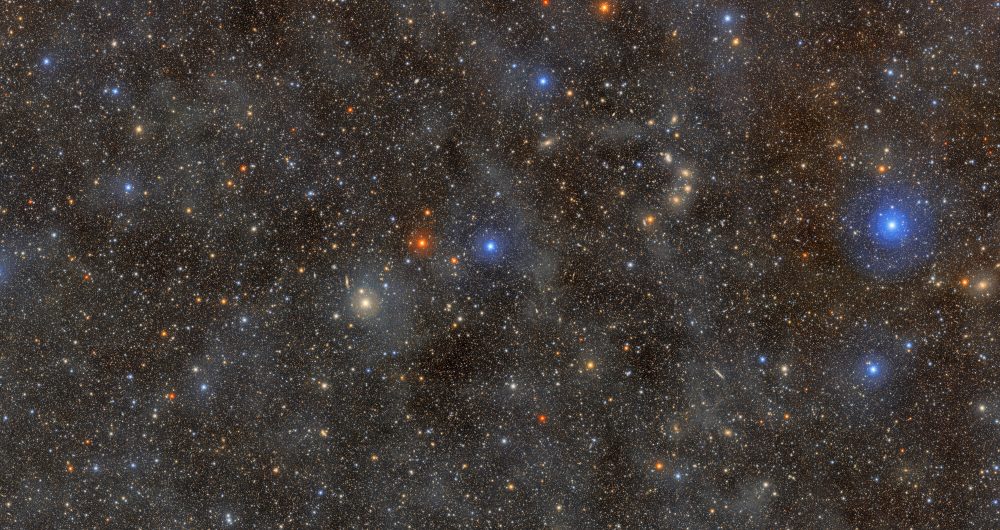

The most powerful digital camera ever assembled has begun its mission to photograph the farthest reaches of the cosmos.
The Vera C. Rubin Observatory has officially launched its sweeping cosmic survey, setting its sights on vast stretches of the southern sky from its perch high on a Chilean mountaintop. Over the next 10 years, the telescope will photograph the sky hundreds of times each night, capturing images of celestial objects with extraordinary depth and detail.
Scientists behind the project hope the observatory’s observations will produce a far more complete picture of the universe — charting billions of stars within our own Milky Way galaxy and billions of additional galaxies stretching far beyond it. Because the telescope repeatedly photographs the same areas of sky, it can detect faint objects that were simply too dim to spot with previous equipment.
Phil Marshall, the observatory’s deputy director of operations, described the historic opportunity the project presents. “We’re going to see large numbers of scientists across the world working with this data set, studying the universe in a way that they haven’t been able to before,” he said.
The observatory offered a preview of its capabilities last year, releasing its first images — including vivid photographs of the Trifid and Lagoon nebulas, both located thousands of light-years from Earth. For reference, a single light-year equals nearly 6 trillion miles, or about 9.7 trillion kilometers.
In the time since those early images, researchers have fine-tuned the telescope’s equipment to ensure it meets the precision standards required for the full survey. The resulting data could help scientists better understand how galaxies form and cluster over billions of years, and ultimately how the universe itself came to exist.
The observatory receives funding from the U.S. National Science Foundation and the U.S. Department of Energy. It is named in honor of astronomer Vera Rubin, whose groundbreaking research provided the first compelling hints that an invisible substance known as dark matter exists throughout the universe. Researchers are hopeful the survey will yield new clues about both dark matter and a related cosmic mystery called dark energy.