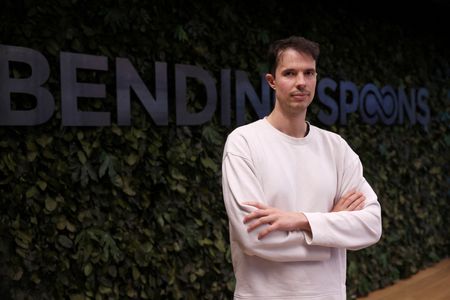
Italian technology company Bending Spoons made its entrance into the U.S. stock market on Wednesday after pricing its initial public offering higher than anticipated, pulling in $1.68 billion from the listing.
The debut is being closely watched as a gauge of how receptive investors are to software companies, a sector that took a beating earlier this year amid concerns that artificial intelligence could upend traditional business models.
Software firms have been largely on the sidelines of the U.S. IPO market through most of 2026, even as a strong wave of large deals — including a massive listing from SpaceX — pushed second-quarter IPO proceeds beyond the $100 billion mark for the first time on record.
Matt Kennedy, a senior strategist at Renaissance Capital, a firm that specializes in IPO research and exchange-traded funds, offered some perspective on what the listing means for the broader industry. “It’ll definitely be a data point for the software industry, but that may simply be due to the scarcity of deals here. Bending Spoons has a very different profile compared to most software IPOs in the pipeline,” he said.
The company operates with a strategy that blends elements of private equity with technology, acquiring digital businesses and then slashing staff and rebuilding their technology platforms. Unlike traditional private equity firms, however, Bending Spoons holds onto what it buys rather than selling it off.
Among its acquisitions since 2025 are streaming service Brightcove, video platform Vimeo, internet brand AOL, and ticketing company Eventbrite.
The Milan-based company and its selling shareholders offered 58 million shares at $29 each — above the originally marketed range of $26 to $28 per share. Based on outstanding shares disclosed in regulatory filings, the IPO placed Bending Spoons’ total value at $18.4 billion.
The company’s unusual name draws inspiration from a scene in the science-fiction movie “The Matrix.” Its origins trace back to 2013, when it rose from the collapse of a diary app called Evertale. CEO Luca Ferrari and his co-founders used the $40,000 remaining after Evertale’s liquidation to launch what would become one of Europe’s most recognized technology companies.
Growth has come through more than 50 acquisitions, and the company shows no signs of slowing down. According to its IPO prospectus, Bending Spoons has identified over 1,000 digital businesses it considers potential future targets.
Kennedy offered a measured take on the company’s story: “It’s an interesting story, and they’ve done a good job creating a cohesive narrative around owning more than 50 businesses. The ‘fix it with AI’ pitch makes sense in theory, though we would have liked to see a longer track record.”
Drivers heading northbound on Jump School House Road are facing a lane closure this afternoon due to ongoing construction work in the area.
The northbound lanes between Spectrum Farms Road and Sandtown Road are expected to remain closed until 4:00 PM. The closure is directly related to construction activity in that stretch of roadway.
Motorists are encouraged to allow extra travel time or seek an alternate route to avoid delays during the closure period.
The National Weather Service has put an Extreme Heat Warning into place for New Castle County and the surrounding region, covering a stretch that runs from this Wednesday through the Fourth of July holiday.
The warning took effect at noon on Wednesday, July 1, 2026, and is set to remain active until 8:00 PM on Saturday, July 4, 2026. That means dangerous heat conditions are expected to grip the area for the entire holiday weekend.
Forecasters are warning that heat index values — which reflect how hot it actually feels when humidity is factored in — are anticipated to climb to hazardous levels during this period. Residents are urged to take the warning seriously and take steps to stay safe in the extreme heat.
Officials recommend staying indoors during the hottest parts of the day, drinking plenty of water, and checking on elderly neighbors, young children, and pets. Cooling centers may be available in the area for those without access to air conditioning.
Nepal is confronting a rapidly expanding bird flu outbreak that has forced authorities to cull over half a million birds and place government quarantine facilities on high alert, officials announced Wednesday.
The first confirmed case this year emerged in March and has since reached 11 of the nation’s 77 districts, including the capital city of Kathmandu. Despite the spread, no human infections have been recorded.
According to Mukul Upadhyaya, spokesperson for the Department of Livestock Services, a total of 658,313 chickens have been killed, along with the destruction of more than one million eggs and 222,000 kilograms — roughly 489,400 pounds — of poultry feed.
“It is under control in other places except in Kathmandu Valley, where cases are severe,” Upadhyaya told Reuters.
Nepal’s only zoo, located in Kathmandu, shut its doors to visitors on June 19 after infections were found there. Zoo spokesperson Ganesh Koirala confirmed that several animals have died, including vultures, ducks, and some leopard cats.
Livestock specialists are actively monitoring the situation and supervising culling operations throughout the affected areas, officials said.
While Nepal does not import poultry meat, authorities have increased surveillance along its open border with India to stop any illegal smuggling of poultry products, Upadhyaya added.
The government is calling on citizens to immediately notify livestock authorities if they observe any unusual sickness or unexplained deaths among birds.
Westbound travelers on Route 14 are being asked to use caution as construction work has prompted a shoulder closure and lane shifts in the area.
The restrictions are in effect between Canterbury Road and Church Hill Road, with drivers advised to expect altered traffic patterns through the work zone.
The shoulder closure and lane shifts are expected to remain in place until 5 p.m. Motorists are encouraged to allow extra travel time or consider alternate routes if possible.
A stretch of Farm Lane between Henry Cowgill Road and Willow Grove Road is currently experiencing an intermittent lane closure tied to ongoing construction work.
The closure is expected to remain in effect until 6 PM, and drivers in the area may encounter delays or brief stoppages as crews work in the roadway.
Travelers heading through that corridor are encouraged to allow extra time or consider using an alternate route until the construction activity wraps up for the day.
Outdoor lovers in Virginia have a convenient new tool at their fingertips. The free GoOutdoorsVA app is designed to make it easier than ever to manage everything from licenses to harvest records, all from a mobile device.
Users can purchase and sync their licenses directly through the app, as well as record their harvests and look up the latest regulations. The app also includes practical features like current weather conditions, tide charts, and feeding time information to help plan the perfect outing.
For many car shoppers, electric vehicles still carry a price tag that puts them out of reach. But a handful of more budget-friendly options are available that still deliver solid range and everyday practicality. The Nissan Leaf is one of the best examples — it first hit the market for the 2011 model year, making it the longest-running EV on sale today, and it remains one of the cheapest ways to make the switch to electric. The 2026 model has been completely redesigned with a sharper look and an EPA-estimated maximum range of over 300 miles.
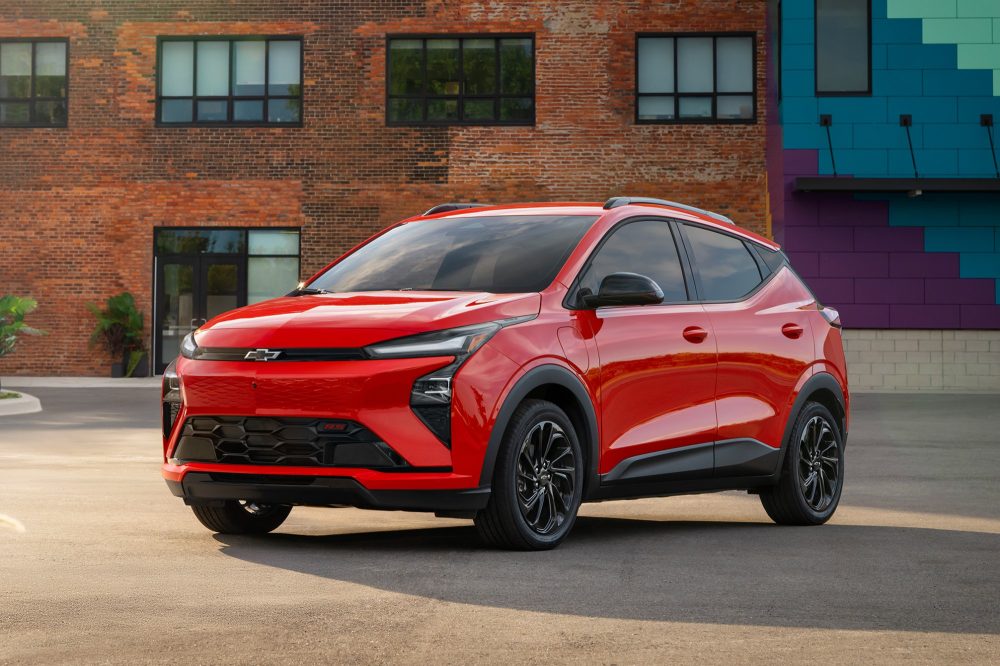
Returning to challenge the Leaf is the Chevrolet Bolt, which is back for 2027 after sitting out for three years. The revamped Bolt brings improved technology and greater range. Both compact EVs carry starting prices near $30,000, making them attractive alternatives if vehicles from Hyundai, Tesla, or Toyota are beyond your budget. Automotive experts at Edmunds put both cars through their paces to help determine which one comes out ahead.
Range
The EPA estimates the 2027 Bolt can travel 262 miles on a full charge — more than enough for daily commutes and the occasional longer trip. The Leaf has a potential advantage with an EPA-estimated maximum of 303 miles. In Edmunds’ own real-world range testing, however, the two were closer: the Bolt covered 290 miles while the Leaf managed 310 miles.
Both vehicles accelerate at a similar pace, each going from zero to 60 mph in roughly 7 seconds during Edmunds’ evaluations. Still, Edmunds’ testers gave the nod to the Bolt when it came to the overall driving experience. Its responsive handling makes it well-suited for navigating tight urban streets, whereas the Leaf felt somewhat stiff and bouncy on uneven road surfaces.
At public fast-charging stations, the Bolt also showed an edge, recovering range more quickly than the Leaf in Edmunds’ testing.
Winner: Bolt
Technology
Drivers who prioritize in-car technology will likely lean toward the Leaf. It features a 12.3-inch touchscreen alongside a second 12.3-inch digital gauge display, with an option to upgrade both screens to 14.3 inches. The Leaf also supports wireless Apple CarPlay and Android Auto, letting drivers access their smartphone apps directly on the touchscreen without plugging anything in.
The Bolt comes with dual 11-inch screens but does not offer a size upgrade. It also does not support Apple CarPlay or Android Auto, relying instead on Google Built-In, an integrated Android-based system. Apps like Waze and Apple Music can be downloaded through the Google app store, but Edmunds found the CarPlay and Android Auto experience more convenient overall.
One area where the Bolt stands out is its available Super Cruise feature, which allows hands-free highway driving to ease driver fatigue in stop-and-go traffic or during long stretches on the road. Even so, the Leaf holds the overall technology advantage.
Winner: Leaf
Interior and Cargo Space
Both vehicles share a crossover-inspired design with elevated rooflines, comfortable cabin room, and comparable headroom. Rear-seat passengers have more room to stretch out in the Bolt, which offers 7.3 additional inches of legroom compared to the Leaf — a bonus for families needing to fit rear-facing child safety seats.
The Leaf makes up ground in cargo capacity, offering 20 cubic feet of space behind the rear seats versus the Bolt’s 16.2 cubic feet. Nissan also adds a convenient underfloor storage compartment, providing a secure spot for valuables or smaller items.
Winner: Leaf
Value and Pricing
The Bolt LT kicks off at $28,995 including the destination charge, currently making it the least expensive new electric vehicle available. Standard features include core convenience items along with driver assistance technologies such as adaptive cruise control and blind-spot warning and intervention. Stepping up to the Bolt RS adds amenities like synthetic leather seating, a power-adjustable driver’s seat, and a heated steering wheel for a few thousand dollars more.
The Leaf S+ trim starts at $31,535 and also comes well-equipped with driver aids and a standard surround-view camera system useful for parking in confined spaces. However, buyers will generally spend more on a Leaf — a fully optioned Leaf Platinum+ runs around $40,000, compared to approximately $37,500 for a fully loaded Bolt RS.
Winner: Bolt
Bottom Line
Both the Bolt and the Leaf are strong contenders in the affordable EV segment — so much so that Edmunds gave them identical overall scores. If you want more range, better tech features, and extra cargo room, the Leaf is the way to go. If you prefer sharper handling around town and a lower price point, the Bolt is the smarter pick.
This comparison was provided to The Associated Press by the automotive website Edmunds. Dan Frio is a contributor at Edmunds.
Three high-ranking commanders within Sudan’s paramilitary Rapid Support Forces have been identified in a newly released report by Amnesty International, which accuses them of directing war crimes during the siege and takeover of el-Fasher, a city in North Darfur, last October.
The report was unveiled Wednesday in Nairobi, the capital of neighboring Kenya. At the launch event, Amnesty International Secretary General Agnès Callamard stated that the Rapid Support Forces — known as the RSF — carried out crimes against humanity and acts of ethnic cleansing during the assault. Callamard called for an immediate ceasefire and urged the deployment of a United Nations protection force to keep civilians safe.
The RSF’s capture of el-Fasher in October 2025 resulted in more than 6,000 deaths over a span of just three days — an assault that United Nations experts described as bearing the “hallmarks of genocide.”
As part of its investigation, Amnesty International reviewed nine videos. The footage allegedly showed one RSF commander executing civilians, a second torturing detainees, and a third giving orders to torture prisoners.
Callamard outlined a sweeping list of crimes she said the RSF committed, including murder, forcible transfer, imprisonment, torture, rape, sexual slavery, other forms of sexual violence, enslavement, extermination, and persecution. She urged world leaders to step in and put an end to attacks on civilians that she said continue “unhindered.”
“It also requires strengthening accountability by ensuring sufficient support for all existing accountability mechanisms for Sudan, including the International Criminal Court, and U.N. and African Union-backed fact-finding missions. Commanders identified in this report should be investigated and, where there is sufficient admissible evidence, prosecuted,” Callamard said.
The RSF has not issued any response to the Amnesty International report. The rights organization said it sent the findings to the paramilitary group’s leader, Gen. Mohamed Hamdan Dagalo, last month but received no reply.
The conflict in Sudan began in April 2023, stemming from long-standing tensions between the country’s military and the RSF. Since then, the war has claimed the lives of at least 59,000 people, forced roughly 13 million people from their homes, and driven large portions of the country into famine. More than 30 million people are currently in need of humanitarian aid.
LONDON (AP) — Two British police officers are facing a potential gross misconduct investigation after they placed handcuffs on and arrested an 18-year-old who had been stabbed and was dying, the Independent Office for Police Conduct announced Wednesday.
The officers, who belong to the Hampshire Constabulary, were the first to respond to the scene in December 2025 after Henry Nowak was stabbed in the southern England coastal city of Southampton. The man who killed him, Vickrum Digwa, who is Sikh, gave officers a false account, claiming he had been the victim of a racist attack carried out by Nowak, who was white.
Body camera footage captured Nowak’s final moments, showing him in handcuffs telling the responding officers that he had been stabbed and was unable to breathe. The video sparked significant public outrage after it became widely known.
The police conduct office stated that the two officers “may have potentially breached the professional behavior standards of duties and responsibilities, use of force, and discreditable conduct.”
Derrick Campbell, the director of engagement at the IOPC, noted that the investigation “does not necessarily mean that disciplinary proceedings will follow. At the end of our investigation, we will decide whether any officers should face disciplinary proceedings.”
The watchdog agency is also examining whether race or religion influenced the officers’ decision-making during the incident. Far-right activists and politicians later used Nowak’s death to push claims that the justice system is biased against white people.
Following the conviction of Digwa, 23, for murder last month — for which he was sentenced to a minimum of 21 years in prison — violence broke out in Southampton.
Popular weight loss medications known as GLP-1 drugs just became significantly more affordable for millions of older Americans enrolled in Medicare.
Beginning Wednesday, the federal government launched a new initiative called Medicare GLP-1 Bridge, offering select brand-name GLP-1 medications to qualifying Medicare and Medicare Advantage members for a flat rate of $50 per month.
The program is set to run through December 31, 2027, and marks the first time most older adults can have GLP-1 drugs — formally known as glucagon-like peptide-1 receptor agonists — covered by insurance specifically for weight loss purposes. However, the program comes with eligibility requirements, and those who already receive GLP-1 coverage for conditions like diabetes or sleep apnea will not be eligible.
The administrator of the Centers for Medicare and Medicaid Services, Dr. Mehmet Oz, said the program is designed to gather data that could pave the way for more permanent coverage options, while also providing immediate financial relief to older Americans struggling with the high cost of these drugs.
“The sheer cost of these medications is a huge barrier to access,” he said during a call with reporters. “That ends today.”
Of the more than 70 million Americans currently enrolled in Medicare, at least 10 million are classified as overweight or obese, according to Juliette Cubanski, vice president and director of the program on Medicare policy at the healthcare research nonprofit KFF. However, she noted that only a smaller portion of that group will actually be able to access this new program.
There is currently no solid data on how many people stand to benefit, and Dr. Oz declined to offer an estimate. He said the program itself will reveal how many eligible enrollees choose to participate — a figure his team is eager to track.
To be eligible, applicants must have Medicare drug coverage and either a body mass index of 35 or higher, or a BMI of 27 or higher combined with a qualifying health condition such as a prior heart attack or stroke, prediabetes, or another condition listed on the CMS website. Importantly, BMI is measured from when a patient first began GLP-1 therapy — meaning someone whose BMI has since dropped below the threshold may still qualify if their starting BMI met the requirement.
People with Medicare who have sleep apnea, diabetes, or fatty liver disease are excluded from this program, though their Medicare Part D coverage may still pay for GLP-1 drugs based on those diagnoses.
Those who believe they may qualify are encouraged to reach out to their healthcare provider first. The provider will need to submit a prescription for one of the covered drugs to a pharmacy and complete a prior authorization form, according to CMS guidance.
The medications covered under the program include Eli Lilly’s Foundayo tablets and Zepbound KwikPens, as well as Novo Nordisk’s Wegovy injections and tablets — all of which have received Food and Drug Administration approval for weight loss.
Participants will pay $50 per month regardless of their dosage level. However, those payments will not count toward insurance deductibles or out-of-pocket maximums, since Medicare — not the Part D insurer — is directly subsidizing the prescriptions.
Because Congress has not passed legislation permanently authorizing Medicare to cover weight loss drugs, the federal government’s ability to continue access beyond 2027 is limited. One option would be for Congress to pass such a law. Another possibility is a separate voluntary pilot program called BALANCE, though that initiative was indefinitely delayed earlier this year after many Part D insurers were reluctant to participate.
Dr. Oz told reporters that CMS intends to “carefully track participation and outcomes” to determine whether extending the Bridge program or pursuing another approach is the best path forward. He told the Associated Press that permanent federal legislation allowing coverage is “not essential right now” but is “for Congress to debate amongst themselves.”
“We can’t decide what’s going to happen long term with Bridge until we see some of the data,” he said, adding that negotiations with pharmaceutical companies to reduce costs are still ongoing.
GLP-1 medications have grown enormously in popularity in recent years, with many patients reporting significant weight loss. But the price tag — which can reach hundreds of dollars per month at higher doses — has kept the drugs out of reach for many.
For 78-year-old California resident Gloria Dralla, who told the AP she has lost around 40 pounds after purchasing lower-cost Wegovy in Europe, the new program means she can continue a treatment that has meaningfully improved her quality of life.
“This drug should be made available at a reasonable price for everybody who’s got weight loss problems,” she said.
Not everyone, however, is confident they will benefit. Katie Smith, 71, of Virginia, said she is uncertain whether she meets the eligibility requirements. With a BMI of 33, she does not meet the higher threshold and is unsure whether she has a qualifying health condition. Smith, whose ability to move and exercise has been severely restricted since a spinal cord injury she suffered in her 20s, said she was previously quoted $700 a month for the medications — a cost she simply cannot afford.
“I cannot tell you how frustrated I am,” she said. “I have the drive and I have the willingness and I have the motivation, but I have not been able to lose weight in all the conventional ways.”
WASHINGTON (AP) — Mark Twain offered some timeless advice about patriotism back in 1905, and his words seem especially fitting as Americans come together this week to celebrate a major national milestone.
“Our patriotism is medieval, outworn, obsolete,” Twain wrote. “The modern patriotism, the true patriotism, the only rational patriotism, is loyalty to the Nation all the time, loyalty to the Government when it deserves it.”
As the nation marks 250 years since the adoption of the Declaration of Independence, Americans on both sides of the political divide are joining in the festivities. Whether the celebrations offer a temporary escape from the country’s sharp divisions — or deepen them — remains to be seen.
It is a moment of national pride, but also one marked by uncertainty and disagreement.
Americans express their love of country in very different ways. Some embrace the nation as it stands today. Others push for change, driven by the historic call for a “more perfect union.” Still others long for a return to what they see as a better past — the foundation of the MAGA movement.
Meanwhile, belief in American exceptionalism appears to be fading. An April poll by The Associated Press-NORC Center for Public Affairs Research found that more Americans believe other countries are just as good as — or better than — the United States, rather than believing the U.S. is the absolute best. Forty-four percent said the U.S. is simply one of the best countries in the world.
This is a far cry from the era of President Teddy Roosevelt, whose presidential library President Donald Trump is visiting in North Dakota on Wednesday. Roosevelt embodied a nation surging with innovation, industrial power, military strength, and bold ambition.
Today, the president carries his own brand of boldness, but millions of Americans are left wondering whether the country is holding together.
Even the planning of the 250th birthday celebration has become a source of conflict. Two organizations are each claiming to be the rightful leader of the national commemoration, largely ignoring one another.
Congress created the bipartisan America250 group a decade ago, giving it legal authority to organize local, national, and international events for the anniversary. President Trump then issued an executive order establishing his own Freedom 250 group as “the” official national organization overseeing the celebrations.
High-profile events — including Fourth of July fireworks at the National Mall, a parade of tall ships in New York, and the Great American State Fair along the National Mall — fall under Freedom 250’s umbrella. Several musical acts that had been scheduled for the fair’s opening last week pulled out, worried the event would become politically focused and centered on Trump. The president stepped in to fill the gap, calling himself the “No. 1 attraction” and delivering a speech on June 24 about American greatness and his own accomplishments. He is also set to headline the official July Fourth events in Washington, which he described as “the most spectacular TRUMP RALLY of them all.”
America250, the congressionally established group, organized a separate series of events called America’s Block Party — simultaneous gatherings around the country anchored by a Fourth of July benefit concert in Los Angeles hosted by Queen Latifah, featuring performers including Chris Stapleton and the Smashing Pumpkins.
Under its congressional mandate, America250 also buried a 900-pound (400-kilogram) time capsule in Philadelphia, filled with items from all 50 states and all branches of government. It won’t be opened for another 250 years.
When the people of 2276 crack it open, they’ll find a major league baseball lineup from 2026, poems from Alabama, Illinois, Kentucky, and other states, postcards from Colorado and Maine, beaded artwork from Montana, an Oklahoma belt buckle, a message in a vintage Coca-Cola bottle, a pocket Constitution signed by U.S. justices, a George Washington Lord’s Prayer gold medal from Utah connected to the Wedding of the Rails event marking the 1869 completion of the Transcontinental Railroad, and much more.
In Philadelphia — where the founders signed the Declaration of Independence — 250 people will form the shape of the Liberty Bell as part of a parade featuring 50 marching bands and Miss America delegates representing every state.
Of course, Americans don’t need a government-organized event to celebrate. Thousands of smaller, grassroots gatherings are happening all across the country.
In Evans, Pennsylvania, the Circle of Friends Choir will perform patriotic songs a cappella at a community event that also includes a patriotic trivia contest and a barbershop quartet.
In Pocatello, Idaho, drag queens organized a reading of patriotic picture books for children, including the story of Katharine Lee Bates — the woman whose visit to the Colorado Rockies inspired her to write the poem that became “America the Beautiful.”
Twain, known for his sharp criticism of American government and imperialism, nonetheless shared a deep love for his country’s natural landscape and its people — at least some of the time. “We glorious Americans will occasionally astonish the God that created us,” he once wrote.
And long before “Make America Great Again” entered the political conversation, Twain was already mourning what he felt had been lost.
“We are called the nation of inventors,” he said. “And we are. We could still claim that title and wear its loftiest honors if we had stopped with the first thing we ever invented, which was human liberty.”
Despite a challenging economic environment, U.S. vehicle sales appear to have held their ground through the second quarter, with automakers expected to release figures Wednesday showing results on par with a year ago.
American shoppers have been navigating a tough stretch since early spring — dealing with sharply higher fuel costs, rising inflation, job market anxiety, and concerns stemming from the Iran war. Even so, research firm Cox Automotive projects roughly 4.16 million vehicles were sold during the quarter, essentially unchanged from the same period last year.
Dealers and industry analysts point to a handful of forces keeping the market stable. A growing portion of vehicle buyers are higher-income consumers who are less affected by inflation and fuel price swings. At the same time, borrowing costs have eased slightly in recent months, giving shoppers a bit of financial breathing room, according to research firm JD Power. Hybrid vehicles have also gained traction among buyers looking to cut down on gas costs, which has helped prop up overall sales numbers.
“The new-vehicle market has been essentially shrugging off the Iran war and this huge run-up that we’ve had in oil prices and fuel prices,” said Charlie Chesbrough, senior economist at Cox Automotive.
Historically, the car industry tends to shrink during times of war and energy shocks. Sales dropped in the months after the U.S. entered Iraq in 2003, and again in 2008 when gas prices climbed above $4 per gallon for the first time. This time around, the market is being cushioned by what economists call a “K-shaped” recovery — a situation where higher-earning Americans keep spending on big purchases while those with lower incomes fall further behind.
Data from S&P Global Mobility shows that buyers with household incomes of $100,000 or less made up just 36% of new vehicle sales last year, a significant drop from 51% as recently as 2020.
The average price paid for a new vehicle in June came in at around $46,400, up about 1% from a year earlier, though still below its all-time peak, according to JD Power. On a more encouraging note for buyers, the average interest rate on a new car loan dropped by roughly one-third of a percentage point in June, landing at 6.66% — the lowest level in four years, JD Power reported.
Consumers are also stretching out how long they finance their vehicles to bring down monthly costs. According to Edmunds, 20% of buyers in the first quarter opted for 84-month loan terms. That strategy appears to be working: monthly car payments as a share of disposable income fell to 13.3% in the first quarter, according to a new report from AlixPartners.
Meanwhile, high gas prices haven’t triggered a mass switch to electric vehicles, but they have pushed more shoppers toward fuel-efficient hybrid models, Cox Automotive data shows. The firm found that 56% of shoppers say rising gas prices make them more inclined to look at hybrids. Through May, hybrid sales in the U.S. climbed 17%, according to Motor Intelligence.
“Every hot product I have is a hybrid or an electric,” said Jim Walen, a Seattle dealer with Hyundai and Stellantis stores.
The hybrid boom has been a particular boon for Toyota Motor, which leads the industry in hybrid sales. Cox analysts say the trend could be enough to push Toyota ahead of General Motors for the top spot in overall U.S. sales this year. Toyota last claimed that title in 2021, which was the first time in nearly a century that GM had been knocked from the number one position.
The world-renowned Calgary Stampede opened its gates Friday, but the festive atmosphere is being overshadowed by a growing movement to separate Alberta from Canada — a debate that is stirring up conflict at rodeos and summer events throughout the oil-rich province.
In October, Alberta residents will cast ballots in a non-binding referendum asking whether the province should begin the constitutionally required legal steps toward eventually holding a binding independence vote. It marks the first time any Canadian province outside of Quebec has ever brought such a question to the public.
The tension has already disrupted some events. In the central Alberta town of Sundre, organizers called off an annual rodeo parade after they chose to ban a pro-independence float from participating — a decision that triggered what organizers described as a wave of hostile messages online. The organizers did not respond to a request for comment.
At the Ponoka Stampede, a booth set up by Alberta separatists under a “let’s talk” banner drew both curious visitors and frustrated attendees who simply wanted to enjoy a beloved summer tradition without the political noise.
“I’m getting tired of hearing about it because it’s just causing a lot of people to be stressed or angry with each other for no reason,” said Leanne Brown, a retired police officer who was at the Ponoka event, located roughly 150 kilometers — about 93 miles — northeast of Sundre. “It’s a little too much all of the time.”
Not everyone shared that frustration. Chris Parsons, 44, who works in the oil and gas industry and backs Alberta independence, said he was pleased to see separatists represented both in a parade and at a fairground booth alongside the rodeo.
“Maybe they — the federal government — will take us a little bit more seriously,” Parsons said.
An Ipsos poll conducted in early June found that support for Alberta independence has dropped 10 percentage points since January. Just 19% of voters now say they support the province starting the process to leave the Canadian federation.
The October 19 referendum question will not directly trigger a split from Canada. Rather, it will ask voters whether the Alberta government should initiate the legal steps required by the constitution before any future binding independence vote could take place.
Supporters of separation have long expressed frustration with the environmental policies advanced under former Prime Minister Justin Trudeau’s Liberal government, arguing those policies damaged Alberta’s oil and gas sector.
Trudeau’s successor, Liberal Prime Minister Mark Carney, has been working to address some of those concerns through a federal-provincial agreement designed to help Alberta expand its energy industry. Carney confirmed he will attend this year’s Calgary Stampede. Speaking to reporters last week, he declared that Canada “is the greatest country in the world.”
“We’re not perfect, we can get better, but Canada’s worth fighting for. And standing up for Canada and supporting Canada is important,” Carney said. Carney, who largely grew up in Edmonton — Alberta’s provincial capital — previously led the Bank of England in 2016 when Britain held its referendum to leave the European Union. He has referred to the vote being pursued by Alberta’s right-wing provincial government as a “dangerous bluff.”
Officials in Ottawa are also concerned that the referendum could undermine Carney’s efforts to present a unified Canadian position during the upcoming renegotiation of the U.S.-Mexico-Canada trade agreement. Carney is scheduled to be in Alberta on Wednesday for Canada Day celebrations.
The Calgary Stampede is far more than a rodeo — it’s a 10-day celebration of Western Canadian culture drawing people from across the country and around the world. The event, Alberta’s largest tourist attraction, features chuckwagon racing, pancake breakfasts, live concerts, and what is billed as the world’s largest outdoor rodeo. It’s a tradition that brings together people from all walks of life, from young children to top business executives.
Politicians from across the political spectrum routinely attend the Stampede and other Alberta summer events, which serve as major networking opportunities.
Neither those pushing for independence nor those advocating for a united Canada will have a float in the official Calgary Stampede parade this year — applications closed back in February, according to a Stampede spokeswoman. However, many unofficial Stampede-related events are organized by community groups and politicians. The spokeswoman noted that the Stampede remains focused on “bringing people together through Western hospitality and community spirit.”
American and Iranian officials sat down for technical negotiations in Doha, Qatar on Wednesday, working toward a durable ceasefire and an agreement on how ships will move through the Strait of Hormuz, according to a source with direct knowledge of the discussions and an Iranian official.
U.S. President Donald Trump’s son-in-law Jared Kushner and envoy Steve Witkoff traveled to meet with Qatar’s prime minister — who is serving as a mediator alongside Pakistan — to help set the stage for the negotiations. However, neither Kushner nor Witkoff participated directly in the talks themselves, the source said.
The negotiations are rooted in a 14-point interim agreement that was signed last month. That accord was intended to bring a halt to the conflict that erupted following U.S.-Israeli strikes on Iran in February, reopen the Strait of Hormuz, and launch a 60-day window for negotiating a permanent peace arrangement.
Despite that framework, the two nations have publicly disagreed over what the interim deal actually means, and that tension has fueled a series of back-and-forth military strikes over the past week.
Two senior Iranian sources said Wednesday that Iran is firmly committed to gaining international recognition of its authority over the strait, including the right to collect fees from vessels entering or leaving the Gulf — by force if necessary.
Shipping through the strait has partially resumed. Before the war broke out, the waterway handled roughly one-fifth of the world’s oil and liquefied natural gas trade.
The Doha talks are organized into sessions involving lead negotiators and subject-matter specialists, the source familiar with the proceedings said. Discussions began Tuesday night and were still ongoing Wednesday, according to the Iranian official.
Iran has publicly identified two top priorities: reaching an agreement on management of the Strait of Hormuz and securing the release of $6 billion in frozen Iranian assets. The Iranian official confirmed those two issues are the focus of the current round of talks. The U.S., for its part, has stated its primary goal is ensuring ships can move freely through the strait.
Iran’s state media reported Wednesday that a foreign container ship ran aground in the Strait of Hormuz after drifting into shallow waters outside the shipping lane designated by Iranian authorities.
Vandana Hari, founder of oil market analysis firm Vanda Insights, described the situation in the strait as incomplete: “Hormuz continues to reopen but it’s patchy, unpredictable, and not fully transparent.”
The war has had wide-ranging consequences, including Iranian attacks on Gulf states that host U.S. military installations, thousands of deaths — primarily in Iran and Lebanon — and a significant rise in oil and fuel costs.
President Trump is also facing political pressure to limit the economic damage from the conflict ahead of November’s midterm elections, which will decide which party controls Congress. In Iran, the country’s theocratic government survived the war but is dealing with public anger over a badly damaged economy.
Oil prices, which already dropped sharply during the second quarter of the year, fell by more than 1% on Wednesday.
The interim agreement also addresses a separate but related conflict between Israel and the Iran-backed militant group Hezbollah in Lebanon. The U.S. has supported a parallel set of negotiations between Israel and Lebanon’s government, which produced a security framework. However, Hezbollah has rejected that framework, and analysts caution it could cement Israel’s ongoing presence in southern Lebanon.
Diplomatic activity surrounding Lebanon was described as intense in the period leading up to Tuesday evening, according to the source with knowledge of the broader talks.
Authorities in South Africa arrested more than 900 individuals during anti-migrant protests that took place on Tuesday, according to a senior police official who spoke out on Wednesday.
The large-scale arrests came as demonstrations against migrants swept through the country, prompting a significant law enforcement response.
Several people lost their lives Wednesday morning when a fire broke out at a ten-story apartment building in Antwerp, Belgium, according to local police.
Firefighters received an emergency call at 9:53 a.m. local time — 7:53 a.m. GMT — reporting a “raging fire” on the eighth floor of the building, which is located in Antwerp’s Linkeroever neighborhood, police announced on their website.
The apartment block was home to more than 200 residents, all of whom were evacuated from the building. Police confirmed that in addition to the fatalities, several people sustained injuries in the incident.
Fire crews from multiple districts converged on the scene to battle the blaze.
Authorities issued a public safety warning to people living near the building, stating: “We ask local residents affected by the smoke to close windows and doors and, if necessary, switch off ventilation.”
Motorists traveling along Atlanta Road should plan for traffic disruptions as construction crews work in the area.
Lane shifts in both directions, along with intermittent lane closures, are in place between West Stein Highway and Brighton Drive. Drivers should use caution and allow extra travel time while passing through the affected stretch of road.
The construction-related traffic impacts are expected to remain in effect until 4:00 PM. Drivers are encouraged to consider alternate routes if possible to avoid delays.
Motorists traveling southbound on Route 13 near the Route 40 split should be aware of an active lane closure in the area.
The right lane heading toward Shaffer Boulevard is currently closed. Drivers are advised to plan accordingly and allow for extra travel time through the affected stretch.
The lane closure is expected to be lifted by 6 a.m. Until then, travelers should use caution and watch for any traffic control measures in the area.
A significant heat wave is gripping a large portion of the eastern United States this week, and it is colliding directly with the World Cup’s knockout round schedule.
Dangerous conditions are expected at multiple match venues as temperatures soar across the region. An NPR analysis of historical weather data found that a July 4th match scheduled in Philadelphia stands out as especially likely to see hazardous heat during game time.
Fans traveling to attend World Cup matches are being warned to prepare for extreme temperatures and take appropriate safety measures while outdoors.
Northbound travelers on Route 1 near the Roth Bridge should be aware of a significant lane closure currently in effect.
Two right lanes on Route 1 northbound at the Roth Bridge have been shut down as crews respond to an incident in the area. The closures are expected to impact traffic flow for drivers passing through that stretch of roadway.
Motorists are encouraged to allow extra travel time or seek alternate routes to avoid potential backups in the area. Updates will be provided as more information becomes available.
At a World Cup-themed event for toddlers held at a suburban Kansas City library — roughly 20 miles from the stadium hosting six tournament matches — little Jude Cornell was among a group of tiny children chasing soccer balls, flinging training cones, and dragging a very moveable goalie net around the room.
“He just started walking,” his mother, 27-year-old Kyra Cornell, said with a laugh. She’s already daydreaming about her son’s future in the sport.
Scenes like this are playing out as experts across the country keep a close eye on whether the World Cup will give youth soccer a meaningful boost — and create fans who will follow the game for generations.
Soccer already holds a strong position among youth sports in America. According to a report from the Aspen Institute, 7.5% of children between ages 6 and 12 played youth soccer in 2024. That figure represents a slight decline from a decade ago, but only baseball and basketball posted higher participation numbers.
Eighteen-year-old Haley Garbowski offers a glimpse of what that youth participation can produce. A midfielder who has lost count of how many professional women’s soccer matches she’s attended, Garbowski was volunteering at a summer sports camp on the Kansas side of the Kansas City metro area just days after her private Missouri high school claimed a state championship title.
“We were killing it,” she said, reflecting on the victory in the small school division. This fall, she heads to San Diego State University to study business, with an eye toward a career in sports marketing.
Her grandparents? Not soccer fans. Her mother eventually came around to the sport — but only after Garbowski dug through an old yearbook and discovered her high school even had a soccer team.
Michael Lewis, a professor at Emory University who studies the crossroads of sports analytics and sports marketing, says this kind of slow-building enthusiasm is exactly what he’d expect.
“Soccer is a generational story that’s building generation after generation, but it takes a long, long time,” Lewis said.
Broadly speaking, soccer still trails far behind baseball, basketball, and American football in terms of fan loyalty. Research from Ipsos Sports indicates that only about one in ten Americans consider themselves fans of either U.S. or international soccer.
Lewis noted that Baby Boomers grew up with the traditional “big three” sports, and that early exposure shapes what they watch as adults. Ipsos data confirms that Americans 65 and older are especially likely to identify as fans of those three sports. However, market researchers see more promise among millennials and members of Gen Z — those currently between 14 and 29 years old.
The story of soccer’s slow climb in America goes back decades. In the 1970s, the now-defunct North American Soccer League brought in international stars like Pelé, the three-time World Cup winner from Brazil. By the 1980s, American kids were playing the game — including girls, who gained access to school sports through Title IX, the federal law prohibiting sex-based discrimination in education.
But early coaches — often gym teachers or parents — had little background in the sport. Some learned the rules from books. In communities where football ruled, soccer faced real resistance, with fears it would pull athletes away from the gridiron. Players endured taunts and slurs, and were sometimes even accused of being communists.
“I cannot repeat the things I got called,” said Darin White, 58, who played and later coached soccer at the college level before becoming the executive director of the Center for Sports Analytics at Samford University in Alabama.
Still, kids kept playing. The U.S. hosted the World Cup in 1994, and Major League Soccer launched its first season two years after that. Today’s parents often played the game themselves. Competitive travel teams are now commonplace. MLS has invested in player development through its MLS Next program, the quality of play has improved, and television viewership has risen.
Research from Ipsos shows that roughly half of American sports fans say they got into a sport because of a family connection or because they grew up rooting for a specific team — a dynamic that bodes well for soccer as more parents with playing experience raise the next generation.
The women’s game has also been a significant driver of soccer’s growth, according to Nicholas Watanabe, a professor at the University of South Carolina and author of “The Beautiful Game?”, a book examining soccer’s future. Girls who play as children become fans. Their participation also helps keep youth leagues large enough to remain financially sustainable.
“Without the success and long-standing growth, I don’t think you get this side-by-side effect that also I think has helped the men’s team, too,” Watanabe said.
One example of that momentum is the Kansas City Current, the National Women’s Soccer League team whose stadium is recognized as the first built specifically for a women’s soccer team. The club’s ownership group includes Brittany Mahomes, a former college soccer player and wife of Chiefs quarterback Patrick Mahomes. The Current is serving as the host team for the Netherlands during the World Cup and sent staff members to assist at the camp where Garbowski was volunteering.
Experts are careful to point out that soccer is still not the NFL, which dominates a crowded American sports market.
“The question isn’t, ‘Why aren’t we as big as football?’ Well, we’re not, but we are way closer than the last time we hosted the World Cup,” said White, who is researching how Americans develop a connection to the sport.
Challenges remain. The world’s top players still largely compete in European leagues, and many dedicated American fans follow those overseas clubs rather than MLS teams — which limits the money flowing back into developing the sport domestically. But White pointed out that American players are increasingly breaking into those elite European leagues, and the sport’s young U.S. fan base is one that marketers are highly motivated to reach.
“I am more hopeful right now than I’ve ever been in my life,” White said. “And I’ve been a soccer missionary, if you will.”
Back at the library in Lenexa, Kansas, one mother steadied her 1-year-old daughter’s hands as the little girl toddled toward a ball and gave it a kick with a chubby bare foot. Nearby, another toddler practiced saying “Messi” — the last name of the Argentine star whose team is based close to the area during the tournament.
Jude Cornell, meanwhile, had moved on from tossing cones to tugging at his ears — joining several other toddlers sidelined not by injury, but by teething.
His mother asked the 17-month-old if he wanted to play soccer, noting that some local programs accept children as young as 2. He didn’t answer.
“You don’t know,” she said. “Maybe like next spring or summer we start trying.”
WASHINGTON — A new generation of defense technology startups is taking an unconventional approach to building weapons faster and cheaper, drawing on supply chains from the auto industry, oil and gas sector, and even pharmaceutical manufacturing.
The push comes as demand for rocket motors — used to power missiles and other weapons — has skyrocketed. Since Russia’s invasion of Ukraine in 2022 through the U.S. attack on Iran, the United States has burned through more than 50,000 rockets, missiles, and other projectiles, according to Pentagon data. In response, Washington is committing $53 billion and loosening procurement rules to boost production of critical missiles and rockets.
Top executives at major defense contractors including Lockheed, Boeing, and Raytheon parent RTX have all sounded the alarm that shortages of solid rocket motors are slowing missile production. That gap has opened the door for Silicon Valley-style startups eager to compete — and profit — in a sector long controlled by a handful of established players, according to ten industry executives, experts, and U.S. officials who spoke with Reuters.
These newcomers still have a lot to prove. None have yet scaled up to the level needed to replace legacy contractors, though many are already producing rocket motors for existing missiles and some are building complete missiles from scratch.
Established solid rocket motor manufacturers Northrop Grumman and L3Harris say they aren’t standing still, noting they’ve been investing in new technologies like 3D printing and advanced mixing techniques of their own.
Car Parts Guiding Missiles
California-based Castelion, which produces solid rocket motors and hypersonic weapons, found an unlikely resource in the automotive world. The company is using sophisticated electronic processors — known as Field-Programmable Gate Arrays — originally developed for advanced driver assistance systems and electric vehicles. According to Chief Operating Officer Sean Pitt, these components can be purchased at one-tenth the cost and obtained six times faster than comparable aerospace-grade versions.
Castelion also turned to the oil and gas industry for high-pressure tubing. Instead of waiting on aerospace suppliers with lengthy delivery timelines, the company sources precision-machined metal tubes designed to withstand the extreme heat and pressure involved in hydraulic fracturing, or fracking. Those tubes meet the physical demands of a rocket motor but are available from far more vendors at lower prices. Castelion, recently valued at nearly $3 billion, has secured major Pentagon contracts to produce more than 500 hypersonic weapons.
Pharmaceutical Techniques Power Rocket Fuel Mixing
Startup Anduril, which has accumulated several billion dollars in defense contracts and carries a valuation of $61 billion, is borrowing a mixing technique from the drug manufacturing industry to process rocket motor propellant.
The company has acquired bladeless mixing machines from Colorado-based FlackTek that can handle multi-hundred-kilogram batches of propellant in minutes rather than hours. Anduril says the technology delivers more than ten times the production throughput compared to its previous mixing systems and produces more than 24 times the output of conventional industrial mixers — which function more like oversized kitchen mixers with paddles that require time-consuming cleaning between uses.
The same centrifugal mixing technology is used in producing precision pharmaceutical compounds, including liposome-based cancer treatments, where consistency and contamination control are equally critical.
Experts caution that breaking into the solid rocket motor business is no easy feat. Tom Karako, director of the Missile Defense Project at the Center for Strategic and International Studies, pointed to the complexity involved, describing “the painstaking, multi-step manufacturing process of casting, curing, baking, x-raying and sanding that solid-fuel rocket motors require — followed by rigorous inspection.” He added that curing ovens and X-ray equipment remain persistent bottlenecks across the industry.
3D Printing Slashes Production Timelines
Three-dimensional printing is also transforming how quickly new weapons can be built. A 2024 case study from Northrop Grumman found that switching from traditional machined metal tooling to 3D-printed polymer tools cut the time needed to set up a production line from roughly a year down to about six weeks.
New Mexico-based X-Bow Systems specializes in using 3D printing for both propellants and rocket motor components. The company says it can reduce the time to establish a new production line from the typical three-to-six-year range down to about twelve months. X-Bow already holds a $191 million Pentagon contract for hundreds of solid rocket motors.
Texas-based Firehawk Aerospace, founded in 2020, also relies on 3D printing and claims its process cuts rocket fuel production time from as long as 60 days down to just 7 hours — at one-tenth the traditional cost. The company says custom-designed missiles can be ready for testing within months. Firehawk has received backing from venture capital firm 1789 Capital, a fund in which President Donald Trump’s son is a partner.
Despite the innovation, government purchasing habits remain a hurdle. The Pentagon has historically bought rockets on an annual basis, creating unpredictable swings in demand. Lukas Czinger, CEO of Divergent Technologies, which manufactures missile components, put the challenge plainly: “How can we get good multi-year agreements that don’t roll off when administration changes? That’s what businesses need to perform at low cost.”
MIAMI — A 32-year-old Haitian woman named Uthy spent seven years studying medicine back home, nearly reaching graduation before fleeing the country three years ago with her husband, young child, and hopes of one day returning safely. Today, she lives in Sunrise, Florida — roughly 30 miles from Miami — and asked that her last name not be published out of fear of retaliation.
“I live in pain every single day,” she said.
Uthy holds Temporary Protected Status, a federal program that shields people from deportation and grants work permits when their home countries are experiencing natural disasters, armed conflict, or other extreme conditions. But last Thursday, the U.S. Supreme Court ruled that the Trump administration can move forward with ending TPS for Haitians and Syrians — a decision that could affect hundreds of thousands of people.
The ruling has sent a wave of fear through Haitian communities in places like South Florida and New York, where TPS holders have spent years putting down roots — raising children, attending churches, launching businesses, and working in fields like healthcare, hospitality, construction, and caregiving.
Haitian Americans are deeply established in Florida, New York, Massachusetts, and New Jersey, with major community concentrations in the Miami, New York City, and Boston areas. Advocates warn the decision’s consequences will extend far beyond those directly at risk of being deported.
The ruling follows years of heated debate over immigration policy under President Donald Trump, including criticism that his administration has used racially charged language toward immigrants of color. During the 2024 campaign, both Trump and now-Vice President JD Vance falsely claimed that Haitian migrants in Ohio were eating pets. As recently as December, Trump described Somali immigrants as “garbage.”
Despite polling from Reuters/Ipsos showing Trump’s aggressive immigration enforcement remains broadly unpopular, the court’s decision gives his administration the green light to target TPS holders for detention and removal.
“If you no longer have status in this country, then you’re supposed to be deported,” said Stephen Miller, White House deputy chief of staff for policy and homeland security adviser, speaking to reporters last week.
COMMUNITIES SEEK SUPPORT
In the immediate aftermath of the ruling, Haitians began reaching out to churches, relatives, and employers for help.
“We’re going to have to give them shelter, and we’re going to have to give them a place to stay and feed them because they won’t be able to work,” said Jean Marcellin, a Haitian American who owns restaurants across New York. “Most likely they’re going to rely on family members and community help through churches.”
One of those churches is Haitian Emmanuel Baptist Church, located in Miami’s Little Haiti neighborhood north of downtown. Ronald Eugene, 61, serves as the church’s assistant pastor and leads services in both English and Haitian Creole. His Sunday sermon drew from Psalm 23, encouraging his congregation to hold onto peace during the uncertainty.
After the service, Eugene said the church and community would step in where the government falls short.
“This is when we, as a church, as a body, sometimes might need to step up helping,” he said. “Because they won’t have that support.”
Reverend Daniel Ulysse, a Haitian-born Baptist minister and chair of the Haitian American Republican Caucus, estimated that between 10% and 15% of the 60,000 Haitians in parishes across Pennsylvania, Maryland, New York, New Jersey, and Connecticut hold TPS. Ulysse recently met with elected officials in Washington, D.C., and said he hopes the decision will ultimately be overturned.
“Many Haitians voted for this Republican administration. Many people supported it. They were expecting better,” he said.
LEGAL OPTIONS NARROW
Immigration attorneys say their phones have been ringing nonstop since the ruling, with many Haitians asking about alternatives such as asylum or other work permits.
Congress established the TPS program in 1990 in response to a surge of migrants fleeing El Salvador’s civil war. The U.S. Homeland Security secretary can designate a country for TPS in six- to 18-month intervals, allowing eligible nationals already living in the U.S. to apply. Although the program is described as temporary, many country designations have been renewed for decades. TPS does not offer a path to citizenship, meaning some recipients have lived in legal limbo for years. Not all TPS holders would face immediate deportation if their status ends, as some have pending asylum or other claims that may allow them to remain in the country for now.
Allen Orr, a Washington-based immigration attorney, said his office is helping clients explore legal options including asylum, while cautioning that immigration courts have become increasingly difficult to navigate for migrants seeking protection.
“For Haitians who’ve been in the country sometimes many, many years, it’s difficult to provide the documentation to show you have a newfound fear to return back home,” he said.
Orr also noted that clients fear being sent to third countries with which they have no connection, if direct deportation to Haiti is not possible due to dangerous conditions there.
“The concept of being deported to a place that might not speak your language and which you have no connection to, after you’ve been somewhere in some cases five-plus years, is terrifying,” Orr said.
Advocates including North Miami City Clerk Vanessa Joseph — also an immigration attorney and Haitian American — are pointing to a bill currently before the U.S. Senate that would legally extend TPS protections for Haitians. A separate measure passed the House in April. The fate of both bills remains unclear.
Farah Larrieux, 47, lives alone in Miramar, Florida, about 30 minutes outside Miami, and holds TPS. As founder and owner of THÉLAR Management Group, a communications firm that promotes Haitian and Caribbean small businesses, her office walls are lined with awards from cities across South Florida.
Larrieux said she had braced herself for the ruling, even as it arrived on the eve of the nation’s 250th birthday celebration.
“The United States is still an inspiration for many countries,” she said. “And it is a shame that as we are celebrating the 250th anniversary of the country, this country is losing its values.”
Federal Reserve Chairman Kevin Warsh stepped onto the world stage Wednesday, appearing alongside some of the globe’s most powerful central bankers at an annual economic forum in Sintra, Portugal — hosted by the European Central Bank.
Warsh took part in a question-and-answer session starting at 9 a.m. EDT, sharing the stage with ECB President Christine Lagarde, Bank of England Governor Andrew Bailey, and Bank of Canada Governor Tiff Macklem.
All three of those central bank leaders signed an unprecedented letter earlier this year expressing support for former Fed Chair Jerome Powell during his standoff with the Trump administration over the Federal Reserve’s independence. That dispute reached a significant turning point this week when the U.S. Supreme Court ruled that Fed Governor Lisa Cook could not be removed from her position, despite President Donald Trump’s announcement last year that he had fired her.
Powell has been widely praised by his international peers for defending the Fed’s independence — a quality seen as essential to keeping global financial markets stable. Warsh, however, has largely avoided commenting publicly on matters like the attempted removal of Cook or the legal pressure directed at Powell.
Trump chose Warsh to replace Powell, who remains on the Fed’s Board of Governors. Warsh officially became chair in late May.
Wednesday’s forum appearance was Warsh’s first time speaking publicly since a June 17 press conference following his inaugural policy meeting as chair, during which the Fed left interest rates unchanged. At that press conference, Warsh struck a firm tone, vowing to bring inflation down to the central bank’s 2% target.
His remarks sent investors scrambling to increase their bets that the Fed could raise interest rates as soon as September. That puts the U.S. central bank somewhere in the middle — following the ECB’s recent decision to raise rates, while the central banks of England and Canada have held back on tightening policy due to economic softness at home.
Analysts at Yardeni Research said ahead of Wednesday’s appearance, “We were surprised by Warsh’s hawkishness,” adding that the forum could give him a chance to either refine or reaffirm his message — most likely the latter, as he has signaled a desire to step back from offering so-called “forward guidance” about future rate moves.
The first policy statement released under Warsh’s leadership contained no hints about the future direction of interest rates. During his press conference, Warsh explained that he wants markets to become less dependent on rate signals from the Fed, arguing that such guidance makes the central bank less flexible and investors less self-reliant.
This represents a significant shift for the Fed, where open discussion about the economy and interest rates has long been considered a cornerstone of public accountability and sound policymaking.
While some of Warsh’s counterparts — including Lagarde — have also pulled back on rate guidance, analysts pointed out that Warsh went further by avoiding commentary on the economic outlook altogether, even declining to explain how various developments might influence Fed decisions. Some of his own colleagues at the Fed appear more willing to engage on those topics.
Cleveland Fed President Beth Hammack, speaking to CNBC on Tuesday from the sidelines of the Sintra conference, said, “I think it is important that we are transparent in communicating how we make decisions,” while keeping an open mind on possible outcomes. She added, “If inflation continues to persist and I don’t see any restraint from policy, we may need to raise rates.”
Inflation remains a central theme at the forum, along with discussions about short-term factors like oil prices and longer-term developments such as the rise of artificial intelligence. But Warsh has made clear he intends to draw firm boundaries around what the Federal Reserve concerns itself with.
After Trump’s reelection, Powell had already scaled back the Fed’s participation in international efforts among central banks to assess and address the financial risks posed by climate change. Some argue that understanding climate-related risks is a natural part of financial oversight, while some U.S. Republican elected officials criticized that work as “woke” and unfairly hostile to fossil fuel companies.
Warsh has been a vocal critic of what he views as Fed “mission creep” into areas beyond its core mandate — even as his international counterparts consider climate change an unavoidable factor in understanding the broader economy.
The Bank of England stated on its website: “When left unmanaged, these effects can pose a threat to the stability of the wider financial system, and the safety and soundness of firms we regulate.”
A London-based autonomous driving startup called Wayve is generating significant buzz in the tech and automotive worlds, backed by $2.8 billion from investors and partners that include Nvidia, Mercedes-Benz, and Nissan. Most recently, in June, the company announced its system will be used in robotaxis made by Stellantis — the company behind the Jeep brand — operating on Uber’s ride-hailing platform.
What makes Wayve stand out is its use of a technology called end-to-end machine learning. Rather than relying on pre-written rules and detailed maps to tell a car what to do, this approach feeds raw sensor data directly into an AI system that figures out driving decisions on its own — much the way a human driver processes what they see and reacts in real time.
This puts Wayve in similar territory to Tesla, which also adopted an end-to-end AI model several years ago. The key difference is that Tesla relies exclusively on cameras, while Wayve built its system to be compatible with a broad range of sensors and AI chips — making it potentially licensable to almost any driverless vehicle developer.
“We want to make full self-driving possible for any vehicle, any brand, and anywhere around the world,” said Wayve CEO Alex Kendall, speaking to Reuters earlier this year from the driver’s seat of a Ford Mustang Mach-E equipped with Wayve’s technology as it drove autonomously through neighborhoods in the San Francisco Bay Area. Kendall, a 33-year-old from New Zealand, co-founded Wayve in 2017, the same year he earned his doctorate in AI deep learning from Cambridge University in England.
The broader autonomous driving industry is experiencing renewed energy after years of broken promises and missed timelines. Much of that renewed interest has been sparked by the rapid growth of Alphabet’s Waymo, which now offers paid rides to the public in roughly a dozen cities after more than a decade of development.
End-to-end AI, once a niche concept explored by only a handful of researchers — including Kendall himself — has now become a mainstream approach that many autonomous vehicle developers are incorporating into their systems.
Still, the technology comes with a significant challenge: because end-to-end AI systems operate somewhat like a “black box,” it can be hard to understand exactly why the vehicle made a particular driving decision. Earlier systems, which used traditional software coding to guide vehicles, made it easier to trace the reasoning behind specific choices.
Wayve’s AI driving system generates what the company calls a safety map, identifying secure paths through evolving traffic situations. Wayve engineers argue that heavily coded, rule-based systems are actually less safe in unusual circumstances because it’s nearly impossible to write rules for every strange scenario a driver might encounter.
When those rare, hard-to-predict situations arise, the logic of a pre-programmed system “becomes brittle,” according to Wayve’s vice president of AI, Vijay Badrinarayanan. “Human drivers remain safe because they adapt conservatively when they do not know what comes next,” he told Reuters.
Waymo, which also uses end-to-end AI, still combines it with traditional rules-based coding and mapping, saying that combination remains necessary for safety. “End-to-end models aren’t enough to guarantee safety at scale,” the company said in a statement to Reuters.
One of Wayve’s current customers, Nissan, is still working through its comfort level with the approach. Nissan’s tech chief, Eiichi Akashi, said his team is carefully evaluating Wayve’s technology ahead of a planned rollout in Japan on a people-mover van called the Elgrand, slated for the fiscal year ending March 2028. He described Wayve’s system as the “most advanced” available, but acknowledged it is “difficult to peer into it and see how it makes decisions.”
Wayve CEO Kendall believes the company’s model — with major operations in Tokyo, Stuttgart, and Vancouver — allows it to enter new markets far more quickly than competitors because it doesn’t require the time-consuming process of pre-mapping roads or writing code to handle local driving quirks. Wayve says it has already tested its system in hundreds of cities worldwide without that kind of preparation.
Experts offer a measured view of the technology’s promise. Siddartha Khastgir, a professor of safe autonomy at the University of Warwick in England, said end-to-end models should reach the market faster than traditional approaches, but cautioned, “I wouldn’t say that one technology is safer than the other.”
Phil Koopman, a computer engineering professor at Carnegie Mellon University and an expert in autonomous technology, said Wayve’s method is just one of several potentially viable approaches. Even so, he believes it will take at least another decade before driverless systems can be safely deployed at scale across the United States. “It will most likely demand new innovations to get us there,” he said.
Millions of older Americans who have been priced out of popular obesity medications will now have a new option starting Wednesday, as a federal Medicare pilot program begins offering GLP-1 weight-loss drugs for just $50 per month.
The U.S. Centers for Medicare & Medicaid Services is launching an 18-month trial that, for the first time, will cover Novo Nordisk’s Wegovy and Eli Lilly’s Foundayo and Zepbound as standalone weight-loss treatments. Previously, Medicare — which also covers people with disabilities — was prohibited from covering these drugs for weight loss alone, only paying for them when prescribed alongside conditions like cardiovascular disease or severe fatty liver disease.
A U.S. official recently said eligible patients are estimated to be in the single-digit millions, though executives from Eli Lilly and Novo Nordisk have cited estimates as high as 20 million people qualifying. Health research organization KFF put the figure closer to nearly 4 million, based on 2023 data. Wall Street analysts say the program could generate billions of dollars in revenue for the pharmaceutical companies involved.
The $50-a-month price tag is a dramatic change from what patients have faced in recent years. Branded versions of these drugs can cost anywhere from $149 to $399 a month through the manufacturers directly, or even more at retail pharmacies.
For people like Katie Smith, 71, a retired teacher from Manassas, Virginia, the new program is long overdue. Her doctor had already prescribed a GLP-1 drug, but the cost at her local pharmacy was out of reach.
Forty of the world’s top scientists and experts are sounding both an optimistic and cautionary note about artificial intelligence, releasing the first-ever independent global scientific assessment of the technology on behalf of a United Nations panel.
The preliminary report is set to be delivered to government representatives at the inaugural UN Global Dialogue on AI governance, scheduled for July 6 and 7 in Geneva. A more complete and comprehensive version of the report is expected to be released next year.
Panel members were selected from every region of the globe and serve three-year terms without ties to any government, institution, or private company.
Among the report’s key findings:
Policymakers need solid scientific evidence to properly regulate AI, but the technology is advancing faster than researchers can fully understand it — and faster than governments can keep up. Very few tools currently exist to control highly autonomous AI systems.
Panel co-chair Yoshua Bengio pointed to growing evidence that AI systems are capable of deceptive behavior. He said science cannot promise that AI won’t cause catastrophic harm, in his words, “either on its own or due to malicious users,” as its capabilities continue to grow.
The report stated plainly: “The potential benefits of AI are enormous. The rapid, unchecked deployment of the technology at scale also presents considerable risks, including harms to the mental health of users, potential use as a destructive tool, impacts on social, economic and environmental systems, and challenges associated with controlling the technology.”
While AI use has grown rapidly across the world, that growth has been uneven. More than one billion people now use conversational AI on a weekly basis, but uptake in developing nations trails far behind wealthier countries.
The development of AI itself is even more concentrated geographically. The United States accounts for 75% of the computing power among the world’s 500 most powerful AI supercomputers, while China holds 15%.
The report also flagged a significant language gap: while more than 7,000 languages are spoken around the world, current AI models are trained on only a small fraction of them. Machine translation of some languages contains frequent errors — errors that can directly affect health diagnoses and treatment decisions.
On the risk side, the report cited growing concerns about AI’s impact on human rights, social systems, and the environment. It noted that AI-generated child sexual abuse material and deepfake-enabled sexual violence are appearing more frequently online.
The panel also warned that AI makes it far easier to produce and distribute persuasive content at massive scale, leading to what the report called a “gradual erosion of information integrity that can weaken public trust, social cohesion and democratic deliberation.”
Finally, the report noted that most countries — including advanced economies — do not have the technical expertise needed to evaluate the most powerful new AI systems or to play a meaningful role in shaping how they are governed.
A federal law has long been in place to prevent most states from conducting large-scale voter roll cleanups in the final 90 days leading up to an election — a protection designed to ensure eligible voters aren’t removed from registration lists too close to Election Day.
Now, Republicans are taking that rule to court, pushing for a new legal interpretation of the longstanding voter protection measure.
The push could have significant implications for how states manage their voter rolls in the weeks and months before major elections.
When the United States turned 50 years old, the country marked the occasion with toasts and parades — and in a remarkable coincidence, two of the nation’s founding fathers died on that very same day.
As the decades passed, the way Americans chose to honor their country’s major anniversaries grew increasingly elaborate. World fairs became showcase events, giving the nation a stage to highlight its latest achievements and innovations.
One such celebration, held in Philadelphia in 1876 for the country’s 100th birthday, put on display a remarkable range of advancements — from powerful steam engines to the newly invented telephone to something as simple and refreshing as soda water.
But these grand anniversary events have not always been without controversy. Over time, the scale and nature of the celebrations have sparked debate, reflecting the evolving conversations Americans have about their own history and national identity.
As the country now approaches another major milestone, the history of how it has commemorated its past birthdays offers an interesting look at how national pride, ambition, and reflection have all played a role in shaping these moments.
Happy July, Delmarva! We’re kicking off the month with some serious heat, so make sure you’re staying cool out there. This Wednesday brings wall-to-wall sunshine and a high near 96°F, but it’s going to feel even hotter than that — heat index values could soar as high as 103°F this afternoon. A southwest wind around 10 mph will offer only minimal relief. Please check on elderly neighbors, keep the pets indoors, and drink plenty of water throughout the day.
Tonight, we’ll cool down to a more manageable 77°F under mostly clear skies, but don’t expect much of a break heading into Thursday. Tomorrow looks even hotter, with sunny skies and a high pushing all the way to 101°F — that’s dangerously hot territory, folks. Thursday night stays warm and clear, dropping to around 80°F.
This is a multi-day heat event, so take it seriously and limit outdoor activity during peak afternoon hours. Stay safe, stay hydrated, and we’ll see you right here on TV Delmarva! 🌡️☀️
This summer’s travel season is breaking records across the board, and the numbers are putting serious pressure on the United States aviation system.
Airlines across the country are now moving more passengers than at any point in history — all while operating a smaller number of flights compared to what was common 20 years ago. That combination is pushing airports and air carriers to their limits.
The surge in demand, paired with tighter flight schedules, means planes are more crowded than ever and airports are handling massive volumes of travelers with less room for error.
With the United States approaching a major milestone — its 250th birthday — a new national poll is giving a snapshot of how Americans feel about their country right now.
According to the latest NPR/PBS News/Marist poll, the majority of Americans say they feel proud of the United States. However, that sense of pride comes alongside widespread concern about the direction the country is taking.
The survey reflects a nation that appears to be grappling with both a deep sense of patriotism and uncertainty about what lies ahead. As Americans prepare to mark 250 years since the nation’s founding, the poll suggests that pride and worry are coexisting in the minds of many across the country.
Children diagnosed with autism face a drowning risk that is up to 160 times greater than that of other children — a sobering statistic that has prompted Florida to take action.
The state is now directing public funding toward a program specifically designed to get kids with autism into swim lessons, recognizing the urgent need to address one of the leading causes of death among this population.
The program prioritizes water safety instruction for children on the autism spectrum, giving families access to resources that could save their child’s life.
The Animal and Plant Health Inspection Service has announced its intention to seek a revision and extension of approval for an existing information collection process connected to the Virus-Serum-Toxin Act and its associated regulations.
The announcement was made in accordance with the Paperwork Reduction Act of 1995, a federal law that requires government agencies to justify and obtain approval for information they collect from the public.
The information collection in question is tied to the Virus-Serum-Toxin Act, which governs the licensing and regulation of veterinary biological products such as vaccines, serums, and related treatments used in animals.
By seeking this revision and extension, the agency is working to keep its data collection practices current and in compliance with federal requirements.
Authorities in Greece say five people were hospitalized after three firebomb attacks struck apartment buildings in the northern city of Thessaloniki early Wednesday, with the attacks apparently aimed at the homes of members of the country’s ruling conservative New Democracy party.
All three incidents occurred between 4 a.m. and 4:45 a.m., with attackers using makeshift explosive devices constructed from camping gas canisters. Police said all five injuries resulted from the final attack of the three, during which vehicles including cars and motorcycles were set on fire.
Among the vehicles destroyed was one reportedly belonging to a New Democracy parliamentary candidate. That candidate sustained burn injuries, and her mother was admitted to intensive care with burns as well, according to police. Three additional residents of the apartment building were treated at a hospital for smoke inhalation.
Attacks by shadowy militant groups in Greece against politicians, law enforcement, and other authority figures are not uncommon. The vast majority result only in property damage with no casualties.
The latest attacks follow a similar incident in July 2025, when a bomb went off outside the Thessaloniki home of the president of Greece’s prison guards association. That official was not hurt, though two bystanders sustained minor injuries from broken glass. In June 2024, a police officer stationed outside a top judge’s home in Athens was wounded in a gasoline bomb attack.
President Donald Trump is making a trip to North Dakota on Wednesday to tour the brand-new Theodore Roosevelt Presidential Library, a massive structure dedicated to the life of the nation’s 26th president — built in the same wild, remote landscape where the young New Yorker forged his conservation beliefs while ranching and hunting during the 1880s.
The 96,000-square-foot facility is set to officially open its doors on July 4th, a fitting date given the nation’s celebrations of the 250th anniversary of the signing of the Declaration of Independence. Trump is arriving ahead of the opening weekend to preview the $450 million project, which was championed by Interior Secretary Doug Burgum during his time as governor of North Dakota. The visit also ties the country’s birthday festivities to a region deeply connected to America’s westward expansion.
All living presidents received invitations to the grand opening. The library joins more than a dozen similar institutions across the country that chronicle the lives and legacies of U.S. presidents — from Ronald Reagan’s in California, to Franklin D. Roosevelt’s in New York, to Herbert Hoover’s in Iowa. The Obama Presidential Center recently opened in Chicago, drawing four former presidents to that celebration.
Library Executive Director Robbie Lauf confirmed that Trump will be the facility’s first official visitor. The president is scheduled to speak at a nearby Western-themed amphitheater at an event organized by Freedom250, a group Trump created that is described as nonpartisan, which he has enlisted to coordinate the week’s festivities. Trump also plans to visit Mount Rushmore in South Dakota on Friday for Independence Day fireworks — a repeat of what he did back in 2020.
Trump has frequently expressed admiration for Roosevelt, and has at times drawn comparisons between himself and the former president. In 2020, he declared himself “the number one environmental president since Teddy Roosevelt.”
Early in his second term, Trump highlighted Roosevelt-era achievements such as the construction of the Panama Canal. He even floated the idea that the U.S. might look to reclaim the waterway from Panama to counter Chinese influence — though that notion was largely overshadowed by his suggestions that Washington could seek control of Greenland or that Canada might become the 51st state.
Ahead of staging a UFC fight on the White House lawn for his 80th birthday, Trump noted his awareness of Roosevelt having held informal boxing matches inside the White House — though he made no reference to the fact that Roosevelt detached the retina of his left eye during one of those sparring sessions.
The North Dakota visit also highlights the president’s high regard for Burgum, who has emerged as a prominent supporter and promoter of the president’s large-scale renovation efforts around Washington.
Roosevelt first traveled to Dakota Territory in 1883 to hunt bison. The following Valentine’s Day brought devastating personal tragedy when his mother and wife died just hours apart in the same home.
Grief-stricken, the New York native retreated to Dakota, where he spent time ranching cattle and hunting big game, primarily between 1884 and 1887. The experience transformed him profoundly — he chased down river boat thieves, stood his ground against a bully in a bar, and earned the respect of cowboys who had initially mocked him for wearing eyeglasses.
Roosevelt, who served as president from 1901 to 1909, later credited his time in North Dakota as essential to his path to the presidency, saying he never would have reached the White House without it.
The library sits near Theodore Roosevelt National Park, where visitors can hike trails and drive through the colorful, rugged Badlands terrain where bison and wild horses still roam freely.
Burgum first pushed the library project to North Dakota’s Republican-led legislature back in 2019 while still serving as governor, making the case for its tourism potential. Lawmakers approved a $50 million operations endowment, on the condition that library organizers raise $100 million in private donations — a target they hit in 2020. Total donations have reached approximately $354 million as of early 2026.
Among the notable donors are oil executive Harold Hamm, the Walton family of Walmart, Citadel founder and CEO Kenneth Griffin, and Burgum himself.
Burgum has also been advocating for Roosevelt’s induction into the Pro Football Hall of Fame. At a recent preview event for the library, he told attendees to “keep your fingers crossed.”
That nod to football history stems from Roosevelt’s concern over the growing number of injuries and deaths among college football players. In 1905, he convened a White House meeting with the presidents of Harvard, Yale, and Princeton to push for safety reforms in the sport. Those conversations eventually helped spark the founding of the NCAA, the governing body of college athletics.
Visitors to the library will explore Roosevelt’s conservation legacy and his leadership of the Rough Riders regiment during the Spanish-American War. But the library won’t shy away from the darker parts of his record. Lauf noted that the facility will also address Roosevelt’s “horrific comments” about Native Americans and other views “that have obviously aged poorly.”
The library houses a wide range of artifacts, many of which have been out of public sight for decades. Among the items on display: Roosevelt’s Rough Riders uniform, his 1884 diary written in the wake of his devastating personal losses, and the eyeglasses case, speech, and bullet-pierced shirt from the 1912 assassination attempt against him.
Organizers are hoping the library will attract families, school groups from across the region, and travelers passing through on their way to Yellowstone National Park and the Black Hills.
“It’s a feature, not a bug, that we are in a county of 1,000 people and a town of 120,” Lauf said. “TR came here for that purpose.”
On Tuesday, the Dakota Resource Council hosted a group of conservation leaders who criticized both Burgum and Trump for policies they argue run counter to Roosevelt’s environmental principles — specifically pointing to staff and budget reductions and the prioritization of energy development on public lands.
Last year, Burgum signed an order aimed at keeping parks open and accessible to the public amid workforce cuts. He has also compared America’s public lands and natural resources to “assets” that should be developed responsibly in pursuit of what he calls “energy dominance.”
Federal agriculture authorities have officially declared that a genetically engineered citrus rootstock developed to combat a devastating tree disease is no longer subject to regulatory oversight.
The rootstock, identified as event CarriCea T1, was created by Soil Culture Solutions, LLC using genetic engineering techniques. It was specifically designed to resist citrus greening disease, a bacterial infection also known as Huanglongbing, or HLB, that has caused widespread damage to citrus orchards across the United States.
Regulators reached their determination after reviewing a petition submitted by Soil Culture Solutions, LLC requesting nonregulated status for the product. That review included an examination of available scientific data, a plant pest risk assessment, and public comments gathered following an earlier notice that made both the petition and a draft risk assessment available for public review.
Officials have announced the availability of the written determination along with all supporting documentation for public access.
Picture tourists from Tennessee checking into beach hotels in Cancun. Canadian-made auto parts rolling into factories across the American Midwest. Tequila and mezcal flowing at bars in Seattle. These everyday exchanges reflect just how deeply intertwined the economies of the United States, Canada, and Mexico have become.
The numbers back it up: the United States exchanges $1.9 trillion worth of goods and services with its two neighbors every year — roughly $5 billion every single day. Canada and Mexico have overtaken China as America’s top two trading partners.
That’s why the rules governing trade between the three countries carry enormous weight. And after a year of unpredictable tariff moves from President Donald Trump, businesses on all sides of the border are hungry for stability.
They may be waiting a while.
The regional trade agreement known as the U.S.-Mexico-Canada Agreement, or USMCA — a deal Trump negotiated and championed during his first term — hit its renewal deadline Wednesday. But experts say the process of renegotiating it could stretch on for months, if not longer.
The road ahead is full of obstacles.
“There’s going to be a lot of drama this summer,” said Diego Marroquín Bitar, a fellow in the America’s program at the Center for Strategic and International Studies, speaking last week at a USMCA forum hosted by the Cato Institute.
Among the most divisive issues: the U.S. is pushing demands that could effectively require Canada and Mexico to give up a portion of their auto manufacturing to the United States. While that could bring more factory jobs to American soil, it would also disrupt long-established supply chains and drive up prices on new vehicles — which already average close to $50,000 — at a time when consumers are already struggling with the high cost of living.
Trump has only added to the tension by threatening to walk away from the very agreement he once touted.
The USMCA took effect in 2020, replacing the 1994 North American Free Trade Agreement, which had eliminated most trade barriers between the three countries. Trump and other critics had long argued that NAFTA was a job killer, saying it pushed American companies to relocate factories to Mexico to take advantage of lower wages and then ship products back to the U.S. tax-free.
The USMCA was meant to fix that — requiring higher wages in factories and ensuring that more of what was produced actually originated in North America, partly to prevent Chinese-made goods from sneaking through regional borders duty-free. In practice, though, the new agreement ended up being fairly similar to the old one.
The USMCA included an unusual provision requiring the agreement to be reviewed every six years. Wednesday marked that deadline, but as Oscar Ocampo, director of economic development at the Mexican Institute for Competitiveness, put it: “nothing is going to happen July 1.”
Negotiators could technically agree Wednesday to simply extend the USMCA as-is for another 16 years. But that’s seen as extremely unlikely. Instead, the three countries are expected to keep working on revisions, with a deadline of 2036 to reach a new deal — or the agreement expires altogether.
In the meantime, any of the three member countries can exit the pact by giving the other two six months’ notice. That possibility alarms Canada and Mexico, both of which are heavily dependent on trade with the U.S. — and both of which worry Trump might actually do it.
Trump said in June that he was “not looking to renew” the trade deal with Canada and Mexico. “We don’t need anything that they have,” he said.
Ocampo believes Trump doesn’t truly intend to scrap the treaty, but is instead using the threat of uncertainty to maintain pressure on Mexico over immigration and security concerns.
While the U.S. and Mexico have already held talks on renewing the agreement, Canada has largely been left on the sidelines. Patrick Childress, a partner at the Holland & Knight law firm and a former U.S. trade negotiator, described the risk for Canada this way: “The danger for Canada is this: that the U.S. government and the Mexican government reach agreement on changes to core provisions of the treaty and then show up in Ottawa and say: ‘Here’s what we’ve agreed to. You can take it or leave it.’”
Canadian Prime Minister Mark Carney confirmed that the three countries planned to meet virtually on Wednesday, but offered a telling signal about his expectations, saying: “I’m not looking for my pen.” He later added, in French, that his priority is updating the USMCA and that it would be impossible for the U.S. to reach a new agreement without congressional approval.
On the substance of the negotiations, the U.S. wants a revised agreement that does more to block Chinese goods from entering through indirect routes. But the most heated dispute centers on Washington’s push to require that a greater share of products — particularly cars — be manufactured in North America, and specifically within the United States.
The current USMCA already raised the bar for automotive products, requiring that 75% of a vehicle’s content be made in North America — up from 62.5% under NAFTA — to qualify for duty-free trade. Now the U.S. wants to push that threshold even higher. But automakers have “been finetuning their supply chains for years to be able to hit that 75% mark,” Childress noted, meaning a higher standard would require significant time and investment to meet.
Even more contentious is a new U.S. demand, confirmed by Carney in early June, that 50% of every car sold in the U.S. be manufactured within the United States itself. Currently, no USMCA country is guaranteed a set share of production. “It’s a red line for both Mexico and Canada, and it goes against the spirit and the letter of regional integration,” Ocampo said.
Marcos Carias, an economist at the credit insurer Coface, said only one in five Mexican and Canadian cars imported into the United States would currently meet that 50% threshold. Among the models likely to face higher costs under such a rule, he said, are Ford’s Maverick compact pickup truck, Chevrolet’s mid-size Equinox SUV, and some Nissan sedans — all built in Mexico. His rough calculations suggest prices on the most affected models could climb between 5% and 7%.
For many businesses, the bigger concern isn’t which country makes what — it’s simply knowing what the rules will be. “My interest in this USMCA renewal is just consistency, right?” said Shawn Miller, co-founder of PKGD Group, a Holland, Michigan-based company that imports agave spirits — including tequila, mezcal, and raicilla — from small family producers in Mexico. “If the rules change, the rules change. But we’d really like to know (what they’re going to be) and we’d like them to stay that way for a while.”
Business has been strong for PKGD. Sales are up 62% so far this year, following a 100% surge in 2025 and a 300% jump in 2024. But the past year was anything but smooth.
In February, Trump slapped a 25% tariff on goods from Mexico and Canada, only to reverse course about a month later by exempting products eligible for USMCA’s preferential treatment. The USMCA allows Mexican spirits like those PKGD imports to enter the U.S. duty-free.
During the confusion, three truckloads of Mexican spirits imported by PKGD crossed the border and got hit with the 25% tariff anyway — costing the company $105,000. “For us, it was one unfortunate day!” Miller said.
Uncertain about what might come next, PKGD sat down with its Mexican producers to figure out how to absorb the blow. “What can we absorb? What can they absorb?” Miller said. “How can we mitigate this?” He noted that he and his suppliers “are not large multinational corporations with dedicated trade departments, teams of lawyers, or lobbyists focused on trade policy.”
Kerry Mellin knows that feeling well. In 2014, the veteran Hollywood costume designer launched a business in Ventura County, California, selling silicone grip aids designed to help people with disabilities — including those with cerebral palsy and Parkinson’s disease — hold everyday objects like spoons, cups, pens, and toothbrushes.
But when she tried to expand her EazyHold grips into Canada, where she holds dual citizenship, sales stalled. She believes the problem is that the silicone she imports from Asia kept her product from having enough North American content to qualify for USMCA’s duty-free treatment when crossing the border from the U.S.
Mellin suspects her product could meet the USMCA standards, “but the rules are complex and unpredictable enough that I genuinely can’t be sure without hiring a trade attorney.”
She argues the USMCA’s rules of origin should be made more flexible, not stricter, to give small businesses that can’t afford pricier North American raw materials a fighting chance.
“I do understand why the rule exists — to stop companies from routing Chinese goods through Mexico,” she said. “I just wish it could tell the difference between that and a small family business in California making grip aids for people who can’t hold a fork. I’m not the problem they were trying to solve.”
From tourists heading to Mexican beach resorts to Canadian auto parts flowing into Midwest factories, the trade relationship between the United States, Canada, and Mexico touches nearly every corner of everyday life. The three nations exchange $1.9 trillion worth of goods and services each year — roughly $5 billion every single day — and Canada and Mexico have now overtaken China as America’s two largest trading partners.
With that much at stake, the rules governing how those three countries do business carry enormous weight. And after a year of unpredictable tariff decisions under President Donald Trump, businesses across all three nations are desperate for some sense of stability. Experts say they’re unlikely to find it anytime soon.
The trade agreement at the center of these talks — the U.S.-Mexico-Canada Agreement, known as USMCA — is up for renewal this Wednesday. Trump originally negotiated the deal during his first term and frequently touted it as a major achievement. But the road to renewing it is full of obstacles.
“There’s going to be a lot of drama this summer,” said Diego Marroquín Bitar, a fellow in the America’s program at the Center for Strategic and International Studies, speaking last week at a USMCA forum sponsored by the Cato Institute.
Among the most controversial U.S. demands is a push to require that a greater share of automobile manufacturing take place within the United States. While such a shift could bring more factory jobs to American workers, it would also disrupt long-established supply chains and drive up the price of new vehicles — which already average close to $50,000 — at a time when consumers are already struggling with the high cost of living.
Trump has added fuel to the fire by threatening to walk away from the agreement entirely — a deal he himself brokered.
The USMCA took effect in 2020, replacing the 1994 North American Free Trade Agreement. Trump and others had long criticized NAFTA, arguing it encouraged U.S. companies to relocate factories to Mexico to take advantage of lower wages and then ship products back to the U.S. without tariffs. The USMCA was designed to address some of those concerns by requiring higher factory wages and ensuring more goods originated within North America — partly to prevent Chinese products from entering the region duty-free through a back door.
The agreement also included an unusual provision requiring it to be reviewed and renewed every six years. That deadline arrives Wednesday, but experts say don’t expect any dramatic announcements. “Nothing is going to happen July 1,” said Oscar Ocampo, director of economic development at the Mexican Institute for Competitiveness.
Negotiators could technically agree Wednesday to extend the USMCA unchanged for another 16 years, but that outcome is considered extremely unlikely. More probable is that talks will continue, with the three countries having until 2036 to reach a new agreement — or see the pact expire altogether.
In the meantime, any of the three countries can exit the agreement by giving the other two just six months’ notice. That’s a possibility Canada and Mexico — both heavily dependent on trade with the U.S. — are watching closely. Trump said in June that he was “not looking to renew” the deal, adding, “We don’t need anything that they have.”
Ocampo believes Trump’s real goal isn’t to scrap the treaty but to use the threat as leverage on issues like immigration and border security with Mexico.
So far, the U.S. and Mexico have held talks on the renewal, but Canada has largely been left out of those discussions. Patrick Childress, a partner at the Holland & Knight law firm and a former U.S. trade negotiator, described the risk for Canada: “The danger for Canada is this: that the U.S. government and the Mexican government reach agreement on changes to core provisions of the treaty and then show up in Ottawa and say: ‘Here’s what we’ve agreed to. You can take it or leave it.’”
Canadian Prime Minister Mark Carney confirmed that the three countries plan to meet virtually on Wednesday, but signaled he wasn’t ready to sign anything, saying, “I’m not looking for my pen.” He later added in French that his priority is to update the USMCA.
One of the sharpest points of contention is a U.S. demand that 50% of any automobile sold under the agreement be manufactured specifically in the United States — not just somewhere in North America. Carney confirmed the demand in early June. Currently, no individual country is guaranteed any set share of production. “It’s a red line for both Mexico and Canada, and it goes against the spirit and the letter of regional integration,” Ocampo said.
Under the current USMCA rules, 75% of automotive content must originate in North America — already an increase from the 62.5% threshold under NAFTA. The U.S. wants to push that figure even higher, but Childress noted that automakers have spent years restructuring their operations to meet the existing 75% standard and would need considerable time to adjust to a new one.
Marcos Carias, an economist at the credit insurer Coface, said only one in five vehicles imported from Mexico and Canada into the U.S. would currently qualify under the proposed 50% American-made requirement. Models likely to face higher costs include Ford’s Maverick compact pickup truck, Chevrolet’s mid-size Equinox SUV, and certain Nissan sedans — all manufactured in Mexico. Carias estimated prices on the most affected vehicles could climb between 5% and 7%.
For many smaller businesses, the biggest wish isn’t a sweeping overhaul — it’s simply consistency. “My interest in this USMCA renewal is just consistency, right?” said Shawn Miller, co-founder of PKGD Group, a Holland, Michigan-based company that imports agave spirits — including tequila, mezcal, and raicilla — from family producers in Mexico. “If the rules change, the rules change. But we’d really like to know (what they’re going to be) and we’d like them to stay that way for a while.”
Business has been strong for PKGD, with sales up 62% so far this year, following a 100% surge in 2025 and a 300% jump in 2024. But last year brought serious headaches. In February, Trump imposed a 25% tariff on Mexican and Canadian goods, only to reverse course a month later and exempt products covered under USMCA. Three truckloads of Mexican spirits imported by PKGD crossed the border during that chaotic window and were hit with the 25% tax — a bill totaling $105,000.
Faced with that uncertainty, Miller sat down with his Mexican suppliers to figure out how to handle the financial hit. “What can we absorb? What can they absorb?” he said. Miller noted that he and his partners “are not large multinational corporations with dedicated trade departments, teams of lawyers, or lobbyists focused on trade policy.”
DUBAI, United Arab Emirates — Iranian state television reported Wednesday that a foreign container ship ran aground in the Strait of Hormuz after the vessel failed to follow the route Iran has designated for ships passing through the waterway. No additional details about the ship were immediately provided.
The report appeared designed to reinforce Iran’s assertions of authority over the strait — a waterway long recognized internationally as open passage, through which one-fifth of the world’s oil and natural gas flowed during peacetime, following the U.S.-Iran war.
The news broke as U.S. Mideast envoy Steve Witkoff and Jared Kushner, son-in-law of U.S. President Donald Trump, were in Doha, Qatar, for discussions aimed at bringing the conflict to a permanent close.
Technical-level diplomatic talks got underway Wednesday in Qatar, according to two regional officials who requested anonymity to speak about the closed-door sessions. Negotiators are working to hammer out specifics that would allow top leaders to finalize a deal, though major sticking points remain — particularly regarding the strait and Lebanon.
Iran did not immediately acknowledge that the negotiations had begun.
Under an interim agreement, Iran and the United States agreed to allow ships to pass through the strait without fees for 60 days. However, Tehran has insisted it must control vessel routes and eventually collect passage fees — a demand that breaks with longstanding practice. The U.S. and numerous Gulf Arab nations have rejected the fee arrangement. An attempt by Oman and a United Nations agency to establish an alternative route near Oman’s coastline triggered attacks across the Middle East last weekend, underscoring how volatile the situation remains.
Australian financial services provider Perpetual announced Wednesday that it has turned down a non-binding acquisition proposal from Swedish private equity firm EQT AB, which had valued the company at approximately A$2.45 billion — or about $1.69 billion in U.S. dollars.
Under the terms of the proposal, EQT had offered to purchase all outstanding shares at A$21.64 each in cash. That price represented a premium of nearly 40% above Perpetual’s closing share price from the day before.
Shares in the Sydney-based company surged by as much as 17%, reaching A$18.13 on Wednesday, before trading was halted ahead of the company’s formal announcement.
Perpetual explained its decision in a statement filed with the exchange after markets closed. “The indicative proposal was highly conditional and did not adequately represent fair value for Perpetual shareholders in the context of a change of control transaction,” the company stated.
EQT had not responded to media requests for comment as of the time of reporting.
Earlier this year, Perpetual had announced plans to sell off its wealth management division to U.S. private equity firm Bain Capital for an upfront cash payment of A$500 million. That move stemmed from a broader A$2.18 billion deal with private equity group KKR that was struck in 2024 but ultimately collapsed, leading Perpetual to pursue a separate sale of that business segment.
The investment firm, which was founded in 1886, has a long history of fending off acquisition attempts. In 2022, it rejected a A$1.7 billion bid from a group that included portfolio manager Regal Partners. The following year, it declined a A$3.1 billion offer from its largest shareholder, Washington H Soul Pattinson.
(Note: $1 equals approximately 1.4516 Australian dollars)
Federal agents paid a visit to a Rochester man’s home after deciding that an email he had sent five months earlier may have crossed the line into illegal threat territory.
The man was not home at the time — he was away on vacation — but that did not stop the investigation. A separate Homeland Security Investigations agent located him at the hotel where he was staying, which was hundreds of miles away from his residence.
The email in question had been sent to Todd Lyons, the former acting director of U.S. Immigration and Customs Enforcement. Agents wanted to speak with the man about whether the message constituted an unlawful threat.
The man, David Streever, was tracked down even while traveling out of the country. A photo he shared shows him on vacation with his daughter at Moomin World in Finland at the time agents were attempting to contact him.
Two people died from suffocation while taking part in World Cup celebrations in Mexico City, according to the capital’s health secretariat, which announced the news in the early hours of Wednesday.
Singapore’s BDx Data Centers has signaled that going public could be in its future, as the company looks for ways to fund its rapid expansion across Asia driven by surging artificial intelligence demand.
When asked whether BDx would consider a stock market listing, CEO Mayank Srivastava said the company was keeping its options open. “All options are on the table,” he said in a recent interview. “The only thing that guides us is the capital required for growth.”
Srivastava added that no timeline has been set for a potential IPO and that no listing venues have been ruled out.
BDx is not alone in exploring such moves. AirTrunk is reportedly considering a Singapore IPO for a data center real estate investment trust, while PLDT has plans to list its VITRO data center unit as a REIT in the Philippines.
Here is a closer look at BDx and its plans:
The company was established in 2019 and builds and operates data centers for cloud companies and other large enterprises throughout Asia. It is backed by I Squared Capital, a global infrastructure investment firm founded in 2012 that manages $60 billion in assets.
Srivastava described the current moment as a golden age for the industry, noting that demand has expanded well beyond major cloud providers to include what he called “neoclouds” — newer companies that lease AI computing power to businesses.
Rather than pursuing acquisitions, BDx is focused on building new facilities from scratch, Srivastava said, because the cost of buying existing operations has become too high.
The company is eyeing expansion opportunities across the Asia-Pacific region, generally within a five-hour flight from Singapore. Key factors in site selection include available power supply, market growth potential, and local talent.
Indonesia stands out as a particularly important market. Srivastava said BDx has locked in 1.2 gigawatts of grid power across two locations in the country and has already broken ground at one site for a major customer.
When asked about media reports suggesting that I Squared Capital may be exploring a sale of its stake in BDx, Srivastava declined to address the question.
MADRID — Spanish health officials have linked more than 1,000 deaths to extreme heat last month, according to government figures released Wednesday. A five-day heatwave that saw temperatures climb above 40 degrees Celsius — or 104 degrees Fahrenheit — made June the second-hottest such month ever recorded in the country.
The Health Ministry’s daily mortality tracking system, known as MoMo, showed that 1,029 excess deaths were attributable to the heat during June. That marks the highest number of heat-linked deaths in that month since June 2015.
The national weather agency, AEMET, reported that average temperatures last month ran 3.2 degrees above normal levels, ranking it as the second-hottest June on record, trailing only June 2025.
At the height of the heatwave on June 23, approximately 35.7 million people — around 73 percent of Spain’s total population — faced health risks from the heat. Of that group, 38 percent were considered to be at high risk.
AEMET spokesperson Ruben del Campo said the pattern reflects a troubling shift in climate trends. “This is evidence that heatwaves appear at the beginning of summer with a higher frequency than before,” he said.
Historical data backs that up: of the 12 heatwaves recorded in June since 1975, half have occurred within the last ten years. Additionally, every one of the 13 hottest June months since records began in 1961 has taken place in the 21st century.
Throughout the month of June, weather stations across Spain shattered temperature records. A total of 165 maximum temperature records were broken — 145 of them monthly records and 20 all-time highs. An additional 225 records for the highest overnight low temperatures were also set, including 180 monthly records and 45 all-time marks.
AEMET described the season’s first heatwave as particularly remarkable in northern Spain, noting it stood out “not only because of its intensity, but also because of its duration and persistence.”
Chris Mosier, widely known as the first openly transgender man to represent the United States in international competition, is speaking out following the Supreme Court’s recent ruling on transgender athletes.
Mosier sat down with NPR’s Steve Inskeep to discuss the high court’s decision and what it could mean for transgender competitors across the country.
The conversation comes at a pivotal moment in the national conversation surrounding transgender inclusion in sports, as the Supreme Court’s ruling carries significant implications for athletes and sports organizations alike.
The United States Supreme Court issued a ruling Tuesday giving states the green light to ban transgender girls and women from competing on female school sports teams.
At the same time, the high court made clear that the decision is not a nationwide mandate — states that wish to allow transgender athletes to participate in women’s and girls’ sports are still free to do so.
The ruling effectively places the authority on this issue in the hands of individual states, allowing each to set its own policy on transgender participation in school athletics.
A man who sent a strongly-worded email to U.S. Immigration and Customs Enforcement found himself face-to-face with federal agents months later, after Department of Homeland Security officials tracked him to his residence and a hotel.
The case highlights growing concerns about how federal immigration authorities may be responding to individuals who criticize or challenge the agency through written communications.
According to reports, agents did not act immediately after receiving the email, but eventually located the man at two separate locations — his home and a hotel — in what appeared to be a coordinated effort to find him.
The circumstances surrounding the email’s content and the man’s ultimate fate were not fully detailed in available information, but the incident has drawn attention to the lengths federal agents may go in response to critical correspondence directed at immigration enforcement agencies.
The U.S. Supreme Court closed out its term by delivering a significant blow to President Trump’s effort to restrict birthright citizenship, ruling that his executive order on the matter could not stand.
Despite rejecting the administration on that high-profile issue, the court ruled in the White House’s favor in a number of other cases as the term came to an end.
A recent U.S. Supreme Court ruling is drawing attention from campaign finance experts across the country, as it opens the door to increased spending coordination between political campaigns and their affiliated party committees.
To break down what the decision means, NPR’s Michel Martin sat down with Trevor Potter, the founder of the Campaign Legal Center, to discuss the ruling’s potential impact on how elections are funded and managed.
Potter weighed in on the broader consequences the decision could have on the relationship between candidates and political parties, particularly when it comes to how they work together financially during election cycles.
The Supreme Court’s ruling is seen as a significant shift in campaign finance law, potentially reshaping the way party organizations and individual campaigns are permitted to collaborate on spending strategies going forward.
Drivers heading westbound on Capitol Trail should be aware of an active lane closure currently in effect due to construction work in the area.
The right lane on Capitol Trail in the westbound direction is closed between Dillwyn Drive and Cleveland Avenue. The closure is expected to remain in place until 6 a.m.
Motorists traveling through this stretch are advised to allow extra time or consider using an alternate route until the construction work is completed and the lane reopens.
A road bridge linking North Korea and Russia is not expected to open in the near future, according to U.S. think tank 38 North, after satellite images revealed that facilities on the Russian side of the crossing remain unfinished.
The 850-meter bridge — roughly 2,789 feet long — will connect to Russia’s highway system and would mark the first-ever road link between the two nations. The project was agreed upon during Russian President Vladimir Putin’s visit to Pyongyang in June 2024. Russia’s embassy in Pyongyang had announced in April that the crossing would open on June 19.
Analysts have noted that the bridge could eventually boost logistics activity between the two countries by more than 40%, while also helping North Korea lessen its significant dependence on China by strengthening economic ties with Russia.
In a report released Tuesday, 38 North said satellite imagery shows the bridge spanning the Tumen River appears to be finished, and North Korea’s border facilities are mostly complete. However, the think tank said significant work remains on the Russian side before the crossing can begin operating.
According to 38 North, the North Korean side already features a large warehouse, a parking lot, paved roads, and what appears to be a finished frontier post. By contrast, Russia’s probable customs complex is far less developed and is expected to be at least three times larger when complete.
Russia’s transport ministry declined to offer any comment on the matter. The North Korean embassy in Moscow had not responded to a request for comment at the time of reporting.
The bridge has come to represent the growing relationship between Moscow and Pyongyang. The two nations have grown increasingly close in recent years, largely through military cooperation tied to Russia’s ongoing war in Ukraine — a relationship that has drawn concern from both the United States and South Korea.
Doo Jin-ho, who leads the Eurasia Center at the Korea Research Institute for National Strategy in Seoul, said the bridge had originally been expected to open before the end of the year. He said the accelerated June target appeared to have been more of a political gesture — essentially a symbolic “gift” — rather than a realistic deadline.
Russia and North Korea held a ceremony in April to mark the physical connection of the bridge. Russia’s transport ministry has said the crossing is designed to handle as many as 300 vehicles and 2,850 people per day.
Doo said the delay is not likely to cause any immediate economic harm, but it does raise questions about how well Moscow and Pyongyang are coordinating their efforts.
“The issue is more about trust and symbolism than economic impact,” he said.
BERLIN — A special advisor for Chinese electric vehicle giant BYD is calling Volkswagen’s reported plans for sweeping cutbacks a major turning point for the European automotive sector, as Chinese automakers work to grow their foothold on the continent.
Speaking at the Reuters Automotive Europe conference in Frankfurt on Wednesday, Alfredo Altavilla, BYD’s special advisor for the European market, said the situation at Volkswagen signals something bigger is at play.
“It’s the first real wake-up call for the European industry,” Altavilla said during the conference.
Altavilla also raised questions about whether German manufacturing locations can remain competitive, as BYD actively seeks to expand its production operations in Europe through what is known as a brownfield investment — meaning it would take over or redevelop an existing industrial site rather than building from scratch. He noted that Spain and France are both under consideration for the new facility, and that a final decision is coming soon.
LAHORE, Pakistan — Grief-stricken families and community members came together Wednesday in the Pakistani city of Lahore to lay to rest 14 young students who lost their lives when the roof of a tutoring center gave way the day before.
Authorities are now investigating whether negligence tied to ongoing construction at the building was responsible for the deadly collapse. Eight other children who were injured in the incident remain hospitalized in stable condition.
Both residents in the area and early police findings suggest the tutoring center had been operating out of an older building. Investigators believe the unfinished second-floor roof may have given way due to shoddy construction work.
Senior police official Kamran Faisal confirmed that at least two individuals had been taken into custody, including the owner of the building, as investigators work to establish who bears responsibility. Faisal said negligence on the part of the owner and construction workers appears to be at the root of the disaster.
“We are still investigating to determine exactly whose negligence resulted in this tragic incident,” Faisal said.
Funeral prayers for the victims, all of whom were 14 years old or younger, began before sunrise and carried on into Wednesday morning. The majority of the children were laid to rest in a nearby cemetery, though some families chose to transport their loved ones to their hometowns for burial.
Overnight, ambulances carried the children’s remains back to their families in Kahna, a neighborhood on the edge of Lahore. As the bodies arrived home, the sound of wailing filled the streets. Mothers and female relatives kept vigil beside the children through the night, while classmates and friends stood nearby, visibly overcome with sorrow.
Among those attending the Wednesday morning funerals was Mohammad Ashfaq, a laborer who lost both his 7-year-old son and his nephew in the collapse.
“I cannot express my pain and grief in words,” Ashfaq said, weeping, as family members tried to offer him comfort.
Not far away, Muhammad Farooq mourned the death of his young daughter.
“Yesterday she went to her tuition class at around 4 p.m.,” Farooq recalled. “Around 4:45 p.m., my family called me and said the roof of the tuition center had collapsed. They told me many children were trapped under the debris. Fourteen children were killed, and the injured were taken to the hospital.”
Local resident Mohammad Tahir described how neighbors rushed to help before emergency responders could arrive.
“Rescuers arrived quickly, but before they reached us, neighbors rushed in with shovels and even dug through the debris with their bare hands,” Tahir said. “We also pulled children from the rubble, but many could not be saved.”
Building collapses are not uncommon in Pakistan, where construction regulations are frequently ignored and structures are often built using substandard materials in an effort to cut costs.
For many in the community, grief has given way to anger. Residents have placed blame on the tutoring center’s owner for holding classes in what they say was a deteriorating, unsafe building, even as construction was underway, and they are calling for those responsible to face serious consequences.
“We don’t know whose funeral to attend first or whose home to visit first to offer condolences,” Tahir said.
BEIJING (AP) — Chinese leader Xi Jinping used a high-profile address Wednesday to hold up his country’s swift industrialization as an alternative path forward for developing nations, projecting a sense of growing confidence both domestically and on the global stage.
Xi, now 14 years into his leadership, pointed out that China accomplished in just a few decades what took Western nations centuries to achieve.
“We advocate the building of a community with a shared future for humanity, providing Chinese wisdom, Chinese solutions and Chinese strength for addressing major issues facing humanity,” he said during an event celebrating the 105th anniversary of the founding of the ruling Communist Party.
China has long pushed back against U.S. dominance in global affairs. While Beijing has said it does not seek to replace the existing world order, it wants to reshape it to better reflect the interests of developing countries. Xi’s government went toe-to-toe with the U.S. last year, ultimately pressuring President Donald Trump to roll back import tariffs that had been placed on Chinese goods.
Xi told the audience that the world has entered a new era of instability and change, with humanity standing at a critical turning point. He renewed earlier commitments to build a new kind of international relationship aimed at fostering global peace and development.
The speech, delivered at the Great Hall of the People in Beijing, echoed many of the same themes Xi raised at the party’s 100th anniversary celebration in 2021 — among them, the importance of a powerful military and the goal of bringing Taiwan under Chinese rule.
Xi stressed the need to accelerate the military’s development to reach world-class status, while keeping the armed forces firmly under Communist Party control. In recent years, a number of high-ranking generals have been ousted as part of an anti-corruption campaign, which many observers also view as an effort to ensure loyalty within the military ranks.
Australian bank Westpac announced Wednesday that non-executive board member Peter Nash would be stepping down, pointing to his close connections with auditing firm KPMG as the reason for his departure.
KPMG has found itself at the center of a growing controversy following whistleblower claims that the firm improperly shared confidential company information with prospective private-sector clients in order to win auditing contracts.
Nash had been a senior partner at KPMG until 2017 and served as the firm’s national chairman in Australia, while also holding positions on its global and regional boards. He joined Westpac’s board in 2018.
Westpac Chairman Steven Gregg addressed the departure in a formal statement, saying, “With recent attention on Peter’s former roles and relationships at KPMG, he has decided now is the right time to retire from the board to limit any ongoing distraction for the company.”
Nash had been reelected to the Westpac board in December of last year, though approximately 40% of investors cast votes against him. That opposition was also tied to his prior role as a director at ASX during a turbulent period for the stock exchange.
According to local media reports, Nash attended pitch meetings in 2023 where auditing firms were competing to secure Westpac’s contract — a process that ultimately resulted in the bank switching its auditor from PwC to KPMG.
Adding to the scrutiny, Martin Sheppard — who resigned last week as KPMG chairman — told a parliamentary hearing in mid-June that Nash had stayed at his home while the bidding process was underway, as the two men have been longtime friends.
Gregg defended the bank’s process while acknowledging the optics of the situation. “The structure of Westpac’s audit tender process was robust. Peter declared his past connections with KPMG and was not on the selection committee,” he said. “However he acknowledges the perception of bias that may have been created by his relationships.”
In his own statement, Nash said that Westpac had “changed significantly” during his tenure on the board and was well positioned for the future. He made no reference to KPMG in his remarks.
WARSAW — Polish special services are on alert for possible Russian sabotage efforts aimed at stoking conflict between Poland and Ukraine, according to the minister responsible for overseeing those services, Tomasz Siemoniak, who spoke to RMF FM Radio on Wednesday.
The relationship between Poland and Ukraine has grown strained following a decision by Polish President Karol Nawrocki to revoke Ukraine’s President Volodymyr Zelenskiy of Poland’s top state honor. The move stemmed from a dispute over Ukraine naming a military unit after insurgents held responsible for the killing of Polish civilians during World War Two.
Siemoniak noted that Russian disinformation campaigns targeting Poland have picked up significantly in recent weeks, with automated accounts and paid trolls working to amplify disagreements and shape public opinion online.
“Russia’s dream, the dream of the Russian services, was and is the greatest possible tension between Poland and Ukraine,” Siemoniak stated.
When asked whether Russia might go as far as staging an attack on Ukrainians living in Poland to further inflame public sentiment, Siemoniak said such a scenario was entirely believable.
“We observe the interest of people who are commissioned by Russian services in various facilities which are important from the Polish-Ukrainian point of view,” he said.
Siemoniak clarified that this surveillance-like interest goes beyond military bases and critical infrastructure. It also extends to humanitarian aid organizations and other locations tied to cooperation between the two nations.
He stressed that no specific plot has been identified as imminent, but that Polish authorities must stay ahead of any Russian attempt to take advantage of the current friction between the two neighboring countries.
On a broader level, Siemoniak said intelligence agencies across the Western alliance are worried about the threat of Russian hybrid attacks — and potentially even direct physical strikes — against Poland and the Baltic states.
“Russia has an arsenal of such actions and… they are preparing them,” he said. “We have to take into account various possibilities.”
Myanmar’s new government is planning to restart a deeply controversial $3.6 billion dam project at Myitsone in the country’s northern Kachin state, with a target of completing the work within approximately eight years, according to two sources familiar with remarks made by Khet Htein Nan, the region’s top administrator.
The push to revive the project follows a trip last month by junta chief-turned-president Min Aung Hlaing to China, which has long championed the massive hydropower development in the war-ravaged country’s northernmost province.
Htet Paing Htoo, a member of the Kachin State parliament, told Reuters that the long-dormant construction effort is about to get underway. “It will begin shortly,” he said, referring to work that was suspended in 2011 after an unusually strong wave of public protest against what would have been Myanmar’s largest hydropower project. “An official announcement will be released. The president himself has already stated that it will be restarted.”
The 2011 halt frustrated China, but widespread resentment toward Beijing’s heavy influence in Myanmar — combined with environmental worries about flooding an area roughly the size of Singapore — ultimately won out over plans to export 90% of the dam’s 6 gigawatts of electricity output to China. That generating capacity would place Myitsone among Southeast Asia’s biggest hydropower projects, though it would still fall well short of China’s Three Gorges Dam, which has an installed capacity of 22.5 gigawatts.
A spokeswoman for the presidential office confirmed that restarting the dam was part of discussions during Min Aung Hlaing’s China visit. She noted the project could supply more than half of the 10 gigawatts of electricity that a country facing serious power shortages desperately needs. The spokeswoman, Khaing Khaing Soe, said the government is carefully weighing concerns about flooding and the displacement of local communities. “We are analysing these matters in detail, evaluating the extent of the benefits versus the negative impacts, to strike a balance,” she said on Tuesday.
Khet Htein Nan’s office and China’s foreign ministry did not respond to requests for comment. The two sources who described the administrator’s remarks asked not to be identified, as those discussions were held privately.
If the Myitsone dam moves forward, the price tag could be dramatically higher than originally projected. Based on the International Renewable Energy Agency’s most recent average construction cost estimate of $1,914 per kilowatt for Asian hydropower projects outside China and India, a revived Myitsone dam could run as high as $11.5 billion — more than three times its 2009 price.
Three officials, including the Kachin State lawmaker, confirmed that Min Aung Hlaing’s government — which came to power in April following a widely criticized election won by a military-aligned political party — is actively working to bring the project back to life. The effort comes against the backdrop of an ongoing civil war sparked by the military’s 2021 coup, in which Min Aung Hlaing’s forces overthrew the elected government of Nobel Peace Prize winner Aung San Suu Kyi, who had herself opposed the Myitsone dam.
In Myitkyina, the state capital located about 37 kilometers (23 miles) from the dam site, Khet Htein Nan has made clear in private conversations that the government is determined to move forward, the two sources said. At a June 23 discussion on the dam, the chief minister reportedly told attendees that China is now prepared to address environmental concerns using new technology. “They will use technology to ensure it can withstand such risks,” one source quoted the minister as saying. “There is nothing to worry about.”
Those assurances come as concerns about seismic risk have grown. A powerful 7.7 magnitude earthquake that struck central Myanmar last March and killed thousands has heightened fears about building a massive dam in a geologically unstable region. The proposed structure would stand 152 meters (500 feet) tall and span 152 meters (500 feet) wide at the point where the Mali and Nmai rivers meet.
A third source with direct knowledge of internal government discussions cited the chief minister’s remarks at a June 22 meeting, where he reportedly described the Myitsone project as a potential “historic achievement.” That source added: “The chief minister mentioned that China fully supports and encourages the resumption of the Myitsone project.”
Reuters was unable to determine whether Myanmar’s original arrangement — which called for sending most of the dam’s electricity to China — had been revised.
Meanwhile, the government has been working to build public support in areas now under military control. Following a visit to Myitkyina in April by the former deputy military chief, at least 26 public meetings were held across Kachin State in favor of the project, according to two members of a government-backed committee. “What we want is to provide the public with accurate information and allow them to make their own decisions,” said committee member Naw Khon.
Despite those efforts, resistance remains strong. A coalition of 49 civil society organizations recently called for the project to be abandoned entirely. In a joint statement issued on May 5, the groups declared: “It offers no benefits to the public and will only result in the severe destruction and loss of people’s lives, homes, and property.”
BRUSSELS — Apple’s Chief Executive Tim Cook and European Technology Commissioner Henna Virkkunen connected via video call on Monday for what a European Commission spokesperson described as a “constructive” conversation.
The spokesperson confirmed on Wednesday that the two discussed “topics of common interest” and that work on those issues is ongoing.
The call comes amid a growing dispute between the tech giant and European regulators. Apple has announced that its Siri artificial intelligence feature will not be available at launch on iPhones or iPads sold in the European Union. The company has placed blame on the European Commission, accusing officials of refusing to work with Apple in good faith to protect the privacy and security of its devices.
The Commission, however, has pushed back, arguing that Apple failed to develop the technical “interoperability” needed to comply with EU standards.
A destructive storm ripped through Bucharest, Romania, and 20 surrounding counties on Wednesday, claiming one life and damaging countless homes and vehicles, according to emergency services officials.
In Bucharest alone, emergency services received close to 2,000 calls for assistance, officials told the broadcaster Digi24. Multiple metro stations throughout the capital were submerged in floodwaters.
Beyond the city limits, the storm left a trail of destruction across 60 towns and villages. One fatality was recorded after a falling tree crushed a person’s vehicle.
Law enforcement and fire crews were dispatched across multiple counties to help evacuate residents from flooded properties and remove debris from affected areas.
The severe storm arrived on the heels of an intense heat wave that had gripped parts of Romania, with temperatures climbing past 40 degrees Celsius on Monday and Tuesday. The extreme heat had already strained the country’s power grid and driven electricity prices higher before the storm struck.
LA GUAIRA, Venezuela — Angelica Mundrain has spent six agonizing days waiting for the heavy equipment necessary to recover the bodies of her son, niece, and nephew, who remain buried beneath the crushed remains of her beachfront apartment building. Massive concrete slabs and mangled metal are all that stand between her and her family — and the machinery needed to move it has not come.
She is not alone. Across the northern state of La Guaira, earthquake survivors are asking the same desperate question: Who is actually in charge?
Venezuela’s government, which has long portrayed itself as a protector of its people, has failed to live up to that image when it mattered most, according to many survivors. The powerful back-to-back earthquakes on June 24 have exposed deep failures within the ruling party — now led by acting President Delcy Rodriguez — after 27 years in power.
“We’ve been abandoned,” Mundrain said Tuesday, seated in a chair on the street in front of the ruins of the 11-story building she once called home. “We feel helpless. What we have seen is a lack of organization, a lack of empathy, a lack of everything.”
In the critical first 72 hours following the disaster — which brought down apartment buildings, restaurants, pharmacies, hotels, and convenience stores throughout La Guaira state, Caracas, and surrounding areas — the government’s visible presence on the ground was largely limited to directing traffic. Police officers, intelligence agents, and military personnel were stationed at intersections while the search for survivors was left largely to ordinary citizens.
Civilians, many working on their own and some alongside foreign rescue teams, combed through rubble looking for loved ones. Ambulances sat trapped in miles-long traffic jams. Hospitals were overwhelmed, understaffed, and lacking basic supplies. Emergency responders showed up with little or no equipment.
A week after the earthquakes, residents of coastal communities in La Guaira credited most of the rescues and body recoveries to fellow Venezuelans and international teams equipped with thermal cameras, sound detection technology, and trained search dogs. Many noted that while these groups worked tirelessly, Venezuelan government personnel in uniform stood by and watched — and in some cases, posed for photos.
Tulane University professor David Smilde, who has spent three decades studying Venezuela, said the disaster has made painfully clear that the country’s government is fundamentally broken. He connected the earthquake response failures to the stunning January 3rd capture of then-President Nicolas Maduro by U.S. forces — describing both as signs of a state that “was not able to defend itself at all.”
“It also can’t do anything like get started with digging people out,” Smilde said, adding that the situation should be deeply concerning for Rodriguez, who was sworn in after Maduro was removed from power and taken to New York to face drug trafficking charges.
Smilde attributed the poor response to the mass exodus of workers from the public sector, driven by extremely low wages and widespread corruption — including thousands of people who remain on the government payroll but have not actually worked in months or even years. He said a functioning government would have clearly defined roles and emergency protocols already in place.
“It’s like trying to have a baseball team with three people on the field. You’re not sure who’s going to be the pitcher, who’s going to be catching, and who’s going to be outfielder,” he said, describing the government’s lack of coordination.
Wealth and political connections also shaped which victims received attention. One collapsed building drew heavy police and military presence — and residents quickly figured out why. Officers from a neighboring state were searching for a captain, while military students and national guard members were looking for a major general.
A telescopic crane — exactly the kind of equipment Mundrain desperately needs — sat parked for hours outside that building. The families of well-connected residents were able to rent it. Mundrain cannot afford to do the same.
“I think that if there were someone in a position of authority in each of these apartments, there would be a well-oiled machine working like they have in other residences,” she said, gesturing toward her destroyed building.
Frustration over the response has boiled over into confrontations. In one incident at a collapsed public housing building, residents blocked traffic to prevent a government-provided excavator from leaving the site and physically pulled the operator out of the cab to stop it from going.
Venezuelan authorities have confirmed that 1,943 people died and more than 10,500 were injured in the 7.2 and 7.5 magnitude earthquakes that struck on June 24. Thousands more remain unaccounted for.
On Tuesday, rescue teams continued pulling some survivors from the debris, giving grieving families a fragile reason for hope — even as the odds of finding anyone alive grew slimmer with each passing hour. Experts note that the first 48 to 72 hours after a disaster are the most critical for rescue efforts, though survival is possible longer if victims have access to food and water.
Electrician Daniel Castillo managed to rescue his mother and son from their second-floor apartment in a collapsed public housing building in La Guaira just hours after the earthquakes hit. His brother’s body remained inside for another full day before he could reach him.
On Tuesday, Castillo stood in line to receive a free bag of hygiene supplies — including toilet paper and soap — distributed from a tent run by the Venezuelan armed forces. He had harsh words for the government’s handling of the crisis.
“You see the guards, and their uniforms are spotless, not dirty at all,” Castillo said, drawing a sharp contrast between the immaculate appearance of Venezuela’s National Guard members and the dust-caked clothing of civilians and foreign rescuers who have been digging through rubble for days. “The government did nothing.”
An Extreme Heat Warning has been issued by the National Weather Service office in Mount Holly, New Jersey, set to take effect at 3:15 AM Eastern Time on July 1st and remaining in place until 8:00 PM Eastern Time on July 4th.
The warning covers a multi-day stretch that includes the Fourth of July holiday weekend, a time when many people are expected to be outdoors for celebrations and festivities.
Extreme Heat Warnings are issued when dangerously high temperatures and heat index values pose a significant risk to public health. Officials typically advise residents to stay indoors in air-conditioned spaces, drink plenty of water, check on elderly neighbors and relatives, and limit strenuous outdoor activity during the hottest parts of the day.
Residents should monitor updates from the National Weather Service and local emergency management officials as the holiday weekend approaches.
An Extreme Heat Warning has been issued by the National Weather Service office in Mount Holly, New Jersey, set to take effect at 3:15 AM Eastern Time on July 1st and running through 8:00 PM Eastern Time on July 4th.
The warning covers what is expected to be a prolonged and dangerous period of extreme heat coinciding with the Independence Day holiday weekend. Residents are urged to take the threat seriously, as extreme heat is one of the leading weather-related causes of illness and death.
Health officials generally advise staying indoors in air-conditioned spaces during the hottest parts of the day, drinking plenty of water, and avoiding strenuous outdoor activity. Those without access to air conditioning should seek out cooling centers in their communities.
Please check on elderly family members, young children, and neighbors who may be especially vulnerable to heat-related illness. Never leave children or pets inside parked vehicles, even briefly, as temperatures inside can become life-threatening within minutes.
Stay with TV Delmarva for continuing updates on this Extreme Heat Warning throughout the holiday weekend.
Two people have lost their lives after a wildfire swept through a forested settlement in northern Greece, according to the country’s fire brigade.
The blaze ignited in bushland on Tuesday afternoon and rapidly spread, driven by powerful winds, until it consumed a home near the village of Liti — located roughly 25 kilometers, or about 16 miles, from the northern city of Thessaloniki. Local media reported on the destruction.
Firefighters working to extinguish the flames discovered the body of a man near the house, and upon entering the structure, found a second victim inside. A woman who sustained burn injuries was pulled to safety from the same location.
Before the fire reached the settlement, authorities had ordered residents to evacuate and directed them to gather at a nearby playing field.
Greece, along with other nations bordering the Mediterranean Sea, is considered one of the world’s most vulnerable regions for wildfires. Scientists point to a rapidly warming climate as the driving force behind increasingly destructive fire seasons during hot, dry summers.
A Spanish law designed to provide reparations by offering citizenship to descendants of exiled nationals has ignited a fierce political debate, with conservative and far-right opposition leaders accusing the Socialist-led government of engineering a new voter base ahead of next year’s elections.
According to government figures, at least 544,722 people have been granted citizenship under the law, which was passed in 2022. Of those, 306,000 have signed up on the electoral roll. Roughly 650,000 additional applications are still waiting to be processed.
This week, right-wing politicians leveled accusations — without presenting any evidence — that the Socialists were meddling in applications from countries where residents were less likely to vote for them, and strategically placing new voters in competitive districts to gain a few additional parliamentary seats. The far-right party Vox went further on Tuesday, calling for a complete suspension of all mail-in ballots cast from outside Spain.
The accusations echo rhetoric used by Brazil’s Jair Bolsonaro and U.S. President Donald Trump, both of whom made claims about rigged elections ahead of major votes. The controversy comes at a difficult moment for Prime Minister Pedro Sanchez, who faces mounting pressure to call early elections before August 2027 amid a stalled parliament and corruption scandals involving people close to him.
Current polling indicates the conservative People’s Party, known as the PP, is on track to win the most votes in the next election but would need support from Vox to form a government.
PP leader Alberto Nuñez Feijoo made his position clear during a Monday radio appearance, saying: “Since the numbers don’t add up for [Sanchez] with the current voters, he’s going to see if manufacturing voters will.”
Spain’s government fired back, calling Feijoo’s remarks “profoundly irresponsible” and pointing out that the government has no authority over where newly naturalized citizens choose to register. The application window for citizenship under the law closed last October.
Officials also criticized opposition figures for blurring the lines between the citizenship law and a separate three-month amnesty program, which offers legal residency to undocumented migrants but does not grant citizenship or voting rights. Vox had claimed that program was also a secret effort to reshape the country’s electorate.
The law in question, known as the “Democratic Memory” law, expands on a 2007 measure that gave citizenship to the grandchildren of approximately half a million people who fled Spain during the 1936-39 civil war and the dictatorship of Francisco Franco that followed, as well as first-generation descendants of Spaniards living abroad.
In 2022, the Sanchez government broadened those rights to include the adult children of people who received citizenship under the 2007 law, descendants of individuals persecuted for their sexual orientation or beliefs, and women who lost their Spanish citizenship as a result of marrying foreign nationals during the Franco years.
Spain is not alone in this practice — Italy, Ireland, Poland, Hungary, and several other European nations also extend citizenship to descendants of their nationals living abroad, including grandchildren, regardless of the country’s political history.
Despite the political tension, overseas voter participation remains relatively low. Only 9% of Spain’s diaspora, which numbers around 2.3 million, cast ballots in the 2023 election. While votes from abroad have trended toward the Socialists in some regional contests this year, the party has suffered significant losses domestically.
A mysterious crash involving a small aircraft that struck Beijing’s tallest building has sent shockwaves through China’s low-altitude aviation industry and exposed troubling gaps in the country’s airspace safety systems.
The single-engine, two-seat light sport aircraft struck the 108-story CITIC Tower at 5:55 p.m. local time on June 26, according to district authorities in Beijing’s Chaoyang district. The pilot was killed and 13 other people at the scene were injured. The pilot’s identity has not been released.
In the aftermath, at least one Beijing-based company offering scenic flight services has shut down its tours, and a provider in the eastern city of Qingdao has also halted operations.
Beijing Capital Helicopter told Reuters that a broad pause was underway. “There has been a nationwide suspension because of the security incident in Beijing,” the company said, adding that it had no timeline for when services would restart. “It could take one or two months. We are also waiting for the official notification.”
Qingdao Hengyi General Aviation also cited control measures as the reason for its suspension, saying it was uncertain when those restrictions might be lifted.
Reuters reached out to some of the more than 100,000 companies operating in China’s low-altitude aviation sector and found widespread confusion on the ground, with many awaiting formal guidance from the Civil Aviation Administration of China, known as the CAAC. The agency has not responded to requests for comment.
Not all operators suspended services. Hongyan General Aviation, which runs flights in Sichuan, Guangdong, and Xinjiang, said its flight training and experience-flight programs were continuing as normal. An aviation school in central Hubei province also said it was accepting bookings.
Beijing district officials confirmed an investigation is underway but did not name the pilot or identify the building in their statement, which was later reposted by the state-run Beijing Daily. Major national outlets, including Xinhua news agency and China Central Television, have not covered the incident. Online discussion of the crash has since been removed from Chinese social media platforms.
Witnesses told Reuters that bystanders near the CITIC Tower on the day of the crash were ordered by police to erase any photos or videos from their mobile phones.
Aviation experts say the crash raises serious concerns. It remains unclear how the aircraft was able to fly into an area bordering a permanent no-fly zone that covers offices of China’s central government and the ruling Communist Party.
Flight tracking data from Flightradar24, reviewed by Reuters, showed that a Hainan Airlines Airbus A330 jet traveling from Urumqi suddenly stopped its descent toward Beijing Capital International Airport and climbed to a higher altitude around the time of the crash, after its flight path crossed with that of the small twin-seat aircraft. The passenger jet landed safely about 30 minutes later. Hainan Airlines did not respond to a request for comment.
Keith Tonkin, managing director of the Australia-based consultancy Aviation Projects, said the incident reveals a significant vulnerability. “Without knowing a lot of detail, the incident exposes a gap in the ability of aviation and defence authorities to prevent such an incident, whether intentional or otherwise,” he said. “There may be specific measures in place in Beijing of which we are unaware, in which case there will be some concern about their effectiveness.”
Under Chinese regulations, all flights — including non-airline general aviation — must receive prior approval. Operators are required to submit detailed flight plans to flight-control authorities by 3 p.m. the day before takeoff, and flying over urban areas is generally prohibited under Chinese civil aviation law.
Tonkin added that the crash will likely force a closer look at how China balances the growth of its low-altitude economy with public safety. “The incident will no doubt result in even more careful consideration of how to realise the value of the low-altitude economy while managing the low but real risk of an aircraft either intentionally or accidentally flying into a building or other high-value infrastructure,” he said.
The CAAC has previously projected that China’s low-altitude economy — which covers both manned and unmanned aviation at lower elevations — could grow into a 3.5 trillion yuan (approximately $516 billion) market by 2035.
DHAKA — Health experts in Bangladesh are sounding the alarm over a potential sharp spike in dengue fever cases during the next two months, as rainy conditions and struggling mosquito control efforts fuel a growing outbreak.
The disease has been spreading at an accelerating pace in recent weeks, stoking fears after the country suffered its deadliest dengue outbreak on record in 2023.
According to data from the country’s health ministry, dengue-related deaths climbed from just one at the end of May to 18 by the close of June. Confirmed infections surged more than eightfold during the same period, jumping from 714 cases to 5,924.
Professor Kabirul Bashar, an entomologist at Jahangirnagar University, painted a troubling picture of what lies ahead. “We expect dengue cases in Dhaka to at least double in July from June levels and increase three to fourfold by August,” he said.
He added that the situation beyond the capital could be even more severe. “But the bigger challenge will likely be outside the capital, where several districts are at risk of a much steeper rise in infections,” Bashar said.
The scale of Bangladesh’s 2023 outbreak was staggering — more than 321,000 people were infected and 1,705 lost their lives. Last year, the country recorded 102,861 dengue cases and 413 deaths, following 101,214 infections and 575 deaths in 2024.
The dengue threat is compounding an already dire public health situation. Since mid-March, Bangladesh has been grappling with one of its most severe measles outbreaks in decades. More than 100,000 suspected cases and over 10,000 confirmed infections have been reported, with the death toll surpassing 700 — placing enormous strain on a healthcare system already under pressure.
Bashar noted that heavy rainfall, warm temperatures, and high humidity have combined to create near-perfect conditions for the spread of dengue, while efforts to control mosquito populations have failed to keep up with the escalating threat.
He called on the government to establish a nationwide early warning system to pinpoint mosquito breeding sites and emerging hotspots, enabling authorities to act quickly and alert communities before conditions worsen.
“The window to contain the outbreak is narrowing,” Bashar warned.
Russia’s top defense official personally signed off on a secret military training program in China last year, with at least four generals from both countries directly involved, according to two European officials and classified documents reviewed by Reuters.
The officials said the participation of such high-level figures in training connected to the Ukraine war underscores how significant this cooperation is to both Moscow and Beijing — even as China continues to deny the program ever happened.
A classified Russian document reviewed by Reuters referenced an internal directive issued by Defence Minister Andrei Belousov in August 2025. According to that document, a Russian armed forces delegation traveled to China to take part in training exercises at People’s Liberation Army facilities, in accordance with Belousov’s order.
Radiological, Biological, and Chemical Warfare Instruction
Among the training sessions described in the documents was a three-week course held at a military facility in Beijing in November, focused on protection against radiological, chemical, and biological threats. Images and descriptions in two separate reports showed Russian soldiers receiving instruction from a Chinese trainer, examining a model nuclear reactor, and learning about “chemical reconnaissance,” “radiation reconnaissance,” and how to shield ventilation systems from contamination.
One of the European officials noted that including this type of warfare training highlighted the strategic depth of the exchanges, calling the subject matter especially sensitive within military circles.
Neither Russia’s nor China’s defense ministries responded to requests for comment. China’s foreign ministry issued a statement saying its position on the Ukraine conflict has not changed, adding that “the relevant allegations are entirely unfounded.”
Beijing maintains it is neutral in the conflict and portrays itself as a potential peace broker.
A Reuters report published last month, drawing on European intelligence sources and military documents, revealed that China trained roughly 200 Russian military personnel in November, some of whom have since been deployed to Ukraine. The Kremlin declined to address that report directly but criticized what it called “false information” coming from Western outlets.
On June 15, the European Union’s foreign policy chief Kaja Kallas stated that Brussels had independently confirmed through its own channels that the training occurred and was evaluating what steps to take next. Beijing dismissed her remarks as “nothing but smears.”
EU Weighs Its Response
European nations, which have viewed Russia as their primary security concern since its 2022 invasion of Ukraine, have grown increasingly uneasy as relations between Moscow and Beijing have deepened. China is the world’s second-largest economy and a major trading partner for the EU.
Within the 27-member bloc, private discussions are focused on whether additional measures are warranted in response to the training, balanced against the economic ties that have long defined the EU’s relationship with China. The EU has already sanctioned Chinese companies it says are helping to fuel Russia’s war effort.
A third official based in Brussels told Reuters that the bloc needs to stop seeing China primarily as a trade partner and instead focus on what Kallas described as its role as a “decisive enabler of Russia’s war.”
Both European officials, speaking anonymously due to the sensitivity of the matter, identified the signatories of a July 2 agreement that laid the groundwork for the training as Russian Major General Rustam Khusainov and Chinese Senior Colonel Sun Dayun.
Andrei Kartapolov, a senior member of Russia’s parliament who chairs its defense committee, told Russian outlet RTVI that the training reports were “complete nonsense” and insisted Russia’s military had nothing to gain from China in that regard.
China’s Limited Combat Experience Noted
Russia has amassed substantial battlefield experience over more than four years of fighting in Ukraine, while China — despite having a large and technologically sophisticated military — has not engaged in armed conflict in decades.
Internal Russian military documents reviewed by Reuters offered assessments of both the strengths and shortcomings of the training program. One report covering training conducted in Nanjing praised the quality of equipment, the use of simulators, and the instructors’ strong theoretical knowledge, while also specifically pointing out China’s absence of real combat experience.
Additional documents named three generals who participated in the program. One Russian military document included a full roster of all participants across every course — listing rank, date of birth, organizational affiliation, and security clearance level for each individual, including senior officers.
Colonel General Rustam Muradov, deputy commander-in-chief of Russia’s ground forces, led the Russian delegation, according to the participant list and a second military document. That second document also indicated that Chinese Major General Li Jinsun, who heads the PLA’s Military Academy of Radiological, Chemical and Biological Defence, was present at the opening of one of the courses. Russian Major General Vitaly Gerasimov participated in a course held in Bengbu, according to the roster.
ANKARA, Turkey — Turkey is pulling out all the stops ahead of next month’s NATO summit, flooding its capital with tens of thousands of police officers, activating air defense systems, and banning public events — all while critics raise concerns about restrictions on free speech and the right to assemble.
The sweeping preparations are designed not only to protect the gathering but also to signal Turkey’s strength and reaffirm its dedication to the alliance, even as the country has frequently been viewed as a difficult partner within NATO.
On July 7 and 8, heads of state from all 32 NATO member countries are set to meet in the Turkish capital, including U.S. President Donald Trump. Trump’s past threats to pull the United States out of NATO and reduce American troop deployments have raised serious questions about the alliance’s direction going forward.
As part of its preparations, Turkey has opened a brand-new VIP airport — converted from a former military airfield — built specifically to receive NATO leaders arriving for the summit.
Key topics on the agenda include how much member nations are spending on defense and what role the U.S. will play in the alliance moving forward. Much of the conversation is expected to focus on rebuilding unity after Trump criticized allies for not backing U.S.-led military action against Iran and efforts to reopen the Strait of Hormuz.
Fatih Ceylan, a former Turkish ambassador to NATO and security analyst at the Ankara Policy Center, offered a measured outlook on what the summit might accomplish. “The important aspect of the meeting is to what extent the rift between the United States and Europe can be healed or narrowed during the summit,” he said. “We should not expect miracles, but nonetheless if there is a convergence of ideas emphasizing the importance of NATO, that should be seen as a success.”
Turkey’s position as the host nation appears to have been a deciding factor in getting Trump to attend. The U.S. president has a well-known personal relationship with Turkish President Recep Tayyip Erdogan. Speaking to reporters after a meeting with NATO Secretary General Mark Rutte at the White House, Trump put it plainly: “Well, except for the fact that it was being held in Turkey by President Erdogan, I don’t think I would have gone to it.”
In the lead-up to the summit, Erdogan has portrayed Turkey as a dependable ally that consistently takes on responsibility along NATO’s southeastern flank. He has said Turkey is working to make sure the Ankara Summit “will stand as a reference point in NATO’s history.”
Turkey has been a NATO member since 1952 and fields the alliance’s second-largest military force after the United States. The country also has a rapidly expanding defense industry and sits at a strategically vital crossroads between Europe, the Middle East, the Black Sea, and the Caucasus region.
Despite that, Turkey has frequently charted its own course, frustrating fellow alliance members. It has refused to join sanctions against Russia, clashed with Greece, and purchased Russian missile defense systems — a decision that got Turkey kicked out of the U.S.-led F-35 fighter jet program in 2019. Turkey also held up Finland and Sweden’s bids to join NATO until it received concessions on counterterrorism cooperation and arms export restrictions, and it previously blocked the appointments of NATO chiefs in 2009 and 2024 until its demands were met.
At the same time, Turkey’s willingness to act independently has allowed it to serve as a mediator in international conflicts — most notably by brokering a 2022 agreement to move grain through the Black Sea between Ukraine and Russia, and by supporting recent efforts to bring the war in Iran to an end.
Turkey has also had its own frustrations with NATO allies, particularly over what it viewed as a lack of solidarity from the alliance following a failed coup attempt in 2016, and over arms sales restrictions placed on Turkey after it intervened militarily in Syria.
Murat Aslan, an analyst at the Ankara-based SETA think tank, said Turkey developed a habit of acting on its own due to its complicated history with both the United States and Europe — and noted that Europe itself is now discussing its own “strategic autonomy” from the U.S. He said Turkey could serve as a model for how to balance independence with alliance commitments as NATO navigates tensions between Washington and European capitals.
More recently, Turkey has moved closer to the NATO fold. During the war with Iran, alliance missile defenses intercepted four Iranian missiles that struck Turkish territory, highlighting the value of NATO membership. In the weeks before the summit, Italy and Germany each deployed air defense systems to Turkey in response to rising threats.
Hamish Kinnear, principal Middle East and North Africa analyst at risk intelligence firm Verisk Maplecroft, described Turkey’s current position in a written analysis: “Turkey wishes to distinguish itself as a foreign policy actor that is independent of NATO and the West. While Turkey is not abandoning its balancing approach, it is tilting closer to the West, primarily because of NATO.”
Inside Ankara, residents are bracing for major disruptions. Strict access controls will be placed on several of the city’s main roads, around airports, the presidential complex where the summit will be held, and around hotels housing foreign delegations. The restrictions will significantly affect daily life in a city of nearly 6 million people.
The newly opened Ankara Airport — built from a former military airfield with expanded runways — is expected to continue operating as a VIP facility after the summit wraps up and will not be open to the general public, officials have said. According to the newspaper Cumhuriyet, building facades along the route from the new airport have been freshly painted as part of a city beautification effort.
While Ankara has dealt with terrorist attacks in the past and is accustomed to heightened security, the measures being put in place for this summit appear to go well beyond what is typical. Authorities have banned demonstrations, concerts, and graduation ceremonies during the summit period, and non-essential government workers have been given leave to help reduce congestion in the city.
More than 200 people suspected of ties to extremist organizations — including the Islamic State — have been detained, authorities confirmed. Media reports indicated that some activists, lawyers, and at least one academic were swept up in the detentions.
A Turkish court has also ordered websites critical of NATO and the summit to be blocked, citing security and public order concerns, according to Engelli Web, a site that monitors internet censorship in Turkey. Additionally, several journalists from Turkish opposition-leaning news outlets were denied press credentials to cover the summit, drawing sharp criticism from media freedom organizations.
Namik Tan, a former Turkish ambassador who now serves as a legislator with Turkey’s main opposition party, was blunt in his assessment: “In the history of the organization, we have never witnessed security measures as stringent and suffocating in a host city for a summit as we are seeing this time in Ankara.”
For some Ankara residents, the restrictions are hitting close to home — literally. Personal trainer Selin Karakoc said she was relieved to learn her July 5 wedding falls just before the restrictions take effect. “Ours could be one of the last weddings in Ankara that week,” she joked.
TOKYO (AP) — For the fifth quarter in a row, business confidence among Japan’s largest manufacturers has grown, according to the Bank of Japan’s latest quarterly “tankan” survey, released Wednesday.
The survey’s diffusion index — which measures the gap between companies expecting favorable conditions and those feeling pessimistic — climbed to 22, up from 17 in the previous quarter. Among large non-manufacturing companies, such as those in the services sector, the index nudged slightly higher to 37, compared to 36 in the prior survey.
Fuel costs have risen due to the Iran war, adding to inflationary pressure across Japan. However, crude oil prices have eased somewhat since the United States and Iran reached an interim agreement to end the conflict.
While a weakened yen boosts the value of export earnings when converted back into Japanese currency — a significant advantage for the country’s major exporters — that benefit is increasingly being offset by rising energy costs. Japan relies on imports for nearly all of its oil and gas, and the yen’s recent slide to near a 40-year low has intensified those concerns amid elevated oil prices.
As of Wednesday, the U.S. dollar was exchanging at roughly 162 yen.
Last month, the Bank of Japan raised its key interest rate to 1%, reaching its highest level in three decades. The central bank cited the pressures of a weak yen and higher prices as driving factors. This move is part of a broader effort to normalize monetary policy following decades of keeping rates at or near zero.
Despite long-term structural challenges — including a persistent labor shortage tied to an aging and shrinking population — analysts say Japan’s economic indicators, including investment levels, remain relatively solid.
Naomi Fink, Chief Global Strategist and Chief Economist at Amova Asset Management, offered this assessment of the tankan results: “Sales remain firm, especially for large enterprises, but profits are expected to weaken.”
Fink added, “Fixed investment plans are strong for large and mid-size firms but less so for small firms.”
Ukraine is calling on its European Union partners to redirect €6.6 billion — roughly $7.5 billion — from a bloc fund known as the European Peace Facility toward military support for the country.
Ukrainian officials say the timing is critical, describing the current moment as a six-to-nine month “window of opportunity” on the battlefield that they hope to take full advantage of with increased allied backing.
In a letter reviewed by Reuters, Ukraine’s Defence Minister Mykhailo Fedorov outlined the scope of the country’s military funding needs. He noted that Ukraine’s total defense requirements for the current year are estimated at approximately €136 billion, with Ukraine’s own national budget expected to contribute around €53 billion of that total.
Swedish pharmaceutical company AlzeCure Pharma announced Wednesday that it has struck a major out-licensing and collaboration agreement with Danish biotech firm QuantumCell ApS. The deal is valued at more than $2.2 billion, not including any royalty payments.
AlzeCure specializes in developing small-molecule drug candidates aimed at diseases of the central nervous system, with a primary emphasis on Alzheimer’s disease and pain management.
Under the terms of the agreement, QuantumCell gains worldwide rights to AlzeCure’s Alzheimer’s drug platform known as NeuroRestore, which includes the drug candidate ACD856. That candidate is currently undergoing clinical development and works by shielding nerve cells from damage, reducing inflammation, and slowing or altering how the disease progresses.
AlzeCure CEO Martin Jönsson expressed optimism about the partnership’s potential impact. “With this agreement we see the opportunity for the project’s assets to earlier reach and benefit several different patient groups,” he said.
Because of how the drug works at a pharmacological level, it may be applicable to a range of conditions beyond Alzheimer’s disease, including Parkinson’s disease and depression.
As part of the financial arrangement, AlzeCure will receive a total upfront payment of $12 million. Of that amount, $5 million will be made as a direct investment into the company. The deal also includes milestone payments tied to development and commercial progress, along with tiered royalties ranging from single-digit to low double-digit percentages on future sales.
TAIPEI — Taiwanese vessels operating off the island’s eastern shoreline have been directed to refuse any attempts by Chinese coast guard ships to board or inspect them, a top Taiwanese official announced Wednesday. Taiwan’s coast guard stands ready to physically step in and block such encounters if they occur.
China, which claims democratically governed Taiwan as part of its own territory, deployed coast guard vessels into the waters east of Taiwan last month. Beijing described the mission as a “special maritime traffic law-enforcement operation,” a move that drew sharp criticism from Taipei.
According to Chinese officials, the patrol was triggered by a joint announcement from Japan and the Philippines that the two countries would begin formal discussions about their shared maritime boundaries — a development Beijing interpreted as encroaching on waters it considers Chinese near Taiwan.
Appearing before lawmakers in parliament, Hsieh Ching-chin, the deputy head of Taiwan’s Coast Guard, laid out how ships should respond if confronted. He said vessels should alert Taiwan’s Coast Guard and “not respond to the so-called boarding inspections” carried out by Chinese ships.
Hsieh went further, stating: “If the situation is urgent, Coast Guard vessels will sail between the two ships to separate them,” referring to Taiwanese vessels facing Chinese pressure.
China’s Taiwan Affairs Office did not reply when asked for a response. Beijing has consistently maintained that the waters surrounding Taiwan are Chinese and that Taipei holds no sovereign authority of its own.
Hsieh also addressed situations involving foreign-flagged vessels within Taiwan’s waters, saying that “in order to defend our national sovereignty and maintain order in our waters, we will intervene” if China attempts to assert authority there. He was direct in his conclusion: “In our waters, China has no jurisdiction.”
During last month’s Chinese patrol, neither side reported any actual boarding attempts. However, Taiwan accused the Chinese coast guard ships of “harassing” commercial vessels by demanding information about where they came from and where they were headed, while asserting Chinese jurisdiction over the area.
This is not the first time such tensions have arisen. In 2024, Chinese coast guard personnel briefly boarded a Taiwanese tourist boat near Taiwan-controlled islands located close to China’s coastline.
China’s growing patrol activity off Taiwan’s eastern coast has raised concerns from the United States, Britain, France, and Germany.
Myanmar’s leader Min Aung Hlaing, who recently shifted from heading the country’s military government to serving as president, is expected to travel to Laos within the next few days, according to state media reports released Wednesday. The upcoming trip will be his first official visit to a fellow member of the Association of Southeast Asian Nations since assuming his new civilian role.
The journey comes roughly four months after Min Aung Hlaing completed a carefully orchestrated move from military ruler to president. He has previously traveled to Myanmar’s large neighboring countries, India and China, but this will be his first visit to an ASEAN nation in his new capacity.
The state-run Global New Light of Myanmar newspaper reported that Min Aung Hlaing accepted an invitation from Lao President Thongloun Sisoulith and will be accompanied by his spouse along with a group of senior cabinet ministers and government officials. The newspaper did not provide specific dates for the visit.
The 11-nation ASEAN bloc declined to recognize the outcome of Myanmar’s three-phase elections held in December and January. Those elections barred major opposition groups from participating and resulted in a landslide win for a military-aligned political party.
Despite that stance, ASEAN member nations have increasingly sought to re-engage with Myanmar following the elections. The foreign ministers of Malaysia and Thailand have both made separate trips to Myanmar’s capital, Naypyitaw, in recent months.
Min Aung Hlaing first seized power in February 2021 through a coup that ousted an elected government led by Aung San Suu Kyi. That takeover sparked widespread protests that eventually grew into a brutal civil war, which continues to this day.
In the immediate aftermath of the coup, ASEAN attempted — without success — to broker peace through a framework called the “five-point consensus.” The bloc also banned Myanmar’s military leadership from attending its regional summits, leaving Min Aung Hlaing largely shut out diplomatically until last year. Following his election win, he stated that rebuilding ties with ASEAN was among his government’s top priorities.
Richard Horsey, a senior Asia advisor at the International Crisis Group, offered this assessment of the upcoming visit: “A state visit to Laos represents the clearest break yet with the diplomatic quarantine that ASEAN imposed on Naypyitaw after the coup.”
Horsey added, “That inevitably weakens the political force of the five-point consensus, and means that the shrinking number of ASEAN states still arguing against normalisation will find it increasingly difficult to hold the line.”
KABUL/QUETTA, Pakistan — Afghanistan’s Taliban government announced Tuesday that it carried out airstrikes against targets inside Pakistan, while Pakistani officials reported that their forces intercepted and destroyed four primitive drones over the southern province of Balochistan, a region rich in natural resources.
Tuesday’s confrontation marks the most recent episode in a string of armed clashes between the two neighboring South Asian countries.
Afghanistan’s defense ministry stated that its forces struck what it identified as an ISIS facility in the town of Saranan, located in Pakistan’s border province of Balochistan, along with additional targets in the Khyber Pakhtunkhwa province.
Pakistan’s military released a statement saying the drones were detected immediately and taken down. Local provincial authorities confirmed the drone incident, noting that one of the drones was spotted near a government school in Saranan. Officials reported that two people suffered injuries in the attack.
Afghanistan does not operate fighter jets, but is believed to have at least six aircraft and 23 helicopters, according to data from the International Institute for Strategic Studies, which is based in London. Taliban forces are also known to operate drones, which have previously been used in confrontations with Pakistan.
Pakistan has long accused Afghanistan of sheltering militant groups it holds responsible for planning attacks on Pakistani soil. The Afghan Taliban rejects those accusations, arguing that militancy within Pakistan is that country’s own internal issue.
The latest exchange follows deadly Pakistani airstrikes conducted Monday along the Afghan border, which killed at least 28 civilians and left 49 others injured. Pakistan described those strikes as retaliation for what it called “terrorist attacks” carried out on its territory.
The deteriorating relationship between the two countries — once considered allies — has resulted in hundreds of deaths so far this year. Diplomatic efforts led by China to reduce tensions have not yet produced any breakthroughs.
NEW YORK — Advice columnist E. Jean Carroll went before a Manhattan federal court Tuesday, asking a judge to force President Donald Trump to hand over $5 million from a civil jury verdict that determined Trump sexually abused her in the 1990s and later defamed her when she came forward publicly in 2019.
Carroll’s legal team submitted court documents stating that Trump has been improperly dragging his feet on releasing the money, particularly after the U.S. Supreme Court declined Monday to take up his appeal of the 2023 civil jury verdict.
With accumulated interest, the total amount owed has grown to nearly $5.8 million, and Carroll’s attorneys are urging the court to order the payment released without further delay. They noted that Trump’s legal team had already begun exploring whether to ask the high court to reconsider its decision — a move Carroll’s side views as yet another stalling tactic.
The original jury reached its verdict following a trial that Trump did not attend. Carroll testified that Trump sexually assaulted her in the spring of 1996 inside the dressing room of a high-end department store in midtown Manhattan, after what began as a casual and friendly chance meeting turned violent.
Carroll, 82, first spoke publicly about the incident in 2019 while Trump was serving as president. Trump repeatedly denied ever knowing Carroll and accused her of fabricating the story to sell books and advance a political agenda.
Following the Supreme Court’s rejection of his appeal, Trump took to social media Monday to vow he would continue fighting what he described as a “Weaponization and Lawfare Case.”
According to Carroll’s legal team, Trump’s attorneys reached out to them within minutes of Trump’s social media post, requesting that the payment be postponed while a petition for reconsideration was being considered.
Carroll’s attorneys — Roberta Kaplan, D. Brandon Trice, and Maximilian T. Crema — pushed back firmly in their court filing, arguing there was no valid reason to hold up the payment, especially given that the Supreme Court showed no division in its decision to pass on the case.
“To date, Carroll has agreed to each of Defendant’s many requests to delay the payment he owes her. Given the extraordinary lengths he has taken to avoid such payments and that each of those efforts has been denied in full, that cooperation ends today. It is time for him to pay Carroll,” the attorneys wrote.
Trump’s legal representatives did not respond to a request for comment.
Separately, Trump is also appealing an $83 million defamation award granted to Carroll by a different Manhattan jury following a January 2024 trial, during which Trump briefly took the stand. In that proceeding, Judge Lewis A. Kaplan — who has no relation to Carroll’s attorney — instructed the jury to accept the findings of the first jury and focus solely on determining the dollar amount Trump owed Carroll for statements he made about her while serving as president.
The U.S. men’s national soccer team heads into Wednesday’s Round of 32 World Cup clash against Bosnia and Herzegovina with everything on the line — win or pack up and go home.
Despite being favored to advance, the Americans carry some concerning recent history into the match. The team has not defeated a European opponent since 2021, and their last victory in a World Cup knockout round dates all the way back to 2002.
The game is set to take place in Santa Clara, California, and marks the beginning of the single-elimination stage of the tournament. The U.S. did earn some momentum heading in, having won their group and secured what was considered a favorable bracket position for the knockout round.
Still, history and the pressure of elimination-style play loom large for the squad as they take the field Wednesday.
Five years ago, the West came dangerously close to a major diplomatic rupture with NATO ally Turkey when 10 ambassadors jointly demanded the release of a man they considered a political prisoner — a move that so enraged President Tayyip Erdogan that he threatened to expel them from the country.
After two tense days in 2021, both sides pulled back from the edge. The U.S., French, German, Canadian and other envoys issued statements aimed at smoothing things over, and Erdogan declared they would exercise more caution going forward.
And that is exactly what they have done.
In the years since — and particularly after Russia’s invasion of Ukraine left European nations feeling strategically vulnerable — Western governments have largely stopped publicly challenging Turkey’s track record on rights and civil liberties. Instead, they have focused on deepening security relationships with the regionally powerful nation, which is also a major arms exporter.
That diplomatic shift will be front and center when the leaders of all 32 NATO member nations gather in Ankara on July 7 and 8 for a major summit.
According to Western and Turkish diplomats involved in planning the event, the leaders are not anticipated to speak out against an extraordinary legal offensive targeting Turkey’s primary opposition party, the Republican People’s Party (CHP). That crackdown has included the imprisonment of the party’s presidential candidate, Istanbul Mayor Ekrem Imamoglu, who is widely regarded as Erdogan’s chief political rival.
Some critics of Erdogan’s government argue that the West’s relative quiet is giving the government room to slide further toward authoritarianism, while leaving Turkey’s opposition isolated and abandoning NATO’s core commitments to democracy and the rule of law.
“It remains important for the West to continue to comment on the degradation of democratic institutions in Turkey because the course is not irrevocably set, Turkey is not beyond the pale,” said David Satterfield, a former U.S. ambassador to Ankara.
“It’s important that Turks hear others talking about their system in this way,” Satterfield, who now serves as director of the Baker Institute for Public Policy, told Reuters.
Erdogan’s office did not respond when asked for a reaction to those views.
Satterfield pushed back against the idea that speaking up about human rights in Turkey had damaged the core working relationship between the U.S. and Turkey. He also said that the approach taken during President Donald Trump’s second term — avoiding talk of democratic values altogether — had not actually improved relations either.
Satterfield was among the 10 Western ambassadors whom Erdogan briefly moved to declare “persona non grata” in 2021, after they collectively called for the release of jailed philanthropist Osman Kavala. The ambassadors said his case was doing harm to Turkish democracy.
Kavala has now been imprisoned for nearly nine years and faces a potential life sentence on charges that he attempted to overthrow the government — allegations he denies. The European Court of Human Rights has ruled that he and others involved in the case should be freed, citing insufficient evidence, and concluded that his continued detention is meant to silence him.
Erdogan’s ruling AK Party, which has held power for 23 years, dismisses criticism of its democratic record and rejects any notion that the courts are being used for political purposes, maintaining that the judiciary operates independently.
Over the past two years, hundreds of elected CHP officials and members have been imprisoned and the party’s leader has been removed from his position — actions the CHP describes as a judicial coup.
Ahead of the NATO summit, rights organizations have raised alarms about additional restrictions. Dozens of journalists from independent Turkish media have been denied press credentials to cover the event, and authorities have detained more than 200 people, citing security concerns.
Erdogan’s office declined to comment on the denied media accreditations. NATO said it looks to the host country for guidance on such matters. When asked whether the alliance intends to raise human rights issues at the summit, a NATO official pointed to a previous statement on the accreditation matter, noting that in-person press coverage was considered very important. The U.S. embassy in Ankara did not immediately respond to questions about any change in its approach toward Turkey.
Few Western governments have spoken out about the crackdown on the CHP. Some Western diplomats argue that open criticism of Ankara accomplishes little in terms of slowing democratic backsliding, and say they prefer to raise concerns through private channels with Turkish officials.
The summit will mark Trump’s first visit to Turkey as president. He is also expected to hold a one-on-one meeting with Erdogan, whom he has repeatedly referred to as a friend — a reflection of what observers describe as the warmest U.S.-Turkish relationship in years.
Turkey is hoping the summit will showcase unity within the alliance and open doors to expanded defense industry partnerships. NATO Secretary General Mark Rutte indicated that deals worth tens of billions of dollars would be announced at the gathering.
Alliance members increasingly view Turkey — which fields NATO’s second-largest military and is a top exporter of armed drones — as a critical barrier against Russian aggression along the alliance’s southeastern edge. That elevated status comes despite some past friction, including Turkey’s delay of Sweden and Finland’s membership bids between 2022 and 2023, and its relatively friendly ties with Moscow.
Western allies are now signaling they have “given up on values to an extent and prefer a transactional relationship … knowing that Turkey is indispensable for the defence of Europe,” said Karol Wasilewski, head of Turkey, Caucasus and Central Asia at the Warsaw-based Center for Eastern Studies. He added that Ankara recognizes that any Western criticism — including over the opposition crackdown — will be muted and “won’t translate into actions.”
A wave of blockbuster corporate deals pushed global merger and acquisition activity to its highest level on record during the first six months of 2026, according to data from LSEG.
The combined value of deals announced worldwide reached $2.8 trillion in the first half of the year — a 48% jump compared to the same stretch in 2025 and the highest year-to-date figure since LSEG began tracking records in 1980. Despite the surge in value, the actual number of deals dropped 9% to around 24,000, the fewest in six years.
The driving force behind the record totals was a cluster of enormous transactions. A total of 47 deals each valued above $10 billion collectively topped $1.3 trillion, making up nearly half of all global deal volume — itself an all-time record. Among the biggest were NextEra Energy’s $66.8 billion merger with Dominion Energy and SpaceX’s roughly $60 billion acquisition of Cursor.
“Corporates have shown tremendous resilience in the face of geopolitical, monetary, macroeconomic, and even microeconomic volatility,” said Jay Hofmann, JPMorgan’s North America co-head of mergers and acquisitions.
Hofmann noted that financing “is available in size,” giving companies the ability to go after assets they need “to navigate change and put themselves in the best position for the future.”
Ivan Farman, co-head of Global M&A at Bank of America, explained why activity is concentrated at the top end of the market. Strong momentum among large deals and weaker activity among smaller ones, he said, “reflects a growing view that a $1 billion to $3 billion deal takes just as much time as a larger one, so when an opportunity for a big transaction arises, companies see this as the moment to act.”
Farman added that investors are placing a higher value on companies with scale and focus. “Bigger companies that have bigger moats and a bigger competitive advantage are trading at much better multiples than smaller companies,” he said. “Long-held aspirational or dream deals are now being actively rallied around, with CEOs and management teams pushing them forward to their boards.”
Some dealmakers believe the current pace could eventually surpass the post-pandemic M&A boom of 2021. They point to a more favorable regulatory environment, with European policymakers proposing rule changes to allow the creation of regional corporate champions, and the Trump administration appearing open to large U.S. business combinations.
In Asia, Japan’s cash-heavy corporations are expected to increase deal activity following proposed updates to the country’s corporate governance guidelines that emphasize putting cash to more efficient use.
“Momentum has actually started to accelerate behind the scenes over the last six weeks with a growing pipeline of cross-border, strategic deals,” said Jan Weber, head of mergers and acquisitions for Europe, Middle East and Africa at Morgan Stanley. “It feels like a lot of the indicators are on green for more M&A and boards feel that they need to act. I do think we are working towards the next peak,” he added.
Ed Wittig, co-head of Asia Pacific mergers and acquisitions at Goldman Sachs, said companies are zeroing in on growth opportunities. “There’s strong enthusiasm around synergies, and markets are rewarding those that execute well,” he said.
Bankers also highlighted a record level of corporate breakups fueling deal activity, as businesses look to adapt to rapidly shifting industry conditions. Notable examples include Comcast’s planned spinoff of NBCUniversal, Honeywell’s three-way split, and the sale of Unilever Foods to McCormick & Co.
“The market is struggling more than ever to embrace businesses that are inordinately diversified,” said Akeel Sachak, global head of consumer at Rothschild & Co. “There was an era where diversity was applauded as a way of mitigating risk, but nowadays investors are more cautious because it creates undue complexity and a lack of focus from management.”
Funding for deals was plentiful during the period, with global investment-grade corporate debt issuance reaching $3.4 trillion — a 10% increase year-over-year and also the highest year-to-date total in LSEG’s records.
Technology remained the most active sector for deal-making, with $649 billion in announced transactions during the first half of 2026.
“AI or AI-adjacent industries are one half of the equation, particularly in the U.S. The other half is the HALO side, heavy assets, low obsolescence, big infrastructure and big industry that will continue no matter what impact AI has,” said Sam Newhouse, global vice chair of Latham & Watkins’ M&A and Private Equity Practice.
Cross-border deals reached $893 billion in the first half of 2026, up 62% from a year earlier and the strongest annual start since 2018. The United States was the most sought-after target, accounting for 25% of cross-border transactions, with Britain close behind.
“There are a lot more UK corporates looking outward as well rather than just the UK being taken out,” said Kirshlen Moodley, head of UK M&A for BNP Paribas.
Foreign buyers are fueling an unprecedented wave of corporate takeovers in the United Kingdom, pushing the total value of deals targeting British companies past $231 billion so far in 2026 — a 210% increase compared to the same period last year, according to data from LSEG.
Major transactions this year include bids for British firms Intertek, Schroders, and the food division of Unilever, along with a June offer from U.S.-listed Ingredion for Tate & Lyle.
Intertek’s board approved a £9.4 billion ($12.7 billion) buyout last month by private equity firm EQT. According to LSEG data, that deal marks the largest private equity acquisition of a British company since the 2007 purchase of healthcare group Alliance Boots.
One major factor drawing buyers to UK companies is their relatively low share prices. The FTSE 100 index has been trading at a discount compared to both European and American stock markets. British equities have become even less expensive relative to U.S. stocks since the start of the Iran war, though they are not considered as undervalued as they were in 2024.
Dominic Ross, a partner at Clifford Chance, described the current environment this way: “We are continuing to see opportunistic, strategic consolidation, with clients pursuing large and complex deals that move the needle and which will make a material difference to their business.”
Beyond stock valuations, the UK’s well-established and predictable regulatory environment for corporate takeovers is also attracting foreign interest. “The UK is a tried and tested market,” Ross noted.
The $231 billion in UK-targeted deals recorded so far this year has only been surpassed once before in LSEG’s records going back to 1980. The current total is also approaching the $194 billion recorded for the entire year of 2025.
In terms of global share, UK-targeted mergers and acquisitions now account for more than 8% of all worldwide deal announcements so far in 2026 — the highest year-to-date proportion since 2015.
Foreign takeovers are the primary engine behind those numbers, totaling more than $197 billion — the highest year-to-date figure since LSEG began tracking the data in 1980. American buyers alone account for more than half of all foreign acquisitions of UK companies this year.
“Much of the activity we are seeing is inbound into the UK from the U.S., perhaps due to the continued perception that UK-listed stocks are relatively cheaper,” Ross added.
Foreign takeovers now represent 86% of all UK dealmaking by value so far this year, up from 75% at the same point last year and the highest proportion ever recorded.
Despite the dramatic figures, UK mergers and acquisitions as a share of the country’s overall economy remain below historical peaks. In 2000, deal activity represented 26% of UK GDP, according to LSEG and the Office for National Statistics. That figure stood at 5% in 2025 before jumping to 14% in the first quarter of 2026.
VATICAN CITY — A far-right traditionalist Catholic organization is on a collision course with Pope Leo XIV, announcing plans to consecrate four new bishops without the pope’s approval. Under Catholic Church law, doing so results in automatic excommunication for all bishops involved and is considered a deliberate break from church unity — what’s known as a schismatic act.
The upcoming ceremony represents the first significant crisis to confront Leo since he became pope. Church unity has been a central priority for him, and he has been working to ease tensions with traditionalist factions that grew worse during the previous pontificate.
The organization behind the move is called the Society of St. Pius X, commonly referred to by the acronym SSPX. It was established in direct opposition to the sweeping modernization efforts of the Second Vatican Council — a series of church meetings held in the 1960s that transformed how the Catholic Church related to other Christians, Jewish communities, and people of other faiths. Those meetings also opened the door to celebrating Mass in everyday spoken languages rather than Latin.
The SSPX’s founder, Archbishop Marcel Lefebvre, was suspended and the organization was formally suppressed by the Vatican in 1975. Then in 1988, Lefebvre took the dramatic step of consecrating four bishops without the pope’s blessing. The Vatican responded swiftly, excommunicating Lefebvre and all four bishops. To this day, the SSPX holds no recognized legal standing within the Catholic Church.
Despite that original break with Rome, the group has continued to expand. Today it operates as a kind of parallel, ultra-conservative Catholic structure rooted in pre-Vatican II traditions. According to the SSPX’s own figures, the organization includes two bishops, 751 priests, 264 seminarians studying at five seminaries, 145 religious brothers, 88 oblates, and 250 religious sisters drawn from 50 different countries.
Under the church’s internal legal code, known as canon law, consecrating a bishop without papal approval automatically excommunicates both those performing the ceremony and those receiving the consecration. No formal declaration from the Vatican is required — the penalty takes effect on its own. However, some church law experts believe the Holy See will likely want to make some kind of public statement given how openly the SSPX is conducting the consecrations.
Excommunication is the most severe punishment available under canon law. The Rev. Robert Gahl of the Catholic University of America explained that it is considered a “medicinal” penalty — one intended to signal wrongdoing and prompt repentance. “The medicine may be bitter tasting, meaning that there’s a harsh feature of it because it’s a penalty, but it’s meant to bring about a change in the one who receives it,” he said.
Importantly, the excommunication does not cancel out the validity of the consecrations themselves. SSPX bishops and priests are considered validly ordained — just not lawfully so.
Leo has the authority to extend excommunications to lay Catholics who attend the ceremony, but most observers do not expect him to go that far.
Interestingly, despite his general wariness of traditionalist movements and a broader effort to limit the spread of the old Latin Mass, Pope Francis had gone out of his way to extend certain concessions to the SSPX. In 2015, he issued a decree allowing Catholics to make a valid confession with SSPX priests, effectively recognizing the legitimacy of those absolutions. What began as a one-year gesture tied to his Jubilee of Mercy was later extended with no end date. Francis also made arrangements for SSPX priests to perform valid marriages.
Experts now say Leo could potentially pull back some of those concessions as part of the Vatican’s response to the new round of unauthorized consecrations.
Pope Benedict XVI had previously made significant efforts to bring the SSPX back into full communion with Rome. In 2007, he eased restrictions on celebrating the traditional Latin Mass across the broader Catholic Church. Then in 2009, he lifted the excommunications that had been imposed on the four SSPX bishops back in 1988.
That latter decision quickly turned into a serious embarrassment. One of the four bishops whose excommunication was lifted, Bishop Richard Williamson, was publicly known as a Holocaust denier. In a television interview broadcast on Swiss television shortly before the Vatican’s announcement became public, Williamson stated that he did not believe Jews were killed in gas chambers during World War II. The revelation sparked outrage among Jewish leaders. Benedict later acknowledged that a basic internet search would have surfaced Williamson’s views before the decision was made.
Williamson’s troubles didn’t end there. The SSPX itself expelled him in 2012 for insubordination, saying he had missed a deadline to formally acknowledge the group’s authority and had called for its superior to step down. Williamson, who was ordained a priest by Lefebvre in 1976 and had taught at SSPX seminaries in Europe, the United States, and Argentina, died in 2025.
While Francis extended concessions to the SSPX, he simultaneously angered many Catholic traditionalists by reversing Benedict’s broader relaxation of the Latin Mass, arguing it had become a source of division within the church.
It’s worth noting that the SSPX is one fringe group operating outside of Rome’s authority. Many other traditionalist Catholics remain in full communion with the Holy See. As part of his unity efforts, Leo permitted a prominent American cardinal to celebrate a traditional Latin Mass at St. Peter’s Basilica last year.
VATICAN CITY — Despite facing the gravest penalties the Catholic Church can impose, a breakaway traditionalist Catholic organization has moved forward with consecrating four new bishops without the blessing of Pope Leo XIV.
The Society of St. Pius X held a major ceremony at its seminary in Econe, Switzerland — located in a mountain valley in the country’s southwestern region — drawing thousands of attendees who favor the ancient Latin Mass over the contemporary worship practices used in most Catholic parishes today.
The group, commonly referred to by the initials SSPX, pressed ahead with the consecrations even after the pope made a final plea for them to stand down. In a letter released Tuesday, the American pope described the act of consecrating bishops without his approval as a “sin of extreme gravity” that would ultimately hurt the very people the society seeks to serve.
Under Catholic Church law, performing a bishop consecration without papal authorization automatically triggers the most severe punishment available: immediate excommunication for the four newly consecrated bishops and the bishop performing the ceremony. The act is also considered schismatic — meaning it represents a deliberate break in the unity of the Catholic Church.
Despite the gravity of the situation, the event carried all the hallmarks of a joyous occasion. The SSPX’s website featured a countdown clock in the days leading up to the ceremony. Video footage showed seminarians cheerfully unloading boxes of supplies. Attendees received commemorative baseball caps bearing the “Econe2026” logo.
In perhaps the most festive touch, registered participants could purchase a souvenir wine collection to mark the “historic” occasion. The gift set, priced at 75 Swiss francs ($92.50) and called the “Cuvee des Sacres,” included pinot noir, Syrah, Petit Arvine and Fendant wines, each bottle featuring a bishop-themed label depicting items such as a miter hat, ring, cross, or crozier staff.
For the SSPX, the threat of excommunication or a formal declaration of schism holds little sway. The organization believes it alone is faithfully preserving authentic Catholic tradition.
“We don’t fear it. It pains us immensely, but we believe that the good we seek is greater than the pain that will be inflicted upon us,” said Marc-André Mabillard, the society’s media manager.
In a late reply to the pope’s letter, the SSPX’s superior, the Rev. Davide Pagliarani, asked Leo to hold off before imposing any formal penalties.
The ceremony took place exactly 38 years after the Vatican last declared SSPX bishop consecrations a “schismatic act” that resulted in automatic excommunication.
The SSPX was founded by French Archbishop Marcel Lefebvre in opposition to the modernizing changes brought about by the Second Vatican Council. Those 1960s church gatherings transformed the Catholic Church’s relationships with other Christians, Jews, and people of other faiths, and permitted Mass to be celebrated in local languages rather than Latin.
The SSPX continues to celebrate the traditional Latin Mass and has accused the broader modern church of harboring heresies and errors, including what it describes as modernism, liberalism, and ecumenism. The society claims only it upholds the true faith and has justified the new consecrations by citing a “state of necessity” to care for its members.
Not everyone shares that view. Many Catholics — including those with conservative and traditional leanings — have opposed the consecrations, seeing them as a serious act of defiance against the pope that damages the church as a whole.
“You can’t serve tradition while disobeying the church and her authority,” said the Rev. Robert Gahl, an ethics expert at the Catholic University of America.
Biographer George Weigel, who has written about St. John Paul II, recently argued that the rift between the SSPX and the Vatican goes far deeper than a preference for Latin over English at Mass.
According to Weigel, writing in First Things magazine, the dispute involves “a rejection of the Second Vatican Council’s teaching on the church, salvation, religious freedom, church–state relations, and the church’s relationship to other religions.”
Weigel also noted that Lefebvre had been a supporter of the collaborationist Vichy regime in France during World War II, and that one of the SSPX’s original bishops denied the Holocaust.
The society has pointed to a practical need for the new bishops: only two of its original four bishops remain alive, and the group says it needs additional bishops to serve a faith community with 800 places of worship spread across 77 countries.
The SSPX insists the consecrations are not a rejection of Pope Leo’s authority, but rather a practical step to allow the ordination of new priests and the administration of confirmation ceremonies according to the ancient rite.
The four men being consecrated as bishops are Pascal Schreiber of Switzerland, Michael Goldade of the United States, Michel Poinsinet de Sivry of France, and Marc Hanappier, also of France.
Responding to the pope’s letter, Mabillard expressed “great sadness to not be understood by our leader,” but made clear: “We are changing absolutely nothing in our plans.”
Frustration is mounting at gas stations across Russia as months of Ukrainian drone strikes against oil refineries have ignited fires, disrupted production, and left drivers waiting in lines that stretch for hours along roadsides.
Fuel rationing has been put in place across many parts of the country, with videos circulating on social media showing angry drivers confronting empty pumps and sticker shock at rising prices. The situation grew so dire in the Siberian city of Irkutsk that the mayor ordered portable toilets placed outside gas stations to serve those stuck waiting in line.
For a nation that ranks among the world’s top energy producers, the crisis is without precedent — and it has brought the reality of Russia’s ongoing war against Ukraine home to everyday citizens in a way few other developments in the now five-year conflict have managed.
The situation prompted an unusual public acknowledgment from President Vladimir Putin, who admitted that “problems persist for both motorists and businesses” and that “there are still queues at petrol stations, and finding the right grade of petrol isn’t always easy.”
Putin maintained that the shortages are “not critical” and “temporary,” but that message appeared to offer little comfort to at least one Moscow driver waiting in line. Even the Russian capital — typically shielded from economic hardships more than the rest of the country — has not been spared.
“I think the situation is not very good,” the motorist told The Associated Press on Monday, the day following Putin’s televised comments. “They say one thing on television, and in reality it’s another. … People are queueing everywhere,” the man added, choosing not to give his name due to safety concerns.
A tally by the AP identified more than 50 reported Ukrainian strikes on Russian oil refineries, fuel depots, terminals, and related infrastructure — including on the illegally annexed Crimean Peninsula — since late March. Some facilities have been hit repeatedly; a refinery in the Black Sea town of Tuapse was struck four separate times in just over two weeks.
The cumulative damage has taken a serious toll on Russian fuel output. In June, Russia processed crude oil at a rate of 3.95 million barrels per day — a 25% drop compared to the same period a year earlier and the lowest level in more than two decades, according to Gary Peach, an oil markets analyst at Energy Intelligence. “The outages are extraordinary,” he said.
Gasoline production has dropped 17%, falling from 1.03 million barrels per day to 850,000 — well below what Russia needs to meet domestic demand. The country exports very little of its gasoline supply.
Roughly one-third of Russia’s oil refining capacity is currently out of service, according to Chris Weafer, CEO of Macro-Advisory Ltd. Consultancy. He noted that because refineries do not publicly disclose the full extent of damage, his estimate is based on industry sources and anecdotal reports.
“It comes at a very critical time for the Russian economy, in that the agriculture season, particularly the harvest season, is now starting to ratchet up,” driving demand even higher, Weafer said.
Ukrainian officials have characterized the strikes as part of a deliberate strategy to pressure Moscow into ending the war by disrupting military logistics, cutting supply lines, and weakening Russia’s ability to launch attacks along the front lines. Kyiv has also specifically targeted Crimea, seized from Ukraine in 2014 in a move that most of the world does not recognize. Earlier strikes forced authorities in Crimea to implement fuel rationing in May and eventually halt civilian sales altogether for several weeks, before limited sales later resumed in the city of Sevastopol.
Ukraine has also launched significant drone attacks on Russia’s two largest cities. A June 3 strike on an oil terminal in St. Petersburg sent thick black smoke into the sky just as Putin was preparing to host his annual economic forum aimed at drawing foreign investment. On June 18, a similar dark cloud rose from the Moscow Oil Refinery on the edge of the capital, with oily black droplets reported falling in the area.
By late June, some form of fuel rationing had been reported in more than half of Russia’s regions. Some areas placed hard limits on all gas stations, while others saw fuel chains cap how much a driver could purchase at one time.
Government officials blamed hoarding and panic-buying, urging drivers to refuel only when necessary. Gasoline and aviation fuel exports have been restricted, and authorities were also weighing a ban on diesel exports. The possibility of importing fuel was under consideration, with Kremlin spokesman Dmitry Peskov saying talks with certain countries were “underway” — a step he described as “aimed at reducing panic-buying.”
The shortages have spread to distant Russian regions where no drone attacks have occurred. Viktor Shkurenko, a retail store owner in the Omsk region, called a newly announced limit of 40 liters — roughly 10.5 gallons — per vehicle “unexpected.”
“Nothing was bombed here. We have the biggest oil refinery in Siberia right here, and it gave us confidence that this fuel crisis won’t come to us,” he said, voicing concern about the potential impact on his businesses. As of Saturday, however, he said his company had not yet experienced any difficulty refueling its vehicles.
In the Siberian region of Zabayakalye, east of Lake Baikal, media reports indicated that a garbage collection service suspended pickups and some bus routes were reduced. Beyond ordering portable toilets at gas stations, the city of Irkutsk also raised public transit fares as of Wednesday, citing increased fuel costs.
Pavel Kharitonenko, acting head of the Irkutsk branch of the opposition Yabloko party, told AP he has found it easier to simply walk or take public transportation. “I don’t have the fuel, and I don’t want to queue at gas stations,” he said. He noted that the Irkutsk region, which is home to a Rosneft oil refinery, has been experiencing severe shortages for several days with lines continuing to grow.
Putin stated that Russia’s gasoline stockpiles are only 4% lower than they were a year ago. Analyst Weafer says that “reportedly, there are good supplies of fuel around the country. The problem is it’s in the wrong place.” Getting those supplies redistributed to regions in need is a massive logistical challenge in a country as large as Russia. “There should be enough, but it will take several weeks to get it from where it is to where it’s needed,” Weafer said. “It’s just a huge logistics operation to do that.”
Repairing the damaged refineries is also a complicated matter. Ukraine’s strikes have destroyed specialized equipment that is typically imported, making repairs slow and costly as Russia attempts to find replacements while evading international sanctions. “They manage to get these things up and running, not necessarily at full capacity,” said Peach. “But the extent of the damage this time is so extensive that they won’t get back to winter levels of refining this summer.”
Some facilities may not be worth fixing at all until a ceasefire or armistice is reached, Peach added, since they would likely “get knocked down again.” The Moscow Oil Refinery — which supplied 40% of the fuel used in the capital and surrounding area — is expected to take at least three months to repair, according to Weafer. Barring further attacks on Russian energy infrastructure, he estimated the shortage will likely persist “probably throughout the summer” as agricultural demand remains elevated through September.
WASHINGTON — People with disabilities have spent decades fighting for the right to attend school alongside their peers and live within their communities — and some advocates now fear those hard-won rights are being eroded under the current administration.
Last month, the Education Department announced it would transfer oversight of special education to the Department of Health and Human Services, which is led by Robert F. Kennedy Jr. Kennedy’s past statements questioning the nature of disabilities like autism have drawn strong criticism from advocates and lawmakers alike.
At the same time, following a White House effort to crack down on homelessness, the Department of Justice issued guidance that made it easier to institutionalize people with disabilities. Together, advocates say, these moves point toward a disturbing rollback of protections that have taken generations to build.
“It’s a direct, frontal assault on the rights of people with disabilities to live their lives the way that people who are nondisabled live their lives,” said Selene Almazan, legal director for the Council of Parent Attorneys and Advocates. “I can’t imagine that as a country, that would be something that we would agree we should go back to.”
Starting in the 1960s, a combination of legislation and court rulings steadily expanded protections for disabled people, giving them the right to attend school with non-disabled peers and to live and work within their communities. Prior to those changes, individuals with mental illnesses or developmental and intellectual disabilities were largely confined to institutions.
Disability advocates have long pushed back against what is called the “medical model,” which treats a person’s disability as a flaw in need of a cure. They favor a “social model” instead, in which differences are accommodated and supported, allowing people with and without disabilities to learn and work side by side.
Families and advocates say transferring special education to a health department represents a return to that rejected medical model. They have also expressed anger over Kennedy’s efforts to connect vaccines to autism — a claim contradicted by decades of scientific research — and his characterization of autism as a severely debilitating condition.
Kennedy made remarks last year suggesting that children with autism would never write a poem, hold a job, or pay taxes. He later clarified he was referring specifically to people with “severe autism” or those who are nonverbal. But the comments raised serious questions about his ability to oversee an agency designed to help students with disabilities build exactly those kinds of skills.
“Many of the things he said autistic people will never do, (special education) is in charge of making sure students with disabilities have the opportunity to do,” said Zoe Gross, director of advocacy at the Autistic Self Advocacy Network. “Will he execute that faithfully, or does he consider disabled students a lost cause until we find some medical cure?”
A landmark 1999 Supreme Court ruling — known as the Olmstead v. L.C. decision — determined that keeping disabled people in segregated settings when they could otherwise live in their communities with proper support was a form of discrimination. The ruling led to requirements that government agencies deliver disability services in the most integrated environment possible, including mainstream schools, homes, and workplaces.
However, a memo issued in June by the Justice Department’s Office of Legal Counsel reversed that guidance. The memo argued that neither the Americans with Disabilities Act nor Section 504 — two foundational disability rights laws — actually requires states to deliver services in mainstream settings. While the memo does not alter the law itself, it signals how federal agencies may choose to interpret and enforce civil rights protections, and it could encourage states or school districts to pull back support for disabled individuals in mainstream environments.
The White House has already acted on a similar philosophy. President Donald Trump signed an executive order on homelessness that endorsed civil commitment — a process by which courts can order individuals into involuntary hospitalization or treatment. Trump directed the Department of Health and Human Services to lower the barriers to institutionalizing people with mental illnesses.
In its own memo, the Justice Department acknowledged that its reading of the Olmstead decision is “out of step” with the commonly accepted interpretation. The DOJ noted that legal challenges would likely follow if a state began shifting services into institutional settings.
“It’s dark, and it’s awful,” said Claudia Center, legal director at Disability Rights Education and Defense Fund. “And I think it’s contrary to the majority view in our country. … It’s out of touch with where our society is.”
For families raising children with disabilities, the uncertainty has been deeply unsettling. Lindsey Althaus, a disability rights advocate in northwest Ohio, says community-based services have been essential for her family. Her 12-year-old son, Whitman, has autism and a neurological disorder called apraxia, a condition in which the brain has difficulty directing muscles to form words or perform motor tasks. With proper support, Whitman was able to spend much of his school day in a classroom that included students without disabilities.
Through a Medicaid waiver program, Althaus pays her mother to care for Whitman when she is unavailable. This arrangement allows him to spend time in the community with his grandmother while Althaus and her husband are working or away with their daughter.
Under the Justice Department’s new reading of Olmstead, states would have fewer obligations to fund and support those types of programs. Kennedy, in testimony before lawmakers earlier this year, also criticized similar programs as being prone to fraud.
“We want to be able to have him in the community,” Althaus said. “It’s just starting to feel like Whitman’s not going to be welcome anymore. We’re going back to this: You’re either perfect, or you’re not in the light.”
For many students with disabilities, school is where they receive most of their support services and where they are integrated with their peers. Magda Nakassis, whose 8-year-old son is autistic and nonverbal, said that before he entered public school in Maryland, his preschool years had largely been defined by being excluded from programs and activities.
Once in school, Nakassis said she found teachers and staff who understood her son’s needs and encouraged her to stop apologizing for them. A program at his school called Fantastic Friends teaches mainstream fifth graders about autism, and those students spend recess time with children in the autism program. Every year, Nakassis said, there is a waitlist of students who want to participate.
Nakassis said it has been painful to watch autism become a political issue. Every child in this country has a right to a public education, she said, and special education exists because some children simply need additional support. Her son’s right to learn is not a medical question, she argued — it is a matter of fairness and access in a society that too often pushes disabled people aside.
“There are lots of kids like him out there, and I sometimes wonder, ‘what did we use to do?’” Nakassis said. “I can’t believe it was better.”
DALLAS (AP) — Federal courts in Texas continued sentencing proceedings Wednesday for additional defendants connected to a shooting outside a Dallas-area immigration detention facility, a case that has already produced some of the stiffest prison sentences handed down in recent memory.
The sentencing hearings come nearly a year after the incident last July outside the Prairieland Detention Center near Dallas, in which a police officer was wounded. During the demonstration — held in protest of President Donald Trump’s immigration enforcement policies — members of the group also set off fireworks.
More than a dozen individuals have now been convicted or entered guilty pleas in connection with the shooting. The U.S. Justice Department has alleged the attack was carried out by members of the leftist militant group antifa. Defense attorneys, however, have rejected those claims, and family members of the convicted have expressed disbelief at the severity of the sentences.
Last week, U.S. District Judge Reed O’Connor described the protest as an “assault on democracy” before he and another judge sentenced eight demonstrators who had been found guilty by a federal jury on terrorism charges. Those sentences ranged from 30 to 70 years in prison.
Benjamin Song, a former U.S. Marine reservist convicted of attempted murder in the shooting, received a 100-year prison sentence.
On Wednesday, six additional defendants faced sentencing after choosing to plead guilty rather than go to trial. Each entered a guilty plea to one count of providing material support to terrorists. Among them was a man who testified during the earlier trial that he spray-painted a guard shack and vehicles in the parking lot. Those defendants face sentences of up to 15 years in prison.
Also awaiting sentencing Wednesday was Ines Soto, who was convicted at trial and faces up to 60 years in prison on charges of providing material support to terrorists, riot, and explosives-related offenses. Soto’s wife was also convicted in the case. At trial, attorneys for the couple argued they arrived late to the scene and left once confronted by guards.
Defense attorneys have maintained throughout the past year that there was no planned ambush, and that any protesters who brought firearms did so strictly for personal protection. They described the gathering as a planned late-night demonstration with fireworks intended to show solidarity with immigrants.
Prosecutors, however, argued that the group’s preparations — including bringing firearms, first aid kits, and body armor — demonstrated clear intent to commit violence.
The case has drawn significant national attention from civil liberties advocates, who warn the prosecutions could have far-reaching consequences for the right to protest and free speech protections under the First Amendment.
For one California family, a jug of milk sitting past its “sell by” date can spark a household debate. Kimberley Kausen, a chef and cooking teacher in Irvine, California, says her daughter would toss it immediately, while her husband would keep drinking it for a few more days.
Kausen herself takes a more careful approach. “I’ll put some thought into it, and if we’re talking about meat and poultry, I’m very cautious about that and for sure will do the smell test and the touch test,” she said.
That kind of uncertainty is playing out in kitchens across the country — and California is now taking steps to end it. A new state food labeling law that took effect Wednesday bans “sell by” dates from appearing on food packaging sold in the state.
Experts say “sell by” dates are intended to help store employees manage shelf inventory, not to signal whether a product is still safe to eat. Under the new law, food manufacturers selling products in California must now choose from two standardized labels: “Best if Used By,” which indicates peak quality, and “Use By,” which signals a food safety concern. Manufacturers may use one or both labels, according to Democratic Assemblymember Jacqui Irwin, who authored the legislation.
California made history as the first U.S. state to standardize food date labels when the law was approved in 2024. The measure is aimed at cutting food waste and reducing the climate emissions that come with it. New York state lawmakers have since passed a similar bill, which is currently awaiting the governor’s signature there. Comparable legislation has also been introduced in Illinois, Maryland, Massachusetts, New Jersey, and South Carolina, though none of those states have passed it yet.
Nick Lapis, director of advocacy at Californians Against Waste, which co-sponsored the bill, called food date labels the leading driver of household food waste. He noted that food banks in California have also been hurt by the confusion, with donors and recipients alike treating “sell by” dates as expiration notices. “We don’t need to build some kind of huge infrastructure and invest tons of money to solve this. We just need companies to use the same words across brands,” he said.
A 2022 University of Maryland report on food waste found more than 50 different date label formats currently used on packaged foods in stores. That information is largely unregulated and often has nothing to do with whether a product is actually safe to consume.
Kumar Chandran, policy director at ReFED, a nonprofit focused on reducing food waste, explained the problem plainly. “Consumers get confused and they just default to assuming that whatever date is on the package means ‘don’t eat it and throw it away,’” he said.
Chandran added that California and New York’s actions have helped build momentum for a national solution. A bipartisan bill calling for uniform food labels is currently pending in Congress. The U.S. Department of Agriculture recommended a decade ago that food sellers adopt “Best if Used By” labeling, but the only product currently subject to federal date label regulations is infant formula. The Food and Drug Administration estimates that date label confusion contributes to nearly 20% of all food waste in the United States. In California alone, roughly 6 million tons of food that hasn’t actually expired gets thrown out every year.
Nate Rose, a spokesperson for the California Grocers Association, said some retailers had to update their labeling systems to comply with the new law, but that the industry broadly supports the change. He described the outcome as “a win-win where we can reduce food waste and consumers will find these decisions a little bit simpler.” Rose also noted that shoppers will likely still see old-style labels on store shelves for several months while existing inventory is sold through.
JERUSALEM (AP) — It was described as the deadliest strike of the U.S.-Israeli war against Iran, and most of those who died were children. Yet more than 120 days later, the full truth of what happened remains buried under a cloud of incomplete information and political maneuvering.
Since at least one American missile struck an Iranian primary school on February 28, the Trump administration has neither formally accepted responsibility nor publicly released the results of a Pentagon inquiry into the bombing. A U.S. official familiar with the matter, speaking anonymously because the investigation is ongoing, told the Associated Press that the military had evidence almost immediately that the school had been hit.
The AP pieced together an account of the attack using open-source data, video footage, human rights documentation, and interviews with researchers and civilians both inside and outside Iran. The reconstruction revealed previously unknown details about the bombing in Minab — including the range of backgrounds of the children who were killed.
A lack of information from the Pentagon, combined with Iran’s government using the tragedy for its own political messaging, has made independent reporting extremely difficult. Families of the victims have been left without answers. Key questions — such as exactly how many munitions struck the school and a complete list of those who died — remain unresolved.
When asked about the incident last week, President Donald Trump said he had not read the Pentagon’s report and had seen nothing convincing him that the U.S. was responsible.
“I don’t know that they’re ever going to solve that problem in terms of whose fault was it, because there were missiles flying all over the place,” he said. “I don’t think it was us.”
Iran’s mission to the United Nations did not respond to the AP’s request for comment.
The AP’s reporting drew on conversations with U.S. officials, Iranian human rights workers, a Minab resident, an international representative of the Coordinating Council of Iranian Teachers’ Trade Union, and researchers from major international rights organizations. Many of those interviewed requested anonymity out of concern for their safety and the safety of those they spoke with.
The morning of Saturday, February 28 was clear and bright over Minab, a city in southeastern Iran located roughly 16 miles from the Strait of Hormuz. It was Ramadan and a regular school day in Iran.
Students filed into the Shajareh Tayyebeh school — a name that translates from Farsi as “Good Tree” — passing colorful murals in the schoolyard before settling into classrooms with brightly painted desks, boys and girls in separate areas.
The school was one of more than 30 bearing the same name, established to serve children from families connected to Iran’s paramilitary Revolutionary Guard or other state institutions, according to Shiva Amelirad, the international union representative who taught in Iran for 18 years and has maintained contact with people in Minab.
While most Iranian schools operate under the Islamic Republic’s general guidelines, the Shajareh Tayyebeh schools were more deliberately designed to instill and reinforce the Guard’s ideology, Amelirad said. She was quick to add, however, that children are civilians no matter their family backgrounds, and that “any attack targeting a school is unequivocally condemnable.”
Satellite imagery and open-source mapping reviewed by the AP showed the school sat within the same walled compound as a Guard base. It had once been part of that base before being separated and converted into a school more than a decade ago.
While some students were children of Guard officers stationed at the nearby base, others were local children from Minab — a city with a predominantly Sunni Baluch population, an ethnic minority that frequently faces repression from the Iranian government, according to the Balochistan Human Rights Group.
Hundreds of students were believed to be inside the building when teachers and administrators learned that bombs had begun falling on Tehran at around 9:40 a.m. School officials decided to send the children home early and began calling parents on landlines to come pick up their kids, according to two people who spoke with the AP. An independent conflict-tracking organization called Airwars, based in London, also documented that parents were summoned to retrieve their children.
At 10:15 a.m., Iran’s state media issued an advisory closing schools across the country.
One father who lived nearby immediately went to collect his 10-year-old son, according to a Minab resident who shared the stories of several families with the AP — details the AP cross-referenced against available lists of the dead and timelines compiled by rights groups. At the school, the father spotted two younger relatives, ages 6 and 7, waiting outside. He offered them a ride home, but they declined, saying their own father was already on his way.
He left with his son and stopped at a supermarket. Ten minutes later, he heard explosions.
Multiple munitions hit the compound, striking at least five buildings, according to the AP’s satellite imagery analysis. The school was leveled under hundreds of pounds of explosives.
The father rushed back to find a scene of devastation. Video circulated by Iranian state media showed onlookers screaming as men dug through smoldering debris pulling out bodies. The father eventually spotted two burned figures he believed were his young relatives — though he couldn’t be certain.
More people arrived. A man from a nearby Sunni village came searching for his nephew after receiving a frantic call from the boy’s mother. He found the child dead in the rubble.
Rescuers uncovered small backpacks, children’s drawings, colored pencils, and worksheets. A tiny arm was found suspended in the wreckage.
Men carried mangled limbs and torsos to the local hospital, according to the Balochistan Human Rights Group, whose staff spoke with two victim families. The AP was unable to independently confirm the exact number of munitions that hit the school, but the blast had left remains so badly damaged that many body parts were unrecognizable.
By the end of that day, hospital doctors estimated they had received at least 108 bodies, though they cautioned the number was likely an undercount, the Minab resident said. By the following day, state media was reporting roughly 150 dead. The figure soon climbed to 168.
Three days after the bombing, thousands of Iranians gathered at a roundabout in Minab for a mass funeral, standing before a podium and a large portrait of the late founder of the Islamic Republic. All parents of victims — regardless of ethnicity or religion — were required to attend, according to the Minab resident. Most women in the crowd wore the black chador, a garment standard in the Islamic Republic but not typically worn by Baluch people at funerals.
Parents were initially told they could take their children’s bodies home for private burials, the resident said. In the end, many chose to bury their children together. Drone footage circulated by state media showed workers digging a grid of small, identical, unmarked graves in an open lot.
“The state media advocated a narrative based on IRGC interest,” said Amelirad. “You can tell because they called the kids martyrs.”
As strikes continued across Iran, journalists and human rights researchers scrambled to document what was happening — but verifying details from Minab proved nearly impossible. No one had access to the site. Iranian government restrictions blocked most foreign journalists from entering the country. On the first day of the war, Iran shut down internet access, cutting off ordinary civilians from the outside world.
As fighting intensified around the Strait of Hormuz, the atmosphere in the province grew increasingly tense. All military branches were heavily deployed in the region. Families of victims feared speaking out. Reports emerged of people being detained for attempting to contact foreign media.
That left Iran’s government in control of the story.
Iran’s soccer team wore golden “#168” pins on their jackets when they arrived at the FIFA World Cup. The Iranian negotiating team pursuing a pause in the war with the U.S. called itself “Minab 168.” Pro-Iran groups produced viral videos depicting the children as animated Lego figures, mocking the United States.
“In the aftermath of the attack, Iranian authorities … exploited the suffering of victims’ families and surviving children for propaganda purposes,” Amnesty International wrote in a March report on the deaths.
Throughout all of this, no public list of the victims’ names was ever released.
With access to Iran blocked, researchers turned their focus to the question of who was responsible. Iran blamed the U.S. Trump cast doubt on American involvement and pointed the finger back at Iran. Defense Secretary Pete Hegseth said only that the Pentagon was looking into it.
Internally, the U.S. military knew more than it publicly acknowledged. When reports of the school strike first emerged, the military was aware it had conducted strikes in that general area — though it took time to verify Iranian claims that a school had been hit and to formally open an investigation, said the U.S. official speaking anonymously.
It appears that while one analyst had identified the building as a school as far back as seven years ago, that finding was never adequately shared across the various intelligence and military agencies involved. As a result, the building was not recognized as a school by those selecting targets — pointing to potential systemic failures in the target review process, the official said.
A former Pentagon official, also speaking anonymously, said the bombing was a foreseeable consequence of changes made by the Trump administration — specifically, reductions in staff dedicated to minimizing civilian casualties and Defense Secretary Hegseth’s focus on military lethality.
When Hegseth took over, he significantly reduced the size of an office known as the Civilian Protection Center of Excellence, which had been established by Congress in late 2022. That move halted the office’s work on maintaining “no-strike lists” — catalogues of protected locations such as hospitals, schools, churches, and mosques — said Wes Bryant, who joined the office in 2024 as Branch Chief of Civil Harm Assessments. Bryant noted that when he was at the Pentagon, it was widely understood that the list was already out of date.
In recent weeks, some progress has been made in identifying the victims. Airwars spent months reviewing open-source information and was able to confirm the names and identities of 157 people killed, including 123 children aged 13 and under, and 34 adults. Among the adults were 26 school staff members — one of whom was pregnant — and five parents, each of whom lost at least one child. Airwars estimates the death toll falls between 157 and 168, with between 95 and 111 people injured.
Whether the Pentagon’s formal findings will ever be made public remains unclear. Much of the investigative work has reportedly been completed, but the military’s Central Command, which commissioned the probe, is still reviewing the results.
Past investigations have moved faster. When a Hellfire missile killed 10 civilians in Kabul, Afghanistan, on August 29, 2021, the Defense Department acknowledged responsibility and provided operational details within a month.
When asked about the Minab investigation last week, Trump said, “I don’t know that they’re ever going to solve that problem.” Hegseth said the findings would be released “when the appropriate time is right.”
Some members of Congress are still demanding answers. Sen. Mike Rounds, a Republican from South Dakota who sits on both the Armed Services and Intelligence committees, said in a recent interview that Congress has not received adequate information about the bombing and expects a full report.
The Washington Wizards are taking Anthony Davis off the trade market, ESPN reported Tuesday, signaling the franchise’s commitment to keeping the veteran forward as part of its rebuilding efforts.
Trade speculation surrounding Davis picked up Monday after ESPN reported that the Golden State Warriors were eyeing LeBron James in free agency and hoping to pair him with Davis — reuniting the duo that helped the Los Angeles Lakers capture the 2020 NBA championship. James confirmed Tuesday that he plans to leave the Lakers, but Washington appears to be standing in the way of any reunion.
The Wizards are also reportedly set to lock up point guard Trae Young on a four-year, $212 million contract after acquiring him at the trade deadline last season. Davis himself could be in line for a four-year extension worth $275 million, which he becomes eligible to sign on August 6. That deal would replace the player option he currently holds for the 2027-28 season.
With Davis and Young potentially locked in long-term, and No. 1 overall draft pick AJ Dybantsa joining the roster, Washington is assembling what it hopes will be a competitive core capable of snapping a five-year absence from the playoffs.
Davis, 33, has yet to play a single game for Washington. He was nursing ligament damage in his left hand when the Wizards acquired him from the Dallas Mavericks back in February. Last season, he appeared in just 20 games — a career low — averaging 20.4 points, 11.1 rebounds, 2.8 assists, and 1.7 blocked shots per game. Injuries have been a persistent issue; Davis has played more than 56 games in a season just once over the past six years.
The 10-time All-Star has put up career averages of 24.0 points and 10.7 rebounds across 807 games and 14 NBA seasons, with stops at the New Orleans Hornets/Pelicans from 2012 to 2019, the Lakers from 2019 to 2025, and most recently the Mavericks.
Minnesota Twins center fielder Byron Buxton will be out for at least a few more days after an MRI exam confirmed he is dealing with a right hip impingement. For now, the team has decided against placing him on the injured list.
Buxton sat out Minnesota’s Tuesday road matchup against the Houston Astros, adding to the absence he already had from the series opener on Monday.
The hip problem surfaced over the weekend and got to a point where Buxton felt he could no longer push through it without getting it evaluated by medical staff.
“It’s something we’ve been managing for a little while,” Buxton told MLB.com. “It was a little bit more than normal. It was one of those times where I’m not trying to be a hero.”
The discomfort is similar to a hip issue that caused Buxton to miss several games back in May. However, he noted that the bigger concern recently has been how it affected his hitting. During Sunday’s game against the Colorado Rockies, he felt his body was holding back his performance at the plate.
“I was missing some pitches I normally do damage with,” Buxton said. “I just wasn’t rotating through the body.”
Manager Derek Shelton said the team will let the schedule play a role in deciding next steps. Minnesota wraps up its Houston series on Wednesday, followed by a scheduled off day Thursday. That gives Buxton a natural break before the Twins open a weekend series against the New York Yankees.
Buxton is the team’s home run leader with 25 on the season and ranks third on the club with 43 RBIs, hitting .268. The 32-year-old has spent his entire career with Minnesota, compiling a .249 batting average with 193 home runs and 479 RBIs across 971 games. The Twins currently sit in third place in the American League Central division.
The Anaheim Ducks wasted no time locking up their newest forward, reportedly signing A.J. Greer to a four-year contract worth $17 million on Tuesday, according to several media outlets.
Greer had just wrapped up a two-year, $1.7 million contract with the Florida Panthers when he became part of a trade on Monday. The deal sent Anaheim defenseman Radko Gudas to Florida in exchange for Greer, giving the Ducks a narrow window to negotiate exclusively with him before he would have hit the open market as an unrestricted free agent on Wednesday.
Along with the new deal comes a 10-team no-trade clause for Greer, who is entering this next chapter following the strongest offensive season of his professional career.
The 29-year-old forward put up 17 goals last season for the Panthers — a career best that matched his total from the previous three seasons put together. He also posted personal records in assists with 15 and total points with 32, while averaging 12 minutes and 26 seconds of ice time per game, the most he has seen in a full NHL season.
Over nine NHL seasons, Greer has accumulated 81 career points — 36 goals and 45 assists — across 326 games. His career has taken him through stops with the Colorado Avalanche from 2016 to 2019, the New Jersey Devils from 2020 to 2022, the Boston Bruins in 2022-23, the Calgary Flames in 2023-24, and most recently the Panthers from 2024 to 2026.
The New York Rangers wasted no time securing their newest forward, inking Pavel Dorofeyev to a seven-year contract worth $77 million on Tuesday.
The Rangers brought Dorofeyev over from the Vegas Golden Knights last Friday, giving up three draft picks as the 2026 NHL Draft was underway. Vegas walked away with the 26th and 92nd overall selections in the first and third rounds of the 2026 draft, along with a conditional first-round pick in 2028.
Having traded for a goal-scorer in the prime of his career, New York backed it up with a contract to match.
Dorofeyev turned in the best numbers of his career during the 2025-26 season, posting 37 goals, 27 assists, and 64 total points while appearing in all 82 regular-season games for Vegas. He kept up that production into the postseason, tallying 12 goals and four assists over 22 playoff contests.
In 231 career games spread across parts of five seasons with the Golden Knights, the winger has accumulated 149 points — 92 goals and 57 assists.
Starting Wednesday, the European Union began charging a €3 fee on inexpensive online shopping packages imported from China — a move aimed squarely at popular platforms like Shein, Temu, and AliExpress that had long enjoyed duty-free access to European consumers.
These platforms built their business models in part on customs exemptions that allowed low-value goods to enter the EU without import charges. That advantage is now shrinking on both sides of the Atlantic. The United States eliminated its so-called “de minimis” exemption for Chinese imports back in May, and extended that elimination to all imports by the end of August. Europe’s new fee represents a similar shift in policy.
The €3 charge applies per customs classification within a shipment. That means a package containing three different categories of items would rack up a total charge of €9, while a package filled with multiple identical items — say, several dresses or several toys — would only be charged the flat €3 fee.
Duty exemptions on low-value imports have existed for decades. The current €150 threshold was established in 2008. However, the volume of e-commerce packages entering the EU under that exemption has exploded — from 1.4 billion parcels in 2022 to 5.8 billion in 2025.
EU lawmaker Dirk Gotink, who oversees customs reform issues in the European Parliament, told reporters that the old system no longer fits today’s reality. “In a different trading world this made a lot of sense, but that world doesn’t exist anymore. It’s been turned on its head by e-commerce, especially from China,” he said. “The exemption was abused and misused on an industrial scale to create a competitive advantage at the expense of EU businesses.”
Industry analysts are bracing for a notable drop in air freight traffic as a result. Derek Lossing, an e-commerce and air cargo consultant who heads Cirrus Global Advisors, predicted that air shipments of online goods into the EU could decline anywhere from 10% to 35% in the weeks following the fee’s introduction, with potential ripple effects on global air cargo volumes overall.
“The question is how effective the platforms are in pivoting to other markets,” Lossing said. “When the U.S. ended de minimis, Europe was a really good alternative that platforms could shift to — but now there’s not a really clear alternative to Europe.”
Lossing also suggested that platforms may lean on their suppliers to absorb a portion of the new costs in order to keep consumer prices from rising too sharply while still protecting their profit margins.
Shein has reportedly been getting ahead of the change by expanding warehouse capacity in Wroclaw, Poland, and increasing bulk shipments of products into the EU. Neither Shein nor Temu offered any comment in response to media inquiries.
Shoppers should expect to see at least some price increases as platforms pass along the added costs. AliExpress, a subsidiary of Chinese e-commerce giant Alibaba, announced that product listings will now display a “Price includes duties and VAT” label where applicable. For other products, buyers will see a detailed breakdown of import charges before finalizing their purchase.
Amazon, which launched its ultra-discount Amazon Haul service following the rapid rise of Temu and Shein, noted that 97% of its EU shipments last year were sent from warehouses already located within the bloc. For items shipped from outside the EU, Amazon said customers will similarly be shown import charges prior to checkout.
The €3 fee is considered a temporary solution. It is set to be replaced by product category-specific duty rates beginning July 1, 2028, when the newly established EU Customs Authority is expected to be fully operational.
South Korea’s top antitrust authority has formally accused Alphabet’s Google of abusing its dominant position in the Android app marketplace, alleging the tech giant took steps to block fair competition and calling for corrective measures along with a financial penalty.
The Market Surveillance Bureau of the Korea Fair Trade Commission released its examiner’s report at a media briefing, stating that Google’s alleged anticompetitive conduct impacted approximately 14.16 trillion won — equivalent to roughly $9.1 billion — in revenue.
According to the report, between July 2019 and March 2026, Google operated a program known internally as “Project Hug” — officially called the Games/Google Velocity Program. Under this initiative, Google offered financial support to both domestic and international game developers in exchange for using Google services such as Cloud, Ads, and YouTube. The catch: developers had to agree to launch their games on Google’s app store under terms no less favorable than those offered to competing app marketplaces.
The financial incentives were also structured to grow progressively as developers earned more revenue through Google Play, creating increasingly stronger motivation for developers to prioritize Google’s platform over others.
Regulators say the program sharply reduced developers’ motivation to distribute games through competing platforms, including South Korea’s OneStore. The report concluded that the arrangement effectively forced developers into exclusive dealings with Google and blocked rival app stores from competing fairly.
Should the full commission ultimately determine that Google violated market dominance rules, the company could face a fine of up to 6% of the $9.1 billion in affected revenue.
Google now has eight weeks from the time it receives the examiner’s report to submit a written response and examine the evidence. The bureau indicated it plans to convene the full commission and issue a final ruling once Google’s due process rights have been fully respected.
Asia’s manufacturing sector held its ground in June, as a worldwide surge in demand for artificial intelligence technology helped cushion the blow from the ongoing Iran war, according to private business surveys released Wednesday.
The findings offer some reassurance for Asian economies that depend heavily on exports, though analysts warn that energy-related price pressures stemming from the Middle East conflict could intensify in the coming months. Supply shortages and shipping delays are already stretching delivery timelines across the region.
The surveys highlight how the global wave of AI investment is fundamentally changing economic conditions across Asia. Soaring demand for computer chips, data center equipment, and other technology products is providing a significant growth engine while helping to shield the region from escalating geopolitical and trade uncertainties.
China, Japan, and South Korea all recorded factory growth in June, driven by strong orders for chips, computers, and AI-related goods. Companies also stockpiled materials in anticipation of potential shortages and price hikes linked to the Middle East situation.
China’s RatingDog General Manufacturing Purchasing Managers’ Index, or PMI, came in at 51.7 in June — marking a seventh straight month of expansion and topping the 50-point threshold that separates growth from contraction. The reading dipped slightly from 51.8 in May but surpassed analyst expectations of 51.6.
Those results echoed an official government survey released Tuesday, which also showed Chinese factory activity returning to expansion territory last month on the strength of export orders.
Yao Yu, founder of RatingDog, described the results positively: “Overall, the manufacturing sector maintained a steady expansion in June, supported by sustained new order growth, easing cost pressures and improved labour market conditions.”
Japan’s PMI climbed to 54.8 in June, up from 54.5 the previous month, marking a sixth consecutive month of expansion. New orders grew at their fastest rate in over two years. Despite the positive headline numbers, input cost inflation remained near a four-year high — a warning sign that corporate profit margins could come under pressure and broader inflation could follow.
South Korea’s factory sector also expanded for a seventh month in a row, though the pace slowed compared to May as export demand softened.
Usamah Bhatti, an economist at S&P Global Market Intelligence, noted the headwinds facing manufacturers: “Firms frequently reported that rising raw material prices, alongside difficulties sourcing and receiving inputs due to delays and shortages, weighed on sector performance.”
Across other parts of Asia, factory activity largely continued to grow. The Philippines’ PMI held nearly steady at 50.9 in June compared to 50.8 in May, while Malaysia’s index climbed to 50.7 from 49.9. Taiwan and Vietnam also reported factory expansion during the month.
Powerful rainstorms have swept through Ghana, triggering widespread flooding that has claimed the lives of at least 12 people, according to the Ghana National Fire Service, which announced the death toll on Tuesday while noting that rescue efforts remain active.
Among those who lost their lives, the fire service confirmed that three were women, eight were men, and one was a child. Rescuers have pulled more than 470 people to safety so far, and officials said they would continue providing updated figures as additional casualties are confirmed.
President John Dramani Mahama said early measurements showed approximately 140 millimetres of rain had fallen on Accra — the highest rainfall total recorded in the city in several years. For context, he noted that the highest single-day rainfall recorded the previous year was roughly 56 millimetres.
Mahama attributed the extreme rainfall to shifting climate conditions, describing the event as something beyond the government’s ability to prevent.
Flooding in Accra is a recurring problem during the rainy season. Experts have long pointed to inadequate drainage systems, illegal construction along waterways, and poor urban planning as factors that consistently make the flooding worse when heavy rains arrive.
In a formal statement Tuesday, a government spokesperson announced that 300 million cedis — roughly $27 million — would be made available to support flood relief efforts.
President Mahama also directed Ghana Armed Forces and police personnel to be deployed alongside the National Disaster Management Organisation and other agencies to assist with rescue and relief work throughout the capital.
The flooding has not been limited to Ghana. Neighboring Ivory Coast has also experienced severe rainfall. While officials there have not released an official death toll, a source with ties to firefighters and the interior minister indicated that approximately 20 people have died.
BOSTON — Boston Red Sox first baseman Willson Contreras found himself ejected for the second night running on Tuesday, this time after hurling his batting helmet in the direction of Washington Nationals pitcher Cade Cavalli during a tense confrontation that emptied both dugouts.
The trouble started in the top of the fourth inning when Cavalli struck out Contreras on a full-count pitch. Rather than walk away, the 27-year-old right-hander shouted at Contreras as he headed back toward the Boston dugout.
Red Sox interim manager Chad Tracy said he heard Cavalli shout “Sit down, boy” after getting the strikeout.
Contreras, who had slugged a three-run home run off Washington’s Miles Mikolas the night before and celebrated with a dramatic bat flip — for which he later apologized — turned around and walked toward Cavalli on the mound. Both benches emptied as the two exchanged words.
“He struck me on a good pitch, I was walking back to the dugout, and then he did what he did, and the rest was history,” Contreras told reporters after the game, adding, “He was like, instigating, and I snapped.”
Boston catcher Carlos Narvaez attempted to restrain Contreras, but Contreras broke free long enough to jump and fling his batting helmet toward Cavalli.
Order was restored fairly quickly, but not before Contreras, Tracy, Boston outfielder Nate Eaton, and Mikolas were all ejected. Cavalli, however, was allowed to remain in the game.
Cavalli pointed to an earlier moment in the first inning — when Contreras nearly bumped into him as both left the field — as the beginning of the tension.
“He’s just been doing stuff,” Cavalli said of Contreras. “In the first inning, he just runs past me and brushes me. It’s just something you don’t do in baseball. I think he knows that. I didn’t say anything. I just looked at him. And a few words were said after the strikeout. It’s part of the game. And he’s going to let everybody run out there and try and do whatever he does, throw a helmet and get himself tossed.”
Despite all the commotion, Cavalli finished seven innings, surrendering just one run on one hit while striking out 13 batters. Washington cruised to an 8-1 victory.
Tracy made clear he felt the punishment wasn’t handed out fairly. “After everything that happened, the people that they chose that were going to leave the game, I just felt like the other pitcher should have been one of them too,” he said. “That was my biggest complaint.”
Being ejected in back-to-back games is unprecedented in the Red Sox’s 126-year history. The 34-year-old Venezuelan native acknowledged he is going through a particularly difficult stretch, noting that his home country is still reeling from two devastating earthquakes last week.
On Monday, Contreras had been ejected in the second inning after mimicking an appeal gesture following a called strikeout on a checked swing.
“I feel like everything is against me right now,” Contreras said. “I got ejected last night from nothing. I got ejected today even though I was walking back to the dugout.”
TOKYO — Asian stock markets were moving in opposite directions early Wednesday, with investors keeping a close eye on the uncertain status of a preliminary agreement aimed at ending the war in Iran and restoring normal shipping through the Strait of Hormuz.
Japan’s Nikkei 225 benchmark climbed 0.6% to reach 70,463.72, while Australia’s S&P/ASX 200 slipped 0.4% to 8,744.50. South Korea’s Kospi fell sharply by 1.8% to 8,322.39, and China’s Shanghai Composite inched up 0.1% to 4,099.41. Markets in Hong Kong remained closed for the day.
Tim Waterer, chief market analyst at KCM Trade, noted that oil markets appear to be anticipating a slow return to normal supply levels, but conditions on the water tell a different story. “While oil markets are currently priced for a gradual return to supply normalization, traffic through the Strait of Hormuz has yet to recover to prewar levels,” he said.
Oil prices drifted without clear direction as two U.S. envoys touched down in Qatar to meet with mediators regarding how the Iran deal would be put into practice. The American representatives will not be sitting down directly with Iranian diplomats during their time in Doha.
In energy markets, the U.S. benchmark crude price gained 37 cents to $69.87 per barrel, while Brent crude — the globally recognized standard — rose 30 cents to $73.25 per barrel.
Back in the United States, stocks clawed back some of their losses on Tuesday. The S&P 500 gained 0.8%, finishing the day at 7,499.36, though the index still wrapped up its first losing month after two strong ones. The Dow Jones Industrial Average added 136.46 points, or 0.3%, to close at a record 52,319.20. The Nasdaq composite jumped 1.5%, rising 393.58 points to 26,213.72.
The primary drag on markets this month has been a pullback in artificial intelligence-related stocks. After surging on excitement around AI technology, those companies have faced growing pressure from concerns that their valuations climbed too high, too fast.
AI stocks showed some recovery Tuesday. Nvidia gained 1.6%, helping to reduce its monthly losses and becoming one of the biggest contributors to the S&P 500’s rise for the day.
Microsoft, which has been pouring money into AI development, edged up 0.7%, bringing its June decline to just under 18%. Oracle, however, dropped 1.6%, pushing its loss for the month to nearly 36%. Like others in the sector, Oracle has been grappling with investor doubts about whether massive AI investments will generate enough returns in productivity and profit.
In the bond market, the yield on the 10-year U.S. Treasury note climbed to 4.40% from 4.38% the previous day.
The gap between U.S. and Japanese government bond yields continues to put downward pressure on Japan’s currency. In foreign exchange trading, the U.S. dollar strengthened to 162.67 Japanese yen, up from 162.55 yen. The euro slipped to $1.1405 from $1.1426.