The National Weather Service out of Mount Holly, New Jersey has put an Extreme Heat Watch into effect, warning residents of potentially dangerous heat conditions expected over the coming days.
The watch went into effect on June 30th at 2:44 AM Eastern Time and is set to remain active through July 4th at 8:00 PM Eastern Time — covering much of the Independence Day holiday weekend.
An Extreme Heat Watch means that conditions are favorable for a dangerous heat event to develop. Residents are urged to stay hydrated, limit time outdoors during peak afternoon hours, and check on elderly neighbors, young children, and pets.
Officials typically recommend finding air-conditioned spaces during extreme heat events, especially for those without cooling at home. Local cooling centers may be available in the area — residents should contact their local government for information on nearby resources.
BELGRADE, Serbia — The story of Feliks the eagle reads more like a Hollywood thriller than a nature documentary — complete with poachers, illegal smugglers, and dangerous border crossings under cover of darkness.
The one-year-old eastern imperial eagle, native to Serbia, took his first migratory flight in August, heading toward the Middle East. What followed was a harrowing journey that ended with his capture by poachers, his sale on the illegal wildlife market, and an extraordinary rescue mission to bring him back home.
Feliks made it back to Serbia safely last week, but his ordeal has cast a harsh spotlight on the booming illegal animal trade and the relentless efforts of wildlife advocates fighting against it.
“It’s getting worse year after year, season after season, day after day,” said Michel Sawan, the head of the Lebanese Association for Migratory Birds, who was central to Feliks’s rescue. “We can actually barely believe … the mission was done successfully.”
The eastern imperial eagle is a striking bird of prey, capable of reaching a wingspan of up to 2 meters — roughly 6 feet. The species is protected in Serbia, where the population had fallen to just a single breeding pair in 2017 before recovering through the dedicated efforts of the Bird Protection and Study Society of Serbia, known as BPSSS.
As a prized member of the eagle population’s new generation, Feliks was fitted with a leg ring and a small backpack-style transmitter before departing last August, according to Uros Stojiljkovic of the BPSSS.
“Everything seemed normal,” Stojiljkovic said. “We didn’t dream all this would happen.”
Feliks flew southeast from Serbia, crossing through North Macedonia, Greece, and Turkey. His tracking signal went dark in late October somewhere over Syria.
“We hoped this was because there was a problem with the transmitter or something,” Stojiljkovic said.
Weeks later, Sawan delivered troubling news: Feliks had been caught by poachers who use various methods to trap migratory birds, including placing water in the desert as bait, shooting them, using nets, or even chasing them down with motorcycles.
“When Feliks was caught at first, it was posted on many WhatsApp groups for selling wild birds illegally trapped in Syria,” Sawan said. “I started my phone calls with people I know in Syria and we were able to reach out for Feliks.”
Paying smugglers for his return was never an option, but Sawan refused to abandon the effort. Feliks was sold to a buyer in Lebanon, then resold back into Syria, before Sawan was able to secure him through a network of trusted contacts. Getting the eagle across the border into Lebanon proved difficult due to ongoing fighting in the region and bad weather conditions.
Ultimately, a group of refugees carried Feliks across the Nahr al-Kabir river — the northern border between Syria and Lebanon — hidden inside a potato sack. “It was crazy,” Sawan said.
Once safely housed at Sawan’s bird sanctuary in Beirut, the challenge of getting Feliks back to Serbia remained. That task became nearly impossible after fighting broke out in Iran in February, leading to three failed attempts to transport him home.
The breakthrough came when the Serbian military stepped in, using troops already deployed in Lebanon as part of a United Nations peacekeeping mission. On June 22, Feliks finally touched down in Serbia aboard a military transport plane.
He is currently being held at a zoo in northern Serbia, where he must undergo a 21-day quarantine. BPSSS experts say he will be fitted with a new transmitter before being released back into the wild.
Over the past decade, the BPSSS has worked extensively to plant trees and install nesting platforms across the flat agricultural landscape of northern Serbia. In 2017, volunteers organized around-the-clock watches over the last remaining nesting pair to ensure their survival. A European Union-supported conservation project later helped grow the population to its current 29 breeding pairs.
Threats to the species remain significant, including accidental poisoning and collisions with electrical cables, Stojiljkovic noted.
“Feliks went full circle and came back to where he had set off,” Stojiljkovic said. “Let’s hope he won’t be bored here.”
SHANGHAI — A 23-year-old collector named Xiao Neng says he has poured at least $1 million into Ralph Lauren clothing over the last four to five years, amassing such an enormous wardrobe that he now moves pieces of it through two vintage shops he opened in downtown Shanghai.
Neng is among a rising wave of devoted Chinese customers who are helping drive a remarkable comeback for the American fashion label. The company posted a 50% increase in China sales last quarter — a striking figure given that the wider luxury market there continues to struggle under weak consumer confidence, a prolonged slump in the property sector, and ongoing worries about employment and income.
Research firm Bain notes that China’s luxury sector is “slowly recovering” in 2026 following several years of declining and stagnant sales.
For Neng, the brand’s appeal goes beyond fashion. “Ralph Lauren, through clothing, provides people with a way to achieve this American Dream,” he said. “What he makes is clothing with an American Dream feel to it.” He emphasized that the American Dream concept isn’t limited to people born in the United States — it represents an aspirational way of living that resonates with consumers in China as well.
Company executives and market analysts say the brand’s strong footing in China — where it operates roughly 250 stores — is the product of a lengthy strategic overhaul, not simply a short-term bounce. The company’s chief executive said during a post-earnings call last month that the results were “not a one-off,” crediting years of effort to sharpen the brand’s identity and make it more relevant to local consumers.
“We’re in China not just to win this year, but we’re in China trying to win for the next 10 and 20 years and really make sure we’re building the right foundations for the long term,” the CEO added. The company declined to offer additional comment for this report.
A SWEET SPOT ON PRICE
Ralph Lauren’s brand-building push has aligned well with a notable shift in how Chinese shoppers are spending. Many have moved away from the most expensive luxury names in favor of labels they feel deliver stronger value for the money.
The brand sits at a lower price point than most European luxury houses, many of which have aggressively raised prices in recent years. According to data from Bernstein, luxury brands collectively hiked prices by 36% between 2020 and 2023, with top-tier names leading the charge.
In China, Ralph Lauren boutique dresses typically run a few thousand yuan, with shirts often priced under 2,000 yuan — roughly $294. By comparison, dresses at brands like Dior can exceed 20,000 yuan, with shirts topping 6,000 yuan.
“Another advantage is that they offer great value,” Neng said. “The brand’s positioning and style are very high-end, meaning you’re getting a high-class item for a smaller price.”
Jacques Roizen, co-founder of Shanghai-based consulting firm Foresight Performance Partners, said a large segment of Chinese luxury buyers has pulled back from the priciest labels as their economic confidence has softened.
“She looks at Hermès and the like, and she says this is above my needs,” Roizen said. “The value proposition doesn’t match my current confidence in the economy. And you’ve seen brands like Coach and Ralph Lauren do very, very well as a result.”
Roizen was clear that Ralph Lauren’s performance isn’t just about being in the right place at the right time. “You don’t overperform the market by 50% because you got lucky,” he said. “They’ve done a lot of things right.”
One of those changes involved stepping back from heavy reliance on discounts. “They’ve walked away from being, first and foremost, a brand that generated revenue on discounts during shopping festivals and all that stuff,” Roizen added.
The company has also poured resources into upgrading its stores and marketing efforts. According to Yann Bozec, a former Asia-Pacific president at the parent company of Coach and founder of consultancy YB Stratis, Ralph Lauren has adopted a city-focused strategy — concentrating its efforts on key urban centers like Shanghai, Beijing, and Chengdu rather than spreading itself thin across the entire country.
“When it comes to media spend, stores, events, targeted digital marketing, they will do it in those cities,” Bozec said. “It is a sound strategy to be very focused on some cities where they can achieve the reach and the frequency that they need in order to create impressions.”
Some of the world’s most recognizable automakers are turning away from copper wiring in favor of aluminium, a move that could reshape the global metals market for years to come.
Ferrari and BMW have both rolled out new vehicle models featuring aluminium electrical wiring, joining Tesla and a growing number of Chinese electric vehicle manufacturers who have already made the switch. According to JPMorgan, the trend is expected to impact roughly 2% of worldwide copper demand this year alone.
Copper has been the go-to material for electrical wiring ever since the electric battery was invented two centuries ago. But with copper prices hitting record highs near $15,000 per metric ton in late January, and forecasts showing global supply falling short of demand for more than the next decade, many companies are rethinking their materials choices.
Ferrari, which already relies on aluminium for its car bodies, engines, and chassis, told Reuters it began using the metal for power cables in its 296 hybrid sports car last year. The company has since expanded aluminium wiring to additional models, including the Luce — its first-ever electric vehicle, launched last month. The change reduces total wiring weight by as much as 20%.
Ferrari communications executive Dario Esposito pushed back on the idea that cost was the primary motivation. “We are not choosing aluminium because it’s cheaper, we choose the material that has better performance,” he said. Still, aluminium currently runs about $3,100 per ton — roughly one-quarter the price of copper.
Germany’s BMW said it first incorporated aluminium conductors back in 2011 in its subcompact 1 series and has gradually expanded their use in hybrid and electric vehicles. The automaker now uses a large number of aluminium cables in both high- and low-voltage systems within its latest eDrive electric vehicle technology, which launched last year.
Stellantis, the world’s fourth-largest automaker, has also recently begun replacing copper wiring with aluminium, according to an industry source with knowledge of the matter. Stellantis declined to offer any comment.
The transition isn’t limited to automakers. Norwegian aluminium producer Hydro reported steady growth in sales of aluminium heating-and-air tubing as a substitute for copper in recent years. Hydro’s CFO Trond Olaf Christophersen said the company anticipates gaining market share as aluminium increasingly takes over from copper in that sector.
Chinese EV parts supplier JONVER has also seen demand surge. Sales director Feng Lu said aluminium wiring products now account for about 30% of the company’s sales this year, up from around 20% in 2023.
Xavier Mathieu, a representative at France-based Nexans — the world’s second-largest cable manufacturer — noted that manufacturers will continue buying copper at elevated prices when performance demands it, but tend to shift toward aluminium when copper prices climb to roughly 3.5 times higher. Copper currently sits at more than 4.2 times the price of aluminium.
The switch does come with complications. U.S. tariffs, the large amounts of energy required to produce aluminium — which translates into higher greenhouse gas emissions — and the fact that aluminium is less efficient as a conductor all factor into companies’ decisions. More aluminium is needed to carry the same electrical load as copper.
China has been especially aggressive in pushing the transition. The Chinese government encouraged companies to make the switch in a policy paper issued in March 2025, and many have responded. Chinese EV manufacturers AVATR, XPeng, and Xiaomi have all moved to aluminium wiring, according to Terry Woychowski, president of engineering consultancy Caresoft Global, which analyzes vehicle components. Woychowski noted that the Chinese auto industry has largely looked to Tesla as a model, as the company was a pioneer in using aluminium wiring when it introduced its Model Y in 2019 and later in its Cybertruck.
Analysts at consultancy Zhuochuang forecast that between 25% and 30% of components currently made from copper — by metal volume — could be switched to aluminium across the power, automotive, and home-appliance sectors by 2030. For now, about 85% of the electrical wiring busbars connecting an EV’s battery to its systems are still made from copper, according to Hydro, leaving considerable room for aluminium to expand its foothold.
SHANGHAI — Chinese drugmaker Innovent Biologics announced Tuesday that it has reached a deal giving it exclusive rights to market and sell Eli Lilly’s breast cancer treatment Verzenios throughout mainland China.
Under the terms of the agreement, Innovent will handle all commercialization of the drug in the Chinese market, while Eli Lilly will remain responsible for producing, supplying, and advancing the development of Verzenios.
Hong Kong-listed drug design technology company Metis TechBio announced Tuesday that it has entered into a licensing agreement with U.S.-based biotechnology company Boulevard Bio, granting the American firm exclusive global rights to develop, manufacture, and bring to market its experimental autoimmune drug, MTS-128. The deal carries a potential total value of up to $1.6 billion.
The agreement represents a notable step forward in technology cooperation between the United States and China at a time when Beijing has been increasing its scrutiny of cross-border deals that involve sensitive technologies.
Under the terms of the agreement, Boulevard Bio will gain worldwide rights to develop, manufacture, and commercialize MTS-128. Metis TechBio stands to receive an initial upfront payment of $20 million, along with additional payments of up to $1.6 billion tied to development benchmarks, regulatory approvals, and commercial performance targets.
In a filing submitted to the Hong Kong stock exchange, Metis TechBio stated that the successful development of MTS-128 reflects the company’s ability to “deeply integrate artificial intelligence with protein drug design.” According to the company’s website, MTS-128 is intended for use in treating autoimmune conditions, though the company did not immediately respond to questions about which specific disease the drug targets.
The deal arrives amid a broader tightening of regulations in China surrounding U.S. investment in domestic companies working on cutting-edge technologies. Earlier this year, China directed U.S. tech giant Meta to reverse its acquisition of AI startup Manus, a deal valued at more than $2 billion.
NEW CASTLE — Delaware residents facing another dangerous stretch of high temperatures will have somewhere to turn for relief, as state health officials are opening cooling centers across the area.
The Delaware Department of Health and Social Services announced that its facilities will serve as cooling centers from June 30 through July 2, giving residents a safe place to escape the heat as extreme temperatures and dangerous heat index values are expected to continue.
Officials are urging anyone who needs relief from the heat to take advantage of these available locations during the specified dates and hours.
He thought he was falling for someone named “Eliza” — and ended up losing everything he had saved. Meanwhile, halfway around the world, a young man was smuggled into a criminal compound, beaten, and forced to become “Ella” online. Though separated by thousands of miles, Chris Colocousis and Safeer Mohammed Koorimannil found themselves on opposite ends of the same ruthless global cyberscam machine.
A joint investigation by AP and FRONTLINE uncovered that American technology is woven throughout the digital supply chains connecting scammers to their victims. While most public attention has been directed at the social media platforms where victims are first contacted, the infrastructure enabling these crimes stretches much further back — from artificial intelligence tools that help create convincing fake personas, to satellite equipment that helps scammers dodge internet restrictions, to internet service providers carrying data out of the lawless border regions of Myanmar to the devices of millions of unsuspecting people worldwide.
Watchdogs note that while U.S. tech companies aren’t breaking any laws, they possess the technical ability to do more to prevent these abuses — yet face little legal, regulatory, or financial pressure to act.
For Colocousis, the trouble began when a woman reached out to him on Facebook. She had a New York phone number and claimed to work at a well-known financial firm in Atlanta. “Eliza” suggested they video chat, and when he saw her on screen — the same blonde woman from her profile photos, complete with small bags under her eyes — she seemed completely real.
Now, Colocousis, a divorced man in his 60s, has no way of knowing where “Eliza” actually is, whether he was ever speaking with a real person or an AI like ChatGPT, or even whether “she” is actually a woman. What he does know is that the $400,000 he said he “invested” at Eliza’s direction has vanished — along with the comfortable retirement he spent years building.
“I think I have a degree of PTSD from it, to be honest with you. I still wake up occasionally in the middle of the night with anxiety where it just all of a sudden hits me,” he said from his home in Massachusetts. “I really never want to leave my house.”
Colocousis said he had planned to retire within a few years, but now faces the prospect of continuing to work and possibly taking out a home equity loan to stay afloat.
“Most people react when they find out somebody was scammed, is like, how stupid could you be? Well, I’m an educated guy. You know, what is my flaw in this? My flaw is I was looking for a companionship,” he said. “I’m at peace for now being by myself.”
Koorimannil, 30, had a very different experience with the same criminal industry. According to records he managed to smuggle out to AP, the software on his computer at the Tai Chang scam compound in Myanmar allowed him to target approximately 50,000 victims from at least 17 countries in a single month. Among those targeted were a widowed tailor in Kurdistan, a pastry chef in Turkey, soldiers in Iraq, an engineer in Russia, and a building painter in Germany. Working with security nonprofit C4ADS, AP determined that the tools Koorimannil was forced to use were partly powered by American artificial intelligence models.
On a typical work shift, Koorimannil said he was managing conversations with more than 100 people across dozens of fake profiles simultaneously, all while supervisors walked the floor carrying electric batons. He said he was beaten when he failed to scam people effectively, and photographs document the red, swollen marks left on his body.
“When they came near my computer, my hands would shake and sweat,” he told AP in his native Malayalam language from his home in southern India.
At night, he said, he and his closest friend would huddle together in a single narrow bunk, too scared to sleep on their own.
Koorimannil said he ultimately paid more than $5,000 to secure his release and has since returned to work in his family’s fish business. He sometimes struggles to accept the limits of the life he was born into, but says the price of chasing something more was far too high.
“I’ve learned to stay hungry and I have learned to be patient,” he said. “I was not like this before. After coming back from Myanmar, I know how to be hungry and patient.”
This story is based on a documentary photo essay curated by AP photo editors.
A sweeping investigation conducted jointly by the Associated Press and FRONTLINE drew on tens of thousands of leaked documents, videos, and photos from scam centers, along with an in-depth analysis of how artificial intelligence is being misused at those facilities. The project also involved a close look at more than 200,000 internet connections made by devices at four scam compounds in Myanmar — all of which have been tied to entities under U.S. government sanctions. Researchers also spoke with 58 people who were defrauded and roughly three dozen individuals who worked at scam operations, representing 19 countries in total.
The AP examined a specific sample of 202,013 device connections traced to those four Myanmar compounds. The data used in the analysis was commercially available advertising technology data obtained by International Justice Mission, an anti-trafficking nonprofit organization, which then shared it with the AP. The data covers several time windows between February 2025 and January 2026.
Every entry in the dataset recorded a device’s physical location coordinates along with its IP address. The AP used a database from Scamalytics, a company specializing in fraud prevention, to determine which internet service providers were assigned those IP addresses. When results were unclear or conflicting, the AP defaulted to the information provided by Scamalytics.
This approach made it possible to pinpoint not only where internet traffic was physically originating, but also which companies were profiting by providing hosting services for it. The dataset was further analyzed using risk indicators from Scamalytics, which draws on several open-source blacklists — including those maintained by Firehol, IP2ProxyLite, IPSum, Spamhaus, and X4Bnet Spambot — as well as Scamalytics’ own scoring system based on fraud reports and internal analysis. Those scores reflect potential risk and are not proof of confirmed fraud.
Reporters note several important limitations. The dataset only captures devices that had geolocation enabled, meaning the actual internet infrastructure supporting these compounds is likely far more extensive than what the data reflects. Additionally, Spur Intelligence Corporation, a cybersecurity firm, reviewed the data and flagged instances of ad fraud. The AP removed those known cases from its analysis, though additional undetected instances may remain.
Telecommunications firms and internet service providers can serve scam operations in multiple ways — providing basic internet access, hosting fraudulent websites like fake cryptocurrency platforms or counterfeit shopping sites, enabling VPN or proxy services to hide real locations, or simply routing internet traffic. While patterns in the data may point toward certain uses, the commercially available data alone cannot support definitive conclusions.
The four compounds where devices were geolocated are: Tai Chang, Deko Park, KK Park, and a newly identified compound near Hpakalu, Myanmar.
KK Park, like many scam operations along the Thai border, operates under the protection of the Karen Border Guard Force — also referred to as the Karen National Army, or KNA — an armed militia composed of ethnic Karen people from eastern Myanmar that is affiliated with Myanmar’s military, according to U.S. and European government sanctions documents. In May 2025, the U.S. Treasury designated the KNA as a transnational criminal organization, pointing to its role in enabling cyberscams targeting Americans and facilitating human trafficking. Treasury’s Office of Foreign Assets Control stated the KNA provided security at KK Park and profited from scam activities by leasing land to criminal groups. Myanmar’s military government launched a high-profile demolition effort against KK Park in October 2025, causing scammers to disperse — including to the emerging site near Hpakalu. The International Justice Mission found that some devices active at KK Park just before the raids later showed activity at the Hpakalu location in January 2026.
Deko Park and Tai Chang are situated in territory controlled by the Democratic Karen Benevolent Army, known as the DKBA. The U.S. Treasury Department sanctioned the DKBA in November 2025, citing its support for cyberscam centers, including the Tai Chang compound, where survivors of trafficking have reported being tortured and beaten by DKBA soldiers.
The AP also confirmed satellite imagery of 25 newly identified scam compounds in Myanmar, flagged by International Justice Mission, that have either appeared or expanded considerably since the October 2025 crackdown on KK Park and similar sites. The AP reviewed a sample of device activity at these locations between March 1, 2026, and June 1, 2026. At least 13 of those compounds showed connections using Starlink IP addresses. That data represents only a sample and may not capture all Starlink activity at those sites.
The AP provided detailed information about the timing and location of device connections to every company referenced in the investigation.
This investigation is part of a continuing collaboration between the Associated Press and FRONTLINE on PBS, which includes an upcoming documentary.
Even decades after the fact, Samar Kabouli treasures the memory of sitting among the women in her family, sharing cardamom-spiced coffee while they worked colorful threads through fabric in distinctly Palestinian patterns.
Kabouli was born in Lebanon to Palestinian refugees and had never set foot in her parents’ homeland. Yet with every stitch, she was weaving something deeper than decoration — a bond with her roots.
That craft is called “tatreez,” and Kabouli, now 48, began practicing this traditional Palestinian embroidery as a teenager as a way to earn money. Beyond the income it provided, tatreez became a pathway connecting her to the land her parents were forced to leave during the 1948 mass displacement that Palestinians refer to as the Nakba — meaning catastrophe.
During the 1948 war that accompanied Israel’s founding, hundreds of thousands of Palestinians were driven from or abandoned their homes in what is now Israel. They were never allowed to return.
Through her work, Kabouli communicates a message of endurance and survival.
“We’re still here,” she said. “All what has been happening in Gaza … and we’re still standing and we’ll not forget the cause.”
Whether in refugee camps, community stitching circles, museum galleries, or virtual classrooms, tatreez holds a significance for Palestinian diaspora communities that goes far beyond its visual appeal.
Practitioners view it as a celebration of their cultural roots, a link to their homeland and to scattered communities around the globe, and — through its many symbolic motifs — a visual form of storytelling. For many, regardless of whether they are refugees, tatreez has become an emblem of Palestinian identity and pride, a means of recording history, and an act of resistance.
Since the outbreak of the Israel-Hamas war in Gaza, some have used tatreez to raise money for people there, while others have stitched designs intended to draw attention to Palestinian suffering in the territory.
“We had a lot of people who came and they’re like, ‘OK, we want to do a T-shirt with a Gaza chest or we want to do a scarf with the Gaza motif,’” said Ali Jaafar, general manager of Inaash Association, where Kabouli is employed. The Lebanese organization gives Palestinian women living in refugee camps in Lebanon a source of income through tatreez, while also working to preserve and promote the tradition. It markets embroidered fashion, home decor, and artwork, and presents the craft in exhibitions and museums.
Broader efforts to keep tatreez alive and raise its profile among Palestinian communities both locally and internationally are part of a larger mission to protect a heritage and a connection to history and place that many fear could be wiped away.
“Palestinian tatreez is an identity and a document of our presence in every Palestinian village and town,” said Maha Saca, founder and director of the Palestinian Heritage Center in Bethlehem in the Israeli-occupied West Bank. She noted that antique embroidered thobes — traditional dresses — serve as evidence of Palestinian presence in specific locations before the widespread displacement of their people. “The Palestinian woman has written the story of her village through motifs from her surrounding environment and her beliefs,” Saca said. “We’re struggling through culture and saying we have roots.”
The Palestinian embroidery tradition was added to UNESCO’s list of Intangible Cultural Heritage of Humanity in 2021.
In New York, Lina Barkawi, who runs a small business teaching tatreez, said the “constant fight for liberation and having a Palestinian identity that’s recognized globally is really what has been driving a lot of this documentation.”
In Arabic, the word tatreez refers broadly to embroidery as well as to the specific Palestinian tradition, which is typically passed down through generations — from grandmothers to mothers to daughters. Some also seek out formal instruction.
The motifs Palestinian women historically drew from their natural and cultural surroundings mean that old embroidered thobes can reveal details about a woman’s personal story, her environment, and her regional identity through patterns, design, and color, according to Saca.
In the Palestinian context, those connections to specific times and places — including areas that now fall within Israel — carry added weight as proof of what once existed. “How do we have a Jaffa thobe if we hadn’t been in Jaffa?” she said. “We write history on our thobes.”
There is also a thread of continuity running through the craft. Saca’s grandmother’s embroidered wedding thobe bears the distinctive characteristics of Bethlehem dresses, she noted. Embroideries copied from that dress were later incorporated into her own granddaughter’s baptism gown.
Tatreez can carry political weight as well, both through its preservation and its creation.
“Just being able to have some of the dresses from pre-1948 is a political act,” Barkawi said.
There is also the tradition of the so-called “intifada thobe,” which featured embroidered political and Palestinian symbols including the flag. It is associated with the “first intifada,” or uprising, which began in 1987 against Israel’s occupation and was met with a forceful Israeli response.
Following the outbreak of the war in Gaza — triggered by Hamas’ October 7, 2023, attack on Israel — fashion designer Hama Hinnawi channeled her grief into tatreez. The craft is typically vibrant with color, she noted, but the moment called for something different.
The outcome was black embroidery on black fabric — a statement of mourning for the deaths, destruction, and displacement unfolding in Gaza. She has also experimented with transforming iconic images from the war into new embroidery motifs.
“We have a big responsibility on our shoulders to tell this story, not to be buried for the next generations … through tatreez, through art, through speaking.”
Born in Jordan to Palestinian parents, Hinnawi set out to bring awareness to Palestinian heritage through her fashion brand by blending tatreez with modern design. To her, tatreez simply means home — “identity, pride, storytelling,” said Hinnawi, who divides her time between Chicago and Jordan.
She has created embroidery work opportunities for Palestinian women in refugee camps in Jordan and has spoken about tatreez in the United States. Before the war, she also collaborated with women in Gaza.
Barkawi leads an online community of Palestinian and non-Palestinian embroiderers, some of whom have produced designs sold to raise funds for families in Gaza. One design incorporates a “water and seeds” motif alongside an embroidered message reading “Feed Gaza Now.”
Members living in different countries also collectively recreated a tapestry that once hung in a Gaza home that was bombed, with each person stitching a section and mailing it to the next.
Born in the United States to a Palestinian father and a Panamanian mother, Barkawi said that learning tatreez strengthened her sense of Palestinian identity. Completing her first thobe took two years. She wove in motifs with personal meaning — palm trees representing her name in Arabic, and orchids, Panama’s national flower, in honor of her mother. Though technically imperfect, it became the perfect dress for her Islamic marriage ceremony.
“I embedded my story as a Palestinian in the diaspora into this dress,” she said.
Back in Lebanon, Kabouli once dreamed of owning a tatreez piece for her wedding trousseau but could not afford one. After their parents passed away, an older sister had turned to tatreez work with Inaash to help support the family, and Kabouli learned the craft from her.
Now working as a production supervisor at Inaash in Beirut, Kabouli sees echoes of her younger self in the women laboring in refugee camps across Lebanon — many in the south, a region heavily affected by the most recent Israel-Hezbollah war. The richness of tatreez often stands in sharp contrast to the difficult conditions inside the camps, where residents face restrictions on employment and other aspects of daily life. With frequent power outages, women eager to complete a piece and receive payment may climb to rooftops to catch the last light of day, according to Jaafar.
Beyond the financial benefit, Kabouli said the act of embroidering can be grounding — almost meditative. She also carries a deeper longing: to one day visit the homeland her parents came from, in what is now Israel.
For now, tatreez gives her hope.
“I don’t feel like I am far away. I keep working on Palestinian heritage, following the cause,” she said. “It connects me to my homeland, especially since we’re deprived of it.”
HONG KONG (AP) — Most Asian stock markets climbed Tuesday, following a positive session on Wall Street, with South Korea’s market recovering after two days of significant losses driven by a tech sell-off.
Oil prices found their footing after both the United States and Iran announced separately that they would be sending delegations to Qatar — though Iran clarified that no formal talks with the U.S. had been scheduled.
U.S. stock futures ticked upward in early trading.
South Korea’s Kospi index bounced back 1.3% to reach 8,504.43. The index had dropped 0.2% and 5.8% over the previous two trading sessions. The Kospi has been a strong performer during the global artificial intelligence boom, partly due to rising demand for chips from South Korean companies like SK Hynix. Shares of Samsung Electronics climbed 3.6% Tuesday, while SK Hynix rose 1%. On Monday, Samsung Electronics and SK Hynix jointly announced plans for more than $500 billion in chipmaking and AI investments within the country.
Concerns about whether the AI-driven rally can be sustained have contributed to market swings in South Korea and elsewhere.
In Japan, the Nikkei 225 rose 0.9% to 70,116.82. Japan’s markets have also benefited from the AI sector surge. Chip equipment manufacturer Tokyo Electron jumped 4.3%, while SoftBank Group — an investment holding company with a stake in OpenAI — gained 0.6%.
Hong Kong’s Hang Seng index slipped 0.8% to 22,836.39, while China’s Shanghai Composite edged up 0.2% to 4,080.42. Australia’s S&P/ASX 200 was nearly flat, gaining less than 0.1% to close at 8,825.80. Taiwan’s Taiex surged 3.2%, and India’s Sensex dipped 0.1%.
Oil prices dipped slightly in early Tuesday trading but remained close to levels seen before the start of the U.S.-Iran war in late February. Traders are keeping a close eye on diplomatic efforts aimed at ending the four-month conflict. Brent crude, the international benchmark, fell 0.2% to $73.73 per barrel, not far from the roughly $72 per barrel price before the war began. U.S. benchmark crude dropped 0.4% to $70.49 per barrel.
On Wall Street Monday, stocks rebounded after earlier declines. The S&P 500 gained 1.2%, finishing at 7,440.43. The Dow Jones Industrial Average rose 0.6% to 52,182.74, and the technology-focused Nasdaq composite climbed 2.1% to 25,820.14.
Among tech stocks, Intel advanced 2.7%, Micron Technology gained 1.1%, Nvidia added 1.3%, and Advanced Micro Devices — known as AMD — rose 3.4%.
In currency markets, the U.S. dollar strengthened against the Japanese yen, rising to 162.18 yen from 161.94 yen as the yen continued to weaken. The euro slipped slightly to $1.1399 from $1.1422.
AP Business Writer Stan Choe contributed to this report.
After nearly 40 years of calling Britain home, a man named Ali Haydor says there are days when he wishes he could conceal the color of his skin.
Haydor, who moved to Britain from Bangladesh at the age of five, has watched his home city of Southampton erupt in violent protests following the murder conviction of a British-born Sikh man. That man had falsely claimed his white victim had carried out a racist attack against him. A video showing police handcuffing the dying victim — released at the time of the June 1 sentencing — ignited public outrage and prompted politicians across party lines to call for an end to police guidance that allows for different treatment based on ethnicity.
Just one week later, gangs of masked individuals went door to door in Belfast searching for migrants, after a white man was stabbed multiple times and lost an eye in an attack carried out by a Sudanese immigrant.
Although such incidents are uncommon, they have become a rallying point for right-wing politicians and activists who have zeroed in on crime to stoke long-simmering tensions over national identity and immigration. For many ethnic minority residents, the result is a Britain that once felt like a stable, welcoming home now feels increasingly threatening.
“Anybody of colour is at risk at the moment,” said Haydor, who is 44 years old. “As much as we love our heritage and identity, sometimes (I wish) we could just hide it.”
According to the Migration Observatory, British attitudes toward immigration were more open than most of Europe in the early 2020s. However, multiple polls indicate those views have hardened since 2022. Surveys consistently show younger and more left-leaning voters tend to be more welcoming of immigration, while older and more right-leaning voters are less so.
British Social Attitudes surveys suggest much of the public concern is tied specifically to asylum seekers arriving by small boats, rather than people coming to work or study.
Reuters spoke with policy experts and 10 trade unions whose members have reported a noticeable uptick in racist incidents. These include patients refusing medical care based on a nurse’s race, an increase in racist comments in workplaces, and migrant workers describing repeated experiences of discrimination on the job.
The Royal College of Nursing reported a 55% increase in workers experiencing racial discrimination since 2022. Paul Rees, head of the Nursing and Midwifery Council, noted in 2025 that roughly one-third of the sector’s workforce is Black, Asian, or from a minority ethnic background. He said many of those workers report “they are today facing the kind of abuse they haven’t received in decades.”
Prime Minister Keir Starmer has repeatedly spoken out against racism in all forms and against the violence connected to it, cautioning that racist language is making a troubling comeback. But union leaders and experts argue that political messaging — from the government as well as other political figures — has helped create an environment where open racism is increasingly tolerated.
Populist political leader Nigel Farage, speaking after Southampton protesters clashed with police, claimed British institutions were biased against white people. Starmer firmly rejected that claim and accused Farage of trying to exploit a tragedy to deepen divisions.
Haydor, a Muslim who works as a private hire driver, said he had seen racism ease from the mid-1990s onward, only for it to resurface during politically charged moments — including the 2016 Brexit vote, which placed heavy emphasis on immigration. But in recent weeks, he said he has felt more uneasy than ever. Passengers have brought up the murder case and asked for his views. Two passengers told him that Muslims were “not compatible” with Britain and the West.
Hardeep Singh, deputy director of the Network of Sikh Organisations, said he reported a hate email to police that called for Sikhism to be made “extinct.” He described social media as “a cesspit of venom” and said he had not seen “anything like this vitriol ever before.”
In Belfast, the stabbing of a local man by a Sudanese refugee who had been granted permission to remain in Britain set off days of civil unrest. Rioters targeted the homes and businesses of ethnic minorities across Northern Ireland, burning properties and vehicles and forcing many families to flee.
Twasul Mohammed, who escaped Sudan’s civil war as a refugee in 2016 and now lives in the British province, told Reuters, “women and kids are terrified… I haven’t sent my kids to school since this has happened.”
She said many minority ethnic residents feel Northern Ireland has grown more hostile since riots in 2024 — part of a broader wave of violence that swept the UK after three young girls were murdered at a Taylor Swift dance class in the English town of Southport. The attacker was initially and falsely reported online to be an asylum seeker who had arrived by boat. In reality, a 17-year-old boy born in Britain to Rwandan parents pleaded guilty to those crimes.
Shortly after the unrest in Southampton and Belfast, a 36-year-old man was charged in Edinburgh, Scotland, following a series of attacks that Prime Minister Starmer said appeared to be motivated by anti-Muslim bias.
Police-recorded hate crimes in England and Wales rose for the first time in three years during the year ending March 2025, with racially motivated offenses climbing 6% to 82,490 incidents.
Britain is home to large and diverse immigrant communities, many of which trace their roots to the country’s colonial era. According to the 2021 Census, 18% of the population of England and Wales identified as Black, Asian, mixed, or another ethnic group.
While racism has deep historical roots in Britain — connected to transatlantic slavery and colonialism and persisting throughout much of the 20th century — the country has been seen as relatively successful at integrating diverse communities, with ethnic minorities increasingly visible in public life.
Rishi Sunak became Britain’s first prime minister of color when he took over leadership of the Conservative Party in 2022. He was later succeeded in that party role by Kemi Badenoch, who was born in Britain to Nigerian parents and spent much of her childhood in Nigeria.
A 2016 EU survey found that migrants in Britain from Sub-Saharan Africa, Asia, and South Asia reported the lowest levels of discrimination compared to those in other European countries surveyed.
But public opinion appears to be shifting. The British Social Attitudes survey found the share of people who believe immigration benefits the economy and culture dropped from 50% in 2022 to just 32% in 2025.
Immigration was a central issue in Britain’s 2016 vote to leave the European Union. Yet net migration climbed sharply after Brexit, as Britain brought in healthcare workers from India and Nigeria to fill staffing shortages and saw a surge in non-EU students enrolling at its universities. While net migration averaged 223,000 during the 2000s and 260,000 during the 2010s, it hit a record 944,000 in the year ending March 2023.
Farage’s Reform UK party — which has had to remove certain candidates and activists for making racist remarks — has led every major political poll over the past year. Among its policy proposals are mass deportations of anyone who arrived in Britain illegally and the removal of foreign nationals from social housing.
Interior minister Shabana Mahmood warned in March that the record immigration levels recorded under the previous Conservative government had placed serious strain on public services. In pushing for stricter citizenship rules, she cautioned that people who had settled in Britain decades ago could face a backlash if the system was not fixed.
Tougher visa regulations did cut net migration significantly in 2025 — dropping to 171,000 from 331,000 the year before. However, the number of asylum seekers arriving by small boats continued to rise, increasing 13% to 41,000 in 2025. While those figures are far smaller than the number of legal arrivals, opposition politicians and anti-migration activists argue they demonstrate the government has lost control of its borders.
For many people, all of this has contributed to a more tense and divided Britain.
Marcia Dixon, a 61-year-old whose parents came to Britain as part of the post-war Windrush generation of Caribbean migrants invited to help rebuild the country, said she worries the racism of the 1970s is making a comeback. She said parties like Reform use inflammatory language when responding to news stories involving people of color, and she expressed concern about younger people being exposed to that kind of rhetoric for the first time.
“It felt like things were improving,” Dixon said. “But some of that now feels like it’s being slowly rolled back. If I was younger, I’d probably feel more fearful.”
BEIJING — China’s armed forces and coast guard announced Tuesday that they had conducted separate patrols in the waters surrounding Scarborough Shoal in the South China Sea, citing the need to defend Beijing’s territorial claims over the area.
The Southern Theatre Command of the People’s Liberation Army reported that its naval and air units carried out combat-readiness operations in the territorial waters and airspace around the shoal.
Scarborough Shoal, which China refers to as “Huangyan Dao,” is claimed by both China and the Philippines and stands as one of the most bitterly contested maritime locations in Asia.
In a separate announcement, the China Coast Guard said it also conducted law-enforcement patrols Tuesday in and around the shoal’s waters. The agency said it has stepped up patrols throughout the month and taken action against vessels engaged in what it described as “illegal rights-violation activities,” though it offered no further details.
The Philippine embassy in Beijing had not responded to requests for comment regarding the patrols by either the military or the coast guard.
The Tuesday patrols came on the heels of joint U.S.-Philippine military exercises conducted near Scarborough Shoal over the weekend. Washington stated those drills reflected a shared dedication to building regional and international cooperation in support of a free and open Indo-Pacific.
China’s military responded Monday, saying it had performed a routine patrol in the South China Sea during the weekend and criticizing the Philippines for bringing in countries from outside the region, claiming such actions threaten peace and stability in the area.
In recent years, Beijing has ramped up its sovereignty assertions over Scarborough Shoal, including establishing a national nature reserve at the site — a move the Philippines condemned as a “clear pretext for occupation.”
Earlier this month, the Philippines reported that China had placed a floating platform at the entrance to the shoal in late May, which was later removed. Beijing maintained that any activities it carries out there, including scientific research, fall within the legitimate rights of a sovereign nation.
WELLINGTON — Final results from New Caledonia’s provincial elections have revealed a fragmented legislature, with the pro-France coalition winning the most seats but failing to secure a governing majority, leaving a small centrist Pacific party holding the balance of power.
The vote, which took place on June 28, was the first provincial election in the French Pacific territory since 2019. It came after multiple postponements and followed violent unrest in 2024 triggered by proposed changes to the local electoral roll — tensions that laid bare the strained relationship between France and New Caledonia’s Indigenous Kanak people.
New Caledonia sits roughly 1,500 kilometers — about 930 miles — east of Australia and is home to approximately 270,000 people. The population includes around 41% Melanesian Kanaks and 24% of European descent, predominantly French. The territory has long been divided between those who favor independence and those who wish to remain part of France.
According to final figures released by the High Commission, Sonia Backes’ loyalist alliance, Les Loyalistes-Le Rassemblement, secured 24 of the 54 seats in the Congress. Meanwhile, the pro-independence grouping — made up of UC-FLNKS, UNI-Palika, and Dynamique Autochtone — captured 26 seats.
The remaining four seats belong to the centrist party L’Eveil oceanien, which is now positioned as the deciding force in determining the direction of the next executive government.
New Caledonia’s political system requires Congress to elect the government through proportional representation. Once formed, government members then select a president and vice president from within their own ranks.
The stakes are especially high because the incoming government is expected to play a central role in shaping future negotiations with France over the territory’s political status. Three referendums have been held on the question of independence, with the most recent in 2021 returning a majority in favor of remaining part of France. However, that vote was boycotted by pro-independence parties, who had sought a postponement due to a COVID-19 outbreak and a period of Kanak mourning.
BOSTON (AP) — Boston Red Sox first baseman Willson Contreras is carrying a heavy heart as his home country of Venezuela continues to reel from the destruction caused by two major earthquakes that have claimed hundreds of lives.
Unable to leave his team and fly home to assist in relief efforts, Contreras found a way to channel his grief on Monday night during a game against Washington. He launched a towering 421-foot home run, then flipped his bat and shouted “Venezuela” toward the Boston dugout before completing his trip around the bases. The blast was his 18th home run of the season and part of a three-run shot that helped Boston secure a 6-3 win.
The emotion came pouring out when Contreras returned to the dugout, where he broke down in tears.
“Everything that’s going on in Venezuela, it’s not easy to hide,” Contreras told reporters after the game. “It’s not easy just to show up and play with everything that is going on in my country.”
Contreras described the deep frustration of watching the crisis unfold from thousands of miles away, knowing that people in his homeland are suffering while he is unable to physically be there to help.
“I feel like I could be there helping people and I can’t do that,” he said. “And the homer just represents something that I pray to God for it to happen, because that’s the only thing I can do for Venezuela right now physically. And that’s why I was emotional.”
The 34-year-old was born in Puerto Cabello, a city roughly three hours west of the Venezuelan capital of Caracas. He expressed frustration over reports that volunteers and aid shipments were struggling to reach those most in need following last week’s earthquakes.
“It sucks seeing so many bad things going on in Venezuela,” Contreras said. “I don’t think we deserve all of this. We’re a good people. Good country. We are good people.”
Contreras’ night on the field was cut short when first base umpire Nic Lentz ejected him in the second inning. Lentz ruled that Contreras had failed to hold back his swing on a pitch from Miles Mikolas, resulting in a strikeout call.
American technology and American corporations are serving as the backbone of a rapidly expanding global scam industry, according to a sweeping investigation conducted by AP and FRONTLINE. The findings reveal that the role U.S. tech plays in enabling fraud runs far deeper than previously understood.
While most public attention has centered on the social media platforms that scam victims encounter, the investigation found that the infrastructure criminals rely on stretches much further back in the digital supply chain — through satellite internet providers, artificial intelligence platforms, and internet infrastructure companies.
Watchdog groups argue that these companies have the technical capability to do more to protect consumers, but currently face little legal, regulatory, or financial pressure to act. The Federal Trade Commission estimates that scams cost Americans close to $200 billion in 2024 alone.
Investigators found no evidence that any of these companies were acting illegally. However, the patterns of abuse uncovered raise serious questions about how thoroughly these firms are enforcing their own policies, which explicitly ban illegal activity on their platforms.
Among the most significant findings: AP identified two software packages being used by scammers operating out of compounds in Southeast Asia. OpenAI’s ChatGPT was the most heavily featured AI tool in these programs, with Google’s Gemini also playing a role. The analysis was conducted in partnership with security nonprofit C4ADS.
These software tools — which have both legitimate and criminal applications — allow scammers to communicate in dozens of languages, generate automated responses, build convincing fake identities, and monitor worker output. Blockchain analysis by TRM Labs, conducted at AP and FRONTLINE’s request, found that scammers using these tools brought in tens of millions of dollars.
Both OpenAI and Google stated they have active programs designed to detect and stop misuse of their platforms. OpenAI confirmed it banned three accounts after AP shared its findings, saying those accounts had been using its models to support online fraud.
An AP analysis of more than 200,000 device connections — provided by anti-trafficking nonprofit International Justice Mission — found that one out of every five signals coming from devices at four scam compounds tied to sanctioned entities in Myanmar was routed through a U.S.-registered company. No other non-regional country came close to that level of involvement.
Companies identified in that traffic included Cogent Communications, Oracle, AT&T, and DigitalOcean. Foreign firms with U.S.-based servers, including UpCloud from Finland and GlobalTeleHost from Canada, also carried high-risk traffic from scam operations.
All of the companies involved emphasized that they are unable to monitor the content traveling across their networks — a privacy-by-design limitation that restricts their ability to detect abuse. Each said they respond to valid abuse complaints and work with law enforcement when contacted.
Oracle stated it was actively working with law enforcement on the material AP provided. UpCloud said the inquiry prompted an internal review and improvements to its risk assessment procedures.
Elon Musk’s satellite internet service, Starlink, remains the top internet provider in Myanmar — including at scam centers — despite scrutiny from Congress and a high-profile crackdown last fall in which the company said it disconnected 2,500 kits near known scam compounds.
Despite those efforts, scammers continue to rely on Starlink, including at dozens of new sites that have emerged inside Myanmar since the crackdown. Satellite imagery and device data shared by International Justice Mission with AP identified at least 25 newly constructed sites, at least 13 of which have connected to the internet via Starlink. Investigators noted the data represents only a portion of total activity and may not capture all Starlink use at those locations.
Starlink did not respond to detailed questions from AP, but has publicly stated it cooperates with law enforcement — including a May operation with the Department of Justice’s Scam Center Strike Force — and remains committed to keeping its service operating as “a force for good.”
Cybersecurity analysts say tech companies are sitting on vast amounts of data that could be used to curb illegal activity, but taking action requires meaningful investment that companies currently have little incentive to make.
“If there’s no disincentive to continuing this, if there’s no cost to actually facilitating scamming, then why would I spend a dollar to prevent scamming?” said Sascha Meinrath, the Palmer chair in telecommunications at Penn State University. “This is the problem. It’s identifiable, it’s addressable — at least somewhat — but it costs something. And right now the cost of facilitating scamming is zero.”
Other countries are beginning to change that equation. The United Kingdom, the European Union, Australia, and Singapore have all enacted regulations requiring companies to take greater steps to prevent scams — with financial penalties for those that don’t comply.
In the United States, lawmakers and officials have been urging tech companies to work together to cut scammers off from American infrastructure, but those efforts have been voluntary rather than legally required.
“The amazing part of this tragedy is that the criminals use our own infrastructure to commit the crime,” said U.S. Attorney Jeanine Pirro, who leads the new Scam Center Strike Force working to build industry partnerships. “When fraud is detected, industry must be ready, willing and able to stop it.”
This reporting is part of an ongoing collaboration between The Associated Press and FRONTLINE on PBS, which includes an upcoming documentary.
HONG KONG (AP) — A new government survey released Tuesday shows China’s manufacturing sector gained momentum in June, powered by strong overseas demand for artificial intelligence hardware.
The official manufacturing purchasing managers index, known as PMI, rose to 50.3 in June, up from 50.0 in May, surpassing what economists had predicted, according to the National Bureau of Statistics. On a scale of 0 to 100, any reading above 50 signals growth, while a number below 50 points to a slowdown.
Key components of the report also showed improvement. The sub-index tracking new orders jumped to 51.2 in June from 49.9 in May, while the production sub-index edged higher to 51.4 from 51.2.
Julian Evans-Pritchard, head of China economics at Capital Economics, noted in a Tuesday analysis that while conditions have improved, the recovery is narrow. “China’s economy has regained some momentum lately. But this remains heavily dependent on exports and AI-related tech,” he wrote. “External demand remains the main engine of growth for China’s manufacturing sector.”
Huo Lihui, a chief statistician at the National Bureau of Statistics, said in an official statement that the June figures indicated China’s economic environment was improving.
Still, some economists sounded a note of caution. Chinese consumers have stayed cautious in their spending following years of trouble in the country’s real estate market, leaving domestic demand weak.
Lynn Song, chief economist for Greater China at ING Bank, said additional government policy measures aimed at encouraging spending and investment inside China would be helpful, and could prevent the country’s growth from becoming increasingly one-sided.
China’s leadership has set a national economic growth target of between 4.5% and 5% for the year. Many economists believe the country is on track to hit that goal, largely thanks to the surge in AI-related exports.
Drivers heading through the intersection of DE-26 and Kent Avenue should be aware that the traffic signal at that location is currently operating in flash mode.
According to Delaware Department of Transportation, the flashing signal is the result of construction activity in the area. The signal is expected to remain in flash mode until 5 a.m.
When a traffic signal is flashing, drivers should treat the intersection with extra caution. A flashing red light requires a full stop before proceeding, similar to a stop sign, while a flashing yellow light calls for drivers to slow down and proceed carefully.
Motorists in the area are encouraged to allow extra travel time and remain alert while passing through the construction zone.
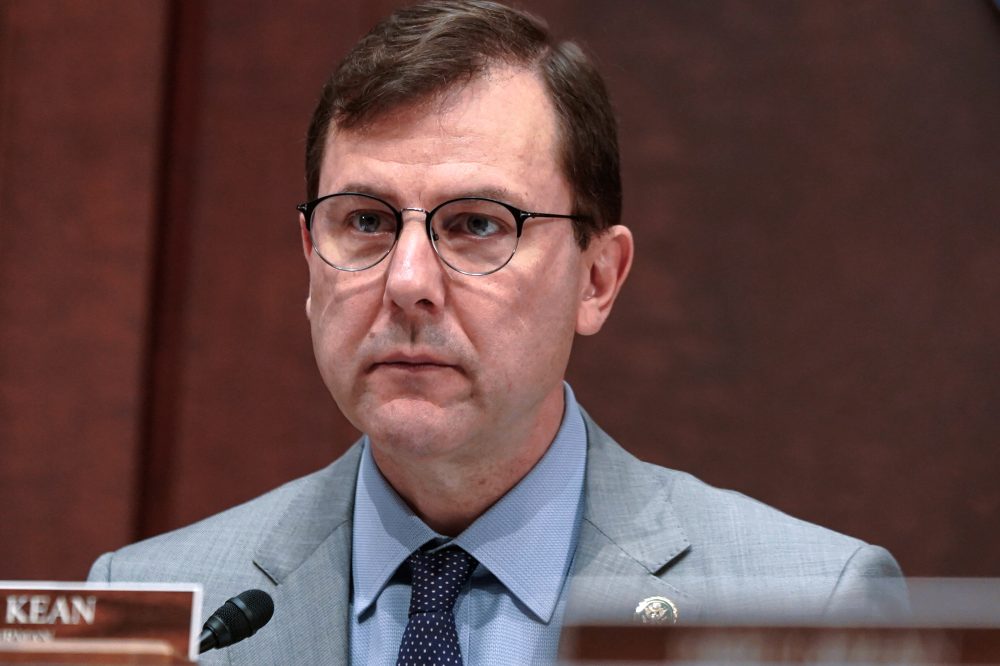
TRENTON, N.J. — New Jersey Republican Congressman Tom Kean Jr. is expected to return to public life after nearly four months away, ending months of speculation surrounding an unspecified medical condition that kept him from Washington.
Kean, 57, is a second-term lawmaker from a prominent New Jersey political family. He represents a competitive district that includes President Donald Trump’s Bedminster golf club. Since his last House vote on March 5, he has missed more than 100 congressional votes and has not been spotted publicly — either in Washington or back home in his district — even after winning the Republican nomination for another term.
A spokesman for Kean confirmed the congressman would be back at work Tuesday and would be open about what led to his extended absence. Last week, a reporter from the New York Times knocked on his door at home, and Kean answered but declined to speak, saying only that he would talk at a later time.
In April, a post on his social media account acknowledged he had been dealing with a personal medical issue, adding that his doctors expected him to make a full recovery.
The prolonged absence has raised political concerns, given the closely contested nature of his district and the Republican Party’s extremely narrow hold on the House — currently 218-212. Speaker Mike Johnson and other GOP leaders told reporters they had been in contact with Kean but said it was up to him to explain the situation publicly.
Kean is still in the running for reelection and will face Democratic nominee Rebecca Bennett, a former Navy helicopter pilot, in what is considered New Jersey’s most closely watched race this November. Democrats have identified the district as a top opportunity to flip a seat, as it has changed party hands in each of the last two midterm elections. Kean won the seat in 2022 by defeating Democrat Tom Malinowski, who had previously taken it from Republican Leonard Lance in 2018.
President Trump has thrown his support behind Kean’s reelection bid, though he has not addressed the congressman’s absence.
Kean comes from a family with deep roots in public service stretching back roughly 250 years to the nation’s founding, when an ancestor became New Jersey’s first leader following independence. His great-grandfather served as a U.S. senator, his grandfather was a congressman, and his father, Tom Kean Sr., served two terms as governor of New Jersey.
Colorado Democrats are casting ballots Tuesday in a series of primary elections that could reveal whether the party’s voters are ready to embrace a new, more progressive generation of leaders — or whether they prefer to stick with experienced incumbents who’ve held power for years.
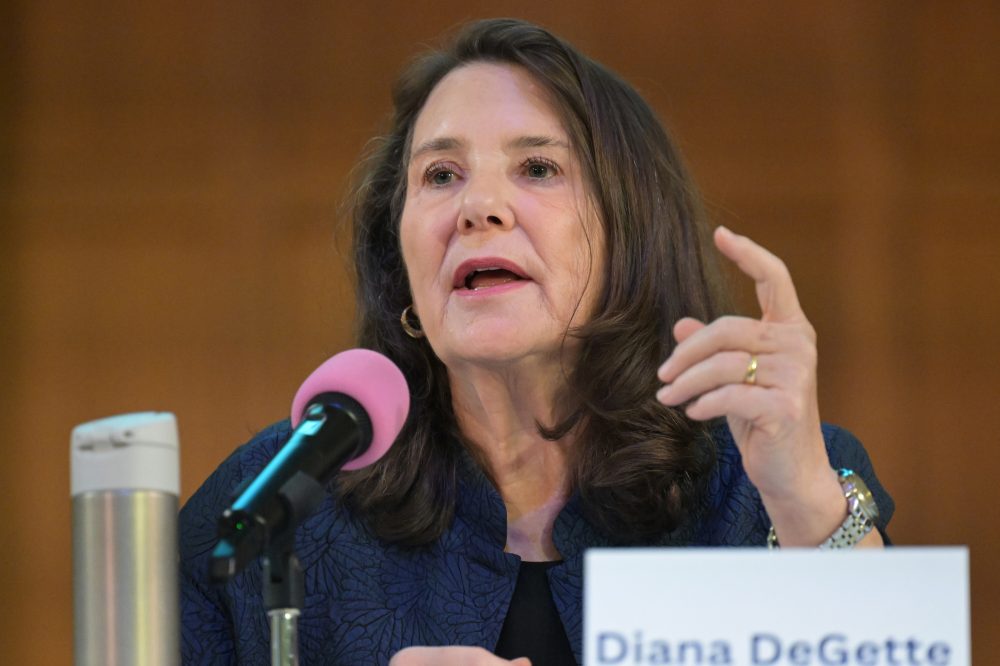
Nowhere is that tension more visible than in the race for Colorado’s 1st Congressional District, where incumbent Rep. Diana DeGette — who has held her seat for nearly three decades — is facing a challenge from 29-year-old democratic socialist Melat Kiros, a first-time candidate who has been alive for exactly as long as DeGette has served in Congress. A similar generational gap defines the U.S. Senate contest, where Sen. John Hickenlooper, a former governor and more centrist Democrat, is being challenged by state Sen. Julie Gonzales, who describes herself as an “insurgent progressive” and has spent roughly a third as many years in public office as Hickenlooper.
A comparable, though somewhat less dramatic, divide is playing out in Colorado’s lone competitive congressional district — a seat considered critical to determining which party controls the House during the final two years of President Donald Trump’s time in office.
The Democratic primary for governor is a different story. Colorado Attorney General Phil Weiser and U.S. Sen. Michael Bennet have found it difficult to draw meaningful policy distinctions between themselves. Instead, the two have traded accusations over who has been tougher in standing up to Trump.
DeGette had comfortably held her Denver-based House seat for close to 30 years — until Kiros came along. At a Democratic assembly in March, a process used to determine which candidates qualify for the primary ballot, DeGette barely made the cut while Kiros, running for office for the first time, received more than double her vote total.
Though the assembly outcome doesn’t necessarily predict who wins Tuesday, it sent a shockwave through the Democratic establishment and rattled DeGette, who has long considered herself a progressive voice in Congress.
The momentum behind insurgent candidates got another boost last week in New York, where two democratic socialists and a progressive defeated establishment-backed candidates — including two incumbents — in Democratic House primaries, energizing a movement that is beginning to gain real political traction.
Much like those New York races, Kiros has the backing of Sen. Bernie Sanders, while DeGette has the support of Colorado’s established Democratic House delegation.
A Kiros win, while not certain, would add momentum to the growing wave of democratic socialist candidates — a trend that has left some Democratic leaders uneasy. DeGette has argued that congressional experience is essential right now to push back against Trump, while Kiros, a former attorney, has accused DeGette of being ineffective. A third candidate, University of Colorado Regent Wanda James, is also in the race and could draw votes away from DeGette’s critics.
Gonzales is making similar arguments in the Senate race, labeling Hickenlooper an “incrementalist” and pushing for a more aggressive approach. She has acknowledged previously joining the Democratic Socialists of America in 2018, though she says her membership has since lapsed. Hickenlooper is considered the frontrunner in that statewide contest.
Colorado’s 8th Congressional District, created in 2021, runs from the northern suburbs of Denver through agricultural areas of the state. The district has already flipped from Democratic to Republican control and is currently held by Republican Rep. Gabe Evans. With Democrats eager to reclaim the House majority and slow Trump’s legislative agenda, the race is drawing significant attention.
Party leaders had largely backed state Rep. Shannon Bird as the moderate best suited to challenge Evans. But state Rep. Manny Rutinel, who is Latino, has made a case that his personal background and more assertive economic platform will resonate more strongly in a district that is heavily Hispanic and less affluent than much of the rest of Colorado.
In the governor’s race, Weiser and Bennet have been trading sharp criticisms after failing to carve out distinct policy differences. Weiser has hit Bennet for voting to confirm Trump nominees, while Bennet has criticized Weiser for not joining state lawsuits against the first Trump administration.
“The attorney general says he’s really tough but was completely missing in action in Donald Trump’s first term,” Bennet said during a recent debate.
Weiser fired back, questioning Bennet’s record of challenging the president — while also suggesting Bennet should stay in the Senate rather than run for governor. “You’ve made some mistakes; you didn’t stand up the way you should. I know you can shape up, use your seniority,” Weiser told Bennet at a debate. “With all that experience, to throw it away, would be such a waste for Colorado.”
Because Colorado leans Democratic, the winner of Tuesday’s Democratic gubernatorial primary will be considered the favorite in the general election to succeed term-limited Gov. Jared Polis.
On the Republican side, three main candidates are competing for the gubernatorial nomination: state Rep. Scott Bottoms, described as a further-right lawmaker; state Sen. Barbara Kirkmeyer, seen as the more traditional Republican choice; and Victor Marx, considered a wild card with an unconventional background.
In another race drawing attention, a candidate named Abby Silzell is challenging incumbent Bobbie Gross for a county clerk position previously held by a clerk who was convicted in a scheme to copy the county’s election computer system — a plan rooted in debunked claims of mass fraud in the 2020 election. Both Silzell and Gross are Republicans. Silzell told CPR News that she views the former clerk’s conviction as a “miscarriage of justice” and believes there was enough fraud in the 2020 election to “affect the outcome.”
ATLANTA (AP) — President Donald Trump has pursued an ambitious campaign to tighten federal control over U.S. elections, using executive orders, proposed legislation, and agency actions to push his agenda. But Monday’s Supreme Court decision backing states that allow late-arriving mail ballots underscored just how far his reach actually extends.
The ruling came on the heels of two back-to-back court decisions last week that struck down his sweeping executive orders aimed at changing national election rules. Federal courts have also blocked his Department of Justice from obtaining detailed voter information from states. Meanwhile, his push to get the Senate to pass the SAVE Act has stalled. That legislation would eliminate most absentee voting, require voters to show citizenship documents when registering, and mandate photo ID nationwide — all ahead of the upcoming midterm elections.
“It’s been a mixed bag for Republicans,” said University of Notre Dame law professor Derek Muller, who added that the president “has come up mostly empty-handed.”
Still, Trump’s efforts haven’t been entirely without results. Republican-controlled states have redrawn congressional district lines at his urging, a process aided by the Supreme Court’s earlier decision to strike down a key section of the Voting Rights Act. He has also directed the Department of Justice to investigate voting and election operations — a move Democrats worry could be a preview of federal involvement in November’s elections.
The relentless focus on election rules stems from Trump’s longstanding and false assertion that his 2020 presidential loss was the result of a rigged election. His frustration over the Senate’s failure to pass the SAVE Act has even led him to refuse to sign a bipartisan housing bill.
Following Monday’s Supreme Court mail ballot ruling, Trump took to social media to say he is working to “save America from crooked elections.” Voting rights advocates and Democrats, however, say he is misusing presidential power and attempting to suppress legally cast votes to gain a political edge in the midterms, when control of Congress will be decided.
Muller pointed out that Trump faces real constitutional boundaries. The authority over elections rests with the states and Congress — not the president.
“That’s how federalism works,” Muller said.
Here is a closer look at Trump’s attempts to change election rules and what avenues may remain open to him before November.
Trump has repeatedly claimed U.S. elections are plagued by fraud, particularly from noncitizens voting illegally. However, research consistently shows such cases are extremely rare, representing only a tiny fraction of documented fraud. Criminal convictions for this type of offense number in the hundreds across elections where tens of millions of ballots are cast.
Acting on those beliefs, Trump launched a multi-agency push to gather national voter data and use federal resources to help states remove voters from registration rolls. The Department of Justice sought detailed voter files — including birth dates and partial Social Security numbers — from multiple states. Democratic and some Republican secretaries of state refused to comply, and lawsuits followed. The administration has lost every court case so far.
Trump’s Department of Homeland Security, with assistance from the DOGE effort led by Elon Musk, overhauled a government program called SAVE — Systematic Alien Verification for Entitlements. The tool became central to efforts to identify and remove potentially ineligible voters from state rolls. Last week, a federal judge blocked its use as a broad citizenship verification tool.
According to the administration’s own announcements, the revamped system had allowed local election administrators to search voter records by the thousands using a wider range of data points rather than DHS-issued identification numbers. At least 67 million voter registrations — mostly in Republican-controlled states — were reviewed. Tens of thousands were flagged as possible noncitizens or deceased individuals, but some eligible voters were incorrectly marked as ineligible.
U.S. District Court Judge Sparkle L. Sooknanan ruled that Trump’s modifications had compiled Americans’ sensitive personal information in a way that put voters at risk of being wrongly removed from the rolls.
“All in all, the federal government has knowingly trampled on the privacy rights of American citizens in a manner that threatens the sacred right to vote,” Sooknanan wrote in her order.
When Congress declined to act on his policy preferences, Trump turned to executive orders — a tool used by presidents before him.
His first order mirrored the SAVE Act’s approach, requiring prospective voters to prove their citizenship in order to register. U.S. District Court Judge Denise Casper initially placed a temporary hold on it and last week made that block permanent. The Constitution, Casper wrote, “does not grant the President any specific powers over elections.”
Trump issued a second executive order in March, as the SAVE Act’s prospects in Congress dimmed. That order called for creating a national voter list drawing on data from U.S. Citizenship and Immigration Services and the Social Security Administration. It also would have given the U.S. Postal Service the power to decide who receives an absentee ballot and threatened local elections officials with criminal prosecution.
Absentee voting is a widely used and accepted part of American elections, though Trump has repeatedly and incorrectly described it as a vehicle for fraud — even though he has voted by mail himself. A 2025 report by the Brookings Institution found that mail ballot fraud occurred in just 0.000043% of all mail ballots cast.
Democratic secretaries of state filed a lawsuit, and U.S. District Court Judge Indira Talwani reached the same conclusion as Casper. The executive order’s provisions, she wrote last week, “unconstitutionally violate the separation of powers.” The White House has signaled it will appeal.
On Monday, Trump called the Senate gridlock over the SAVE Act “crazy” and singled out Republican Alaska Sen. Lisa Murkowski, calling her “Trump-deranged.” He has demanded Republicans eliminate the filibuster, which requires 60 votes in the 100-member Senate to advance most major legislation. But that likely wouldn’t solve the problem here — four of the Senate’s 53 Republicans have declared outright opposition to the bill: Murkowski, Susan Collins of Maine, Mitch McConnell of Kentucky, and Thom Tillis of North Carolina.
Trump acknowledged Monday that the SAVE Act is “probably not going to happen.”
Both major political parties have national operations in place to monitor elections, including legal teams prepared to file challenges. Despite the Republican National Committee’s loss in the mail ballot case, RNC Chairman Joe Gruters signaled the fight isn’t over.
“We are not going to be deterred by this decision, and the RNC will keep fighting to have elections end on Election Day,” Gruters said Monday.
Meanwhile, Trump appears to be laying the groundwork for more aggressive federal involvement in elections. His U.S. attorney in Los Angeles announced in June the opening of multiple election fraud investigations and dispatched a prosecutor to the county’s vote-tabulation center following California’s June primary. Six months earlier, FBI agents executed a search warrant and seized ballots and other records from the 2020 election in Georgia’s Fulton County, which encompasses Atlanta.
Muller said local elections officials “already are having conversations about chain of custody disputes” for ballots as they are cast, collected, counted, and stored. He and UCLA law professor Rick Hasen noted that judicial warrants are required for the type of action that took place in Fulton County. Muller predicted “the bar would be even higher” for any warrant the administration might seek during an active election.
Hasen said he is working to educate judges nationwide about the importance of maintaining proper ballot chain of custody.
“Republicans believe him when he says the election is rigged. And then when Republicans try to change voting rules to tighten things up, that causes Democrats to also think that the election system is being rigged,” Hasen said. “So, if what he’s trying to achieve is undermine voters’ confidence in the election process, he seems to have succeeded spectacularly.”
CHARLOTTESVILLE, Va. — He’s an award-winning presidential historian who has written a full biography of Thomas Jefferson. Yet even Jon Meacham pauses when asked to define what it truly means to be a “Jeffersonian.”
“Well for a long time, before the civil rights movement, it meant to be more inclined toward states’ rights and limited government,” says Meacham, who serves as the National Constitution Center’s Semiquincentennial Scholar. He then stops himself, asking to begin again — recalling how President Franklin Delano Roosevelt once described Jefferson as an “apostle of liberty” who would have backed the United States entering World War II to fight the Nazis.
The term could be interpreted in countless ways. While historians may debate the relative “greatness” of America’s founding figures, as the nation’s 250th birthday draws near, many scholars agree that no founder’s life and ideas continue to echo quite like Jefferson’s. Meacham puts it plainly: Jefferson embodied “the very best and the very worst” of the United States.
And much of everything in between.
At the heart of America’s founding lies Jefferson’s most glaring contradiction — the man who wrote that “all men are created equal” remained a slaveholder until his dying day. Yet Jefferson explored and advanced both sides of so many defining debates: self-sufficient farming life versus worldly progress, pluralism versus separatism, small government versus the grand vision of an “empire of liberty.”
“There is no more malleable figure in early America than Jefferson,” says Andrew Burstein, a history professor at Louisiana State University who captured that very idea in a book he published a decade ago titled “Democracy’s Muse: How Thomas Jefferson became an FDR Liberal, a Reagan Republican, and a Tea Party Fanatic, All the While Being Dead.”
Historian Peter S. Onuf, who has authored numerous works on Jefferson, puts it this way: “There have been times in American history when just about everyone would have considered themselves ‘Jeffersonian.’ Yet even at those moments, he was a controversial figure.”
The debate over Jefferson’s legacy plays out even in places that exist because of him.
At the University of Virginia — the school he founded and considered one of his greatest personal accomplishments — a memorial now stands honoring the thousands of enslaved people who lived and labored on its grounds.
At Monticello, the hilltop plantation and estate near Charlottesville where Jefferson lived when not serving in public office, a banner near the front entrance references the Declaration of Independence with the words, “After all, our guy wrote it.” But deeper into the property, the history of enslavement is impossible to ignore — from a burial ground containing dozens of graves of enslaved people to a dedicated exhibit honoring Sally Hemings, the enslaved woman widely believed to have had six children with Jefferson.
Brandon Dillard, Monticello’s director of historic interpretation and audience engagement, describes the staff’s purpose as a mission “to tell unflinching stories of America’s complex origins and fitful progress toward the ideals Jefferson articulated in the Declaration of Independence.”
Jefferson viewed Monticello as a retreat from the pressures of his era, but modern concerns still find their way onto the grounds. A guide on the gardens tour points out that a folding plant Jefferson once tried but failed to cultivate — the “Mimosa Pudica,” or “sensitive plant” — now flourishes there, a result of climate change. The visitors’ center has earned LEED Gold certification for energy efficiency, Dillard notes, and geothermal systems have been added to other structures for climate control.
Questions of race also continue to shape the Monticello experience. Nearly all of the site’s guides are white — an issue Dillard acknowledges is widespread across the country. A recent survey from the American Association for State and Local History found that only about 10% of workers at museums, historic sites, and historical societies were nonwhite, and that many Latino, Latina, Latinx, and multiracial respondents reported facing discrimination and harassment on the job. Dillard declined to speak in detail about the experiences of guides of color at Monticello specifically.
Jefferson’s contradictions stretch back through centuries of American history. Both sides of the Civil War claimed him. Both sides of the civil rights movement did the same.
Confederate sympathizers in the 19th century and segregationists in the 20th pointed to his belief in states’ rights, while Abraham Lincoln and civil rights leaders emphasized his authorship of the Declaration of Independence. In 1963 alone, Jefferson was invoked in the inaugural address of Alabama Gov. George Wallace as he pledged to resist federal school integration efforts — and just months later by the Rev. Martin Luther King Jr. during his landmark “I Have a Dream” speech at the March on Washington.
President Franklin Roosevelt used Jefferson as an ideological partner for the New Deal — the Thomas Jefferson Memorial in Washington, D.C., was itself a New Deal project. Years later, President Ronald Reagan, a former New Deal supporter turned conservative, held Jefferson up as a symbol of opposition to wasteful government spending. Free speech advocates have frequently cited Jefferson’s pivotal role in supporting the Bill of Rights, while President Donald Trump has quoted Jefferson’s 1807 complaint that “Nothing can now be believed which is seen in a newspaper” as an apparent nod to his ongoing battle against what he calls “fake news.”
Jefferson has also been positioned on opposing sides of today’s immigration debate. Ibram X. Kendi, author of “How to Be an Anti-Racist,” points to Jefferson’s documented support for colonization of Black people as a precursor to modern scapegoating and xenophobia. At the same time, even as the Trump administration pushes aggressively to limit immigration and in some cases strip citizenship, Monticello has continued its longstanding tradition of hosting July 4th naturalization ceremonies. Virginia Gov. Abigail Spanberger is scheduled to serve as this year’s keynote speaker.
“As new citizens share their personal stories every Fourth of July,” Dillard says, “we are reminded that the values uplifted in that Declaration are values toward which people from all backgrounds aspire.”
Monticello draws hundreds of thousands of visitors every year, each arriving for their own reasons.
Erin Porter, a Virginia native in her 40s, had never visited Monticello until recently and wanted to check it off her personal bucket list. Nathan Jaycox of Connecticut, a former nuclear engineer, came to soak up history for a course he hopes to teach. And Duane Cromwell, a longtime Vancouver resident, arrived with something more personal on her mind.
Cromwell, 70, grew up in Greenville, South Carolina, where she was taught that slavery was “an economic necessity” and never learned about Jefferson’s history as an enslaver. She was in town last month for a family reunion and came to Monticello eager to move past what she called the “whitewashed Southern version” of history — one filled with myths of villainous “yankees” and victimized rebels who stood against them.
“Did you (ever) notice kudzu growing up over trees and buildings while in the South? It is an invasive plant brought to the region to control erosion. Well, it is like racism. It is pervasive, part of the horizon, always there but soon you don’t notice it,” she says.
“Having said that, I do think that people do go along better, there is more interactions, relationships than when I was growing up. Everyone needs each other and in the South, there is a great sense of humor and friendliness that help people navigate the awkward moments.”
For Cromwell, a visit to Monticello was an opportunity to learn, to grow — and, like so many Americans before her, to use Thomas Jefferson as a lens through which to examine her country.
California’s Democratic Gov. Gavin Newsom put his signature on a nearly $352 billion state spending plan Monday — his final budget before leaving office in January — as he continues to weigh a run for the presidency.
The budget avoids sweeping cuts or major new spending, instead taking a more measured approach. Newsom used the occasion to look back on his nearly eight years as governor, releasing a video that highlighted state policies such as free school meals, expanded internet access, increased renewable energy production, and higher minimum wages for fast food and healthcare workers.
He also pointed to the budget’s increased contributions to state reserve funds as evidence that California manages taxpayer money responsibly — pushing back against critics who say the state spends without restraint.
Taking aim at Republican-led states and the federal administration, Newsom issued a challenge: “To every other state across our country — to Washington, D.C. — to anyone who’s been told that responsibility and ambition can’t share the same balance sheet: Come to California.”
The spending plan seeks to raise additional state revenue through a reformed tax on healthcare providers, a sales tax applied to certain software products, and limits on tax breaks for large corporations. While Newsom has generally resisted broad tax increases during his tenure, he has backed more targeted measures. He opposes a one-time tax on billionaires — pushed by a healthcare union — that will appear on the November ballot.
Newsom and Democratic legislative leaders say the plan carries no deficit for the coming fiscal year and positions the state to respond to federal cuts to healthcare programs for low-income residents.
“We have done a lot of work to mitigate harm, to protect vulnerable communities,” said Assembly Budget Committee Chair Jesse Gabriel, though he acknowledged the state was not “in a position to fully backfill those federal cuts.”
Republicans were not convinced. “The governor can claim he has a ‘balanced’ budget on his way out the door, but really, he’s just leaving us with his tab,” said Republican Sen. Roger Niello in a statement, arguing the plan delays spending problems rather than solving them.
California has struggled in recent years with tens of billions of dollars in budget deficits, leading to painful decisions — including scaling back a commitment to provide free healthcare to low-income immigrants without legal status. Nonpartisan budget analysts had projected shortfalls of more than $20 billion annually over the next several years, though their estimates sometimes differ from Newsom’s projections.
Higher-than-expected tax revenues — driven largely by a surging stock market fueled by excitement over the artificial intelligence industry — helped lawmakers avoid some of last year’s planned cuts. Those included reductions to dental benefits for low-income immigrants without legal status and premium increases for adults enrolled in the state’s Medicaid program, known as Medi-Cal. Lawmakers had previously agreed to charge those recipients $30 per month starting next year. Newsom had proposed raising that to $50, but the final budget leaves that decision to whoever succeeds him.
Expanding childcare access has been a consistent priority for Newsom, and the new budget funds nearly 23,000 additional childcare spots for the upcoming fiscal year.
With November’s election approaching, the budget directs $29 million to the Secretary of State’s office to help accelerate the state’s lengthy vote-counting process through added staffing and technology upgrades. Another $10 million is set aside to educate voters about the election process — split between counties and the state. The budget also includes close to $1 million to combat misinformation about state elections, a response to repeated — and unsubstantiated — claims by President Donald Trump and other Republicans that California’s slow vote count enables widespread fraud.
November’s election is expected to draw significant attention, as California has several U.S. House seats that could help determine which party controls the chamber, along with more than a dozen ballot measures and the race to choose Newsom’s successor. Democrat Xavier Becerra, a former state attorney general, and Republican Steve Hilton, a former Fox News host and adviser to conservative British politicians, are vying to replace him.
Some major spending decisions were deliberately left for the next governor. Among them is how the state will handle revenue from its cap-and-trade program, which requires large polluters to reduce emissions, purchase allowances, or fund offsetting projects. State air regulators recently approved changes that could cut in half the pot of money California receives from allowance sales for climate, transportation, and other programs.
Lawmakers also indicated they want to explore penalizing large companies whose employees rely on Medi-Cal rather than employer-provided health coverage. The Department of Finance has been directed to bring options to the Legislature — though any such penalties would not be approved until next year at the earliest, disappointing some Democrats.
“This is a budget that bought time: Medi-Cal delayed, not resolved, not restored,” said Democratic state Sen. María Elena Durazo at a budget hearing Monday.
The budget deal would also shift oversight of the state’s Department of Education to the governor’s office, a move Newsom says is aimed at improving student outcomes.
Taiwan’s President Lai Ching-te delivered a strong warning to graduating military officers Tuesday, telling them to stay vigilant against China’s efforts to spy on and undermine the island’s armed forces.
Lai spoke at a graduation ceremony held at Fu Hsing Kang College, located on the outskirts of Taipei. The college, now part of the National Defence University, was established in 1951 — just two years after the Republic of China government retreated to Taiwan following its defeat in a civil war against Mao Zedong’s communist forces.
The institution was originally created to train military officers in political warfare and to foster a strong anti-communist identity within the ranks. That Cold War-era spirit remains very much present at the school today.
Addressing the graduates, Lai said a soldier’s honor is rooted in loyalty. He called on the new officers to be clear-eyed about who their adversaries are.
“In the face of various threats and challenges, as well as China’s infiltration, division, sabotage, and espionage activities targeting our armed forces, I ask all of you to establish a clear awareness of friend and foe,” Lai said.
“Only by resisting all forms of threat and temptation can we defend our nation’s sovereignty and security,” he added.
The president also urged graduates to oppose communism, protect against infiltration, and firmly uphold democratic values and freedom. He insisted that the Republic of China and the People’s Republic of China are not subordinate to one another — using Taiwan’s formal official name in making that point.
Taiwan and China have long engaged in mutual espionage, but Taiwan has recently reported a rising number of Chinese spying cases, particularly within its military. China, which considers Taiwan part of its own territory, has never ruled out using military force to bring the island under its control, and Chinese military activity around Taiwan occurs on a daily basis.
Inside the hall where Lai delivered his address, large Chinese characters flank both sides of the room. The inscription — “I regard the nation’s rise or fall as my own personal responsibility” — was written by former Taiwan leader Chiang Kai-shek shortly before his death in 1975. Chiang remains a divisive figure in Taiwan, condemned by some for his authoritarian rule while admired by others for his fierce opposition to communism.
During the Cold War, the college also trained military officers from other anti-communist nations around the world, and it continues to host international students today.
Among those attending Tuesday’s ceremony were the ambassadors of Belize, Guatemala, and Paraguay — three countries that maintain formal diplomatic relations with Taiwan — as well as the de facto ambassador from Jordan, which does not officially recognize Taiwan despite having maintained close military ties during the Cold War.
A large fire erupted early Tuesday morning at an oil refinery located in Haldia, India, according to reports from local media outlets.
The fire started in a pipeline that carries naphtha, a highly flammable petroleum liquid used in the refining process. Multiple workers at the facility were hurt in the incident, media reports indicated.
As of the initial reports, investigators had not yet determined what caused the blaze to break out.
The U.S. Education Department announced Monday that it has finalized a new set of rules that would link schools’ ability to offer federal student loans directly to how much money their graduates go on to earn.
Under the new policy, called the Student Tuition and Transparency System, or STATS, along with an Earnings Accountability rule, undergraduate programs must show that their graduates bring home more income than a typical person who only completed high school. Graduate-level programs face a similar bar — their graduates must out-earn the average person holding only a bachelor’s degree.
The Education Department spelled out the consequences for programs that fall short: “If a program fails to show at least this modest financial return on investment for its graduates in two out of three consecutive award years, it will lose eligibility to participate in the federal Direct Loan program.”
The final rule is set to be published on July 1, with 2027 being the first year schools will actually be held to those earnings benchmarks.
The stakes could go even higher for repeat offenders. According to the department, “After three years of consistently failing the earnings premium measure, the Department could also terminate eligibility for Title IV of the Higher Education Act, including Pell Grant eligibility, for all of an institution’s low-earning outcome programs.”
The Wall Street Journal first reported the finalization of these lending requirements.
The new rules are part of a wider effort by President Donald Trump to apply pressure on colleges and universities. His administration has moved to freeze federal funding for higher education institutions over a range of disputes, including pro-Palestinian campus protests, transgender policies, climate initiatives, and diversity programs.
Trump has specifically claimed that pro-Palestinian demonstrations at universities were antisemitic and provided cover for extremist organizations. However, protesters — including some Jewish advocacy groups — argue the administration is incorrectly treating criticism of Israel’s military actions in Gaza and support for Palestinian rights as forms of antisemitism or extremism.
Civil liberties advocates have raised alarms about the impact on free speech, academic freedom, and due process, pointing to cases where colleges have scaled back programs, restricted protesters, and laid off employees. Federal judges have, in some instances, ordered the administration to unfreeze funds that had been withheld from universities.
The Trump administration has also dramatically reduced the Education Department’s workforce and shifted many of its responsibilities to other federal agencies.
The Athletics dealt with a pair of lineup setbacks Monday, sending shortstop Jacob Wilson and outfielder Tyler Soderstrom to the injured list while promoting a highly regarded prospect to the big leagues for the first time.
Wilson landed on the 10-day injured list retroactive to June 26, sidelined by inflammation in his right thumb. Soderstrom joined him on the 10-day IL, with his placement backdated to June 28 due to a left hip impingement. The team also moved left-handed pitcher Jose Suarez to the paternity list.
To address the roster moves, the Athletics called up infielder Joshua Kuroda-Grauer from Triple-A Las Vegas and also recalled infielder Darell Hernaiz and right-hander Kade Morris. Right-hander Michael Kelly was designated for assignment to create space on the 40-man roster.
Kuroda-Grauer, listed as the Athletics’ ninth-best prospect according to MLB.com, will step onto a major league field for the first time in his career. The 23-year-old began this season at Double-A Midland before earning a promotion to Las Vegas in May. Across 75 minor league games this year, he has posted a .323 batting average with seven home runs, 44 RBIs, 15 stolen bases, and an .845 OPS.
His offensive production has stood out across all of the minor leagues — he leads every minor leaguer with 109 hits, ranks second with 76 runs scored, and is tied for fifth with 23 doubles. Kuroda-Grauer was selected in the third round of the 2024 draft and becomes the third player from that Athletics draft class to reach the majors, following Nick Kurtz and Gage Jump.
The two injured players had both been consistent contributors to Oakland’s offense. Wilson was hitting .277 with four home runs and 26 RBIs through 50 games, while Soderstrom had recorded 13 home runs, 41 RBIs, and a .242 average over 80 games.
San Diego Padres infielder Jake Cronenworth is back on the field after spending eight weeks on the concussion injured list, with the team officially activating him on Monday.
The 32-year-old veteran wasted no time returning to action, stepping into the starting lineup at second base Monday night in a road game against the Chicago Cubs.
San Diego manager Craig Stammen expressed his enthusiasm about getting Cronenworth back in the fold. “It’s great to have Crony back,” Stammen said. “We missed him, definitely. A guy that’s been a part of our team for a while, someone that’s just steady, professional at-bat all the time, and then a great second baseman. He’s just a value add when we get him back.”
Cronenworth’s injury stemmed from an April 18 game against the Los Angeles Angels, when a fastball from pitcher Yusei Kikuchi struck him in the jaw. He continued playing for roughly two weeks afterward before concussion-related vision problems forced him onto the injured list.
Before landing on the IL, the two-time All-Star was hitting .144 with one home run and four RBIs across 32 games this season.
Entering Monday’s game, Cronenworth carries a career .244 batting average, a .333 on-base percentage, a .399 slugging percentage, 81 home runs, and 373 RBIs over 813 games — all played with San Diego across seven major league seasons.
To open a roster spot for Cronenworth, the Padres optioned infielder Will Wagner to Triple-A El Paso. The 27-year-old Wagner had posted a .257/.422/.286 batting line with no home runs and no RBIs in 16 games for San Diego this year.
San Diego also made a change to its bullpen, calling up right-hander Bradgley Rodriguez from Double-A San Antonio. Rodriguez fills the spot left by right-hander David Morgan, who was placed on the 15-day injured list due to left knee inflammation.
Morgan, 26, finished his time on the active roster with a 2-0 record and a 4.50 ERA across 18 relief appearances this season.
Rodriguez, 22, made an immediate impression in his return, allowing just one hit while striking out two of the four batters he faced in a scoreless outing against the Cubs on Monday. In 32 appearances this season — including three starts — he holds a 1-2 record with a 2.06 ERA.
KARANGASEM, Indonesia — Fourteen-year-old Ketut Alit Widiantari joined more than 30 of her fellow village girls as they made their way barefoot into a temple courtyard, each carefully maintaining their balance while dressed in traditional garments and headdresses crafted from vibrant leaves and flowers.
The group of young women from Tista village performed the sacred Rejang Kuningan dance this past Saturday in honor of the Kuningan holiday at Bali’s Puseh temple, which stands as the spiritual heart of the local Balinese Hindu community.
For followers of Balinese Hinduism, Kuningan represents the conclusion of the 10-day Galungan festival — a celebration of the victory of good over evil. According to tradition, this is the day when gods and the spirits of ancestors, who descended to earth to offer blessings to their families and communities, make their journey back to the heavens.
The Rejang dance is a sacred ritual performed by young women in traditional dress, moving in slow, deliberate patterns around a temple. It serves as an offering not for a visible audience, but for God and the ancestral spirits of those who call the village home.
Before the performance begins, a temple priest blesses each of the dancers, and their costumes and headdresses are carefully inspected.
Across Bali, the Rejang dance takes on many different forms, each one shaped by the specific occasion, the ritual being observed, and the community responsible for keeping the tradition alive.
In the Karangasem district, where individual villages maintain their own distinct customs — even reflected in the architecture of their temples — the dance holds meaning beyond its role as a spiritual offering.
Through their attire, music, and choreography, Widiantari and her fellow Rejang Kuningan dancers embody the unique character of their village, bringing this year’s Galungan and Kuningan observances to a close not only through prayer, but through the enduring traditions their community continues to pass down.
American retailers are racing to lock in their holiday season inventories by pulling forward orders from China by four to six weeks, according to shipping industry executives. The goal is to get goods on shelves before anticipated tariff increases hit later this year.
A 10% universal tariff that Washington put in place in February — after the Supreme Court struck down some earlier tariffs as illegal — is set to expire on July 24. While U.S. President Donald Trump’s visit to China last month helped maintain a fragile peace between the two economic powers, uncertainty about what comes next remains elevated.
The U.S. Trade Representative has proposed a 12.5% tariff on goods imported from China and other countries, following an investigation into forced labor practices that Beijing denies. A final decision on those levies is expected in the coming months.
Tony Meng, a China-based senior sales manager at shipping company XPD Global, described the current rush this way: “There is an expectation that tariffs could be raised again, or restored to previous levels, so everyone is rushing to get goods in before that happens.”
Typically, shipping volumes from China to the U.S. peak between July and September. But shipping firms say May and June have already seen stronger-than-expected activity, which has contributed to a spike in freight prices.
The early ordering surge helped fuel a 35% jump in U.S. imports from China in May — a significant leap compared to April’s 11% growth and March’s contraction. That pace may continue into June but is expected to taper off as summer progresses.
China’s leading export items to the U.S. by value in May included smartphones, lithium-ion batteries, solid-state drives, toys, kitchenware, and holiday-related products. June trade figures are scheduled for release on July 14.
Shipping giant Maersk confirmed in a statement that container space on the China-to-U.S. route has been tightening since mid-May due to “stronger customer demand and earlier seasonal bookings.”
A China-based shipping executive, who spoke on condition of anonymity because he was not authorized to talk to reporters, said back-to-school products like stationery and clothing were part of the May-June rush. He also noted that early Christmas stockpiling played a role, along with soccer World Cup-related merchandise — including jerseys, flags, souvenirs, and large-screen televisions. The U.S. is co-hosting the tournament alongside Canada and Mexico.
The surge in demand has driven up shipping costs considerably. According to maritime consultancy Drewry’s World Container Index, spot rates from Shanghai to New York stood at $7,149 per 40-foot container as of June 25 — up 6% from the prior week and 25% higher than a year ago. The Shanghai-to-Los Angeles route cost $5,750 per container, a 12% weekly increase and 54% above year-ago levels.
“Importers continue frontloading shipments ahead of potential tariff changes and higher bunker-related costs,” Drewry noted in a recent report.
Outdoor furniture manufacturer Jin Chaofeng said passing the full weight of rising shipping costs on to customers would be difficult, highlighting the slim profit margins facing Chinese manufacturers in less technology-driven sectors.
Kyle Henderson, CEO and co-founder of container-tracking software company Vizion, offered a note of caution. He said tariffs are still weighing on overall U.S. demand, which remains below its three-year average and should only be characterized as “normal-to-soft.” Henderson attributed the higher shipping costs more to capacity management by carriers — including some cancelled sailings — than to a genuine surge in U.S. consumer demand.
Henderson also projected that shipping volumes will decline after July and into the third quarter, citing “a combination of inventory already landed and a tariff environment that structurally raises the cost of China-origin goods.”
Asian stock markets stumbled slightly at the close of a remarkable quarter on Tuesday, even as a stronger U.S. dollar pushed the Japanese yen to its lowest point in 40 years and headed toward its fourth consecutive quarterly gain.
Japan’s Nikkei index, which held relatively steady in early trading, is on track to finish the quarter with a record-setting gain of more than 36%. South Korea’s KOSPI, driven largely by chipmakers, slipped about 1% on Tuesday, though it still posted a stunning second-quarter rise of nearly 65% — more than doubling its value since the start of the year.
Fears about war’s impact on oil prices have largely faded, with benchmark Brent crude futures trading at $72.49 per barrel — levels not seen since before the conflict began — even as a temporary ceasefire remains under pressure.
Kerry Craig, a strategist at J.P. Morgan Asset Management in Melbourne, noted the broader economic impact of lower oil prices. “Now that we have oil prices down, it’s reinforcing our view of more trend-like growth around the world relative to sub-trend that we were thinking about a couple of months ago, and feeding into the better earnings story as well,” he said.
U.S. stock indexes climbed overnight, with futures holding flat during Asian morning trading. The dollar has been gaining ground this quarter as expectations for U.S. interest rates shifted dramatically — from anticipated cuts to potential hikes — driven by the strength of the American economy and ongoing inflation concerns.
That dollar strength has taken a heavy toll on gold, which is on pace for its worst quarterly performance in more than a decade. The yen fell to 162.41 per dollar during Asian trading, its weakest level in four decades, putting currency traders on alert for possible action by Japanese authorities.
Japan’s Finance Minister Satsuki Katayama signaled that officials were prepared to act, saying authorities stood ready to respond appropriately at any time.
The dollar index has climbed 1.3% this quarter. The euro, however, managed to reclaim the $1.14 level this week. Traders are now watching for U.S. jobs data due Thursday — moved up a day because Friday is a holiday — along with a Wednesday appearance by Federal Reserve Chair Kevin Warsh.
New data released Tuesday showed Chinese manufacturing expanded in June, boosted by high-tech exports. European inflation figures and U.S. consumer confidence and job openings data are also on the agenda for the session.
Across the broader Asian region, Taiwan’s benchmark index is set to finish the quarter up more than 40%, while other markets have struggled to keep up with the semiconductor-driven leaders. Hong Kong’s Hang Seng has been a clear underperformer, barely moving Tuesday and sitting on a quarterly decline of 7.5%.
Large investors have behaved in an unusual way throughout this record-setting quarter. As Asia’s major chipmakers have grown to dominate index weightings, foreign investors have actually been selling into the rally, rebalancing their portfolios and managing concerns about concentration. According to BNY, a net $17.3 billion has flowed out of South Korean equities so far this year.
BNY macro strategist Geoff Yu described the trend: “That gap between returns and flows fits a broader pattern across Asia’s tech-heavy markets: strong performance is triggering rebalancing and profit-taking, not fresh institutional buying.”
Meanwhile, Europe’s STOXX index and China’s mainland blue-chip CSI300 are drawing investor interest, with the STOXX on pace for a 9% quarterly gain and the CSI300 up roughly 10% for the quarter.
Craig from J.P. Morgan Asset Management explained the shift in investor thinking. “Some of the concerns that investors have around how much tech exposure they have … (has them) looking for other themes — whether that’s defence, renewables, and how they think about building more robust diversification in their portfolio,” he said.
Billionaire investor Warren Buffett is putting the brakes on his customary mid-year multibillion-dollar gift to the Gates Foundation, choosing to wait for the outcome of a review examining the foundation’s past relationship with the late sex offender Jeffrey Epstein, according to a Monday report from the Wall Street Journal.
The Gates Foundation has been under a cloud of controversy tied to Chairman Bill Gates’ personal association with Epstein. Adding to the pressure, the U.S. Justice Department released a batch of emails in January that revealed communications between Epstein and members of the Gates Foundation’s staff.
Gates Foundation CEO Mark Suzman initiated an outside review to evaluate the foundation’s historical dealings with Epstein. The results of that review are anticipated sometime this summer.
According to the Wall Street Journal, which cited sources familiar with Buffett’s thinking, the 95-year-old Berkshire Hathaway chairman is pushing his donation decision to later in the year — potentially as late as his annual Thanksgiving letter.
Reuters, which first reported on the Wall Street Journal’s story, said it was unable to independently confirm the account. Neither Berkshire Hathaway nor the Gates Foundation responded to Reuters’ requests for comment.
Over the past two decades, Buffett has contributed more than $47 billion worth of Berkshire Hathaway stock to the Gates Foundation, making him one of its most significant benefactors.
Microsoft co-founder Bill Gates, 70, saw his public image take a hit after the Justice Department released documents related to Epstein in February. Gates has not been accused of any criminal wrongdoing. He has repeatedly said he regrets any involvement with Epstein, denied spending time with Epstein’s victims, and stated he never personally witnessed any criminal behavior by Epstein.
CARACAS — Construction worker Anderson Daniel Salcedo had spent three months locked in U.S. immigration detention before stepping onto a repatriation flight last Wednesday. He touched down in Venezuela just hours before a pair of devastating earthquakes struck his homeland.
The 22-year-old, a passionate soccer fan, had spent more than three years living in the United States, sending money back home so his mother could build a house. After landing at Maiquetia airport near the capital Caracas, Salcedo and more than 140 fellow returning migrants — among them seven children — were transported to the nearby government-operated Hotel Santuario La Llanada, perched on a hilltop with views of the Caribbean Sea, where they were to wait for processing.
What happened next was catastrophic. Venezuela’s most powerful earthquakes in over a century tore through coastal La Guaira state, bringing the hotel down and, according to relatives, likely killing the majority of the deportees sheltering inside.
Salcedo made it out alive, but with life-altering injuries. Now, his family — along with relatives of others lost in the collapse — are raising serious questions about why returning migrants were placed at that location, and why their phones and identification documents were confiscated, which made it far harder to locate and identify survivors.
Venezuela’s Return to the Homeland Grand Mission, the government program responsible for receiving returning migrants, did not respond to questions from Reuters. Three days after the earthquakes, the program posted a message of condolence on its social media account along with phone numbers for families to call.
“We express our deepest sorrow and solidarity over the tragic loss of life caused by the recent earthquakes,” the post read. “Today we embrace each other in grief, but tomorrow we will rise stronger. We are a people of light, resilience, and hope; together, step by step, we will overcome this trial and find our way home again. You are not alone.”
Venezuelan authorities report that at least 1,750 people died in the earthquakes, which destroyed or seriously damaged more than 850 buildings, injured thousands more, and left approximately 16,000 people without homes. A website run by the country’s political opposition lists roughly 45,000 people as still unaccounted for.
Satellite images from Vantor show a large portion of the hotel reduced to a heap of concrete and twisted metal, with broken roof tiles strewn across the wreckage. Part of the structure remained standing.
Two families of passengers on the deportation flight — who connected through social media and began sharing missing-person notices — told Reuters that 12 people managed to escape the debris on their own. One family was shown an official list from the Grand Mission indicating 32 survivors from the flight.
Salcedo was pulled from the rubble 40 hours after the quakes struck, according to his grandmother, Marlene Lozano, speaking by phone from her home in Nueva Bolivia in Merida, roughly 700 kilometers (430 miles) from La Guaira. A video circulated among the families shows Salcedo being extracted from a hole in the debris by several men, his face twisted in pain as one rescuer says, “we’ll pull him right now.”
Salcedo’s family said SEBIN, Venezuela’s domestic intelligence agency, had taken his phone and identity card before the disaster. The Communications Ministry did not respond to a request for comment.
“He spent 40 hours in that hole, he didn’t have an ID, they couldn’t account for him because he had no documents,” Lozano said. “We had no way to communicate with him and didn’t know anything.”
A relative eventually located Salcedo at University Hospital in Caracas and contacted his aunt. His mother made the journey to the city by motorcycle with her husband.
“She went straight to the hospital, and that’s where she found him — but they had already amputated his legs. Because he had a lot, a lot of debris on top of his legs,” Lozano said.
Salcedo remains intubated. A doctor told the family that the damage to his legs was worsened by how he was removed from the wreckage.
“Here we are praying, asking God to give him strength and courage,” Lozano said. “We are trusting in God, that God will keep him alive as he is. We know he won’t be the same anymore — he’s missing his legs — but we love him, just the way he is.”
Lozano said the family has received no official information. When she visited the local SEBIN office, she was told they had nothing to share.
Another family is facing a similar ordeal. Oswadeliz Nunez, an industrial engineer and lawyer, has been unable to get any official word about her 28-year-old son, Daniel Nunez, who arrived on the same flight. When he landed, Daniel borrowed a phone and told his mother he was being taken to a hotel and would be released to go home the next day.
“Thank God my son called me, because otherwise I would never have spoken to him again,” Nunez said.
She rushed to La Guaira from El Tigre, in Anzoategui state — about 470 kilometers (290 miles) southeast of Caracas — and was told by a SEBIN official that her son had been taken away by ambulance. She could not find him at any clinic or hospital. She was later shown an official list on which her son appears as missing.
Nunez said SEBIN personnel have been digging through the rubble by hand, and that heavy machinery did not arrive at the site until Monday.
“We are earnestly asking the international community to help us recover the bodies, because if it was God’s will that my son was there, I want my son’s body. I can’t wait one or two months until the government decides to remove the bodies,” she said.
She added that had her son been allowed to go directly home upon arrival, he would still be alive.
“They did not commit any crime. They were already in their country, they had already been deported.”
Australian Federal Police have charged a Thai Airways flight attendant with smuggling more than a kilogram — roughly 2.2 pounds — of heroin into the country after border officers intercepted the drug at Melbourne Airport.
The 26-year-old woman arrived at the airport on June 25, at which point customs officials screened 12 tote bags she was carrying. Officers discovered heroin hidden within the lining of those bags, with an estimated street value of A$500,000 — equivalent to about $343,300 U.S. dollars.
Thai Airways confirmed the woman was employed as a flight attendant at the time of her arrival. The airline released a statement saying it maintains strict conduct rules for all of its employees and that it “stands ready to fully cooperate with the relevant authorities throughout the process.”
The woman was taken into custody on June 26 and now faces one count of importing and one count of possessing a marketable quantity of a border-controlled drug. Each of those charges carries a maximum sentence of 25 years behind bars. She is scheduled to appear before Melbourne Magistrates’ Court on September 14.
Australian Federal Police Acting Commander Simone Butcher emphasized the agency’s commitment to pursuing those who exploit their positions to move drugs. “The AFP remains unwavering in its efforts to target individuals who use their employment or community standing to support drug trafficking,” she said.
Australian Border Force Commander Clint Sims added that criminal organizations continue to recruit trusted insiders — including airline crew members — as a means of smuggling illegal substances into Australia.
An explosive device detonated outside a residential building in Monaco on Monday evening, leaving three people with serious injuries and sending the attacker fleeing across the border into neighboring France, according to local authorities.
The shocking incident rattled the wealthy Mediterranean principality, prompting Monaco’s ruler, Prince Albert II, to speak out strongly against what he described as “an odious act,” adding that all of the nation’s resources had been activated to maintain security.
Monaco’s top government official, Minister of State Christophe Mirmand, told reporters that both French and Monaco law enforcement are actively searching for the attacker, and that investigators are still working to determine a motive.
The blast took place at approximately 9 p.m. near the entrance of a residence close to the French border. Two adults and a child were injured in the explosion and transported to hospitals located in France, Mirmand said.
According to Mirmand, the suspect crossed into France on foot and was tracked through video surveillance footage captured in Monaco and in the nearby French town of Beausoleil.
A French national police official confirmed that French authorities are actively involved in the search for the suspect and are assisting with the investigation, though the official declined to provide additional details.
French broadcaster BFM and Ukrainian news outlet Ukrainska Pravda have reported that one of the injured individuals is Ukrainian construction tycoon Vadym Iermolaiev. Ukrainska Pravda further reported that Iermolaiev was placed under Ukrainian sanctions in 2023 due to alleged ties to Russia.
Fans and players heading to World Cup matches this week are in for a brutal welcome, as a massive “heat dome” settles across the central and eastern United States and portions of Canada during the tournament’s knockout stage.
A “heat dome” is a weather event in which a large zone of high atmospheric pressure traps heat and moisture near the surface. According to the U.S. National Weather Service, the phenomenon could push heat index readings — the “feels like” temperature — to anywhere between 105 and 115 degrees Fahrenheit across parts of the Midwest and East Coast.
The dangerous heat is expected to linger through the Fourth of July holiday weekend in the U.S., which is marking its 250th anniversary as a nation. Matches scheduled in cities including Toronto, Kansas City, East Rutherford in New Jersey, and Philadelphia will all be impacted.
AccuWeather Senior Meteorologist Alan Reppert warned that there will be no real escape from the heat, even after dark. “Even after the sun goes down, it’s still going to be very hot,” he said. “We’re at a pattern that’s really going to be hot during the good portion of the afternoon and even into the evening hours.”
Reppert noted that New York — which will host fans for a Round of 16 game at a nearby New Jersey venue on July 5 — could see its hottest temperatures since 2013. He cautioned that even evening matches would not be spared. “The sun will be down,” he said. “That will help make things better, but it’s still going to be hot.”
MANDATORY WATER BREAKS IN PLACE
The sweltering forecast has the potential to bring player health and safety back into the spotlight, an issue that surfaced a year ago during the Club World Cup, also held in the United States. At that time, FIFPRO described the extreme heat as a “wake-up call.”
For this year’s World Cup, soccer’s global governing body FIFA has put mandatory three-minute hydration breaks in place during each half of every match. Supporters of the measure say it protects athletes, while critics contend it interrupts the natural rhythm of the game. FIFA did not immediately provide comment when asked whether any additional precautions would be taken for players or spectators during the anticipated heat emergency.
Toronto, set to host a Round of 32 clash between Portugal and Croatia on Thursday, has already activated its “Heat Relief Strategy” following a heat warning issued by Environment and Climate Change Canada covering Tuesday through Friday.
Three of the World Cup venues falling under the heat dome — located in Atlanta, Dallas, and Houston — are equipped with retractable roofs and air conditioning, providing meaningful relief for those inside.
However, even getting to those air-conditioned venues can be an ordeal. The walk to the Dallas Cowboys’ stadium, for example, passes through a landscape of concrete and asphalt that soaks up and radiates heat, making the trek feel especially punishing.
An emergency department physician at Hackensack University Medical Center in New Jersey, Alina Mitina, urged fans to stay in the shade as much as possible and remain alert to warning signs of heat-related illness, such as dizziness. “Shady areas will really save lives in these types of situations,” Mitina said. “So as long as there’s lots of shade and areas to buy water, I think they’re going to be in really good shape.”
Kristaps Porzingis is staying put in Golden State. The veteran center’s agent confirmed to ESPN on Monday that Porzingis has agreed to a two-year, $40 million contract with the Warriors, with a player option attached to the second season.
Porzingis originally arrived in Golden State via a February trade from the Atlanta Hawks, which sent Buddy Hield and Jonathan Kuminga to Atlanta in return. In his 15 games with the Warriors — 11 of which were starts — the big man put up averages of 16.1 points and 5.3 rebounds per game.
His decision to stay comes as the Warriors organization is reportedly eyeing a busy offseason, with earlier reports Monday indicating the franchise has interest in signing both LeBron James and Anthony Davis.
The 7-foot-2 Latvian has dealt with significant health challenges in recent seasons, stemming from a condition known as Postural Orthostatic Tachycardia Syndrome, or POTS. The condition triggers a rapid heart rate, dizziness, and severe fatigue, limiting his availability over multiple seasons.
When he has been able to take the court, Porzingis has proven to be a versatile and productive force. Across 10 NBA seasons with the New York Knicks, Dallas Mavericks, Washington Wizards, Boston Celtics, Hawks, and Warriors, he has career averages of 19.5 points, 7.6 rebounds, 1.9 assists, and 1.8 blocks per game, while shooting 36.4% from beyond the arc.
Porzingis, who turned 30, played a significant role in the Celtics’ 2024 NBA championship run. The following season, he hit a career-best 41.2% of his three-point attempts — connecting on 103 of 250 — though his illness held him to just 42 regular-season appearances.
Oil prices slid on Tuesday as the world watched for any developments from potential negotiations between the United States and Iran in Doha, following a weekend of missile exchanges that strained a shaky ceasefire in a conflict now entering its fifth month.
Brent August crude futures, set to expire Tuesday, dropped 1.03%, or 75 cents, to $72.40 per barrel as of early morning GMT. The more widely traded September Brent contract fell 0.54%, or 40 cents, to $73.51 per barrel. U.S. West Texas Intermediate crude also declined, losing 0.66%, or 47 cents, to settle at $70.32 per barrel.
Tim Waterer, chief market analyst at KCM Trade, explained that traders are factoring in the possibility of a favorable outcome from the Doha discussions. “Investors are pricing in hopes of a positive outcome from the Doha talks, even though real normalisation of flows through the Strait of Hormuz is not yet visible,” he said.
Waterer further noted that the market remains cautious. “The market is cautiously hopeful but still hedging its bets until we see more tangible signs of de-escalation,” he added.
On Monday, Iranian Deputy Foreign Minister Kazem Gharibabadi told state television that Iranian and Omani experts would begin discussions in the coming days about redefining shipping routes through the Strait of Hormuz, and that Iran would work to block vessels operating outside those designated paths.
Despite that, Iran’s Foreign Ministry spokesperson Esmaeil Baghaei stated flatly that there would be no negotiation sessions with American officials at any level in the near future.
President Donald Trump offered an uncertain take on the situation when speaking to reporters in the Oval Office. “The meeting in Doha is going to be perhaps important, perhaps not. We’re going to find out,” he said.
The back-and-forth underscored how delicate the June 17 agreement to pause hostilities truly is. That deal has already been shaken by renewed fighting that has disrupted global oil shipments through the Strait of Hormuz and created a political headache for Trump ahead of November’s congressional elections. Israel has not participated in the U.S.-Iran peace process and has kept its distance from the agreement.
Even so, oil and liquefied natural gas producers in the Middle East have continued loading shipments despite fresh attacks on vessels in the strait and recent exchanges of strikes between American and Iranian forces, according to shipping data.
Analysts at Goldman Sachs wrote in a note dated June 29 that if Persian Gulf oil flows keep recovering at the same pace seen over the previous two weeks, output could return to pre-war levels of 23 million barrels per day as soon as early July. Shipping traffic through the region last week reached its highest point since the conflict began at the end of February.
President Donald Trump is stepping up his push to pass the “SAVE America Act,” going so far as to call for removing the Senate parliamentarian as the bill remains his top legislative goal.
The renewed effort comes on the heels of a Supreme Court ruling handed down Monday in the case Watson v. Republican National Committee. In that decision, the court ruled that mail-in ballots arriving after Election Day can still be counted, provided they carry a postmark dated on or before Election Day.
Speaking from the Oval Office, Trump described the ruling to Townhall as “a little bit surprising” and argued it makes getting the SAVE Act passed even more critical.
“The SAVE Act is even more important,” Trump said. “It’s the right — you have to be a citizen of our country.”
The president is also considering several strategies to get the legislation through the Senate. Among the options he raised are eliminating the filibuster entirely or attaching the bill to a reconciliation measure — either approach would allow it to clear the chamber with just a simple majority rather than the 60 votes typically required.
“It’s held up in the Senate,” Trump told reporters. “If you terminated the filibuster, you just need 50 votes — and you have 53, plus Vice President JD Vance. Or, through reconciliation, you could also do it with 50 votes.”
Despite the president’s push, the SAVE America Act still faces an unclear and difficult path forward in the Senate.
Southbound travelers on Interstate 95 near the Chapman Road underpass should expect delays overnight as two right lanes have been closed in the area.
The lane closures are expected to remain in effect until 5 AM. Drivers are advised to allow extra travel time and proceed with caution through the affected stretch of highway.
No additional details regarding the cause of the closure were immediately available. Motorists are encouraged to stay alert for traffic control personnel and signage in the area.
The Japanese yen tumbled to its lowest point in four decades on Tuesday, reaching 162.27 per dollar — a level the currency hasn’t seen since 1986 — fueling growing expectations that Japanese authorities may be forced to step in and support it.
The currency is on pace for a nearly 2% decline against the dollar for the second quarter, marking its fourth consecutive quarter of losses. The last time the yen fell for so many quarters in a row was in 2022, when it dropped for seven straight quarters. Analysts point to a wide gap in interest rates between Japan and the United States as a key driver of the yen’s weakness.
“It’s a question of when, not if, the Ministry of Finance intervenes again to support the yen,” said Carol Kong, a currency strategist at Commonwealth Bank of Australia. She added, however, that any such action is unlikely to turn the tide. “We forecast USD/JPY to keep rising to 164 by early 2027,” Kong said.
Japan’s government has already spent roughly 11.7 trillion yen — about $72.25 billion — on interventions in recent months, and the Bank of Japan has raised interest rates, but neither move has been enough to stop the yen’s slide. Concerns about inflation tied to the ongoing Iran war have complicated the global interest rate picture, further weighing on the yen.
Speculators have grown increasingly bold, rebuilding their bets against the yen. The most recent weekly data from a U.S. regulator shows short positions totaling approximately $11.3 billion — near the highest level seen in two years.
A previous round of intervention in late April and early May gave the yen a temporary boost, but the currency came under renewed pressure as traders began expecting the U.S. Federal Reserve to raise interest rates later this year.
That puts Thursday’s U.S. jobs report for June in the spotlight. Three straight months of stronger-than-expected hiring figures have reinforced the Fed’s more aggressive stance on rates, and traders currently see a 63% probability of a rate hike by September.
Matt Simpson, a senior market analyst at StoneX, said Japan’s Ministry of Finance faces a difficult position. “MOF will intervene if they can, but they can’t, as they know they’re currently swimming against the tide of a hawkish Fed,” he said. However, he noted that officials did act swiftly following a softer-than-expected U.S. inflation report in July 2024. “So if U.S. data throws a surprise gift for Fed doves this week, the MOF could burst into action with momentum of a weaker U.S. dollar on their side,” Simpson said. “Until then, it’s likely just talk.”
The U.S. dollar index, which tracks the greenback against six other major currencies, stood at 101.6 after slipping 0.26% in the prior session. Still, the dollar is on track for a 1.3% gain for the second quarter.
Other currencies showed modest moves: the euro traded at $1.14165, the British pound fetched $1.3251, the Australian dollar dipped 0.15% to $0.6876, and the New Zealand dollar was at $0.5647.
Thursday’s U.S. payrolls report is expected to show employers added 110,000 jobs in June, with the unemployment rate holding steady at 4.3%, according to a Reuters poll.
Investors were also watching a series of U.S. Supreme Court rulings, including a decision to block President Donald Trump from removing Fed Governor Lisa Cook — a development seen as easing some concerns about the Federal Reserve’s independence under the current administration.
On the geopolitical front, Iranian and U.S. negotiating teams were expected to meet in Doha this week, but Iran stated no meeting had been confirmed. Weekend missile exchanges between both sides tested a fragile interim ceasefire in the four-month-old conflict, keeping market sentiment on edge.
Motorists traveling along US-13 between the US-40 junction and Llangollen Boulevard are facing a right lane closure that is expected to remain in place until 6 AM.
Drivers in the area are advised to use caution and allow for additional travel time while the lane restriction is active. No further details about the cause of the closure were immediately available.
Stay with TV Delmarva for updates on this and other traffic conditions across the region.
WASHINGTON — President Donald Trump has signed off on a temporary halt to certain import duties on phosphate fertilizer coming from Morocco, the White House announced Monday, as the country’s farmers struggle with fertilizer shortages stemming from the ongoing Iran war.
Back in March, White House economic adviser Kevin Hassett indicated the Trump administration was actively searching for additional fertilizer sources. That need became more urgent after the closure of the Strait of Hormuz sharply reduced supplies from major fertilizer-producing nations in the Middle East.
In a formal proclamation released by the White House, Trump stated: “Global supply chains for phosphate fertilizer and fertilizer inputs, including imports of such products into the United States, have been disrupted in recent months by, among other things, conflicts in fertilizer-producing regions as well as trade actions taken by major fertilizer-producing countries.”
Trump’s proclamation also noted that current U.S. phosphate fertilizer production falls short of what is needed to sustain domestic food and agricultural output, even after accounting for exports.
The administration said it is collaborating with private industry to boost domestic fertilizer manufacturing capacity, but acknowledged that meaningful increases in supply will take time to achieve. In the meantime, the president noted that countries such as Morocco are currently in a position to deliver phosphate fertilizers to the United States without disruption.
Ja Morant headed to Portland in blockbuster NBA trade
Two-time All-Star Ja Morant is on his way to Portland after the Trail Blazers and Memphis Grizzlies reached a trade agreement Monday, according to a source familiar with the deal who spoke to the Associated Press under the condition of anonymity since the trade has yet to receive the required league approvals. The Grizzlies are looking to rebuild, while Morant gets a fresh start to revive his career. Portland will send Jerami Grant and Kris Murray to Memphis as part of the agreement. ESPN was first to report the deal.
Paraguay stuns Germany in World Cup penalty shootout
In one of the biggest upsets of the 2026 World Cup, Paraguay eliminated four-time champion Germany in a penalty shootout Monday in Foxborough, Massachusetts. José Canale converted the decisive sudden-death kick, and goalkeeper Orlando Gill made two critical saves as Paraguay won 4-3 on penalties. The Round of 32 contest ended in a 1-1 draw after extra time. Julio Enciso gave Paraguay the lead with a header late in the first half, but Kai Havertz equalized for Germany in the 52nd minute. Paraguay will now face the winner of Tuesday’s match between France and Sweden in the round of 16 on Saturday in Philadelphia.
U.S. team riding high heading into knockout rounds
From Irvine, California, U.S. captain Tim Ream says his squad is fully aware of the historic opportunity in front of them as the Americans enter the World Cup knockout rounds at home. Rather than buckling under heightened expectations following a strong group stage, the team appears to be drawing energy from the moment. The U.S. is a heavy favorite against Bosnia-Herzegovina in the round of 32 — notable in itself, given the team has won just a single knockout-round match in its entire World Cup history.
Dangerous heat dome to impact World Cup host cities this week
A powerful heat dome is set to blanket much of the central and eastern United States this week, raising safety concerns for World Cup players and fans alike. Heat index readings could soar to as high as 110 degrees Fahrenheit in some locations. Host cities including Boston, Philadelphia, and Kansas City, Missouri, will all see above-average temperatures. Players will have access to medical personnel, three-minute cooling breaks during each half, and other protective measures. Fans are advised to drink plenty of fluids, stay in the shade or air-conditioned areas, and limit sun exposure.
LeBron James the center of attention as NBA free agency opens
Once again, LeBron James is the biggest name in NBA free agency. Sixteen years after his headline-grabbing move to Miami, his next decision is drawing enormous attention as free agency officially opens Tuesday evening. Retirement appears unlikely, meaning James could return for a record 24th NBA season. Possible destinations include staying with the Lakers, returning to Miami or Cleveland, or even joining Golden State. Draymond Green has already declined his player option with the Warriors, a move that could be aimed at clearing a path for James. Meanwhile, other trades and signings are already reshaping rosters around the league.
Detroit Lions release cornerback Terrion Arnold following kidnapping charges
The Detroit Lions announced Monday that they have cut cornerback Terrion Arnold from the roster. The move came just days after Arnold was arrested on allegations that he arranged the abduction and assault of three men whom prosecutors believe he incorrectly suspected of stealing luxury items and $100,000 in cash from him. The team posted the announcement on the X social media platform without providing a specific reason. The announcement coincided with a Florida judge setting Arnold’s bail at $1 million. Prosecutors allege the three victims were held at gunpoint and robbed inside a Tampa apartment back in February.
Former NBA players Malik Beasley and Ed Davis charged in gambling scandal
Former NBA players Malik Beasley and Ed Davis are the latest individuals to face charges in a federal gambling investigation. A grand jury in Brooklyn returned an indictment naming six people, including Beasley and Davis. Authorities allege that Beasley deliberately altered his performance while playing for the Milwaukee Bucks in 2024 based on wagers placed on his statistics, with Davis among those who benefited. The alleged scheme involved hundreds of thousands of dollars. Attorneys for Beasley and Davis had not yet issued a public response.
Serena Williams’ Wimbledon return is the hottest ticket in tennis
Excitement is building at Wimbledon ahead of Serena Williams’ first singles appearance in nearly four years. The 44-year-old Williams is scheduled to face 20-year-old Maya Joint of Australia on Tuesday in the third match on Centre Court. All England Club chief executive Sally Bolton captured the mood surrounding the comeback, saying, “I think everyone’s feeling the same way: Cannot wait to be watching Serena back on Centre Court again.” Bolton added that “she is such an icon of the sport and particularly here at the championship she’s one of our most special champions. So it really will be the ticket to have tomorrow when she walks back on Centre Court.”
Deion Sanders declares himself cancer-free a year after bladder surgery
University of Colorado football coach Deion Sanders says he feels like a younger version of himself following surgery last year to remove his cancerous bladder. Sanders says he considers himself cancer-free after undergoing a robotic procedure that rebuilt his bladder using a portion of his intestine. He recently spoke about his experience, praising the less-invasive nature of robotic surgery and its faster recovery time. Sanders had to miss football camps last year due to cancer treatments but is now back on the field overseeing offseason workouts and appears to be in strong physical condition.
Viktor Hovland claims Travelers Championship in Monday playoff
Viktor Hovland captured the Travelers Championship title Monday after defeating Scottie Scheffler in a one-hole playoff in Cromwell, Connecticut. The two had been tied Sunday evening when darkness halted play after Scheffler drained an 8-foot par putt to force extra holes. When play resumed Monday on the 18th hole, Hovland hit his approach to within 6 feet and converted the birdie putt. Scheffler, whose approach had left him just 4 feet away, missed on the high side of the cup. The win is Hovland’s first since March 2025. Scheffler now has four runner-up finishes since his victory to open the current season.
SRINAGAR, India — Each morning, slender wooden boats known as shikaras glide gracefully across the wide expanse of Dal Lake, set against a breathtaking backdrop of the Himalayan mountains. It looks like a scene from a travel brochure — but beneath that beauty, a crisis is unfolding.
Pollution from nearby structures, invasive plant species, and dropping water levels — driven in part by a warming climate — are putting the future of Dal Lake and hundreds of other lakes across Indian-controlled Kashmir in serious jeopardy.
Keeping Dal Lake’s weed growth under control requires constant, daily labor from government-employed workers, who must wear protective gloves to avoid skin reactions from the contaminated water. Dal Lake, situated in Srinagar, Kashmir’s most populated city, is actually among the fortunate ones — it’s one of the few lakes in the region receiving any meaningful restoration efforts.
“We are afraid to touch the water with bare hands. Whenever we need to clean something by hand, we wear gloves, because without them our hands quickly develop allergies,” said Ghulam Rasool, a weed cleaner who works for the local government.
Rasool described the work as sometimes feeling hopeless. “Sewage drains flow directly into the lake, and water streams coming from the mountains are bringing waste such as diapers and other garbage,” he said.
Across India, a combination of climate shifts, contamination, and poorly planned development is speeding up the degradation of lakes — with consequences felt by ecosystems, fishing families, and the regional tourism industry alike.
A report released last year by the Indian government revealed a troubling picture: of the region’s 697 natural lakes, 315 have entirely disappeared and 203 have diminished in size since 1967. Many lakes documented in earlier decades have been reduced to shallow marshes, seasonal wetlands, or have been swallowed up by farmland and construction.
Kashmir’s lakes have historically been bustling centers of commerce and culture. Dal Lake’s floating markets, where vendors sell produce and souvenirs from their boats, are legendary. But in recent decades, the lakes have been shrinking — squeezed by unpredictable rainfall, increased sediment washing in from rivers, and the steady creep of farms and homes onto what was once open water.
From the air, the encroachment onto Dal Lake is clearly visible. Cattle now graze on newly formed patches of land while traditional fishers work nearby. Small islands of farmland and wooden bridges leading to unauthorized homes have become increasingly common sights.
Untreated sewage feeding into the lakes fuels weed growth, as the plants thrive on the nitrogen, phosphorous, and other nutrients found in waste. Plastics and trash further foul the water. Dozens of workers attempt to clear Dal Lake’s weeds daily, and small piles of removed vegetation dot the lakeshore. Heavy equipment including excavators is also brought in to pull weeds and debris from the water.
Local government officials acknowledged that more funding and effort are needed, but said they are doing what they can. A government lake authority, established in 1997, brings together civil engineers, scientists, forest officials, and law enforcement.
Muzamil Ahmad Rafiqui, superintending engineer for Kashmir’s Lake Conservation and Management Authority, noted that while more than 75% of Srinagar’s residents are connected to sewage treatment systems, waste from homes that aren’t connected remains a significant source of lake pollution.
The Himalayan region is warming faster than the global average, driven by some of the hottest years ever recorded worldwide. Earlier snowmelt, reduced snowfall totals, and more intense rain events are disrupting both the timing and the volume of water that flows into rivers and lakes.
Sher Muhammad, a glaciologist with the Kathmandu-based International Centre for Integrated Mountain Development, explained that these unpredictable patterns mean lakes now experience sudden surges of water followed by extended dry spells. Melting glaciers are also sending more sediment downstream into the lakes. While glacial melt can temporarily boost water flow, experts warn it will ultimately reduce the natural water reserves that keep rivers and lakes alive during dry periods.
“It has impacted every sector of our economy,” said Irfan Rashid, an environmental scientist at the University of Kashmir in Srinagar. He noted that hydropower generation, tourism, and the region’s prized apple and saffron industries have all suffered from increasingly erratic and extreme weather.
At Wular Lake, roughly 65 kilometers (40 miles) northwest of Srinagar, fishermen describe a lake that has grown shallower and more fragmented by vegetation. Parts of the surrounding area have been converted to tree plantations. Getting around by boat has become more difficult, and fish populations have declined sharply.
Abdul Rasheed, a 45-year-old fisherman, said his daily earnings have collapsed. He once brought in around 1,000 rupees (about $11) per day. Now, after a full night of fishing, he earns only 100 to 200 rupees — roughly $1 to $2. “There are a lot of changes since my childhood,” he said.
Like many other Kashmir lakes, Wular has been hemmed in by farming and residential development, while untreated sewage and agricultural runoff have degraded its water quality. In several areas, the lake’s surface is covered in a green, murky film. The most recent thorough study of Wular Lake, carried out by conservation group Wetlands International in 2007, found the lake had lost 45% of its size over the previous century. That report also warned that the lake’s decline raises flood risks in the Kashmir valley, since it has historically served as the largest natural buffer against overflow from the Jhelum River.
Many fishermen at Wular say they doubt the next generation will be able to make a living from fishing. Bashir Ahmed, 55, who has worked the lake for decades, recalled that in years past, even an inexperienced young person could come home with 4 kilograms (nearly 9 pounds) of fish. “Now even a skilled fisherman comes home with no more than 1 kilogram (2.2 pounds),” he said.
Les Mills, the New Zealand Olympian whose name became synonymous with fitness centers and group workout classes around the world, passed away Monday at the age of 91, according to a statement from the company he founded.
The statement, posted to the company’s website, said Mills died “peacefully” but did not disclose a cause of death.
Known formally as Leslie Roy Mills, he represented New Zealand at four separate Olympic Games, competing in discus and shot put events, and collected five medals at the Commonwealth Games throughout his athletic career. He also served as the mayor of Auckland — New Zealand’s largest city — from 1990 to 1998.
While his athletic and political achievements were significant, Mills is perhaps most widely recognized for the fitness brand he created. He opened his first gym in Auckland in 1968, and that original location has since grown into a chain of 12 gyms operating across New Zealand.
It was his son, Phillip Mills, who later expanded the brand internationally through Les Mills International, developing group fitness programs such as BodyPump and BodyCombat — classes now offered in more than 100 countries, according to the company.
Phillip Mills paid tribute to his father in a written statement: “Dad was immensely strong, driven, and always cared deeply for the less advantaged. He left a lasting impression on everyone he met, and his spirit lives on in gym workouts around the world, continuing to help people fall in love with fitness.”
Mills was born in Auckland in 1934 and got his start in athletics at age 11, competing in a running race at a local park. According to his family, it was an athletics scholarship that took him to the United States, where he witnessed the booming fitness industry firsthand — an experience that inspired him to open his own gym.
Among his athletic highlights, Mills claimed gold in the discus throw at the 1966 Commonwealth Games held in Kingston, Jamaica. He also set a New Zealand national record in the shot put, throwing 19.81 meters — or 65 feet — in 1967, a record that stood unbroken for 44 years.
After stepping away from competition, Mills transitioned into coaching and sports administration, working across disciplines including track and field, weightlifting, and football. From 1974 to 1976, he served as the national sports director in Papua New Guinea, where he worked to develop athletic facilities and train staff throughout the country.
Mills was preceded in death by his wife Colleen, who passed away in 2005. He is survived by his children Phillip and Donna, daughter-in-law Jackie, grandchildren Diana, Les Jr., Gabriel, and Moana, as well as many great-grandchildren, his family said.
New York Yankees second baseman Jazz Chisholm Jr. was forced out of Monday’s contest against the Detroit Tigers in the fourth inning following an accidental collision with teammate Jasson Dominguez in the outfield.
The Yankees were already down 7-0 when batter Hao-Yu Lee sent a pop-up into shallow right field. Chisholm retreated from second base to attempt the catch, while Dominguez came charging in from right field. Dominguez made the catch, but as he did, his throwing arm made contact with Chisholm’s face.
Chisholm went down immediately and lay on his back for several minutes as trainer Tim Lentych and manager Aaron Boone rushed out to assess his condition. After a short time, the decision was made to remove Chisholm from the game, with Oswaldo Cabrera stepping in to take his place.
Prior to the collision, Chisholm had struck out in his only plate appearance of the game. On the season, he is batting .222 with 12 home runs and 33 RBIs across 81 games.
The San Jose Sharks secured the services of defenseman Michael Kesselring on Monday, inking him to a three-year contract worth $13.5 million. The deal, which carries an average annual value of $4.5 million, kept Kesselring from hitting restricted free agency, according to NHL.com.
The 26-year-old blue liner arrived in San Jose after being traded from the Buffalo Sabres on June 17. That deal involved the two franchises exchanging 2026 first-round draft picks.
Kesselring spoke with reporters Monday about his excitement over the new agreement. “I want to thank the Sharks and (general manager Mike) Grier and everybody involved,” he said. “I’m extremely confident that I’m going to get back to that level and exceed that level, and the extension shows that they believe in me.”
Standing 6-foot-4 and weighing 215 pounds, Kesselring recorded two assists across 34 regular-season games with Buffalo last season and also saw action in one playoff contest. His NHL journey began when Edmonton selected him in the sixth round of the 2018 draft, though he never suited up for the Oilers. Edmonton dealt him to Arizona in March 2023.
Over four seasons split between Arizona (2023 and 2023-24), Utah (2024-25), and Buffalo (2025-26), Kesselring has compiled 55 points — including 12 goals and 43 assists — along with a plus-minus rating of 14 in 190 career games.
General manager Grier spoke highly of the defenseman following the trade with Buffalo. “Michael has a big frame with solid two-way ability,” Grier told reporters. “He is a responsible player in the defensive zone with a well-rounded offensive game and will be a good upgrade for us patrolling the blue line.”
The Montreal Canadiens parted ways with one of their longtime staples on Monday, shipping veteran forward Brendan Gallagher off to the Vancouver Canucks in a deal that brings back only future considerations.
At 34 years old, Gallagher spent 14 seasons as a cornerstone of the Canadiens organization but had seen his role diminish in recent years. He still has one season remaining on the six-year, $39 million contract he signed back in 2020, which carries an average annual value of $6.5 million.
To get the trade across the finish line, Montreal agreed to absorb 50% of the remaining contract value — a significant financial concession that made the move possible.
Gallagher built his reputation as a tenacious net-front presence, known for crashing the crease and creating havoc around opposing goalies. He was originally selected by Montreal in the fifth round of the 2010 draft, 147th overall, and grew up playing junior hockey with the Vancouver Giants in the WHL — meaning he returns to his hockey roots with the Canucks.
Over his 911 regular-season games in a Canadiens uniform, Gallagher recorded 246 goals and 241 assists. He also showed up when it mattered most in the postseason, contributing 14 goals and 20 assists across 79 playoff appearances.
The Florida Panthers are making a move to potentially reunite with a former blue-liner ahead of NHL free agency.
On Monday, Florida secured the negotiating rights to defenseman Radko Gudas from the Anaheim Ducks, sending the rights to forward A.J. Greer to Anaheim in return. Since both players are pending unrestricted free agents, each organization now has a short opportunity to sign their new acquisition before the free agent market opens on July 1.
The 36-year-old Gudas is no stranger to South Florida, having played three seasons with the Panthers from 2020 to 2023 — including a run to the Stanley Cup Final that year — before departing for Anaheim. With the Ducks, he served as team captain for two seasons and was part of a group that helped Anaheim return to the playoffs for the first time since 2018.
Ducks general manager Pat Verbeek reflected on Gudas’s time in Anaheim, saying: “Radko Gudas captained our club with heart and soul over the last two seasons while making a great impact in our community. We offer our thanks and wish him great success going forward. We hope to sign A.J. to a contract and look forward to what he can bring to our club.”
During the most recent regular season, Gudas recorded two goals and 11 assists across 56 games for Anaheim. Over his 885-game NHL career — which has included stops with the Tampa Bay Lightning (2012-2015), Philadelphia Flyers (2015-2019), Washington Capitals (2019-2020), Panthers, and Ducks — he has totaled 42 goals, 169 assists, and 1,124 penalty minutes.
Greer, 29, spent the last two seasons in Florida and was a member of the Panthers’ Stanley Cup championship team in 2025. Last season was his best statistically, as he posted career highs with 17 goals, 15 assists, and 32 points in 78 games. Anaheim views him as a veteran forward who brings size and physicality to their lineup, provided the two sides can agree on terms.
Across his 326-game NHL career, Greer has accumulated 36 goals, 45 assists, and 448 penalty minutes.
President Donald Trump took to Truth Social on Monday to issue a sharp warning to gasoline retailers across the country, demanding they bring prices down without delay.
“Gasoline Retailers must get their Prices down, IMMEDIATELY,” Trump posted on the platform.
The president went further, warning of consequences for those who fail to comply. “There will be no gauging, which is totally illegal. If Retailers don’t do this, big problems lie ahead! Start targeting around the $2.50 a Gallon number,” he wrote.
The post follows a move Trump made last week, when he said he directed the Department of Justice to investigate oil companies for failing to lower pump prices in step with declining crude oil costs. He accused those companies of “gouging” American consumers.
Fuel prices surged earlier this year after the United States and Israel launched military strikes against Iran in late February. Iran responded with its own attacks targeting Israel and Gulf states that host U.S. military bases. The escalating conflict drove energy costs higher for American drivers.
More recently, diplomatic efforts between Washington and Tehran have helped ease some of the pressure at the pump. A ceasefire took effect in April and has been extended, though both the U.S. and Iran have accused each other of violating its terms. The U.S.-Israeli military actions in Iran and Lebanon have resulted in thousands of deaths and displaced millions of people.
The issue carries political weight as well. Consumers have voiced frustration over elevated gas prices, and the president and fellow Republicans are working to maintain narrow majorities in Congress heading into the November midterm elections.
A westbound lane on DE-2 between Trout Stream Drive and Cleveland Avenue is closed, according to Delaware transportation officials.
The closure is expected to remain in effect until 6 AM. Motorists traveling in that area are advised to use caution and allow extra time for their commute.
No additional details regarding the cause of the closure were provided. Drivers are encouraged to check for updates before heading out.
PROVO, Utah — The parents of Charlie Kirk and his widow, Erika Kirk, plan to be in the courtroom next week for a critical hearing in the murder case against the man accused of killing the conservative activist, according to a source familiar with the matter who was not authorized to speak on the record.
A weeklong preliminary hearing is scheduled to begin July 6, during which prosecutors will attempt to demonstrate they have sufficient evidence against Tyler Robinson to move the case forward to trial. It will be the most substantial presentation of evidence in the case to date — and the first time Kirk’s family will be seated in the same courtroom as the accused.
Robinson, a 23-year-old from southwestern Utah, is charged with aggravated murder in connection with the September 10 shooting death of Kirk. The conservative activist was struck in the neck by a bullet while speaking before a crowd of thousands at Utah Valley University. Robinson has not yet entered a plea, and prosecutors have stated their intention to pursue the death penalty if he is found guilty.
Following her husband’s death last fall, Erika Kirk stepped into the leadership role at Turning Point USA, the conservative youth organization that Charlie Kirk co-founded. At his memorial service, she publicly stated that she forgives the young man accused of taking her husband’s life. Despite that, she has actively worked to ensure court proceedings remain open to the public.
Erika Kirk is expected to be present throughout the entire week, joined by Charlie Kirk’s parents, Robert and Kathryn Kirk, who have largely remained out of public view since the tragedy.
During the hearing, prosecutors say they plan to present forensic analyses, surveillance footage, recorded witness statements, autopsy results, and alleged messages in which Robinson reportedly admitted to the crime.
Investigators have said DNA matching Robinson’s profile was discovered on the trigger of the rifle used in the shooting, the fired cartridge casing, two unfired rounds, and a towel that had been used to wrap the weapon. Prosecutors have also revealed that Robinson left a note for his romantic partner stating, “I had the opportunity to take out Charlie Kirk and I’m going to take it.”
Eastbound travelers on US-40 are facing a lane restriction between Salem Church Road and Rockwood Road, with the right lane closed until 6 AM.
DelDOT has reported the closure, and drivers in the area should anticipate potential slowdowns during this time. No additional details regarding the cause of the closure have been provided.
Motorists are encouraged to allow extra travel time or consider using an alternate route until the lane reopens.
Travelers on DE-16 between DE-113 and DE-1 should be aware of intermittent shoulder closures currently in place due to construction work in the area.
The closures are expected to continue until 6 a.m., and drivers are encouraged to remain alert and allow extra time when passing through the affected stretch of roadway.
No additional details regarding the nature of the construction were provided. Motorists should watch for construction crews and equipment near the shoulder and follow any posted signage or traffic control instructions.
WASHINGTON — President Donald Trump announced Monday that he intends to nominate Keith Sonderling to permanently lead the Department of Labor, moving him up from his current role as the agency’s acting head. The announcement comes roughly two months after Sonderling’s predecessor stepped down under a cloud of misconduct allegations.
Sonderling brings a legal background and an extensive history of serving in various acting and leadership capacities within the Trump administration. Before taking on the acting secretary role, he served as the deputy labor secretary and previously sat as a Republican appointee on the Equal Employment Opportunity Commission.
Trump shared the news on Truth Social, praising Sonderling’s track record. “Throughout his career, Keith has proven his dedication to delivering strong results for the Hardworking People of our Country, and I know he will do an incredible job in his new role,” the president wrote.
Before Sonderling can officially take the job, his nomination must be approved by the U.S. Senate.
The vacancy was created when Lori Chavez-DeRemer left her post in April following a wave of reports that she was the subject of multiple investigations. According to a report from The New York Times, the Labor Department’s internal watchdog had been reviewing evidence suggesting that Chavez-DeRemer, along with her senior aides and family members, regularly sent personal messages and made personal requests of younger staff members.
She also faced separate claims that she consumed alcohol while on duty and used government aides to organize official travel that was primarily intended to serve personal purposes. Chavez-DeRemer has denied any wrongdoing.
Travelers heading southbound on Route 1 near the Route 9 intersection are facing lane restrictions following a crash at that location.
According to traffic officials, two right lanes on Route 1 southbound at Route 9 have been closed as a result of the incident. Motorists in the area are advised to use caution and allow for extra travel time.
Drivers are encouraged to consider alternate routes until the lanes are reopened and normal traffic flow is restored.
Northbound travelers on Valley Road between Limestone Road and Grove View Drive are facing intermittent lane closures that are expected to remain in place until 6 a.m.
Drivers in the area should use caution and allow extra travel time. Alternate routes are recommended where possible until the closures are lifted.
A court in Jakarta is set to deliver its verdict Tuesday in a closely watched corruption case against Nadiem Makarim, the 41-year-old former Indonesian education minister and co-founder of the country’s largest tech startup, Gojek. Prosecutors accuse him of abusing his official authority to line his own pockets.
The ruling brings to a close a legal battle that has stretched on for months, attracting attention from prominent international figures and stoking fears that Indonesia’s judicial system may be serving political interests rather than justice.
According to prosecutors, Makarim personally profited from irregular laptop procurement deals carried out during the COVID-19 pandemic, resulting in roughly $125 million in losses to the Indonesian government.
Prosecutors are pushing for an 18-year prison term and demanding he pay approximately 5.6 trillion rupiah — equivalent to around $314 million — in fines and restitution. If convicted, this could rank among the most significant legal proceedings ever brought against a former Indonesian cabinet minister.
Makarim stepped down as chief executive of Gojek in 2019 to take on the role of education minister, a position he held until 2024. Prosecutors allege that between 2020 and 2022, he steered the procurement of Chromebook laptops and Chrome OS software for Indonesian schools in a way that enriched him by approximately 809 billion rupiah, or around $46.33 million.
Prosecutors further claimed that Makarim crafted tender requirements designed exclusively for the Chrome platform in order to, in their words, “make Google the sole controller of the education ecosystem in Indonesia.” They also argued that Google’s investment in Gojek’s parent company played a role in the laptop procurement decisions.
Google has not been charged in the case. Makarim has denied any connection between Google’s investment in Gojek and the procurement process. In January, Google stated that its investments in Gojek-related companies took place between 2017 and 2021 — before Makarim was appointed education minister.
Legal experts have raised serious doubts about the case. Tim Lindsey, a law professor at the University of Melbourne who has spent years studying Indonesia’s legal system, said the charges — which allege Makarim’s decisions caused losses to the state — rely on a legal standard that is frequently applied too broadly, blurring the line between corruption and simply taking risks or being inefficient.
“This is a huge expansion of the notion of corruption, way beyond what most people and most legal systems would consider corrupt,” Lindsey said.
He also cautioned that allowing politics to seep into legal proceedings is damaging Indonesia’s standing on the world stage. “These sorts of prosecutions, combined with the increasing intrusion of the state into the commercial sector, are contributing to damage to Indonesia’s reputation among investors,” he added.
The case has drawn sharp criticism from international figures. British billionaire Richard Branson wrote on LinkedIn that Makarim “should be celebrated for what he achieved, not prosecuted on trumped-up charges that seem politically motivated.”
In a recent interview, Makarim — a Harvard Business School graduate — maintained that he is innocent and described his situation as a warning to others. “My case is scary for young people, for public officials, for procurement officers, for investors,” he said.
Makarim, who was arrested in September, reflected on his ordeal in a LinkedIn post last week, writing through his legal team: “It’s been more than nine months since this nightmare began.”
He has said he will appeal if the court finds him guilty, adding: “I’m ready for the worst.”
Chinese semiconductor company Nexchip is looking to raise as much as HK$6.98 billion, equivalent to approximately $890.26 million, through a stock offering in Hong Kong, according to an exchange filing released Tuesday.
The chip maker plans to offer 216.2 million shares at a maximum price of HK$32.30 per share, with trading of H shares expected to kick off on July 10, the filing indicated.
Nexchip’s fundraising effort comes amid a surge of Chinese technology companies turning to Hong Kong’s thriving capital markets. On the same day, Apple supplier Luxshare Precision Industry announced its own share sale of up to $3.10 billion. Meanwhile, Kunlunxin, a unit connected to Baidu focused on artificial intelligence, is reportedly planning a Hong Kong IPO with a target valuation of $50 billion, according to a report published Sunday by the Information.
The company intends to put roughly 53.6% of the money raised toward research and development, as well as improvements to its 22 nm technology platform. A portion of the proceeds is also earmarked for production projects tied to artificial intelligence technology.
Despite the fundraising push, Nexchip’s filing noted that the company anticipates its net profit for 2026 will come in lower than the previous year, largely because of expected depreciation costs associated with a new production facility.
Among the cornerstone investors — large-scale buyers who commit to purchasing shares ahead of a company’s listing — is a unit of Chinese automotive company Chery Automobile, according to the prospectus.
According to a Monday ESPN report, the Atlanta Hawks have passed on their $23.4 million team option for forward Jonathan Kuminga, setting him free to enter the open market as an unrestricted free agent for the first time in his professional career.
Kuminga, 23, arrived in Atlanta on February 5th via a trade with Golden State. The Warriors received Kristaps Porzingis in return, while the Hawks also brought in Buddy Hield as part of the same deal.
During his time with Atlanta, Kuminga suited up for 16 games, making one start. He put up averages of 12.3 points and 5.3 rebounds per game. When the Hawks faced the New York Knicks in the first round of the playoffs — a series Atlanta ultimately lost to the eventual champions — Kuminga played in all six games, averaging 13.7 points and 3.3 rebounds.
Golden State originally selected Kuminga with the seventh overall pick in the 2021 NBA Draft. Over his five seasons with the Warriors, he averaged 12.5 points and 4.2 rebounds per game, and was part of a championship-winning roster during his rookie year. He had signed a two-year, $48.5 million extension with Golden State in September, but asked for a trade in January after his playing time began to shrink.
Travelers on DE-2 are facing overnight lane closures between East Green Valley Circle and Meadowood Drive, according to a traffic alert.
Both the eastbound and westbound left lanes on that stretch of roadway are currently closed. The restrictions are expected to remain in place until 6 a.m.
Drivers in the area should allow extra travel time or consider using alternate routes until the lanes reopen.
A press conference meant to highlight a significant security and diplomatic achievement regarding Lebanon quickly transformed into the opening act of Israel’s next election season.
Standing before cameras, Prime Minister Benjamin Netanyahu declared that Israel had secured an unprecedented arrangement with Lebanon, brokered by Washington, that would allow Israel to maintain a security zone for as long as Hezbollah remained armed and posed a threat. But when reporters shifted their questions from Lebanon to the ongoing ultra-Orthodox military draft crisis, Netanyahu pivoted from military strategy to political vision — announcing that after the elections, he plans to form a “broad national government.”
The timing was deliberate. Netanyahu’s government had just survived yet another coalition crisis after reaching an agreement with ultra-Orthodox parties regarding draft enforcement and the detention of yeshiva students who had ignored military call-up orders. While the deal may have extended the coalition’s lifespan, it has also placed military service — and the parties that resist it — at the center of any future government Netanyahu says he wants to build.
“I am not boycotting anyone,” Netanyahu said, describing his proposed post-election coalition as open to any party willing to accept a set of core principles. He outlined those principles as: Israel as the nation-state of the Jewish people, respect for individual rights, a free economy, technological and defense independence, and broad agreement on draft and judicial matters. He later added one more condition: “There is no room for two states. From the sea to the Jordan, there is no room for two states,” explicitly rejecting Palestinian statehood as a foundational principle of any government he would lead.
That position sharpened the core political question of the campaign: How can a prime minister who promises a broad, Zionist-led government continue to depend on ultra-Orthodox parties that are historically non-Zionist and that prioritize military service exemptions for Torah students?
Netanyahu’s allies frame this as a matter of necessity rather than contradiction. Likud lawmaker Moshe Saada told The Media Line that a broad government is the appropriate response to a deeply divided society. “You cannot heal the rifts with a narrow government,” Saada said. “It will deepen the divide. We have to do everything to create connections among us.”
Saada also defended the government’s decision to halt arrests of yeshiva students, arguing that criminal enforcement fosters resentment rather than enlistment. “Every arrest of one haredi prevents the enlistment of another haredi,” he said. “It creates hatred and gives nothing.” He added that it is not practically feasible for the state to arrest tens of thousands of people, calling a focus on arrests “cheap populism.”
His preferred approach is a “no service, no benefits” model — relying on economic incentives and sanctions rather than arrests. “Only the economy moves people to action. Force and coercion, in the end, produce nothing,” he said. Saada compared this strategy to past reductions in allowances that helped increase ultra-Orthodox women’s participation in the workforce without requiring police enforcement.
That argument aligns with the government’s formal justification for the proposed arrest freeze. Cabinet Secretary Yossi Fuchs wrote to Foreign Affairs and Defense Committee chairman Boaz Bismuth that arrests were undermining efforts to bring haredi men into the military, deepening a rift with the ultra-Orthodox community, and risking what he warned could escalate into severe internal conflict — potentially approaching “civil war.”
Defense Minister Israel Katz also supported moving the issue to the committee and backed a temporary framework that would suspend arrests of yeshiva students under specific conditions.
The opposition sees it very differently. Yesh Atid’s Moshe Tur-Paz, a reservist who served in the conflict following October 7, told The Media Line that Netanyahu is not genuinely addressing the draft issue but rather trying to lock in ultra-Orthodox political support ahead of elections. “I think what Netanyahu is trying to achieve is to connect haredim stronger toward him, so he makes sure that they don’t leave him after the elections,” Tur-Paz said. “We’re seeing a terrified Netanyahu doing everything to keep the haredi parties on his side.”
Tur-Paz called the partnership “disgraceful,” particularly while Israeli soldiers continue to be killed in Lebanon and the country faces pressure on multiple fronts. “The price of … defending Israel’s borders these days is going up by the day,” he said. “Threats haven’t gone down, not in Lebanon, not in Syria, not in Gaza. And Iran is still a big enemy of Israel.” He argued the government should be expanding the pool of those who serve, not reducing pressure on those who refuse.
He acknowledged that more ultra-Orthodox men are serving in the military today than in the past, but said that progress was not driven by the haredi parties or Netanyahu’s government. “The army has done a bigger effort to bring in haredim, but nothing has been done or led by the political part of the coalition,” he said.
The issue carries real political risk for Netanyahu because it divides his own voter base. A recent Channel 12 poll found that 62% of respondents opposed the Netanyahu-ultra-Orthodox deal, while only 23% supported it. That same poll showed Likud rising to 23 seats, Gadi Eisenkot’s Yashar party holding steady at 21, and Naftali Bennett’s alliance slipping to 18. The coalition bloc reached 52 seats, while the opposition — including Arab parties — reached 68.
The poll numbers reveal the complexity of Netanyahu’s situation. Likud still claimed first place with 23 seats, and Netanyahu remained competitive in head-to-head matchups. But the warning sign lay elsewhere: Eisenkot led Netanyahu in prime ministerial suitability ratings, 38% to 36%, and the broader bloc numbers left the current coalition well short of a majority. That explains why Netanyahu is already talking about bringing in partners from outside his current camp — and why his phrase “broad national government” sounds less like a slogan and more like a preview of post-election deal-making.
The shift implies an unspoken acknowledgment. For years, Netanyahu’s political formula depended on a hard-right coalition with ultra-Orthodox and far-right partners. His repeated references to a future broad government suggest he is laying the groundwork for a different arrangement — not necessarily abandoning current partners, but signaling that the existing formula may not be enough to secure the stable majority he needs.
Tur-Paz did not rule out Likud as a future partner in a broad Zionist coalition — but only without Netanyahu. Saada, by contrast, did not seriously entertain the reverse scenario, in which Likud would join a government led by Eisenkot, Bennett, or another center-right figure. In his view, the most likely outcome remains a Netanyahu-led government that brings in at least one centrist party after the election.
The contrast is telling. The opposition is working to separate Likud from Netanyahu. Likud, at least as Saada describes it, is working to pull centrist voters and parties away from the opposition while keeping Netanyahu at the head of the table. In both cases, the same underlying question is being tested: whether Israel’s next government can be broader than the current one without first removing the man who built it.
National Security Minister Itamar Ben-Gvir warned that talk of a broad unity government was “very troubling” and insisted Netanyahu must form a fully right-wing government. During a cabinet meeting, after Netanyahu again stated his intention to build a broad national government grounded in Jewish statehood, defense independence, and rejection of a Palestinian state, Ben-Gvir pressed him not to exclude any part of the right-wing bloc. Netanyahu replied that there would be no boycotts.
Saada echoed that position. “Every Zionist party that fights alongside me, … I have no problem with,” he said. He rejected the notion of sidelining parties on the right out of political discomfort, arguing that anyone fit to serve alongside others in combat should not be treated as illegitimate in government. “I do not boycott any Zionist party,” he said. “Period.”
That stance becomes more complicated when the current coalition is examined closely. Saada said he would not work with parties that reject Zionism or the state itself, but he treated the ultra-Orthodox parties as a different case. When asked how non-Zionist haredi factions fit alongside a party like Likud, he argued that the gap between rabbinic leadership and the broader haredi public is larger than it may appear from the outside.
The haredi public, Saada argued, is gradually drawing closer to the rest of Israeli society, even if the process is slow and uneven. The rabbis, he said, may be less connected to the broader Israeli experience, but the public is undergoing its own evolution. “The haredi mainstream is also part of the melting pot,” he said. “It is Jewish and national. It is more liberal than its rabbis.”
For Tur-Paz, that is precisely the contradiction. Netanyahu, he said, is deepening his ties with United Torah Judaism and Shas while presenting himself as the future leader of a Zionist coalition. “People find it hard to believe when they see an Israeli strong leader doing something and yet saying exactly the opposite,” Tur-Paz said. “He is adding more and more laws that are meant to strengthen the ties with them, stop the few haredim that are going to the army, do whatever he can to help them get money from the government, and yet he says, ‘I want a broad Zionist government.’”
Tur-Paz said Yesh Atid does not rule out a future coalition with Likud in principle — but not under Netanyahu. “I do hope there is a future for Likud as a Zionist right-wing party without Netanyahu,” he said. “But that has to be proven.” For now, he argued, Likud remains defined by the prime minister’s personal leadership and by lawmakers unwilling to break from him. “You really ask yourself, is there a place for different leadership in the Likud? At the moment the answer is no,” he said.
Netanyahu’s broad-government message has also been publicly rejected by opposition leaders outside Yesh Atid. Eisenkot dismissed the idea of joining any government under him, arguing that a leader who avoided accountability after October 7 cannot lecture others about national unity. Yair Golan called on the liberal and democratic bloc to declare outright that it would not sit with Netanyahu. Benny Gantz, who twice entered unity arrangements with Netanyahu, has also expressed doubt that the offer is sincere.
Netanyahu’s supporters counter that Israel’s security situation demands a larger governing structure, not a smaller one. Saada said the Lebanon agreement itself demonstrates that Israel has entered a period in which military gains must be converted into diplomatic and internal political progress. He described Israel’s position regarding Lebanon as “dramatic,” saying it gives Israel international legitimacy to remain there until Hezbollah is disarmed. He framed a broad government as part of the same strategic moment. “To heal the rifts, you need a real broad government,” he said.
The language of “civil war” now hovers over this entire debate. Netanyahu invoked the warning of former Prime Minister Menachem Begin against internal conflict, urging unity while external enemies remain active. Fuchs used similarly stark language in his letter on draft enforcement. Tur-Paz said such language is dangerous and should not become normalized. “We could argue, we can debate, we can be very anxious about things, but we can’t afford fighting each other because that means the end of Israel,” he said.
That is where the draft crisis and the election campaign now converge. Netanyahu’s agreement with the ultra-Orthodox parties may help him hold his current coalition together long enough to reach the next political stage. But it has also handed his rivals a powerful argument: that the same leader who speaks of national unity and a Zionist majority remains bound to partners whose political demands run directly counter to the principle of equal military service.
For Netanyahu, the answer is that a future broad government could generate the consensus the current system cannot deliver. For the opposition, the haredi deal is proof that no such consensus can be built under his leadership. Between those two positions lies the opening battle of Israel’s election campaign — not merely about who wins the most seats, but about what kind of government can claim to represent a nation exhausted by war, divided over military service, and uncertain whether “unity” is a genuine governing plan or simply another campaign promise.
Israeli Defense Minister Israel Katz declared Monday that a US decision to connect Lebanon to the Iran ceasefire memorandum of understanding effectively shielded Hezbollah from being wiped out by Israeli forces.
Speaking at a briefing for military and diplomatic reporters centered on Iran, Katz addressed the halt in Israeli Defense Forces operations, arguing that “the pause prevented a massive blow the IDF had planned to continue inflicting on Hezbollah. Linking the arenas saved Hezbollah from a devastating blow, perhaps even its collapse.”
Katz made clear that Israel has no intention of pulling back from its security zone in Lebanon, stating: “In any case, we would not have withdrawn, and we will not do so in the future as long as Hezbollah is there.”
While insisting Israel holds no desire for Lebanese territory, Katz said any future Israeli withdrawal would hinge on the Lebanese Army clearing Hezbollah out of areas that Israeli troops vacate. “We have no territorial ambitions in Lebanon. The Lebanese Army will have to do the job in the areas from which the IDF withdraws. The IDF will have to verify that this has happened and that Hezbollah is no longer present in the areas from which it withdraws. The current mission is to remove Hezbollah from the Litani area,” he said.
Katz added bluntly: “I have no illusions. In the end, the one that will have to do the job is the IDF.”
He also told reporters that Israel had communicated to American officials that it would not pull out of security zones in Gaza, Lebanon, or Syria, framing this as a cornerstone of Israeli strategy. “This is Israel’s new security doctrine,” Katz said. “The condition for leaving these areas is the disarmament of the terrorist organizations.”
Katz noted, as previously reported by N12, that Israel had offered to hand over responsibility for the Ali Taher Ridge to the Lebanese Army, but that offer was turned down.
He closed his remarks on Lebanon with a firm warning: “We will respond to every Hezbollah violation. We will not tolerate violations. The equation still stands: rocket fire toward northern Israel and the frontline communities will be answered with strikes in Dahiyeh.”
Turning to Iran, Katz cautioned that hostilities could restart at any time and said Israel’s military is actively preparing for another confrontation. He revealed that the IDF has been ordered to prepare for what he called a “Blue and White operation in Iran.”
“If we have definitive intelligence about Iranian decisions, we will act on it,” Katz said. “If Iran attacks us with missiles, we will respond with force, and this has been made clear to the Americans.”
He outlined two scenarios under which he believes war with Iran could resume: “if President Trump decides and we join, or if they fire at us, it will be the Third Iran War. Israel’s position is clear—there is no scenario in which Israel will allow missile fire on its territory.”
Michigan’s governor is drawing a firm line when it comes to how her state’s National Guard troops are used in the nation’s capital — warning that she will pull them out if they are directed to support a task force connected to President Trump.
The governor is one of four Democrats who sent National Guard soldiers from their respective states to Washington, D.C. in recent weeks, ahead of the America 250 celebrations marking the country’s semiquincentennial.
However, her willingness to keep those troops in place comes with conditions. If the soldiers are reassigned or used in connection with President Trump’s ongoing — and widely debated — military deployment in the city, she has made clear she will order them home.
President Trump’s use of military forces in Washington, D.C. has been a source of significant controversy, and the governor’s threat adds a new layer of tension between some Democratic-led states and the federal administration over how National Guard resources are being deployed.
In a major ruling with far-reaching consequences, the U.S. Supreme Court has torn down most of the protections that had been built up over time to keep federal regulatory agencies operating independently.
Those safeguards had been established by both Congress and the courts, and they formed a foundational part of how much of the federal government functions on a day-to-day basis.
With this decision, the high court has effectively removed the legal barriers that previously insulated regulatory bodies from outside control, a move that critics say fundamentally reshapes the balance of power within the federal government.
Graduate students studying nursing, physical therapy, and several other health-related fields will temporarily be able to borrow larger amounts in federal student loans, following a court ruling that blocked part of a Trump administration policy limiting how much they could borrow.
The U.S. Education Department announced a revised rule Monday aimed at complying with a federal judge’s order issued last week. Department officials described the change as temporary while they continue fighting in court to restore their original rule, which had classified medicine and law as “professional programs” but left out fields like nursing.
While the department disagrees with the judge’s decision, it will follow the order as the legal battle continues. Undersecretary Nicholas Kent released a statement saying, “We will continue to make the case that the definition is both lawful and appropriate.”
The ruling marks a temporary victory for eight groups that took the department to court over the issue. Those groups represent nurse practitioners, therapists, speech-language pathologists, and others who argued the original rule would harm their students.
However, in following the judge’s order precisely, the department has also removed some degree programs from the professional list — meaning those students will now face lower borrowing caps. Theology programs are among the most notable to lose their professional designation, though the master of divinity degree — commonly pursued by pastors and ministers — will remain on the professional list with access to higher loan amounts.
The updated rule takes effect Wednesday and stems from a broader student loan overhaul included in President Donald Trump’s tax legislation. Degrees classified as professional programs carry a federal loan cap of $200,000, while other graduate degrees are capped at $100,000. Previously, graduate students could borrow up to the full cost of attendance through federal loans.
Trump administration officials pushed for the new caps as a way to reduce student debt and bring down tuition costs they said had grown out of control.
The groups that filed suit argued the original rule would force students to either abandon their education or turn to riskier private loans. While many graduate nursing programs fall under the $100,000 cap, some — particularly in high-demand specialties like nurse anesthesia — can exceed that amount.
In a notice sent to universities Monday, the Education Department expressed confidence that the original rule would ultimately hold up in court. The revised rule is expected to stay in place during the judge’s preliminary stay, though the department cautioned that it “may change as litigation in the case proceeds.”
The original rule had identified roughly a dozen programs as professional degrees — a designation the Trump administration said was based on a technical definition dating back to the 1960s, not a judgment on the importance of any particular field. That original list included law, medicine, theology, pharmacy, veterinary medicine, clinical psychology, and others.
The new temporary rule expands that list to 29 specific degree programs. Newly added programs include the master of science in nursing, doctor of nursing practice, and doctor of nurse anesthesia practice. Physical therapy, athletic training, speech-language pathology, physician associates, and anesthesiologist assistants were also added to the professional category.
The department also released a list of roughly 25 programs now considered non-professional. In addition to theology, that list includes applied psychology and pharmaceutical sciences, among others. The doctor of pharmacy degree, however, remains classified as professional.
The judge who issued last week’s ruling, U.S. District Judge Beryl Howell in Washington, called the department’s original definition “misguided” and said it strayed from a longstanding definition established by Congress. The ruling specifically blocked parts of the department’s definition that had been added through a federal rulemaking process.
The department’s original criteria for professional programs included requirements such as taking at least six years to complete and requiring a license before a graduate can begin practicing. It also specified that professional degrees could not lead to jobs requiring supervision by someone with greater education, training, or qualifications.
A separate legal challenge brought by a coalition of Democratic-led states, which targets the loan caps more broadly, remains ongoing in court.
Alaska’s Supreme Court issued a ruling Monday ordering state elections officials to place a man who shares the exact name and party affiliation of Republican U.S. Sen. Dan Sullivan on the August primary ballot.
The high court’s decision came just hours after oral arguments and only days after state court Judge Thomas Matthews determined that the Division of Elections had “abused its discretion” when it removed the challenger from the ballot. The Supreme Court affirmed Matthews’ ruling in a brief order, though it sent the question of how the challenger should appear on the ballot back to the division, directing it to work “within the confines of existing Alaska ballot design law.” A full written opinion explaining the court’s reasoning is expected to be released at a later date.
The division’s director, Carol Beecher, had issued a decision on June 15 concluding that the challenger’s candidacy was not filed in good faith and was instead intended to confuse voters. However, Judge Matthews found that Beecher’s determination was not grounded in the constitutional requirements for U.S. Senate candidates — which cover age, citizenship, and residency — nor was it based on any applicable state laws or regulations.
The situation began roughly a month ago when the challenger filed his candidacy, setting off a chain of events that has shaken up one of the most competitive Senate races in the nation. Alaska’s contest is among approximately a half dozen Senate races this election cycle considered close enough to potentially shift control of the chamber during President Donald Trump’s final two years in office.
The filing drew sharp criticism from the incumbent senator and his political allies, including the National Republican Senatorial Committee, who accused the challenger of being a sham candidate trying to create chaos. Those accusations led Republican Lt. Gov. Nancy Dahlstrom, who oversees the state’s elections, to launch an investigation into the challenger’s candidacy.
A Michigan couple is facing serious criminal charges, including murder, after their 7-year-old son died last November weighing 255 pounds (116 kilograms). Genesee County Prosecutor David Leyton announced the charges Monday, saying the boy was not receiving proper nutrition.
“Clearly the parents were feeding the child improperly, to say the least,” Leyton said. “He wasn’t getting the nutrition he needed.”
The child, identified as Casper O’Brien, stopped breathing at the family’s Flint home when emergency responders were called. His parents — Damien O’Brien, 40, and Jessica O’Brien, 41 — have each been charged with second-degree murder, torture, and three counts of second-degree child abuse.
Both parents were arraigned last week and remain jailed in Genesee County, located roughly an hour northwest of Detroit, with no bond. A probable cause hearing has been scheduled for Thursday.
Casper stood 4 feet, 2.5 inches tall (128 centimeters) and was medically classified as obese, according to the Genesee County Medical Examiner’s report. His official cause of death was dilated cardiomyopathy — a condition in which the heart becomes enlarged and weakened, losing its ability to pump blood effectively and impacting other organs including the lungs. His weight was cited as a contributing condition.
Despite the family having health coverage, prosecutors say the parents failed to bring Casper in for medical treatment. Leyton told reporters he believes the boy survived on “a steady diet of snack foods.” Casper was nonverbal, bedridden, and suffered from severe bed sores and various rashes.
The autopsy report noted that law enforcement and Child Protective Services found piles of trash throughout the home, and Casper had never been enrolled in school. Leyton described the hoarding conditions inside the residence as “terrible.”
An attorney representing Damien O’Brien, Elias Fanous, released a statement declining to speculate on the details of the case. He said his client was “innocent until proven guilty beyond a reasonable doubt in a court of law.” An attorney for Jessica O’Brien had not responded to a request for comment by Monday.
Records show Casper’s last visit to his primary care provider was in February 2024, when he was diagnosed with a cough, congestion, and metabolic disease. At that appointment, he weighed 104 pounds (47 kilograms). His mother was given guidance on healthy eating and exercise, and a referral to a pediatric endocrinologist was made — but Casper never attended that appointment. The specific metabolic disease was not detailed in available medical records.
One of the child abuse charges is connected to the couple’s 5-year-old daughter, who has since been placed in foster care.
Leyton reflected on the gravity of the case, saying, “It’s a very, very sad and tragic situation. I’ve been the prosecuting attorney for 22 years and I thought I’d seen it all but I’ve never seen anything quite like this.”
Arkansas is pressing ahead with its plan to prohibit the use of government food assistance benefits for purchasing candy and soda, with the restriction set to take effect Wednesday — even after a federal judge last week struck down nearly identical programs in other states as unlawful.
Gov. Sarah Huckabee Sanders announced the decision Monday, pointing to what she called an urgent “chronic disease epidemic” gripping the country, including rising rates of obesity, diabetes, and heart disease.
She highlighted what she described as a contradiction happening within the state’s own Department of Human Services building: “On one floor of the state’s Department of Human Services, our state has been approving food stamp purchases for soft drinks and candy, while on another floor, our state’s Medicaid program is paying to treat the chronic diseases those products can help create.”
“Food stamps” is a commonly used older term for the Supplemental Nutrition Assistance Program, known as SNAP. The program is federally funded and state-administered, offering monthly grocery stipends to low-income households. It currently serves close to 42 million Americans — roughly one out of every eight people in the country.
The governor’s office pointed to research from Stanford University suggesting that limiting sugary drink purchases through food assistance could lower rates of obesity and type-2 diabetes. That said, the broader body of research on whether SNAP purchase restrictions actually improve people’s diets and overall health remains inconclusive.
The debate over what foods should and shouldn’t qualify for SNAP purchases has been ongoing at both the state and federal levels for years. Currently, SNAP benefits cannot be used on hot, prepared foods. However, a bipartisan group of U.S. senators has put forward legislation that would allow SNAP recipients to purchase rotisserie chicken from grocery stores.
Arkansas is among 23 states that have received a federal waiver permitting them to limit purchases of certain sugary foods and beverages with SNAP benefits. Health and Human Services Secretary Robert F. Kennedy Jr. and Agriculture Secretary Brooke Rollins have both championed these restrictions as part of the “Make America Healthy Again” initiative. While the overall goal is similar across states, the specific rules differ — some states are targeting both candy and sugary drinks, while others are focused solely on sugary beverages.
Last week, U.S. District Judge Amy Berman Jackson in Washington threw out the federal approval of pilot programs that had enabled SNAP purchase restrictions in Colorado, Iowa, Nebraska, Tennessee, and West Virginia. The judge clarified that her ruling was not a judgment on whether the restrictions themselves were a good idea, but rather that the projects weren’t authorized under the law the USDA had cited, and that the agency failed to follow its own rules for launching a pilot program.
Arkansas is implementing its program under the same regulatory framework as the ones the judge vacated. David Super, a law professor at Georgetown University, noted that following a U.S. Supreme Court ruling last year, federal district courts typically no longer issue injunctions that apply nationwide. Even so, he said Arkansas moving forward with the program is “putting that to the extreme test.”
Sanders acknowledged the court ruling in her Monday announcement but made clear the state isn’t backing down: “Arkansas is moving full speed ahead, because we won’t wait around while our people get less and less healthy and we spend more and more taxpayer dollars trying to fix the problem.”
Steve Goode, executive director of the Arkansas Grocers and Retail Merchants Association, said he “wouldn’t want to guess” how ready the state’s retailers are to put the new rules into practice this week. “SNAP benefits in retail have been the same for years,” he said, calling the upcoming shift a “big change.”
He added that some association members with stores in other states have already gone through a similar process and that “the results have been OK.” He noted that Arkansas has eased the transition somewhat by contracting with a third-party vendor to compile a list of banned items for stores to consult — something that wasn’t done in some other states. The state has also launched a mobile app for SNAP recipients to check whether specific items are eligible for purchase under the new rules.
NEW YORK — Hollywood filmmaker Carl Rinsch received a two-and-a-half-year federal prison sentence Monday following his conviction on charges that he cheated Netflix out of $11 million intended for a sci-fi television series that was never completed. Among those who had urged the court to go easy on him was actor Keanu Reeves.
Rinsch, 48, is best recognized for directing the 2013 samurai fantasy film “47 Ronin.” A federal jury found him guilty in December on wire fraud and related charges. Prosecutors presented evidence showing that Rinsch told Netflix the additional funds were needed to wrap up production on a series called “White Horse,” but instead funneled the money into a personal account and went on an extraordinary spending spree — including purchasing two mattresses for a combined $638,000.
Standing before the court Monday, Rinsch and his defense attorneys attributed his conduct to mental health struggles and issues with medication, saying he is now receiving care from a new provider.
“This process has forced me to confront things about my health, my judgment and my life,” Rinsch told the court. He expressed remorse for his actions, admitted that “real harm was caused,” and stated: “I failed to recognize the danger of the state I was in.”
The specific nature of his psychological issues was not outlined in court, and neither Rinsch nor his attorneys elaborated on them afterward.
Prosecutors had pushed for a five-year sentence, noting that Rinsch also owes approximately $11 million in restitution.
“Mr. Rinsch had every possible advantage,” including family wealth, an elite education, well-known friends, and a thriving career, prosecutor David Markewitz told the judge. He characterized Rinsch’s motive as “naked greed.”
Rinsch, who has also gone by Carl Erik Rinsch professionally, grew up in the Los Angeles area and began making short films as a teenager. He transitioned into directing commercials before landing the high-profile “47 Ronin,” which stars Reeves as the leader of a group of outcast samurai seeking revenge for their master’s death.
In a letter submitted before sentencing, Reeves wrote that Rinsch brings “exceptional joy and warmth to the people around him” and “creative inspiration to others through his creativity and vision.”
The “Matrix” star acknowledged he was not familiar with the specifics of the case but noted that Rinsch “can self-sabotage by amplifying the scale, scope and landscape of what had been negotiated.” Reeves expressed hope that the sentence “might be tempered with measures of leniency and mercy as well as justice.”
According to prosecutors, Netflix originally paid Rinsch roughly $44 million for “White Horse” between 2018 and 2019. In 2020, he requested and received an additional $11 million, claiming he needed it to finish the production.
Instead, he diverted that money into a personal account and made a string of bad investments, losing nearly half of it within just a couple of months, prosecutors and witnesses testified. He then moved the remaining funds into cryptocurrency, turning a profit, which he deposited into his own bank account.
What followed was a wave of lavish spending. Prosecutors said Rinsch bought five Rolls-Royces, a red Ferrari, $652,000 worth of watches and clothing, and the two ultra-expensive mattresses — plus an additional $295,000 on high-end bedding and linens. He also used a portion of the funds to pay down roughly $1.8 million in credit card debt.
U.S. District Judge Jed S. Rakoff acknowledged that Rinsch’s mental health challenges “may explain some of the excesses” but said they do not “detract from the court’s conclusion that he was determined to lie to get substantial monies from Netflix, lie to cover it up.”
As the judge announced the sentence, Rinsch sat writing on a piece of paper at the defense table. One of his attorneys, Benjamin Zeman, placed a hand on his back.
Following the hearing, Rinsch — who is scheduled to report to prison in September — embraced supporters who had come to court. He and his legal team declined to speak with reporters on the way out, though attorney Daniel McGuinness indicated they intend to appeal the conviction.
WASHINGTON — President Donald Trump is throwing cold water on a bipartisan housing affordability bill, suggesting the legislation is far less important to him than a separate push to tighten voting requirements across the country.
Speaking from the Oval Office on Monday, Trump said he had not yet made up his mind about signing the 21st Century ROAD to Housing Act — a measure designed to increase the housing supply by speeding up environmental reviews, offering new grants, and relaxing regulations on prefabricated homes. While he stopped short of threatening a veto, his tone was far from enthusiastic.
“I think it’s so unimportant compared to the Save America Act,” Trump said of the housing bill. “To me, compared to the Save America Act, just about everything is a big yawn.”
The president abruptly called off a signing ceremony for the housing bill last week, using it as leverage to push Republicans in Congress to first pass the SAVE America Act. That bill would mandate proof of citizenship to register to vote and establish a national voter database built from state registration records. Trump has repeatedly and falsely claimed that widespread fraud has occurred in U.S. elections.
The situation puts the White House in a difficult position, balancing its election reform ambitions against growing public concern over the cost of living — both central issues for Trump and the Republican Party heading into the November midterm elections.
Trump’s ability to connect with voters on affordability was already under strain before a four-month-old war with Iran began. Iran’s closure of the Strait of Hormuz — a critical shipping lane for energy — has driven up fuel and industrial costs.
Adding to the challenge, the Consumer Price Index climbed to 4.2% in May, its highest level since April 2023, according to the Bureau of Labor Statistics. Trump returned to the White House in January 2025 after four years out of office.
Some of the president’s recent statements on the economy have raised eyebrows and could complicate things for Republicans in the upcoming elections. Trump has called affordability concerns “a hoax,” stated “I don’t think about Americans’ financial situation” when discussing decisions tied to the Iran conflict, and said “I love the inflation” when pressed about rising prices.
House Speaker Mike Johnson, a Louisiana Republican, announced Sunday that he would send the housing bill to the White House on Monday. Once received, Trump has 10 days — not counting Sundays — to either sign the bill or return it to Congress. If he takes no action after that window closes, the bill becomes law without his signature.
Trump’s comments also reveal a rift with Senate Republican Leader John Thune of South Dakota. For months, Trump has urged Thune to eliminate the Senate’s 60-vote filibuster threshold or remove the chamber’s parliamentarian — moves that would make it easier to pass legislation with a simple majority. Thune has refused both requests, and neither option has garnered broad support among Senate Republicans, who currently hold the majority in that chamber.
The Toronto Maple Leafs announced Monday that they have re-signed defenseman Troy Stecher to a two-year contract extension.
According to The Athletic, the agreement carries an average annual value of $1.35 million per season.
The 32-year-old Stecher put together a solid campaign for Toronto last season, tallying three goals and 11 assists for 14 total points over 58 games.
Stecher brings a wealth of NHL experience to the table, having appeared in 624 regular-season games across his career. He has suited up for the Vancouver Canucks from 2016 to 2020, the Detroit Red Wings from 2020 to 2022, the Los Angeles Kings in 2022, the Arizona Coyotes from 2022 to 2024, the Calgary Flames in 2023, the Edmonton Oilers from 2024 to 2026, and Toronto in 2026. Over his career, he has recorded 25 goals and 106 assists for 131 points in the regular season, while adding four goals and three assists in 29 Stanley Cup playoff appearances.
A native of Richmond, British Columbia, Stecher has also represented Canada on the international stage, competing in the 2019 and 2021 IIHF World Hockey Championships. He earned a silver medal in 2019 and a gold medal in 2021.
Monterrey, Mexico was awash in orange Monday as thousands of Dutch soccer fans descended on the city ahead of the Netherlands’ World Cup Round of 32 showdown with Morocco.
The group, widely known as the Orange Army, transformed the streets into a rolling party, with supporters dancing, singing, and marching through the city in their signature orange attire. For many of these fans, the celebration itself is the point — win or lose.
“We’re always here to celebrate, make a party. We know we’re never really here to fully win it, we do hope it, of course, but we’re here to celebrate as long as we can,” said Netherlands fan David Derotte.
The Orange Army has been making headlines throughout the tournament for its massive, high-spirited processions, including notable gatherings in Kansas City and at other match venues.
In Monterrey, state governor Samuel Garcia has warmly welcomed the Dutch fans, partly because orange also happens to be the color of his own political party, Movimiento Ciudadano. Garcia even traveled to the border over the weekend to personally meet and escort a bus carrying Dutch fans crossing from the United States into Mexico, according to posts he shared on social media.
One fan, who goes by the nickname “Orange Elvis,” summed up the group’s philosophy, saying the Orange Army is more about spreading the joy of the game than chasing a championship trophy.
“We bring joy to the world,” he said. “If we lose tonight, we already had a party, and if we win, we’ve got the second party.”
Uber and Waymo, the self-driving vehicle company owned by Alphabet, have officially parted ways in Phoenix, Arizona, as Uber moves forward with plans to establish a new autonomous vehicle partnership in that city.
The two companies first teamed up in 2023, with Waymo’s robotaxis being made available through Uber’s ride-hailing and food delivery apps. The Phoenix rollout was intentionally small in scale.
“Phoenix was our first pilot market with Waymo and was an intentionally limited deployment, reaching just over a dozen vehicles dedicated to the program,” an Uber spokesperson said.
A Waymo spokesperson confirmed that the vehicles previously used in the pilot have been folded back into Waymo’s own Phoenix fleet, where riders can still access them through the Waymo app directly. Waymo vehicles continue to be available through Uber in Austin and Atlanta.
Uber has announced it is gearing up to launch a different autonomous vehicle partnership in Phoenix, though the company has not revealed the name of its new partner.
The split comes in the wake of Waymo’s recent recall of nearly 3,900 robotaxis across the United States. The recall was triggered by a software problem that could cause the vehicles to enter closed freeway construction zones and keep driving.
Venezuelan opposition leader Maria Corina Machado announced Monday that she is “willing to do whatever it takes” to get back into Venezuela and assist with recovery efforts in the wake of two major earthquakes that struck the country last week.
Speaking from Panama, where she is currently based, Machado accused the Venezuelan government of preventing her from returning home. In a video she posted on X, she declared that she “will be in Venezuela to help coordinate and encourage citizens’ efforts during the emergency.”
She offered no additional details about how she plans to make her way back into the country.
Machado had spent time living in hiding inside Venezuela after claiming victory in the nation’s disputed 2024 presidential election. Last December, she secretly escaped the country by boat, traveling to Oslo to accept the Nobel Peace Prize — an award she later presented to U.S. President Donald Trump.
Her determination to return has created friction in Washington. A White House official told Reuters on Saturday that Machado has reached out to multiple U.S. administration officials — including contacts at the White House, the State Department, and members of Congress — seeking support for a potential return to Venezuela.
The situation surrounding Machado’s future role in Venezuela shifted earlier this year when U.S. forces captured former President Nicolas Maduro in January, raising hopes among some in the opposition that Machado, 58, would step into a leadership position in governing the country.
However, Trump threw his backing behind Maduro’s former deputy, Delcy Rodriguez, stating that Machado did not have enough support to lead Venezuela in the near future.
Before the earthquakes struck, Machado had already indicated she planned to return to Venezuela before the year’s end.
“At this moment, I am willing to do whatever it takes, speak to whoever I need to speak to, in order to coordinate and serve our people,” Machado said Monday.
For people who rely on wheelchairs to get through their daily lives, a broken chair is more than an inconvenience — it can mean being completely cut off from the world around them.
Now, many wheelchair users are pointing the finger at private equity-driven consolidation within the repair industry, saying it has made getting timely fixes increasingly difficult.
As investment firms have moved into the sector and merged companies together, users say the result has been lengthy delays in getting their chairs serviced. Those wait times, they argue, are not just frustrating — they are dangerous, putting their health at risk and leaving them isolated from society for extended periods.
Travelers heading along Star Road between Alton Wood Lane and Cox Road are facing intermittent lane closures due to ongoing construction activity.
The lane restrictions are expected to remain in place until 6 p.m., according to traffic officials. Drivers in the area should anticipate possible delays and consider alternate routes if available.
Motorists are urged to slow down, remain alert, and follow the directions of any traffic control devices or personnel present in the construction zone.
A U.S. senator is pushing the nation’s top energy regulator to block one of the largest utility mergers ever proposed, warning it would place too much market power in the hands of a single company.
Senator Angus King of Maine filed a letter Monday with the Federal Energy Regulatory Commission urging the agency to reject NextEra Energy’s proposed $66.8 billion purchase of Dominion Energy. King argued that combining the two utilities would stifle competition across a service area affecting more than 10 million people.
Last month, NextEra unveiled its plan to acquire Virginia-based Dominion Energy, which would create the world’s largest regulated electric utility. Dominion is notable for serving the highest concentration of data centers anywhere on the globe.
The proposed deal comes amid a wave of large-scale power company mergers driven by surging electricity demand. After roughly two decades of relatively flat consumption, demand has climbed sharply due to the rapid growth of energy-hungry data centers and the widespread shift toward electrifying industries such as transportation.
In his letter, King pointed to the combined 110 gigawatts of electricity-generating capacity the two companies would bring together — representing the country’s largest natural gas power operation and its second-largest nuclear portfolio. “A single firm with that mix of merchant generation, regulated generation, transmission, and load-pocket exposure has powerful incentives and tools to shape regional markets in its favor,” King wrote.
The senator also accused NextEra of previously undermining clean energy competition through lobbying campaigns in New England, and raised additional concerns about the company’s business practices that he said could lead to higher costs for everyday consumers.
NextEra Energy did not respond to a request for comment.
Colorado voters will not have the opportunity this November to decide whether the state’s congressional boundaries should be redrawn in a way that could have given Democrats an advantage in future elections.
On Monday, the state Supreme Court struck down several proposed ballot measures that would have bypassed Colorado’s independent redistricting commission and established new U.S. House district maps for the 2028 and 2030 elections. The court determined that the measures each dealt with more than one subject, which is prohibited under the state constitution.
The decisions represent a fresh blow to Democrats in a redistricting fight unfolding across the nation — one that could ultimately determine which party controls Congress. Earlier this year, courts also threw out Democratic-led redistricting attempts in Virginia and New York that targeted the upcoming midterm elections, though Democrats may have another opportunity to pursue changes before the 2028 elections. At the same time, the U.S. Supreme Court has weakened federal Voting Rights Act protections for communities of color, clearing the way for Republicans in several Southern states to redraw majority-Black districts that had previously sent Democrats to Congress.
Normally, congressional district lines are redrawn following a census at the beginning of each decade.
The current mid-decade redistricting battle was set off by President Donald Trump, who last year urged Republicans in Texas to redraw their congressional maps in an effort to capture additional seats in the midterms and maintain control of the narrowly divided House. A number of other Republican-controlled states followed suit, prompting several Democratic-led states to attempt their own counter-moves. Republicans have come out ahead in more states, with new maps that they hope could deliver as many as 10 additional seats come November.
Currently, Colorado’s U.S. House delegation is equally divided, with four Democrats and four Republicans serving under a map created by the state’s independent redistricting commission following the 2020 census. Changing those districts before the next census would require a constitutional amendment.
A Democratic-supported amendment would have allowed mid-decade redistricting and introduced new district boundaries that supporters said could help Democrats pick up as many as three seats. Two options were put forward: one combining both proposals into a single amendment, and another that separated the redistricting authorization from the new map, with the map only taking effect if both measures passed. The Colorado Supreme Court ruled that both versions ran afoul of the state’s prohibition on multi-subject ballot measures.
Using the same legal reasoning, the court also invalidated a set of Republican-backed ballot initiatives that had been submitted in response to the Democratic proposals.
NEW YORK — A Chinese billionaire once counted among the wealthiest people in China has been sentenced to 30 years behind bars in the United States after being found guilty of orchestrating a sweeping financial fraud.
Guo Wengui, who escaped China a decade ago and built a new identity as a U.S.-based critic of the Chinese Communist Party, received his sentence Monday from U.S. District Judge Analisa Torres in a Manhattan courtroom.
Before the sentence was handed down, Guo was given an opportunity to address the court. He complained about his treatment while in jail, telling the judge he had fainted and collapsed at 5 a.m. that morning. He said hospital doctors recommended he remain there for care, but he was transported back to jail instead, during which he vomited multiple times. He said a doctor came to see him at the jail before he was brought to court.
Speaking through an interpreter, Guo told the judge: “When I came here, I said I have a stomach ache, I need to go to the bathroom, I don’t feel well.”
He also declared: “The reason I came to the U.S. was to destroy the CCP” — a reference to the Chinese Communist Party.
Judge Torres, in delivering the sentence, read aloud portions of letters she had received from victims who described watching their entire life savings disappear, and who spoke of developing deep fear, crippling anxiety, and even losing loved ones.
“Mr. Guo preyed on those seeking to bring democracy to China,” Torres said from the bench.
She went on to say that even now, Guo “takes no responsibility for his actions and instead insists incredibly his conduct caused no loss and harmed no one.” She also noted that he “has called upon supporters to harass and intimidate those who dare to speak out against him.”
Guo had developed a close relationship with conservative political strategist Steve Bannon, and the two announced a joint effort in 2020 aimed at toppling the Chinese government. Before his arrest and detention without bail three years ago, Guo lived in a high-end Manhattan apartment with views of Central Park and had become a member of President Donald Trump’s Mar-a-Lago golf club in Florida.
Federal prosecutors had urged the court to impose at least a 30-year sentence, arguing that his “astonishing” fraud — which ran from 2018 to 2023 — “destroyed hundreds of lives” and left behind “a wreckage of victims and families who have been devastated financially, emotionally, and psychologically,” even as Guo claimed many of his followers still believed in him.
According to prosecutors, the money Guo took from victims bankrolled “a lifestyle of extraordinary excess and indulgence, a gilded life of mansions, yachts, race cars, designer clothes and luxury furnishings.”
A jury convicted him on nine of 12 criminal counts after a seven-week trial. Prosecutors said the case exposed how Guo deceived thousands of investors through fraudulent ventures that personally enriched him.
Guo’s defense attorneys argued in court filings that their client was himself a victim — targeted by the Chinese Communist Party through a “grand, pervasive, and life threatening” campaign against him. They alleged the party enlisted powerful figures in American business, entertainment, and politics to work against him.
The defense also argued that a lengthy sentence would only serve to validate China’s smear campaign and “embolden further efforts to eliminate Chinese dissidents from public life.” They pointed out that defendants in comparable cases typically received sentences of just two to four years.
Defense lawyers also noted that a court probation officer reported to the sentencing judge that Guo — also known as Miles Guo and Ho Wan Kwok — bore physical scars and disfigurements from torture he said he endured in China, along with surgeries performed between 1993 and 2022 to address those injuries.
The Probation Department had recommended a 25-year sentence and cited what it called “astronomical losses” exceeding $1 billion suffered by victims.
The defense said Guo’s fortune was built after his family became the largest shareholder of China’s biggest publicly traded securities firm, but that he became a target of Chinese officials after exposing their alleged corruption. They said those officials then accused him of being a U.S. spy, eventually forcing him to flee to Hong Kong, then London, and finally New York in 2017.
Chinese authorities charged him with rape, kidnapping, bribery, and other offenses — all of which Guo denied, saying the accusations were fabricated to punish him for speaking out against senior Communist Party leaders.
Prosecutors say Guo persuaded hundreds of thousands of people to pour more than $1 billion combined into organizations he controlled, including his media company GTV Media Group Inc., as well as the so-called Himalaya Farm Alliance and the Himalaya Exchange.
The government described Guo as “entirely unrepentant” after taking advantage of U.S. asylum laws to build his life in America.
“He does not even offer the lip service of remorse or acceptance of any responsibility for the harms he caused so many individuals and their loved ones, some of whom have been pushed to consider suicide as a result of his crimes, and some of whom confronted him directly by bravely testifying at trial about how he brainwashed, cheated, and harmed them,” prosecutors wrote in court documents.
RICHMOND, Va. — Five years after making history as the first Southern state to legalize marijuana possession, Virginia has now created a legal pathway for selling cannabis to recreational users at retail stores.
Budget legislation signed into law Monday will permit as many as 350 cannabis retail locations to open throughout the state beginning July 1, 2027. The development represents another step in the growing trend of states establishing legal marijuana markets, even as the drug remains prohibited under federal law.
State Sen. Lashrecse Aird, a Democrat who has been a key figure in pushing the issue forward, issued a statement earlier this month explaining the need for the change. “Virginia legalized adult possession years ago, but without a regulated retail market, we left the illicit market to fill the gap,” she said. “This compromise gives us a smarter and safer path forward — one that protects consumers, keeps products tested and accurately labeled, and creates a legal marketplace that is affordable and accessible enough to actually compete.”
Virginia already operates a medical marijuana program through licensed dispensaries. Under the new law, state regulators will begin accepting applications for recreational retail licenses on February 1 — well ahead of the July 1, 2027 launch date for adult sales to those 21 and older.
The legislation also raises the legal possession limit from 1 ounce to 2 ounces and continues to allow residents to grow a limited number of plants at home for personal use.
In terms of revenue, the state will collect both an excise tax and a sales tax on cannabis purchases. Budget documents from the legislature project that combination will bring in approximately $51 million in state revenue during the program’s first year.
Democrats have largely driven Virginia’s legalization efforts, framing the issue as one of racial equity after state data revealed that Black Virginians were stopped, policed, and convicted at disproportionate rates for marijuana-related offenses. Republican lawmakers have mostly opposed legalization, with many citing concerns about public health and safety.
While legalization advocates broadly welcomed the new law, some raised objections to a provision that raises the civil penalty for consuming marijuana in public, warning it could lead to unequal enforcement along racial lines.
Chelsea Higgs Wise, a grassroots organizer whose organization Marijuana Justice was among the groups urging Democratic Gov. Abigail Spanberger to reconsider that increased fine, nonetheless called the overall legislation a positive milestone after years of uncertainty. She noted that for the past five years, “Adults that want to reasonably consume have been confused, rightfully so.”
Across the country, marijuana is now legal in most states for either medical or recreational purposes, with roughly half of all states permitting recreational use, according to the Marijuana Policy Project, an advocacy and policy tracking organization. Virginia continues to stand out in the South for its more permissive approach to cannabis.
At the federal level, however, marijuana remains illegal. In a notable shift, the Trump administration announced in April that it was reclassifying state-licensed medical marijuana as a less dangerous substance and speeding up the process for a wider reclassification.
Virginia’s path to this point has been a long one. Throughout the 2010s, the state gradually expanded medical marijuana access. In 2021, it became the first Southern state to legalize possession and home cultivation for adults 21 and over. However, lawmakers never completed a framework for recreational retail sales beyond the existing medical program.
A change in partisan control of state government following the November 2021 elections stalled progress for years. In 2024, then-Republican Gov. Glenn Youngkin vetoed legislation that would have established a recreational retail market.
Gov. Spanberger, who took office in January 2026 after campaigning on a promise to set up a legal retail market, initially vetoed a Democratic bill that came out of this year’s legislative session. She later negotiated a compromise with lawmakers, and those agreed-upon provisions were folded into the state budget bill that received final passage Monday. The measure became law after lawmakers approved all of Spanberger’s amendments, according to the governor’s office.
A Michigan judge issued a court order Monday blocking prediction market company Kalshi from continuing to let state residents place financial wagers on sporting events, following accusations from the state’s top law enforcement official that the company was violating Michigan gaming laws.
Ingham County Circuit Court Judge Rosemarie Aquilina signed a temporary restraining order at the request of Michigan Attorney General Dana Nessel. As part of the ruling, Judge Aquilina warned that Kalshi would face fines of $120,000 for every day it fails to meet the geolocation requirements outlined in her order.
A Maryland man will spend more than a year in federal prison after a judge handed down a 15-month sentence for making violent, hate-filled threats online, the U.S. Department of Justice announced Monday.
U.S. District Judge Adam Abelson sentenced Raymond Pumphrey, 47, to the prison term, which will be followed by three years of supervised release, according to a DOJ statement.
As part of his guilty plea, Pumphrey admitted to posting a string of threatening messages on YouTube and other social media platforms. The posts were aimed at spreading hateful messages, with Black and Muslim communities being primary targets, the DOJ said.
Prosecutors say Pumphrey called for and threatened to personally take part in the killing of Black people across numerous major American cities. He also made explicit threats against several politicians and members of their families, according to the DOJ.
The case comes amid longstanding concerns from civil rights advocates about online racism directed at Black Americans, which they have linked to factors including white supremacy and insufficient content moderation on social media platforms.
Advocates have also pointed to a years-long rise in Islamophobia, tracing its roots to the September 11, 2001 terrorist attacks and, more recently, to anti-immigration policies, white supremacist ideology, and tensions surrounding Israel’s war in Gaza.
Political analysts have separately raised alarms about the growing threat of political violence as polarization continues to intensify across the United States.
A coalition of 25 Democratic-led states and the District of Columbia took legal action Monday, filing a federal lawsuit in Boston to halt a Trump administration rule that would require many Medicaid recipients to meet new work requirements.
The states contend the rule unlawfully restricts protections for people who are seriously ill, forcing medically vulnerable individuals to jump through unnecessary bureaucratic hoops just to keep their government-funded health coverage.
The rule was issued this month by the U.S. Centers for Medicare and Medicaid Services, known as CMS, and stems from the work requirements written into President Donald Trump’s “One Big Beautiful Bill Act” — a sweeping tax and spending law passed by the Republican-led Congress.
Medicaid is the federally and state-funded health insurance program that serves low-income Americans across the country.
Under the new law, most adults between the ages of 19 and 64 must complete at least 80 hours of work or community engagement activities each month — or be enrolled at least half time in an educational program — in order to remain eligible for Medicaid coverage.
Earlier this month, CMS released an interim rule to guide states on how to carry out those requirements.
The lawsuit argues that Congress built broad exemptions into the law, including protections for individuals who are “medically frail or otherwise have special medical needs.” However, the states say CMS narrowed those protections by requiring people with significant health conditions to prove that their condition “significantly impairs” their ability to work — a higher bar than what Congress intended.
Massachusetts Attorney General Andrea Joy Campbell addressed the legal challenge in a statement, saying: “The Trump Administration’s attempt to impose new, burdensome requirements on Medicaid recipients threatens access to healthcare for our most vulnerable residents and families.”
CMS, which operates under the U.S. Department of Health and Human Services, did not respond to a request for comment regarding the lawsuit.
The states raise three main legal objections: that the CMS rule improperly narrows Congress’s protections for medically frail Medicaid recipients; that it violates the Administrative Procedure Act; and that it places unconstitutional conditions on federal spending.
Although the work requirement is not set to take effect until January 1, states must notify Medicaid recipients of the upcoming changes by August 31. The states argue that deadline leaves them far too little time to update their systems and implementation plans, and they are asking a court to block the rule before it can be enforced.
The Texas Rangers made several roster moves Monday, headlined by the signing of veteran right-handed pitcher Chris Paddack to a one-year contract, adding depth to their starting rotation.
Paddack, 30, became a free agent after the Cincinnati Reds designated him for assignment last Wednesday and he cleared waivers. Through 53 innings this season, he posted a 6.96 ERA across stints with the Miami Marlins — where he made seven appearances including six starts — and the Reds, where he appeared in six games with three starts.
Originally selected by the Marlins in the eighth round of the 2015 draft, Paddack has spent eight seasons in the major leagues. Over 131 career games — 119 of them starts — he owns a 32-43 record and a 4.84 ERA, having suited up for the San Diego Padres (2019-20), Minnesota Twins (2022-25), Detroit Tigers (2025), Marlins, and Reds.
In addition to the Paddack signing, the Rangers called up utility player Cameron Cauley from Triple-A Round Rock. Cauley is ranked as the organization’s 13th-best prospect according to MLB Pipeline. Versatile enough to handle multiple infield positions as well as center field in the minors this season, Cauley is slotted seventh in the batting order and starting at second base for his major league debut in Monday’s road contest against the Cleveland Guardians.
To make room on the roster, the Rangers designated outfielder Jarred Kelenic and right-handed pitcher Joe Ross for assignment. Kelenic, 26, batted just 1-for-8 across seven games with Texas after beginning the year with the Chicago White Sox. For his career, he carries a .211 batting average with 50 home runs and 160 RBIs over 433 games spanning six seasons.
Ross, 33, finished his Rangers tenure with an 0-1 record and a 4.50 ERA in five relief outings. Across nine major league seasons, he has compiled a 31-36 record and 4.38 ERA in 168 appearances, 87 of which were starts.
As the moves were announced, Texas held a half-game advantage over the Seattle Mariners for first place in the American League West heading into Monday’s slate of games.
Police in the tiny Mediterranean principality of Monaco are on the hunt for a suspect believed to have set off a homemade explosive device Monday evening, wounding three people, according to reports from French media outlets.
The explosion took place just before 9 p.m. local time. French newspaper Le Figaro reported that security camera footage showed a man placing a backpack near the entrance of a residential building shortly before the blast went off.
French television network BFM TV, citing Monaco’s prosecutor general, identified the device as a “parcel bomb.”
Eric Ciotti, the right-wing mayor of Nice — a French city located just across the border from Monaco — responded to the incident on social media platform X, writing: “The attack committed this evening is a tragedy for Monaco.”
A representative for Monaco’s police force declined to provide any comment on the incident.
Monaco is a small, tax-free nation situated along the French Riviera and is widely recognized as a destination for the ultra-wealthy, who are drawn to the area by its luxury lifestyle and favorable financial conditions.
For many wheelchair users, a broken chair is not just an inconvenience — it can mean being completely cut off from the outside world. Now, those who rely on wheelchairs are speaking out about what they say is a growing crisis in getting their equipment repaired.
The problem, according to wheelchair users, stems from private equity firms buying up companies in the industry. As ownership has consolidated into fewer hands, repair options have dwindled — and wait times have grown longer.
Those affected say the delays are not just frustrating. They describe being isolated from their communities and facing real dangers to their physical health while they wait for fixes that can take weeks or even longer to complete.
The situation highlights a broader concern about what happens when essential medical equipment services become concentrated under private equity ownership, leaving vulnerable people with little recourse when something goes wrong.
Motorists traveling eastbound on Pennsylvania Avenue should be aware of an active lane closure currently in effect between North Union Street and North Clayton Street.
The right lane in the eastbound direction has been shut down to accommodate construction work in the area. Drivers are advised to plan accordingly and allow extra time when traveling through this stretch of road.
The lane is expected to reopen by 6 p.m. Until then, travelers may want to consider alternate routes to avoid potential delays.
Investigators are shining a new light on a decades-old homicide from Wilmington, Delaware, as authorities revisit the 1996 death of 38-year-old Debra Minor.
According to records from the New Castle County Division of Police, the incident occurred in the early morning hours of June 29, 1996 — at around 1:30 a.m. Officers from the New Castle County Division of Police, along with investigators from the State Fire Marshal’s Office, were called to 102 East 40th Street in the Pennrose community of Wilmington.
Debra Minor was 38 years old at the time of her death. Her case has gone unsolved for nearly 30 years.
Authorities have not released additional details about the circumstances surrounding her death at this time. Anyone with information related to this cold case is encouraged to come forward and contact investigators.
A moving operation is currently active near the intersection of Coastal Highway, also known as Route 1, and Broadkill Road, or Route 16, according to traffic officials.
The operation is expected to remain in the area until 3:00 PM. Motorists traveling through that stretch should be prepared for possible slowdowns or lane restrictions while the work is underway.
Drivers are encouraged to allow extra travel time or consider using an alternate route to avoid any delays associated with the moving activity.
A traffic crash has resulted in the right lane being closed at Meadowood Drive at Mayflower Drive, according to transportation officials.
Motorists traveling through the area are advised to use caution and allow extra travel time. Drivers may want to consider alternate routes until the scene is cleared and the lane is reopened.
No additional details regarding the crash or an estimated time for the lane to reopen were immediately available.
When wildfires break out and government firefighting crews are already stretched to their limits, some rural communities aren’t waiting around for outside help — they’re handling it themselves.
Rangeland Fire Protection Districts are volunteer-based organizations formed by neighbors who band together to shield their land and surrounding areas from the threat of wildfires. These groups step in precisely when federal and state agencies don’t have the manpower or equipment to respond in time.
The concept is rooted in community self-reliance — landowners who know their terrain, understand the risks, and have a personal stake in protecting what’s theirs. When resources from larger agencies run out or are committed elsewhere, these volunteer ranchers become the first and sometimes only line of defense against fast-moving rangeland fires.
Phil Mickelson will sit out the final major golf tournament of 2026, The Open Championship, despite being eligible to compete. The event is scheduled for July 16-19 at Royal Birkdale Golf Club in Southport, England.
Mickelson, 56, has been moved off the active competitor list and placed among the tournament’s non-playing exempt players. That move means the six-time major champion will have gone through an entire calendar year without appearing in any of the four major championships — something that has not happened since 1990, two years before he turned professional.
Mickelson earned a lifetime exemption to play in The Open Championship through age 60 after winning the event in 2013. Despite that standing invitation, he will not tee it up this year.
His absence from the sport stretches back through the entire 2026 major season. Mickelson played in just one LIV Golf event this year before stepping away to deal with an unspecified family health issue. That same reason kept him out of the Masters and the PGA Championship, and he was not offered a special invitation to participate in this month’s U.S. Open.
Since stepping back from competition, Mickelson has become the subject of multiple reports alleging that he made unwanted advances toward women, including the former wife of fellow golfer Pat Perez, while the couple was still together.
Reports have also surfaced indicating that Mickelson has severed ties with three different golf clubs in the San Diego area.
Bi-State Boulevard is closed between Bacons Road and Dorothy Road following a report of wires down in the area.
Motorists are urged to avoid the affected stretch of roadway and plan for alternate routes until further notice. No estimated time for reopening has been announced at this time.
Drivers should use caution in the surrounding area and stay alert for updates as crews work to address the situation.
Drivers heading through the Elderon Drive area at The Loop should be prepared for intermittent lane closures as construction work continues in the area.
According to traffic officials, the lane restrictions are expected to remain in place until 6:00 PM. The closures are intermittent, meaning traffic may be able to move through at times, but delays are still possible.
Motorists are encouraged to use caution when passing through the construction zone and to allow additional time for their commute if traveling in that area before the closures are lifted this evening.
An Extreme Heat Watch has been issued by the National Weather Service office in Mount Holly, New Jersey, warning residents of potentially dangerous heat conditions heading into the July 4th holiday weekend.
The watch went into effect at 5:17 PM EDT on June 29th and is set to remain in place until 8:00 PM EDT on July 4th, covering a significant stretch of the Independence Day holiday period.
Residents are urged to take the threat seriously and take steps to stay cool and hydrated during this extended period of extreme heat. Check on elderly neighbors, family members, and those without access to air conditioning, as they are among the most vulnerable during heat events.
Stay tuned to TV Delmarva for the latest updates on this developing weather situation as the holiday weekend approaches.
Two-time NBA All-Star Ja Morant is on his way to Portland after the Trail Blazers and the Memphis Grizzlies reached a trade agreement Monday, according to a person familiar with the deal.
The agreement gives Morant a fresh start and a chance to rebuild his career, while Memphis shifts its focus toward a new direction. The source spoke to The Associated Press under the condition of anonymity, noting that the trade has not yet received the required approval from the league.
In exchange for Morant, Portland will send forward Jerami Grant and Kris Murray to Memphis as part of the arrangement.