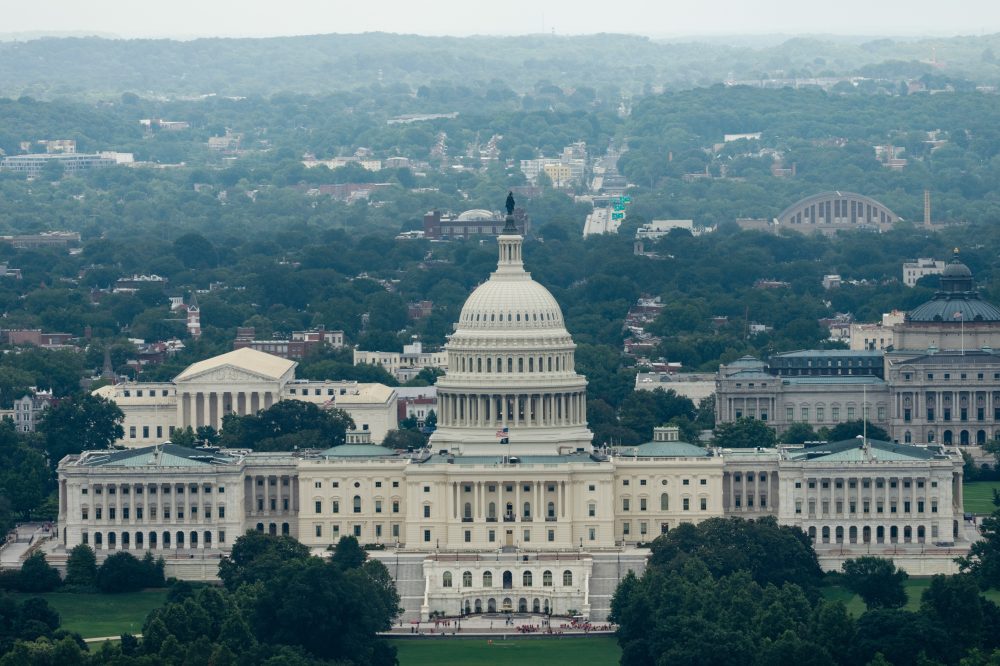

Federal Reserve Chairman Kevin Warsh appeared before Congress this week with a firm message: inflation must come down. But he offered little detail about how he plans to make that happen, even as fellow Fed policymakers were openly discussing their own positions on rates and the economy.
The gap between Warsh’s silence and his colleagues’ openness underscores just how hard it is to predict the Fed’s next move — especially as fresh conflict in the Middle East pushes fuel prices higher and artificial intelligence investment continues to drive up costs.
It also reflects Warsh’s effort to overhaul how the central bank communicates with the public, as he believes his colleagues have been saying too much.
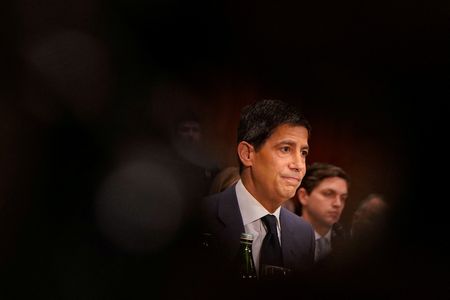
“We want to get policy right, and I think being somewhat more circumspect in our communications, at least for me, is a better way of calling balls and strikes,” Warsh told members of the House Financial Services Committee on Tuesday.
Over the course of two days of congressional testimony — first before the House panel and then before the Senate Banking Committee — Warsh repeated more than a dozen times that inflation remains too high. When U.S. Senator John Kennedy pressed him on what he intended to do about it, Warsh responded: “It’s not going to be permanent under my watch.”
“What are you going to do about it?” Kennedy, a Louisiana Republican, asked directly.
“We’re going to look at our tools and the changing economy, both balance sheet and interest rate, and see whether we need to adjust policy to take it head on,” Warsh replied, without revealing what specific conditions would trigger action.
Kennedy pushed further, listing the three basic options — hold rates steady, raise them, or cut them. Warsh acknowledged each as a possibility, then suggested that none of them might be the answer.
“You use five task forces to get to the big and hard questions instead of trying to paper it over with policies that have not been proven a success,” Warsh said. He was referring to panels of outside experts he has assembled to recommend changes to how the Fed runs monetary policy — including its communications strategy — with findings due by December.
The Fed’s policymakers are scheduled to meet in less than two weeks, with three additional meetings still on the calendar before year’s end.
On the question of artificial intelligence driving up prices, Warsh said AI-related cost pressures would likely increase “measured prices” over the next 12 months. But he added, “whether that’s inflationary or not, that’s up to the Federal Reserve, and we’re going to have something to say about that.”
Omair Sharif, founder and president of the forecasting firm Inflation Insights, found Warsh’s testimony lacking in direction. Warsh’s “answers on inflation remain puzzling, as does the fact that it is not clear what, if anything, he would be prepared to do to tackle inflation, other than ‘having something to say about it,’” Sharif said.
While Warsh stayed vague, his Fed colleagues were considerably more direct about how they would respond to economic changes.
Fed Governor Lisa Cook, speaking to the Exchequer Club of Washington, D.C., on Wednesday, said she sees it as wise to allow more time to watch how inflation develops. However, she also cited concerns about price pressures from AI investment, tariffs, and the Middle East conflict. “If we do not see signs of disinflation soon, I am prepared to act,” Cook said — a clear signal that she would support raising interest rates if needed.
New York Fed President John Williams struck a more optimistic tone on Wednesday, acknowledging that “inflation is unquestionably too high at about 4%” but adding that “there are encouraging reasons to expect that inflation has peaked and should edge down in coming quarters.” He described current policy as “well-positioned” — language central bankers typically use to indicate they see no need for a change.
Fed Governor Christopher Waller, speaking before new data showed that year-over-year consumer inflation cooled to 3.5% in June from 4.2% in May, said on Monday that he would need to see “several months” of declining inflation before feeling confident it is moving toward the Fed’s 2% target.
Additional remarks from Fed officials are expected before the central bank’s standard pre-meeting communications blackout begins Saturday. Both the Dallas Fed president and the Fed vice chair are scheduled to speak on Thursday.
Warsh has been consistent in his message to financial markets: stop waiting for signals from Fed policymakers and focus on the economic data instead.
“There are plenty of people on Wall Street who are upset with me already that I’m somehow not feeding them all the information they’ve gotten before, and if they only had my dot, everything would be swell,” Warsh said Wednesday. He was referring to the Fed’s quarterly chart showing each policymaker’s expected path for interest rates, known as the “dot plot.”
The most recent dot plot from June showed that half of Warsh’s 18 colleagues expect a rate increase by year’s end. Warsh himself did not submit a dot. His advice to investors: “Play the ball, not the Fed.”
His colleagues, however, appear to disagree with that approach. Williams said Fed policymakers need to connect the dots between their economic outlooks and their rate expectations — a view also expressed by Waller, who has been open about his differences with Warsh on communications policy.
“There’s no change in that at all, and I think that that provides … that rich kind of set of perspectives of the 19 participants in the committee sharing their views,” Williams said.