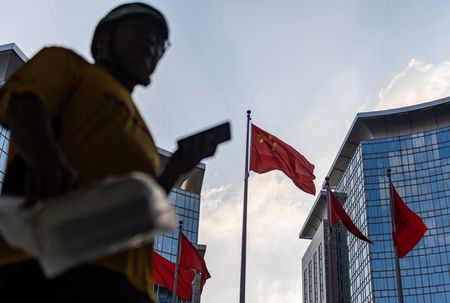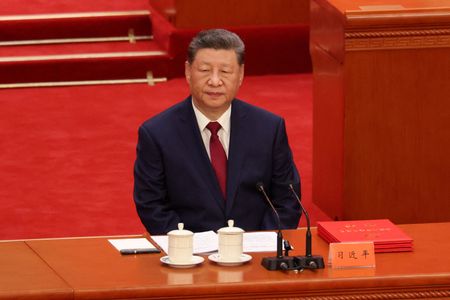

Chinese President Xi Jinping is set to lay out an ambitious vision for how China sees its role in shaping the future of global artificial intelligence at a major forum this Friday — and the event is shaping up to be far more than a technology trade show.
Xi’s first-ever appearance at the annual World Artificial Intelligence Conference, known as WAIC, signals just how seriously Beijing views AI — both as an engine for economic growth and as a key piece of its broader competition with the United States on the world stage.
The forum, running July 17 through 20 in Shanghai, will also serve as the launch pad for Huawei’s Atlas 950 SuperPoD, described as the company’s most advanced large-scale AI computing system to date. The system connects thousands of Huawei’s own Ascend AI processors through high-speed links, allowing them to function together as one massive computing cluster built for large-scale AI training and processing.
The launch is seen as one of the strongest demonstrations yet of China’s push to build AI infrastructure without relying on chips from U.S. company Nvidia. Additionally, DeepSeek’s newest V4 model has been adapted to run entirely on clusters powered by Huawei’s Ascend chips. Chinese media also reported that domestic chipmakers Biren and MetaX plan to unveil new “supernode” computing clusters at the event.
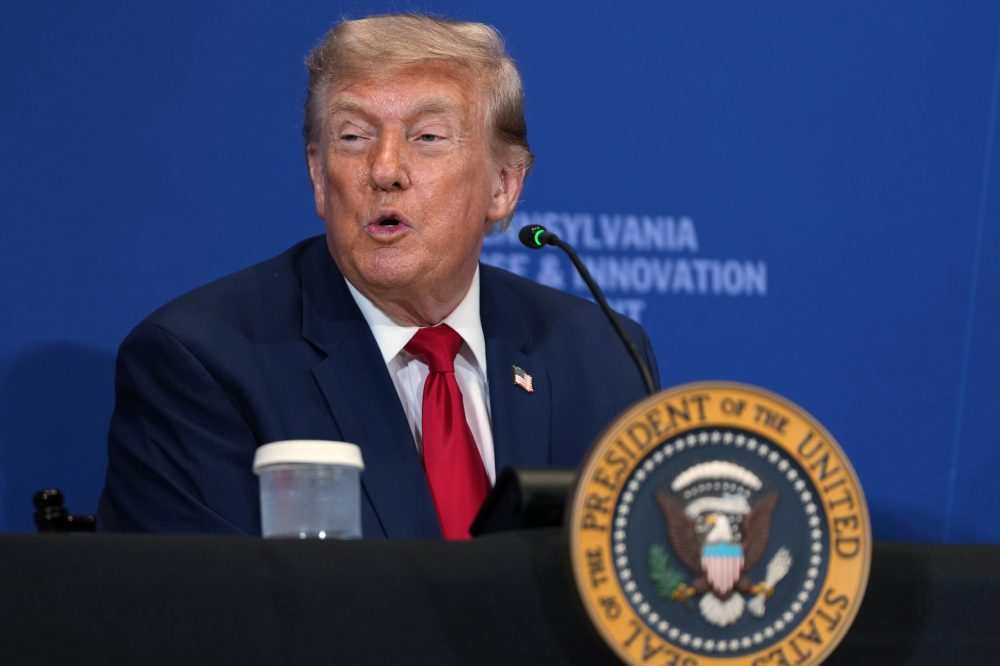
The timing of the conference carries significant diplomatic weight. Washington and Beijing are preparing for their first government-level AI discussions under the current U.S. administration, transforming WAIC into an early indicator of how China plans to compete for influence over the rules that will govern AI globally.
The two nations already staked out competing positions at a United Nations AI dialogue last week. The U.S. argued that heavy regulation could slow down technological innovation, while China framed its affordable, open-source AI models as a benefit to the world that could help close the gap between wealthy and developing nations in AI access.
George Chen, who chairs digital practice at the Asia Group, captured the moment this way: “Against this backdrop, WAIC has become more than a technology showcase; it is now a geopolitical stage where Beijing seeks to articulate its vision of AI as both a national priority and a diplomatic instrument.”
Xi has made his position on AI clear before. In a January speech, he compared the technology to an “epoch-making, major technological transformation following the steam engine,” and Beijing has openly committed to spreading AI throughout its economy while achieving independence in cutting-edge technologies.
China proposed the creation of a World AI Cooperation Organisation, or WAICO, at last year’s conference, though no countries have officially signed on as members. Progress on that initiative, along with steps toward implementing China’s Global AI Governance Initiative, are expected to be announced during a High-Level Meeting on Global AI Governance being held alongside the main conference in Shanghai.
Beijing is also expected to use the forum to promote its open-source AI models as a cheaper alternative to Western technology. A commentary published this week in the People’s Daily stated: “The development of AI must never move toward a technological monopoly that walls itself in, but should always be anchored to the fundamental goal of serving humanity.”
The conference will draw a notable international crowd, including UN Secretary-General Antonio Guterres, Kazakh President Kassym-Jomart Tokayev, and Thai Prime Minister Anutin Charnvirakul. Nine Turing Award and Nobel laureates are also expected to attend, among them deep learning pioneers Yoshua Bengio and Richard Sutton. However, major U.S. technology companies have little representation at the event.
An Asian diplomat, speaking to Reuters anonymously, noted that “China has been making inroads with Southeast Asian countries in terms of AI capacity-building, and portrays itself as speaking up for developing countries who are being left behind in the AI race.”
Other product announcements expected at the forum include AI-powered smartphones from Nubia, which is owned by ZTE, and AI startup StepFun, according to Chinese media reports.