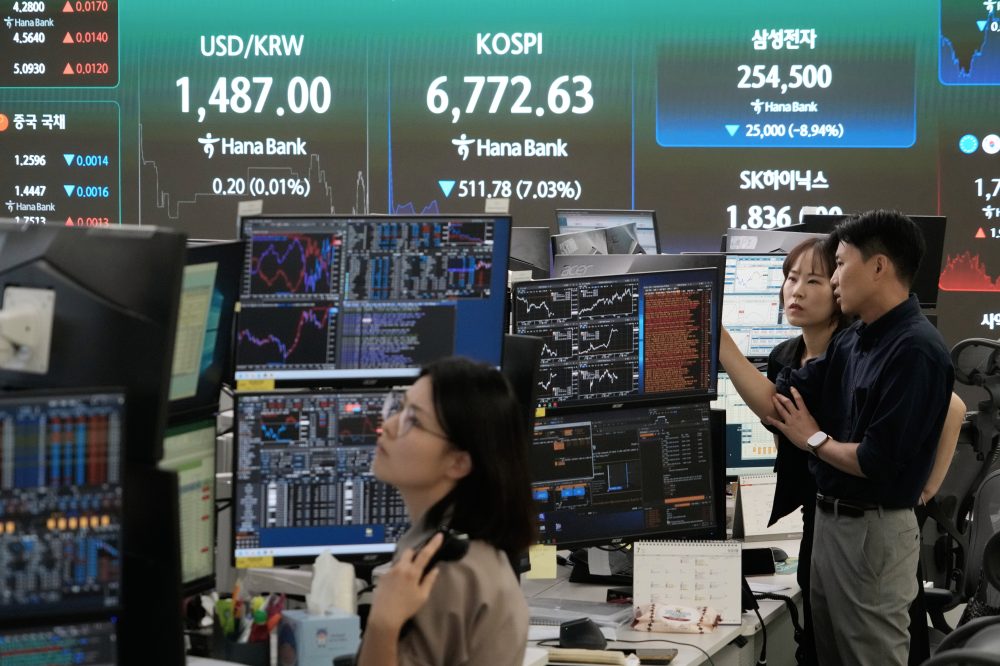

SEOUL, South Korea — South Korea’s central bank took action Thursday to tighten the country’s money supply, raising its key interest rate for the first time in more than three years as officials work to bring down inflation and rein in surging household debt.
After a monetary policy meeting, the Bank of Korea bumped its benchmark rate up by a quarter of a percentage point, moving from 2.5% to 2.75%. It marks the first rate increase since January 2023.
In recent years, the bank had chosen to hold rates steady or reduce them, even as concerns mounted over skyrocketing household debt and climbing real estate prices. Officials had prioritized keeping the trade-dependent economy afloat amid global instability and sweeping tariff increases imposed by U.S. President Donald Trump.
Now, however, policymakers feel more comfortable tightening borrowing costs. The economy has outperformed expectations, largely due to strong semiconductor exports powered by a worldwide surge in artificial intelligence investment. On Tuesday, the government revised its 2026 growth forecast upward to 3%, which would represent the country’s fastest annual growth since 2021.
The rate increase came as little surprise. Bank of Korea Governor Shin Hyun Song had signaled at the bank’s May policy meeting that a rate hike should come at an “appropriate time.” Consumer prices rose more than 3% in both May and June — well above the bank’s 2% target. That inflation has been driven in part by rising energy costs tied to the war involving the U.S. and Israel against Iran, as well as a weakening of the Korean won.
Concerns about household debt remain a key issue as well. Higher property values in Seoul and surrounding areas, combined with a rally in technology stocks, have encouraged more borrowing across the country.