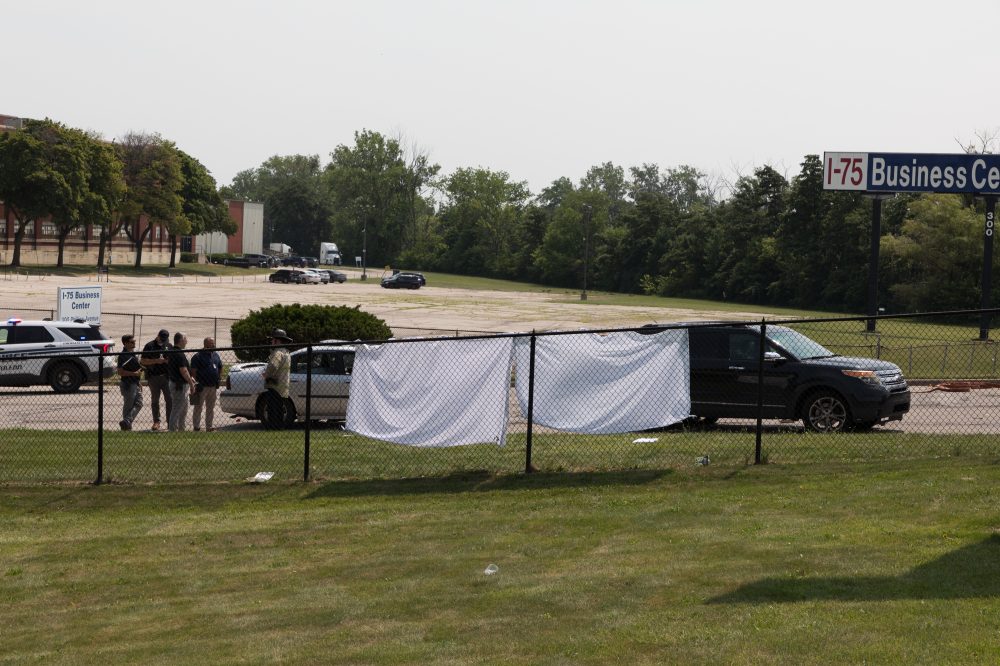

Carbon monoxide has been confirmed inside a parked Ford Explorer in Toledo, Ohio, where five people were discovered unresponsive Wednesday morning — three of whom did not survive, according to officials.
Toledo Fire Chief Allison Armstrong said the vehicle had pulled into a parking lot after getting a flat tire. The victims were found shortly after 11 a.m. A city spokesperson identified the victims as a grandmother and her grandchildren, and said the woman’s son — who had been called to the scene to help — was the one who discovered them.
Mayor Wade Kapszukiewicz confirmed that investigators do not suspect foul play. Three of the five victims died, while two children were taken to the hospital in critical condition. Names, ages, and hometowns have not yet been released.
The mayor took to Facebook to address the tragedy, writing: “Today, a family experienced a tragedy that no family should ever have to endure.”
To determine the cause, investigators started the vehicle with the doors shut and placed a meter inside the passenger compartment. Armstrong described what they found: “We had a high spike of carbon monoxide inside the passenger compartment on that vehicle.” The SUV was subsequently towed by police.
Armstrong said more investigation is needed to determine exactly how the carbon monoxide built up inside the vehicle. “They’re going to have to do some further investigation to see if they can identify how does that happen,” she said. “I think that’s an important piece of this that people want to know, and they should know for everybody’s safety.”
The fire chief noted that a “very similar” incident had occurred several years ago, in which carbon monoxide seeped into a vehicle through holes in the floorboards.
Ford Explorers have previously been the subject of a lengthy federal investigation. The National Highway Traffic Safety Administration spent six years reviewing complaints about exhaust odors making their way into passenger cabins. In 2023, the agency concluded its review of more than 6,500 consumer complaints — which also included field testing and consultations with automotive, medical, environmental health, and occupational safety experts — and determined that the SUVs did not have dangerously high carbon monoxide levels and did not require a recall. That investigation covered approximately 1.5 million Explorer models from the 2011 through 2017 model years.
Armstrong said it was not yet known what model year the Explorer involved in Wednesday’s incident was manufactured.