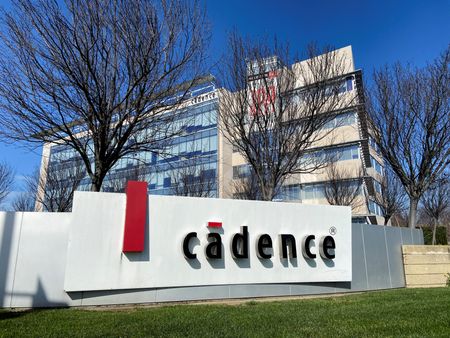

Cadence Design Systems introduced a new artificial intelligence “super agent” on Wednesday aimed at revolutionizing how engineers design printed circuit boards and chip packages, marking another step in the company’s effort to automate complex engineering tasks.
The new tool, known as AuraStack, allows engineers to describe what they want to accomplish in everyday language. The system then takes over, planning and executing the work using Cadence’s existing suite of software to lay out and virtually test circuit designs. The company noted that Nvidia chips will be used to power the AI processing behind the tool.
According to Cadence, AuraStack has the potential to reduce the time it takes to bring a product to market by as much as half, while also boosting efficiency on specific tasks by up to 15 times. The new offering for circuit boards and chip packaging builds on similar AI tools the company released earlier this year focused on chip design itself.
During a live demonstration, Cadence showed how an engineer used AuraStack to redesign a 5G smartphone circuit board with the goal of creating a more affordable version for a new market. The tool recommended combining components to achieve a 28% reduction in cost and also identified a less expensive power-management chip that was compatible with the new board layout.
Michael Jackson, Cadence’s corporate vice president and general manager for system design and analysis, explained the thinking behind the product. “The bottleneck isn’t automation. It’s really engineering intelligence,” he said, describing the system’s ability to weigh trade-offs between cost and performance.
Cadence identified Nvidia, Taiwan Semiconductor Manufacturing Co, and Schneider Electric as among the first companies to use the new tool.
Jackson said customers will be able to connect AuraStack with the AI model of their choosing, including OpenAI’s ChatGPT, Google’s Gemini, Anthropic’s Claude, or open-source alternatives. The pricing structure will be based on usage — specifically how much computational work the AI models perform — and will still require customers to use Cadence’s underlying software tools.
AuraStack is set to become available later this year, with the full rollout expected to wrap up in September, according to Jackson.