Drivers heading westbound on Delaware Route 2 should plan ahead for an overnight lane restriction currently in effect.
The left lane on DE 2 westbound, between Milltown Road and Pike Creek Road, has been closed due to ongoing construction work. Motorists in the area are advised to use caution and allow for extra travel time.
The lane closure is scheduled to remain in place until 6 a.m. Drivers are encouraged to consider alternate routes if possible until the restriction is lifted.
New York has become the first state in the nation to put the brakes on large-scale data center construction, enacting a one-year pause on Tuesday as worries mount that the facilities powering the artificial intelligence industry are driving up energy bills, depleting water resources, and placing heavy burdens on communities.
The move thrusts New York to the center of a widening national conversation about how states should handle the massive infrastructure demands of artificial intelligence. Technology companies have been aggressively building new data centers across the country, while lawmakers and regulators in numerous states are exploring ways to limit the impact these facilities have on power grids, utility costs, and neighborhoods.
“As data center development threatens to hike up utility bills, deplete our natural resources, and create uncertainty for New Yorkers, it’s my responsibility to take action and lead,” said Hochul, who also announced plans to pursue legislation that would eliminate sales tax exemptions currently benefiting large data centers.
According to officials in the governor’s office, the construction freeze will cover data centers that draw 50 megawatts or more of electricity. During the moratorium period, the state’s Department of Environmental Conservation will not issue any discretionary permits for projects that have not already been deemed complete.
Hochul directed state officials to develop a Generic Environmental Impact Statement — known as a GEIS — to establish consistent standards for new data centers and to study the potential environmental consequences of building and operating such facilities in New York. The moratorium will be lifted once those standards are finalized, according to her office.
The state legislature passed a bill last month aimed at placing guardrails on data center development, but that legislation has not yet been delivered to Hochul for her signature. Officials in her office described the bill as complicated and said “it’s going to take some time to work through” with lawmakers.
The rapid spread of data centers across the United States has been pushing power demand — and electricity rates — higher in many parts of the country, triggering backlash from residents and elected officials alike. A recent Reuters/Ipsos poll found that only one in three Americans support the fast pace of data center construction, and most people said they would oppose having one built in their own community.
Dozens of state legislatures have introduced measures aimed at curbing the effects data centers have on energy bills and the environment, but New York is the first to enact a complete construction moratorium. In April, Maine’s governor vetoed a similar bill that would have frozen data center construction in that state.
As of May, more than 12 gigawatts of very large energy-consuming loads — including data centers — were waiting to connect to New York’s electrical grid, according to a report from the state’s independent grid operator. New York also ranks eighth in the country for the most expensive residential electricity prices, based on data from the U.S. Energy Department.
U.S. Representative Chellie Pingree, a Democrat from Maine, is speaking out following the fatal shooting of a 26-year-old Colombian man by federal law enforcement officers in Biddeford, Maine.
The shooting, carried out by Immigration and Customs Enforcement agents, resulted in the death of the young man and has prompted public comment from Congresswoman Pingree.
Rep. Pingree addressed the incident, raising concerns about the circumstances surrounding the deadly encounter between federal agents and the 26-year-old Colombian national in the southern Maine city of Biddeford.
PAMPLONA, Spain — The celebrated San Fermin festival in Spain drew to a close Tuesday, ending with two people suffering goring injuries during the eighth and final bull run of the event.
An 18-year-old Pamplona resident was pierced in the thigh at the course’s first turn, where a bull charged into a cluster of runners — knocking two men onto the cobblestone street and tossing a third over its horns.
A second victim, a 46-year-old man from central Spain, was struck by a horn in the chest area during the final stretch of the course, where the path narrows as it leads into the bull ring. The bulls are later killed by matadors inside the ring later that same day.
Both injured men were transported to a nearby hospital for treatment. Eight additional runners also required medical care for less serious injuries, among them an 86-year-old man from Britain.
The six fighting bulls and the steers that accompany them typically complete the 875-meter (957-yard) course — from the starting pen to the bull ring — in just two and a half minutes. That rapid pace frequently catches runners off guard, particularly given that more than a thousand participants are packed into the narrow, winding street route.
The most recent fatality at a San Fermin bull run took place in 2009. Gorings and broken bones remain common occurrences, due in part to the large number of inexperienced runners and international tourists who join seasoned locals on the course. Many injuries result not from the bulls themselves, but from falls triggered by panicking runners.
This year’s festival carries added historical significance, marking 100 years since the publication of Ernest Hemingway’s novel “The Sun Also Rises,” the book widely credited with bringing the San Fermin festival to the world’s attention.
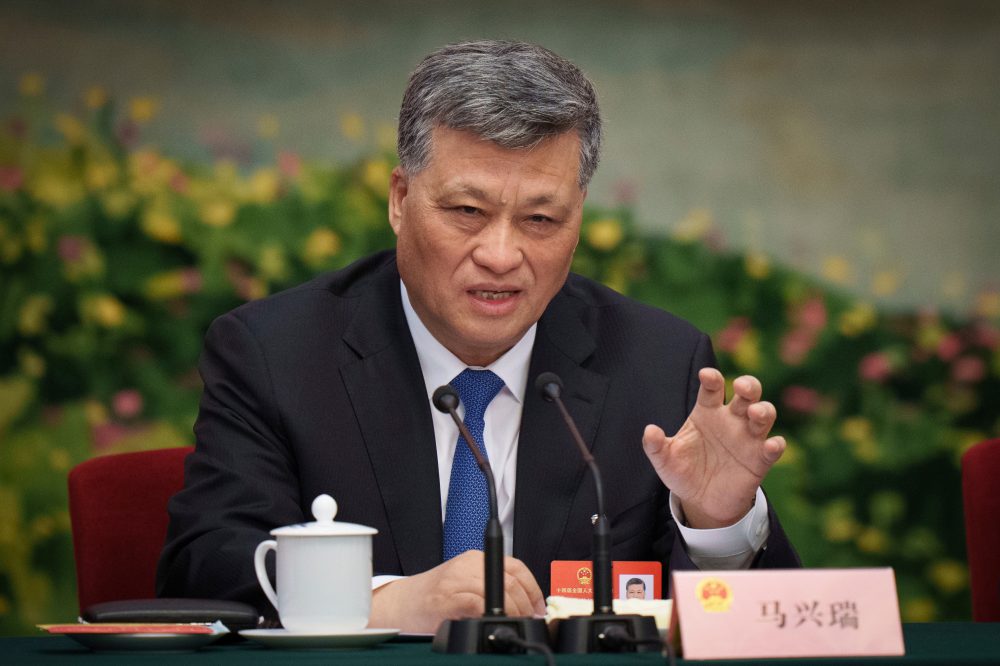
BEIJING (AP) — China’s ruling Communist Party has expelled one of its most senior officials, state media announced Tuesday, marking the latest chapter in leader Xi Jinping’s ongoing anti-corruption campaign.
Ma Xingrui held a seat on the Politburo, an elite 24-member body composed of the country’s top party leaders. State media now refers to him as a former member following the announcement.
Ma is the third sitting Politburo member — whose current term spans 2022 to 2027 — to be removed as part of the anti-corruption effort. The other two expelled members are military generals. Political analysts view the campaign as both a tool to eliminate corruption and a way for Xi to reinforce loyalty within the party’s ranks.
Signs of Ma’s downfall first emerged in April, when authorities announced he was under investigation for serious violations of party discipline and national laws, though no specifics were provided at that time. Tuesday’s reports revealed that party investigators concluded he had committed numerous violations, including accepting gifts and money, as well as engaging in what were described as “power-for-sex” and “power-for-money” exchanges.
Additional violations included using his official position to steer government contracts and job promotions toward certain individuals, and turning a blind eye to alleged criminal behavior by members of his own staff.
Ma, 66, most recently served as the Communist Party chief of the Xinjiang region until 2025. Prior to that, he was governor of Guangdong province, a major manufacturing hub located in southern China along the border with Hong Kong. In China’s political structure, the party chief holds higher authority than the governor within any province or region. By background, Ma is a trained engineer who worked in the aerospace sector before transitioning into local government.
In a separate but related development, the party’s anti-corruption body announced Tuesday that it has launched an investigation into the director of mine safety in Shanxi province, following a deadly coal mine explosion that occurred in May.
Graham Platner had built real momentum among Maine voters with his progressive platform, but his sudden exit from the U.S. Senate race has left his supporters searching for direction.
With Platner out, the Maine Democratic Party is now in a scramble to identify and select a new candidate to carry the party’s banner in the Senate contest.
Democrat David Costello has emerged as one of the contenders hoping to step into that role. Costello was recently spotted in downtown Brunswick, Maine, collecting the signatures required to be considered at the party’s upcoming nominating convention.
Platner’s departure has created both uncertainty and urgency within Maine Democratic circles, as the party works to rally around a new nominee and maintain its competitive standing in the race.
A simple conversation between a teacher and a student in the eastern German state of Saxony-Anhalt has grown into a flashpoint over political speech in classrooms — and it comes just two months before a regional election that could hand the far-right AfD party control of the state government.
Max Heckel, who teaches craft and technical work in the town of Stendal, was reported to the state’s Schools Office last year following a post-lesson exchange with a student. According to Heckel, the student asked him whether he had voted for the AfD — Alternative for Germany. He said he told the student he had not, citing in part the domestic security service’s classification of the party as “extremist.”
Weeks after that conversation, Heckel received a formal reprimand for violating rules that require teachers to stay politically neutral in the classroom. Since then, he says he has faced online harassment, threats of violence, vandalism to his car, and verbal attacks from senior AfD politicians — all while fighting the disciplinary action he considers unwarranted.
Heckel, who also works as a part-time musician and runs an informal cultural center in Stendal, argues that teachers have a responsibility to defend Germany’s democratic foundations. He says many of his colleagues are too afraid to speak up, fearing both official discipline and hostility from outside the school.
He believes the situation demonstrates that schools are already being pressured not to allow criticism of the AfD — even before the September 6 election. Polls suggest the party could capture roughly 40% of the vote, while the centre-right CDU, led nationally by Chancellor Friedrich Merz, is polling below 30%.
The state’s school authority declined to offer any comment, noting the case remains under review.
The AfD views Heckel as a symbol of left-wing influence it intends to eliminate from schools. Ulrich Siegmund, the AfD’s candidate for premier in Saxony-Anhalt, has repeatedly raised the case in the state assembly. He told Reuters the party would strip political influence from education as part of a broad overhaul.
“We want lessons to remain neutral, so that pupils can form their own views of the political landscape in this country. We don’t need teachers who campaign in any particular direction,” Siegmund said.
He dismissed the security services’ assessment of the AfD as politically driven. The party did win a temporary court order this year halting a determination by the national domestic security agency, the BfV, that it was a “confirmed right-wing extremist” organization. However, Saxony-Anhalt’s own BfV office still classifies the state branch of the party as extremist — meaning it is seen as opposing the liberal-democratic foundations of the state — a label the AfD firmly rejects.
The AfD sees Saxony-Anhalt as a launching pad toward broader national ambitions. If the party forms a regional government there for the first time, it could use education policy as a proving ground for its agenda.
Education carries special weight in Germany because the school system was deliberately structured after World War Two to guard against the return of extremist ideology. For decades, students have been required to learn about the atrocities carried out under Nazi rule in the name of racial purity and national dominance.
The AfD takes issue with that tradition — known in German as “Vergangenheitsbewaeltigung,” or coming to terms with the past — arguing it has fostered a national guilt complex and eroded pride in Germany’s heritage. The party also contends that schools have been weakened by declining academic standards and duties unrelated to education, such as integrating children from refugee families.
Hans-Thomas Tillschneider, a key architect of the AfD’s education and cultural agenda in Saxony-Anhalt, told Reuters that schooling would be a top priority under an AfD government.
“We want a completely new, a completely different education policy,” he said. “Political influence on children, as we experience it — political indoctrination — is not a job for schools.”
Under what the party calls a “patriotic cultural policy,” schools would place greater emphasis on medieval rulers and 19th-century figures from German history, such as Otto von Bismarck, known as the “Iron Chancellor.” Social support programs and integration initiatives would be eliminated.
Mainstream parties, including the CDU, argue the AfD is threatening to dismantle a post-World War Two framework built to protect democratic society. Those parties have adopted a so-called “firewall” policy, refusing to work with the AfD in any coalition arrangement, even if the party falls short of an outright majority.
Critics of the AfD say the party’s version of classroom neutrality would actually suppress informed debate and leave students less equipped to think independently about politics.
Heckel himself is unequivocal about where he stands.
“There is a duty to uphold the constitution,” he said, “and that imposes an obligation on us to protect the free and democratic basic order, both in our private lives and in the workplace.”
India’s foreign ministry announced Tuesday that it has filed a strong protest with Iran, calling in Tehran’s deputy ambassador following the killing of an Indian seafarer in the Strait of Hormuz.
The victim was one of 46 crew members aboard two vessels — the MT Al Bahiyah and the MT Mombasa — when both ships came under attack while passing through the shipping lane. Of those 46 crew members, 30 were Indian nationals, according to the ministry.
Ten additional Indian sailors were injured in the attacks, with two of them reported to be in serious condition, the ministry said in an official statement.
India described itself as “deeply concerned” by the attacks and called for an end to the targeting of commercial ships and civilian infrastructure in the region, stating such actions “must cease.”
The situation in the strait has been escalating. U.S. President Donald Trump reinstated a blockade on Iranian shipping in the Strait of Hormuz this month and put forward a proposal to charge a 20% fee to provide protection there. Iran has pushed back, saying the U.S. has no authority over the future of the waterway, which handled roughly one-fifth of the world’s oil and gas supplies before the conflict broke out on February 28.
A separate incident has also left another Indian national unaccounted for after an attack on the container ship GFS Galaxy in the strait on Sunday. Iran stated it targeted that vessel because it attempted to travel through an unauthorized route after being warned not to do so.
A night out at a popular pub in northern Bangkok turned into a tragedy late Sunday when a fire broke out just before midnight, killing at least 30 people and sending 75 others to the hospital — 24 of them in critical condition.
The blaze began at 11:57 p.m. local time (1657 GMT) at the Rong Beer Na Lat Phrao pub, likely triggered by an electrical short circuit in a ceiling air conditioning unit, according to authorities.
One survivor, 41-year-old Usa Tadsree, had stepped outside for a cigarette when she noticed the lights inside flickering, followed quickly by smoke pouring out. “I wanted to go back in to get my friends but there was intense heat coming out, so I had to run out,” she said.
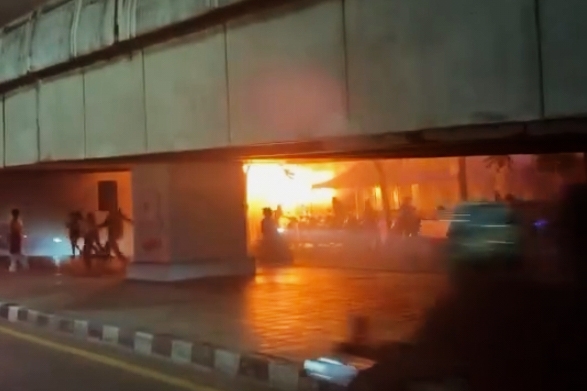
A social media video verified by Reuters captured the terrifying moment — first thick smoke rolled out of the front entrance, then within seconds a powerful horizontal wall of flames shot out into the street, accompanied by screams from those inside and outside the building.
Experts who examined the scene say the rapid spread of fire was fueled by highly combustible materials used throughout the venue’s interior. Busakorn Saensookh, who chairs the Fire Protection Engineering Committee at the Engineering Institute of Thailand, visited the site after the fire. “The severity of this fire was driven by a massive fuel load,” she said.
She pointed specifically to flammable acoustic materials and decorations — including artificial trees and flowers — that had been installed across the ceiling to form a green canopy, particularly around the stage and bar areas. Reuters-verified video from inside the venue before the fire shows a green grass-like material covering the ceiling above the stage, along with what appears to be black acoustic foam panels in seating areas.
“The fire involved plastic materials, and these were relatively dense plastics. Once ignited, they produced a jet of fire as enormous amounts of heat accumulated,” Busakorn explained. “That heat was transferred downward, causing materials below to burn. Upholstered chairs were completely consumed by the fire.”
Amorn Pimanmas, president of the Thailand Structural Engineers Association, who also visited the site, said the non-fire-retardant foam used in the decorations released black smoke laced with carbon monoxide and cyanide. “People died from inhaling toxic smoke before being burned by the fire,” he said. “Several bodies showed no signs of burning.”
The comparison to another recent disaster was noted: the use of foam in the Bangkok pub’s ceiling echoes how similar material may have contributed to a deadly New Year’s Eve fire at a Swiss ski resort in Crans-Montana, which killed at least 40 people and injured 119.
Firefighter Chakrit Khongkom reached the Bangkok scene roughly five minutes after the fire started, finding the pub completely filled with smoke. “Most of the survivors were choking on the smoke,” Chakrit said. A search and rescue team he said was deployed inside found many victims collapsed near the bathrooms at the back of the venue, where authorities say multiple emergency exits were blocked by tables and beer crates.
During a visit to the site, Prime Minister Anutin Charnvirakul was told that a door previously used as an exit had been bolted shut. Body camera footage from an emergency responder, reviewed by Reuters, also showed multiple victims lying on the floor near the pub’s restrooms.
Thai police are investigating whether the blocked exits prevented people from escaping. The venue had undergone a safety inspection as recently as April.
The pub is situated at a busy intersection near train stations and two shopping malls, part of a cluster of similar bars that draw large weekend crowds for food, drinks, live music, and televised sports. The pub did not respond to requests for comment, and its owner is currently receiving medical treatment at a hospital.
Investigators also noted a regulatory loophole that may have contributed to the danger. The venue, like many others in Bangkok, was registered as a restaurant rather than an entertainment establishment — a classification that carries different and stricter fire safety requirements.
“When venues are not registered as entertainment establishments, their fire protection systems are incomplete, such as lacking smoke ventilation systems,” Amorn said. “This leads to smoke and heat accumulation, creating dangerous risks.”
Thailand has faced similar tragedies before. A 2022 nightclub fire in Chonburi killed 13 people, and a 2009 blaze at a Bangkok nightclub claimed at least 65 lives. Each time, concerns were raised about flammable materials, overcrowding, and unusable exits — yet the problems persisted.
In the wake of Sunday’s fire, Bangkok city officials say they are planning to revisit several regulations, including rules around decorative materials and the legal definition of entertainment venues.
“The risks are much greater today,” Busakorn warned. “But we are still using the same laws written 30 to 40 years ago that no longer reflect current realities.”
Federal safety officials announced Tuesday that BMW is recalling 29,119 vehicles in the United States due to a defect in the engine starter relay that could lead to a dangerous fire hazard.
According to the U.S. National Highway Traffic Safety Administration, the starter relay component is prone to corrosion, which can cause it to overheat and short circuit — conditions that significantly raise the risk of a vehicle fire.
The vehicles affected by the recall include the 530e xDrive, the 740Le xDrive, and certain iPerformance models, the auto safety regulator noted.
BMW owners with affected vehicles will not face any out-of-pocket expenses. As part of the recall remedy, dealerships will replace the engine starter relay free of charge, the NHTSA confirmed.
Listen to the Morning Delmarva Farm Report Update — July 14, 2026
DELMARVA — An Extreme Heat Warning is in effect across the Delmarva Peninsula through 8 PM Wednesday, the highest-level alert issued by the National Weather Service for dangerous heat conditions. Farmers and agricultural workers are urged to keep workers hydrated and limit field exposure during peak afternoon hours.
Forecast
Tuesday will bring sunny skies with a high of 92°F and light southwest winds. Wednesday temperatures will climb to a scorching 100°F under full sun. No rainfall is expected until Friday night, when there is a chance of showers and thunderstorms. Producers should plan pesticide and fertilizer applications accordingly.
Crop Management
Uneven crop development is complicating fungicide timing for many corn growers this season. Adam Byrne, a technical service manager with FMC, says an unusually wide spread of planting dates has left crops at very different growth stages across the region. Fields at tassel or just past tassel with disease pressure may require separate treatment windows, adding both time and cost to operations. Byrne recommends scouting each field individually before spraying.
Community
Volunteers near Laurel gleaned leftover potatoes from a field at Lakeside Farms, collecting dozens of pounds for local food banks. The Society of Saint Andrew organized the effort. Farmer Travis Hastings said crops going to waste has always bothered him and that he was glad to help facilitate the donation.
Markets
Monday’s closing futures showed September corn at $4.41¼/bu, August soybeans at $11.96¾/bu, and September Chicago wheat at $6.35¼/bu. At Laurel Grain Company in Laurel, Delaware, September corn cash bids are at $4.81/bu.
This article is based on the Delmarva Farm Report Update Morning Edition, July 14, 2026. Hosted by Tom Bradley.
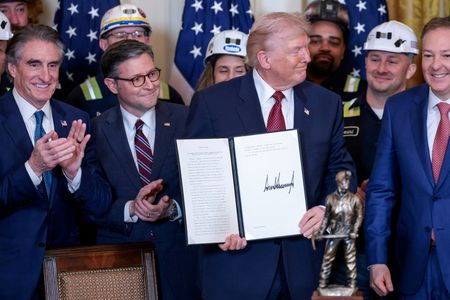
A coalition of labor and environmental groups has released a report finding that Trump administration policies rolling back federal clean energy support have contributed to the cancellation or delay of $83 billion in investments across hundreds of projects nationwide.
The BlueGreen Alliance released its findings on Tuesday, the same day labor leaders were set to meet with U.S. senators to talk about the future of the clean energy workforce.
According to the analysis, 223 manufacturing and clean energy projects totaling $82.9 billion in investment and 111,765 jobs have either stalled or been scrapped since Donald Trump began his second term as president.
The report attributed these setbacks to Trump’s major tax and spending legislation, which rolled back or eliminated incentives established during the previous administration, along with other White House actions aimed at reducing government support for renewable energy and electric vehicles.
Roxanne Johnson, the BlueGreen Alliance’s vice president of research, commented on the findings, saying: “The resulting figures clearly illustrate the staggering loss of investment and job creation that the policies of this administration and Congress have brought about.”
Trump has repeatedly argued that renewable energy sources such as wind and solar are unreliable and receive unfair government subsidies.
The report also highlighted that federal funding reductions and regulatory rollbacks that began in 2025 have weakened on-the-job protections for workers in energy and industrial fields.
Among the specific changes noted were the reversal of Environmental Protection Agency rules covering hazardous industries and delays to a rule limiting silica dust exposure for coal miners. The report warned that the silica rule delay could contribute to a comeback of black lung disease among miners.
In addition, the report found that 3,034 manufacturing, energy, and industrial projects now face tougher eligibility requirements for tax credits under Trump’s One Big Beautiful Bill Act. That puts an estimated $695.2 billion in investment and nearly 1.2 million projected jobs at risk, according to the analysis.
NEW DELHI — A prominent Indian activist pushing for the education minister’s resignation over widespread exam paper leaks reached his 17th day of a hunger strike on Tuesday, as his deteriorating health prompted opposition politicians to beg him to stop.
Sonam Wangchuk, 59, has been fasting in central New Delhi in solidarity with the founder of India’s youth Cockroach Janta Party, a group staging a sit-in demanding Education Minister Dharmendra Pradhan step down. The controversy stems from exam leaks that occurred in May, disrupting tests taken by millions of students — an unusual act of defiance against Prime Minister Narendra Modi’s government.
The Cockroach Janta Party, known as CJP, was founded by 30-year-old Abhijeet Dipke. The party describes itself as representing “the lazy, the unemployed, and the chronically correct,” and has quickly captured the attention of young Indians on Instagram, amassing 22 million followers within just days of its launch in May.
Wangchuk was seen lying on a white mattress on a stage before a small crowd, gesturing to reporters that he was too weak to speak. He had previously stated his fast could continue for up to six weeks — unless his health gave out first. A photo shared on the social platform X showed him surrounded by medical personnel, and CJP reported he had shed 8.5 kilograms as of Tuesday, with his “health continues to deteriorate.”
Dipke, speaking to onlookers and online video creators at the protest site, expressed concern for the activist’s condition. “We have been trying to convince Sonam sir to withdraw his hunger strike but he is adamant to continue it,” Dipke said. “Sonam sir is asking us to keep preparing for the march to parliament on 20th July. I feel the government wants Sonam sir and other people on hunger strike to die.”
The protest is being held at the Jantar Mantar observatory, located near parliament. On Monday, a young person also participating in the hunger strike fainted and was rushed to the hospital.
The education minister, his ministry, and the government’s chief spokesperson did not respond to requests for comment.
Several senior opposition figures called on Wangchuk — an engineer-turned-activist who served as the inspiration for a character in a hit Bollywood film — to abandon his fast. Akhilesh Yadav, a former chief minister of Uttar Pradesh state, wrote on X: “His life is invaluable to the entire world because it embodies a commitment to humanity and the environment that is as profound as his commitment to democracy.”
The protest taps into deep frustration among India’s youth, who are estimated to make up more than half of the country’s 1.42 billion people. Government figures show the national unemployment rate stood at 3.1% in 2025 for those aged 15 and older, but climbed to nearly 10% among people aged 15 to 29, and reached 13.6% in urban areas.
Anger over the exam leaks has been particularly intense after the scandal led to the cancellation of a medical college entrance examination that had been taken by 2.3 million candidates. That test was eventually rescheduled and held last month.
KUALA LUMPUR — Malaysian authorities announced Tuesday they are investigating a co-living community for so-called “digital nomads” after allegations surfaced that Israeli citizens may have entered the country illegally by using passports from other nations.
The community in question, known as The Network School, was founded in 2024 by Balaji Srinivasan, a former chief technology officer at Coinbase and a U.S.-based investor. Its website describes it as a “frontier community of techno-optimists” with a mission of “turning internet communities into physical startup societies.”
Srinivasan has publicly stated that the community is situated on a man-made island “near Singapore.” Social media posts and news reports suggest the location is Forest City, a massive $100 billion development built on reclaimed land in Malaysia’s Johor state.
Malaysia is a strong supporter of the Palestinian cause and maintains no diplomatic relationship with Israel. The country’s Immigration Department prohibits Israeli passport holders from entering Malaysia, though there is no law barring individuals with dual citizenship from entering using a non-Israeli passport.
Johor Chief Minister Onn Hafiz Ghazi was the first to call for a formal investigation on Tuesday, responding to social media users who alleged that Israeli nationals had used second passports to gain entry into the country through The Network School.
Onn Hafiz also announced via a post on X that Johor state agencies would review the commune’s adherence to local rules, including business licenses, building use, and permitted activities.
Malaysia’s Home Affairs Ministry confirmed in an official statement that the immigration department, police, and other relevant agencies had begun looking into the matter in response to the concerns raised by Onn Hafiz.
Investigators will work to identify who was present at the commune, verify the travel documents they used, and determine the stated purpose of their entry into Malaysia, the ministry said.
“If the investigation finds any violation of the law, misuse of immigration passes, provision of false information or any other offense that affects national security and interests, strict action will be taken without any compromise,” the ministry’s statement read.
The Network School had not responded to requests for comment at the time of this report.
A federal agriculture agency is seeking to update and extend the paperwork requirements tied to rules governing the importation of live pigs, pork, and pork products into the United States.
The Animal and Plant Health Inspection Service announced its intention to request a revision to and extension of approval of an information collection connected to regulations designed to keep imported swine and pork products free of classical swine fever.
The effort is specifically focused on imports coming from Brazil, Chile, and Mexico.
The request is being made in accordance with the Paperwork Reduction Act of 1995, which requires federal agencies to seek approval before collecting certain types of information from the public.
A federal agency that oversees animal and plant health has announced its intention to update and extend an existing data collection program related to animal disease tracking across the country.
The Animal and Plant Health Inspection Service, known as APHIS, is seeking a revision to and an extension of approval for an information collection connected to its National Animal Health Reporting System, which is part of the agency’s National List of Reportable Animal Diseases program.
The announcement was made in accordance with the Paperwork Reduction Act of 1995, a federal law that requires government agencies to justify and receive approval for collecting information from the public.
More than half a million Subaru vehicles are being recalled in the United States due to a labeling mistake found on the cars at the time of manufacture.
The U.S. National Highway Traffic Safety Administration announced Tuesday that Subaru is recalling 541,237 vehicles because they were built with an incorrect Gross Axle Weight Rating listed on their certification labels.
The Gross Axle Weight Rating, or GAWR, is a safety specification that indicates the maximum weight each axle of a vehicle is designed to carry. Having an incorrect figure on the certification label could lead to confusion for owners and operators about the vehicle’s safe load limits.
Samsung Electronics is exploring the possibility of offering American Depositary Receipts, or ADRs, on US markets, according to a Bloomberg News report published Tuesday that cited sources with knowledge of the situation.
Reuters was unable to independently confirm the report, and Samsung declined to offer any comment on the matter.
According to Bloomberg, the tech giant has had early-stage conversations with banks about the potential offering, though no final decision has been made. The discussions remain at a very preliminary level and may not ultimately lead to a listing.
This is not the first time Samsung has considered such a move. The company has previously looked into the possibility of an ADR offering but chose not to go through with it. However, a fresh development appears to have renewed the company’s interest — the successful US debut of fellow South Korean chipmaker SK Hynix.
Just last week, SK Hynix priced its American Depositary Receipts at $149 each, generating approximately $26.5 billion in what became the largest-ever US listing by a foreign company. That milestone appears to have given Samsung new reason to revisit the idea.
Chinese financial regulators have issued instructions to select banks prohibiting them from carrying out bill re-discounting transactions at interest rates below 0.5%, according to sources who spoke with Reuters on Tuesday. The directive reflects growing regulatory concern over aggressive activity in the bill market driven by sluggish loan demand.
The crackdown follows a sharp drop in bill re-discount rates in recent months. With few willing borrowers in a slow-moving economy, banks have been turning to the bill market as a way to fulfill lending quotas and put excess cash to work. Traders have noted that rates as low as 0.01% were not unusual, particularly near the end of each month.
One source explained that the heightened oversight was prompted by rates falling too quickly and too steeply when banks moved to purchase bills in large volumes — a trend that was working against regulators’ attempts to shape market expectations.
A separate source indicated that regulators may also be worried that dramatic swings in bill rates were giving the market a way to speculate on the overall condition of credit growth in the country.
All sources asked not to be identified, as they were not authorized to speak publicly on the matter. The Shanghai Commercial Paper Exchange did not respond to a request for comment.
Reuters reported last month that China’s central bank had directed certain commercial banks to ramp up their lending activity — a signal that credit demand remains soft. That concern was reinforced by data showing that new bank lending in May came in below expectations, following a contraction the prior month, as an ongoing slump in the property sector continued to drag on household borrowing.
BEIJING — China’s foreign ministry issued a sharp warning to European nations on Tuesday, urging them to watch their words and actions regarding the South China Sea and to stop supporting what Beijing describes as an “illegal ruling” — or risk damaging relations and cooperation between China and the European Union.
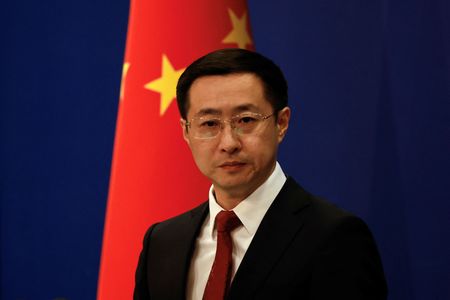
During a routine daily press briefing, foreign ministry spokesperson Lin Jian made the country’s position clear. “Europe is not a party to the South China Sea issue and has no right to comment on China’s legitimate territorial sovereignty and maritime rights and interests in the South China Sea,” Lin stated.
The warning followed a joint statement released the previous Sunday, in which a group of nations — including several European countries — declared that China’s broad maritime territorial claims in the South China Sea lack any legal foundation. The European Union subsequently issued its own related statement on the matter.
Beyond the verbal rebuke, China took additional diplomatic steps, with Lin confirming that officials from the embassies of the relevant countries and the EU’s delegation in China were summoned and formally presented with serious objections from the Chinese government.
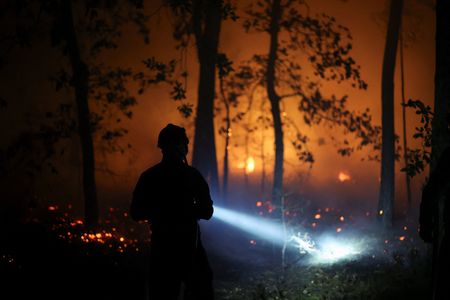
PARIS — Firefighters worked through the night battling a fast-moving wildfire that swept through the storied Fontainebleau forest near Paris on Tuesday, as authorities took two people into custody suspected of igniting the blaze near one of France’s most celebrated royal landmarks.
French Interior Minister Laurent Nunez confirmed late Monday that the situation remained dangerous. “It is not under control,” he said, noting that the main Fontainebleau fire and a second nearby blaze — both of which broke out Monday afternoon — had together consumed 1,300 hectares, or roughly 3,212 acres.
Nunez warned that the fire had advanced to within just a few kilometers of the Palace of Fontainebleau, prompting officials to deploy an extensive response that included water-dropping aircraft and helicopters.
In an unprecedented move, Canadair aircraft drew water directly from the River Seine on Monday for the first time, as the fire sent a thick column of black smoke rising into the sky above the region.
Located about 70 kilometers — approximately 40 miles — from Paris, the fire forced authorities to shut down the A6 highway, a major route connecting the French capital to Lyon and southern France. Additional smaller fires in the surrounding area also disrupted high-speed rail service. Close to 900 residents were ordered to evacuate their homes.
Nunez said the Fontainebleau fire is adding to what is shaping up to be an unprecedented wildfire season for France. So far this year, 32,000 hectares have burned across the country — already surpassing the total recorded for all of 2025. “We’ll probably have a record year,” Nunez said. “We expected this with this major drought.”
The fires are unfolding as Europe endures its third heatwave of the summer, with parched vegetation and soaring temperatures driving blazes across the continent from the Iberian Peninsula to France. Scientists widely attribute the increasing frequency and intensity of wildfires to climate change.
Nunez also revealed that 59 people have been arrested across France on suspicion of deliberately starting fires. He said the suspects were roughly split between adults and minors, with some individuals identified as repeat offenders.
Negotiations between BHP and its workers have collapsed, with a labor strike now set to move forward, according to the Combined BHP Ports Union.
The union announced on Tuesday that no agreement was reached between workers and their elected representatives, and that both sides intend to proceed with a protected industrial strike on Thursday, July 16.
Despite the breakdown, an additional round of talks has been scheduled for Tuesday, July 21, this time with the Fair Work Commission taking part in the proceedings.
DAKAR — No bank card, no home address, no problem. Shoppers across Africa are finding ways to buy from major international brands like Amazon and Walmart, even though those retail giants have virtually no footprint across most of the continent.
The people making it possible are package-forwarding companies — both local startups and established global players — that are using technology and expanding internet access to work around some of Africa’s biggest obstacles to online shopping, including a lack of formal street addresses and limited access to traditional banking.
One example is a Senegalese startup called Afrety, which illustrates just how creative these intermediaries have become in connecting African consumers to products from the United States, Europe, and China.
Getting Packages to People Without Addresses
Afrety gives its customers delivery addresses at warehouses located in France, the United States, and China. Orders can be bundled together and repackaged before being sent to West Africa. When shipments arrive, customs duties are paid, providing revenue for local governments.
For customers who don’t have bank cards, payment can be made through mobile money accounts that can be loaded with cash at local kiosks. Mobile money has become a widely used alternative to conventional banking in Senegal and across much of Africa.
Once packages reach Senegal, motorbikes and vans stationed at Afrety’s depot use GPS to make deliveries throughout major cities like Dakar.
“You have to be very, very, very flexible. That’s the key word,” said Souane Diop, the company’s 34-year-old CEO, speaking to Reuters outside a depot stacked with packages bearing the Amazon label and other international brand names.
Diop said Afrety launched in 2018 with the original goal of linking informal networks of air travelers moving between France and Senegal. From those modest beginnings, the company has grown to handle four to five metric tons by air and two to three shipping containers by sea each week. To keep expenses down, Afrety rents warehouse space in France and works with partners in the U.S. and China to manage operations there.
A Much Bigger Player in the Market
Global logistics company Aramex operates on a much larger scale, running two platforms with overlapping services in Africa.
While Afrety grew from the close ties between Senegal and France — its former colonial power, which has a large Senegalese diaspora — Aramex’s Sub-Saharan Africa operations rely on a platform called MyUS, which originally served American expatriates living in Africa. Aramex acquired MyUS in 2022 and also runs its own platform, Shop and Ship, which delivers to numerous countries across the continent.
Aramex Group Chief Executive Amadou Diallo told Reuters that the company’s mission is to serve African customers who want access to brands and choices that are otherwise out of reach. Angola is one of its top destinations, but the company also operates in challenging environments, including Somalia, a country that has been torn by conflict for decades.
Growth Is Real, But So Are the Limits
Aramex describes Sub-Saharan Africa as one of its fastest-growing regions. The most popular product categories include electronics, clothing, toys, and equipment for agriculture and auto repair. The company says it plans to double its revenue from the region by 2030.
Still, significant barriers remain. For both Aramex and Afrety, most customers live in or near major cities, where income levels are higher. According to consultancy Tech Cabal Insights, e-commerce in Africa is largely concentrated in economic hubs.
Internet access has reached roughly 43% of Africa’s 1.5 billion people, but only a small portion of those users earn enough to shop online. Even in Nigeria — West Africa’s largest economy — only one in three internet users makes online purchases. In poorer regions like Central Africa, just about one in twenty people shops online, the consultancy reports.
South Africa Stands Apart
South Africa, the wealthiest economy in sub-Saharan Africa, leads the continent in both internet use and online shopping by a wide margin.
Online retail in South Africa has grown by nearly 35% per year over the past five years, reaching roughly 140 billion rand — about $7.26 billion — in 2025, according to Mastercard figures. That growth has attracted major international brands to establish their first sub-Saharan Africa operations there.
Amazon launched its first online marketplace in South Africa in 2024, where it now competes with local e-commerce leader Takealot. The first Walmart-branded stores in Africa opened in Johannesburg last year.
When asked, neither Amazon nor Walmart commented on whether they are considering expanding to other parts of sub-Saharan Africa, and neither responded to questions about sales volumes to intermediary companies.
Local and Chinese Competitors Are Pushing Back
Even as the global retail giants stay on the sidelines in much of Africa, the intermediary companies face growing competition from other directions.
Nigerian retail company Jumia — often nicknamed the Amazon of Africa — operates in eight sub-Saharan African countries, selling everything from fashion to electronics to home appliances. The company has not yet turned a profit but says it expects to break even this year.
Jumia’s Chief Executive Francis Dufay told Reuters the company is working to fend off competition from Chinese retail giants including Temu and Shein by customizing its services for each country, including opening local help centers and pickup locations in rural areas.
Executives at both Jumia and Aramex identified Nigeria as one of the African e-commerce markets with the greatest potential. The Nigerian government doesn’t regularly publish e-commerce data, but has referenced United Nations estimates putting the total market at around $75 billion in 2025.
Aramex opened a warehouse in Nigeria in April of this year. Jumia’s Dufay said business there grew by around 50% over the last quarter of 2025.
“It’s still totally underpenetrated. We’re just at the beginning of our transformation in Nigeria,” he said.
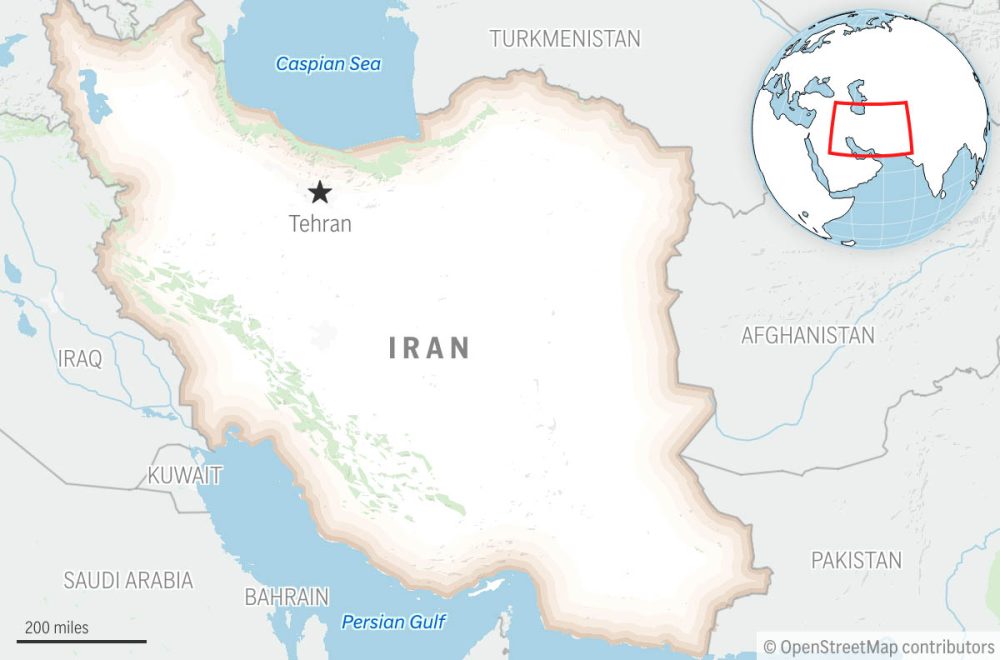
TEHRAN, Iran — Iranian state television reported Tuesday that two members of the Islamic State group have been put to death after being found guilty of taking up arms against the Islamic Republic.
The two men were named as Mohieddin Abdollahi and Hossein Palani. According to the report, they were part of an ISIS cell that came together following the group’s loss of territory in Iraq and Syria, with plans to carry out attacks within Iran’s borders.
Iranian security forces located the cell’s base of operations in the Bamo mountain region near the border with Iraq before any attacks could be launched. During the operation to neutralize the threat, several militants were killed and others were taken into custody. Three members of Iran’s Revolutionary Guard also lost their lives in the operation. Authorities reported seizing weapons, ammunition, and additional equipment at the scene.
Both men were convicted of armed rebellion against the Islamic Republic and were executed by hanging after Iran’s Supreme Court confirmed their death sentences. Officials from the judiciary did not reveal the location where the executions took place.
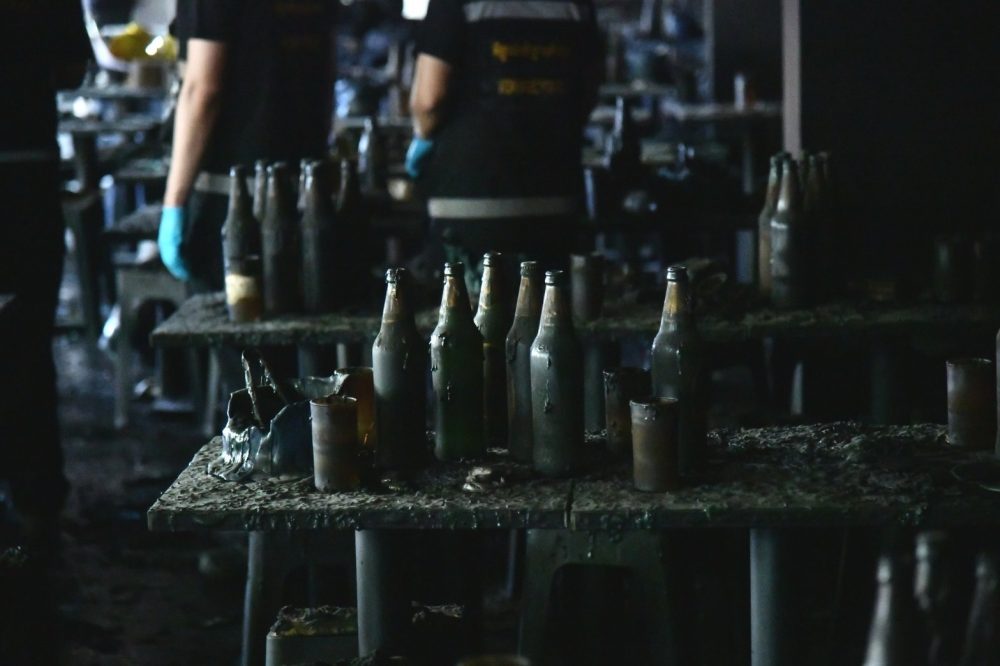
A fire that erupted late Sunday at the Rong Beer Na Ladprao music bar in northern Bangkok has become the deadliest blaze the Thai capital has witnessed in 17 years. The flames spread rapidly through the venue, leaving shattered windows facing the street and scorched tables still holding beer bottles inside the gutted establishment.
Authorities reported that a significant number of victims were discovered inside windowless bathrooms, areas where patrons apparently sought refuge as the fire overtook the building. The confined spaces offered little protection from the deadly blaze.
In the days following the tragedy, former customers and grieving community members have visited the site to pay their respects, leaving flowers at the location where so many lives were lost. The images captured in the aftermath paint a haunting picture of destruction and sorrow.
This report is based on a photo gallery curated by AP photo editors documenting the scene following the fire.
Iran’s Islamic Revolutionary Guard Corps announced Tuesday that it fired ballistic missiles at a U.S. air base located in Jordan, while simultaneously urging Jordanian citizens to push for the removal of American military installations from their country.
In a statement distributed through Fars News, the IRGC addressed the Jordanian people directly: “You know very well that not only do we not have any enmity with your country, but we also love you, the noble people, who understand the pain and oppression of the Palestinian people more than any other nation.”
Jordan’s military responded to the attack, announcing Tuesday that its forces intercepted and destroyed four missiles that crossed into Jordanian airspace from Iranian territory, according to the country’s state news agency.
Meanwhile, U.S. Central Command completed its latest round of strikes against Iran — a campaign carried out under orders from President Donald Trump. The five-hour assault marked the third straight night of American attacks on the country.
As the strikes unfolded, Trump moved to reinstate a naval blockade on Iranian shipping and floated the idea of charging a 20% fee on all cargo traveling through the Strait of Hormuz — a critical global waterway. Iranian media reported that several cities were hit during the U.S. strikes, with four people wounded and rescue teams deployed to affected areas.
Speaking on the “Hugh Hewitt Show” earlier Monday, Trump made clear his intentions: “Very hard tonight, and we’re going to hit them hard tomorrow. And there’s not a damn thing they can do about it.”
The renewed hostilities follow Iran’s weekend announcement that it was closing the Strait of Hormuz, a move that rattled global energy markets and cast doubt on any interim agreement to pause the ongoing conflict.
Trump had posted on Truth Social earlier Monday: “The Hormuz Strait is OPEN, and will remain OPEN, with or without Iran. We are reinstating THE IRANIAN BLOCKADE.” He added: “The U.S.A. will be, from this point forward, known as ‘THE GUARDIAN OF THE HORMUZ STRAIT’, but as such, and as a matter of FAIRNESS, will be reimbursed, at the rate of 20% on all cargo shipped.”
Iran’s senior military command pushed back, saying the U.S. has no authority over the waterway’s future. Iranian Foreign Minister Abbas Araqchi took to X to assert that Tehran is — and will remain — the strait’s true guardian, sarcastically responding to Trump’s proposed fee: “20% is of course too much. We will be fair.”
Before the conflict erupted in February, roughly one-fifth of the world’s daily oil and gas traffic moved through the Strait of Hormuz — more than 15 million barrels of fuel worth at least $1.2 billion every day. A 20% levy on that cargo could bring in approximately $240 million daily.
The United Nations shipping agency came out against Trump’s toll proposal, stating it opposes fees on internationally navigated straits and noting there is no legal foundation for imposing mandatory charges on vessels passing through.
Oil prices climbed nearly 3% on Tuesday, reaching their highest point in four weeks, driven by the reimposed U.S. naval blockade and growing fears about disruptions to global energy flows through the strait.
The UAE Ministry of Defense reported Monday that Iranian cruise missiles struck two Emirati oil tankers as they traveled through the southern lane of the strait in Omani territorial waters. The United Kingdom Maritime Trade Operations agency separately reported that a tanker had been struck by an unidentified projectile approximately 40 nautical miles northeast of Oman’s Qalhat, though it was unclear whether that incident was the same one described by the UAE.
The IRGC claimed it had hit and disabled two “offending” supertankers in the strait after the vessels allegedly ignored repeated warnings and switched off their navigation systems. The IRGC did not identify the ships or confirm whether they matched those mentioned by the UAE. It accused the U.S. of “inciting vessels to use an illegal route” and warned that working with the “aggressor enemy” would result in damage, delays in reopening the waterway, and a potential global energy crisis.
The U.S. Navy-led Joint Maritime Information Center announced that a blockade of Iran would take effect at 8:00 p.m. GMT Tuesday, applying to all vessel traffic regardless of flag and covering Iran’s entire coastline, including its ports and oil terminals. Officials noted the blockade would not interfere with neutral transit through the strait to non-Iranian destinations, and that humanitarian shipments would be allowed through after inspection.
The current conflict traces back to February 28, when the U.S. and Israel launched attacks on Iran. Iran retaliated with strikes on Israel and Gulf states hosting American military bases. The fighting has resulted in thousands of deaths and the displacement of millions of people.
Luxury watch seller Watches of Switzerland announced Tuesday that healthy spending from high-income American consumers has continued into its current financial year, while the company also sees hopeful signs of a rebound in the United Kingdom.
The company, which carries high-end brands including Rolex, TAG Heuer, and Audemars Piguet, posted an adjusted operating profit of £155 million — roughly $207 million — for the fiscal year that ended May 3, 2026. That figure came in ahead of analyst expectations, which had been pegged at around £148.4 million. The strong results have been fueled in part by affluent shoppers in the United States, where a booming stock market has encouraged spending on luxury goods.
A report published Monday indicated that Watches of Switzerland had engaged in discussions with potential buyers, as the company believes its current stock market valuation does not accurately reflect its financial performance.
The death toll from a catastrophic fire at a Bangkok live music pub has climbed to 30, Thai officials confirmed Tuesday, as the city’s governor pledged stricter safety enforcement and police launched an investigation into potential negligence and safety violations.
The fire broke out just before midnight Sunday, ripping through the Rong Beer Na Lat Phrao pub in Bangkok’s northern Chatuchak district. Witnesses described an explosion followed by a horizontal burst of flames and thick smoke that quickly consumed the single-story building.
As of Tuesday, 24 people remained in critical condition. Dozens of others who received treatment had been released from hospitals, though three people who had been admitted following the fire later died, officials said.
The pub sits at a busy intersection near train stations and two shopping malls and is part of a cluster of similar bars that draw large weekend crowds. The venue offered food, drinks, live music, and televised football matches.
Investigators believe an electrical short circuit in a ceiling-mounted air conditioning unit may have started the fire. The pub had undergone a safety inspection back in April. Police are now looking into whether emergency exits were blocked and whether flammable materials were used for stage decorations and soundproofing.
Bangkok governor Chadchart Sittipunt addressed reporters at a press conference Tuesday, saying, “We’ve set up a committee to investigate the truth, what should be improved and what rules should be changed.” He added, “We will do more random checks.”
Police said 34 individuals had been questioned so far, and that charges would be considered once all facts and evidence were collected. The pub’s owner is reportedly among those currently receiving treatment in an intensive care unit.
At a Bangkok morgue Tuesday, rescue workers were filmed moving a victim’s coffin as television cameras rolled and journalists crowded the scene. Grieving family members and friends arrived to claim their loved ones’ remains.
Outside the pub, relatives mourned the victims while forensic investigators worked to gather evidence from the fire scene.
The pub posted an apology on its Facebook page, stating it was fully cooperating with the investigation. “We apologise deeply over the very sad events that took place and express our condolences to the families of those who lost their lives and send our support to those injured,” the post read. The message drew hundreds of comments, many expressing anger and raising questions about the venue’s safety practices. The pub did not respond to phone calls or requests for comment regarding the preliminary investigation findings.
Thailand has a troubling history of deadly fires at entertainment venues. While such establishments are required to undergo fire safety inspections, those protocols are not always strictly followed. A nightclub fire in Chonburi in 2022 killed at least 13 people, and a New Year’s Eve blaze at a crowded Bangkok club in 2009 left 65 dead and roughly 200 injured — an incident that later revealed corruption and widespread safety violations.
In Bangkok’s well-known Khaosan Road backpacker area — packed with bars and nightclubs and located about 10 kilometers (6 miles) from the fire site — tourists said they were saddened by the tragedy but felt no personal safety concerns.
“It doesn’t worry us. All the places that we’ve been have been very safe,” said Connor McLernon, 30, a visitor from Boston.
His travel companion, Patricia Bello McLernon, 31, said she believed the fire was an isolated incident. “It’s just an unfortunate accident that happened and I don’t think that should deviate anybody from visiting,” she said.
AstraZeneca has struck a major licensing deal with China’s Dizal Pharmaceutical, agreeing to pay $600 million upfront to secure global rights to a promising lung cancer medication, according to a filing Dizal submitted to the Shanghai stock exchange on Tuesday.
The drug at the center of the agreement, Sunvozertinib — also marketed under the name Zegfrovy — has already received approval in both the United States and China. It is used to treat adults with locally advanced or metastatic non-small cell lung cancer, the most prevalent form of the disease. According to the American Cancer Society, roughly 77% of all lung cancer cases fall into this category.
Clinical trial data from a late-stage multinational study involving 324 patients showed encouraging results. Patients taking Sunvozertinib experienced a median progression-free survival of 10.3 months, compared to just 7.5 months for patients who received chemotherapy.
Beyond the initial $600 million payment, Dizal stands to receive up to an additional $900 million depending on how the drug performs in clinical development and on the market. In total, the deal could be worth as much as $1.5 billion. As part of the agreement, AstraZeneca will take over global development and commercialization of the drug.
Dave Fredrickson, Executive Vice President of the Oncology Haematology Business Unit at AstraZeneca, commented on the significance of the deal. “With this agreement, we will bring a differentiated, oral targeted treatment to these patients with limited options across the globe,” he said in a statement.
Indian software services company LTM is confident that revenue from artificial intelligence will eventually surpass what it earns from traditional services — a bold bet that enterprises will turn to IT firms to help them deploy cutting-edge AI language models from developers like Anthropic and OpenAI, according to CEO Venu Lambu.
The outlook comes as investors grow increasingly nervous that more capable AI systems could threaten the core business of conventional IT services firms. That anxiety has pushed India’s Nifty IT index down more than 23% so far this year, putting it on track for its second-worst annual performance since 2008.
LTM announced a partnership with Anthropic on Monday to bring Anthropic’s Claude AI model to enterprise customers. The company believes these models will open up a new implementation market for IT firms, offering what Lambu described as “the right context at the right costs.”
Lambu said that “pretty much all” of the company’s current deals include some kind of AI component, though he noted that not every business situation requires the most expensive, high-end AI models.
He envisions AI adoption starting with smaller, varied projects — but said momentum builds quickly once results are proven. “Once you deliver a proof point to the customer, it just multiplies with the same customers,” Lambu said. He expects enterprise AI adoption to pick up speed in the second half of fiscal year 2027.
For the first time, LTM publicly disclosed its AI revenue figures — reporting $150 million on a quarterly run-rate basis, which represents 12% of the company’s total revenue. That figure spans three AI-native business segments, meaning areas where AI is built into the foundation of the product rather than added on later. Notably, LTM does not include revenue from embedding AI into existing client systems when calculating that total.
By comparison, larger competitor HCLTech reported what it calls advanced AI revenue of $171 million during the June quarter, accounting for roughly 4.6% of its overall revenue.
Lambu flagged token-based pricing as a “big concern” for clients. As AI companies shift toward charging customers based on how much they use a service, businesses are worried about runaway costs. LTM said it is focused on helping clients set up governance systems to keep both usage and expenses under control.
A Heat Advisory is in effect for much of the Delmarva Peninsula Wednesday, as dangerous heat index values could reach as high as 108 degrees.
The National Weather Service has issued the advisory from 10 a.m. to 8 p.m. Wednesday for Kent and Inland Sussex Counties in Delaware, along with Caroline County on Maryland’s Eastern Shore. The advisory also covers several southern New Jersey counties, including Atlantic, Cape May, Cumberland, and Salem.
Health officials warn that the combination of soaring temperatures and high humidity can quickly lead to heat exhaustion or heat stroke — both serious and potentially life-threatening conditions.
Residents are urged to drink plenty of water, stay indoors in air conditioning when possible, and avoid direct sunlight during peak afternoon hours. If you must be outside, wear lightweight, loose-fitting clothing and limit strenuous activity to the early morning or evening hours.
Please check on elderly relatives, neighbors, and those without access to air conditioning.
For outdoor workers, OSHA recommends frequent rest breaks in shaded or air-conditioned areas. If someone shows signs of heat stroke, move them to a cool location immediately and call 9-1-1.
Heat stroke is a medical emergency — do not wait to seek help.
A Heat Advisory is in effect for the Delaware Beaches Wednesday, as a combination of scorching temperatures and oppressive humidity could make it feel as hot as 107 degrees.
The National Weather Service has issued the advisory from 10 a.m. to 8 p.m. Wednesday, warning that dangerous heat index values are likely to cause heat-related illnesses for those spending time outdoors.
Health officials urge residents and beachgoers to take precautions before heading out. Drink plenty of fluids, wear lightweight and loose-fitting clothing, and try to limit strenuous activity to the early morning or evening hours. Whenever possible, stay in an air-conditioned space and out of direct sunlight.
Neighbors are also encouraged to check on elderly relatives and those who may not have access to air conditioning.
For outdoor workers, OSHA recommends scheduling frequent rest breaks in shaded or air-conditioned areas. Anyone showing signs of heat exhaustion should be moved to a cool location immediately. Remember — heat stroke is a medical emergency. Call 9-1-1 right away.
The Heat Advisory remains in effect until 8 p.m. Wednesday evening. Stay with TV Delmarva for the latest updates on this and other weather alerts throughout the day.
The National Weather Service office in Mount Holly, New Jersey has issued a Heat Advisory covering the area, effective starting at 2:38 AM EDT on Monday, July 14, and lasting through 8:00 PM EDT on Tuesday, July 15.
Residents are urged to take the heat seriously during this advisory period. Heat advisories are issued when conditions are expected to cause significant discomfort and may pose health risks, particularly for vulnerable populations such as the elderly, young children, and those with certain medical conditions.
Authorities typically recommend staying hydrated, limiting time outdoors during the hottest parts of the day, and checking on neighbors and family members who may be at greater risk. If you do not have access to air conditioning, consider visiting a public cooling center during the advisory period.
The National Weather Service office in Mount Holly, New Jersey has issued an Extreme Heat Warning for the area, beginning at 2:38 AM EDT on Monday, July 14, and running through 8:00 PM EDT on Tuesday, July 15.
An Extreme Heat Warning is the highest-level alert issued by the National Weather Service for dangerous heat conditions. It indicates that very high temperatures or a combination of heat and humidity could be life-threatening for those without access to cooling.
Residents are strongly encouraged to stay indoors in air-conditioned spaces during the hottest parts of the day, drink plenty of water, and check on elderly neighbors, young children, and those with health conditions who may be especially vulnerable to extreme heat.
If you do not have air conditioning at home, consider visiting a public cooling center, library, or shopping center to escape the heat. Never leave children or pets unattended in parked vehicles.
For the latest updates and safety information, monitor your local forecast from the National Weather Service.
The National Weather Service office in Mount Holly, New Jersey has issued a Heat Advisory that went into effect at 2:38 AM Eastern Time on July 14th and is set to remain in place until 8:00 PM Eastern Time on July 15th.
During a Heat Advisory, dangerously warm conditions are expected that can pose serious health risks, particularly for the elderly, young children, and those with certain medical conditions. Residents are encouraged to drink plenty of water, stay in air-conditioned spaces when possible, and avoid strenuous outdoor activity during the hottest parts of the day.
Officials also recommend checking in on neighbors, friends, and family members who may be especially vulnerable to heat-related illness. Never leave children or pets unattended in parked vehicles, as temperatures inside can rise rapidly to life-threatening levels.
If you or someone you know experiences symptoms of heat exhaustion or heat stroke — such as heavy sweating, dizziness, nausea, or confusion — seek medical attention immediately.
A South Korean appeals court has put on hold a government ruling that named Kim Bom, the Korean-American founder of U.S.-listed e-commerce company Coupang, as the group’s controlling entity.
The Seoul High Court approved an injunction requested by both Coupang and Kim on Tuesday, freezing the designation while the broader legal case moves forward, according to court documents.
In its decision, the court stated it acted because of “an urgent need to prevent irreparable harm” to those who filed the request. The court also found no indication that blocking the Fair Trade Commission’s measure would work against the public interest.
The freeze will stay in place until 30 days after the court issues its final ruling in the main lawsuit, at which point judges will determine whether the FTC’s designation was legally valid.
The FTC had made its original designation back in April, identifying Kim as the group’s controlling person under South Korean fair trade law. That change replaced Coupang itself as the group’s “same person” under that legal framework and brought additional disclosure and governance obligations for the company.
Coupang took the matter to court after the FTC’s move, which followed an agency investigation into the role played by Kim’s family members in the company’s operations. The scrutiny came at a time when Coupang was already under heightened regulatory attention following a significant customer data breach.
South Korea’s regulatory actions against Coupang — including a separate record-setting fine handed down by the Personal Information Protection Commission related to the data breach — have created friction between South Korea and the United States over how the company has been treated.
Smartphone shipments in China continued their downward slide in the second quarter of the year, falling 4.3% to 66 million units compared to the same period a year ago, according to research firm IDC. The drop marks the fifth quarter in a row that sales have declined, and shipments for the first half of the year were also down 4.2% year over year.
The culprit behind the slowdown, IDC says, is a surge in the cost of memory chips and other key components, which led most manufacturers to raise prices or eliminate lower-cost models from their lineups. That strategy left many consumers unwilling to spend more on an upgrade.
Two brands stood apart from the rest: Huawei Technologies and Apple. Huawei saw its shipments jump 19.4%, while Apple posted a 24.4% increase — making them the only major vendors to record growth during the quarter.
Arthur Guo, a senior analyst at IDC China, explained why those two companies fared better: “Huawei and Apple held their prices steady while competitors were raising theirs, and that gave hesitant buyers a reason to go ahead and purchase in a quarter when most of the market was giving them a reason to wait.”
Huawei led the market with a 22.6% share, while Apple came in second at 18.1%. Among the brands that struggled, Xiaomi — ranked fifth overall — saw its shipments tumble 21.7%. Oppo and Vivo also posted declines of 9.7% and 11.4%, respectively.
IDC also noted that the gradual disappearance of government subsidy programs, which had helped prop up consumer demand in previous quarters, further contributed to the market’s decline.
The chief executive of SoftBank Group stood before his company’s annual gathering in Tokyo on Tuesday and delivered a bold forecast: by 2040, the world will need to pour $5 trillion — roughly 800 trillion yen — into artificial intelligence every single year.
Masayoshi Son, who built his reputation and wealth by placing massive bets on game-changing technologies, acknowledged the figure sounds hard to believe. “Every year $5 trillion, or 800 trillion yen, you might think that’s a lie, but I am confident that’s what it will cost,” he told the audience.
Son argued the economics would work out. “The business model will be viable because by 2040, if AI revenue makes up 20% of global GDP, spending 800 trillion yen a year is a rounding error,” he said. He did not, however, explain the methodology behind either the $5 trillion projection or his estimate of AI’s share of global economic output.
The SoftBank chief also pushed back hard against growing skepticism in financial circles about whether the AI sector is overheating. AI companies have seen their valuations skyrocket even as the cost of building the infrastructure to support them has ballooned, raising questions about whether returns will justify the spending. Son was dismissive of those concerns. “Asking if AI is a bubble is absurd. I don’t think people who ask that question know what AI is about,” he said.
SoftBank has been on an aggressive investment push over the past two years, positioning itself as a central player in the AI landscape. The company has directed tens of billions of dollars into OpenAI, the maker of ChatGPT, with its total investment in that firm expected to surpass $60 billion before the end of 2026. It has also funded data center construction and put money into robotics companies.
Son’s track record is a mixed one. He scored enormous gains from an early stake in Chinese e-commerce giant Alibaba and was instrumental in bringing the iPhone to Japan’s mobile market. But he also backed WeWork, the shared-office company that ultimately went bankrupt after failing to live up to its initial promise.
Looking further ahead, Son predicted that powering AI systems will require data centers consuming 3 terawatts of electricity by 2040 — a figure equal to 1.8 times the entire world’s current power usage. He said natural gas would carry the load initially, with nuclear fusion eventually taking over as the dominant energy source. “Will we use solar power in space as Elon Musk says? Maybe we will use both, but if you ask me fusion on earth will be the cheaper, cleaner energy source,” he said.
Son closed with a philosophical vision of the world 15 years from now, describing a future in which 100 trillion AI agents make independent decisions, take action, and interact with one another. “We will go from a human-centric world to an agent-centric world. The age when humans are the highest life form on earth will end. For better or for worse, it will happen and it can’t be stopped,” he said.
A new national study suggests that around 120 premature births occur each year in New Zealand as a result of drinking water contaminated with nitrates linked to the country’s agricultural sector.
Scientists at Canterbury, Otago, and Massey universities identified a “significant” link between nitrate levels in drinking water and early births — and notably, the association held even when nitrate concentrations were far below New Zealand’s legal limit of 11.3 milligrams per litre. The researchers also found that as nitrate levels climbed, the risk grew stronger, with “stronger associations for more severe outcomes.”
The findings carry particular weight in New Zealand, where farming is a cornerstone of the national economy and nitrates rank among the most frequently detected contaminants in drinking water supplies.
The dairy industry is New Zealand’s top export earner, projected to generate a record NZ$28.6 billion ($16.56 billion) in revenue for the year ending June 2026, according to government figures. Nitrate contamination is largely traced back to the use of fertilizers and runoff from livestock manure.
Environmental organization Greenpeace called on dairy companies, including Fonterra, to be held accountable for the pollution. Campaigner Will Appelbe released a statement saying, “We need to stop nitrate pollution at the source. That means regulating the intensive dairy industry, and limiting the amount of synthetic nitrogen fertiliser that can be applied to the land.”
Fonterra declined to comment directly, instead pointing reporters to the industry group DairyNZ. That organization responded by saying questions around public health and drinking water standards fall under the jurisdiction of health and regulatory agencies, which are tasked with evaluating scientific evidence. New Zealand’s Ministry of Primary Industries had not responded to requests for comment at the time of publication.
The study examined more than 735,000 births recorded between 2008 and 2021 and is scheduled to appear in the peer-reviewed journal Environmental Research in September. The authors found connections between pre-natal nitrate exposure and premature births across all categories. When the study applied a causal assumption, it determined that nitrate exposure could be responsible for approximately 120 premature births annually — accounting for about 4% of pregnancies that ended between 20 and 37 weeks.
LAS VEGAS — Utah Jazz guard Trey Alexander left an NBA Summer League game Monday night on a stretcher after suffering what appeared to be a painful side or abdominal injury during a drive to the basket against the Chicago Bulls.
The incident unfolded when Alexander made contact with Chicago’s Caleb Wilson on his way to the hoop. After releasing the ball toward the basket, Alexander moved behind the backboard clutching his midsection before collapsing to the floor in what appeared to be intense pain.
Alexander, who is 23 years old and signed a two-way contract with Utah just last week, was carried off the floor at the Thomas & Mack Center on a stretcher. The alarming scene took place with a little more than two minutes remaining in the fourth quarter.
The Jazz did not immediately release any information about the nature or severity of Alexander’s injury.
Before turning professional, Alexander spent three seasons playing college basketball at Creighton, choosing to forgo his remaining year of eligibility to enter the pros. He earned G League Rookie of the Year honors for the 2024-25 season, while also appearing in 24 games for the Denver Nuggets that same year. The previous season, he played in nine games for the New Orleans Pelicans.
PARIS — France’s annual Bastille Day celebration this year carries a message that extends well beyond French borders. Soldiers and warplanes from nations across Europe are participating in Tuesday’s grand parade through the streets of Paris, in a deliberate display of support for Ukraine and a demonstration of European military capability.
For President Emmanuel Macron, this marks his final Bastille Day in office, and he is using the occasion to host roughly 30 fellow world leaders. The gathering appears designed to signal to both Russian President Vladimir Putin and U.S. President Donald Trump that Europe stands united and is taking its own defense seriously.
At the same time, the country’s biggest national holiday is being disrupted by rapidly spreading forest fires and a dangerous heat wave — the third such event in France this year — leading officials to cancel traditional fireworks displays and firefighters’ balls in several areas.
Bastille Day falls on July 14 each year, marking the date in 1789 when Parisians stormed the Bastille fortress and prison, an act that helped ignite the French Revolution. That revolution ultimately toppled the monarchy and led to the executions of King Louis XVI and Queen Marie-Antoinette.
Today, the holiday holds a central place in French life. Presidents use it to celebrate national achievements and pride, local mayors organize village festivals, and families come together for holiday meals.
The highlight of the day is the parade beneath the Arc de Triomphe and down the Champs-Elysees — the very event that inspired U.S. President Donald Trump to organize his own military parade last year.
Ukrainian President Volodymyr Zelenskyy will stand alongside Macron and approximately 30 other heads of state or government in the designated viewing area.
Ukrainian soldiers will march along the historic cobblestone avenue, and Ukrainian co-pilots who received training in France will fly two Mirage 2000B fighter jets side by side with French air force pilots.
Speaking Monday evening, Macron called it a “great honor” to welcome “all the partners in the coalition of the willing and our Ukrainian friends who will march with us and illustrate its strategic reawakening and our unity.”
The parade will open with approximately 500 soldiers representing the “coalition of the willing” — a group of countries that have committed to assisting with Ukraine’s security after the war ends.
Military aircraft from Germany, the United Kingdom, Croatia, Poland, Denmark, Greece, Sweden, Norway, Spain, and Italy will participate in the aerial portion of the event.
This year’s parade will set a new record for troop participation, with 6,800 soldiers marching — up from 5,810 in 2025.
Wildfires are currently burning in the Fontainebleau forest south of Paris and in regions of southern France. In response, authorities in several areas, including Paris itself, have prohibited fireworks and the traditional firefighters’ balls typically held around Bastille Day. The Eiffel Tower’s drone light show was not affected and went ahead Monday night as planned.
DUBAI, United Arab Emirates — American forces carried out strikes against Iran in the early hours of Tuesday, just hours after President Donald Trump declared that the United States is “reinstating” a blockade on Iran in the Strait of Hormuz. Trump also floated the idea of charging other nations’ ships a fee for safe passage through the strait — a dramatic reversal of longstanding American policy backing freedom of navigation on international waters.
Iran wasted no time responding, launching attacks on Bahrain, Jordan, and two oil tankers linked to the United Arab Emirates that were traveling through the strait. One mariner was killed and eight others were wounded in the tanker strikes. The UAE threatened to strike back against Iran, potentially pulling the country — home to both Abu Dhabi and Dubai — into direct combat with Tehran.
At the heart of the conflict is a struggle between Iran and the U.S. for dominance over the strait, which in peacetime carried roughly one-fifth of all globally traded crude oil and natural gas. Benchmark Brent crude oil prices climbed to a one-month high of more than $84 per barrel in early Tuesday trading — still far below the nearly $120 peak reached at the height of the conflict, but high enough to threaten rising costs worldwide.
The U.S. military’s Central Command announced strikes on locations near Abu Musa, Bandar Abbas, Bushehr, Chahbahar, Jask, and Konarak, saying the targets included Iranian “coastal defense systems, missile and drone sites and maritime capabilities.” Iran confirmed that strikes occurred near those areas but did not immediately release any figures on casualties or damage.
“These strikes will continue imposing a heavy cost on Iranian forces and degrade their ability to attack innocent civilians and commercial shipping in the Strait of Hormuz,” the U.S. military stated.
Shortly after the military’s announcement, Trump described the operation as “another major attack.”
“We’re hitting them very hard. And it’ll continue, and we’ll see what happens,” he told reporters in the Oval Office. “We’re knocking out all of their offensive capability and we’re controlling the straits. We’re putting the blockade back.”
Trump also expanded on his proposal to collect tolls from ships transiting the strait — a reversal of a position he had previously taken against such charges.
“We’re protecting a very rich portion of the world,” he said. “We’re spending money. And so, what we’ve done is, we are going to be reimbursed for protection.”
This marks a significant departure from prior U.S. policy, which held that the strait should be freely open to all vessels — as it was before the U.S. and Israel attacked Iran on Feb. 28. Any move by either the U.S. or Iran to impose transit fees would run counter to international norms on freedom of navigation and could trigger further economic disruption well beyond the Middle East region. The U.S. Navy has championed freedom of the seas dating back to the Barbary Wars and the War of 1812.
The UAE’s Defense Ministry confirmed early Tuesday that Iran struck two tankers in the Strait of Hormuz, firing two cruise missiles at vessels identified as the Mombasa and the Al Bahiyah. Both tankers caught fire as a result of the attacks, though crews were able to extinguish the flames.
Iran’s paramilitary Revolutionary Guard took responsibility for the strikes, claiming the two vessels “ignored repeated warnings.”
“They chose to pass through a minefield and were subsequently targeted and disabled,” the Guard stated.
The UAE’s Defense Ministry identified the casualty as one Indian national and said six other Indians and two Ukrainians were among the wounded. The ministry issued a stern warning, saying: “The UAE reserves its full right to respond to this escalation and to take all necessary measures to protect its territory, its citizens and residents.” The Emirates used similar language prior to launching earlier attacks against Iran during the conflict. Residents in Dubai reported hearing fighter jets overhead Tuesday morning.
Bahrain also faced renewed missile attacks early Tuesday as part of Iran’s retaliation. Missile warning sirens sounded three separate times, with authorities urging the public to take shelter. No immediate reports of casualties or damage emerged from those strikes.
Jordan’s military said it intercepted four Iranian missiles, according to a statement carried by the country’s state-run Petra news agency. Jordan, which hosts American forces, has faced repeated attacks from Tehran in recent days.
The U.S. Embassy in Abu Dhabi and the U.S. Consulate in Dubai informed American citizens early Tuesday that consular appointments were canceled through Wednesday, citing “the regional security situation.”
On Monday, Trump told conservative radio host Hugh Hewitt that the agreement reached last month was “built to test” Iran, adding that “when you’re dealing with sleazebags (agreements) don’t mean much.” He added, “They didn’t honor the test.”
Iran maintains it has the right to oversee traffic through the strait and to potentially collect fees under the terms of the interim peace deal — a claim the U.S. rejects. The American military and the United Nations’ International Maritime Organization have worked to establish an alternate shipping lane through the strait along Oman’s coastline, outside Iranian jurisdiction. Iran has attacked ships using that route, arguing the U.S. is violating the interim deal. American forces have responded with strikes on Iran, which has in turn launched attacks on U.S.-allied Arab nations.
Recent exchanges of fire had already raised serious questions about the durability of the interim peace agreement. Washington had previously lifted a blockade it put in place in mid-April as part of that deal, which also called for the strait to be fully reopened.
“We are reinstating the THE IRANIAN BLOCKADE,” Trump posted on social media. “All other countries will have fair and open use of the Strait.”
Trump said the U.S. would be “reimbursed” at a rate of 20% of the value of cargo to offset “any and all costs necessary to do the job of providing safety and security.” The U.S. military announced the blockade of Iranian ports would resume at midnight local time Wednesday in Dubai.
The 2026 World Cup has arrived at its semifinal stage, and the matchups could hardly be more exciting for soccer fans around the world.
Thanks to a new seeding system introduced alongside the tournament’s expanded format, FIFA arranged the bracket so that the top teams in the world were placed in opposite corners during the knockout rounds. The result: both semifinal games feature elite-level competition.
Leading the way is a clash between France and Spain, two of the sport’s most celebrated national programs. The other semifinal pits England against Argentina — a matchup headlined by some of the biggest names in the game.
The restructured bracket format was specifically designed to prevent top contenders from eliminating each other too early, and by the semifinal stage, it has delivered exactly the high-stakes drama FIFA was hoping for.
American consumers may get a small break from inflation in June, but economists say it is far from cause for celebration — and the pain at the pump is already returning.
The Labor Department’s Bureau of Labor Statistics is expected to release its Consumer Price Index report on Tuesday, with a Reuters survey of economists predicting the CPI rose 3.8% over the 12 months ending in June. That would be a step down from May’s 4.2% surge — the largest year-on-year increase since April 2023 — which many economists believed represented the peak.
Estimates for the June figure ranged from 3.6% to 4.0%. On a monthly basis, consumer prices are expected to have actually fallen 0.1% in June, which would mark the first monthly decline since May 2020, after climbing 0.5% in May.
The main driver behind the anticipated slowdown is a retreat in gasoline prices. The national average dropped to $4.18 per gallon in June from $4.61 in May — the highest level since July 2022 — according to data from the U.S. Energy Information Administration. A fragile ceasefire between the U.S. and Iran helped bring prices down temporarily, but that truce collapsed last week after commercial tankers were fired upon in the Strait of Hormuz, prompting military strikes between the two countries.
Gas prices have since reversed course. The national average climbed to $3.87 per gallon on Monday, up from $3.80 the previous week, according to motorist advocacy group AAA. President Donald Trump announced Monday that the United States would reinstate its blockade on Iranian shipping through the Strait of Hormuz, a critical corridor for global oil supplies and one of the central flashpoints of the ongoing conflict.
“The pain level just went down from 10 to nine, consumers are still in a lot of pain,” said Brian Bethune, an economics professor at Boston College. “We’re not out of the woods yet.”
Any relief at the gas pump in June was likely offset by rising food prices, which economists expect to have picked up after only a marginal increase in May. The U.S.-Israel war with Iran has pushed fertilizer prices higher and increased distribution costs. Combined with dry conditions in parts of the country, economists warn food prices could climb further later this year and into 2027.
Diane Swonk, chief economist at KPMG, cautioned that even efforts by some grocery stores to lure customers back with price cuts won’t make a significant dent. “The level of prices is still compounding, and even with some grocery stores talking about trying to get people back in with some price cuts, it won’t probably lower their overall bill much because there will be other factors,” she said. “People are still struggling to catch up.”
Stripping out the more volatile food and energy categories, so-called core inflation was projected to rise 2.8% year-over-year in June, slightly below May’s 2.9% reading. On a monthly basis, core prices were expected to increase 0.2%, matching May’s gain.
In June specifically, core inflation is expected to have been pushed higher by increased prices for services, hotel and motel rooms tied to the FIFA World Cup, and a rebound in motor vehicle insurance costs after a sharp drop in May. Moderate increases were also expected in airfares and rents, while core goods prices were likely flat for the month.
Andrew Hollenhorst, chief U.S. economist at Citigroup, noted that core inflation — which is not directly influenced by oil prices — remains the key measure for Federal Reserve officials. “One concern was that higher energy costs would ‘pass-through’ to core inflation, but aside from somewhat stronger airfares, which should now reverse, higher oil prices did not significantly boost core,” he said.
Other economists were less optimistic, arguing that persistent underlying inflation keeps the possibility of a rate hike on the table. The Fed left its benchmark interest rate unchanged in the 3.50%-3.75% range at its June 16-17 meeting, though updated projections pointed to a growing expectation of a rate increase in 2026. Minutes from that meeting, published last week, showed policymakers’ concerns about inflation intensified last month.
Financial markets were pricing in roughly a 50.8% probability that the Fed will raise borrowing costs at its September 15-16 policy meeting, according to CME’s FedWatch tool. The Fed uses the Personal Consumption Expenditures Price Index — not the CPI — as its primary inflation benchmark, targeting 2%. Inflation has not been below that level since early 2021.
Samuel Tombs, chief U.S. economist at Pantheon Macroeconomics, summed up the uncertain outlook: “June’s CPI report is unlikely to decisively lean toward or rule out the Fed tightening policy this year.”
More than 260,000 people have been forced from their homes in northeastern China’s Liaoning province as Typhoon Bavi — the most powerful storm to strike mainland China this year — unleashed intense flooding across the region.
Authorities warned that heavy rain is expected to continue through Tuesday, with some areas facing extreme downpours. The storm is pulling large amounts of tropical moisture northward, creating a sustained flow of humid air into northern China.
In Shenyang, the provincial capital of Liaoning, the flooding reached dramatic levels. Videos circulating on Chinese social media showed a lighthouse that had snapped its high-voltage power line and was drifting through floodwaters along major roads, eventually passing under a bridge.
Officials have ordered all schools and training institutions to suspend classes. Transportation services have been largely shut down across several northeastern cities, including Shenyang and Jilin.
Bavi originated in the Pacific Ocean 13 days ago and spans an area roughly the size of France. Remarkably, the storm’s structure remained mostly intact on Monday, even after making landfall along China’s eastern coast on Saturday night — making it the longest-lasting tropical cyclone in the Asia-Pacific region so far this year.
Chinese meteorologists attribute the storm’s endurance to its unusually well-preserved warm core, which has allowed Bavi to hold onto much of its moisture as it moves northward toward the Korean peninsula. Currently classified as a tropical storm, Bavi is expected to unleash its heaviest rainfall once it slows down and begins releasing the moisture it has been carrying.
SEOUL — South Korea’s ruling party is working to make it easier for chipmaker SK Hynix to partner with outside investors when building new manufacturing facilities, as part of a broader national push to become a dominant force in artificial intelligence.
Lawmakers from President Lee Jae Myung’s Democratic Party of Korea have put forward a proposal to amend existing legislation covering “strategic industries with cutting-edge technologies.” Under current law, a subsidiary of a subsidiary is prohibited from forming such investment partnerships.
SK Hynix is a unit of SK Square, which itself is a unit of SK Inc. If the amendment passes, SK Hynix would be allowed to bring in outside capital for new chip factories, provided it holds at least a 50% stake in any joint venture it creates.
The proposed change is particularly significant for SK Hynix because of how the company is structured. Other large South Korean business groups maintain control over their key subsidiaries through complex networks of cross-shareholdings rather than direct ownership chains. SK Hynix is the top producer of high-bandwidth memory chips used in Nvidia’s artificial intelligence processors.
Last week, SK Hynix completed a high-profile share sale on a U.S. stock exchange, raising $26.5 billion. However, analysts expect the company will need considerably more funding to carry out its ambitious plans to expand chip production.
The South Korean government has laid out plans to develop new semiconductor manufacturing sites in the southwestern part of the country. Both SK Hynix and Samsung Electronics have each committed to investing 400 trillion won — roughly $268 billion — toward those efforts.
In the draft bill, lawmakers argued that South Korea needs “fast construction of fabs to win against other major countries and companies,” and noted that companies can no longer rely solely on traditional methods of raising capital to cover such enormous costs.
The proposed law would also require any newly formed venture to be headquartered or have its main office located outside the greater Seoul metropolitan area, consistent with government efforts to boost economic activity in other regions of the country.
SK Hynix shares listed in Seoul fell 8.6% on Tuesday, extending steep losses from the previous session as early excitement over the company’s debut on the Nasdaq stock exchange began to fade.
Kirkwood Highway, also known as Delaware Route 2, is experiencing an emergency full road closure between Possum Park Road and Anna Way following a reported gas leak.
The closure is in effect as crews work to address the situation. Motorists traveling through the area are urged to avoid the affected stretch of roadway and plan for alternate routes until further notice.
No estimated time for reopening has been announced at this time. Drivers should stay alert for updates as conditions change.
CAIRO (AP) — Shortly after the U.S. and Israel launched military operations against Iran, a veterinarian and bird-of-prey researcher named Reza Kiamarzi set out on a difficult climb into the mountains near his home city of Isfahan in southern Iran. His goal was to locate nests of endangered falcons tucked high in the rocky cliffs.
The military strikes earlier this year happened to fall during the breeding season for two of Iran’s most prized falcon species — the Saker and the red-naped Shaheen — both among the fastest birds on the planet. Kiamarzi knew of two nests situated near military installations that had been hit, and he was determined to find out whether the blasts, ground vibrations, and noise had disrupted birds that were either laying eggs or rearing their young.
“It’s a long climb to the foot of the cliffs. And then we have to rock climb to reach the nests,” Kiamarzi said.
The ongoing conflict and a worsening economic crisis are heaping additional burdens on conservationists already working hard to protect Iran’s remarkable but threatened wildlife. For years, these groups have faced the dual challenges of climate-related threats to the country’s fragile ecosystems and the economic toll of decades of international sanctions.
Roughly two and a half times the size of Texas, Iran is home to a remarkable variety of plant and animal life spread across diverse climate zones. The northern regions along the Caspian Sea are lush and heavily forested, while the Persian Gulf coast is arid and hot. The country sits between two major mountain ranges — the Zagros and the Alborz — and serves as a vital migration corridor and rest stop for birds traveling between Eurasia and Africa, giving conservation work there a significance that extends well beyond Iran’s borders.
According to a 2024 report by Iran’s Environment Department, at least 86 animal species face the threat of extinction within the country. That list includes the Asiatic cheetah, Persian fallow deer, brown bear, leopard, black bear, Persian onager, the great bustard, and multiple species of birds of prey.
“It’s a big question how much longer we and other conservation NGOs can keep working. We’re waiting every moment to see what happens,” said Iman Ebrahimi, founder of a conservation organization based in Isfahan called AvayeBoom — a Persian phrase meaning “The Earth’s Cry.”
Kiamarzi reported that he did find the falcon nests and that the birds were still there. However, he is continuing to analyze his observations to fully understand how the bombing may have affected the falcons.
Even before the war, falcon populations in Iran were declining largely because of smuggling. Iran’s currency, which has lost more than half its value over the past year, made the illegal trade in these birds even more appealing — smugglers sell the prized hunting birds to buyers in Arab Gulf countries who pay in hard foreign currency, Kiamarzi explained.
There is a certain irony in the situation: during peacetime, military zones had actually become some of the safest places for falcons to breed. “It’s a secure area no one dares get close to, not poachers and smugglers,” he said.
U.S.-based Iranian wildlife expert Jamshid Parchizadeh has expressed concern that airstrikes targeting military installations in remote desert and mountain locations have damaged habitats that endangered cheetahs and other large predators depend on.
“These strikes in far-flung places are causing habitat degradation. Definitely this causes water and land pollution, soil contamination, destruction of land cover,” he said.
Parchizadeh, who specializes in Iran’s large carnivores, spent years studying the habitats and population declines of Asiatic cheetahs, Persian leopards, and brown bears before leaving Iran in 2022. He currently works at Michigan’s Department of Fisheries and Wildlife.
“Bombing causes wildlife disturbance for the bears, the leopards who live in the mountains — and that animal forever leaves that area from fear,” he said.
Iran’s water-scarce environment is particularly vulnerable to disruption, Parchizadeh noted. Over the past two decades, the country’s population has grown from approximately 73 million to more than 93 million people, intensifying pressure on already limited water supplies that have suffered from mismanagement and prolonged drought.
The war has also made it nearly impossible to access key wildlife sites on islands in the Persian Gulf. Even with a preliminary ceasefire agreement in place, the U.S. and Iran have continued military exchanges in the area, which is home to Iran’s vital oil and energy infrastructure.
“Unfortunately, two of the most important islands of the Persian Gulf for biodiversity are small islands along Iran’s key oil islands,” said AvayeBoom’s Ebrahimi.
He noted that reports indicate an oil slick reached at least one location near the tiny uninhabited island of Shidvar — a critical nesting ground for turtles and tens of thousands of birds.
Iran has a long cultural history intertwined with its wildlife. Traditional Persian carpet-weaving and artwork frequently featured animal imagery, including the Persian lion — a species that has not been spotted in the country in more than 70 years.
Iran was among the first nations in the world to establish an environmental protection body, creating its Environment Department just one year after the United States launched its own agency in 1970. However, restrictions on development in protected areas — which tend to be located in poorer, rural communities — have frequently created friction with local residents.
The Arjan protected area, a large stretch of land containing significant wetlands in the southern province of Fars, was originally set aside in the 1970s as part of a project to reintroduce the Persian lion into the wild. That effort was abandoned following the 1979 Islamic Revolution. Residents of the village of Dasht-e Arjan have since complained that the protected status has hurt their local economy, according to Ebrahimi.
Four years ago, AvayeBoom launched a community awareness campaign around the Arjan area, organizing workshops and local events. The campaign chose the ruddy shelduck — a waterfowl with striking orange feathers that locals already recognized — as its symbol. A mural of the bird was painted on a wall in a main town in the area.
After a ceasefire took hold in April, AvayeBoom members returned to the village and found that the campaign had significantly boosted recognition of the bird and improved overall environmental awareness among residents.
“Despite the war, the majority of people considered the environment, the nearby wetlands they have and the wildlife there very important to them,” said Fateme Kazemi, the CEO of AvayeBoom.
Recent years of anti-government protests and now the war have also led to tighter security measures. A wildlife photographer who documents birdlife along the Persian Gulf coast said she had stopped taking photographs in recent months due to safety concerns. She spoke without giving her name, citing fear for her security.
“One of the real dangers for protecting the environment is people losing their connection with nature,” she said. She added that she intends to resume her work once the peace agreement with the U.S. appears stable.
AvayeBoom, which was founded more than a decade ago in Isfahan, has undertaken conservation projects spanning Iran’s mountains, forests, deserts, and extensive wetlands. But the organization depends on local donors who are themselves being squeezed by Iran’s ongoing currency crisis. International sanctions effectively prevent Iranian nonprofits from receiving funding from foreign donors, Ebrahimi explained.
“The first thing we are worried about is that the economic situation will make protecting the environment not a priority,” he said.
Yet despite the weight of sanctions, security restrictions, and war, Ebrahimi said his organization has not given up. “Our doors haven’t closed and we’ve continued with our work,” he said.
BEIJING — China’s top mine safety official overseeing one of the country’s leading coal-producing regions is now under investigation for corruption, following a gas explosion in May that killed 82 miners.
Hu Haijun, who serves as director of the Shanxi Bureau of the National Mine Safety Administration, is suspected of committing serious violations of both discipline and law, according to an announcement made Monday evening by the government’s Central Commission for Discipline Inspection.
A short notice published on the commission’s website offered no additional details about the specific nature of the alleged violations.
Hu also holds the title of Communist Party chief within his bureau, making him the highest-ranking official swept up in a growing investigation into Shanxi province’s coal mining sector, according to Caixin, a Chinese business publication.
Following the May explosion — described as China’s deadliest mining accident in recent years — authorities launched a sweeping inspection of the industry. While mine safety in China has seen improvement over time, it continues to be a persistent concern, as does workplace safety more broadly across the country.
The mine where the explosion occurred was operated by the Shanxi Tongzhou Coal and Coke Group. China’s National Mine Safety Administration had placed the facility on a list of disaster-prone coal mines back in 2024.
Despite China’s significant expansion of wind and solar energy, coal remains a central part of the country’s energy supply. Shanxi province, home to roughly 800,000 mine workers, produced approximately 1.3 billion tons of coal last year — accounting for nearly one-third of China’s total coal output.
Officials in Bangkok confirmed Tuesday that the death toll from a massive fire at a city music bar has risen to 30.
According to Bangkok city authorities, more than 70 people are still receiving hospital treatment following the disaster, and 24 of those patients are listed in critical condition.
The fire erupted late Sunday night at the Rong Beer Na Ladprao bar, located in the northern part of the Thai capital. It took firefighters approximately 30 minutes to get the blaze under control. The incident is being called the deadliest fire Bangkok has seen in 17 years.
The bar, which translates its name in Thai to mean a brewery or beer hall, advertised a capacity of up to 600 customers. It remains unknown exactly how many people were inside the venue when the fire broke out Sunday evening.
Police reported that the majority of those who died were discovered in windowless restrooms, where victims appear to have fled in an attempt to escape the flames. Investigators are now working to determine what caused the fire and whether the establishment was operating in accordance with safety regulations.
Words like “dangerous,” “brazen,” and “unprecedented” are echoing across the media world after five New York Times journalists were served with federal subpoenas — a move critics say represents a dramatic escalation in the Trump administration’s campaign to control and intimidate independent news outlets.
The subpoenas stem from the reporters’ coverage of security questions surrounding a new Air Force One jet, gifted to the U.S. by Qatar, that the administration spent $400 million to retrofit and upgrade. The plane entered service last week, but President Trump used an older model to depart a NATO summit in Turkey.
The Times, relying on anonymous sources, had reported that the Secret Service pushed for the switch because the newer aircraft lacked certain advanced security features of the older jet — including antimissile systems. Trump denied those security concerns on social media.
“The subpoenas are an extraordinary escalation in President Trump’s efforts to threaten and intimidate independent news organizations, and have a chilling effect on the work of journalists across the country,” said Jodie Ginsberg of the Committee to Protect Journalists.
Some of the subpoenas were delivered directly to reporters at their homes. They were sought by Jay Clayton, the U.S. Attorney in Manhattan, and would compel the journalists to testify before a federal grand jury in Manhattan this week.
According to a person familiar with the matter who spoke on condition of anonymity, the subpoenas were issued after FBI Director Kash Patel and other Justice Department officials met at the White House on Friday to discuss the situation — a meeting the Times says lasted roughly eight hours.
That White House coordination drew sharp criticism from media analysts. Frank Sesno, a former CNN White House bureau chief who now teaches media and public affairs at George Washington University, called the subpoenas “dangerous and uncharted territory, but merely an extension of what we have seen from this administration and president.”
“They have used the levers of power to intimidate and demonize professional journalists who report stories that are unfavorable to the administration’s desired narrative,” Sesno said.
He went on to describe a pattern of retaliation: “Don’t like a poll? Sue the Des Moines Register. Don’t like the way an interview is edited? Sue ’60 Minutes.’ Don’t like the coverage of the gifted Air Force One? Order the FBI to investigate and subpoena the journalists for what is, by the way, a story that is in the public interest.”
The National Press Club called on the Justice Department to immediately pull back the subpoenas and reaffirm the principle of a free press. Club president Mark Schoeff Jr. issued a stark warning: “Every American should understand what is at stake. When federal agents arrive at the homes of journalists with subpoenas, it is not ordinary law enforcement. It is an extraordinary assault on the freedom of the press that strikes at the heart of the First Amendment.”
This is not the first time the current administration has clashed with news organizations. Last month, the Justice Department issued — and then withdrew — subpoenas targeting reporters at The Washington Post and The Wall Street Journal. Earlier this year, the FBI searched the home of a Washington Post reporter and seized her electronic devices. The media world was stunned by the search of reporter Hannah Natanson, who had been covering the Trump administration’s transformation of the federal government.
The administration has also battled with The Associated Press over its refusal to adopt Trump’s executive order renaming the Gulf of Mexico, and with The Wall Street Journal over reporting about Jeffrey Epstein and his connections to the president — including an article describing a sexually suggestive letter the newspaper said bore Trump’s signature.
Other confrontations include an escalating dispute over reporters’ access to the Pentagon, with the Times filing two lawsuits over a policy requiring journalists to be escorted inside the military complex. The president has also threatened to revoke broadcast licenses and directed his FCC chairman to explore revoking an equal-time exemption for ABC’s “The View.”
The Times is now preparing to fight back. In an internal memo obtained by the AP, executive editor Joseph Kahn called the subpoenas a “brazen act” and expressed confidence in the paper’s legal position: “We expect to prevail. We have the best legal team in the business. … The law protects news gatherers from this sort of retaliatory abuse of prosecutorial power. It is essential that the courts reaffirm that protection and quash this overreach. We are confident they will in this case.”
Kahn also praised the five reporters named in the subpoenas — Tyler Pager, Eric Schmitt, Eric Lipton, Adam Goldman, and Julian Barnes — telling them that “all of us as their colleagues, and the full resources of The Times, are behind them and that we will fight this legal abuse together.”
WASHINGTON — Two Supreme Court justices are heading to Capitol Hill Tuesday in what is considered a rare move — testifying directly before members of Congress in a push for more security funding.
Justices Elena Kagan and Amy Coney Barrett are set to appear before a House appropriations subcommittee as the nation’s highest court makes the case for significantly more money to protect its members amid a growing wave of threats against judges.
Federal judges across the country have experienced an alarming rise in threats and intimidation. Barrett herself was targeted in May when someone placed a fake emergency call — known as swatting — to police about her home. The incident was quickly resolved by her security detail working alongside local law enforcement.
The congressional hearing comes just two weeks after the Supreme Court’s conservative majority wrapped up a landmark term that included a ruling expanding President Donald Trump’s authority over federal regulatory agencies, as well as a separate decision striking down his sweeping tariffs — both of which generated fierce personal backlash.
This marks the first time justices have appeared before Congress to testify since 2019. While the two justices are expected to keep the conversation focused on the court’s budget needs, lawmakers may use the opportunity to raise a broader range of issues.
The Supreme Court is requesting $228 million for the upcoming fiscal year — roughly a 10% jump compared to the previous year. Of that total, nearly $15 million would be directed toward expanding personal protection for justices, including six additional security agents assigned to each justice.
An additional $2 million is earmarked for an off-site residential security post designed to speed up emergency response times, along with an increase in the number of Supreme Court police officers on staff.
The U.S. Marshals Service, which is charged with protecting federal judges, recorded 564 threats during the government fiscal year that ended this past September — a rise from the previous year’s total. Those figures cover threats made against the hundreds of federal judges nationwide, and the nine-member Supreme Court has not been spared.
Beyond the swatting incident at Barrett’s home in May, her sister was the target of a bomb threat last year in Charleston, South Carolina, according to police. No explosive device was found. Back in 2022, following the leak of a draft opinion that would ultimately overturn Roe v. Wade, a man was taken into custody near the home of Justice Brett Kavanaugh carrying weapons and zip ties.
Chief Justice John Roberts has spoken out strongly against the escalating threats facing judges across the country. During a speech in March, he acknowledged that disagreeing with court rulings is a normal part of public discourse, but drew a firm line at personal attacks — calling hostility directed at individual judges “dangerous, and it’s got to stop.”
Oil prices surged early Tuesday as conflict in the Middle East intensified, while Asian stock markets fell amid a broader selloff in artificial intelligence-related stocks.
Brent crude, the international oil benchmark, climbed to just above $84 per barrel on Tuesday, following a dramatic near-10% spike on Monday. U.S. benchmark crude also rose, gaining 1.4% to reach $79.20 per barrel.
While oil prices remain below the wartime high of nearly $120 a barrel, growing uncertainty about the future of energy supplies has rattled markets. Both the United States and Iran have claimed control of the Strait of Hormuz, a critical waterway for global oil shipments. The U.S. launched additional strikes on Iran after President Donald Trump announced that Washington was “reinstating” a blockade on Iran in the strait.
The ongoing fighting has prevented oil tankers from passing through the waterway to deliver crude from the Persian Gulf to customers around the world, pushing fuel prices higher globally. U.S. stock futures were down 0.3% in early trading.
Across Asia, markets broadly declined. Tokyo’s Nikkei 225 dropped 1% to close at 66,574.96, while South Korea’s Kospi fell sharply by 3.2% to 6,589.37. China’s Shanghai Composite index slipped 0.8% to 3,884.32, even as the Chinese government reported that the country’s exports surged 27% in June compared to a year ago, fueled in part by strong demand for computer chips and other technology driven by AI adoption. Hong Kong’s Hang Seng edged slightly higher by 0.1% to 24,230.46, and Australia’s S&P/ASX 200 declined 0.5% to 8,767.00.
On Wall Street Monday, the S&P 500 fell 0.8%, snapping what had been four winning weeks out of the previous five. The Dow Jones Industrial Average dropped 0.3%, and the Nasdaq composite sank 1.6%.
Chip manufacturers led the decline. Micron Technology dropped 4.4%, cutting into what had been an impressive 243.1% gain for the stock so far this year. Nvidia slid 3.5%, and because it holds the title of Wall Street’s most valuable company — largely due to excitement surrounding AI — it was the single biggest drag on the S&P 500.
Investor anxiety is growing that stock prices have climbed too far, too fast, and that demand for AI-related products may not hold up if the technology fails to generate the profits and productivity gains many are expecting.
Much of Wall Street’s focus this week will shift to corporate earnings reports. On Tuesday alone, Bank of America, Citigroup, JPMorgan Chase, Goldman Sachs, and Wells Fargo are all scheduled to release their latest quarterly results. Analysts tracked by FactSet are projecting overall earnings growth of 23.6% for S&P 500 companies compared to a year ago — which, if accurate, would mark the second consecutive quarter of growth exceeding 20%.
Rising oil prices could also complicate the inflation picture. More expensive fuel tends to push consumer prices higher, which could pressure the Federal Reserve and other central banks to raise interest rates. Higher borrowing costs can help cool inflation but also slow economic growth and weigh on investment values across the board.
In currency markets early Tuesday, the U.S. dollar dipped slightly to 162.34 Japanese yen from 162.35 yen, while the euro climbed to $1.1391 from $1.1381.
ALBUQUERQUE, N.M. — This has already proven to be a deadly year for those battling wildfires, and officials are working overtime to position resources where they can strike quickly before flames grow into catastrophic events that claim lives and destroy homes.
Fire managers face the constant challenge of anticipating where nature will strike next, deploying thousands of firefighters, hundreds of engines, fleets of bulldozers, helicopters, and air tankers to wherever they can have the greatest impact.
This season, those managers are contending with stubborn drought conditions worsened by historically low snowpack levels, along with stretches of hot, dry, and windy weather that have created ideal conditions for fire. Hundreds of homes have already been destroyed. Three firefighters lost their lives fighting fires in Colorado, and most recently, a helicopter assisting with a separate Colorado fire went down in a reservoir, killing the pilot.
While the national wildfire preparedness level has not yet reached its highest tier, available resources are being stretched thin as new fires ignite on a daily basis.
“The U.S. Wildland Fire Service is prioritizing pre-positioning of crews, engines and aircraft in areas with the highest likelihood of wildfire activity,” the agency said in a statement to The Associated Press. “This allows for quicker initial attack when new wildfires ignite, which is often the most effective way to keep fires small.”
The National Interagency Fire Center — a coalition of federal and state agencies that supports wildfire response on the ground — rates national preparedness on a scale of one to five, based on fire activity, resource demand, weather, and ground conditions. By late June, a spike in fire activity led coordinators to raise the level to four and redirect more crews toward the most active fire zones.
Since the start of July alone, more than 2,000 fires have been confirmed by the national fire center. The surge of fire activity across the West has resulted in more experienced incident management teams being called into service, with some traveling from Alaska and California to assist with fires in the Great Basin region.
As of Monday, 16 of those teams were overseeing nearly 17,000 people working across more than a dozen states.
Preparedness levels typically climb in July and August, but fire managers are hoping they can continue balancing resources without hitting the maximum level.
Over the past decade, fire managers have reached the highest preparedness tier an average of 25 days per year, with the longest continuous stretch occurring in 2021, according to federal data. The earliest that top designation was ever reached was June 21, 2002.
The country has ten geographic area coordination centers that manage the movement of firefighters and equipment across the nation.
Mike Morgan, director of the Colorado Division of Fire Prevention and Control, acknowledged during an early July news conference that his state was receiving assistance from an Alaska-based team.
“Thank God that they have the ability to free those resources up,” he said. “So I think at the moment I would say I feel pretty good about where we’re at. But I’m very concerned about where we go.”
In Utah, additional crews were brought in to help battle the Babylon Fire, currently the largest active wildfire in the United States at 166 square miles — an area larger than the city of Seattle.
In total, more than 5,600 square miles have burned across the U.S. so far this year — a combined area larger than Yellowstone and Grand Canyon national parks — outpacing the ten-year average.
The latest forecast shows above-normal wildfire potential throughout July across a broad swath of the country, from the Four Corners region — where New Mexico, Arizona, Colorado, and Utah converge — northward through Oregon, Idaho, and Washington. Conditions are not expected to ease until September.
Christopher Dunn, an assistant professor of wildfire risk science at Oregon State University, said these forecasts guide decisions about where and how to deploy resources, which shift as the fire season progresses from one region to another.
In a particularly busy year, states must decide whether to release resources to assist other areas or push federal officials to hold crews in reserve for potential local emergencies — a dynamic Dunn described as hoarding resources.
“So there is sort of this delicate balance that has to be walked there, where you share, they share, everybody shares,” he said, “and everybody benefits from that sharing while not overextending your resources so much that you find yourself in a losing position.”
That sharing, however, comes at a cost to the firefighters themselves. Longer time in the field means more overtime and a greater risk of burnout.
“With all this sharing and all of this increase in fire everywhere, we’re just going to see increased pressure on them to work more and work harder and essentially burn out quicker,” Dunn said.
Each fire season renews the ongoing debate about public investment in a permanent wildland firefighting workforce and what can be done to keep the most experienced personnel from leaving the profession.
“More experience is critical when dealing with extreme conditions,” said Camille Stevens-Rumann, a former wildland firefighter and associate professor at Colorado State University.
Even with ample resources in place, there is little firefighters can do when conditions include multiple consecutive days of strong winds, low humidity, and high temperatures. Stevens-Rumann said that is precisely why strategic pre-positioning of resources matters so much.
“They can be available for when those conditions die down, like in the evening,” she said. “But when we have day after day of red flag warnings and high winds, it’s really hard to control a fire.”
Despite her background as both a firefighter and a wildfire researcher, Stevens-Rumann said seeing fires close to her own home is a different experience entirely.
“There’s no denying it. It’s easy to disassociate that when you’re on a fire crew and you’re arriving to a place that you don’t have a connection to per se to fight a fire. You know, you’re there to do a job,” she said, “but when you see it in your own backyard, it’s definitely a totally different experience.”
This year, firefighters have been directed to aggressively attack every fire as fast as possible to prevent it from spreading — a shift away from a decades-long practice of allowing some fires to burn naturally in order to clear brush and dead vegetation that could fuel future blazes. Stevens-Rumann noted concerns about what this approach means for firefighter safety and whether the work being done on the landscape is truly effective.
“It doesn’t do us any good to build miles and miles of line that just get burnt over, over and over again,” she said, adding that newer strategies are helping managers identify where to make a stand more effectively.
Early detection remains a critical tool in the fight. Despite once numbering in the thousands, there are now only about 350 fire lookout towers still standing in the U.S., many of them staffed by volunteers because of shrinking budgets, according to Michael Guerin, chairman of the Forest Fire Lookout Association.
These towers are not limited to the West. New Jersey opened a new one this year, and they are also in use in Pennsylvania, Maine, and other eastern states.
Recent fire activity has forced the evacuation of some lookout towers in Colorado. Meanwhile, Guerin and fellow volunteers in California are bracing for conditions to worsen when the Santa Ana winds arrive.
Help may also be on the way from space. Officials with the California Department of Forestry and Fire Protection announced in early July that the first satellites have been launched into orbit as part of a future space-based wildfire detection network.
For now, lookout volunteers rely on maps, compasses, and their knowledge of local landmarks to help pinpoint fires for initial attack crews. But their role does not end there, Guerin said.
“We then become the overwatch — the people that keep them safe while they’re doing the hard work on the ground.”
WASHINGTON (AP) — President Trump opened the doors of the White House on Tuesday to Iraq’s newly appointed leader, Prime Minister Ali al-Zaidi, a meeting that comes after Trump played a significant role in supporting al-Zaidi’s rise to power.
Al-Zaidi, a businessman who had never held political office before, emerged as a compromise choice for Iraq’s top government post following a prolonged stalemate after last year’s parliamentary elections. When al-Zaidi was officially named prime minister-designate in April, Trump took to social media to celebrate, calling it the “beginning of a tremendous new chapter between our Nations — Prosperity, Stability, and Success like never seen before.”
However, Trump’s involvement in shaping Iraq’s leadership began well before that announcement.
Iraq’s most powerful parliamentary coalition, the Coordination Framework — a grouping of Shiite political parties aligned with Iran — had initially thrown its support behind former Prime Minister Nouri al-Maliki. The Trump administration considered al-Maliki to be too closely tied to Tehran. Trump publicly voiced his opposition to al-Maliki and threatened to cut off American aid to Iraq if he were appointed, warning that “if we are there to help, Iraq has ZERO chance of Success, Prosperity, or Freedom.”
The shadow of Iran is expected to hang heavily over Tuesday’s discussions. Iraq has been facing mounting pressure to dismantle a network of militias backed by Iran that operate within its borders — some of which carried out attacks on American military bases and diplomatic facilities following the U.S. and Israel’s military campaign against Iran that began in February. The Iraqi government has officially set a deadline of the end of September for non-state armed groups to lay down their weapons, but some of the most powerful militia factions have publicly stated they have no plans to comply.
A Trump administration official, speaking anonymously ahead of the Oval Office meeting in order to discuss internal strategy, said the U.S. would make “informed” decisions based on how seriously Iraq pursues the disarmament of those Iran-backed groups.
Renad Mansour, who serves as director of the Iraq Initiative at the Chatham House think tank, offered his assessment of how the talks are likely to unfold. He said he expects that “the U.S. will put significant pressure on al-Zaidi” to move forward with disarmament during the Washington visit, adding that al-Zaidi is likely to respond by saying, “‘But I need support — intelligence support, technical support, armed support.’”
Mansour also raised concerns about the risks involved. “There is a scenario in which, if the Iraqi government starts going after these groups, they will also go after the government,” he said. “And this is a scenario that I think that the Iraqi government is apprehensive about.”
Al-Zaidi’s path to the premiership was not without complications. He previously served as chairman of Al-Janoob Islamic Bank, one of the financial institutions that Iraq’s central bank banned in 2024 from conducting transactions in U.S. dollars. That action came amid American pressure on Iraq to crack down on money laundering and the funneling of funds to Iran — yet Trump still extended his support to al-Zaidi.
Since taking the helm of Iraq’s government, al-Zaidi has made anti-corruption efforts a centerpiece of his administration. His government has launched raids and arrested dozens of current and former lawmakers and officials on corruption charges, including several individuals connected to former Prime Minister Mohammed Shia al-Sudani.
Al-Zaidi’s delegation traveling to Washington includes both Iraqi business leaders and government officials. His office released a statement saying the visit is intended to “strengthen economic and development partnerships, attract investment, and expand the role of U.S. companies in implementing infrastructure projects,” as well as to grow the energy sector in the oil-rich country.
NEW YORK (AP) — The unexpected death of Sen. Lindsey Graham, a prominent ally of President Donald Trump and one of the most recognizable figures in Washington, has put fresh attention on the nation’s growing number of elderly lawmakers.
Graham had celebrated his 71st birthday just two days before he died on Saturday night — making him considerably younger than many of his Senate colleagues. He had appeared to be in good health prior to his death. A preliminary report from the medical examiner determined he suffered a tear in his aorta.
His passing marks the second time in less than a month that emergency responders were called to the home of a sitting U.S. senator. In early June, former Republican Senate leader Mitch McConnell was hospitalized, though the reason was not initially disclosed.
After weeks of mounting speculation about his condition, McConnell revealed on Sunday that he had fallen and developed mild pneumonia. He released a photograph of himself holding a copy of that day’s newspaper to confirm his status.
Both events have intensified an ongoing national debate about the age and fitness of the country’s top leaders — a conversation that began in earnest two years ago when a presidential debate raised widespread alarm about then-President Joe Biden’s mental sharpness and triggered accusations of a deliberate cover-up.
Some politicians have chosen to keep their health struggles private despite holding positions of public trust, a practice that has helped fuel conspiracy theories.
“I think we need some transparency,” Sen. John Cornyn of Texas said Monday. “I wish Sen. McConnell and his team would have done that earlier, I think it would have resolved a lot of questions.”
McConnell, who at 84 is only the third-oldest member of the Senate, was admitted to the hospital on June 14 with almost no explanation. His staff said he was “receiving excellent care” but gave no further details about what was wrong.
The lack of information quickly gave rise to wild speculation. Trump ally and conspiracy theorist Laura Loomer claimed on social media that a “high level source close to the White House” had told her McConnell was “officially brain dead.”
McConnell — who is set to leave Congress at the end of January after serving as the longest-tenured Senate leader in history — pushed back in a statement, saying he is recovering. He explained that a fall had led to his hospital stay, that he was “briefly unconscious,” and that he was treated for mild pneumonia.
“You all know how folks of my generation often hesitate to share the vulnerability that comes with growing older,” he said. “Even in the public eye, I feel that same instinct – I can’t help it.”
Even so, skeptics on social media refused to accept the photo his office released as proof — particularly because it showed the front page of the “Sports” section of The Washington Post rather than the full front page.
Sen. Rand Paul, who represents McConnell’s home state of Kentucky, called the conspiracy theories surrounding his colleague’s health “a symptom of our times” and urged people to “give him a break.”
“People think they have a right to know everyone’s medical problems,” Paul said, “but I don’t know, where does it begin and where does it end?”
The oldest person ever elected president has consistently offered only the most optimistic assessments of his own health. After his most recent physical in May, he boasted that “Everything checked out PERFECTLY” and claimed he had taken repeated cognitive tests designed to detect early dementia, saying he has “aced them all.”
His medical reports have drawn criticism for being short on detail, and some health professionals have questioned certain statistics included in them. When he first ran for president in 2016, he broke with longstanding tradition by refusing to release his health records, instead providing a four-paragraph letter from his physician declaring he would be “the healthiest individual ever elected to the presidency.” Rep. Ronny Jackson, who served as White House doctor during Trump’s first term, later made headlines by praising the president’s “incredibly good genes.”
When Trump contracted COVID-19 during his 2020 reelection campaign, his medical team and aides withheld key details about his treatment and attempted to minimize how serious his illness was. And following an assassination attempt at a Pennsylvania campaign rally, his team kept the public in the dark for days, refusing to discuss the extent of his injuries or release any medical documentation even while insisting he was “fine.”
The pattern of concealment is not limited to older politicians. New Jersey Republican Rep. Tom Kean Jr. was absent from Congress for four months without any explanation before finally disclosing late last month that he had been undergoing treatment for depression. In a brief speech on the House floor after returning, he said he had stayed quiet because he is a “private person by nature.”
Despite missing more than 100 House votes during his absence, Kean won an uncontested primary and is seeking reelection.
His approach was notably different from that of Sen. John Fetterman, a Pennsylvania Democrat, who publicly announced his hospitalization for clinical depression the day after he was admitted to Walter Reed National Military Medical Center. Fetterman had also suffered a stroke while campaigning for his Senate seat.
Biden’s visible physical decline — including a halting walk, frail appearance, and repeated verbal stumbles — ultimately derailed his 2024 reelection bid. After a debate in which he repeatedly lost his train of thought, he withdrew from the race, triggering an unprecedented reshuffling at the top of the Democratic ticket that ultimately helped clear the path for Trump’s return to the White House.
Other lawmakers have declined to step aside despite serious health concerns. California Democratic Sen. Dianne Feinstein died in office in 2023 at the age of 90 following years of declining health, including a bout of shingles. Though she came back to the Senate after her illness, she appeared disoriented and physically weakened at times. It later came out that her office had not disclosed in real time that she had also contracted encephalitis while recovering.
Longtime Republican Rep. Kay Granger of Texas spent the final months of her more than two decades in Congress dealing with “unforeseen health challenges” that made it difficult for her to travel to Washington. And Eleanor Holmes Norton, 88, the longtime House delegate for the District of Columbia, announced earlier this year that she would not seek reelection amid growing questions about her ability to serve.
WASHINGTON (AP) — For months, President Donald Trump has pursued every available option to force Iran to fully reopen the Strait of Hormuz — launching airstrikes, imposing naval blockades, conducting negotiations, and even threatening to destroy a “whole civilization.” But so far, none of it has been enough.
According to defense and foreign policy experts, restoring the flow of oil tankers through this critical Middle East shipping lane to prewar levels would likely demand a far larger fleet of U.S. warships — or possibly tens of thousands of American troops deployed on Iranian soil. Even with ongoing military exchanges, Iran retains the ability to strike ships in the narrow Persian Gulf corridor using drones and missiles concealed across a country roughly one-third the size of the continental United States.
“Iran has been preparing for this type of asymmetric conflict for decades now,” said Jason H. Campbell, a senior fellow at the Middle East Institute and a former Pentagon official. “I think they’re starting to demonstrate why no other U.S. president since Reagan has elected to engage at this level of conflict with Iran, because they have that ability to completely disrupt the Strait of Hormuz.”
On Monday, Trump announced that the U.S. is reinstating its blockade of Iranian ports and will require other ships to pay for safe passage through the strait. Iran has claimed authority over the waterway, which under normal circumstances carries roughly 20% of the world’s oil supply. Both sides have traded fire over the past week in a series of clashes that raise fears of a return to full-scale war.
The situation highlights the difficult position Trump finds himself in: commercial shipping through the strait remains choked off, oil prices are on the rise again, and Iran has given no indication it plans to back down. The conflict has grown unpopular with many Americans and could become a factor in the upcoming midterm elections, particularly as fuel prices climb.
“They thought the situation was under control, and now they’re seeing renewed escalations, and the markets responding negatively to this,” said Eric Lob, a nonresident scholar at the Carnegie Endowment for International Peace’s Middle East program and a professor of politics and international relations at Florida International University.
“It’s really a kind of test of wills to see how much economic pain the Iranians are willing to absorb and then how much economic pain and even political liability this could be for Trump and the Republicans heading into November,” Lob added.
Before joining the Middle East Institute in Washington, Campbell worked as a researcher at RAND, where he helped the U.S. military run simulated war-game scenarios involving Iran.
“The things they’re doing now are precisely the types of things that were discussed and came up in really all of these types of situational scenarios,” Campbell said.
He explained that Iran manufactures components for its weapons at multiple dispersed facilities to lower the risk of losing them in an attack. Iranian military units frequently act on their own initiative without waiting for direction from Tehran, and they avoid concentrating in one location — which limits the effectiveness of airstrikes.
“It’s very difficult to envision any scenario where you could satisfactorily secure the Strait of Hormuz absent ground forces,” Campbell said.
He estimated that securing the strait would require tens of thousands of troops — not just to destroy Iran’s concealed weapons stockpiles, but also to take control of hundreds of miles of coastline and large areas of inland territory. Those troops would almost certainly face insurgent-style attacks, and assembling such a force would take several months and come with “very high costs,” Campbell said.
Trump pushed back Monday evening, insisting that “the strait is open. It will be open,” and claiming the U.S. has made meaningful progress in weakening Iran’s military capabilities over the past few months. Iran, for its part, vowed to resist any American interference in the strait.
Experts say another possible approach would be expanding the U.S. naval escort program — having warships guide civilian vessels through the strait — though that option also carries significant challenges and expenses.
The U.S. ran a similar escort operation during the 1980s, when Iran targeted commercial shipping during its war with neighboring Iraq. At the time, the U.S. — which had been backing Iraqi leader Saddam Hussein with intelligence, weapons, and other support — escorted Kuwaiti oil tankers that had been reflagged as American vessels.
Replicating that effort today would demand a large number of warships at a time when the U.S. fleet is considerably smaller than it was four decades ago, said Michael Eisenstadt, a former U.S. military analyst who now leads the Military and Security Studies Program at the Washington Institute for Near East Policy.
“You’d still need a very large chunk of the U.S. fleet being dedicated to this on an open-ended basis,” Eisenstadt said. He noted that the environment today is far more complex, given Iran’s expanded arsenal of advanced drones and missiles.
“If we were to do what we need to do in order to make this work, which might involve putting people ashore in order to clear anti-cruise missile and drone launch sites, the losses of U.S. service members can go up, and if you’re going to do an escort operation also, the losses can potentially go up,” Eisenstadt said.
Commercial ships have been steering clear of the strait’s traditional routes due to fears about Iranian mines. Iran has demanded that vessels travel along a path near its own coastline and has suggested it could collect fees under a potential interim agreement to end the conflict. Increasingly, ships have been taking a southern route along Oman’s coast, guided by U.S. drones and aircraft as part of an overwatch operation.
Capt. Tim Hawkins, a spokesman for U.S. Central Command, said mine-clearing operations are continuing along some of the traditional routes through the strait, but noted that “alternative pathways have been open.”
Even the southern route has not been enough to stop Iranian attacks on ships, prompting the U.S. military to strike Iranian air defense systems, radar installations, missile and drone equipment, and small boats.
But according to Noam Raydan, a senior fellow at the Washington Institute for Near East Policy who focuses on energy and maritime risks in the Middle East, Iran doesn’t even need to fire a single weapon to disrupt commerce in the strait.
“They don’t need to launch drones and missiles — they can just use the marine radio channel to make some threats,” Raydan said. “And this in itself is enough to scare off a lot of seafarers.”
Clayton Seigle, a nonresident scholar in energy security at the Center for Strategic and International Studies, argued that the Trump administration has failed to follow through on early promises to use military force to protect shipping — commitments that later became a liability.
“Those naval escorts, U.S. warships, larger commitments like boots on the ground never came because I think that the rhetoric got a little ahead of our risk tolerance,” Seigle said. “And when push came to shove, the United States was not ready to deploy its Navy, to deploy its other military forces in the capacity that would be needed to even have a shot at neutralizing those threats.”
Chipmaking giant Nvidia has cut its list of approved Asian buyers of artificial intelligence chips by more than half, the Financial Times reported Monday. The company established a new “white list” of businesses that have cleared more rigorous compliance screening designed to keep its products out of China’s hands.
According to the report, which cited three people with knowledge of the situation, Nvidia has stepped up its vetting process over recent months in Singapore, Malaysia, and Japan.
Reuters, which first reported on the Financial Times story, said it was unable to immediately confirm the details. Nvidia had not responded to a request for comment as of the time of the report.
The tightened review resulted in more than half of Nvidia’s former customers being removed from the approved list — particularly smaller cloud computing providers known as neo-cloud companies. The report noted that businesses that did not pass the initial screening can make adjustments and submit a new application.
The development follows guidance issued in May by the U.S. Commerce Department aimed at stopping advanced AI chips from being obtained by overseas branches of Chinese firms. Authorities had raised alarms that Nvidia’s high-powered Blackwell processors may have been shipped to entities with Chinese ties operating in countries like Malaysia, despite existing U.S. export restrictions.
The U.S. military announced late Monday evening that American forces have wrapped up their most recent round of strikes on Iran, carried out by U.S. Central Command earlier in the day under orders from President Donald Trump.
In a statement posted to X, Central Command reported that “during the five-hour mission, U.S. forces successfully struck military targets across Iran including Bushehr, Chah Bahar, Jask, Konarak, Abu Musa, and Bandar Abbas.”
This latest round of attacks represents the third consecutive night of U.S. military strikes against Iran. President Trump also announced he was reinstating a blockade on Iranian shipping, while proposing a 20% fee for providing security in the Strait of Hormuz.
Iran’s top joint military command pushed back against Trump’s proposal, stating that the U.S. has no authority over the future of the waterway and would not be permitted to intervene there.
Iran had previously announced over the weekend that it was closing the strategically critical waterway.
The conflict between the two nations traces back to February 28, when the U.S. and Israel launched strikes on Iran. Iran responded with its own attacks targeting Israel and Gulf states where U.S. military bases are located.
The combined U.S.-Israeli strikes on Iran, along with Israeli military actions in Lebanon, have resulted in thousands of deaths and the displacement of millions of people. The war has also sent oil prices sharply higher and caused significant turbulence in financial markets worldwide.
TAIPEI — The world’s largest producer of advanced artificial intelligence chips is poised to hit another financial milestone, with analysts widely expecting Taiwan Semiconductor Manufacturing Co. — better known as TSMC — to post record profits for the fifth quarter in a row.
The surge is being fueled by explosive growth in AI infrastructure spending, which has kept demand for TSMC’s most advanced chip manufacturing processes at an all-time high. The company’s 3-nanometre and 2-nanometre chip technologies, along with its advanced chip packaging method known as CoWoS, continue to see strong orders from major clients.
TSMC serves as a critical supplier to companies including Nvidia and Apple, and has grown into Asia’s most valuable company. Its market capitalization now stands at roughly $1.97 trillion — nearly double that of South Korean competitor Samsung Electronics.
For the second quarter, analysts project TSMC will report a 59% jump in net profit, reaching approximately T$632.6 billion — equivalent to about $19.65 billion — based on an LSEG SmartEstimate drawn from 18 analysts. SmartEstimates give more weight to forecasts from analysts with a stronger track record of accuracy.
Any quarterly net income figure topping T$572.5 billion would represent the company’s highest-ever single-quarter result and would extend its streak of consecutive quarters with profit growth to ten.
Earlier this week, TSMC reported a 36% year-over-year increase in second-quarter revenue, surpassing market expectations and setting a new all-time record.
Dan Nystedt, a research analyst at TriOrient, an Asia-based private investment firm, noted the strength of the results. “TSMC’s strong second-quarter revenue shows AI demand remains healthy, driving demand for its advanced chip production and CoWoS packaging,” he said.
Most analysts expect TSMC to raise its full-year revenue growth forecast. Haas Liu, Bank of America’s Asia semiconductor analyst, wrote in a research note that supply chain checks point to a continued strong AI demand pipeline, and suggested TSMC could lift its full-year outlook beyond its current guidance of “above 30%” year-over-year growth.
Investors are also closely watching whether TSMC will increase its capital spending projections, which many view as a signal of how confident company leadership is in the long-term strength of AI demand.
During its most recent earnings call in April, TSMC indicated that its 2026 capital expenditures would land at the high end of a previously stated range of $52 billion to $56 billion. While Nystedt expects that guidance to hold, Liu believes TSMC could push capital spending to around $58 billion, citing tight equipment availability and aggressive capacity expansion by memory chip makers including Samsung Electronics, Micron Technology, and SK Hynix.
Separately, TSMC has committed $165 billion to construct chip manufacturing facilities in the U.S. state of Arizona.
Shares of TSMC listed on the Taipei stock exchange have climbed 56% so far this year, edging slightly ahead of the broader market’s 54% gain.
The Trump administration’s Department of Health and Human Services has backed down from a $10 billion freeze on child care subsidies and social services funding that had been imposed on five states led by Democratic governors, according to court records made public Monday.
Federal officials notified California, Illinois, Colorado, New York, and Minnesota that letters sent on January 5 and January 6 — along with all data requests and information requirements tied to those letters — were being rescinded.
A legal filing released Monday included the official communication, which stated that the enforcement mechanism used to impose the temporary funding restrictions had been shut down.
The reversal follows a federal judge’s earlier decision to block the freeze while a lawsuit brought by the affected states worked its way through the courts.
The funding freeze was part of a broader pattern of the Trump administration threatening to withhold federal money from universities, research institutions, and states over a variety of issues. Those issues have included allegations of fraud, climate-related programs, diversity initiatives, transgender policies, and demonstrations in support of Palestinians amid Israel’s military campaign in Gaza.
Civil rights advocates have argued that such funding threats infringe on free speech and due process protections.
Australia’s internet safety regulator has declared that major technology companies — including Apple, Meta, and Google — have “significant gaps” in how they handle child sexual abuse and the rising threat of online sexual extortion, according to a report released Tuesday.
The country’s online safety watchdog, eSafety, said in a new transparency report that digital platforms are not deploying existing tools capable of identifying well-known manipulation scripts used by sexual extortion criminals.
eSafety Commissioner Julie Inman Grant did not mince words about the lack of action. “In several cases, we have provided these platforms with evidence of how their services are being colonised by criminals to devastating impact, with clear guidance on how to stem the abuse,” she said. “Even when we’ve laid this out, we haven’t seen adequate responses, despite the technology being readily available.”
Google, Meta, Snap, Microsoft, and Apple did not respond to requests for comment.
The report arrives on the heels of legislation introduced in June that would give eSafety greater authority to take tech companies to court for failing to follow Australia’s ban on social media use by children under 16. Australia made history as the first nation to enact such a ban, and countries including Britain and several European nations are now pursuing similar policies.
Australia has also been scrutinizing the safety of children on chat and gaming platforms. Back in April, eSafety asked certain online gaming companies to explain how they shield children from grooming by sexual predators.
In 2024, eSafety directed eight technology platforms to submit reports every six months detailing their compliance with Australia’s “Basic Online Safety Expectations” — rules focused on detecting and preventing child sexual exploitation and abuse.
This latest release is the third in a planned four-part series and centers on sexual extortion — a form of online blackmail in which perpetrators share or threaten to share intimate material unless victims meet their demands.
The first report in the series set a baseline for comparison, while the second raised red flags about companies’ failure to proactively identify abusive content.
Between July and December 2025, eSafety received more than 2,000 complaints related to sexual extortion, with young men between the ages of 18 and 24 being the most frequently targeted group. A separate eSafety study conducted last year found that more than one in ten teenagers aged 16 to 18 had experienced sexual extortion, and more than half of those victims were first targeted before they turned 16.
Investigators found that the same criminal tactics kept appearing across multiple extortion cases, yet companies consistently failed to catch them. The report stated that “responses from the companies show there are serious gaps in the use of available technologies like language analysis that can identify well-known coercion scripts used by sexual extortion offenders.”
The report also flagged problems with reporting tools: “Gaps in reporting tools also persist across services like WhatsApp, iMessage, Discord and Google Messages, with some services lacking clear, accessible ways for users to report sexual extortion or child abuse or failing to provide dedicated reporting categories for these harms.”
Additionally, the regulator noted that technology already exists to better detect livestreamed child sexual abuse, but it is not being consistently put to use.
Some progress was acknowledged. Google and Snap have taken steps to proactively identify known child sexual abuse material, Discord has begun blocking links to abusive content, Meta has introduced new tools to detect grooming behavior, and Microsoft has started detecting live abuse during video calls.
China’s customs agency announced Tuesday that the country’s exports jumped 27% in June compared to the same month a year ago, a figure that far outpaced what economic analysts had anticipated.
The previous month had already shown strong performance, with exports climbing 19.4% year-over-year in May — but June’s numbers blew past those results by a wide margin.
Import activity also picked up considerably, rising 36% in June. That figure topped May’s already-strong year-over-year import growth of 27.4%.
Much of the export surge is being credited to the rapid expansion of artificial intelligence technology, which is creating strong global demand for semiconductors and other electronic components. Chinese shipments of vehicles — particularly electric vehicles — along with a range of tech-related goods have seen significant growth as a result.
Analysts note that the robust performance in export manufacturing has helped make up for softer consumer spending within China itself, where domestic demand has remained relatively weak.
Whiteleysburg Road is currently closed in both directions between Burnite Mill Road and Ingram Mill Road due to a crash, according to traffic officials.
The full road closure is in effect, and drivers in the area are advised to find alternate routes and expect delays while crews work the scene.
No further details about the crash have been released at this time. Motorists should use caution in the surrounding area and allow for extra travel time.
SEOUL — When South Korean President Lee Jae Myung set a 5,000-point target for the country’s KOSPI stock index last year, many observers considered it a stretch — the market would have needed to nearly double from where it was sitting at the time.
Less than a year later, the index had rocketed past 8,000 points in a record-breaking surge powered by artificial intelligence excitement. Even then, President Lee maintained that South Korean stocks were undervalued.
That breathtaking climb has since turned into one of the most confusing reversals in recent market history. The KOSPI has fallen into bear market territory, losing roughly a quarter of its value since late June — and yet it still stands as the world’s top-performing major stock market for the year by a wide margin.
The dramatic back-and-forth underscores both the opportunity and the danger embedded in South Korea’s AI-driven stock surge.
Strong earnings growth at semiconductor heavyweights Samsung Electronics and SK Hynix continues to support the bullish case for investing. But a rally that was supercharged by borrowed money, heavily concentrated in just two companies, and increasingly out of step with the broader economy, has put regulators on edge and left investors vulnerable to sharp, sudden swings.
“It’s a wake-up call,” said Francis Tan, chief strategist for Asia at Indosuez Wealth Management in Singapore. “Both for those who are greedy and those who are fearful. For those who were fearful … it’s a great time to buy in, but if you are already overweight this gives you a reminder that exposure (to chips) can be a volatile game.”
As of Tuesday, the KOSPI was trading below 7,000 points, having dropped about 25% from its record closing high of 9,114.55 points — officially placing it in bear market territory since late June. Despite that, the index is still up approximately 60% for the year, far outpacing the roughly 10% gain seen in MSCI’s broadest global equities benchmark.
“Just as it went up explosively, it went down explosively,” said Lee Seung-ho, a 24-year-old college student who took out margin loans to transform between 10 and 20 million won (roughly $7,000 to $13,000) into 300 million won during the bull run — only to watch those gains disappear.
“I think people like my mom and grandma, while saying Samsung is South Korea’s No.1 company, do not fully understand the risks of leveraged investments (and) think about them rising twice as fast, without thinking of falling twice as fast,” he added.
Few stocks capture the market frenzy quite like SK Hynix, which rode a wave of borrowed money to triple its share price and complete a record-setting $26.5 billion U.S. listing by a foreign company — debuting 14% above its offer price.
That same stock is now at the center of some of the most severe volatility in its history. On Monday, SK Hynix shares fell 14% in Seoul, while a twice-leveraged ETF tied to the stock plunged more than 30% in Hong Kong. The selling compounded itself, deepening losses and pulling the broader KOSPI down 8%.
Samsung Electronics and SK Hynix together make up just over half of the entire KOSPI index, meaning big moves in either company can dominate the direction of the whole market.
“The impact of single-stock leveraged products on the index is higher than in other countries due to the high share of Samsung and SK Hynix in the KOSPI,” said Park Woo-yeol, an analyst at Shinhan Securities. For comparison, a major U.S. stock like Nvidia accounts for only about 7% of the S&P 500.
The KOSPI’s volatility index stood at 82.07 on Tuesday, after reaching an all-time high of 97.99 on June 29 — compared with just 28.85 at the end of 2025.
South Korea’s Financial Supervisory Service announced it would keep an eye on leveraged products and look into aggressive marketing practices if warranted. The Bank of Korea also told a lawmaker it was monitoring whether single-stock ETFs could distort market behavior and amplify volatility.
Foreign investors have pulled a record of nearly $110 billion out of South Korean equities this year, largely to keep their portfolios from becoming too heavily weighted toward the country’s soaring market. That has shifted much of the buying pressure onto everyday domestic retail investors.
Retail investors purchased 13.2 trillion won in KOSPI shares this month, following 42.4 trillion won in purchases during June. Their total borrowed investment in KOSPI shares stood at 28 trillion won as of July 14, just below the record high of 29.8 trillion won reached on June 24.
“Korea is still the biggest portfolio overweight, but I started to reduce,” said Alexander Redman, chief equity strategist at CLSA. “What worries me is that retailers are in the driving seat, because they use a lot of margin.”
It’s worth noting that projected profits at Samsung and SK Hynix have climbed so steeply that forward price-to-earnings ratios have actually declined this year, even as share prices more than doubled.
Still, some experienced investors are keeping their distance.
“I don’t like to buy markets that have been going straight up, so I’m not doing anything,” said Jim Rogers, co-founder with George Soros of the Quantum Fund. “I like things to be depressed and to have lots of unhappiness and gloom around. That’s not the case in South Korea yet.”
South Korea announced Tuesday that it is moving quickly to accelerate artificial intelligence investments as part of a broader push to strengthen its economy, raising its 2026 growth outlook to a five-year high of 3.0% on the strength of a worldwide semiconductor surge.
The country’s finance ministry, in semi-annual economic policy plans, projected next year’s growth at 3.0% — the best performance since 2021 and a significant jump from the previous forecast of 2.0%, as well as last year’s modest 1.1% growth rate.
The ministry outlined three key goals for its economic policies, including pushing the economy’s potential growth rate up to 3% from its current estimated level of below 2%.
To help reach that target, the government plans to accelerate three “mega projects” announced last month, focusing on semiconductor development, AI data centers, and physical AI investments.
Earlier this week, officials revealed plans to boost 2027 budget spending by at least 10%, bringing total spending to more than 800 trillion won — roughly $532.73 billion — with priority given to those mega projects. The increased spending would be supported by stronger tax revenues flowing in from the semiconductor industry.
“While robust economic indicators, such as exports, driven by a semiconductor boom are clearly opportunity factors, there remain tasks that our economy needs to overcome at the same time,” said Vice Finance Minister Lee Hyoung-il.
The nation, which ranks as Asia’s fourth-largest economy, recorded its strongest quarterly growth in nearly six years last quarter, fueled by surging chip exports as global demand for AI technology continues to climb.
The ministry also set long-term targets, including positioning South Korea among the world’s four largest exporters and raising gross national income per capita to $50,000, up from an expected $40,000 this year. The country currently sits among the top five exporters globally.
Officials also pledged steps to address ongoing challenges, including stubborn inflation, a weakened currency, and elevated bond yields tied to the Middle East conflict. Planned measures include fuel price caps, extended foreign-exchange regulatory relief, and low-cost policy loans in the second half of the year.
Inflation is now forecast at 2.6% for 2026, higher than the earlier projection of 2.1% set in January, largely due to elevated oil prices. That would outpace the 2.1% inflation rate seen in 2025 and mark the fastest pace since 2023.
Looking further ahead, the ministry projected 2027 economic growth at 2.2%, with inflation also expected to come in at 2.2% that year.
BEIJING — China posted stronger-than-expected trade numbers for June, with export growth hitting its highest level in four months as demand for semiconductors surged and U.S. retailers rushed to place orders before potential new tariffs take effect.
Exports rose 27% compared to the same month a year ago, measured in U.S. dollar terms, according to customs data released Tuesday. That figure easily outpaced the 19.4% gain recorded in April and exceeded the 18.2% growth that economists had predicted.
Imports also came in well above forecasts, jumping 36% — a five-year high — compared to a 27.4% increase the month before. Analysts had anticipated import growth of around 24% for June.
The robust trade performance indicates Chinese manufacturers have managed to keep overseas sales strong despite slowing economic growth in major economies and ongoing uncertainty surrounding trade relations with Washington. Analysts credit surging global investment in artificial intelligence technology, early ordering by U.S. buyers, and aggressive pricing strategies by Chinese exporters for the better-than-expected results.
Global AI investment is acting as a significant buffer for manufacturers operating within China’s $20 trillion economy, even as the ongoing conflict in the Middle East and a prolonged slump in the country’s property sector continue to drag on broader economic growth.
Separate data on manufacturing activity for June, published late last month, showed that overseas demand was beginning to pick up. However, factory-gate prices kept falling as companies slashed prices to attract customers facing higher energy costs tied to the Iran conflict.
American retailers contributed to the export boost by moving their orders forward by four to six weeks, building up inventory for Black Friday and Christmas sales ahead of expected tariff increases later this year. Uncertainty remains elevated, however, following U.S. President Donald Trump’s May visit to Beijing, which fell short of the major breakthroughs many observers had anticipated.
Strong export performance helped China’s economy exceed growth expectations in the first quarter, but that momentum has since faded. Economists warn that weak consumer spending at home leaves China vulnerable if global conditions deteriorate, increasing the likelihood of additional government stimulus measures.
China is scheduled to release its second-quarter GDP figure on Wednesday.
China’s trade surplus for June reached $125.6 billion, up from $105.4 billion in May.
The Trump administration announced Monday that American citizens in the Democratic Republic of Congo will not be permitted to board commercial flights headed to the United States, according to a White House official.
The restriction is being implemented under a transportation law known as Title 49 and places affected U.S. citizens — including those who have recently departed Congo — on a “do-not-board” list. Before they can return home, those individuals must first spend a minimum of 21 days in a third country.
The move follows a growing Ebola crisis within Congo, where the outbreak has expanded across multiple provinces. As of late Sunday, official figures showed 1,926 confirmed cases of the disease and 702 deaths.
Ebola is a serious and often deadly viral illness that spreads through direct contact with bodily fluids from infected people or animals. Symptoms can include high fever, vomiting, and both internal and external bleeding.
A U.S. official said approximately two dozen Americans had been scheduled to fly back to the United States on Tuesday following travel to Congo. The State Department is expected to provide support to those individuals and others impacted while they wait out the required period in a third country.
Earlier Monday, U.S. Secretary of Health and Human Services Robert F. Kennedy Jr. signed a separate order citing elevated Ebola risks, pointing in part to the virus spreading to areas just hours away from Congo’s capital city of Kinshasa.
The U.S. Centers for Disease Control and Prevention reported Friday that a U.S. citizen working for a humanitarian organization in Congo had tested positive for the Bundibugyo strain of the Ebola virus. One American infected in Congo was admitted to Frankfurt University Hospital in Germany early Monday, officials confirmed. A second American — identified by the Serge Christian mission organization as Dr. Peter Stafford — had also contracted Ebola and was transported to Germany for treatment, according to information the CDC released in May.
President Donald Trump said Monday that Gulf nations should pay the United States back for the military protection it provides over the Strait of Hormuz, one of the world’s most critical waterways for oil shipments.
Trump made the comments while speaking with reporters at the White House, in the Oval Office, indicating he believes countries in the region should share the financial burden of keeping the strait secure.
A proposed merger between professional tennis’s two major tours — the men’s Association of Tennis Professionals (ATP) and the Women’s Tennis Association (WTA) — has been shelved with no clear timeline for revival, according to a report published Monday by The Guardian.
The two organizations had been working toward combining their commercial and media rights into a single deal. Talks had advanced to near-agreement in 2025 under the WTA’s former chair, Steve Simon. However, when his replacement, Valerie Camillo, took over, she determined that the revenue-sharing arrangement on the table was not acceptable, causing the WTA to walk away from negotiations.
As recently as January, ATP chief executive Eno Polo had spoken optimistically about the discussions, telling reporters the two sides were “quite close” to finalizing an agreement.
A significant financial gap between the two tours lies at the heart of the dispute. The WTA reported revenues of $142 million in 2024, which is less than half of the ATP’s reported $294 million for the same period. While joining forces on rights deals would have boosted the WTA’s total income, it would have also locked the women’s tour into a smaller share of the combined revenue — a setback for women’s sports organizations that have been pushing for greater financial parity.
Both tours are currently dealing with budget pressures. The ATP recently announced cuts to its doubles programming as a cost-saving measure. The WTA has so far avoided a similar step, but reports indicate the organization has begun trimming expenses in other ways, including sending fewer staff members to major tournaments like Wimbledon.
PHILADELPHIA — Kyle Schwarber kept his Home Run Derby dreams alive on his home turf Monday night, blasting nine home runs in the second round to defeat Boston’s Willson Contreras and punch his ticket to the finals at Citizens Bank Park.
The Phillies’ slugger and major league home run leader will now square off against St. Louis Cardinals outfielder Jordan Walker in the championship round.
The atmosphere inside Citizens Bank Park was electric, with Philadelphia fans providing a raucous backdrop for every swing — particularly during the matchup between Schwarber and Contreras, who were teammates on the 2016 World Series champion Chicago Cubs. Contreras was met with loud boos that only grew with each home run he hit, and the crowd erupted when his final swing resulted in nothing more than a flyball that landed on the All-Star logo painted in short-center field.
Schwarber struggled out of the gate, failing to clear the fence on his first three swings of the second round. He then rattled off four consecutive home runs — most of them pulled by the left-handed hitter into the right-field seats in the first or second decks — sending the crowd into a frenzy.
“This place is electric,” Schwarber said. “Follow the energy. Follow the energy they bring.”
On the other side of the bracket, Walker made quick work of Tampa Bay’s Junior Caminero, hitting his sixth homer of the second round with seven swings still remaining. Caminero — last year’s runner-up to Seattle’s Cal Raleigh — managed just five home runs on 15 swings after totaling 12 in the first round.
Walker, a 24-year-old who was selected in the first round of the 2020 draft, is enjoying a breakout season with 22 home runs for the Cardinals. He took the plate wearing a backward cap, reminiscent of Hall of Famer Ken Griffey Jr.
Phillies star Bryce Harper, who said earlier Monday that this would be his final Home Run Derby appearance, managed only eight home runs in the first round and was the last hitter of the round with a chance to advance. The crowd went wild trying to will him into the next round, but it wasn’t enough. Harper previously won the Derby in 2018 in Washington while playing for the Nationals.
Schwarber, who made the finals in 2018 at Nationals Park before losing to Harper, had hoped both he and his teammate would move on this time around.
“Bittersweet,” Schwarber said after the first round. “I wanted both of us to move on.”
Kansas City’s Jac Caglianone and New York Yankees slugger Ben Rice also failed to advance from the first round. In the second round, Contreras and Walker each hit 13 home runs, while Caminero finished with 12.
Schwarber didn’t connect on one of his trademark long balls until his sixth swing of the first round, then followed up with home runs on his seventh, eighth, and ninth attempts — a stretch reminiscent of his four-homer game last season against Atlanta.
MLB changed its format this season, abandoning the timed clock and returning to a swing-based system. Each hitter received 20 swings in the first round, with the top four advancing. In the second round, hitters took 15 swings, and any batter who homered on their final swing kept going until they failed to go deep.
The new format gave hitters a bit more time between swings to watch their blasts — and gave the Philadelphia crowd a few extra seconds to unleash their boos at Contreras.
Schwarber and Harper — the first pair of teammates to participate in the Derby since 2018 — received thunderous ovations when ring announcer Michael Buffer introduced them before the competition. The other six participants, all wearing home jerseys with red, white, and blue uniform numbers, were loudly booed, with Rice drawing the biggest jeers. He laughed it off as he walked out from his Liberty Bell entrance.
Harper played to the crowd, waving his arms and shaking the ropes at the home plate platform like a professional wrestler as the fans went wild for the star known as The Showman.
Even the ball-shagging kids in the outfield weren’t spared from the boos.
Some highlights from the first round included Caglianone launching a ball deep into the third deck in right field, and Contreras sending several shots into the upper deck in left field, including one that bounced off the concourse in front of a bar after clearing the last row of seats. His longest blast measured 490 feet, making it the longest of the first round.
The longest Home Run Derby shot since Statcast began tracking in 2016 remains a 520-foot blast by Juan Soto in the thin air of Denver’s Coors Field during the 2021 event.
This was Citizens Bank Park’s first Home Run Derby and All-Star Game since the ballpark opened in 2004, and the first Derby held in Philadelphia since Barry Bonds defeated Mark McGwire in an afternoon event at Veterans Stadium in 1996 — in front of thousands of empty seats.
This year’s Derby was a sellout and aired on Netflix for the first time as part of a three-event package the streaming service secured this season. Netflix previously aired the opening night game, and the third event is the Field of Dreams game between the Minnesota Twins and Philadelphia Phillies scheduled for August 13.
The Los Angeles Lakers rounded out their roster on Monday by inking small forward Ziaire Williams to a one-year deal worth $3 million, according to reports from multiple news outlets.
The signing carries a personal connection — Williams and Bronny James were teammates at Sierra Canyon, a California high school, and will now share a locker room once again at the professional level.
Williams was selected 10th overall in the 2021 NBA Draft by the Memphis Grizzlies. Over his career, he has averaged 8.7 points per game. Most recently, he posted a career-best 10.2 points per game during his second season with the Brooklyn Nets, having previously spent three seasons in Memphis.
With Williams now on the books, the Lakers have reached the league maximum of 15 players on their roster. However, ESPN notes that Los Angeles is still in pursuit of Jonathan Kuminga, potentially through a sign-and-trade arrangement with the Atlanta Hawks.
Williams joins a group of other newly signed Lakers players, including Quentin Grimes, Walker Kessler, Kevon Looney, Sandro Mamukelashvili, and Collin Sexton.
Asian financial markets opened on shaky ground Tuesday, with stocks seesawing between gains and losses and oil prices climbing to their highest point in a month, following President Donald Trump’s announcement that the U.S. would reimpose a blockade on Iranian shipping in the Gulf and charge a 20% levy on all cargo moving through the Strait of Hormuz.
The MSCI index tracking Asia-Pacific shares outside Japan edged up 0.4%, with South Korean stocks leading the way with a 2.2% jump. Japan’s Nikkei 225 gained 0.2%, while S&P 500 e-mini futures slipped 0.1%.
Brent crude futures jumped 2.6% to $85.50 per barrel as Asian trading got underway — the highest price since mid-June.
Chris Weston, head of research at Pepperstone Group Ltd in Melbourne, noted that while tension had been building over the past week, markets reacted sharply to the latest developments in the Iran conflict. “While the risk had been building in the system over the past week, markets reacted aggressively,” he said. He added that “the prospect of tighter monetary policy into a potential energy shock is rarely supportive for risk assets.”
Markets were already on edge following remarks Monday from Federal Reserve Governor Christopher Waller, who suggested the central bank might need to raise interest rates “in the near term” if upcoming economic data show inflation remaining well above the Fed’s 2% target.
On Wall Street the night before, stocks sold off and oil futures surged more than 9% as the U.S.-Iran standoff flared up again, restricting the flow of goods through the Strait of Hormuz. The S&P 500 closed down 0.8% and the Nasdaq Composite dropped 1.6%.
Later Tuesday, U.S. consumer price index data is set to be released, followed by remarks from Fed Chair Warsh, who will present the central bank’s semi-annual monetary policy report to Congress.
Markets are now pricing in a 43.3% chance of a 25-basis-point interest rate increase at the Federal Reserve’s next two-day policy meeting on July 28-29 — up from a 34.2% probability as of Friday, according to the CME Group’s FedWatch tool.
The yield on the 10-year U.S. Treasury bond rose 2.2 basis points to 4.6297%. The U.S. dollar index held steady at 101.29, near its highest levels of the month, while gold slipped 0.1% to $3,997.27.
In Seoul, shares in memory chipmaker SK Hynix were particularly volatile, dropping as much as 4.7% in the opening minutes before swinging to gains of up to 4.6%. The wild swings follow a steep drop the previous day, coming on the heels of the company’s Nasdaq debut last week.
In the cryptocurrency market, bitcoin edged up 0.3% to $62,318.43, while ether rose 0.7% to $1,777.63.
Brown University basketball head coach Mike Martin announced his resignation on Monday, leaving his post to take on an assistant coaching role at the University of Michigan.
Brown acknowledged the move on social media, honoring Martin for what it called “a distinguished 14-year coaching career.” Michigan separately confirmed the transition through an official news release.
A spot opened up on the Wolverines’ coaching staff after Mike Boynton Jr. was elevated to head coach, a change that followed the Dallas Mavericks’ decision to bring Dusty May on board as their head coach.
Martin expressed enthusiasm about his new role, stating: “I’m incredibly grateful to Coach Boynton for the opportunity to join the Michigan basketball family. Michigan has established itself as one of the premier programs in college basketball, and it’s easy to see why. The championship culture, the people and the commitment to excellence all make this a special place. I’m excited to get to work with our student-athletes and help build on everything this program has accomplished.”
Boynton spoke highly of his new hire, saying: “Mike is someone I’ve admired for a long time. He’s an outstanding coach, an exceptional teacher and one of the best recruiters in the game, but more than anything, he’s a great person who truly invests in his players. At Brown, he’s built consistently competitive teams through player development and a winning culture, and those values align perfectly with what we’re building here in Ann Arbor. We’re excited to welcome Mike, Kristin and their daughters to the Michigan family.”
Martin, 44, took over as head coach at his alma mater in 2012, having previously played for the Bears from 2000 to 2004. Over his 14 seasons leading the program, he compiled a 171-202 record, with his strongest campaign coming during the 2018-19 season when Brown finished 20-12.
According to ESPN, Brown plans to conduct a full coaching search outside the university to fill the vacancy left by Martin’s departure.
Eleven college athletes representing multiple sports and universities nationwide have joined forces in a class action lawsuit targeting the NCAA over its newly revised eligibility rules.
The federal lawsuit was filed Friday in U.S. District Court in Colorado. Among the named plaintiffs are Minnesota basketball player Cade Tyson and Northern Colorado basketball player Brock Wisne. The group alleges that the NCAA’s updated rules unlawfully cut off thousands of student-athletes from additional eligibility — and, by extension, from Name, Image and Likeness (NIL) earning opportunities.
Earlier this summer, the NCAA overhauled its eligibility framework by establishing a universal five-year window for all athletes. However, the organization chose not to apply that rule retroactively to athletes who had already used up their eligibility heading into the 2025-26 season — the very group that stood to benefit most from the change.
The lawsuit contends that thousands of athletes have been wrongfully denied a fifth year of competition as a result.
Rob Shelquist, a partner at Cuneo Gilbert Flannery & LaDuca, LLP, spoke on behalf of the plaintiffs. “These athletes aren’t asking for special treatment,” he said. “They’re asking to not be singled out and excluded from the NCAA’s eligibility framework. The NCAA updated the rules but refused to apply them only to the very group that was most immediately affected.”
Shelquist continued: “If the NCAA has determined that five years of eligibility is the fair rule for college athletes, then athletes who would still be eligible but for completing four years of eligibility should not be deprived of the same educational, athletic, and NIL opportunities.”
Beyond Tyson and Wisne, the lawsuit names nine additional plaintiffs competing in men’s and women’s basketball, baseball, and track and field: Anthony Johnson of Arizona State, Louie Jordan of Radford, Jefferson De La Cruz Monegro of California State, Isaiah Jones of South Florida, Aidan Shaw of Boston College, Dimond Loosli of Penn State, Jake Morell of Seattle, Aislin Malcolm of Robert Morris, and Abigail Jefferies of Long Island.
The outcome of the case could have significant consequences. A ruling in the athletes’ favor could strike down the NCAA’s new rule entirely, while a ruling for the NCAA could actually reinforce its position. The decision could also influence a number of similar lawsuits currently making their way through state courts.
Just last week, an Ohio judge ruled in favor of 24 athletes in one such state-level case. Despite that outcome, an NCAA cabinet publicly responded that “we do not intend to change course.”
Shortstop Roch Cholowsky, the first overall selection in last weekend’s MLB Draft, is set to receive a historic $10.35 million signing bonus from the Chicago White Sox, according to a Monday report from MLB.com.
Although the figure falls short of the $11.35 million slot value assigned to the top pick, it still stands as the largest signing bonus ever handed out in Major League Baseball history. The previous record was shared by Chase Burns and Charlie Condon, who each signed for $9.25 million as the No. 2 and No. 3 picks in the 2024 MLB Draft.
Cholowsky, 21, had long been discussed as a future top draft prospect throughout his college career at UCLA. Over three seasons and 178 games with the Bruins, he posted a .329 batting average and a .448 on-base percentage, while clubbing 52 home runs and driving in 167 runs. He also showed exceptional plate discipline, drawing more walks — 105 — than he had strikeouts, which totaled 100.
The young shortstop is considered a likely fast-mover through Chicago’s farm system and could find himself in the big leagues as early as next season. He joins a White Sox organization that has turned things around dramatically, sitting at 50-45 heading into the All-Star break after suffering 100-plus loss seasons in each of the past three years.
Global oil prices surged 2% on Tuesday, hitting a four-week peak as tensions between the United States and Iran intensified in the Strait of Hormuz, raising fresh concerns about the stability of energy supplies worldwide.
Brent crude futures gained $1.68, or 2%, reaching $84.98 per barrel by 0051 GMT. U.S. West Texas Intermediate crude also climbed $1.65, or 2.1%, to $79.79 per barrel. The gains follow an extraordinary 9.6% single-day spike in Brent crude during the previous session — the largest daily increase since May 2020.
Prices are now at their highest point since the two nations signed a memorandum of understanding on June 17 to bring their conflict to an end.
The latest flashpoint came Monday when two tankers belonging to the United Arab Emirates were struck by Iranian cruise missiles in the southern lane of the Strait of Hormuz, within Omani territorial waters. The UAE Ministry of Defence confirmed the attack, which killed one Indian crew member and left eight others injured.
U.S. President Donald Trump told reporters that the United States had brought back its blockade of Iranian shipping. He also stated that he expected other nations benefiting from U.S. protection in the strait to help cover the cost of those efforts.
Tim Waterer, chief market analyst at KCM Trade, described the situation as a significant new risk for energy markets. “The latest escalation, including the U.S. reinstatement of the blockade and Iranian responses, has clearly injected fresh risk into the market,” he said. “While a full closure hasn’t occurred, the competing objectives of both sides have made the supply picture highly uncertain,” Waterer added.
U.S. Central Command reported that it launched a third straight night of strikes against Iran. Meanwhile, Iran’s semi-official YJC news agency reported early Tuesday that seven explosions were heard in the port city of Bandar Abbas, with two additional blasts reported on Kish Island.
Adding to regional instability, Yemen’s Houthi movement launched missiles toward Saudi Arabia after accusing the kingdom of striking an airport under Houthi control on Monday.
Simon Wong, a portfolio manager at Gabelli Funds, warned in a note that “if the Houthis extend their attacks to Saudi’s crude products in the Red Sea, it could put (further) uncertainties on crude flows from the region.”
On the domestic supply front, a preliminary Reuters poll conducted Monday suggested that U.S. crude oil stockpiles likely declined last week, while gasoline and distillate inventories were expected to have increased.
The U.S. dollar held its ground Tuesday as financial markets prepared for a closely watched round of American inflation reports, while escalating tensions between the United States and Iran sent oil prices surging and kept the Japanese yen under pressure.
The dollar index, which tracks the greenback against a group of major currencies including the yen and the euro, was unchanged at 101.27.
All eyes are on inflation this week, with the release of U.S. June Consumer Price Index data on Tuesday, followed by June Producer Price Index figures the next day, and Federal Reserve Chair Kevin Warsh’s first semiannual testimony before Congress also on the schedule.
Worries about a deepening confrontation between the U.S. and Iran resurfaced after President Donald Trump announced Monday that Washington was reimposing a naval blockade on Tehran and would keep the Strait of Hormuz open for a fee, following a fresh round of missile and drone exchanges.
Over the weekend, U.S. and Iranian forces traded heavy missile and drone strikes. Iran struck U.S. facilities in states across the Gulf on Sunday and declared it had once again shut down the strategically critical Strait of Hormuz shipping lane.
Oil prices surged more than 9% to a one-month high on Monday. Both U.S. West Texas Intermediate and Brent crude futures climbed more than 2% to their highest levels since mid-June during early Tuesday trading.
The euro held steady against the dollar at $1.1383, while the British pound traded at $1.3347.
Federal Reserve Governor Christopher Waller stated that interest rates may need to go higher “in the near term” if incoming data shows inflation staying well above the Fed’s 2% goal.
Ray Attrill, head of FX strategy at National Australia Bank, noted in a podcast that a core CPI reading of 0.3% or more would likely suggest — depending on the PPI figures due later in the week — that the Fed’s preferred core PCE deflator is also running at 0.3% or above.
“That may well be a trigger for a Fed rate hike as early as the July meeting,” Attrill said.
Economists’ median forecast for June core CPI was 0.2% growth on a month-over-month basis. Fed funds futures are currently pricing in roughly 30 basis points of rate increases by the U.S. central bank this year, according to LSEG data.
The Japanese yen was nearly flat against the dollar at 162.40, a level that has traders watching closely for possible intervention by Japanese authorities as the currency lingers near 40-year lows.
“Japanese authorities appear to have softened their tolerance a touch, though they remain vigilant and have indicated that further forceful intervention is on the cards should we see another dramatic move from here,” said Matthew Ryan, head of market strategy at Ebury, a British payment firm.
The yen slipped Monday after Reuters reported that Tokyo had no immediate plans to adjust the asset allocations of its state pension funds, cooling expectations for near-term support for domestic assets.
The yen and Japanese bonds had rallied Friday after Finance Minister Satsuki Katayama said the government would look for ways to encourage pension funds — including the Government Pension Investment Fund — to increase their investments in Japanese financial assets.
The Australian dollar last traded at $0.6915 against the greenback. New Zealand’s kiwi rose 0.24% against the dollar to $0.5762.
In cryptocurrency markets, bitcoin edged up 0.23% to $62,293.66, while ether gained 0.56% to reach $1,775.54.
BAGHDAD — Iraq’s newly installed prime minister, Ali al-Zaidi, is making a push for large-scale American investment in his country’s energy sector during a White House visit this week, following the damage the Iran war inflicted on Iraq’s oil output and government revenues.
The visit, scheduled from July 13 to July 18, reflects Iraq’s growing effort to broaden its international partnerships as a way of managing the instability that has plagued the region, according to analysts.
The move marks one of the most direct efforts in recent memory to draw major U.S. investment into a sector that has long been controlled by Chinese, Russian, and European companies. Iraqi officials, however, push back on the idea that Baghdad is pulling away from its close relationship with Tehran in order to grow closer to Washington.
“The Iran war was a turning point,” said Baghdad-based political analyst Ahmed Younis. “It highlighted the risks of overreliance on any single regional partner.”
Younis added that Zaidi “views energy as the fastest route to deeper cooperation with Washington.”
According to Iraqi and U.S. officials, the strategy involves talks with Chevron about major upstream oil projects, backing for U.S.-supported power and liquefied natural gas ventures, security assurances for American operators in Iraq’s semi-autonomous Kurdistan region, and renewed planning for export pipelines that would connect Iraq to Mediterranean markets.
Among the deals already approved by Zaidi’s cabinet is an agreement with U.S.-based HKN Energy to develop the Himreen oilfield in northern Iraq. The government has also given the green light for the Electricity Ministry to finalize a broad cooperation deal with General Electric focused on expanding Iraq’s power generation and transmission systems.
Zaidi has stated that his government intends to “significantly” boost oil production within three years, according to a release from his office. He made those comments while meeting in Washington with Iraqi business leaders and members of the Iraqi Christian community, encouraging them to invest in areas such as education, healthcare, and petroleum products.
These energy deals are expected to be central to discussions between Zaidi — a multimillionaire who took office in May — and U.S. President Donald Trump, who has expressed strong support for the new Iraqi leader.
“We have directed the Ministries of Oil, Electricity and Communications to give priority to reputable American companies working in energy, telecommunications, technology, and development,” Zaidi said in a statement released before the trip.
Despite the optimism, analysts caution that pulling in enough investment to develop oilfields and address long-standing infrastructure problems will be a difficult task.
An internal government document reviewed by Reuters showed that in early June, Iraq’s cabinet instructed the state-run Basra Oil Company to waive certain regulatory requirements for U.S. energy firms currently in talks about energy projects.
“The recent decisions regarding Chevron, U.S. operators in the Kurdistan region, and other U.S. energy projects reflect a deliberate policy shift,” said Mohammed Abbas, a former manager at the state-run Basra Oil Company who now works as an energy consultant. “Zaidi is using Iraq’s energy sector to strengthen ties with Washington and to reverse a perception among some U.S. energy majors that Iraq is a challenging environment for large-scale investment.”
Four Iraqi oil officials who are familiar with the ongoing talks — involving companies including Chevron, ExxonMobil, HKN, and others — said the effort reflects Baghdad’s wider goal of deepening economic cooperation with the United States.
Iraq faces a challenge common to many oil-producing nations: trying to attract investment and grow production while remaining bound by output limits set by the OPEC+ group. Despite holding some of the world’s largest crude oil reserves, Iraq has struggled to raise the revenues needed to support its rapidly expanding population.
Talks with Chevron have become one of the most closely watched parts of Iraq’s strategy. Earlier this year, Chevron entered exclusive negotiations with Iraq over the massive West Qurna-2 oilfield after Baghdad moved to replace Russia’s Lukoil as the operator — a deal that could hand the American company control of one of Iraq’s top-producing assets.
Several Iraqi lawmakers and analysts said the government’s energy push is designed to send a message to Washington that Iraq has become a more appealing place for large-scale investment, after years marked by security concerns, red tape, and legal disputes.
Security conditions have improved considerably since Islamic State was defeated roughly a decade ago, though occasional drone strikes and regional tensions still present risks to energy infrastructure. Iraqi officials say protections around key oil facilities have been strengthened since the Iran conflict, with new measures intended to reassure foreign energy companies.
“Prime Minister Zaidi comes from a business background and understands that winning over American energy companies, especially amid fragile regional security, is no easy task,” said Murad Ismael, a lawmaker and member of Iraq’s parliamentary oil and gas committee.
Travelers should use caution on Valley Road between Lancaster Pike and Evanson Road, where intermittent lane closures are in effect until 6 AM.
The lane restrictions may cause delays for drivers in the area. Motorists are encouraged to allow extra travel time or consider using an alternate route until the closures are lifted.
SAN SALVADOR — El Salvador’s ruling party has officially nominated President Nayib Bukele to run in the February 2027 presidential elections, setting the stage for what would be his third consecutive term in office — a prospect that lawyers and human rights advocates say is deeply troubling.
Bukele’s party, Nuevas Ideas, which holds a supermajority in the country’s legislative assembly, conducted its internal elections on Sunday and announced the outcome via Twitter on Monday. Vice President Félix Ulloa is set to join the ticket once again as Bukele’s running mate.
Bukele, who is 44 years old, first took office in June 2019, making him the youngest president in the region at the time. He has maintained strong public approval throughout his tenure.
His February 2024 reelection victory — in which he captured nearly 85% of valid votes — drew sharp criticism from constitutional scholars who argued it violated a constitutional prohibition against consecutive reelection. Critics further allege that Bukele unlawfully replaced judges on the country’s constitutional court and removed the attorney general in an effort to consolidate his grip on power.
A ruling by the constitutional court in September 2021 had permitted presidential reelection, but only for a single additional term.
The legislative assembly, under the control of Bukele’s party, then went further in July 2025, passing a constitutional amendment allowing unlimited presidential reelection. The reform stripped away penalties — including loss of citizenship rights — for those who advocated for presidential reelection, and removed the ban on running for president if a person had served in the previous term.
The same constitutional overhaul also lengthened the presidential term from five years to six and moved the next presidential election up to 2027. Under the prior constitution, a former president could only seek reelection after being out of office for at least 10 years.
Bukele has stood behind the constitutional changes pushed through by the assembly. He argued that “90% of developed countries allow the indefinite reelection of their head of government and nobody bats an eye,” and said that when a small, impoverished country like El Salvador attempts the same, “it suddenly becomes the end of democracy.”
Many Salvadorans have credited Bukele’s hardline security approach — including a four-year state of emergency that has resulted in the imprisonment of more than 90,000 people — with dramatically cutting homicide rates and improving public safety. In 2015, El Salvador recorded one of its most violent years, with 6,656 murders and a homicide rate of 106 per every 100,000 residents.
By the end of 2025, government figures showed the country had reached a historic low of just 82 homicide cases for the entire year.
However, human rights organizations report that more than 500 people have died while in custody since the state of emergency began, with most deaths attributed to health-related causes and some linked to violence inside prisons.
Southbound travelers on Interstate 95 near the DE-896 overpass are facing a temporary lane restriction overnight.
According to Delaware transportation officials, the right lane under the DE-896 bridge on I-95 southbound is currently closed. The closure is expected to remain in effect until 2 AM.
Drivers in the area should use caution, reduce speed, and be prepared for potential delays. Authorities recommend allowing extra time if traveling through that stretch of highway during the overnight hours.
Reports surfaced Sunday suggesting that Michigan athletic director Warde Manuel could be on his way out following an external investigation into the culture within the university’s athletic department — but Manuel himself is telling a different story.
Manuel, who has served as athletic director at his alma mater since January 2016, says he does not expect to be removed from his position when investigation findings are presented at an upcoming Michigan board of regents meeting reportedly scheduled for this week.
“The president and I have had several great conversations over the past couple of days,” Manuel told Yahoo Sports, speaking about his relationship with Michigan president Domenico Grasso. “There are no plans for me not to continue to be the athletic director for the near future.”
The board is set to convene Thursday in Traverse City, Michigan, where members will review the results of a $12 million inquiry into the Wolverines’ athletics program. The investigation stems from a scandal involving former head football coach Sherrone Moore. However, a university spokesman told several media outlets Sunday that there are currently no plans to release any materials from the investigation — conducted by the law firm Jenner & Block — during this week’s meeting.
Manuel, 58, is reportedly weighing his options, which may include retirement, according to CBS Sports. He signed a five-year contract extension through June 30, 2030, back in December 2024, which carries an annual base salary of $1.9 million. Should the university terminate him without cause before the contract expires, he would be entitled to 36 months of severance pay. A termination with cause, however, would allow the school to avoid paying out the remainder of his contract. A mutual buyout agreement is also a possibility.
Michigan president Grasso had previously stated, after the board authorized the investigation in December, that the probe would extend into “an independent evaluation of culture, conduct and procedures throughout our athletics department.”
The investigation follows the firing of Moore on December 10 for cause, after it was revealed he had engaged in a longstanding personal relationship with his then-executive assistant, Paige Shiver. On the same day he was dismissed, Moore allegedly went to Shiver’s apartment, where she told authorities he forced his way in, grabbed two butter knives, and backed her into a corner.
Moore was subsequently arrested and spent two nights in jail. He originally faced charges of home invasion, stalking, and breaking and entering — offenses that carried penalties of up to five years in prison.
In April, Moore was sentenced to 18 months of probation with no jail time. He was also fined more than $1,000 and ordered to have no contact with Shiver and to abstain from drugs and alcohol during his probation period. The sentence came after Moore agreed to a plea deal, pleading no contest to new misdemeanor charges of malicious use of a telecommunications device and trespassing. In return, prosecutors in Washtenaw County, Michigan, dropped the earlier, more serious charges, including a third-degree felony home invasion count.
During his time leading Michigan football, Moore compiled a 16-8 record after taking over for Jim Harbaugh, under whom he had served as offensive coordinator. Both Moore and Harbaugh were also caught up in a sign-stealing controversy involving former staff member Connor Stalions during the school’s 2023 national championship season. Moore ultimately received a two-game suspension in connection with that matter.
In a separate controversy, former co-offensive coordinator Matt Weiss was fired on January 20, 2023, just after completing his second season on Michigan’s staff. Weiss has pleaded not guilty to felony charges of aggravated identity theft and unauthorized access to computers. His trial is currently scheduled for September.
Manuel has not been implicated in any of these scandals. Under his leadership, Michigan has captured national championships in women’s gymnastics (2021), football (2023), men’s gymnastics (2025), and men’s basketball (2026).
Harbaugh departed Michigan for the NFL’s Los Angeles Chargers, while men’s basketball coach Dusty May left following the title run to take the head coaching position with the NBA’s Dallas Mavericks in June. Former Utah coach Kyle Whittingham stepped in to replace Moore in December, and Wolverines assistant basketball coach Mike Boynton Jr. served as interim head coach before being announced Friday as the full-time head coach under a two-year contract.
Tom Herman, who previously served as head coach at Houston, Texas, and Florida Atlantic, is reportedly joining Florida State’s coaching staff in a role that has not yet been publicly defined, according to several media outlets reporting Monday.
Herman, age 51, was once considered one of college football’s brightest up-and-coming coaches. He earned the Broyles Award — an honor given annually to the top assistant coach in college football — while serving as offensive coordinator at Ohio State during the Buckeyes’ 2014 national championship run.
His head coaching career got off to a strong start at Houston, where he posted a 22-4 record over the 2015 and 2016 seasons. That included a 13-1 debut season that ended with a Peach Bowl victory over Florida State. He then departed for Texas ahead of the 2017 campaign, but was let go after four seasons with a 32-18 overall record and only one year in which the team won more than eight games.
After his time at Texas, Herman took on an offensive analyst role with the Chicago Bears in 2021. He returned to college football in 2023 as head coach at Florida Atlantic, but was dismissed following two disappointing seasons that produced just a 6-16 record.
Herman is now set to join a Florida State program that is looking to rebound in 2026. Head coach Mike Norvell is under significant scrutiny after the Seminoles went a combined 7-17 over the past two seasons — a steep drop following a perfect regular season in 2023 that nonetheless saw the team excluded from the College Football Playoff.
Forward Fabian Lysell is getting a fresh opportunity at the NHL level, this time with the Colorado Avalanche after spending the previous season in the minor leagues.
Colorado officially signed Lysell to a one-year contract on Monday, though the financial terms of the deal were not made public.
The Avalanche brought Lysell into the fold on June 27, acquiring him from the Boston Bruins in a trade that sent forward Ivan Ivan to Boston.
At 23 years old, Lysell was originally selected by the Bruins with the 21st overall pick in the 2021 NHL Draft, making him a first-round selection. He got his first taste of NHL action during the 2024-25 season, recording one goal and two assists over 12 games.
Prior to that, Lysell put together a strong campaign with AHL affiliate Providence in 2025-26, posting 42 points — including 17 goals and 25 assists — across 57 regular-season games. He has also represented Sweden on the international stage, suiting up for his home country at the IIHF World Junior Championships in both 2022 and 2023.
China’s Qinwen Zheng entered the Athens Open without a seed and left the first round with a convincing victory, taking down Spain’s No. 6 seed Jessica Bouzas Maneiro by a score of 7-5, 6-1 on Monday.
Zheng dominated the serving department, racking up seven aces compared to none for Bouzas Maneiro. She also showed strong defensive play, saving six of seven break points she faced, while converting four of her seven break-point chances. The match lasted one hour and 49 minutes. Zheng broke her opponent’s serve to seal the opening set, then broke twice more in the second to cruise to the finish line.
A second upset came courtesy of Japan’s Mai Hontama, who defeated No. 8 seed Magda Linette of Poland 6-4, 7-5. Hontama was relentless on Linette’s serve, breaking it three times in each set. Among other first-round winners were Athens native and No. 4 seed Maria Sakkari, No. 5 seed Sara Bejlek of the Czech Republic, American Alycia Parks, Austria’s Lilli Tagger, Elena Micic of Australia, and Great Britain’s Harriet Dart.
At the UniCredit Iasi Open, a clay-court event held in Iasi, Romania, Croatia’s No. 2 seed Petra Marcinko fought off Argentine wild card Nadia Podoroska 6-2, 3-6, 6-4 to advance past the first round.
Marcinko was exceptional under pressure, saving 16 of 19 break points — including all eight in the deciding third set — while converting four of her eight break-point opportunities. Podoroska served three aces to Marcinko’s none, and both players each committed eight double faults.
Elsewhere in Iasi, Hungary’s No. 7 seed Anna Bondar swept Spain’s Sara Sorribes Tormo 7-5, 6-4. Armenia’s Alina Charaeva dominated Andorra’s Victoria Jimenez Kasintseva 6-0, 6-1, and French wild card Clara Burel outlasted lucky loser Varvara Lepchenko 2-6, 7-5, 6-3.
Motorists traveling eastbound on Kirkwood Highway, also known as Delaware Route 2, are facing a right lane closure due to ongoing construction work.
The affected stretch runs between Dillwyn Road and Melrose Place. Drivers in the area should plan for possible delays and allow extra travel time until the lane reopens.
The closure is expected to remain in place until 6 a.m., at which point the lane is scheduled to reopen to traffic.
Drivers traveling southbound on Route 1 between Cave Neck Road and Minos Conaway Road are facing a right lane closure that is scheduled to last until 7 AM.
Motorists in the area should anticipate potential slowdowns and allow extra travel time. Drivers are encouraged to consider alternate routes if possible until the lane reopens.
PHILADELPHIA — Some of baseball’s biggest stars are drawing a hard line against Major League Baseball’s salary cap proposal, though they say there’s still enough time on the clock to prevent a work stoppage from cutting into the 2027 season.
Pittsburgh Pirates pitcher Paul Skenes, who also sits on the union’s eight-man negotiating committee, summed up where things stand. “Both sides kind of have their line that they’re not going to cross,” he said Monday. “Whether that results in missing games or missing a season, we’ll see.”
The current five-year labor agreement between players and owners expires December 1, at which point MLB is expected to lock players out. The more critical deadline, however, falls in late February or early March, when the league would have to decide whether to push back opening day.
Owners have put a salary cap on the table for the first time since the union fought off a similar effort with a 7½-month strike in 1994-95 — a work stoppage that led to the first World Series cancellation since 1904. Baseball Commissioner Rob Manfred has argued that a cap is necessary to reduce the growing gap between high- and low-spending teams.
Juan Soto, who signed a record-setting $765 million, 15-year deal with the New York Mets following the 2024 season, would have seen his contract capped at $265 million over six years under MLB’s current proposal. His reaction was blunt: “Yeah, that sucks. It shouldn’t be there.”
Under the league’s plan, team payrolls would be capped at $245.3 million in 2027, a figure that includes $20.1 million in benefits and a pre-arbitration bonus pool. The proposal also sets a payroll floor of $171.2 million, which would require lower-spending franchises to increase what they spend on players. MLB has not yet outlined how high-spending clubs — like the Los Angeles Dodgers, whose opening day payroll this year reached $415.2 million — would transition to the new system.
Los Angeles Angels outfielder Mike Trout, 34 years old and in the eighth year of a $426.5 million, 12-year contract, acknowledged what the proposal is designed to do. “It’s trying to minimize the years and obviously the totals. For sure, we see that,” he said. “I think baseball’s in a good spot right now and we can’t mess this up.”
Philadelphia’s Bryce Harper, also in the eighth year of his $330 million, 13-year contract, said he couldn’t imagine any situation in which the players’ association would sign off on a cap. “The opportunity for players to get paid is what this is all about,” Harper said, pointing to the union’s long history of fighting for player rights dating back to when Curt Flood helped organize players in the 1970s. “We owe it to the guys that have come before us to do the same thing.”
Harper, who inked his first professional contract at age 17, also took issue with MLB’s proposal to prevent players from signing until they are at least 20 years old by September 1 of their signing year and at least two years past their high school graduation class. The league argues that college baseball offers a better path for player development. Harper disagreed. “If you’re in the top three rounds as a high school kid, I think you should be able to do whatever you want,” he said. “It would really be tough for a guy like Jackson Holliday to not be the number one pick and not get the chance to go to the big leagues at 19 or 18 if he’s able to.”
Formal bargaining got underway in May and is set to continue after the All-Star break. The players’ union has called for expanded free agency rights, earlier access to salary arbitration, and nearly doubling the major league minimum salary.
Pirates pitcher Braxton Ashcraft described the early rounds of talks as “back-and-forth proposals that may or may not be unrealistic.”
Skenes, a 24-year-old right-hander in his second full big league season, stands to lose significant earning potential under the proposed system. He is currently on track for free agency after the 2029 season, earns $1,085,000 this year in the final season before arbitration eligibility, and has collected nearly $5.6 million from the pre-arbitration bonus pool that launched in 2022. Still, he sees the negotiations as early-stage posturing. “MLB is kind of presenting their perfect-world offers and we’re kind of presenting our perfect-world offers,” Skenes said. “So there’s a lot of time before there’s any real movement, I think.”
San Diego closer Mason Miller, considered baseball’s top reliever, also faces free agency after the 2029 season. The 27-year-old right-hander is making $4 million this year and expressed cautious hope. “I still have some optimism,” he said. “The place that the game’s at right now, I think killing that momentum is kind of fruitless for everybody.”
HAVANA (AP) — Four Democratic U.S. lawmakers wrapped up a weekend trip to Cuba, speaking out strongly against the energy embargo placed on the island by President Donald Trump, with one comparing conditions there to a “silent Gaza.”
The energy embargo took effect in January, following the capture of Venezuela’s then-President Nicolás Maduro. The Trump administration also threatened tariffs against any nation that continues selling fuel to Cuba. These measures have deepened a crisis that has already been building for five years, worsened by earlier sanctions and failed economic policies on the island, including a troubled monetary unification effort.
Reps. Mark Pocan of Wisconsin, Teresa Leger-Fernández of New Mexico, Maxine Dexter of Oregon, and Delia Catalina Ramírez of Illinois arrived in Cuba on Thursday. During their stay, they sat down with Cuban President Miguel Díaz-Canel, as well as government ministers, healthcare workers, and business figures. They also walked the streets of Havana before departing Monday. This marked the second congressional visit to the island in the past three months.
When reporters asked whether any progress had been made toward lifting the embargo through diplomatic talks, the lawmakers were clear: there are no current negotiations between Washington and Havana.
“I think (Secretary of State) Marco Rubio is making this personal and not professional,” said Rep. Pocan.
Rubio, whose parents emigrated from Cuba, grew up in Miami and built his political career in part under the influence of anti-Castro exile communities there.
Both governments have acknowledged that some level of contact between officials has occurred, though neither side has provided specifics about when or where those conversations last took place. Adding to the diplomatic backdrop, the grandson of 95-year-old socialist leader Raúl Castro — Col. Raúl Guillermo Rodríguez Castro — recently offered to serve as a go-between with the Trump administration. He held a private meeting with Rubio on the sidelines of a Caribbean Community summit in St. Kitts back in February.
Trump and Rubio have both signaled that they view the embargo as a tool to pressure Cuba’s government, which they describe as inefficient. Cuban officials, meanwhile, have called the embargo collective punishment against the Cuban people.
The effects are visible across daily life in Cuba: power outages stretching beyond 20 hours a day, crippled public transit, canceled flights, declining tourism, shortened work schedules, and a broad slowdown in everyday routines.
Rep. Pocan said someone he spoke with during the visit described the situation as a “silent Gaza” — a comparison he called an “apt description.”
“There may not be bombings, but there are certainly conditions that prevent people from going about their daily lives. They can’t go to work, they can’t preserve their food, they can’t access medical supplies, or live as they did before,” Pocan said.
Rep. Leger-Fernández stated it “doesn’t make any sense at all to force a country to suffer.”
Rep. Dexter, who is also a licensed physician, and Rep. Ramírez announced plans to push for amendments in Congress aimed at reducing the health consequences of the embargo. They also said they would work to block any further unilateral action by Trump — including the military operations he has repeatedly threatened — without first obtaining congressional approval.
SALT LAKE CITY — President Donald Trump announced Monday that he intends to reduce the size of two major national monuments in Utah — Bears Ears and Grand Staircase-Escalante — marking a return to similar actions he took during his first term in office.
Trump’s move reverses decisions made by previous presidents who determined these areas deserved protection under the Antiquities Act, a law dating back to 1906 that grants presidents the authority to safeguard lands of cultural, historical, or scientific significance.
Trump took comparable steps during his first term, but those reductions were later undone by his successor, President Joe Biden. The ongoing back-and-forth highlights how national monuments have become a deeply contested issue in the broader debate over the management of public lands. Trump is not the first president to scale back a monument’s boundaries.
During his first term, Trump made only a limited number of Antiquities Act designations, including the two that cut the size of the Utah monuments. Those sprawling sites contain natural wonders and locations considered sacred by some Native American tribes. Trump also used the act to establish the 340-acre Camp Nelson National Monument in Kentucky, which served as a Union Army hospital, supply depot, and recruitment center for African American soldiers during the Civil War.
When Biden took office, one of his first uses of the Antiquities Act was to restore Bears Ears and Grand Staircase-Escalante to their previous sizes, pointing to their spiritual, cultural, and prehistoric significance. Biden went on to create 10 new monuments during his presidency, including one at the location of a 1908 race riot in Springfield, Illinois, and another honoring Mamie Till-Mobley and her son Emmett — a Black teenager from Chicago who was tortured and killed in 1955 after being accused of whistling at a white woman in Mississippi. Additional monuments were established in the mountains of California and on a sacred Native American site near the Grand Canyon.
Environmental advocates have long argued that the Antiquities Act only allows presidents to create monuments, not shrink or eliminate them. However, history tells a more complicated story. According to a National Park Service database, presidents have issued more than a dozen proclamations reducing monument size since 1912.
Woodrow Wilson cut the acreage of what is now Olympic National Park in Washington state by roughly half. Harry Truman did the same with Santa Rosa Island National Monument. Dwight Eisenhower was the most active in reversing his predecessors’ monument designations, reducing six in total — including Arches in Utah, Great Sand Dunes in Colorado, and Glacier Bay in Alaska, all of which have since been elevated to national park status.
Unlike national parks, which require an act of Congress to establish, most of the more than 100 national monuments were created through presidential action. They are managed by agencies such as the National Park Service, the Bureau of Land Management, or the National Oceanic and Atmospheric Administration.
A monument designation provides broad protections for geological features, artifacts, and the surrounding landscape, prohibiting drilling, mining, and new construction. Supporters of reducing the Utah monuments have argued that the protected boundaries were drawn too wide and were blocking access to critical mineral resources.
The U.S. Forest Service, established in 1905, oversees roughly 300,000 square miles of land across 43 states, including 154 national forests and 20 national grasslands. These lands are managed for renewable uses such as timber, clean water, wildlife habitat, livestock grazing, and recreation — though they can also be leased for extraction of nonrenewable resources like oil, gas, and coal. Some forest areas include specially designated wilderness zones where even bicycles and hang gliders are prohibited because they are considered mechanical.
National parks operate under some of the strictest development rules in the country, governed by a 1916 law called the Organic Act. That law states that the fundamental mission of the parks is to protect their scenery, nature, history, and wildlife and to preserve them for the enjoyment of future generations.
The Antiquities Act itself was signed by President Theodore Roosevelt following years of advocacy by educators and scientists who wanted to stop commercial looting and unregulated collection of artifacts from federal lands. It was the first U.S. law to establish legal protections for cultural and natural resources on federal property.
On September 24, 1906, Roosevelt used the act to designate Devils Tower in eastern Wyoming — a massive rock butte later featured in the film “Close Encounters of the Third Kind” — as the nation’s first national monument. Scientists have long studied how cooled lava formed the tower’s distinctive columns, and Native American tribes, who still hold ceremonies there, have their own accounts of its origins.
All but three U.S. presidents have used the Antiquities Act at some point to protect significant landscapes or cultural resources.
A narrow, elbow-shaped waterway in the Middle East has become the central battleground in an escalating conflict between the United States and Iran. The Strait of Hormuz, long considered a safe and reliable corridor for the world’s oil and natural gas supplies, is now at the heart of a high-stakes power struggle.
Iran has been working to assert dominance over the strait by claiming that an interim ceasefire gave it authority to set the terms for how ships travel through the waterway. It has threatened and fired upon vessels that didn’t follow its preferred route, using that leverage to gain an upper hand in negotiations with the U.S.
On Monday, President Donald Trump pushed back hard. He reimposed a blockade on Iran and declared that the United States controls the strait — even announcing that the U.S. would charge ships a fee for safe passage, a tactic that mirrors what Iran had previously attempted.
Trump posted on Truth Social that the U.S. “will be, from this point forward, known as THE GUARDIAN OF THE HORMUZ STRAIT.”
Iran’s paramilitary Revolutionary Guard, which oversees the country’s ballistic missile program, fired back. “We will not allow a rogue and child-killing army from the other side of the world to continue its illegal interference in it,” the Guard said Sunday.
The back-and-forth comes as both nations have been ramping up attacks against each other in and around the strait, raising fears of a return to full-scale war.
The strait runs along the coastlines of both Iran and Oman. The international community has long viewed it as a free-to-use waterway open to all nations. But after the U.S. and Israel attacked Iran on Feb. 28, Tehran declared sovereignty over the strait — a move that rattled global energy markets and pushed prices higher.
Under the United Nations Convention on the Law of the Sea, established in 1982, no country has the right to claim international waters, and all ships are entitled to unimpeded passage. While neither the U.S. nor Iran has formally ratified that convention, experts say it still applies.
Marc Weller, director of the International Law Program at the University of Cambridge, explained it this way: “That doesn’t matter, because this has become part of universal custom, so all states can rely on it under all circumstances.”
Despite international law, both countries have been using their respective strengths to influence traffic through the strait. Raymond Waid, who leads the maritime industry group at law firm Liskow & Lewis in New Orleans and is a former Navy officer, put it plainly.
“You have two nations, both of which are very capable — the U.S., because it has the most powerful Navy in the world, and Iran, which is geographically well positioned to disrupt commerce throughout the Strait of Hormuz — (and) can exercise a significant degree of control,” Waid said.
The impact on shipping has already been dramatic. Maritime data agency Kpler reported that crossings through the strait dropped by roughly 52% between Friday and Monday compared with the same period the week before. On Sunday, only about 14 ships passed through — a stark contrast to the roughly 130 ships that made the crossing daily before the war began.
Iran exploited its geographic advantage early in the conflict by attacking ships and, in some cases, demanding payment to let vessels through. Even the threat of drone or speedboat attacks was enough to keep many ships away.
After an interim ceasefire was reached last month, Iran required ships to register with a newly created Persian Gulf Strait Authority to have their crews and cargo reviewed. Iran also insisted that ships travel along a route near its own coastline rather than a southern path along the Omani coast, where U.S. military forces had been escorting vessels. The central portion of the strait has been mined by Iran, leaving that route largely impassable.
Tehran is suspected of attacking ships that chose the Oman route. The United Kingdom Maritime Trade Operations Center, which issues maritime security alerts, reported receiving information about six ships attacked near Oman since June 25.
The two countries have been at odds over what exactly was agreed to in the interim ceasefire. U.S. officials say the deal required the strait to be reopened while longer-term negotiations continued. Iranian officials, however, say a clause in the agreement gave them the right to manage ship traffic — and that as long as they didn’t charge fees for 60 days, they could set the operating conditions.
The interim agreement itself stated that Iran would “make arrangements using its best efforts for the safe passage of commercial vessels with no charge for 60 days only from the Persian Gulf to the Sea of Oman and vice versa.” It also called for Iran to “conduct dialog with the Sultanate of Oman to define the future administration and maritime services in the strait.”
On Monday, the U.S. announced it would impose a 20% toll on cargo shipped through the strait to cover “any and all costs necessary to do the job of providing safety and security to this very volatile section of the World.” That position represents a sharp reversal — the U.S. had previously opposed such fees — and experts say any attempt by either country to charge tolls would violate international norms on freedom of navigation.
The U.S. plan closely mirrors an earlier Iranian proposal that Washington had criticized, in which Iran suggested it might charge fees of up to $2 million per vessel.
Weller, the international law expert, said fees for specific services in international straits can be legally permissible under certain conditions. He pointed to Chile, which collects fees in the Strait of Magellan for pilotage and safety services. But he drew a clear line.
“A fee would be possible, but it has to be a fee commensurate with the actual service granted,” Weller said. “So it’s not anything Iran should earn money off. It’s not $2 million per vessel or something like that.”
The International Maritime Organization, the United Nations agency responsible for international shipping safety and security, said it was waiting to learn more details about Trump’s proposal but confirmed its position against passage tolls had not changed.
Late Monday, Iran’s Foreign Minister Abbas Araghchi used Trump’s announcement to mock the U.S. president while simultaneously legitimizing Iran’s own position. In a post on X, Araghchi wrote: “POTUS is absolutely right. Whoever provides secure and safe passage of commercial vessels through the Strait of Hormuz should be compensated for this service … 20% is of course too much. We will be fair.”
DUBAI, United Arab Emirates — The United States launched a fresh wave of military strikes against Iran on Monday, just hours after President Donald Trump announced that Washington is reimposing a blockade on Iran and — in what appears to be a major reversal in policy — plans to charge vessels for safe passage through the Strait of Hormuz.
The announcements come as Iran has claimed it holds control over the vital waterway, and as the renewed fighting raised fears of a return to full-scale war between the two nations.
U.S. Central Command confirmed on social media that American forces had launched the new round of strikes against Iran.
“These strikes will continue imposing a heavy cost on Iranian forces and degrade their ability to attack innocent civilians and commercial shipping in the Strait of Hormuz,” the U.S. military stated.
Shortly after the military’s announcement, Trump described the action as “another major attack.”
“We’re hitting them very hard. And it’ll continue, and we’ll see what happens,” Trump told reporters at the Oval Office. “We’re knocking out all of their offensive capability and we’re controlling the straits. We’re putting the blockade back.”
Trump also elaborated on the administration’s apparent change of direction regarding tolls for ships passing through the strait — a stance that contradicts what the U.S. had previously said it would not do.
“We’re protecting a very rich portion of the world,” Trump said. “We’re spending money. And so, what we’ve done is, we are going to be reimbursed for protection.”
Until now, U.S. policy held that the strait should remain freely open to all shipping without fees — a standard that had been in place before the U.S. and Israel launched attacks on Iran on February 28. Experts say any attempt by either the U.S. or Iran to impose passage fees would violate international norms on freedom of navigation and could trigger broader economic disruption well beyond the Middle East region.
Global oil markets reacted sharply to the news. The price of Brent crude oil — the international benchmark — jumped 7.8% to $81.92 per barrel on Monday, though that figure remains well below the nearly $120 per barrel reached at the peak of the conflict.
Trump Says Iran Failed a Test
Earlier in the day, Trump spoke with conservative radio host Hugh Hewitt, saying the agreement reached last month was “built to test” Iran, and adding that “when you’re dealing with sleazebags” agreements “don’t mean much.”
Trump said he had questioned why the U.S. was pursuing a ceasefire deal rather than working toward a comprehensive agreement first. Last week, he declared that ceasefire “over.”
“They didn’t honor the test,” Trump said.
Recent exchanges of fire, triggered by Iranian attacks on ships, had already cast serious doubt on the interim peace arrangement. As part of that deal, Washington had lifted a blockade it originally put in place in mid-April, and the agreement had called for the strait to be fully reopened to all vessels.
“We are reinstating the THE IRANIAN BLOCKADE,” Trump wrote on social media. “All other countries will have fair and open use of the Strait.”
Trump said the U.S. would be “reimbursed” an amount equal to 20% of the value of cargo passing through, intended to offset “any and all costs necessary to do the job of providing safety and security.”
The U.S. military announced that the blockade of Iranian ports will resume Tuesday at 4 p.m. Eastern time.
California announced Monday that it has retained the law firm Milbank to assist in its legal effort to block the merger of Paramount and Warner Bros., bringing in seasoned antitrust attorneys to match what the state expects will be a formidable legal team from Paramount’s side.
California Attorney General Rob Bonta explained the decision by saying the state hired Milbank, a prominent corporate law firm, because “we need the firepower.” He added that California anticipated going up against “an army of high-powered private attorneys” representing Paramount.
The attorneys joining California’s effort from Milbank include Richard Parker and James Weingarten. Weingarten is a former U.S. government antitrust lawyer who previously worked on the team that attempted — unsuccessfully — to block Microsoft’s $69 billion acquisition of Activision Blizzard.
On Paramount’s side, Jeffrey Kessler of the law firm Winston Taylor is set to serve as lead trial counsel defending the merger. Paramount has also brought on former U.S. Solicitor General Paul Clement.
The lawsuit, filed Monday, involves California and 11 other states. They contend the deal would give the merged company increased leverage to drive up prices across film and television markets, with the burden ultimately landing on consumers and workers.
The case pits California, New York, and other states led by Democratic officials against major media corporations whose merger received approval in June from the Trump administration.
The Justice Department cleared the transaction following an eight-month review, concluding it was likely to benefit competition rather than harm it.
The hiring of Milbank adds an interesting dimension to the legal battle. The firm is among several that reached agreements with President Donald Trump last year to avoid executive orders his administration had issued targeting prominent law firms over issues including their past clients, hiring decisions, and ties to individuals Trump viewed as adversaries. As part of its agreement, Milbank committed to providing $100 million in free legal services for mutually agreed-upon causes.
California and other states had criticized those settlements at the time, arguing the firms were caving to political pressure.
Despite its agreement with the Trump administration, Milbank has continued to oppose the administration in court on other matters. The firm represented small businesses that challenged Trump’s use of emergency powers to impose broad tariffs, ultimately securing a Supreme Court ruling in February that struck down those measures. In June, Milbank and other attorneys also won a ruling defeating the administration’s lawsuit targeting immigration policies in New Jersey cities.
Milbank, the White House, and the Justice Department did not respond to requests for comment.
WASHINGTON — President Donald Trump has formally notified Congress that military hostilities with Iran resumed on July 7, in a letter his administration argues starts a fresh 60-day window during which he can conduct military operations in the region without lawmakers’ sign-off.
“I directed this military action consistent with my responsibility to protect Americans and United States’ national security and foreign policy interests,” Trump wrote in the letter, which is dated July 10 and was reviewed by Reuters on Monday.
The letter walks through a series of events, including Trump’s order of a two-week ceasefire on April 7 — which was later extended — and his administration’s push for a diplomatic resolution to the conflict. The United States first began military strikes against Iran on February 28, acting alongside Israel.
Trump also referenced a memorandum of understanding he signed with Iran on June 17, saying that Iran broke that agreement by launching attacks on commercial ships passing through the Strait of Hormuz. That violation, Trump said, led him to order a new round of strikes against the country.
As the fighting escalated, Trump announced Monday that the U.S. would reinstate its blockade of Iranian shipping in the Gulf and would work to keep the Strait of Hormuz open for international traffic.
Under the U.S. Constitution, the power to formally declare war belongs to Congress, not the president. Even so, presidents have long argued they can order shorter military operations on their own authority when national security demands it.
The War Powers Act requires the president to notify Congress within 48 hours of beginning military action, and mandates that any military engagement launched without congressional approval must end within 60 days. In this case, the first 60-day deadline fell on May 1. However, Trump argued that deadline did not apply because he had declared hostilities over when the ceasefire went into effect — even as attacks continued and U.S. forces maintained a blockade of Iranian ports.
Critics from both parties pushed back on that interpretation. “The president can’t just wish away months of war he said would last only four to six weeks,” said a senior House Democratic aide, who spoke on condition of anonymity.
Last month, both the Senate and the House passed a resolution calling on Trump to pull U.S. forces out of the conflict with Iran. The measure passed despite Republicans holding narrow majorities in both chambers, reflecting widespread unease over the prolonged military engagement.
Trump responded angrily to the votes, accusing those who supported the resolution of giving “comfort” to Iran and making his job “more difficult.”
Defense contractor L3Harris Technologies has been awarded a $955 million contract to build 18 satellites for the United States’ Golden Dome missile defense shield, according to announcements made Monday by both the company and the contracting agency.
The contract was issued by the Space Development Agency, which operates under the U.S. Space Force. With this latest deal, L3Harris has now received orders for a minimum of 70 missile-tracking and defense satellites from the U.S. government — five of which are already in orbit.
Over the past year, L3Harris has been expanding its space and satellite manufacturing operations across the country as part of an effort to support President Donald Trump’s Golden Dome initiative.
The company says the satellites are designed to detect and track advanced missile threats, and that manufacturing will get underway right away.
L3Harris is among the defense contractors that have seen growing business amid record levels of U.S. defense spending and rising tensions in various parts of the world.
WASHINGTON — President Trump told reporters Monday that the United States is actively striking Iran’s military capabilities tied to the Strait of Hormuz, as military operations between the two nations continue to escalate.
Speaking from the Oval Office, Trump confirmed that the U.S. military is carrying out new strikes against Iran. However, he also made clear that he has not closed the door on reaching a diplomatic settlement with Tehran.
The president also raised a separate concern, suggesting that Iran may have positioned drones in Cuba.
“If they do have that, and they might very well have that, we’ll take care of it,” Trump said.
He continued: “We’re not going to have a problem. We’re not going to allow that to happen so it could be that they are storing some. We’re looking into it now.”
Drivers heading onto or off of Interstate 495 should expect slower than normal travel conditions as crews conduct sweeping operations on the ramps in both directions.
Both the northbound and southbound ramps on I-495 are affected, with slow-moving equipment on the roadway as part of the sweeping work. The operations are scheduled to continue until midnight.
Motorists are advised to remain alert, reduce their speed, and allow extra travel time when approaching the affected ramps. Officials urge drivers to use caution around the slow-moving equipment until the work is completed.
Drivers heading northbound on Pennsylvania Avenue should be aware of a lane restriction currently in place due to ongoing construction work.
The right lane on Pennsylvania Avenue northbound, between N Scott Street and N Van Buren Street, is closed. The closure is scheduled to last until 5 p.m.
Motorists traveling through the area are encouraged to allow extra travel time or seek an alternate route to avoid potential delays.
Westbound travelers on B Street between New Castle Avenue and Townsend Street should expect a lane restriction as construction crews have closed the left lane in that stretch.
According to Delaware Department of Transportation, the closure is scheduled to last until 4 p.m. Drivers are encouraged to allow extra travel time or seek an alternate route to avoid potential delays in the area.