The leader of Major League Baseball’s players’ union took aim at league management on Tuesday, sharply criticizing an advertising campaign pushing for a salary cap and calling its message damaging to the very fans baseball depends on.
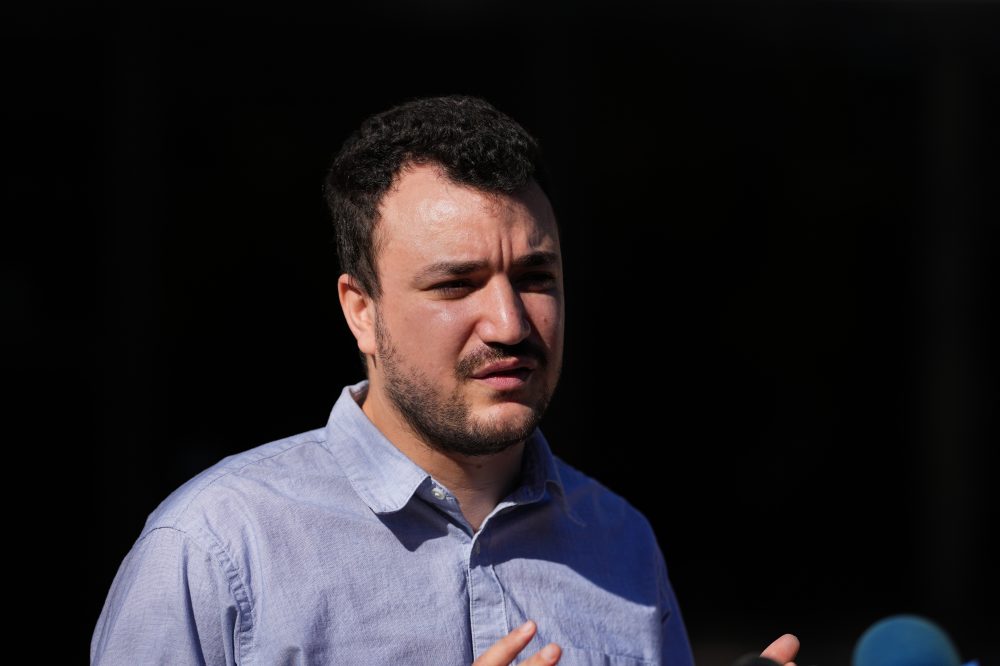
Bruce Meyer, who stepped into the union’s top role after Tony Clark was pushed out in February, made clear he believes the sport is doing well — not poorly as management has suggested.
“The supposed stewards of the game have spent an inordinate amount of time trying to convince those same fans that they don’t have hope or they shouldn’t have hope or that the product that they’re paying to consume in record numbers is somehow broken,” Meyer said. “I think it’s perverse.”
The numbers appear to back Meyer up. Average attendance this season has reached 29,230 per game, a 1.2% increase over last year’s comparable figure of 28,895. At this pace, MLB is on track for its best attendance numbers since 2017.
Management put forward a salary cap proposal back in May — something players have flatly rejected and say they will never accept. MLB’s campaign, called “Level the Field,” promotes the idea that fans want a salary cap, a concept baseball players have historically opposed.
“I believe that this system is bad for players and would be for generations to come,” Meyer said.
The current five-year labor agreement between players and management runs out on December 1. A lockout is widely anticipated to follow immediately, which would mark the sport’s tenth work stoppage since 1972. The last time games were actually lost was during a 7½-month strike in 1994-95, which resulted in the World Series being canceled for the first time in 90 years.
Meyer also pushed back on the idea that teams can’t afford to compete without a salary cap structure.
“Teams in every market across the league can afford to compete,” he said. “Many of them are choosing not to.”
He also pointed to other major sports leagues as cautionary examples, saying players in the NFL, NBA, and NHL only agreed to caps under pressure.
“In one way or other they were broken or forced into it,” Meyer said.
A test tsunami warning was issued by the National Weather Service National Tsunami Warning Center on July 14, active from 12:33 PM EDT through 1:33 PM EDT.
This was a test alert only, and no actual tsunami danger existed during this period. The warning was issued and expired within a one-hour window.
Long before he became one of Hollywood’s most celebrated directors, Christopher Nolan was a kid staring up at massive screens at the Museum of Science and Industry in Chicago, watching nature documentaries in IMAX and imagining what it would be like to make a major movie that way.
With his new film “The Odyssey,” that childhood dream has become reality. The film is the first feature ever to be shot entirely on IMAX film — a landmark achievement in cinema history.
The road to that milestone wasn’t simple. For years, Nolan had been incorporating IMAX cameras into his films, but the cameras were far too loud to use during scenes with dialogue. After completing “Oppenheimer,” the time was finally right to push for the development of a camera silencing device, which the team calls “the blimp.” The newly developed IMAX camera was named The Keighley, in honor of longtime IMAX executives Patricia and David Keighley. Tragically, the film is dedicated to David, who passed away just three weeks after completing his work on “The Odyssey.”
The new setup came with significant technical hurdles. With the blimp attached, the camera tipped the scales at 300 pounds. The film also had to be reloaded every two-and-a-half to three minutes. A special mirror system was also required so that actors could see each other around the massive camera while filming. All of it was done in pursuit of one goal — giving audiences something they can’t get anywhere else.
“They’re looking for something new and exciting, and that’s what we’re trying to offer,” Nolan said.
When “The Odyssey” hits theaters this Friday, audiences will face a dizzying array of viewing options: IMAX 70mm, standard 70mm, IMAX digital, 35mm, Dolby Cinema, and more. In a 2023 interview with The Associated Press, Nolan took the time to walk moviegoers through his favorite formats so they wouldn’t need a film school education just to pick a theater.
“You rarely get the chance to really talk to moviegoers directly about why you love a particular format and why if they can find an IMAX screen to see the film on, that’s great,” Nolan said. “It really is just a great way of giving people an experience that they can’t possibly get in the home.”
Nolan’s three most recent films — “Dunkirk,” “Tenet,” and “Oppenheimer” — were all shot on large-format film stock, combining IMAX 65mm and Panavision 65mm, the same approach used for epic films like “Lawrence of Arabia,” and then projected in 70mm.
“The sharpness and the clarity and the depth of the image is unparalleled,” Nolan said. “The headline, for me, is by shooting on IMAX 70mm film, you’re really letting the screen disappear. You’re getting a feeling of 3D without the glasses. You’ve got a huge screen and you’re filling the peripheral vision of the audience. You’re immersing them in the world of the film.”
Nolan first began using IMAX cameras with “The Dark Knight,” which opened with a shot filmed in IMAX 70mm.
“Every time we screened that, we would get a gasp,” he recalled. “It’s just a helicopter shot. But the format is truly stunning. And it was truly something no one had seen before.”
To put the technical difference in perspective: IMAX film resolution is nearly 10 times greater than a standard 35mm projector. Each frame contains roughly 18,000 pixels of resolution, compared to just 1,920 pixels on a home HD television screen.
The slight size difference between 65mm and 70mm film comes from an era when the extra space was needed for a soundtrack. With digital sound now standard, that space is used purely to improve the visual experience, Nolan explained.
Beginning with “The Dark Knight,” Nolan’s team developed what they call “center punching the action” — a careful framing approach that ensures nothing important is lost when the film is shown in different theater formats.
“We have to plan very carefully because by shooting an IMAX film, you capture a lot of information,” Nolan said. “Your movie is going to translate very well to all the formats because you’re getting the ultimate amount of visual information. But there are different shapes to the screen — what we call aspect ratios. What you have to plan is how you then frame your imagery so that it can be presented in different theaters with equal success.”
Cinematographer Hoyte van Hoytema also keeps a close eye on the frame lines for different theater types while looking through the camera during production.
On the largest IMAX screens — those with a 1.43:1 aspect ratio — the screen essentially vanishes and the image fills your entire field of vision. On smaller formats like 35mm, digital, and CinemaScope, portions of the top and bottom of the image are cropped.
“From a creative point of view, what we’ve found over the years is that there’s no compromise to composition,” Nolan said.
His top recommendation for the best possible viewing experience is IMAX 70mm film. However, these screenings are rare — only 32 theaters across the United States and Canada are showing the format. High-demand locations like the AMC Universal CityWalk in Los Angeles and the AMC Lincoln Square in New York are nearly sold out for weeks. Other venues offering the format include the Cinemark 17 in Dallas, the Regal King of Prussia near Philadelphia, and the Esquire IMAX in Sacramento.
“The fascination of IMAX for me was always that it was the best that celluloid film ever got. The real reason for its high quality is it’s a massive film negative. It’s a huge roll of film that runs through the projector at hundreds of miles an hour,” Nolan said.
Standard 70mm prints — which Nolan called “a fabulous presentation” — are also being distributed to theaters around the world. “The two formats are sort of different and I love them both,” he said.
For most North American moviegoers, digital presentations will be the most accessible option. These range from IMAX digital — which may feature laser projection or a retro-formatted screen — to large-format systems developed by individual theater chains, such as Regal RPX, Cinemark XD, and Cineplex UltraAVX. A quick tip: if you see an “X” in the format name, it’s likely a premium large-format option.
Even so, Nolan reassured audiences that digital presentations will still deliver an impressive experience. His team spends months converting the original film for digital formats to ensure quality across every screen type.
“This is the exciting thing about shooting an IMAX film: When you scan it for the digital format, you’re working with the absolute best possible image that you could acquire, and that translates wonderfully to the new projector formats like the laser projectors in a lot of IMAX locations, the Dolby Cinema locations, which have a wonderful, high-contrast laser projector,” Nolan said.
He also noted that the widespread influence of IMAX over the past two to three decades has pushed theaters across the board to invest more in quality projection and sound — something he called “great for filmmakers.”
As for where to sit, Nolan has a clear preference depending on the theater type. “When I’m in a theater that’s CinemaScope ratio, I like to be right near the front, middle of the third row,” he said. “When I’m in a stadium, IMAX 1.43:1, then I actually like to be a little behind the center line right up at the middle. So, a little further back.”
LONDON — British counterterrorism authorities announced Tuesday that former politician and reality television personality Ann Widdecombe, 78, was the victim of a deliberate, targeted killing, though investigators say the motive has not yet been established.
A 28-year-old man who was arrested on suspicion of murder and terrorism-related offenses is still being held as the investigation moves forward.
Laurence Taylor, who leads National Counter Terrorism Policing, spoke directly to reporters about the case. “It is clear that this was a targeted attack,” he said. “We are still working to understand the extent of any planning or preparation, and the motivation that sits behind that attack.”
Widdecombe’s death sent shockwaves through British political circles. A former member of Parliament, she had been a prominent and outspoken figure in public life for decades, widely recognized for her socially conservative positions on issues including abortion and LGBTQ+ rights.
Counterterror investigators took over the case on Monday after new evidence came to light. Initially, Devon and Cornwall Police had stated they did not believe the killing was terror-related or politically motivated.
Authorities believe Widdecombe was attacked on a Wednesday afternoon. She had been scheduled for a television interview that day but never showed up. Her body was discovered the following day at her secluded home in a rural village in southwest England.
Police have not disclosed how she died, stating only that she had suffered “serious injuries.”
The suspect was taken into custody on Saturday in South Yorkshire, a county in northern England — more than 200 miles from the village of Haytor, located on the edge of Dartmoor National Park, where Widdecombe’s body was found. He was initially arrested on murder suspicion, but after new evidence emerged while he was already in custody, authorities re-arrested him on suspicion of committing, preparing, or inciting acts of terrorism. He has not been formally charged and therefore has not been publicly identified.
Widdecombe served in the House of Commons from 1987 to 2010, holding positions that included prisons minister under Prime Minister John Major’s Conservative government in the 1990s.
Following her time in Parliament, she became a familiar face on television through appearances on reality programs including “Strictly Come Dancing” and “Celebrity Big Brother.”
She later aligned herself with the Brexit Party and briefly held a seat in the European Parliament before the United Kingdom departed from the European Union in 2020. More recently, she had become associated with the anti-immigration Reform UK party, frequently appearing in media as a spokesperson for the group.
The killing has reignited concerns about the safety of politicians in the United Kingdom. Security for public officials was previously heightened following the murders of two sitting members of Parliament — Labour lawmaker Jo Cox, who was shot and stabbed in 2016 by a far-right extremist, and Conservative David Amess, who was stabbed in 2021 by an attacker motivated by the Islamic State group.
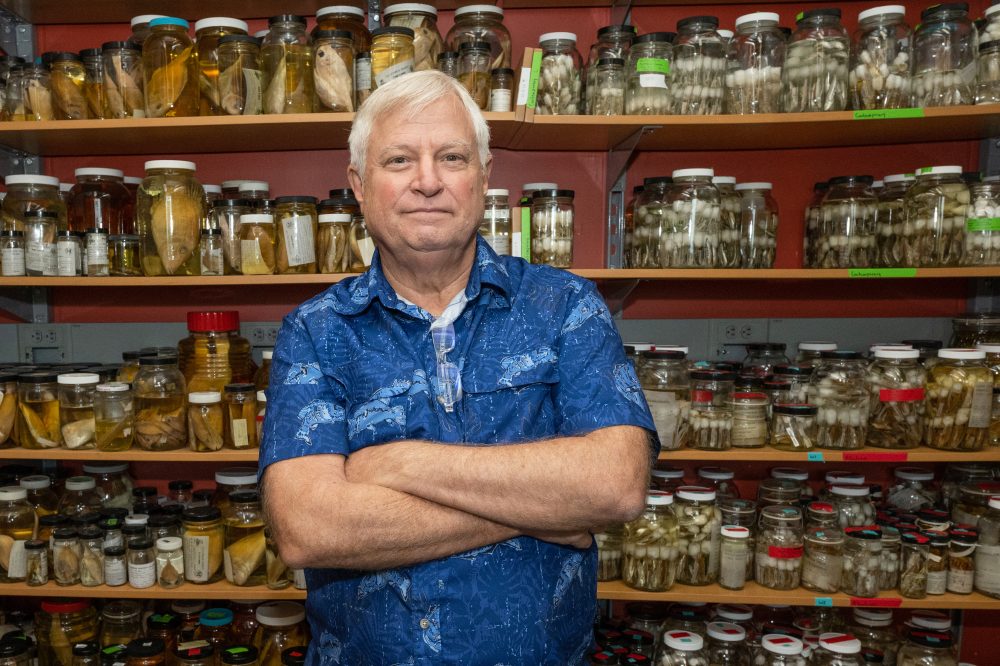
MANILA, Philippines — Philippine police say a well-known American marine biologist was shot and killed by three masked men who forced their way into his home in the central Philippines on Sunday night.
Kent Carpenter, 73, was at a residence in the coastal town of Sibulan, in Negros Oriental province, with his Filipina companion when the intruders broke in. According to what his companion told police, one of the men pulled out a firearm and shot Carpenter in the head, killing him immediately.
National police spokesperson Col. Allen Rae Co told reporters that the attackers stole a laptop, a backpack, and an undisclosed amount of cash before fleeing the scene.
Regional police spokesperson Lt. Col. Joem Malong told The Associated Press that Carpenter’s companion suffered injuries and was receiving medical treatment. Investigators are working to establish a motive and track down those responsible.
Malong confirmed that Carpenter had been working as a lecturer at Silliman University in Dumaguete City, also in Negros Oriental province.
The U.S. Embassy in Manila had not responded to a request for comment as of the time of reporting.
Regional police director Brig. Gen. Romano Cardiño issued a statement promising accountability. “We assure the victim’s family, the community and our foreign visitors that this case is being treated with utmost urgency and no effort will be spared until justice is served,” he said.
Carpenter had served as a biological sciences professor at Old Dominion University in Norfolk, Virginia, since 1996. University officials said his research centered on the Philippines and the Coral Triangle — the waters lying between the Indian and Pacific oceans — and that his work had influenced conservation efforts across the globe. He had been in the Philippines on an extended research trip and was reportedly planning to retire in September.
Old Dominion President Brian Hemphill released a statement mourning the loss. “He dedicated his career to expanding our understanding of the world’s bodies of water and protecting some of its most vulnerable ecosystems,” Hemphill said, calling the killing sad and devastating. “His scholarship and passion impacted and inspired many individuals locally, nationally, and internationally.”
On his university webpage, Carpenter described his research as focused on evaluating the extinction risks facing fish species and aquatic plants. In a 2010 interview with the AP, he warned that uncontrolled global warming could wipe out all of the world’s coral reefs within a century.
“You could argue that a complete collapse of the marine ecosystem would be one of the consequences of losing corals,” he said at the time. “You’re going to have a tremendous cascade effect for all life in the oceans.”
According to a 2007 Old Dominion University newsletter, Carpenter’s deep connection to the Philippines began during a Peace Corps assignment there in the 1970s.
Multiple Philippine environmental and biodiversity organizations expressed grief over his death. Silliman University called him an exceptional scientist and noted that he had partnered with the institution on marine research since 1976. “Dr. Carpenter made ground-breaking contributions that transformed global understanding of Philippine marine biodiversity,” the university said in a statement.
Mahmoud Khalil has taken legal action against the federal government and a number of private organizations, claiming they worked together in a coordinated effort to silence those who speak out against Israel by exposing their identities online, imprisoning them, and pursuing their deportation.
The lawsuit was filed in federal court on Tuesday and targets senior officials within President Donald Trump’s administration, leadership at the Heritage Foundation, and two online surveillance organizations known as Canary Mission and Betar. All three private groups had not responded to requests for comment as of Tuesday.
Khalil’s legal team argues that this alleged “public-private partnership” — which first came to light during a separate trial last year — may be in violation of the Ku Klux Klan Act. That law, dating back to the Reconstruction era, was designed to prevent the government from coordinating with vigilante groups.
Khalil, 31, is a former graduate student at Columbia University who rose to prominence as a spokesperson and organizer for student demonstrators protesting Israel’s actions in Gaza. He is a legal permanent resident and is married to a U.S. citizen.
In March 2025, agents from U.S. Immigration and Customs Enforcement arrested Khalil inside his campus apartment. He quickly became a central figure in the Trump administration’s broader crackdown on pro-Palestinian activists on college campuses.
Khalil was held for 104 days in an immigration detention facility in Louisiana, during which time his first child was born. A federal judge in New Jersey ultimately ordered his release.
His deportation case has moved through the executive-branch-controlled immigration court system at a notably fast pace and may eventually be heard by the U.S. Supreme Court.
Khalil has consistently rejected any suggestion that his involvement in pro-Palestinian protests constitutes antisemitism. In a previous interview with The Associated Press, he explained his position plainly: “My beliefs are not wanting my tax money or tuition going toward investments in weapons manufacturers for a genocide. It’s as simple as that.”
NEW YORK — A gold trader who admitted to conspiring with a Turkish bank to help Iran sidestep U.S. sanctions by exchanging oil revenue for gold will walk free, a federal judge announced Tuesday.
U.S. District Judge Richard M. Berman indicated at a court hearing that he intends to sentence Reza Zarrab to the time he has already spent behind bars. Federal prosecutors praised Zarrab for delivering “truthful, complete and reliable” assistance to American investigators. That cooperation included testimony that he paid millions of dollars in bribes to Turkish officials to carry out the sanctions-evasion scheme.
Zarrab entered a guilty plea in 2017 on charges of conspiracy, bank fraud, and money laundering. Before he agreed to work with U.S. prosecutors in New York, he had been looking at the possibility of spending decades in federal prison.
The conclusion of Zarrab’s sentencing closes out a long and dramatic legal saga that put a serious strain on diplomatic ties between Washington and Ankara, and was followed closely by people throughout Turkey.
Turkey’s president, Recep Tayyip Erdogan, publicly dismissed the corruption allegations as an American scheme to “blackmail” Turkey, and pushed the administrations of three U.S. presidents to shut the case down.
Presidents Barack Obama and Joe Biden, both Democrats, chose not to step in. President Donald Trump — who has maintained a friendly relationship with Erdogan — let the case proceed during his first term. However, this year Trump’s Justice Department abandoned its long-running effort to prosecute Halkbank, a state-owned institution that was indicted in 2019 on allegations it helped Iran move $20 billion in sanctioned oil revenue.
Zarrab was born in Iran but moved to Turkey as a toddler with his family. He was first arrested in 2013 as part of a broad anticorruption investigation led by Turkish law enforcement — but was released quickly. Many of the officers involved in that probe were subsequently removed from their positions after Erdogan claimed the investigation was a foreign plot engineered by the U.S. government.
Three years later, Zarrab was taken into custody in Miami after arriving in the United States with his then-wife, Turkish pop star and television personality Ebru Gundes, and their then-4-year-old daughter for a vacation to Disney World.
Before agreeing to cooperate with federal authorities, Zarrab brought on former New York City Mayor Rudolph Giuliani and former U.S. Attorney General Michael Mukasey to pursue a diplomatic resolution to the case. Erdogan openly called for Zarrab’s release.
Then, in 2017, the case took a dramatic turn: Zarrab quietly pleaded guilty to the charges and then emerged as an unexpected witness at the U.S. trial of Halkbank executive Mehmet Hakan Atilla.
On the stand, Zarrab testified that he had paid millions in bribes to government and banking figures in Turkey to help Iranian interests evade U.S. sanctions. He also stated that Erdogan, while serving as Turkey’s prime minister in 2012, had personally approved two Turkish banks’ participation in fraudulent gold trades designed to give Iran access to its oil and gas income.
Atilla, who insisted he was not guilty, was ultimately convicted and received a 32-month prison sentence. Erdogan responded to the verdict by calling it “scandalous.”
Zarrab was released from jail following the trial after reporting that a fellow inmate had threatened to kill him with a knife for cooperating with U.S. authorities.
In documents submitted to the court ahead of sentencing, Zarrab’s legal team said his life had undergone major changes since the trial. He divorced Gundes in 2021 and remarried last year, wedding a former Turkish national swimmer.
His attorneys described Zarrab as “destitute and heavily in debt” in the wake of his guilty plea and cooperation, noting that both his assets and his family’s assets had been seized by the Turkish government, resulting in “many tens of millions of dollars in lost rental income” for his family’s businesses.
Following his guilty plea, Zarrab also forfeited a $288,000 boat and $88,000 in cash to the U.S. government. He has claimed he is $50 million in debt.
“Reza at long last should be allowed to rebuild his life,” his attorneys wrote in the filing. They noted that the prosecution and Turkey’s characterization of him as a traitor continue to follow him, disrupting his attempts to establish a horse farm in the United States and to move through public spaces without being identified and exposed on social media.
KANSAS CITY, Missouri — England captain Harry Kane is brushing aside suggestions that there is any friction between manager Thomas Tuchel and star midfielder Jude Bellingham, saying the media turned a brief post-game exchange into something it was not following England’s World Cup quarter-final victory over Norway.
The speculation began after Tuchel publicly stated that England had been fortunate in their 2-1 win over Norway and that he was unhappy with the team’s performance “in every sense.” When Bellingham was asked about the manager’s criticism shortly after the final whistle, the 23-year-old’s reaction appeared less than enthusiastic.
Bellingham, who scored two goals for the second game in a row, responded to being told Tuchel had labeled the performance “sloppy” by saying: “Yeah, well, whatever. Maybe he doesn’t know what it’s like to play in those conditions against Erling Haaland, Odegaard, (Antonio) Nusa, (Alexander) Sorloth. That’s not an easy team to play against.”
That reaction sparked widespread speculation about unrest within the England camp ahead of Wednesday’s semi-final against defending champions Argentina in Atlanta. But Kane was quick to put that narrative to rest.
“When you are playing a game like that and to be asked a question five minutes after the final whistle, and he didn’t really know what had been said, what do you want Jude to say?” Kane told BBC Sport.
“We had just been through a battle. It is easy to try and create this division. It seems like an English thing to do at these major tournaments. But it is the complete opposite,” Kane added.
“The group is where we are because of our complete togetherness — not just the players, the coach and the staff. Things sometimes get made out to be more than they are.”
Kane also defended Tuchel’s straightforward communication style, saying the players respect and appreciate it.
“He wears his heart on his sleeve and people appreciate that,” Kane said. “When he talks, it is never scripted. That is what makes him who he is. When it just comes natural you believe in that, you believe in what he is saying, you believe in his approach.”
“He is one of the best managers in the world for a reason. We understand it. Over the past two years we have got to know him and know what makes him happy,” Kane concluded.
Golf superstar Rory McIlroy is urging the sport’s governing bodies to expand the window in which major championships are held, saying the current schedule feels too rushed for both players and fans.
The major season currently runs over a four-month span — a compressed timeline that came about seven years ago when the PGA Championship was moved from August to May. McIlroy, who is chasing a seventh major title this week at the final major of 2026 at Royal Birkdale in Southport, England, says that change has hurt the sport’s public profile.
“I’d like to see the major season spread out a little bit longer,” McIlroy said. “The Masters is always going to have the build-up, but I think then PGA into US Open, US Open into here, it just seems like it’s very, very quick.”
He acknowledged there are benefits from a player’s standpoint when things are close together, but said the bigger picture matters more.
“From a player perspective, if you get on a bit of a run, it’s nice to be playing well and go from one straight into the next,” he said, “but for the sport as a whole and for, I guess, the general interest in the game, obviously I can see the positives in the major season being stretched out a little bit longer.”
McIlroy, the reigning back-to-back Masters champion, won his only Open Championship title 12 years ago. While he considers St Andrews his top choice on the Open rotation, he says Royal Birkdale — where he tied for fourth place back in 2017 — remains a course that fits his game well, even following a recent redesign of the layout.
“I’ve always liked this course. I first played here in the Amateur Championship and then played an Open back here in 2017 and did OK,” he said.
McIlroy also praised Birkdale’s reputation for fairness among links-style courses, noting that it rewards good shots in a way not all links venues do.
“One of the common things you hear about Birkdale is it’s very fair for a links golf course,” he said. “The fairways aren’t overly undulating, so when you land the ball in the fairway here, it seems like it stays on the fairway and there’s not a ton of blind shots.”
He added that if players were surveyed, Birkdale would rank among the most popular Open venues on the circuit.
U.S. Immigration and Customs Enforcement has suspended the use of vehicle stops as part of immigration enforcement operations, according to two sources familiar with the decision. The halt came after agents fatally shot two men in separate incidents just six days apart — one in Texas and one in Maine.
The policy change was announced one day after an ICE officer shot and killed a driver in Biddeford, a coastal Maine town located roughly 15 miles south of Portland.
Nearly 12 hours after the shooting, the U.S. Department of Homeland Security issued a statement saying the officer opened fire on the driver — who was attempting to flee agents trying to pull him over — out of concern for public safety. However, officials offered no explanation of how the driver posed a specific threat.
Some video footage has surfaced showing the scene after the shooting, but no public video has emerged capturing the moment the shot was fired. Maine Senator Angus King, an independent who aligns with Democrats, told reporters that the agents involved were not wearing body cameras, leaving many questions about the circumstances of the shooting unanswered.
Protests broke out on Monday, with more demonstrations planned for Tuesday.
Immigration advocates identified the man killed as a 26-year-old Colombian national who held legal work authorization in the United States.
According to internal ICE data shared with Reuters, immigration arrests in Maine have more than quadrupled since early June, climbing to approximately 70 per day by early July.
The Biddeford shooting, combined with a separate killing the previous week in Houston, brings the total number of people shot dead during immigration enforcement operations to at least seven since President Donald Trump returned to office in January 2025 and began a large-scale deportation campaign.
Chinese memory chip manufacturer ChangXin Memory Technologies, known as CXMT, is looking to pull in roughly 57.9 billion yuan — equivalent to about $8.55 billion — through an initial public offering on Shanghai’s technology-focused STAR Market, according to a filing released Tuesday.
The massive stock offering is set to become the largest IPO in Asia so far in 2026 and the biggest-ever semiconductor share sale on China’s A-share market, topping a similar offering by chipmaker SMIC back in 2020.
If an over-allotment option is fully exercised, total proceeds could climb to approximately 66.6 billion yuan, the filing indicated. CXMT set its IPO price at 8.66 yuan per share.
Two individuals with knowledge of the situation said the company is expected to begin trading on the Shanghai Stock Exchange on July 27.
The final fundraising target represents a doubling of the company’s original goal of 29.5 billion yuan, or roughly $4.35 billion.
Neither CXMT nor the Shanghai Stock Exchange responded to requests for comment ahead of publication.
CXMT ranks as the world’s fourth-largest maker of DRAM — dynamic random-access memory — chips, holding about a 7.7% share of the global market as of 2025. The company has experienced explosive growth during the current industry upcycle.
DRAM chips are essential components in servers used to run cloud computing systems, large databases, and artificial intelligence applications.
The massive offering arrives at a time of growing volatility in global memory chip stocks. Some analysts have raised concerns that it could also put pressure on liquidity in China’s stock market, where a recent surge in technology shares appears to be running out of momentum.
However, other analysts pushed back on those concerns, arguing the offering would not significantly drain market liquidity.
Donnie Teng, a Greater China semiconductor analyst at Nomura, pointed to strong AI-driven demand as a reason for optimism. “Memory supply is still not enough,” he said. He added that as long as AI demand remains structurally strong and major tech companies continue investing heavily in infrastructure, the broader market should be able to absorb any liquidity impact from the IPO.
CXMT has historically been viewed as trailing behind global industry leaders Samsung Electronics and SK Hynix in terms of technology. SK Hynix’s U.S.-listed shares surged 14% when they debuted on Nasdaq last Friday following a $26.5 billion share sale, though some of those gains have since faded.
The Hefei-based company stated in its prospectus that proceeds from the listing will go toward upgrading its manufacturing lines and advancing its technology capabilities.
The head of the country’s largest bank is taking aim at federal regulators, accusing them of manipulating the numbers when it comes to how much money big banks must keep on hand to cover potential losses.
JPMorgan Chase CEO Jamie Dimon made the remarks Tuesday during a quarterly earnings call, escalating his ongoing criticism of proposed capital rules that he says unfairly single out his bank and other large, diversified financial institutions — while giving an advantage to major Wall Street trading firms.
“They should not do the numbers in a false way to make the number higher,” Dimon said. “The number should be the number. If they think we should have more capital, they should ask us… I’m not happy to have these numbers falsely done.”
Dimon has argued that the proposed changes to how banks calculate required financial reserves are “unfair” and hit broad-based banks harder than their competitors. JPMorgan has previously stated it would face roughly a 4% increase in capital requirements under the new proposals, while rival institutions would see an average reduction of about 4.8%.
The Federal Reserve is leading the rulemaking effort alongside two other federal banking regulators. A Fed spokesperson did not respond to a request for comment on Dimon’s criticism.
The proposals were unveiled in March and are considered significantly more favorable to the banking industry than an earlier 2023 draft put forward under Democratic regulatory leadership — a version that stalled amid industry opposition and the change in presidential administration. Still, Dimon has been one of the loudest voices against the current proposals, particularly regarding how a special capital surcharge applied to the nation’s largest and most systemically important banks is calculated.
On Tuesday, Dimon again called on the Fed to update the surcharge’s formula to fully account for economic growth since the central bank first imposed it in 2015. Doing so, he argued, would reduce how large banks appear relative to the broader economy on paper, thereby lowering the resulting charge.
The Fed has also proposed reducing the weight given to banks’ reliance on short-term wholesale funding in that surcharge calculation — a change that is expected to benefit firms that rely heavily on such funding, as opposed to banks with large customer deposit bases.
JPMorgan Chief Financial Officer Jeremy Barnum echoed those concerns on the same call, warning that the current direction of the rules could hurt everyday Americans.
“I don’t understand why you would want that as a policy outcome, because it is disproportionately damaging the ability of banks to serve Main Street,” Barnum said. “If that’s not what they want, then they shouldn’t let it happen by accident.”
Despite the regulatory friction, JPMorgan reported record profits for the second quarter, fueled by a surge in investment banking fees — the highest since 2021 — driven by a wave of major IPOs and corporate deal activity, along with strong performance from its trading operations during a period of market volatility.
Fed Vice Chair for Supervision Michelle Bowman has indicated she hopes to have the rule-writing process completed before the end of this year. The agencies are working to finalize several capital-related proposals, including rules governing how banks weigh different types of risk and the surcharge applied to the country’s most critical financial institutions.
A journalist from The New Yorker is raising serious concerns about what he found inside the largest detention facility operated by U.S. Immigration and Customs Enforcement.
Writer Jonathan Blitzer reports that thousands of people are currently being held in tent structures in the desert near El Paso, where he says the living conditions have deteriorated to a point that many would describe as inhumane.
According to Blitzer, those harsh conditions are not simply the result of overcrowding or neglect — he reports they are being deliberately used as a form of pressure to push detainees into accepting deportation.
The report, published in The New Yorker, brings renewed attention to the treatment of migrants held in federal immigration custody and raises questions about the standards being applied at the nation’s largest ICE detention site.
A growing and troubling pattern has emerged involving federal agents fatally shooting civilians, with deadly incidents now reported in Maine, Texas, and Tennessee.
The family of one man who was killed by federal agents during a response to a 911 call is now coming forward, saying they want answers about what happened to their loved one. The family spoke with NPR about their search for accountability.
The deaths have raised serious questions about the use of deadly force by federal agents responding to emergency calls.
A fire erupted Tuesday at a building undergoing renovation in the heart of Brussels, Belgium, sending two workers to the hospital with serious burns and leaving six others missing. Officials confirmed that charred remains were discovered inside an elevator at the scene.
According to Brecht Speybrouck, a spokesman for the Labor Audit Office, the blaze began on the second floor of the structure, which is located in a major shopping district. The flames then traveled up into a lift shaft. Speybrouck said approximately 250 workers were evacuated from the building before the fire was brought under control.
Two of those workers sustained severe burns and were transported to a hospital, while six remained unaccounted for. Speybrouck confirmed that burned bodies were found inside one of the elevators, though he declined to specify how many and could not confirm whether those victims were among the six reported missing.
Emergency crews faced significant challenges reaching the elevator shaft. Brussels Mayor Philippe Close told The Associated Press that thermal imaging cameras and trained sniffer dogs were deployed to help locate victims.
Mayor Close credited the rapid response of emergency personnel, saying “firefighters, rescue workers and police were there immediately. Everyone knew what they had to do and that probably helped to avoid a greater tragedy.”
Belgium’s King Philippe visited the site several hours after the fire broke out.
Belgian Interior Minister Bernard Quintin expressed his distress over the incident, saying he was “shocked” by what had happened. In a social media post, Quintin added: “My thoughts go out to the victims, their loved ones, and everyone still in uncertainty. A sincere thank you to our fire department and all emergency services for their dedication.”
BIDDEFORD, Maine — Immigrant rights organizations are calling for answers and organizing additional protests following the fatal shooting of a Maine driver by an Immigration and Customs Enforcement officer during an enforcement operation in the city of Biddeford on Monday.
The incident marks the second time within a single week that ICE has used deadly force, and at least the ninth fatality since President Donald Trump launched his immigration enforcement crackdown.
The U.S. Department of Homeland Security stated that an ICE officer, “fearing for public safety,” shot and killed the driver while agents were conducting surveillance on a home belonging to someone they believed was in the country illegally and had received a final order of removal from the United States.
In a post on X, the department explained that when ICE attempted to stop a vehicle leaving the home, the driver tried to flee and the officer discharged his weapon.
That explanation came several hours after Maine Sen. Angus King revealed that Homeland Security Secretary Markwayne Mullin told him the officer fired after the man attempted to use his vehicle as a weapon against ICE agents. King also said Mullin indicated the officers were attempting to serve an arrest warrant — but not for the person who ended up being shot.
Because none of the officers involved were equipped with body cameras, numerous questions remain unanswered about what exactly happened in this coastal community located south of Portland, Maine’s largest city.
Key details are still unknown, including how close the officer was to the vehicle when shots were fired, whether the driver was ordered to stop, and in what way the public was believed to be in danger.
DHS did not respond to a request for clarification about the events leading up to the shooting.
The Maine attorney general’s office, which has opened its own investigation, said early statements suggest the motorist was moving toward the agent when attempting to flee. The office also confirmed that the officer responsible for the shooting has been placed on administrative leave.
Immigrant rights groups identified the man killed as a 26-year-old originally from Colombia. The Colombian Embassy said it is in communication with U.S. authorities regarding the man’s death and is offering support to his family.
Maine’s other senator, Republican Susan Collins, said Mullin informed her that DHS’s Office of Inspector General is conducting an investigation in cooperation with the FBI.
Security camera footage from a nearby business, obtained by the Associated Press, shows a white vehicle approaching an intersection at a slow pace before making several gradual circles. A law enforcement SUV then blocked the vehicle’s path, and two officers opened the driver’s door and pulled out a limp body. The footage does not make clear when the shots were actually fired.
A witness named Daniel Boucher said he looked out his third-floor window after hearing what he described as a “pop, pop, pop” sound. He observed the white vehicle moving down the street until the law enforcement SUV struck it.
“His face was bloody. His head was bloody,” Boucher said, his voice breaking. “I clearly heard the victim say, ‘I tried to stop.’”
Boucher also recounted a moment when the agent who fired approached the scene. “I was emotional and I just let him have it, and he looked at me and said, ‘He tried to run me over,’ or something to that effect,” Boucher said. “I don’t remember his exact words.”
Two advocacy organizations — the Maine Immigrants’ Rights Coalition and Presente! — said the man who was killed had authorization to work in the United States.
A nearby resident named Mary Hayes said the man had lived close to the scene with his wife and daughter. “I watched a wife fall to her knees looking at her husband’s dead body on the ground,” Hayes told the AP while holding a sign reading “No ICE Stop ICE.”
Just last week in Texas, an ICE officer fatally shot 52-year-old Lorenzo Salgado Araujo of Houston after federal agents in unmarked vehicles followed him while he was transporting his construction crew to a job site.
Both shootings are occurring as the Trump administration pushes forward with its mass deportation agenda. In just five days at the end of June, ICE arrested more than 10,000 people. The data suggests that while the administration has moved away from targeting specific cities, arrests are climbing sharply. The administration’s enforcement efforts drew widespread criticism last winter following the deaths of Alex Pretti and Renee Good in Minnesota.
OMAHA, Neb. — For the first time, legendary investor Warren Buffett has left the Bill Gates Foundation out of his yearly charitable donations, a move that comes after documents surfaced revealing the Microsoft co-founder’s connections to convicted sex offender Jeffrey Epstein. Buffett announced Tuesday that he will direct approximately $6 billion to four foundations linked to his own family, making no mention of the Gates Foundation in his statement.
Buffett also revealed a new timeline for distributing his remaining wealth. He now wants all of his Berkshire Hathaway stock — currently valued at more than $140 billion — donated to charity no later than December 31, 2034. Previously, the plan had been for his three children to distribute whatever remained within a decade of his death.
“Of course, mortality is unpredictable, but my remaining shares will be donated to the four foundations one way or the other by December 31, 2034,” Buffett said in a statement. “The goal is to have the grants grow annually to each of the three foundations managed by each of my children and the annual grant to the Susan Thompson Buffett Foundation grow at a somewhat greater rate.”
Neither Buffett nor the Gates Foundation responded immediately to questions Tuesday. CNBC reported that Buffett was scheduled to sit down for an exclusive interview with the network Wednesday morning on the subject.
Since Buffett first announced his plan to give away his fortune back in 2006, the Gates Foundation has received the lion’s share of his charitable contributions — more than $61 billion in total. He has regularly donated blocks of Berkshire Hathaway stock to the Gates Foundation alongside the four foundations operated by his children.
This year, Buffett plans to give approximately $4.5 billion in stock to the Susan Thompson Buffett Foundation, with another $500 million in shares going to each of three other foundations — the Sherwood Foundation, the Howard G. Buffett Foundation, and the Novo Foundation — all run by his children.
The total giving announced Tuesday is comparable to the roughly $6 billion Buffett donated last summer, though his family foundations are receiving noticeably larger shares than in prior years — amounts that appear to make up for the money that previously would have gone to the Gates Foundation.
Gates has denied any knowledge of Epstein’s criminal activities and has not been accused of any wrongdoing himself. He has said his meetings with Epstein were motivated by a belief that Epstein could help him raise funds for charitable work.
Epstein, who faced accusations of sexually abusing dozens of underage girls, was found dead in a New York federal detention facility in August 2019. New York City’s medical examiner later ruled his death a suicide.
Buffett had already signaled in 2024 that he intended to stop donating to the Gates Foundation after his death and leave his three children in charge of distributing the rest of his estate. Tuesday’s announcement moves that plan forward significantly.
Buffett and Gates were once among the closest of friends — frequently talking, playing bridge online together, and even vacationing as a pair. Gates served on the board of Buffett’s conglomerate for years, and Buffett himself sat on the board of the Gates Foundation. But Buffett told CNBC in March that the two had not spoken in months, with their last contact coming before the Epstein-related files were released in the fall of 2025.
Buffett had previously defended Gates publicly. Three years ago, at a Berkshire Hathaway shareholder meeting, Buffett cut off a man named Peter Flaherty who was presenting a resolution questioning Gates’ character over his Epstein ties. Flaherty was arrested that day for trespassing, despite having received prior approval to make his presentation. The charge was eventually dropped, but the incident sparked a lawsuit that remains unresolved in the courts.
Speaking to CNBC, Buffett expressed disbelief at Epstein’s ability to manipulate so many successful people. “It is astounding to me that anybody could be that successful as a con person,” he said, adding that Epstein appeared to find and exploit the vulnerabilities of those around him. While Buffett declined to speak directly about Gates’ involvement, he made clear he wants no part of anything that could come under scrutiny later.
The Gates Foundation recently held discussions with its staff about Gates’ history with Epstein. Justice Department documents released as part of its investigation into Epstein include email exchanges between Gates and Epstein about philanthropic matters, calendar entries recording times the two met, and photographs of Gates at events they both attended.
The foundation announced in March that it brought in an outside reviewer to evaluate its past dealings with Epstein and to update its policies for vetting future charitable partnerships. Gates and the foundation’s board are expected to receive a report on that review sometime this summer.
Buffett also shared a broader observation with CNBC about the scope of Epstein’s reach among the wealthy and powerful. “I mean, it, here you had a guy that was a convicted guy, a sensational con man, and the percentage of people that he knocked off,” Buffett said. “I mean, whether it was, he found their weakness. It might have been sex. It might be power, it might be, whatever it might be. And I don’t see how anybody could have pulled that off.”
Buffett said he is relieved that Epstein never made his way to Omaha, where Buffett has lived for more than six decades. Buffett stepped down as CEO of Berkshire Hathaway in January after leading the company for 60 years, though he continues to serve as chairman and remains its largest shareholder. Greg Abel has taken over as the company’s chief executive.
Dangerous heat and humidity will build across the Mid-Atlantic on Wednesday, July 15, and remain a concern into Thursday, July 16. Residents are being urged to prepare now and limit their exposure during the hottest portion of the day.
While high temperatures will be a major part of this heat wave, the combination of heat, humidity, direct sunlight and physical activity will create the greatest danger. Heat-related illnesses can develop quickly when the body is unable to cool itself properly.
Anyone can become sick from excessive heat, but older adults, infants, young children, pregnant women, outdoor workers and people with chronic health conditions face a greater risk. Hot weather can also worsen existing heart, lung and other medical conditions.
Prepare Before the Heat Arrives
Residents should complete outdoor chores, errands and other preparations before the worst heat develops Wednesday afternoon.
Check that air-conditioning systems and fans are working properly. Close curtains or blinds that receive direct sunlight and identify an air-conditioned location where you can go if your home becomes too hot.
People without reliable air conditioning should plan to visit a cooling center, library, shopping center, community building or the home of a friend or relative. During extreme heat, fans should not be relied upon as the only source of cooling inside a very hot building.
Residents should also check on older relatives, neighbors and anyone who lives alone. A phone call may not be enough. When possible, confirm that the person’s home is cool and that they have access to water, medication and transportation to an air-conditioned location.
Drink Water Before You Feel Thirsty
Begin hydrating before spending time outside and continue drinking water regularly throughout the day. Do not wait until you feel thirsty.
People performing physical work should take frequent water and rest breaks. Outdoor workers may need to reduce their workload, rotate assignments or move strenuous tasks into the early morning. The National Institute for Occupational Safety and Health recommends frequent water intake and periodic rest breaks for people working in hot environments.
Alcohol should be limited because it can contribute to dehydration. Heavy meals and excessive caffeine may also make some people feel worse during very hot conditions.
Anyone whose doctor has restricted their fluid intake should speak with a medical professional about how to remain safe during the heat wave.
Avoid the Hottest Part of the Day
The greatest heat stress will generally occur during the afternoon and early evening. Yard work, exercise, construction projects and other strenuous activities should be moved to the early morning whenever possible.
People who must remain outside should take frequent breaks in shade or air conditioning. Wear lightweight, loose-fitting and light-colored clothing, along with a hat and sunscreen.
Direct sunlight can make conditions feel significantly hotter than temperatures measured in the shade. Pavement, rooftops, athletic fields and other exposed surfaces can become especially dangerous during the afternoon.
Never ignore dizziness, weakness or nausea in order to finish a job, practice or outdoor event. Stop the activity immediately and move to a cooler location.
Never Leave Anyone in a Parked Vehicle
Never leave a child, older adult, person with a disability or pet inside a parked vehicle, even for a few minutes.
Cracking the windows or parking in the shade does not make a vehicle safe. Before locking your vehicle, check the front and back seats every time.
Parked vehicles should also remain locked when unattended so children cannot climb inside and become trapped.
Protect Pets
Keep pets indoors during the hottest portion of Wednesday and Thursday whenever possible. Outdoor animals must have continuous access to fresh water and full shade.
Limit walks to the early morning or later evening. Asphalt and concrete can become hot enough to burn an animal’s paws.
Never leave a pet inside a parked vehicle, even with the air conditioning running or the windows partially open.
Use Extra Caution With Medication
Certain medications may affect the body’s ability to regulate temperature, sweat or remain hydrated. People taking prescription medications should review their personal heat risk with a doctor or pharmacist.
Do not stop or change medication without medical guidance. The Centers for Disease Control and Prevention recommends developing a personal heat-action plan with a healthcare provider when medications or chronic health conditions may increase heat sensitivity.
Medication should also be stored according to its instructions and should not be left inside a hot vehicle.
Recognize Heat Exhaustion
Heat exhaustion is a warning that the body is struggling to handle the heat. Symptoms can include:
Heavy sweating
Dizziness or faintness
Headache
Nausea
Weakness or fatigue
Muscle cramps
Cool or clammy skin
A rapid pulse
Move the person into air conditioning or shade immediately. Loosen or remove unnecessary clothing, apply cool wet cloths and offer small sips of cool water.
Do not allow the person to return to strenuous activity. Seek medical help if symptoms worsen, vomiting occurs or the person does not begin improving.
Heat Stroke Is a Medical Emergency
Heat stroke can cause permanent injury or death and requires immediate emergency treatment.
Warning signs can include:
Confusion or unusual behavior
Slurred speech
Loss of consciousness
Hot or flushed skin
Seizures
A very high body temperature
A rapid, strong pulse
Call 911 immediately if heat stroke is suspected. Move the person into a cooler area, remove excess clothing and begin rapid cooling with cold water, wet cloths or ice while waiting for emergency responders.
Do not give fluids to an unconscious or confused person. Delayed treatment can be fatal.
Take the Heat Seriously
Heat-related illness is preventable, but only when precautions are taken before symptoms begin.
Remain hydrated, reduce outdoor activity, seek air conditioning and check on vulnerable family members and neighbors throughout Wednesday and Thursday. Anyone experiencing signs of heat illness should stop what they are doing and move into a cooler environment immediately.
This is not the type of heat to push through. Taking a break, changing outdoor plans or seeking an air-conditioned location could prevent a medical emergency.
Boeing announced Tuesday that it handed over 64 jetliners to customers in June, up from 60 deliveries in both May and June of last year.
For the first six months of 2025, Boeing delivered a total of 314 aircraft — a 12% jump compared to the same period in 2024 and the strongest first-half delivery figure the company has posted since 2018.
Even with that momentum, Boeing remains behind its European competitor Airbus, which turned over 89 jets in June and a total of 351 aircraft through the first half of the year.
Looking ahead, Boeing’s delivery numbers are expected to climb further in the second half of the year as production of its top-selling 737 MAX ramps up. The company is currently boosting monthly 737 output from 42 jets to 47.
June’s deliveries included 42 737 MAX jets and 13 of the wide-body 787 model. Among those 787s were five aircraft that had been stuck in a backlog due to seat certification delays — those jets were ultimately delivered to startup carrier Riyadh Air.
Boeing also delivered three 777 freighters and five 767s during the month. Three of the 767s are headed for conversion into KC-46 aerial refueling tankers through Boeing’s defense division.
On the orders front, Boeing took in 121 new orders in June while absorbing eight cancellations, resulting in a net gain of 113 orders for the month.
A notable shuffle also took place involving Canadian carrier WestJet, which canceled orders for six 737s. At the same time, Aviation Capital Group placed an order for six 737s that it plans to lease back to WestJet.
Boeing’s 737 MAX has now surpassed the previous record held by the older 737 Next Generation model. The MAX has accumulated 7,206 total orders, edging past the Next Generation’s all-time total of 7,159.
Through the end of June, Boeing has recorded 408 net orders after accounting for cancellations and conversions.
WASHINGTON — Federal Reserve Chair Kevin Warsh is promising that financial markets and Congress will have plenty of warning before any changes are made to the central bank’s balance sheet policies.
Appearing before the U.S. House of Representatives Financial Services Committee, Warsh acknowledged that his personal views on the Fed’s sizable balance sheet are already well documented. However, he said he did not wish to get ahead of decisions that a newly formed Fed balance sheet task force will ultimately be responsible for making.
Warsh emphasized that the Fed’s balance sheet is a component of monetary policy and expressed his desire for the central bank to avoid straying into fiscal policy territory.
“I want to assure you that if there were a change in balance sheet policy, that we would preview it, explain it, debate it, and no changes in balance sheet policy would happen without good advance notice to the likes of this committee and broadly financial market,” Warsh told committee members.
The Fed chair’s remarks signal a cautious, transparent approach to any future adjustments at the nation’s central banking institution.
An American astronaut and two Russian cosmonauts lifted off Tuesday from Kazakhstan, heading to the International Space Station in a mission that brought together the top officials from both NASA and Russia’s space agency in a rare joint appearance.
Astronaut Anil Menon, along with cosmonauts Pyotr Dubrov and Anna Kikina, departed from the Baikonur Cosmodrome aboard Russia’s Soyuz MS-29 spacecraft at 10:47 a.m. Eastern time. The journey to the ISS took approximately three hours.
The trio will serve as the station’s 75th rotation crew, with a stay expected to last around eight months. The mission also marked the return of crewed launches from a launchpad that had recently undergone repairs.
Michigan health officials announced Tuesday that the number of cyclosporiasis cases tied to an ongoing outbreak has climbed to 3,309 — a jump of 669 cases from the previous day’s count.
According to the Michigan Department of Health and Human Services, the outbreak had resulted in 44 hospitalizations as of July 9. So far, no fatalities have been connected to the illness.
Cyclosporiasis is an intestinal infection caused by the cyclospora parasite. The U.S. Centers for Disease Control and Prevention explains that the illness is typically contracted by eating raw fruits and vegetables, or by drinking water that has been contaminated with feces.
The infection can cause diarrhea, nausea, and a range of other gastrointestinal symptoms. Children, older adults, and individuals with compromised immune systems face a greater risk of developing serious complications.
As of July 9, the CDC reported that 843 people across 31 states had been infected with the parasite, with 86 of those individuals hospitalized. At that point, the agency noted that more than 1,500 additional cases were still under review and awaiting confirmation.
The current outbreak, which began on May 1, is concentrated in Michigan, though Ohio and New York have also reported significant numbers of cases. Infections have been rising steadily across the country in recent months.
Federal health officials have not yet pinpointed the source of the contamination. Investigators are tracing foods connected to confirmed cases back through the supply chain — potentially all the way to the farm level — using genetic sequencing tools when necessary.
JERUSALEM — Israel’s security cabinet has given the green light to a budget of 1.3 billion shekels — roughly $434 million — to build 34 new settlements in the occupied West Bank, right-wing Finance Minister Bezalel Smotrich announced Tuesday. The decision adds further strain to an already tense situation over land widely considered essential to any future Palestinian state.
The United Nations, Palestinian leaders, and the vast majority of nations around the world consider Israeli settlements to be illegal under international law — a position Israel disputes. Many also view the settlements as one of the biggest barriers to achieving lasting peace in the region.
Smotrich, who leads the Religious Zionism party and has long stood against the creation of a Palestinian state, draws significant political support from settler communities. His party is preparing to compete in an upcoming legislative election scheduled for October 27.
With these 34 settlements, the total number established during Smotrich’s four-year term in office would reach 103. He also announced that an additional 1.075 billion shekels would be allocated to build roads connecting the new communities. The funding plan had been referred to the security cabinet by government ministers the previous month.
Smotrich described the cabinet’s vote as a landmark moment and called it a “day of celebration for Israel and settlements,” expressing gratitude to Prime Minister Benjamin Netanyahu for his backing. Current opinion polls suggest Netanyahu could lose his position in the October election.
“We are strengthening the security of the State of Israel, killing the idea of establishing a terrorist state in the heart of the country, and strengthening our hold on the homeland in Judea and Samaria,” Smotrich said in a written statement, referring to the West Bank by its biblical name.
The announcement comes amid a recent surge in violence by settlers against Palestinians and their property in the region.
Approximately 700,000 Israeli settlers currently live alongside 2.7 million Palestinians in the West Bank and East Jerusalem. While Israel has not formally claimed sovereignty over the occupied West Bank, it continues to push back against international criticism of the settlements, arguing that the territory is disputed land where Jewish people have had a presence for thousands of years.
A stretch of above-normal temperatures begins today across the Mid-Atlantic and will continue through the end of the week, with Wednesday expected to be the hottest and most dangerous day. Extreme Heat Warnings and Heat Advisories are in effect across the region as temperatures and humidity climb.
An expanding area of high pressure over the central United States is building eastward toward the East Coast. At the same time, low pressure moving through eastern Canada will strengthen the flow of hot air into the region through Wednesday.
High temperatures today will range from the upper 80s to the mid-90s. Humidity will remain somewhat manageable, keeping most locations below dangerous heat thresholds. Heat index values could still reach the middle and upper 90s, especially from the Philadelphia area northward.
Conditions will become significantly hotter and more humid on Wednesday. High temperatures are expected to reach the middle and upper 90s, with some locations approaching or briefly reaching 100 degrees. The hottest conditions are expected along and southeast of Interstate 95, including much of Delaware, southern New Jersey and Maryland’s Eastern Shore.
Heat index values Wednesday afternoon are forecast to range from 100 to 109 degrees across much of the region. A westerly wind of 10 to 15 mph will likely prevent the sea breeze from moving very far inland, allowing temperatures at the Delaware and New Jersey beaches to climb into the middle and upper 90s. Heat index values near the coast could still reach 100 to 105 degrees.
Residents should limit strenuous outdoor activity, drink plenty of water and take frequent breaks in air-conditioned locations. Children and pets should never be left inside parked vehicles, even for a short period of time.
A mostly dry cold front is expected to move through the region late Wednesday. A few isolated thunderstorms could develop along the front, mainly across the Lehigh Valley, Poconos and northern New Jersey. Most of Delmarva is expected to remain dry.
The front will provide only limited relief. Thursday will remain hot, with highs in the upper 80s and 90s and heat index values potentially reaching the upper 90s to around 100 degrees along and southeast of Interstate 95. Additional Heat Advisories may be needed across southern portions of the region.
Friday should bring lower humidity as drier air moves southward, although temperatures may remain in the lower and middle 90s. Above-normal temperatures could continue into the weekend, even as the worst of the humidity temporarily eases.
WASHINGTON — A new experimental medication may offer a different path to slowing early-stage Alzheimer’s disease by reducing levels of a brain protein known as tau, according to findings shared by researchers on Tuesday.
Tau is one of two key proteins believed to drive Alzheimer’s, alongside the better-known amyloid. While previous attempts to develop drugs targeting tau have come up short, two existing treatments — lecanemab and donanemab — work by clearing amyloid buildup and can modestly slow the progression of memory loss.
New data on Biogen’s drug diranersen suggests it did more than just reduce tau levels in the brain. A study involving roughly 400 participants found indications that it also slowed cognitive decline — and in one smaller group, the effect was comparable to what has been seen with amyloid-targeting therapies. The results were presented at the Alzheimer’s Association International Conference in London. Biogen has announced plans for a larger follow-up study to more definitively establish the drug’s benefit.
Jessica Langbaum of the Banner Alzheimer’s Institute in Phoenix, who had no involvement in the Biogen study, called the results encouraging. “This is really quite promising if it were to hold up” in the next phase of testing, she said.
Dr. Reisa Sperling of Mass General Brigham, also unconnected to the research, urged caution but expressed optimism. “This is early days,” she said, adding, “I think it will reinvigorate interest and investment in lots of tau mechanisms, and the field needs that.”
Diranersen is among several novel strategies being explored in the fight against Alzheimer’s, a disease that robs people of their memory and cognitive function. Other approaches include a potential tau vaccine, an experimental heart medication that may also benefit people at high genetic risk for Alzheimer’s, and new techniques to help drugs cross the so-called blood-brain barrier more effectively.
The exact cause of Alzheimer’s remains unclear. The disease affects more than 7 million Americans and tens of millions of people around the world. Scientists believe that sticky amyloid plaques begin forming in the brain roughly two decades before symptoms emerge, but amyloid alone is not thought to be sufficient to cause the disease. Many researchers believe that amyloid buildup eventually triggers an abnormal version of tau to form tangles inside neurons, which then sets off the disease’s symptoms.
Diranersen belongs to a class of drugs called antisense oligonucleotides. Rather than attacking existing tau buildup, it works by instructing the gene responsible for producing tau to make less of the protein.
Dr. Cath Mummery of University College London, who led the study, explained the logic: “If you lower tau production, you are lowering the amount of the abnormal tau that needs to be cleared by the microglia, by the clearance mechanism in the brain. And so you are enabling the normal clearance mechanism to have more capacity to clear the tau.”
Current anti-amyloid drugs are delivered through the bloodstream by infusion or injection. Diranersen, by contrast, is injected into the fluid surrounding the spinal cord — a more direct route to the brain.
Participants in Biogen’s study had either mild cognitive impairment or mild Alzheimer’s and were randomly assigned to receive different doses of diranersen or a placebo. Back in May, Biogen and its partner Ionis Pharmaceuticals announced that the lowest dose — administered every six months — produced the strongest results. That unexpected outcome meant the study did not achieve its original goal of demonstrating that higher doses led to greater benefits.
Despite that, scientists were eager to see the detailed results. Dr. Mummery reported that five out of six different cognitive tests showed that patients on diranersen still experienced a worsening of memory and thinking abilities, but at a slower rate than those who received placebo shots. In one test using the lowest dose, the slowdown translated to a 26% reduction in cognitive decline — “approximately the same” effect seen in earlier trials of amyloid-targeting drugs, she said.
Side effects included pain at the injection site and a temporary period of confusion that could begin a few days after the shot and last roughly a week. Importantly, there were no signs of brain inflammation — a side effect that can occur with anti-amyloid drugs.
Separately, the University of California, San Francisco, recently launched a first-of-its-kind research initiative called the Alzheimer’s Tau Platform. Supported by the National Institutes of Health, the program will test various experimental anti-tau treatments both on their own and in combination with existing amyloid therapies. The first therapy being evaluated is a vaccine called AADvac1, designed to train the immune system to recognize and combat a specific problematic segment of the tau protein, according to UCSF’s Dr. Adam Boxer.
Dr. Boxer said the platform will eventually expand to sites across the country, allow additional tau-targeting drugs to be added to the lineup, and include participants who carry Alzheimer’s-related protein buildup but have not yet developed symptoms.
Researchers also told the Alzheimer’s conference that an experimental cholesterol-lowering drug called obicetrapib may have benefits beyond heart health. Scientists are investigating whether the drug might also reduce the buildup of Alzheimer’s-related proteins in people who carry a genetic risk factor for the disease.
The connection lies in a gene called APOE4, which influences both Alzheimer’s risk and how the body handles cholesterol. The drug’s maker, NewAmsterdam Pharma, is planning to launch a study to determine whether obicetrapib’s cholesterol-related effects might also help reduce Alzheimer’s risk in people carrying one or two copies of the APOE4 gene.
Meanwhile, some companies are working on ways to get Alzheimer’s drugs into the brain more quickly and in larger amounts by finding ways through the brain’s protective lining. Denali Therapeutics’ CEO Ryan Watts described the approach as “hitching a ride” with iron, which naturally passes into the brain. His company is developing drugs targeting both tau and amyloid using what he calls a “transport vehicle” technology.
WASHINGTON — Todd Blanche is facing one of the biggest tests of his career this week as he seeks official confirmation as attorney general, with several key Republican senators still on the fence about whether to support him.
To move his nomination forward, Blanche needs every Republican on the Senate Judiciary Committee to vote in his favor. He has been leading the Justice Department in an acting role since April.
When he appears before the committee Wednesday, Blanche is expected to be questioned sharply on several fronts — including the department’s investigations into President Donald Trump’s political opponents, a disputed settlement tied to Trump’s IRS lawsuit, and the department’s controversial management of records related to Jeffrey Epstein.
Here is a breakdown of the major issues likely to take center stage at the hearing:
Political Prosecutions and Loyalty to Trump
Blanche first gained widespread public attention as the lead defense attorney for Trump during his hush money trial in New York. The close bond the two developed during that case — and the steadfast loyalty Blanche has demonstrated since joining the Justice Department — will likely be a focal point of Wednesday’s hearing.
Trump has made no secret of his wish to use the Justice Department to go after those he considers political enemies. Blanche has ramped up investigations into perceived opponents of the president, particularly after his predecessor was removed following a failure to produce criminal cases against Trump’s rivals.
Democrats have argued that Blanche is behaving more like Trump’s personal lawyer than the nation’s top law enforcement official.
Blanche has firmly pushed back on those accusations. In a February interview with ABC, he stated that “there’s not a whiff of political partisanship in what we’re doing.”
Traditionally, the Justice Department has maintained a careful separation from White House influence when it comes to deciding which cases to pursue. But Blanche has said he sees nothing wrong with the president taking an interest in departmental matters and has denied feeling any pressure to satisfy Trump.
“We have thousands of ongoing investigations and prosecutions going on in this country right now,” Blanche said during a May press conference. “And it is true that some of them involve men, women and entities that the president in the past has had issues with and believes should be investigated. That is his right, and indeed it is his duty to do that.”
When asked at that same event about his possible nomination for attorney general, Blanche said that if Trump chose someone else, his response would be: “Thank you very much. I love you, sir.”
January 6 and the Capitol Riot Pardons
Blanche’s past statements about the January 6, 2021, attack on the U.S. Capitol are also expected to come under fresh scrutiny.
Blanche has said he was not consulted before Trump issued sweeping pardons to roughly 1,500 people charged in connection with the riot, including individuals convicted of assaulting police officers. During his earlier confirmation hearing for deputy attorney general, Blanche said that anyone who commits violence against law enforcement “should be prosecuted to the fullest extent of the law.”
When senators asked whether he would counsel the president against pardoning violent offenders in the future, Blanche told lawmakers that “violence against law enforcement is never something that should be tolerated.”
However, at a May appearance before the Conservative Political Action Conference, Blanche celebrated the January 6 pardons as a victory for the administration. Speaking to a cheering crowd, he said, “by 5 p.m. on Jan. 20, every one of them was either pardoned or had their sentence commuted.”
“So when folks say we’ve done nothing, I say ‘you have a very short memory,’” Blanche added.
Republican Sen. Thom Tillis of North Carolina — whose vote is considered essential for Blanche’s nomination — has said he will not back any attorney general candidate who hedges on what happened on January 6. Tillis recently indicated, however, that he currently has no concerns about Blanche’s record on the matter.
With the death of South Carolina Sen. Lindsey Graham, who had been a member of the Senate Judiciary Committee, the panel now consists of 11 Republicans and 10 Democrats. A single Republican “no” vote could be enough to derail Blanche’s nomination entirely.
The $1.776 Billion Compensation Fund
Perhaps the most turbulent chapter of Blanche’s time running the Justice Department has been the controversy surrounding a $1.776 billion fund intended to compensate individuals who felt they were treated unfairly by the criminal justice system and who are allies of the president.
Blanche served as the public face of the initiative, which grew out of a settlement of Trump’s $10 billion lawsuit against the Internal Revenue Service over the leak of his tax returns. The fund immediately drew bipartisan opposition from Congress, including a heated closed-door meeting during which Republican lawmakers reportedly confronted Blanche loudly over the proposed payouts.
Weeks after that confrontation, Blanche announced the plan was being abandoned, telling a hearing, “We are not moving forward with the fund, period.”
Still, Democrats are expected to press Blanche on whether the fund is truly dead, particularly since Trump has continued to express support for compensating his supporters and since the Justice Department has resisted a judge’s demand that it put in writing that the fund will not be revived.
Sen. Tillis has also been outspoken in his criticism of a separate element of the IRS settlement — a provision that grants Trump and his family members protection from future audits. Blanche has repeatedly confirmed that this audit immunity agreement remains in place, an issue that is expected to generate pointed questions from both parties. A federal judge on Monday stopped short of voiding the audit immunity deal but raised serious doubts about its legal standing.
The Epstein Files Controversy
Blanche was serving as deputy attorney general during the summer of 2025 when the Justice Department found itself engulfed in a crisis over how it was handling records from the Jeffrey Epstein sex-trafficking investigation. Questions have persisted even after the department released what it described as more than 3 million pages of documents from the probe of the late financier.
Blanche is certain to face tough questioning on this topic, especially after his predecessor told lawmakers in a private meeting following her dismissal as attorney general that Blanche had been the department’s lead official overseeing the release of the Epstein documents.
The controversy began in February 2025, when the then-attorney general presented far-right influencers at the White House with white binders she claimed contained the Epstein files — materials that turned out to consist largely of documents already available to the public.
The situation deteriorated further last July when the department issued an unsigned statement declaring it would release no additional records, only to reverse course after a wave of criticism from across the political spectrum and after Congress passed legislation requiring the documents to be disclosed.
The release itself was plagued by serious errors, including redaction mistakes that left exposed nude photographs showing the faces of possible victims. Some names, email addresses, and other identifying details were either left unredacted or not adequately obscured.
Blanche has also drawn scrutiny for personally traveling to a Florida prison to interview Epstein’s former girlfriend, Ghislaine Maxwell, who is serving a 20-year sentence for recruiting teenage girls to be sexually abused by Epstein. Following that visit, Maxwell was transferred from a low-security federal prison in Florida to a minimum-security prison camp in Texas.
AUBURN, Wash. — It was a prehistoric showdown at Emerald Downs on Sunday, as participants suited up in puffy inflatable T-Rex costumes to compete in the T-Rex World Championship Races in Auburn, Washington.
The lighthearted annual event has an unlikely origin story — it began in 2017 as a team-building exercise organized by a local pest control company. What started as an office activity has since grown into a full-blown championship race that draws competitors and spectators alike.
Images from the event were curated by AP photo editors, capturing the colorful and comedic spectacle of dinosaur-clad racers waddling their way to the finish line.
Salisbury University’s football program is marking a significant milestone this coming fall, announcing plans to celebrate the 40th anniversary of its 1986 football team with a special reunion event.
The celebration is scheduled for September 26th, which also happens to be the Sea Gulls’ third home game of the season. Salisbury will take on The Catholic University of America that day, with kickoff set for 1 p.m. at Sea Gull Stadium.
The reunion brings together the legacy of the 1986 squad with a live game-day atmosphere, giving former players and supporters a chance to reconnect while cheering on the current team.
MEXICO CITY — Mexico’s government has launched a legal offensive against the United States, filing criminal complaints with state-level prosecutors over the deaths of Mexican citizens who died while in U.S. immigration custody or during enforcement operations, according to the country’s foreign ministry.
The announcement, made Tuesday, also revealed that Mexico has sent cease-and-desist letters to U.S. detention facilities where Mexican nationals lost their lives, the ministry said in an official statement.
President Donald Trump announced Monday that the United States will impose a 20% charge on all cargo traveling through the Strait of Hormuz, positioning America as what he called the “Guardian” of the vital waterway after a ceasefire with Iran fell apart.
The breakdown stems from a dispute over Iran’s push to maintain control of the strait — a narrow, 34-kilometer (21-mile) passage that serves as the primary route for roughly one-fifth of the world’s oil supply, along with other critical goods including fertilizers. Iran shut down the strait after the U.S. and Israel attacked the country on February 28, triggering a global energy shock.
Here is a closer look at how the situation developed, how Trump’s position compares to Iran’s, and what it could mean for the rest of the world.
HAS THE U.S. CHANGED ITS POSITION ON CHARGING HORMUZ FEES?
As recently as June 25, U.S. Secretary of State Marco Rubio told Gulf states that charging for the use of international waterways was something “no country on Earth has the right” to do, and that shipping fees would never be included in any agreement with Iran.
However, Trump had already hinted at the possibility of U.S.-imposed tolls if negotiations with Iran collapsed. In a June 20 social media post, he wrote: “There will be NO TOLLS in the Hormuz Strait for 60 days during the Cease Fire Period, and there will be NO TOLLS after the 60 day period has expired, unless they are imposed by and for the United States of America, should the deal not be completed, for services rendered as the Guardian Angel to the countries of the Middle East for purposes of both past, present, and future reimbursement of costs.”
With the ceasefire now in ruins, Trump appears to have returned to that earlier position. In a social media post Monday, he stated: “The U.S.A. will be, from this point forward, known as ‘THE GUARDIAN OF THE HORMUZ STRAIT’, but as such, and as a matter of FAIRNESS, will be reimbursed, at the rate of 20% on all cargo shipped.”
Trump has offered no explanation of how such a fee would be collected or what legal authority he would rely on to enforce it.
HOW DOES TRUMP’S TOLL DIFFER FROM WHAT IRAN IS DEMANDING?
Iran’s top priority in negotiations has been securing lasting control over the Strait, whose waters it shares with Oman. Tehran views that control as its most powerful strategic tool and its best protection against future military strikes.
Iran believes the wording of last month’s interim agreement supported its position. That deal stated Iran “will make arrangements using its best efforts for the safe passage of commercial vessels with no charge for 60 days only.”
The United States, however, interpreted that language differently — viewing it as simply requiring Iran to allow safe passage without using force to restrict ships, not as granting Iran any broader authority over the waterway.
During the conflict, Tehran established what it calls the Persian Gulf Strait Authority, which it says all vessels must coordinate with before transiting the strait. Iran has also insisted ships travel only along the Iranian side of the waterway and has targeted vessels that attempted to pass near the Omani shore without its permission. Iran has suggested it may eventually charge fees for passage but has not provided specifics.
IS IT LEGAL FOR ANYONE TO CHARGE FEES FOR USING THE STRAIT?
The Strait of Hormuz runs through the territorial waters of both Iran and Oman, with the maritime boundary down the middle.
The UNCLOS maritime convention — the widely recognized framework for international sea law — states that countries bordering straits cannot charge fees simply for allowing ships to pass through. They are, however, permitted to collect limited fees for specific services such as piloting, towing, or port-related assistance, provided those charges are not applied more heavily to vessels from certain countries.
Neither Iran nor the United States has signed UNCLOS, but the convention is broadly accepted as the standard for international maritime law, and the Hormuz Strait is widely recognized as an international waterway.
A 1968 agreement between Iran and Oman, arranged through the International Maritime Organization, established traffic lanes through the middle of the Strait for large vessels. However, Iranian mine-laying during the recent conflict has rendered those lanes unsafe, according to the IMO.
WOULD THE WORLD ACCEPT THESE FEES?
Shipping industry officials say there is no modern precedent for any country unilaterally demanding payment for passage through a strait.
Oman has been in talks with Iran on the matter and issued its own guidance last month for ships transiting through its portion of the Strait — guidance that does not include any fee requirement.
Gulf states are particularly worried, as the Strait is their primary outlet to international waters for energy exports. Major importers of Gulf oil and fertilizers could also face significant consequences, especially under Trump’s proposed 20% surcharge, which analysts warn could drive global oil prices sharply higher.
DAKAR — Former Senegalese President Macky Sall is scheduled to travel to Senegal on Friday, marking his first public appearance in the country since he left office. The trip comes as he actively campaigns for the position of United Nations secretary-general.
Sall continues to be a polarizing figure back home. His attempt to delay the 2024 presidential election sparked deadly protests before Senegal’s Constitutional Council stepped in and blocked the move.
Adding to the controversy, Senegal’s Court of Auditors concluded that his administration had underreported the country’s debt and deficit numbers, suggesting roughly $7 billion in undisclosed borrowing. That figure was later revised upward, with S&P Global Ratings estimating the hidden debt at approximately $13 billion as of last July — equivalent to about one quarter of Senegal’s $40 billion economy. Sall has denied any wrongdoing.
According to posts on X, Sall plans to meet with President Bassirou Diomaye Faye before departing Dakar. He described the visit as being “part of the consultations and visits I have undertaken in connection with my candidacy.”
He also expressed hope of “having the opportunity to return to Dakar on another occasion to meet with activists and supporters.” Sall currently resides in Morocco.
The United Nations is expected to select its 10th secretary-general this year, with the chosen candidate beginning a five-year term on January 1, 2027. Sall is one of five people who have put their names forward for the role.
Should he be selected, Sall would take over from Antonio Guterres and become only the third African to hold the secretary-general position, following Egypt’s Boutros Boutros-Ghali and Ghana’s Kofi Annan.
During his presidency, which ran from 2012 to 2024, Sall guided Senegal through its emergence as an oil- and gas-producing nation.
The City of Salisbury has formally issued a notice of investigation in connection with a structural fire that occurred on Monticello Avenue, according to an official announcement from the city.
City officials have opened an investigation into the fire, though specific details regarding the cause, the extent of structural damage, or any potential injuries were not provided in the release.
Residents in the area are encouraged to follow updates from the City of Salisbury as the investigation continues. No further information was immediately available at the time of this report.
Walker Stuns Philly Crowd to Claim Home Run Derby Title
Jordan Walker pulled off a stunning comeback in front of a hostile Philadelphia crowd, belting six consecutive home runs on his final swings to overtake Phillies slugger Kyle Schwarber and claim the Home Run Derby championship. Schwarber had put up 11 home runs during his 15-swing turn in the final round, sending the hometown crowd into a frenzy. But as Walker’s decisive blast sailed over the left field wall, those same fans went quiet and began heading for the exits. The 24-year-old Walker, who endured loud booing throughout the evening, appeared unfazed by the hostile atmosphere, making history as the first Cardinals player ever to win the event.
France vs. Spain: One World Cup Semifinal Spot Remains
Two of the tournament’s most dominant teams are set to collide Tuesday in Arlington, Texas, as France and Spain meet in the first of two World Cup semifinal matchups. Neither team has been behind on the scoreboard at any point this tournament. France has outscored its opponents 14-2, with Kylian Mbappé tying Lionel Messi’s tournament-leading eight goals. Spain has outscored opponents 10-1, with substitute Mikel Merino delivering the decisive goal in each of the past two matches. Teenage standout Lamine Yamal has been a key figure for Spain throughout the competition. This marks the first World Cup since 1990 where all four remaining teams are former champions. Defending champion Argentina and England face off in the other semifinal.
MLB Players Push Back on Salary Cap Proposal
Major League Baseball is edging closer to a potential work stoppage as players and management remain far apart on a new labor agreement. The current contract expires December 1, and a lockout is widely anticipated. Management’s proposal includes a salary cap intended to close the gap between high- and low-spending teams, but prominent players including Juan Soto, Bryce Harper, and Paul Skenes have voiced strong opposition. They contend the cap would suppress earnings and shrink opportunities for younger players. Negotiations started in May and are expected to resume following the All-Star break. Players are pushing for broader free agency and arbitration rights, and concern is mounting that the 2027 season could be shortened or lost entirely.
Harper Says FanDuel Used His Video Without Permission
Philadelphia Phillies All-Star Bryce Harper is speaking out after learning that a personalized video he created through the Cameo platform was used by FanDuel SportsBook without his knowledge or approval. According to a report from the Philadelphia Inquirer, the video was sent as a reward to a fan named Terry Thompson, who had placed $18.5 million in wagers with FanDuel. The video had FanDuel’s logo attached to it. Harper stated the company had “no right” to use its branding on his content, and said he had no idea about FanDuel’s plans or Thompson’s gambling situation. He raised the issue publicly on social media Monday, just hours before the Home Run Derby got underway.
Rams Lineman Gets Chance to Avoid Domestic Violence Charge
Los Angeles Rams left tackle Alaric Jackson, who was taken into custody on June 9 on suspicion of felony domestic violence, may be able to sidestep a criminal charge. A spokesman for the Los Angeles City Attorney’s Office confirmed to the Associated Press that Jackson’s case has been directed toward a pre-filing diversion program open to qualifying individuals. This type of hearing serves as an alternative to misdemeanor criminal prosecution. While no charges are being filed at this time, the case has not been closed and could be revisited if new developments arise.
Spieth Returns to Royal Birkdale Chasing Major Magic
Jordan Spieth is back at Royal Birkdale this week, the site of his British Open victory nine years ago, hoping to rediscover the form that made him a champion. He claimed the claret jug at just 23 years old, at a time when he already had three legs of the career Grand Slam in hand. Today, Spieth remains stuck at three major titles and has managed only two PGA Tour wins since that breakthrough. He has said the Open victory gave him a clear picture of what his best golf looks like, and he still believes he can return to that level. The challenge, he says, has been waiting for the results to follow.
Jazz Guard Alexander Stretchered Off Court in Summer League
Utah Jazz guard Trey Alexander was removed from the court on a stretcher Monday night after suffering an apparent injury during an NBA Summer League contest against the Chicago Bulls in Las Vegas. Alexander, who had signed a two-way contract with Utah just last week, made contact with Bulls player Caleb Wilson while driving to the basket. After releasing the ball toward the hoop, he moved behind the basket clutching his side or abdomen before collapsing to the floor in visible pain. The 23-year-old was carried out of the Thomas & Mack Center on a stretcher. The Jazz had not issued a statement on the nature of his injury as of Monday night.
Schwarber to Lead Off for NL in All-Star Game
Philadelphia Phillies slugger Kyle Schwarber will bat leadoff for the National League in Tuesday night’s All-Star Game, stepping into the designated hitter role after Shohei Ohtani withdrew from the event to undergo a knee procedure before the second half of the season. On the American League side, New York Yankees first baseman Ben Rice, outfielder Cody Bellinger, and Detroit Tigers outfielder Riley Greene all earned starting spots due to injuries to other selected players. Rice, who ranks third in the majors with 29 home runs, will start at first base after Toronto’s Vladimir Guerrero Jr. opted out to rest a bad back. Guerrero’s initial replacement, the Athletics’ Nick Kurtz, was also unavailable after spraining his thumb.
Mattingly Finds Himself in Awkward All-Star Spot
Don Mattingly admits he felt a bit of an odd situation when he was invited to serve as a coach under Los Angeles Dodgers manager Dave Roberts at this year’s All-Star Game. Mattingly had previously served as bench coach for manager John Schneider with the Toronto Blue Jays before stepping away after the World Series, in which the Blue Jays fell to the Dodgers in seven games. He has since taken over as interim manager of the Philadelphia Phillies and has the team back in playoff contention. Tuesday’s All-Star Game is being played at Citizens Bank Park, the Phillies’ home stadium, meaning Mattingly will be coaching against Schneider and the Blue Jays staff on his own team’s home field.
AP Writers Tab Josh Allen as NFL’s Best Quarterback
Josh Allen has been named the top quarterback in the NFL heading into the 2026 season, according to a preseason survey conducted by Associated Press pro football writers. Allen, who won the 2024 AP NFL Most Valuable Player award, edged out Patrick Mahomes, who had held the top spot in each of the three prior surveys. A panel of eight AP writers ranked their top five quarterbacks, with first-place votes worth 10 points and subsequent rankings worth 5, 3, 2, and 1 points respectively. Allen collected five of the eight first-place votes.
The Houthi movement is pointing the finger at Saudi Arabia following airstrikes Monday on Sanaa International Airport, promising consequences while Yemen’s internationally recognized government offered a very different account of events.
Houthi military spokesman Yahya Saree was quick to respond once initial reports surfaced, declaring: “In an unjust aggression, the Saudi enemy carried out several airstrikes against Sanaa International Airport.”
Saree went on to say the strikes had effectively ended what had been a period of de-escalation between the two sides, and that Saudi Arabia would be held accountable for the alleged attack.
A separate, more pointed warning came from senior Houthi official Hazem al-Assad, who directed his message squarely at the Saudi capital. “The Saudi regime will discover that it has dug its own grave,” al-Assad said.
Saudi Arabia’s government communications office had not issued any response to the allegations at the time of reporting.
Yemen’s internationally recognized government told a different story. Its Defense Ministry stated earlier Monday that its armed forces had struck the Sanaa airport runway specifically to prevent an Iranian aircraft from landing there. A military spokesman added that the plane ultimately touched down safely at Hodeidah airport, a facility under Houthi control.
In a further move, the aviation authority of Yemen’s internationally recognized government announced the closure of all airports across the country to air traffic, effective immediately and until further notice.
The episode marks a significant escalation. Saudi Arabia had largely stepped back from direct confrontation with the Houthis since 2022, following years of Saudi-led airstrikes throughout Yemen and retaliatory Houthi attacks targeting Saudi oil infrastructure.
Syria’s newly established People’s Assembly convened for the first time on Sunday, electing constitutional law scholar Dr. Abdul Hamid al-Awak as its speaker. Mustafa Moussa and Dr. Madona Suhail Bashara were chosen as deputy speakers during the historic opening session — the first gathering of a Syrian legislative body since the collapse of former President Bashar Assad’s government, and the beginning of Syria’s transitional legislative period.
Syrian President Ahmed al-Sharaa attended the session, during which 206 lawmakers took the constitutional oath before choosing the assembly’s leadership and establishing a temporary legal committee to guide parliamentary procedures.
The 210-seat body is made up of 140 elected members and 70 members appointed by the president. Four seats remain unfilled — three set aside for Suwayda province, where elections could not take place, and one for Idlib following the death of a member.
Al-Awak, who hails from Hasakah province, is considered one of the most significant legal figures to emerge during Syria’s transitional period. A constitutional law professor and former judge who broke from the previous government, he led the committee that drafted Syria’s constitutional declaration guiding the transition. He has long championed the separation of powers and stronger oversight by the legislature.
However, what captured the most attention among Syrians was not the leadership election or President al-Sharaa’s remarks — it was what was missing. For the first time in more than fifty years, a Syrian president delivered a speech to parliament without being greeted by prolonged, orchestrated applause. During the presidencies of both Hafez and Bashar Assad, lawmakers had routinely stood and clapped for extended periods before the president spoke, often followed by speeches pledging loyalty and backing government policies.
Many Syrians saw the silence as a meaningful signal of a changing political atmosphere within the new legislature. The moment quickly spread across Syrian social media, with many users calling it a break from decades of parliamentary tradition, while others argued the assembly should ultimately be judged by its laws and actions rather than its opening ceremony.
The session also featured several historic firsts, including the presence of the first Kurdish woman and the first veiled woman to serve in the assembly. Dr. Bashara’s election as second deputy speaker also placed a woman in one of the legislature’s top leadership roles.
Following the session, President al-Sharaa posted on X, calling the launch of the People’s Assembly
A new era is taking shape for Goldey-Beacom College women’s soccer as the program looks ahead to the 2026 season with a new head coach and a boosted sense of belief within the squad.
The Lightning have released their 2026 schedule, which features a demanding slate of opponents as the team pursues what has so far been an elusive goal — a Central Atlantic Collegiate Conference title. The program has yet to claim a CACC championship, and that hunger is expected to fuel the team’s approach to the upcoming season.
With new leadership guiding the program, the combination of a fresh coaching perspective and a motivated roster sets the stage for what could be a memorable run in 2026.
SOUTHPORT, England — When David Howard was just 7 years old, he received a diagnosis that would shape the rest of his life: cystic fibrosis. As a teenager, long before modern medicine had made the strides it has today, he stumbled across information online suggesting he likely wouldn’t survive past his mid-20s.
Today, Howard is 27 years old — and he’s teeing it up at the British Open at Royal Birkdale, preparing to compete against the finest golfers on the planet.
“Here I am, as healthy as ever and playing at the Open. It’s just nuts,” Howard said with a grin after completing his first practice round alongside former champions Padraig Harrington and Shane Lowry near the 18th green. “Yeah, I’d like to think I’m an inspiration.”
Howard is anything but a typical major championship participant. He’s a qualified car mechanic ranked No. 1,456 in the world amateur golf standings, and he earned his spot in golf’s oldest major by coming through one of four local qualifying events.
What he carries in his golf bag sets him apart as well. Alongside his clubs, Howard packs his daily medication — up to 30 tablets taken each day to fight off infection and help his body properly digest food.
Cystic fibrosis is a genetic condition that causes thick, sticky mucus to accumulate throughout the body, which can result in serious damage, blockages, and infections in the lungs and other organs. There is no cure, and the condition requires lifelong management — but newer treatments have dramatically improved quality of life for people like Howard.
He speaks openly about his past hardships. During his late teenage years, believing he “wasn’t going to be here much longer,” he turned to alcohol. Later, during the pandemic, he experienced what he described as “manic episodes and psychosis,” going weeks without being able to get out of bed or speak to anyone.
But Howard has rebuilt his life. At the end of 2023, he stepped away from full-time work as a mechanic — though he still tinkers with cars for family members — and committed himself entirely to golf.
That shift has also brought health benefits. “As a mechanic, working in dusty garages probably wasn’t ideal for me,” he said. “Being in the fresh air, around the coastlines with salty air, it’s really good. Hot weather is also good for CF, but there’s just a few things you need to keep on top of.”
Every time he eats, Howard takes digestive enzymes to break down fatty foods, meaning he’ll go through plenty of them during each round at Birkdale. Walking the course beside him will be his father, John, who is serving as his caddie. The cystic fibrosis unit at his local hospital in Cork, Ireland, provides him with a daily health plan and ongoing guidance.
He can still fall ill — air travel is particularly hard on his body — but instead of being admitted to the hospital two or three times a year, he can now typically manage with a two-week round of antibiotics.
“It’s great we are living longer with CF compared to before,” Howard said. “Loads of positives to take from it — living adulthood is the next challenge, but that’s a great thing to have to worry about.”
Howard’s golf résumé is already building. He’s won the East of Ireland championship and has represented Ireland in home international competitions. Later this year, he plans to attend qualifying school in a bid to turn professional on the European tour.
Since punching his ticket to the Open last month, Howard has heard from children with cystic fibrosis and their families, many of whom have told him they see him as “someone to look up to.”
“It’s a big thing,” he said. “Growing up with CF, it’s a lonely enough thing — you don’t meet other people with CF and really chat to them about it. So you’re figuring it out all on your own.
“It’s good to show that not everything is negative and there are positives to take from it. That you can follow your dreams and get at it.”
The Ebola crisis in eastern Congo is moving faster than health workers can contain it, according to the World Health Organization’s emergencies chief, who delivered a sobering assessment on Tuesday following a visit to Bunia, in Ituri province — one of the hardest-hit areas of the outbreak.
“Perhaps the most alarming finding is that many of the newly reported deaths are people who died in their communities without ever reaching a health facility and without receiving care,” said Chikwe Ihekweazu. “And as of today, 80% of new cases are outside our contact lists and so are coming to us from unknown chains of transmission.”
Congo has been fighting this outbreak of a rare strain of Ebola since May, with no approved treatment or vaccine available. Last week, the Africa Centre for Disease Control described it as the fastest-growing Ebola outbreak ever recorded on the continent.
Congolese health authorities reported that as of Monday, at least 1,926 people have contracted the disease and 702 have lost their lives across three provinces. The rare Bundibugyo virus is responsible for the outbreak, and cases have also been confirmed in neighboring Uganda.
Adding to the concern, the U.S. Centers for Disease Control and Prevention announced last week that a U.S. citizen employed by a humanitarian organization in Congo has tested positive for the Ebola virus. No additional details were provided.
Speaking to reporters in Geneva, Ihekweazu described his visit to Bunia as “quite encouraging on many fronts, but also deeply concerning on many fronts.” He noted that treatment capacity in the area has grown to nearly 800 beds, with more being added weekly, and that laboratory capacity has expanded from just one facility to 14. Other areas of the response have also seen improvement.
Still, Ihekweazu acknowledged that despite “our best efforts … we have not caught up in the race.”
The response has been slowed by a shortage of funding, violent attacks on health centers, an ongoing armed conflict in eastern Congo, and deep mistrust among local communities toward health workers.
On Monday, dozens of workers at an Ebola treatment center in northeastern Congo walked off the job to protest unpaid wages and bonuses.
According to the WHO, Congolese authorities officially declared the new Ebola outbreak on May 15, though the disease had already been spreading for weeks before being detected.
In a promising development, clinical trials for potential treatments got underway last week when researchers launched a long-awaited study aimed at finding an effective way to fight the virus.
Two Supreme Court justices are preparing for an unusual trip to Capitol Hill on Tuesday morning. Justices Elena Kagan and Amy Coney Barrett are scheduled to appear before Congress at 10 a.m. ET — a rare occurrence that comes just weeks after the conclusion of a historic court term. The justices are expected to field a broad range of questions as the court pursues millions in additional funding to strengthen security, amid a growing number of threats targeting the judiciary.
Meanwhile, just down the street from the Capitol, President Donald Trump is set to welcome Iraq’s newly installed Prime Minister, Ali al-Zaidi, to the White House. Trump had been a strong supporter of al-Zaidi’s rise to power, despite the prime minister’s limited political background. The visit comes as Iraq faces mounting pressure to disarm Iran-backed militia groups that have carried out attacks on American military bases and diplomatic facilities following the outbreak of war involving the U.S. and Israel against Iran.
The U.S. military launched fresh strikes against Iran in the early hours of Tuesday, just hours after Trump announced plans to reinstate a naval blockade of Iranian ports. Under the plan, ships would be charged 20% of their cargo for safe passage through the Strait of Hormuz. Iran responded by striking targets in Bahrain and Jordan, as well as attacking three tankers passing through the strait — effectively collapsing the existing ceasefire agreement and raising the specter of a full-scale war.
U.S. Central Command confirmed the strikes, stating forces targeted “coastal defense systems, missile and drone sites and maritime capabilities.” Iranian officials acknowledged the attacks but did not immediately provide details on casualties or damage.
“These strikes will continue imposing a heavy cost on Iranian forces and degrade their ability to attack innocent civilians and commercial shipping in the Strait of Hormuz,” the U.S. military said in a statement.
Shortly after the military’s announcement, Trump took to social media, calling it “another major attack” and confirming the U.S. was “putting the blockade back.”
U.S. Central Command announced on social media that enforcement of the blockade against vessels traveling to or from Iranian ports and coastal areas would begin Tuesday at 4 p.m. EDT. The command added it would “support traffic flow through regional waters for all vessels not violating the blockade.”
A maritime notice issued Monday by the U.S. military warned that force could be used against ships that fail to comply, while also specifying that humanitarian shipments would be permitted through.
Defending the blockade and the 20% cargo toll, Trump said the U.S. deserves compensation for its role in protecting the region. “We’re protecting a very rich portion of the world,” he said. “We’re spending money. And so, what we’ve done is, we are going to be reimbursed for protection.”
When asked whether the military would actually be collecting those tolls, U.S. Central Command spokesman Capt. Tim Hawkins declined to answer directly and directed reporters to the White House for comment.
Trump also announced via social media that he plans to deliver a nationally televised address at 9 p.m. EDT on Thursday. The post, in which Trump appeared to refer to himself in the third person, offered no specific details about the speech’s content.
In a radio interview with Hugh Hewitt, Trump downplayed the significance of the address. “It’s just going to be a speech like a lot of my speeches,” he said, without elaborating further. The announcement follows his recent declarations about blocking Iranian shipping and imposing the 20% transit fee through the Strait of Hormuz.
WASHINGTON — Federal Reserve Chair Kevin Warsh delivered written testimony to Congress Tuesday pledging to make high inflation “a thing of the past,” while deliberately avoiding any clues about the central bank’s next policy move.
In his prepared remarks ahead of a 10 a.m. Eastern appearance before a House committee, Warsh stated that Fed policymakers “have no tolerance for persistently elevated inflation” and added, “We share a resolute commitment to restoring price stability.”
Despite the strong language, the Fed’s interest rate-setting committee remains deeply split. Roughly half of its 19 members anticipate the Fed will need to raise its key interest rate before the year is out to get inflation under control, while nearly the other half expect rates to hold steady or even decline. That internal divide presents a significant challenge for Warsh as he tries to chart a course through a rapidly shifting economic landscape.
Consistent with his stated preference for offering less forward guidance, Warsh’s testimony gave no indication of whether rate increases would be needed to fight inflation, which currently sits at 4.1% — far above the Fed’s 2% goal — according to the central bank’s preferred measurement. He was set to face questions from House Financial Services Committee members following his opening statement.
Adding complexity to the inflation picture, the resumption of the Iran war has pushed oil prices back up after they had pulled back close to pre-conflict levels. Gas prices, which had dropped roughly 20% from their peak, have climbed again over the past week and remain about 35% higher than they were when the U.S. launched its attack on Iran on February 28.
A fresh government report released Tuesday offered some relief, showing that prices fell 0.4% in June compared to May — the steepest single-month drop in four years. On an annual basis, inflation slipped to 3.5%, down from 4.2% year-over-year in May and lower than most economists had anticipated.
Still, some Fed officials argue that core inflation — even when gas prices are stripped out — remains too high and may require higher borrowing costs to bring down.
Another potential inflation driver in the months ahead is the massive surge in artificial intelligence infrastructure spending by major technology companies, including Google parent Alphabet, Microsoft, Amazon, and Meta Platforms. The explosive demand for memory chips and processors has sent semiconductor prices sharply higher, triggering price increases for consumer electronics like laptops, tablets, and video game consoles.
Warsh described AI investment Tuesday as “the most striking feature of the economy right now” and said the Fed is “monitoring the implications” for both inflation and employment.
While Warsh has pulled back on offering policy signals, other Fed officials have stepped up to fill the void. Fed Governor Christopher Waller said Monday that another strong inflation reading Tuesday would force the Fed to consider raising rates “in the near term.”
Taking a different view, John Williams, president of the Federal Reserve Bank of New York, said last week that if core inflation holds at a monthly pace of 0.2% for the remainder of the year, the Fed could sidestep any rate hikes altogether — suggesting a wait-and-watch approach while new economic data rolls in.
BRUSSELS — A deadly fire erupted Tuesday at a construction site in Brussels, killing several people and prompting an ongoing search for six workers who remain unaccounted for, according to local officials.
Bodies were recovered from one of two elevators at the site, which is part of a large-scale renovation project located on the central Place de Brouckere. A spokesman for the local labour inspection service confirmed the discovery but said it remains uncertain whether those found account for all six missing workers.
The local fire brigade reported that more than 200 workers were on the job when the fire broke out early Tuesday morning. Three individuals were transported to a hospital for treatment.
NEW YORK — Frontier Airlines announced Tuesday that it plans to offer in-flight Wi-Fi powered by SpaceX’s Starlink satellite internet service, with installation across its fleet set to begin in early 2027.
The Denver-based carrier holds the distinction of being the first ultra-low-cost U.S. airline to partner with Elon Musk’s Starlink. The company is currently competing against Amazon’s Kuiper to sign up airlines as customers for in-flight internet service.
Across the airline industry, carriers are increasingly adding premium features to stand out from the competition. For Frontier, the Starlink announcement comes on the heels of other upgrades, including the addition of first-class seating and changes to its loyalty program — both aimed at attracting travelers who spend more.
“We’re continuing to invest in the products and services that matter most to our customers,” said Chief Executive Officer Jimmy Dempsey in a written statement.
The airline did not reveal the financial details of the agreement. Installing Starlink technology can be a significant expense, potentially reaching into the hundreds of millions of dollars for airlines with large fleets.
Frontier is one of five airlines in the Indigo Partners portfolio that plan to equip more than 1,000 aircraft combined with Starlink.
However, not every budget airline is on board with the idea. Ryanair and EasyJet have both raised concerns about the costs of in-flight connectivity, underscoring an ongoing debate about whether premium offerings can bring in enough extra revenue to make the investment worthwhile for low-cost carriers.
Starlink’s network relies on thousands of satellites in low-Earth orbit, which typically deliver faster speeds and lower lag times compared to older geostationary satellite systems.
Drivers traveling along Cherry Road should be aware of intermittent lane closures currently in effect between Ivy Lane and Ridge Drive.
The closures are the result of active construction work in the area and are expected to continue until 3:30 PM.
Motorists are encouraged to use caution when passing through the construction zone and to allow additional travel time if their route takes them through this stretch of road.
A disturbing trend is emerging across the country involving federal agents fatally shooting civilians during emergency response situations, with incidents now reported in Maine, Texas, and Tennessee.
The family of one man who lost his life after federal agents responded to a 911 call is now speaking out, saying they want answers about what happened. The family shared their concerns with NPR, calling for accountability in the wake of the deadly encounter.
The shooting is among several similar incidents that have drawn growing scrutiny toward the use of deadly force by federal agents responding to emergency calls.
Westbound travelers on Whiteleysburg Road are facing a right lane closure between Wolfpit Ridge and Murffs Road due to active construction in the area.
The lane restriction is expected to remain in place until 5 PM. Drivers are encouraged to use caution when passing through the work zone and to allow additional time for their commute.
No detour information was provided. Motorists should stay alert for construction crews and equipment in the area.
A conservation organization has secured one of the largest remaining undeveloped tracts of land in Calvert County’s Parkers Creek Watershed, adding another chapter to its four-decade mission of protecting natural resources in the region.
The American Chestnut Land Trust, known as ACLT, completed the purchase in June 2026. With this addition, the organization now oversees more than 3,500 acres of permanently protected land within the watershed.
The newly acquired 90-acre property sits less than two miles from the Chesapeake Bay and features a mix of forest types, from younger pine stands to older-growth deciduous woodlands. These forests provide critical habitat for Forest Interior Dwelling Species — wildlife that can only survive within large, unbroken stretches of forested land.
A BGE power line right-of-way cuts through the property, creating open meadow habitat that supports a range of birds, insects, and mammals that thrive in early successional environments.
Beyond its wildlife value, the property protects a first-order stream that flows directly into Parkers Creek, a tributary of the Chesapeake Bay, helping to safeguard water quality in the broader watershed.
ACLT also has plans to open the land to the public by constructing a 2.5-mile hiking trail across the property. That trail will serve as a long-awaited link between a 156-acre parcel ACLT preserved in 2022 — which had previously been cut off from the rest of the trail network — and the organization’s existing system of public trails and preserved properties. Each year, roughly 65,000 visitors use ACLT’s trail network.
ACLT Executive Director Autumn Phillips-Lewis expressed appreciation for the former landowner’s role in making the deal possible. “ACLT is grateful to George Helfrich, the former owner, for his dedication to conserving this beautiful property,” she said. “It is always an occasion to celebrate when we permanently protect natural places, and the ecological and recreational value of this property makes it especially exciting.”
Funding for the purchase came in part from the Maryland Rural Legacy Program, which compensated ACLT for placing a conservation easement on the land to protect its natural values in perpetuity. Southern Maryland Resource Conservation and Development facilitated the transaction and now co-holds the conservation easement alongside the Maryland Department of Natural Resources.
The remainder of the funding came from donations made by community supporters. As a nonprofit, ACLT relies on public generosity to carry out its land preservation work. Those wishing to contribute can visit acltweb.org/donate.
The American Chestnut Land Trust is a nationally accredited nonprofit whose mission is to preserve and conserve the natural and cultural resources of the Parkers Creek and Governors Run Watersheds for the benefit of current and future generations. More information is available at www.acltweb.org.
WASHINGTON (AP) — American consumers got a break from inflation last month as prices for gasoline, clothing, and used cars all fell, but that relief may be short-lived as conflict in the Middle East escalates.
According to the Labor Department, prices fell 0.4% in June compared to May — the steepest single-month drop in four years. Looking at the bigger picture, the yearly inflation rate came in at 3.5%, a notable improvement from the 4.2% year-over-year rate recorded in May and better than most economists had predicted.
However, oil prices surged Monday after the United States launched renewed attacks on Iran and President Donald Trump announced a blockade of the Strait of Hormuz — a critical shipping corridor that handles roughly one-fifth of the world’s oil supply. The ongoing conflict adds uncertainty to the economic outlook, and years of elevated inflation have left many Americans feeling pessimistic about the economy, which could spell trouble for Trump and Republicans heading into the upcoming midterm elections.
When food and energy costs are set aside, so-called core prices held flat in June — a welcome sign that deeper inflation pressures may be easing. Core inflation on a yearly basis came in at 2.6%, down from 2.9% the month before, though it still sits above the Federal Reserve’s 2% target.
Minutes from the Fed’s June 16-17 meeting reveal that policymakers are sharply divided on what to do next. Roughly half of the committee’s members favor raising interest rates before the year ends to put the brakes on borrowing, spending, and price increases. The other half prefer to hold off and wait for further evidence that inflation is continuing to fall, particularly as gas prices decline — though those minutes were written before the latest escalation of violence in the Middle East.
In his first appearance before Congress on Tuesday, Federal Reserve Chair Kevin Warsh vowed to make high inflation “a thing of the past,” but stopped short of signaling what the central bank plans to do next. Of the 19 members on the Fed’s rate-setting committee, about half anticipate a rate increase will be needed by year’s end, while nearly the other half have indicated they expect either no change or even a rate cut. Warsh faces the difficult task of uniting a divided committee while managing a rapidly evolving economic landscape.
SRN News brings listeners a daily feature called “Global Landscape,” a compact two-minute audio segment designed to keep audiences informed on the most important religion-focused news stories happening around the world.
The feature offers a concise snapshot of significant events, cultural changes, and key developments at the crossroads of faith and global affairs. Each edition is crafted to give listeners timely and relevant insights in an easy-to-follow format.
For the full audio segment, visit SRN News online.
Drivers heading northbound on Pennsylvania Avenue should plan for a lane restriction currently in place due to construction activity.
The right lane is closed along the northbound stretch of Pennsylvania Avenue from North Union Street to Riverview Avenue. The closure is expected to remain in effect until 5 p.m.
Motorists are advised to allow extra travel time or consider alternate routes while construction crews are working in the area.
The National Guard deployment ordered by President Trump to Washington, D.C., will remain in place until the next presidential inauguration in January 2029, according to new reports.
The military presence in the nation’s capital has been extended on several occasions since it was first put in place, with the latest extension pushing the mission’s end date all the way to Inauguration Day 2029.
Members of the Army National Guard have been seen patrolling prominent landmarks throughout Washington, including areas around the National Mall.
When back-to-back earthquakes nearly destroyed her grandmother’s home in Caracas last month, 18-year-old Alessandra Izaguirre felt compelled to act from thousands of miles away.
“Seeing my grandma and all these people affected made me feel like I had to do something, even if it was from the U.S.,” said Izaguirre, who has spent the past few weeks preparing meals for fellow volunteers at a nonprofit’s headquarters in Doral, Florida.
Izaguirre is among thousands of people who have joined what has grown into an unusually large grassroots relief effort based at the nonprofit Global Empowerment Mission, known as GEM. Fueled by donations from across the United States and beyond, the operation remains in full swing nearly three weeks after the disaster struck.
Every day, hundreds of volunteers continue arriving at GEM’s warehouses in Doral — a community where roughly half the residents are of Venezuelan descent. They sort through donated goods tailored to the most current needs on the ground, then prepare those items for daily flights to Caracas.
The U.S. State Department has helped facilitate GEM’s operation, giving members of the Venezuelan diaspora and other supporters a reliable channel to deliver assistance. That’s particularly important given widespread concerns about theft and corruption among Venezuelan officials intercepting aid.
“Whatever we can get to the Venezuelan public is what counts,” Izaguirre said.
The relief effort also highlights a dramatic shift in the relationship between the United States and Venezuela. President Donald Trump ordered the capture of then-Venezuelan president Nicolás Maduro in an early morning raid on January 3. With U.S. military personnel now operating in the country, America has taken on a response role that would have been unthinkable just months earlier, when Trump declared the U.S. would “run” Venezuela and took control of its oil exports.
GEM founder and president Michael Capponi described the current situation as unlike anything he has seen before. He was previously turned away at the border when attempting to deliver aid under Maduro’s rule — a government that long refused humanitarian assistance, calling it foreign interference.
“This is a whole different animal,” Capponi said. “We land a private plane, it gets unloaded by U.S. soldiers, it goes in a truck we pay for and to a warehouse that we completely control. It doesn’t touch the hands of the Venezuelan government.”
The two earthquakes — measuring 7.2 and 7.5 in magnitude — struck just 39 seconds apart on June 24. At least 4,500 people were killed, with thousands more still unaccounted for. More than 850 buildings were destroyed or heavily damaged, leaving 17,000 people displaced and crippling essential infrastructure including electricity, clean water, and sanitation systems.
GEM’s facility quickly became a drop-off point for donations. Capponi said some early donors were hesitant, worried that aid would be stolen or diverted by a notoriously corrupt government. But after GEM completed its first successful distribution, the response snowballed into one of the largest relief efforts he has witnessed in decades of humanitarian work.
Major corporations including Goya, Walmart, and Amazon have contributed supplies, and professional sports teams have donated money. Still, a large portion of the aid comes from everyday people making small contributions.
“They’re going to Walmart with their credit card, buying 15 cans of food and bringing it in a shopping bag,” Capponi said. “It doesn’t sound like a lot, but when it’s 2,000 people… it’s an enormous amount of aid.”
At times, the lines of people dropping off donations stretched so long that police had to help direct traffic. Supplies have poured in from across North America — two brothers drove a U-Haul loaded with goods all the way from Canada, another group came from Mexico, and trucks have arrived from Nevada, Texas, and California.
Up to 1,000 volunteers work across three warehouses, sorting items and assembling individual care packages — each containing enough food and hygiene products to sustain two people for roughly five days. Many packages also include handwritten notes of encouragement. One reads: “Te queremos Venezuela” — “We love you, Venezuela.”
GEM’s goal is to deliver at least 100,000 care packages per month over the next three to six months, while also planning for longer-term needs such as housing.
Billy Richardson, director of U.S. logistics, said some volunteers have taken time off work just to put in hours at the warehouse, while others come straight from their jobs at the end of the day. “We almost have to kick them out at the end of the day,” he said.
Mariela Vila, 25, was moved to volunteer after remembering what it felt like when Hurricane Maria devastated her home island of Puerto Rico in 2017. “The Latino community in general gathered together to help Puerto Rico, and that made me feel really well,” said Vila, who has worked full-day shifts at GEM since the effort launched. “So I felt the need to help Venezuela.”
Close to one million pounds — roughly 454,000 kilograms — of supplies have been sent from GEM’s Florida headquarters to warehouses the organization recently leased in Caracas. GEM works with local nonprofits and trusted community contacts to run distributions in the hardest-hit areas, often twice a day.
The U.S. State Department plays a key role by coordinating with the Venezuelan government, allowing GEM to function independently and even receive support from U.S. military forces. Last Saturday, U.S. Marines used an amphibious landing craft to reach a Venezuelan beach and unload GEM packages, which were then handed directly to 2,000 people waiting in line for aid.
A State Department spokesperson told the Associated Press that partnerships with GEM and other nonprofits allow the U.S. to tap into existing donation and logistics networks, and that the GEM effort draws on “the Venezuelan American diaspora and private partners who want to donate.”
Several other U.S.-based relief organizations told the Associated Press they have also been able to work in Venezuela without interference from government officials, with some relying on partnerships with established local nonprofits.
Despite the scope of U.S. involvement, some critics argue the Trump administration should be doing more — particularly since it controls billions of dollars in Venezuelan oil revenue.
“There are a lot of transparency questions that linger on the use of that fund in a moment in which Venezuelans really need that money to be used for the protection of Venezuelans,” said Laura Cristina Dib, Venezuela program director at the human rights organization Washington Office on Latin America.
John M. Barrett, U.S. charge d’affairs for Venezuela, told reporters last week that the interim government has been “fully compliant in terms of our requests to advance this massive humanitarian response” and that oil revenue currently under U.S. Treasury control is being made available for relief efforts.
When pressed for more specifics, the State Department spokesperson said that the State and Treasury departments are “supporting the Venezuelan interim government’s budgetary operations, improving Venezuela’s liquidity and access to capital during the recovery.” The spokesperson added that the U.S. has separately contributed more than $386 million to earthquake relief, apart from any oil revenue.
In the coastal city of Maiquetía last week, a man named Yoniel Reyes sat inside a tent going through a GEM care package he had just received — packed and sealed more than 1,300 miles away in Doral. Inside were instant meals, bottled water, canned food, hydration powder, and hygiene products.
“I never imagined I would be receiving aid from the U.S.,” Reyes said. “We Venezuelans are thankful, very thankful.”
Jaime Hodnett has become a recognizable advocate for the future of agriculture, lending her voice to conversations about what farming looks like for the next generation of producers.
Through her ongoing efforts, Hodnett has worked to elevate the concerns and aspirations of young people involved in the agricultural sector, helping to bridge the gap between established farming traditions and the needs of those just entering the industry.
Her work continues to draw attention to the vital role that emerging agricultural voices play in shaping the direction of farming for years to come.
IBM shares took a significant hit before Tuesday’s opening bell after the technology company released early second-quarter financial results that came in below what Wall Street had anticipated.
International Business Machines reported it expects to post an adjusted quarterly profit of $2.93 per share, with revenue coming in at $17.2 billion. Those figures fall short of analyst forecasts compiled by FactSet, which had projected earnings of $3.01 per share on revenue of $17.86 billion.
The company’s stock dropped more than 23% during premarket trading.
In a letter addressed to investors, CEO Arvind Krishna explained that the company’s software and infrastructure divisions underperformed during the quarter, largely because clients redirected their spending toward servers, storage, and memory products ahead of expected price hikes. He also noted that cybersecurity concerns created additional distractions for the business.
Krishna took direct responsibility for the company’s stumble, stating: “These conditions require our teams to execute perfectly, and this quarter we faltered. We did not adapt and move quickly enough, and numerous large deals failed to close on the timelines we expected, driving the majority of our shortfall.”
Hundreds of firefighters spent Tuesday battling two separate fires burning in the Fontainebleau forest, located south of Paris, as local authorities reported that the blazes had scorched nearly 2,000 hectares — roughly 4,900 acres — and forced approximately 1,000 residents to leave their homes.
While larger fires have been tearing through areas of southern France, the Fontainebleau fires stand out because of how close they are to the heavily populated region surrounding the French capital.
In an unprecedented move for the Paris area, water-dropping aircraft made repeated passes over the Seine River to collect water and drop it on the flames. The regional fire chief confirmed this marked the first time such planes had ever been deployed to fight fires in the Paris region.
Heavy smoke hung over the treetops throughout Tuesday as emergency crews worked to bring the situation under control. So far, no deaths or injuries have been reported.
Across the border in Spain, judicial authorities announced late Monday that they have identified 10 of the 13 people killed in a wildfire that devastated a remote expat community in southern Spain four days ago. Biological samples were used to make the identifications.
All of the victims were adults, and the majority were foreign nationals. Among those identified were five British citizens — including one woman who passed away in the hospital — three Belgian nationals, a French woman, and one Spanish national, according to a statement from judicial authorities. Ten people are still unaccounted for.
The fire, known as the Los Gallardos fire, burned through approximately 70 square kilometers — about 27 square miles — of forest and farmland, an area that exceeds the size of Manhattan.
Spain is currently enduring extreme heat, and when combined with strong winds and a lack of rainfall, those conditions are allowing small wildfires to rapidly grow out of control.
According to the European Union’s Copernicus Climate Change Service, Europe is warming faster than any other continent on Earth, with temperatures rising at twice the global average rate since the 1980s.
THE HAGUE, Netherlands — A British legal oversight body announced Tuesday that it is standing by its decision to suspend the International Criminal Court’s troubled chief prosecutor, who is facing serious allegations of sexual misconduct.
The ruling by the British Standards Board means Karim Khan remains prohibited from practicing law in his home country, even as the ICC’s governing body prepares to vote later this month on whether to remove him from his post entirely.
Khan, who is 56 years old, has been at the center of a scandal involving alleged sexual misconduct against a female aide — a controversy that has stretched on for more than two years. He has consistently denied any wrongdoing.
The board first suspended Khan back in June, a step the regulator said is reserved for “very serious and urgent cases,” following a formal complaint. After holding a hearing last week, the bar association decided to keep the suspension in place while disciplinary proceedings continue.
Just days before the British action, the executive committee of the ICC’s oversight body had already concluded that Khan was guilty of serious misconduct and recommended his removal from office.
The ultimate decision now falls to the Assembly of States Parties — the body responsible for overseeing the ICC — which will convene a special session on July 24 at United Nations headquarters in New York.
The allegations against Khan were first brought to the court’s independent watchdog more than two years ago. An Associated Press investigation found that Khan allegedly identified the woman while she was working in a different ICC department and had her transferred to his office. She later became a frequent presence on his official international travel, according to whistleblower documents.
During one overseas trip, Khan allegedly asked the woman to lie down with him on a hotel bed and then “sexually touched her,” the documents stated. Other alleged incidents described in the documents included Khan locking his office door and placing his hand in her pocket without consent. He also reportedly asked her on multiple occasions to join him on a personal vacation.
The controversy surrounding Khan’s future at the ICC comes at a particularly difficult time for the court, which is also facing pressure from the administration of U.S. President Donald Trump, a longtime critic of the institution.
On Tuesday, Secretary of State Marco Rubio announced that the United States was launching a “sweeping campaign to dismantle the threat posed by the International Criminal Court to U.S. sovereignty.”
The Trump administration has already imposed sanctions on Khan and approximately a dozen other ICC staff members in connection with warrants related to Israel and investigations involving American personnel in Afghanistan.
TOKYO (AP) — SoftBank Group CEO Masayoshi Son pushed back hard Tuesday against growing fears that the surge in artificial intelligence spending is an unsustainable bubble, calling such concerns outdated and comparing AI skeptics to people who questioned the value of automobiles and aircraft.
“To ask whether AI is a bubble is a foolish question,” Son told company executives gathered at an annual event in Tokyo. “AI will transform our lives completely, and do so in a way that generates profits.”
He went further, saying: “Those who refuse to evolve are closing down their world. Those who condemn AI are themselves spitting upward.”
His comments come as financial markets have grown increasingly uneasy over the rapid climb in share prices for companies like Nvidia and the enormous sums being poured into data centers — with some investors questioning whether those expenditures will ever generate returns that justify the hype surrounding AI technology.
Son built SoftBank from the ground up more than four decades ago and has long been a driving force in Japanese technology investment. He was an early champion of AI and has committed tens of billions of dollars to companies working in the field.
According to Son’s estimates, the world will need to spend close to $5 trillion every year to support AI growth — covering the expansion of data centers, ramped-up production of computer chips, and the development of energy systems and other critical infrastructure.
Looking further ahead, Son projected that “in 2040, approximately 20% of the world’s GDP will be replaced by AI-related industries, the world of superintelligence.”
SoftBank manages a wide-ranging portfolio of companies through its Vision Funds, with additional holdings in telecommunications and energy sectors.
The Tokyo-based company recently announced that profits for the fiscal year ending in March jumped nearly five times compared to the previous year, reaching 5 trillion yen — roughly $32 billion — largely driven by returns on its AI investments.
SoftBank has put $34.6 billion into OpenAI and previously sold off its stake in chip manufacturer Nvidia to free up capital for further AI and data center investments.
The company has also launched a new battery business in Japan aimed at developing next-generation electric power infrastructure, anticipating a major rise in electricity consumption as AI technology becomes more widespread.
MOSCOW (AP) — NASA Administrator Jared Isaacman made his way to a scheduled Tuesday launch of a combined American and Russian crew headed to the International Space Station, demonstrating that space cooperation between Washington and Moscow continues even amid friction over Russia’s military operations in Ukraine.
Isaacman’s journey to the Russia-leased Baikonur cosmodrome, located in Kazakhstan, represented the first time a NASA administrator had set foot at the facility in eight years.
During a crew meeting on Monday, Isaacman expressed gratitude to Russia’s state space agency, Roscosmos, for its preparation efforts ahead of the mission. He noted that “the integrated work performed over the past several months reflects the professionalism and dedication of everyone involved.”
Isaacman also sat down with Roscosmos director Dmitry Bakanov ahead of the launch. The crew heading to the station includes NASA astronaut Anil Menon alongside Russian cosmonauts Pyotr Dubrov and Anna Kikina. The three were set to launch aboard the Roscosmos Soyuz MS-29 spacecraft for an eight-month stay on the International Space Station.
For Menon, the mission marks his first trip to space. Dubrov and Kikina are each making their second spaceflight.
Once aboard the station, the trio will link up with NASA astronauts Jessica Meir, Jack Hathaway, and Chris Williams, European Space Agency astronaut Sophie Adenot, and Roscosmos cosmonauts Sergei Kud-Sverchkov, Sergei Mikaev, and Andrei Fedyaev.
The United States and Russia, once fierce competitors during the Cold War’s space race, have long worked together on the International Space Station and other projects. That partnership grew strained after Russia sent military forces into Ukraine in 2022, but both nations have continued to collaborate, with crews from each country traveling to the orbiting station on their respective spacecraft.
Larger cooperative plans, including potential Russian participation in NASA’s Artemis lunar research program, have since collapsed. As Russia has grown more dependent on China for energy exports and critical technology imports due to Western sanctions, Roscosmos has begun working with China on its own planned lunar mission.
Drivers heading northbound on Interstate 95 in Delaware should be aware of a litter removal operation taking place in the median between Mile Marker 22 and the Delaware-Pennsylvania state line.
The cleanup crew is working along that stretch of highway with the operation scheduled to conclude by 3 p.m.
Motorists are advised to remain alert and use caution when passing through the area while workers are present in the median.
Motorists traveling southbound on Route 1 between Christiana Mall and Middletown should be aware of a right shoulder closure currently in effect.
The closure is the result of a trash operation taking place in that stretch of roadway. Drivers are advised to use caution while passing through the affected area.
The right shoulder is expected to remain closed until 3 PM. Commuters are encouraged to plan accordingly and allow extra time if traveling through that corridor.
Citigroup delivered a standout financial performance in the second quarter, announcing a 45% surge in profit and its highest quarterly revenue in a decade on Tuesday. The gains were fueled by strong trading income amid turbulent global markets and a wave of lucrative investment banking activity.
Global markets have been rattled by the U.S.-Iran war, which has sent oil prices and other assets swinging sharply. That volatility has prompted investors to reposition their holdings and adjust how much risk they’re taking on — conditions that typically translate into higher trading revenues for major banks.
Meanwhile, a lighter regulatory environment under the Trump administration has given corporate executives more confidence to pursue mergers and acquisitions. The race to secure AI-related assets has also added fuel to dealmaking activity across the board.
Global merger and acquisition volumes have already topped $3 trillion so far this year. Citigroup advised on deals valued at more than $300 billion, according to data from Dealogic. Among those was a role as an underwriter for SpaceX’s record-breaking $75 billion IPO, as well as advising on the $44.8 billion combination of Unilever and McCormick’s food businesses.
Investment banking revenues at the firm climbed 44% during the quarter to $1.55 billion. Total banking revenues rose 34% to reach $1.92 billion, even as corporate lending revenue declined.
Trading desks across Wall Street have been cashing in on the volatility, which has also extended to AI-related stocks that have seen significant rallies this year. The spike in oil prices tied to the U.S.-Iran conflict has reignited inflation concerns, causing investors to rethink their expectations for the Federal Reserve’s interest rate decisions.
Citigroup’s equities trading revenues jumped 45% compared to the same period last year, while fixed-income trading rose 7%. Rates and currency trading edged up 1%, and other fixed-income revenue — including commodities — came in 25% higher.
The bank released its results on the same day as several other major U.S. lenders, whose earnings collectively paint a picture of economic health. JPMorgan, Goldman Sachs, Wells Fargo, and Bank of America all reported strong quarters with across-the-board profit increases.
The impressive results come as Citigroup works through a major internal transformation. CEO Jane Fraser has set higher profitability targets as part of a wide-ranging overhaul aimed at streamlining the bank — including selling off consumer businesses, reducing management layers, and strengthening risk and compliance functions.
The bank posted a net income of $5.8 billion for the quarter, or $3.15 per share. Its return on tangible common equity came in at 13%, landing at the upper end of the 11% to 13% target the bank has set for 2027 and 2028. Total revenue for the quarter was $24.8 billion, up 14% from a year ago.
Citigroup’s stock has risen 20.6% so far this year, outpacing many of its Wall Street rivals as its restructuring efforts gain traction.
American consumers have shown remarkable resilience in the face of high borrowing costs, supported by a solid job market and wage growth — though lower-income households are feeling more pressure from rising living expenses. Persistently high interest rates have continued to boost net interest income at major banks. Citigroup’s net interest income — the gap between what it earns on loans and what it pays out on deposits — rose 13% in the quarter. The bank’s credit card division saw revenue grow 1%, while net income in that unit climbed 12% to $852 million.
Last month, Citigroup passed the Federal Reserve’s annual stress test, which evaluates whether large banks could withstand a severe economic downturn. Clearing that hurdle allowed the bank to join its peers in raising dividends.
Citigroup has been working to expand its wealth management operations, aiming to build a steadier stream of fee-based revenue to balance out the unpredictability of trading income. CEO Fraser has repeatedly said the bank will grow that business organically rather than through acquisitions, even as the unit remains smaller than those of several competitors. The wealth division brought in $3.18 billion in revenue during the quarter, up 13% from a year earlier, helped by a broad market recovery that has lifted asset values. Its return on tangible common equity was 14.4%, still trailing behind rival firms.
Bank executives are also keeping a close eye on upcoming regulatory changes, including a proposed overhaul of risk-based capital requirements under the Basel framework. If enacted, those changes could free up billions of dollars in capital, giving banks more room to increase shareholder payouts or invest in growth.
New Castle County Division of Police officers were called to the 100 block of Pleasantville Court on Sunday, July 12, 2026, around 2:15 p.m. after a report came in of an attempted robbery that had just taken place.
Investigators determined that the victim was inside a residence along with other individuals when the incident occurred. The investigation led to an arrest and the recovery of a loaded firearm.
Additional details from the full investigation were not immediately available, but authorities confirmed the arrest was made in connection with the attempted robbery on Pleasantville Court in the 19720 zip code area of New Castle.
Twelve U.S. states have gone to court to stop the planned merger of Paramount and Warner Bros. Discovery, arguing the deal would hurt local movie theaters that are still working to recover ticket sales lost during the pandemic.
California’s Attorney General made the case at a Monday news conference held in front of the Hollywood sign, warning that the merger would hit consumers in the wallet. “While ticket prices will most likely go up, theaters will be forced to cut back on investments that make the experience better for audiences: comfier seats, expanded concessions, and premium screens,” he said.
If the deal goes through, it would bring together two of the country’s five major film distributors and consolidate ownership of several cable television networks. The states argue the combined company would gain unfair bargaining power over both theater owners and pay-TV providers.
With one fewer major film distributor in the marketplace, studios could more easily pressure theater owners into giving up a larger cut of ticket sales, according to the complaint filed by California and 11 other states, including Oregon, New York, and Minnesota.
Cable TV customers could also feel the pinch. “Your cable bill is going to go up because those cable companies that distribute the channels will have less negotiating power,” the California Attorney General said.
Under the proposed merger, the complaint states that Paramount’s combined market share in both the movie theater distribution and basic cable sectors would exceed 27% in each area.
Paramount, led by CEO David Ellison, fired back with a statement accusing the states of distorting established antitrust law and mischaracterizing the competitive landscape of the entertainment business. “Delaying this transaction will only harm entertainment workers who have already suffered over recent years as technology has disrupted their livelihood and cost California tens of thousands of entertainment jobs,” the company said.
There are also financial stakes for Paramount in getting the deal done quickly. Ellison has agreed to pay Warner Bros. Discovery shareholders a 25-cent-per-share “ticking fee” — roughly $650 million in cash every quarter — if the merger isn’t finalized before October.
Cinema United, a trade organization representing theater owners that has been lobbying against the deal, praised the lawsuit. “The ramifications of further movie studio consolidation will be significant and lasting, not just in Hollywood, but on Main Streets across this nation where local movie theaters serve as cultural and financial cornerstones for communities of all sizes,” said Cinema United President and CEO Michael O’Leary.
An executive at an independent theater chain, who asked not to be identified out of concern about damaging their relationship with Paramount, expressed worry that a merged Paramount and Warner Bros. could increase the rental fees theaters pay to screen major blockbuster films. Traditionally, studios and theaters have split ticket revenue roughly in half, though studios can claim as much as 60% of proceeds for highly anticipated releases. “Theaters will have no recourse,” the source said.
As studios take a bigger slice of box-office revenue, theater owners may be left with little choice but to raise ticket prices or cut back on facility upgrades, the lawsuit alleges. In recent years, many theaters have been investing in improvements — such as more comfortable seating and expanded food and beverage options — to draw audiences away from streaming services.
Box office receipts in the U.S. and Canada have reached $5.1 billion so far in 2026, which is 10.6% ahead of last year but still 16.3% below where things stood in 2019, before the pandemic, according to Rentrak data.
The California Attorney General pointed to the 2019 acquisition of Fox’s entertainment assets by Walt Disney as evidence that past media mergers have already hurt the industry. Between 2015 and 2018, Disney and Fox together released 112 wide-release films. That figure dropped to just 54 between 2022 and 2025, according to the lawsuit.
The complaint also argues that cable TV providers would be weakened by the merger, since Paramount and Warner Bros. would no longer be competing against each other to sell their networks. The combined company would control a wide range of popular channels, including CNN, TNT, Food Network, and HBO, giving it significantly more leverage in negotiations with distributors. TV providers would have “little choice” but to accept whatever terms the new company offered, the suit contends.
Notably, the states’ complaint does not challenge Paramount’s plan to merge its Paramount+ streaming platform with Warner Bros.’ HBO Max.
Northbound Edgemoor Road is closed between Philadelphia Pike and Governor Printz Boulevard as construction crews work in the area.
The closure is expected to remain in effect until 5 p.m. Motorists traveling through the area are advised to allow extra time or find an alternate route to avoid delays.
A newly released AP-NORC survey shows that American Jews hold widely differing views on where the line falls between political protest and anti-Semitism. About half of Jewish adults surveyed said that protests directed at Israel do not qualify as anti-Semitism, while around 40 percent believe they do. When it comes to criticizing Israel’s military conduct, two-thirds of Jewish adults said that does not constitute anti-Semitism either. However, those with a strong personal or emotional bond to Israel were more inclined to view such criticism as anti-Semitic. Despite these divisions, very few American Jews consider it anti-Semitic to criticize Israel for “any reason.”
In New Hampshire, two teenage boys who had sought to compete on girls’ sports teams have pulled back their legal challenge. The withdrawal follows a Supreme Court ruling in June that upheld states’ authority to ban males from participating in female school sports. The boys had initially challenged a presidential executive order that threatened to cut federal funding from schools allowing boys to join girls’ teams, later shifting their legal target to New Hampshire’s own state ban. Across the country, a growing number of states have enacted similar laws barring males from female athletic teams, restrooms, and locker rooms.
French President Emmanuel Macron delivered a forceful condemnation of rising anti-Semitism in his country during remarks on Sunday at the unveiling of a statue honoring Captain Alfred Dreyfus. Dreyfus was wrongfully convicted in a case that laid bare deep anti-Jewish prejudice in France, and the ceremony marked 120 years since his name was officially cleared. Earlier that day, authorities evacuated roughly 300 people from a neighborhood near a synagogue after a suspicious vehicle containing a military-grade weapon was discovered. France has experienced a significant increase in anti-Semitic incidents since the Hamas attacks on Israel on October 7th sparked the ongoing war in Gaza. Macron urged the public to remain vigilant against targeting individuals based on their identity.
According to the website Matters India, Christians in the Indian state of West Bengal have faced a wave of violence following a recent election victory by a Hindu nationalist political party. Four separate attacks on believers have been documented since the BJP Party secured a majority in the state, with radical Hindus being identified as responsible.
This pattern of violence is not new to India. When the BJP gained control of the national government 12 years ago, reports of Christians being persecuted across the country rose sharply — and that elevated level of hostility has continued ever since.
A deeply controversial legal case out of Canada is drawing widespread attention. A same-sex male couple has filed a lawsuit against the surrogate mother they hired after she refused to end her pregnancy when medical testing indicated the unborn child could have a cleft lip along with other potential birth defects.
The case is being characterized as a “wrongful birth” lawsuit — a legal claim typically made when parents argue they would have chosen not to continue a pregnancy had they been given accurate medical information. In this situation, however, the couple is directing that claim against the surrogate for not following through with an abortion.
Adding to the controversy is the outcome of the pregnancy itself: the child was born in good health, with only a single minor birth defect, and doctors expect the child to live a full and healthy life.
Despite that outcome, the two men are moving forward with their lawsuit, seeking $600,000 in damages from the surrogate mother.
Abortion rights organizations are making a major financial push ahead of the November midterm elections, with millions of dollars flowing into efforts to reshape Congress in favor of pro-abortion candidates.
Earlier this month, Planned Parenthood announced significant donations aimed at helping Democrats win their midterm races. Now, Reproductive Freedom for All is going even further, committing $2 million specifically to target nine Republican-held seats in the House of Representatives.
That targeted spending is separate from a sweeping $23.5 million nationwide campaign launched by Reproductive Freedom for All called “My Body My Ballot.” The initiative is designed to drive voter turnout in support of candidates who back abortion rights across the country.
The stakes are high this November, with every seat in the House of Representatives and one-third of the U.S. Senate up for election.
Maine Sen. Angus King, an independent, is weighing in on the deadly shooting of a 26-year-old Colombian man carried out by federal law enforcement agents in Biddeford, Maine, on a Monday morning.
The senator offered his reaction to the incident, which involved federal agents and resulted in the death of the young Colombian national. The shooting took place in the city of Biddeford and has drawn attention from elected officials in the state.
Northbound travelers on New Castle Avenue are being asked to use caution as construction crews have closed the left lane between D Street and C Street.
The lane restriction is expected to remain in effect until 6:00 PM. Drivers in the area should plan for possible delays and consider alternate routes if available.
No additional details about the nature of the construction work were provided. Motorists are encouraged to slow down and follow posted traffic control signs in the work zone.
Motorists traveling along Campbell Road should be prepared for intermittent lane closures as construction work continues in the area.
The affected stretch runs between Centerville Road and Kennett Pike, also known as Delaware Route 52. Drivers can expect periodic disruptions to traffic flow through that corridor until 5 p.m.
Travelers are encouraged to allow extra time or consider alternate routes to avoid potential delays during the construction period.
Motorists traveling along Shawnee Road (Road 36) should plan for delays as a right lane closure is currently in place due to construction activity in the area.
The closure affects the stretch of roadway between Calhoun Road and DuPont Boulevard, also known as Route 113. Drivers are advised to use caution and allow extra travel time when passing through the affected zone.
The lane is expected to reopen by 6 PM. Travelers may want to consider alternate routes until construction work is complete.
FLAGSTAFF, Ariz. — A serious injury or medical condition can throw daily life into chaos, shaking not just the body but also a person’s confidence and sense of who they are. Elite athletes understand this struggle intimately — a significant injury can pull them away from their sport, send them into rehabilitation, and leave their competitive future uncertain.
The journey top athletes take to recover — physically, mentally, and emotionally — offers a roadmap that applies well beyond professional sports. Whether someone is managing chronic pain, bouncing back from surgery, or navigating another major setback, the lessons are strikingly similar. And according to experts, progress rarely moves in a straight line. Patience, the willingness to reset expectations, and the ability to adapt can be just as important as drive and consistency.
“Sport has always mimicked life,” said Ross Flowers, a sports and performance psychologist based in Los Angeles. “You’re going to face challenges, bumps and bruises. You got to figure out how to work through them and overcome them.”
Here is what sports psychologists and former athletes have to say about facing the unknown and finding a way through injury:
Fans watching the Olympics, the World Cup, and other major competitions have grown used to seeing athletes push through broken bones, torn ligaments, and dislocated joints. Stories of remarkable comebacks — like that of Alpine skier Lindsey Vonn, who has battled multiple serious injuries including another significant one at this year’s Winter Olympics — have become a defining part of sports culture.
While tolerating discomfort is part of intense training, and gutting through pain becomes especially important during competition, experts say even the most experienced athletes must learn to listen to what their bodies are telling them.
“There’s a relationship with pain and understanding how to work with it, if it’s possible to work through it, but also knowing how to back off of it so the pain does not persist,” Flowers said. He added that training to the edge of physical fatigue — or in conditions that build endurance — is where real improvement happens.
Liv Paxton, 28, learned that lesson the hard way. After dealing with shin splints, quadricep strains, and a partially torn Achilles tendon during her time running at Winthrop University and the College of William & Mary, she kept pushing until her body simply gave out. Since recovering from Achilles surgery, she says she has developed a much clearer sense of when to ease up.
“I’m so much better about keeping in tune with my body,” Paxton said, noting that she now makes eating and sleeping well a priority. “That’s not something that I focused on in college. I just thought I was bulletproof.”
Injuries can strike without warning or creep up slowly over time, turning a minor annoyance into something debilitating. A soccer player taken out by a collision and a worker who can no longer stand due to months of chronic back pain face a similar reality: a forced stop and the need to learn how to heal when pushing through pain is no longer an option.
“So how do we know our limits? It is definitely an experimental process,” said Lisa Miller, a health and sport sciences professor who teaches at the online American Public University System from her home in Columbus, Ohio. “We have plenty of athletes who still don’t know. But we have also had more examples of athletes saying this is too much, I’m burned out and I’m going to take a break, bringing much more attention to the psychological side of sport.”
Part of recognizing one’s physical limits involves taking an honest look at how an injury is affecting daily life and long-term well-being. Miller said she has seen athletes at every level come back to competition convinced they are ready to perform at their best — but not all of them are.
Tennis legend Serena Williams made the difficult call to withdraw from a doubles match this month after suffering a knee injury.
Even when bones have mended and surgeries have gone well, experts say recovery sometimes means coming to terms with what has permanently changed — and allowing yourself to grieve those losses.
Former Baltimore Ravens cornerback Kyle Arrington, who now works as a community activist in Maryland, spent nearly two decades structuring every hour of his life around football. When a severe concussion ended his playing career, that entire framework vanished almost overnight.
“I knew what everything looked like year in and year out for the past almost 20 years,” said Arrington, who won a Super Bowl during his time with the New England Patriots. “To have that stripped away in a blink of an eye was a real upheaval.”
Grief and depression are common responses to season-ending or career-ending injuries, as well as other life-altering events. People recovering physically may also mourn lost friendships, missed opportunities, goals left unmet, and a sense of purpose. That emotional pain can run especially deep when someone’s identity was closely tied to excelling in a sport or professional role.
Arrington, 39, said his retirement following the concussion took him to a very dark place. He credits family and friends with helping him through it, and with their support, he committed to healing on mental, emotional, and spiritual levels. He now channels his energy into the E.V.O.L.V.E. Foundation, which he created to mentor young people.
Experts say having a strong support network helps people stay grounded when they face major medical and life decisions.
“Having a team around you is incredibly important to get good advice, be objective, but also positively push you, not just for your sport and your performance, but for life,” Flowers said.
Sports psychologists say recovery often takes a real turn when people stop trying to recapture the past and start building toward something new.
American freestyle skier Jamie MoCrazy — who in 2013 became the first woman to land a double backflip during a slopestyle ski run at the Winter X-Games — faced that reality head-on after a traumatic brain injury left her in a coma at age 22. For her, healing meant letting go of elite competition and embracing a different future.
“I realized that I didn’t want to compete if I wasn’t at the level that I had previously been competing,” said MoCrazy, now 33, who works as a motivational speaker and lives in Salt Lake City.
She still sought the rush that sports had always given her. While little can fully replace the applause, trophies, and recognition, she found that stepping onto a stage in front of an audience comes close.
“I take some deep breaths and then walk out on stage,” she said. “That’s the closest of a mimic for me.”
Former professional boxer Patricia Alcivar, 46, also had to reimagine her path forward after injuries that included a hyperextended elbow, broken toes, and multiple stitches above her eye. She now runs marathons and climbs mountains to stay active. Despite everything boxing put her through physically, she has no regrets.
“I will never regret boxing because it taught me that I am a fighter inside and outside the ring,” Alcivar said. She noted that scaling Utah’s Mount Superior was the first time she felt a comparable physical challenge, and she recalled smiling while making a grueling climb up Mount Kilimanjaro in Tanzania — because, as she put it, “nobody’s punching me in the face. Nobody’s trying to kill me.”
When returning to the life someone had before is simply not possible, experts recommend exploring new goals and sources of meaning that can form the foundation of a fresh sense of self.
“There is hope that something else can replace this,” Miller said. “And when we can find that daily rejuvenation of hope, we can also find new sources of happiness as well.”
JPMorgan Chase announced Tuesday that it brought in $16.9 billion in profit during the second quarter of the year, with its equities trading operation once again cashing in on turbulent markets fueled by the ongoing war in Iran.
The country’s biggest bank by total assets reported that every single business division reached record revenue levels during the quarter. Its overall markets division posted a 35% revenue increase compared to the same period a year ago, while its equity markets arm saw an even more dramatic jump — revenue there shot up 86%.
The bank reported earnings of $6.14 per share for the quarter, handily surpassing the $5.59 per share that analysts had projected, and well above the $5.24 earned in the same period of 2025. Total managed revenue reached $58 billion, also coming in above the forecasts of analysts surveyed by FactSet.
CEO Jamie Dimon noted that the bank’s investment banking division saw revenue climb 30%, reaching its strongest performance since 2021. He credited continued strong demand for initial public offerings and merger and acquisition activity as key drivers of that growth.
Looking ahead, investment research analysts expect both mergers and acquisitions and IPO activity to maintain their strong momentum well into 2026.
LONDON (AP) — British lawmakers are expected to pass a new law on Tuesday designed to prevent police and other government officials from hiding their mistakes and misconduct in the wake of public tragedies — a move coming 37 years after the nation’s worst sports disaster set off a long fight for accountability.
The legislation, formally called the Public Office (Accountability) Bill, places a legal obligation on public officials to be honest about disasters and their causes, regardless of how damaging that truth might be to their own standing or careers.
The bill is widely referred to as the Hillsborough Law, a name drawn from the 1989 tragedy at Hillsborough Stadium in Sheffield, where 97 Liverpool soccer supporters lost their lives after being crushed in a standing-only section of the stadium. A major independent inquiry conducted in 2012 revealed that police had actively concealed their own errors and shifted the blame onto fans.
The bill was expected to finish its journey through the House of Commons on Tuesday, following a delay tied to disagreements over whether Britain’s intelligence services would fall under its requirements. After sustained pressure from grieving families, the government agreed that spy agencies would be included under the duty of candor — though with a special process for handling disclosures that could pose a risk to national security.
Once the House of Commons approves the bill, it will move to the House of Lords, Parliament’s upper chamber, before becoming law.
Outgoing Prime Minister Keir Starmer, who made passing this law a promise during his 2024 election campaign, was scheduled to open the Commons debate on Tuesday in one of his last acts as the country’s leader.
His successor, Andy Burnham, who was set to take over as prime minister on Monday, has spent years advocating for the Hillsborough families. Writing in the Liverpool Echo, Burnham offered a tribute to their perseverance.
“We owe this moment to the Hillsborough families,” Burnham wrote. “For 37 years, they refused to accept a lie. They stood firm when powerful institutions closed ranks against them.”
“They have shown extraordinary courage, and because they never gave up, they will leave a legacy that reaches far beyond Hillsborough. They are helping to reshape the relationship between the public and the state for generations to come.”
On April 15, 1989, Hillsborough Stadium — which had a capacity of 54,000 — was nearly packed for a match against Nottingham Forest when more than 2,000 Liverpool supporters were funneled into an already overcrowded standing section behind one of the goals. Fans were crushed against metal barriers or knocked to the ground and trampled. Many died from suffocation. The death toll includes one victim who succumbed to his injuries in 2021.
At a time when violence among soccer fans was widespread in England, police constructed a false narrative blaming the deaths on drunken, disorderly, and ticketless Liverpool supporters. That account persisted for years before being dismantled through the relentless efforts of victims’ families.
An initial inquest in 1991 ruled the deaths accidental — a verdict the families rejected and fought to overturn. That ruling was eventually reversed in 2012 following an extensive inquiry that examined previously classified documents and exposed both misconduct and negligence by police.
Then in 2016, a second inquest jury determined that the victims had been “unlawfully killed” due to failures by police, the ambulance service, and the football club that operated the stadium. The jury also concluded that fan behavior played no role in causing the deaths.
The British government issued a formal apology in 2023 for how the families had been treated over the decades and for the slow response to the inquiry’s findings.
A review by the police oversight authority, concluded last year, found that 12 officers would have faced serious misconduct proceedings had they not already died or retired from service.
MOSCOW — A Russian politician running on an anti-war platform is accusing authorities of deliberately working to shut down his campaign for a seat in the country’s parliament.
Boris Nadezhdin, who was previously blocked from challenging Vladimir Putin in Russia’s 2024 presidential race, is now attempting to collect enough signatures from supporters to qualify as a candidate for the Duma — parliament’s lower house — ahead of September elections.
Last Friday, the Russian government designated Nadezhdin a “foreign agent,” a label that carries strong implications of espionage and is used by Moscow against individuals it considers to be engaged in anti-Russian activities. Then on Monday, police brought him in for questioning related to a social media post that allegedly contained a link to content deemed “extremist.”
Speaking with Reuters on Monday evening, Nadezhdin said the government’s actions were clearly intended to silence him and prevent him from campaigning on issues including internet censorship, gasoline shortages, and Russia’s ongoing war in Ukraine.
“They wanted to ensure that, God forbid, Nadezhdin didn’t end up in the Duma doing the same thing he’s been doing all along: saying the war must stop, that Russia needs normal development and a return to a normal human life, rather than what’s happening now,” he said.
“The goal is simple: take me out of the game, prevent me from getting into the State Duma, and stop me from running a campaign — for peace, for freedom, and for things like having the internet and gasoline, at the end of the day.”
In a video released this week, Nadezhdin called for an end to what he described as a “completely senseless fratricidal war,” and urged that the conflict be frozen along its current front lines.
Speaking out against the war carries serious risks in Russia, where the Kremlin has dramatically increased its crackdown on dissent over the four-and-a-half years since the Ukraine conflict began.
While the pro-Putin United Russia party is widely expected to win the Duma elections by a comfortable margin, the campaign period tends to offer opposition voices slightly more room to speak publicly than usual.
The liberal Yabloko party, which has called for a ceasefire, has put forward hundreds of candidates for the Duma, though it is not expected to win any seats. Last month, the party’s deputy chairman, Maxim Kruglov, was sentenced to seven years in prison after being convicted of spreading false information about the Russian military.
Nadezhdin, who is 63 years old, is scheduled to appear in court this Friday for a hearing related to the alleged extremist content link — a charge he called “ridiculous.” He noted that because of an existing heart condition, even a short time behind bars could put his life in danger.
Despite the pressure, Nadezhdin posted a defiant message on Telegram on Tuesday: “We’re hanging in there, we’re not losing heart!”
LONDON — Britain’s BBC has issued a stark warning that the way it currently raises money is not capable of supporting its public broadcasting mission long-term, according to the organization’s annual report released Tuesday.
The report laid bare a notable disconnect: while 94% of adults across the UK tune into the BBC each month, only 80% of households are actually paying the licence fee that funds it.
The broadcaster is under pressure to work out a new funding arrangement with the government before its current deal runs out at the close of 2027. Potential paths forward include sticking with the existing licence fee paid by TV-watching households, transitioning to a subscription model, or bringing in revenue through advertising.
Director General Matt Brittin, a former Google executive who took the helm in May, did not mince words about the stakes involved. He described the situation as “a moment of real jeopardy” for both the BBC and the United Kingdom, while noting that efforts to reshape and reinvent the broadcaster are already underway.
Brittin also said it was appropriate for the government to be examining the licence fee — including how much it costs, what it covers, and how it should be collected going forward. He added that the government is backing the BBC’s discussions with other British broadcasters, including Channel 4, about potentially combining content into what he called a “sovereign media platform.”
The annual report also addressed the BBC’s troubled recent past. Following a string of high-profile scandals, the organization said it has made “a significant commitment to improve its culture, processes and standards in recent years.”
The report also shed light on what the BBC’s biggest stars earn. Radio presenter Scott Mills topped the list, pulling in between £745,000 and £749,999 annually, while fellow radio host Greg James earned between £440,000 and £449,999. Political presenter Laura Kuenssberg was paid between £405,000 and £409,999.
Notably, Scott Mills was dismissed from the BBC back in March following allegations related to his personal conduct.
The BBC was also thrown into crisis last year when it faced accusations of bias — allegations serious enough that U.S. President Donald Trump filed a lawsuit against the organization.
MOSCOW — The Kremlin fired back Tuesday against German Chancellor Friedrich Merz, insisting that any security guarantees for Ukraine would be meaningless without Russia’s direct involvement in crafting them.
Merz had stated Monday that decisions about Ukraine’s future security arrangements — a critical piece of any effort to bring the nearly five-year-old war to a close — should rest with Ukraine and its allies, not with Moscow.
Kremlin spokesman Dmitry Peskov called that position a clear example of the dead-end thinking he says European governments have adopted toward the conflict.
“It is impossible to formulate security guarantees without Russia’s participation; if the Europeans are truly convinced of this stance and insist upon it, this completely rules out the possibility of European countries participating in the settlement process,” Peskov told reporters.
Ukraine has maintained that it needs firm commitments from Western nations to shield it from any future Russian aggression. Russian forces currently occupy roughly one-fifth of Ukrainian territory.
Peskov also weighed in on a separate matter, calling European Union sanctions imposed Monday against the Russian tech company VK — the organization behind Russia’s MAX messaging app — “utterly absurd.”
Critics have long alleged that Russian authorities use the app as a tool for monitoring and surveilling citizens, a claim the Kremlin rejects. Peskov brushed off the sanctions, predicting the app would continue to grow rapidly regardless.
The EU, for its part, stated that VK’s development of MAX amounted to providing “technical support for the repression of civil society and democratic opposition.”
Bank of America announced a jump in second-quarter earnings, with strong trading revenue serving as the primary driver behind the gains.
The financial institution posted a net income of $9.1 billion, or $1.21 per share, for the three-month period ending June 30. That marks a notable increase from the $7.2 billion, or 90 cents per share, the bank recorded during the same quarter one year ago.
The profit surge was largely tied to heightened trading activity, as unpredictable swings in global markets led many clients to reorganize and shift their investment portfolios.
Wells Fargo saw its profits climb 17% during the second quarter of the year, fueled by active trading markets and growing interest income from an expanding loan portfolio.
The nation’s fourth-largest bank reported net income of $6.41 billion, or $2.00 per share, for the three-month period ending June 30. That marks a significant increase from the same period a year ago, when the bank earned $5.49 billion, or $1.60 per share.
CEO Charlie Scharf highlighted the strength of both consumers and businesses in a statement: “Consumer spending is higher, charge-offs and delinquencies are lower, and savings and investments are growing across consumer segments. Businesses are cautious but balance sheets and cash flows remain strong resulting in strong credit performance.”
Shares of the San Francisco, California-based bank gained 1.4% in premarket trading on Tuesday, even though the stock had fallen nearly 6% so far this year through the previous close, trailing behind many of its competitors.
The removal of a $1.95 trillion asset cap last year freed the bank from regulatory restrictions that had limited its growth, allowing Scharf to move forward with expansion plans. Since then, Wells Fargo has focused on building up its credit card and auto lending businesses, and has brought in new bankers from competing firms to grow its commercial operations.
Like other major U.S. banks, Wells Fargo has benefited from reinvesting cash from older, lower-yielding assets into securities that offer better returns over time.
The bank’s net interest income — the gap between what it earns on loans versus what it pays depositors — grew 5% to $12.32 billion compared to a year ago. Average loans surged 12% over the same period, and the bank had previously anticipated a notable increase in this category for the quarter.
The trading side of the business also saw strong momentum, as Wells Fargo continues to put more resources into its markets operations — an area that had been held back during the years when the asset cap was in place. Revenue from the bank’s markets division, which encompasses its trading activities, jumped 24% to $2.21 billion in the quarter.
Scharf also addressed broader economic concerns, stating: “Concerns around affordability and inflation exist, but the labor market and wage growth remain strong. We know that such favorable conditions do not go on forever so we are being selective about how much and where to grow.”
The overall U.S. economy has shown resilience, with higher tax refunds helping to offset the pressure from elevated energy prices tied to ongoing conflict in the Middle East. Still, analysts continue to watch for any signs that inflation pressures could intensify.
Eastbound travelers on Crest Road between Marsh Road and Lakewood Drive are facing a right lane closure this afternoon due to active construction in the area.
The lane restriction is expected to remain in place until 5 PM. Drivers in the area should allow extra time for their commute or consider using an alternate route to avoid potential delays.
No further details about the nature of the construction work were provided. Motorists are encouraged to stay alert and follow any posted traffic control signs in the construction zone.
Dover Police are investigating a serious crash that left a motorcycle rider hospitalized after a collision at the intersection of Forrest Avenue and Kenton Road on Monday afternoon.
Officers were called to the scene at approximately 3:17 p.m. on July 13, 2026, after reports came in of a multi-vehicle crash with injuries. Given the severity of the wreck, the Dover Police Collision Reconstruction Unit took over the investigation.
Preliminary findings indicate that a 2026 Mazda 3 heading eastbound on Forrest Avenue ran a red light while making a left turn, cutting directly into the path of a 1990 Harley-Davidson motorcycle traveling in the opposite direction. The impact threw the motorcycle’s operator — a 67-year-old man — from the bike. He suffered life-threatening injuries. After the collision, the motorcycle slid into a third vehicle, a Toyota Land Cruiser, causing minor damage to that car.
The injured motorcyclist was airlifted by a Delaware State Police helicopter to Christiana Hospital, where he remains in serious condition.
The Mazda’s driver, Jessica Lopez, 43, of Hartly, Delaware, showed visible signs of impairment at the scene. She was taken to Bayhealth Kent Campus for treatment of minor injuries. During the investigation, officers found heroin and drug paraphernalia both inside her vehicle and on her person.
Investigators further discovered that Lopez had appeared in court earlier that same day on an unrelated felony matter, where a judge issued a No Contact Order that included a prohibition on driving. She had been released on unsecured bail before the crash occurred.
After she was discharged from the hospital, Lopez was charged with the following offenses: Vehicular Assault First Degree, Noncompliance with Conditions of Bond (Felony), Possession of a Controlled Substance, Possession of Drug Paraphernalia, Driving Under the Influence of Drugs, Driving While Suspended or Revoked, Failure to Yield Right of Way While Turning Left, and Failure to Stop at a Red Light.
Lopez was sent to the Delores J. Baylor Women’s Correctional Institution and is being held on $33,202 cash bail.
The investigation is continuing. Anyone with information about the crash is encouraged to contact the Dover Police Department at (302) 736-7111 or reach out through the department’s website at www.doverpolice.org/contact-us.
Federal Reserve Chairman Kevin Warsh is set to appear before Congress on Tuesday, marking his first testimony since assuming leadership of the U.S. central bank.
While Warsh has made his views known through public statements and his Senate confirmation hearing, a number of significant questions remain unanswered regarding his thinking on the economy, inflation, and the job market — the two areas Congress has specifically charged the Fed with managing.
Here is a look at some of the key issues lawmakers may raise:
EMPLOYMENT
Warsh has been relatively quiet on the subject of jobs and where he sees the workforce heading. Lawmakers may want to know how he views a labor force that could gradually shrink over time due to demographic shifts and changes in immigration. They may also ask whether an economy with low unemployment but sluggish monthly job growth would, in his view, meet the Fed’s obligation to achieve maximum employment.
INFLATION
On the topic of inflation, Warsh has suggested that when measuring against the Fed’s 2% target, the focus should be on the broad picture rather than precise numbers — describing it as looking to the “left of the decimal point.” This suggests he may be comfortable with inflation running slightly above 2%. But questions remain about how he views inflation that falls below that target. The Fed officially treats its 2% goal as a two-sided target, meaning inflation that’s too low is considered just as problematic as inflation that’s too high. Whether Warsh shares that view — or takes a more flexible approach — is still an open question.
MONEY SUPPLY
The Fed has largely set aside concerns about the money supply for years, but it made a notable reappearance last week in the first Monetary Policy Report released under Warsh’s leadership — the first mention in roughly a decade. Lawmakers may press him on what role he believes the money supply plays in driving inflation, and how he plans to use it as a policy tool. There’s also the question of whether a focus on money supply could lead the Fed to push back against federal deficit spending, a topic the central bank has traditionally considered off-limits and the responsibility of elected officials.
EXPECTATIONS
Fed policymakers have long held that what the public expects about future inflation plays a major role in how inflation actually unfolds. The Fed’s own policy framework states the central bank is “prepared to act forcefully to ensure that longer-term inflation expectations remain well anchored.” Warsh, however, has not spoken about this issue with the same level of emphasis as his colleagues. Congress may ask whether he agrees that managing public expectations is central to the Fed’s mission, and whether he shares the view held by other policymakers that keeping those expectations stable is among the Fed’s highest priorities.
Five journalists from the New York Times have received federal subpoenas ordering them to appear before a Manhattan grand jury, following their coverage of security problems with President Donald Trump’s new Qatari-donated aircraft.
Manhattan U.S. Attorney Jay Clayton issued the subpoenas on Friday, directing the reporters to testify Wednesday “in regard to an alleged violation of federal criminal law,” according to the Times.
Times Executive Editor Joe Kahn addressed the situation in an internal email on Saturday, which was reviewed by Reuters. He wrote that the five reporters were subpoenaed “after they reported on security shortcomings of the Qatari-donated jet that forced the president to use an older government plane for his recent international travel.” The new plane is a Boeing 747 that was refitted by defense contractor L3Harris Technologies.
The newspaper’s top attorney described the subpoenas as a brazen effort to intimidate journalists and pledged to challenge them. The Justice Department declined to confirm or deny the subpoenas but told Reuters on Friday that its focus was on those who leaked classified information — not on journalists themselves.
WHAT LEGAL PROTECTIONS DO JOURNALISTS HAVE?
Reporters actually have limited legal shields when it comes to federal subpoenas. The U.S. Supreme Court has ruled that the First Amendment — which protects press freedom — does not automatically allow journalists to refuse subpoenas, unless those subpoenas were issued in bad faith or meant to harass them.
Federal courts have since recognized a qualified protection that weighs factors such as whether the information sought is essential, whether it can be obtained through other means, and whether other considerations outweigh press freedom interests. That protection tends to be strongest in civil cases and weakest in criminal grand jury proceedings.
While New York and many other states have shield laws that protect journalists’ sources, no equivalent federal law exists — and state-level protections do not apply to federal subpoenas.
IS THIS KIND OF ACTION UNUSUAL?
Subpoenaing journalists is not something prosecutors can do casually — it requires high-level approval and must follow Justice Department guidelines. Both Republican and Democratic administrations have used subpoenas in leak investigations, but press freedom organizations say the current administration has gone further than past ones, including issuing subpoenas and search warrants against reporters from the Washington Post and Wall Street Journal. Critics also accuse the administration of using government authority and private lawsuits to pressure and intimidate news organizations. The administration has maintained its actions target leakers of classified information, not the journalists themselves.
HOW COULD THE TIMES FIGHT BACK?
The Times has indicated it plans to challenge the subpoenas. Possible legal strategies include asking a judge to throw them out as overly broad, issued in bad faith, or in violation of First Amendment rights.
The newspaper could also argue that the Justice Department failed to follow its own internal rules, which require prosecutors to determine whether the information is truly necessary, whether it can be found elsewhere, and whether they attempted to negotiate with the news outlet first. While those internal policies cannot be enforced in court, judges may factor them in when evaluating whether a subpoena is legitimate.
Notably, the Justice Department previously withdrew grand jury subpoenas against reporters from the Washington Post and Wall Street Journal after those outlets challenged them in sealed court filings. The government had sought information from the Post regarding its reporting on U.S. military action in Venezuela, and from the Journal about an article on warnings to Trump concerning a potential conflict with Iran, according to a New York Times report citing anonymous sources.
In January, press freedom advocates criticized the FBI for the rare move of searching a Washington Post reporter’s home during a leak investigation.
WHAT HAPPENS IF THE REPORTERS REFUSE?
If federal prosecutors grant the journalists immunity, they would lose their Fifth Amendment protection against self-incrimination. At that point, refusing to testify could result in contempt charges — which carry the possibility of jail time or fines until the reporters comply. The Times could separately contest any contempt ruling in court.
Elon Musk’s artificial intelligence company xAI has placed 59 natural gas turbines into operation for its Colossus 2 data center project in Tennessee without first obtaining the required federal clean air permits, according to communications between company representatives and government regulators.
The potential pollution output from those turbines far surpasses the level that would trigger a mandatory federal permit — and the emissions would be released in areas where predominantly Black communities are already estimated to suffer from unusually high rates of lung disease. That finding comes from a Reuters analysis drawing on government data and regulatory correspondence.
The number of unpermitted turbines uncovered is roughly twice what xAI has publicly admitted. The company previously stated it was running 27 unpermitted turbines for Colossus 2 as of January and has maintained that permits are not legally required. At least 57 of the 59 turbines are situated in Mississippi, just across the state border from the Tennessee data center.
These turbines are part of a broader national trend of off-grid power plants being built for data centers, where local authorities frequently approve projects in weeks or months — bypassing the years of environmental review and public input normally required for power generation facilities that connect to the electrical grid.
Mississippi regulators issued a permit in March for permanent turbines at Colossus 2, authorizing construction of 41 gas-fired turbines. That approval came just three weeks after the state held its only public hearing on the project.
Ben King, an analyst with the think tank Rhodium Group who reviewed the Reuters analysis, noted the scale of the installation is extraordinary. “This looks to be an unprecedented level of behind-the-meter gas being installed in one place,” he said, referring to off-grid natural gas plants that serve a single customer.
The regulatory communications reviewed by Reuters show xAI — now owned by SpaceX, which belongs to trillionaire Musk — has placed 57 off-grid turbines in Southaven, Mississippi, just over the state line from its Colossus 2 facility in Memphis. That Memphis location supports the Grok chatbot and other AI systems. Two additional unpermitted turbines were installed at a separate location, though Reuters was unable to determine where.
The documents, obtained through a public records request, included emails between Trinity Consultants — representing xAI and its subsidiary MZX Tech — and the Mississippi Department of Environmental Quality. xAI did not respond to a request for comment.
Civil rights organizations including the NAACP and the Southern Environmental Law Center filed a lawsuit in April seeking to stop the turbines from running, arguing the emissions fall under the federal Clean Air Act and cannot legally be produced without permits. The groups say the turbines are fouling the air near historically Black homes, schools, and churches.
“The scale of it is astonishing,” said Patrick Anderson, an attorney with the Southern Environmental Law Center. “This is an absolutely huge Clean Air Act violation that threatens public health.”
Obtaining a Clean Air Act permit would have subjected xAI’s project to extensive public scrutiny and could have taken years. Mississippi environmental regulators and xAI have argued in court that the turbines are exempt because they are classified as “mobile” and are intended to operate on-site for less than a year.
“MDEQ has determined that portable/temporary turbines do not require an air permit,” the Mississippi Department of Environmental Quality said in a statement.
The U.S. Environmental Protection Agency stated in January 2026 that even temporary turbines that exceed emissions thresholds must obtain permits. However, the agency told Reuters it is considering changes that would allow “regulatory flexibilities” for portable units while still protecting public health.
The U.S. Justice Department entered the legal dispute in a June 15 filing, arguing that curtailing the turbines could endanger national security because xAI’s systems support U.S. military operations, including those involving Iran.
“This sets up scenarios where the government can create sacrifice zones and tell communities they have to breathe illegal air pollution,” said Mary Rock, a senior attorney for Earthjustice, which is representing the NAACP and the Southern Environmental Law Center.
A Reuters analysis of the manufacturer emissions profiles for 30 of the Southaven turbines found they could collectively release nearly 2,500 short tons of nitrogen oxide, 4,000 short tons of carbon monoxide, and 22 short tons of formaldehyde each year — assuming they run continuously at 80% capacity, a typical operating level according to the EPA. Nitrogen oxides contribute to smog and respiratory inflammation, carbon monoxide deprives the body of oxygen, and formaldehyde is a known carcinogen.
Those figures far exceed the Clean Air Act threshold of 100 short tons annually that triggers the permitting requirement for pollutants such as nitrogen oxide.
Nicholas Mailloux, a postdoctoral researcher at the University of Wisconsin-Madison who studies air quality and the health benefits of clean energy, said the nitrogen oxide emissions calculated for roughly half the plant’s turbines would place it “up there with some of the heaviest polluting natural gas power plants across the entire country” — on par with the top 25 U.S. gas plants for nitrogen oxide output, based on EPA data.
“This is a massive amount of turbines and an unfathomable amount of air pollution,” said Shannon Samsa, a Southaven resident. “It’s not a hypothetical,” she added, “that air pollution is bad for you.”
In the Colonial Hills neighborhood of Southaven, residents say the turbines run constantly, producing loud bursts of noise they compare to jet engines. Ervin Laws, a Colonial Hills resident in his 20s, said the noise disturbs his sleep. “I can’t do anything about it, because he’s got more money than me,” he said, referring to Musk.
A Reuters analysis of CDC data found that in 27 of 28 census tracts within five miles of the site — covering areas in both Mississippi and Tennessee — estimated asthma rates were higher than countywide averages. In 24 of those tracts, rates of chronic obstructive pulmonary disease were also elevated.
Census Bureau data further showed that residents living near the facility are disproportionately Black. Within five miles of the turbines in DeSoto County, Mississippi, approximately 46% of residents are Black, compared to 33% countywide. Across the state line in Tennessee, roughly 94% of residents within that same radius are Black, versus 52% in the surrounding county.
Shelby County in Tennessee and portions of DeSoto County in Mississippi have also previously failed to meet federal ozone standards and remain under EPA-approved plans to prevent future violations. Nitrogen oxide is a key factor in ozone formation, which the EPA links to respiratory harm.
“Given this community struggles with high asthma rates, additional NOx exposure at such high rates could exacerbate public health issues in a community that is already seeing more than its fair share of exposure to toxic air pollution,” said Victoria Nelson, an independent environmental engineer and former EPA employee.
Sarah Gladney, 72, lives in the historically Black Boxtown neighborhood, a few miles from where xAI built its Colossus 1 data center in 2024. She has watched the company’s footprint expand rapidly. “Once they got their foot in the door in Memphis, I feel like it’s going to be a continuous movement of xAI into these other communities,” she said. “It’s all about the money, and it’s not about the health or wellness of the people that live in or near these communities.”
Lara Cushing, a public health professor at UCLA who co-authored a 2022 study on pollution burdens in historically redlined communities, told Reuters: “Air pollution from these and other sources contributes to systemic racial disparities in chronic disease and ultimately shorter lives.”
If there’s one group feeling the pinch of inflation and economic uncertainty more than most, it’s people who have recently retired or are just about to. Financial experts say the best approach during rocky times is to zero in on the things within your control.
Those entering retirement face what’s known as sequence-of-returns risk — the danger that a market downturn hits right at the start of your retirement years. That early drop isn’t just uncomfortable; it can genuinely threaten how long your savings will last. Research from Morningstar’s 2025 retirement spending study found that retirees most likely to exhaust their savings were those whose portfolios lost value during the first five years after they stopped working.
For retirees drawing money from their portfolios, one way to address this risk is to reduce spending temporarily, keeping more of your money invested so it can recover when markets rebound. And these adjustments don’t have to be dramatic. Morningstar’s retirement income research found that even modest changes — like skipping an inflation-based spending increase after a market downturn — can help stretch your money across a full 30-year retirement and may actually result in more lifetime income compared to ignoring market conditions altogether.
If you haven’t retired yet, now is a good time to look at your expected retirement expenses and figure out where you could cut back if needed. If your budget allows, consider boosting your savings. Workers over age 50 are eligible for catch-up contributions to their retirement accounts. Those between ages 60 and 63 can make what’s called a “super-catch-up” contribution to a workplace retirement plan — up to $35,750 in 2026. Higher earners may also be able to use after-tax 401(k) contributions to set aside even more.
When markets are down and stock values have fallen, the smartest move is often to draw your living expenses from safer, more stable assets and leave your stock investments alone to recover. This is the basic idea behind the Bucket approach to retirement portfolio management. In strong market years — like 2023 through 2025 — you’d tap into appreciated stock gains to cover expenses. In down years, like 2022, you’d leave stocks untouched and instead pull from high-quality bonds, cash, or some combination of both.
If your portfolio carries more risk than is appropriate for your stage of life, it’s not too late to shift toward a more balanced asset mix.
Social Security functions like a steady, inflation-adjusted paycheck — a reliable income source that grows with the cost of living. Waiting to claim benefits can pay off significantly: delaying your filing results in a higher monthly payment that is fully protected against inflation and lasts for the rest of your life. This strategy is especially valuable for the higher earner in a household with a younger spouse, since that elevated benefit would continue for the spouse’s lifetime as well.
Morningstar’s retirement income research found that waiting to file until age 70 does increase lifetime income — but the strategy works best when you have another source of funds to live on in the meantime. The payoff is also greater for those with longer-than-average life expectancies, since they’ll collect those higher inflation-protected payments for more years.
Inflation poses a particular threat to retirees because the purchasing power of income from safer investments erodes over time. On top of that, retirees typically spend more on healthcare, a category where prices have historically risen faster than the overall inflation rate.
Many retirees rely heavily on standard bonds and overlook inflation-protected bonds as part of their retirement strategy. Adding an inflation-protected bond fund to your portfolio is one way to address this gap. Most well-regarded target-date fund series dedicate roughly one-quarter of their bond holdings to inflation-protected securities. Another option is building a laddered portfolio of Treasury Inflation-Protected Securities — bonds that mature at different intervals and provide living expense money throughout retirement.
The early years of retirement can also be an ideal window for tax-planning moves, such as converting traditional IRA funds to a Roth IRA or taking larger-than-required withdrawals from traditional IRAs and 401(k)s. Since you no longer have a work income and won’t face required minimum distributions until age 73, your taxable income — and the taxes you’d owe on those conversions or withdrawals — will likely be lower during this period.
This article was provided by Morningstar. Christine Benz is director of personal finance and retirement planning for Morningstar and co-host of The Long View podcast.
BRUSSELS (AP) — Four nations with aspirations of joining the European Union took major steps forward Tuesday in what officials are calling a landmark moment for the 27-member bloc — one not seen in more than 20 years.
Formal intergovernmental conferences were held in Brussels to ceremonially open or close negotiating tracks for the four leading EU membership candidates: Albania, Montenegro, Moldova, and war-ravaged Ukraine. Despite the milestone, full membership for any of these countries remains years down the road.
“We have not seen this in more than two decades. The last time, it was in 2002. This is a Super Tuesday for EU enlargement and Ukraine is part of it,” Enlargement Commissioner Marta Kos told reporters gathered in Brussels.
While conducting four such meetings in a single day is highly unusual, it is not without precedent. Ten countries — the majority from central Europe — were admitted to the EU in 2004. Croatia was the most recent nation welcomed into the world’s largest trading bloc, joining in 2013.
The flurry of activity Tuesday reflects sweeping political and geostrategic shifts across Europe. As recently as 2019, French President Emmanuel Macron had taken a firm stance against any expansion of the EU until the bloc itself underwent significant internal reforms.
However, Europe’s most devastating land war in decades has dramatically changed that position. Concerned about the growing foothold of Russia and China, the EU has pushed candidate nations to implement democratic reforms as a condition of moving forward.
Ukraine’s path to membership has advanced rapidly. The country only applied to join in 2022 — just four days after Russia launched its full-scale invasion. Moldova has similarly faced intense pressure from Russia throughout the process.
For Ukraine, EU membership represents a critical “security guarantee” for a stable postwar future. NATO membership would offer even stronger protections, but the Trump administration has stated that option is off the table, and other NATO members are reluctant to extend membership while the conflict is still ongoing.
Many European nations view the ongoing war as an existential threat, with fears that Russian President Vladimir Putin could set his sights on other European countries — particularly if Russia prevails in Ukraine.
“The case for Ukraine’s EU membership is very strong,” Commissioner Kos said. “The future security architecture of our continent is unimaginable without Ukraine. Ukrainians have turned their country into a military powerhouse with capabilities few other nations can match, especially with its rapidly evolving drone technologies.”
The possibility of EU membership has historically served as a powerful motivator for democratic reform. Joining the bloc has also boosted trade and created jobs, particularly in the unstable Balkans region, where a series of wars in the 1990s tore apart the former nation of Yugoslavia. The majority of current EU membership candidates are Balkan states.
Nations seeking to join the EU must complete negotiations across 35 policy areas — known as chapters — covering everything from agriculture and energy to taxation and trade. That process typically takes many years to complete.
Last month, Ukraine and Moldova opened negotiations on a cluster of five chapters tied to the core values and principles of the EU, including the rule of law, respect for fundamental rights, and the functioning of democratic institutions. On Tuesday, both countries opened a second cluster focusing on foreign relations, security and defense policies, trade policy, development cooperation, and humanitarian aid.
Albania’s session Tuesday was aimed at provisionally closing negotiating tracks in science and research, education and culture, and external relations. Montenegro — which has set a target of joining the EU in 2028 — made similar progress in the areas of competition policy and customs rules.
One key factor behind the EU’s renewed momentum is a recent change in government in Hungary. Ukraine’s accession process had long been blocked by Hungary’s nationalist former prime minister Viktor Orbán, who was widely regarded as Russia’s closest ally within the EU and a potential threat to the bloc’s cohesion. Because the candidacies of Ukraine and Moldova were linked, neither could advance while Orbán remained in power.
However, the ally of U.S. President Donald Trump was ousted by voters in April in a stunning electoral defeat after 16 years in power. Orbán had repeatedly used EU voting rules — which require unanimous agreement from all 27 member nations to open or close each negotiating chapter — to stall Ukraine’s progress.
Nine countries currently hold official EU candidate status: Albania, Bosnia, Montenegro, North Macedonia, Serbia, Georgia, Moldova, Ukraine, and Turkey. Accession talks with Georgia and Turkey remain on hold due to concerns about their democratic standards. Kosovo has applied for membership but has yet to be granted candidate status.
KYIV, Ukraine — Ukraine’s air force announced Tuesday that its defenses successfully shot down five ballistic missiles fired by Russia during a series of overnight strikes, marking the first time in nearly two weeks the country claimed to have intercepted that type of weapon.
Ballistic missiles are significantly more difficult to intercept than drones or cruise missiles. Ukraine’s air defenses likely relied on the U.S.-made Patriot surface-to-air missile system — the most capable tool available for stopping ballistic missiles — though supplies of Patriot ammunition have been running low amid the ongoing conflict with Iran.
Despite the successful intercepts, other missiles and drones broke through the defenses and struck Kyiv. Mayor Vitali Klitschko reported that the attack ignited fires at two warehouses and also caused damage to a school in the capital.
Russia’s Defense Ministry claimed the strikes were aimed at facilities in Kyiv involved in producing long-range missiles and drones for Ukraine’s military.
In total, Ukraine’s air force reported that one ballistic missile and 25 drones struck 17 separate locations, with debris falling across an additional 10 locations.
Russia’s broader goal, analysts say, is to cut off Ukrainian attacks on oil infrastructure deep within Russian territory. Those strikes have triggered severe fuel shortages inside Russia, angering the public and, according to Western analysts, slowing the Russian military’s progress along the front lines.
With another winter approaching, Ukraine is urgently working to bolster its air defense network. Russian missiles have repeatedly targeted Ukraine’s power grid since Moscow launched its full-scale invasion in February 2022.
In a significant development for Ukraine’s defense efforts, nine nations joined Ukraine on Monday in forming a coalition aimed at constructing a shared ballistic missile defense shield for Europe. Ukrainian President Volodymyr Zelenskyy said that within the next 12 months, Ukraine and its partners could jointly develop an affordable, mass-produced defense system.
Zelenskyy was still in Paris on Tuesday, where he attended France’s annual Bastille Day festivities.
At last week’s NATO summit, President Donald Trump announced that the U.S. would grant Ukraine a license to manufacture Patriot systems domestically. However, Patriots are costly, in high demand, and require years to produce — meaning any Ukrainian-built systems are still several years away from being operational.
Meanwhile, Ukraine continued its own long-range strikes against Russian targets, with oil facilities remaining a primary focus. In Russia’s southern Krasnodar region, a fire broke out at the Afipsky Oil Refinery following an attack, though local authorities said the blaze was eventually extinguished.
Unverified media reports also indicated that an oil refinery in the city of Salavat, located in the Bashkortostan region roughly 1,400 kilometers (about 900 miles) from the Ukrainian border, was struck. Bashkortostan’s leader, Radiy Khabirov, confirmed that an industrial area in Salavat had been attacked but did not identify the specific target.
Russia’s Defense Ministry stated that its own air defenses intercepted 288 Ukrainian drones overnight across multiple Russian regions, as well as over the annexed Crimea peninsula and the Azov and Black seas.
The United Nations refugee agency has launched an investigation into reports that two boats carrying members of Myanmar’s persecuted Rohingya minority sank in the Bay of Bengal.
The U.N. High Commissioner for Refugees announced in a statement Tuesday that the vessels reportedly left Myanmar’s western Rakhine state in late June before going down.
“We are deeply concerned by the potential loss of life and are working to verify further details,” the UNHCR said in its statement.
The agency has not released additional information, including how many people were believed to be aboard the boats or where exactly they sank.
Approximately 1.2 million stateless Rohingya — who are predominantly Muslim — remain stranded in overcrowded, squalid refugee camps in Bangladesh. They fled after repeated waves of violence carried out by Myanmar’s security forces.
The refugees have no safe path back to Myanmar, where the military — which killed thousands of Rohingya in 2017 in what the United States officially declared a genocide — continues to control the country. Rohingya who remain in Myanmar face severe restrictions on their movement and many are held in internment camps.
Deep cuts to foreign aid from the U.S. and other nations have resulted in food ration reductions at the refugee camps in Bangladesh. Meanwhile, fighting between Myanmar’s ruling military and an ethnic armed group in Rakhine has further destabilized the region.
The ongoing turmoil has pushed a growing number of Rohingya to attempt the treacherous sea journey to Malaysia on unsafe, makeshift boats. Thousands are reported to have died making that crossing, including infants, children, and pregnant women. Maritime authorities in the region have frequently left boats in distress unassisted, ignoring calls for help.
“Saving lives and rescuing those in distress at sea is a humanitarian imperative and a longstanding duty under international maritime law,” the UNHCR stated Tuesday, calling on nations to strengthen search and rescue operations and urging regional governments and the international community to do more.
The UNHCR said that more than 6,500 Rohingya fled and nearly 900 were reported dead or missing in 2025, making it the deadliest year on record for Rohingya attempting to leave by boat. The agency noted that this represents the highest mortality rate of any major sea route used by refugees and migrants anywhere in the world.
So far this year, more than 5,400 Rohingya have fled by boat, with 540 reported dead or missing.
NEW YORK (AP) — New York is moving to halt construction of large new data centers across the state for as long as a year, giving officials time to craft rules that shield the environment and power grid from the enormous demands placed on them by facilities that support artificial intelligence technology.
Gov. Kathy Hochul is scheduled to sign an executive order Tuesday that will establish the nation’s first statewide moratorium on hyperscale data centers — massive complexes filled with thousands of computer servers that consume extraordinary amounts of electricity and require a constant flow of water to prevent overheating.
“As data center development threatens to hike up utility bills, deplete our natural resources, and create uncertainty for New Yorkers, it’s my responsibility to take action and lead,” Hochul, a Democrat, said in a prepared statement.
Under the executive order, state agencies will be directed to stop issuing permits for new large-scale data centers while regulators develop guidelines addressing environmental concerns, energy consumption, water use, and related issues, according to the governor’s office.
Supporters of data center development, including technology companies, have pushed back against such restrictions, arguing they cost local communities jobs and weaken the United States’ position against China in the rapidly expanding artificial intelligence sector.
New York is not the first state to consider such a measure. Maine came close to passing a similar ban earlier this year, but the state’s Democratic governor vetoed it, citing concerns about blocking a planned data center in a community already struggling after a local mill shut down. While moratoriums have been proposed in at least a dozen states, most have not advanced — though some local governments at the county and municipal level have enacted their own temporary restrictions.
The executive order also carries weight politically for Hochul, who faces a reelection campaign and whose party is navigating competitive congressional contests this fall. Democrats have been working to address voter concerns about the cost of living, including rising utility bills. Hochul earlier this year scaled back the state’s aggressive greenhouse gas reduction targets, pointing to growing energy costs for residents.
Hochul’s Republican challenger in the governor’s race, Nassau County Executive Bruce Blakeman, has come out against a statewide moratorium. He argues that local governments should retain the authority to negotiate directly with technology companies on data center projects that deliver sufficient economic benefits to their communities.
The state Legislature had already passed its own moratorium bill this year, but Hochul’s office characterized that legislation as overly complicated and in need of further refinement. The governor chose instead to act through an executive order, which takes effect immediately upon signing.
At this point, New York has not been a major destination for the largest hyperscale data center projects.
The death of U.S. Senator Lindsey Graham has sparked an urgent question among Ukraine’s supporters in Washington and Kyiv: without a close Trump ally loudly championing President Volodymyr Zelenskiy’s government, will the recent shift in the administration’s stance toward Ukraine hold?
Two major issues hang in the balance — proposed legislation to impose sanctions on Russia, which Graham had championed for over a year, and continued military support for Ukraine. On both fronts, things had been trending in Kyiv’s favor as Ukraine faces stepped-up Russian attacks and mounting pressure to bring the nearly four-and-a-half-year conflict to an end.
Just days before his death, Graham and fellow senators announced they had reached an agreement with the White House to move forward on the “Sanctioning Russia Act” — a bill that had been stalled despite having 85 of the Senate’s 100 members as co-sponsors, largely due to resistance from Trump.
Graham, who was 71 years old, died late Saturday — just one day after completing his tenth trip to Ukraine since Russia launched its full-scale invasion in February 2022. That final visit was when he announced the White House agreement to advance the sanctions legislation.
The South Carolina senator had spent years lobbying for military assistance for Ukraine and served as an important connection between Kyiv and the Trump administration, frequently working alongside Democratic colleagues. He also helped broker a critical minerals deal between the U.S. and Ukraine last year, persuading Trump to support a plan giving the United States preferential access to new Ukrainian mineral projects in exchange for American investment.
Matthew Murray, a former Commerce Department official who now teaches at Georgetown and Columbia universities, said Graham had been effective at shifting Trump’s position. “He was successful in leading President Trump to pivot in his position toward Ukraine,” Murray said, adding, “The senator’s good work here will be self-sustaining and self-executing.”
Zelenskiy expressed grief over Graham’s passing, saying he was “deeply saddened.” “We remained in constant dialogue, and I will miss our conversations. We met twice in just the past week,” the Ukrainian president said in a statement.
Analysts offered a more cautious assessment of Graham’s overall record on Ukraine, noting that his efforts were complicated by Trump’s occasionally strained relationship with Zelenskiy, the administration’s “America First” foreign policy priorities, and the costly war with Iran that has been draining U.S. resources while creating pressure to ease restrictions on Russian oil to help moderate energy prices.
Scott Anderson of the Brookings Institution acknowledged the significance of the loss. “It’s a big loss for Ukraine. I don’t think anyone should have any illusions about it,” he said, noting that Graham represented an influential behind-the-scenes voice for a more internationally engaged approach within the Republican Party.
Still, even Graham had been unable to get Trump to allow a Senate vote on the sanctions bill. The last major Ukraine aid package to pass both chambers of Congress was a $61 billion measure approved in April 2024, and many Republicans have grown less supportive of Kyiv since Trump began his second term in January 2025.
Moving the sanctions bill forward or securing additional security assistance could now be harder without someone in Graham’s position — a former Trump critic who had become a trusted ally and frequent golf companion — applying personal pressure on the president.
Several other lawmakers who have supported Ukraine are also departing Congress in January, including former Republican Senate leader Mitch McConnell.
“Ukraine has lost an advocate that had the president’s ear,” said Charles Lichfield, deputy director of the Atlantic Council’s GeoEconomics Center.
Trump’s relationship with Zelenskiy has been rocky at times. Early last year, Trump publicly berated the Ukrainian leader in the Oval Office, accusing him of being insufficiently grateful for American military support. More recently, however, Trump’s tone has softened.
After a NATO summit this month, Zelenskiy said Ukraine and the U.S. had reached a political agreement on licenses allowing Ukraine to produce Patriot interceptors, and that the two countries were discussing joint drone production. Trump is also expected to allow a vote on the Russia sanctions bill, which would target nations that purchase Russian oil, gas, and uranium.
Supporters of the bill in both the Senate and House said they intend to push for its passage as a tribute to Graham, with some calling for the legislation to be renamed in his honor.
“There can be no more fitting tribute to Lindsey,” said Democratic Senator Jeanne Shaheen of New Hampshire, the top Democrat on the Foreign Relations Committee and a co-sponsor of the bill.
The Senate has not yet announced a date for a vote, but Republican majority leader John Thune of South Dakota said on CNN that passing the bill would be an “incredible legacy” for Graham.
A federal auto safety agency announced Tuesday that it has received a formal request to launch an investigation into more than 806,000 Honda minivans due to concerns about their air bag systems.
The National Highway Traffic Safety Administration said the petition centers on reports of air bags deploying on their own while the vehicles are being driven — a potentially dangerous situation for drivers and passengers.
The investigation request covers Honda’s Odyssey minivan, a widely popular model, specifically those manufactured during model years 2011 through 2017.
As of Tuesday, Honda had not responded to a request for comment on the matter.
BERLIN — The European Commission announced Tuesday that it has authorized €659 million — roughly $751 million — in state funding from Germany to back four first-of-a-kind semiconductor manufacturing facilities located in the country.
European officials said the move is designed to bolster the EU’s standing and independence in the global semiconductor industry.
Executive Vice-President Teresa Ribera highlighted the significance of the decision, stating: “Today’s approval of Germany’s support for four new projects in the semiconductor value chain shows Europe is turning the ambitions of the EU Chips Act into action.”
The exchange rate at the time of the announcement placed one U.S. dollar at approximately 0.8770 euros.
ASEAN’s special envoy on Myanmar sat down with ethnic minority rebel factions and a military-formed negotiation committee in Thailand on Monday, as part of an effort to find a resolution to the country’s ongoing civil war. The Philippines announced Tuesday that all parties present expressed a willingness to move forward with dialogue.
The Monday discussions came just one day after foreign ministers from the 11-nation Association of Southeast Asian Nations held a face-to-face meeting with their Myanmar counterpart — the first such direct encounter since a military coup in 2021 that plunged the country into widespread conflict.
Myanmar’s army-backed leadership has been excluded from high-level ASEAN gatherings due to their failure to follow through on ASEAN’s five-year-old peace framework known as the “Five-Point Consensus.” Still, some member nations are hopeful that Sunday’s ministerial meeting could mark a turning point. However, some analysts have cautioned that re-engaging with Myanmar’s new nominally civilian government — led by former junta chief turned president Min Aung Hlaing — could actually undermine ASEAN’s bargaining power.
ASEAN special envoy Maria Theresa Lazaro, who also serves as the Philippines’ foreign minister, convened the talks to “discuss the way forward on an inclusive national political dialogue,” according to a statement from the Philippine foreign ministry. Representatives from select Myanmar rebel groups and the military-formed National Solidarity and Peacemaking Negotiation Committee attended the session.
“All sides expressed openness to the dialogue process and emphasised the importance of constructive dialogue,” the statement read.
Several ethnic armed organizations reached out to by Reuters declined to offer any comment.
Notably absent from the table was the National Unity Government — a shadow administration formed in exile by members of the party once led by Aung San Suu Kyi, whose democratically elected government was removed in the 2021 coup. The NUG said it received no invitation and voiced serious reservations about the nature of the talks.
“We have major questions about whether this meeting is intended to implement the ASEAN Five-Point Consensus, or if it is based on the military junta’s 100-day project and their own peace plan,” NUG Foreign Minister Zin Mar Aung told Reuters.
Shortly after taking office in April, Myanmar’s military-backed government announced a goal of initiating peace negotiations with opposition armed groups within 100 days.
The 2021 coup initially sparked widespread protests across Myanmar that eventually escalated into a multi-front civil war pitting the national armed forces against a range of rebel and militia groups. The conflict has claimed an estimated 100,000 lives and displaced approximately 3.6 million people.
Min Aung Hlaing was chosen as president in April by a parliament dominated by a pro-military party, following an election earlier this year that human rights organizations and Western governments widely condemned as illegitimate.
U.S. stock index futures were pointing in different directions Tuesday morning as investors prepared for a closely watched inflation reading and quarterly earnings reports from some of the country’s largest financial institutions — all while escalating tensions between the United States and Iran sent oil prices climbing.
Four major banks — JPMorgan Chase, Goldman Sachs, Wells Fargo, and Citigroup — were set to open the second-quarter earnings season on Tuesday. Market watchers will be studying those results carefully for clues about the overall strength of corporate America.
The earnings season is seen as a significant test for the stock market’s rally this year, which has pushed the benchmark S&P 500 up roughly 10%.
June consumer price index data, scheduled for release at 8:30 a.m. ET, was expected to show that inflation cooled last month. However, analysts warned that any relief may be short-lived given renewed tensions in the Middle East that could drive energy prices back up — keeping the Federal Reserve on alert.
“Gasoline prices are already back above June levels, meaning the next inflation report will heat up again. So today’s CPI figures may matter less than the re-escalating geopolitical tensions,” said Ipek Ozkardeskaya, senior analyst at Swissquote Bank.
Following the inflation data, Fed Chair Kevin Warsh was scheduled to deliver the central bank’s semi-annual monetary policy report to Congress at 10 a.m. ET.
Markets were also rattled by comments from Fed Governor Christopher Waller, who said Monday that the central bank might need to raise interest rates “in the near term” if inflation continues to hold well above the Fed’s 2% goal.
According to CME’s FedWatch tool, traders were pricing in a 43% chance of a quarter-point rate hike at the Fed’s July 29 meeting — up from 34% just a day earlier.
Those rate expectations, combined with a third consecutive night of U.S. military strikes against Iran and the potential imposition of a 20% fee on cargo ships traveling through the Strait of Hormuz, kept investors cautious. Oil futures reached their highest level in four weeks.
As of 5:13 a.m. ET, Dow E-minis were down 118 points, or 0.22%, while S&P 500 E-minis slipped 1 point, or 0.01%. Nasdaq 100 E-minis, however, gained 142.75 points, or 0.48%.
Nasdaq futures moved higher after the tech-heavy index dropped 1.6% on Monday. Semiconductor stocks steadied in premarket trading following steep losses the day before, with the iShares Semiconductor ETF climbing 2.4%.
Good morning, Delmarva! If you thought it was hot yesterday, buckle up — we’re turning up the heat even more this week. Today expect full sunshine with a high near 92°F. A light southwest breeze at 5 to 10 mph will be blowing, but don’t count on it to bring much relief from that summer sizzle. Stay hydrated and limit time outdoors during peak afternoon hours.
Tonight stays warm and clear, with overnight lows only dropping to around 75°F — so keep those fans running!
Here’s the big story: Wednesday is shaping up to be a dangerous heat day across the peninsula, with temperatures soaring to near 100°F under sunny skies. That is an excessive heat situation, folks. Please check on elderly neighbors, keep pets indoors, and avoid strenuous outdoor activity during the afternoon. Wednesday night brings some clouds moving in with a low around 78°F.
This is not a week to skip the sunscreen or the water bottle. Stay cool out there, Delmarva — and we’ll see you tomorrow!
Westbound travelers on DE-2 between Possum Park Drive and Anna Way should expect delays as the right lane has been shut down for emergency utility work.
The lane closure is scheduled to remain in effect until 3 p.m. Drivers are encouraged to allow extra travel time or seek alternate routes while crews work to address the utility issue.
No additional details about the nature of the utility work have been provided at this time. Updates will be shared as more information becomes available.
A 26-year-old Colombian man is dead after being shot by federal law enforcement officers in Biddeford, Maine on Monday morning, and a U.S. senator from the state says the man was not even the person agents were targeting.
Federal and state law enforcement agencies have launched investigations into the fatal incident. The circumstances surrounding why agents opened fire on a man who was not the subject of an arrest warrant are now under scrutiny.