
A simple conversation between a teacher and a student in the eastern German state of Saxony-Anhalt has grown into a flashpoint over political speech in classrooms — and it comes just two months before a regional election that could hand the far-right AfD party control of the state government.
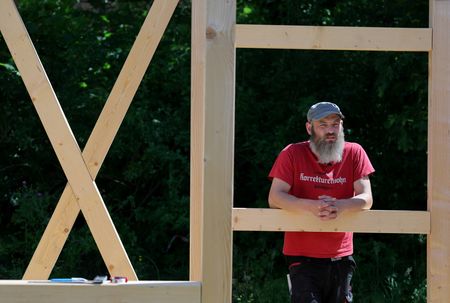
Max Heckel, who teaches craft and technical work in the town of Stendal, was reported to the state’s Schools Office last year following a post-lesson exchange with a student. According to Heckel, the student asked him whether he had voted for the AfD — Alternative for Germany. He said he told the student he had not, citing in part the domestic security service’s classification of the party as “extremist.”
Weeks after that conversation, Heckel received a formal reprimand for violating rules that require teachers to stay politically neutral in the classroom. Since then, he says he has faced online harassment, threats of violence, vandalism to his car, and verbal attacks from senior AfD politicians — all while fighting the disciplinary action he considers unwarranted.
Heckel, who also works as a part-time musician and runs an informal cultural center in Stendal, argues that teachers have a responsibility to defend Germany’s democratic foundations. He says many of his colleagues are too afraid to speak up, fearing both official discipline and hostility from outside the school.
He believes the situation demonstrates that schools are already being pressured not to allow criticism of the AfD — even before the September 6 election. Polls suggest the party could capture roughly 40% of the vote, while the centre-right CDU, led nationally by Chancellor Friedrich Merz, is polling below 30%.
The state’s school authority declined to offer any comment, noting the case remains under review.
The AfD views Heckel as a symbol of left-wing influence it intends to eliminate from schools. Ulrich Siegmund, the AfD’s candidate for premier in Saxony-Anhalt, has repeatedly raised the case in the state assembly. He told Reuters the party would strip political influence from education as part of a broad overhaul.
“We want lessons to remain neutral, so that pupils can form their own views of the political landscape in this country. We don’t need teachers who campaign in any particular direction,” Siegmund said.
He dismissed the security services’ assessment of the AfD as politically driven. The party did win a temporary court order this year halting a determination by the national domestic security agency, the BfV, that it was a “confirmed right-wing extremist” organization. However, Saxony-Anhalt’s own BfV office still classifies the state branch of the party as extremist — meaning it is seen as opposing the liberal-democratic foundations of the state — a label the AfD firmly rejects.
The AfD sees Saxony-Anhalt as a launching pad toward broader national ambitions. If the party forms a regional government there for the first time, it could use education policy as a proving ground for its agenda.
Education carries special weight in Germany because the school system was deliberately structured after World War Two to guard against the return of extremist ideology. For decades, students have been required to learn about the atrocities carried out under Nazi rule in the name of racial purity and national dominance.
The AfD takes issue with that tradition — known in German as “Vergangenheitsbewaeltigung,” or coming to terms with the past — arguing it has fostered a national guilt complex and eroded pride in Germany’s heritage. The party also contends that schools have been weakened by declining academic standards and duties unrelated to education, such as integrating children from refugee families.
Hans-Thomas Tillschneider, a key architect of the AfD’s education and cultural agenda in Saxony-Anhalt, told Reuters that schooling would be a top priority under an AfD government.
“We want a completely new, a completely different education policy,” he said. “Political influence on children, as we experience it — political indoctrination — is not a job for schools.”
Under what the party calls a “patriotic cultural policy,” schools would place greater emphasis on medieval rulers and 19th-century figures from German history, such as Otto von Bismarck, known as the “Iron Chancellor.” Social support programs and integration initiatives would be eliminated.
Mainstream parties, including the CDU, argue the AfD is threatening to dismantle a post-World War Two framework built to protect democratic society. Those parties have adopted a so-called “firewall” policy, refusing to work with the AfD in any coalition arrangement, even if the party falls short of an outright majority.
Critics of the AfD say the party’s version of classroom neutrality would actually suppress informed debate and leave students less equipped to think independently about politics.
Heckel himself is unequivocal about where he stands.
“There is a duty to uphold the constitution,” he said, “and that imposes an obligation on us to protect the free and democratic basic order, both in our private lives and in the workplace.”