Thomson Reuters announced Monday that it is cutting what it describes as “a small number of roles” in its engineering division, as the Canadian content and technology company ramps up its use of artificial intelligence across its operations.
The job cuts affect employees worldwide and were disclosed during an internal technology staff meeting held earlier in the day, according to an employee who was present at the gathering. That employee asked not to be identified, since the meeting was not open to the public.
According to that employee, Thomson Reuters is looking to eliminate as many as 500 positions. Based on calculations using the company’s 2025 annual report, that figure represents roughly 1.8% of the company’s total global workforce of approximately 27,100 people.
The cuts represent about 5.2% of the 9,400 workers employed within the company’s operations and technology division.
These reductions are part of a broader trend sweeping the technology industry, where the rise of artificial intelligence tools has made writing software code faster and more efficient — leaving software engineers among the first to feel the financial consequences of the technology’s rapid adoption.
In total, approximately 120,000 technology workers have been laid off across 228 companies — including major players like Meta and Amazon — in 2026, according to the job-tracking website layoffs.fyi.
A Thomson Reuters spokesperson explained the company’s reasoning: “As customer expectations across legal, tax, and regulatory workflows evolve, we are focusing our capacity where it matters most to customers.”
The spokesperson went on to say, “We are supporting affected colleagues through the transition. At the same time, we expect to hire more than 250 net-new engineering roles globally over the next two years, the large majority senior and AI-native.”
Thomson Reuters is the parent company of Reuters News.
Motorists traveling along Stein Highway (Route 20) in the area between Atlanta Road (Road 30) and Sussex Highway should expect a lane restriction while crews work in the area.
The lane closure is expected to remain in place through Friday, July 17th. Drivers are advised to use caution and allow extra travel time when passing through the work zone.
Motorists in the area should be aware that a lane closure is currently in effect on Stein Highway (Route 20) between Atlanta Road (Road 30) and Sussex Highway.
Workers are active in the area, and the lane restriction is scheduled to remain in place through Friday, July 17th.
Drivers are encouraged to use caution when passing through the work zone and to allow additional travel time for any delays that may occur.
Northbound travelers on Route 141 are facing a lane shift between Newport Gap Pike and the Exit 4 off-ramp as construction crews work in the area.
The lane shift is expected to remain in place until 3 PM. Drivers are encouraged to use caution while passing through the work zone and to budget additional time for their commute.
No further details about the nature of the construction project were immediately available. Motorists should stay alert for signage and flaggers in the area.
Los Angeles Rams left tackle Alaric Jackson, who was taken into custody on June 9 on suspicion of felony domestic violence, now has a chance to sidestep formal criminal charges.
A spokesman for the Los Angeles City Attorney’s Office, Ivor Pine, confirmed to The Associated Press on Monday that Jackson’s case has been placed into a pre-filing diversion program for eligible individuals. This type of City Attorney Hearing serves as an alternative pathway rather than pursuing misdemeanor criminal prosecution.
While no charges are being filed against Jackson at this time, the case has not been closed. Authorities say it can be revisited if additional developments come to light.
When Jackson was arrested, the Los Angeles Police Department reported that officers responded to his home in the West Hills area of the San Fernando Valley. According to NBC4, Jackson allegedly tried to grab a phone from a woman because he believed he was being recorded, and the woman was found to have scratches on her arm.
Jackson has served as the Rams’ starting left tackle for the last three seasons, appearing in 45 regular-season games and six playoff contests. The former undrafted free agent signed a new three-year contract worth $57 million with the team back in February 2025.
Following the arrest, the Rams released a statement saying the organization was aware of the situation “and we take these matters very seriously. Due to this being an ongoing legal situation, we cannot comment further at this time.”
PHILADELPHIA — Philadelphia Phillies star Bryce Harper is pushing back after discovering that the online sportsbook FanDuel used a personal video he recorded through the Cameo app as a reward for a high-spending customer — without his knowledge or approval.
The Philadelphia Inquirer reported last week that a man named Terry Thompson had placed $18.5 million in wagers with FanDuel and was eventually given a customized video from Harper as a VIP perk. In the recording, Harper called Thompson by name and even referenced his young son.
On Monday, Harper posted a screenshot of the original Cameo request on social media, making clear he had been kept in the dark about who was actually behind it.
“Had I known FanDuel’s true intent, I would not have made the video,” Harper stated. “The same is true had I known anything about Terry or his situation.”
The video itself carried FanDuel’s logo, and in it, Harper said he was reaching out at the request of Thompson’s VIP manager on the site — referring to “your host Bryttanni at FanDuel.”
Harper made his feelings even clearer in a social media post Monday, writing: “I did not know FanDuel would do this. I did not consent to it, and FanDuel had no right to do it.”
He posted those comments just hours before he was set to take part in the Home Run Derby.
According to the Inquirer, Thompson lost $1.5 million, a figure cited in a lawsuit filed in March by the Public Health Advocacy Institute in Common Pleas Court in Philadelphia. The suit names both FanDuel and DraftKings as defendants and was brought on Thompson’s behalf. Thompson is also reported to have lost money through DraftKings.
When asked to respond, FanDuel issued a statement saying the company is “committed to fostering a culture of responsible gaming and protecting our customers.”
“Unlike illegal offshore sportsbooks, FanDuel employees are trained to recognize and flag signs of problem gambling and offer resources and tools, and we continue to review and strengthen our policies to ensure we have the industry’s strongest consumer protection initiatives,” the company added.
Four states will put abortion directly before voters this November, with Idaho joining Missouri, Virginia, and Nevada on the list after election officials confirmed an initiative qualified for the ballot.
Idaho’s secretary of state notified the group behind the effort in a letter Monday that the measure had met the requirements to appear on the November 3 ballot. The campaign, led by Idahoans United for Women and Families, shared that letter with The Associated Press.
If passed, the Idaho measure would permit abortion up until fetal viability — generally considered to occur sometime after 21 weeks of pregnancy, though no fixed point is established. The change would bring Idaho’s law closer to what existed before the Supreme Court’s 2022 decision overturning Roe v. Wade. Currently, Idaho is one of six states with a complete abortion ban that includes no exceptions for the health of the pregnant woman or girl. The ban does allow abortion to save a woman’s life or in cases of rape or incest. Idaho also made history in 2023 as the first state to criminalize helping a minor obtain an abortion without parental consent, a law that has largely held up in court despite legal challenges.
David Ripley, CEO of the anti-abortion organization Idaho Chooses Life, is gearing up to fight the measure. “This is going to have a profound impact on Idaho,” he said, “and will basically invalidate virtually every pro-life law that the legislature has enacted over the last 30 to 40 years.”
Missouri has its own unique history on the issue. It was the first state to begin enforcing a total abortion ban after Roe fell, and then in 2024, it became the first state to use a ballot measure to undo that ban. Even so, abortion access remained heavily restricted due to state regulations until a court ruling this past June blocked enforcement of many of those rules.
Now, in a state where Republicans hold dominant political power, voters are being asked to reverse the 2024 amendment and restore an abortion ban. The proposed ban would include exceptions for medical emergencies, fetal anomalies, and pregnancies resulting from rape or incest. Legal disputes over the ballot language have also played out in the state’s courts.
In Virginia and Nevada, voters are not deciding whether abortion will remain legal — it already is, through at least 24 weeks of pregnancy in both states. Instead, residents are being asked to enshrine abortion rights in their state constitutions. Supporters say the amendments could help drive voter turnout in competitive states where both parties have won statewide races in recent years.
Nevada voters already backed the amendment in 2024 by nearly a 2-to-1 margin, but the state constitution requires amendments to pass in two separate public votes before taking effect, which is why it appears on the ballot again.
Some abortion-rights advocates are pushing for laws that go further than Roe v. Wade by removing restrictions throughout pregnancy. In June, the National Abortion Federation — an organization of abortion providers — stated its opposition to “rigid legal cutoffs that ban or restrict abortion care at viability or arbitrary gestational lines.” The group does not fund political campaigns, but its stance may reflect the thinking of other organizations in the movement.
In 2024, South Dakota voters rejected a measure that would have banned third-trimester abortions, allowed some restrictions in the second trimester, and protected abortion rights in the first trimester. Most national abortion-rights organizations also declined to support it.
Since Roe was overturned, abortion-rights advocates have lost four statewide votes on reproductive rights and won 14 others.
Melanie Folwell, executive director of Idahoans United for Women and Families, had pointed words for national groups that choose to sit out certain ballot fights. “I would encourage them to get out of their bubbles of activism and actually begin to engage with the public on where folks are at,” she said.
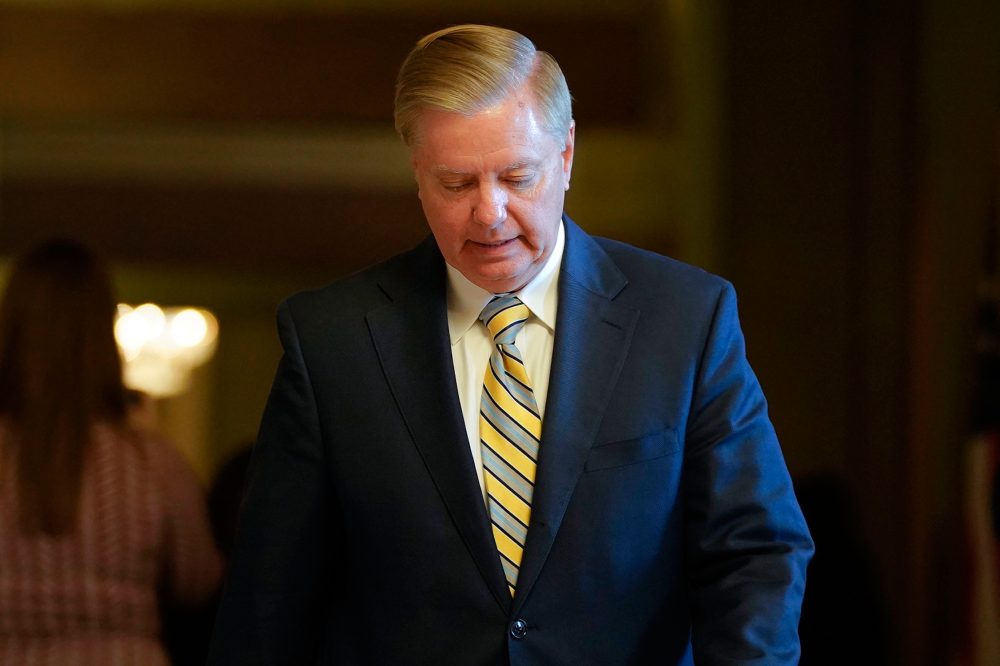
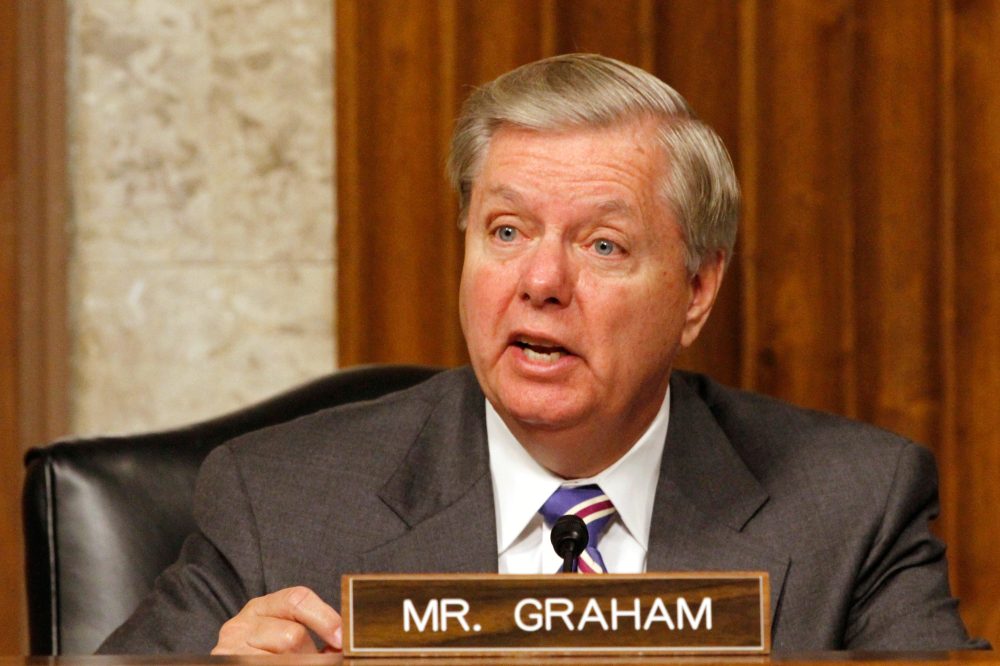
WASHINGTON — When Sen. Chuck Schumer saw Sen. Lindsey Graham’s name appear on his phone, he said his heart skipped a beat.
It was shortly after the 2012 presidential election, a rough one for Republicans who had lost decisively to President Barack Obama. Graham was on the line with a bold idea — “getting the band back together” — pitching a bipartisan push for immigration reform.
That kind of move was pure Graham.
Over the years, colleagues gave him many labels: the “bridge,” the “dealmaker,” the senator always at the center of the action. Most recently, he earned the title of “the Trump whisperer.”
Graham brought a kind of energy to the Senate that kept the institution moving — talking, debating, even laughing — through his relentless drive to make things happen when gridlock seemed inevitable.
Following Graham’s sudden death over the weekend, senators on both sides of the aisle are left wondering who will step into that role — if anyone can.
Sen. Chris Coons, the Democrat representing Delaware, was among those paying tribute. He had celebrated Graham’s birthday over dinner following the NATO summit in Turkey just days before the South Carolina senator passed away.
“Few have been able to frustrate and anger, amuse and engage me in a single conversation the way Lindsey could,” Coons said. “I will miss having him as a partner in the Senate.”
While many lawmakers imagine themselves as central players, Graham was one of the rare few who truly was. His ability to adapt to shifting political winds allowed him to champion causes at home and overseas, and he made a habit of pulling others into the conversation.
There was hardly a bipartisan congressional group that didn’t include Graham — from the Gang of Eight he formed alongside Schumer and Sen. John McCain, which pushed immigration reform through the Senate in 2013, to a more recent effort to impose sanctions on Russia over its ongoing war against Ukraine.
At a moment when Congress struggles to carry out even its most basic functions — let alone maintain basic civility — Graham stood out as someone who worked to bring the two sides together.
The outpouring of tributes following his death, from prominent senators to lesser-known House members, spoke to just how wide his network of partnerships had grown.
Sen. Richard Blumenthal of Connecticut, who teamed up with Graham on the Russian sanctions legislation, reflected on the bond they shared. “We talked at all hours of the day or night, and traveled through all kinds of weather, meeting dictators and democracy defenders,” Blumenthal said.
Though their views often diverged, Blumenthal noted that Graham “listened to me and sought to bridge our differences.”
Graham wasn’t always successful, of course. There were plenty of moments when fellow Republican senators walked out of private party lunches simply shaking their heads at his latest attempt to break a legislative logjam.
His political flexibility drew critics, as did his strong support for military action abroad. His bipartisan immigration efforts with Schumer and Democrats left him largely shunned by the anti-immigration wing of his own party.
Perhaps most damaging to his reputation with some potential allies was his decision to reconcile with former President Trump — even after previously declaring their relationship over following Trump’s role in the January 6, 2021 Capitol attack.
Even so, Graham’s close relationship with Trump during the president’s second term kept him at the center of the action. Senators from both parties leaned on him to get a read on the White House’s thinking.
“Many of us consider him the Trump whisperer,” said Sen. Adam Schiff of California, who served as a manager during Trump’s first impeachment trial — a trial that ended in Trump’s acquittal by the Senate. “If we wanted to know what the president’s thinking was, or how he might be moved on something, you would go to Lindsey to discuss it,” Schiff said.
In a chamber filled with large personalities and even larger egos, Graham’s self-deprecating sense of humor helped ease tensions and soften divisions. He had “a wonderful sense of humor that he used to cut through the tension,” Schiff said.
Sen. Amy Klobuchar of Minnesota shared a personal story about seeking Graham’s support for legislation to secure visas for Afghan refugees. “I remember standing outside of a little phone booth in the Republican cloakroom last year as he spoke with the Vice President, holding up a sign that said ‘Save the Afghans’ and he put the phone on hold and said ‘OK OK I will go on your bill even if it gets me in trouble,’” she recalled. “I will miss him.”
CHARLESTON, S.C. — Darline Graham Nordone has never held political office, but she has spent decades standing beside her brother, the late Sen. Lindsey Graham, through speeches, campaign appearances, and even television ads.
Now, following South Carolina Gov. Henry McMaster’s decision to appoint her to fill the Senate seat her brother left vacant when he died over the weekend, Nordone is heading to Washington to serve out the remaining months of his term through January.
A special primary scheduled for next month will determine which Republican candidate advances to face Democrat Annie Andrews in the general election in November.
The story of how these two siblings came to be so deeply connected begins with tragedy. Their mother passed away in 1976 after a battle with Hodgkin’s lymphoma. Just fifteen months later, a then-13-year-old Darline discovered her father after he died of a heart attack in his sleep.
At the time, Lindsey Graham was a young man just starting law school at the University of South Carolina. Faced with the loss of both parents, he redirected his focus toward making sure his sister was taken care of, making regular trips from Columbia to Seneca, where relatives were looking after her, and eventually becoming her legal guardian.
“I can remember the day my father passed away, standing in the living room of that house, absolutely scared to death,” Nordone told NPR in 2015. “Lindsey wrapped his arms around me and promised me he would always be there for me and always take care of me.”
After Graham became a military lawyer in the Air Force, he went a step further and formally adopted his sister so she could receive his military benefits. Graham never married or had children of his own, and during his 2016 presidential run, he once joked that his sister could be part of a “rotating” group of women serving as White House hostess in the role of first lady.
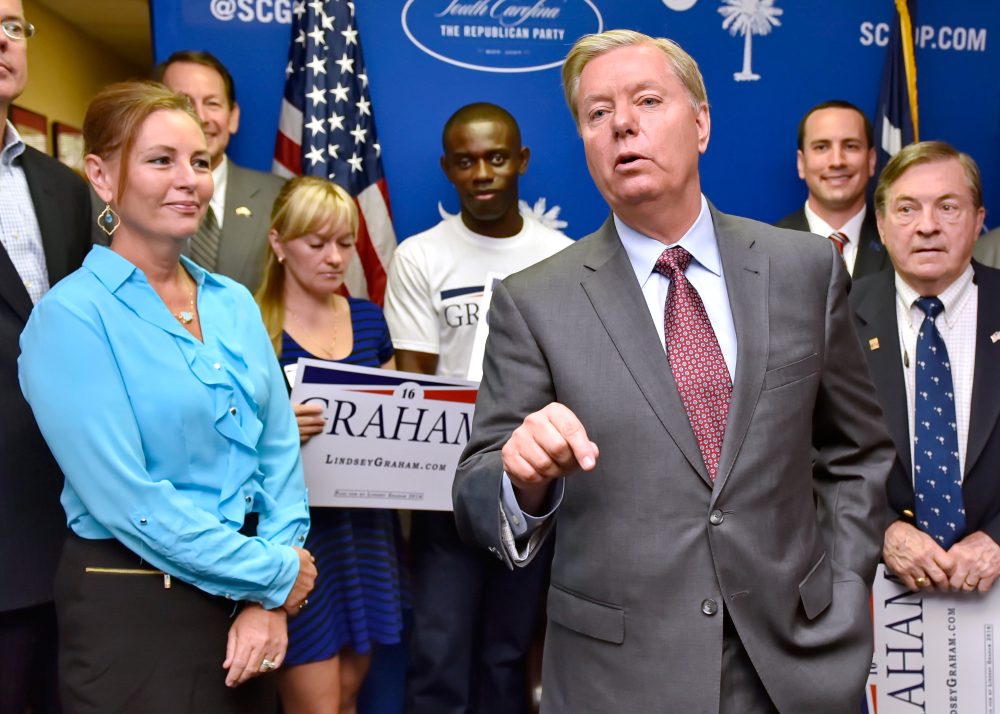
Their close relationship was on full display in March of this year when Nordone stood beside her brother as he filed his candidacy paperwork for re-election, surrounded by her children and grandchildren.
“What have I learned in this life I’ve led? I take nothing for granted. I count every blessing, every day,” Graham said at that event, reflecting on the journey he and his sister had shared. “I understand what a blessing my life has been and the only way I can pay you back for the blessings I’ve received is to be the most thoughtful, relevant, aggressive senator.”
Nordone went on to marry, raise children, and become a grandmother. She has also worked with people with disabilities. Speaking to C-SPAN in 2015, Graham described his sister’s success as “the highlight of it, by far” when reflecting on his own life.
Bob McAlister, a former campaign consultant to Graham, said the hardships the siblings endured growing up shaped who Graham was at his core.
“He grew up with nothing,” McAlister said. “The back of the bar where he and his sister grew up was always kind of top of mind to him. … And I think the way he and Darline grew up just had an indelible impact on him, and for some reason, it gave him the drive that he had to do what he did.”
McAlister added: “A lot of people have different ideas about Lindsey from what they’ve seen on TV and all that, but everything about him can be traced back to his boyhood, the way he grew up, the way he took care of his sister.”
Nordone appeared in a 2014 campaign ad as Graham sought a third Senate term, speaking to the promise he made her after their parents died.
“He never let me down. Never. I don’t see how he did it, to take on the responsibility of raising a little sister,” Nordone said in the ad. “That came from within for Lindsey.”
Hours before Gov. McMaster made his official announcement, President Donald Trump posted on social media that he had personally recommended Nordone for the appointment, describing it as “a fabulous tribute to Lindsey, who loved her dearly!”
Forward Peyton Krebs will stay in Buffalo after reaching an agreement on a four-year, $18 million contract with the Sabres on Monday — sidestepping an arbitration hearing that had been looming just one week after he filed for the process.
The 25-year-old is coming off the most productive season of his career, recording a personal-best 39 points — including 12 goals and 27 assists — while appearing in all 82 regular-season games. He also made his first NHL playoff appearance, chipping in six points (two goals and four assists) across 13 postseason contests.
Krebs had been a restricted free agent heading into the offseason and submitted his arbitration filing on July 5 before the two sides reached this agreement.
Originally selected 17th overall by the Vegas Golden Knights in the 2019 NHL Draft, Krebs became a Sabre as part of the blockbuster November 2021 trade that sent star center Jack Eichel to Vegas. Over six NHL seasons split between the two franchises, Krebs has accumulated 133 points — 42 goals and 91 assists — in 378 games.
WASHINGTON — President Donald Trump declared Monday that the United States intends to strike Pickaxe Mountain inside Iran, issuing a direct warning to Tehran that American military pressure will not let up.
Speaking during an appearance on the Hugh Hewitt Show, Trump said bluntly, “We’re going to take out Pickaxe Mountain. Tell the Iranians to be ready.”
Trump went on to describe the site as something the U.S. is actively monitoring, adding that Iranian nuclear efforts continue to suffer setbacks. “We’re watching (Pickaxe Mountain) closely. We see no activity there. They’re not doing well with their nuclear situation. Every time we hear about it, we blow it up. So they don’t like talking about it. But we’ll probably give Pickaxe a shot relatively soon,” he said.
Pickaxe Mountain sits near Iran’s heavily damaged Natanz uranium enrichment facility. The site is considered heavily fortified, featuring two deeply buried tunnel complexes that military experts say are beyond the destructive reach of even the most powerful bunker-busting bombs currently in the U.S. military’s arsenal.
Earlier in the day, Trump also announced that the United States is reimposing a blockade on Iranian shipping in the Gulf and pledged to keep the Strait of Hormuz open — though he indicated there would be a cost for passage — following an exchange of missile and drone attacks between the two countries.
Trump did not hold back when describing what Iran could expect in the coming hours. “We’re going to hit them very hard tonight and we’re going to hit them hard tomorrow. And there’s not a damn thing they can do about it,” he said during the same radio interview.
Los Angeles Rams starting left tackle Alaric Jackson is off the hook for felony charges stemming from a domestic battery arrest last June, according to a report from ESPN published Monday.
The Los Angeles City Attorney’s Office assigned Jackson’s case to a pre-filing diversion program last week — an alternative path that bypasses traditional misdemeanor criminal prosecution.
Despite avoiding criminal charges, the 27-year-old lineman could still face punishment from the NFL under the league’s personal conduct policy.
According to the police report, Los Angeles officers were called to Jackson’s home in the San Fernando Valley late on the night of June 8. NBC Los Angeles reported that the 6-foot-7, 340-pound Jackson got into a verbal dispute with a woman and allegedly tried to grab a phone from her hand after believing she was recording him. The woman was found to have scratch marks on her arm following the alleged incident.
Jackson was held on $50,000 bail before being released from the Van Nuys jail on bond.
On the field, Jackson serves as the blind-side protector for star quarterback Matthew Stafford. Before the 2025 season, he signed a three-year contract worth $56.3 million. He had previously played the 2024 season on a one-year deal after signing his restricted free agent tender the offseason prior.
Jackson has appeared in 57 career games, making 51 starts, since joining the Rams as an undrafted player out of Iowa in 2021. He was suspended two games by the NFL during the 2024 season for a prior violation of the league’s personal conduct policy.
Additionally, a woman filed a lawsuit against Jackson last November, alleging he recorded her without her knowledge during a sexual encounter, repeatedly refused to erase the footage, and used it to taunt her — a complaint she also brought to the NFL’s attention. A federal court ultimately dismissed that lawsuit in April.
When the National League and American League square off Tuesday at Philadelphia in the MLB All-Star Game, both managers have crafted their batting orders with one goal in mind: exploiting the opposing starting pitcher’s weaknesses.
National League skipper Dave Roberts, who manages the Los Angeles Dodgers, plans to send out as many as seven straight left-handed hitters to open the game against American League starter Dylan Cease, a right-hander from the Toronto Blue Jays.
On the other side, American League manager John Schneider — also of the Blue Jays — has loaded the top of his lineup with right-handed bats, placing them in four of the first five spots to face National League starter Cristopher Sanchez, a left-hander who pitches for the host Philadelphia Phillies.
With Los Angeles Dodgers star Shohei Ohtani sitting out due to a sore knee, Philadelphia Phillies designated hitter Kyle Schwarber will lead off for the NL. Behind him: right fielder Juan Soto of the New York Mets, first baseman Freddie Freeman of the Dodgers, shortstop CJ Abrams of the Washington Nationals, third baseman Max Muncy of the Dodgers, switch-hitting second baseman Ozzie Albies of the Atlanta Braves, and left fielder Brandon Marsh of the Phillies. Dodgers center fielder Andy Pages and Braves catcher Drake Baldwin round out the National League’s starting nine.
In the American League lineup, Los Angeles Angels center fielder Mike Trout — a native of nearby Millville, N.J. — will bat leadoff. Left-handed designated hitter Yordan Alvarez of the Houston Astros hits second, followed by three consecutive right-handed bats: catcher Shea Langeliers of the Athletics, third baseman Junior Caminero of the Tampa Bay Rays, and shortstop Bobby Witt Jr. of the Kansas City Royals. The lineup is completed by right fielder Cody Bellinger and first baseman Ben Rice, both of the New York Yankees, left fielder Riley Greene of the Detroit Tigers, and second baseman Ernie Clement of the Toronto Blue Jays.
Sanchez makes history as the 14th pitcher ever to start an All-Star Game in his home ballpark, and the first to do so since the Dodgers’ Clayton Kershaw accomplished the feat in 2022.
Cease brings his own storyline into the game, having come within just three outs of a no-hitter last Wednesday in San Francisco. He becomes only the fourth Blue Jays pitcher to ever start an All-Star Game, joining Dave Stieb, who started in both 1983 and 1984, David Wells in 2000, and Hall of Famer Roy Halladay in 2009.
JERUSALEM — A United Nations official is accusing the Palestinian militant group Hamas of actively disrupting the delivery of humanitarian aid inside the Gaza Strip, adding to the suffering of civilians already caught in a devastating war.
In a statement released late Sunday, the U.N.’s humanitarian coordinator for the Palestinian territories revealed that relief workers were forced to suspend operations on Saturday after armed individuals entered a food distribution site in northern Gaza and physically attacked two truck drivers at a World Food Program warehouse.
U.N. Deputy Special Coordinator for the Middle East Peace Process Ramiz Alakbarov issued a stern warning about the pattern of behavior. “These incidents are not isolated. They are completely unacceptable and reflect an increasingly dangerous pattern of intimidation, violence and obstruction, including smuggling attempts, targeting and abusing humanitarian operations,” he said.
Alakbarov went on to say: “They are placing humanitarian workers at risk, disrupting the delivery of life-saving assistance, and further constraining the ability of humanitarian organizations to operate at a time when civilians across Gaza continue to face immense and pressing humanitarian conditions.”
Hamas pushed back against the accusations on Monday. The group’s media office stated that its police forces were carrying out a legitimate law enforcement operation after receiving tips that smuggled cigarettes and mobile phone components had been hidden inside aid parcels.
“The incident at the World Food Programme (WFP) food distribution center in the Abu Rashid area of Jabalia Refugee Camp was neither a ‘raid,’ an ‘attack,’ nor an ‘obstruction’ of humanitarian work, as falsely claimed,” Hamas said in its statement.
The conflict in Gaza began more than two and a half years ago when Hamas launched an attack on Israel on October 7, 2023. Since then, Israel’s aerial and ground campaign has left much of the territory in ruins and displaced nearly all of its two million residents, most of whom are now living in tents or damaged structures along a narrow coastal strip that Hamas still controls.
Israeli forces currently hold more than 60% of the territory, including all entry and exit points. Negotiations aimed at disarming Hamas and withdrawing Israeli troops from Gaza have stalled repeatedly over recent months.
Eastbound travelers on Shawnee Road (Route 36) are facing a shoulder closure between Old Shawnee Road and DuPont Boulevard, also known as Route 113.
The closure is the result of construction work in the area and is expected to last until 6 p.m.
Drivers are encouraged to remain alert and allow extra time when traveling through this stretch of road. Use caution near construction zones and be prepared for possible slowdowns.
A community of Black residents in historic North Nashville, Tennessee, is pushing back against a redistricting plan enacted by state lawmakers — one they say echoes a painful chapter from their past.
The new district boundaries carve up the neighborhood along the very same line where a highway divided the community roughly 60 years ago. Residents argue that just as that road fractured their neighborhood decades ago, the redrawn political map is now doing the same thing — and with the same effect of reducing their power at the ballot box.
For many in the community, the parallel is impossible to ignore. The redistricting, they say, is not simply a matter of political geography — it feels like a deliberate effort to once again dilute the influence of Black voters in the area.
Intermittent lane closures are in effect on Quail Hollow Drive between Village Drive and the cul-de-sac as construction crews work in the area.
The lane restrictions are expected to continue until 6 p.m., and drivers passing through the area should be prepared for potential delays or reduced lanes during that time.
Motorists are encouraged to allow extra travel time or consider using an alternate route until construction activity wraps up for the day.
A northbound lane on Turkey Point Road, also known as Road 240, is currently closed to traffic between Ludlow Lane and Plymouth Road due to construction activity.
The lane restriction is expected to be in place until 6:00 PM. Drivers traveling in that direction should anticipate delays and consider alternate routes if possible.
No additional details regarding the nature of the construction were provided. Motorists are encouraged to use caution in the area and watch for workers and equipment near the roadway.
Construction activity on Carsdale Court is causing intermittent lane closures between Arundel Drive and the cul-de-sac, according to traffic officials.
The lane restrictions are expected to remain in place until 6:00 PM. Drivers traveling through the area should anticipate possible delays and consider alternate routes if available.
Motorists are urged to slow down and use caution when passing through the construction zone.
Christina Bluhme was partway up the slopes of Britain’s tallest mountain with her two dogs when one of them suddenly became incapacitated — not from exhaustion, but apparently from cannabis.
Tokyo, a 5-year-old black Labrador retriever, had seemingly consumed cannabis somewhere along the trail on Ben Nevis in the Scottish Highlands. The dog began swaying as though intoxicated and eventually could not walk at all.
“She had a very bad trip,” Bluhme said of the July 5 incident. “It was a very terrifying experience.”
Despite having spent 25 years working as a canine trainer, Bluhme had no idea at the time that her dog might be suffering from cannabis intoxication.
Cannabis toxicity in pets is a growing concern in the United Kingdom, but the problem is even more widespread in the United States, where marijuana has been legalized in numerous states and is permitted for medical use in many others. Marijuana and other drugs appeared on the American Society for the Prevention of Cruelty to Animals’ top 10 list of pet toxins for the first time in 2023. The organization’s poison control center reported a 10% rise in calls related to possible marijuana ingestion compared to the prior year, and those calls have nearly tripled over the past five years.
When Tokyo collapsed, Bluhme, her son, and their two dogs were more than three hours into the climb and close to the summit of Ben Nevis, which stands at 4,413 feet (1,345 meters). The weather had shifted dramatically from clear skies at the start to rain, and temperatures had dropped to 5 degrees Celsius (41 degrees Fahrenheit).
Bluhme told her son, Magnus, that reaching the summit was no longer an option.
“I said, listen, we’ve got to turn around and get her down,” Bluhme recalled Monday. “There’s something completely wrong here.”
Magnus called for assistance, but police indicated they were uncertain whether a rescue team could be dispatched.
Fortunately, a crew from the all-volunteer Lochaber Mountain Rescue Team happened to already be descending from the peak after assisting with a helicopter airlift of an injured hiker. The team placed Tokyo — who weighs 55 pounds (25 kilograms) — onto a stretcher and carried her down the steep, wet, rocky trail, reaching the trailhead in roughly an hour.
“They were almost running,” Bluhme said. “I was clinging on to the stretcher. They were so agile and so fast. It was incredible.”
Police had contacted Crown Vets in the nearby town of Fort William, and a veterinarian was ready and waiting when Bluhme arrived with the dog.
Vets initially suspected a spinal problem, but a senior veterinarian determined the dog had been exposed to some type of neurotoxin, as she was drifting in and out of consciousness. After consulting with a poison control center, the symptoms aligned clearly with cannabis intoxication.
Tokyo was treated with activated charcoal and made a complete recovery by the following morning.
After fearing she might lose her dog on the mountainside, Bluhme said the 1,000 pound (approximately $1,335) veterinary bill felt entirely worth it.
“The next day it was like nothing ever happened,” said Bluhme, who is from southern England. “She recovered so quickly, and I’m the one still hanging a bit.”
The sudden passing of Sen. Lindsey Graham on Saturday night triggered a wave of unfounded conspiracy theories on social media, with many users falsely claiming that his death was the result of criminal activity.
Online posts pointed fingers at several foreign governments — including Russia, Iran, Ukraine, and Israel — accusing them of orchestrating Graham’s death. Other claims suggested his travel schedule made it physically impossible for him to have died in Washington, while some pointed to FBI involvement with local authorities as supposed proof that something sinister had occurred.
However, early findings from a medical examiner tell a very different story.
CLAIM: Sen. Lindsey Graham was killed as the result of criminal actions.
THE FACTS: This claim has no basis in evidence. Graham, who was 71 years old, died from a tear in his aorta, according to a preliminary medical examiner’s finding released by his office. A final, official cause of death will be determined after toxicological and microscopic testing is completed.
The tear — known medically as an aortic dissection — occurred in the inner wall of his aorta and was connected to arterial hardening. Graham’s office had initially described the cause as a “brief and sudden illness.”
Numerous posts on social media blamed foreign nations for his death. One widely shared post on X read: “Graham inspected a drone factory in Ukraine yesterday. Russia blew up that facility today. Then, tonight, it is announced that Graham is dead of a ‘sudden illness.’ No more details. I’d say there is a decent chance that Russia blew up Lindsey Graham.”
Another post on the same platform claimed, referencing Israel’s national intelligence agency: “Most realistic it was Mossad job in order to push Trump to renew full scale war with Iran. It clearly means ‘you are the next’. Lindsey Graham was the shadow of Trump, his black self.”
Graham had been a prominent voice on foreign policy in Washington. On Friday, during a visit to Ukraine, he announced an agreement with the Trump administration to advance a package of Russia sanctions. He was also among the strongest supporters of Trump’s military posture toward Iran, having long advocated for direct confrontation between the U.S. and Tehran. Graham was a staunch ally of Israel, and his stance on the war in Gaza drew criticism from many in the Middle East, including some U.S. allies who favored a diplomatic approach.
Additional social media posts questioned whether Graham could have traveled back from Ukraine quickly enough to have died in Washington, and suggested that FBI activity near his home pointed to a cover-up.
FBI Director Kash Patel addressed the bureau’s involvement in a Sunday morning post on X, writing that “the FBI is assisting local authorities and has made every necessary resource available.” When asked for further clarification on Monday, the FBI responded that it had “nothing to add.”
Misinformation experts say it is not unusual for false narratives to gain traction following major news events. Callie Kalny, an assistant professor of communication at the University of Kentucky, explained why Graham’s death was particularly vulnerable to conspiracy theories: “The sudden death of a high-profile, polarizing figure like Lindsey Graham is especially fertile ground for conspiracy theories in part because it generates intense emotional reactions — shock, grief, anger, even relief or schadenfreude — depending on where someone stands politically. Under these circumstances, a dramatic explanation about Graham’s death — for instance, that a foreign adversary was involved — might simply feel more compelling or more emotionally satisfying than the reality of an aortic dissection.”
Argentina’s run to the World Cup semi-finals is drawing as much attention for refereeing disputes as it is for the team’s play on the field, with critics and former officials raising serious concerns about the fairness of officiating at the tournament.
The defending champions have faced repeated accusations from opponents who believe referee decisions have gone in Argentina’s favor, and social media users have taken to calling the team “VARgentina” — a nod to the video review system at the center of the controversy.
Things came to a head during Saturday’s quarter-final matchup between Argentina and Switzerland. Swiss forward Breel Embolo received a second yellow card for simulation — a call made possible through a VAR protocol — and was ejected from the game. Switzerland’s head coach Murat Yakin did not hold back, describing the rule as “unacceptable.”
Reuters has reached out to FIFA seeking comment on the controversy.
The protocol at issue relates to cases of mistaken identity and is one of several situations where VAR is permitted to step in under rules adopted for the 2026-27 season and the current World Cup. Critics say the largely untested rule has now been thrust into the spotlight at the biggest stage in soccer.
Christina Unkel, a rules analyst for British broadcaster ITV and a former FIFA referee, said the protocol was applied too broadly. “I don’t think it should have been applied in the first place. It was too broad,” she said.
Unkel went on to explain her deeper concern with how the rule is being used. “And where I’m struggling with it is we’re not just changing who gets the card, we’re changing the underlying decision from a free kick going this way to saying no, no, no, it’s actually a decision completely opposite way. So we’re changing the basis of the decision,” she said. “And to me, that is where we are now officially, I think, in the re-refereeing area that VAR has been fighting to try to stay out of.”
The fact that the ruling ended up helping Argentina only intensified the backlash from fans. Unkel described the situation as a ticking time bomb. “This new expansion of the protocol without testing it, without really knowing that that’s what they wanted it to do… it’s just like a powder keg,” she told Reuters. “I’m just waiting for the final lynchpin.”
The controversy did not begin with the quarter-final. During the group stage, Algeria called for Messi to be removed from the game after he appeared to step on the calf of their captain Aissa Mandi. No card was issued, and Messi went on to score three goals. Algeria later filed a formal complaint about the officiating in that match, according to a source who spoke with Reuters.
Argentina’s round of 16 victory over Egypt also generated days of controversy. Egypt scored in the 62nd minute, but the goal was overturned following a VAR review that determined a foul occurred during the buildup. A penalty appeal from Egypt later in the match was denied, and Argentina ultimately won the game with a goal in the 92nd minute. Egypt’s football association stated that multiple officiating decisions affected the result.
Unkel said she did not see clear evidence of poor refereeing in either of those two matches, though she acknowledged that referees are often the first to be blamed when things go wrong. She did note, however, that decisions made off the field have contributed to growing distrust among fans.
FIFA’s handling of two red-card cases drew additional criticism this month. U.S. striker Folarin Balogun received a last-minute reprieve from a one-match ban, while England defender Jarell Quansah was handed a two-match suspension — a contrast that raised eyebrows.
Unkel, who also serves as president of United Soccer League women’s side Tampa Bay Sun FC, said the level of public frustration she is witnessing is unlike anything she has seen before. “I think fan confidence is completely eroded right now,” she said. “I’ve covered major tournaments in this position and or as a referee and I have never seen the level of chatter — not just on social media.”
The U.S. Department of Agriculture’s National Agricultural Statistics Service, known as NASS, has released its latest Crop Progress and Condition estimates.
These weekly reports are closely watched by farmers, commodity traders, and agricultural analysts as a key indicator of how the nation’s crops are faring throughout the growing season.
The report covers crop development stages and overall condition ratings, offering a snapshot of agricultural activity across the country.
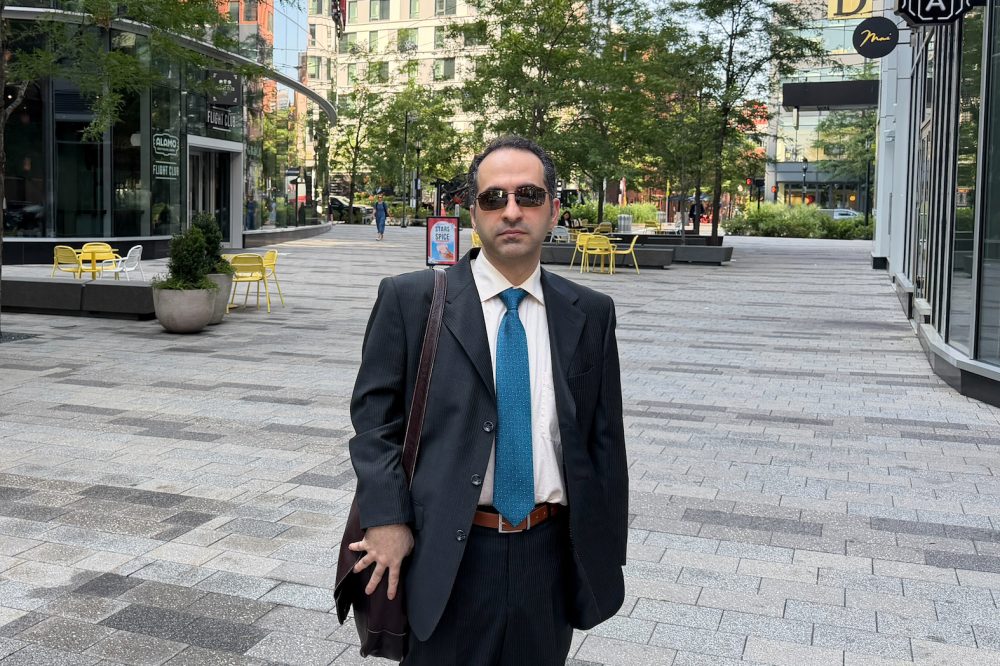
A Chinese-born American scientist who conducted U.S.-funded research on detecting North Korean nuclear explosions has spent nearly two years behind bars in China, where he now faces espionage charges — a situation his wife and advocacy groups say amounts to wrongful detention.
The case involves Youlin Chen, a 54-year-old Boston resident who became a U.S. citizen in 2011. His situation, being reported publicly for the first time, adds another layer of friction to an already strained relationship between the two nuclear powers, even as President Donald Trump works to keep diplomatic ties stable in the wake of last year’s trade war.
Secretary of State Marco Rubio officially designated Chen as “wrongfully detained” on March 19, making securing his freedom a top U.S. priority. According to his wife, Yufang Rong, the Trump administration has chosen not to announce this publicly in order to leave room for behind-the-scenes diplomacy.
A U.S. source with knowledge of the case, speaking anonymously to discuss sensitive diplomatic matters, said the administration remains “focused on gaining his release from his unjustifiable detention.”
Rong said she has been informed by both the White House and State Department that during Trump’s state visit to Beijing in May, the president raised Chen’s detention directly with Chinese leader Xi Jinping, who pledged to look into it. However, Rong said Xi’s government has taken no action since then.
The U.S. source did not directly confirm that Trump brought up Chen’s case with Xi, but noted that the two leaders share a “very good personal relationship” and that “this is one of many facets in the U.S.-China relationship. No one issue is defining.”
Chen is currently the only American held in China who carries the wrongful detention designation, according to his wife and hostage advocacy organizations.
In an interview, Rong said she is deeply worried that Chinese authorities have already decided to find her husband guilty before his trial even begins. Espionage convictions in China can carry sentences ranging from lengthy prison terms up to life — or even the death penalty in cases considered especially serious.
“I believe they will convict him no matter what and the trial will be behind closed doors,” Rong said. She is also a seismologist but does not work on her husband’s research.
The Foley Foundation, a group that advocates for Americans held abroad and has been monitoring Chen’s case, estimates that at least 12 Americans are unjustly held in China, including those under exit bans. Elizabeth Richards, the group’s director of hostage advocacy, is among those tracking Chen’s situation.
Deputy White House press secretary Anna Kelly said: “President Trump has been clear that he wants every American detained abroad to return home, and he has reunited over 100 individuals with their families since taking office this term.”
The Office of the U.S. Special Presidential Envoy for Hostage Affairs and the Chinese embassy did not respond to requests for comment.
Questioned More Than 100 Times
Rong said U.S. embassy officials have visited Chen on multiple occasions, but Chinese authorities are always present during those visits, making it impossible for him to speak openly. A Chinese attorney she hired was not permitted to meet with Chen until more than 13 months into his detention.
According to Rong, Chinese officials have interrogated her husband more than 100 times, focusing specifically on his research into the seismic signatures produced by North Korean nuclear test blasts.
Eric Lebson, a former U.S. national security official whose hostage advocacy organization, Global Reach, is advising the Chen family, believes China is attempting to exploit Chen’s expertise to improve its ability to hide underground nuclear weapons tests. The technique in question, known as decoupling, involves detonating a device inside a large underground cavity to reduce the detectable shock waves it creates.
Lebson said nuclear testing experts consulted by his group expressed similar concerns.
The Trump administration accused China in February of using this very technique to conceal a low-yield underground nuclear test conducted on June 22, 2020. China, which has signed but not ratified the 1996 Comprehensive Nuclear-Test-Ban Treaty — as has the U.S. — denies carrying out that test.
Lebson noted that Chen works for a U.S. government contractor and has never held a security clearance or done classified work. His research into the seismic waves generated by North Korean nuclear tests was funded by the State Department and the Air Force Research Laboratory, conducted in partnership with Chinese academics, relied on publicly available Chinese data, and can be found online.
Reuters reviewed a December 2020 paper authored by Chen that analyzed the magnitude of North Korea’s six known nuclear test explosions and explored ways to tell their seismic signatures apart from those of earthquakes. The paper’s cover page states it was prepared for the State Department’s arms control bureau and was “approved for public release.”
Human rights organizations have pointed out that under China’s state-secrets law, authorities have sweeping power to retroactively classify previously public information — such as government statistics — as national security secrets, which could implicate anyone who used or shared that data.
Arrested at the Airport
Chen was taken into custody by Chinese state security agents on November 5, 2024, at Beijing International Airport just as he was preparing to board a flight back to Boston. He had been visiting family and delivering lectures about his research at two universities, according to Rong and Lebson.
Rong said that in the early weeks of his detention, Chen was subjected to “harsh conditions,” including being made to sit on a hard stool all day without being allowed to stand, read, or exercise. He was also unable to get medications he needs for diabetes and other health conditions.
Since those early days, Rong said it has become harder to get information about how he is being held. What she does know is that he has lost between 30 and 40 pounds (approximately 13.6 to 18.1 kilograms), receives inadequate food with little protein, fruit, or vegetables, and is given only low-quality medications.
Chen was formally charged with espionage on May 1, 2025, though his trial has not yet taken place. The case is expected to come up again when Xi visits Washington in September, a trip Trump has said is planned.
U.S. Senator Ed Markey, a Massachusetts Democrat who led two other senators in a December 17, 2025, letter urging Rubio to grant Chen the wrongful detention designation, said he is “deeply concerned about Dr. Chen’s safety and wellbeing.”
“It is my hope that increased attention on his unjust detention will force the Chinese government to do the right thing and release Dr. Chen,” Markey said in a statement.
The Trump administration has handed over a large volume of previously withheld evidence to prosecutors in Minneapolis who are investigating the deaths of two American citizens shot by immigration agents during deportation operations earlier this year, local officials announced Monday.
Hennepin County Attorney Mary Moriarty, the city’s top prosecutor, said the federal government finally provided the evidence after six months of negotiations, disputes over jurisdiction, and legal action. She described the materials as “voluminous.”
The evidence package includes body camera recordings from agents involved in the shootings, additional digital materials, and the bullet-damaged vehicle belonging to victim Renee Good. Speaking at a news conference, Moriarty thanked federal officials for their willingness to “consider changing course.”
“We need cooperation. Our community needs it,” she told reporters. “Our democracy requires it.”
Moriarty said the handover followed conversations with the Minnesota U.S. Attorney’s office and the FBI’s local field office, neither of which responded to requests for comment Monday.
An Immigration and Customs Enforcement agent fatally shot Good inside her vehicle on January 7. Border Patrol agents shot and killed Alex Pretti on a public street during protests on January 24. Both victims were U.S. citizens. Separately, an ICE agent shot Venezuelan citizen Julio Sosa-Celis in the leg on January 14, wounding him.
Moriarty’s office is still actively investigating the deaths of Good and Pretti, and she has not yet announced whether state charges will be filed against the federal agents responsible. However, charges have already been brought in connection with the Sosa-Celis shooting — ICE agent Christian Castro has been indicted under Minnesota law on four counts of second-degree assault and one count of falsely reporting a crime.
All three incidents occurred during Trump’s Operation Metro Surge last winter, a large-scale enforcement campaign in which hundreds of armed immigration agents swept through Minnesota cities in search of individuals to deport.
Democratic leaders in the state publicly condemned the Republican president’s actions, saying constitutional rights of Minnesotans were being widely violated, and pledged to pursue accountability.
The Trump administration had previously refused state requests for the evidence, arguing that only the U.S. Department of Justice and the Department of Homeland Security should investigate the agents involved. Officials also incorrectly claimed the agents had blanket immunity from state prosecution.
Federal law enforcement agencies abruptly stopped their standard evidence-sharing practices shortly after Good’s killing, prompting the state to file a lawsuit against the Trump administration. That legal case is still active, though Moriarty indicated it could potentially be resolved once her office has had time to review the newly received materials.
Pursuing a state criminal case against a federal law enforcement officer is an uncommon and legally challenging process. The U.S. government has the ability to move such a case from state to federal court if the Department of Justice argues the agent was performing lawful duties at the time.
In February, amid public anger over the shootings, the Trump administration announced it was ending the large-scale deportation surge in Minnesota and would instead focus on more targeted enforcement rather than broad sweeps.
In other recent immigration-related incidents, an ICE agent last week fatally shot Lorenzo Salgado Araujo, a Mexican man federal officials said had been living in the U.S. without legal status for decades, during a traffic stop in Houston. On Monday, a separate shooting involving U.S. immigration agents left one person dead in Biddeford, Maine.
Worldwide investment in fusion energy has reached an unprecedented level, with nearly $4.48 billion poured into the sector over the past year, according to a new survey released Monday. Analysts say the milestone reflects growing optimism that fusion power could eventually help meet the world’s increasing appetite for electricity.
Fusion reactors, which remain in the experimental phase, work by forcing lightweight atoms — such as hydrogen — together under extreme heat and pressure. The process releases enormous amounts of energy without producing greenhouse gas emissions or the long-lived radioactive waste associated with conventional nuclear power.
The Washington-based Fusion Industry Association conducted the survey, which found that last year’s investment across 56 private companies was the highest recorded since the annual survey launched in 2021 — and 69% greater than the year before. Cumulative investment since 2021 has now exceeded $14.2 billion.
Industry leaders say the numbers reflect a fundamental shift in how the energy sector views fusion technology. “This report shows that the fusion industry is fundamentally on its pathway to commercialization,” said Andrew Holland, CEO of the Fusion Industry Association. “The thing that’s driving a lot of this is the need for new electricity sources, the long-term identified growth of data centers and artificial intelligence.”
Companies working on fusion reactors believe commercial power generation could begin as early as the early 2030s, though significant technical challenges remain. Among the biggest obstacles are improving the efficiency of fusion reactions and sustaining them long enough to produce more power than the plant consumes. Engineers must also develop materials capable of withstanding the intense neutron bombardment that occurs during fusion reactions.
The United States is home to more fusion companies than any other nation, but those firms rely primarily on private investment. U.S. government funding for fusion research amounts to roughly half of what China spends on the technology.
The record investment figures coincide with two fusion companies moving toward public stock listings. General Fusion, a Canadian firm, announced earlier this year that it plans to go public in the United States through a deal valued at approximately $1 billion with blank-check company Spring Valley Acquisition Corp. III.
Meanwhile, Google-backed TAE Technologies announced late last year that it intends to go public through a $6 billion reverse merger with social media company Trump Media & Technology Group, which is majority owned by a revocable trust belonging to President Donald Trump.
The survey also includes four private fusion companies based in China, including one newly established firm. However, the Fusion Industry Association acknowledged that this represents an incomplete picture of China’s fusion sector, noting that press reports suggest several additional companies there are receiving both government and private backing.
Drivers in the area of Elderon Drive at the Elderon Drive Loop should be aware of intermittent lane closures currently in effect due to construction work in the area.
The lane restrictions are expected to remain in place until 6:00 PM, and travelers passing through the area may experience brief delays as a result.
Motorists are encouraged to use caution when approaching the construction zone and to allow for additional travel time if their route takes them through this area.
Motorists traveling along Carsdale Court between Arundel Drive and the cul de sac should plan for intermittent lane closures due to active construction in the area.
The lane restrictions are expected to remain in place through 6:00 PM. Drivers are encouraged to use caution when passing through the construction zone and should anticipate possible delays.
A crash on Delaware Route 8 westbound has resulted in the right lane being closed near Kenton Road.
Motorists traveling in that direction should be aware of the lane restriction and allow extra travel time. Authorities have not yet released additional details regarding the incident.
Drivers are encouraged to use caution in the area and consider alternate routes until the roadway is fully cleared.
You don’t need a Super Bowl ring to be considered the best in the game — at least according to a panel of Associated Press pro football writers.
Buffalo Bills quarterback Josh Allen has claimed the top spot in the AP’s preseason survey ranking the NFL’s best quarterbacks heading into the 2026 season. It marks the first time in four years that someone other than Patrick Mahomes has held that distinction.
Allen, who took home the 2024 AP NFL Most Valuable Player award, collected five first-place votes from a panel of eight AP pro football writers. The scoring system awarded 10 points for a first-place vote, followed by 5, 3, 2, and 1 point for second through fifth place, respectively. Allen appeared on every single ballot, also picking up one second-place vote, one third-place vote, and one fourth-place vote.
Mahomes finished in second place, narrowly ahead of reigning NFL MVP Matthew Stafford. Lamar Jackson landed in fourth, while Joe Burrow rounded out the top five.
Despite another strong individual performance in 2025, Allen’s Bills saw their five-year run of AFC East division titles come to an end at the hands of New England. Buffalo was eliminated in the divisional round of the playoffs by Denver, a result that ultimately cost head coach Sean McDermott his position.
On the field, Allen threw for 3,668 yards with 25 touchdown passes and 10 interceptions, posting a 102.2 passer rating. He also contributed significantly on the ground, rushing for 579 yards and 14 touchdowns. He earned his fourth Pro Bowl selection and placed third in MVP voting. Allen and the Bills continue to search for their first Super Bowl trip since the 1993 season, despite reaching the playoffs in seven consecutive years.
Mahomes, meanwhile, endured the most difficult season of his NFL career, tearing his ACL in Week 15. Kansas City went 6-8 during the games he played and dropped all three contests without him. Even so, the three-time Super Bowl champion — who was the unanimous top choice in this survey in both 2023 and 2024 — still earned two first-place votes. Before going down with the injury, Mahomes threw for 3,587 yards, 22 touchdowns, and 11 interceptions. He is working toward being healthy for Week 1 as Kansas City looks to bounce back from its first losing season under head coach Andy Reid.
Stafford, in his 17th NFL season, had a career year — earning first-team All-Pro recognition for the first time and beating out Drake Maye for the MVP award. He received one first-place vote and two second-place votes in the preseason survey, appearing on all eight ballots. Stafford led the entire league with 4,707 passing yards and 46 touchdown throws, adding just eight interceptions and a 109.2 passer rating — second only to Maye. His team finished 14-6, won two playoff games, and fell to Seattle in the conference championship.
Jackson, a three-time All-Pro and two-time league MVP, experienced a rough 2024 campaign — his first losing season as a starting quarterback, going 6-7 — as the Baltimore Ravens missed the postseason entirely. He threw for 2,549 yards, 21 touchdowns, and seven interceptions with a 103.8 passer rating, while also posting a career-low 349 rushing yards and two rushing scores. Jackson received two third-place votes and appeared on six of the eight ballots.
Burrow was limited to just eight games due to a toe injury, though he guided his team to a 5-3 record during that stretch. It was the third time in his career that injuries have held him to 10 or fewer games in a season. He threw for 1,809 yards with 17 touchdowns and five interceptions, finishing with a 100.7 passer rating. The three-time Pro Bowl quarterback appeared on five ballots with one third-place vote. Burrow had previously won the AP Comeback Player of the Year award on two separate occasions after returning from injury-shortened seasons.
The latest turkey hatchery figures show steady growth in production compared to one year ago, with several key indicators each climbing 4 percent.
According to the report, the number of eggs sitting in incubators as of July 1 was up 4 percent from the same point last year. The number of poults — young turkeys — that hatched during the month of June also rose 4 percent compared to June of the prior year.
Additionally, net poults placed during June came in 4 percent higher than the year-ago figure, rounding out a consistent picture of modest but steady growth across the turkey hatchery industry.
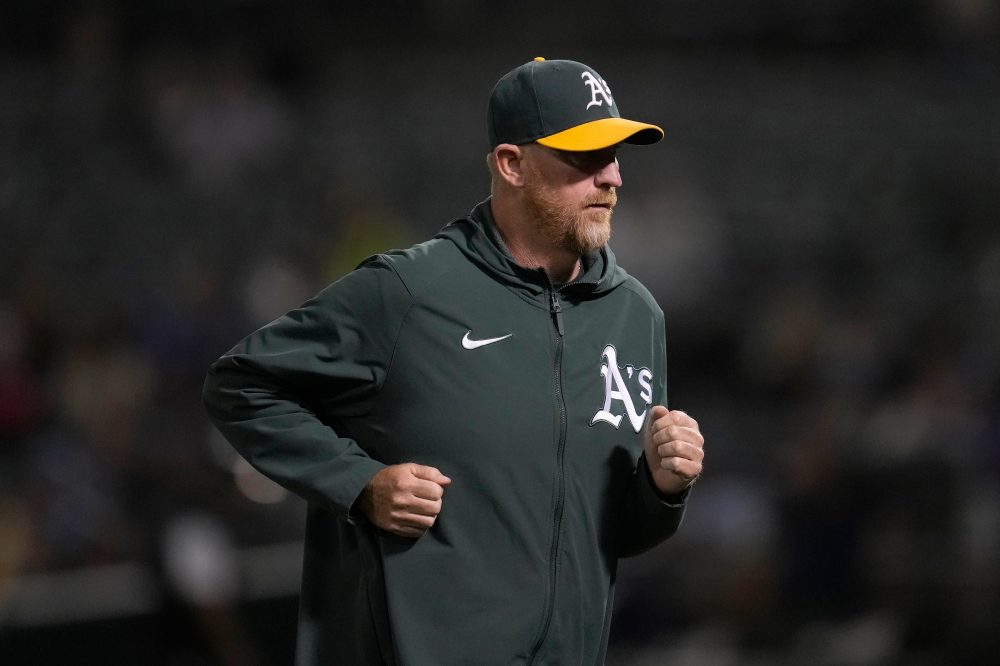
The Athletics made a coaching change Monday, parting ways with pitching coach Scott Emerson as the struggling club heads into the All-Star break on a sour note.
The team announced that bullpen coach Dan Hubbs will take over as interim pitching coach for the remainder of the season.
The move comes after a 9-1 defeat at the hands of the Chicago White Sox on Sunday, which extended the Athletics’ losing streak to nine consecutive games. The team’s pitching staff has posted a 5.21 ERA this season, ranking second-worst in all of Major League Baseball — only Colorado’s 5.44 ERA is higher.
The Athletics currently sit at 41-55, placing them fourth in the AL West standings.
Emerson first came aboard with the Athletics back in 2014 as bullpen coach before being elevated to the pitching coach role in 2017.
Another brutal week of dangerous heat is bearing down on the United States, and this time the nights aren’t offering much of a break either.
The National Weather Service is forecasting that more than 90 temperature records across the country could be tied or shattered by Wednesday — and the majority of those records are expected to fall overnight, not during the day.
Health professionals warn that high nighttime temperatures are actually more hazardous than scorching daytime highs, because the body never gets the chance to recover.
A long-lasting heat dome has been smothering much of the country, making this one of the hottest starts to summer in recent memory. The extreme temperatures in recent weeks have already been linked to heat-related deaths in New Jersey and have contributed to wildfire activity in the West.
In cities like Fort Lauderdale, Florida; Miami; Tampa, Florida; Galveston, Texas; and Charleston, South Carolina, nighttime temperatures are not expected to dip below 80 degrees Fahrenheit (27 C), according to the National Weather Service.
Even areas of the Midwest and Northeast more commonly associated with harsh winters will see nighttime temperatures stay above 70 degrees Fahrenheit (21 C) over the next several days — including Fargo, North Dakota; International Falls, Minnesota; and Portland, Maine.
The reason overnight heat is so dangerous comes down to basic biology: when temperatures stay high through the night, the body’s core temperature never gets a chance to cool down and reset from the strain of the day.
“That’s where the health outcomes are amplified, particularly for the elderly and vulnerable communities,” explained University of Georgia meteorology professor Marshall Shepherd.
Even a small rise in core body temperature can trigger heatstroke or put dangerous levels of stress on the heart.
Kristie Ebi, a public health and climate scientist at the University of Washington, noted that when nighttime temperatures fail to bring relief, the health consequences often don’t show up until the following day. “Mortality starts the second or third day” because the body is simply unable to cool itself down, she said Monday.
Early warning signs of heat illness include heavy sweating, muscle cramps, and headaches. “It’s hard to know you’re getting in trouble with the heat. This is why we need to be more proactive,” Ebi said.
Cooling down is essential — whether that means stepping into an air-conditioned space or simply wrapping a cold, wet towel around your neck.
Health experts are also urging people to check in on friends and family, particularly those who are elderly, pregnant, or dealing with health conditions that make it harder to cope with extreme heat.
Even for those without air conditioning at home, options are available. Heading to a library or a shopping mall can provide relief. Sitting in front of a fan while misting your skin with water, soaking your feet in cold water, wetting your clothing, and staying well-hydrated are all practical steps that can make a real difference.
JOHANNESBURG — In the span of just one month, South Africa has deported or voluntarily repatriated more than 53,000 African immigrants as part of a government crackdown that has unfolded alongside a series of sometimes violent protests targeting foreigners.
South African Justice Minister Mmamoloko Kubayi announced Sunday that more than 80% of those sent home were citizens of Malawi. Authorities did not provide a breakdown distinguishing between those formally deported and those who chose to leave voluntarily.
Multiple African nations have contributed aircraft and buses to help bring their citizens home amid a sharp rise in anti-immigrant sentiment in South Africa in recent months. The climate has led to attacks on foreigners and left communities across the country on edge.
South African police reported arresting 350 individuals on charges related to public violence, intimidation, and unauthorized immigration checks — a troubling trend in which groups of South African civilians have been stopping migrants and demanding they show documents proving their legal status in the country.
Authorities are currently investigating the deaths of at least three migrants — two from Mozambique and one from Malawi. Nigeria has stated that two of its citizens were killed during anti-immigrant protests, though South African officials have denied those deaths were connected to the unrest.
While immigrants from Malawi, Zimbabwe, and Mozambique made up the largest share of those deported or repatriated, South African officials confirmed that citizens of Nigeria, Uganda, and Kenya were also among those removed.
Last month, South African President Cyril Ramaphosa unveiled new measures to tighten border security and strengthen enforcement of immigration laws in what is considered Africa’s most developed economy. He acknowledged the growing tensions, which were fueled by anti-migrant groups claiming — without evidence — that immigrants are responsible for South Africa’s high unemployment rate and rising crime.
President Ramaphosa also cautioned citizens against taking matters into their own hands following reports of vigilante-style attacks on migrants.
Anti-migrant groups had set June 30 as a self-imposed deadline for undocumented immigrants to leave the country — a deadline the government formally rejected. Despite that, the date prompted thousands of Malawians to gather at a temporary immigration processing site in the eastern city of Durban seeking to return home. Officials said some left voluntarily, while others were officially deported for lacking proper documentation.
An additional 20,000 or more migrants were deported or repatriated through a temporary immigration center established in the northern border town of Musina, officials said.
South Africa has historically drawn migrants from neighboring African nations due to its relative economic prosperity, a dynamic that has periodically sparked tensions. In 2008, more than 60 people were killed in violence directed at foreigners, and there have been other episodes of anti-immigrant violence since then.
Sabina Tadera of the Southern Africa Network for Immigrants and Refugees, an organization that advocates for immigrant rights, said some of the Malawians who gathered at temporary camps were actually in South Africa legally but were fleeing out of fear of being attacked.
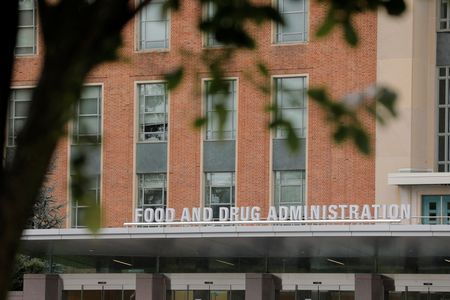
The U.S. Food and Drug Administration has given the green light to an at-home starting dose of Leqembi, an Alzheimer’s treatment developed by Eisai and Biogen, opening the door for patients to begin therapy through self-administered or caregiver-administered injections.
The newly approved formulation is delivered under the skin, a significant departure from the previous standard of care, which required patients to receive the drug through intravenous infusions at a clinic. Under the old approach, patients could only switch to a maintenance phase after 18 months of IV treatment.
The injectable version of the drug is being marketed under the name Leqembi IQLIK. The FDA noted that the injection-site version can cause local reactions, such as redness, swelling, rash, pain, or bruising at the spot where the shot is given.
BMO Capital Markets analyst Evan Seigerman suggested the at-home approval could broaden the drug’s reach by making it more convenient for patients, and could give it a competitive edge over Eli Lilly’s Kisunla, a rival Alzheimer’s drug that still requires intravenous infusions.
Leqembi is already approved for adults living with Alzheimer’s disease, a progressive condition that gradually erodes memory, thinking, and the ability to carry out everyday tasks. The drug works by targeting amyloid beta, a protein that accumulates in the brains of people with the disease, forming harmful plaques.
The FDA based its decision on two earlier clinical trials that demonstrated the IV version of Leqembi was effective in patients in the early stages of Alzheimer’s, including those experiencing mild cognitive impairment or mild dementia with confirmed amyloid buildup in the brain. The agency did not require separate large-scale trials for the injectable version, instead relying on data showing it produced comparable results and similar reductions in amyloid plaques as the infused form.
News of the approval pushed Biogen’s stock up 4.5% during afternoon trading on Monday.
SAO PAULO — A Brazilian Supreme Court justice has issued a 90-day ban preventing Senator Flavio Bolsonaro from visiting his father, former president Jair Bolsonaro, according to a court ruling released Monday.
Justice Alexandre de Moraes issued the order after determining that a letter penned by the former president — which the senator then posted on social media over the weekend — violated the conditions of Jair Bolsonaro’s house arrest. Those conditions include a prohibition on using social media, either personally or through someone else acting on his behalf.
The timing could prove damaging to Senator Bolsonaro’s political ambitions. The senator has been positioning himself as a presidential candidate to challenge President Luiz Inacio Lula da Silva in Brazil’s upcoming election, with the first round set for October 4 and a possible runoff on October 25.
The letter from the former president was written against a backdrop of tension between Senator Bolsonaro and his stepmother, former first lady Michelle Bolsonaro. In the letter, the ex-president called on family members to move past their differences, writing that it was time “to set aside any differences, and have everyone commit to supporting” his son’s presidential campaign.
Neither Senator Flavio Bolsonaro nor representatives for the former president offered a response to requests for comment.
Jair Bolsonaro was convicted last year and sentenced to more than 27 years behind bars after being found guilty of plotting to overthrow President Lula following his loss in the 2022 election. He was subsequently moved to house arrest due to health concerns.
Milwaukee Brewers pitcher Jacob Misiorowski is expected to take part in a throwing session on Tuesday as he works to recover from arm fatigue, according to a report from the Milwaukee Journal Sentinel.
The right-hander had recently been selected to the National League All-Star team for the second time in his career, but was unable to participate in the showcase event held Tuesday in Philadelphia. Concerns deepened when he was pulled from a scheduled Sunday start against Pittsburgh Pirates pitcher Paul Skenes.
According to the report, Misiorowski will also sit out Milwaukee’s upcoming home series against the Miami Marlins this weekend. The Brewers are slated to face the New York Mets in their next series, which gets underway the following Monday.
Misiorowski spoke candidly about what he’s been experiencing. “Fatigue would be the best word,” he told reporters over the weekend after his scratching was announced. “Nothing crazy. Just didn’t bounce back. A little quick on the days off between but nothing crazy.”
Despite the current health concern, Misiorowski has put together a remarkable season and is firmly in the conversation for the National League Cy Young Award. He has posted a 10-4 record with a 1.62 ERA across 18 starts this year — already surpassing the 15 appearances he made during his breakout 2024 campaign, when he dazzled fans with a fastball topping 100 miles per hour.
The hard-throwing pitcher has now logged 111 innings this season, quickly closing in on the combined 129 and one-third innings he pitched across both the minor and major leagues last year.
PARIS — French President Emmanuel Macron announced Monday that France will permit Ukraine to manufacture French-made cruise missiles, precision-guided bombs, and air defense interceptor missiles, following Ukraine’s orders for advanced Franco-Italian air defense systems and Rafale fighter jets.
Speaking at a news conference after a gathering of roughly 25 world leaders in Paris, Macron described the agreement reached with Ukrainian President Volodymyr Zelenskiy. “Earlier this afternoon President Zelenskiy and I agreed on a roadmap between our two countries, implementing what had been agreed in principle last November regarding our bilateral defense cooperation,” Macron stated.
The announcement represents a historic first — France has never previously agreed to license military production to Ukraine. The move is intended to help Ukraine boost its weapons stockpiles as Russia continues to escalate its attacks on the country.
The licensed production will focus on three key weapons systems: AASM precision-guided air-to-ground bombs, Aster air defense interceptor missiles, and SCALP long-range air-launched cruise missiles — a weapon that Britain also manufactures.
Macron added that radar systems would also be transferred to Ukraine. He noted that Zelenskiy had placed an order for next-generation SAMP-T air defense systems, which would follow the delivery of an older version of the system along with a batch of missiles.
Additionally, 16 Rafale fighter jets are set to be delivered, with the goal of having them operational over Ukrainian skies by 2028 or 2029, Macron said.
The French president also revealed that Ukraine’s allies have agreed to launch military exercises in countries bordering Ukraine. The drills are part of a broader plan for a multinational force that would be deployed once a ceasefire with Russia is reached.
LONDON — The U.S. military is set to begin enforcing a full maritime blockade against Iran beginning Tuesday, according to an announcement made Monday by the U.S. Navy-led Joint Maritime Information Center (JMIC).
According to an advisory issued by the center, the blockade will take effect at 8:00 p.m. GMT on July 14 and will apply to all vessel traffic approaching or departing Iran’s ports, oil terminals, and coastal waters — regardless of what country’s flag a ship is flying.
The center made clear the consequences for ships that do not follow the restrictions: “Any vessel suspected of entering or departing the blockaded area without authorization is subject to interception, diversion, and capture. Non-compliant vessels may be legally compelled with force.”
Despite the sweeping nature of the blockade, the JMIC noted that neutral ships passing through the Strait of Hormuz on their way to or from destinations outside of Iran will be allowed to continue without interference.
A Heat Advisory is in effect across much of the Delmarva Peninsula and surrounding region, with dangerously high heat index values expected to reach as high as 107 degrees Fahrenheit on Wednesday.
The National Weather Service in Mount Holly has issued the advisory for Kent and Inland Sussex Counties in Delaware, Caroline County in Maryland, and Atlantic, Cape May, Cumberland, and Salem Counties in New Jersey. The advisory runs from 10 a.m. to 8 p.m. Wednesday.
Health officials warn that the dangerous combination of high temperatures and oppressive humidity could trigger heat-related illnesses, including heat exhaustion and heat stroke — conditions that can become life-threatening without prompt attention.
Residents are urged to take the following precautions:
• Drink plenty of water and stay hydrated throughout the day
• Stay indoors in an air-conditioned space as much as possible
• Avoid prolonged exposure to direct sunlight
• Check on elderly relatives, neighbors, and vulnerable individuals
If you don’t have access to air conditioning at home, consider visiting a local cooling center, library, or shopping mall during the hottest parts of the day.
Stay with TV Delmarva for the latest updates on this developing weather situation.
Finding information about Delaware’s public schools just got a lot simpler. The Delaware Department of Education has officially launched a new online resource called Explore Delaware Schools, designed to serve as a one-stop destination for families seeking information about the state’s public school system.
Before this portal existed, parents and guardians often had to visit several different websites just to piece together basic information about local schools. The new platform aims to change that by consolidating school information, attendance boundaries, and school profiles all in one accessible location.
The driving idea behind the launch is straightforward: public information about schools should be simple to find, easy to understand, and consistently available no matter where someone goes looking for it.
A Heat Advisory has been issued by the National Weather Service out of Mount Holly, New Jersey, beginning Sunday, July 13 at 2:45 PM Eastern Time and lasting through Tuesday, July 15 at 8:00 PM Eastern Time.
During a Heat Advisory, conditions are expected to be hot enough to pose a risk to health, particularly for vulnerable individuals such as the elderly, young children, and those with certain medical conditions.
Residents are encouraged to drink plenty of water, stay in air-conditioned spaces when possible, and check on neighbors and loved ones who may be at greater risk. Avoid strenuous outdoor activity during the peak afternoon hours when temperatures are at their highest.
The advisory remains in effect until Tuesday evening. Stay with TV Delmarva for the latest updates on this heat event.
Throughout the month of May, the New Castle County Division of Police teamed up with the Delaware Office of Highway Safety (OHS) to take part in the Preventing Roadside Deaths Enforcement Campaign. The joint effort centered on cracking down on violations of Delaware’s Move Over Law and making roadways safer for those working on the side of the road.
Delaware’s Move Over Law extends its protections beyond just police officers, firefighters, and emergency medical personnel, covering a wider range of roadside workers who face dangers from passing traffic every day.
The National Weather Service office in Mount Holly, New Jersey has issued an Extreme Heat Watch, warning residents of potentially dangerous heat conditions expected to develop in the coming days.
The watch took effect Sunday, July 13 at 2:45 PM Eastern Time and is set to remain in place through Tuesday, July 15 at 8:00 PM Eastern Time.
An Extreme Heat Watch means that conditions are favorable for a dangerous heat event to occur. Residents are urged to take precautions, stay hydrated, limit time outdoors during peak afternoon hours, and check on elderly neighbors and family members who may be more vulnerable to extreme heat.
Additional details and updates are expected as the event approaches. Stay tuned to TV Delmarva for the latest forecast information and any changes to this watch.
Canada’s top banking regulator sent a warning to the country’s largest financial institutions about the cybersecurity dangers posed by Anthropic’s Claude Mythos and other cutting-edge artificial intelligence models, according to an email obtained through an access-to-information request.
The Office of the Superintendent of Financial Institutions — known as OSFI — distributed the message in April to chief technology officers, chief information security officers, and chief risk officers across the financial sector, including major banks and insurance companies.
Cybersecurity specialists describe Mythos as an AI model with an exceptional ability to identify and exploit security weaknesses, posing serious challenges to the banking industry and its older technology infrastructure. Regulators around the world are working to understand the risks that such frontier AI models present.
“Advanced artificial intelligence models, such as Anthropic Claude Mythos, significantly compress the timeframe for effective risk mitigation,” OSFI stated in the email.
“Accordingly, this bulletin is grounded in our existing guidance and outlines sound practices that institutions can adopt to enhance the speed and effectiveness of risk identification, mitigation and response,” the regulator added.
Portions of the email were withheld under certain provisions of the Access to Information Act. OSFI’s recognition of the risks tied to Mythos could push Canadian banks, insurers, and other regulated entities to invest more in technology that shields customers from cyber threats.
After Reuters submitted questions to OSFI last week, the regulator published a public bulletin on generative and agentic artificial intelligence on Monday.
“OSFI takes a technology-neutral, risk-focused approach to emerging technologies, including advanced artificial intelligence models such as Mythos. Our focus is not the technology itself, but how federally regulated financial institutions govern and manage the risks associated with its use,” OSFI said in its written response.
In early April, Canadian bank executives sat down with regulators to talk through the dangers of Mythos — a meeting that followed a similar urgent gathering in the United States, where Treasury Secretary Scott Bessent and then-Federal Reserve Chair Jerome Powell brought together bank CEOs to address cyber risks linked to Anthropic’s latest AI model. OSFI formally sent its email to company executives on April 29.
OSFI oversees the stability of Canada’s financial sector, covering everything from banks to pension funds, and monitors threats stemming from foreign interference, geopolitical tensions, and new technologies.
The cyber capabilities of certain frontier AI systems are viewed as so formidable that access has been restricted in some regions — euro zone banks are currently barred from using Mythos.
Anthropic has also navigated a complicated relationship with the U.S. government. A federal judge blocked an initial Pentagon blacklisting of the company in March, and tensions have since eased following the private release of Mythos.
Three of Canada’s six largest banks — Royal Bank of Canada, TD Bank, and BMO — have laid out plans to generate revenue from their AI investments, having moved beyond experimental projects into practical applications such as customer chatbots, internal tools, and reduced dependence on outside vendors. Bank of Nova Scotia, CIBC, and National Bank have also announced various AI initiatives.
The Canadian government has said it has access to Anthropic’s Project Glasswing, a program that allows companies to use Mythos, though it remains unclear which Canadian banks, if any, are currently using it. Some banks directed questions to the Canadian Bankers Association, which said financial institutions have made significant investments to protect the financial system and are meeting OSFI’s requirements for cyber risk management and incident reporting.
In a June interview, RBC’s chief technology officer Bruce Ross said Mythos highlighted a fundamental shift in how cyberattacks unfold, making it critical for organizations to respond quickly since new attack methods can surface the moment vulnerabilities are discovered.
“The way we’re (the industry) dealing with it is, building our own AI defenses… we’ll continue to do that,” Ross said.
The federal government posted a $120 billion budget deficit in June, a stark reversal from the $27 billion surplus recorded in June of last year, the U.S. Treasury Department announced Monday. Officials pointed to growing refunds stemming from President Donald Trump’s tariffs as a major factor behind the shift.
According to the Treasury, the government collected $23.6 billion in gross customs duties during the month, but paid out $49.2 billion in refunds — resulting in a net outflow of $25.6 billion. Total receipts for June fell by $31 billion, or 6%, compared to the same month a year ago, coming in at $496 billion.
Total government spending for June reached $616 billion — an increase of $117 billion, or 23%, over the reported June 2025 figure. However, the Treasury noted that last year’s June outlay total was reduced by $97 billion due to timing shifts in benefit payments. When adjusted for that calendar difference, the June deficit was $53 billion higher than the prior year’s adjusted deficit of $67 billion, representing a 79% increase.
Interest payments on the national debt were also a significant factor. The Treasury’s gross interest outlays on public debt climbed $41 billion, or 28%, to $185 billion for the month. That figure was partially offset by a $10 billion increase — about 17% — in interest received by federal trust funds, which totaled $70 billion.
Looking at the broader fiscal picture, the cumulative deficit for the fiscal year to date rose $29 billion, or 2%, reaching $1.367 trillion. Revenues for that period were up $143 billion, or 4%, totaling $4.151 trillion, while spending increased $172 billion, or 3%, to $5.518 trillion.
PARIS — Saudi airline startup Riyadh Air is weighing the purchase of an additional 25 to 30 Boeing 787 Dreamliner aircraft by converting the majority of its existing contractual options with the American aircraft manufacturer into firm orders, according to industry sources.
The carrier, which completed its first commercial revenue flight just last month, originally placed an order for as many as 72 Boeing Dreamliners back in 2023. That agreement included 39 confirmed purchases along with options for 33 additional planes.
Industry sources say a formal announcement converting most of those options into definitive purchases could come as soon as next week at the Farnborough Airshow. However, the sources noted that the finer details of the deal are still being worked out.
Neither Riyadh Air nor Boeing offered any comment when contacted about the potential order.
PHILADELPHIA — Philadelphia Phillies slugger Kyle Schwarber will bat first for the National League when the MLB All-Star Game kicks off Tuesday night, stepping into the leadoff spot vacated by Shohei Ohtani. The two-way star is sitting out the midsummer showcase to undergo a knee procedure before the season resumes.
On the American League side, several lineup adjustments were also necessary due to injuries. Detroit Tigers outfielder Riley Greene and New York Yankees players Ben Rice and Cody Bellinger all earned starting spots as replacements.
Rice, a first baseman who ranks third in the major leagues with 29 home runs — trailing only Schwarber’s 32 and the Houston Astros’ Yordan Alvarez’s 31 — gets the starting nod after Toronto’s Vladimir Guerrero Jr. chose to sit out the game to rest a sore back. The original replacement for Guerrero, the Athletics’ Nick Kurtz, then sprained a thumb, paving the way for Rice.
Bellinger stepped in for Yankees teammate Aaron Judge, who has been out of action since May 31 with a fractured rib. Greene replaced Minnesota Twins outfielder Byron Buxton, who is dealing with a hip injury. Bellinger will play right field while Greene takes left field.
Philadelphia left-hander Cristopher Sánchez and Toronto right-hander Dylan Cease were named as the starting pitchers for their respective leagues on Sunday.
Despite Ohtani’s absence, NL manager Dave Roberts of the two-time champion Dodgers still has three of his own players in the starting lineup, joined by two Phillies and two Braves.
The NL batting order behind Schwarber features New York Mets left fielder Juan Soto hitting second, followed by Dodgers first baseman Freddie Freeman, Washington shortstop CJ Abrams, Dodgers third baseman Max Muncy, Atlanta second baseman Ozzie Albies, Phillies right fielder Brandon Marsh, Dodgers center fielder Andy Pages, and Braves catcher Drake Baldwin.
AL skipper John Schneider of the Toronto Blue Jays has Los Angeles Angels center fielder Mike Trout leading off, with Alvarez batting second as the designated hitter. The rest of the lineup includes Athletics catcher Shea Langeliers, Tampa Bay Rays third baseman Junior Caminero, Kansas City shortstop Bobby Witt Jr., Bellinger, Rice, Greene, and Blue Jays second baseman Ernie Clement.
Sánchez will become the 14th pitcher in history to start an All-Star Game at his home ballpark, the first to do so since the Dodgers’ Clayton Kershaw accomplished the feat in 2022. He will also be the first Phillies pitcher to start an All-Star Game since the late Roy Halladay did so in 2011.
As for Cease, his start will make him the first Blue Jays pitcher to open an All-Star Game since Halladay took the ball for Toronto back in 2009.
Eastern Congo is now ground zero for the worst Ebola outbreak ever recorded, and the situation keeps getting harder to manage even as scientists race to find effective treatments for this particular strain of the virus — one that currently has no approved cure.
This week, unpaid workers at an Ebola treatment facility at the center of the outbreak walked off the job, raising fears that similar actions could ripple through other facilities in a region already struggling with poor infrastructure, armed rebel groups, and widespread disbelief that the virus is even real.
Close to 2,000 cases have been confirmed, resulting in at least 702 deaths. Now, suspected cases have appeared in two additional provinces, including one of the country’s largest cities, Kisangani, leaving health officials scrambling to determine just how far the disease has traveled. Experts say the outbreak went undetected for weeks because testing was done for a more common strain of Ebola, and the origin of this outbreak remains unknown.
Here is a closer look at what is unfolding and what is being done to stop it.
This outbreak is caused by the Bundibugyo virus, a form of Ebola for which no approved vaccines exist.
Ebola is highly contagious. It can pass from wild animals to humans and then spreads person to person through contact with bodily fluids — including blood, vomit, and semen — as well as contaminated items like bedding and clothing. Traditional burial practices in which family members wash and prepare the bodies of loved ones have been restricted, a move that has sparked anger among some residents.
The disease is rare but extremely dangerous and frequently fatal. Those infected may experience fever, vomiting, diarrhea, muscle pain, and sometimes internal and external bleeding. Outbreaks typically occur in remote communities in Central Africa, often near rainforests.
Journalists with the Associated Press have documented the aftermath of attacks on health centers carried out by a deeply mistrustful and highly mobile population long battered by armed conflict. Health outreach teams trying to educate communities about Ebola prevention have faced harassment and accusations that the entire outbreak is fabricated.
Part of the outbreak is centered in Goma, a major city and humanitarian hub that rebel forces backed by a neighboring country seized more than a year ago, adding another layer of difficulty to containment efforts.
Now, unrest has emerged among the local health workers themselves. After weeks of dangerous work with little or no pay from the Congolese government, staff at a treatment center in Ituri province — the outbreak’s epicenter — shut down the facility on Monday and blocked entry, burning a tire in protest. Among those striking were epidemiologists, case investigators, drivers, and gravediggers.
Congolese officials say they are in discussions with the workers to reach a resolution. If the strike spreads to other already-overwhelmed and poorly equipped facilities, it could deliver yet another serious blow to efforts to contain the outbreak.
The walkout comes at a particularly sensitive moment. Earlier this month, researchers launched a clinical study of two potential Ebola treatments and began recruiting participants.
One of the drugs being tested is remdesivir, made by Gilead Sciences — a broad-spectrum antiviral that was approved to treat COVID-19 and has shown early signs in laboratory testing that it may be effective against the Bundibugyo virus. The second is an experimental drug called MBP134, developed by Mapp Biopharmaceutical, which uses engineered antibodies designed to target multiple Ebola strains, including Bundibugyo.
The World Health Organization has said patients in the study will be randomly assigned to receive the current best standard of care along with remdesivir, MBP134, both drugs, or neither.
The United Nations health agency has cautioned that it could take months and up to 1,000 study participants before researchers can determine whether either drug is effective.
For now, the study is being conducted at just one Ebola treatment center in Ituri province — not the facility where the strike occurred. Officials say they plan to expand the study to additional sites once conditions allow.
MOSCOW — Russian liberal politician Boris Nadezhdin, who has been a vocal opponent of Moscow’s military campaign in Ukraine and previously sought to challenge President Vladimir Putin at the ballot box, was taken into police custody Monday before being released the same day.
Nadezhdin, 63, shared on his Telegram channel that officers brought him to a police station in Dolgoprudny, a town on the northern outskirts of Moscow where he resides. After being held for several hours, he was let go and told to appear in court later this week. He faces an administrative charge of displaying “extremist symbols,” an offense that could result in a fine or up to 15 days behind bars.
The accusation traces back to a 2023 online interview in which Nadezhdin briefly held up a photograph of the late opposition leader Alexei Navalny, who at the time was serving a 19-year prison sentence on extremism charges that were widely viewed as politically motivated, according to Zona.media, an independent digital news outlet.
Navalny died on February 16, 2024, in a remote Arctic penal colony. Russian officials maintained he fell ill after a walk and died of natural causes. However, five European nations issued a joint statement earlier this year claiming Navalny was poisoned by the Kremlin using a rare and deadly toxin found in the skin of poison dart frogs.
Just three days ago, Russia’s Justice Ministry added Nadezhdin to its list of “foreign agents” — a label that carries deeply negative associations in Russia and subjects those named to heightened government oversight.
A former member of parliament with liberal leanings, Nadezhdin had publicly demanded an end to the fighting in Ukraine and attempted to enter the 2024 presidential race against Putin. He was ultimately blocked from appearing on the ballot after Russia’s Supreme Court ruled that more than 9,000 signatures collected by his campaign were invalid, which was enough to disqualify him from running.
Despite the “foreign agent” designation — which legally bars him from seeking office — Nadezhdin has stated his intention to run as an independent candidate in September’s parliamentary election.
Since Russian forces entered Ukraine in February 2022, authorities have dramatically intensified their suppression of dissent and freedom of expression. Rights organizations, independent news outlets, civil society groups, LGBTQ+ activists, and certain religious communities have all been targeted. Hundreds of individuals have been imprisoned, and thousands more have left Russia altogether.
BUDAPEST, Hungary — Hungary’s Parliament cast votes Monday to approve a constitutional amendment that would force President Tamás Sulyok out of office, as the country’s new leadership works to undo the political framework built by autocratic former Prime Minister Viktor Orbán.
Current Prime Minister Péter Magyar and his pro-European, center-right Tisza party swept to power in a landslide victory last April. With a two-thirds majority in Parliament, the party now has the authority to make constitutional changes and reverse many of the policies Orbán put in place over his 16 years in power.
The amendment, described as a measure to “restore rule-of-law democracy,” cleared Parliament by a vote of 139 in favor and six opposed, out of 199 total seats. Tisza lawmakers rose to their feet in applause following the vote, while members of Orbán’s far-right Fidesz party had boycotted the session altogether.
Sulyok has five days to sign the amendment before it becomes law. He has not yet indicated whether he intends to do so, but Tisza has made clear it will pursue impeachment proceedings if he refuses. Sulyok has previously rejected Magyar’s calls for him to step down voluntarily.
Magyar has maintained that Sulyok failed in his duties as president by not pushing back against what he describes as antidemocratic actions taken by the Orbán government. Magyar made removing Sulyok a central campaign promise and has pointed to his party’s decisive election win as a voter mandate to follow through.
Speaking at a news conference after the vote, Magyar said the passage of the amendment meant his government had “started the transformation of the Orbán legal system.”
“With this vote today, we have closed an era,” he said. “We asked for and received a completely clear mandate from the Hungarian people to do this.”
Beyond removing Sulyok, the amendment also includes judicial reforms, establishes an office to investigate potential financial misconduct during the Orbán era, and sets a 12-year term limit on members of Parliament.
Fidesz has denounced the amendment as an “unprecedented” attack on Hungary’s democratic order. The party organized a protest last week drawing roughly 3,000 people in opposition to the changes, though Orbán himself did not appear.
On Monday, Orbán posted a photo of Magyar on Facebook with the caption “Democratic Hungary: 1990-2026” — referencing the period since Hungary moved away from state socialism. Orbán was traveling to the United States on Monday to attend the final three matches of the World Cup.
Hungary’s presidency is largely ceremonial, but the president does hold the power to sign legislation into law and can refer bills passed by Parliament to the Constitutional Court for review. Supporters of the new government have expressed concern that Sulyok, appointed during the Orbán years, could use that authority to block their agenda.
Since taking office in May, Magyar’s government has moved swiftly to dismantle what he calls Orbán’s “mafia” — removing political appointees and heads of institutions seen as having enabled Orbán’s rule. The government suspended the news operations of Hungary’s public television and radio, which Magyar has described as a “propaganda factory” for Fidesz, and shut down Hungary’s Sovereignty Protection Office, an agency Orbán’s critics viewed as a tool for silencing dissent and independent media.
Before Monday’s vote, Fidesz caucus leader Gergely Gulyás said the amendment “breaks up the legal system, undermines the rule of law and restricts democracy.” Gulyás also announced he would step down as caucus leader, since the amendment’s new 12-year term limit would bar him from returning to Parliament in the next national election.
Fidesz supporters organized a candlelight vigil outside Hungary’s parliament building Monday evening, protesting what they called the “tyranny” of Magyar’s government.
Louis Oosthuizen, who once claimed the Claret Jug as Open Championship winner, announced Monday that a back injury will keep him out of this year’s competition.
The 43-year-old South African currently plays on the LIV Golf circuit. He captured his Open title at St Andrews, Scotland, back in 2010 — the only Grand Slam victory of his career.
Beyond missing The Open, Oosthuizen revealed he will also be sidelined for the LIV Golf United Kingdom event in Rocester, England, scheduled to get underway on July 23.
Taking to social media, Oosthuizen expressed his frustration over the dual absences. “It’s incredibly disappointing to miss two events I always look forward to, but my priority now is to focus on my recovery and make sure I’m fully fit before returning to competition,” he wrote.
He added: “Thank you to everyone for the support and kind messages. I’ll be backing the Southern Guards from afar and look forward to being back out there as soon as I can.”
With Oosthuizen out, fellow South African Aldrich Potgieter steps in as the first alternate for the 154th Open Championship, which tees off Thursday at Royal Birkdale Golf Club in Southport, England.
While Oosthuizen’s 2010 Open title remains his only major championship win, he has come agonizingly close on multiple other occasions. He has finished as runner-up in six major tournaments — the Masters in 2012, the PGA Championship in 2017 and 2021, the U.S. Open in 2015 and 2021, and The Open in 2015.
Atlanta United have bolstered their defensive ranks by signing Paraguayan international Junior Alonso on a free transfer, locking him in through the 2028-29 season. The 33-year-old defender comes to the club after spending the last two years with Brazil’s Atletico Mineiro.
Alonso made headlines this summer when he was part of the Paraguay squad that advanced to the round of 16 at the 2026 FIFA World Cup.
Atlanta’s chief soccer officer and sporting director Chris Henderson expressed enthusiasm about the acquisition. “Junior is a hard-working defender who will help add solidity and stability to our backline,” Henderson said. “He’s a natural leader, reads the game very well, and brings great experience from South America and Europe at the club and international level, recently representing Paraguay at the 2026 FIFA World Cup. We’re excited to welcome him to Atlanta.”
Over the course of his career, Alonso has appeared in 422 matches across all competitions, recording nine goals and 15 assists. He has played in top-tier leagues in Paraguay, France, Spain, Argentina, Brazil, and Russia. At the international level, he has earned 76 caps for Paraguay, contributing three goals and three assists.
Atlanta United are set to resume their season on Friday night when they travel to face Nashville SC, returning from the World Cup break.
The Houston Astros have reversed a recent minor league assignment for pitcher Mike Burrows and instead placed the right-hander on the 15-day injured list due to right elbow neuritis.
The roster move is backdated to last Tuesday, the same day Burrows was originally sent down — one day after he gave up 10 runs, seven of which were earned, in just over four innings against the Washington Nationals. Houston had initially assigned him to Triple-A Sugar Land, but that placement was voided once the elbow problem was identified.
The team has not provided any indication of when Burrows might be ready to return to action.
The 26-year-old has had a difficult debut season in Houston, posting a 4-9 record with a 5.99 ERA through 18 appearances, including 17 starts, while giving up 21 home runs. The Astros acquired Burrows from the Pittsburgh Pirates in a three-team trade during the offseason and had recently shifted him to a bullpen role.
This marks the second roster adjustment Houston has made since the All-Star break began. The team also optioned right-hander Alimber Santa to Triple-A following Sunday’s 6-5 defeat to the Texas Rangers. The 23-year-old Santa posted a 0-1 record with a 1.17 ERA across 10 relief appearances.
Additionally, the Astros moved left-hander Bennett Sousa’s rehab assignment to the team’s Florida Complex League affiliate. Sousa remains on the injured list with elbow inflammation.
California is leading a coalition of 12 states in a legal effort to stop Paramount from completing its $110 billion purchase of Warner Bros. Discovery, with the states warning the deal would hand a single media company an outsized grip on the film and television industries.
The merger is central to Paramount CEO David Ellison’s vision of turning his company into a powerhouse competitor to streaming giants like Netflix and Disney. However, the states contend the deal would damage movie theaters, pay TV providers, and ultimately hurt everyday consumers and workers.
In the lawsuit, the states wrote that after the merger, the combined company would collect more than 25 cents of every dollar generated by wide-release theatrical films and basic cable channels across the United States. “This merger, in short, would create a media behemoth,” the states declared in the filing.
Paramount fired back, saying the lawsuit twists established antitrust law and misrepresents how competition actually works in the entertainment business.
The deal had already received a green light from federal antitrust regulators last month, a clearance that some critics have questioned given Paramount CEO David Ellison’s family ties to Republican President Donald Trump. Ellison’s father, billionaire Oracle co-founder Larry Ellison, has cultivated a relationship with the president. Notably, all of the state attorneys general who joined Monday’s lawsuit are Democrats.
According to the states, if the merger goes through, the new company would control 27% of the market for films distributed to theaters nationwide, 30% of the blockbuster film distribution market, and 27% of the basic cable channel market.
Hollywood workers have spoken out against the deal, fearing widespread job losses, while theater owners worry it would mean fewer films being made. The U.S. Department of Justice, which cleared the deal last month, took the opposite view, saying it would be good for consumers and workers.
Paramount shares climbed 2.9% after the lawsuit was filed, while Warner Bros. shares rose 2.6%.
A court ruling on the states’ challenge is not expected for several months, a delay that could cost Paramount hundreds of millions of dollars. The states have asked the company to hold off on closing the deal until the courts resolve the matter — and warned they will seek a court order to block the closing if Paramount refuses.
The states argued that Paramount and Warner Bros. currently compete fiercely for prime release dates and screen time at thousands of movie theaters. Without that rivalry, both theaters and moviegoers could end up paying more, the states said.
Pay TV providers and their customers would also feel the impact, the states argued, since the two companies together would control major networks including CNN, MTV, HGTV, Cartoon Network, and Nickelodeon.
Joining California in the suit are Arizona, Colorado, Connecticut, Massachusetts, Minnesota, Nevada, New Jersey, New Mexico, New York, Oregon, and Washington.
Oregon Attorney General Dan Rayfield commented on the decision to act despite federal approval, saying, “Despite the federal regulators rubber-stamping this bad deal, we’re stepping up to protect families, small businesses, and Oregon’s film industry.”
Paramount has argued the merger will actually increase output, not reduce it, after the company trims $6 billion in overlapping infrastructure, marketing, and corporate positions. CEO Ellison has pledged that the merged film studios would put out 30 movies per year.
The states dismissed that commitment as unenforceable, adding that even if Paramount kept its word on film output, the company would still have the market power to raise prices and reduce quality. They also warned the merger would ripple through state economies, putting tens of thousands of writers, actors, crew members, and other entertainment workers at risk.
Paramount has agreed to pay roughly $650 million per quarter to Warner Bros. Discovery shareholders if the deal fails to close before October. The company has cautioned that delays could force a renegotiation of the deal’s financing, create instability for its stock price, or even cause the transaction to fall apart entirely.
DALLAS, Texas — When Spain steps onto the pitch Tuesday for their World Cup semi-final showdown against France, they won’t be sitting back and bracing for impact. Instead, their strategy is built around controlling the ball, setting the tempo, and forcing France to play defense.
Winger Alex Baena acknowledged that France’s attacking lineup — featuring Kylian Mbappe, Michael Olise, Ousmane Dembele, and either Desire Doue or Bradley Barcola — is one of the most dangerous in the tournament. But he made clear that Spain has no intention of playing scared.
“The four up front are having a great tournament and we will have to keep an eye on them. But we will try to make them watch us more than we watch them,” Baena told reporters Monday.
“Our strength is having the ball, having a lot of possession to attack and to make sure they attack us as little as possible. Hopefully, tomorrow it will be like that too,” he added.
That philosophy mirrors how Spain handled France in both the European Championship and Nations League semi-finals — two matches Spain won. But Baena cautioned against leaning too heavily on past results.
“It is true that we come from two matches in which we beat them, and that suited us, but every match is a world of its own,” he said. “They are having a spectacular tournament.”
Behind the tactical talk is another storyline: Spain’s travel schedule heading into this semi-final has been far more demanding than France’s. While France based themselves in Boston throughout the tournament and are playing their first match outside the Eastern Time zone, Spain set up camp in Chattanooga, Tennessee during the group stage — a city that hosted no World Cup games — and was forced to travel across three different time zones for their matches. In total, Spain has covered roughly 16,000 kilometers more than France.
Full back Pedro Porro tried to brush off any concerns about exhaustion.
“From the outside you see it, but in our day-to-day life we travel up and down and we don’t see the kilometers we do,” Porro said. “We have been able to recover for this match.”
Baena was more candid about the wear and tear.
“It is true that we are a little tired from so much travel,” he said. “We have travelled much more and done more kilometers than them and, in the end, when you get close to the end, you notice it a bit.”
Still, Baena said the team’s energy and motivation remain high heading into one of the biggest matches of the tournament.
“But I think we are all fine, with a lot of excitement and a lot of desire. It is respect for one of the best teams in the tournament and in the world,” he said. “We hope it will be a very, very even match and that it will be decided by small details.”
The Maryland Department of Agriculture announced on July 13, 2026, that it is making $670,000 in grant money available to support farms and organizations looking to adopt conservation practices that improve soil health, water quality, and climate resilience.
The funding comes through the Healthy Soils Competitive Fund, which provides grants of up to $50,000 to qualifying applicants. Recipients can use the money to support three years of enhanced soil health and agroforestry practices.
Agroforestry involves intentionally combining trees and shrubs with crops or livestock, a method that can improve land productivity while also providing environmental benefits.
The grants are designed to encourage farms and agricultural organizations to try innovative approaches to land stewardship that can have lasting benefits for the surrounding environment.
Channel Islands National Park and Channel Islands National Marine Sanctuary serve as guardians of some of California’s most valuable coastal and marine ecosystems. These protected areas are rich in biodiversity, but keeping them clean presents a significant ongoing challenge.
Because the islands are remote and many shoreline areas are difficult to reach, clearing away marine debris requires a broad team effort. Volunteers, conservation organizations, and local lobster fishers all play a role in recovering trash and other debris from areas that are not easily accessible.
The collaboration highlights the importance of community involvement in protecting natural resources, particularly in areas where the environment is both fragile and hard to monitor on a regular basis.
WILMINGTON — Governor Matt Meyer has ordered United States and Delaware flags at state-owned buildings and facilities to be flown at half-staff in memory of U.S. Senator Lindsey Graham.
The directive, which took effect immediately, was issued in alignment with a proclamation from President Trump following the senator’s passing. Flags will remain lowered until Saturday, July 18 at 6:00 p.m. Eastern Time.
More than 20 years after the very first teacher participated in the program, NOAA’s Adopt a Drifter Program is still expanding. This summer marks another chapter of growth and change for the initiative, which is jointly led by the Global Ocean Monitoring and Observing Program (GOMO) and the Atlantic Oceanographic and Meteorological Laboratory (AOML).
The program gives educators the opportunity to get involved in real-world ocean observation by deploying drifter buoys that collect valuable data from the world’s oceans. Since its inception, the effort has continued to build momentum, drawing in more participants and evolving its reach over time.
In recognition of National Teacher Appreciation Day, NOAA’s Office of National Marine Sanctuaries is shining a spotlight on the passionate educators who drive ocean stewardship initiatives throughout the United States.
The agency is taking the occasion to acknowledge the hard work of teachers involved in the Ocean Guardian School program, whose dedication helps bring meaningful marine conservation projects to life in classrooms and communities across the nation.
LONDON — The United Nations’ maritime authority announced Monday that it stands firmly against tolls being imposed on ships traveling through international waterways, issuing the statement after U.S. President Donald Trump declared plans to reinstate a naval blockade on Iran and levy a 20% fee on all cargo moving through the Strait of Hormuz.
Trump made the announcement via a post on Truth Social, stating the process would get underway immediately. He provided no additional details in the post.
A spokesperson for the U.N.’s International Maritime Organization said the agency was tracking the situation closely. “We are aware of the post and awaiting more details,” the spokesperson said.
The agency made its position on the matter clear: “We have always been consistent on our stance on fees — IMO stands firmly against charging fees for passage through straits used for international navigation. There is no legal basis through which to introduce mandatory tolls simply to transit through a strait.”
Officials within the global shipping industry voiced alarm over the announcement, saying they believe such a policy would run counter to international law. One industry official, who chose not to be named, questioned the practical impact of Trump’s proposal. “How is this going to make it safer to sail through and what guarantees will this give?” the official said in response to the post.
A coalition of environmental educators recently joined forces at the Guana Tolomato Matanzas National Estuarine Research Reserve in Florida to deliver a two-day professional development workshop aimed at teachers across the state.
The event, known as Teachers on the Estuary — or TOTE — was organized by the Guana Tolomato Matanzas National Estuarine Research Reserve along with educators from several partner organizations. The workshop gave Florida teachers the opportunity to dig into new curricula, explore available resources, and learn about funding opportunities to support environmental education in their classrooms.
The two-day format allowed participants to engage deeply with the material and connect with fellow educators who share a passion for teaching students about estuarine ecosystems.
A national photography competition focused on the country’s marine sanctuaries has wrapped up its 2025 edition, with winning images highlighting the remarkable diversity of life and landscapes found in these protected ocean spaces.
The Get Into Your Sanctuary Photo Contest draws photographers each year to document the beauty, wildlife, and recreational experiences tied to national marine sanctuaries. This year’s winning entries captured a wide range of scenes — from tranquil shoreline moments along the Olympic Coast to massive swirling groups of squid in the Florida Keys, and even a stunning view of the Milky Way above a historic bridge.
Together, the winning photographs illustrate the many different ways that people form connections with these unique and protected natural places. As the 2025 contest comes to a close, winners are sharing photography tips and insights ahead of the next competition cycle.
A new partnership is taking shape along the shores of Lake Michigan, as state partners in Wisconsin have come together to form the Collaborative Action for Lake Michigan Coastal Resilience network — known as CALM.
The goal of the initiative is to strengthen community resilience and reduce the impact of coastal hazards by improving coordination among local, regional, and state agencies throughout the area.
By working together under the CALM framework, participating organizations hope to create a more unified and effective response to the challenges facing Lake Michigan’s coastline.
NEW YORK — A group of 12 states went to court Monday to try to block what would be one of the biggest deals in entertainment history — Paramount’s proposed takeover of Warner Bros. Discovery, a transaction valued at $81 billion that critics say would wipe out competition in Hollywood and put thousands of industry jobs at risk.
California’s attorney general is spearheading the legal effort, with the states calling on both companies to hold off on finalizing the merger until the courts have had a chance to weigh in. If the companies refuse to wait voluntarily, the coalition says it will seek a temporary restraining order to force a pause.
“The unlawful merger of these two entertainment behemoths would lead to higher prices, lower quality, and less content for film and television, harming movie theaters, basic cable distributors, and ultimately, audiences on every sofa and movie theater seat in the U.S.,” said California Attorney General Rob Bonta in a written statement.
Joining California in the lawsuit are Arizona, Colorado, Connecticut, Massachusetts, Minnesota, Nevada, New Jersey, New Mexico, New York, Oregon, and Washington. Skydance-owned Paramount did not respond to a request for comment by Monday, and Warner Bros. directed all questions back to Paramount.
Paramount, which was acquired by Skydance just last year, is looking to absorb all of Warner Bros. Discovery. If completed, the deal would bring together properties like HBO Max, the “Harry Potter” franchise, and CNN under the same corporate umbrella as CBS, “Top Gun,” and the Paramount+ streaming platform.
The lawsuit lands at a critical moment. After a very public bidding competition with Netflix that played out over months, the deal received shareholder approval in April and then got the green light from the Trump administration just last month. Still, the states’ legal challenge could delay or derail those plans.
The U.S. Justice Department has chosen not to oppose the merger — and went further by releasing an unusually detailed statement of support, arguing the combined company would “increase competition across the media and entertainment ecosystem, with benefits for American consumers and workers.”
Paramount has also pointed to regulatory approvals it says it has secured in several other countries, including China, Canada, and Australia. However, reviews are still underway in the European Union and the United Kingdom, with the U.K. hinting it may step in to examine the deal separately.
Both companies had previously indicated they hoped to wrap up the transaction sometime during the third quarter of this year and have recently signaled a push to finish the process within the coming weeks. There is financial pressure to move quickly — Paramount has promised shareholders a 25-cent per share “ticking fee” for every quarter the deal remains unclosed past September 30. The company has also agreed to a $7 billion regulatory termination fee. When debt is factored in, the full value of the acquisition reaches nearly $111 billion, or about $31 per share.
Supporters of the merger argue that combining the two companies — particularly the HBO Max and Paramount+ content libraries — would give consumers access to more programming and help both businesses grow. Opponents, however, warn that further consolidation in an industry already dominated by a small number of major players could do more harm than good.
Thousands of actors, writers, directors, and other entertainment professionals have gone on record with what they call “unequivocal opposition” to the deal, saying it would shrink job opportunities and limit choices for both filmmakers and audiences. A number of lawmakers have raised similar concerns.
Democrats have questioned whether regulators operating under President Donald Trump would give the deal the scrutiny it deserves, with worries about political influence hanging over the process. The Justice Department has insisted politics played no role in its decision — but Trump himself has at times publicly commented on Warner’s future, even after walking back earlier suggestions about his personal involvement in the outcome.
Trump also has a well-documented relationship with the Ellison family, including Oracle founder Larry Ellison, who is contributing billions of dollars to back the bid being pursued by his son’s company. Much of the attention has focused on CNN, a network that has long been a target of criticism from Trump and his allies. Paramount’s CBS has already undergone significant changes in editorial leadership since Skydance took over — and a completed Warner merger could extend that influence further. Several Trump administration officials have been open about their hopes for CNN’s direction under new ownership. Defense Secretary Pete Hegseth told reporters in March that “the sooner David Ellison takes over that network, the better.”
A team of five educators from the Minnesota and Texas Sea Grant programs has been chosen to head up the next Sea Grant Aquaculture Leadership Academy.
Representing Minnesota Sea Grant are Fisheries and Aquaculture Extension Educator Julia Grenn and Extension Program Leader and Aquaculture Extension Educator Amy Schrank.
Three specialists from Texas Sea Grant round out the leadership group: Aquaculture Specialist Mario Marquez, Extension Director Christine Hale, and Coastal and Marine Extension Agent Amy Nowlin.
The Sea Grant Aquaculture Leadership Academy brings together professionals from across the country to advance knowledge and skills in aquaculture — the farming of fish, shellfish, and other aquatic organisms.
For the fourth straight year, Mallows Bay-Potomac River National Marine Sanctuary joined cities from around the world in the annual City Nature Challenge, which took place from April 24 to 27, 2026.
The City Nature Challenge is a cooperative, friendly competition that brings together communities worldwide to document the natural world using the iNaturalist app. Participants snap photos of plants, animals, and fungi they encounter, uploading them to iNaturalist where the images are logged and crowd-sourced data helps determine the species in each photo.
Each year, the four-day event produces a global picture of biodiversity, with millions of nature observations covering tens of thousands of different species recorded over a single weekend.
A collaborative effort between the Palau International Coral Reef Center (PICRC), educators from NOAA Ocean Exploration, and Palau’s Ministry of Education resulted in a successful two-day professional development workshop focused on deep-sea science.
The workshop, held March 31 through April 1, brought together 27 school teachers from communities throughout Palau. While the event was originally designed with middle and high school educators in mind, it drew a broader range of participants than anticipated — with teachers serving students from third grade all the way through ninth grade taking part.
The training was aimed at equipping classroom educators with the tools and knowledge needed to bring ocean exploration and deep-sea science concepts into their lessons.
MINNEAPOLIS — Minnesota prosecutors announced Monday that they have finally obtained critical evidence in their investigations into the fatal shootings of Renee Good and Alex Pretti, two protesters killed during demonstrations against a federal immigration enforcement crackdown in the state earlier this year.
Hennepin County Attorney Mary Moriarty confirmed the breakthrough, saying, “Through the cooperation of our federal partners we have obtained the hard drives of previously withheld evidence in the killings of Renee Good and Alex Pretti and the shooting of Julio Sosa-Celis. We have also obtained some of the physical evidence that was previously withheld, including Renee Good’s car.”
For months, federal officials had been holding back witness statements, police body camera recordings, and other materials connected to the killings. Moriarty said state and local investigators now have possession of Good’s damaged vehicle as well.
Good, a 37-year-old mother of three, was shot and killed while driving away from an anti-immigration enforcement protest in Minneapolis on January 7, as U.S. Immigration and Customs Enforcement agents were conducting sweeping operations throughout the area. Her death, along with Pretti’s killing just weeks later, triggered widespread outrage nationwide and fueled calls to limit immigration enforcement activities.
“The wonderful thing now is we have all the evidence,” Moriarty said. She added that investigators are currently working through the materials, which include hard drives containing statements, hours of body camera footage, and Good’s physical vehicle.
“We need transparency. We need cooperation. Our community needs it,” Moriarty said. “Our democracy requires it.”
Late last month, Minnesota Attorney General Keith Ellison and Moriarty asked a federal judge to extend deadlines in their lawsuit against the U.S. Department of Justice, citing renewed talks with the FBI over sharing information. Attorneys representing the federal government agreed to that request. Ellison and Moriarty noted that those discussions were likely to influence Minnesota’s request for a summary judgment in the case.
Ellison expressed lingering frustration over the delay, saying he remains “deeply troubled that the federal government spent more than half a year attempting to conceal this evidence from state investigators.”
“It should never have taken this long for Minnesota law enforcement to gain access to the federal government’s evidence,” Ellison said. “I hope that this is the beginning of a major course correction on the part of the federal government.”
A newly developed educational resource kit is making Arctic climate research more accessible to students and educators at every level, from kindergarten through college.
The Arctic Report Card Educational Resource Kit is a carefully assembled collection of materials designed for anyone curious about the Arctic Report Card, a scientific publication that tracks conditions in the Arctic region. The kit is built to work alongside all editions of the report, making it a flexible tool for classrooms and independent learners alike.
The resource was developed in connection with the release of the 20th anniversary edition of the Arctic Report Card in December 2025. Its launch was also tied to a Science Update webinar hosted by the National Science Teaching Association, which took place in January 2026.
While the kit is primarily aimed at middle school students, high school students, and undergraduates, it also includes dedicated sections for younger children, ensuring that even the earliest learners can engage with the material.
You might be at a Fourth of July cookout, eyeing a tray of fresh oysters on ice, but holding back because someone once told you to only eat them during months that end in the letter “R.” Or maybe you were at the grocery store, picked up a salmon fillet, noticed the “farm-raised” label, and quietly put it back on the shelf.
A new digital education platform launched by Sea Grant is working to address exactly these kinds of common misconceptions about aquaculture — the farming of fish, shellfish, and other seafood — across the southeastern United States.
English golfer Joe Dean, currently ranked 268th in the world, punched his ticket to the 154th Open Championship on Monday by winning the first-ever Last Chance Qualifier.
The 32-year-old, who competes on the DP World Tour, posted a 2-under-par round of 68 at Royal Birkdale Golf Club to claim the last available spot in the 156-player field set to compete in Southport, England.
“Any opportunity to get in The Open again, I’ll gladly turn up and play,” Dean said. “One-day events, I seem to play better. I don’t quite know why, the mentality of trying to keep the same throughout any round and every round.”
Among the 12 competitors in the qualifier, fellow Englishman Andrew Wilson finished as runner-up at 1-under par, while South Africa’s Aldrich Potgieter came in third at even par.
Dean seized the lead with an eagle on the par-5 14th hole after his approach shot from 250 yards out settled just 3 feet from the pin.
“(I) just probably hit the best 6-iron I’ve ever hit,” Dean said. “Fortunately, (the) wind caught it and it bounced pretty good. We didn’t hear anything from the grandstands, but I don’t know if we were too far away to hear anything.”
Potgieter had a chance to force a playoff with a birdie on the 18th hole, but his approach landed in a greenside bunker and he walked away with a bogey instead.
This will mark Dean’s third appearance at The Open. He previously finished tied for 70th at Royal Birkdale in 2017 and tied for 25th at Royal Troon in Scotland in 2024.
Ukrainian Prime Minister Yulia Svyrydenko officially stepped down Monday, submitting her resignation to the nation’s parliament, according to the chamber’s speaker.
Parliament Speaker Ruslan Stefanchuk announced the development on social media platform X, stating, “Parliament will consider this matter in the near future in accordance with the established procedure.”
The process of forming a new government could potentially get underway as soon as Tuesday, following the established parliamentary procedures for such a transition.
KYIV — Ukraine’s parliament is preparing to vote on a new government this week following President Volodymyr Zelenskiy’s surprise decision to remove Prime Minister Yulia Svyrydenko from her post — a move the president says will inject fresh leadership into the country, but one that has drawn sharp criticism from opponents who fear it could fuel disorder during a pivotal phase of the war.
Zelenskiy made the unexpected announcement Sunday, saying Svyrydenko — who had been in office for only one year — would be replaced. The news immediately set off a wave of speculation about who would step into the role as Ukraine continues to face intensified Russian attacks.
According to lawmakers posting on social media, the leading candidates for the prime minister position include Serhiy Koretskyi, who heads the state-owned oil and gas company Naftogaz; Energy Minister Denys Shmyhal, who previously served as defence minister for six months; and current Defence Minister Mykhailo Fedorov.
Zelenskiy posted photos of individual meetings with each of the potential candidates following his announcement of Svyrydenko’s removal. Under Ukraine’s political system, the president nominates a prime minister, who then selects most of the other cabinet members — all of whom must receive parliamentary approval.
The president stated Sunday that he is pursuing “renewal” at the top levels of government and law enforcement. He said the changes are meant to strengthen Ukraine’s push for more air defense systems from its allies, advance the country’s bid to join the European Union, and prepare for anticipated Russian strikes on the power grid during the coming winter.
Many observers consider Koretskyi the frontrunner for the top job. Placing the well-regarded technocrat in charge would put a focus on energy security — a growing priority as Russian attacks on infrastructure have repeatedly left Ukrainian towns and cities without heat or electricity.
Kyiv-based political analyst Volodymyr Fesenko said other experienced crisis managers could also receive cabinet positions in the reshuffling, pointing to Kharkiv Mayor Ihor Terekhov — whose city is a frequent target of Russian strikes — as one such possibility.
Defence Minister Fedorov was also cited as a strong contender given his central role in Ukraine’s war effort. However, Fesenko, who works with the Penta Centre think tank, cautioned that pulling Fedorov away from the defence portfolio could jeopardize important military reforms at a time when Ukraine is fighting for the upper hand against Russia. Some opposition lawmakers echoed that concern.
Ukraine has been conducting long-range strike operations targeting Russia’s oil sector and battlefield supply lines. Fedorov, who has guided the military’s technological development since taking the defence post in January, has also committed to overhauling the country’s recruitment system to address a shortage of soldiers.
Opposition lawmaker Inna Sovsun of the Holos party said she was “very frightened” by the possibility of new instability within the defence ministry.
“Previously, Denys Shmyhal was the minister for half a year, he promised something, started to fulfill it and was fired,” she wrote on Facebook. “If the same story repeats itself with Mykhailo Fedorov, it will not be funny at all.”
Parliamentary procedures to establish the new government could get underway as early as Tuesday.
Sunday’s announcement is the latest in a series of wartime leadership overhauls under Zelenskiy. The most recent came late last year, when he replaced longtime chief of staff Andriy Yermak with a well-known spy chief after Yermak became linked to a major corruption investigation. That probe — known as the “Midas” investigation — remains ongoing and has caught up a number of senior officials, keeping pressure on Zelenskiy’s administration.
Despite the turbulence, public confidence in Zelenskiy has held relatively steady over the past year at roughly 60%, according to the Kyiv International Institute of Sociology. With elections suspended under martial law, reshuffles represent one of the few tools Zelenskiy has to shake up his leadership team.
Opposition lawmaker Dmytro Razumkov, a former parliamentary speaker who served under Zelenskiy, told Reuters that the president’s “Sunday blitzkrieg” is unlikely to produce meaningful change. He repeated a common criticism of the Zelenskiy administration — that it leans heavily on a tight inner circle of loyalists.
“This … will most likely be a replacement of the same faces and simply a movement of beds around the house,” Razumkov said.
LEWES, Del. — Cyclists, walkers, and other users of the Georgetown/Lewes Rail Trail Shared Use Path should plan for a temporary route change beginning Monday, July 20.
The Delaware Department of Transportation (DelDOT) announced that the trail will be shifted onto the newly paved New Road, which runs beneath the Nassau Bridge. The detour is necessary to allow crews to complete construction of the Shared Use Path in its final layout between Nassau Road and Janice Road.
The temporary reroute is expected to remain in place through August 14, though that timeline is subject to weather conditions.
Anyone traveling through the area is asked to follow the posted detour signs and exercise caution while passing through the active construction zone.
A University of Delaware baseball player is heading to professional ball after signing with a major league organization.
Infielder Evan Bouldin, who played for the Blue Hens in Newark, Delaware, reached an agreement on an undrafted free agent contract with the Philadelphia Phillies organization on Monday. The deal came through after the conclusion of the Major League Baseball draft.
Have you ever wondered how your GPS knows exactly where you are, or how maps are made so precisely? The answer lies in a scientific field called geodesy.
Geodesy is defined as the science of accurately measuring and understanding the Earth’s geometric shape, its orientation in space, and its gravity field.
According to the National Ocean Service, geodesy plays a key role in many aspects of modern life — including helping people get from point A to point B.
SALISBURY, Md. — Salisbury University’s football program has officially announced plans for the Joe Rotellini Era Reunion, a two-day event taking place on September 18th and 19th.
The reunion is timed to coincide with the Sea Gulls’ second home game of the season, when Salisbury will host the Washington & Lee Generals on Saturday, September 19th. Kickoff is set for 1 p.m. at Sea Gull Stadium.
Shein Executive Chairman Donald Tang is preparing to exit his leadership role as the global fast-fashion company edges closer to completing its initial public offering, three sources with direct knowledge of the situation told Reuters on Monday.
Tang has spent the past three years serving as the public-facing representative of Shein, a role in which he engaged with politicians and regulators across the globe on behalf of the company’s secretive founder, Sky Xu. Tang, a Chinese-American billionaire who built his early career in banking, also represented Shein at conferences and various public events.
With Tang’s departure on the horizon, observers are now wondering whether Xu will take a more visible role himself, hand responsibilities to one of his co-founders, or recruit a new outside executive to fill the gap.
According to one source familiar with the company’s internal thinking, Tang, 63, will transition into a senior adviser position and continue working alongside the management team for the time being. That source noted there is no set timeline for when the change will officially take place.
Shein did not offer any comment and left unanswered questions about who would take over Tang’s responsibilities. One source indicated that Xu — not Tang — is expected to lead the investor roadshow ahead of the company’s stock listing.
Tang, who is based in Los Angeles, was reportedly introduced to Xu by Neil Shen, the founding and managing partner of HSG, formerly known as Sequoia Capital China. He was selected for the executive chairman role due to his background managing business interests between China and the United States, as well as his extensive network of contacts in both finance and political circles, according to one of the sources. Shen did not respond to a request for comment.
Tang’s original goal was to guide Shein through a listing on the New York Stock Exchange, and he relocated to Washington, D.C. to lobby lawmakers there. As scrutiny grew over Shein’s use of the “de minimis” customs duty exemption — which allows low-value goods to enter the U.S. without tariffs — Tang moved proactively in July 2023 to publicly support eliminating that waiver. He also worked to counter allegations from U.S. lawmakers that Shein’s Chinese supply chain had ties to forced labor, a charge Beijing strongly denies.
When the New York listing effort fell through and Shein turned its attention to London, Tang became a regular presence at the five-star Peninsula hotel near Hyde Park, frequently accompanied by his dog, a teacup Australian Shepherd named Satchi. However, the London bid also collapsed after China’s securities regulator withheld its approval, even though British financial regulators had already given the IPO the green light. The company then shifted its sights to a Hong Kong listing.
Tang had hoped to leave behind a legacy of stronger internal oversight — including better systems for removing sellers of illegal products from Shein’s marketplace — and improved relationships with regulators worldwide, one source said. Last year, he led an internal effort to strengthen regulatory compliance after Shein faced significant fines from regulators in France and Italy.
However, in November, French authorities discovered child-like sex dolls being sold through Shein’s online marketplace, setting off a national scandal and prompting a government crackdown. The controversy erupted just as Shein was opening its first permanent retail location inside the BHV department store in Paris. A large promotional poster featuring Tang and his dog Satchi had been displayed on the BHV building ahead of the launch, but it was removed shortly afterward. Shein has since abandoned its French retail store venture.
BRUSSELS — The European Union announced Monday that it has coordinated a major international aid effort, securing 900 million euros — approximately $1 billion — to support recovery in Gaza. The bloc worked alongside 65 governments and organizations, including the White House and the United Nations, to assemble the fund.
The announcement was made by the EU’s top diplomat, Kaja Kallas, following a meeting of the Palestine Donors Group held in Brussels.
“The EU is the most credible supporter, for the Palestinian people. We are the largest donor and the strongest backer of the two-state solution,” Kallas stated.
The Brussels gathering marked the second meeting of the Team Gaza Initiative, a program launched by the EU to build international support for rebuilding efforts in the densely populated coastal enclave, which is home to roughly 2 million people. The initiative focuses on restoring essential services such as sanitation and agriculture in the region, which has been devastated by ongoing conflict.
The condition believed to have caused the sudden death of Sen. Lindsey Graham — an aortic dissection — is a dangerous medical emergency capable of killing within a very short time.
The aorta is the body’s largest artery, functioning much like a major highway that rises from the heart, curves overhead, and travels down through the abdomen, delivering oxygen-rich blood throughout the body as smaller arteries branch off along the way.
An aortic dissection occurs when a tear develops in the artery’s inner lining, allowing blood to rush between the surrounding layers of the vessel wall, according to the American Medical Association. This reduces blood flow to critical organs and can sometimes cause the artery to rupture, flooding nearby tissue with blood. The condition is often linked to an aortic aneurysm — a weakened area of the artery that balloons outward under pressure.
Several factors can raise a person’s risk, including high blood pressure, elevated cholesterol that leads to artery stiffening — known as atherosclerosis — and tobacco use. While the condition is more frequently seen in older individuals, certain inherited genetic disorders can cause it in younger people as well.
A preliminary report from a medical examiner, released by Graham’s office, indicated that his aortic dissection was connected to hardening of the arteries.
The warning signs typically come on suddenly and intensely, often presenting as sharp, stabbing pain in the chest or back. Depending on where along the aorta the tear occurs, pain may also appear in the neck, jaw, or abdomen. The American Heart Association notes that other symptoms can include sudden loss of consciousness, cold or sweaty skin, stroke-like signs such as sudden weakness on one side of the body, or signs of shock like a racing heartbeat or mental confusion.
Receiving medical attention quickly greatly improves a patient’s odds of survival. Surgeons may attempt to repair or reinforce the damaged section of the aorta, with the specific approach depending on where the tear is located and how severe it is.
SAN FRANCISCO — A group of hundreds of economists, computer scientists, and technology executives is calling on institutions to take urgent action in response to the potential economic upheaval that artificial intelligence could bring, including the threat of widespread job losses.
The open letter, released Monday and organized by Stanford University’s digital economy lab, was signed by more than 200 economists and AI researchers — including 16 Nobel Prize winners — as well as executives from major tech firms such as Anthropic, Google, and OpenAI.
The brief, four-sentence letter warns that AI’s growth could be dramatic. “AI may become radically more powerful over the next 10 years,” the letter states. “This could drive an unprecedented transformation of our economy, larger than the Industrial Revolution, but unfolding over a vastly shorter time frame. It could bring risks, including large-scale job displacement, as well as opportunities such as major gains in living standards.”
The signatories are calling on leaders to “build the incentives, guardrails, and institutions needed to steer AI in a direction that complements humans and benefits society.”
Among those who signed was Yoshua Bengio, a computer scientist and pioneer in AI research, who issued a separate statement saying it is “highly plausible that AI will drastically transform our economies” given how rapidly the technology is advancing.
Bengio, a professor at the University of Montreal, added: “We must be intentional and make collective, democratic choices, rather than letting market forces play out and risking leaving most citizens behind.”
WASHINGTON — A federal judge delivered a blistering rebuke Monday of President Donald Trump’s lawsuit against the Internal Revenue Service, declaring that the case was brought for an “improper purpose” and calling for attorney sanctions and disciplinary proceedings.
U.S. District Judge Kathleen Williams issued the strongly worded ruling, describing the lawsuit — which centered on Trump’s leaked tax returns — as a form of self-dealing, since the president effectively controls the very agency he sued.
The legal battle wrapped up in May with a settlement that established a $1.776 billion fund intended to compensate individuals and groups aligned with the president. The settlement also included protections shielding those parties from tax audits, though the fund has since been abandoned.
In her ruling, Judge Williams wrote: “The nature of the suit itself and the conduct of the Parties and counsel from its filing make plain that this was an attempt to use the Court to provide some legitimacy to an agreement to confer immunity to people and entities affiliated with the President and to earmark billions of dollars from American taxpayers to redress grievances not defined in the law.”
NEW YORK — A highly anticipated Jay-Z concert at Yankee Stadium turned chaotic Sunday night when hundreds of fans who did not have tickets attempted to push their way into the venue, causing entrances to be shut down and delaying the show for hours.
The rapper ultimately took the stage at 12:17 a.m. Monday morning, telling the audience that the lengthy wait was due to people attempting to rush the doors. He said he refused to begin performing while there was a risk of fans being trampled as they tried to get inside.
“Really sorry for the inconvenience, but I had to make sure everybody was OK,” Jay-Z told the crowd. He went on to thank attendees for their patience and assured them they would have a “good time tonight.”
In a joint statement, the Yankees, Jay-Z’s Roc Nation, and Live Nation described the situation as groups of hundreds of people without tickets who “stormed over peaceful ticketholders, and in some cases, breached security.” As a result, the stadium was forced to close its entrances for an extended period before being able to carefully reopen them.
Video footage captured outside the stadium showed a massive crowd gathered near one of the entrances. Separate video from inside the venue showed individuals rushing through an open door before security personnel were able to step in and prevent more people from entering.
A spokesperson for the New York Police Department stated that there was no information available regarding any arrests connected to the incident.
A deadly shooting in Biddeford, Maine, on Monday morning involved federal immigration agents, according to the speaker of the Maine House, though full details of what happened are still coming to light.
Maine House Speaker Ryan Fecteau, a Democrat, took to Facebook to share what he knew about the incident. Biddeford is a coastal community of roughly 23,000 residents located about 15 miles southwest of Portland.
“This morning a shooting occurred in Biddeford. A person was killed. ICE was involved,” Fecteau wrote, referring to U.S. Immigration and Customs Enforcement. “State Police and the Department of Public Safety are now on scene to gather details and would expect the FBI to investigate as well.”
Fecteau acknowledged that those were the only facts available to him at the time and promised to share more information as the day progressed.
Requests for comment sent to ICE, the FBI, and the Maine Department of Public Safety were not immediately returned.
An immigrant rights advocacy organization called Project Relief posted on social media that one of its community members had been killed “during an encounter with ICE in Biddeford” and that the group had reached out to the person’s family. The group described the victim as “young” but did not share an age or other identifying information.
“This was a young person whose life was cut short,” the group said, urging justice for the family and community.
A local group called Biddeford Saco for Racial Justice organized a noon protest at Mechanics Park in Biddeford in response to the shooting. Local reports indicated that demonstrators had already begun arriving in the city, which features a working-class downtown along the Saco River and a shorefront area known for drawing vacationers.
As of late morning, investigators were still working the scene. Officers had sealed off a residential intersection using patrol vehicles, barricades, and yellow crime scene tape. At least one protester holding a sign stood just outside the police perimeter while law enforcement limited access to the surrounding neighborhood. A church sat atop a nearby hill overlooking the scene.
Maine Gov. Janet Mills released a statement saying she had been briefed on the fatal shooting “involving Federal law enforcement.” She said State Police were at the scene and coordinating with the state attorney general’s office, the chief medical examiner’s office, and federal authorities to piece together what occurred.
“I know that situations like these are alarming and frightening,” said Mills, a Democrat.
If confirmed, this would mark at least the ninth death resulting from an encounter with federal immigration officials since the Trump administration launched its immigration enforcement campaign — and the second such death in just one week, following the fatal shooting of a man in Houston.
The incident comes as the Trump administration has ramped up its mass deportation efforts. In a five-day stretch at the end of June, ICE made more than 10,000 arrests nationwide. Those numbers suggest that while the administration has moved away from targeting specific cities, arrests are continuing and accelerating.
Democratic Rep. Chellie Pingree of Maine said in a social media video that she was on her way to Portland to catch a flight to Washington when she learned about the shooting. She said she was seeking answers about the circumstances, including whether officers involved had been wearing body cameras, and added, “More than anything else, I want to know, ‘Why are you in Maine?’”
ICE had a notable presence in Maine earlier this year, sparking several large-scale protests. The Department of Homeland Security, which oversees ICE, branded that operation “Catch of the Day” — an apparent nod to Maine’s fishing industry — similar to how it has named other enforcement surges, such as “Patriot” in Massachusetts, “Metro Surge” in Minnesota, and “Midway Blitz” in Chicago.
Immigration officials announced in late January that they had wrapped up “enhanced operations” in Maine after making hundreds of arrests. A Homeland Security spokesperson said at the time that some of those arrested in Maine had been “convicted of horrific crimes including aggravated assault, false imprisonment, and endangering the welfare of a child.” However, court records told a more complicated story: while some detainees did have felony convictions, others had unresolved immigration proceedings or had been arrested but never convicted of any crime.
The Trump administration’s immigration enforcement actions drew widespread criticism last winter following the deaths of Alex Pretti and Renee Good in Minnesota. Last week, an ICE officer fatally shot Salgado Araujo, 52, of Houston, after federal agents in unmarked vehicles pursued him while he was transporting his work crew to a job site.
A federal judge has struck down a settlement between President Donald Trump and the Internal Revenue Service, according to a court filing made public on Monday.
In addition to voiding the agreement, the judge referred the president’s lawyer as well as senior officials from the Justice Department to state bar authorities — the bodies responsible for overseeing attorney conduct and professional licensing.
Lagerald Vick, a former guard for the University of Kansas basketball program, is now facing a charge of attempted first-degree murder stemming from a shooting that took place in Memphis, Tennessee on July 4.
Vick, who is 29 years old, played for the Jayhawks from 2015 through 2019 and was a starter on coach Bill Self’s squad that reached the Final Four in 2018.
Authorities arrested Vick in Memphis on Saturday in connection with the Fourth of July shooting. He was additionally charged with using a firearm during the commission of a dangerous felony.
Arrest documents obtained by ESPN reveal that a shooting victim, who was hospitalized after being struck by a bullet in the back, told officers he attempted to flee following a confrontation after noticing the other individual was carrying a weapon. That victim later picked Vick out of a photo lineup as the person who allegedly shot him.
A judge set Vick’s bail at $1.5 million. He was scheduled to appear for arraignment on Monday. This is not Vick’s only legal trouble — he is also currently facing two separate felony counts from an earlier incident this year, accused of theft and breaking into the home of a former girlfriend.
During his college career, Vick appeared in 117 games for Kansas, starting 61 of them. He averaged 9.4 points, 3.5 rebounds, and 1.4 assists per game. His best offensive season came during his senior year in 2018-19, when he averaged a career-high 14.1 points per game.
After going undrafted in the 2019 NBA Draft, Vick pursued a professional playing career overseas and in other international leagues, suiting up in Taiwan, Colombia, Mexico, Venezuela, Uruguay, and New Zealand between 2019 and 2024.
ESPN also reports that during his freshman year in Lawrence, Kansas, Vick was the subject of a Title IX investigation after he allegedly struck a female student.
Bank of America announced Monday that it has added nine senior-level investment bankers to its roster across the United States, a strategic move aimed at meeting rising demand from middle-market businesses.
The newly hired professionals are located in Austin, Boston, Charlotte, Chicago, Detroit, Minneapolis, New York, San Francisco, and West Palm Beach. They join an already established team of more than 200 bankers working across 26 cities who are focused specifically on serving middle-market clients.
Mike Joo, co-head of BofA’s Global Investment Banking, spoke to the importance of this segment of the economy. “Middle market companies play a vital role in driving business and economic growth across the U.S., and we continue to see significant opportunity to help these businesses grow, invest and achieve their objectives,” he said.
Bank of America also noted that it has held the top investment banking ranking among global commercial banking clients for three straight years, while also growing its market share year after year.
Here is a breakdown of the nine bankers joining the team:
Bob Berry will come aboard as a managing director in Boston in late July, arriving from Rothschild. Matt Dalton will join as a managing director in Minneapolis in early August to cover the Midwest region, coming from Lazard.
Rick Florjancic will step in as a managing director in Chicago in mid-September, where he will lead that office and help broaden senior leadership coverage across the wider Midwest. He is coming from BMO Capital Markets.
Ian Mackay will join as a managing director in Charlotte in mid-August, where he will strengthen the middle-market financial sponsors practice across the Southeast and nationally. He previously worked at BlackArch Partners.
Joe Park has already joined as a managing director in Detroit, where his focus will be expanding client coverage across the Midwest. He previously held the roles of president and chief financial officer at Princeton NuEnergy and served in executive positions within SK Group.
Mitch Theiss has rejoined the bank as a vice chair in West Palm Beach, where he will help grow coverage of Florida-based middle-market clients and family businesses while providing senior-level support on key relationships. He most recently was a partner at Seabrook Partners.
Daniel Webb has also rejoined, this time as a managing director in Austin, to expand coverage across Texas and the broader Southwest. He brings more than 15 years of investment banking experience along with deep expertise in the technology sector.
Joe Winters will come on board as a managing director in San Francisco in early August, joining from JPMorgan. And Bo Brown has recently joined as a managing director in New York, where he will strengthen advisory work across financial sponsors, industrial, and middle-market clients. He came from BMO Capital Markets.
California and 11 other states have gone to court to stop Paramount from completing its $110 billion purchase of Warner Bros. Discovery, claiming the merger would weaken competition in both film distribution and cable television — ultimately hurting movie theaters and pay TV providers.
The legal challenge poses a significant obstacle to Paramount CEO David Ellison’s ambition to reshape his company into a major rival against streaming giants like Netflix and Disney.
“With this lawsuit, California and our sister states are fighting for free and fair markets, not rigged markets. America has no kings in government or our economy,” Bonta said in a statement.
According to the states filing the suit, if the deal goes through, Paramount would control 27% of the market for distributing films shown in theaters across the country, 30% of the blockbuster film distribution market, and 27% of the market for basic cable channels.
A court ruling on the states’ challenge is not expected for several months, and the delay could cost Paramount hundreds of millions of dollars in the meantime.
The proposed merger has already sparked backlash from actors, writers, and others in the entertainment industry who fear it will result in job losses. Theater owners have also pushed back, worried that combining the Warner Bros. movie studio with Paramount Pictures would lead to fewer films being made.
Paramount, for its part, has argued the deal will actually increase production rather than reduce it, even as it plans to cut $6 billion by eliminating overlapping infrastructure, marketing operations, and corporate positions. Ellison has pledged that the merged studios would put out 30 films per year.
Despite the state-level opposition, the U.S. Department of Justice has already signed off on the deal, concluding it does not create any competition problems.
Paramount CEO David Ellison’s father, billionaire Oracle co-founder Larry Ellison, has developed connections with President Donald Trump, and the company has brought on former Trump administration officials.
Paramount has agreed to pay Warner Bros. Discovery shareholders roughly $650 million per quarter in fees if the deal fails to close before October. The company has warned that prolonged delays could force it to revisit the deal’s financing terms, create instability for its stock price, or potentially derail the transaction entirely.
Matt Fitzpatrick arrived at Royal Birkdale Golf Club in Southport this week riding a wave of success heading into The Open Championship, held in his home country of England. But beyond his impressive play on the course, the 31-year-old also had something important to say about how gambling is changing the way fans treat professional athletes.
Speaking with reporters on Monday, Fitzpatrick addressed the growing problem of gambling-related harassment that athletes across all sports are experiencing. “It’s a great question because you just look at all the messages people get — footballers, tennis players, you name it, everyone’s getting messages of, ‘Oh, you missed that penalty; you cost me this. Oh, you didn’t make a birdie; cost me this,’” he said.
Fitzpatrick made clear that golfers are no exception. “I’ve had my fair share. I would say every golfer that’s played a professional tournament has had a message of abuse from someone that is related to gambling. I mean, you could see it this week. You go and type in a player’s name who maybe isn’t playing well, maybe someone who’s favored to play well, you type the name into Twitter and you’ll just see their name followed by abuse after abuse after abuse,” he said.
On the course, Fitzpatrick enters the 154th Open as one of the most in-form players in the game, currently ranked No. 3 in the world after three victories this season on the PGA Tour. He tied for third place at the Genesis Scottish Open just last Sunday.
“Hopefully I’ve not peaked yet obviously, but I just think I’m doing a lot of good stuff this year. Short game’s been really, really good, and so has my irons,” he said. “That’s a first for me. My irons have never really been a strength. I’ve had good seasons but never really taken advantage of that, I don’t feel like; whereas now I feel like I’ve got that.”
Fitzpatrick, who claimed the U.S. Open title in 2022, is also looking to top his best performance at The Open, where he finished tied for fourth last year at Royal Portrush in Northern Ireland.
When it comes to gambling personally, Fitzpatrick said he does not “condone gambling in the slightest … it’s not really for me,” though he acknowledged placing small friendly bets on England during the World Cup with friends.
“I’ve had 20 quid on England to win the World Cup, but at the same time, if it doesn’t come in, I’m not going to send a message to Harry Kane and be like, why did you play rubbish? There’s obviously individuals that have that problem,” he said.
He also raised concerns about how easily gambling could be manipulated during a golf round. “For me, it’s definitely becoming a problem and the issue is, particularly in golf, it would be very easy to influence a bet, whether it’s you’re shouting on someone’s backswing, shouting on a putting stroke. It’s really easy. Obviously that is really hard to monitor, but it is definitely an issue,” he said.
Fitzpatrick said he generally avoids social media but is well aware of the hostility that exists there. “You just search my name, Tommy’s (Fleetwood) name, anyone’s name, and you will find just tweet after tweet just straight abuse. It’s not right. I’m not going into someone’s office or in their e-mails abusing them. I would say a lot of it comes down to the gambling,” he said. “But when you’re getting personally attacked, it’s just ridiculous.”
Northbound travelers on Route 141 are facing a lane shift between Newport Gap Pike and the Exit 4 off-ramp as a result of active construction in the area.
The lane shift is expected to remain in place until 3 PM. Drivers are encouraged to use caution while passing through the construction zone and to budget extra time for their commute.
No further details about the nature of the construction work have been provided at this time.
The University of Delaware men’s tennis program has picked up a prestigious academic recognition, earning ITA All-Academic team status for the 2025-26 season, the organization announced Monday.
In addition to the team honor, six members of the Blue Hens tennis roster were individually recognized with ITA Scholar-Athlete awards, highlighting the program’s commitment to excellence both on the court and in the classroom.
The University of Delaware women’s tennis program has been recognized for its academic achievements, earning ITA All-Academic team status for the 2025-26 season, according to an announcement made Monday by the organization.
Along with the team honor, eight individual members of the Blue Hens tennis program were also singled out, each receiving an ITA Scholar Athlete award.
LEWES, Del. — The Delaware Department of Transportation is warning drivers about upcoming lane restrictions on Janice Road in Lewes.
Beginning Tuesday, July 21st and running through Monday, July 27th, crews will conduct paving operations along Janice Road between SR1 and the Lewes Senior Center. During this time, intermittent lane closures will be in effect.
Drivers passing through the area are advised to slow down and be prepared for possible minor delays as work crews are on-site.
For additional details, visit DelDOT’s official website at www.deldot.gov.
The space between stars has yielded a surprising find: a type of sugar that also shows up in raspberries and self-tanners.
Astronomers have identified the sugar, known as erythrulose, floating in what scientists call the interstellar medium — the thin layers of gas and dust that exist between stars. The discovery adds to growing evidence that the building blocks of life may be scattered throughout the galaxy.
Sugar isn’t just for sweetening food. Different types of sugar power our cells and even form part of the structure of DNA. That’s why scientists are so eager to understand how sugars form in space — because they’re considered a fundamental ingredient for life as we know it.
Using two dish-shaped radio telescopes located in Spain, a team of researchers gathered data from a large cloud of gas near the center of the Milky Way. They confirmed the presence of erythrulose in gas form by comparing the telescope readings to sugar samples tested in a laboratory. The region where the sugar was found is one that NASA’s twin Voyager spacecraft — the most distant human-made objects ever launched from Earth — have crossed.
The findings appeared Monday in the scientific journal Nature Astronomy.
This isn’t the first time astronomers have come across interesting chemistry in our galaxy. About 25 years ago, scientists spotted a close relative of ordinary table sugar near the Milky Way’s center. More recently, dark grains retrieved from asteroid Bennu by NASA’s Osiris-Rex mission contained other sugars, including one considered a key ingredient for DNA.
While erythrulose itself isn’t essential for life, it can readily transform into a form that scientists believe played a critical role in sparking life on Earth. It’s also among the most complex sugars detected in space so far, according to astrophysicist Erika Hamden of the University of Arizona, who was not involved in the study.
Hamden described it as “a pristine example of the stuff that’s just floating out in the galaxy.”
The bigger question driving these investigations is whether life’s essential ingredients arrived on Earth via comets or asteroids from deep space — or whether those components were already present in the material that eventually formed our solar system.
The newly detected sugar supports the idea that the ingredients were already here. Researchers are now hoping to find additional sugars in space and better understand how they transform from one form to another.
Locating erythrulose in one part of the galaxy suggests similar molecules could be hiding in other distant regions as well, said study author Izaskun Jiménez-Serra, an astrophysicist at the Center for Astrobiology in Spain.
“The key ingredients for the origin of life could be present in other regions across the galaxy, opening the possibility for life to develop elsewhere in the universe,” Jiménez-Serra said.
BOSTON — A Massachusetts man has been convicted of conspiring to illegally ship electronic components to Iran, breaking U.S. sanctions laws, a federal jury decided Monday.
Mahdi Mohammad Sadeghi, an employee at global electronics firm Analog Devices, was accused of helping an Iranian business associate circumvent American export control regulations. Federal prosecutors allege that the business associate runs a Tehran-based company that produces navigation systems for military drones operated by Iran’s Revolutionary Guard. The alleged scheme reportedly involved setting up a shell company in Switzerland.
A second person named in the case, Mohammad Abedininajafabadi — referred to in court documents as Abedini — was not tried alongside Sadeghi. Authorities believe Abedini is currently in Iran following what appeared to be a prisoner exchange involving an Italian journalist.
Sadeghi was convicted on three of the five counts he faced. He showed no outward reaction when the verdict was read, which came early in the fourth day of jury deliberations. He and his legal team declined to speak with reporters as they exited the courthouse. He will remain out of custody until his sentencing on October 13.
Sadeghi is a 43-year-old naturalized U.S. citizen who chose not to take the stand in his own defense. A father of two, he lost his position at Analog Devices after the charges were filed. He was originally arrested in December 2024 — well before the current conflict with Iran — though his trial took place during that ongoing hostilities.
During closing arguments, Assistant U.S. Attorney Alathea Porter laid out the government’s position plainly. “At its core, this case is straightforward. You cannot send goods, especially the goods at issue in this case, to Iran. Period. Full stop,” she told the jury. “The defendant knew that, and conspired with Mr. Abedini to do that.”
Fellow prosecutor Assistant U.S. Attorney Jared Dolan argued that documents, text messages, and photographs demonstrated the illegal activity was the direct result of the relationship between Sadeghi and Abedini. “The evidence established that he knew what Abedini was doing because he told him in writing,” Dolan said. “He helped him anyway.”
Sadeghi’s defense attorney, William Fick, pushed back strongly, telling jurors the prosecution’s narrative “makes no sense” and contained significant gaps. Fick argued his client was simply giving a longtime friend guidance on how to pursue business with the semiconductor company and was not involved in actually obtaining the parts for Abedini.
Fick also argued there was no proof the components ever reached Iran, and he challenged the prosecution’s characterization of the Swiss company as a front operation. “If you look at the world through dirty glasses, everything looks dirty,” Fick told jurors. “That is fundamentally what the prosecution is asking you to do here.”
The defense attorney further noted that prosecutors had not demonstrated Sadeghi had anything to gain from the alleged scheme — though prosecutors countered that proving a motive was not required. “He had nothing to gain and everything to lose,” Fick said. “He has lived in the country for decades. He was a well-regarded, respected employee on his way up in the company.”
Prosecutors had originally sought to introduce evidence connected to an Iranian drone used in a 2024 attack that killed three U.S. service members at a remote base in Jordan. Defense attorneys moved before trial to block any such evidence relating to Abedini’s alleged involvement in drone manufacturing or attacks on American troops.
The judge sided with the defense on that issue, ruling that prosecutors could only present general information about Abedini’s Iranian company and the potential military uses of its technology, including drones. During a February hearing, prosecutors acknowledged they lacked evidence that Sadeghi had any knowledge that the technology he allegedly helped export was connected to the drone involved in the Jordan attack.
Both defendants face export control violation charges. Abedini faces an additional charge of conspiring to provide material support to a foreign terrorist organization, a charge tied to the deaths of the three service members.
Abedini was taken into custody at an Italian airport on a U.S. warrant in December 2024, but was released about a month later and returned to Iran. Just three days after his arrest, Italian journalist Cecilia Sala was detained while working in Iran. Sala, widely believed to have been held as leverage for Abedini’s freedom, was able to return home in January 2025.
WASHINGTON — The Trump administration is moving to further restrict access to the U.S. banking system for people living in the country without legal authorization, this time by targeting financial institutions that extend loans to undocumented borrowers.
A coalition of federal banking regulators is scheduled to release new guidance on Monday, reminding banks and other lending institutions of their know-your-customer obligations — particularly when it comes to managing credit risk involving borrowers who are not legally permitted to work in the United States.
The announcement is expected to come jointly from three federal agencies: the Office of the Comptroller of the Currency, the Federal Deposit Insurance Corporation, and the National Credit Union Association. Together, they are warning that undocumented individuals may be unable to repay loans if they are deported, and that lending to such borrowers represents a broader risk to the financial system.
This latest move is part of a broader pattern. Over the past nine months, the Trump administration has rolled out a series of measures designed to strongly discourage banks from doing business with undocumented individuals — stopping short of an outright mandate, but sending a clear signal to financial institutions.
The effort traces back to an executive order signed by President Donald Trump in May, which directed banks and financial regulators to scrutinize the citizenship status of their customers. That order set off the current wave of banking policy changes, instructing regulators and government agencies to look for signs of undocumented individuals opening accounts, obtaining loans, or applying for credit cards.
According to a news release, Monday’s guidance advises banks to “identify, measure, monitor, and control these risks through safe and sound underwriting practices that assess a borrower’s willingness and capacity to repay according to the terms of the credit obligation.”
Also in May, the Treasury Department’s financial crimes unit — commonly referred to as FinCEN — sent an advisory to banks urging them to be on alert for identity theft, payroll tax fraud, and money laundering connected to the employment of unauthorized workers. That advisory listed more than a dozen warning signs that may indicate a customer is in the country illegally.
The White House has pursued additional financial restrictions as well. Last November, the Treasury Department announced plans to reclassify certain refundable tax credits as “federal public benefits,” a move that would bar some immigrant taxpayers from receiving those credits — even if they file and pay taxes and would otherwise be eligible.
Tax policy experts noted that recipients of Deferred Action for Childhood Arrivals — commonly known as DACA — as well as immigrants holding Temporary Protected Status, would likely be impacted by that planned change.
There is currently limited data available on how many undocumented individuals hold bank accounts or carry loans through U.S. financial institutions.
WASHINGTON — President Donald Trump announced Monday that he has put forward Lindsey Graham’s sister to temporarily fill the South Carolina Senate seat left vacant by the late senator’s passing.
Trump made the recommendation public through a post on Truth Social, addressing it directly to Governor Henry McMaster. “I recommended, to Governor Henry McMaster, Lindsey Graham’s wonderful sister, Darline, to serve as interim Senator from the Great State of South Carolina. This would be a fabulous tribute to Lindsey, who loved her dearly!” the president wrote.
DAKAR — Domingos Simoes Pereira, a prominent opposition figure and former Prime Minister of Guinea-Bissau, was returned to prison last Friday after the West African nation’s military court ordered his re-incarceration, according to statements from his family to Reuters.
The junta that took control of Guinea-Bissau through a coup last year had previously released Pereira — who leads the revolutionary PAIGC party — back in February. That release was seen as an effort to ease tensions with ECOWAS, the West African regional bloc.
Following his release, Pereira had remained under house arrest while facing suspicion of economic crimes.
In a written statement sent to Reuters via email, Pereira’s family said military authorities are now accusing him of having a role in an alleged coup attempt that occurred in October 2025. The family firmly pushed back against those accusations, stating that Pereira had not been “engaged in violent or unconstitutional acts.”
Pereira was first detained on November 26, when a group of army officers seized control of the government just before presidential election results were set to be announced.
His family reported that no court date has been scheduled and expressed serious worry about his physical wellbeing and personal safety while in custody.
When asked about the situation, a government spokesperson directed all questions regarding Pereira’s case to the military court, which was not available for comment.
Following the coup, Guinea-Bissau’s electoral commission announced it was unable to finish counting last year’s election results. A new election has since been scheduled for December 6.